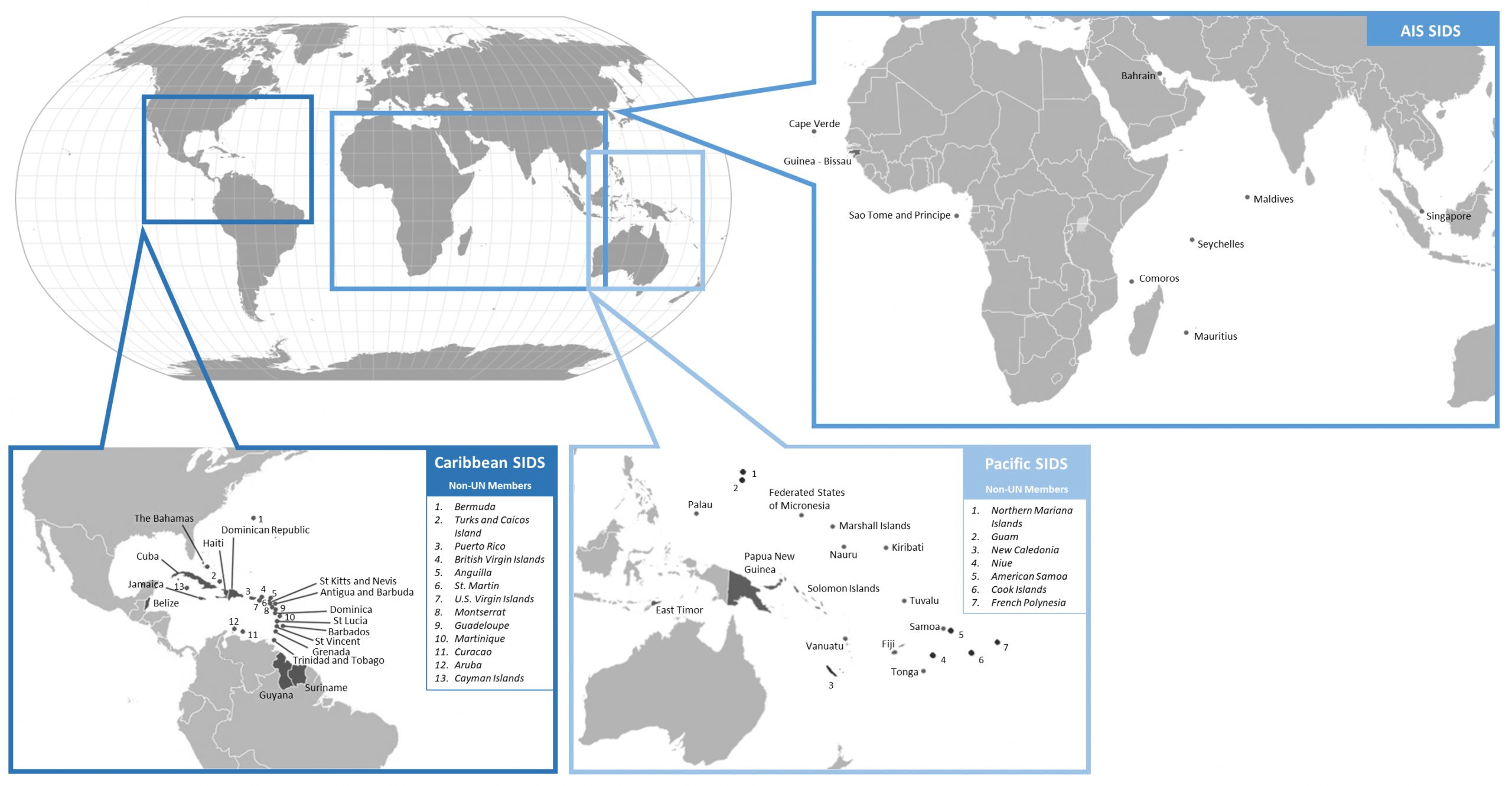
The 4th International Conference on Small Island Developing States (SIDS-4) is underway in Antigua and Barbuda.
What are Small Island Developing States (SIDS)?
SIDS encompass 39 States and 18 Associate Members of United Nations regional commissions, facing unique social, economic, and environmental vulnerabilities.
SIDS are situated across three regions:
the Caribbean,
the Pacific
the Atlantic, Indian Ocean, and South China Sea (AIS).
Their distinctive challenges were acknowledged at the 1992 United Nations Conference on Environment and Development in Rio de Janeiro, Brazil.
SDGs supporting SIDS
Small island development states are mentioned in several of the Sustainable Development Goals.
For example, Target 7 of Sustainable Development Goal 14 (“Life below Water“) states-
“By 2030, increase the economic benefits to Small Island developing States and least developed countries from the sustainable use of marine resources, including through sustainable management of fisheries, aquaculture and tourism”.
Challenges Faced by SIDS:
Remote geography and reliance on external markets due to narrow resource bases contribute to high import/export costs.
Exclusive Economic Zone (EEZ), substantially larger than landmasses, provides vital resources but poses challenges like high transportation costs and vulnerability to economic shocks.
Biodiversity and Economic Significance:
Biodiversity sustains key industries like tourism and fisheries, often constituting over half of SIDS’ GDP.
Beyond economic benefits, biodiversity holds aesthetic and spiritual value, providing essential services like food supply, erosion prevention, and protection from natural disasters.
UN Programmes Supporting SIDS:
The Barbados Programme of Action (1994), Mauritius Strategy (2005), and Small Island Developing States Accelerated Modalities of Action (SAMOA) Pathway (2014) outline specific actions to achieve sustainable development and address gaps in implementation.
Barbados Programme of Action (1994): It prescribed actions enabling SIDS to achieve sustainable development.
Mauritius Strategy (2005): It addressed remaining gaps in implementing the Barbados Programme of Action.
SAMOA Pathway (2014): It emphasises challenges like climate change and biodiversity loss, outlining priorities for sustainable development.
These programmes underscore the ongoing commitment to supporting SIDS’ development and resilience.
Human Health and Social Development: Enhance food security, and water/sanitation, reduce non-communicable diseases, and promote gender equity.
Partnerships: Foster collaborations among SIDS, UN Agencies, development partners, and stakeholders to achieve sustainable development goals.
PYQ:
[2021] Describe the major outcomes of the 26th session of the Conference of the Parties (COP) to the United Nations Framework Convention on Climate Change (UNFCCC). What are the commitments made by India in this conference?
Q) With growing energy needs should India keep on expanding its nuclear energy programme? Discuss the facts and fears associated with nuclear energy. (250 Words, 15 Marks) (UPSC CSE 2018) Q) In what ways would the ongoing US-Iran Nuclear Pact Controversy affect the national interest of India? How should India respond to its situation? (250 Words, 15 Marks) (UPSC CSE 2018)
Prelims Consider the following countries (UPSC CSE 2015) 1) China 2) France 3) India 4) Israel 5) Pakistan Which among the countries given above are Nuclear Weapons States as recognized by the Treaty on the Nonproliferation of Nuclear Weapons, commonly known as the Nuclear Non-Proliferation Treaty (NPT)? (a) 1 and 2 only. (b) 1, 3, 4 and 5 only (c) 2, 4 and 5 only (d) 1, 2, 3, 4 and 5
Note4Students:
Prelims: Global Issues; Nuclear Non-Proliferation Treaty (NPT);
Mains: Global Security Issues; Nuclear Policies;
Mentor comment: When each country pursues its security without regard for others, we create global insecurity that threatens us all. Almost eight decades after the incineration of Hiroshima and Nagasaki, nuclear weapons still represent a clear danger to global peace and security, growing in power, range, and stealth. States possessing them are absent from the negotiating table, and some statements have raised the prospect of unleashing nuclear hell — “threats that we must all denounce with clarity and force.” Moreover, emerging technologies such as artificial intelligence and cyber and outer space domains have created new risks. We must find a way back to the negotiating table to fully implement the New Measures for the Further Reduction and Limitation of Strategic Offensive Arms or START Treaty.
Let’s learn.
–
Why in the News?
The leaders of France and Russia have raised alarm bells globally with tensions rising between major powers and the threat of nuclear weapons being used.
Background:
French President Macron has warned of an “apocalyptic vision” and the danger of nuclear “annihilation” due to Russia’s invasion of Ukraine. He plans to raise the nuclear aspect at an upcoming European meeting.
Russian President Putin has stated that Russia’s nuclear forces are always on alert and that Moscow will not tolerate Western threats. Russia has also revoked its ratification of the Comprehensive Nuclear Test Ban Treaty.
These statements reflect rising nuclear tensions between Russia and the West over the war in Ukraine. The international community has expressed concern over Russia’s nuclear posturing.
How does the specter of Nuclear conflict raise a Global concern?
Firstly, the absence of influential global leaders on the brink of a potential nuclear threat of war.
Russia is “ready for nuclear war” and would use such weapons if its sovereignty is threatened.
China has recently completed sea trials for an aircraft carrier fitted with electromagnetic catapults and is well on its way to building a fourth carrier.
Secondly, the prevailing economic turmoil across many regions in the world has exacerbated the situation, making the prospect of nuclear war more alarming.
The potential consequences of a nuclear war are catastrophic and far-reaching:
Immediate Effects
Incinerate cities: Intense heat and radiation would incinerate cities within the blast radius leaving millions would suffer fatal burns, blindness, internal injuries, and radiation poisoning.
Burden on Healthcare services: Hospitals and emergency services would be overwhelmed and unable to respond to the massive number of casualties.
Long-Term Effects
Economic Collapse: Radioactive fallout would expose survivors to dangerous radiation levels. Electromagnetic pulses could cripple electrical grids and modern technology.
Potential human extinction: Nuclear winter caused by soot and debris in the atmosphere could lead to global famine, killing billions of people.
Environmental Devastation: Large parts of the Earth could become uninhabitable due to radiation and climate changes. Contaminated Oceans and the extinction of much of Earth’s biological life are some of the long-lasting consequences.
BACK2BASICS
About the Comprehensive Nuclear-Test-Ban Treaty (CTBT):
TheCTBT is a multilateral treaty aimed at prohibiting all nuclear explosions, whether for civilian or military purposes, in all environments. It was adopted by the United Nations General Assembly in 1996 but has not yet entered into force.
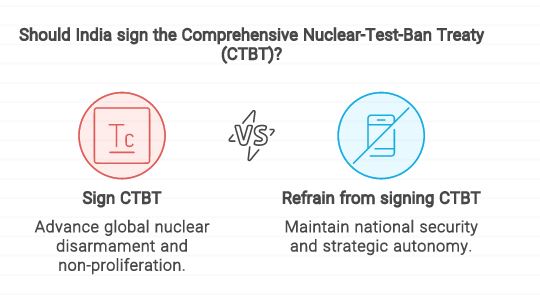
The treaty requires ratification by eight key nations, including China, India, Pakistan, North Korea, Israel, Iran, Egypt, Russia, and the United States, which still need to ratify it for it to become effective.
India avoids the signing of CTBT as it would undermine its National security and Strategic Autonomy, as it would constrain its ability to conduct nuclear tests.
The CTBT establishes a global monitoring system to verify compliance and allows for on-site inspections of suspicious events to ensure adherence to its provisions.The treaty’s primary goal is to end nuclear weapon test explosions and promote nuclear disarmament and non-proliferation efforts globally.
The Recent Discussion at the Hoover Institution:
The discussion focused on the U.S.-India civil nuclear deal (2005-08) and its impact on bilateral relations, despite the current nuclear tensions in Europe.
The deal brought a fundamental change in U.S.-India relations, with relevance to resolving current disputes.
India and the U.S. made significant concessions to negotiate the deal:
India agreed to separate its nuclear program and accept safeguards, export controls, and a testing moratorium.
The U.S. amended laws, obtained NSG approval, and helped India get an IAEA safeguards agreement.
The deal lifted roadblocks preventing India from joining the global nuclear regime, giving it a status similar to a nuclear weapon state under the NPT.
Conclusion: The discussions at the Hoover Institution seemed to be that the deal had even more significance than merely an arrangement about revising India’s nuclear status. From India’s standpoint, the India-U.S. nuclear deal originated from India’s desire to obtain high-grade uranium from outside to complement its energy requirements, the deal confirms that nuclear energy could be a major resource for peaceful purposes.
The PM JANMAN presents a new opportunity to transform the lives of India’s Particularly Vulnerable Tribal Groups.
About PVTGs:
India has numerous Adivasi groups, with 75 identified as Particularly Vulnerable Tribal Groups (PVTGs). These comprise around 14.6 lakh households and live in scattered, remote, and often inaccessible areas. Their livelihoods rely on methods and tools that predate agriculture. PVTGs have low literacy rates, economic backwardness, and stagnant populations.
In 1960-61, the Dhebar Commission identified disparities among Scheduled Tribes, leading to the creation of the “Primitive Tribal Groups” (PTG) category. In 2006, this category was renamed Particularly Vulnerable Tribal Groups (PVTGs).
Government Initiatives:
Pradhan Mantri PVTG Development Mission. Announced for the fiscal year 2023-24 to improve socio-economic conditions of PVTGs.
Pradhan Mantri Janjati Adivasi Nyaya Maha Abhiyan (PM-JANMAN) launched in November 2023.
Pradhan Mantri Adi Adarsh Gram Yojana, Integrated Tribal Development Project (ITDP) and Tribal Sub-Plan (TSP).
PM JANMAN Objectives:
Provide essential services to PVTGs, including safe housing, clean drinking water, and sanitation.
The largest Direct Benefit Transfer (DBT) scheme in the initiative.
Aims to reach 4.90 lakh PVTG households by 2026.
Households to receive ₹2.39 lakh each in three instalments.
Technical Challenges in the PM JANMAN Housing Scheme
App Functionality and Data Gathering:
Data Collection Areas: The ‘Awaas+’ app records geographical locations, household profiles with geo-tagging, and bank account details for cash transfers.
Mandatory Jobcard: Registration requires a jobcard, but many have been deleted, affecting PVTGs’ eligibility.
Jobcard Issues:
Deletion of Jobcards: Widespread deletion of over eight crore MGNREGA jobcards in the past two years has led to many PVTGs being ineligible for the scheme.
Jobcard Misuse: Cases of fraudulent registrations with someone else’s job cards further complicate the registration process.
Village List Discrepancies:
Inconsistent Data: The pre-populated list of villages in the app does not match the MGNREGA Management Information System (MIS). For example, the app lists 22 villages while the MIS lists 31 villages for ‘Vanjari’ Panchayat in Andhra Pradesh, causing confusion.
Aadhaar-related Issues:
Name Matching: The app requires names as per Aadhaar records but does not guide what to do if Aadhaar is absent.
PVTG Identification: The app does not explicitly identify PVTGs, using a default ‘ST’ option, leading to non-PVTG registrations.
Certification Issues:
Local Certification: Ineligible registrations prompt local officials to ask PVTGs for certification from sarpanches/mukhiyas.
Conflict of Interest: Non-PVTG sarpanches/mukhiyas in mixed communities may act against the interests of PVTGs, complicating the certification process.
Geo-tagging Problems:
Network Issues: Geo-tagging required for planned construction locations faces chaos due to poor network connectivity, hindering accurate data capture.
Bank Selection Complexity:
Overwhelming Options: The app’s dropdown lists for banks are excessively long. For example, selecting ‘Commercial Bank’ shows over 300 options, and choosing ‘State Bank of India’ in Andhra Pradesh presents over 500 branches, adding unnecessary complexity for both PVTGs and officials.
Opportunity/Way Forward for PM JANMAN Housing Scheme
Simplify App Interface: Update the ‘Awaas+’ app to have a more user-friendly interface and reduce unnecessary complexities, such as the long dropdown lists for banks.
Clear Guidelines for Aadhaar: Provide explicit instructions on what names to use in the absence of Aadhaar, ensuring all eligible PVTGs can register.
Verify Jobcard Authenticity: Introduce robust mechanisms to prevent fraudulent registrations using others’ jobcards.
Improve Network Infrastructure: Invest in better network infrastructure in remote areas to support the geo-tagging feature.
Mains PYQ:
Q Given the diversities among tribal communities in India, in which specific contexts should they be considered as a single category? (UPSC IAS/2022)
Health officials of the World Health Organization (WHO) aim to finalize over two years of negotiations on new pandemic response rules when they convene in Geneva next week.
About the ‘Pandemic Treaty’
The pandemic treaty is a new legally binding agreement being negotiated to improve the global pandemic response. The treaty aims to address the shortcomings revealed during the COVID-19 pandemic, such as inequitable vaccine distribution.
Article 12, a critical and contentious part of the treaty, proposes reserving around 20% of tests, treatments, and vaccines for WHO distribution to poorer countries during emergencies.
The treaty would be the second major health accord after the 2003 Framework Convention on Tobacco Control.
Convention n Tobacco Control
Govt. of India ratified the WHO Framework Convention on Tobacco Control (WHO FCTC) in 2004, the first-ever international public health treaty focusing on the global public health issue of tobacco control.
The FCTC is a legally binding treaty that requires countries bound by the treaty — or Parties to implement evidence-based measures to reduce tobacco use and exposure to tobacco smoke.
How will Global Health Rules Change?
Updates to the existing International Health Regulations (IHR) include a new alert system for different risk assessments of outbreaks, replacing the current single-level emergency declaration.
A new “early action alert” stage will be introduced, along with a potential “pandemic emergency” category for the most severe health threats.
Obligations for countries: Strengthened obligations for countries to inform the WHO about public health events, changing the language from “may” to “should”.
How do the countries view this pact?
Developed Countries
Wealthy countries are often cautious about sharing resources such as drugs and vaccines.
There is significant political pressure, especially from right-wing groups, fearing that the treaty could infringe on national sovereignty.
These countries are concerned about the financial implications, debating whether to set up a new fund or use existing resources like the World Bank’s $1 billion pandemic fund.
Underdeveloped Countries
Poorer countries emphasize the need for equitable access to treatments and vaccines, reflecting experiences of “vaccine apartheid” during the COVID-19 pandemic.
They advocate for stronger commitments from wealthier nations to support global health infrastructure and emergency response capabilities.
Future Scope of the New IHR Rules and the Pandemic Accord (Treaty):
More robust framework: The IHR updates and the pandemic treaty has designed to complement each other, creating a more robust framework for global health emergencies.
Promotes cooperation: The new rules aim to ensure faster, more transparent information sharing, and better co-operation during health crises.
Next steps for treaty negotiations: Next week’s World Health Assembly will focus on planning the next steps for the Treaty Negotiations, with a full agreement unlikely to be reached immediately.
Defenses against future pandemics: The successful implementation of both the IHR updates and the pandemic treaty could significantly strengthen the world’s defenses against future pandemics, addressing gaps exposed by COVID-19.
Conclusion: While there is a shared understanding of the treaty’s importance, countries’ views are shaped by their National interests, Financial concerns, and Political pressures, leading to complex and protracted negotiations.
Mains PYQ:
Q Critically examine the role of WHO in providing global health security during the Covid-19 pandemic. (UPSC IAS/2020)
Global AI governance is becoming increasingly intricate, with countries employing diverse approaches. This shows that the Global treaties may face significant challenges despite widespread support.
About the Council of Europe (COE)
The COE is an intergovernmental organization established in 1949. It currently has 46 member states, including the Holy See, Japan, and the U.S., alongside EU countries.
Aim: To uphold human rights, democracy, and the rule of law in Europe.
What is Europe’s AI convention?
Europe’s AI convention, officially known as the Framework Convention on Artificial Intelligence and Human Rights, Democracy and the Rule of Law, represents a significant milestone in AI governance.
Adopted by the Council of Europe (COE) on May 17, this convention addresses the pressing need for comprehensive regulation of AI, particularly concerning its impact on human rights, democracy, and the rule of law.
The scope of the Framework Convention on Artificial Intelligence and Human Rights, Democracy, and the Rule of Law encompasses:
It ensures that activities throughout the lifecycle of Artificial Intelligence (AI) systems align fully with Human Rights, Democracy, and the Rule of Law.
Consistent with the EU AI Act and the OECD’s definition, an AI system is defined as a machine-based system that generates outputs based on input to influence physical or virtual environments.
Coverage:
Application by Parties: The convention applies to activities involving AI systems conducted by both public authorities and private actors acting on their behalf.
Addressing Risks: Parties are required to address risks and impacts from AI systems activities by private actors that are not covered under (a) in a manner consistent with the convention’s objectives.
Difference Between a Framework Convention and a Protocol
Framework Convention: A legally binding treaty specifying broad commitments and objectives.Allows parties discretion in achieving objectives, adapting to their capacities and priorities.Example: Convention on Biological Diversity.
Protocol: Specific agreements are negotiated under a framework convention. Sets specific targets or detailed measures to achieve the broader objectives of the framework convention.Example: Cartagena Protocol on Biosafety under the Convention on Biological Diversity.
Addressing National Security in the AI Convention
Exemptions for National Security: Articles 3.2, 3.3, and 3.4 provide broad exemptions for national security interests, research, development, testing, and national defense, excluding military AI applications from the convention’s scope.
Balancing Flexibility and Regulation: Article 3(b) allows parties some flexibility in applying the convention to the private sector, preventing total exemption but accommodating national security needs.
General Obligations: Articles 4 and 5 ensure the protection of human rights, democratic integrity, and the rule of law, requiring parties to address disinformation and deep fakes as part of their national security measures.
Scope for Further Action: Article 22 allows parties to exceed specified commitments, enabling additional measures to address national security concerns related to AI.
Conclusion: The AI convention is essential because it reinforces existing human and fundamental rights within the context of AI applications, rather than creating new rights. It emphasizes the need for governments to uphold these rights and implement effective remedies and procedural safeguards.
Mains PYQ:
Q “The emergence of the Fourth Industrial Revolution (Digital Revolution) has initiated e-Governance as an integral part of government”. Discuss.(UPSC IAS/2020)
On May 24, the Supreme Court rejected an [Association for Democratic Reforms (ADR)] NGO’s request for the Election Commission of India to upload authenticated, scanned, and legible copies of Form 17C, which details the booth-wise account of votes recorded after each phase of Lok Sabha elections.
About the Application Filed by the Association for Democratic Reforms (ADR):
ADR sought an order directing the Election Commission of India (ECI) to upload authenticated, scanned, and legible copies of Form 17C, which shows the account of votes recorded booth-wise after each phase of polling in Lok Sabha elections.
ADR highlighted concerns regarding the delay in publishing final voter turnout data and the significant revisions in voter turnout percentages, which raised public suspicions and apprehensions about the accuracy of the data.
Why did the Supreme Court refuse to issue interim order on voter data?
Timing of the Elections: The Supreme Court refused the plea on May 24, stating that the nation was in the middle of the General Elections and at the moment of the sixth phase of polling.
Diverting the attention: The court acknowledged the mammoth nature of the elections, which require vast human resources. Diverting the attention of the Election Commission during this critical period was not deemed appropriate.
Ongoing Petition: The interim relief sought by ADR was already part of a relief sought in a petition pending since 2019. Granting interim relief at this stage would effectively mean providing final relief in the ongoing writ petition.
Already decided in previous judgments: Senior advocate Maninder Singh for the EC argued that ADR’s application was unfounded.
It aimed at discrediting the EC, invoking the concept of constructive res judicata, implying that issues already decided in previous judgments (like EVM-VVPAT case) cannot be re-litigated in the middle of an election process.
About the Role of the Judiciary During Election Polls:
Non-Interference During Elections: The Supreme Court emphasized that it should not interfere with the conduct of elections, which are managed by the Election Commission, during the polling process.
Enhancing Conduct of Polls: The judiciary’s role is to enhance the conduct of elections rather than interrupt or interfere in ongoing electoral processes.
Ground Reality Awareness: The judiciary must be conscious of the practical realities and complexities involved in the conduct of elections, ensuring that its actions do not disrupt the democratic process.
Conclusion: The Supreme Court’s refusal to entertain ADR’s application highlights the judiciary’s cautious approach in intervening in electoral processes, especially during ongoing elections, to maintain the integrity and smooth functioning of the democratic exercise. The court seeks to balance the need for transparency and fairness in elections with the practicalities and operational challenges faced by the Election Commission.
Mains PYQ:
Q To enhance the quality of democracy in India the Election Commission of India has proposed electoral reforms in 2016. What are the suggested reforms and how far are they significant to make democracy successful? (UPSC IAS/2017)
Low voter turnout has been a notable trend in the initial phases of the ongoing 2024 general elections in India which reflects the shift in dynamics of democratic politics.
American Scenario during Past Elections:
Conventional Wisdom: In the U.S., increased voter turnout is traditionally believed to benefit Democrats. For example, it was argued that higher voter turnout could have altered the outcome in favour of Hillary Clinton in states like Pennsylvania, Michigan, and Wisconsin.
According to Daron R. Shaw and John R. Petrocik in “The Turnout Myth” (2020), Hillary Clinton’s support did not significantly vary with voter turnout.
Class Cleavages: The advantage Democrats gained from higher turnout has decreased since 1960 due to the erosion of class-based voting patterns.
Simulation Studies: Research by Michael D. Martinez and Jeff Gill, and later by Spencer Goidel, Thiago Moreira, and Brenna Armstrong, used simulations to predict how changes in turnout would affect election outcomes. In recent studies, the impact of increased turnout on party advantage has varied over time.
Perception About the Party’s Prospects:
High confidence in a party’s victory can deter voters from participating, thinking their vote is unnecessary.
Polls showing Bill Clinton’s like victory during the 1996 US Elections, led to low voter turnout, with some Clinton supporters abstaining because they believed his win was assured.
While both Clinton and Dole supporters showed reluctance to vote due to predicted outcomes, it led to higher abstention to vote for them.
Indian Scenario:
Class and Caste based: The 2019 Indian election saw a significant jump in the SC vote for the BJP, from 24% in 2014 to 34% in 2019, indicating a shift in voting patterns among Scheduled Castes. The Upper Caste Poor voted 49% BJP and 9% Congress, while Poor OBCs and Poor STs also followed a similar pattern. Poor Muslims, however, voted 8% BJP and 30% Congress.
Religion and Language-based: Religion is a significant factor, with political parties often indulging in communal propaganda to exploit religious sentiments. Language also plays a role, with parties arousing linguistic feelings to influence voter decisions.
Region and Personality based: Regionalism and sub-regionalism are important, with regional parties appealing to regional identities and sentiments. The charismatic personalities of party leaders, such as Jawaharlal Nehru, Indira Gandhi, Rajiv Gandhi, Atal Bihari Vajpayee, and Narendra Modi, have significantly influenced voter decisions.
Voter turnout trends in India have fluctuated, with no consistent correlation to incumbent advantage or disadvantage.
It is generally believed that higher voter turnout is detrimental to incumbents, though recent elections (2014 and 2019) saw high turnout with incumbent victories.
The voting patterns of habitual versus non-habitual voters likely vary significantly, influenced by the diverse and multi-party nature of Indian politics.
Decreased turnout in the 2024 general elections could be due to factors like weather, COVID-19, economic issues, and voter apathy, potentially impacting different parties in varied ways.
Conclusion
The role of non-habitual voters in Indian elections adds an element of unpredictability, making it difficult to draw firm conclusions until election results are finalised.
Mains PYQ:
Q Individual Parliamentarian’s role as the national law maker is on a decline, which in turn, has adversely impacted the quality of debates and their outcome. Discuss. (UPSC IAS/2019)
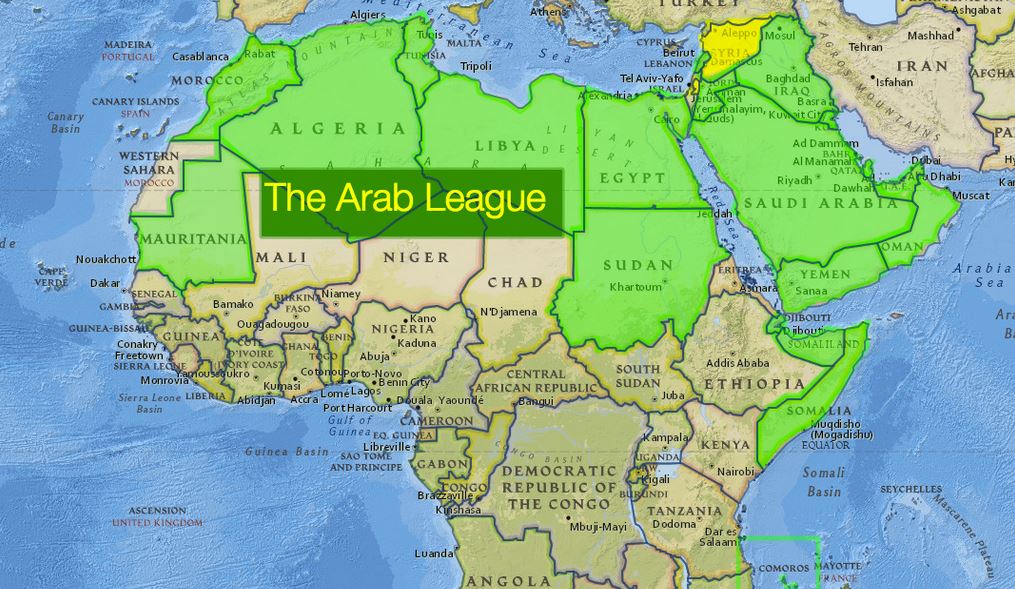
The Arab League called for UN peacekeeping forces in the Palestinian territories during a summit in Bahrain’s Manama. The “Manama Declaration” issued by the league sought UNPKF in the occupied Palestinian territories” until a two-state solution is implemented.
Back2Basics: United Nations Peacekeeping
UN Peacekeeping is a collective effort by the international community, led by the United Nations, to maintain peace and security in regions affected by conflict.
UN peacekeepers are often referred to as Blue Berets or Blue Helmets because of their light blue berets or helmets) can include soldiers, police officers, and civilian personnel.
History:
The concept of UN peacekeeping emerged in the aftermath of World War II, with the establishment of the United Nations in 1945.
The first UN peacekeeping mission was established in 1948, following the Arab-Israeli War, to monitor the ceasefire between Israel and its Arab neighbours.
This mission, known as the United Nations Truce Supervision Organization (UNTSO), set the precedent for future peacekeeping operations.
Since then, the scope and complexity of UN peacekeeping have evolved significantly, with operations conducted across the globe in regions affected by conflict, civil war, and humanitarian crises.
Operations:
UN Peacekeeping is guided by three basic principles:
Consent of the parties
Impartiality
Non-use of force except in self-defence and defence of the mandate
UN peacekeeping operations are deployed with the consent of the main parties to the conflict. It can be deployed at the request of the partiesinvolved in a conflict or with the authorisation of the UN Security Council.
The objectives may vary depending on the specific context but often include monitoring ceasefires, disarming combatants, facilitating the delivery of humanitarian aid, promoting human rights, and supporting the establishment of democratic governance structures.
UN peacekeeping operations operate under the principles of impartiality, consent of the parties, and non-use of force except in self-defence and defence of the mandate.
India’s Role:
India has been one of the largest contributors to UN peacekeeping operations since their inception.
India has contributed nearly 195,000 troops, the largest number from any country, and participated in more than 49 missions and 168 supreme sacrifices while serving in UN missions.
About Arab League
Details
Establishment
Founded on March 22, 1945, in Cairo, Egypt.
Founding Members
Egypt, Iraq, Jordan, Lebanon, Saudi Arabia, Syria.
Objective
Promote economic, cultural, political, and military cooperation among member states. Safeguard independence and sovereignty.
Functions
Operates on consensus among member states. Decisions are made through consultations and discussions.
Regular meetings among Arab leaders to address regional issues, formulate policies, and coordinate actions.
Specialised committees and councils address specific areas of cooperation, such as economic affairs, social affairs, and defence.
Member States
Egypt, Iraq, Jordan, Lebanon, Saudi Arabia, Syria, Libya, Tunisia, Algeria, Bahrain, Comoros, Djibouti, Kuwait, Mauritania, Morocco, Oman, Palestine, Qatar, Somalia, Sudan, United Arab Emirates, and Yemen.
Observer Nations
Non-Arab countries with observer status include Brazil, Eritrea, India, Venezuela, and others.
No voting rights are accorded to Observer nations.
Important Achievements
Proposal of the Arab Peace Initiative in 2002.
Coordination of military efforts in various conflicts.
Promotion of economic cooperation through initiatives such as the Arab Free Trade Area.
Facilitation of cultural and educational exchange programs among member states.
Challenges
Internal divisions, Differences of opinion over the Palestinian-Israeli conflict etc.
PYQ:
[2014] Recently, a series of uprisings of people referred to as ‘Arab Spring’ originally started from
Q) The China Pakistan Economic Corridor (CPEC) is viewed as a cardinal subset of China’s larger ‘One Belt One Road’ initiative. Give a brief description of CPEC and enumerate the reasons why India has distanced itself from the same. (150 Words, 10 Marks). (UPSC CSE 2018)
Q) What introduces friction into the ties between India and the United States is that Washington is still unable to find for India a position in its global strategy, which would satisfy India’s National self-esteem. (UPSC CSE 2019)
Prelims:
‘Belt and Road Initiative’ is sometimes mentioned in the news in the context of the affairs of (UPSC CSE 2016) (a) African Union (b) Brazil (c) European Union (d)China
Note4Students:
Prelims: Global Issues; West Asia; East-Europe Economic Corridor (IMEC);
Mains: Global Security Issues; West Asia; Trades;
Mentor comment: In a world of shifting geopolitical landscapes, India embarked on a grand vision to reshape its economic and strategic ties with the world. At the heart of this vision lay the India-Middle East-Europe Economic Corridor (IMEC), a path-breaking initiative that promised to transform the way India engaged with its partners across the Eurasian landmass. The story began in September 2023, when India, along with the European Union, France, Germany, Italy, Saudi Arabia, the United Arab Emirates (UAE), and the United States, signed an agreement to bring IMEC to life. This ambitious project, designed under the Partnership for Global Infrastructure and Investment (PGII), aimed to stimulate economic development through enhanced connectivity and integration between Asia, the Arabian Gulf, and Europe. For India, IMEC represented a strategic opportunity to assert its presence on the global stage and counter the growing influence of its rival, China.
Let’s learn.
–
Why in the News?
After India signed a landmark 10-year bilateral contract with Iran (Chabahar Port), the U.S. State Department has warned of potential sanctions for any entity considering business deals with Iran.
In the past, American sanctions had delayed the project, which was conceived in 2003.
Practically, the signing of a long-term agreementmarks a significant milestone in India’s infrastructure and trade partnership with Iran.
However, considering US sanctions, India also needs to focus on the next upcoming IMEC Project which is stalled due to West Asian tensions.
How IMEC is countering the Belt and Road Initiative (BRI)?:
IMEC has two corridors – the East corridor (India to Arabian Gulf) and the North corridor (Arabian Gulf to Europe).
1.The East Corridor connects the Indian ports of Kandla, Mumbai, and Mundra to UAE’s ports like Fujairah, Jebel Ali, and Abu Dhabi by sea. 2. The North Corridor link is the Railroad link through Saudi Arabia, and Jordan to European regions like Haifa, Marseille, Messina, and Piraeus.The Railway network for cross-border ship-to-rail transit is based on electricity, digital connectivity, and clean hydrogen export infrastructure.
Significance of IMEC over BRI: It secures regional supply chains by overcoming Pakistan’s obstacle to overland access.
It increases Trade Accessibility and Facilitation which will be effective in countering China’s Belt and Road Initiative (BRI) as it will reduce time by 40% and cost by 30% of transporting goods from India to Europe. Hence, the U.S. is also a major stakeholder.
What is the impact of the recent Gaza War on IMEC? (Challenges faced)
War in Gaza led to project stall; in fact, Iran is threatening to close the Strait of Hormuz.
For example, Adani Group’s plans for Haifa port expansion halted.
The present Gulf region is facing trade and security issues due to ‘Houthis’ blocking Red Sea access for Israel and its allies.
Due to increased shipping time and insurance costs (due to unsafe routes), the trade barriers and eventually inflation have also being increased.
The Role of Oman and Egypt in Strengthening IMEC: (Way Forward)
Oman as an Alternative: Oman’s ports in the Arabian Sea, away from Iranian influence which is the closest and most direct link to Indian ports.Secondly, Oman also has good relations with all its stakeholders
Extending to Egypt: Egypt can act as an alternate spur through Egypt to Mediterranean ports in Europe. This will provide a safe and direct sea route to Europe. Secondly, Egypt’s inclusion balances regional dynamics and has good relations with Israel, Europe, and the U.S.
Conclusion: Today, as the world watches with bated breath, IMEC stands as a testament to India’s vision and determination. It is a story of how a nation, once constrained by geography and politics, found a way to break free and forge its path in the global arena. And as the story continues to unfold, one thing is certain: IMEC will forever change the way India engages with the world, and the world engages with India.
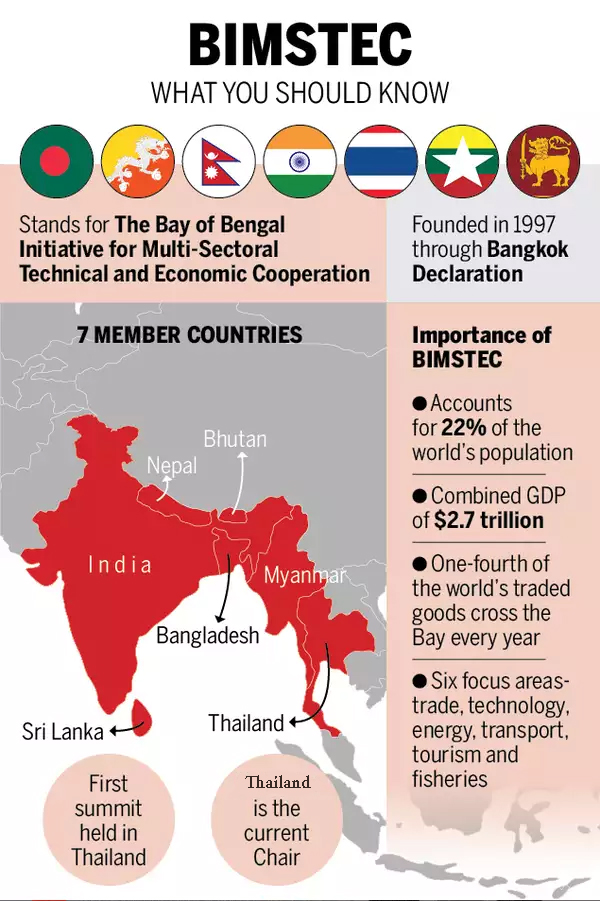
The Ministry of External Affairs has announced that with the establishment of its inaugural charter on May 20th, the Bay of Bengal Initiative for Multi-Sectoral Technical and Economic Cooperation (BIMSTEC) will now accept new members and observers.
About BIMSTEC:
The Bay of Bengal Initiative for Multi-Sectoral Technical and Economic Cooperation (BIMSTEC) formed in 1997 is a multilateral regional organization comprising seven member states: Bangladesh, Bhutan, Sri Lanka, Nepal, Thailand, Myanmar, and India.
Aim: To promote technical and economic cooperation among its member countries, particularly in sectors such as security, connectivity, trade, agriculture, environment, science and technology, and people-to-people contact.
Adoption of the Charter:
After years of deliberation, the BIMSTEC leaders adopted the organization’s first charter during their 5th summit.
This charter provides a legal framework for the group, granting it a “legal personality” and enabling the structured diplomatic dialogue with other countries and regional groupings.
In the context of international organizations like BIMSTEC, obtaining legal personality means that the organization is recognized as a legal entity in its own right, separate from its member states.
Significance of BIMSTEC for all member countries:
The charter’s implementation enhances cooperation and deeper integration within the Bay of Bengal region, benefiting all member states economically and strategically.
Enhanced Cooperation: With the charter in place, member countries can engage in more structured and organized cooperation across various sectors such as security, connectivity, trade, agriculture, environment, science and technology, and people-to-people contact.
Strengthened Regional Integration: The charter facilitates deeper integration within the Bay of Bengal region. By establishing common goals and mechanisms for cooperation, it promotes economic growth, social development, and cultural exchange among member countries.
Diplomatic Dialogue: The charter enables BIMSTEC to enter into structured diplomatic dialogue with other countries and regional groupings. This opens up avenues for broader engagement and partnership, enhancing the geopolitical significance of the BIMSTEC platform.
Challenges in the present world context:
Historical Discord: Long-standing historical discord between member states, such as Bangladesh and Myanmar, presents a challenge to cohesive cooperation within BIMSTEC. These tensions can hinder progress on joint initiatives and impede the organization’s effectiveness.
Geopolitical Complexities: Geopolitical complexities, exacerbated by events like the Rohingya refugee crisis and the coup in Myanmar, add layers of complexity to regional dynamics.
These complexities can strain relationships between member states and complicate efforts to foster collaboration and integration within BIMSTEC.
Stagnation of SAARC: While BIMSTEC offers an alternative platform for regional cooperation, the near stagnation of SAARC underscores the challenges faced by regional organizations in fostering meaningful collaboration.
Way forward:
Need a Conflict Resolution Mechanisms: Implement effective conflict resolution mechanisms to address historical discord and tensions between member states.
High Diplomatic Engagement: Encourage regular diplomatic engagement and dialogue between member states to address geopolitical complexities and build trust.
Mains PYQ
Q Do you think that BIMSTEC is a parallel organization like the SAARC? What are the similarities and dissimilarities between the two? How are Indian foreign policy objectives realized by forming this new organization? (UPSC IAS/2022)
![[27 May 2024] The Hindu Op-ed: The spectre of nuclear conflict, once again](https://www.civilsdaily.com/wp-content/uploads/2024/05/27-may1-1568x882.jpg)
![[25 May 2024] The Hindu Op-ed: The missing links in IMEC, as shown by the Gaza war](https://www.civilsdaily.com/wp-content/uploads/2024/05/25-may-1568x882.jpg)