The Supreme Court upheld a rule issued by the Institute of Chartered Accountants of India (ICAI) that limits Chartered Accountants to accepting no more than 60 tax audit assignments in a financial year.
The court found that the rule does NOT violate the fundamental right to practice a profession under Article 19(1) (g) of the Constitution (apart from also being violative of the right to equality under Article 14).
Tax Audit Regime: A Quick Backgrounder
The mandatory tax audit regime was initiated in 1984 with Section 44AB in the Income Tax Act, of 1961 which required certain businesses and professionals to get their accounts audited.
Tax Audit aims to ensure compliance with the provisions of the Income Tax Act, 1961, and detect and prevent tax evasion and fraud.
In 1988, the ICAI limited Chartered Accountants to a specified number of tax audit assignments to ensure quality and reduce the risk of misconduct.
This limit was part of the guidelines issued in 2008, which replaced previous notifications and were challenged in various High Courts.
About the Institute of Chartered Accountants of India (ICAI):
Details
Establishment
The Institute of Chartered Accountants of India (ICAI) is a statutory body established by an Act of Parliament, viz. The Chartered Accountants Act, 1949.
Regulatory Body
The second largest professional body of chartered accountants in the world after the American Institute of Certified Public Accountants (AICPA).
Only licensing authority for chartered accountants in India
Headquarters
New Delhi, India, with 5 regional offices and 163 branches across the country.
Functions
Regulates education, training, and examinations for Chartered Accountants. Formulates accounting and auditing standards.
Membership
Granted to individuals who complete prescribed education and training and pass final examinations.
Powers of ICAI
Involves theoretical education and practical training under a practising Chartered Accountant.
Conducted at Foundation, Intermediate, and Final levels, held twice a year in May and November.
Formulates Accounting Standards (AS), Auditing Standards (SA), and other guidance notes.
Investigates complaints of professional misconduct against members and takes disciplinary actions.
International Affiliations
Member of international accounting bodies including-
International Federation of Accountants (IFAC),
Confederation of Asian and Pacific Accountants (CAPA), and
South Asian Federation of Accountants (SAFA).
PYQ:
[2018] With reference to India’s decision to levy an equalization tax of 6% on online advertisement services offered by non- resident entities, which of the following statements is/are correct?
It is introduced as a part of the Income Tax Act.
Non-resident entities that offer advertisement services in India can claim a tax credit in their home country under the “Double Taxation Avoidance Agreements”.
Select the correct answer using the codes given below:
On 20 May 2024, the Prosecutor of the International Criminal Court (ICC) requested arrest warrants against leaders of Hamas and Prime Minister Benjamin Netanyahu of Israel about the events of October 7, 2023, and the conflict in Palestine.
What is the International Criminal Court?
The International Criminal Court formed in 2002, is an Intergovernmental Organization and International Tribunal seated in the Hague, Netherlands.
It deals with the most serious crimes of concern to the international community, including genocide, crimes against humanity, war crimes, and crimes of aggression.
Unlike the international tribunals, the International Criminal Court is a permanent body.
Against whom has the Prosecutor requested warrants of arrest?
Specifically, warrants have been sought for senior Hamas leaders Yahya Sinwar, Mohammed Deif, and Ismail Haniyeh, along with Netanyahu and Israel’s Minister of Defence Yoav Gallant.
The process of ICC decision-making and the scope of the present case:
ICC decisions are binding, but they rely on the cooperation of member states for support.
A panel of judges at the ICC must decide on the Prosecutor’s application for arrest warrants.
If approved, all State Parties are obligated to cooperate, including arresting and extraditing the accused individuals to The Hague.
This could restrict international travel for Netanyahu and Gallant, affecting visits to countries that are State Parties to the Rome Statute.
Israel is not a Party to the Rome Statute. However, the ICC does have jurisdiction over crimes committed by nationals of both State Parties (such as Palestine) and Non-state Parties (such as Israel) on the territory of a State Party (such as Palestine).
International Criminal Court (ICC) Vs. International Court of Justice (ICJ)
ICC
ICJ
Relationship with the UN
ICC is an independent organization not part of the United Nations
ICJ is an integral part of the UN and acts as its primary judicial branch
Members
ICC has around 105 members, focusing on prosecuting individuals for crimes.
ICJ has all 193 UN member countries as its members, primarily resolving disputes between states
Derivation of Authority
ICC derives its authority from the Rome Statute, focusing on prosecuting individuals for crimes against humanity, war crimes, genocide, and crimes of aggression.
ICJ derives its authority from the Charter of the United Nations, settling disputes between countries based on international law
Funding
It mainly functions on contributions made by state parties to the Rome Statute and voluntary contributions
Its funding sources differ based on its status as an organ of the United Nations
Way forward:
Need Enhanced Cooperation: Encouraging greater cooperation between the ICC and the UN to strengthen their effectiveness in addressing international crimes.
Need Wider Membership: Advocating for more countries to become State Parties to the Rome Statute to broaden the ICC’s jurisdiction and reach.
Mains PYQ:
Q India’s relations with Israel have, of late, acquired a depth and diversity, which cannot be rolled back.” Discuss. (UPSC IAS/2018)
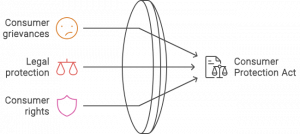
Recently, the apex court held that lawyers as ‘professionals’ could not be subjected to legal proceedings for providing faulty ‘service’ under the Consumer Protection Act 2019 (CPA). A similar case applies to Medical practitioners which is in high controversy.
What is the Consumer Protection Act (CPA)?
Consumer Protection Act, 1986
Consumer Protection Act, 2019
Purpose
Enacted to provide simpler and quicker access to redressal of consumer grievances.
Repeals and replaces the CPA, 1986.
Introduction of Concept
Introduced the concept of ‘consumer’ and conferred additional rights on consumers.
Expands the scope of the definition of ‘consumer’ to include transactions conducted offline or online through electronic means, teleshopping, direct selling, or multi-level marketing.
Scope of Protection
Protects individuals fitting the definition of ‘consumer’ as defined by the Act.
Extends protection to a wider range of transactions, including those related to banking, insurance, transport, housing construction, entertainment, amusement, etc.
About the previous case –Indian Medical Association vs V P Shantha (1995):
In 1995, a three-judge bench of the SC ruled, “Doctors would be covered under the consumer protection law, allowing the filing of several medical negligence lawsuits against doctors for deficiency in service”.
The court also acknowledged that medical professional occupations are often “skilled” work which differs from other occupations and the success usually depends on factors that are beyond the doctor’s control.
Diversity of present Opinions:
What did the National Consumer Disputes Redressal (NCDR) Commission say?
In 2007, the NCDR Commission held that lawyers provide a service to their clients and hence they can be sued for deficiency of service.
This case ultimately reached the apex court where the judgement was passed recently.
What did the Apex court say?
The court said that the objective principle of the CPA 2019 was to protect consumers from unfair trade practices and unethical business practices (the law was not intended to include professionals).
The court noted that the legal profession is unique and cannot be compared with any other profession.
According to the SC, hiring or availing of an advocate is “a contract of personal service” and is therefore exempted from the scope of the consumer protection law.
About the Consumer Redressal Commissions in India:
Legal proceedings under the CPA are heard by the Commissions which are constituted at all the 3 tier- District, State, and National levels (According to the CPA, 1986).
The President of each Commission would be a person who was/ is qualified to be a judge at the District, High Court, and Supreme Court resp.
The other individuals who have the knowledge, experience, or capacity to deal with problems relating to economics, law, commerce, accountancy, industry, public affairs or administration.
Since there is no requirement for commission members to have knowledge in medical matters, they are not suited to deal with complex medical issues.
In 2024, another SC bench appeared to be more sympathetic to the medical practitioners and held that these professionals should not be held to the same standard as other occupations.
Why does the Apex Court not Exempt Medical Profession from the Purview of CPA?
Firstly, doctors have specific duties to their patients, such as deciding on treatment and its administration.
Secondly, if a doctor breaches these duties by failing to provide a reasonable standard of care, they can be held liable under the CPA.
Additionally, the court believes requiring commission members to have case-specific knowledge would be impractical and burdensome.
Conclusion: This decision aims to prevent potential imbalances between District and State Commissions in handling cases and places the responsibility on parties to provide evidence for informed decisions.
The Election Commission of India (ECI) told the Supreme Court that there is no legal mandate to provide Form 17C (account of votes recorded) to any other person other than the candidate or his agent.
What does Article 329(b) say?
It specifically bars courts from intervening in any disputes related to the electoral processduring the active phase of an election—from its notification to the final declaration of results.
This is to prevent any potential delays or disruptions caused by litigation during the election.
About Forms 17A and 17C
As per the Conduct of Elections Rules, 1961, there are two forms that have data on the number of electors and voters — Forms 17A and 17C.
Form 17A: This document, compiled by the Returning Officer for each constituency, lists contesting candidates and registers voter information, including names and symbols.
Form 17C: Form 17C contains the account of votes recorded at each polling station during the election. It is prepared by the Presiding Officer of the polling station after the conclusion of polling. It includes:
EVM identification numbers.
Total number of electors and voters at the polling station.
Number of voters who did not record their votes after signing the register.
Number of voters not allowed to vote.
Total number of votes recorded per EVM.
Part-II of Form 17C: It carries counting results entered on counting day. This form is crucial for any legal challenges to the election results and for candidates to verify results on counting day.
Why is there a Demand to Make Form 17C Data Public?
Activists advocate for greater transparency in election processes.
The high number of polling stations makes it hard for candidates to compile all data.
The Election Commission of India (ECI) is not legally required to publish aggregate voter turnout data.
The ECI ensures that all statutory requirements, including providing Form 17C to candidates, are met.
Discrepancies noted in Form 17C can be contested to maintain election integrity.
Back2Basics: Conduct of Election Rules, 1961
The Conduct of Election Rules, 1961, commonly referred to as the 1961Rules, outline the procedural framework governing various aspects of the electoral process in India.
These rules were formulated under the authority of the Representation of the People Act, 1951.
It serves as the foundational legislation for conducting elections in the country.
Activities covered: Preparation of electoral rolls, the nomination of candidates, the conduct of polling, counting of votes, and the declaration of results.
Regulatory Function: The 1961 Rules incorporate provisions for addressing electoral malpractices, disputes, and grievances, thereby safeguarding the sanctity of elections.
PYQ:
[2017] For election to the Lok Sabha, a nomination paper can be filed by
(a) Anyone residing in India.
(b) A resident of the constituency from which the election is to be contested.
(c) Any citizen of India whose name appears in the electoral roll of a constituency.
PYQ Relevance: Mains: Q) What is the significance of Indo-US defense deals over Indo-Russian defense deals? Discuss with reference to stability in the Indo-Pacific region. (UPSC CSE 2020)
Q) The new tri-nation partnership AUKUS is aimed at countering China’s ambitions in the Indo-Pacific region. Is it going to supersede the existing partnerships in the region? Discuss the strength and impact of AUKUS in the present scenario. (UPSC CSE 2021)
Prelims:
With reference to the ‘Trans-Pacific Partnership’, consider the following statements: (UPSC CSE 2016) 1. It is an agreement among all the Pacific Rim countries except China and Russia. 2. It is a strategic alliance for the purpose of maritime security only. Which of the statements given above is/are correct? (a) 1 only (b) 2 only (c) Both 1 and 2 (d) Neither 1 nor 2
Note4Students:
Prelims: Global Issues;
Mains: Global Issues; Multipolar World; Russia-China Relations;
Mentor comment: The article discusses the present “no-limits” friendship declared between Russian President Vladimir Putin and Chinese President Xi Jinping, and how it is a defining feature of the emerging multipolar world order. During World War II, the world was divided into – Allied (UK, USSR, US, and China) and Axis (Germany, Italy, and Japan). Eventually after WW II, there was again a division between the US and the USSR which came to be known as the ‘Cold War’ where India adopted its Non-aligned stand. Taking today’s article view i.e. the Russia-China Friendship, the relations between both countries date back to the 17th century, with historical conflicts and territorial disputes. However, the relationship improved significantly after the fall of the Soviet Union in 1991, leading to the establishment of diplomatic relations and the signing of the Treaty of Good-Neighborliness and Friendly Cooperation in 2001. In the present context, we need to study what impact it will have on World order and of course our India also.
Let’s learn.
–
Why in the News?
Chinese President Xi Jinping and Russian President Vladimir Putin declared their ‘no-limits’ friendship just days before the Ukraine war began.
Putin, who was sworn in for his new term recently, will spend two days in China.
The Putin-Xi bromance is not just a bilateral affair, but a harbinger of a new world order.
What are the common grounds for ‘no limits’ friendship?
A Shared Anti-West Sentiment: Both leaders believe the West is trying to hold them back and undermine their influence. This shared grievance has brought them closer together, with Putin and Xi presenting a united front against what they see as a hostile Western world.
Military Cooperation: The two leaders have celebrated military cooperation, particularly during times of heightened tensions such as the US-China trade war. It includes security cooperation, emphasizing their mutual opposition to theWashington-led global consensus.
Economy and Trades: The structure of their bilateral trade shows that Russia mainly supplies raw materials, such as oil, natural gas, and coal, while importing manufacturing and technological products from China.
Russia has also been receiving loans and export credits, with the yuan’s share in the Russian central bank’s foreign currency reserves increasing significantly.
Strategic Partnership: The friendship between Putin and Xi is strategic, aiming to counterbalance U.S. global influence.
The two leaders have been attempting to put economics at the center of their strategic partnership, with Xi’s Belt and Road Initiative (BRI) and Putin’s Eurasian Economic Union (EAEU) aiming to create a single market among Russia, Armenia, Belarus, Kazakhstan, and Kyrgyzstan.
Limitations on their ‘no limit’ friendship:
A Relationship of Unequals: Despite aiming for equal friendship, China’s growing economic and technological might dwarf Russia’s. This power imbalance could create tension in the relationship, especially as China’s dominance continues to grow in Central and West Asia.
Russia may struggle to maintain its status as an equal partner, potentially leading to friction in the alliance.
A Delicate Balance: Beijing may face pressure from its trading countries and internal critics to distance itself from Moscow, especially if Russia’s actions continue to attract international condemnation.
What does it mean for the rest of the world?
New Multipolar System and Geoplotical Risks: Russia has recently shifted its Nuclers Policies making it questionable for European and other Western countries. This shift in power dynamics (Russia-China) could lead to a more fragmented and unstable world, with the West facing a united front from two of its most powerful adversaries.
Potential Risks to Global Energy Security: Russia’s growing dependence on China as an energy export market could give China more leverage over Russia and influence global energy prices and supply.
Expanded Russia-China energy cooperation may undermine Western efforts to isolate Russia economically and limit its ability to wage war in Ukraine.
Implications for Global Gas Markets: If the power of the Siberia pipeline is completed, it could reshape global gas markets by providing a new major source of supply to China and reducing Russia’s dependence on European gas exports.
However, the fate of the pipeline remains uncertain, as China has refrained from committing to it so far, likely because it currently benefits from keeping the project in Limbo.
What does it mean for India?
Strategic Concerns: Russia being a major supporter of the Indian defense system, India can face challenges in ensuring reliable defense supplies after the evolution of such “no limit” friendship and China-Russia cooperation.
Diplomatic Balancing: India aims to balance ties with Russia and West Asia to have a seamless connection with the European Union but faces challenges due to evolving Russia-China relations.
National Interests: India has always been a ‘big brother’ in the Asian region incorporating its Foreign Policies. Seeing the present context, India must navigate the changing geopolitical landscape, leveraging its diplomatic strengths and pursuing a clear long-term strategy.
Conclusion: The economic interests and trade between Russia and China are critical components of their “no-limits” friendship. While their bilateral trade has grown significantly, the relationship is marked by an unequal dynamic, with China’s economic dominance over Russia growing.
The prevalence of Congenital Anomalies and Neurological Challenges in newborns highlights the need for adequate Antenatal and Perinatal care to address them.
Key observations made by the National Family Health Survey (NFHS-5):
Perinatal mortality rates stand at 32 for 1,000 pregnancies, neonatal mortality rates at 25 for 1,000 live births, and hypertensive disorders in pregnancy remain a leading cause of maternal death.
Cause of Maternal and Perinatal Mortality:Preeclampsia (PE) is a significant cause of maternal and perinatal morbidity and mortality, with early onset PE posing higher risks.
Combination of Maternal factors and Biomarkers: Screening based on maternal risk factors alone has suboptimal performance, while a combination of maternal factors and biomarkers like mean arterial pressure, uterine artery pulsatility index, and serum placental growth factor can improve detection rates significantly.
Early Intervention with Aspirin Prophylaxis: First-trimester screening models, like the FMF prediction algorithm, have been effective in identifying high-risk pregnancies for preterm PE, allowing for early intervention with aspirin prophylaxis to reduce the incidence of preeclampsia.
What is Pre-eclampsia?
Preeclampsia is a complication of pregnancy. Preeclampsia, high blood pressure, and high levels of protein in urine indicate kidney damage (proteinuria), or other signs of organ damage.
Preeclampsia usually begins after 20 weeks of pregnancy in women whose blood pressure had previously been in the standard range.
Challenges to cure Pre-eclampsia (PE):
Complex Screening Protocols: Effective screening requires a combination of maternal history, demographics, color Doppler ultrasound, mean arterial pressure, and placental biomarkers, which may not be uniformly available or implemented.
Limited Resources: Not all healthcare facilities have access to advanced screening tools and technologies like color Doppler ultrasound and placental biomarker testing.
Lack of Awareness: Pregnant women may not be aware of the symptoms and risks associated with pre-eclampsia, leading to delayed presentation and diagnosis.
Delayed Intervention: Identifying high-risk pregnancies early is crucial, but delays in screening and diagnosis can lead to missed opportunities for timely intervention.
Pharmacological Challenges: Ensuring timely pharmacological intervention, such as aspirin prophylaxis, requires adherence to established protocols, which may only sometimes be followed.
Logistical Issues: Implementing widespread screening and management protocols involves logistical challenges, including training healthcare providers and ensuring the availability of necessary equipment.
Complexity of the Disorder: The systemic nature of pre-eclampsia, affecting multiple organs, complicates its management and requires a multidisciplinary approach.
Programs in India:
“Samrakshan” program: The Indian Radiological and Imaging Association’s (IRIA) “Samrakshan” program aims to reduce pre-eclampsia from 8%-10% to 3% and fetal growth restriction from 25%-30% to 10% by the end of the decade.
The program focuses on spreading awareness, screening for pre-eclampsia and fetal growth restriction, and ensuring comprehensive care throughout pregnancy.
Way Forward:
Early Detection and Management: Early detection through regular prenatal care, including blood pressure monitoring and urine testing for protein, is crucial in managing pre-eclampsia.
Timely intervention can help prevent severe complications and ensure the well-being of both mother and baby.
Promoting Awareness and Education: Raising awareness about the signs and symptoms of pre-eclampsia among pregnant women is essential for early recognition and prompt action.
Education on risk factors, preventive measures, and the importance of regular antenatal check-ups can significantly impact maternal and neonatal outcomes.
Ensuring Access to Quality Maternal Healthcare: Access to quality maternal healthcare services, including skilled antenatal care, monitoring, and timely interventions, is vital in addressing pre-eclampsia and reducing maternal mortality rates.
Empowering healthcare providers with the knowledge and resources to manage pre-eclampsia effectively is key to ensuring safe motherhood.
Collaborative Efforts for Maternal Health: Collaboration between governments, healthcare institutions, non-profit organisations, and the private sector is essential in implementing comprehensive maternal health programs that prioritise the prevention, early detection, and management of pre-eclampsia.
Conclusion: By spotlighting pre-eclampsia and emphasising the importance of early detection, awareness, access to quality care, and collaborative efforts, we can strive towards ensuring safe motherhood for all women, safeguarding the health and well-being of mothers and their babies.
Mains PYQ:
Q Identify the Millennium Development Goals (MDGs) that are related to health.Discuss the success of the actions taken by the Government for achieving the same.(UPSC IAS/2013)
The Russia-Ukraine war persists with no end in sight. Russia’s nuclear drills and plans to station weapons in Belarus escalate Global tensions and are deeply concerning.
What is the NPT and how does it address Russia’s actions?
The NPT (Nuclear Non-Proliferation Treaty) is a multilateral agreement aimed at limiting the spread of nuclear weapons through three pillars: non-proliferation, disarmament, and peaceful use of Nuclear energy.
It defines Nuclear Weapon States (NWS) as those that had manufactured and detonated a nuclear explosive device before 1967, with all other states considered non-nuclear weapon states (NNWS).
The NPT has addressed Russia’s actions in several ways:
Russia, as a NWS, is obligated under Article VI to pursue negotiations in good faith on effective measures relating to nuclear disarmament. However, Russia’s invasion of Ukraine has increased the salience of nuclear weapons in ways that threaten to erode this bargain.
The NPT’s 2022 Review Conference specifically condemned overt nuclear threats, and the Treaty on the Prohibition of Nuclear Weapons (TPNW) called for nuclear deterrence to be delegitimized.
The NPT requires NNWS to accept International Atomic Energy Agency (IAEA) safeguards on all nuclear materials on their territories. However, the IAEA has found several states, including Russia, in non-compliance with their safeguards agreements.
The NPT’s review process, where state parties convene every five years to review the implementation of the Treaty, has been unable to reach a consensus on condemning Russia’s nuclear threats due to Russia’s objections.
The Shift in Nuclear Policy of Russia:
Criticism by Western countries: The international community has expressed concern over Russia’s nuclear rhetoric, calling for accountability. Western states and allies condemn Russia’s actions and seek to address them through initiatives like the United Nations and the NPT (Treaty on the Non-Proliferation of Nuclear Weapons) to uphold norms and deter irresponsible behaviour.
Changing Nuclear Threshold and Policy: Russia appears to be considering lowering the threshold for nuclear weapon use, which could set a dangerous precedent.
Traditionally, Nuclear Weapons were reserved for existential threats, but Russia is now signalling a potential first-use policy even for non-existent threats.
Erosion of Mutually Assured Destruction (MAD): For decades, the principle of Mutually Assured Destruction (MAD) deterred the use of nuclear weapons. Russia’s current stance threatens this principle, suggesting that nuclear weapons could be used in conflicts that do not directly jeopardize National survival.
What are the consequences of Russia’s nuclear rhetoric for Global Security?
It has raised the risk of nuclear escalation and use, as Russia has purposefully increased the level of risk to discourage Western support for Ukraine and instill fear. Russia’s actions may encourage other nuclear-armed states, like Iran and North Korea, to adopt similar tactics.
This undermines the long-standing separation between Conventional and Nuclear warfare.
Undermined Strategic Stability and the Global Nuclear Order: Russia’s actions have broken down nuclear guidelines and norms, advocating for nuclear use against Ukraine and NATO. This has contributed to the return of nuclear arms competition on the global stage.
It has caused alarm and fear among Russia’s neighbors, who worry that if Russia is not stopped in Ukraine, it may turn aggression against other territories. Small countries like Moldova, Georgia, and even Russia’s allies like Kazakhstan fear becoming Putin’s next target.
It has required the international community to respond with strong deterrence and accountability measures. The West has emphasized that Russian nuclear use would have devastating consequences.
Holding Russia accountable through multilateral initiatives is crucial to upholding norms and deterring further irresponsible behaviour.
Way forward:
Strengthen International Diplomatic Engagement: Initiate high-level dialogues involving all nuclear-armed states to reinforce commitments to non-proliferation treaties and discourage the lowering of nuclear use thresholds.
Revise and Reinforce Security Assurances: Provide renewed and clear security assurances to non-nuclear states to discourage them from pursuing nuclear weapons. Revisit agreements like the Budapest Memorandum to ensure their effectiveness and credibility.
Mains PYQ:
Q (UPSC IAS/2022)
(a): Russia and Ukraine war has been going on for the last seven months. Different countries have taken independent stands and actions keeping in view their own national interests. We are all aware that war has its own impact on the different aspects of society, including human tragedy. What are those ethical issues that are crucial to be considered while launching the war and its continuation so far? lllustrate with justification the ethical issues involved in the given state of affair.
(b): Write short notes on the following in 30 words each:
The sudden demise of Iranian President Ebrahim Raisi in a helicopter crash has sent shockwaves through the Islamic Republic, grappling with the implications for the country’s future leadership.
India is closely monitoring the unfolding of Iran’s succession plan, given the significant geopolitical and economic stakes involved.
India and Iran have recently signed a 10-year agreement to develop and operate a terminal at the strategic Chabahar Port, enhancing trade connections with Afghanistan and Central Asian countries.
BACK2BASICS: India-Iran Bilateral Relations:
Pre-Cold War Era: India and Iran span centuries of relationship which is marked by meaningful interactions. Both countries shared a border till 1947 with several common features in their language, culture, and traditions. They established their diplomatic ties in March 1950.
Cold War Era (1950-1990): India followed its Non-alignment policy, but paralleling strong links with the Soviet Union (USSR), while Iran was an open member of the Western Bloc and enjoyed close ties with the United States.
Therefore, the relations between India and Iran suffered due to their differing political interests.
Post Cold-War Era:
Iran’s continuously supported Pakistan in the India–Pakistan border conflicts. This was also a major reason that India had expressed strong opposition to Iran’s Nuclear program.
India’s close relations with Iraq during the Iran–Iraq War greatly strained bilateral ties.
Oil Trade: In 2019, due to the sanctions imposed by the US on Iran, India stopped importing crude oil from the country. Before 2019, India was the second biggest buyer of oil from Iran.
During recent times in 2021, both countries continued to collaborate in supporting the broad-based anti-Taliban government until the Taliban recaptured Afghanistan.
Other Trades:
India-Iran bilateral trade during the FY 2020-21 was USD 2.1 billion, a decrease of 56 % as compared to USD 4.8 billion during FY 2019-20.
Our Exports to Iran: rice, tea, sugar, fresh fruits, drugs/pharmaceuticals, man-made staple fibers, electrical machinery, artificial jewelry etc.
Our Imports from Iran: dry fruits, inorganic/organic chemicals, glass and glassware, natural or cultured pearls, precious or semiprecious stones, leather, gypsum, etc.
About Raisi’s Rise and Hardline Agenda:
Ebrahim Raisi, had politically risen through the ranks of Iran’s theocracy and was widely seen as a leading candidate to succeed.
His presidency was part of a broader consolidation of power by hardliners dedicated to shoring up the pillars of the Islamic Republic against dissent and external threats.
Raisi’s death poses significant challenges for the conservative hardliners who had backed him as a unifying figure loyal to the Supreme Leader.
Raisi’s demise opens the door for the ambitions of the powerful Iranian Revolutionary Guards Corps (IRGC), which has exploited its constitutionally mandated roles to expand its political and economic influence.
Raisi’s death introduces great uncertainty into the succession process, with various factions and figures vying for influence.
What are the potential implications of Iran’s succession plan for India?
Trade ties: The death of President Raisi could impact India-Iran trade relations, which reached $2.33 billion in 2023-24 under Raisi’s policies.
Regional stability: India has enjoyed good ties with Iran and has been involved in key projects like the development of the Chabahar port, which serves as India’s gateway to Central Asia.
The succession plan in Iran could affect regional stability and India’s relation to energy security and connectivity.
Foreign policy alignment: Changes in Iran’s stance towards regional conflicts and international agreements could influence India’s foreign policy decisions in the Middle East.
Security concerns: Instability or changes in Iran’s approach to regional conflicts or its relations with other countries could impact India’s security calculations.
Way Forward
India needs to prioritize economic projects like the Chabahar Port, which are crucial for regional trade and India’s strategic interests, ensuring long-term agreements and investments. Further, maintaining a delicate balance between US relations and Iran ties by leveraging diplomatic channels to navigate sanctions can help.
Mains PYQ:
Q In what ways would the ongoing US-Iran Nuclear Pact Controversy affect the national interest of India? How should India respond to its situation? (UPSC IAS/2018)
Q The question of India’s Energy Security constitutes the most important part of India’s economic progress. Analyze India’s energy policy cooperation with West Asian Countries. (UPSC IAS/2017)
Mains: Q) What was held in the Coelho case? In this context, can you say that judicial review is of key importance amongst the basic features of the Constitution? (UPSC CSE 2016)
Q) The Supreme Court of India keeps a check on arbitrary power of the Parliament in amending the Constitution. Discuss critically. (UPSC CSE 2013)
Prelims:
In India, Judicial Review implies (UPSC IAS/2017): (a) the power of the Judiciary to pronounce upon the constitutionality of laws and executive orders. (b) the power of the Judiciary to question the wisdom of the laws enacted by the Legislatures. (c) the power of the Judiciary to review all the legislative enactments before they are assented to by the President. (d) the power of the Judiciary to review its own judgements given earlier in similar or different cases.
Note4Students:
Prelims: Judicial Review;
Mains: Judicial Review and Judicial Activism;
Mentor comment: The Indian constituent assembly adopted judicial review to ensure the effective functioning of the constitutional democracy in India. Judicial review allows the judiciary to protect the fundamental rights of citizens enshrined in the Constitution. It serves as a mechanism to ensure that laws and actions of the government do not violate these rights. It also ensures the successful operation of constitutional democracy in India. It allows for the protection of democratic principles, the separation of powers, and the independence of the judiciary.
Let’s learn.
–
Why in the News?
Concerns have arisen due to the ambiguity in the CAA Rules regarding the status of applicants denied citizenship, raising fears of detention center placements.
Petitioners have expressed worries about dual citizenship for foreign applicants, potentially leading to citizenship uncertainty and conflicting with the Parent Act.
Background: The Supreme Court of India will assess the constitutionality of the Citizenship (Amendment) Act (CAA) and its associated rules shortly. Constitutional courts rarely intervene to invalidate legislation, presuming laws passed by Parliament are valid unless proven to violate constitutional provisions.
The lack of interdiction in the Judiciary:
Manish Kumar vs Union Of India, 2021: The Legislation is generally assumed to be free of malice.The Supreme Court said that there can be no estoppel against the Legislature, and the concept of transferred malice is alien in the field of legislation
Gurudevdatta Maryadit and Ors. vs State Of Maharashtra and Ors (2001): The Supreme Court, in this case, has stated that legislative malice falls outside the jurisdiction of law courts. It also held that it is not appropriate to attribute malice to the legislative process.
Case of Anoop Baranwal vs Union of India (2023): This case called for an independent body to select the Election Commission of India (ECI) to avoid executive dominance.
The Chief ElectionCommissioner and other Election Commissioners Act, 2023 reinstated the Prime Minister’s Committee’s role in ECI appointments.
Jaya Thakur vs Union of India (2024) challenged the Act, highlighting its unconstitutional nature threatening democratic foundations.
The Court’s refusal to prevent the Act’s implementation based on presumed validity raises concerns about safeguarding democracy and free elections.
Impacts of Lack of Interdiction in Critical Times:
Conventional wisdom falls short in addressing challenges posed by populist regimes using motivated legislation.
Obsolete presumptions of law validity hinder constitutional courts from playing a counter-majoritarian role effectively.
Impact of Political Statements: Legislation reflects political ideologies, especially in regimes undermining constitutional democracy. Judicial reluctance to interdict laws based on presumed validity can lead to irreversible consequences, as seen in cases like demonetization and the dilution of Kashmir’s special status.
Way Forward:
Strengthen Judicial Review: Judicial review should be strengthened to effectively check legislative actions that manipulate Electoral processes or undermine Constitutional Democracy.
Courts need to adopt a more assertive approach in critical times to fulfill their counter-majoritarian role.
Prioritize Urgent Cases: Urgent cases challenging unconstitutional laws should be prioritized to prevent irreversible consequences. Delays in deciding such cases can make the litigation almost a fait accompli, as seen in the dilution of Kashmir’s special status.
Ensure Effective Implementation of Judgments: Courts should ensure the effective implementation of their judgments by preventing the legislature from overriding them through motivated legislation.
Enhance Judicial Infrastructure: Improving judicial infrastructure, such as increasing the number of judges and courts, can help expedite the hearing of urgent cases. Adequate resources and efficient case management systems are crucial for the timely delivery of justice.
BACK2BASICS:
What is Judicial Review?
The term “judicial review” refers to the power of the courts to examine the actions of the legislative, executive, and administrative branches of government to determine if they are consistent with the Constitution.
Article 372 (1) establishes the judicial review of the pre-constitution legislation.
Article 13 declares that any law which contravenes any of the provisions of the part of Fundamental Rights shall be void. The primary purpose is to uphold the rule of law and protect the Constitution by striking down unconstitutional laws or actions. It is based on the Constitution and existing legal precedents.
What is Judicial Activism?
Judicial activism occurs when judges take an active role in shaping policies by broadly interpreting the Constitution and laws to achieve what they consider just outcomes. According to Articles 32 and 226 of the Indian Constitution, the higher judiciary has the power to consider any legislative, executive, or administrative action as unconstitutional and void if it does so. Judicial activism often involves mechanisms like suo-moto cases and public interest litigation that have no explicit constitutional backing.
In 2023, India became the world’s most populous country, contrasting China’s declining birth rate. This prompts a comparison of their consumption patterns and geopolitical implications.
Consumer size of India and China
Private Final Consumption Expenditure (PFCE):
India’s PFCE as a percentage of GDP is significantly higher than China’s, with India spending over 58% of its GDP on consumption compared to China’s 38%.
Final consumption, including government expenditure, constitutes 68% of India’s GDP and 53% of China’s GDP.
Despite China’s larger economy, its PFCE is only about 3.5 times that of India’s, indicating a higher contribution of consumption to India’s GDP.
Expenditure by Categories:
India’s consumption expenditure is characterized by higher spending on food, clothing, footwear, and transport, typical of a developing market.
In contrast, China’s consumption basket represents a relatively developed market, with higher spending on housing, white goods, recreation, education, and healthcare.
India spends approximately half of what China spends on food, transport, and clothing and footwear, despite being a fifth of China’s economy.
Real growth rates of individual consumption categories in India often outperform nominal growth rates observed in China.
Conclusion: India’s higher PFCE as a percentage of GDP reflects a greater reliance on consumption-driven growth compared to China.The composition of consumption expenditure in India and China highlights differences in market maturity and consumer behavior.Despite China’s larger economy, India’s consumption expenditure is relatively significant, indicating the potential for continued growth and economic development.
Mains PYQ
Q The time has come for India and Japan to build a strong contemporary relationship, one involving global and strategic partnership that will have a great significance for Asia and the world as a whole. Comment. (UPSC IAS/2019)