💥Join UPSC 2027,2028 Mentorship (July Batch) + XFactor Notes & Microthemes PDF

GS Paper: GS2

  • Maritime security if of primordial importance to Indian Ocean Region

    Why in the News?

    The 10th Indian Ocean Dialogue (IOD) of the 23-member Indian Ocean Rim Association (IORA) was held in New Delhi on May 7-8, 2026, under the theme “Indian Ocean Region in a Transforming World.” India, as IORA Chair (2025-27), prioritised maritime security, blue economy, and innovation under its MAHASAGAR vision. The dialogue gains significance amid rising instability in West Asia and disruptions in key sea routes, bringing maritime security to the forefront of regional economic and strategic concerns.

    Key Facts about IORA

    1. Establishment: Formed in 1997.
    2. Members: Includes India, Australia, Bangladesh, Indonesia, Kenya, France, UAE, South Africa, Sri Lanka, and others.
    3. Chair: India currently chairs the grouping.
    4. 30th Anniversary Summit: Expected in 2027.

    What is the significance of the Indian Ocean Rim Association (IORA)?

    1. Regional Cooperation: Strengthens collaboration among 23 member states across the Indian Ocean littoral.
    2. Security Coordination: Facilitates dialogue on maritime safety, disaster response, and blue economy.
    3. Economic Integration: Supports trade, fisheries, tourism, and investment partnerships.
    4. Diplomatic Platform: Provides India a regional forum distinct from SAARC, BIMSTEC, and QUAD.
    5. Strategic Relevance: Enhances India’s role as a net security provider in the Indian Ocean.

    What are the major areas of cooperation under IORA?

    1. Maritime Safety: Strengthens regional response against piracy, trafficking, and maritime crime.
    2. Trade and Investment: Facilitates economic connectivity and regional commerce.
    3. Blue Economy: Supports sustainable fisheries, marine resources, and ocean-based economic activities.
    4. Disaster Risk Management: Enhances preparedness against cyclones, tsunamis, and coastal disasters.
    5. Tourism and Cultural Exchange: Encourages people-to-people linkages and regional cooperation.
    6. Women’s Economic Empowerment: Strengthens inclusive economic participation.

    What challenges limit the effectiveness of IORA?

    1. Institutional Weakness: Lacks enforcement mechanisms compared to stronger regional organisations.
    2. Geopolitical Rivalries: Competing interests among regional powers limit consensus.
    3. Limited Security Role: Functions primarily as a consultative platform rather than a defence grouping.
    4. Unequal Priorities: Member states possess different economic and security concerns.
    5. Fragmented Regionalism: Overlap with organisations such as BIMSTEC, ASEAN, QUAD, and IONS reduces cohesion.

    Why has maritime security become a critical concern in the Indian Ocean Region?

    1. Energy Security: Ensures uninterrupted supply of crude oil and LNG imports. India imports nearly 85% of its crude oil, much of which transits through the Indian Ocean.
      1. The region facilitates the transit of roughly 25% of global maritime oil trade.
    2. Trade Dependence: Facilitates movement of global commerce. Nearly 95% of India’s trade by volume and 68% by value moves through maritime routes.
    3. Strategic Chokepoints: Increases vulnerability due to disruptions near the Strait of Hormuz, Bab-el-Mandeb, and Malacca Strait, affecting shipping and insurance costs.
    4. Regional Livelihoods: Supports fisheries and coastal economies. Prolonged conflict affects fishermen’s livelihoods and food security.
    5. Inflationary Pressures: Raises fuel and logistics costs. Shipping disruptions increase prices of fertilizers, fuel, and food commodities.

    How has the West Asian conflict altered the maritime security architecture of the IOR?

    1. Red Sea Disruptions: Intensifies risks to global shipping due to attacks on vessels in strategic maritime routes.
      1. Operational Shifts: Major carriers like Maersk initially diverted most traffic around Africa’s Cape of Good Hope, a move that added 3,500 nautical miles and 10-14 days to transit.
      2. Spillover Events: In a striking expansion of the conflict, the U.S. sank the Iranian frigate IRIS Dena near Sri Lanka in March 2026, proving that “distance is no shield” from West Asian tensions.
    2. Hormuz Vulnerability: Creates uncertainty over oil transportation. Any blockade affects global energy markets.
      1. Supply Impact: The closure disrupted 20% of global oil supplies and nearly all international commercial shipping through the strait starting February 28, 2026.
      2. Price Volatility: Brent crude surged 10-13% to over $80-$82 per barrel within days. Analysts at J.P. Morgan and the IMF warning of potential $100 peaks and significant global inflation risks.
    3. Economic Consequences: Increases freight costs and insurance premiums, affecting regional economies.
      1. Insurance Surge: War-risk premiums for the Strait of Hormuz jumped from 0.2% to as high as 3% of a vessel’s value. For a large oil tanker, this adds tens of crores in cost for a single trip.
      2. Freight Rates: By April 2026, freight rates on Asia-Europe lanes remained 25-40% higher than pre-crisis levels.
    4. Supply Chain Risks: Disrupts movement of fertilizers and agricultural inputs, reducing agricultural productivity.
      1. Fertilizer Crisis: The Strait of Hormuz handles one-third of global seaborne fertilizer trade. Disruptions in 2026 have constricted trade in these inputs, directly threatening food security for IOR nations.
      2. Capacity Squeeze: The diversion around Africa has absorbed 5-7% of global container fleet capacity, creating a global equipment shortage that affects even routes not passing through the conflict zone.
    5. Humanitarian Impact: Limits fishing activity in conflict-prone maritime zones, affecting livelihoods.
      1. New Security Doctrine: In response, India unveiled its Indian Navy Maritime Security Strategy 2026 (INMSS-2026), moving from a defensive posture to a proactive one focused on safeguarding undersea infrastructure and countering hybrid maritime threats.

    How does maritime security align with India’s strategic vision?

    1. SAGAR Doctrine (Security and Growth for All in the Region): Strengthens maritime cooperation and regional stability.
    2. Indo-Pacific Vision: Expands India’s strategic engagement beyond South Asia.
    3. MAHASAGAR Policy: Enhances India’s maritime diplomacy and regional integration.
    4. Act East Policy: Strengthens eastern maritime connectivity.
    5. Defence Partnerships: Expands naval exercises such as MILAN and bilateral maritime cooperation.

    What measures are required to strengthen maritime security in the IOR?

    1. Maritime Domain Awareness: Expands satellite surveillance and information-sharing mechanisms.
    2. Naval Cooperation: Enhances coordinated patrols and joint exercises.
    3. Economic Resilience: Diversifies supply chains and shipping routes.
    4. Institutional Strengthening: Expands operational mandate of IORA.
    5. Blue Economy Governance: Ensures sustainable use of marine resources.

    Conclusion

    Maritime security in the Indian Ocean Region has evolved from a naval concern into a multidimensional economic and geopolitical issue. Regional instability, strategic chokepoints, and supply chain disruptions underline the need for stronger maritime cooperation. India’s leadership in IORA, coupled with its SAGAR vision, positions it as a key stakeholder in ensuring a secure, stable, and inclusive Indian Ocean order.

    PYQ Relevance

    [UPSC 2022] What are the maritime security challenges in India? Discuss the organisational, technical and procedural initiatives taken to improve maritime security

    Linkage: This PYQ directly overlaps with the article’s core theme of maritime security in the Indian Ocean Region (IOR), including threats from geopolitical conflicts, chokepoints, and regional cooperation. It also links to India’s maritime initiatives such as SAGAR, IORA, maritime domain awareness, and naval coordination, which are central to the article.

  • AI-enabled oversight layer for continuous electoral roll monitoring 

    Why in the News?

    The debate over electoral roll transparency grew after SIR 2.0 during the West Bengal Assembly elections highlighted problems in voter verification and deletion. Even after ECINet became fully operational in January 2026, concerns arose over lack of transparency, inconsistent procedures, and a large number of disputes, including nearly 34 lakh appeals and around 7 lakh voter deletion appeals. This contrasts with the Election Commission’s claim of “error-free” electoral rolls and raises concerns about fairness, wrongful voter exclusion, and the possible role of AI in improving electoral monitoring.

    What is ECINet?

    ECINET is the Election Commission of India’s unified digital platform launched in early 2026 to streamline electoral services for over 100 crore voters. It acts as a “single-point” interface, integrating over 40 existing mobile and web applications into one seamless experience. Launched at the India International Conference on Democracy and Election Management (IICDEM) 2026, the platform is designed to enhance transparency, credibility, and public trust in the electoral process. It follows strict cybersecurity protocols and is compliant with the Representation of the People Acts.

    Key Features of ECINET

    1. Unified Services:  It subsumes previous standalone apps like the Voter Helpline, cVIGIL (for code of conduct complaints), and Saksham (for PwD voters).
    2. Multilingual Support: The platform is available in 22 scheduled Indian languages plus English.
    3. User Benefits: Electors can use it for voter registration, downloading digital IDs (e-EPIC), searching electoral rolls, and tracking application statuses.
    4. Official Tools: It provides dedicated, secure access for over 11 lakh Booth Level Officers (BLOs) and 45 lakh polling officials to manage data and monitor ground-level functions in real-time.

    Why did SIR 2.0 expose structural weaknesses in electoral roll management?

    1. Procedural Volatility: Frequent changes in Standard Operating Procedures (SOPs) reportedly excluded millions of genuine voters from electoral rolls and triggered disputes over voter eligibility.
    2. ASDD Criteria: Inclusion of Absent, Shifted, Duplicate, Dead (ASDD) filters intended to improve electoral accuracy reportedly resulted in exclusion of legitimate voters.
    3. Burden of Proof Shift: Responsibility shifted from correcting database defects to voters repeatedly proving eligibility despite long voting histories.
    4. Data Inaccuracies: Legacy SIR 2002-04 databases reportedly contained inaccurate, incomplete, and non-searchable records, creating inconsistencies.
    5. Logical Discrepancies: Variations in logical discrepancy criteria across regions produced non-uniform outcomes for similarly placed voters.
    6. Family Data Errors: Minor mismatches in names, age, or family details reportedly triggered exclusions.

    How did selective transparency raise concerns over institutional neutrality?

    1. Incomplete Disclosure: The Election Commission reportedly did not disclose the status of approximately 34 lakh appeals, including 7 lakh deletion appeals, pending before tribunals.
    2. Selective Reporting: One tribunal reportedly disposed of 1,777 appeals, allowing 1,717 citizen appeals while rejecting 60 EC appeals, whereas comparable reports from other tribunals remained unavailable.
    3. Uneven Transparency: Inclusion of only 1,607 voters before polling despite relevant ECINet data availability raised concerns over selective information disclosure.
    4. Constitutional Accountability: Limited public reporting weakened institutional transparency expected from a constitutional authority.
    5. Public Trust Deficit: Perceptions of opacity strengthened concerns regarding neutrality and procedural fairness.

    What evidence suggests large-scale disenfranchisement risks?

    1. Pending Appeals: Nearly 34 lakh pending appeals reportedly remained unresolved during the revision process.
    2. Deletion Cases: Around 7 lakh deletion appeals indicated large-scale contestation over voter exclusion.
    3. High Appeal Success Rate: Inclusion appeals reportedly recorded a success rate exceeding 99%, suggesting possible procedural overreach in deletions.
    4. Electoral Consequences: Several excluded individuals reportedly later secured electoral victories, including an elected MLA, raising concerns over accuracy.
    5. Constituency-Level Impact: Around 49 Assembly constituencies reportedly recorded higher vote margins than disputed voter exclusion numbers, raising concerns regarding electoral legitimacy.

    How can AI-enabled oversight improve electoral roll governance?

    1. Continuous Monitoring: Integration with ECINet enables real-time oversight of electoral roll revision processes.
    2. Anomaly Detection: AI systems can identify unusual spikes in voter deletions, repeated rejection trends, and geographic inconsistencies.
    3. Pattern Recognition: Monitoring of voter-official interactions facilitates identification of procedural bias or discriminatory practices.
    4. Neutrality Indicators: Real-time dashboards generate metrics related to consistency, efficiency, neutrality, and citizen satisfaction.
    5. Audit Trails: Digital tracking ensures transparency in every procedural decision and voter transaction.
    6. Predictive Alerts: Early-warning systems flag irregularities before escalation into large-scale disenfranchisement.

    What specific anomalies can an AI watchdog identify?

    1. Deletion Surges: Detects abnormal spikes in voter deletions across constituencies.
    2. Official-Level Bias: Flags repeated rejection trends linked to specific officials.
    3. Regional Variations: Identifies inconsistencies in SOP implementation across districts and States.
    4. Family Data Mismatches: Recognizes exclusion patterns emerging from minor spelling or demographic discrepancies.
    5. Community-Level Disparities: Detects concentrated deletions affecting specific regions, castes, or communities.
    6. Grievance Delays: Tracks unresolved complaints and procedural bottlenecks.
    7. Communication Gaps: Monitors delays in notifications, circulars, and institutional instructions.

    Can AI strengthen institutional neutrality without replacing constitutional authority?

    1. Decision Support: AI functions as an oversight layer rather than a replacement for Election Commission authority.
    2. Evidence-Based Governance: Algorithmic audit trails strengthen measurable accountability.
    3. Procedural Consistency: Uniform implementation reduces regional arbitrariness.
    4. Transparency Enhancement: Public auditability improves democratic legitimacy.
    5. Administrative Efficiency: Automated analysis reduces grievance pendency and verification delays.

    What are the limitations and risks of AI in electoral governance?

    1. Algorithmic Bias: Poorly designed systems may reproduce existing administrative prejudices.
    2. Privacy Concerns: Large-scale voter databases raise risks regarding data misuse.
    3. Opacity Risks: Non-transparent algorithms may weaken public confidence.
    4. Cybersecurity Threats: Electoral databases remain vulnerable to cyberattacks.
    5. Institutional Resistance: Administrative dependence on legacy systems may delay adoption.

    Conclusion

    Electoral credibility depends not merely on voting but on accurate voter inclusion. SIR 2.0 exposed concerns regarding transparency, consistency, and accountability in electoral roll management. An AI-enabled oversight mechanism integrated with ECINet can strengthen neutrality, improve procedural consistency, and reduce disenfranchisement risks. However, algorithmic transparency, legal safeguards, and constitutional oversight remain essential to preserve democratic legitimacy.

    PYQ Relevance

    [UPSC 2022] Discuss the role of the Election Commission of India in the light of the evolution of the Model Code of Conduct

    Linkage: This article directly relates to the Election Commission’s role in ensuring free, fair, and transparent elections, especially through accurate electoral rolls. It expands the debate by examining AI-based oversight, electoral neutrality, transparency, and accountability in voter verification and deletion processes.

  • Grievance Redressal Assessment and Index (GRAI)

    Why in the News

    According to the Department of Administrative Reforms and Public Grievances (DARPG), the Department of Financial Services’ Insurance Division topped the Grievance Redressal Assessment and Index (GRAI) rankings in the Group A category for March 2026.

    About Grievance Redressal Assessment and Index (GRAI)

    • The Grievance Redressal Assessment and Index (GRAI) is an evaluation framework developed by Department of Administrative Reforms and Public Grievances to assess the performance of Ministries and Departments in handling public grievances.
    • The first edition, GRAI 2022, was released on 21 June 2023.

    Objective

    • To measure the effectiveness and efficiency of grievance redressal mechanisms.
    • To improve accountability and citizen-centric governance.
    • To evaluate how quickly and effectively ministries resolve grievances through the CPGRAMS platform.

    Four Major Dimensions

    • Efficiency
    • Feedback
    • Domain
    • Organisational Commitment
      • These dimensions are measured using 11 indicators.

    Significance of GRAI

    • Encourages timely disposal of grievances.
    • Promotes transparency in administration.
    • Improves public service delivery.
    • Creates competition among departments for better governance standards.
    • Strengthens citizen trust in government institutions.

    Centralized Public Grievance Redress and Monitoring System (CPGRAMS)

    • CPGRAMS is an online grievance redressal platform that allows citizens to lodge complaints regarding public service delivery.
    • It is Available 24×7
    • A single integrated portal linked with Central Ministries, Departments, and States
    • Developed and monitored by: Department of Administrative Reforms and Public Grievances under the Ministry of Personnel, Public Grievances and Pensions.
    [2021] With reference to the Union Government, consider the following statements: 
    1. N. Gopalaswamy Iyengar Committee suggested that a minister and a secretary be designated solely for pursuing the subject of administrative reform and promoting it. 
    2. In 1970, the Department of Personnel was constituted on the recommendation of the Administrative Reforms Commission, 1966, and this was placed under the Prime Minister’s charge. 
    Which of the statements given above is/are correct? 
    [A] 1 only [B] 2 only [C] Both 1 and 2 [D] Neither 1 nor 2
  • India–Trinidad and Tobago Agreements 

    Why in the News

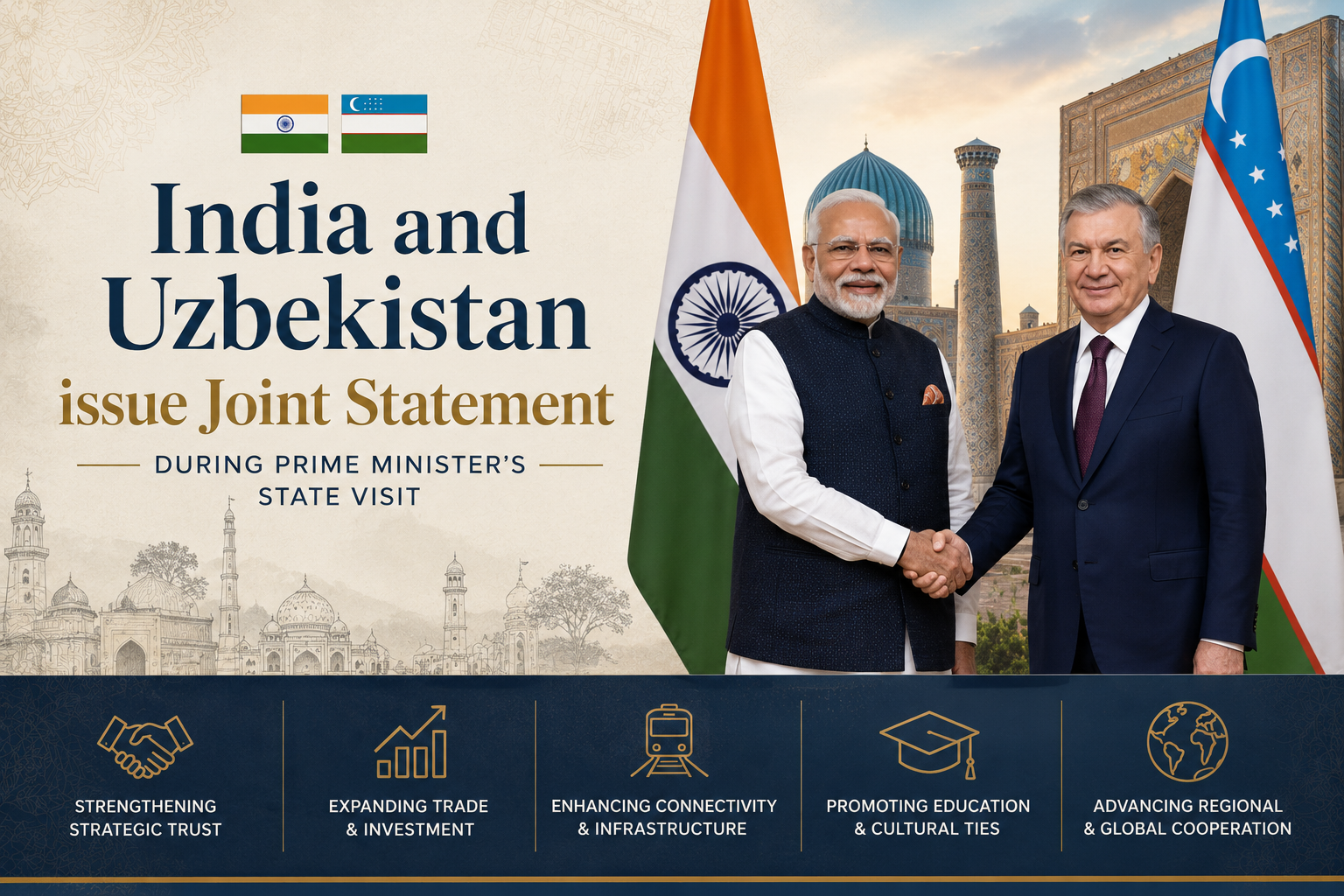
    S. Jaishankar visited Trinidad and Tobago, and both countries signed eight Memorandums of Understanding (MoUs) in sectors including tourism, healthcare, infrastructure, and Ayurveda.

    Key Agreements Signed

    The MoUs covered areas such as:

    • Tourism cooperation
    • Healthcare and prosthetics
    • Infrastructure development
    • Vector control
    • Ayurveda promotion
    • Solarisation projects

    Important Projects

    • National Prosthetics Centre: Inaugurated jointly in Penal, Trinidad and Tobago
    • Indian Chair on Ayurveda: To be established at University of the West Indies
    • Nelson Island Infrastructure Upgrade
      • Restoration and infrastructure support for Nelson Island
      • Historically linked to Indian indentured immigrants
    • Agro Processing Facility: Machinery support worth:
      • 1 million US dollars provided by India
    • Laptop Distribution Initiative: India handed over the first batch of 2,000 laptops to schoolchildren

    About Trinidad and Tobago

    • Island nation in the Caribbean Sea
    • Capital: Port of Spain
    • Member of: CARICOM

    About CARICOM

    • Regional grouping of Caribbean countries
    • Objective: Economic integration and cooperation
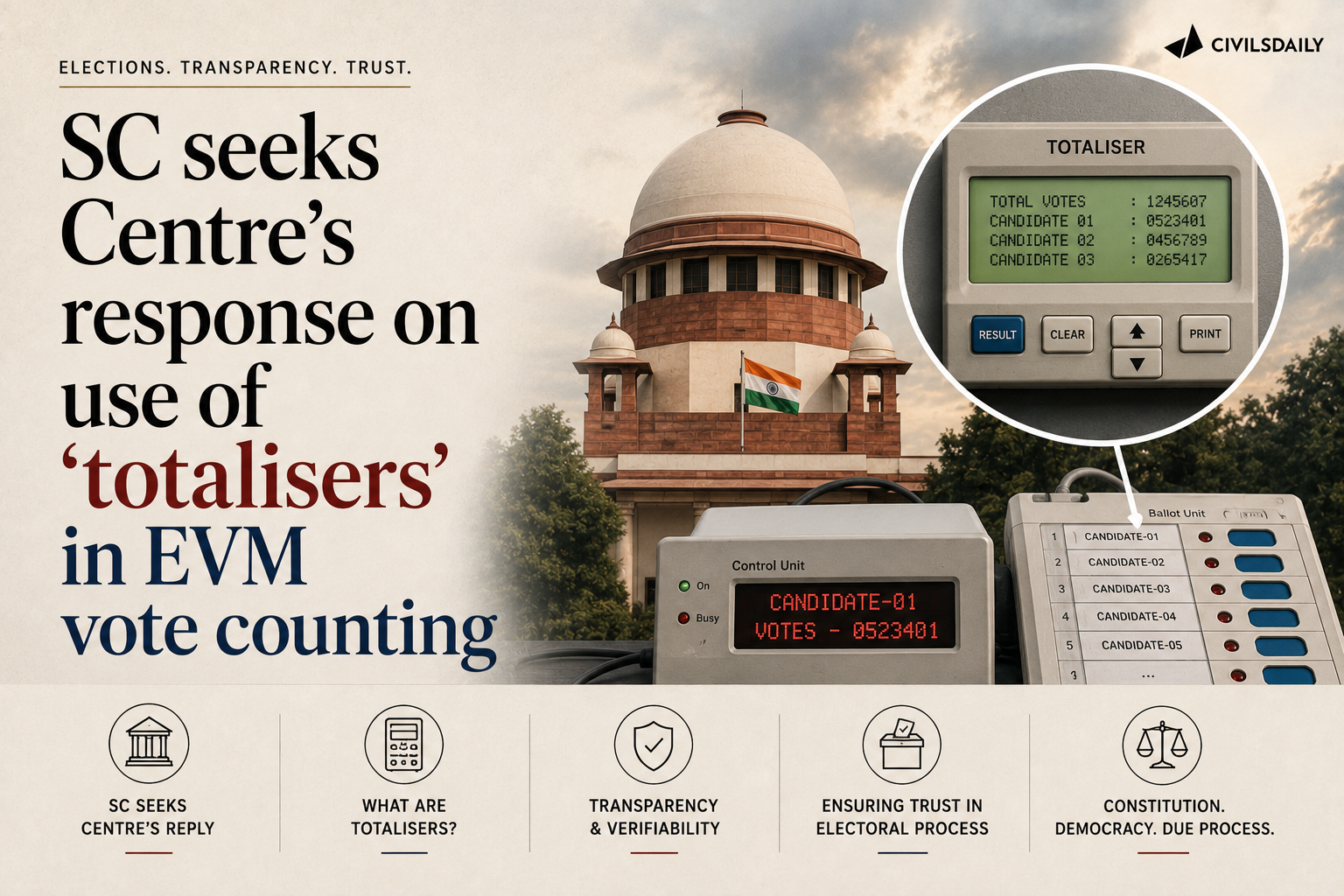
  • Why 2023 law to appoint CEC came about, the legal challenges it faces

    Why in the News?

    The Supreme Court, while hearing challenges to the Chief Election Commissioner and Other Election Commissioners (Appointment, Conditions of Service and Term of Office) Act, 2023, revived debate on the independence of the Election Commission. The controversy emerged after the 2023 law overturned the Supreme Court’s Anoop Baranwal v. Union of India (2023) framework by removing the Chief Justice of India from the selection committee and replacing the position with a Union Cabinet Minister. The core issue concerns whether an executive-dominated appointment process affects the constitutional independence of the Election Commission and the principle of free and fair elections.

    Timeline: Evolution of the CEC Appointment Controversy

    1. 1950: The Constitution of India comes into force. Article 324(2) empowers Parliament to enact a law governing the appointment of the Chief Election Commissioner (CEC) and Election Commissioners (ECs).
    2. 1950-1991: No parliamentary law regulates appointments to the Election Commission of India (ECI). Appointments remain under executive discretion.
    3. 1991: Parliament enacts the Election Commission (Conditions of Service of Election Commissioners and Transaction of Business) Act, 1991.
      1. Regulates salary, tenure, and service conditions of Election Commissioners.
      2. Does not provide a framework for appointments.
    4. 2022: Petitioners file the Anoop Baranwal v. Union of India case before the Supreme Court, challenging executive dominance in appointments to the ECI.
    5. March 2023: Supreme Court delivers judgment in Anoop Baranwal v. Union of India (2023). Creates an interim appointment mechanism comprising:
      1. Prime Minister
      2. Leader of Opposition in Lok Sabha
      3. Chief Justice of India (CJI)
    6. March 2023: Supreme Court states that the interim mechanism will continue until Parliament enacts a law under Article 324(2).
    7. December 2023: Parliament passes the Chief Election Commissioner and Other Election Commissioners (Appointment, Conditions of Service and Term of Office) Act, 2023. Key Change under 2023 Act:
      1. Replaces the Chief Justice of India in the selection committee with a Union Cabinet Minister nominated by the Prime Minister.
      2. Creates a 2:1 executive majority in the committee.
    8. 2024: Multiple petitions challenge the constitutional validity of the Chief Election Commissioner and Other Election Commissioners (Appointment, Conditions of Service and Term of Office) Act, 2023 before the Supreme Court.
    9. 2025: Supreme Court begins detailed hearings on whether the 2023 law undermines the independence of the Election Commission and the principle of free and fair elections under the Constitution.

    How Were Election Commissioners Appointed Before 2023?

    1. Constitutional Vacuum: Article 324(2) permitted Parliament to regulate appointments through legislation, but no law was enacted for decades.
    2. Executive Dominance: Appointments remained under executive control through recommendations routed by the Union Law Ministry to the Prime Minister and President.
    3. Bureaucratic Preference: Election Commissioners were largely selected from senior civil servants, with the senior-most Election Commissioner usually elevated as CEC.
    4. 1991 Act Limitation: The Election Commission (Conditions of Service of Election Commissioners and Transaction of Business) Act, 1991 regulated salaries, tenure, and service conditions but did not govern appointments.
    5. Institutional Concern: Petitioners in Anoop Baranwal v. Union of India argued that executive-led appointments compromised institutional neutrality and electoral fairness.

    Why Did the Supreme Court Intervene in the Anoop Baranwal Case?

    1. Institutional Independence: The Court emphasized that free and fair elections require an independent Election Commission insulated from political interference.
    2. Legislative Inaction: The Court criticized Parliament’s prolonged failure to enact a law despite explicit constitutional mandate under Article 324(2).
    3. Constitutional Morality: The judgment reinforced democratic accountability and separation of powers.
    4. Interim Appointment Mechanism: The Court directed that appointments would be made by a committee comprising:
      1. Prime Minister
      2. Leader of Opposition in Lok Sabha
      3. Chief Justice of India
    5. Judicial Safeguard: Inclusion of the CJI ensured neutrality and reduced risks of partisan appointments.
    6. Institutional Strengthening: The Court made a “fervent appeal” for strengthening the Election Commission institutionally and financially.

    What Changes Did the 2023 Law Introduce?

    1. Selection Committee Revision: The 2023 law replaced the CJI with a Union Cabinet Minister nominated by the Prime Minister.
    2. Executive Majority: The selection committee now consists of:
      1. Prime Minister
      2. Union Cabinet Minister nominated by PM
      3. Leader of Opposition
    3. Numerical Dominance: The executive effectively controls two out of three seats in the committee.
    4. Legal Protection Clause: The Act states that appointments cannot be invalidated merely due to vacancy or defects in the committee’s composition.
    5. Legislative Override: Parliament effectively replaced the Supreme Court’s interim mechanism with a statutory framework favoring executive primacy.

    Why Is the 2023 Law Facing Constitutional Challenge?

    1. Electoral Neutrality Concern: Petitioners argue that executive dominance undermines the independence of the Election Commission.
    2. Basic Structure Question: Challenges invoke principles of free and fair elections, judicial independence, and democracy as part of the Constitution’s basic structure.
    3. Conflict with Judicial Spirit: Critics contend that the law dilutes safeguards established in the Anoop Baranwal judgment.
    4. Separation of Powers Issue: Removal of the CJI is viewed as reducing institutional checks on executive discretion.
    5. Democratic Credibility: Concerns persist regarding public trust in electoral administration.

    How Does This Debate Affect India’s Democratic Framework?

    1. Electoral Legitimacy: Independent election management ensures acceptance of electoral outcomes.
    2. Constitutional Governance: The issue tests the balance between Parliament’s legislative authority and constitutional safeguards.
    3. Institutional Trust: Public confidence in the Election Commission affects democratic participation.
    4. Global Democratic Image: India’s standing as the world’s largest democracy depends significantly on perceived electoral integrity.
    5. Precedent for Other Institutions: The case may influence future debates on appointments to constitutional bodies such as:
      1. CBI
      2. Lokpal
      3. Information Commissions

    What Are the Key Constitutional and Legal Provisions Involved?

    1. Article 324: Vests superintendence, direction, and control of elections in the Election Commission.
    2. Article 324(2): Allows Parliament to enact a law regulating appointment of Election Commissioners.
    3. Basic Structure Doctrine: Protects democracy, rule of law, judicial review, and free and fair elections.
    4. 1991 Act: Governs salaries and conditions of service but originally excluded appointment procedures.
    5. 2023 Act: Introduces statutory framework for appointments and committee structure.

    Conclusion

    The controversy surrounding the Chief Election Commissioner and Other Election Commissioners (Appointment, Conditions of Service and Term of Office) Act, 2023 highlights the larger constitutional challenge of balancing executive authority with institutional independence. Since free and fair elections form part of the Constitution’s basic structure, the credibility of the Election Commission remains central to democratic legitimacy. The Supreme Court’s decision in the ongoing challenge will shape the future of electoral reforms, constitutional governance, and public trust in democratic institutions.

    PYQ Relevance

    [UPSC 2022] Discuss the role of the Election Commission of India in the light of the evolution of the Model Code of Conduct.

    Linkage: The PYQ is directly linked to the independence, neutrality, and constitutional status of the Election Commission of India (ECI). The 2023 CEC Appointment Act and Anoop Baranwal v. Union of India debate examine whether executive-controlled appointments can affect free and fair elections and ECI credibility.

  • JANANI Platform 

    Why in the News?

    The Ministry of Health and Family Welfare launched the JANANI Platform to strengthen digital maternal and child healthcare monitoring in India.

    About JANANI (Journey of Antenatal, Natal and Neonatal Integrated Care) Platform

    • A service-oriented digital platform for monitoring maternal and child healthcare services. 
    • Upgraded version of the existing: Reproductive and Child Health (RCH) Portal

    Objective

    • Comprehensive digital tracking of women during reproductive age by QR Enabled Mother and Child Health Cards
    • Covers:
      • Antenatal care
      • Delivery preparedness
      • Postnatal care
      • Newborn care
      • Family planning services
    • Smart Tracking and Alerts of 
      • High risk pregnancies
      • Due health services
      • Immunisation schedules
    • Real time dashboards for monitoring
    [2023] Consider the following statements in relation to Janani Suraksha Yojana : 
    1. It is a safe motherhood intervention of the State Health Departments. 
    2. Its objective is to reduce maternal and neonatal mortality among poor pregnant women. 
    3. It aims to promote institutional delivery among poor pregnant women. 
    4. Its objective includes providing public health facilities to sick infants up to one year of age. 
    How many of the statements given above are correct? 
    [A] Only one [B] Only two [C] Only three [D] All four
  • NITI Aayog Report on School Education 

    Why in the News

    NITI Aayog released a report titled “School Education System in India: Temporal Analysis and Policy Roadmap for Quality Enhancement”, highlighting poor student retention and weak learning outcomes in India’s school system.

    Key Findings of the Report

    • Near Universal Primary Access: India has achieved near universal enrolment at the primary level. However, Significant dropouts occur at secondary and higher secondary stages

    Student Dropout Concern

    • Around 4 out of 10 students drop out before completing higher secondary education
    • Reason: Frequent school transitions due to lack of continuous schooling structure.

    Pyramid Structure of Schooling

    The report describes India’s education system as a “sharp pyramid”.

    Statistics

    • Total schools: 14.71 lakh
    • Total students: 24.69 crore
    • Primary schools: 7.3 lakh
    • Higher secondary schools: 1.64 lakh
    [2025] Which of the following statements with regard to recommendations of the 15th Finance Commission of India are correct? 
    I. It has recommended grants of ₹ 4,800 crores from the year 2022-23 to the year 2025-26 for incentivizing States to enhance educational outcomes. 
    II. 45% of the net proceeds of Union taxes are to be shared with States. 
    III. ₹ 45,000 crores are to be kept as performance-based incentive for all States for carrying out agricultural reforms. 
    IV. Its reintroduced tax effort criteria to reward fiscal performance. 
    Select the correct answer using the code given below. 
    [A] I, II and III [B] I, II and IV [C] I, III and IV [D] II, III and IV
  • [8th May 2026] The Hindu OpED: Openness, not isolation, is the bedrock of the West  

    PYQ Relevance[UPSC 2019] The long-sustained image of India as a leader of the oppressed and marginalised nations has disappeared on account of its new-found role in the emerging global order.” ElaborateLinkage: The PYQ examines changing global power structures, identity politics, and the transition from liberal globalisation to strategic geopolitics. It is directly linked with the article’s themes of civilisational politics, openness, democratic resilience, and global interdependence.

    Mentor’s Comment

    Major powers, especially the U.S., are increasingly viewing global politics through a “civilisational” lens. Recent statements linking migration, China, and geopolitics with the defence of “Western civilisation” mark a shift from the post-Cold War emphasis on openness and globalisation. The article argues that the West’s real strength came from openness to talent, innovation, migration, and diversity, not cultural isolation. This debate is important because it could shape future policies on immigration, technology, trade, and democracy.

    Why Is Civilisational Framing Re-emerging in Global Politics?

    1. Civilisational Narratives: Increasing references to “Western civilisation” by U.S. leaders frame geopolitics through cultural identity rather than institutional cooperation.
    2. Geopolitical Polarisation: Strategic competition with China, migration debates, and technological rivalry reinforce identity-based political discourse.
    3. Samuel Huntington’s Thesis: Revives the “Clash of Civilizations” framework proposed in the 1990s, which predicted cultural identities would dominate global conflicts.
    4. Identity Politics: Encourages viewing international relations through religion, ethnicity, and culture rather than shared economic interests.
    5. Policy Shift: Marks a contrast with the post-Cold War liberal order built on globalisation, open markets, and multilateralism.

    How Did Openness Become the Core Source of Western Strength?

    1. Institutional Adaptability: Western societies historically absorbed diversity and converted it into innovation through rules-based institutions.
    2. Migration Flows: Sustained economic growth through continuous inflows of skilled labour and human capital.
    3. Knowledge Networks: Facilitated collaboration among universities, firms, research laboratories, and international experts.
    4. Competitive Ecosystems: Enabled cross-border circulation of ideas, capital, and talent that accelerated innovation.
    5. Economic Dynamism: Post-Cold War prosperity depended heavily on openness to global markets, ideas, and demographic integration.

    Why Does the AI Revolution Reinforce the Importance of Global Openness?

    1. Artificial Intelligence Leadership: AI innovation increasingly depends on globally integrated talent pools and research ecosystems.
    2. Technology Ecosystems: Firms such as Microsoft, OpenAI, and NVIDIA rely on international expertise and cross-border collaboration.
    3. Talent Mobility: Global competition in AI is driven by the ability to attract the most capable researchers irrespective of origin.
    4. Innovation Networks: Breakthroughs emerge through multinational cooperation across research institutions and private firms.
    5. Strategic Competition: Countries restricting migration and academic openness risk losing technological leadership.

    What Did the COVID-19 Pandemic Reveal About Interdependence?

    1. Distributed Production Systems: Vaccine development relied on globally dispersed scientific and manufacturing networks.
    2. Collaborative Research: Moderna and AstraZeneca depended on international partnerships and global research ecosystems.
    3. India-UK Cooperation: The Serum Institute of India enabled large-scale vaccine manufacturing through international collaboration.
    4. Scientific Interdependence: Demonstrated that innovation ecosystems function through transnational cooperation rather than isolation.
    5. Supply Chain Integration: Highlighted the centrality of global production systems during crisis response.

    Why Is Immigration Becoming an Economic Necessity for Advanced Economies?

    1. Ageing Populations: Many advanced economies face demographic decline and shrinking workforces.
    2. Labour Market Requirements: Skilled migration supports productivity, fiscal stability, and innovation ecosystems.
    3. Human Capital: Immigration sustains entrepreneurship, scientific research, and high-technology sectors.
    4. Economic Competitiveness: Restrictive migration policies weaken long-term economic resilience.
    5. Fiscal Sustainability: Declining working-age populations increase pension and healthcare burdens without migration support.

    How Does Civilisational Framing Misdiagnose Modern Challenges?

    1. False Cultural Reductionism: Attributes national success primarily to cultural homogeneity rather than institutional effectiveness.
    2. Institutional Strength: Historical evidence shows adaptability and institutional resilience matter more than identity purity.
    3. Innovation Capacity: Open societies historically outperform closed societies in scientific and technological advancement.
    4. Policy Distortion: Excessive emphasis on identity politics can weaken democratic openness and global cooperation.
    5. Strategic Error: Isolationist approaches undermine competitiveness in interconnected sectors like AI, trade, and advanced manufacturing.

    Why Is Democratic Openness Central to 21st Century Governance?

    1. Global Challenges: Climate change, AI governance, and public health crises require transnational cooperation.
    2. Democratic Resilience: Successful democracies balance stability with institutional adaptability.
    3. Rule of Law: Open systems sustain accountability, innovation, and legitimacy.
    4. Institutional Trust: Democracies maintain strength by integrating diversity within constitutional frameworks.
    5. Strategic Confidence: Long-term resilience depends on confidence in openness rather than defensive isolationism.

    How Can States Balance Openness with Security Concerns?

    1. Regulated Immigration: Ensures lawful migration management while retaining economic benefits.
    2. Institutional Governance: Strong institutions prevent social fragmentation while sustaining openness.
    3. Strategic Integration: Balances national security with economic interconnectedness.
    4. Democratic Safeguards: Protects civic norms, accountability, and constitutional values.
    5. Resilient Globalisation: Encourages selective interdependence instead of complete decoupling.

    Conclusion

    The enduring strength of the West emerged from institutional openness, migration, innovation, and adaptability rather than cultural isolation. In an era of AI competition, geopolitical rivalry, and economic fragmentation, resilient democracies will depend more on openness with strong institutions than on narrow civilisational nationalism.

  • “Medical negligence claims can be pursued against a deceased doctor’s heirs, says SC “

    Why in the News?

    The Supreme Court, in May 2025, ruled that medical negligence proceedings can continue even after the death of the accused doctor if the claim relates to financial loss recoverable from the doctor’s estate. The judgment creates a distinction between personal claims such as pain, suffering, or reputational damage, which extinguish upon death, and pecuniary claims, which survive against legal heirs to the extent of inherited property. The ruling is significant because it modifies the traditional common law principle “actio personalis moritur cum persona” and strengthens consumer rights in healthcare disputes. 

    What constitutional and legal principles govern medical negligence liability in India?

    1. Article 21: The Supreme Court of India interprets the right to life as including the right to health. This mandates that both public and private healthcare providers maintain standards that ensure accessible and accountable care.
    2. Consumer Protection Framework: Treats healthcare as a “service” under consumer law, enabling compensation claims.

    Legal Principles & Tests

    • The Bolam Test: This is the primary standard used by Indian courts. A doctor is not negligent if they acted in accordance with a practice accepted as proper by a responsible body of medical professionals, even if a different body of opinion exists.
    • Jacob Mathew Guidelines: To prevent the harassment of doctors, criminal prosecution for negligence requires a high degree of “gross” negligence. Police cannot arrest a doctor without an independent opinion from a competent medical board.
    • Res Ipsa Loquitur: Meaning “the thing speaks for itself,” this principle is used when the negligence is so obvious (e.g., leaving a surgical tool inside a patient) that the burden of proof shifts to the doctor to prove they were not negligent.
    • Tort Liability: Recognizes compensation for breach of duty causing injury or loss.

    How did the Supreme Court interpret survivability of medical negligence claims?

    1. Pecuniary Liability: Allows continuation of claims involving financial loss against the deceased doctor’s estate.
    2. Personal Claims: Extinguishes claims involving pain, suffering, defamation, or reputational injury upon death.
    3. Estate Accountability: Restricts liability only to the value of property inherited by legal heirs.
    4. Substantive Justice: Prevents procedural termination of compensation claims merely due to death of the accused.
    5. Consumer Protection Continuity: Ensures pending medical negligence complaints remain maintainable under law.

    Why did the Court revisit the common law doctrine “actio personalis moritur cum persona”?

    1. Traditional Principle: Held that personal legal actions die with the person.
    2. Indian Modification: Indian statutes progressively restricted the absolute application of the doctrine.
    3. Legal Representatives Suits Act, 1855: Permitted suits involving monetary losses against estates of deceased persons.
    4. Indian Succession Act, 1925: Section 306 preserved rights to prosecute or defend actions except in strictly personal injuries.
    5. Judicial Modernisation: Adapted colonial common law principles to contemporary consumer rights jurisprudence.

    What statutory provisions formed the basis of the judgment?

    1. Legal Representatives Suits Act, 1855
      1. Monetary Claims: Permits legal proceedings against legal representatives for financial loss caused by the deceased.
      2. Estate Limitation: Restricts recovery to inherited estate and not personal assets of heirs.
    2. Section 306 of Indian Succession Act, 1925
      1. Survival of Actions: Preserves rights to prosecute or defend legal proceedings after death.
      2. Exceptions Clause: Excludes defamation, assault, and purely personal injuries not causing death.
    3. Order XXII of Code of Civil Procedure (CPC)
      1. Substitution Mechanism: Enables replacement of deceased parties with legal representatives.
      2. Procedural Continuity: Prevents automatic abatement where right to sue survives.
    4. Consumer Protection Act
      1. Section 13(7): Applies CPC provisions regarding death of parties to consumer disputes.
      2. Consumer Rights Protection: Facilitates continuation of compensation claims in healthcare disputes.

    How does the judgment strengthen consumer rights in healthcare?

    1. Compensation Continuity: Ensures victims are not denied remedy due to death of the doctor.
    2. Institutional Accountability: Reinforces trust in civil compensation mechanisms.
    3. Access to Justice: Prevents procedural loopholes from defeating substantive claims.
    4. Victim-Centric Jurisprudence: Prioritizes restitution for financial injury suffered by patients.
    5. Legal Certainty: Clarifies ambiguity regarding maintainability of pending negligence claims.

    What concerns emerge from the judgment?

    1. Liability Uncertainty: Creates ambiguity where legal heirs inherit no estate.
    2. Enforcement Challenges: Complicates determination of extent of inherited assets.
    3. Defensive Medicine: May increase risk-averse medical practices in critical care.
    4. Litigation Expansion: Could increase long-pending compensation disputes against estates.
    5. Professional Anxiety: Raises concerns regarding prolonged legal exposure for medical practitioners and families.

    How does the judgment affect the healthcare ecosystem?

    1. Medical Governance: Strengthens accountability standards in healthcare delivery.
    2. Insurance Relevance: Increases importance of professional indemnity insurance for doctors.
    3. Hospital Liability: Encourages institutional compliance and risk-management systems.
    4. Patient Awareness: Expands understanding of legal remedies available in medical negligence.
    5. Judicial Oversight: Enhances role of courts in balancing professional autonomy with patient rights.

    Conclusion

    The judgment strengthens patient rights and accountability in healthcare by allowing pecuniary medical negligence claims to continue against a deceased doctor’s estate. It reflects the expanding scope of Article 21, consumer protection, and substantive justice in India’s healthcare governance framework.

    PYQ Relevance

    [UPSC 2024] In a crucial domain like the public healthcare system, the Indian State should play a vital role to contain the adverse impact of marketisation of the system. Suggest some measures through which the State can enhance the reach of public healthcare at the grassroots level.

    Linkage: The PYQ focuses on State accountability in ensuring accessible and ethical healthcare amid rising commercialization of the sector. The present judgment strengthens patient rights, consumer protection, and medical accountability, linking healthcare governance with Article 21 and professional ethics.

  • Swasth Bharat Portal 

    Why in the News

    The Government of India has launched the Swasth Bharat Portal, a unified digital platform aimed at integrating fragmented health programme systems across the country.

    About Swasth Bharat Portal

    • A single integrated digital health platform
    • Designed to connect multiple health programme systems through:
      • API based interoperability

    What are Application Programming Interfaces (APIs)?

    • Instead of building unique, complex connections between every single system, APIs act as “universal translators” or bridges, allowing disparate tools to work together seamlessly without requiring deep knowledge of each other’s internal code

    Main Objectives

    • Eliminate duplicate data entry
    • Streamline reporting systems
    • Improve evidence based planning
    • Support faster decision making in health programmes

    Key Features

    • Unified Health Platform: Acts as a one stop aggregator for health programmes
    • Interoperability
    • Uses federated architecture and APIs
    • Enables seamless exchange of health data
    • Data VisualisationProvides tools for monitoring and local level planning
    [2022] With reference to Ayushman Bharat Digital Mission, consider the following statements: 
    1. Private and public hospitals must adopt it. 
    2. As it aims to achieve universal health coverage, every citizen of India should be part of it ultimately. 
    3. It has seamless portability across the country.
    Which of the statements given above is/are correct? 
    [A] 1 and 2 only [B] 3 only [C] 1 and 3 only [D] 1, 2 and 3