💥Join UPSC 2027,2028 Mentorship (July Batch) + XFactor Notes & Microthemes PDF

GS Paper: GS3

  • Contrasting Tourist Destinations: Maldives vs. Lakshadweep

    Lakshadweep

    Introduction

    • Prime Minister Narendra Modi’s recent invitation for travelers to explore the beauty of Lakshadweep sparked a surprising backlash from Maldivian officials, leading to heated debates on social media.
    • This article delves into the distinctions between the Maldives and Lakshadweep as tourist destinations, comparing factors such as tourist numbers, infrastructure, and environmental concerns.

    Maldives and Lakshadweep: A Geographical Overview

    • Maldives: An archipelago of 1,190 coral islands and sandbanks grouped into over 20 atolls, located southwest of Kerala and Sri Lanka in the North Central Indian Ocean.
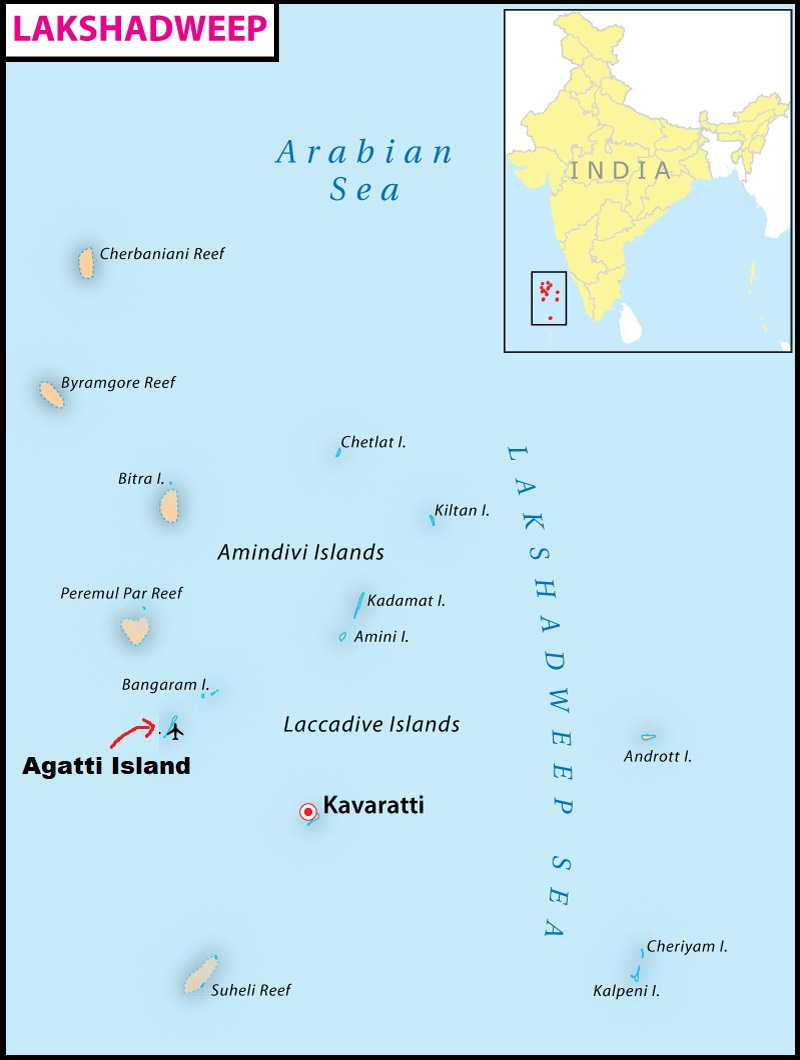
    • Lakshadweep: Comprising 36 coral islands spread across a mere 32 sq km, it’s India’s smallest Union Territory. These islands lie north of the Maldives and are situated at varying distances of 220 km to 440 km from Kochi.

    Tourism Statistics: A Stark Contrast

    • Lakshadweep: In 2018, only 10,435 domestic and 1,313 foreign tourists visited, a negligible share compared to other Indian tourist destinations.
    • Maldives: Data from January 2024 shows a daily average of nearly 6,000 tourist arrivals, totaling 1,01,626 arrivals. In 2023, over 1.87 million tourists visited, contributing significantly to the country’s economy.

    Maldives’ Tourism Success Story

    • Investment in Tourism: The Maldives has been investing in tourism since 1972, with tourism becoming the country’s most vital economic activity by the 1980s.
    • Economic Contribution: Tourism directly contributes almost 30% of the Maldives’ GDP and generates over 60% of its foreign currency earnings.
    • Connectivity: The country is served by 40 carriers from around the world, including airlines like Air India, Vistara, and IndiGo.
    • Visa-Free Arrivals: The Maldives offers visa-free arrivals to major source markets like India, Russia, China, and Kazakhstan.
    • Diverse Accommodations: With over 180 resorts, 15 hotels, 811 guesthouses, and 140 safari vessels, the Maldives offers more than 62,000 beds to tourists.
    • Local Island Guesthouses: Starting in 2009, local island guesthouses allowed tourists to stay among the local population, providing privacy and luxury.

    Lakshadweep’s Limited Potential and Environmental Concerns

    • Small Area: Lakshadweep, with only 10 inhabited islands, has limited potential due to its small size.
    • Environmental Concerns: Concerns over environmental damage and disruption of local livelihoods have hindered tourism development.
    • Capacity Constraints: Lakshadweep lacks the capacity and resources to host a large influx of tourists due to its fragile ecology.
    • Supreme Court Recommendations: A Supreme Court-appointed panel recommended that all development proposals align with an Integrated Island Management Plan and respect carrying capacity limits.
    • Restricted Entry: Entry to Lakshadweep is restricted, requiring permits issued by the Lakshadweep Administration.
    • Infrastructure Challenges: Limited air and ferry connectivity, as well as inadequate accommodations, pose challenges for tourism development.

    Prospects for Lakshadweep’s Tourism

    • Positive Outlook: The recent interest from Prime Minister Modi has sparked optimism for Lakshadweep’s tourism potential.
    • Planned Developments: Applications for tourism development on islands like Bangaram, Thirunakkara, Suheli Cheriyakara, and Cheriyam are expected, potentially leading to significant projects.
    • High-end, Low-volume Tourism: Local authorities aim for high-end tourism with low visitor volumes to preserve the islands’ fragile environment.

    Conclusion

    • The Maldives and Lakshadweep, though neighbouring archipelagos, exhibit stark differences in tourist numbers, development, and environmental concerns.
    • While the Maldives thrives as an international tourism hotspot, Lakshadweep faces limitations due to its ecological fragility, yet there is hope for responsible tourism development in the Union Territory.
  • Saving the Great Indian Bustard

    bustard

    Introduction

    • The Supreme Court has called upon the Centre to unveil its strategy for preserving the critically endangered Great Indian Bustard (GIB) by February.

    Why discuss this?

    • Recognizing the urgent need to safeguard this bird species, the court acknowledges the significant threat posed by high transmission power lines in the natural habitats of Gujarat and Rajasthan.
    • These areas are not only vital for the GIB but also play a crucial role in India’s renewable energy initiatives, particularly solar power.
    • Striking a balance between GIB conservation and international commitments to reduce carbon emissions through renewable energy is the challenge at hand.

    Great Indian Bustard: An Overview

    • Significance: GIBs are the largest among India’s four bustard species and are considered flagship birds of grasslands.
    • Conservation Status: Critically endangered, with historic habitat reduced to just 10 percent.
    • Protection Measures: Listed under CITES Appendix I, IUCN status: Critically Endangered, and under Schedule I of the Wildlife (Protection) Act.
    • Threats: Overhead power transmission, poor vision, windmills, noise pollution, landscape changes, and alterations in cultivation patterns pose significant threats to GIBs.

    Conservation vs. Solar Power Dilemma

    • International Commitments: India has global commitments to reduce carbon emissions and promote alternative energy sources such as solar power.
    • Striking a Balance: The Supreme Court emphasizes the need to find a middle ground that preserves the GIB while ensuring the availability of solar power.
    • Safety Concerns: Underground power lines are deemed dangerous, necessitating innovative solutions.

    Challenges and Concerns

    • Ineffective Bird Diverters: Current bird diverters installed in key GIB habitats are either sub-standard or have failed to prevent collisions.
    • Government’s Role: The Court questioned the government’s intentions and seeks a clear plan to address the GIB’s conservation and the solar power expansion.
    • Data on Bird Diverters: The Chief Justice inquired about authentic data or government-monitored studies on the effectiveness of bird diverters.

    Try this PYQ:

    Q.Consider the following pairs:

    Protected Area: Well-known for

    1. Bhitarkanika, Odisha — Salt Water Crocodile
    2. Desert National Park, Rajasthan — Great Indian Bustard
    3. Eravikulam, Kerala — Hoolock Gibbon

    Which of the pairs given above is/are correctly matched? (CSP 2014)

    (a) 1 only

    (b) 1 and 2

    (c) 2 only

    (d) 1, 2 and 3


    [wpdiscuz-feedback id=”w0xgrf709a” question=”Please leave a feedback on this” opened=”1″]Post your answers here.[/wpdiscuz-feedback]

  • The problem with India’s science management

    14 Indian Scientists who changed the World by their Contributions

    Central Idea:

    The central idea of the article is that India’s scientific progress is hindered by the dominant role of senior scientists in the administrative aspect of science. The author argues that the current paradigm, where scientists are also administrators, is flawed and proposes a separation between scientists and administrators to enhance the efficiency and resilience of India’s scientific endeavors.

    Key Highlights:

    • The government is revamping India’s science establishment, emphasizing the importance of scientific advances for sustained economic progress.
    • India’s low expenditure on research and development is highlighted, urging the need for wise allocation of funds and focus on high-impact projects.
    • The author criticizes the current scientific administration for its failures in areas like space exploration, nuclear energy, genomics, robotics, and artificial intelligence.
    • The article emphasizes the outsized role of senior scientists in India’s science administration and argues that their dual roles as scientists and administrators lead to inefficiencies.

    Key Challenges:

    • Inadequate funding for research and development in India.
    • Inefficiencies and failures in key scientific projects.
    • Dominance of senior scientists in administrative roles.
    • Lack of comprehensive training for scientists in administrative tasks.
    • Conflicts of interest and unethical practices in the scientific community.

    Key Terms/Phrases:

    • National Research Foundation (NRF).
    • Defence Research and Development Organisation (DRDO).
    • Gatekeepers in the scientific community.
    • Administrative tasks and scientific endeavors.
    • Separation of scientists and administrators.
    • All-India transfers of scientists.
    • System insiders as regulators.

    Key Quotes:

    • “Sustained economic progress… fueled by scientific advances translated into deployable technologies.”
    • “India’s low overall expenditure on research and development… pivotal to allocate money wisely.”
    • “The defining feature of India’s science administration is the centrality of its senior scientists.”
    • “Administration is something which has to be taught and practiced separately from the subject matter being administered.”
    • “The separation of administrators and scientists is something which most robust science establishments generally embrace.”

    Key Statements:

    • India’s scientific progress is linked to wise allocation of funds and focus on high-impact projects.
    • The dual role of senior scientists as administrators hinders effective science management.
    • Comprehensive training is needed for scientists in administrative tasks.
    • The dominance of gatekeepers in the scientific community leads to conflicts of interest.
    • Administration should be separate from scientific expertise for optimal outcomes.

    Key Examples and References:

    • Indian Space Research Organisation’s ranking in launch numbers.
    • Latecomers in nuclear energy and unrealized thorium ambitions.
    • Challenges in genomics, robotics, and artificial intelligence.
    • Instances of conflicts of interest, plagiarism, and unethical practices in Indian science.

    Critical Analysis:

    • The article critically evaluates the shortcomings in India’s science administration, citing specific examples of failures.
    • It challenges the assumption that scientists make effective administrators and emphasizes the need for specialized administrative skills.
    • The historical context of gatekeepers and their influence on the scientific community is analyzed to understand the roots of the current issues.
    • The article provides a comparative perspective, citing the U.S. model as an example of the separation between scientists and administrators.

    Way Forward:

    • Advocate for the separation of scientists and administrators in India’s science establishment.
    • Establish an all-India pool of a science administration central service for training and selecting science administrators.
    • Emphasize the importance of comprehensive training for scientists taking on administrative roles.
    • Address conflicts of interest and unethical practices within the scientific community.
    • Encourage a shift in the culture of Indian science towards professionalism, accountability, and transparent practices.
  • States are spending. The economy is waiting

    Finance Commission - Issues related to devolution of resources - Civilsdaily

    Central Idea:

    State governments in India have navigated fiscal challenges caused by the Covid-19 pandemic, with a focus on fiscal consolidation. Despite borrowing flexibility granted by the Union government, states kept their fiscal deficits under control in 2021-22 and 2022-23. However, there has been a notable shift in spending priorities in 2023-24, with an emphasis on capital expenditure, reflecting positive economic growth prospects.

    Key Highlights:

    • States, accounting for over three-fifths of total government spending, traditionally focused on revenue expenditure but increased capital expenditure significantly in 2023-24.
    • The ratio of capital outlay to total expenditure reached an eight-year high at 14.1%, indicating a growth-enhancing strategy.
    • A 45.7% increase in capital outlay, fueled by timely disbursements from the Union government and buoyant state revenues, contributed to this shift.
    • The Union government’s proactive release of tax devolution and approval of capital assistance schemes played a crucial role.
    • Despite the healthy growth in state revenues, a 29.2% decline in grants from the Union government led to a reliance on market borrowings.
    • Record-high gross market borrowings during the first nine months of the year were primarily directed towards capital expenditure.

    Key Challenges:

    • A shortfall in grants from the Union government led to tepid overall revenue growth, necessitating increased market borrowings by the states.
    • Achieving the aggregate fiscal deficit target of 3.1% of GDP may be challenging due to the reliance on market borrowings and a potential slippage.

    Key Terms and Phrases:

    • Fiscal Deficit: The difference between government expenditure and revenue.
    • Capital Expenditure: Money spent on creating or acquiring assets with long-term benefits.
    • Revenue Expenditure: Regular spending on operational costs like salaries, pensions, and subsidies.
    • Tax Devolution: Allocation of tax revenues from the Union government to states.
    • Market Borrowings: Funds raised by states through the issuance of bonds in the financial market.

    Key Quotes and Statements:

    • “States’ capital expenditure is being fueled by an interplay of two forces…”
    • “The quality of their expenditure — ratio of capital outlay to total expenditure — stands at 14.1%, an eight-year high…”
    • “The Union government has been proactive in releasing the advance instalments of tax devolution…”
    • “Despite this healthy growth in states own revenues, their overall revenue receipts have grown at an average pace of 5.5%…”

    Key Examples and References:

    • The advance release of monthly tax devolution and timely disbursements of funds for the special scheme on capital assistance.
    • Approval of capital expenditure worth and released under the special assistance scheme till November 2023.
    • Record-high gross market borrowings during the first nine months of the year.

    Key Facts and Data:

    • Aggregate fiscal deficit target for states: 3.1% of GDP.
    • Ratio of capital outlay to total expenditure: 14.1%, an eight-year high.
    • Gross market borrowings by states during the first nine months of the year.

    Critical Analysis:

    • The shift towards capital expenditure indicates a positive economic outlook and potential for growth.
    • The reliance on market borrowings due to a decline in grants poses a fiscal challenge.
    • Achieving the fiscal deficit target might be challenging, with a potential slippage.

    Way Forward:

    • States should continue prioritizing capital expenditure for sustained economic growth.
    • Improving efficiency in tax administration and formalizing the economy can enhance revenue.
    • Collaboration between Union and state governments for stable fiscal management is crucial.
  • ISRO’s develops 2nd Generation Distress Alert Transmitter (DAT-SG)

    Introduction

    • The Indian Space Research Organisation (ISRO) has pioneered an innovative Distress Alert Transmitter (DAT) to enhance the safety of fishermen at sea.
    • This second-generation DAT, known as DAT-SG, offers advanced capabilities and features, revolutionizing how emergency messages are communicated from fishing boats.

    About Distress Alert Transmitter (DAT-SG)

    • Operational Since 2010: The initial version of DAT became operational in 2010, enabling fishermen to send emergency messages through a communication satellite.
    • Central Control Station: Messages were received at the Indian Mission Control Centre (INMCC), a central control station, where alert signals were decoded to identify the distressed fishing boat.
    • Coordination with MRCCs: The extracted information was then forwarded to Maritime Rescue Coordination Centres (MRCCs) under the Indian Coast Guard (ICG), facilitating coordinated search and rescue operations.
    • Widespread Use: Over 20,000 DATs were deployed and utilized for distress communication.

    Evolution to DAT-SG

    • Technological Advancements: ISRO leveraged advancements in satellite communication and navigation to create the second-generation DAT (DAT-SG).
    • Acknowledgement Feature: DAT-SG now includes an acknowledgement feature, providing assurance to fishermen that their distress alert has been received and that help is on the way.
    • Two-Way Communication: In addition to sending distress signals, DAT-SG can receive messages from control centers. This allows the transmission of advance alerts regarding adverse weather conditions, cyclones, tsunamis, or other emergencies, enabling fishermen to make informed decisions for their safety.
    • Enhanced Fishing Zone Information: DAT-SG also disseminates information about potential fishing zones to fishermen at regular intervals, optimizing their catch and conserving time and fuel.
    • Mobile Connectivity: DAT-SG can be connected to mobile phones via Bluetooth, and messages can be displayed in the fishermen’s native language using a dedicated mobile app.

    Central Control and Coordination

    • Sagarmitra Network: The central control station, INMCC, employs a web-based network management system called Sagarmitra. This system maintains a database of registered DAT-SGs and facilitates real-time access for MRCCs.
    • Real-time Coordination: Sagarmitra enables Indian Coast Guard personnel to swiftly respond to distress calls without delay, enhancing search and rescue operations.
    • Operational 24/7: DAT-SG services are available round-the-clock, ensuring continuous support to fishermen facing emergencies at sea.

    Also read:

    Nabhmitra: Satellite-Based Safety Device for Fishermen

  • Human Papillomavirus (HPV) and Cervical Cancer   

    Introduction

    • This article sheds light on the significance of Cervical Cancer Awareness Month, the grim reality of cervical cancer in India, and the importance of prevention through knowledge, screening, and vaccination.

    Cervical Cancer: Unveiling the Facts

    • Prevalence in India: Cervical cancer ranks as the second-most common cancer among Indian women, with its origin in the cervix, the entrance to the uterus from the vagina.
    • HPV Connection: Persistent infection by the human papillomavirus (HPV) is the primary cause of cervical cancer. HPV is a common virus that affects nearly all sexually active individuals, often without any symptoms. While the immune system typically clears the virus, high-risk strains can lead to cancer.
    • India’s Alarming Stats: India bears a heavy burden, accounting for nearly a quarter of global cervical cancer deaths. Every year, approximately 1.25 lakh women are diagnosed with cervical cancer, and tragically, around 75,000 lose their lives to this disease.

    Global Efforts and India’s Progress

    • WHO’s Elimination Strategy: In 2022, the World Health Organization (WHO) launched a strategy to eliminate cervical cancer as a public health concern worldwide. The strategy emphasizes three pillars: vaccination, screening, and treatment.
    • Positive Trends in India: India may not meet the 2030 goals outlined by WHO, but there is a glimmer of hope. Incidence rates are declining, possibly attributed to factors like sexual hygiene, pregnancy age, contraception use, and individual immune status.
    • Comprehensive Approach: Experts stress the need for a multi-pronged approach, including awareness programs, vaccination drives, regular screenings, and education to combat stigma.

    Screening Methods and Challenges

    • Pap Smear vs. HPV DNA Testing: Traditionally, the pap smear was the gold standard for cervical cancer screening. However, it has limitations, such as the need for cytologists and low awareness, especially in rural areas.
    • Advancements in Screening: Today, HPV DNA testing is recommended as the primary screening method. It involves testing cervical cells for high-risk HPV strains. This method is more reliable and less prone to errors.
    • Empowering Self-Sampling: Studies suggest that self-sampling for cervical cancer screening, where patients collect their samples, can be as effective as physician-collected samples. Offering this option can enhance screening accessibility.

    Vital Role of Vaccination

    • HPV Vaccine Controversy: India faced controversy in the past regarding the HPV vaccine’s safety. However, cervical cancer is preventable, and the vaccine targets HPV serotypes 16&18, responsible for 70% of cervical cancers.
    • Single-Dose Effectiveness: Recent recommendations from the WHO’s Strategic Advisory Group of Experts on Immunization (SAGE) highlight the effectiveness of even a single dose of the HPV vaccine, crucial for countries with low population coverage.
    • India’s Vaccination Efforts: Two vaccines, Merck’s Gardasil and Serum Institute of India’s Cervavac, are available in India. Expanding production and introducing the vaccine into national programs are essential steps.

    Government Initiatives and Challenges

    • State-Level Success: Sikkim set a positive example by introducing free HPV vaccination, achieving high coverage rates among girls aged 9 to 14.
    • Slow National Rollout: The Central government’s plan for a nationwide HPV vaccination program faced delays. Despite recent reports suggesting a rollout in phases, the Union Health Ministry has yet to make a final decision.
    • Global Perspective: While 100 countries have integrated the HPV vaccine into their national schedules, achieving high coverage remains a challenge, particularly in poorer nations.

    Encouraging Early Action

    • Optimal Age for Vaccination: Vaccination is recommended for girls aged 9 to 15, providing maximum protection. However, it can benefit adults up to the age of 45.
    • Combatting Hesitation: Effective communication and education are essential to address vaccine hesitancy and dispel misconceptions.
    • A Global Endeavor: The International Agency for Research on Cancer stresses the importance of scaling up screening programs, expanding HPV vaccination coverage, and increasing access to affordable treatment to meet WHO’s 2030 targets.

    What You Can Do

    • Stay Informed: Educate yourself and others about HPV and cervical cancer.
    • Prioritize Screening: Consult your healthcare provider for cervical cancer screening, especially if you haven’t done so before.
    • Consider Vaccination: Discuss the HPV vaccine with your healthcare provider and make an informed choice for yourself or your loved ones.
  • INSAT 3D’s Role in Monitoring Foggy Conditions in North India

    Introduction

    • As large parts of North India, including regions like Bihar, Uttar Pradesh, Uttarakhand, Haryana, Delhi, and Punjab, grapple with heavy fog, the India Meteorological Department (IMD) has been issuing alerts and warnings to keep residents informed about the prevailing conditions.
    • This article seeks to unravel the science behind these warnings and the role of the INSAT 3D satellite in providing crucial data for fog monitoring.

    Fog Situation in North India

    • Persistent Fog: Since December 2023, many parts of North India have been shrouded in heavy fog.
    • IMD Warnings: On January 16, the IMD issued warnings about “very dense fog” in several states, including Haryana, Chandigarh, Delhi, Uttar Pradesh, Punjab, and Madhya Pradesh, with visibility expected to drop below 50 meters during night and morning hours.

    Decoding Satellite Images

    • Insights from INSAT 3D: The INSAT 3D satellite plays a vital role in monitoring foggy conditions through images.
    • Solar Reflectance and Brightness Temperature: The colors in these images are determined by two factors: solar reflectance and brightness temperature.
    • Solar Reflectance: Reflects the amount of solar energy reflected by a surface in relation to the energy it receives.
    • Brightness Temperature: Relates an object’s temperature to the brightness of its surface, measured across various wavelengths.

    Day Microphysics Data

    • Solar Reflectance at Three Wavelengths: INSAT 3D’s ‘day microphysics’ component studies solar reflectance at three wavelengths: 0.5 µm (visible radiation), 1.6 µm (shortwave infrared radiation), and 10.8 µm (thermal infrared radiation).
    • Color Determination: The strength of signals at these wavelengths determines the RGB (red-green-blue) colors in the image.
    • Applications: These images help analyze cloud types, thunderstorm stages, snow identification, and fire detection.

    Night Microphysics Data

    • Complex Color Determination: INSAT 3D’s ‘night microphysics’ component derives two colors from the difference between two thermal infrared signals.
    • Color Variables: Red color depends on the difference between 12 µm and 10 µm signals, green on 10.8 µm and 3.9 µm signals, and blue on the strength of the 10.8 µm signal.
    • Identifying Features: Night microphysics data aids in identifying cloud types and their temperature differences.

    Combining Day and Night Data

    • Comprehensive Insights: Meteorologists combine day and night microphysics data to study moisture droplets, temperature variations, and track the formation, evolution, and depletion of weather events, including cyclones.
    • Advanced Warning Systems: Proposed applications include predicting thunderstorms one to three hours in advance.

    Radiometers and Sounders

    • Satellite Instruments: INSAT 3D and 3DR use radiometers for spectral measurements and atmospheric sounders for temperature, humidity, and water vapor analysis.
    • Improved Technology: These satellites offer significant improvements in spatial resolution and spectral channels compared to their predecessors, enhancing India’s weather monitoring capabilities.

    Future with INSAT 3DS

    • Continued Advancements: The Indian Space Research Organisation plans to launch the INSAT 3DS meteorological satellite in February 2024.
    • Enhanced Capabilities: This satellite will build upon the successes of its predecessors, further enhancing India’s weather monitoring and warning capabilities.

    Conclusion

    • The INSAT 3D satellite, with its ability to capture and analyze day and night microphysics data, plays a pivotal role in monitoring and predicting weather conditions, including foggy scenarios, in North India.
    • By understanding the intricate science behind these satellite images, meteorologists can provide timely warnings and valuable insights to protect public safety and navigate the challenges posed by severe weather conditions.
    • With advancements on the horizon, India’s meteorological capabilities continue to evolve, ensuring better preparedness for weather-related events in the future.
  • Derek O’Brien writes: Creaking infrastructure and an absent BJP government

    Pradhan Mantri Gram Sadak Yojana: 5.5 मीटर चौड़ी होंगी गांव की सड़कें -  divya himachal

    Central Idea:

    The excerpts from Jawaharlal Nehru’s speeches in the 1950s and 1960s highlight the symbolic significance and national pride associated with the Bhakra-Nangal Project. However, the current state of Indian infrastructure, particularly in roads, tunnels, bridges, flyovers, and railways, paints a contrasting picture, revealing delays, poor construction quality, accidents, and questionable priorities.

    Key Highlights:

    • Nehru’s speeches emphasize Bhakra-Nangal as a symbol of India’s progress and a temple of resurgent India.
    • The stark contrast between Nehru’s vision and the current state of Indian infrastructure is evident in issues with roads, tunnels, bridges, flyovers, and railways.
    • The PM Gramin Sadak Yojana faces delays and subpar construction, with over 50,000 km of roads yet to be completed.
    • The Bharatmala project’s Phase 1 achieved only 39% of its target, with a significant increase in sanctioned amounts compared to estimates.
    • Tragic incidents like tunnel collapses, bridge collapses, and rail accidents underscore the grim reality of poor infrastructure.

    Key Challenges:

    • Inordinate delays and poor-quality construction in road projects under PM Gramin Sadak Yojana.
    • Serious defects and negligence leading to bridge collapses, resulting in significant casualties.
    • Lack of completion in safety inspections for railways and a focus on expensive vanity projects like the bullet train over fundamental needs.

    Key Phrases:

    • Nehru’s reference to Bhakra-Nangal as the “new temple of resurgent India” and a symbol of progress.
    • Tragic incidents such as tunnel collapses, bridge collapses, and rail accidents highlighting the grim reality of poor infrastructure.

    Key Quotes:

    • “Bhakra-Nangal is a landmark not merely because the water will flow here and irrigate large portions (of land) or because enough electric power will be generated here to run thousands of factories and cottage industries which will provide work for the people and relieve unemployment.”
    • “Bhakra, the new temple of resurgent India, is the symbol of India’s progress.”

    Anecdotes:

    • Narratives of individuals trapped in tunnels and tragic incidents during infrastructure collapses, providing a human perspective on the consequences.

    Key Statements:

    • Nehru’s speeches glorifying Bhakra-Nangal as a symbol of progress and resurgent India.
    • Instances of negligence leading to tragedies, raising questions about the state of infrastructure.

    Key Examples and References:

    • Specific incidents such as the Morbi bridge collapse, Uttarkashi tunnel tragedy, and rail accidents illustrate the grim consequences of poor infrastructure.
    • The disparity in construction costs between the bullet train and dedicated freight corridors.

    Key Facts and Data:

    • Over 50,000 km of roads await completion under the PM Gramin Sadak Yojana.
    • Phase 1 of the Bharatmala project achieved only 39% of its original target.
    • At least 15 major rail accidents occurred in 2023, with safety inspections incomplete.

    Critical Analysis:

    • The article reveals a stark contrast between Nehru’s visionary speeches and the current state of Indian infrastructure.
    • Tragic incidents underscore the urgent need for better construction practices and safety measures.
    • Prioritizing expensive vanity projects over fundamental infrastructure needs raises questions about allocation of resources.

    Way Forward:

    • Emphasizes the importance of reevaluating priorities and focusing on fundamental infrastructure needs.
    • Urges the government to address delays, improve construction quality, and prioritize safety in infrastructure projects.
    • Calls for a shift in focus from expensive vanity projects to essential infrastructure that serves the basic needs of the population.
  • Should AI models be allowed to use copyrighted material for training?

    Should AI models be allowed to use copyrighted material for training? - The  Hindu

    Central Idea:

    The article explores the legal implications of the New York Times (NYT) filing a lawsuit against OpenAI and Microsoft for alleged copyright infringement. The focus is on the fair use doctrine, comparing U.S. and Indian laws, and discussing the broader issue of copyright for AI-generated material.

    Key Highlights:

    • The fair use doctrine in the U.S., governed by Section 107 of the Copyright Act, involves a four-factor test, making it challenging to predict outcomes.
    • The lawsuit revolves around OpenAI’s use of NYT articles to train ChatGPT without permission, potentially impacting NYT’s business model.
    • Fair use analysis considers factors such as the purpose of use, nature of copyrighted work, amount used, and the impact on the original’s market value.
    • The generative AI case presents a unique scenario with both parties having strong arguments, emphasizing the challenge in predicting fair use outcomes.
    • The absence of specific text and data mining exceptions in Indian law raises concerns about the justification for AI training within the fair dealing framework.

    Key Challenges:

    • Determining whether OpenAI’s use of NYT’s content is transformative and not a substitute for the original source.
    • The verbatim reproduction of NYT’s content complicates the fair use analysis.
    • Lack of specific text and data mining exceptions in Indian law poses challenges for justifying AI training under fair dealing.

    Key Terms:

    • Fair use doctrine: Legal principle allowing limited use of copyrighted material without permission.
    • Generative AI: Artificial intelligence capable of creating new content.
    • Fair dealing: Legal concept allowing limited use of copyrighted material for specific purposes.
    • Copyright infringement: Unauthorized use of copyrighted material.
    • Text and data mining: Automated analysis of large datasets to extract information.

    Key Phrases:

    • “Transformative use”: Argument that the use of copyrighted material adds new value and does not replace the original.
    • Fair use analysis“: Evaluation of factors to determine if the use of copyrighted material is permissible.
    • “Verbatim reproduction”: Exact copying of content without modification.
    • Fair dealing exception“: Legal provision allowing specific uses of copyrighted material in India.

    Key Quotes:

    • “OpenAI has a good case, but so does the NYT.”
    • “The fair use analysis is notoriously difficult to predict.”
    • “The court will have to take a very liberal interpretation of the purposes mentioned if it wants to accommodate training.”
    • “The U.S. Copyright Office has said that AI-generated material is not copyrightable.”
    • “A market-based solution is likely here.”

    Anecdotes:

    • The article refers to the 1984 case involving Sony and Universal Studios, highlighting the importance of substantial non-infringing use in copyright cases.
    • Mention of the case involving a monkey in Indonesia and the copyright of selfies, emphasizing the requirement of a human author in copyright law.

    Key Statements:

    • “The fair use analysis is notoriously difficult to predict.”
    • “The absence of specific text and data mining exceptions in India raises concerns about justifying AI training within the fair dealing framework.”

    Key Examples and References:

    • Google Books, thumbnails, and scraping cases cited as precedents for transformative use.
    • Comparison with Canada’s liberal interpretation of fair dealing in similar cases.
    • Reference to the Digital Millennium Copyright Act as a legislative solution to manage copyright infringement on online platforms.

    Key Facts and Data:

    • OpenAI allegedly used thousands of NYT articles for ChatGPT’s training without permission.
    • The fair use doctrine dates back to 1841, with a balancing test used in copyright cases.
    • The U.S. Copyright Office has stated that AI-generated material is not copyrightable.

    Critical Analysis:

    • The article acknowledges the complexity of fair use analysis and the challenges posed by verbatim reproduction.
    • It highlights the need for a liberal interpretation of fair dealing in Indian law to accommodate AI training.
    • The potential impact of digital protection measures being overridden on fair use analysis is discussed.

    Way Forward:

    • Suggests the need for a market-based solution, similar to the music industry’s response to peer-to-peer file sharing.
    • Emphasizes the importance of fine-tuning policies to promote creativity while addressing concerns about ownership in AI-generated content.
    • Advocates for clear guidelines on AI use in copyright applications to ensure transparency.

    In conclusion, the article navigates through the legal complexities of AI training on copyrighted material, touching upon fair use doctrines, international comparisons, and the evolving landscape of AI-generated content within copyright laws. It suggests potential solutions and underscores the importance of balancing innovation with copyright protection.

  • Did 250 million Indians exit Poverty?  

    poverty

    Introduction

    • The recent paper by Niti Aayog has highlighted a significant reduction in ‘multidimensional poverty’ among Indians between 2013-14 and 2022-23, an achievement acknowledged by PM Modi.
    • To comprehend this data accurately, it is essential to grasp the concept of multidimensional poverty and evaluate the methodology used.

    Understanding Multidimensional Poverty

    • Traditional Poverty Metrics: Poverty is commonly measured monetarily, based on income or expenditure thresholds.
    • Multidimensional Poverty Index (MPI): India employs a global MPI that assesses poverty by considering 12 life aspects beyond income. These aspects fall under categories like education, health, and living standards.
    • Deprivation Assessment: Households are evaluated for deprivation across each of the 12 indicators. If they are deprived in several areas, they are labelled ‘multidimensionally poor’ (MDP).

    Data Sources

    • National Family Health Surveys (NFHS): Household-level data from NFHS serves as the raw material. Niti Aayog further processes this data to calculate MDP figures.
    • NFHS Rounds: NFHS data is available for three rounds: 2005-06 (NFHS-3), 2015-16 (NFHS-4), and 2019-21 (NFHS-5).
    • Share of MDP Indians: In 2005-06, it was 55%, which decreased to 25% in 2015-16. Assuming a consistent pace, the paper suggests it may have been 29% in 2013-14. Further extrapolation estimates it to be 11% by 2022-23.

    Assessing the Assumptions

    • Vague Starting Point: The choice of 2013-14 as a starting point may be open to interpretation and serves as a defining factor for evaluating nine years of Modi’s leadership.
    • Uniform Pace Assumption: Assuming a uniform pace over such a long period can be challenging, as it may not account for variations in progress over different years.
    • Neglecting Pandemic Impact: Extrapolating progress without considering the pandemic’s effects on data collection and welfare reversals may lead to inaccuracies.

    Interpreting the Data

    • Value of Indices: While indices like MPI offer a combined view of multiple indicators, they should not overshadow the importance of monetary poverty data.
    • Not Equivalent to Poverty: Multidimensional poverty should not be equated with poverty itself, as they represent different aspects. It is essential to differentiate between the two.
    • Selective Maths: The exercise of interpolation and extrapolation to align with a government’s tenure should be viewed critically and with consideration of potential limitations.

    Conclusion

    • The reduction in multidimensional poverty in India is a noteworthy achievement, as evidenced by NFHS data.
    • However, it is crucial to approach such data with a nuanced understanding of the methodology, assumptions, and its implications.
    • While multidimensional poverty indices provide valuable insights, they should complement, not replace, comprehensive poverty assessment methods.