The price fluctuations and Inflation trends in recent market underscore the necessity for Targeted Policy Interventions and a comprehensive grasp of Agricultural Supply Chains.
The Significance of Vegetable Triumvirate (trio):
Tomato, Onion, and Potato (TOP) aren’t just statistical entities but essential ingredients in Indian cuisine, forming the backbone of many dishes.
These vegetables represent more than just a portion of the CPI basket; they embody cultural and dietary preferences deeply ingrained in Indian culinary traditions.
Volatility and its role in shaping Inflation trends by TOP vegetables:
Vegetable prices in India rose by approximately 15% year-on-year, indicating significant inflation in this category.
Highly Volatile: There was notable volatility in vegetable prices, with a sharp decrease of 0.7% in June followed by a substantial increase of 37.4% in July.
High Contribution to Inflation: Despite vegetables weighing only 6% in the total CPI basket, their contribution to inflation was about 30% in Feb/March 2024.
For example, Tomatoes having a weight of only 0.6% in the CPI basket, prices soared by 202% in July 2023, contributing to 18.1% of the total headline inflation.
The contribution of vegetables to headline inflation was 31.9%, with TOP (tomato, onion, and potato) contributing 17.2%, further highlighting their substantial impact on inflation trends.
Navigating Culinary and Economic Realities (Challenges):
Policy Challenges: The volatility in TOP prices underscores the need for effective policy interventions, including agricultural value chain reforms and improved storage facilities to stabilize prices and support farmers.
Farmers’ Plight: Farmers, who are often net buyers of these crops, bear the brunt of price fluctuations, necessitating measures like Minimum Support Prices to ensure their livelihoods are protected.
Government Response: Despite protests and demands from farmers, policy responses have been inconsistent, relying on short-term measures like export bans rather than addressing underlying structural issues in the agricultural sector.
Way forward:
Need for Value Chain Reforms: Implement reforms aimed at improving the efficiency and resilience of agricultural value chains for TOP vegetables.
Need Price Stabilization Mechanisms: Introduce mechanisms to stabilize prices of TOP vegetables, such as market interventions, buffer stocks, or price ceilings during periods of extreme volatility. This can help mitigate the impact of price fluctuations on consumers and farmers alike.
Minimum Support Prices (MSPs): Establish MSPs for TOP vegetables to provide farmers with a guaranteed floor price for their produce.
Mains PYQ:
Q Do you agree with the view that steady GDP growth and low inflation have left the Indian economy in good shape? Give reasons in support of your arguments.(UPSC IAS/2019)
Wildlife authorities in Himachal Pradesh’s Lahaul & Spiti district have initiated surveys to estimate the population of Blue Sheep (bharal) and Himalayan Ibex (Tangor), vital prey species for the iconic snow leopard.
This move aims to assess the region’s biodiversity and promote conservation efforts.
About the Species Mentioned
Bharal (Blue Sheep)
Himalayan Ibex (Tangor)
Scientific Name
Pseudois nayaur
Capra sibirica hemalayanus
Genus
Pseudois
Capra
Distribution
India, Bhutan, China (Gansu, Ningxia, Sichuan, Tibet, Inner Mongolia), Myanmar, Nepal, Pakistan
Himalayan region of India, Pakistan, Tibet, Nepal
Features
Slate grey coat with bluish shine
Horns grow upwards, curve out, and then towards the back
Large curved horns with notches on the front
Light brown to reddish-brown coat, white belly, black and white markings on legs
Thick, woolly coat in winter, shed in early summer
Behavior
Active throughout the day, alternating between feeding and resting on grassy mountain slopes
Usually found in small herds, sometimes around 50 together;
In response to the helicopter crash involving Iranian President Ebrahim Raisi, the European Union had activated its Copernicus Emergency Management Service (EMS) to aid in search and rescue efforts.
About the Copernicus Programme
This Programme was launched in 1998 by the European Union’s earth observation
Named for Copernicus, it uses satellites and ground systems for environmental data.
It is implemented by EU member states with support from entities like the European Space Agency (ESA) and the European Environment Agency (EEA).
Utility of GMES: Rapid Response Mapping Service
The Copernicus EMS offers rapid response mapping, a crucial component activated during emergencies like natural disasters or accidents.
How Rapid Mapping Works?
Rapid mapping involves acquiring, processing, and analyzing satellite images and relevant data to provide timely information.
It offers several products, including pre-event reference and post-event assessments like first estimates, delineation, and grading of the impacted area.
Application in the Iranian President’s Case
In the case of the Iranian President’s helicopter crash, the EU activated the rapid response mapping service to aid search and rescue operations.
This technology helps locate the crash site and assess the extent of the impact, facilitating swift response efforts.
PYQ:
[2018] With reference to the Indian Regional Navigation Satellite System (IRNSS), consider the following statements:
IRNSS has three satellites in geostationary and four satellites in geosynchronous orbits.
IRNSS covers entire India and about 5500 sq. km beyond its borders.
India will have its own satellite navigation system with full global coverage by the middle of 2021.
Which of the statements given above is/are correct?
Under the PM-WANI scheme, India witnesses a swift rise in public Wi-Fi hotspots, reaching approximately 1,99,896 hotspots nationwide, according to government data.
What is the PM WANI Initiative?
PM Modi launched the Prime Minister Wi-Fi Access Network Interface (PM WANI) in December 2020.
It is an initiative under the Department of Telecommunications (DoT).
It takes forward the goal of the National Digital Communications Policy, 2018 (NDCP) of creating a robust digital communications infrastructure.
Objective: To democratize internet access, particularly in remote and underserved areas.
Implementation: Leverages Public Data Offices (PDOs) established in public spaces like railway stations, banks, post offices, and more. Users can access the internet via Wi-Fi at these locations without requiring a SIM card.
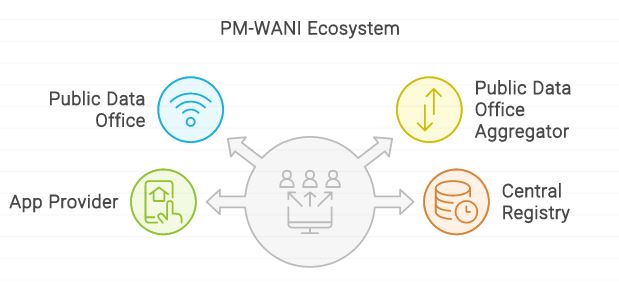
PM-WANI ecosystem consists of four parts:
Public Data Office (PDO): It establishes the Wi-Fi Hotspots and provides internet access to users
Public Data Office Aggregator (PDOA): It provides authorisation and accounting services to PDOs.
App Provider: It displays the available hotspots in the phone’s proximity.
Central Registry: This overseen by the Centre for Development of Telematics maintains details of App Providers, PDOs, and PDOAs.
How to Utilize PM WANI?
To access PM WANI services, users must install the Data PM WANI app on their smartphones.
Through the app, users can connect to nearby public Wi-Fi PDOs.
This application facilitates seamless connectivity to PM-WANI-compliant Wi-Fi hotspots, empowering users to access broadband services conveniently.
Data Plans Offered
PM WANI offers various data plans to suit different usage needs:
Rs 6 plan: 1GB data for 1 day
Rs 9 plan: 2GB data for 2 days
Rs 18 plan: 5GB data for 3 days
Rs 25 plan: 20GB data for 7 days
Rs 49 plan: 40GB data for 14 days
Rs 99 plan: 100GB data for 30 days
Role of Public Data Offices (PDOs)
The PM-WANI scheme includes a provision for establishing Public Data Offices (PDOs) by rural entrepreneurs in remote regions.
These PDOs procure internet bandwidth from telecom service providers or ISPs to offer Wi-Fi services at minimal charges.
This model enables individuals to access the internet even in areas with limited or no data connectivity.
PYQ:
[2018] Which of the following is/are the aim/aims of “Digital India” Plan of the Government of India?
Formation of India’s own Internet companies like China did.
Establish a policy framework to encourage overseas multinational corporations that collect Big Data to build their large data centres within our national geographical boundaries.
Connect many of our villages to the Internet and bring Wi-Fi to many of our school, public places and major tourists.
Select the correct answer using the codes given below:
Q) ‘Clean energy is the order of the day.’ Describe briefly India’s changing policy towards climate change in various international fora in the context of geopolitics. (UPSC CSE 2022)
Q) Describe the major outcomes of the 26th session of the Conference of the Parties (COP) to the United Nations Framework Convention on Climate Change (UNFCCC). What are the commitments made by India in this conference? (UPSC CSE 2021)
Prelims: Consider the following statements: (UPSC CSE 2016) 1. The International Solar Alliance was launched at the United National Climate Change Conference in 2015. 2. The Alliance includes all the member countries of the United Nations. Which of the statements given above is/are correct? (a) 1 only (b) 2 only (c) Both 1 and 2 (d) Neither 1 nor 2
Note4Students:
Prelims: Climate change; Policies and Programs in India
Mains: Climate change policies in India;
Mentor comment: India, as one of the most vulnerable countries to climate change, faces significant challenges due to rising temperatures, changing weather patterns, and environmental degradation. The impact of climate change is evident in the reduction of monsoon duration and rainfall levels, melting Himalayan glaciers, and rising sea levels threatening coastal regions. These changes pose risks to agriculture, food security, water availability, and overall environmental sustainability in the country. This article presents the reasons behind the relative lack of political focus on climate change in India and the potential implications for the country’s future.
Let’s learn.
–
Why in the News?
Our Indian politics is overshadowed by merely immediate concerns and political agendas while leaving behind the major challenges like Climate Change and addressing its impacts.
This absence stands out even more when we consider the urgent need for sustainable development amidst worldwide environmental challenges.
Current State of Climate Change in India
According to India’s first-ever Climate Change Assessment Report carried out in 2020, the country’s average temperature is expected to rise by 4.4°C by the end of 2100. A decline in monsoon rainfall since the 1950s has already been observed. A 2°C rise in global average temperatures will make India’s summer monsoon highly unpredictable. At 2.5°C warming, melting glaciers, and loss of snow cover are expected to threaten the stability and reliability of northern India’s glacier-fed rivers. Global sea level has risen about 8 inches in the last century, which is expected to nearly double in this century.
The Present Dilemma: Prioritization of Economic Growth
As a developing nation, India prioritizes economic growth and development as a means to alleviate poverty and improve the standard of living for its citizens.
This focus often leads to a trade-off between environmental protection and industrial expansion, with climate change considerations taking a lower priority in the political discourse.
Challenges associated with generating political will and public support for climate action:
Lack of Immediate Visibility: The effects of climate change are often gradually visible to the general public. This lack of immediate consequences makes it challenging for politicians to garner public support for climate action, as voters tend to prioritize issues that directly impact their daily lives.
Competing Priorities and Short-term Thinking: Indian politics is often characterized by a focus on short-term goals and immediate concerns, such as job creation, infrastructure development, and social welfare schemes. Climate change, with its long-term implications, struggles to gain traction in a political landscape dominated by these pressing issues.
Perceived Conflict with Development Agenda: Some politicians and policymakers view climate action as a hindrance to economic development, fearing that it may limit industrial growth and restrict access to energy resources. This perception creates a barrier to implementing comprehensive climate policies.
Lack of Awareness and Education: Despite growing global awareness of climate change, there is still a need for greater education and understanding of the issue among the general public and political leaders in India.
Government Policies to Address Climate ChangeInternational Solar Alliance (ISA):
India collaborates with solar energy-rich countries to promote solar energy utilization and reduce reliance on non-renewable energy sources. One Sun, One World, One Grid Project: This project seeks to provide energy (SDG 7 – affordable and clean energy) to around 140 countries through a common grid that transfers solar power. By promoting solar energy on a global scale, this initiative addresses energy challenges and supports sustainable development. Swachh Bharat Mission: It focuses on cleanliness and sanitation (SDG 6 – Clean Water and Sanitation) across urban and rural areas in India. By ensuring access to sanitation facilities and promoting cleanliness, this initiative contributes to environmental health and sustainability. COP26 Glasgow Summit Commitments: During the COP26 summit, India made significant commitments to combat climate change, including achieving net zero emissions by 2070, meeting 50% of energy requirements from renewable sources by 2030, reducing carbon emissions, increasing non-fossil energy capacity, and decreasing carbon intensity by 2030. (SDG 13 – mitigating climate change).The Climate Action Tracker gives India an overall rating of “Highly Insufficient” in its policies and actions tracking, based on 2030 projections. Recent Judicial Stance: M.K. Ranjitsinh and Others vs Union of India (March 2024): The Supreme Court of India ruled that the people of India have the right to be free from the adverse effects of climate change by drawing upon Article 21 and Article 14 of the Indian Constitution. Recent Legislations: Some important policies and laws covering the energy sector emerged, which included the National Electricity Plan 2023, the National Green Hydrogen Mission and the Energy Conservation (Amendment) Act, 2022.
The Way Forward: To elevate climate change as a priority in Indian politics, a multi-pronged approach is necessary:
Emphasizing the economic benefits of climate action: Highlighting the potential for green jobs, sustainable development, and long-term cost savings can help align climate action with economic interests.
Promoting public awareness and engagement: Investing in education campaigns and fostering grassroots movements can help raise awareness and generate public pressure for climate action.
Incorporating climate change into political manifestos: Encouraging political parties to include climate change as a key issue in their election manifestos can help mainstream the topic and ensure its prominence in the political discourse.
Fostering cross-party collaboration: Building consensus and cooperation across political parties on climate change can help ensure continuity and long-term commitment to climate action, regardless of which party is in power.
The RBI has issued draft regulations for a Harmonized Prudential Framework and revised DCCO criteria, to enhance the Regulatory Framework for long-term (infrastructure, non-infrastructure, and commercial real estate sectors) project financing.
RBI’s purpose behind this is to regulate and supervise payment and settlement systems in the country, ensuring safe, secure, and efficient mechanisms for financial transactions.
What is the Date of Commencement of Commercial Operations (DCCO)?
The DCCO is a critical milestone for project loans, indicating the start of revenue-generating activities for the project.
Banks maintain the DCCO for project loans for several key reasons:
Asset classification: The DCCO is crucial for determining the asset classification of a project loan. If the project fails to commence commercial operations by the stipulated DCCO, the loan may be classified as a Non-performing asset (NPA).
Restructuring: The DCCO is used as a reference point for allowing the restructuring of project loans without treating it as an NPA. RBI guidelines permit banks to extend the DCCO by up to 1 year for commercial real estate projects and up to 2 years for infrastructure projects, without downgrading the asset classification, provided certain conditions are met.
Viability assessment: When extending the DCCO, banks must satisfy themselves about the viability of the project and the restructuring plan.
Provisioning: If a loan remains in the pre-commencement of the commercial operations phase for an extended period, banks may need to make higher provisions, considering the risk involved.
Monitoring and control: Maintaining a clear DCCO allows banks to monitor the project’s progress and take timely action if there are delays or cost overruns. This helps in managing the bank’s exposure and mitigating risks.
Key Highlights of the Proposed New Framework:
Income Recognition and Asset Classification: The draft framework outlines guidelines for Income Recognition, Asset Classification, and Provisioning of Advances for Projects Under Implementation (IRACP-PUIMP).
It emphasizes the importance of monitoring stress in projects and initiating resolution plans proactively.
Increase in general provisioning at the construction stage from 0.4% to 5% on all existing and fresh exposures, phased over three years (2% for FY25, 3.5% for FY26, and 5% for FY27).
Restructuring Norms: The RBI has prescribed norms for restructuring exposure in projects due to changes in the DCCO.
Lenders are required to have a board-approved policy for resolving stress in projects, triggered by a credit event during the construction phase.
Provisioning can be reduced to 2.5% and 1% at the operational phase if certain conditions are met.
Consortium Arrangements: In projects financed under consortium arrangements, specific exposure limits have been set based on the aggregate exposure of lenders.
Individual lenders must maintain a Minimum Exposure Percentage to ensure a balanced risk-sharing mechanism.
Financial Closure and Repayment Structure: The framework mandates that financial closure must be achieved before the disbursement of funds.
It discourages moratoriums on repayments beyond the DCCO period and sets guidelines for the repayment tenor not exceeding 85% of the economic life of the project.
Projects must demonstrate a positive net operating cash flow to cover all repayment obligations and a reduction in total long-term debt by at least 20%.
Net Present Value (NPV) Requirement: A positive NPV is a prerequisite for any project financed by lenders. The RBI stresses the importance of reevaluating the project NPV annually to ensure financial viability and address credit impairment risks.
Guidelines for a standby credit facility to fund cost overruns due to delays, with incremental funding of 10% of the original project cost.
ICRA Observations:
ICRA set up in 1991 is an independent and professional investment Information and Credit Rating Agency. It observed the proposed new framework could have the following implications:
Profitability Impact: Higher provisioning requirements for projects under implementation could impact the profitability of Non-banking Financial Companies and Infrastructure Financing Companies. The impact will be spread over 3 years.
Funding Costs: Estimated increase in funding costs by 20-40 basis points as lenders build additional risk premiums.
Major banks like SBI, Union Bank of India, and Bank of Baroda do not foresee significant impacts, although the pricing of loans may need adjustments.
Way Forward:
Enhanced Monitoring and Compliance: Implement robust monitoring mechanisms to ensure compliance with the new regulations. Regularly review and update the prudential framework to adapt to evolving market conditions.
Capacity Building: Train bank staff and stakeholders on the new regulatory requirements and best practices for project financing.
Prelims PYQ:
Q The Reserve Bank of India regulates the commercial banks in matters of: (UPSC CSE 2013)
liquidity of assets
branch expansion
merger of banks
winding-up of banks
Select the correct answer using the codes given below.
It was formed as part of the Environmental Protocol (Madrid Protocol, 1991) to the Antarctic Treaty, which came into force in 1998.
Aim: To advice and formulate recommendations on environmental protection measures in the Antarctic region.
Composition: It consists of representatives from the consultative parties to the Antarctic Treaty, which includes countries active in Antarctic research and governance.
Functions:
Environmental Impact Assessment (EIA): The CEP oversees the EIA process for activities conducted in the Antarctic region to ensure they minimize environmental impacts.
Site Inspections: It conducts inspections of Antarctic facilities and activities to verify compliance with environmental regulations.
Scientific Research: The CEP promotes scientific research on Antarctic ecosystems and advises on measures to conserve biodiversity.
Waste Management: It develops guidelines for waste management and pollution prevention in the Antarctic, aiming to minimize human impact on the environment.
Policy Formulation: The CEP formulates policies and guidelines related to environmental protection in the Antarctic Treaty.
Back2Basics: Madrid Protocol, 1991
The Madrid Protocol refers to the Protocol on Environmental Protection to the Antarctic Treaty.
It is an international agreement that was adopted in 1991 and entered into force in 1998.
Key aspects of the Madrid Protocol include:
Environmental Principles: The Protocol outlines principles for the protection of the Antarctic environment, including the conservation of living resources, the prevention of pollution, and the protection of wilderness and scientific values.
Designation of Protected Areas: It designates certain areas of Antarctica as specially protected areas (SPAs) and sites of special scientific interest (SSSI), where specific environmental protection measures apply to safeguard their ecological, scientific, and aesthetic values.
Waste Management: It establishes guidelines and regulations for waste management and pollution prevention in Antarctica, aiming to minimize human impact on the environment and prevent pollution of the Antarctic ecosystem.
Prohibition of Mineral Resource Activities: The Protocol prohibits all mineral resource activities, including exploration and exploitation, in Antarctica. This provision aims to preserve the pristine and fragile nature of the Antarctic environment and prevent the potential environmental damage associated with mineral extraction.
Consultative Mechanisms: The Protocol establishes mechanisms for consultation and cooperation. This includes the CEP, which provides advice and recommendations on environmental matters to the Antarctic Treaty Consultative Meeting (ATCM).
PYQs:
[2021] How do the melting of the Arctic ice and glaciers of the Antarctic differently affect the weather patterns and human activities on the Earth? Explain.
[2011] The formation of ozone hole in the Antarctic region has been a cause of concern. What could be the reason for the formation of this hole?
(a) Presence of prominent tropospheric turbulence; and inflow of chlorofluorocarbons.
(b) Presence of prominent polar front and stratospheric clouds; and inflow of chlorofluorocarbons.
(c) Absence of polar front and stratospheric clouds; and inflow of methane and chlorofluorocarbons.
(d) Increased temperature at polar region due to global warming.
According to the US Centers for Disease Control and Prevention (CDC), most people with PAM die within 1 to 18 days after symptoms begin. It usually leads to coma and death after 5 days.
Treatment Challenges
Currently, there are no established effective treatments for PAM.
Medical interventions typically involve a combination of drugs, including amphotericin B, azithromycin, fluconazole, rifampin, miltefosine, and dexamethasone.
The National Centre for Polar and Ocean Research, Goa, through the Ministry of Earth Sciences (MoES), has organised the meeting, which will be attended by the 56 member countries of the Antarctic Treaty.
What is the Antarctic Treaty Consultative Meeting (ATCM)?
ATCM is the primary forum for discussing and coordinating activities related to the Antarctic Treaty System.
It was established under the Antarctic Treaty, which was signed in 1959 and entered into force in 1961.
It serves as the annual meeting of the parties to the Antarctic Treaty, known as Consultative Parties.
The ATCM adopts legally binding agreements, known as Antarctic Treaty Measures (ATMs), as well as non-binding recommendations on various matters.
Decisions within the ATCM are made by consensus among the Consultative Parties.
The ATCM established the Committee for Environmental Protection (CEP) as a subsidiary body to provide advice and recommendations on environmental matters.
India had last hosted the ATCM in New Delhi in 2007.
India’s Agenda at ATCM 46
During the Kochi meet, India will table its plan to construct Maitri II before the members.
Any new construction or initiative in Antarctica requires the ATCM’s approval.
About Antarctic Treaty
Details
Signing and Entry into Force
Signed on December 1, 1959 at Washington DC.
Entered into force on June 23, 1961.
12 Initial Countries: Argentina, Australia, Belgium, Chile, France, Japan, New Zealand, Norway, South Africa, the USSR, the UK, and the US.
Objective
Ensure Antarctica remains exclusively for peaceful purposes, free from international discord.
Key Provisions
Art. I: Antarctica shall be used for peaceful purposes only
Art. II: Freedom of scientific investigation in Antarctica and cooperation
Art. III: Scientific observations and results from Antarctica shall be exchanged and made freely available
Antarctic Treaty Secretariat (ATS), established in 2004, serves as the administrative hub for the Antarctic Treaty System.
Annual Antarctic Treaty Consultative Meetings (ATCM) where member states discuss treaty implementation and cooperation.
Environmental Protection
Promotes protection of the Antarctic environment.
Prohibits activities causing pollution or environmental damage
Mineral Resource Exploitation
Bans mining activities until at least 2048.
Requires consensus for any review or modification
Membership
54 parties as of 2024.
29 Consultative Parties actively participate in decision-making.
25 Non-Consultative Parties.
India ratified the treaty in 1983.
Madrid Protocol
Adopted in 1991.
Entered into force in 1998.
Strengthens environmental protection measures in Antarctic.
India in Antarctica
1. Governance:
Since 1983, India has been a consultative party to the Antarctic Treaty.
Of the 56 nations that are part of the Antarctic Treaty, 29 have consultative party status.
In this capacity, India votes and participates in all key decision-making processes regarding Antarctica.
India has undertaken scientific research in Antarctica since 1981.
2. Scientific Expeditions:
The first Indian Antarctica research station, Dakshin Gangotri, was set up in 1983, some 2,500 km from the South Pole in Queen Maud Land. The station operated till 1990.
In 1989, India set up its second Antarctica research station, Maitri, in the Schirmacher Oasis, a 3-km wide ice-free plateau with over 100 freshwater lakes.
It is still operational and located about 5 km from Russia’s Novolazarevskaya Station, and 90 km from Dakshin Gangotri.
In 2012, India inaugurated Bharati, its third Antarctica research station, located around 3,000 km east of Maitri, on the Prydz Bay coast.
Although the station focuses on oceanographic and geologic study, the Indian Space Research Organisation (ISRO) utilises it for receiving Indian Remote sensing Satellite (IRS) data.
India plans to open a new station, Maitri II, a few kilometres from the ageing Maitri station. Operations are set to begin by 2029.
In 2022, India enacted the Antarctic Act, reaffirming its commitment to the Antarctic Treaty.
About the National Centre for Polar and Ocean Research (NCPOR)
NCPOR is an Indian research and development institution, situated in Vasco da Gama, Goa.
It is an autonomous institution of the Department of the Ministry of Earth Sciences, established in 1998.
It is responsible for scientific and strategic endeavors in the Polar Regions (Arctic and Antarctic), the Himalayas, and the Southern Ocean.
PYQ:
[2015] The term ‘IndARC’ sometimes seen in the news is the name of
(a) An indigenously developed radar system inducted into Indian Defence.
(b) India’s satellite to provide services to the countries of Indian Ocean Rim.
(c) A scientific establishment set up by India in Antarctic region.
(d) India’s underwater observatory to scientifically study the Arctic region.
The X chromosome influences biological functions and disease susceptibilities, affecting genetic disorders, autoimmune diseases, and Alzheimer’s, with research offering potential new treatments and therapies.
Back2Basics: Chromosomes
Chromosomes are fundamental components of cells that play a vital role in storing and transmitting genetic information.
These structures contain genes, which carry instructions for the development, functioning, and inheritance of traits.
Chromosomes consist of tightly coiled DNA molecules wrapped around proteins called histones, forming chromatin.
Before cell division, chromosomes replicate into identical sister chromatids held together at the centromere.
Types of Chromosomes:
Autosomes: Non-sex chromosomes (22 pairs in humans) determine most traits.
Sex Chromosomes: Determine biological sex (XX for females, XY for males).
Functions of Chromosomes
Genetic Information Storage: Genes on chromosomes encode instructions for protein production and cellular processes.
Inheritance: Chromosomes transmit genetic information during sexual reproduction through meiosis, ensuring genetic diversity in offspring.
Gene Expression Regulation: Chromosomes control gene activation or silencing, crucial for development and cell functioning.
Genetic Landscape of the X chromosome:
The human X chromosome encodes around 800 genes, producing proteins.
Loss of function in these genes can lead to various genetic diseases.
Diseases influenced by the X chromosome fall into three categories:
X-linked genetic diseases
Diseases influenced by XCI (X chromosome inactivation) escape
Diseases linked to X-chromosome aneuploidy
What is the X chromosome?
It is one of the two sex chromosomes in humans, the other being the Y chromosome.
Females have two X chromosomes (XX), while males have one X and one Y chromosome (XY).
Significance:
Encodes around 800 genes that are crucial for various biological processes.
Plays a significant role in determining sex and influencing many physiological functions.
Loss of function or mutations in X chromosome genes can lead to several genetic disorders.
What are Autoimmune Diseases?
Diseases where the immune system mistakenly attacks the body’s own cells and tissues.
Normally, the immune system defends against infections by targeting harmful pathogens.
Common Autoimmune Diseases:
Systemic Lupus Erythematosus (SLE): Chronic inflammation affecting various body parts.
Rheumatoid Arthritis (RA): Inflammation of joints and surrounding tissues.
Sjogren’s Syndrome: Affects glands that produce moisture, leading to dry mouth and eyes.
How does the X chromosome cause Autoimmune Diseases?
X Chromosome Inactivation (XCI):
In females, one of the two X chromosomes is randomly inactivated during early embryonic development to balance gene expression between males and females.
This process is crucial to prevent overexpression of X-linked genes.
XCI Escape:
Not all genes on the inactive X chromosome are completely silenced.
Up to a fourth of these genes may escape inactivation and continue to be expressed.
Link to Autoimmune Diseases:
Skewed XCI: Uneven inactivation of X chromosomes may lead to an imbalance in gene expression, contributing to autoimmune disorders.
Incomplete XCI: Reactivation of genes that should be silenced can result in abnormal immune responses.
Studies, such as one published in Science Advances (May 3, 2023), have shown that reactivation of X-linked genes in immune cells can lead to lupus-like symptoms in mice.
Linkage between X chromosome and Alzheimer’s disease
Sex Bias in Alzheimer’s:
Women are almost twice as likely as men to develop Alzheimer’s disease.
Role of X-Linked Genes:
Researchers have identified a gene called ubiquitin-specific peptidase 11 (USP11) on the X chromosome.
USP11 Gene: Involved in protein modification processes and thought to influence the accumulation of tau proteins in the brain.
XCI Escape: USP11 may escape XCI in females, leading to higher expression levels and contributing to Alzheimer’s pathology.
A study from Case Western Reserve University (Cell, October 2022) highlighted this mechanism, suggesting it as a target for new treatments.
PYQ:
[2011] At present, scientists can determine the arrangement or relative positions of genes or DNA sequences on a chromosome. How does this knowledge benefit us?
It is possible to know the pedigree of livestock.
It is possible to understand the causes of all human diseases.
It is possible to develop disease-resistant animal breeds.
Which of the statements given above is/are correct?