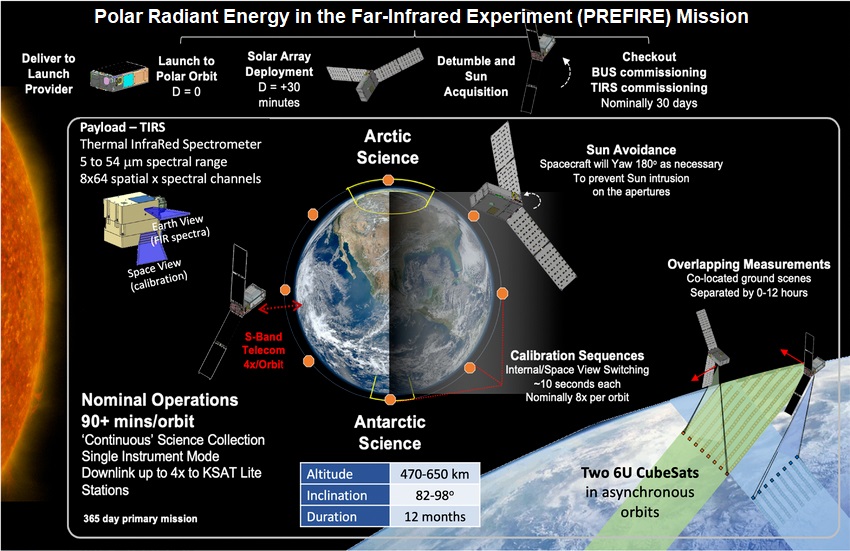
NASA launched the ” PREFIRE mission”, deploying twin CubeSats to study heat emissions in the Arctic and Antarctic regions, aiming to enhance climate research.
What are CubeSats?
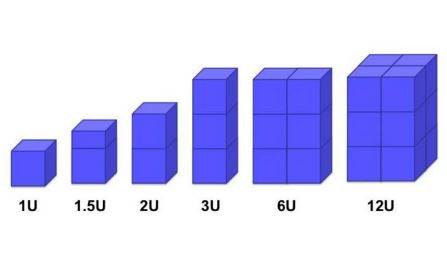
CubeSats are essentially miniature satellites whose basic design is a 10 cm x 10 cm x 10 cm (which makes up for “one unit” or “1U”) cube — just a little bigger than a Rubik’s cube.
weight not more than 1.33 kg.
These satellites were first developed in 1999 by California Polytechnic State University at San Luis Obispo (Cal Poly) and Stanford University as educational tools.
However, owing to their low cost and less mass in comparison to traditional satellites, they began to be put in orbit for technology demonstrations, scientific research, and commercial purposes.
About PREFIRE Mission
Jointly developed by NASA and the University of Wisconsin-Madison.
It aims to investigate and comprehend the intricate dynamics of heat emissions from Earth’s Polar Regions, specifically focusing on the Arctic and Antarctica.
Components:
CubeSats: PREFIRE employs shoebox-sized CubeSats, each measuring around 6U (6 units), equipped with advanced instrumentation to facilitate data collection.
They measure around 90 cm in height and nearly 120 cm in width when the solar panels, which will power the satellite, are deployed.
The two satellites will be placed in a near-polar orbit (a type of low Earth orbit) at an altitude of about 525 kilometres.
Thermal Infrared Spectrometers (TIRS): Each CubeSat is outfitted with a Thermal Infrared Spectrometer, meticulously engineered to measure far-infrared radiation emitted by the Polar Regions.
Mission Objectives:
Investigate heat radiated from Earth’s Polar Regions into space and its impact on climate.
Employ thermal infrared spectrometers to measure far-infrared energy emitted by Earth’s surface and atmosphere.
Improve understanding of the greenhouse effect at the poles and its implications for climate change.
Enhance climate and ice models to predict changes in sea level, weather, snow, and ice cover in a warming world.
Why study heat budget of the Poles?
A large amount of the heat radiated from the Arctic and Antarctica is emitted as far-infrared radiation wavelengths of 3 μm to 1,000 μm within the infrared range of electromagnetic radiation.
However, there is currently no way to measure this type of energy.
As a result, there is a gap in knowledge about the planet’s energy budget.
Significance of PREFIRE
PREFIRE’s observations will enhance predictions of climate and environmental changes, aiding in mitigating the effects of global warming.
Data collected will contribute to updating climate models and improving understanding of Earth’s atmospheric dynamics.
PYQ:
[2017] What is the purpose of ‘evolved Laser Interferometer Space Antenna (eLISA)’ project?
(a) To detect neutrinos
(b) To detect gravitational waves
(c) To detect the effectiveness of missile defence system
(d) To study the effect of solar flares on our communication systems
PYQ Relevance: Mains: Q) The setting up of a Rail Tariff Authority to regulate fares will subject the cash-strapped Indian Railways to demand subsidy for obligation to operate non-profitable routes and services. Taking into account the experience in the power sector, discuss if the proposed reform is expected to benefit the consumers, the Indian Railways or the private container operators. (UPSC CSE 2014) Q) One of the intended objectives of Union-Budget 15-18 is to ‘transform, energize and clean India’. Analyze the measures proposed in the Budget 15-18 to achieve the objective. (UPSC CSE 2017)
Prelims:
With reference to bio-toilets used by the Indian Railways, consider the following statements: 1) The decomposition of human waste in the bio-toilets is initiated by a fungal inoculum. 2) Ammonia and water vapour are the only end products in this decomposition which are released into the atmosphere. Which of the statements given above is/are correct? (UPSC CSE 2015) (a) 1 only (b) 2 only (c) Both 1 and 2 (d) Neither 1 nor 2
Note4Students:
Prelims: Government Initiatives for Indian Railways;
Mains: Indian Railways;
Mentor comment: More than 160 years ago, railways were introduced in the Indian subcontinent and were first initiated in 1853. The British Governor-General Lord Dalhousie played the most important part in introducing railways in India. Today, India has the 4th largest railway system in the world (after the US, Russia, and China). The railways operate 13,523 passenger trains and 9,146 freight trains daily. As of Feb 2024, 61,813 km length of the Broad-Gauge network has been electrified. With this, Indian Railways is rapidly progressing towards its target of 100% electrification and becoming the largest green railway network in the world. Indian Railways (IR) is rapidly progressing to accomplish its Mission. However, India during recent times due to the increase in population demand, is unable to cope with priority clauses of maintaining safety and standards.
Let’s learn.
–
Why in the News?
A railway pilot (driver) faced disciplinary action for following safety rules and not speeding to minimize delays to passenger trains after his locomotive failed, highlighting an attitude of prioritizing punctuality over safety in the Indian Railways.
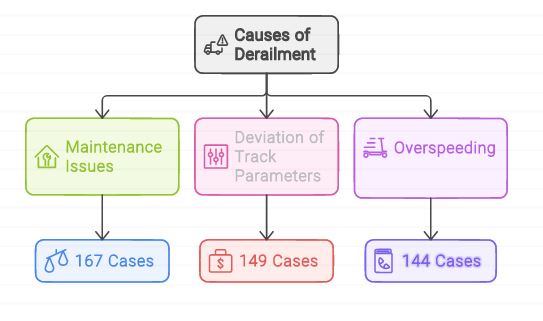
According to the Performance Audit on Derailment in Indian Railways, nearly 3/4th of 217 consequential train accidents across the country between 2017-18 and 2020-21 were caused by derailments.
Major challenges of Indian Railway Runways:
Unmanned level crossings (UMLCs): UMLCs are places where railway tracks are crossed without any barriers or signals to regulate traffic.
UMLCs accounted for 16% of all train accidents in India (2018-19). Although Indian Railways have eliminated all the UMLCs on broad gauge routes, there are still many Manned Level Crossings (MLCs) that pose a risk of accidents.
In February 2024, a train consisting of two diesel locomotives (both unmanned), and 53 wagons, with no brakes, rolled out of Kathua station.
Signal Failures: Signaling failures can lead to trains running on the wrong track, colliding with other trains or stationary objects, or overshooting stations.
The recent Visakhapatnam-Rayagada train accident was reportedly caused by non-communication and the lack of audio recording of conversations between station masters and loco pilots.
The media analyzed the accident and highlighted the broader issues with railway safety, such as inadequate signaling and telecommunications infrastructure, and the need for accountability and technological improvements. (In fact, the Right to Information (RTI) Act 2005 denies giving this information)
Human Errors: According to the Final Report of the CRS (Minister for Railways), railway staff are prone to human errors due to fatigue, negligence, corruption, or disregard for safety rules and procedures.
It can result in wrong signaling, miscommunication, distraction, overspeeding, or overlooking defects or hazards that affect their performance and coordination.
What are other troubling questions?
Lack of Professionalism in Railway Accident Investigations: Railway authorities are majorly exposed for unprofessional handling of serious accident investigations. Blaming reckless crew diverts attention from the administration’s role in improper training and ineffective monitoring.
Issues Concerning Loco Pilots: Nearly 10% of vacancies in the loco pilot cadre, are leading to regular breach of duty hour rules. Continuous night shifts, and inadequate rest, point to the need for focused attention on loco pilots’ issues.
What did the CAG Recommended? (Way Forward)
Develop a strong monitoring mechanism to ensure timely implementation of maintenance activities, adopting fully mechanized methods and improved technologies.
Railway administration must follow the guiding principles for the deployment of RRSK (Rashtriya Rail Sanraksha Kosh) funds.
Indian Railways should prepare a Detailed Outcome Framework for each item of safety work.
Ensure strict adherence to scheduled timelines for conducting and finalizing accident inquiries.
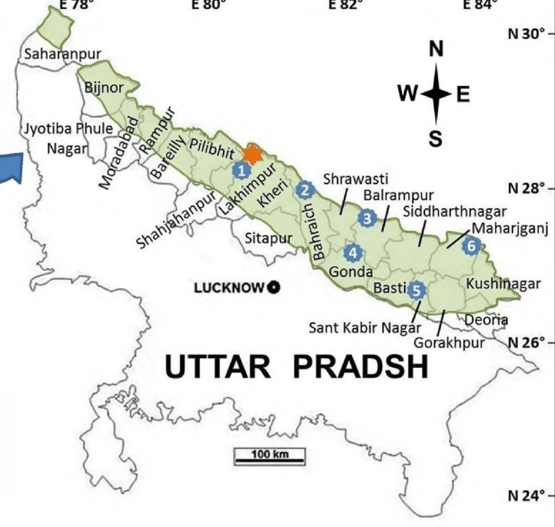
In the Terai region of Uttar Pradesh, the farmers are using razor wire and electric fencing to defend their farms against stray cattle.
About the Wildlife Populations in the Biodiverse Terai Areas of Uttar Pradesh
The Terai region in the U.P., encompassing districts like Pilibhit, Lakhimpur Kheri, and Bahraich, is known for its rich biodiversity, thriving sugarcane agriculture, and two tiger reserves.
This area supports endangered species such as tigers, rhinoceros, swamp deer, and the Bengal florican. The landscape blends forests, grasslands, and agriculture, creating a habitat where people and wildlife coexist.
What does the Statistics say?
During the 2022-23 fiscal year, the livestock industry accounted for 30.1% of India’s Agricultural GDP and 4.35% of the national GDP.
India’s farming practices involve a blend of crop farming and livestock rearing. This combined approach offers extra income and job prospects, especially supporting landless workers, small-scale farmers, and women in the workforce.
Constitutional Provision for the Protection of stray cattle:
As per Article 243(W) of the Constitution of India, the local bodies are responsible for cattle pounds and pinjrapole. Therefore, the State may also endow panchayats to establish and run. Cattle Pounds (Kanji Houses)/ Gaushala Shelters (community assets) to keep stray cattle.
Many States have established Gaushalas and Shelter houses for stray cattle and provide for feeding of those animals.
Present Conflicts and Conservation Challenges:
Conflicts between humans and wildlife are common, including tiger attacks and crop damage by herbivores.
Farmers near protected areas sometimes use lethal methods such as razor wire and high-voltage electric fencing along the farm-forest boundaries. The presence of stray cattle, or “chutta jaanwar,” has intensified conflicts and conservation challenges.
Stray cattle disrupt wildlife movement corridors vital for species survival and potentially increase disease transmission risks to wild populations.
The Unvaccinated stray cattle can transmit diseases like bovine tuberculosis and lumpy skin disease to wildlife, with cases reported in various Terai districts.
The degradation of productive grasslands in protected areas further threatens the habitat of imperilled species.
Way Forward:
Providing safe and comprehensive shelters: Construct adequate cow shelters outside protected areas to house stray cattle, preventing them from impacting wildlife habitats and agricultural fields.
Promote and subsidize non-lethal fencing solutions for farmers to protect crops without harming wildlife, such as wildlife-friendly barriers.
Invest in habitat restoration projects in the Terai, focusing on expanding and maintaining productive grasslands within protected areas to support wildlife populations.
Enhanced monitoring and management: Implement comprehensive vaccination and disease monitoring programs for stray cattle to prevent disease transmission to wildlife.
Strengthen enforcement against illegal cattle trade and vigilante activities that disrupt the livestock economy.
Provide economic incentives and support for farmers to adopt alternative livelihoods that do not depend heavily on livestock, reducing the need for cattle rearing.
Community Engagement and Education: Engage with local communities to educate them on the ecological impact of stray cattle and encourage participatory conservation efforts. Foster collaboration between farmers and wildlife authorities to develop sustainable solutions for coexisting with wildlife.
Mains PYQ:
Q Examine the status of forest resources in India and its resultant impact on climate change. (UPSC IAS/2020)
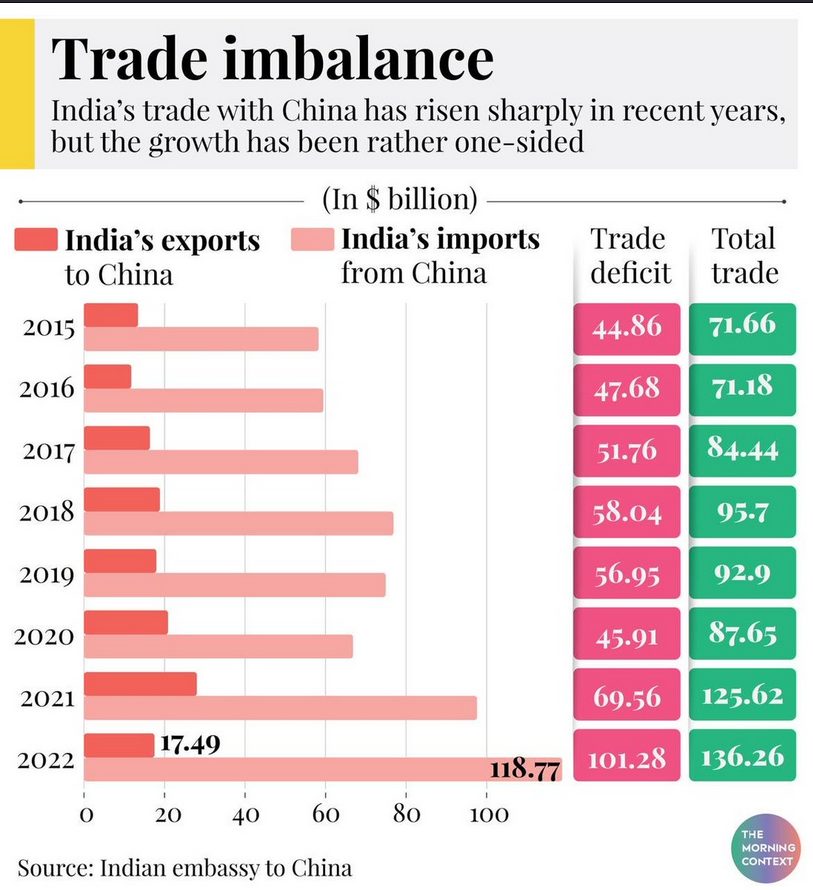
India’s imports from China crossed $101 billion in 2023-24 from about $70 billion in 2018-19, and the country’s share of India’sindustrial goods imports has risen from 21% to 30% over 15 years, according to a report by the Global Trade Research Initiative (GTRI).
The data shows, it’s resulting in a cumulative trade deficit exceeding $387 Billion in the last 5 years, which is an alarming situation for the Indian government.
What is meant by Trade Deficit?
A trade deficit refers to a situation where the country’s imports exceed the receipts from its exports. A trade deficit arises in the course of international trade when the payments for imports exceed the receipts from export trade.
A trade deficit is also referred to as a negative balance of trade.
The concerns arising due to this deficit include pressure on external payments and on the currency value of a country. Countries often alter import and export policies, curbing imports or increasing import duties on certain goods due to this.
They also encourage exports and consumption of indigenous goods.
India’sIndustrial Imports from China:
Electronics and Telecom Sector: During April-January 2023-24, India’s import value for electronics, telecom, and electrical products was $67.8 billion, with China contributing $26.1 billion. (38.4% of the total imports)
Machinery Sector: China contributed 39.6% of India’s imports in this category. This highlights China’s essential role as a supplier of machinery to India.
Chemical and Pharmaceutical Sector: India’s chemical and pharmaceutical imports were $54.1 billion, with $15.8 billion coming from China (29.2% of the total).
MSMEs sector: Products like mobiles and data processing units, are imported by Indian MSMEs. These imports could potentially be produced domestically, highlighting gaps in India’s industrial capabilities.
Current Trade Observations concerning China and other countries:
Rising Trade Deficit with China: India’s exports to China have stagnated at around $16 billion annually (from 2019 to 2024), while imports from China surged from $70.3 billion in 2018-19 to over $101 billion in 2023-24.
Growth Rate of Imports: China’s share in India’s industrial product imports increased from 21% to 30% over the last 15 years. China’s exports to India grew 2.3 times faster than India’s total imports from all other countries.
Diverse Product Imports: Chinese firms are increasingly entering the Indian market, which is expected to accelerate the import of industrial products from China. India’s imports span high to low-technology items, like smartphones, electronics, electric vehicles, and solar energy.
Strategic Concerns: The growing trade deficit and dependence on China have profound strategic implications, affecting both economic and national security dimensions.
Way Forward:
Supply chain diversification: India must focus on diversifying its supply chains and reducing dependency on single-country imports, especially from geopolitical competitors like China.
Boosting R&D: Increase investment in research and development for electronics, semiconductors, and machinery to foster innovation and improve domestic production capabilities.
Incentivizing Production: Provide tax incentives, subsidies, and grants to local manufacturers of electronics, data processing units, and semiconductor devices to encourage production and reduce import dependency.
Mains PYQ:
Q China is using its economic relations and positive trade surplus as tools to develop potential military power status in Asia’, In the light of this statement, discuss its impact on India as her neighbor. (UPSC IAS/2017)
The Kerala state government permitted Kerala Forest Development Corporation (KFDC) to plant eucalyptus for financial reasons in 2024-2025. Environmentalists objected, citing forest impact and potential human-animal conflicts.
Reasons for Allowing KFDC to Plant Eucalyptus Trees:
Financial Sustenance: KFDC was permitted to plant eucalyptus trees to support its financial viability.
Existing Plantations: KFDC manages around 7,000 hectares of plantations, including eucalyptus, which contribute to its revenue generation.
Rotation Age: Plantations like eucalyptus have specific rotation ages for harvesting, ensuring a continuous cycle of revenue generation.
Significance of Eucalyptus
Timber and Fuel: Eucalyptus wood is extensively used in Australia as fuel and for building construction, fencing, and other timber applications.
Paper and Pulpwood: The bark of many eucalyptus species is used in papermaking and tanning, while the wood is used for pulpwood production.
Eucalyptus Oil: The leaves of many eucalyptus species contain aromatic oils, which are used for various purposes such as:
Medicinal Uses: Eucalyptus oil is used in expectorants and inhalants to relieve respiratory issues like asthma and bronchitis.
Insect Repellent: The oil is used as a natural insect repellent.
Antimicrobial Activity: Eucalyptus oil has antimicrobial properties, making it effective against bacteria and fungi
Why were environmentalists and social activists against the order?
Ecological Impact: Environmentalists raised concerns about the adverse effects of eucalyptus plantations on natural forests and ecosystems.
Human-Animal Conflicts: The proliferation of invasive species like eucalyptus was linked to increased human-wildlife conflicts, as animals ventured into human habitats in search of food due to habitat depletion.
Contravention of Eco-Restoration Policy: Activists argued that permitting eucalyptus plantations contradicted the state’s eco-restoration policy, which aimed to phase out exotic species and replace them with natural forests by 2024.
Invasive Species Management: The order was seen as undermining efforts to eradicate invasive species and mitigate their damaging effects on natural habitats and ecosystems.
Government Initiatives for Plant Conservation:
The National Bureau of Plant Genetic Resources (NBPGR) in India operates seed banks to conserve crop diversity and wild plant species.
National Afforestation Programme (NAP) has been implemented since 2000 for the afforestation of degraded forest lands. It is being implemented by the MoEFCC.
Conclusion: The controversy over eucalyptus planting in Kerala reflects the balance between financial sustainability and ecological concerns. While eucalyptus offers economic benefits, it also poses ecological risks and challenges to conservation efforts.
Mains PYQ:
Q Examine the status of forest resources of India and its resultant impact on climate change. (UPSC IAS/2020)
The Zero Debris Charter was signed by twelve nations and the European Space Agency (ESA) at the ESA/EU Space Council.
Zero Debris Charter
The Zero Debris Charter was unveiled at the ESA Space Summit in Seville, Spain, in November 2023.
The Charter was facilitated by ESA’s “Protection of Space Assets” Accelerator and developed through extensive collaboration among various space actors.
Objectives:
To achieve debris neutrality in space by 2030.
Long-term sustainability of human activities in Earth orbit.
Members:
The signatory countries are Austria, Belgium, Cyprus, Estonia, Germany, Lithuania, Poland, Portugal, Romania, Slovakia, Sweden, and the United Kingdom.
The ESA signed as an International Organization.
Community Support and Leadership
Over 100 organizations are expected to sign the Charter in the coming months.
This includes national space agencies, satellite manufacturers, space startups, and astronomical societies.
Space Debris Challenges
ESA estimates over one million pieces of space debris larger than 1 cm in Earth orbit.
These debris pieces pose significant risks to satellites and astronauts.
Threats posed by Space Debris
Space debris also leads to two major risks:
It creates unusable regions of the orbit due to excessive debris, and
Leads to the ‘Kessler syndrome’ – the creation of more debris due to cascading collisions resulting from one collision.
GAIL (India) Ltd has commissioned its first green hydrogen plant at Vijaipur in Madhya Pradesh, marking a significant step for the nation’s largest natural gas transmission and distribution firm into new and alternate energy sources.
About Vijaipur Green Hydrogen Plant
The plant aligns with the National Green Hydrogen Mission‘s objective of achieving 5 million tons of annual green hydrogen production capacity by 2030.
The plant features a 10-megawattproton exchange membrane electrolyser imported from Canada.
It will produce approximately 4.3 tonnes of green hydrogen per day with a purity of about 99.999% by volume.
The production process utilises electricity from renewable sources, such as solar energy, to split water and produce green hydrogen.
Major Objective: Hydrogen Blending
GAIL is currently conducting experimental blending of hydrogen with natural gas.
Current regulations permit blending up to 5% hydrogen with natural gas, with ongoing studies to explore higher blending ratios.
What is Green Hydrogen?
Green hydrogen is produced through electrolysis, where electricity derived from renewable sources, such as solar or wind power, is used to split water molecules into hydrogen and oxygen.
Since it relies on renewable energy, green hydrogen production has no direct emissions of CO2 or other greenhouse gases.
What is the Green Hydrogen Standard?
Definition of Green Hydrogen: It has defined green hydrogen as having a well-to-gate emission – including water treatment, electrolysis, gas purification, drying and compression of hydrogen – of not more than 2 kg CO2 equivalent per kg of hydrogen produced.
Nodal Agency: The Bureau of Energy Efficiency, Ministry of Power, will be the nodal authority for green hydrogen production projects.
Back2Basics: National Green Hydrogen Mission, 2023
Details
Ministry
Ministry of New and Renewable Energy
Purpose
To incentivise the commercial production of green hydrogen and make India a net exporter of the fuel.
Key Activities
Facilitates demand creation, production, utilisation, and export of green hydrogen.
Sub-Schemes
Strategic Interventions for the Green Hydrogen Transition Programme (SIGHT): To fund the domestic manufacturing of electrolysers and the production of green hydrogen.
Green Hydrogen Hubs: Identify and develop states and regions capable of supporting large-scale production and/or utilisation of hydrogen as Green Hydrogen Hubs.
Green Hydrogen Hubs Details
Identifies and develops regions capable of large-scale hydrogen production and utilisation as Green Hydrogen Hubs.
Objectives
Develop 5 MMT per annum of green hydrogen production by 2030.
Add 125 GW of renewable energy capacity by 2030.
Entail over Rs 8 lakh crore investments and generate six lakh jobs.
Reduce fossil fuel imports by over Rs 1 lakh crore and abate 50 MT of greenhouse gases annually.
Significance of Hydrogen Energy
Hydrogen is an important source of energy since it has zero carbon content and is a non-polluting source of energy in contrast to hydrocarbons that have net carbon content in the range of 75–85 per cent.
Hydrogen energy is expected to reduce carbon emissions that are set to jump by 1.5 billion tons in 2021.
It has the highest energy content by weight and lowest energy content by volume.
As per the International Renewable Energy Agency (IRENA), Hydrogen shall make up 6 per cent of total energy consumption by 2050.
Hydrogen energy is currently at a nascent stage of development but has considerable potential for aiding the process of energy transition from hydrocarbons to renewable.
Types of Hydrogen
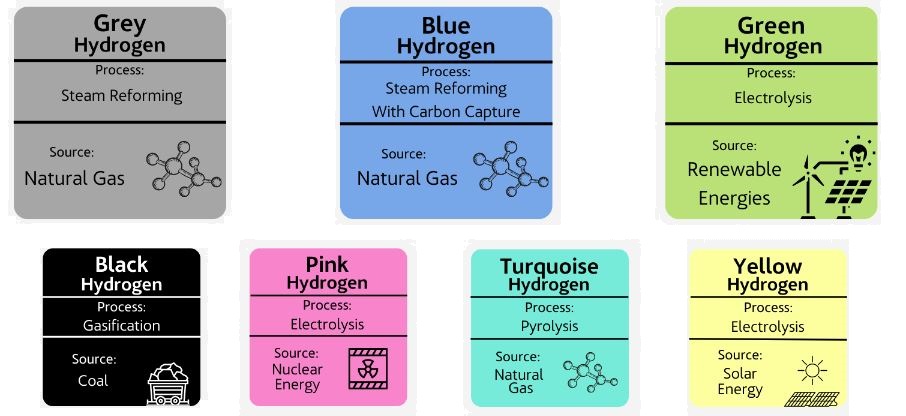
Hydrogen extraction methods are classified into three types based on their processes: Grey, Blue, and Green etc.
Green Hydrogen: Discussed above.
Grey Hydrogen: This type of hydrogen is obtained through coal or lignite gasification (black or brown), or by steam methane reformation (SMR) of natural gas or methane (grey). These processes are typically carbon-intensive.
Blue Hydrogen: It is derived from natural gas or coal gasification, coupled with carbon capture storage (CCS) or carbon capture use (CCU) technologies to mitigate carbon emissions.
Turquoise hydrogen: It refers to hydrogen produced from methane pyrolysis, while yellow hydrogen is produced from biomass.
PYQ:
[2023] Consider the following heavy industries:
Fertilizer plants
Oil refineries
Steel plants
Green hydrogen is expected to play a significant role in decarbonizing how many of the above industries?
(a) Only one
(b) Only two
(c) All three
(d) None
[2023] With reference to green hydrogen, consider the following statements:
It can be used directly as a fuel for internal combustion.
It can be blended with natural gas and used as fuel for heat or power generation.
It can be used in the hydrogen fuel cell to run vehicles.
The Central Council for Research in Ayurvedic Sciences (CCRAS) is hosting “PRAGATI-2024” at the India Habitat Centre, New Delhi, to promote collaboration and research opportunities between CCRAS and the Ayurveda drug industry.
About Central Council for Research in Ayurvedic Sciences (CCRAS)
The CCRAS is an autonomous body of the Ministry of AYUSH (Ayurveda, Yoga & Naturopathy, Unani, Siddha and Homeopathy), Government of India.
It was established in 1978 to formulate, coordinate, develop, and promote research on scientific lines in the Ayurveda and Sowa-Rigpa system of medicine.
Primary Objectives:
Research: To undertake research to scientifically establish the efficacy of Ayurvedic practices.
Development: To develop and promote Ayurveda science through research and education.
Integration: To integrate traditional Ayurvedic methods with modern medicine for more comprehensive healthcare.
Functions of CCRAS
Research Studies: Conducting various types of research studies like drug research, fundamental research, clinical research, literary research, and medicinal plant research.
Publication: Publishing scientific journals, research papers, and other documentation to disseminate knowledge.
Medicinal Plant Development: Focusing on the cultivation and conservation of medicinal plants used in Ayurveda.
Public Health Initiatives: Implementing public health programs and providing training to practitioners.
Achievements of CCRAS:
Development of Ayurvedic Formulations: CCRAS has developed several notable Ayurvedic formulations and technologies, which have been patented and commercialised.
National Ayurveda Morbidity Codes: CCRAS has developed morbidity codes and standard terminologies to standardise the practice of Ayurveda.
AYUSH Research Portal: A comprehensive database of research on Ayurveda, which includes information on drugs, case studies, and clinical trials.
Notable Projects:
Golden Triangle Partnership: A collaborative project with CSIR (Council of Scientific and Industrial Research) and ICMR (Indian Council of Medical Research) for enhancing the scientific validation of Ayurveda.
Tribal Health Care Research Program: Aimed at documenting ethno-medical knowledge and validating it for scientific purposes.
PYQ:
[2019] How is the Government of India protecting traditional knowledge of medicine from patenting by pharmaceutical companies?
The Income Tax Department has notified the cost inflation index (CII) for the current fiscal to calculate long-term capital gains arising from the sale of immovable property, securities and jewellery.
The CII is used by a taxpayer to compute gains arising out of the sale of capital assets after adjusting for inflation.
CII Values:
For FY 2024-25, the CII is set at 363.
Previous years’ CII values were 348 for FY 2023-24 and 331 for FY 2022-23.
What isCost Inflation Index (CII)?
CII is a measure used by the Income Tax Department of India to account for inflation when calculating the capital gains on the sale of long-term capital assets.
It helps to adjust the purchase price of assets to reflect the effect of inflation.
CII adjusts the cost of acquisition of assets to the price level inflation at the time of sale.
This ensures that taxpayers pay taxeson the real gains rather than on the inflationary component of the price rise.
It is defined under Section 48 of the Income-tax Act, 1961.
The index is revised annually to keep up with inflation, with the base year being periodically reset (currently the base year is 2001-02 in India).
Application of CII
CII is used to compute the indexed cost of acquisition of a capital asset that has been held for more than36 months (considered as long-term capital assets).
Different holding periods apply for certain types of assets like immovable property and listed securities.
Tax Calculation:
The formula used is:
This formula helps determine the adjusted cost basis from which any sale proceeds are subtracted to calculate capital gains.
Back2Basics: Long Term Capital Gains
In India, long-term capital gains (LTCG) refer to the profit earned from the sale of a capital asset held for a specific period, qualifying it as “long-term” based on the duration of holding.
The tax implications and treatment of these gains are distinct from those of short-term capital gains.
Definition of Long-Term Capital Assets
Equity or Preference Shares, Listed Securities, Units of UTI, etc.: These are considered long-term if held for more than 12 months before sale.
Immovable Property (e.g., Land, Building): Considered long-term if held for more than 24 months.
Other Assets (e.g., Jewellery, Debt-oriented Mutual Funds, etc.): These need to be held for more than 36 months to be considered long-term.
Taxation of Long-Term Capital Gains
Equity Investments:
LTCG from the sale of listed shares or equity-oriented mutual funds over ₹1 lakh is taxed at 10% without the benefit of indexation, provided the securities transaction tax (STT) was paid at the time of sale.
Non-Equity Investments:
LTCG from assets like debt mutual funds, real estate, gold, etc., is taxed at 20% with the benefit of indexation.
Indexation Benefit:
For non-equity assets, the Cost Inflation Index (CII) is used to adjust the purchase price of the asset to reflect inflation. This reduces the taxable gain by increasing the acquisition cost.
Calculation of Long-Term Capital Gains
The general formula for calculating LTCG is:
Where:
Full Value of Consideration is the sale price of the asset.
Indexed Cost of Acquisition is the purchase price adjusted by the CII.
Indexed Cost of Improvement refers to the cost of any improvements made to the asset, adjusted by the CII.
Cost of Transfer includes expenses directly related to the sale or transfer of the asset.
Exemptions and Deductions
Section 54: Exemption on LTCG from the sale of a residential property if the proceeds are reinvested in another residential property in India.
Section 54EC: Exemption by investing LTCG in bonds issued by NHAI or REC within 6 months of the asset sale, subject to a cap of ₹50 lakhs.
PYQ:
[2015] Which reference to inflation in India, which of the following statements is correct?
(a) Controlling the inflation in India is the responsibility of the Government of India only
(b) The Reserve Bank of India has no role in controlling the inflation
(c) Decreased money circulation helps in controlling the inflation
(d) Increased money circulation helps in controlling the inflation
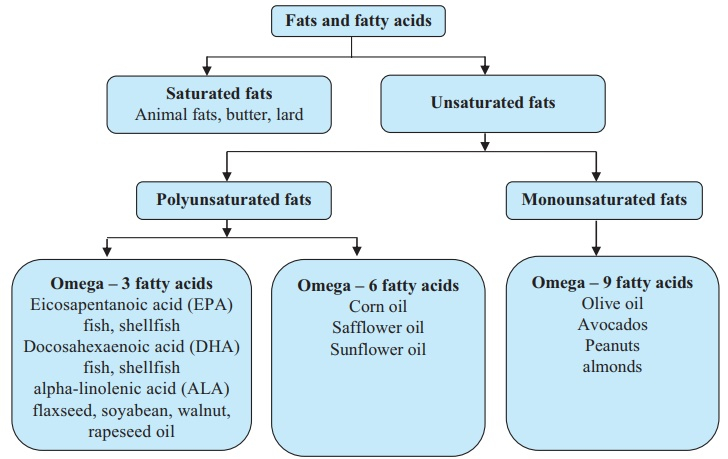
Fish oil supplements, highly regarded for their high omega-3 fatty acid content, have long been associated with heart health benefits.
A recent study has caused controversy by raising the possibility that these supplements may be as harmful as previously thought.
What are Fatty Acids?
Fatty acids are crucial lipids (fats and oils) essential for various biological functions (Fatty Acid + Glycerol = Fats). They are carboxylic acids with a long aliphatic chain, either saturated or unsaturated.
Basic Structure: Consists of a hydrocarbon chain with a terminal carboxyl group (-COOH). The length and degree of saturation of the hydrocarbon chain can vary.
Roles in the Body: Serve as energy sources, components of cell membranes, and precursors for bioactive lipids.
Types of Fatty Acids
Fatty acids are classified based on the presence and number of double bonds in their hydrocarbon chain:
Saturated Fatty Acids (SFA)
Structure: Contain no double bonds between carbon atoms; the hydrocarbon chain is saturated with hydrogen atoms.
Formation: Produced by the industrial process of hydrogenation of unsaturated fats, or naturally in the guts of some animals.
Properties: Similar to saturated fats, solid at room temperature.
Health Impact: Associated with negative cardiovascular effects.
Sources: Margarine, partially hydrogenated oils, and some baked goods.
What are Omega-3 Fatty Acids?
Omega-3 fatty acids (omega-3s) are polyunsaturated fats that perform important functions in the human body.
There are three main types of omega-3 fatty acids:
EPA (eicosapentaenoic acid). EPA is a “marine omega-3” because it’s found in fish.
DHA (docosahexaenoic acid). DHA is also a marine omega-3 found in fish.
ALA (alpha-linolenic acid). ALA is the form of omega-3 found in plants.
When we get ALA from food, the human body can turn some of the ALA into EPA and subsequently to DHA. However, this process provides just a small amount of EPA and DHA. So, dietary sources of EPA and DHA (like fish) are essential.
Functions of Omega-s fatty acids:
They help to provide structure and supporting interactions between cells.
Omega-3s are concentrated in high levels in cells in human eyes and brain.
They provide the human body with energy (calories) and support the health of many body systems. These include the human cardiovascular system and endocrine system.
Significance of Omega-3 fatty acids:
Omega-3 fatty acids have many potential benefits for human cardiovascular health.
One key benefit is that they help lower human triglyceride levels.
Too many triglycerides in human blood (hypertriglyceridemia) raise human risk of atherosclerosis, and through this, can increase human risk of heart disease and stroke. So, it’s important to keep triglyceride levels under control.
Omega-3s may help us by raising human HDL (good) cholesterol and lowering human blood pressure.
Some studies show omega-3s may lower human risk for Cardiovascular disease (CVD), and hence lowering the sudden death caused by an abnormal heart rhythm (arrhythmia), and blood clots.
Beyond heart health, omega-3s may help lower the human risk of developing some forms of cancer, including breast cancer, Alzheimer’s disease, and dementia, age-related macular degeneration (AMD), research continues to investigate these and other possible benefits.
PYQ:
[2011] A company marketing food products advertises that its items do not contain trans-fats. What does this campaign signify to the customers?
The food products are not made out of hydrogenated oils.
The food products are not made out of animal fats/ oils.
The oils used are not likely to damage the cardiovascular health of the consumers.
Which of the statements given above is/are correct?
![[28 May 2024] The Hindu Op-ed: Playing to the gallery can be injurious to Rail safety](https://www.civilsdaily.com/wp-content/uploads/2024/05/28-may1-1568x882.jpg)