💥Join UPSC 2027,2028 Mentorship (August Batch) + XFactor Notes & Microthemes PDF

GS Paper: Poverty & Development Issues

  • Panch prans for better India

    Context

    • PM Modi’s Independence Day speech outlined agenda for a radical transformation of society and nation.

    What are 5 resolves given by PM?

    • Take pride in India’s history.
    • The power of unity.
    • Duties of citizens, such as those of the PM and CMs.
    • Advance with greater conviction and the determination of a developed India.
    • Get rid of any signs of slavery.

    Detail analysis 5 resolves of pm

    (1)First pran: The first pran is about inculcating a culture of thinking big and at scale.

    • The first vow is for the country to move ahead with a big resolve. And that big resolution is of a developed India; and now we should not settle for anything less than that. Big resolution!
    • Some examples include the world’s largest financial inclusion programme, the largest vaccination drive, the largest health insurance programme and the largest social security schemes.

    (2)Second pran: The second Pran is that in no part of our existence, not even in the deepest corners of our mind or habits should there be any ounce of slavery. It should be nipped there itself.

    • Now, 100 per cent this slavery of hundreds of years has kept us bound, has forced us to keep our emotions tied up, have developed distorted thinking in us.
    • We have to liberate ourselves from the slavery mind set which is visible in innumerable things within and around us. This is our second Pran Shakti.

    (3)Third pran: The third Pran is that we should feel proud of our heritage and legacy.

    • Since it is this same legacy which had given India its golden period in the past. And it is this legacy that has an innate capability of transforming itself with time.
    • It is this rich heritage that transcends tests of tide and times. It embraces the new. And hence we should be proud of this heritage.

    (4)Fourth pran: Fourth pran which is equally important is unity and solidarity.

    • Amongst 130 million countrymen when there is harmony and bonhomie, unity becomes its strongest virtue.
    • “Ek Bharat Shreshtha Bharat” – is one of the unifying initiatives to actuate the dream of the fourth Pran.

    (5)Fifth pran: Fifth Pran is the duty of the citizens, in which even the Prime Minister, Chief Minister cannot be an exclusion.

    • As they are also responsible citizens and have a duty towards the nation. This virtue is going to be the vital life force if we want to achieve the dreams we have for the next 25 years.

    Challenges before India in next 25 years

    • Skill development and employment for the future: workforce According to the World Economic Forum’s report “The Future of Jobs 2018”, more than half of Indian workers will require reskilling by 2022 to meet the talent demands of the future. They will each require an extra 100 days of learning, on average.
    • Socioeconomic inclusion of rural India: By 2030, 40% of Indians will be urban residents. However, there will also be more than 5,000 small urban towns (50,000-100,000 persons each) and more than 50,000 developed rural towns (5,000-10,000 persons each) with similar income profiles, where aspirations are fast converging with those of urban India.
    • A healthy and sustainable future: As India marches forward, it faces new challenges in health and sustainable living, even as it has achieved key health targets such as polio eradication.

    Conclusion

    • The nation should now only be setting big goals. That big goal is a developed India and nothing less.

    Mains question

    Q. What are the challenges India will face in next 25 years? Discuss the panch pran resolves of PM showing how they will address these challenges.

    UPSC 2023 countdown has begun! Get your personal guidance plan now! (Click here)
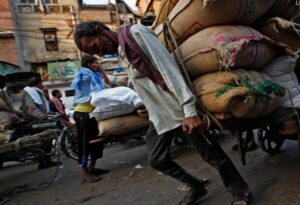
  • Labour policies need to change for better quality livelihoods

    Context

    • One of the biggest economic fallout of the pandemic has been the deteriorating labour market conditions.
    • Given the ebb and flow of the pandemic, the growth recovery is likely to be fragmented and will weigh on the number and types of jobs available.

    What is quality and sustainable livelihood?

    • “A livelihood comprises the capabilities, assets and activities required for a means of living. A livelihood is sustainable when it can cope with and recover from stresses and shocks and maintain or enhance its capabilities and assets both now and in the future, while not undermining the natural resource base.’’

    Sustainable livelihoods objectives

    • improved access to high-quality education, information, technologies and training and better nutrition and health;
    • a more supportive and cohesive social environment;
    • more secure access to, and better management of, natural resources;

    Definition of labour welfare

    • Labour welfare relates to taking care of the well-being of workers by employers, trade unions, governmental and non-governmental institutions and agencies.
    • Welfare includes anything that is done for the comfort and improvement of employees and is provided over and above the wages.

    Why labour law is needed

    • Labour law aims to correct the imbalance of power between the worker and the employer; to prevent the employer from dismissing the worker without good cause; to set up and preserve the processes by which workers are recognized as ‘equal’ partners in negotiations about their working conditions etc.

    Constitutional mandate

    • Article 41 – The state shall within the limits of its economic capacity and development make effective provision for securing the right to work, to education and to public assistance in cases of unemployment, old age, sickness and disablement and in other cases of underserved want.
    • Article 42 – The state shall make provision for securing just and humane conditions of work and for maternity relief.

    Challenges in labour welfare in India

    • Technical glitches: Under the Constitution of India, Labour is a subject in the concurrent list where both the Central and State Governments are competent to enact legislations. As a result, a large number of labour laws have been enacted catering to different aspects of labour e.g. occupational health, safety, employment etc.
    • Loopholes: Because of the predominantly heavy handed labour regulations (also called as Inspector Raj) with exploitable gaps, the MNCs and domestic organizations have resorted to alternate ways i.e. employing contract labour at less than half the payroll of a permanent employee.
    • Gaps in labour laws: One of the main reasons for labour reforms is the concept of contract labour. Trade Unions suggest that this concept itself should be removed. There is stringent hiring and firing process defined in Industry Disputes Act. It makes it mandatory for the organization to seek Government permission before removing an employee.

    Global best practices  

    • Universal basic income pilot project: For two years Finland’s government gave 2,000 unemployed citizens €560 a month with no strings attached. It was the first nationwide basic income experiment. The concept is slowly becoming difficult for people to ignore.

    How will dynamic policies and labour codes respond?

    • Labour productivity: It is likely to improve with both employees and employers developing a sense of being partners in wealth creation.
    • Labour reform: A transparent environment in terms of workers’ compensation, clear definition of employee rights and employer duties.
    • Compliance un-burdening: Simplified labour codes making compliance easier are likely to attract investments.
    • Formalization of the economy: With more workers in the organized sector, leakage in terms of direct as well as indirect taxes may be plugged.

    Conclusion

    • The guiding principle for India’s labour policy reformers should not merely be ring fencing jobs but safeguarding workers through social assistance, re-employment support (such as that which is provided in several Western nations) and skill building, and supporting employers in employee training and development.

    Mains question

    Q. Why there is need to make labour policies more dynamic? Do you think universal basic income approach will be the best way forward for achieving quality livelihood?

    UPSC 2023 countdown has begun! Get your personal guidance plan now! (Click here)


  • What is Operation AAHT?

    The Railway Protection Force (RPF) has launched a nationwide ‘Operation AAHT’ to curb human trafficking.

    We can site such examples in essays as well as mains as initiatives for curbing human trafficking in India

    Operation AAHT

    • As part of this operation, special teams will be deployed on all long-distance trains/routes with focus on rescuing victims, particularly women and children, from the clutches of traffickers.
    • The RPF will act as a bridge cutting across States to assist the local police in the mission to curb the menace.
    • The infrastructure and intelligence network of the force could be utilized to collect, collate and analyse clues on victims, source, route, destination, popular trains used by suspects, identity of carriers/agents, kingpins etc and shared with other law-enforcing agencies.

    Why need this mission?

    • The Railways, which operate about 21,000 trains across the country daily, is the most reliable mode of transportation for the traffickers who often move their victims on long-distance trains.
    • Thousands of Indians and persons from neighboring countries are trafficked every day to some destinations where they were forced to live like slaves.
    • They are also being trafficked for illegal adoptions, organ transplants, working in circus, begging and entertainment industry.

    Also read

    [Burning Issue] Draft Anti-Trafficking Bill, 2021


    UPSC 2022 countdown has begun! Get your personal guidance plan now! (Click here)

  • A brief history of India’s Poverty Levels

    Poverty in India had increased between 2012 and 2020.

    What is Poverty?

    • Fundamentally, the concept of poverty is associated with socially perceived deprivation with respect to basic human needs (Tendulkar, 2009).
    • This is a crucial definition to consider since the Tendulkar committee’s estimation method is the last officially recognized method for arriving at poverty numbers in India.

    A relative term

    • If you think about it for a moment, poverty is a “relative” concept.
    • Poverty is essentially about how you are “relative” to those in your surroundings.
    • For example, with Rs 1,000 in your pocket, you may be “rich” if those around you have no more than Rs 100 with them.
    • But, in another setting, say around those who have no less than Rs 10,000 with them, you will come across as “poor”.
    • As such, as long as there are variations in the income and/or wealth levels in a society, there will be “poverty”.

    What is abject poverty?

    • Apart from the relative nature of poverty, there is such a thing as abject poverty.
    • It typically refers to a state where a person is unable to meet its most basic needs such as eating the minimum amount of food to stay alive.

    What is a Poverty Line?

    • From the point of view of policymaking, poverty levels typically refer to some level of income or expenditure below which one can reasonably argue that someone is poorer than the rest of the society.
    • The whole point of the bulk of policymaking is to improve the living standards of the poorest in the country.
    • But to design policies, one must first know what the target group is, how much does it earn (or spend, since robust data on income is not easily available).
    • This is done by choosing a “poverty line” — or a level of income or consumption expenditure that divides the population between the poor and non-poor.

    Why define a Poverty Line?

    The purpose behind choosing a poverty line is two-fold.

    (A) To accurately design policies for the poor

    • Doing so allows you to target your policies towards the two poorest people in the country.
    • Often such policies are redistributive in nature — such as giving subsidised food grains or providing some kind of social security like MGNREGA.
    • In an ideal world a government would have the resources to help everyone in the economy but in reality, even the government’s works within some financial or budgetary constraints.

    (B) To assess the success or failure of government policies over time

    • Over time the overall GDP doubles but the income of the general public falls.
    • Hence the government would know that its policies are not bearing fruit.

    Poverty Estimation in India

    • Planning Commission Expert Group (1962): It formulated the separate poverty lines for rural and urban areas at ₹20 and ₹25 per capita per year respectively.
    • VM Dandekar and N Rath (1971): They made the first systematic assessment, based on National Sample Survey (NSS) data. They suggested providing 2250 calories per day in both rural and urban areas.
    • YK Alagh Committee (1979): It constructed a poverty line for rural and urban areas on the basis of nutritional requirements and related consumption expenditure.
    • Lakdawala Committee (1993): It suggested that consumption expenditure should be calculated based on calorie consumption as earlier. State specific poverty lines should be constructed. It asked for discontinuation of scaling of poverty estimates based on National Accounts Statistics.
    • Tendulkar Committee (2009): The current official measures of poverty are based on the Tendulkar poverty line, fixed at daily expenditure of ₹27.2 in rural areas and ₹33.3 in urban areas is criticised by many for being too low.

    What has happened in India’s fight against poverty?

    • There are two ways to assess India’s performance.
    1. One is to look at the headcount ratio of poverty which is the percentage of India’s population that was designated to be below the poverty line
    2. The other variable to look at is the absolute number of poor people in the country
    • If one looks at the headcount ratio then India made rapid strides since 1973.
    • Even though India is home to possibly the largest number of poor people in the world, there has been no official update on India’s poverty levels since.

    Who oversees the Poverty Level?

    • Poverty levels are updated by using the Consumer Expenditure Survey, which is conducted by the National Statistical Office (NSO) once every five years.
    • The last such survey was conducted in 2017-18.
    • That survey reportedly showed that for the first time in four decades consumer expenditure in India had fallen.

    What are the latest findings?

    • Poverty levels, as well as the absolute number of poor, had risen between 2011-12 and 2017-18.
    • The government claimed that the survey suffered from “data quality” issues.
    • The next round of the Consumer Expenditure Survey (CES) was supposed to be conducted in 2021.

    Causes of rise in Poverty

    • GDP growth decline: It is a fact that India’s GDP growth rate had registered a secular deceleration between the start of 2017 and 2020.
    • Jobless growth: The second and related factor is the unprecedented rise in joblessness.
    • Wages decline: Millions were pulled out of poverty between 2004 and 2011 due to sharp rise in non-farm employment and associated wages. But for many of those workers, real wages have either fallen or stagnated.
    • Pandemic impact: Covid induced lockdown sent millions of workers back to villages, seeking MGNREGA work at minimum wages.


    UPSC 2022 countdown has begun! Get your personal guidance plan now! (Click here)

  • Agri Ministry questions Global Hunger reports’ methodology

    Union Minister of State for Agriculture has questioned the methodology and data accuracy of the Global Hunger Index (GHI) report, which has placed India at 94th (out of 107 countries) rank in 2020.

    About GHI

    • GHI is a peer-reviewed annual report, jointly published by Concern Worldwide, an Ireland-based humanitarian group, and Welthungerhilfe, a Germany-based NGO.
    • It is designed to comprehensively measure and track hunger at the global, regional, and country levels.
    • It says the aim of publishing the report is to trigger action to reduce hunger around the world.
    • According to the GHI website, the data for the indicators come from the United Nations and other multilateral agencies, including the World Health Organisation and the World Bank.

    Various indicators used

    1. UNDERNOURISHMENT: the share of the population that is undernourished (that is, whose caloric intake is insufficient);
    2. CHILD WASTING: the share of children under the age of five who are wasted (that is, who have low weight for their height, reflecting acute undernutrition);
    3. CHILD STUNTING: the share of children under the age of five who are stunted (that is, who have low height for their age, reflecting chronic undernutrition); and
    4. CHILD MORTALITY: the mortality rate of children under the age of five (in part, a reflection of the fatal mix of inadequate nutrition and unhealthy environments).

    What is the concern?

    • India was ranked below countries such as Nepal, Bangladesh and Myanmar when it was among the top 10 food-producing countries in the world.

    Actual scenario

    • The Comprehensive National Nutrition Survey (CNNS) compiled in 2017-18 showed an improvement of 4%, 3.7% and 2.3% in wasted, stunted and malnourished children respectively.
    • The first-ever CNNS was commissioned by the government in 2016 and was conducted from 2016-18, led by the Union Health Ministry, in collaboration with the UNICEF.
    • The findings were published in 2019. CNNS includes only nutrition data, whereas NFHS encompasses overall health indicators.
  • Food Waste Index Report 2021

    The Food Waste Index Report 2021 was recently released by the UNEP.
    Even though the world produces enough food to feed twice the world’s present population, food wastage is ironically behind the billions of people who are starving.

    Food Waste Index

    • The Food Waste Index is released by the United Nations Environment Programme (UNEP) and partner organisation WRAP.
    • It measures tons of wasted food per capita, considering a mixed stream of products from processing through to consumption.
    • It was prepared by using data from 54 countries and then extrapolated to the remaining countries.
    • Contrary to belief, the study by the UNEP revealed that food waste was a global problem and not that of just the developed world.

    Highlights of the 2021 report

    • The report has revealed that 17 per cent of all food available at consumer levels was wasted in 2019.
    • That year, some 690 million people had to go hungry.
    • The food waste amounted to a whopping 931 million tonnes of food sold to households, retailers and restaurants.
    • Waste at household, foodservice and retail amounted to 79, 26 and 13 kilogram /capita / year respectively.
    • The data, though scarce, revealed that food waste was substantial, regardless of income level.

    Data on India

    • The report notes that food waste at the consumer level happens in almost every country, regardless of income level.
    • In South Asia, while 50 kilograms of food is wasted per person each year at the household level in India.
    • Others include- 65 kilograms of this happening in Bangladesh, 74 kilograms in Pakistan, 76 kilograms in Sri Lanka, 79 kilograms in Nepal and 82 kilograms in Afghanistan.

    Why it is important to prevent food wastage?

    • Food waste also has a substantial environmental, social and economic impact.
    • Food loss and waste cause about $940 billion per year in economic losses. Reductions can save money for farmers, companies, and households.
    • For example, 8-10 per cent of global greenhouse gas emissions are associated with food that is not consumed.
    • Reducing food waste would cut greenhouse gas emissions, slow the destruction of nature through land conversion and pollution, enhance the availability of food and thus reduce hunger and save money.
  • NITI Aayog proposes revisions to National Food Security Act

    The NITI Aayog has recently proposed a revision in the National Food Security Act (NFSA), 2013 for lowering the coverage of both rural and urban population to save up to Rs 47,229 crore annually.

    National Food Security (NFS) Act

    • The NFS Act, 2013 aims to provide subsidized food grains to approximately two-thirds of India’s 1.2 billion people.
    • It was signed into law on 12 September 2013, retroactive to 5 July 2013.
    • It converts into legal entitlements for existing food security programmes of the GoI.
    • It includes the Midday Meal Scheme, Integrated Child Development Services (ICDS) scheme and the Public Distribution System (PDS).
    • Further, the NFSA 2013 recognizes maternity entitlements.
    • The Midday Meal Scheme and the ICDS are universal in nature whereas the PDS will reach about two-thirds of the population (75% in rural areas and 50% in urban areas).
    • Pregnant women, lactating mothers, and certain categories of children are eligible for daily free cereals.

    Key provisions of NFSA

    • The NFSA provides a legal right to persons belonging to “eligible households” to receive foodgrains at a subsidised price.
    • It includes rice at Rs 3/kg, wheat at Rs 2/kg and coarse grain at Rs 1/kg — under the Targeted Public Distribution System (TPDS).
    • These are called central issue prices (CIPs).

    Try this PYQ:

    Q.With reference to the provisions made under the National Food Security Act, 2013, consider the following statements:

    1. The families coming under the category of ‘below poverty line (BPL)’ only are eligible to receive subsidized food grains.
    2. The eldest woman in a household, of age 18 years or above, shall be the head of the Household for the purpose of issuance of a ration card.
    3. Pregnant women and lactating mothers are entitled to a ‘take-home ration’ of 1600 calories per day during pregnancy and for six months thereafter.

    Which of the statements given above is/are correct?

    (a) 1 and 2 only

    (b) 2 only

    (c) 1 and 3 only

    (d) 3 only

    What has NITI Aayog asked for review?

    • A revision of CIPs is one of the issues that have been discussed.
    • The other issues are updating of the population covered under the NFSA, and beneficiary identification criteria.
    • Under sub-section (1) of Section 3 of the Act, the term “eligible households” comprises two categories — “priority households”, and families covered by the Antyodaya Anna Yojana (AAY).
    • Priority households are entitled to receive 5 kg of foodgrains per person per month, whereas AAY households are entitled to 35 kg per month at the same prices.

    Provisions for review

    • Under Schedule-I of the Act, these subsidised prices were fixed for “a period of three years from the date of commencement of the Act”.
    • While different states began implementing the Act at different dates, the deemed date of its coming into effect is July 5, 2013, and the three-year period was therefore completed on July 5, 2016.
    • However, the government has yet not revised subsidised prices.
    • The government can do so under Schedule-I of the Act, after completion of the three-year period.
    • To revise the prices, the government can amend Schedule-I through a notification, a copy of which has to be laid before each House of Parliament as soon as possible after it is issued.
    • The revised prices cannot exceed the minimum support price for wheat and coarse grains, and the derived minimum support price for rice.

    The question of coverage

    • The Act has prescribed the coverage under “eligible households” — 75% of the rural population and up to 50% of the urban population.
    • On the basis of Census 2011 figures and the national rural and urban coverage ratios, 81.35 crore persons are covered under NFSA currently.
    • This overall figure has been divided among the states and UTs, based on the NSSO Household Consumer Expenditure Survey 2011-12.
    • Section 9 of the Act deals with an update of coverage of the population under the Act.
    • However, given the population increase since then, there have been demands from the states and union territories to update the list by ensuring an annual updating system under NFSA.

    Propositions by NITI Aayog

    • The NITI Aayog has suggested that the national rural and urban coverage ratio be reduced from the existing 75-50 to 60-40.
    • If this reduction happens, the number of beneficiaries under the NFSA will drop to 71.62 crores (on the basis of the projected population in 2020).
    • To make these changes in the law, the government will have to amend sub-section (2) of Section 3 of the NFSA. For this, it will require parliamentary approval.

    Implications of the move

    • If the national coverage ratio is revised downward, the Centre can save up to Rs 47,229 crore (as estimated by the NITI Aayog paper).
    • On the other hand, if the rural-urban coverage ratio remains at 75-50, then the total number of people covered will increase from the existing 81.35 crores to 89.52 crore —an increase of 8.17 crore.
    • This estimate by the NITI Aayog is based on the projected 2020 population, and, according to the paper, will result in an additional subsidy requirement of Rs 14,800 crore.
  • World Food Price Index

    World food prices rose for a seventh consecutive month in December 2020, with all the major categories, barring sugar, said the United Nations Food and Agriculture Organization (UN-FAO).

    Try this PYQ:

    Q.Which one of the following is not a sub-index of the World Bank’s ‘Ease of Doing Business Index’? (CSP 2019)

    (a) Maintenance of law and order

    (b) Paying taxes

    (c) Registering property

    (d) Dealing with construction permits

    World Food Price Index

    • The FAO Food Price Index is a measure of the monthly change in international prices of a basket of food commodities.
    • It consists of the average of five commodity group price indices [cereal, vegetable, dairy, meat and sugar], weighted with the average export shares.
    • The index has become a critical and timely monthly indicator of the state of international food markets, gauging the change in food commodity prices over time in nominal and real terms.

    Why it matters?

    • High food prices have contributed to a surge in inflation
    • There are social and economic advantages from high food prices for example higher prices are an opportunity to improve farmers’ incomes and to stimulate investments in farming.
    • For developing countries that are major exporters of food, the rise in world prices helped to bring about an improvement in the terms of trade and a strong balance of payments.

    Concerns raised

    • That said higher food prices for domestic consumers created fresh problems of poverty and hunger.
    • Lower-income families spend a higher proportion of their budgets on food.
    • Higher prices hit them hardest causing a fall in real living standards.
    • This means that food price inflation can act as a tax on the poor and have a regressive effect on the distribution of income.
  • Highlights of the Global Hunger Report, 2020

    India has the highest prevalence of wasted children under five years in the world, which reflects acute undernutrition, according to the Global Hunger Index 2020.

    Note the parameters over which the GHI is based and their weightage composition.

    Global Hunger Index (GHI)

    • The GHI has been brought out almost every year by Welthungerhilfe lately in partnerships with Concern Worldwide since 2000; this year’s report is the 14th one.
    • The reason for mapping hunger is to ensure that the world achieves “Zero Hunger by 2030” — one of the SDGs laid out by the UN.
    • A low score gets a country a higher ranking and implies better performance.
    • It is for this reason that GHI scores are not calculated for certain high-income countries.
    • Each country’s data are standardised on a 100-point scale and a final score is calculated after giving 33.33% weight each to components 1 and 4, and giving 16.66% weight each to components 2 and 3.

    For each country in the list, the GHI looks at four indicators:

    1. Undernourishment (which reflects inadequate food availability): calculated by the share of the population that is undernourished (that is, whose caloric intake is insufficient)
    2. Child Wasting (which reflects acute undernutrition): calculated by the share of children under the age of five who are wasted (that is, those who have low weight for their height)
    3. Child Stunting (which reflects chronic undernutrition): calculated by the share of children under the age of five who are stunted (that is, those who have low height for their age)
    4. Child Mortality (which reflects both inadequate nutrition and unhealthy environment): calculated by the mortality rate of children under the age of five.

    India’s performance this year

    • In the 2020 Global Hunger Index, India ranks 94th out of the 107 countries with sufficient data to calculate 2020 GHI scores.
    • With a score of 27.2, India has a level of hunger that is serious.
    • The situation has worsened in the 2015-19 period, when the prevalence of child wasting was 17.3%, in comparison to 2010-14, when it was 15.1%.
    • India fares worst in child wasting (low weight for height, reflecting acute undernutrition) and child stunting (low height for age, reflecting chronic undernutrition), which together make up a third of the total score.

    Useful comparative data

    • Overall, India ranks 94 out of 107 countries in the Index, lower than neighbours such as Bangladesh (75) and Pakistan (88).
    • In the region of the south, east and south-eastern Asia, the only countries which fare worse than India are Timor-Leste, Afghanistan and North Korea.
  • [pib] Food and Agriculture Organization (FAO)

    On the occasion of 75th Anniversary of Food and Agriculture Organization (FAO) on 16th October 2020, PM has released a commemorative coin of Rs 75.

    Try this MCQ:

    Q.The FAO accords the status of ‘Globally Important Agricultural Heritage Systems (GIAHS)’ to traditional agricultural systems. What is the overall goal of this initiative?

    1. To provide modern technology, training in modern farming methods and financial support to local communities of identified GIAHS so as to greatly enhance their agricultural productivity.
    2. To identify and safeguard eco-friendly traditional farm practices and their associated landscapes, agricultural biodiversity and knowledge systems of the local communities.
    3. To provide Geographical Indication status to all the varieties of agricultural produce in such identified GIAHS Select the correct answer using the code given below:

    (a) 1 and 3 only

    (b) 2 only

    (c) 2 and 3 only

    (d) 1, 2 and 3

    About FAO

    • It is a specialized agency of the United Nations that leads international efforts to defeat hunger and improve nutrition and food security.
    • It was founded in October 1945 and is headquartered in Rome.
    • It maintains regional and field offices around the world, operating in over 130 countries.
    • It also conducts research, provides technical assistance to projects, operates educational and training programs, and collects data on agricultural output, production, and development.
    • Composed of 197 member states, the FAO is governed by a biennial conference representing each member country and the European Union, which elects a 49-member executive council.
    • The Director-General serves as the chief administrative officer.

    India and FAO

    • India has had a historic association with FAO.
    • Indian Civil Service Officer Dr Binay Ranjan Sen was the Director-General of FAO during 1956-1967.
    • The World Food Programme, which has won the Nobel Peace Prize 2020, was established during his time.
    • India’s proposals for the International Year of Pulses in 2016 and the International Year of Millets 2023 have also been endorsed by FAO.