💥Mains Ready By December. Smash Mains & Smash PYQ Admissions Open

GS Paper: GS3-15.Science and Technology- Developments and their Applications and Effects in Everyday Life.

  • HAL Hands Over Tejas Trainers, HTT-40 and Dhruv NG

    HAL Hands Over Tejas Trainers, HTT-40 and Dhruv NG

    Why in the News?

    Hindustan Aeronautics Limited (HAL) handed over 2 LCA Tejas FOC Twin Seater Trainers and 3 HTT-40 Basic Trainers to the Indian Air Force (IAF), along with 4 Dhruv Next Generation (NG) helicopters to Pawan Hans Limited (PHL) on 18 September 2026 in Bengaluru. The event highlights India’s growing indigenous defence and civil aerospace capabilities.

    Key Highlights

    LCA Tejas FOC Twin Seater Trainer

    • 2 aircraft handed over to IAF.
    • These are the final two aircraft under the FOC contract.
    • Designed to support pilot training before frontline fighter operations.
    • Retains the core systems and combat capability of the frontline Tejas platform.
    • Provides an indigenous training continuum for fighter pilots.
    • FOC: Final Operational Clearance

    HTT-40 Basic Trainer

    • 3 aircraft handed over to IAF.
    • HTT-40: Hindustan Turbo Trainer-40.
    • Indigenously designed and developed basic trainer aircraft.
    • Intended for primary training of Defence Forces pilots.
    • Uses a turboprop engine.
    • Features modern cockpit and avionics.

    Training Roles

    • HTT-40 can undertake: Aerobatics, General handling, Instrument flying, Navigation, Night flying, and Close formation flying

    Dhruv NG

    • 4 helicopters handed over to Pawan Hans Limited (PHL).
    • Represents HAL’s entry into the civil and commercial rotary-wing segment.
    • Features:
      • Enhanced systems
      • Modern avionics
      • More powerful engine
    • Intended applications:
      • Passenger transport
      • Emergency Medical Services (EMS)
      • Offshore logistics support

    Strategic Significance

    • The initiative demonstrates the development of an integrated Indian aerospace ecosystem covering:
    • Aircraft design, Avionics, Propulsion, Composite materials, Flight-control systems, Manufacturing, Certification, and Maintenance and lifecycle support
    • The government also emphasised greater public-private synergy and indigenous development of emerging technologies such as:
      • Artificial Intelligence (AI)
      • Autonomous systems
      • Unmanned Aerial Systems (UAS)
      • Electronic warfare
      • Cyber technologies
      • Next-generation propulsion

    Defence and Civil Aerospace Linkage

    • An important aspect of the event is the convergence of military and civil aerospace capabilities.
      • Tejas FOC Trainer: indigenous military aerospace capability.
      • HTT-40: indigenous basic military trainer.
      • Dhruv NG: indigenous civil/commercial helicopter capability.
    • This illustrates how common capabilities such as avionics, propulsion, materials, manufacturing and certification can support both civil and defence aerospace sectors.
  • Deep-sea discovery, environmental responsibility

    Deep-sea discovery, environmental responsibility

    Why in the News

    India holds three International Seabed Authority (ISA) exploration contracts covering approximately 95,000 square kilometres across the Central Indian Ocean Basin, the Central Indian Ridge and the Carlsberg Ridge in the international seabed area. Its exploration has identified an estimated 366 million tonnes of polymetallic nodules containing nickel, copper, cobalt and manganese. Under the Deep Ocean Mission, deep sea mining technology, underwater robotics and the MATSYA 6000 human submersible are being developed. The case now put is that this capability raises a prior question rather than settling one: whether everything that can be technologically exploited should necessarily be exploited. The counter position is that these minerals carry legitimate strategic importance for India’s renewable energy, electric mobility and advanced manufacturing ambitions. The tension is between a demonstrated technical capability and an ecosystem whose functioning is not understood well enough to predict what large scale disturbance would do to it.

    What is deep sea mining of polymetallic nodules?

    1. Polymetallic nodules: Mineral concretions the size of a potato that lie loose on the abyssal seabed at depths of roughly 4,000 to 6,000 metres, formed over millions of years as metals precipitate around a nucleus.
    2. Why they are wanted: They carry nickel, copper, cobalt and manganese, the metals used in battery cathodes and in alloys, which ties the deposits to the energy transition.
    3. How collection works: A seabed crawler lifts the nodules off the sediment surface. The nodules are then raised through a riser pipe to a surface vessel, and the sediment and water drawn up with them are discharged back into the water column.
    4. Where the activity is regulated: Mineral activity on the seabed beyond national jurisdiction is administered by the International Seabed Authority, which issues exploration contracts and has not yet finalised the rules for commercial exploitation.

    What does India’s deep ocean research actually show?

    1. Biodiversity surveys: Surveys across 19 seamounts have studied around 1,300 deep sea organisms.
    2. Species new to science: Nearly 23 of those organisms have been reported as new to science.
    3. Mining technology tested: The National Institute of Ocean Technology has tested a mining machine at a depth of about 5,270 metres.
    4. Environmental baselines built alongside: The exploration work has been accompanied by extensive environmental and biodiversity studies rather than resource assessment alone.
    5. The standing gap: The research continues to reveal previously unknown organisms, so the consequences of large scale seabed disturbance cannot be confidently predicted while the inventory remains incomplete.

    Why does strategic importance not settle the question of extraction?

    1. Capability is not permission: Technological progress creates the assumption that what can be exploited should be exploited, and the deep ocean is the case where that assumption does not hold.
    2. The necessity test: Before extraction is considered, the questions are whether the minerals are genuinely necessary at the proposed scale, whether alternatives exist, and whether demand can be reduced.
    3. The demand side routes: Recycling, efficiency, substitution and a circular economy each reduce the quantity of primary metal required, so the case for extraction has to be made against them rather than in their absence.
    4. Where the burden sits: Necessity must be demonstrated rather than presumed, which places the onus on the party proposing extraction rather than on the party opposing it.
    5. Exploration is separable from exploitation: Investment in deep ocean science advances knowledge, biodiversity assessment, environmental baselines and technology without committing the country to commercial mining.

    Why can adaptive management not substitute for the decision itself?

    1. The nature of the disturbance: Mining physically disturbs the seabed, so the damage follows from the activity itself rather than from how carefully it is run.
    2. Limits of adaptive management: Adjusting practice in response to observed harm requires a baseline against which harm can be detected, and the baseline for these ecosystems is incomplete.
    3. Irreversibility: Nodules form over geological time, so the hard substrate they provide is not recreated within any management horizon a contract could set.
    4. The question restated: The operative question is not how to mine with minimum damage but whether there is a need to mine at all.
    5. Why the timing matters: India’s ISA activities remain at the exploration stage, so a high ecological threshold can be fixed before any commercial decision rather than negotiated after one.

    What would leadership on deep sea ecological governance involve?

    1. Recognising ecological value: Treating the deep ocean as a precious ecological asset whose value may exceed that of its mineral wealth, rather than as a mineral reserve alone.
    2. Using the Mission’s own findings: The knowledge generated under the Deep Ocean Mission can support a conclusion that some poorly understood and potentially irreversible ecosystems are better left undisturbed.
    3. Mission LiFE as the domestic anchor: Lower demand, resource efficiency, recycling, substitution and circular consumption already sit in Mission LiFE, so the position has a stated domestic policy basis.
    4. Alignment with existing frameworks: Nature based Solutions, the Sustainable Development Goals (SDGs) and the circular economy share the principle that nature is the capital on which development depends.
    5. The role of science: Science establishes not only how far a country can go but also where it must stop, so identifying the frontiers best left untouched is part of its function.

    Challenges to deep sea mining governance

    1. The exploitation rules are unfinished: The International Seabed Authority has not adopted the regulations for commercial recovery, so there is no agreed standard for environmental thresholds, monitoring or liability. Eg. The two year rule triggered by Nauru in 2021 forced the Authority to face applications even without a completed code.
      The Fix: Hold commercial applications until the exploitation regulations and a liability regime are adopted, and argue that position at the Authority’s Council.
    2. The sponsoring State carries the liability: A contractor operates under the sponsorship of a State, which bears responsibility for ensuring compliance, so a private failure becomes a sovereign exposure. Eg. The International Tribunal for the Law of the Sea advisory opinion of 2011 set out the due diligence obligations of States sponsoring activity in the Area.
      The Fix: Require every sponsored contractor to post an environmental bond and accept independent monitoring before a sponsorship certificate issues.
    3. Sediment plumes travel beyond the mine site: Collection stirs fine sediment that drifts across the seabed, and the discharge from the surface vessel spreads through the water column, so effects extend past the licensed block. Eg. Tracks left by an experimental seabed disturbance in the Peru Basin in 1989 were still visible decades later with little faunal recovery.
      The Fix: Mandate plume modelling and independent monitoring across an agreed buffer around every test and production site.
    4. Recovery time exceeds any contract term: Nodule fields and the organisms attached to them re form over millions of years, so a disturbed area is lost for the purposes of any human management cycle. Eg. Sponges, corals and other attached species in the Clarion Clipperton Zone depend on the hard nodule surface as their only available substrate.
      The Fix: Designate no mining reference zones of ecological significance inside each contract area before exploitation is licensed, not after.
    5. India has no domestic law for activity in the Area: The Offshore Areas Mineral (Development and Regulation) Act, 2002 governs India’s own offshore areas, while activity in the international seabed area is covered only by contract conditions. Eg. India’s exploration contracts sit beyond national jurisdiction, where domestic environmental clearance procedures do not apply at all.
      The Fix: Enact a domestic statute fixing environmental assessment, monitoring and liability standards for Indian entities operating in the Area.
    6. Demand forecasts may not survive a change in battery chemistry: The commercial case for nodules rests on nickel and cobalt demand, which falls as cell chemistries shift away from those metals. Eg. Lithium iron phosphate (LFP) cells use neither nickel nor cobalt and have taken a growing share of electric vehicle batteries.
      The Fix: Tie any extraction decision to a periodically revised national critical mineral demand assessment that accounts for substitution and recycling.

    Conclusion

    India’s position on the seabed is unusual in that it holds the contracts and the technology to use them, and has not yet taken a decision to exploit. That interval is where an ecological threshold can be written in as a condition rather than conceded later as a compromise. The two commitments pull against each other, since the same mineral demand the energy transition generates is what makes the seabed attractive, and reducing that demand is what would make the seabed unnecessary. The point to watch is what India argues when the rules for commercial recovery come to a decision at the Authority, because that is where a principle has to become a stated national position.

    Government Initiatives for deep ocean science and the blue economy

    1. Deep Ocean Mission: Launched in 2021 under the Ministry of Earth Sciences with an outlay of about Rs 4,077 crore, it runs on six pillars covering deep sea mining technology and a manned submersible, ocean climate change advisory services, technologies for deep sea biodiversity, ocean survey and exploration, energy and freshwater from the ocean, and an advanced marine station for ocean biology.
    2. Samudrayaan: The manned ocean mission under the Deep Ocean Mission, designed to take a crew to a depth of 6,000 metres in the MATSYA 6000 submersible.
    3. O SMART: The Ocean Services, Modelling, Application, Resources and Technology scheme, which funds ocean observation, forecasting and marine resource services.
    4. National Centre for Polar and Ocean Research: Headquartered in Goa, it runs India’s polar and Southern Ocean research programmes and supports ocean science campaigns.
    5. Deccan High Level Principles on Blue Economy: Adopted at Chennai under India’s G20 Presidency in 2023, they set out an agreed framework for sustainable ocean management.

    Back2Basics: International Seabed Authority (ISA)

    1. What it is: An autonomous international organisation established under the United Nations Convention on the Law of the Sea (UNCLOS), 1982 and its 1994 Implementation Agreement.
    2. Mandate: It organises and controls all mineral related activity in the Area, meaning the seabed and subsoil beyond the limits of national jurisdiction, which UNCLOS designates the common heritage of mankind.
    3. Membership and seat: It is headquartered in Kingston, Jamaica, and its membership comprises every State party to UNCLOS, India included.
    4. What it issues: It grants exploration contracts to State sponsored contractors and is still drafting the exploitation regulations, known as the Mining Code, that would govern commercial recovery.

    Matching Previous Year Question

    “[2026] Which of the following statements with regard to India’s Deep Ocean Mission is/are correct?

    1. It was launched by the Ministry of Ports, Shipping and Waterways, Government of India.

    2. Matsya-6000 has been designed to carry 3 people for deep sea exploration.

    3. Samudrayaan is a project under this mission.

    (a) 1 only

    (b) 2 and 3 only

    (c) 1 and 2 only

    (d) 1, 2 and 3 Answer: B”
  • Stem cell therapy for autism only in approved clinical trials: Centre

    Why in the News

    The Union Health Ministry has directed States and Union Territories to ensure that stem cell therapy is offered as standard clinical care only for disease conditions and indications the Ministry has approved, with its use for Autism Spectrum Disorder (ASD) restricted to duly approved clinical trials. The advisory, issued on September 16, follows the Supreme Court’s judgment of January 30, 2026 in Yash Charitable Trust & Ors. v. Union of India & Ors., and reiterates the existing regulatory framework rather than creating a new one. The problem it addresses is a gap between practice and evidence. Stem cell interventions have continued to be offered for autism as commercial clinical services even though an Indian Council of Medical Research (ICMR) review found the available evidence does not support them.

    What does the advisory direct?

    1. Approved indications only: Stem cell therapy may be offered as standard clinical care only for disease conditions and indications approved by the Ministry.
    2. Autism confined to trials: For ASD, therapeutic use of any type of stem cell must remain confined to duly approved clinical trials.
    3. The governing guidelines: Such trials must accord with the National Guidelines for Stem Cell Research, 2017, issued by the ICMR and the Department of Biotechnology.
    4. The commercial bar: Interventions not approved for routine clinical use, including those offered for autism, must not be provided as routine, standard or commercial clinical services.

    What prompted the advisory?

    1. The judgment behind it: The advisory follows the Supreme Court’s January 30, 2026 judgment in Yash Charitable Trust & Ors. v. Union of India & Ors.
    2. Who it was issued to: It was issued to States and Union Territories that have adopted the Clinical Establishments (Registration and Regulation) Act, 2010, which is the statute through which clinical establishments are registered and regulated.
    3. The dissemination duty: States and Union Territories have been asked to pass the Court’s directions down to State and district regulatory authorities, and to government and private clinical establishments involved in stem cell research, treatment, promotion or administration.

    Why does the evidence not support stem cell therapy for autism?

    1. The ICMR finding: An ICMR review concluded that the available evidence does not support stem cell therapy over behavioural and supportive therapies for ASD.
    2. The review’s own recommendation: It recommended that such therapy be restricted to approved clinical trials rather than offered as care.
    3. The practice that continues: Stem cell interventions for autism have continued despite the absence of established evidence supporting them as a standard treatment, which is the conduct the advisory is directed at.

    Challenges to regulating unproven stem cell therapy

    1. Adoption of the governing Act is voluntary: The Clinical Establishments Act applies only in States that have adopted it, so an advisory routed through it does not reach every clinical establishment in the country. Eg. Several large States have their own clinical establishment legislation and have not adopted the central Act.
      The Fix: Route the same directions through each State’s own clinical establishment law, so coverage does not depend on adoption of the central statute.
    2. Guidelines carry no penalty of their own: The National Guidelines for Stem Cell Research, 2017 are guidance rather than statute, so breach is punished only through registration action against the establishment. Eg. Clinics offering unapproved stem cell interventions have continued operating while guidance was in force.
      The Fix: Attach defined penalties for offering unapproved cell based interventions to the rules under the clinical establishment framework.
    3. Advertising reaches patients before regulators do: Families encounter claims for stem cell treatment through direct marketing rather than through referral, so demand is created outside the clinical system. Eg. The Drugs and Magic Remedies (Objectionable Advertisements) Act, 1954 lists conditions for which advertising cures is barred, and enforcement against online claims is thin.
      The Fix: Bring digital advertising of cell based therapies under a prior approval requirement tied to the approved indications list.
    4. Desperation drives cross border and unregulated demand: Where no curative treatment exists, families pursue interventions regardless of the evidence, including outside the country. Eg. Stem cell tourism to jurisdictions with weaker oversight is a documented pattern for neurological conditions.
      The Fix: Publish and maintain a public registry of approved indications and approved trial sites, so families can check a claim before paying for it.

    Conclusion

    The advisory settles the legal position rather than changing it: stem cell therapy for autism is a research question, not a clinical service, and the distinction is now to be enforced through the registration authorities in each State. The instrument’s reach depends on how many States have adopted the Clinical Establishments Act and on whether district regulators act on the directions passed to them. The next measurable step is registration action against establishments that continue to offer the intervention commercially.

    Back2Basics: Clinical Establishments (Registration and Regulation) Act, 2010

    1. Purpose: It provides for the registration and regulation of clinical establishments, with a view to prescribing minimum standards of facilities and services.
    2. Coverage: It applies to all recognised systems of medicine and to both government and private establishments, excluding those run by the armed forces.
    3. How it extends to States: It applies directly in Union Territories and in States that adopt it by resolution, since public health is a State subject.
    4. Institutional structure: It establishes a National Council for Clinical Establishments and requires State Councils and District Registering Authorities to maintain a national register.

    Matching Previous Year Question

    “[2017, GS3, 10] Stem cell therapy is gaining popularity in India to treat a wide variety of medical conditions including Leukaemia, Thalassemia, damaged cornea and several burns. Describe briefly what stem cell therapy is and what advantages it has over other treatments?”

  • Delhi ranks first, only 2 large states among top performers in EV list

    Why in the News

    NITI Aayog has released the India Electric Mobility Index (IEMI) 2025, which ranks States and Union Territories on the development of the electric mobility ecosystem and on the adoption of electric vehicles (EVs). Delhi topped the index, followed by Maharashtra and Karnataka. Those two are the only large States among the top performers, out of seventeen. The index therefore records a concentration rather than a diffusion: the territories doing best are small, dense and administratively compact, while most of the country’s population lives in States that the index places in its middle tiers.

    What is the India Electric Mobility Index?

    1. What it measures: It is a composite index assessing the policy framework and the implementation outcomes for electric mobility at the State level.
    2. Who built it: NITI Aayog developed the index in collaboration with World Resources Institute (WRI) India.
    3. Its three themes: Transport electrification progress carries 50% weight, charging infrastructure readiness 30%, and EV research and innovation status 20%.
    4. Coverage: It scores all 36 States and Union Territories on a common 100 point scale.

    What does the overall ranking show?

    1. The spread: Composite scores range from 10 to 84, with a median of 40, so half the country sits at or below two fifths of the achievable score.
    2. The leaders: Delhi scored 84, followed by Maharashtra at 78, Karnataka at 73, Chandigarh at 71 and Goa at 65.
    3. Movement against the 2024 index: Delhi and Maharashtra held the top two positions, Karnataka moved to third by overtaking Chandigarh, and Goa climbed ten places to fifth.
    4. The largest single gain: Madhya Pradesh moved from twenty third rank to seventh.

    How have the large States performed?

    1. Only two in the top tier: Maharashtra and Karnataka are the only large States among the top performers, out of seventeen large States assessed.
    2. The frontrunner band: Eight large States scored between 50 and 64, namely Tamil Nadu, Madhya Pradesh, Odisha, Andhra Pradesh, Telangana, Haryana, Rajasthan and Uttar Pradesh.
    3. The emerging band: Seven large States scored between 35 and 49, namely Chhattisgarh, West Bengal, Bihar, Kerala, Jharkhand, Punjab and Gujarat.
    4. What the distribution implies: The States carrying the largest vehicle populations sit in the middle bands, so national electrification outcomes are decided where the index scores are weakest.

    Where do the three themes diverge?

    1. Transport electrification, the heaviest theme: Delhi, Chandigarh and Maharashtra were the only territories qualifying as top performers on it. It evaluates market absorption, consumer acceptance and demand side momentum, meaning how effectively electric vehicles are actually being adopted.
    2. Charging readiness has a different leader: Karnataka recorded the highest score nationwide at 97, followed by Goa at 92 and Maharashtra at 91.
    3. What charging readiness captures: The charger to vehicle ratio, subsidies for charging infrastructure, building bye laws for charging, and power availability.
    4. Research and innovation: Delhi achieved the top score of 94 on this theme.
    5. The divergence matters: A State can lead on chargers and trail on adoption, since infrastructure readiness is scored independently of vehicles actually registered.

    Challenges to State led electric mobility

    1. Distribution company capacity: Charging load falls on distribution utilities already carrying losses, so sanctioned load and feeder capacity cap how fast chargers can be added. Eg. Several State distribution companies carry aggregate technical and commercial losses above 20%.
      The Fix: Ring fence a concessional EV charging tariff and fund feeder upgrades from the State electric mobility policy corpus.
    2. Subsidy dependence: Registrations track State and central purchase incentives and fall when a scheme window narrows. Eg. Electric two wheeler sales dipped after the FAME II demand incentive was reduced in mid 2023.
      The Fix: Shift from an upfront purchase subsidy to a road tax and registration fee waiver that runs for the life of the vehicle.
    3. Geographic concentration of chargers: Chargers cluster in a few metropolitan pockets, leaving intercity corridors and smaller towns unserved. Eg. The index’s leading territories are small and dense, where covering the whole jurisdiction is far easier than across a large State.
      The Fix: Make charging points at fixed intervals a condition of national and State highway concession agreements.
    4. Battery supply and end of life handling: Cells and the lithium, cobalt and nickel behind them are largely imported, and recycling capacity remains thin. Eg. India imports the overwhelming share of the lithium ion cells it consumes.
      The Fix: Enforce the recycling and extended producer responsibility targets under the Battery Waste Management Rules, 2022 alongside domestic cell manufacturing incentives.
    5. Generation mix limits the climate gain: An electric vehicle’s emissions follow the electricity that charges it, so the benefit shrinks where coal dominates supply. Eg. Coal still supplies close to three quarters of India’s electricity generation.
      The Fix: Align charging tariffs to time of day slots that coincide with solar generation hours.

    Conclusion

    The index measures readiness, and readiness is not the same as transition. Its top ranks are held by territories small enough for a single administration to cover with chargers and incentives, which is not the problem a large State faces. The unresolved tension is that the States with the most vehicles to convert have the least fiscal room to subsidise the conversion and the weakest distribution utilities to power it. Watch whether the next edition shows movement in the frontrunner band of large States, because that band is where the national outcome is actually decided.

    Back2Basics

    1. World Resources Institute India: An independent research organisation working on climate, energy, cities, water and sustainable mobility, operating as the India arm of a global research body.
    2. Role here: It provided the research collaboration for the composite index, including the indicator design behind the three themes.
    3. Urban mobility work: It supports Indian cities on bus transport planning, road safety and electric mobility transition programmes.

    Matching Previous Year Question

    “The adoption of electric vehicles is rapidly growing worldwide. How do electric vehicles contribute to reducing carbon emissions and what are the key benefits they offer compared to traditional combustion engine vehicles?”

  • In a first, alternative fuel vehicles outsell petrol cars in India

    In a first, alternative fuel vehicles outsell petrol cars in India

    Why in the News

    Alternative fuel vehicles outsold petrol cars in India’s passenger vehicle market for the first time in August 2026. Compressed natural gas (CNG), hybrid and electric vehicles together accounted for 41.95 percent of passenger vehicle retail sales against petrol’s 40.85 percent. The month also set a volume record across every segment, with 24,23,201 units retailed in all. The crossover was reported in the monthly retail registration data of the Federation of Automobile Dealers Associations (FADA). Petrol remains the largest single fuel in the market, so the crossover is three powertrains adding up rather than one substitute displacing petrol.

    What does the August 2026 retail data show across segments?

    1. A record month by volume: Total retail sales reached 24,23,201 units, a rise of 17.51 percent year on year. Two wheelers, passenger vehicles, commercial vehicles, tractors and three wheelers each set a fresh August record.
    2. Growth was uneven across segments: Wheeled construction equipment grew 31.45 percent, two wheelers 19.69 percent, passenger vehicles 16.14 percent and commercial vehicles 14.45 percent. Three wheelers grew 8.64 percent and tractor sales were effectively flat at 0.84 percent.
    3. Segment volumes set new marks: Two wheelers retailed 17,14,610 units, the best August since 2018. Passenger vehicles crossed the four lakh mark in an August for the first time at 4,02,398 units, and commercial vehicles came in at 90,769 units.
    4. The lighter commercial categories led: Light commercial vehicles grew 15.32 percent year on year, heavy commercial vehicles 13.98 percent and medium commercial vehicles 10.38 percent. Dealers attribute the demand to infrastructure execution, mining and logistics linked to e-commerce, alongside steady financing.
    5. Sales fell against the previous month: Retails were 6.48 percent lower than in July 2026. The seasonal monsoon lull and a festival calendar that shifted Ganesh Chaturthi and pushed Onam linked buying into September account for the fall.
    6. Dealer stock is building: Passenger vehicle inventory rose by a further five days over the end of July to about 38 to 40 days, against the 21 day benchmark the dealers’ body recommends. Higher stock than the previous month was reported by 56 percent of passenger vehicle dealers.

    Why does the change in fuel mix matter more than the volume record?

    1. The alternative fuel share is three distinct powertrains: CNG vehicles accounted for 25.28 percent of passenger vehicle sales, hybrids 9.04 percent and electric vehicles 7.63 percent. CNG alone is more than three times the electric share.
    2. No single alternative fuel has replaced petrol: Petrol is still the largest individual fuel in the segment. The threshold crossed is a share of the market held collectively, not a substitution of one fuel by another.
    3. Running cost is the stated driver: Dealers attribute the movement of petrol buyers towards CNG, hybrids and electric vehicles to running cost economics rather than to purchase price.
    4. Ethanol blending has become a demand factor: Continuing consumer hesitation around the E20 transition, the shift to petrol blended with 20 percent ethanol, is nudging buyers away from petrol. Part of the shift is avoidance of an uncertain fuel rather than preference for a new powertrain.

    How far has electrification moved beyond passenger cars?

    1. Electric two wheelers crossed a tenth of their market: Their share reached 10.68 percent against 7.66 percent a year earlier. It was the first time the 10 percent mark was crossed in a non festival month.
    2. Electric commercial vehicles hit a record share: Their share rose to an all time high of 5.18 percent from 2.06 percent a year earlier, with monthly volumes setting a fresh record.
    3. Three wheelers are already structurally electric: Electric penetration in the three wheeler segment stands at 65.30 percent. Electrification there has stopped being a transition and become the default.

    Challenges to the shift to alternative fuel vehicles

    1. Charging access lags electric vehicle sales: Public charging remains concentrated in large cities and on a few highway corridors, so buyers without private parking carry the highest switching cost. Eg. The PM Electric Drive Revolution in Innovative Vehicle Enhancement (PM E-DRIVE) scheme, notified in 2024, set aside about Rs 2,000 crore of its outlay specifically for public charging infrastructure.
    2. CNG supply is geographically uneven: The fuel is dense in a few city gas distribution areas and thin elsewhere, which caps how far its cost advantage can travel. Eg. Delhi and Gujarat hold a large share of India’s CNG stations while much of eastern India remains sparsely covered.
    3. Hybrid incentives vary by State: Hybrids sit outside most electric vehicle subsidy schemes, so their running cost advantage depends on where the vehicle is registered. Eg. Uttar Pradesh waived the registration tax on strong hybrid vehicles in 2024, a concession most States do not offer.
    4. Battery manufacture depends on imported inputs: Cell manufacturing and the lithium, cobalt and graphite feeding it are largely imported, so electric vehicle prices track external supply. Eg. The National Critical Mineral Mission, launched in 2025, was created to secure exactly these inputs.
    5. A share built on hesitation can reverse: Buyers moving away from petrol over blending concerns can move back once those concerns are answered. Eg. E20 petrol was rolled out across the country by 2025 amid disputes over fuel efficiency and engine compatibility in vehicles built for lower blends.

    Way Forward

    1. Expand public charging infrastructure: Tie charging point rollout targets to electricity distribution licence areas, so coverage follows the grid rather than following sales volumes.
    2. Ensure wider CNG availability: Make station rollout milestones an enforceable condition of every city gas distribution licence rather than a projected commitment.
    3. Create uniform hybrid incentives: Settle one national treatment of hybrids in the motor vehicle tax structure so the segment is not priced by State discretion.
    4. Strengthen domestic battery value chains: Link production linked incentive disbursal for cells to domestic value addition milestones rather than to assembly volumes.
    5. Build evidence based consumer confidence: Publish independent test results on efficiency loss and material compatibility by vehicle vintage, so the choice rests on evidence rather than uncertainty.

    Conclusion

    The fuel mix has moved ahead of the infrastructure that has to support it. The festival quarter is the next test, when discounting and volume peak together and dealer stock is either absorbed or deepens. The second marker is whether the alternative fuel share holds once the ethanol blending question is settled, because a share built partly on avoidance is not the same as a share built on preference.

    Back2Basics: Federation of Automobile Dealers Associations (FADA)

    1. What it is: FADA is the apex national body of automobile retail dealers in India, representing dealerships across vehicle segments.
    2. What its data measures: It compiles retail sales from vehicle registration records at regional transport offices. Its figures therefore track vehicles sold to customers, not vehicles dispatched from factories to dealerships.
    3. Why the distinction matters: Manufacturer dispatch numbers can rise while retail sales stall, with the difference sitting as unsold stock at dealerships. FADA’s monthly inventory reading is what exposes that gap.

    [2025] Consider the following types of vehicles:

    I. Full battery electric vehicles

    II. Hydrogen fuel cell vehicles

    III. Fuel cell electric hybrid vehicles

    How many of the above are considered as alternative (powertrain) vehicles?

    (a) Only one

    (b) Only two

    (c) All the three

    (d) None

  • Bhutan leads Southeast Asia region in eliminating rabies

    Bhutan leads Southeast Asia region in eliminating rabies

    Why in News?

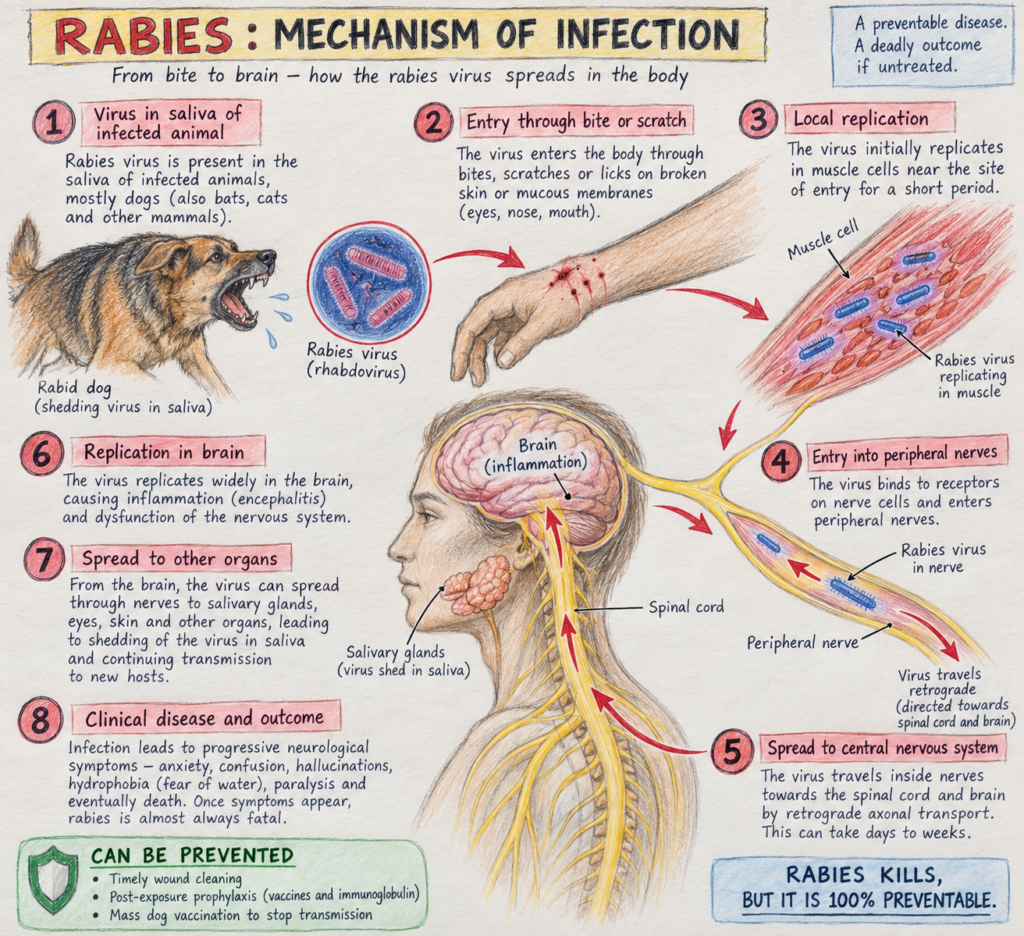
    • WHO has validated Bhutan as the first country in the South-East Asia Region to eliminate dog-transmitted rabies as a public health problem. India aims to eliminate human deaths from dog-mediated rabies by 2030.

    What does WHO Validation Mean?

    • Not virus eradication: It means elimination of human deaths from dog-mediated rabies.
    • The virus may still exist in wildlife reservoirs.
    • 2 years: No human deaths from dog-mediated rabies for at least two consecutive years.
    • The country must demonstrate capacity to prevent re-emergence through surveillance and response.

    How did Bhutan achieve it?

    Two-pronged strategy

    • Mass vaccination of dogs to control infection at source.
    • Post-Exposure Prophylaxis (PEP) for exposed humans:
      • Wound washing with soap and water
      • Rabies vaccine
      • Rabies immunoglobulin where required

    One Health approach

    • Coordination between:
      • Ministry of Health
      • Ministry of Agriculture and Livestock
      • Local governments
      • Veterinary workers
      • Communities
    • De-suung volunteers, called “Guardians of Peace”, supported vaccination and awareness.

    Why is Rabies a Major Challenge for India?

    • ~59,000: Global rabies deaths annually.
    • ~1/3: Share of global deaths occurring in India.
    • ~96%: Rabies mortality and morbidity associated with dog bites.
    • Rabies is endemic across most of India.
    • Exceptions: Andaman & Nicobar Islands and Lakshadweep.
    • Once clinical symptoms appear, rabies is almost always fatal.

    What does India need for the 2030 Target?

    1. Dog vaccination

    • Achieve around 70% vaccination coverage.
    • Conduct annual mass vaccination campaigns.
    • Publish district-level vaccination coverage.

    2. Dog population management

    • Strengthen municipal sterilisation and vaccination programmes.
    • Link funding to verified vaccination coverage, rather than only sterilisation numbers.

    3. Better PEP access

    • Decentralise rabies immunoglobulin to lower-level health facilities.
    • Improve rural access to complete PEP.

    4. Strong surveillance

    • Make human and animal rabies nationally notifiable.
    • Improve case-based reporting and mortality estimation.

    5. One Health coordination

    • Integrate human health, animal health and environmental health.
    • Strengthen coordination among health, animal husbandry and wildlife agencies.

    One Health

    • Definition: An integrated approach linking human, animal and environmental health.
    • Rabies is a classic One Health disease because:
      • Reservoir: Mainly animals
      • Transmission: Animal to human
      • Outcome: Human disease and death
    • India has established the National One Health Mission for coordination on zoonotic diseases.

    Prelims Quick Revision

    • 59,000: Approximate global rabies deaths annually.
    • 1/3: Approximate share occurring in India.
    • 96%: Mortality and morbidity associated with dog bites.
    • 70%: Approximate dog vaccination coverage required to interrupt transmission.
    • 2 years: Disease-free period relevant to WHO validation.
    • 2030: Target for eliminating human deaths from dog-mediated rabies.
    • Rabies elimination ≠ rabies virus eradication

    [2014] Consider the following diseases:

    1. Diphtheria

    2. Chickenpox

    3. Smallpox

    Which of the above diseases has/have been eradicated in India?

    (a) 1 and 2 only

    (b) 3 only

    (c) 1, 2 and 3 only

    (d) None of the above

  • What is ‘One Nation, One Time’?

    Why in the News

    The Centre has notified the Legal Metrology (Indian Standard Time) Rules, 2026, making Indian Standard Time (IST) the single reference for legal, administrative, commercial and other official purposes across the country. The Rules follow a draft notified by the Department of Consumer Affairs in January 2025, and the work of a high-power inter-ministerial committee constituted to build a policy, regulatory and legislative framework for adopting IST under the Legal Metrology Act, 2009. IST already existed and was already maintained by the Council of Scientific and Industrial Research-National Physical Laboratory (CSIR-NPL). It was not mandatorily adopted, and many telecom and internet service providers continued to take their time from foreign satellite sources such as the Global Positioning System (GPS). The change is about legal compulsion, and about where critical infrastructure gets its time from, not about setting the clock.

    What do the Legal Metrology (Indian Standard Time) Rules, 2026 do?

    1. They make one time reference legally binding: IST becomes the single reference for legal, administrative, commercial and other official purposes across the country.
    2. They allow a transition period: The Rules come into force 180 days from the date of their publication in the Official Gazette, so departments, businesses and institutions can change their systems first.
    3. They name the permitted domestic sources: The Rules enable the use of the Navigation with Indian Constellation (NavIC), India’s own satellite navigation system, along with other approved Indian timing sources for time dissemination.

    Why does India need a legally fixed time reference?

    1. Digital systems record events by timestamp: Banking and digital payments, telecommunications, railways, power systems, computer networks and government records all depend on accurate time and time stamps.
    2. Divergent sources corrupt sequence: Differences between time sources affect the coordination and the recording of these activities, so two systems can disagree about the order in which events happened.
    3. The listed users are the critical ones: The common reference is meant to support time-stamping of banking and digital payment transactions, coordination among railways, airports and other transport systems, reliable functioning of telecommunication and internet networks, precise time-keeping in power systems, the upkeep of government and legal records, and coordination of emergency services.

    How is IST generated and distributed?

    1. The definition: IST is Coordinated Universal Time (UTC), the international reference time, with a plus five hours thirty minutes offset, and it is maintained by CSIR-NPL.
    2. The precision claimed: IST is generated using advanced atomic clocks and satellite links to ensure traceability to UTC with an uncertainty of less than 3 nanoseconds.
    3. How users receive it today: It is widely disseminated at millisecond accuracy through Network Time Protocol servers at CSIR-NPL.
    4. The satellite path: ISRO has been given traceability to IST at nanosecond accuracy through satellite links to NavIC.

    How did the push for a common time begin?

    1. The draft stage: The Department of Consumer Affairs notified draft Rules in January 2025 proposing to synchronise time across India, working with the National Physical Laboratory (NPL) and the Indian Space Research Organisation (ISRO) to disseminate IST with millisecond to microsecond accuracy from the five legal metrology laboratories.
    2. The gap it identified: The trademark for IST had been registered in 2024, and the time itself had not been legalised in India.
    3. The committee that framed it: A high-power inter-ministerial committee headed by the Secretary (Consumer Affairs) drew in NPL, ISRO, IIT Kanpur, the National Informatics Centre, the Indian Computer Emergency Response Team (CERT-In), the Securities and Exchange Board of India, and the railways and telecom departments.

    What is the security case for cutting reliance on foreign time sources?

    1. The stated national security ground: The government’s position is that synchronising all networks and systems to IST is essential for national security, for real-time applications and for the smooth operation of critical infrastructure.
    2. The demonstration already built: Under the One Nation, One Time initiative, a White Rabbit Technology-based IST Dissemination Demonstration Network was commissioned in July 2026 at the Regional Reference Standard Laboratory in Bengaluru, using a fibre-based method that distributes time at sub-nanosecond accuracy.
    3. The claim made for it: The network is described as upholding the sovereignty of the nation’s digital infrastructure by eliminating reliance on foreign time sources like GPS, and as giving critical sectors maximum protection against cyber-attacks and data manipulation.

    Challenges to a single legal time reference

    1. One clock across a wide longitudinal span: India stretches across roughly 30 degrees of longitude, so sunrise and sunset in the far east of the country run close to two hours ahead of the far west against the same clock. Eg. Assam has repeatedly pressed for a separate time an hour ahead, and its tea estates already run on such a working clock informally.
      The Fix: Stagger office and school hours administratively in the north-eastern States, which captures the daylight gain without splitting the legal time reference the Rules have just unified.
    2. Compliance across private networks is unaudited: Telecom and internet operators must re-point their time servers, and no published mechanism verifies that they have. Eg. Network equipment commonly synchronises to satellite-derived time by default in its firmware, without the operator making an active choice.
      The Fix: Require licensed operators to file an annual traceability certificate against CSIR-NPL time as a licence condition.
    3. Internet-delivered time is too coarse for the highest-precision users: Time delivered over the public internet is accurate to milliseconds, and grid protection and trade sequencing are specified in microseconds. Eg. Synchrophasor measurement in power systems and order sequencing on securities exchanges both need microsecond-level agreement between distant nodes.
      The Fix: Extend the fibre-based distribution path from the reference laboratories to grid control centres and exchange data centres before the Rules take effect.
    4. A domestic chain still needs local fallback: A node cut off from its time source drifts unless it holds an independent clock of its own. Eg. A ground segment error in the Global Positioning System in 2016 broadcast an offset of about 13 microseconds and disrupted telecom and broadcast equipment across several countries.
      The Fix: Mandate local holdover clocks at critical nodes, rated to hold accuracy for a defined outage duration.

    Conclusion

    Notifying a legal time reference is the easy half of the exercise. The harder half is re-pointing the equipment inside banks, exchanges, grid control centres and telecom networks that currently takes its time from a foreign satellite by default, and none of that follows automatically from a notification. The marker to watch is whether the Department of Consumer Affairs publishes a compliance and audit mechanism, naming who certifies traceability and at what interval, before the transition window closes.

    Back2Basics: Legal Metrology Act, 2009

    1. It is the law governing weights, measures and units of measurement in India, administered by the Department of Consumer Affairs.
    2. It replaced the Standards of Weights and Measures Act, 1976 and the Standards of Weights and Measures (Enforcement) Act, 1985.
    3. It establishes the International System of Units as the basis for standard units, and provides for verification and stamping of weights and measuring instruments.
    4. Enforcement rests largely with State legal metrology departments, with the Centre setting the standards and framing the Rules.

    Matching Previous Year Question

    “In which of the following areas can GPS technology be used ? 1. Mobile phone operations 2. Banking operations 3. Controlling the power grids Select the correct answer using the code given below : (a) 1 only (b) 2 and 3 only (c) 1 and 3 only (d) 1, 2 and 3”

  • Will ‘talking’ cars reduce road accident deaths?

    Why in the News

    The Union Ministry of Road Transport and Highways will mandate Vehicle to Vehicle (V2V) communication, a system through which vehicles exchange movement data wirelessly and warn drivers of an approaching collision risk. The draft Central Motor Vehicles (Amendment) Rules, 2026 set out that mandate and invited public objections within 30 days of publication.

    How does Vehicle to Vehicle communication work?

    1. An on board unit does the exchanging: An On Board Unit (OBU) fitted in the vehicle sends data to and receives data from other vehicles wirelessly.
    2. The data exchanged is movement data: Vehicles continuously share real time speed, position, direction and acceleration.
    3. The carrier is cellular Vehicle-to-Everything technology: The system uses cellular Vehicle-to-Everything (C-V2X), a mobile network based standard for vehicle communication, in the 5.875 GHz to 5.925 GHz band.
    4. The alert reaches the driver before the hazard is visible: A vehicle braking suddenly triggers a slow down alert in nearby vehicles ahead of any driver seeing the brake lights.

    What do the draft Rules mandate, and by when?

    1. Compliance begins with voluntarily fitted vehicles: Two and three wheelers, cars, buses and goods vehicles manufactured on or after 1 October 2027 must meet Automotive Industry Standard 230 (AIS-230) if they carry a V2V system.
    2. Fitment becomes compulsory a year later: Vehicles manufactured on or after 1 October 2028 must be fitted with a V2V system meeting AIS-230 specifications.
    3. AIS-230 is the technical backbone: The standard lists the requirements a V2V system must satisfy and provides for phased introduction of other safety features.
    4. The spectrum was cleared first: The Centre exempted the 5.875 GHz to 5.925 GHz band from licensing requirements in June 2026, so original equipment manufacturers can use it in new vehicles.
    5. The cost sits on the new vehicle: On Board Units are expected to cost Rs 5,000 to Rs 7,000 and will be installed in new vehicles first.

    What can V2V do that camera based systems cannot?

    1. Existing systems are bounded by the line of sight: Camera based advanced driver assistance systems (ADAS), which use sensors to warn a driver or intervene in braking and steering, work only as far as the road is visible.
    2. V2V works around obstructions: It establishes contact with other vehicles at blind corners and behind large trucks.
    3. The warnings cover named hazards: Alerts flag sudden braking, black spots, unsafe lane changes, obstacles such as parked vehicles on roadsides, fog and potential collision risk.
    4. The detection range is about 300 metres: V2V systems typically identify vehicles within that distance.
    5. The two systems are complementary: V2V is expected to add forward collision prediction to what camera based systems already do.

    What does the limited deployment record show?

    1. Deployment abroad is narrow: V2V is working in a few countries, including the United States.
    2. Aviation already runs the same idea: Aircraft broadcast their position, speed and altitude, and nearby aircraft and ground stations receive that broadcast.
    3. The road sector is at an earlier stage: The broadcast approach is standard in global aviation and is still evolving on roads.

    Challenges to the Vehicle to Vehicle mandate

    1. The benefit depends on how many vehicles carry the unit: A network that warns only about equipped vehicles is worth little until a large share of the fleet carries the equipment. Eg. A mandate applying to vehicles manufactured from 2028 reaches none of the vehicles already registered, which stay on the road for well over a decade.
      The Fix: Fund retrofitment of On Board Units in commercial goods and public transport fleets first, since those vehicles cover the highest annual mileage.
    2. The allocated band may not carry the traffic load: It is unclear whether the frequency band set aside can support all vehicles broadcasting at once. Eg. A single congested urban intersection can hold several hundred vehicles inside the 300 metre broadcast range.
      The Fix: Fix a tested message capacity per square kilometre inside AIS-230 before the compulsory fitment date arrives.
    3. Continuous broadcasting creates a movement record: The system stores a large volume of data about vehicles, which exposes it to cyber attack and to surveillance use. Eg. FASTag toll crossings already generate a dated record of where a vehicle has been.
      The Fix: Mandate rotating pseudonymous vehicle identifiers and a fixed data retention limit in the final Rules.
    4. A wrong message can cause the crash it exists to prevent: Miscommunication between vehicles can trigger braking or a lane change that was never warranted. Eg. Automatic emergency braking systems have drawn regulatory investigation abroad over unprompted braking on highways.
      The Fix: Require cryptographic message authentication and a fail safe that suppresses alerts when integrity checks fail.
    5. The group most at risk is the hardest to equip: Two wheeler riders account for the largest share of road deaths in India, and the unit price is a significant fraction of an entry level motorcycle’s cost. Eg. Two wheelers account for roughly 44 per cent of road accident fatalities recorded in the Ministry’s annual Road Accidents in India report.
      The Fix: Subsidise On Board Units for two wheelers through the existing vehicle scrappage and safety incentive route rather than loading the cost onto the buyer.

    Conclusion

    V2V communication can make Indian roads significantly safer by enabling vehicles to detect hazards beyond line of sight and warn drivers earlier. With strong cybersecurity, privacy safeguards, affordable adoption, and wider fleet coverage, the mandate can become a major step toward smarter, safer and more connected mobility in India.

    Back2Basics: Central Motor Vehicles Rules, 1989

    1. Parent statute: They are framed under the Motor Vehicles Act, 1988, which governs registration, licensing, permits, insurance and road safety in India.
    2. What they cover: They set vehicle construction and maintenance standards, driving licence procedure, registration requirements and control of traffic.
    3. How they are changed: The Union Ministry of Road Transport and Highways notifies amendments, publishing a draft for public objections before final notification.
    4. Enforcement: Penalties for non-compliance flow from the Motor Vehicles Act, 1988, whose 2019 amendment sharply raised fines for traffic offences.
  • Indian Standard Time made the single legal time reference through new Legal Metrology rules

    Why in the News

    The Department of Consumer Affairs has notified the Legal Metrology (Indian Standard Time) Rules, 2026. The rules make Indian Standard Time (IST) the single legal time reference for use across sectors.

    Core facts

    1. Notifying body: The rules were notified by the Department of Consumer Affairs, under the Ministry of Consumer Affairs, Food and Public Distribution.
    2. Parent law: The rules are framed under the Legal Metrology Act, 2009. This Act governs weights, measures and standards of measurement in India.
    3. Mandate: The rules mandate use of IST for legal, administrative, commercial and official purposes. Use of any alternative time reference is barred unless expressly permitted.
    4. Synchronisation method: Government offices and public institutions must synchronise clocks using Network Time Protocol (NTP) and Precision Time Protocol (PTP). These are internet protocols that distribute a common reference time to connected devices.
    5. Source of time: IST is maintained by the CSIR National Physical Laboratory (NPL). It is set at Coordinated Universal Time (UTC) plus 5 hours 30 minutes.
    6. Exemptions: Scientific, astronomical and navigational uses are exempt with prior government approval.
    7. Enforcement: Compliance is checked through periodic audits. Penalties apply for violations.

    Static Context

    1. One Nation, One Time: The reform is the operational form of the One Nation, One Time idea. A draft version was first issued for public comment in early 2025.
    2. Legal Metrology institutions: The Legal Metrology wing sits under the Department of Consumer Affairs. It enforces uniform weights, measures and now uniform time.
    3. CSIR National Physical Laboratory: NPL is the national measurement standards laboratory. It keeps India’s atomic time scale and disseminates IST.
    4. Why uniform time matters: Power grid synchronisation, telecom, banking, digital governance and defence need one accurate time base. Many networks earlier drew time from foreign satellite sources such as the Global Positioning System (GPS).

    Prelims angle

    1. Custodian fact: IST is maintained by CSIR NPL, not by the India Meteorological Department or ISRO.
    2. Offset fact: IST equals UTC plus 5:30, based on the 82.5 degree East longitude reference.
    3. Legal base fact: The rules flow from the Legal Metrology Act, 2009, a consumer affairs law, not from a science ministry statute.
    4. Protocol fact: NTP and PTP are the mandated synchronisation protocols.

    Mains angle

    GS3 (Science and Technology in everyday life) and GS2 (government regulation and standardisation). A question can ask how a single national time standard strengthens critical infrastructure security and consumer fairness.

    Matching Previous Year Question

    “No direct PYQ traced in the provided files for legal metrology or Indian Standard Time. Closest tracked Microtheme is Certification/Promotional Bodies (Governance), covering national standards and certification bodies.”

  • The personalised vaccine that could cut skin cancer death risk

    The personalised vaccine that could cut skin cancer death risk

    Why in the News

    A new personalised cancer vaccine, intismeran, administered alongside the immunotherapy drug Keytruda, has been shown in Phase 3 results to reduce the risk of death from the recurrence and spread of skin cancer.

    How does intismeran work?

    1. Step one, read the tumour: The therapy begins by identifying the mutations, called neoantigens, in a sample of the patient’s own tumour.
    2. Step two, build the instruction set: A vaccine is then made of synthetically developed messenger RNA (mRNA), a single stranded molecule that carries genetic instructions from DNA in the cell nucleus and tells the cell which proteins to make. Each treatment consists of mRNA coding for 34 such neoantigens.
    3. Step three, administer and translate: Once administered, the body generates these proteins from the mRNA instructions.
    4. Step four, present to the immune system: The body then presents those proteins to the immune system, which is trained to recognise them as belonging to the cancer.

    Why must a cancer vaccine be personalised?

    1. Neoantigens exist only on cancer cells: Neoantigens are proteins found only on the cancerous cells, which the body’s immune system can be trained to recognise.
    2. They differ from patient to patient: These neoantigens vary from person to person, so they become an identifier for that individual’s cancer and cannot be mass produced as a single formulation.
    3. The principle is the same as any vaccine: A vaccine for an infectious disease contains the antigen from a pathogen, the proteins or lipids that train the immune system to recognise and fight it, and this therapy contains cancer neoantigens instead.
    4. The benefit is immunological memory: The cancer’s fingerprint enters the immune system’s memory, so if the cancer returns the body can recognise it immediately and mount a response, prolonging recurrence free survival.
    5. A decade of work behind one result: Work on this approach has run for around a decade, and this is the first clinical breakthrough.

    What did the Phase 3 study find?

    1. Death risk from recurrence fell: When the vaccine was given with Keytruda, the risk of death owing to recurrence of skin cancer went down by 49 per cent.
    2. Death risk from spread fell further: The risk of death owing to the cancer spreading went down by 59 per cent.
    3. The comparison arm matters: Both results are measured against treatment with Keytruda alone, not against no treatment.
    4. The comparison arm is already strong: Keytruda (pembrolizumab, a checkpoint inhibitor that blocks the PD-1 receptor cancer cells use to switch off the immune response against them) has over the years been shown to be much more effective in treating certain cancers than traditional chemotherapy, so the gain sits on top of an established benchmark.
    5. Side effects were mild: The most common side effects noted in the study were fatigue, injection site pain and chills.

    What does this mean for India?

    1. Reason one, the disease is rare here: Melanoma is one of the most common types of cancer in the caucasian population, and is not commonly seen among Indians.
    2. The share is a fraction of a per cent: Globocan, short for Global Cancer Observatory, an online platform that maintains cancer statistics, shows that melanoma accounts for only 0.26 per cent of all cancer cases in India and 0.17 per cent of deaths.
    3. Reason two, cost: Most patients in India are unable to afford Keytruda even with patient assistance programmes, and a combination therapy compounds a barrier that already exists for the immunotherapy alone.
    4. Access to immunotherapy is already narrow: A real world study from Tata Memorial Hospital showed that only 1.6 per cent of the patients who need such immunotherapy are able to access it.

    Challenges to personalised mRNA cancer vaccines

    1. Every dose is a separate manufacturing run: The vaccine must be sequenced, designed and produced per patient, so the process cannot be batched and the turnaround competes with tumour progression. Eg. Each treatment encodes 34 neoantigens specific to one person’s tumour. Fix. Build automated, closed-system manufacturing units co-located with cancer centres, on the model already used for cell therapy production.
    2. Cost scales with individualisation: A therapy that cannot be mass produced carries no volume discount, so the price gap over a standard drug widens rather than narrows with adoption. Eg. Even the standard companion immunotherapy reaches only 1.6 per cent of Indian patients who need it. Fix. Negotiate outcome linked pricing, where payment is tied to recurrence free survival achieved rather than to doses supplied.
    3. Cold chain requirements restrict reach: mRNA products require ultra-low temperature storage and transport, which most Indian district level oncology facilities do not have. Eg. Covid-19 mRNA vaccines were never widely deployed in India partly for this reason. Fix. Extend the cold chain built for the universal immunisation programme with ultra-low temperature capacity at regional cancer centres before such therapies are introduced.
    4. Tumours can escape the target: Cancer cells can lose the targeted antigen over time, which is the known failure mode of antigen directed immunotherapy. Eg. Relapse through antigen escape is documented in CAR-T cell therapy for blood cancers. Fix. Design vaccines against multiple conserved neoantigens and pair them with checkpoint inhibitors, so escape from one target does not end the response.
    5. Regulatory pathways assume a fixed product: Approval systems are built to assess an identical formulation across a trial population, while each dose here differs by design. Eg. India’s biotechnology approvals are already split across the Department of Biotechnology, the drug regulator and the environment ministry. Fix. Create a platform approval route that licenses the manufacturing process and the design algorithm rather than each individual product.
    6. The evidence is disease specific: The result is established for melanoma alone, and benefit in the cancers that dominate India’s burden is not demonstrated. Eg. Melanoma is 0.26 per cent of Indian cancer cases while breast, oral and cervical cancers account for the bulk. Fix. Prioritise Indian participation in trials of the same platform for oral, breast and cervical cancers, so approval evidence is generated on the local disease profile.

    Conclusion

    A personalised mRNA vaccine has for the first time produced a meaningful clinical benefit in cancer, cutting the risk of death from recurrence by 49 per cent and from spread by 59 per cent when added to an existing immunotherapy. The result validates the principle that a therapy can be built against each patient’s own tumour mutations rather than against a disease in general. For India the immediate impact is limited, because melanoma is rare here and the companion drug reaches under two per cent of the patients who need it. The question that remains open is whether the platform is extended to the cancers that actually dominate India’s disease burden.

    “[2022, GS3, 15 marks] What is the basic principle behind vaccine development? How do vaccines work? What approaches were adopted by the Indian vaccine manufacturers to produce COVID-19 vaccines?”