💥Mains Ready By December. Smash Mains & Smash PYQ Admissions Open

GS Paper: GS3-24.Various Security Forces and Agencies and their Mandate.

  • Analyze internal security threats and transborder crimes along Myanmar, Bangladesh and Pakistan borders including Line of Control (LoC). Also discuss the role played by various security forces in this regard

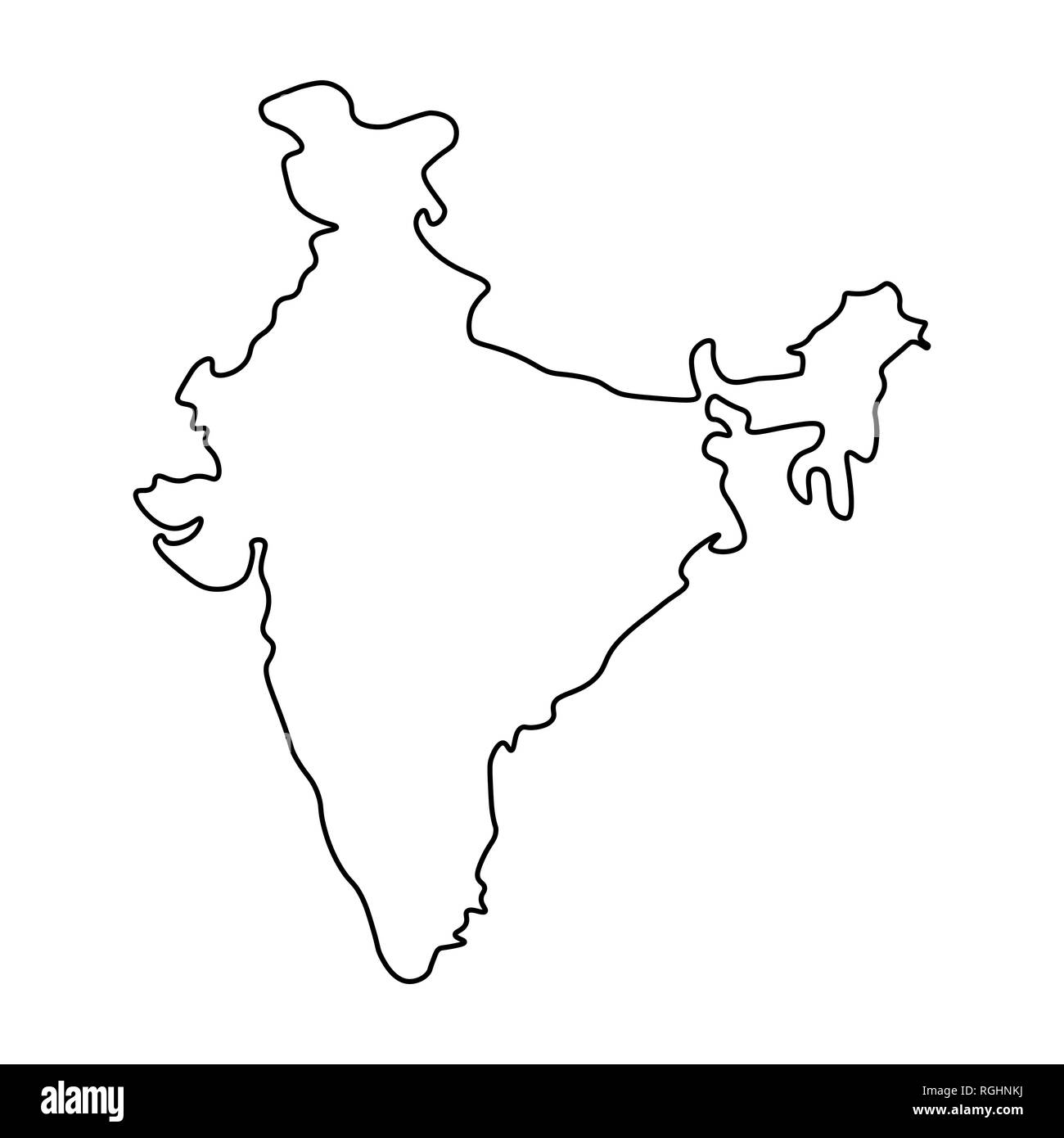
    With 15,106.7 km of land borders, the sanctity of India’s frontiers is the primary shield against unconventional “hybrid” warfare and transnational organized crime.

    Myanmar Border (1,643 km)
    Safe Havens for Insurgent Groups (IIGs)- Groups like ULFA-I and NSCN-K utilize “ungoverned spaces” in Myanmar to train and retreat.

    “Golden Triangle” Narcotics- Myanmar is a global hub for Methamphetamines. Eg- ED raids in Champhai (Mizoram) uncovering a network.

    Precursor Chemical Smuggling- Sending pseudoephedrine from India to Myanmar for drug production.

    Weapon Proliferation- Smuggling of sophisticated Western and Chinese arms from Myanmar’s black markets into Manipur.

    Bangladesh Border (4,096 km)

    Illegal Migration- Movement of undocumented individuals

    Illegal Cattle Smuggling (billion-dollar) – leads to border skirmishes.

    Bangladesh acts as a transit point for high-quality Fake Indian Currency Notes (FICN).

    Human Trafficking- A major route for trafficking women and children for forced labor.

    Radicalization Spillover- groups like Ansarullah Bangla Team (ABT) attempting to establish sleeper cells in West Bengal and Assam.

    Pakistan Border & LoC- The “Hybrid Warfare” Zone (3,323 km)

    Drone-Based Narco-Terrorism in Punjab through Golden Crescent

    Infiltration of “Hybrid” Terrorists- Eg- The April 2025 Pahalgam attack which killed 26 tourists.

    Loitering Munition Attacks to target military infrastructure dueing ‘Op Sindoor’

    Role of OGW – generate pro-terror content, circulate videos and organise protests to delegitimise the state.

    Role Played by Various Security Forces

    India follows the “One Border, One Force” principle to ensure specialized guarding.

    Indian Army (Line of Control & Siachen)

    Mandate- High-intensity combat and maintaining the sanctity of the LoC and LAC.

    Counter-Infiltration through Anti-Infiltration Obstacle System (AIOS) (a multi-layered fence equipped with sensors)

    Siachen Defense- Guards the world’s highest battlefield at heights above 20,000 feet.

    Border Security Force (BSF)

    Guards the International Borders (IB) with Pakistan and Bangladesh.

    Anti-Smuggling Operations- Intercepts narcotics, cattle, and arms smuggling.

    Implements the Comprehensive Integrated Border Management System (CIBMS).

    Anti-Drone Warfare- Operates specialized jammers and “hard-kill” interceptors

    Indo-Tibetan Border Police (ITBP)

    Guards the Indo-China Border (LAC) from Ladakh to Arunachal Pradesh.

    Acts as the first responder for avalanches and landslides in the Himalayan region.

    Assam Rifles (AR)

    Guards the Indo-Myanmar Border and conducts counter-insurgency operations in N-E.

    Responsible for implementing the 2024-25 scrapping of the Free Movement Regime (FMR) and biometric profiling of border-crossers.

    Sashastra Seema Bal (SSB)

    Guards the Nepal and Bhutan Borders.

    Acts as the Lead Intelligence Agency (LIA) to identify “Third-Country Nationals”

    Other Steps taken

    Multi-Agency Centre (MAC) for intelligence sharing

    Vibrant Villages Programme

    The integration of modern technology with civil-military cooperation is essential to create “Multi-layered Security Shield.”
  • What are the internal security challenges being faced by India? Give out the role of Central Intelligence and Investigative Agencies tasked to counter such threats.

    India’s internal security landscape has become increasingly complex, characterized by the convergence of traditional threats and high-tech “Grey Zone” challenges.

    Traditional Internal Security Challenges

    Cross-Border Terrorism- Eg- The 2025 Pahalgam attack by the TRF (a proxy of LeT).

    Left-Wing Extremism (LWE)- The “Red Corridor” remains a threat in core districts of Chhattisgarh and Odisha.

    Insurgency in the North-East- Ethnic militancy and secessionist movements like NSCN (IM).

    Communal and Sectarian Violence- Eg- Delhi Riots, 2020

    Illegal Migration & Infiltration along Bangladesh and Myanmar borders. Eg- Rohingya

    Organized Crime Syndicates-

    Extortion and smuggling networks. Eg- D-Company

    Drug Trafficking from Golden Crescent and Golden Traingle

    Hawala & Fake Currency (FICN)- Illegal financial channels used to destabilize the economy.

    Coastal Security Vulnerabilities

    Piracy

    Illegal deep sea fishing

    Emerging Internal Security Challenges

    Drone-Enabled Smuggling- Use of UAVs for drug and weapon drops.

    Cyber-Warfare-

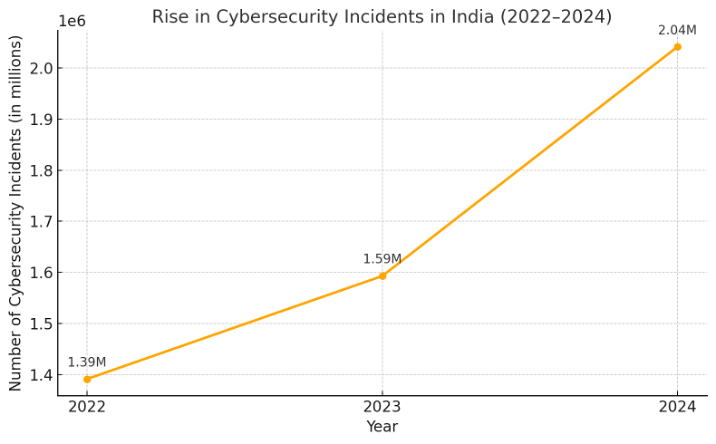
    Rise in “Digital arrest” cases

    13.7% of global incidents target India (Cyfirma report)

    Deepfakes & AI-Disinformation- Eg- Manipulated videos during the 2025 state elections.

    Online Radicalization and “white-collar” terrorism. Eg- 2025 “Doctor Module” of Red Fort Blast.

    Cryptocurrency for Terror Funding- Use of “Privacy Coins” to bypass banking regulators.

    Role of agencies

    Intelligence Agencies

    Intelligence Bureau (IB)-

    India’s premier internal intelligence agency

    Manages the Multi-Agency Centre (MAC) to coordinate real-time terror alerts

    Research & Analysis Wing (R&AW)- External intelligence agency. Monitors cross-border launch pads, foreign political developments, and global terror financing.

    National Technical Research Organisation (NTRO)-

    The apex body for technical intelligence

    Manages spy satellites, UAVs, and “Cyber-Surveillance”.

    Defence Intelligence Agency (DIA)- Integrates intelligence from the Army, Navy, and Air Force

    Financial Intelligence Unit-India (FIU-IND)- receive and analyze reports on suspicious financial transactions to track money laundering and terror funding.

    Directorate of Revenue Intelligence (DRI)- India’s premier anti-smuggling agency. Monitors trafficking of gold, firearms, and counterfeit currency (FICN). Eg- Operation Molten Metal to bust gold smuggling racket

    Investigative Agencies

    National Investigation Agency (NIA)-

    The federal counter-terrorism agency

    Has Suo Motu powers to investigate terror cases without state consent.

    Eg- “Operation Octopus” Against PFI

    Central Bureau of Investigation (CBI)-

    Probes high-profile corruption, economic offenses, and serious inter-state crimes

    Acts as the nodal agency for Interpol in India.

    Enforcement Directorate (ED)- enforce the PMLA

    Narcotics Control Bureau (NCB)- Apex coordinating body for the drug trade

    Serious Fraud Investigation Office (SFIO)- investigate complex white-collar crimes and large-scale corporate frauds.

    Wildlife Crime Control Bureau (WCCB)- curbing organized wildlife crime and illegal trade in endangered species.

    Advanced intelligence, investigative precision, and grassroots socio-economic development need to work in tandem to safeguard the nation’s democratic fabric.

  • BSF Border Security Infrastructure in Gujarat

    Why in the news?

    Amit Shah inaugurated the G-7 and G-13 Border Out Posts (BOPs) in Bhuj, Gujarat, and highlighted plans to strengthen border security through advanced technology and CISF-style security grids.

    Key Highlights

    • New BOPs inaugurated along the India-Pakistan border in Gujarat
    • Focus on:
      • Technological fencing
      • Smart border security
      • Territorial security concept
      • Leak-proof security grid

    About BSF (Border Security Force):

    • India’s “First Line of Defence”
    • Comes under the Ministry of Home Affairs
    • Guards borders with Pakistan and Bangladesh
    • Operates in extreme conditions from:
      • Desert regions
      • Marshlands
      • Forests
      • High-altitude areas

    Strategic Areas

    Sir Creek

    • The marshy disputed region between India and Pakistan
    • Security-sensitive coastal area

    Harami Nala

    • Creek area near Sir Creek
    • Vulnerable to infiltration and smuggling

    [2023] Which one of the following is the best example of repeated falls in sea level, giving rise to present-day extensive marshland?

    [A] Bhitarkanika Mangroves

    [B] Marakkanam Salt Pans

    [C] Naupada Swamp

    [D] Rann of Kutch

  • CISF Oversight for Fishing Harbours

    Why in News?

    The Ministry of Home Affairs plans to bring fishing harbours and landing centres under the security oversight of the Central Industrial Security Force (CISF) to strengthen coastal security.

    Key Highlights

    • Around 1,200 fishing harbours and landing sites to come under CISF supervision.
    • India has:
      • 1,547 notified fish landing centres and fishing harbours
      • Spread across 13 coastal States and Union Territories
    • CISF will:
      • Design security protocols
      • Guide local administration
      • Develop uniform security architecture

    Why is this Important?

    Because of large India’s coastline:

    • Extends about 7,516 km
    • Involves multiple agencies:
      • Local police
      • Indian Coast Guard
      • Indian Navy

    Lessons from 26/11 Mumbai Attacks

    • Terrorists entered Mumbai through the sea route after hijacking a fishing vessel, exposing vulnerabilities in coastal surveillance.

    About the Central Industrial Security Force

    • The Central Industrial Security Force (CISF) is a premier paramilitary organization under India’s Ministry of Home Affairs.
    • Established in 1969, it safeguards the nation’s critical industrial and infrastructure assets—including airports, seaports, power plants, and major public sector undertakings—playing a central role in India’s internal security architecture.

    [2025] With reference to the Government of India, consider the following information:
    Organization Some of its functions It works under
    I.Directorate of EnforcementEnforcement of the Fugitive Economic Offenders Act, 2018Internal Security Division- I, Ministry of Home Affairs
    II.Directorate of Revenue IntelligenceEnforces the Provisions of the Customs Act, 1962Department of Revenue, Ministry of Finance
    III.Directorate General of Systems and Data ManagementCarrying out big data analytics to assist tax officers for better policy and nabbing tax evadersDepartment of Revenue, Ministry of Finance
    In how many of the above rows is the information correctly matched?

    [A] Only one

    [B] Only two

    [C] All the three

    [D] None

  • Rajya Sabha Passes CAPF Bill Amid Opposition Walkout

    Why in the News?

    The Rajya Sabha passed the Central Armed Police Forces (General Administration) Bill, 2026, while the Opposition staged a walkout alleging that their concerns were not addressed.

    What are Central Armed Police Forces (CAPFs)

    CAPFs under Ministry of Home Affairs:

    • CRPF (Central Reserve Police Force)
    • BSF (Border Security Force)
    • CISF (Central Industrial Security Force)
    • ITBP (Indo Tibetan Border Police)
    • SSB (Sashastra Seema Bal)
    • Assam Rifles (operational control with Army)

    Key Objective of the CAPF Bill

    The Bill aims to:

    • Create umbrella administrative structure
    • Remove inconsistencies in service rules
    • Improve cadre management
    • Streamline appointments and promotions
    • Improve coordination with state police

    Government stated:

    • It will strengthen national security
    • Boost efficiency and morale of forces

    Why Government Introduced the Bill

    Over time:

    • CAPFs developed different service rules
    • Lack of clarity in: Promotions, Appointments, Deputation, and Cadre management
    • The Bill aims to standardise administration.

    Opposition’s Concerns

    Deputation Issue

    • Institutionalising IPS officers’ deputation
    • May affect career progression of CAPF officers
    [2023] With reference to Home Guards, consider the following statements: 1 Home Guards are raised under the Home Guards Act and Rules of the Central Government. 2 The role of the Home Guards is to serve as an auxiliary force to the police in maintenance of internal security. 3 To prevent infiltration on the international border/coastal areas, the Border Wing Home Guards Battalions have been raised in some States. How many of the above statements are correct? (a) Only one (b) Only two (c) All three (d) None
  • Exercise Dweep Shakti: India Conducts Tri Service Military Drill

    Why in the News?

    The Indian Armed Forces concluded Exercise Dweep Shakti, a high intensity tri service exercise conducted in the Andaman and Nicobar Islands to strengthen India’s island defence and maritime security.

    What is Exercise Dweep Shakti

    • Type: Tri Service Military Exercise
    • Forces involved:
      • Indian Army
      • Indian Navy
      • Indian Air Force
    • Focus: Island defence and amphibious warfare
    • Conducted under: Andaman and Nicobar Command (ANC)

    About Andaman and Nicobar Command

    • India’s only Tri Service Theatre Command
    • Established in 2001
    • Headquarters: Port Blair
    • Strategic location near:
      • Malacca Strait
      • Indo Pacific sea routes
    [2024] Which of the following statements about ‘Exercise Mitra Shakti-2023’ are correct? 1 This was a joint military exercise between India and Bangladesh. 2 It commenced in Aundh (Pune). Joint response during counter-terrorism operations was a goal of this operation. 3 Indian Air Force was a part of this exercise. Select the correct answer using the code given below: (a) 1, 2 and 3 (b) 1 and 4 (c) 1 and 4 (d) 2, 3 and 4
  • Vayu Shakti 2026 Exercise

    Why in the News

    The President of India Droupadi Murmu witnessed the Vayu Shakti 2026 exercise at Pokhran Firing Range, Jaisalmer.

    About Vayu Shakti

    • Conducted by the Indian Air Force
    • Venue: Pokhran Firing Range, Rajasthan
    • Simulated integrated combat theatre
    • Objective: Demonstrate precision strike capability and operational readiness

    Prelims Pointers

    • Pokhran Firing Range located in Rajasthan
    • Vayu Shakti is a firepower demonstration by the Indian Air Force
    • Rafale inducted into IAF in 2020
    • Tejas is India’s indigenous Light Combat Aircraft
    • Apache and Chinook are US origin helicopters inducted into IAF
    [2024] Consider the following aircraft: 1. Rafael 

    2. MiG-29 

    3. Tejas MK-1 

    How many of the above are considered fifth generation fighter aircraft? 

    (a) Only one (b) Only two (c) All three (d) None

  • Army’s animals wing

    Why in the News?

    At the Republic Day Parade 2026, the Remount and Veterinary Corps of the Indian Army will, for the first time, showcase a curated animal contingent including Bactrian camels, Zanskar ponies, Army dogs and raptors, highlighting the operational role of animals in military logistics and combat support.

    About the Remount and Veterinary Corps (RVC)

    • A specialised corps of the Indian Army
    • Responsible for
      • Breeding, rearing and training of Army animals
      • Veterinary care and animal health services
    • Supports operations in high altitude, desert and difficult terrains

    Historical Background

    • Origin traced to the Stud Department established in Bengal in 1779
    • Reorganised as
      • Army Veterinary Corps in 1920
      • Indian Remount and Veterinary Corps in 1950
    • Formally designated as Remount and Veterinary Corps in 1960
    • Motto: Pashu Seva Asmakam Dharma
    • Awarded the President’s Flag in 1989
    • Headquarters at Meerut

    Role and Functions of RVC

    • Ensures operational readiness of animals for
      • Logistics
      • Reconnaissance
      • Counter terrorism
      • Disaster response
    • Mules and ponies used for supply transport where vehicles and aircraft cannot operate
    • Army dogs trained for
      • Explosive and mine detection
      • Tracking and guarding
      • Avalanche and disaster rescue
      • Combat roles
    • Supports UN peacekeeping missions, Military diplomacy and NCC horse riding training
    [2024] Operations undertaken by the Army towards upliftment of the local population in remote areas to include addressing of their basic needs is called: 

    (a) Operation Sankalp 

    (b) Operation Maitri 

    (c) Operation Sadbhavana 

    (d) Operation Madad

  • Exercise MILAN, 2026

    Why in the News?

    India will host the International Fleet Review, Exercise MILAN- 2026, and the Indian Ocean Naval Symposium (IONS) Conclave of Chiefs together in Visakhapatnam from February 15–25, 2026.

    About Exercise MILAN:

    • Overview: Biennial multilateral naval exercise hosted by the Indian Navy to promote interoperability, maritime cooperation, and goodwill among friendly navies.
    • Origin: First conducted in 1995 under the Andaman and Nicobar Command with participation from Indonesia, Singapore, Sri Lanka, and Thailand.
    • Growth: Expanded over the years to include 40–55 participating nations, reflecting India’s growing maritime diplomacy under Act East Policy and SAGAR (Security and Growth for All in the Region) initiative.
    • Participation: The 2026 edition will see participation from over 50 navies, including the U.S., Russia, Japan, Australia, and ASEAN countries.
    • Venue: The 2026 edition will be hosted at Visakhapatnam under the Eastern Naval Command, marking the largest MILAN to date.
    • Structure: Conducted in two phases, a Harbour Phase (seminars, workshops, cultural exchanges, planning conferences) and a Sea Phase (joint operational exercises).
    • Sea Phase Activities: Includes anti-submarine warfare (ASW), air defence, maritime domain awareness (MDA), search and rescue (SAR), and complex fleet manoeuvres.
    • Strategic Significance: Strengthens regional maritime security, demonstrates India’s indigenous naval capabilities, and reinforces its role as a net security provider in the Indo-Pacific.

    Back2Basics: Indian Ocean Naval Symposium (IONS)

    • Overview: A voluntary, multilateral maritime cooperation initiative launched by the Indian Navy in 2008 to enhance regional maritime security and dialogue among littoral nations of the Indian Ocean Region (IOR).
    • Membership: Comprises 25 member states and 9 observer countries, spanning Africa, West Asia, South Asia, Southeast Asia, and Australia.
    • Objective: To promote maritime safety, security, capacity building, information sharing, and cooperation in Humanitarian Assistance and Disaster Relief (HADR) operations.
    • Chairmanship: The chairmanship rotates biennially among member nations; India will assume the chair for 2025–2027.
    • Key Areas of Focus:
      • Enhancing maritime domain awareness (MDA) and information exchange.
      • Combating piracy, illegal fishing, human trafficking, and terrorism at sea.
      • Strengthening maritime connectivity and blue economy cooperation.
      • Coordinating disaster relief and search-and-rescue operations.


    [UPSC 2024] Which of the following statements about ‘Exercise Mitra Shakti-2023’ are correct?

    1. This was a joint military exercise between India and Bangladesh.

    2. It commenced in Aundh (Pune).

    3. Joint response during counter-terrorism operations was a goal of this operation.

    4. Indian Air Force was a part of this exercise.

    Select the answer using the code given below:

    Options: (a) 1, 2 and 3 (b) 1 and 4 (c) 1 and 4 (d) 2, 3 and 4*


  • [pib] Exercise KONKAN-25

    Why in the News?

    Exercise KONKAN-25 has commenced off the western coast of India, marking two decades of India–UK maritime cooperation.

    About Exercise KONKAN:

    • Nature & Objective: Exercise KONKAN is an annual bilateral maritime exercise between the Indian Navy and the Royal Navy of the United Kingdom.
    • Objective: To strengthen interoperability, joint maritime operations, and mutual understanding.
    • Origin: Initiated in 2004, the exercise has expanded into a multi-domain naval engagement involving surface, sub-surface, and aerial warfare.
    • Venue Rotation: Conducted alternately in Indian and UK waters, it symbolises the long-standing India–UK strategic defence partnership.
    • Vision: It aligns with the India–UK Vision 2035, promoting free, open, and rules-based seas across the Indo-Pacific.

    Key Features:

    • Two-Phase Format:
      • Harbour Phase – Professional interactions, cross-deck visits, sports & cultural events, subject-matter expert exchanges, and working group meetings.
      • Sea Phase – Complex operational drills including anti-air, anti-surface, and anti-submarine warfare, flying operations, seamanship drills, and live-fire gunnery.
    • Major Participants (2025):
      • IndiaCarrier Battle Group led by INS Vikrant, supported by destroyers, frigates, submarines, and naval air assets.
      • United KingdomCarrier Strike Group 25 (CSG-25) led by HMS Prince of Wales, joined by allies Norway (HNoMS Roald Amundsen) and Japan (JS Akebono).
    • Special Highlight: First-ever carrier strike group collaboration between India and the UK, marking a new milestone in joint naval power projection.
    [UPSC 2024] Which of the following statements about ‘Exercise Mitra Shakti-2023’ are correct?

    1. This was a joint military exercise between India and Bangladesh.

    2. It commenced in Aundh (Pune).

    3. Joint response during counter-terrorism operations was a goal of this operation.

    4. Indian Air Force was a part of this exercise.

    Select the answer using the code given below:

    (a) 1, 2 and 3 (b) 1 and 4 (c) 1 and 4 (d) 2, 3 and 4*