💥Join UPSC 2027,2028 Mentorship (July Batch) + XFactor Notes & Microthemes PDF

GS Paper: GS3-24. Various Security Forces and Agencies and their Mandate.

  • [pib] INS Nistar Diving Support Vessel

    Why in the News?

    Indian Navy commissioned INS Nistar, the country’s first indigenously designed and constructed Diving Support Vessel (DSV).

    [pib] INS Nistar Diving Support Vessel

    About INS Nistar:

    • Project Origin: First of two Diving Support Vessels (DSVs) ordered by the Navy in 2018.
    • Developer: Built by Hindustan Shipyard Ltd with input from 120 Indian MSMEs.
    • Commissioning: Inducted at Naval Dockyard, Visakhapatnam.
    • Legacy Name: Named after the Soviet-origin INS Nistar (1971–1989).
    • Indigenization: Over 80% indigenous content, in line with Aatmanirbhar Bharat.
    • Sister Ship: INS Nipun, launched in 2022, will join soon.

    Key Features:

    • Rescue Depth: Supports diving and submarine rescue operations up to 300 metres.
    • Rescue Equipment: Equipped with ROVs, Hyperbaric Lifeboats, and Diving Chambers.
    • DSRV Role: Functions as mothership for Deep Submergence Rescue Vehicles.
    • Size: 120 metres long with a displacement of ~10,500 tonnes.
    • Endurance: Can stay at sea for over 60 days.
    • Utility Gear: Fitted with a 15-tonne subsea crane and helipad facilities.
    • Medical Support: Includes OT, ICU, hospital beds, and hyperbaric treatment units.

    Significance for India:

    • Submarine Rescue: Provides independent submarine rescue capability.
    • Operational Autonomy: Ends reliance on leased rescue platforms.
    • Strategic Status: Places India among 12 countries with full submarine rescue capability.
    • Regional Role: Strengthens India’s position as Net Security Provider in the Indian Ocean.
    [UPSC 2016] Which one of the following is the best description of ‘INS Astradharini’, that was in the news recently?

    Options: (a) Amphibious warfare ship (b) Nuclear-powered submarine (c) Torpedo launch and recovery vessel* (d) Nuclear-powered aircraft carrier


  • A better terror fight with J&K police under state reins

    Why in the News?

    On June 16, 2025, J&K Lieutenant Governor Manoj Sinha declared that eradicating terrorism from Jammu & Kashmir is the government’s foremost priority, during the passing-out parade at Sher-e-Kashmir Police Academy, Udhampur.

    What limits central forces in handling terrorism in J&K? 

    • Lack of Local Intelligence: Central forces often lack deep familiarity with local terrain, dialects, and community networks, which limits their real-time response and prevention capability. Eg: In 2022, a CRPF convoy in Pulwama district was attacked despite heavy deployment, partly due to lack of localized inputs.
    • Limited Civil Engagement: Being outsiders, central forces struggle to build community trust and rapport, which is crucial in identifying radical elements or suspicious activity. Eg: In Shopian, several villages refused to cooperate during a combing operation, affecting the credibility of the forces.
    • Operational Dependence on Local Police: Central forces depend on J&K police for actionable intelligence, language support, and legal procedures. Without local coordination, operations falter. Eg: A planned raid in Anantnag in 2023 failed due to miscommunication between central teams and local law enforcement.

    Why is the local police important in counter-terrorism in J&K?

    • Deep Local Knowledge: The J&K Police understand the terrain, dialects, and social dynamics far better than external forces, enabling precise operations. Eg: In 2020, the local police identified and neutralised a Hizbul Mujahideen module in Kulgam using ground-level intel.
    • Strong Community Links: Their trust-based relationship with local residents helps in gathering timely human intelligence (HUMINT) against militant activities. Eg: Tip-offs from locals helped prevent a planned terror strike in Pulwama in 2022.
    • Proven Operational Experience: The J&K Police have decades of counter-terrorism experience, including intelligence gathering, search operations, and deradicalisation efforts. Eg: The Special Operations Group (SOG) of JAKP has led several successful anti-terror raids in Anantnag and Baramulla.

    How does excluding elected leaders affect security in J&K?

    • Weakens Grassroots Intelligence: Elected leaders act as a bridge between citizens and security forces, providing local insights into suspicious movements. Their exclusion disrupts this intelligence flow. Eg: After the dilution of Article 370, the absence of panchayat leaders in parts of South Kashmir reduced early warnings of militant regrouping.
    • Erodes Public Trust: Marginalising elected representatives creates a governance vacuum, leading to alienation and making youth more vulnerable to radicalisation. Eg: In 2021, areas with fewer active local leaders saw a spike in recruitment by terror groups like Lashkar-e-Taiba.
    • Hampers Local Problem-Solving: Without democratic leadership, local issues like unemployment or land disputes remain unaddressed, creating fertile ground for terrorist narratives. Eg: In Kupwara, lack of local mediation escalated minor disputes into violent protests, exploited by separatist elements.

    Why is democratic governance key to counter-terrorism in J&K?

    • Enhances Local Legitimacy: Democratic governance empowers elected representatives who enjoy public trust, making it easier to mobilize communities against terrorism.
    • Improves Intelligence Gathering: Leaders at the grassroots level, like panchayat members, act as the eyes and ears of the state, helping identify suspicious activities early.
    • Counters Alienation: Political inclusion addresses grievances, reducing the appeal of extremist ideologies and promoting peaceful participation in governance.

    What are the steps taken by the Indian government? 

    • Abrogation of Article 370: Revoked the special status of J&K in 2019 to fully integrate the region with the Indian Union and ensure uniform application of laws.
    • Increased Security Deployment: Strengthened the presence of central paramilitary forces, enhanced surveillance, and improved infrastructure to curb terrorism.
    • Development Initiatives: Launched major schemes like PMDP (Prime Minister’s Development Package) and back-to-village programmes to boost infrastructure, education, and employment.

    What reforms are needed for better governance and security in J&K? (Way forward)

    • Strengthening Local Bodies: Empowering Panchayati Raj institutions with real authority and resources ensures decentralized governance and community involvement. In 2020, delays in fund disbursal to panchayats led to poor development outcomes, hampering trust in state mechanisms.
    • Police Reforms: Investing in modern training, surveillance tech, and better coordination between local and central forces improves counter-terror operations. During a 2021 operation in Baramulla, timely tech-driven coordination between police and intel units led to the arrest of a top militant.
    • Restoring Electoral Processes: Holding timely Assembly elections boosts political engagement, giving people a voice and reducing radicalization risks. The absence of an elected government since 2018 has widened the disconnect between administration and public sentiment.

    Mains PYQ:

    [UPSC 2023] Winning of ‘Hearts and Minds’ in terrorism-affected areas is an essential step in restoring the trust of the population. Discuss the measures adopted by the Government in this respect as part of the conflict resolution in Jammu and Kashmir.

    Linkage: The article talks about the emphasizes that the eradication of terrorism in J&K is a top priority, and that the J&K Police (JAKP) should utilize strategies like community engagement, intelligence, and inter-agency collaboration. This directly relates to the PYQ’s theme of “winning of ‘Hearts and Minds’” and “restoring the trust of the population” in terrorism-affected areas.

  • Exercise Talisman Sabre, 2025

    Why in the News?

    India is taking part in Talisman Sabre 2025, the 11th and largest edition of the Australia-U.S.-led multinational military exercise, involving over 35,000 personnel from 19 countries.

    About Exercise Talisman Sabre:

    • Overview: It is a biennial multinational joint military exercise, co-led by Australia and the United States.
    • Inception: It began in 2005 and has been conducted every 2 years, typically during odd-numbered years.
    • Objective: The primary aim is to enhance combat readiness, improve interoperability, and strengthen the joint operations capability of participating armed forces.
    • Scope of Operations: It focuses on high-end warfighting, including:
      • Crisis-action planning
      • Contingency response
      • Multi-domain operations across land, air, sea, cyber, and space
    • Strategic Importance: It plays a key role in promoting regional security cooperation and supports the vision of a free, open, and inclusive Indo-Pacific.

    Key Features of the 2025 Edition:

    • Scale: The 2025 edition involves over 35,000 military personnel from 19 participating countries, making it the largest and most complex iteration of the exercise so far.
    • Participating Nations:
      • Full participants: Australia, the United States, India, Canada, Fiji, France, Germany, Indonesia, Japan, the Netherlands, New Zealand, Norway, Papua New Guinea, the Philippines, South Korea, Singapore, Thailand, Tonga, and the United Kingdom.
      • Observer nations: Malaysia and Vietnam.
    • Geographical Expansion: For the first time, parts of the exercise will be conducted outside Australia, with training also planned in Papua New Guinea.
    • New Defence Capabilities: The 2025 edition will showcase:
      • UH-60M Black Hawk helicopters
      • Precision Strike Missile (PrSM) system introduced by the Australian Defence Force
    • Multi-Domain Focus: Operations will span across land, sea, air, space, and cyberspace, reflecting the modern, multi-domain nature of warfare.
    • Strategic Outcome: It aims to improve regional response capabilities, strengthen defence partnerships, and promote peace and stability in the Indo-Pacific region.
    [UPSC 2008] ‘Hand-in-Hand 2007’, a joint anti-terrorism military training was held by the officers of the Indian Army and officers of the Army of which one of the following countries?

    Options: (a) China *(b) Japan (c) Russia (d) USA


  • Operation Med Max

    Why in the News?

    The Narcotics Control Bureau (NCB) has busted a global drug network spanning four continents through secret Operation Med Max.

    Back2Basics: Narcotics Control Bureau (NCB)

    • Institutional Mandate: The NCB is India’s central drug law enforcement and intelligence agency, functioning under the Ministry of Home Affairs.
    • Establishment: It was established on 14th November 1985 under the Narcotic Drugs and Psychotropic Substances (NDPS) Act, 1985.
    • Role: The agency works closely with Customs, State Police, Intelligence Bureau, and international agencies like Interpol and the US DEA.
    • International Treaty Compliance: NCB is responsible for monitoring India’s compliance with global drug control conventions and facilitating cooperation with foreign drug enforcement bodies.
    • Operational Network: It maintains zonal offices nationwide and is staffed by officers from IPS, IRS, paramilitary forces, and direct recruits.
    • Financial Surveillance Role: The NCB is a member of the Economic Intelligence Council, reflecting its role in tracking financial transactions linked to drug crimes.
    • Digital Intelligence Focus: The agency is now expanding into cyber surveillance, targeting darknet networks, crypto-based payments, and online narcotics trade.

    About Operation Med Max:

    • Launch: It was initiated by the Narcotics Control Bureau (NCB) in May 2024, beginning with the interception of a car in Delhi, it seized 3.7 kg of Tramadol tablets.
    • Uncovering a Global Syndicate: Investigations revealed a transnational drug syndicate using encrypted apps, drop shipping, and cryptocurrency payments to smuggle controlled pharmaceutical drugs across four continents and over 10 countries.
    • Global Ramifications: The probe triggered international enforcement actions, including the arrest of a money launderer in Alabama (USA), closure of an illegal pill factory in Australia, and identification of a UAE-based drug kingpin.

    Also in News: Operation MELON

    • Overview: It was a coordinated crackdown on India’s top-rated darknet drug vendor, alias “Ketamelon”, active for over two years.
    • Drug and Crypto Seizures: The raid led to the seizure of 1,100 LSD blots, 131 grams of Ketamine, and ₹70 lakh worth of cryptocurrency, stored in a hardware wallet.
    • Darknet Threat: Ketamelon was classified as a Level 4 darknet vendor, the highest possible rank, underscoring the growing cyber-narcotics threat and NCB’s technical capacity to counter it.
    [UPSC 2024] Consider the following activities:

    1. Identification of narcotics on passengers at airports or in aircraft

    2. Monitoring of precipitation

    3. Tracking the migration of animals

    In how many of the above activities can the radars be used?

    Options: (a) Only one (b) Only two* (c) All three (d) None


  • Induction of INS Udaygiri

    Why in the News?

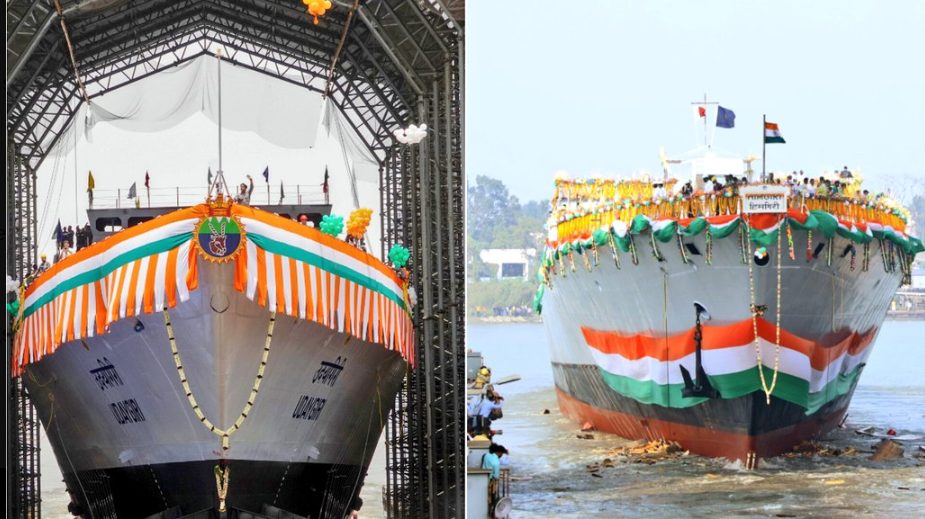
    India has advanced its indigenous naval capabilities with the induction of INS Udaygiri, the second stealth frigate built under Project 17A.

    ins udaygiri

    About INS Udaygiri:

    • Overview: It is the second stealth frigate delivered under Project 17A, marking a major milestone in India’s indigenous naval capabilities.
    • Legacy Name: Named after the decommissioned INS Udaygiri (F35), a Leander-class frigate that served from 1976 to 2007.
    • Construction: Delivered on July 1, 2025, by Mazagon Dock Shipbuilders Ltd (MDL) just 37 months after its launch, making it one of the fastest deliveries in the project.
    • Indigenous Technology: Contains homegrown sensors and combat systems, showcasing domestic defence manufacturing.
    • MSME Contribution: Over 200 Indian MSMEs participated in construction, aligning with the Aatmanirbhar Bharat mission.
    • Combat Features:
      • Blue-Water Capable: Designed for long-range operations, it can counter conventional and asymmetric threats, projecting Indian power in distant seas.
      • Stealth Features: Incorporates radar-absorbent materials and a low-infrared signature, making it hard to detect.
      • Arsenal: Equipped with supersonic surface-to-surface missiles, medium-range SAMs, a 76 mm main gun, and CIWS (30 mm and 12.7 mm).
      • Efficient Propulsion: Uses a combined diesel and gas (CODAG) propulsion system for both speed and efficiency.

    What is Project 17A?

    • Overview: It is the Indian Navy’s initiative to build seven stealth guided-missile frigates, launched in 2019 as a successor to Project 17 (Shivalik-class).
    • Shipbuilders Involved: Construction is shared between MDL (Mumbai) and GRSE (Kolkata) under Navy’s Warship Design Bureau (WDB).
    • Modern Design Features: Ships feature stealth hulls, reduced infrared signatures, and modular weapon systems.
    • Timeline and Launches: The first frigate, INS Nilgiri, was launched in 2019, with all ships targeted for delivery by 2026.
    • Technology Upgrades: Includes advanced radar, electronic warfare systems, and higher automation and survivability.
    • Indigenous Content: Project 17A emphasizes domestic components, supporting the Make in India defence policy.
    • Multi-Role Capabilities: Designed for anti-air, anti-surface, and anti-submarine warfare, suitable for high-threat scenarios.


    [UPSC 2016] Which one of the following is the best description of ‘INS Astradharini’, that was in the news recently?

    Options: (a) Amphibious warfare ship (b) Nuclear-powered submarine (c) Torpedo launch and recovery vessel* (d) Nuclear-powered aircraft carrier


  • Induction of INS Tamal

    Why in the News?

    The Indian Navy is set to commission INS Tamal, a stealth multi-role frigate and the last warship commissioned outside India, on July 1, 2025, at Kaliningrad, Russia.

    About INS Tamal:

    • Overview: It is the 8th Krivak-class and 2nd Tushil-class stealth frigate from Russia.
    • Last to be imported: Final Indian Navy ship to be commissioned abroad, under the 2016 India-Russia IGA.
    • Built at Yantar Shipyard, Kaliningrad; sister ship INS Tushil was commissioned in Dec 2024; designed by Severnoye Bureau; overseen by the Indian Navy.
    • Etymology: Name inspired by a mythical sword of Indra; mascot blends Jambavant and Eurasian Brown Bear.
    • Motto: “Sarvada Sarvatra Vijaya” – Victorious Always, Everytime.

    Important Features:

    • Indigenous components: It uses Indian-made parts in 26% of its systems, including those from companies like BEL and Tata.
    • Stealth capacity: It has radar, sonar, and electronic systems to detect enemy ships and submarines.
    • Patrol features: It can carry helicopters that help in sea patrol and rescue missions.
    • Size: It is 125 metres long, weighs about 3,900 tonnes, and can move very fast, over 30 knots.
    • Digital warfare: It has modern control systems that allow all its weapons and sensors to work together.
    [UPSC 2016] Which one of the following is the best description of ‘INS Astradharini’, that was in the news recently?

    Options: (a) Amphibious warfare ship (b) Nuclear-powered submarine (c) Torpedo launch and recovery vessel (d) Nuclear-powered aircraft carrier


  • Navy inducts INS Arnala

    Why in the News?

    INS Arnala, the first Anti-Submarine Warfare Shallow Water Craft (ASW-SWC), was officially commissioned into the Eastern Naval Command at the Naval Dockyard, Visakhapatnam.

    About INS Arnala:

    • What is it: INS Arnala is the first Anti-Submarine Warfare Shallow Water Craft (ASW-SWC) commissioned into the Eastern Naval Command on June 18, 2025, at Visakhapatnam.
    • Behind the name: It is named after the historic Arnala Fort near Vasai, Maharashtra.
    • Development: The vessel was designed by Garden Reach Shipbuilders & Engineers (GRSE) and built in partnership with L&T Shipbuilders under a Public-Private Partnership (PPP) model.
    • Project: It marks the beginning of the induction of 16 ASW-SWC class ships, aimed at enhancing India’s shallow water anti-submarine capabilities.

    Key Features:

    • Propulsion: 77.6 metres long; first Indian Navy warship powered by a Diesel Engine-Waterjet combination.
    • Indigenous Content: Over 80% indigenous systems, with contributions from BEL, L&T, Mahindra Defence, and over 55 MSMEs.
    • Arsenal: Equipped with a single centreline rocket launcher, lightweight torpedoes, anti-torpedo decoys, and mine-laying systems.
    • Sensor Suite: Incorporates Hull-Mounted Sonar (Abhay), Low-Frequency Variable Depth Sonar (LFVDS), and Underwater Acoustic Communication System (UWACS).
    • Multi-role Capability: Designed for ASW operations, Search and Rescue (SAR), low-intensity maritime operations, and subsurface surveillance in shallow coastal waters.

    Significance:

    • Strategic Defence Upgrade: Replaces ageing Abhay-class corvettes and significantly strengthens India’s anti-submarine warfare posture.
    • Enhanced Coastal Security: Ideal for detecting midget submarines and Unmanned Underwater Vehicles (UUVs) in waters less than 30 metres deep, where larger warships struggle to operate.
    • Make-in-India Milestone: Demonstrates India’s growing self-reliance in defence manufacturing and contributes to the Aatmanirbhar Bharat initiative.
    [UPSC 2016] Which one of the following is the best description of ‘INS Astradharini’, that was in the news recently?

    Options: (a) Amphibious warfare ship (b) Nuclear-powered submarine (c) Torpedo launch and recovery vessel* (d) Nuclear-powered aircraft carrier


  • Exercise KHAAN QUEST

    Why in the News?

    The Indian Army has deployed it’s contingent to participate in Exercise KHAAN QUEST 2025, a major multinational peacekeeping exercise being held in Ulaanbaatar, Mongolia.

    Concurrently, India is also set to conduct Exercise SHAKTI 2025 with France.

    About Exercise KHAAN QUEST, 2025:

    • Overview: It is a multinational peacekeeping military exercise being held in Ulaanbaatar, Mongolia from June 14 to 28, 2025.
    • Origins: The exercise was initiated in 2003 as a bilateral drill between the United States and Mongolian Armed Forces and became a multinational event in 2006.
    • Indian Participation: India has sent a 40-member contingent, primarily from the Kumaon Regiment, along with personnel from other arms and services, including one woman officer and two women soldiers.
    • Focus: The exercise trains troops for Peacekeeping Missions under Chapter VII of the UN Charter, which deals with action regarding threats to peace and acts of aggression.
    • Key Training Drills: Participating forces will engage in checkpoint establishment, cordon and search operations, civilian evacuation from conflict zones, counter-IED tactics, and combat casualty care.
    • Objectives: The main goal is to build interoperability, promote joint planning, and strengthen tactical coordination among different participating nations.

    About Exercise SHAKTI, 2025:

    • Overview: It is a bilateral military drill between India and France, scheduled to take place at La Cavalerie, France, from June 18 to July 1, 2025.
    • Exercise Series: This marks the 8th edition of the biennial joint exercise, reflecting a strong and ongoing defence partnership between the two nations.
    • Objectives: The drill focuses on enhancing the joint capability to conduct multi-domain operations, especially in sub-conventional warfare scenarios.
    • Core Training Areas: It includes sessions on tactical coordination, joint operational planning, and counter-terrorism techniques.
    • Goals: To deepen military cooperation, foster mutual trust, and build interoperability and camaraderie between the Indian and French armed forces.


    [UPSC 2024] Which of the following statements about ‘Exercise Mitra Shakti-2023’ are correct?

    1. This was a joint military exercise between India and Bangladesh.

    2. It commenced in Aundh (Pune).

    3. Joint response during counter-terrorism operations was a goal of this operation.

    4. Indian Air Force was a part of this exercise.

    Select the answer using the code given below:

    (a)  1, 2 and 3 (b) 1 and 4 (c) 1 and 4 (d) 2, 3 and 4


  • 17th Edition of Exercise Nomadic Elephant

    Why in the News?

    The 17th edition of the India–Mongolia Joint Military Exercise NOMADIC ELEPHANT is being held in Ulaanbaatar, Mongolia from May 31 to June 13, 2025.

    About Exercise NOMADIC ELEPHANT:

    • About: It is a bilateral military exercise between the Indian Army and the Mongolian Armed Forces.
    • Launch Year: It was first conducted in 2004 in Mongolia, followed by the second edition in 2005 in Vairengte, Mizoram.
    • Frequency and Hosting: The exercise is held annually, with India and Mongolia alternating as hosts.
    • Recent Editions: The 15th edition was conducted in Ulaanbaatar in July 2023, and the 16th edition was held at Umroi, Meghalaya in July 2024.

    Objectives and Focus:

    • Interoperability: The main goal is to improve joint operational coordination between the two-armed forces.
    • Terrain Focus: It trains troops for task force operations in semi-urban and mountainous regions under a UN peacekeeping mandate.
    • Counter-Terrorism Training: The exercise enhances capabilities in counter-terrorism and counter-insurgency operations.
    • Regional Cooperation: It helps build mutual trust, encourages regional peace, and supports strategic cooperation.
    [UPSC 2008] ‘Hand-in-Hand 2007’, a joint anti-terrorism military training was held by the officers of the Indian Army and officers of the Army of which one of the following countries?

    Options: (a) China (b) Japan (c) Russia (d) USA*


  • Exercise Desert Flag 10

    Why in the News?

    Indian Air Force (IAF) contingent has recently departed for the Desert Flag-10 exercise, being held at the Al Dhafra air base in the UAE.

    About Exercise Desert Flag:

    • Exercise Desert Flag is a multi-nation air combat exercise held at Al Dhafra Air Base in the UAE.
    • It offers participating air forces the opportunity to engage in complex fighter operations and enhance combat capabilities in a collaborative environment.
    • Focus Areas: Fighter engagements, interoperability, and the exchange of operational knowledge.
    • Participants: Air forces from United States, United Kingdom, Australia, Germany, France, Bahrain, Qatar, Saudi Arabia, South Korea, Turkey, and India.

    Significance of the Exercise:

    • Improving Interoperability: Enhances the ability of air forces from different nations to work together seamlessly, sharing information and responding to regional security challenges.
    • Learning from Global Air Forces: Provides the IAF with exposure to advanced combat tactics and air defence technologies from the world’s top air forces.
    • Diplomatic and Strategic Influence: India’s participation underscores its role in global security and enhances its defence diplomacy.
    [UPSC 2008] Hand-in-Hand 2007’, a joint anti-terrorism military training was held by the officers of the Indian Army and officers of the Army of which one of the following countries?

    Options: (a) China * (b) Japan (c) Russia (d) USA