Why in the News?
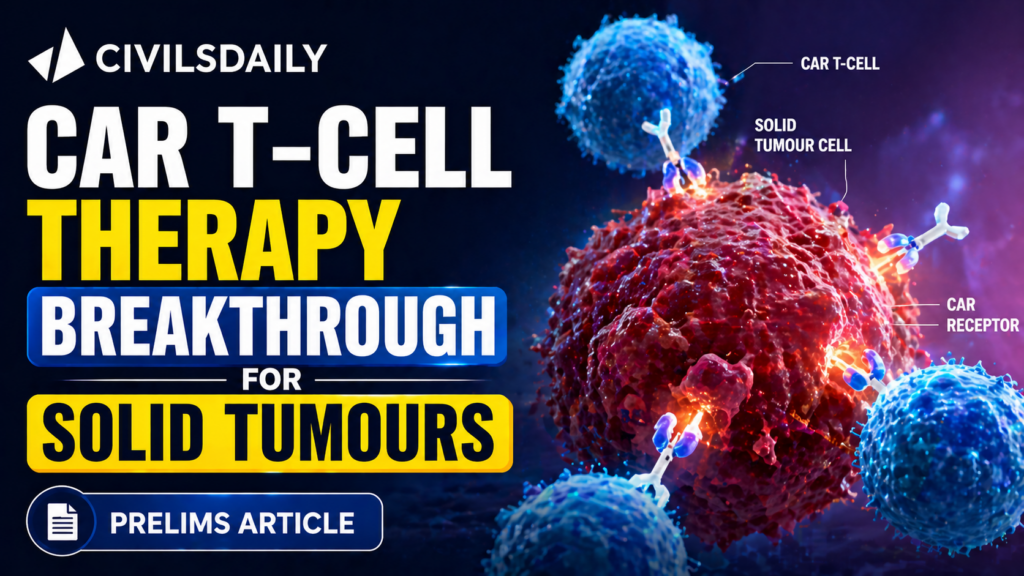
A recent study published in the journal Science has reported a breakthrough in CAR T-cell therapy, where scientists developed a highly sensitive receptor capable of detecting faint tumour signals, potentially enabling treatment of solid cancers such as kidney and ovarian cancer.
What is CAR T-cell Therapy (Chimeric Antigen Receptor T-cell Therapy)?
- A form of immunotherapy where a patient’s T-cells are genetically modified to identify and destroy cancer cells
Existing Limitation
- Effective mainly in blood cancers like leukemia and lymphoma
- Limited success in solid tumours due to
- Antigen Heterogeneity
- Tumour cells vary in protein expression
- Some cells remain undetectable to CAR T-cells
- Antigen Heterogeneity
Note: An antigen is any substance—such as bacteria, viruses, toxins, or foreign proteins—that causes the immune system to produce antibodies or mount a specific defense response
Key Discovery
- Target protein: CD70
- Found in
- 70 to 80 percent of kidney and ovarian cancers
- Around 25 percent of pancreatic cancers
- Many tumour cells thought to lack CD70 actually contain it in very low quantities
New Innovation
HIT Receptor (HLA Independent T-cell Receptor): engineered immune receptors that enable T cells to target cancer cells without requiring HLA matching.
- Detects very low levels of tumour antigens
- Works by linking detection directly to the natural T-cell activation pathway
- Bypasses the HLA system
Results of Study
- Conventional CAR T-cells failed to eliminate all tumour cells
- HIT receptor based T-cells:
- Eliminated hidden tumour cells
- Achieved complete tumour removal in experimental models
Safety Concerns
- High sensitivity may attack normal cells
- Known as Goldilocks Challenge
- CD70 mostly absent in vital organs like Heart, Lungs, and Brain
- Minor effects observed in immune cells
| [2022] Which one of the following statements best describes the role of B cells and T cells in the human body? (a) They protect the body from environmental allergens. (b) They alleviate the body’s pain and inflammation. (c) They act as immunosuppressants in the body. (d) They protect the body from the diseases caused by pathogens. |
