Why in the News
- A study published in Science Advances (March 2026) finds that Mohenjo-daro exhibited collective (democratic-like) governance, comparable to Athens and Republican Rome.
About Mohenjo-daro
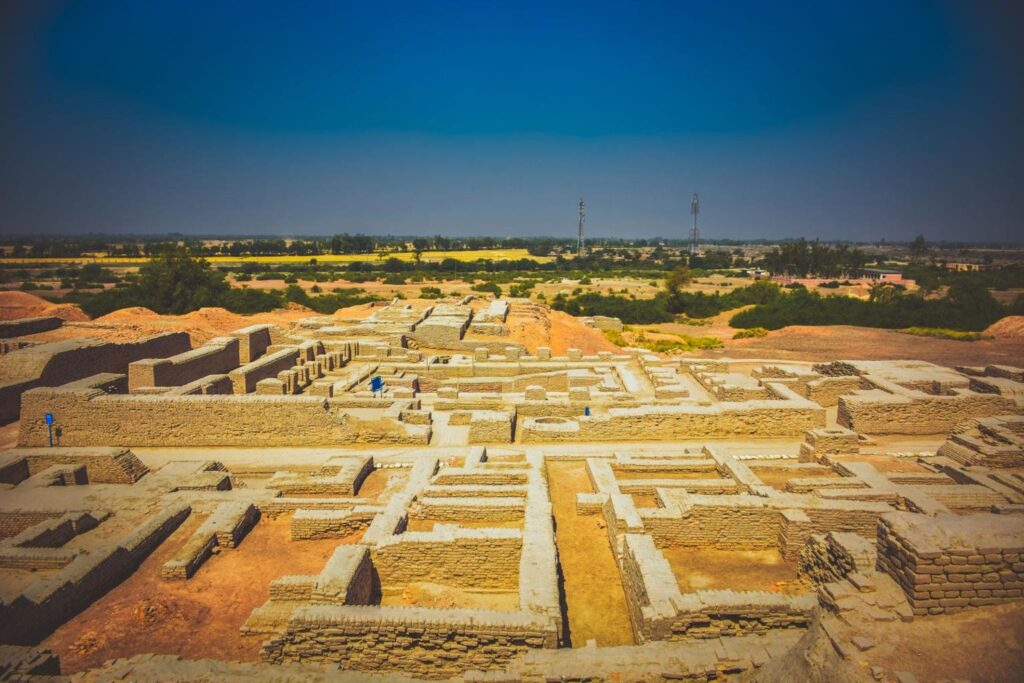
- Part of the Indus Valley Civilization (IVC)
- Located in present-day Sindh (Pakistan)
- Known for:
- Advanced urban planning (grid system)
- Drainage and sanitation systems
- Lack of clear evidence of centralized monarchy
Key Findings of the Study
1. Democracy Beyond Greece & Rome
- Democratic/collective governance was not unique to Europe
- Similar systems found in:
- North America: Iroquois Confederacy, Zuni
- Mesoamerica: Teotihuacan, Monte Albán, Tlaxcala
- South Asia: Mohenjo-daro
2. Two Dimensions of Governance
Researchers used two parameters:
- Power concentration: Whether authority is centralized or dispersed
- Inclusiveness: Degree of public participation in governance
3. Indicators of Collective Governance
- Urban planning features:
- Large open public spaces (for gatherings)
- Absence of palaces or grand royal tombs
- Art & architecture: Limited glorification of rulers
- It shows Shared decision-making systems
4. Indicators of Autocracy
- Monumental: Palaces, pyramids, elite tombs
- City layouts: Roads converging to ruler’s residence
- Rituals: Grand spectacles reinforcing ruler authority
5. “Autocracy Index”
- Study created a spectrum:
- From highly autocratic → highly collective
- Mohenjo-daro ranked towards collective governance
6. Role of Economic Structure (Key Insight)
- Autocratic societies:
- Based on controlled resources
(mines, trade routes, war plunder)
- Based on controlled resources
- More democratic societies:
- Based on: Broad taxation and Community labour
7. Inequality Link
- Inclusive systems: Lower economic inequality
- Challenges assumption: Complexity always leads to autocracy
Broader Significance
- Democracy has deep, global historical roots
- Challenges Eurocentric view: That democracy began only in Greece & Rome
- Important for modern governance: Helps understand power concentration & inequality trends
| [2013] Which of the following characterizes/characterize the people of Indus Civilization? 1. They possessed great palaces and temples. They worshipped both male and female deities. 2. They employed horse-drawn chariots in warfare. Select the correct answer using the code given below: (a) 1 and 2 only (b) 2 only (c) 1, 2 and 3 (d) None of the statements given above is correct |