Why in the News?
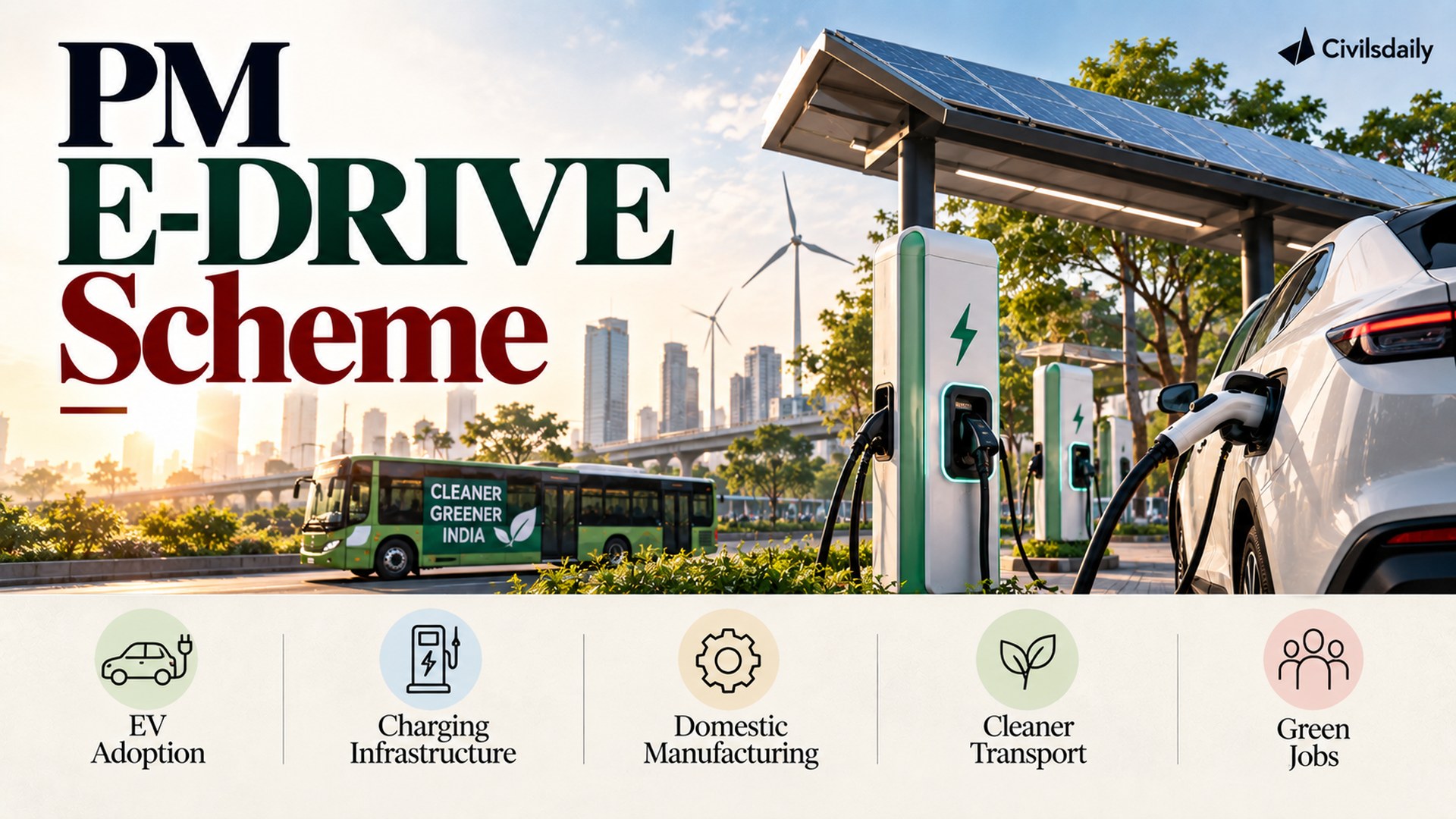
- The PM Electric Drive Revolution in Innovative Vehicle Enhancement (PM E-DRIVE) Scheme was launched in September 2024 and implemented from October 2024.
- Its implementation has been extended up to 31 March 2028, with a total outlay of ₹11,900 crore.
Key Highlights
- Implemented on a pan-India basis.
- Supports:
- EV demand incentives
- Charging infrastructure
- E-buses
- Vehicle testing agencies
- Domestic EV manufacturing and localisation
- Targets approximately 28.30 lakh EVs.
- 26.59 lakh EVs sold as of June 2026.
- Promotes cleaner mobility and reduction of transport-related environmental impacts.
EV Categories Covered
- e-2Ws
- e-3Ws, including registered e-rickshaws, e-carts and L5
- e-Ambulances
- e-Trucks
- e-Buses
- EV charging infrastructure
- Upgradation of vehicle testing agencies
e-2W Incentive
- Incentive: ₹2,500/kWh
- Maximum incentive: ₹5,000 per vehicle
- Applicable to vehicles priced up to ₹1.5 lakh ex-factory.
- Allocation: ₹2,767 crore.
- Target: 45.79+ lakh registered e-2Ws.
e-3Ws
- Target sales for registered e-3W L5 achieved.
- L5 sub-component closed on 26 December 2025.
- Support for e-rickshaws and e-carts continues until March 2028.
E-Buses and Charging Infrastructure
- ₹4,391 crore allocated for 14,028 e-buses.
- 14,000 e-buses allocated as of August 2026.
- 13,800 e-buses allocated to seven cities: Delhi, Bengaluru, Hyderabad, Mumbai, Ahmedabad, Pune, and Surat
- ₹2,000 crore earmarked for nationwide EV Public Charging Stations (EV PCS).
- ₹851 crore approved for 8,147 chargers to 3 oil marketing companies and 10 States as of 28 September 2026.
- ₹780 crore allocated for modernisation and upgradation of vehicle testing agencies.
Demand Incentive Mechanism
- Eligible buyers receive an upfront reduction in purchase price through e-vouchers.
- The incentive amount is subsequently reimbursed to the Original Equipment Manufacturer (OEM) by the Ministry of Heavy Industries (MHI).
Domestic EV Manufacturing
- Supports India’s domestic EV manufacturing ecosystem.
- Promotes localisation of EV models.
- Registered OEMs have obtained certificates of compliance with the Phased Manufacturing Programme (PMP) from MHI testing agencies.
- Upgraded testing agencies will be equipped to handle new and emerging technologies.
Prelims Quick Revision
- Launch: September 2024
- Implementation: October 2024
- Extended until: 31 March 2028
- Total outlay: ₹11,900 crore
- EVs supported: approximately 28.30 lakh
- EVs sold: 26.59 lakh as of June 2026
- e-2W incentive: ₹2,500/kWh, capped at ₹5,000/vehicle
- e-2W price ceiling: ₹1.5 lakh ex-factory
- ₹2,000 crore for nationwide EV public charging stations
- ₹780 crore for vehicle testing agency modernisation
UPSC Prelims Trap
- PM E-DRIVE is not limited to EV purchase incentives; it also covers charging infrastructure, e-buses and testing agencies.
- The ₹2,500/kWh e-2W incentive is subject to a ₹5,000 per vehicle cap.
- ₹4,391 crore relates to e-buses, while ₹2,000 crore is earmarked for EV public charging stations.
- L5 e-3W support and e-rickshaw/e-cart support should not be treated as identical sub-components: the L5 target was achieved and that segment closed on 26 December 2025, while support for e-rickshaws and e-carts continues until March 2028.
