💥UPSC 2026, 2027, 2028 UAP Mentorship (March Batch) + Access XFactor Notes & Microthemes PDF

Search results for: “”

  • Birth anniversary of Birsa Munda: The leader, his contributions

    birsa

    On the occasion of the birth anniversary of tribal leader Birsa Munda, the Centre marked the second Janjatiya Gaurav Divas on November 15 to celebrate the contributions of tribal communities to Indian culture.

    Who was Birsa Munda (1875-1900)?

    birsa

    • Birsa Munda was a tribal freedom fighter, religious leader, and folk hero who belonged to the Munda tribe.
    • He spearheaded a tribal religious millenarian movement that arose in the Bengal Presidency (now Jharkhand) in the late 19th century, during the British Raj.

    His legacy

    (A) Birth and early childhood

    • Born on November 15, 1875, Birsa spent much of his childhood moving from one village to another with his parents.
    • He belonged to the Munda tribe in the Chhotanagpur Plateau area.
    • He received his early education at Salga under the guidance of his teacher Jaipal Nag.
    • On the recommendation of Jaipal Nag, Birsa converted to Christianity in order to join the German Mission school.
    • He, however, opted out of the school after a few years.

    (B) New faith ‘Birsait’ against religious conversion

    • The impact of Christianity was felt in the way he came to relate to religion later.
    • Having gained awareness of the British colonial ruler and the efforts of the missionaries to convert tribals to Christianity, Birsa started the faith of ‘Birsait’.
    • Soon members of the Munda and Oraon community started joining the Birsait sect and it turned into a challenge to British conversion activities.
    • The Mundas called him Dharati Aaba, the father of earth.

    (C) The Ulgulan

    • The Great Tumult or Ulgulan was a movement started by Birsa Munda against the exploitation and discrimination against tribals by the local authorities.
    • Although the movement failed, it did result in the Chotanagpur Tenancy Act which forbade tribal lands passing to non-tribals, protecting their land rights for the foreseeable future.

    (D) Death

    • On March 3, 1900, Birsa Munda was arrested by the British police while he was sleeping with his tribal guerilla army at Jamkopai forest in Chakradharpur.
    • He died in Ranchi jail on June 9, 1900, at the young age of 25.

    (E) Creation of Jharkhand

    • Birsa Munda’s achievements are known to be even more remarkable by virtue of the fact that he came to acquire them before he was 25.
    • In recognition of his impact on the national movement, the state of Jharkhand was created on his birth anniversary in 2000.


    Try this PYQ from CSP 2020

    With reference to the history of India, “Ulgulan” or the Great Tumult is the description of which of the following event?

    (a) The Revolt of 1857

    (b) The Mappila Rebellion of 1921

    (c) The Indigo Revolt of 1859-60

    (d) Birsa Munda’s Revolt of 1899-1900


    Post your answers here.


    (Click) FREE1-to-1 on-call Mentorship by IAS-IPS officers | Discuss doubts, strategy, sources, and more

  • Regulating the election funding system

    election

    Context

    • Elections are to democracy what financial markets are to the economy. The absence of an omnibus law to regulate elections and political parties in India is a legislative gap waiting to be filled.

    Significance of political parties in democracy

    • A political party is an organized group of citizens who hold common views on governance and act as a political unit that seeks to obtain control of government with a view to further the agenda and policy they profess.
    •  Political parties maintain a continuous connection between the people and those who represent them either in government or in the opposition.
    • Political parties in India are extra-constitutional, but they are the breathing air of the political system.

    Current procedure of recognizing and regulating the political parties In India

    • Registration of political parties: The Representation of the People Act 1951 was amended in 1988 to add a new section IVA on “Registration of political parties” by which the Election Commission of India (ECI) exercises its mandate for superintendence, direction, and control of elections under Article 324 of the Constitution of India.
    • Recognition as national or state political party: Association of citizens can apply to the ECI to be registered by submitting its Memorandum of Association and swearing allegiance to the Constitution. It requires fulfilment of performance criteria, including a minimum share of the electoral votes cast in the last election and the number of seats won to become a recognized national or a state party.
    • A regulatory gap in Municipal political parties: Municipalities became the third level of government, three decades ago in 1992, through the 74thconstitutional amendment. But a parallel recognition for political parties operating only at the municipal level is yet to be conceptualized.

    Mechanism of Election funding

    • Encouraging private corporates and individual investment: Indian government does not directly fund election campaigns of parties or independents. However, it has made political parties exempt from income tax, to encourage private corporate and individual investment in building political parties.
    • Limit on election campaign expenditure: The ECI set upper-end limits (January 2022) for election campaign expenditure in parliamentary seats at INR9.5 million and INR4 million in state legislature seats.

    election

    Electoral bonds to end large cash payments in election finance.

    • Scheme of electoral bonds:
    • A publicly owned commercial bank, with the largest network of branches is the only designated vendor.
    • Bonds remain valid for 15 days within which they can be encased through the bank account of the selected political party.
    • The purchaser-donor enjoys tax credits on the purchased bonds as in any other donation to charities.
    • Association of democratic records: The idea was to facilitate large donors, preferring anonymity whilst donating funds for elections, with an alternative to cash payments.

    election

    What is the cause of concerns over the electoral bonds?

    • Anonymity of the electoral bonds: The anonymity afforded by the bonds is primarily versus citizens.
    • Bond vendor is a government owned bank: SBI is a government-owned bank, which can be persuaded by the government into sharing data informally regarding the bond purchases and encashments by political parties

    What can be done to ensure the security of the donor?

    • Bond Digitization: Bonds should be digitized and the privacy of the transfer should be protected through encryption.
    • Authorized access: Redemption is through banking the audit trail of the donor and the recipient would exist for authorized access.
    • Enhancing transparency with ECI: Transparency should be enhanced whilst protecting anonymity by authorizing ECI to collect and publish de-personalized information.
    • Personal data should be accessed with the specific orders only: Access for security and criminal investigation agencies to the personal data should come via a specific order of the ECI allowing such privileged access.

    What are the suggestions for better governance of the political parties?

    • Strict Supervision of political parties: Poor Intra-party governance is concentrated in the Registered Unrecognize Political Parties (RUPP). Most are in breach of their undertaking to fight an election within five years and remain active thereafter.
    • Strengthen the Regulatory compliance: The benefit of income tax exemption should only be available after registered parties demonstrate a five-year record of compliance with the regulations.
    • Enforce inner-party democracy and avoiding conflict of interest: Making party members occupying party positions, ineligible for holding executive positions in government. This is necessary to create a complete segregation of functions within the ruling party and the government
    • Empower ECI to regulate political parties: The misuse of the fiscal privileges afforded to political parties can be minimized through targeted regulatory tweaks, within the existing construct of private financing and the inner functioning of parties improved through targeted regulation.

    Conclusion

    • “Secrecy is a darkness where corruption gets nurtured”. Funding to the political parties need to be transparent. Transparent funding will pave the way for level playing field for all the political parties.

    Mains Question

    Q. What are the pitfalls of anonymous political funding through electoral bonds. Suggest solutions to ensure the transparent political funding.

    (Click) FREE1-to-1 on-call Mentorship by IAS-IPS officers | Discuss doubts, strategy, sources, and more

  • Online Women safety

    Women

    Context

    • India has one of the youngest youth demographics in the world and among the most active online. As online interactions increase, more content is created and shared among people, helping them form new and wonderful connections. Sometimes, however, these interactions also make them vulnerable to harm.

    What constitute as online harassment of women?

    • Sharing embarrassing and cruel content about a person to impersonation
    • Stalking and electronic surveillance
    • Non-consensual use of photography
    • Violent threats and hate speech
    • Defamation
    • Flaming- use of vitriolic and hostile messages including threats, insults
    • Trolling
    • The online harassment of women, sometimes called Cyber-sexism or cyber-misogyny, is specifically gendered abuse targeted at women and girls online.
    • It incorporates sexism, racism and religious prejudice.

    Women

    How women disproportionately get affected?

    • Often women are blamed: Often, crimes that disproportionately impact women devolve into mass panic and lead to an all too predictable top-down discourse around the need to protect our sisters and daughters.
    • Curbing the freedom of Women: The reaction, however well intentioned, will end up denying women their freedom and agency by their so-called protectors, many of whom are simply telling women to go offline, to be ashamed of expressing themselves, to stay in their lane.

    What is role of intermediaries in preventing such abuses?

    • Making intermediary liable: As of now, the intermediaries are not liable for any third-party data or communication link hosted or stored by them.
    • Mandatory Data retention by intermediaries: They are required to retain the requisite data for duration as prescribed by the Government and supply the same to the authorities concerned, as and when sought.
    • Punishment for Non-compliance is: Highlighting any contravention attracts punishment as prescribed under the IT Act.

    Women

    What are the Steps taken by the Government?

    • IT rules 2021: The Ministry of Electronics and Information Technology notified the Information Technology (Intermediary Guidelines and Digital Media Ethics Code) Rules, 2021.
    • Defined Categories of abuse: They include contents that are defamatory, obscene, pornographic, paedophilic, invasive of another’s privacy, insulting or harassing on the basis of gender, libellous, racially or ethnically objectionable, etc.
    • Prohibition on derogatory publications: The intermediaries, on the direction of the court or appropriate government agency, are prohibited from hosting, storing or publishing any information declared unlawful.
    • Removal of content within 24 hours: Within 24 hours from the receipt of a complaint from, or on behalf of, an individual about any offensive content, they are required to take all reasonable and practicable measures to remove or disable access to it.
    • Meetings of parliamentary committees: Various parliament committees in India have held meetings to discuss the issue of online safety of women over the years, and part of the government’s motivation in notifying the new IT rules had been rooted in the growing concern regarding the safety and security of users, particularly women and children. These are very good tangible steps.
    • Amendment in IT act should include the concerns of women: With the IT Act coming up for a rehaul, there is an opportunity to discuss in detail the nature of technology-facilitated abuse, capturing what this means, understanding how cases impact individuals as well as communities, the language needed to capture such offences and the punishment penalties, jail or even rehabilitation programmes for perpetrators. This could be the start of an era of evidence-based discussion.

    Women

    Conclusion

    • Despite these efforts, it is clear that women in India won’t feel safe online anytime soon unless society lets them. What could be helpful here is to elevate the public discourse around technology-facilitated abuse.

    Mains Question

    Q. How women are vulnerable against online abuse? What is the role of Intermediaries in online abuse case? What are governments efforts to make women friendly cyberspace?

    (Click) FREE1-to-1 on-call Mentorship by IAS-IPS officers | Discuss doubts, strategy, sources, and more


  • MARS A new alert system to detect Methane emissions

    MARS

    Context

    • A new satellite-based system will now help governments detect methane emissions and tackle them. The Methane Alert and Response System (MARS) was launched at the 27th Conference of Parties (COP27) to the United Nations Framework Convention on Climate Change in Sharm El-Sheikh, Egypt.

    What is Methane Alert and Response System (MARS)?

    • MARS is a part of global efforts to slow climate change by tracking the global warming gas.
    • The system will be the first publicly available global system to connect methane detection to notification processes transparently.
    • The data-to-action platform was set up as part of the UN Environment Programme’s (UNEP) International Methane Emissions Observatory (IMEO) strategy to get policy-relevant data into the right hands for emissions mitigation.

    MARS

    How the “MARS” will work?

    • The Methane Alert and Response System, or MARS, will integrate data from a large number of existing and future satellites to identify significant methane emission events anywhere in the world.
    • It will send out notifications to the relevant stakeholders and support and track mitigation progress.
    • According to the UN statement MARS will track the large point emission sources, mainly in the fossil fuel industry, but with time, would be able to detect emissions from coal, waste, livestock and rice fields as well.
    • UNEP will continue to monitor the event location and make the data and analysis available to the public between 45 and 75 days after detection.

    MARS

    Methane a dangerous greenhouse gas

    • A major greenhouse gas: Methane is the second-most common of the six major greenhouse gases, but is far more dangerous than carbon dioxide in its potential to cause global warming.
    • One of major contributor of GHG emissions: Contribution Accounting for about 17 per cent of the current global greenhouse gas emissions.
    • One of the key reasons behind Temperature rise: Methane is blamed for having caused at least 25 to 30 per cent of temperature rise since the pre-industrial times.
    • Methane largely a Sectoral gas: Unlike carbon dioxide, methane is largely a sectoral gas, and there are only a few sources of emission.
    • Few sources large emissions of methane: The global warming potential of methane is about 80 times that of carbon dioxide. It accounts for a small portion of human-induced greenhouse gas emissions compared to carbon dioxide.

    MARS

    Why such alert system is necessary?

    • To achieve the target set by Global methane pledge: At the Glasgow climate conference last year, nearly 100 countries had come together in a voluntary pledge the Global Methane Pledge to cut methane emissions by at least 30 per cent by 2030 from the 2020 levels. More countries have joined in this initiative since then, bringing the total to nearly 130.
    • To keep the temperature, rise below 5-degree Celsius: A 30 per cent reduction in methane emissions by 2030 is expected to result in avoiding 0.2 degree rise in temperature by the year 2050, and is considered absolutely essential in the global efforts to keep the temperature increase below the 1.5-degree Celsius target. This is a global, not a national reduction target.
    • Reducing methane emissions from the atmosphere provides multiple benefits: Methane being a sectoral gas with few sources of emission, it is possible to cut down on methane emissions without having widespread impact on the economy, a reduction in methane emissions brings big benefits in a short time.
    • MARS Provides technical and advisory to the partners: If requested, MARS partners will also provide technical or advisory services, such as help in assessing mitigation opportunities

    All you need to know about Conference of Parties (COP).

    • Unless the parties decide otherwise, every year The United Nations Framework Convention on Climate Change (UNFCCC) convenes what is called a Conference of Parties (COP), a meeting that brings together leaders and delegates from around the world to strengthen their commitments and actions against specific climate change goals.
    • The parties are the 198 countries that ratified the UNFCCC.
    • The UNFCCC is an international treaty focused on preventing dangerous human interference with the climate system, primarily by stabilizing greenhouse gas (GHG) emissions.

    Conclusion

    • Cutting methane is the fastest opportunity to reduce warming and keep 1.5°C within reach, and this MARS a new alert and response system is going to be a critical tool for helping all of us deliver on the Global Methane Pledge.

    Mains Question

    Q. Methane is thought to be 80 times more efficient than carbon dioxide at trapping atmospheric heat in the 20 years following its release. Discuss how MARS a new alert system would be helpful to keep the temperature rise below 1.5 degree Celsius?

    (Click) FREE1-to-1 on-call Mentorship by IAS-IPS officers | Discuss doubts, strategy, sources, and more

  • Indian Judiciary: A Call for Reforms

    Judiciary

    Context

    • The reach of India’s highest court is all-pervasive. The Supreme Court sits in final judgment over decisions not only of the high courts in the states, but also over a hundred tribunals, central and state, functioning throughout India. Hence the accountability of apex court crucial for judicial system in India.

    Brief in other words: Significance of judiciary

    • Decisions of Courts are binding on all: The law declared by the Supreme Court, its pronouncements on the constitutional validity of enacted law, including constitutional amendments, is binding on all other courts and authorities in the country (Article 141).
    • Executive and legislature are under the scrutiny of Courts: There is virtually no area of legislative or executive activity which is beyond the court’s scrutiny.

    Why accountability of higher judiciary is necessary?

    • High courts are not ready to reform themselves: In the Salem Advocate Bar Association case, the justices had requested the high courts to implement the detailed blueprint on case management most of them have not.
    • Limitations of supreme court to govern the High courts: Supreme court could not direct the high courts to do so because under our constitutional scheme the latter are autonomous constitutional bodies not subject to administrative directions of the Supreme Court.
    • Self-accountability in administrations of courts: It is in the high courts that there are now left the largest number of roadblocks and delays; in their administrative functioning the high courts are answerable to no one but themselves. This often enables the Supreme Court to plead helplessness, hardly a good augury for integrated court-management.

    How judiciary can maintain its credibility and accountability?

    • Judiciary need to Preserve the independence: the judiciary as an institution needs to preserve its independence, and to do this it must strive to maintain the confidence of the public in the established courts.
    • Judges should safeguard the judges: The independence of judges is best safeguarded by the judges themselves through institutions and organisations that the law empowers them to set up, to preserve the image of an incorruptible higher judiciary that would command the respect of all right-thinking people.
    • Reform on case management: A bench of three justices of the Supreme Court, in a judgment delivered in August 2005, had drawn up a fine blueprint on case-management, on how to make recent amendments in our procedural laws work on the ground, and how to get more cases moving along: For instance, on three different tracks, fast track, normal track and slow track.
    • Supreme court should directly administer High courts: It is time that the Supreme Court be entrusted with direct responsibility for the functioning of the high courts: Only then can the highest court be an effective apex court, only then can the Supreme Court be made answerable, as it should be, for judicial governance for the entire country.
    • Public disclosure of income by judges: Judges must make annual financial disclosure statements, not privately to their respective chief justices, but publicly. It is done by justices of the Supreme Court.

    How judiciary in USA maintain its credibility and accountability?

    • Judicial council act: In the United States, under the Judicial Councils Act, 1980, task of judicial independence has been gladly undertaken by the judges. But regrettably, so far, there is no law in India to guide our judges only “guidelines”. There is a felt need for a law.
    • Judges investigate the judges: The 1980 US Act confers powers on bodies comprised of judges to take such action against a federal judge “as is appropriate, short of removal.”
    • A case study of America: Under this law, some time ago, a committee of fellow judges had investigated complaints against a federal district judge, John McBryde; the Judicial Council reprimanded him and suspended him from hearing new cases for a year.
    • Corruption Investigation Not violating the judicial independence: McBryde challenged the decision. He argued that the 1980 law violated the judicial independence which the US Constitution had guaranteed to life-tenured federal judges; But a US Court of Appeals rejected all these pleas.
    • Oversight of judges is not interference: It accepted the argument of the US Solicitor-General that judicial independence, protected by Article III of the US Constitution, was meant to insulate judges from interference from other branches of government and not from oversight by other judges.

    Conclusion

    • In India, in the past and in recent times, some things have gone wrong. And citizens need the reassurance of a system of judicial accountability a remedial mechanism which will protect the higher judiciary from some of its own members who have gone astray. Such reassurance can only be provided by enacting a law on the lines of the American model.

    Mains Question

    Q. What are the reasons for very less accountability in higher judiciary in India? How corruption in higher judiciary is addressed in USA?

    Click and Get your FREE copy of Current Affairs Micro notes

  • 15th Nov| Daily Answer Writing Enhancement

    Topics for Today’s questions:

    GS-1            Indian culture will cover the salient aspects of Art Forms, literature and Architecture from ancient to modern times.

    GS-2          Effect of policies and politics of developed and developing countries on India’s interests

    GS-3          Basics of cyber security

    GS-4          Emotional intelligence-concepts, and their utilities and application in administration and governance.

    Question 1)


    Q.1 Highlighting the basic tenets of the Bhakti movement, emphasize upon the role of woman saints in the movement. (10 Marks)


    Question 2)

    Q.2 India’s “balancing act” till now in the ongoing Ukraine crisis can be said to be borne out of mature strategic thinking based on national interest. Do you think India should go a step forward and try to broker peace between Russia and Ukraine? (15 Marks)

    Question 3)

    Q.3 Highlighting different kinds of cyberthreats faced by India, evaluate the current status of cybersecurity framework in the country. (10 Marks)

    Question 4)  

    Q.4 “Emotional Intelligence is the ability to make your emotions work for you instead of against you.” Do you agree with this view? Discuss. (10 Marks)


    HOW TO ATTEMPT ANSWERS IN DAILY ANSWER WRITING ENHANCEMENT(AWE)?

    1. Daily 4 questions from General studies 1, 2, 3, and 4 will be provided to you.

    2. A Mentor’s Comment will be available for all answers. This can be used as a guidance tool but we encourage you to write original answers.

    3. You can write your answer on an A4 sheet and scan/click pictures of the same.

    4.  Upload the scanned answer in the comment section of the same question.

    5. Along with the scanned answer, please share your Razor payment ID, so that paid members are given priority.

    6. If you upload the answer on the same day like the answer of 11th  February is uploaded on 11th February then your answer will be checked within 72 hours. Also, reviews will be in the order of submission- First come first serve basis

    7. If you are writing answers late, for example, 11th February is uploaded on 13th February , then these answers will be evaluated as per the mentor’s schedule.

    8. We encourage you to write answers on the same day. However, if you are uploading an answer late then tag the mentor like @Staff so that the mentor is notified about your answer.

    *In case your answer is not reviewed, reply to your answer saying *NOT CHECKED*. 

    1. For the philosophy of AWE and payment: 

  • Right to Privacy in an era of social media

    Right to Privacy

    Context

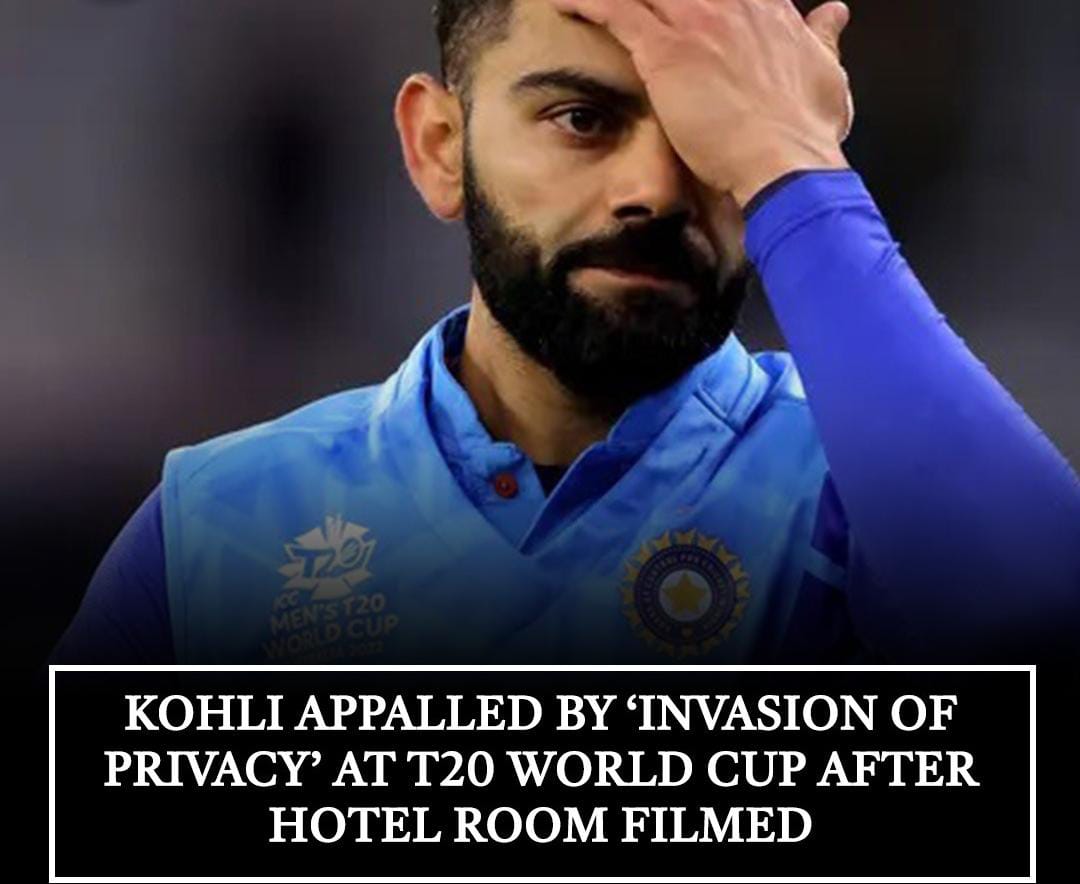
    • The recent outrage over the unauthorized video of cricketing superstar Virat Kohli’s hotel room in Perth including glimpses of his private spaces and objects is best viewed through an understanding of the changed landscape of the “private” and the “public” in our times. It is a topography shaped through our engagements with social media of different kinds.

    What does the Constitution say?

    • Fundamental right under Article.21: Article 21 is also known as the heart of the constitution; this right is granted to citizens of India as well as the non-citizens. This fundamental right not only talks about life and liberty but it also covers wide variety of rights.
    • Interpretation of Maneka Gandhi v. Union of India and Anr (1978): The interpretation of the term Personal Liberty has been discussed in many cases and finally had a wider interpretation in the case of Maneka Gandhi v. Union of India and Anr (1978) here the Delhi Regional officer ordered the petitioner Maneka Gandhi to surrender her passport within 7 days without giving her proper reason for the same.
    • Supreme court on Personal liberty: The Supreme Court held that ‘Personal Liberty’ covered variety of rights and that such right could only be taken away according to the procedure established by law which had to be just, fair and reasonable and not arbitrary in nature. Personal liberty means various rights that provide for personal liberty of a person.
    • Right to privacy: In Article 21 the term Right to Life includes right to participate in activities, right to tradition, heritage, culture, livelihood and so on. One of the most important right to live also includes Right to Privacy. Each and every human being would want some privacy in their life. No one would want others to intrude in their private space and disturb the happiness and peace.

    Right to Privacy

    What is the Fight for right to Privacy?

    • Not in the original constitution: This right of privacy was not granted to the citizens for a long time and there had been a lot of debate going on about the same, there is no explicit provision in the constitution which emphasizes about the right to privacy.
    • Data is fundamental to the privacy: Even the data we save in our mobile phones and laptops are also our private data which needs to be protected, if the data is stolen our right to privacy is lost and fundamental right is infringed. Unprotected data causes a disturbance in the right to privacy.

    Some of the Important cases related to right to privacy

    • Kharak Singh V. The State of U.P.(1962): The discussion about the right to privacy first came up in the case of Kharak Singh V. The State of U.P.(1962) Kharak Singh’s house was visited by the police at strange hours, frequently waking him up from his sleep, it was held by the court that this infringed his ‘right to life’ but however court dismissed the petitioner’s allegation that the shadowing of chronic criminals infringed on his right to privacy as at that time the right to privacy was not recognised as the Fundamental Right.
    • Rajagopal v. State of Tamil Nadu (1994): With the case of R. Rajagopal v. State of Tamil Nadu (1994) where this case prepared the way for subsequent decisions on the Right to Privacy, paving the way for it to be included in the Fundamental Rights given under Part III of the Constitution.
    • X v. Hospital Z case (1998): There are reasonable restrictions for this right about which it was held by the Supreme Court in the case of Mr. X v. Hospital Z (1998) here the appellant Mr. X was tested positive for HIV about which the doctors informed someone else without his consent because of which marriage of Mr. X was called off, the appellant approached the court stating that his right to privacy was violated. The court here held that this fact has to been known to the person whom he marries as this fact would affect her life as well as it being a communicable disease and that there is no violation to the ‘Right of Privacy’ of Mr. X.

    Right to Privacy

    The landmark case of K.S. Puttaswamy v/s Union Of India 2017.

    • Right to privacy is fundamental right: In the landmark case K.S. Puttaswamy V. Union of India which was passed in the year 2017, Right to Privacy was recognised as Fundamental Right and was then enshrined in Article 21 as a Right to life and personal liberty.
    • Social media endangered the privacy: Judges held that because there is enormous technical advancement both state and non-state factors may be at risk of loss of privacy, also it was held that an Individual is very concerned with his / her personal Data, they control their data and what to be posted on social media what to be displayed to the public and what to hide from outsiders, so unauthorized use of such information by anyone else except to whom that information belongs to may lead to violation of individuals privacy.
    • Privacy is integral to fundamental rights: On 24th August 2017 the nine-judge bench of India passed a unanimous historic Judgement with concurring opinions. Part III of the Indian constitution lays down different articles for the protection of one’s Fundamental Rights. The judgement stated privacy to be an integral component of Part III.
    • Overturning the previous judgements: The bench recognized that the right to privacy should also be a key element of Fundamental Rights and should be included in Article 21 of right to life and personal liberty. In this judgement the decisions given in the case of Kharak Singh V. The State of U.P. (1962) and MP Sharma V. Satish Chandra (1954) were overruled.

    Right to Privacy

    Conclusion

    • The great deal of hand wringing over the invasion of Virat Kohli’s privacy has been accompanied by seemingly endless circulation of the video clip. The line between outrage and enjoyment is as unclear as that between the alternating desire for publicity that ethereal frisson of celebrity-ness and revulsion over too much of it.

    Mains Question

    Q. How right to privacy is integral part of right to life? How social media affected the privacy of individual and enlist the solutions associated with it.

    Click and Get your FREE copy of Current Affairs Micro notes

  • UPSC Prelims Webinar: Why only 1% of aspirants qualify in prelims- Top 10 Techniques used by toppers to score 120+| Get Smash Prelims notes PDF and Webinar PDF FREE + Request call with Santosh sir

    UPSC Prelims Webinar: Why only 1% of aspirants qualify in prelims- Top 10 Techniques used by toppers to score 120+| Get Smash Prelims notes PDF and Webinar PDF FREE + Request call with Santosh sir

    Concluded successfully the most important Masterclass webinar by Prelims Guru, Santosh Sir | Get Smash Prelims notes PDF and Webinar PDF FREE + Request call with Santosh sir.

    Only 1% of the aspirants clear UPSC Prelims every year. And only a fraction of that are able to clear Prelims year after year. Santosh sir is one of them.

    Do you know that only 0.02% of aspirants are able to go beyond 120+ consistently?

    The fact that Santosh sir cleared UPSC Prelims 6 times back-to-back is not as important as ‘how he did it?’ is. And hiding nothing, Santosh sir shared 10 Golden Rules to cracking UPSC Prelims, which will make UPSC prelims a piece of cake.

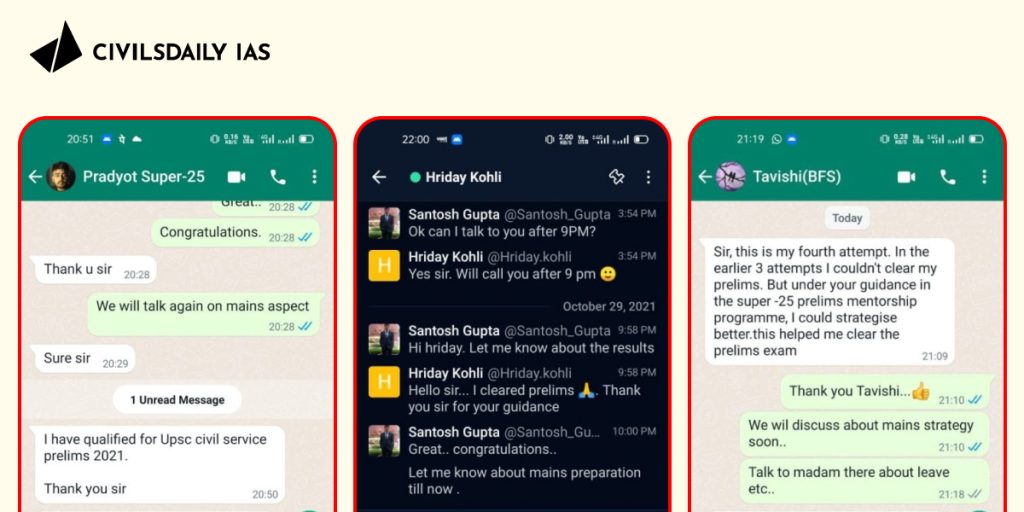
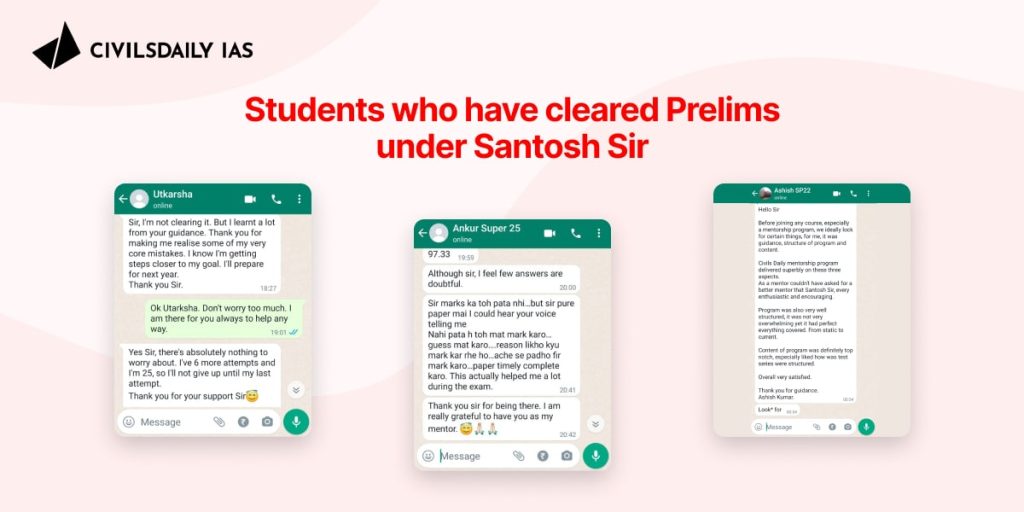
    Santosh sir has been helping aspirants clear UPSC Prelims year after year. Here is a screenshot of his students who wrote Mains 2022.

    Tavishi failed thrice in the Prelims before but after joining Santosh sir’s mentorship cleared Prelim 2022 on her 4th attempt.

    Santosh sir took a webinar for UPSC 2023 aspirants.

    Webinar Details: Concluded Successfully. Register for the Recorded session & Masterclass PDF, Notes

    We will email all the links to you.

    Prelims question papers have become more or less like a game of Sudoko. Except, in Sudoko you can solve the puzzle at your leisure, and over here you are limited by 2 hours. We hope this webinar will help all 2023 aspirants implement the suggestions of Santosh Gupta Sir.

    Key takeaways discussed in the webinar:

    1. Trend analysis of past 5 yrs’ UPSC Prelims GS 1 paper. How to change your preparation methods right now?
    2. Strategy for the next 6.5 months and how to utilize remaining time to the fullest.
    3. The 10 Steps of Tackling Prelims 2023. How to maximize revision and minimize study materials?
    4. Significance of Current Affairs. Is it really declining in Prelims? How to cover current affairs?
    5. Important Topics to Cover for Prelims 2023 for every GS subject. What are the correct study materials for these topics?
    6. Time-Tested Elimination Techniques. How to use these techniques in sample questions? only generalized preparation is not enough. You have to be ready for the worst. Besides usual ordinary questions, you have to solve more or less offbeat questions. Remember, Offbeat questions require an offbeat approach and it gets 120+ in prelims for you. So, how to apply ‘Intelligent guessing’‘the way of thinking, and ‘Core common sense.
    7. How to stay alert at the 5 worst mistakes areas, like unknown extremely factual questions, Random questions such as from sports in 2021, Questions from old current affairs, Ques. that are not directly from current affairs but inspired by current affairs, and Questions based on common sense such as questions in prelims-2021 
    8. Learn time management. Most of the time, twisted questions force you to take more time to answer. So, How to filter out and attempt easy questions in the first round quickly and move on to the next with which moderate to difficult questions? will be discussed thoroughly. 
    9. How to avoid silly mistakes by using common sense to the plausibility of statements given. Usually, low-confident aspirants do not attempt these types of questions and overconfident ones make mistakes by overthinking.
    10. Sometimes, some questions, beyond your expectation, appear on the paper and we can’t solve them and give up. How to solve such questions easily by a few mindful methods to increase your chance to clear prelims by 80%.
    11. And many more untold Prelims Exam facts that only a prelims guru knows are going to be disclosed in this live Masterclass

    Let’s admit this  As much as we have heard our seniors, mentors and toppers advise us to answer fewer questions in Prelims exams due to negative marking, do we want to follow it? All of us wish to answer as many questions as possible correctly. However, post-2014 questions have started getting tougher so that now –


    About Santosh Gupta Sir

    Santosh sir has scored above 140 twice in UPSC prelims and 120 plus in all 6 attempts. He has written all 6 mains and has appeared for Interviews 3 times. He has qualified for UPSC EPFO and BPSC 56-59th also. As the Prelims head at Civilsdaily, he has helped 15 out of 25 students clear the prelims examination this year.


    What The Hindu mentioned about Civilsdaily Mentorship?

More posts