The National Commission for Scheduled Tribeshas asked the Union Home Ministry and the states of Chhattisgarh, Maharashtra, Andhra Pradesh, and Odisha to submit a detailed report on the condition of Gotti Koya tribals.
Why did the NCST urge the Centre and States?
An estimated 50,000 Gotti Koya tribals were displaced due to Left-Wing Extremismand now live in 248 settlements across Odisha, Andhra Pradesh, Telangana, and Maharashtra.
Reports indicate that Telangana has reclaimed land from internally displaced persons (IDPs) in 75 settlements, impacting the tribals’ livelihoods and increasing their vulnerability.
About the Gotti Koya Tribe:
Details
Location
Multi-racial and multi-lingual communities found in the forests, plains, and valleys on both sides of the Godavari River in AP, Telangana, Chhattisgarh, and Odisha.
Migrated from Bastar, northern India.
Society and Culture
Koya language (Koyi) is a Dravidian language related to Gondi and influenced by Telugu.
Most speak Gondi or Telugu alongside Koyi.
Divided into five subdivisions (gotrams).
Patrilineal and patrilocal family structure, with a focus on monogamous, nuclear family.
Worship their own ethnic religion alongside Hindu gods, with Mother Earth being a significant deity.
Burial or cremation of the dead, with the erection of menhirs in memory.
Pastoralists and shifting cultivators (Podu), are now engaged in settled cultivation, animal husbandry, and seasonal forest collection.
Grow Jowar, Ragi, Bajra, and other millets.
Maintain community funds and grain banks for food security.
Festivals
Vijji Pandum (Seeds charming festival) and KondalaKolupu (Festival to appease hill deities).
Perform the Permakok (Bison horn dance) during festivals and marriages.
Sammakka Saralamma Jatra, held once every two years on the full moon day of Magha Masam (January/February) at Medaram village, Warangal district.
Challenges Faced
Many fled to Andhra Pradesh (now Telangana) in the mid-2000s due to violent conflicts between Maoist insurgents and Salwa Judum (Govt backed tribal militia).
Salwa Judum was later banned by the Supreme Court of India in 2011.
PYQ:
[2014] Every year, a month long ecologically important campaign/festival is held during which certain communities/tribes plant saplings of fruit-bearing trees. Which of the following are such communities/ tribes?
(a) Bhutia and Lepcha
(b) Gond and Korku
(c) Irula and Toda
(d) Sahariya and Agariya
UPSC preparation is an emotion, felt differently by everyone. College students and working professionals face unique challenges, such as time management and FOMO during preparation.
With UPSC 2026 one and a half years away, many final-year students and working professionals feeling job saturation are starting their preparation but lack clarity on how to proceed.
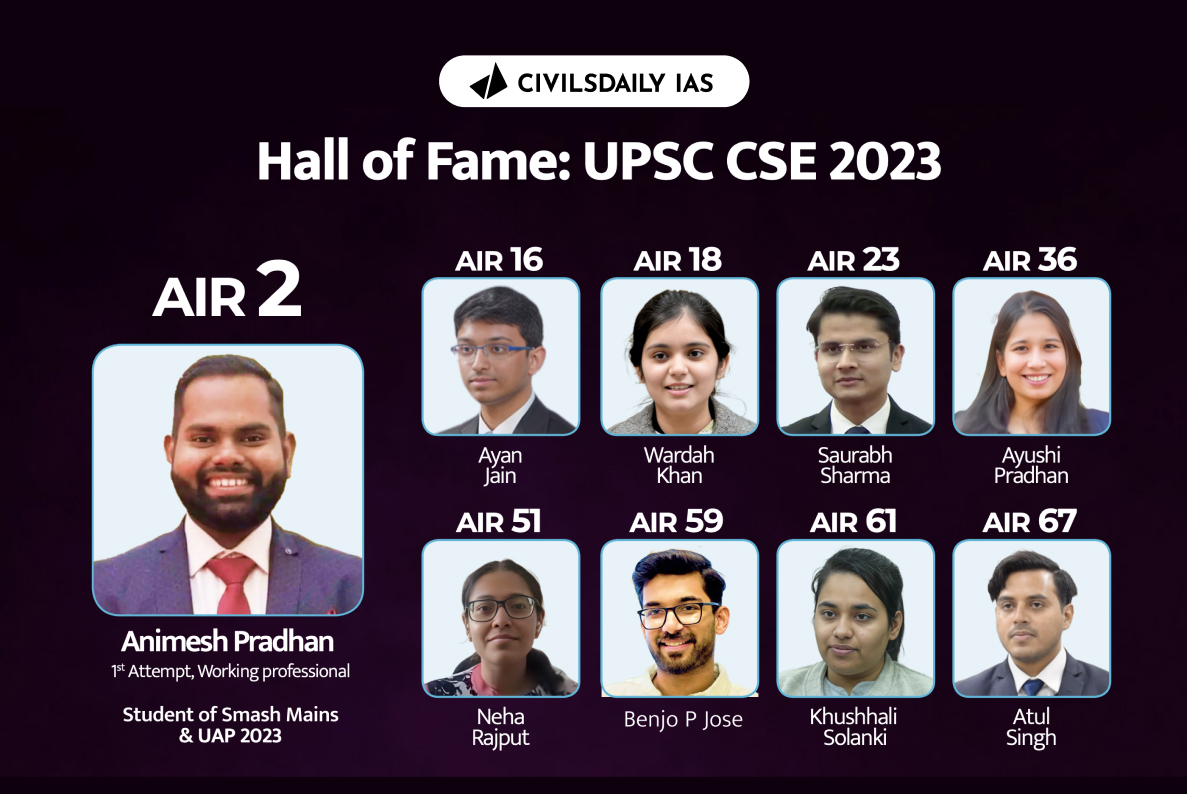
Time management is their biggest challenge, allowing only 5 hours a day for exam preparation. Reassurance is needed on whether 5 hours a day is enough to crack the exam. However, every year, many toppers secure ranks while working. This year, AIR 2 Animesh was working full-time before achieving a top rank.
Tamanna Dua Ma’am graduated from LSR before joining the prestigious Cambridge University, where she prepared for the UPSC CSE exam alongside her studies. She secured a rank in the UPSC 2023 reserve list. She understands the time crunch, the pressure on working professionals and college students, and the importance of having a Plan B while preparing.
Join her for a Zoom masterclass on 15th November, Friday at 7 PM, where she will provide a roadmap for the 2026 UPSC exam and guide college students and working professionals on how to navigate their preparation.
It will be a 45 minute webinar, post which we will open up the floor for all kinds of queries which a beginner must have. No questions are taboo and Tamanna Mam is known to be patiently solving all your doubts.
Join us for a Zoom session on 15th Nov 2024 at 7:00 p.m. This session is a must-attend for you If you are attempting UPSC for the first time or have attempted earlier and now preparing for next year, then it is going to be a valuable session for you too.
We will deal with all the aspects for a comprehensive UPSC Preparation.We’ll talk about starting with the basics, and move to advanced level.
(Don’t wait—the next webinar won’t be until Dec 24)
These masterclasses are packed with value. They are conducted in private with a closed community. We rarely open these webinars for everyone for free. This time we are keeping it for 300 seats only.
Q) China is using its economic relations and positive trade surplus as tools to develop potential military power status in Asia’, In light of this statement, discuss its impact on India as her neighbour. (UPSC CSE 2014)
Q) The China-Pakistan Economic Corridor (CPEC) is viewed as a cardinal subset of China’s larger ‘One Belt One Road’ initiative. Give a brief description of CPEC and enumerate the reasons why India has distanced itself from the same. (UPSC CSE 2019)
Mentor’s Comment:The India-China border conflict is a complex and longstanding issue primarily centred around the 3,488-kilometer (2,167-mile) Line of Actual Control (LAC) in the Himalayan region. Tensions have escalated significantly in recent years, particularly in June 2020.
Both countries have recently reached a significant bilateral agreement regarding patrolling along their disputed border, specifically the LAC, in the context of the tensions that arose from the 2020 Galwan Valley clash.
Today’s editorial explores the pressing issues related to LAC between India and China’s recent agreement.
_
Let’s learn!
Why in the News?
Two weeks after announcing military disengagement, a meeting between PM Modi and President Xi at the BRICS Summit led to positive gestures at the LAC, signalling renewed goodwill.
Key Highlights of the Agreement:
• Resumption of Patrols: The agreement allows Indian and Chinese troops to resume patrolling along the Line of Actual Control (LAC) in areas such as the Depsang Plains and Demchok, reverting to norms that existed before the 2020 tensions. This is expected to help reduce the likelihood of confrontations. • Disengagement Process: The deal signifies that the disengagement process has been finalized, indicating a mutual understanding to pull back troops from certain friction points, which aims to stabilize the situation along the border. • Monitoring Mechanism: Regular monitoring and monthly review meetings will be instituted to ensure compliance with the terms of the agreement, helping to maintain stability and prevent future clashes between both nations. • Diplomatic Engagement: The timing of this agreement aligns with high-level diplomatic interactions, including potential meetings between Indian Prime Minister Narendra Modi and Chinese President Xi Jinping at the BRICS summit, indicating a broader effort to normalize bilateral relations beyond military issues.
No Clarity on this agreement:
Unclear Agreement Details: India and China have not provided clear details on the new “patrolling arrangements” at the Line of Actual Control (LAC).
Reports suggest possible PLA access in areas like Yangtse (Arunachal Pradesh), yet no official clarity exists.
Pattern of Ambiguity: Since the start of tensions in 2020, the government has provided limited information. This was first seen when violent clashes occurred at Pangong Tso in 2020, which the government downplayed in terms of changes in troop levels.
Impact of Buffer Zones: Although disengagement has occurred at some points like Depsang and Demchok, the establishment of buffer zones may hinder a full return to pre-2020 conditions without dismantling these zones.
What are the reasons behind China’s actions on the Indian border?
Territorial Ambitions (Xi’s 2014 Policy): China’s increased aggressiveness, possibly a result of President Xi Jinping’s 2014 policy to control “every inch of territory,” has been evident across multiple regions, including Taiwan, South China Sea, Doklam, and the Tibet-India border.
Check on India-U.S. Partnership: China may be signaling that India’s maritime partnership with the U.S. will not mitigate India’s 3,500 km continental border challenges with China.
Infrastructure Security Concerns: India’s border infrastructure improvements, like Daulat Beg Oldie and new border roads, have heightened China’s security concerns around Xinjiang and Tibet. China’s own construction in the region may have increased in response.
Timing Linked to J&K Reorganization (August 2019): China reacted strongly to India’s changes in Jammu & Kashmir, particularly regarding Ladakh, leading some to believe this may have influenced China’s aggressive LAC moves in 2020.
Need for Government Transparency (Way Forward)
Call for Openness in Sensitive Border Decisions: For sustainable peace and transparency with citizens, the government should clarify its plans for the northern region, especially given the unexpected events at the LAC.
Lessons from LAC Events: The government should review the causes and responses to Chinese transgressions, which took the public and officials by surprise, and communicate lessons learned.
Engaging Citizens: As a democratic government, India is urged to move away from “shock and awe” surprise announcements and foster transparency about national security moves with profound impacts on its citizens.
On October 3, the Supreme Court in Sukanya Shantha v. Union of India (2024) struck down caste-based segregation in prisons, deeming it discriminatory and a violation of prisoners’ fundamental rights to equality.
What are the key findings regarding caste-based discrimination in Indian prisons?
Prevalence of Caste-based Roles: The recent Supreme Court decision in Sukanya Shantha v. Union of India (2024) highlighted discriminatory practices based on caste within Indian prisons.
Specifically, prisoners from marginalized castes were relegated to menial labour like cleaning, while other prisoners were assigned tasks such as cooking. This segregation was rooted in prison manuals that cited traditional caste roles.
Violation of Fundamental Rights: The Supreme Court ruled that such caste-based segregation violates Articles 14 (Right to Equality) and 15 (Prohibition of Discrimination) of the Indian Constitution. The Court noted that assigning prison labour based solely on caste perpetuates harmful caste hierarchies and obstructs prisoners’ equal rights to reform and rehabilitation.
Historical Precedents: Previous cases like Prem Shankar Shukla v. Delhi Administration (1980) and Inacio Manuel Miranda v. State (1988) also struck down irrational classifications within prison rules that discriminated based on economic or social status, reiterating that discrimination in any form within prisons is unconstitutional.
What actions has the Supreme Court mandated to combat this discrimination?
Abolition of Caste-based Job Assignments: The Supreme Court directed that prison rules segregating labour assignments based on caste be abolished. It ordered that job assignments within prisons must reflect prisoners’ individual abilities and should not perpetuate caste stereotypes.
Amendment of State Prison Rules: The Court instructed state governments to review and amend existing prison rules that institutionalize caste-based roles, ensuring that prisons become more inclusive and non-discriminatory spaces.
What challenges remain in implementing these reforms effectively?
Resistance to Cultural Change: Prison administrations may resist or be slow in adapting to changes in labour assignments and other reforms, given the deeply ingrained social norms and bureaucratic rigidity.
Lack of Resources and Training: Ensuring non-discriminatory job assignments will require retraining prison staff to implement reforms sensitively. Resource limitations and an undertrained workforce can impede effective reform.
Need for Comprehensive Prison Reforms: While the Court’s decision targets caste-based discrimination, broader systemic reforms are needed, such as improving prison conditions, expanding prisoner rights to amenities, and aligning all states with the Model Prison Manual 2016 for consistent standards across India.
Way forward:
Comprehensive Training and Monitoring: Implement mandatory training for prison staff on anti-discrimination practices, coupled with regular monitoring to ensure caste-neutral job assignments and adherence to reformed rules.
Standardized Prison Reform Across States: Uniformly adopt the Model Prison Manual 2016 nationwide, with added emphasis on equality and dignity for all prisoners, ensuring consistent and humane treatment across all states.
Mains PYQ:
Q “Caste system is assuming new identities and associational forms. Hence, caste system cannot be eradicated in India.” Comment. (UPSC IAS/2018)
With 270 million people set to move to Indian cities in the next 20 years, rapid urbanization will bring major challenges. AI can help tackle these by improving data handling and coordination, supporting India’s vision for a developed nation by 2047.
How can AI technologies be effectively integrated into India’s sustainable development strategies?
AI-Driven Decision Support: AI systems, such as decision support models, can assess impacts of policy decisions (e.g., zoning changes) by simulating various outcomes. This aids urban planning by providing insights into environmental and economic effects.
Enhancing Urban Infrastructure: AI can improve last-mile connectivity for public transport, making it more efficient and accessible by continuously analyzing data on transit needs and traffic patterns.
Multimodal Urban Transit Systems: AI can support seamless integration of multiple forms of urban transport, allowing coordinated planning for buses, trains, and other transit modes on a digital platform.
Digital Twins for Municipal Governance: AI-based digital twins of cities can assist municipal governments in monitoring and predicting urban needs, streamlining operations, and making governance more responsive and data-driven.
Energy Distribution and Environmental Monitoring: AI technologies can optimize energy distribution networks, as seen in partnerships like Airawat and Adani, and enable high-precision air and water quality monitoring for real-time governance action.
What ethical and regulatory frameworks are necessary to ensure responsible AI deployment?
Data Privacy and Security: With the vast data required for AI in urban planning, robust data privacy laws are essential to protect individual and community information.
Transparency and Accountability: AI decisions, especially those affecting urban infrastructure and environmental policies, should be transparent. Regulatory bodies should ensure AI-driven decisions can be audited, and stakeholders are accountable for outcomes.
Equity and Inclusivity: AI systems must avoid biases that could disadvantage marginalized communities. Regulations should mandate fairness, requiring AI models to consider equitable access and outcomes for all socioeconomic groups.
Environmental Sustainability Mandates: Given India’s resource constraints, frameworks should prioritize energy-efficient and environmentally conscious AI deployments. Environmental impact assessments should be integrated into the approval process for new AI systems.
What collaborative efforts are required among stakeholders to maximize AI’s impact on sustainable development?
Public-Private Partnerships (PPP): Effective collaboration between government, industry, and research institutions, as demonstrated by Airawat’s partnerships with Adani and TCS, can drive advancements in sustainable energy and urban management systems.
Government Oversight and Support: Ministries like the Ministry of Housing and Urban Affairs (MOHUA) play an essential role in offering guidance and oversight, ensuring AI initiatives align with national sustainability objectives and regulations.
Research and Academic Collaboration: Involvement of academic institutions such as IITs, as seen with Airawat, brings research rigor and technical expertise to AI solutions, fostering innovation tailored to India’s unique needs.
Community Engagement: Collaborating with local communities ensures that AI solutions are grounded in real needs, enhancing acceptance and the relevance of AI in addressing local sustainability challenges.
Standardized AI Governance Platforms: Partnerships, such as those with eGovernance Foundation’s DIGIT platform, are essential to create uniform AI governance tools that can be scaled across multiple cities, promoting a cohesive approach to sustainable development across India.
Mains PYQ:
Q Major cities of India are becoming vulnerable to flood conditions. Discuss. (UPSC IAS/2016)
Tamil Nadu, a leader in wind energy with turbines over 30 years old, introduced a new policy for upgrading old windmills in August 2024. However, wind energy producers opposed it, took the issue to the Madras High Court, and obtained a stay.
What is Tamil Nadu’s wind power capacity?
Installed Capacity: As of November 2023, Tamil Nadu has an installed wind energy capacity of approximately 10,377.97 MW, making it the second-largest wind energy producer in India after Gujarat. This represents about 23% of India’s total installed wind capacity.
Age of Turbines: Many turbines in Tamil Nadu are over 30 years old, which raises concerns about efficiency and technological advancements5.
Potential for Repowering: The state has a repowering potential of over 7,387 MW, which could significantly enhance its energy generation capabilities if older turbines are replaced or refurbished.
What about national wind energy capacity?
Total Potential: The National Institute of Wind Energy (NIWE) estimates that India has a wind power potential of 1,163.86 GW at a height of 150 meters, ranking fourth globally for installed capacity.
Current Utilization: At 120 meters (the standard height for modern turbines), India’s potential is around 695.51 GW, with only about 6.5% currently utilized nationally and nearly 15% in Tamil Nadu.
Leading States: The states contributing most to India’s wind power include Gujarat, Tamil Nadu, Karnataka, Maharashtra, Rajasthan, and Andhra Pradesh, which collectively account for approximately 93.37% of the country’s installed capacity.
What does the repowering and refurbishing of wind turbines mean?
Repowering involves replacing old turbines with new ones to enhance efficiency and output. Refurbishing includes upgrading components like gearboxes and blades to improve performance without complete replacement.
Regulatory Framework: The Tamil Nadu government introduced a new policy aimed at facilitating these processes. However, generators argue that the policy lacks provisions that effectively promote wind energy generation and financial viability.
Why are wind energy generators opposing the new policy of the TN government?
Concerns from Generators: Wind energy generators have opposed the new “Tamil Nadu Repowering, Refurbishment and Life Extension Policy for Wind Power Projects – 2024”, claiming it does not adequately support the promotion of wind energy generation. They have approached the Madras High Court and received a stay on the policy implementation.
Financial Viability Issues: The opposition stems from concerns that repowered turbines will be treated as new installations without banking facilities for generated energy, impacting financial returns on investments.
Generators emphasize that without a commercially beneficial framework, investments in repowering will decline.
Way forward:
Revise the Policy to Ensure Financial Viability: The Tamil Nadu government should amend the policy to provide incentives like banking facilities for energy generated from repowered turbines, making the projects financially viable for investors.
Promote Technological Advancements and Infrastructure Upgrades: The policy should focus on facilitating the replacement of old turbines with modern, high-capacity ones and improving wind energy transmission infrastructure to harness the full potential of Tamil Nadu’s wind resources.
Mains PYQ:
Q Do you think India will meet 50 percent of its energy needs from renewable energy by 2030? Justify your answer. How will the shift of subsidies from fossil fuels to renewables help achieve the above bjective? Explain. (UPSC IAS/2022)
National Health Accounts (NHA) data for 2021-22 shows a decline in Out-of-Pocket Expenditure (OOPE) on healthcare due to increased government health expenditure (GHE) and an enhanced public healthcare framework.
What are NHA estimates?
The NHA estimates are based on the globally accepted framework of ‘A System of Health Accounts (SHA), 2011’ which facilitates inter-country comparisons.
This report provides a systematic description of the financial flows in India’s health system by different sources, how the money is spent, how healthcare is provided, and the nature of healthcare services that are used.
Key Observations from the NHA 2021-22 Data:
Details
Decline in Out-of-Pocket Expenditure (OOPE)
OOPE has decreased due to increased government investment and improved public healthcare infrastructure, making healthcare more accessible and affordable.
Rise in Government Health Expenditure (GHE)
GHE as a percentage of GDP rose from 1.13% in 2014-15 to 1.84% in 2021-22. GHE’s share of overall government spending increased from 3.94% to 6.12%, reflecting the government’s commitment to public healthcare.
Increase in Per Capita Health Spending
Per capita health spending tripled from ₹1,108 in 2014-15 to ₹3,169 in 2021-22, allowing for more investment in infrastructure, workforce, and services.
Expansion of Social Security Expenditure (SSE)
SSE on healthcare grew from 5.7% to 8.7% of Total Health Expenditure (THE), helping protect individuals from catastrophic health expenses and reducing OOPE.
Growth of Government-Funded Insurance Schemes
Programs like Ayushman Bharat and state-level health insurance schemes increased healthcare access for economically vulnerable populations, reducing reliance on personal funds.
Foundation for Universal Health Coverage (UHC)
The decline in OOPE and increased public health spending are integral to achievingUHC, aiming for equitable healthcare access for all citizens.
PYQ:
[2021] “Besides being a moral imperative of a Welfare State, primary health structure is a necessary precondition for sustainable development.” Analyse.
[2019] In India, the term “Public Key Infrastructure” is used in the context of:
(a) Digital security infrastructure
(b) Food security infrastructure
(c) Health care and education infrastructure
(d) Telecommunication and transportation infrastructure
China reasserted its claim over Flashpoint Reef (the Scarborough Shoal) in the South China Sea following Philippines’ establishment of defined sea boundaries.
Do you know?
Fiery Cross Reef is a rock located in the Spratly Islands. China first took possession of the feature in 1988.
Mischief Reef is a Low-Tide Elevation (LTE) within the Philippines’ EEZ. It is part of the submerged continental shelf of the adjacent coastal state, which is the Philippines.
About the Flashpoint Reef
It generally refers to Scarborough Shoal, a contested reef in the South China Sea.
Known as Huangyan Dao in China, this reef has become a focal point of territorial disputes between China and the Philippines.
It lies close to the Philippines’ Exclusive Economic Zone (EEZ) but is also claimed by China, which asserts control over nearly the entire South China Sea under its nine-dash line claim.
China took control of the shoal in 2012 after a standoff with the Philippines, despite an international tribunal ruling in 2016 that invalidated China’s claims.
Its significance in the South China Sea
It is strategically located near key shipping lanes that are essential for global trade, with about one-third of global shipping passing through the South China Sea.
Its proximity to the Philippines, Vietnam, and China makes it an ideal location for military outposts, providing control over surrounding waters and a base for monitoring activities in the region.
Control over Scarborough Shoal could allow China to extend its air and naval reach, reinforcing its influence and deterrence capabilities over other Southeast Asian nations.
The South China Sea, including Scarborough Shoal, is believed to hold vast reserves of oil and natural gas—up to 11 billion barrels of oil and 190 trillion cubic feet of natural gas.
This reef is strategically important due to its proximity to rich fishing grounds and potential undersea mineral resources.
PYQ:
[2011] Southeast Asia has captivated the attention of global community over space and time as a geostrategically significant region. Which among the following is the most convincing explanation for this global perspective?
(a) It was the hot theatre during the Second World War
(b) Its location between the Asian powers of China and India
(c) It was the arena of superpower confrontation during the Cold War period
(d) Its location between the Pacific and Indian oceans and its preeminent maritime character
UPSC eligibility criteria refer to the essential requirements that candidates must fulfil to sit for the exam. They include nationality, age limit, educational qualification, medical fitness, etc. Applications that don’t meet the UPSC eligibility criteria will be rejected by the UPSC board.
On the other hand, not knowing the detailed IAS exam criteria might make one lose the chance of attempting the exam as there are limited attempts allowed. If you’re aspiring for the UPSC 2025, you should learn about the UPSC/IAS eligibility criteria and deduce whether you can apply or not.
What is the UPSC Exam
UPSC (Union Public Service Commission) is a Public exam in India, conducted to select candidates for various Grade A administrative posts, including IAS, IPS, IFS, and IRS. It is conducted in three stages: UPSC Prelims, UPSC Mains, and Interview. Those who pass successfully through these stages will be inducted into the respective cadres as per their score in the exam. However, knowing the UPSC eligibility criteria is important for aspirants to make successful applications.
UPSC Eligibility Criteria 2024-2025
Nationality
Citizen of India
Age Limit
21-32 years for the General Category21-35 years OBC Category21-37 years SC/ST Category
Educational Qualification
A graduate degree from a recognised university
Number of Attempts
6 for the General Category9 for OBC Category/PwBDUnlimited (until age limit) for SC/ST Category
Exam Fee
Rs. 100 for all except Female/SC/ST
Physical Standards
Medical Tests, Physical Fitness, Body Measurements (For IPS and Indian Railway Services, etc.)
Detailed UPSC Eligibility Criteria
Candidates must thoroughly check the detailed UPSC eligibility criteria along with special rules and restrictions.
Nationality
When it comes to the UPSC Eligibility Criteria, nationality plays a role.
For Indian Administrative Service (IAS), Indian Foreign Service (IFS), and Indian Police Service (IPS): Candidates must be citizens of India to meet IAS eligibility criteria. This is a strict UPSC eligibility criteria for these prestigious positions, as they are integral to the Indian administrative framework.
For Other Services: There are a few additional UPSC eligibility criteria:
They can be citizens of India.
Citizens of Nepal or Bhutan are also eligible.
Tibetan refugees who settled in India before January 1, 1962, may apply.
People of Indian origin who have migrated from countries like Pakistan, Burma, Sri Lanka, and certain East African nations can also be considered, provided they intend to permanently settle in India.
There is one more IAS eligibility criterion: Citizens of Nepal, Bhutan, Tibetan refugees, and individuals of Indian origin must secure a certificate of eligibility from the Government of India. While these candidates can sit for the exam, an offer of appointment will only be made once the eligibility certificate is issued.
Age Limit
General Age Limit: The upper IAS age limit for the exam is 32 years for general category candidates.
Age Relaxation:
Scheduled Caste (SC) / Scheduled Tribe (ST): Up to 5 years.
Other Backward Classes (OBC): Up to 3 years.
Defence Services Personnel: Up to 3 years for those disabled during service.
Ex-Servicemen: Up to 5 years for those with a minimum of 5 years of military service.
ECOs/SSCOs: Up to 5 years if they have completed at least 5 years of military service and have a certificate from the Ministry of Defence.
Persons with Benchmark Disabilities (PwBD): IAS eligibility allows up to 10 years, covering various disabilities as specified.
To fulfil UPSC/IAS exam criteria, the proof of age must be the same as recorded in their Matriculation or equivalent certificate. Candidates must be careful, as requests for changes to the date of birth are not permitted after submitting their UPSC application, except in cases of unintentional errors, which must be rectified by a specific deadline.
UPSC Qualification
The UPSC eligibility criteria for education include the following requirements:
Degree Requirement Candidates must hold a graduate degree from a recognised university or institution in India to fulfil UPSC qualifications.
Awaiting Results Those who have appeared for a qualifying examination but are waiting for results can apply for the Preliminary Exam. Proof of passing must be provided for the Main Exam.
Exceptional Cases Candidates without the required qualifications may be considered if they have passed an exam considered equivalent by the Commission.
Professional Qualifications: Candidates with recognised professional or technical qualifications equivalent to a degree are also eligible.
Medical Graduates Medical graduates who have completed their final MBBS exam but not their internship can apply provisionally. They must have proof of passing the exam and complete their internship before the interview.
Number of Attempts
Candidates meeting the UPSC eligibility criteria for the UPSC Civil Services Examination (CSE) are allowed six attempts. However, there are relaxations for certain categories:
Scheduled Castes (SC) and Scheduled Tribes (ST): Unlimited attempts.
Other Backward Classes (OBC): Up to 9 attempts.
Persons with Benchmark Disabilities (PwBD): Also up to 9 attempts for General, EWS, and OBC categories; unlimited for SC/ST.
If a candidate appears in the Preliminary exam without attempting the UPSC Mains, it is counted as an attempt. Even if the candidate is disqualified or cancelled, it is counted. So every aspirant must be careful in utilising the number of UPSC attempts allowed for them. They can’t apply after exhausting their limit for the UPSC attempts, even if they fulfil the IAS exam criteria.
Restrictions to UPSC Application
Candidates already appointed to the Indian Administrative Service (IAS) or Indian Foreign Service (IFS) through previous exams cannot apply for the Civil Services Examination (CSE), even if they fulfil UPSC eligibility criteria. This includes those who qualify for the Preliminary Exam.
If they join IAS or IFS after the Preliminary Exam but before the Main Exam results, they won’t be considered for appointments based on the CSE.
Similarly, candidates already in the Indian Police Service (IPS) cannot apply for IPS positions through the CSE, even if they fulfil the UPSC eligibility criteria.
Physical Standards
Candidates must pass a medical test to meet the UPSC/IAS exam criteria for Civil Service appointments.
Specific physical requirements (height, weight, chest measurements) apply mainly to:
IPS officers
Police services
Indian Railway services
UPSC eligibility criteria for non-technical positions have fewer physical requirements. But they require candidates to be fit and mentally stable.
Apart from the UPSC eligibility criteria, aspirants should focus on understanding the UPSC exam pattern and stages in detail. It’s equally important to be aware of how previous year question trends evolve, which could provide an edge in UPSC preparation. Building a solid strategy for each stage ensures better success. Additionally, staying informed about UPSC exam notifications and updates is key to avoiding missing important deadlines or changes.
FAQs
Is the UPSC age limit increased to 35?
The age relaxation in the UPSC to 35 years applies to only OBC/PwBD candidates. General candidates have up to 32 years maximum.
Are the UPSC eligibility criteria for females and males the same?
UPSC/IAS exam criteria for OBC, General, and SC/ST are the same for both men and women. However, females of all categories are exempted from paying the examination fee of Rs. 100.
What is the UPSC age limit for females?
The age limit for females in the UPSC remains as that for the males.
For General category females, the age limit is 21-32 years.
For OBC, the age limit is 21-35 years.
For SC/ST, it is 21-37 years.
Is there a UPSC age limit of 40 years?
No, the UPSC/IAS age limit of 40 years is not applicable for general, OBC, SC/ST candidates. However, if you’re a PwBD person, you have an age relaxation of up to 42 years.
![[UPSC Webinar] By Tamanna Dua, UPSC Ranker 2023 | Prepare for UPSC 2026 with College & Job | Get a 1.5-Year Strategy | Join on 15th November 2024 at 7:00 PM 2024](https://d18x2uyjeekruj.cloudfront.net/wp-content/uploads/2024/11/Tamanna_Thumb-1568x882.jpg)