A new ETH Zurich study warns that under the Shared Socioeconomic Pathway (SSP) 5-8.5 scenario, warming could make cyclones more intense and hit unusual regions with greater damage.
What are Shared Socioeconomic Pathways (SSPs)?
Definition: SSPs are 5 global scenarios that show how changes in society, economy, and technology might influence climate adaptation and mitigation.
Purpose: They complement Representative Concentration Pathways (RCPs) by adding socioeconomic context to climate models.
Development: Created in the late 2000s, published in 2016, and used in the IPCC 6th Assessment Report and CMIP6 models.
Function: SSPs assume no new climate policies, helping scientists explore how global trends affect emissions and climate action.
The Five Pathways:
SSP1: Sustainable and equitable world
SSP2: Continuation of current trends
SSP3: Regional rivalry with high population growth
SSP4: Unequal world with high disparities
SSP5: Fossil-fuel-based rapid economic growth
Usage: SSPs are used with RCPs to explore how different futures could affect the 1.5°C or 2°C warming targets.
Significance: They help policymakers assess how societal choices impact climate risks, emissions, and the feasibility of global goals.
Radiative Forcing: SSP5-8.5 implies 8.5 W/m² of energy, compared to about 2.7 W/m² today.
Climate Target Gap: To limit warming below 2°C, forcing must stay around 2.6 W/m².
Cyclone Projections: Using the CLIMADA (climate adaptation) AI model, scientists studied past cyclone patterns and projected risks from 2015–2050.
Ecoregion Types:
Resilient: Often affected, but recover quickly
Dependent: Moderately impacted and adaptive
Vulnerable: Rarely hit but slow to recover
Findings:
Time between severe cyclones in resilient areas may drop from 19 to 12 years.
East Asia, Central America, and the Caribbean will face stronger, more frequent cyclones.
Madagascar, Oceania, and the Philippines will face unprecedented cyclone activity.
Impact on Mangroves and Coastal Ecosystems:
Mangrove Risk: By 2100, up to 56% of global mangroves could be at high to severe risk.
Most Affected Region: Southeast Asia, with 52–78% of mangroves at risk.
Other Scenario Impact (SSP3-7.0): Even under less severe warming, 97–98% of protective mangroves in Southeast Asia could still face critical threats.
Environmental Concern: These losses would severely weaken coastal protection, biodiversity, and carbon storage.
[UPSC 2020] Consider the following statements:
1. Jet streams occur in the Northern Hemisphere only. 2. Only some cyclones develop an eye. 3. The temperature inside the eye of a cyclone is nearly 10°C lesser than that of the surroundings.
Which of the statements given above is/are correct?
Options: (a) 1 only (b) 2 and 3 only (c) 2 only* (d) 1 and 3 only
At the 78th World Health Assembly held in Geneva, the World Health Organisation (WHO) adopted a new Pandemic Agreement that aims to make the global response to future pandemics more equitable and effective.
About the WHO Pandemic Agreement:
Adoption: It was unanimously adopted at the 78th World Health Assembly in Geneva after 3years of negotiation since the COVID-19 pandemic.
Legal Basis: It was adopted under Article 19 of the WHO Constitution, making it only the second such legally binding agreement after the WHO Framework Convention on Tobacco Control (2003).
Primary Goal: To ensure fair and timely access to vaccines, medicines, and diagnostic tools during future pandemics.
Stakeholders: It promotes collaboration among countries, WHO, pharmaceutical firms, civil society, and other stakeholders.
Next Steps: It will come into force once ratified by at least 60 countries; the final annex is expected by May 2026.
Irritant: The US has not joined, raising concerns about the agreement’s global effectiveness.
Key Highlights of the Agreement:
Pathogen Access and Benefit Sharing (PABS): A new system will ensure quick virus sample sharing with companies, who must give 20% of vaccines and medicines to WHO—10% as donations and10% at affordable prices.
Global Supply Chain and Logistics Network (GSCL): A WHO-managed network will ensure emergency access to critical supplies during pandemics.
Coordinating Financial Mechanism: A funding system will support countries in pandemic preparedness and response.
Sustainable Local Production: Countries are encouraged to build vaccine and medicine production capacity to ensure rapid and equal access.
Technology and Knowledge Transfer: Supports technology sharing with developing nations using licensing, financing, and regulatory tools, coordinated via WHO-managed hubs.
Pandemic Prevention and Surveillance: Countries must improve early detection, routine vaccinations, and address lab safety, antimicrobial resistance, and zoonotic threats.
Respect for Sovereignty: The WHO will not enforce national policies like lockdowns, vaccine mandates, or travel bans; countries retain full control over responses.
[UPSC 2022] In the context of vaccines manufactured to prevent COVID-19 pandemic, consider the following statements:
1. The Serum Institute of India produced COVID-19 vaccine named Covishield using mRNA platform.
2. Sputnik V vaccine is manufactured using vector-based platform.
3. COVAXIN is an inactivated pathogen-based vaccine.
Which of the statements given above are correct?
Options: (a) 1 and 2 only (b) 2 and 3 only* (c) 1 and 3 only (d) 1, 2 and 3
In a major move to fight cyber fraud and financial crime, the Department of Telecommunications (DoT) has launched the Financial Fraud Risk Indicator (FRI) as a part of the Digital Intelligence Platform (DIP).
Back2Basics: Digital Intelligence Platform (DIP)
DIP is developed by the Department of Telecommunications (DoT) as a secure, integrated platform for real-time intelligence sharing.
Stakeholders Involved: It connects Telecom Service Providers (TSPs), law enforcement agencies (LEAs), banks, financial institutions, social media platforms, and identity document issuers.
Functionality: The platform contains information on telecom resource misuse and supports case tracking and coordinated action.
Sanchar Saathi Integration: DIP acts as a backend system for citizen requests submitted through the Sanchar Saathi portal.
Access Control: DIP is available only to authorized stakeholders via secure connections and is NOT accessible to public.
What is the Financial Fraud Risk Indicator (FRI)?
Purpose: FRI is a risk-based tool that flags mobile numbers as Medium, High, or Very High risk for financial fraud.
Beneficiaries: Helps banks, NBFCs, and UPI service providers implement added security for high-risk numbers.
How It Works:
The Digital Intelligence Unit (DIU) shares a Mobile Number Revocation List (MNRL) with reasons like cybercrime, failed verification, or excess usage.
The tool performs multi-dimensional analysis and assigns a fraud risk level.
Risk status is shared in real-time via DIP, enabling early action before fraud occurs.
Case Study: PhonePe’s use of FRI System
PhonePe was one of the first adopters of the FRI system.
It uses FRI to:
Block transactions linked to Very High-risk numbers.
Display alerts using the PhonePe Protect feature.
For Medium-risk numbers, PhonePe is working on showing proactive user warnings before transactions.
The tool has proven highly accurate in identifying numbers involved in cyber fraud.
[UPSC 2021] Which one of the following effects of the creation of black money in India has been the main cause of worry to the Government of India?
Options: (a) Diversion of resources to the purchase of real estate and investment in luxury housing (b) Investment in unproductive activities and purchase of precious stones, jewelry, gold, etc. (c) Large donations to political parties and the growth of regionalism (d) Loss of revenue to the State Exchequer due to tax evasion*
Read about Sai Shivani’s (AIR 11, UPSC 2024) Webinar
When Sai Shivani couldn’t clear Prelims in her first attempt, she felt what many UPSC aspirants go through, self doubt, frustration, and that heavy feeling of wondering whether this path was right for her. But instead of quitting or blindly following what the internet had to offer, she took a pause. She slowed down, cleared the noise, and focused on building a plan that worked for her, not a perfect plan, but a consistent, practical one.
She stopped chasing too many resources and instead simplified her preparation. One of the key things that helped her was breaking the syllabus into small, manageable microthemes — something that made reading, note making, and revision feel less overwhelming. But it wasn’t just about microthemes. What truly made the difference was her ability to stay consistent with a structured approach.
Now, Shivani is an AIR 11 rank holder in UPSC 2024. And what’s most inspiring is that she achieved this right after facing failure, not with a big coaching strategy, but with a quiet, focused plan that she built herself.
With the next Prelims just a year away, she’s coming to share her complete 12 month strategy — the same plan she wishes she had when she started. In this session, she’ll talk about how she spread her GS, Essay, Optional, and Current Affairs preparation over the year, how she balanced Prelims and Mains together, and how she protected her peace of mind in a journey that often feels endless.
If you’ve just started your UPSC 2026 preparation or if you’re stuck in circles and unsure how to move forward, this session will bring the clarity you need.
Join Sai Shivani live on 23rd May at 7 PM and walk away not just inspired, but with a plan that makes sense.
It will be a 45 minute webinar, post which we will open up the floor for all kinds of queries which a beginner must have. No questions are taboo and Hemant Sir is known to be patiently solving all your doubts.
Join us for a Zoom session on 23rd May at 7 PM. This session is a must-attend for you If you are attempting UPSC for the first time or have attempted earlier and now preparing for next year, then it is going to be a valuable session for you too.
See you in the session”
Register for the session for a focussed UPSC 2026 Prep
(Don’t wait—the next webinar won’t be until June 25)
These masterclasses are packed with value. They are conducted in private with a closed community. We rarely open these webinars for everyone for free. This time we are keeping it for 300 seats only.
[UPSC 2021] Examine the role of ‘Gig Economy’ in the process of empowerment of women in India.
Linkage: While the PYQ focuses on empowerment and women within the gig economy, it aligns with the broader theme of identity and status challenges faced by workers in non-traditional/precarious employment structures, a challenge explicitly highlighted for SBWs and then linked to gig workers in the article.
Mentor’s Comment: The central government employs millions of regular and contract workers, including around 60 million in schemes like ICDS, NRHM, and mid-day meals. These workers—such as Anganwadi workers, helpers, ASHAs, and mid-day meal staff—support children, mothers, and nutrition. They connect communities with public health and help improve school enrollment and overall health.
Today’s editorial talks about the problems faced by Scheme-Based Workers (SBWs). This content is useful for GS Paper I (Women’s Issues) and GS Paper II (Social Justice).
_
Let’s learn!
Why in the News?
The recent developments surrounding Scheme-Based Workers (SBWs)—particularly Anganwadi workers, ASHAs, and MDM workers—have reignited the debate on labour identity, social security, and worker rights in India.
Who are scheme-based workers (SBWs)?
Workers employed under various government social welfare schemes but not formally recognized as government employees. Around 60 million workers across government schemes. Eg: Anganwadi Workers (AWWs), Anganwadi Helpers (AWHs), Accredited Social Health Activists (ASHAs) and Mid-Day Meal Workers (MDMWs).
ICDS (since 1975), National Rural Health Mission (NRHM), and Mid-Day Meal Scheme.
What roles do they perform?
Childcare and Nutrition Services: SBWs play a vital role in early childhood care by ensuring nutritional support, immunization, and preschool education. Eg: Anganwadi Workers (AWWs) under the ICDS scheme provide nutrition and basic health services to children and lactating mothers.
Public Health Outreach: They serve as a crucial link between the public health system and rural communities, improving health awareness and access. Eg: ASHAs under the National Rural Health Mission (NRHM) assist in maternal care, vaccination drives, and promote institutional deliveries.
Educational and Nutritional Support in Schools: They help enhance school enrollment and retention by providing mid-day meals, which also address child malnutrition. Eg: Mid-Day Meal Workers (MDMWs) prepare and distribute meals in schools under the Mid-Day Meal Scheme.
What challenges do SBWs face in gaining formal recognition and benefits?
Lack of Worker Status: SBWs are often classified as “volunteers” or “honorary workers” rather than formal employees, denying them recognition as government workers. Eg: The Supreme Court in State of Karnataka vs Ameerbi (2006) ruled that Anganwadi workers are not state employees as they don’t hold statutory posts.
Absence of Minimum Wages: Most SBWs receive honorariums instead of wages, which are far below minimum wage standards. Eg: Anganwadi workers and helpers across states earn as low as ₹4,500–₹9,000 per month, without alignment to state minimum wage norms.
No Social Security Benefits: SBWs are denied access to pensions, provident fund, maternity benefits, and health insurance. Eg: Despite working in public health, ASHAs are not covered under schemes like EPFO or ESI.
Policy Delay and Avoidance: Governments often cite financial burden or the need for long-term planning to delay regularisation. Eg: In 2016, the Labour Minister told Parliament that there’s no fixed timeline to implement ILC recommendations for SBWs.
Suppression of Collective Action: SBWs’ strikes are often met with state repression or legal barriers. Eg: Maharashtra invoked the Essential Services Maintenance Act (ESMA) in 2017 to curb Anganwadi workers’ right to strike.
Why is the government reluctant to regularise SBWs?
Financial Burden: Regularising SBWs would significantly increase the government’s salary and welfare expenditure, making it fiscally unsustainable. Eg: The central government employs over 60 lakh SBWs, and converting them to regular employees would involve massive budgetary allocations for wages and benefits.
Policy Ambiguity: Successive governments delay decisions by citing the need for long-term policy formulation without committing to a timeline. Eg: In 2016, the Labour Minister told the Rajya Sabha that implementing Indian Labour Conference (ILC) recommendations requires indefinite planning.
Privatisation Push: The government aims to reduce its role in welfare delivery by promoting public-private partnerships, weakening the case for regularisation. Eg: There have been attempts to privatise the Integrated Child Development Services (ICDS), directly affecting the employment security of Anganwadi workers.
How have trade unions and courts supported SBWs’ demands?
Union Mobilisation: Major trade unions have organised SBWs to demand minimum wages, worker status, and social security through strikes and negotiations. Eg: In March 2025, Anganwadi workers in Kerala ended a 13-day indefinite strike organised by unions like AITUC, BMS, and CITU demanding regularisation and fair pay.
Judicial Recognition: Courts have gradually recognised some labour rights of SBWs, even when earlier rulings were unfavourable. Eg: In Maniben Maganbhai Bhariya vs District Development Officer (2022), the Supreme Court ruled that Anganwadi workers are eligible for gratuity under the Payment of Gratuity Act.
What are the policy implications of granting SBWs formal employee status?
Fiscal Burden: Recognising SBWs as formal employees would significantly increase the government’s expenditure on salaries, pensions, and social security. Eg: The central government is concerned about cost implications due to the growing number of SBWs (nearly 6 million), especially as population-linked schemes expand.
Policy Reorientation: Granting formal status would require new frameworks for recruitment, training, service conditions, and grievance redressal. Eg: The Gujarat High Court in 2024 directed the State and Centre to create a joint policy to regularise Anganwadi workers as Class III and IV employees.
Precedent for Other Informal Workers: Regularising SBWs could set a precedent for other informal or gig workers demanding similar recognition and protections. Eg: Like SBWs, gig workers (e.g., delivery partners) are also fighting for worker status and social security rights in courts and labour forums.
Way forward:
Enact Clear Policies: Governments should promptly create and implement policies to grant SBWs formal worker status with fair wages and social security benefits.
Strengthen Monitoring: Improve enforcement by regional bodies to ensure timely wage revisions, labour rights protection, and prevent exploitation of SBWs.
N4S: India’s elections shape democracy, yet challenges persist—from money power to trust in EVMs. The UPSC often asks questions on electoral reforms (e.g., GS2, 2024: “Examine the need for electoral reforms…”). Aspirants falter by memorizing facts without grasping debates. This article fixes that by showing reforms in action—how the Election Commission (ECI) negotiates with parties (e.g., VVPAT introduction in 2013) and ongoing hurdles like criminal candidates (46% MPs in 2024). A unique feature? The Back2Basics section. It simplifies Evolution of India’s Voting Process that would help you understand the changes in the electoral process and reasons behind it. This isn’t just exam prep—it’s an invitation to think critically about democracy.
PYQ ANCHORING
Examine the need for electoral reforms as suggested by various committees with particular reference to “one nation-one election” principle. [GS 2, 2024]
In the light of recent controversy regarding the use of Electronic Voting Ma chines (EVM), what are the challenges before the Election Commission of India to ensure the trustworthiness of elections in India? [GS 2, 2018]
Microtheme: Elections
In An Undocumented Wonder: The Making of the Great Indian Election, former Chief Election Commissioner S.Y. Quraishi highlights a crucial debate between the Election Commission of India (ECI) and political parties over the misuse of money in elections. While some parties favored stricter spending limits, others argued that financial controls would hinder voter outreach. The ECI, however, stood firm, emphasizing that democracy should be a level playing field, not a contest of financial power.
This is just one example of how electoral reforms in India have emerged through structured discussions between the ECI and political parties. But do these engagements truly drive meaningful change, or are they just political formalities? As elections evolve, it’s essential to examine these consultations, the reforms they have led to, and the challenges that still threaten electoral integrity.
Rationale behind Regular ECI-Political Party Engagement
The Election Commission of India’s (ECI) initiative to engage with political parties is a positive step toward strengthening democratic processes. Regular dialogue fosters trust, addresses concerns, and ensures fair electoral practices.
Key Benefits
Improved Transparency – Open discussions can clarify electoral procedures, reducing misinformation and disputes.
Consensus on Reforms – Political parties can provide inputs on changes in electoral laws and processes, ensuring wider acceptance.
Curbing Malpractices – Collaboration can help in tackling issues like money power, fake news, and voter manipulation.
Boosting Voter Confidence – A transparent election system enhances public trust and participation.
Technology & Security Enhancements – Regular consultations help address concerns regarding EVMs, voter rolls, and cyber threats.
For India’s democracy to remain robust, institutionalizing such interactions can ensure a level playing field and uphold electoral integrity.
Reforms that have emerged from ECI-Political Party Consultations
Introduction of Model Code of Conduct (MCC) Updates – Political parties have contributed to refining MCC guidelines, ensuring ethical campaigning.
VVPAT Implementation (2013) – Political parties’ demand for greater transparency led to the introduction of Voter Verifiable Paper Audit Trail (VVPAT) alongside EVMs.
Capping of Cash Donations (2017) – Based on discussions, the maximum anonymous cash donation to political parties was reduced from ₹20,000 to ₹2,000 to curb black money in elections.
Remote Voting for Migrant Workers (Proposed) – Consultations with parties influenced the ECI’s proposal to introduce a Remote Electronic Voting Machine (RVM) for migrant voters.
Social Media & Campaign Regulations – Rules on paid advertisements, hate speech monitoring, and campaign expenditure on digital platforms were framed after discussions with stakeholders.
Such engagements help shape electoral reforms, ensuring wider acceptance and credibility in the democratic process.
EXISTING CONCERNS IN ELECTORAL PROCESS
Key Concerns in the Electoral Process
Details
Voting and Counting Issues
Concerns Over EVM Tampering
Many people sought a return to paper ballots citing concerns regarding EVM tampering.
100% VVPAT Verification
Critics of EVMs seek full VVPAT-EVM matching, but currently, only five machines per assembly constituency/segment are matched. Instead, the SC instructed engineers to verify the burnt memory of microcontrollers in 5% of EVMs if tampering is suspected.
Alleged Electoral Roll Manipulation
Opposition parties claimed large numbers of fake voters were added before the Maharashtra and Delhi Assembly elections. The EC attributed duplication to earlier decentralized EPIC allotment before shifting to ERONET.
Duplicate EPIC Numbers
Some voters in states like West Bengal, Gujarat, Haryana, and Punjab reportedly have identical EPIC numbers. The EC clarified that voters can only vote at their designated polling station, regardless of their EPIC number.
Campaign Process Issues
Violation of Model Code of Conduct (MCC)
Star campaigners often use inappropriate language, appeal to caste/communal sentiments, and make unverified allegations.
Election Expenditure
Candidates exceed spending limits, while there are no limits on party expenditure. Political parties spent nearly Rs 1,00,000 crore during the 2024 Lok Sabha elections.
Criminalization of Politics
In 2024, 46% (251) of elected MPs have criminal cases, with 31% (170) facing serious charges like rape, murder, and kidnapping.
Use of Social Media for Misinformation
The rise of social media has led to its misuse for spreading misinformation and fake news during election campaigns, influencing voter perceptions and undermining the democratic process.
Institutional Challenges
Autonomy of the Election Commission
Concerns have been raised regarding the independence of the Election Commission of India (ECI), with allegations of bias in decision-making favoring ruling parties.
Judicial Delays in Electoral Disputes
Cases related to electoral malpractice, disqualification, and disputes often take years to resolve in courts, reducing the immediate impact of legal interventions.
State Funding of Elections
The debate over introducing state funding for elections to curb black money and illicit campaign financing remains unresolved.
Voter Participation and Representation Issues
Low Voter Turnout
Despite various voter awareness campaigns, turnout remains low in urban areas due to apathy and lack of faith in political processes.
Disenfranchisement of Migrant Workers
A significant portion of India’s workforce comprises migrant laborers who often miss voting due to the inability to return to their home constituencies.
First-Past-the-Post System (FPTP) Concerns
The FPTP system results in parties winning a majority of seats without securing a majority of votes, leading to questions about fair representation.
Electoral Bond Controversy
Lack of Transparency in Political Funding
Electoral bonds allow anonymous donations to political parties, raising concerns about corporate and foreign influence in Indian elections.
Unequal Distribution of Funds
Data indicates that ruling parties often receive a disproportionate share of funds through electoral bonds, leading to an uneven playing field.
Issues Addressed by One Nation, One Election
Key Concern
How It Is Addressed by One Nation, One Election
Election Expenditure
Reduces frequent elections, cutting down campaign costs for parties and the government by minimizing repeated spending.
Judicial Delays in Electoral Disputes
Fewer elections mean fewer disputes, allowing courts to resolve cases faster.
Autonomy of the Election Commission
Lightens the ECI’s workload, making election management more efficient and reducing political pressure.
Low Voter Turnout
Makes elections a major event, reducing voter fatigue and encouraging higher participation.
One Nation, One Election may not fix problems like EVM tampering, voter list manipulation, or political criminalization, but it simplifies the election process. By reducing the frequency of polls, it ensures more stable governance and cuts down the constant political and financial strain of repeated elections.
Way forward
India’s elections are often marred by concerns over fairness, transparency, and integrity. To address these, key reforms have been proposed:
Ensuring EVM & VVPAT Accuracy – Use a scientific method to decide VVPAT-EVM matching. If a mismatch is found, conduct full verification. Totaliser machines can help prevent booth-level manipulation.
Cleaning Up Voter Rolls – Link Aadhaar with voter IDs to remove fake or duplicate entries, while ensuring privacy safeguards. Regular audits should maintain accuracy.
Regulating Election Spending – Impose a spending cap on political parties and mandate disclosure of financial assistance to candidates to prevent overspending loopholes.
Tackling Criminalization of Politics – Political parties must inform voters about candidates’ criminal records, as per Supreme Court orders. The ECI should have the authority to bar repeat offenders from contesting.
Stricter Code of Conduct – Leaders who repeatedly violate election rules should lose their Star Campaigner status. The ECI should have stronger powers to penalize parties and curb fake news and hate speech on social media.
For elections to truly be free and fair, reforms must be backed by strong laws and decisive action. While the ECI has made efforts, issues like money power, criminal candidates, and campaign violations still need urgent attention. A collaborative effort between political parties and the ECI is crucial to restoring public trust in India’s democracy.
#BACK2BASICS: Key legal provisions governing the electoral process in India
Article 324 of the Constitution – Grants the Election Commission (EC) the power of superintendence, direction, and control over elections to Parliament, State Legislatures, and the offices of the President and Vice President.
Representation of the People Act, 1950 – Governs the preparation of electoral rolls and the allocation of seats in Parliament and State Legislatures.
Representation of the People Act, 1951 – Regulates the actual conduct of elections, including provisions on qualifications, disqualifications, election offenses, and corrupt practices.
Registration of Electors Rules, 1960 – Provides rules for the registration of voters, corrections in electoral rolls, and the issuance of Electoral Photo Identity Cards (EPIC).
Model Code of Conduct (MCC) – A set of guidelines issued by the EC to regulate political parties and candidates, ensuring free and fair elections, even though it lacks statutory backing.
Evolution of India’s Voting Process and the Challenges That Led to Change
India’s voting system has continuously evolved to address security concerns, improve accessibility, and enhance electoral integrity. The next phase will likely focus on making voting more inclusive through remote and digital innovations while balancing security challenges.
Phase
Key Developments
Challenges That Led to Change
Ballot Box System (1952-1957)
Separate ballot boxes for each candidate. Voters dropped blank papers in the box of their chosen candidate.
High chances of booth capturing, ballot stuffing, and slow counting. Example: Reports of ballot box snatching in Bihar and UP.
Printed Ballot Papers (1962 Onwards)
Introduction of a single ballot paper with all candidates’ names and symbols. Voters marked their choice and dropped it in a common ballot box.
Reduced confusion but still prone to rigging, invalid votes, and long counting time. Example: 1990s saw large-scale fake voting in some states.
Electronic Voting Machines (EVMs) (2004 Onwards)
Full transition to EVMs in all constituencies, ensuring quicker, tamper-proof voting.
Allegations of hacking, distrust among political parties, and demands for a physical verification method. Example: 2009 elections faced political controversy over EVM reliability.
Voter Verifiable Paper Audit Trail (VVPAT) (2019 Onwards)
EVMs linked to VVPAT for voter verification; slip visible for a few seconds before being sealed.
Increased transparency but caused delays in verification and counting. Example: Opposition demanded 100% cross-checking of VVPAT slips in 2019 elections.
Remote Voting and Digital Advancements (Proposed)
Exploring remote voting for migrant workers and blockchain-based systems for secure digital voting.
Concerns over cybersecurity, voter authentication, and accessibility. Example: Ensuring fair voting rights for 300 million internal migrants.
Discuss the evolution of India’s electoral process from the ballot box system to the proposed digital advancements. Analyze how each phase addressed electoral challenges and the new concerns that emerged. (250 words)
Microtheme: Elections
Demand: Discuss key phases, how each addressed challenges, and analyze emerging concerns.
India has taken a sharp turn from its traditionally cooperative trade approach by recently imposing restrictions on Bangladeshi readymade garments and other goods.
Why did India impose trade restrictions on Bangladesh?
Bangladesh move to China: India imposed trade restrictions to express displeasure with Bangladesh’s interim government led by Mohammed Yunus, which has moved closer to China and Pakistan, straining India-Bangladesh relations. Eg: Yunus inviting Chinese access to India’s northeast during his China visit triggered India’s concerns.
Political statement against the North East: India blocked access to its Northeast markets for Bangladesh’s key garment exports in response to recent political comments that called Northeast India landlocked and claimed Bangladesh is its gateway to the sea.
Signaling Disapproval of Political Moves: India seeks to signal its objection to the interim government’s ban on the Awami League and its deviation from democratic norms promised to the international community.
What did Yunus say about India’s northeast during his China visit?
Described India’s northeast as landlocked: Yunus publicly referred to the northeastern region of India as lacking direct access to the sea, highlighting its geographical constraints. Eg: He emphasized that the region is dependent on access through neighboring countries like Bangladesh.
Invited China to access the region via Bangladesh: He suggested that China could use Bangladesh as a transit route to reach India’s northeast, implicitly offering strategic passage. Eg: During his March 2025 China visit, he proposed trade and connectivity links that would allow China to reach the northeast.
Undermined India’s regional security concerns: By involving China in a sensitive area, Yunus ignored India’s strategic sensitivities and long-standing opposition to Chinese presence near its borders. Eg: His comments were seen as aligning with China’s Belt and Road ambitions in South Asia, alarming Indian policymakers.
How could the trade move affect India’s strategic interests?
May worsen anti-India sentiment in Bangladesh: The restrictions could be seen as punitive and fuel nationalist or anti-India narratives, especially among radical groups. Eg: Elements opposing India’s influence may use the trade ban to rally public anger and portray India as interfering in domestic affairs.
Could destabilize India’s northeast region: Heightened tensions and instability in Bangladesh may spill over, leading to cross-border security issues in India’s sensitive northeastern states. Eg: Increased radical activity or refugee influx due to unrest in Bangladesh can strain local governance and security in Assam and Tripura.
Limits diplomatic space for constructive engagement: Economic restrictions reduce India’s leverage to influence political developments in Bangladesh through dialogue and soft diplomacy. Eg:Trade ties often help maintain dialogue even during political tensions — restricting them weakens India’s long-term strategic hold.
Which key political stakeholders in Bangladesh should India engage?
Awami League (AL): Despite being currently banned by the interim government, the Awami League, led by Sheikh Hasina, has been India’s most trusted ally and played a key role in maintaining bilateral stability and counterterrorism cooperation. Eg: India and the Awami League worked closely on cross-border security and infrastructure projects like the Akhaura-Agartala rail link.
Bangladesh Nationalist Party (BNP): As a major opposition party, the BNP represents a significant voter base. India should maintain open lines of communication to understand its stance on regional issues and democratic reforms.
Civil society and democratic reform advocates: Engaging with non-party actors such as human rights groups, independent media, and student movements can strengthen India’s image as a supporter of democracy and people-to-people ties.
Why is the delay in Bangladesh’s elections a significant concern for India?
Regional stability and security risks: Prolonged political uncertainty in Bangladesh may lead to unrest, radicalisation, and law and order issues, which can spill over into India’s northeast, impacting border security. Eg: A destabilised Bangladesh could lead to increased cross-border infiltration or refugee inflows into Assam and Tripura.
Strained diplomatic and strategic relations: The delay weakens India’s ability to engage with a legitimate and stable government, affecting long-term strategic cooperation, trade, and connectivity projects. Eg: Uncertainty may halt progress on initiatives like the India-Bangladesh power grid or transit routes through Bangladesh.
Way forward:
Engage All Political Stakeholders: India should maintain dialogue with all major political actors in Bangladesh — including the Awami League, BNP, and civil society — to encourage democratic transition and ensure long-term regional stability.
Balance Strategic Interests with Economic Diplomacy: India must ease trade restrictions while using diplomatic channels to address security concerns, preventing alienation and preserving influence in Bangladesh and the Northeast region.
Mains PYQ:
[UPSC 2013] The protests in Shahbag Square in Dhaka in Bangladesh reveal a fundamental split in society between the nationalists and Islamic forces. What is its significance for India?
Linkage: The current trade-related tensions between India and Bangladesh are a result of deteriorating political relations which have spilled over into economic ties.
Recently, the Supreme Court struck down two orders from the Environment Ministry that had allowed industries to operate even after breaking environmental rules.
What did the Supreme Court strike down as illegal?
Notifications allowing industries to bypass prior environmental clearance: The Court struck down two Union Environment Ministry notifications that permitted industrial units to set up or expand operations without prior government approval, violating the core principle of the Environment Impact Assessment (EIA) Notification, 2006. Eg: Industries were allowed to operate or change manufacturing practices without the mandatory prior environmental clearance.
Regularisation of violations through executive orders without parliamentary approval: The notifications enabled projects violating environmental laws to seek regularisation by paying fines, issued through executive orders instead of amending the Environment Protection Act (EIA), 2006 via Parliament. Eg: The 2017 “one-time” window and 2021 standard operating procedure allowed violative industries to avoid penalties by applying for clearance retrospectively.
Why did the Centre allow industries to bypass prior clearance?
One-time window for regularisation: In 2017, the Centre provided a “one-time” six-month window for industries without proper environmental clearances to apply retroactively.
Avoid disruption of economic activities: The Centre wanted to prevent the demolition of functioning plants that contribute to the economy and employment, as shutting them down abruptly could be disruptive.
Legal precedent for balanced approach: The government cited court rulings supporting a “balanced” approach in cases of violations, emphasizing regularisation over punitive action when feasible.
Heavy fines as deterrent: The 2021 standard operating procedure imposed heavy fines on violative projects applying for clearance, intending to discourage violations while still allowing formalisation.
Procedural challenges with previous attempts: Earlier attempts by the UPA government (2012-13) to regularise such projects were struck down by courts on procedural grounds, prompting the Centre to try executive orders as a workaround. Eg: The Jharkhand High Court and National Green Tribunal nullified prior regularisation efforts due to procedural flaws.
Who is impacted by the Court’s verdict?
Industries regularised under 2017 and 2021 orders remain unaffected: Companies that used the one-time window or the standard operating procedure to regularise violations before the verdict will not face penalties due to the Court’s ruling.
Future industrial projects must strictly follow prior clearance: The verdict reaffirms that all new or expanding projects must obtain mandatory prior environmental clearance, impacting industries planning to start or modify operations.
Regional environmental boards are under scrutiny: The ruling highlights the failure of local enforcement agencies to prevent illegal operations, signaling the need for better monitoring and compliance at the regional level. Eg: State pollution control boards will face greater pressure to enforce environmental laws rigorously.
Way forward:
Strengthen enforcement: Empower and equip regional pollution control boards to rigorously monitor and ensure strict compliance with environmental clearance norms.
Streamline clearance process: Simplify and expedite the prior environmental clearance procedure to balance industrial growth with environmental protection, reducing incentives for violations.
Mains PYQ:
[UPSC 2023] The most significant achievement of modern law in India in the constitutionalization of environmental problems by the Supreme Court. Discuss this statement with the help of relevant case laws.
Linkage: The “constitutionalization of environmental problems by the Supreme Court,” which refers to how the judiciary, through interpretation (often linking environmental protection to fundamental rights like the Right to Life under Article 21), has played a significant role in shaping environmental law and policy in India.
The Shirui Lily Festival has commenced in Manipur after a two-year gap caused by the ongoing conflict in the state.
About Shirui Lily Festival
Organiser: The festival is conducted by the Department of Tourism, Government of Manipur.
Launch: It was first held in 2017 and is now one of Manipur’s two major tourism festivals (the other being the Sangai Festival).
Origin: Named after the Shirui Lily (Lilium mackliniae), the State Flower of Manipur.
Location: The event is held in Ukhrul district, home to the Tangkhul Naga community.
Purpose: It aims to raise awareness about the Shirui Lily and promote eco-tourism in the hill regions of Ukhrul.
Key Activities: The festival includes cultural performances, music concerts, a beauty pageant, a cooking competition, and a trash collection marathon.
About the Shirui Lily Flower:
Habitat: The Shirui Lily grows only in the upper reaches of the Shirui Hill range in Ukhrul district, at an altitude of 2,673 metres.
Local Name: It is locally known as ‘Kashong Timrawon’, named after a mythical hill guardian.
Discovery: British botanist Frank Kingdon-Ward identified it in 1946 and named it Lilium mackliniae after his wife Jean Macklin.
Conservation Status: Classified as Endangered by the IUCN. (It is not listed by CITES or Wildlife Protection Act, 1972. Shirui National Park is named after it.
Threats: The flower faces threats from climate change, human encroachment, resource exploitation, and invasion by wild dwarf bamboo.
[UPSC 2018] Consider the following pairs:
Tradition– State
1. Chapchar Kut festival — Mizoram
2. Khongjom Parba ballad — Manipur
3. Thong-To dance — Sikkim
Which of the pairs given above is/are correct?
Options: (a) 1 only (b) 1 and 2* (c) 3 only (d) 2 and 3
On May 20, 2025, the Department of Consumer Affairs celebrated World Metrology Day, marking the 150th anniversary of the signing of the Metre Convention in Paris on May 20, 1875.
About the Metre Convention:
Inception: Also called the Treaty of the Metre, it was signed in Paris on May 20, 1875, to establish a global system of standardised measurements.
17 Founding Members: Argentina, Austria-Hungary, Belgium, Brazil, Denmark, France, Germany, Italy, Peru, Portugal, Russia, Spain, Sweden and Norway, Switzerland, Ottoman Empire (Turkiye), USA, and Venezuela.
Institutions Created: The treaty established the International Bureau of Weights and Measures (BIPM), and two governing bodies—CGPM (General Conference on Weights and Measures) and CIPM (International Committee for Weights and Measures).
Early Prototypes: It created international prototypes of the metre and kilogram, stored at the BIPM; member countries received national copies for comparison.
Expansion in 1921: The Convention was extended to cover all physical quantities, forming the basis for the International System of Units (SI).
Global Reach: As of October 2024, there are 64 member states in the Convention.
Collaboration: International Atomic Energy Agency (IAEA), Institute for Reference Materials and Measurements (IRMM), World Meteorological Organization (WMO), European Space Agency (ESA) participate in the CIPM Mutual Recognition Arrangement (MRA).
India and the Convention:
Membership: India joined the Metre Convention in 1957 after passing the Standards of Weights and Measures Act, 1956.
Participation Benefits: India gained the ability to participate in BIPM work, align with global systems, and ensure international recognition of its standards.
Jayant Narlikar, renowned Indian astrophysicist and Padma Vibhushan awardee, who co-developed the Hoyle–Narlikar Theory to refine Einstein’s Theory of Relativity, passed away in Pune at the age of 87.
About Jayant Narlikar and His Contributions:
Early Life: Born in 1938 in Kolhapur, Maharashtra, and pursued a PhD at Cambridge University under Fred Hoyle.
Scientific Influence: Hoyle had earlier developed the steady-state theory with Bondi and Gold and coined the term “Big Bang” sarcastically in 1948.
Narlikar’s Belief: He argued that the universealways looks the same, as new matter fills the gaps created by expansion.
Critique of Big Bang: He believed the Big Bang theory includes unproven assumptions, especially about the sudden origin of all matter and energy.
Enduring Work: Despite steady-state theory’s decline, Narlikar’s contributions remain respected for their scientific depth and originality.
What Is the Hoyle–Narlikar Theory?
Fred Hoyle and Jayant Narlikar developed a theory to answer one of the most basic questions: Why do things have mass, and how are they connected to the rest of the universe?
Based on Mach’s Principle: They believed your mass isn’t just something you have on your own. Instead, it depends on your connection to everything else in the universe. That means even faraway stars and galaxies play a role in what you weigh.
Inertia Explained: In simple terms, when you feel resistance while trying to move (inertia), it’s because of the gravitational pull of all the matter in the universe acting on you at once.
Mass is Relative: Earth, the Sun, or even you don’t have a fixed mass. That mass is influenced by everything else that exists out there, no matter how far away it is.
C-field and Steady-State Model
New Idea – C-Field: They introduced the “creation field”, which creates new matter in space.
Universe Without a Start: Their steady-state theory says the universe has no beginning or end, is always expanding, and keeps its density constant.
Against the Big Bang: They believed the Big Bang couldn’t explain everything we see today.
Hydrogen Creation: They said hydrogen atoms form in space to fill in the gaps as the universe grows.
Issues with the Theory:
CMB Discovery (1965): Scientists found cosmic microwave background radiation, strong proof of the Big Bang.
Other Evidence: Later discoveries like young, chaotic galaxies and studies by Hawking and Penrose supported the Big Bang.
Current View: The Big Bang theory became more accepted, but Hoyle and Narlikar’s ideas are still respected for their scientific value.
[UPSC 2018] Consider the following phenomena:
1. Light is affected by gravity.
2. The Universe is constantly expanding.
3. Matter warps its surrounding space-time.
Which of the above is/are the prediction/predictions of Albert Einstein’s General Theory of Relativity, often discussed in media?
Options: (a) 1 and 2 only (b) 3 only (c) 1 and 3 only (d) 1, 2 and 3*
The RBI has released revised draft guidelines for investments made by Regulated Entities (REs) in Alternative Investment Funds (AIFs) to ensure better regulatory oversight, prevent misuse of funds, and align with the rules already set by SEBI.
What are Alternative Investment Funds (AIFs)?
Definition: They are unique investment vehicles that are privately pooled and invested in alternative asset classes such as venture capital, private equity, hedge funds, commodities, real estate, and derivatives.
Regulation: They are governed by SEBI under the SEBI (Alternative Investment Funds) Regulations, 2012.
Working: It can be formed as a trust, company, Limited Liability Partnership (LLP), or any other SEBI-permitted structure.
Legal Structure: They can be set up as trusts, companies, Limited Liability Partnership (LLP), or other legally permitted forms.
Investor Base:
AIFs are meant for High Net-Worth Individuals (HNIs) and institutional investors, NOT small retail investors.
Resident Indians, NRIs, and foreign nationals can invest.
Minimum Investment Requirement:
The minimum investment size is ₹1 crore (SEBI, May 2024), except for accredited investors as defined by SEBI.
For employees or directors of the AIF or its manager, the minimum investment is ₹25 lakh.
An AIF must have a minimum corpus of ₹20 crore (₹10 crore for Angel Funds).
Types of AIFs:
Category I: These funds invest in early-stage unlisted companies in the form of equity or debt (venture capital). These alternative asset funds can also invest in infrastructure-based projects or social ventures.
Category II: These types of funds invest in equity or debt of unlisted companies that are in the mid or late stage of growth and are known as private equity or pre-IPO, respectively.
Category III: This category of funds invests in the shares of listed companies. These alternative strategy funds can be for any period, long only or a combination of long and short.
[UPSC 2014] What does Venture Capital mean?
Options: (a) A short-term capital provided to industries. (b) A long-term start-up capital provided to new entrepreneurs* (c) Funds provided to industries at times of incurring losses. (d) Funds provided for replacement and renovation of industries.
India is likely to become the world’s largest potato producer, overtaking China, by 2050, according to experts from the International Potato Center (CIP) based in Peru.
Back2Basics: International Potato Center (CIP)
The CIP is a research-for-development organisation founded in 1971, focused on improving potato, sweet potato, and Andean root and tuber crops.
Headquartered in Lima, Peru, CIP operates in over 20 countries across Africa, Asia, and Latin America.
It maintains the world’s largest Potato Gene Bank, safeguarding biodiversity for future use in research and breeding.
Potato Cultivation in India:
About: Potato (Solanum tuberosum) is known as the “King of Vegetables” and is India’s fourth most important food crop after rice, wheat, and maize.
Origin: Introduced to India by Portuguese traders in the 17th century.
Geographic Spread: Grown in 23 states, but 85% of production comes from the Indo-Gangetic plains in North India.
Top Producing States:
Uttar Pradesh: ~30% of total output
West Bengal: ~23.5%
Bihar: ~17%
Other contributors: Punjab, Gujarat, Madhya Pradesh
Climate Needs: Potato is a cool-season crop.
Ideal growth temp: 24°C
Ideal tuber formation temp: 20°C
Soil Requirements: Prefers well-drained, fertile soils with moisture retention.
Planting Seasons:
Himachal Pradesh, Uttarakhand: Spring (Jan–Feb), Summer (May)
Punjab, Haryana, UP, Bihar, Bengal: Main crop in October
MP, Maharashtra, Karnataka: Both kharif and rabi seasons
Seed Management: Use disease-free, sprouted seeds (30–50g);
Popular varieties:Kufri Jyoti, Kufri Bahar, Kufri Pukhraj, and Kufri Chandramukhi.
Fertilization & Irrigation: Apply balanced nutrients, especially phosphorus and potassium; drip irrigation is recommended.
Harvesting: Ready in 90–120 days, harvested manually or mechanically.
Global Comparison and Future Outlook:
Global Rank: India is the second-largest producer after China.
Production Volume: Over 50 million tonnes/year currently; projected to reach 100 million tonnes by 2050 (CIP experts).
Growth Drivers: Expansion is due to large cultivation area, strong domestic demand, and government support.
Tuber Crop Potential: Promoting crops like sweet potato can improve nutrition, livelihoods, and climate resilience.
Policy measure for Potato Farmers: Operation Greens
It is a scheme launched by the GoI in 2018, modelled after Operation Flood, with the aim to stabilize the supply and prices of Tomato, Onion, and Potato (TOP) crops.
The scheme is implemented by the Ministry of Food Processing Industries (MoFPI) and was initially allocated a budget of ₹500 crore.
Objectives:
Stabilize the supply and prices of potatoes (along with tomato and onion) to protect both farmers and consumers from extreme price fluctuations.
Reduce post-harvest losses of potatoes by improving storage, processing, and logistics infrastructure
[UPSC 2014] In India, cluster bean (Guar) is traditionally used as a vegetable or animal feed, but recently the cultivation of this has assumed significance.
Which one of the following statements is correct in this context?
Options: (a) The oil extracted from seeds is used in the manufacture of biodegradable plastics. (b) The gum made from its seeds is used in the extraction of shale gas.* (c) The leaf extract of this plant has the properties of antihistamines. (d) It is a source of high quality biodiesel.
[UPSC 2013] ‘The expansion and strengthening of NATO and a stronger US-Europe strategic partnership works well in India.’ What is your opinion about this statement? Give reasons and examples to support your answer.
Linkage: Turkiye is a NATO member, and its foreign policy decisions (like supporting Pakistan or Azerbaijan) are influenced by its position within such alliances, which in turn affects India’s relationships and interests in the region.
Mentor’s Comment: India, Turkey, and Azerbaijan entered into diplomatic tensions after Turkey and Azerbaijan openly supported Pakistan following the Pahalgam massacre. This support sparked a sharp rise in regional political conflicts and strong public reactions. Social media anger quickly escalated, prompting top Indian institutions to pause agreements and causing many travelers to cancel trips to Turkey and Azerbaijan, as reported by travel websites.
Today’s editorial explains the diplomatic tensions between India, Turkey, and Azerbaijan and their implications. This topic will be included in GS Paper I (Unity in Society) and GS Paper II (International Relations).
_
Let’s learn!
Why in the News?
Data shows that even if India officially bans trade with Azerbaijan and Turkey, it is likely to experience minimal losses due to limited economic dependence on these countries.
What triggered the boycott of Turkiye and Azerbaijan in India?
Support for Pakistan: Turkiye and Azerbaijan backed Pakistan following India’s military confrontation after the Pahalgam massacre, which angered many Indians.
Social media-driven calls for boycott: The support sparked calls on social media to boycott both countries, leading to a surge in travel cancellations. Eg: Sharp spike in cancellations of tour bookings to Turkiye and Azerbaijan reported by travel platforms.
Institutional actions: Indian institutions suspended ties, and trader associations resolved to boycott trade and commercial ties with these countries. Eg:IIT Bombay and IIT Roorkee suspended MoUs with Turkish universities.
Why do Azerbaijan and Turkey oppose India?
Support for Pakistan in the Kashmir conflict: Historically, Turkiye has aligned with Pakistan on the Kashmir issue, opposing India’s sovereignty over the region. Eg: Turkiye’s consistent diplomatic backing of Pakistan’s claims on Kashmir since the partition of India in 1947.
Azerbaijan’s conflict with Armenia: India has historically supplied arms and support to Armenia, Azerbaijan’s adversary in the Nagorno-Karabakh conflict, creating tensions with Azerbaijan. Eg: India’s provision of surface-to-air missile systems to Armenia, opposing Azerbaijan’s territorial claims.
How have arms trade relations evolved between Turkiye and Pakistan?
Long-term arms exports since the 1990s: Turkiye has been supplying arms to Pakistan continuously for over three decades. Eg: SIPRI data shows arms exports from Turkiye to Pakistan starting in the 1990s.
Major focus on artillery systems: A significant part of the trade involves artillery like naval guns, howitzers, self-propelled guns, and multiple rocket launchers. Eg: Pakistan has received multiple rocket launchers and howitzers from Turkiye.
Supply of armored vehicles: Turkiye exports tanks, armored cars, and personnel carriers to Pakistan’s military. Eg: Delivery of armored vehicles strengthens Pakistan’s ground forces.
Mutual strategic and political support: Arms trade is supported by reciprocal backing in geopolitical issues such as Kashmir and Cyprus. Eg: Turkiye supports Pakistan on Kashmir; Pakistan supports Turkiye on Cyprus disputes.
Strengthened ties during regional conflicts: The relationship deepened as Turkiye provided diplomatic and military backing to Pakistan in various geopolitical standoffs. Eg: Turkiye’s vocal support for Pakistan during Kashmir-related tensions.
Who stands to lose more economically if trade is banned?
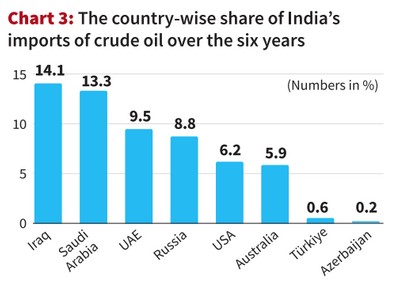
India’s low dependency on crude oil: The combined share of crude oil imports from these two countries is less than 1% of India’s total crude imports. Eg: Charts show less than 1% crude import share over the past six years.
Azerbaijan’s significant reliance on India: India was Azerbaijan’s third largest destination for crude oil exports in 2023. Eg: Azerbaijan could face a bigger impact if India bans trade.
Limited trade volume in machinery: Turkiye accounts for only about 1% of India’s total imports in machinery, including nuclear reactors and boilers. Eg: India relies more on countries like China and Germany for such equipment.
India’s diversified import sources: India’s major imports come from several other countries, making it less vulnerable to a ban on trade with Turkiye and Azerbaijan. Eg: China and Germany are larger suppliers of machinery than Turkiye.
Greater economic impact likely on Azerbaijan: Azerbaijan stands to lose more from India’s trade ban because India is a major crude oil buyer for them. Eg: India being the third largest market for Azerbaijan’s crude oil exports highlights this dependence.
Where has there been a notable rise in Indian tourism and student migration recently?
Indian tourism
Significant increase in Indian tourists to Turkey: In 2024, about 330,000 Indian tourists visited Turkey, marking a 20.7% increase from the previous year. This growth was due to better air connectivity and Turkey’s appeal as a budget-friendly European destination.
Rapid growth of Indian tourists in Azerbaijan: Indian tourist arrivals in Azerbaijan jumped from around 60,700 in 2022 to over 243,000 in 2024, fueled by affordability and rich cultural heritage.
Student migration
Increase in Indian students in Turkey: Indian student numbers in Turkey have grown from less than 100 in 2017 to several hundreds by 2024, attracted by diverse programs and competitive costs.
Rising Indian student in Azerbaijan: The number of Indian students in Azerbaijan also increased significantly, supported by institutions like Türkiye-Azerbaijan University established in 2024.
Note: This 2024 data is from before Operation Sindoor. The real effects on tourism and student migration will be seen later because it takes time for such events to show their impact.
Way forward:
Promote diplomatic dialogue: India should engage in sustained diplomatic efforts with Turkiye and Azerbaijan to address mutual concerns and reduce geopolitical tensions.
Expand people-to-people and economic ties: Enhancing cultural exchanges, trade, and educational cooperation can build trust and diversify relations beyond political differences.
The release of the Panchayat Advancement Index (PAI) Baseline Report 2022–23 in April 2025 marks a major milestone in India’s grassroots governance and data-driven policymaking.
Why does it mark a major milestone?
Empowers Local Decision-Making: PAI presents complex data in an understandable way for Gram Panchayat leaders, enabling them to identify gaps and take targeted actions. Eg: A sarpanch can use PAI scores to improve health or education outcomes in their village.
Links Data to Outcomes: It moves beyond raw data by connecting indicators to actual development results, helping stakeholders focus on measurable progress. Eg: PAI scores reveal if a Panchayat is truly “healthy,” guiding specific interventions to improve wellbeing.
What is the Panchayat Advancement Index (PAI)?
PAI is a composite index using 435 local indicators (331 mandatory, 104 optional) and 566 data points across nine themes of Localized SDGs (LSDGs).
Why is it significant?
Scale: Covers over 2.16 lakh gram panchayats; data from 11,000+ GPs excluded for non-validation.
Participatory & Understandable: Designed for grassroots actors—sarpanchs, ward members—enabling self-assessment and goal-setting.
States’ Response: While 25 States/UTs provided almost complete data, Uttar Pradesh reported only 40% GPs, raising concerns about governance bottlenecks.
Outcome-Oriented: Data is now tied directly to outcomes—e.g., identifying gaps in a GP’s health indicators helps drive targeted intervention.
What are the main limitations in evidence-based decision-making?
Delayed and Inaccessible Data: Lack of timely and accessible data hinders informed planning and policy formulation. Eg: The delay in conducting the Census and not releasing its data restricts effective resource allocation in sectors like health, education, and welfare schemes.
Poor Data Usability and Visualization: Data made available is often in complex formats, making it difficult for citizens and policymakers to interpret and act upon. Eg: On data.gov.in, datasets are vast but lack adequate visualization tools, overwhelming even trained researchers.
Top-Down Data Flow: Data is often generated at the grassroots but is primarily used by officials at the state or national level, not by local decision-makers. Eg: Gram Panchayat data is collected but rarely used by local elected representatives due to lack of access or interpretation tools.
Who are the stakeholders expected to benefit from the PAI?
Gram Panchayat Representatives: Sarpanches and ward members can understand their Panchayat’s performance and take action to improve local governance.
State and District Level Officials: Block Development Officers and District Collectors can use PAI data to plan and monitor development programs more effectively.
Elected Legislators: Members of Parliament (MPs) and Members of Legislative Assemblies (MLAs) can identify local gaps and use funds from MPLADS/MLALADS accordingly.
Line Departments and Frontline Workers: Departments like health, education, and rural development can coordinate efforts better using specific PAI indicators.
Civil Society Organizations (CSOs) and Academia: NGOs and Unnat Bharat Abhiyan institutions can support Panchayats by interpreting data and suggesting local interventions.
Citizens and Local Communities: Residents can be made aware of their Panchayat’s status and engage in participatory planning and accountability.
How can they contribute to achieving the LSDGs (Localisation of Sustainable Development Goals)?
Targeted Planning and Implementation: Stakeholders can use PAI data to identify local gaps and implement focused interventions aligned with LSDGs. Eg: A Panchayat noticing low scores in sanitation can prioritize toilet construction and awareness drives under Swachh Bharat Abhiyan.
Resource Optimization and Fund Allocation: Elected representatives and officials can direct funds more effectively to areas needing urgent attention. Eg: An MLA can use MLALAD funds to improve access to clean drinking water in a low-scoring GP on the “Safe Drinking Water” indicator.
Community Mobilization and Accountability: Civil society and academic institutions can raise awareness and ensure community involvement in achieving development goals. Eg: An NGO working with local residents can organize meetings to explain their PAI score and co-develop action plans to improve education or health indicators.
Where does data submission fall short, and why is it concerning?
Incomplete data: Undermines the reliability of the Panchayat Advancement Index (PAI). Eg: Without full data from Uttar Pradesh, true development gaps remain hidden.
Policy gaps: Poor data coverage leads to misinformed decisions, leaving underperforming areas unaddressed. Eg: GPs excluded from PAI may not receive adequate funds or interventions.
Inequality: Skewed data causes unequal resource allocation and widens regional disparities. Eg: States with full data submissions benefit more from schemes aligned with LSDGs.
What are the steps taken by the Indian government?
National Data Sharing and Accessibility Policy (NDSAP), 2012: The government made non-sensitive data publicly available in open, accessible formats to promote transparency. Eg: Data is shared through portals like https://data.gov.in.
Panchayat Advancement Index (PAI): A composite index was developed to analyze and present data from over 2.16 lakh Gram Panchayats to help local leaders understand and act on development goals. Eg: PAI links data to outcomes like health, enabling targeted interventions at the grassroots.
Use of Technology and Portals: The government created online platforms like the PAI portal (www.pai.gov.in) for easy access and report generation by officials and representatives. Eg: MPs and MLAs can generate constituency-wise reports to plan specific development actions.
Way forward:
Improve Data Accessibility and Visualization: Develop user-friendly dashboards and visualization tools to make data easily understandable for all stakeholders, including elected representatives and citizens.
Strengthen Data Validation and Coverage: Ensure complete and accurate data submission from all states and Gram Panchayats through rigorous validation and support mechanisms.
Mains PYQ:
[UPSC 2022] “To what extent, in your opinion, has the decentralisation of power in India changed the governance landscape at the grassroots ?
Linkage: The governance landscape at the grassroots and the impact of decentralization. Evaluating this impact necessitates a detailed understanding of the local reality and changes brought about by devolving power – precisely what “getting the micropicture” seeks to achieve.
In May 2025, Saudi Arabia led OPEC+ to reverse previous production cuts, sparking a full-fledged oil price war—a new form of global conflict fought aggressively over barrels of crude oil rather than through military aggression.
What is OPEC+?
OPEC+ is a group consisting of the Organization of the Petroleum Exporting Countries (OPEC) plus several non-OPEC oil-producing countries that coordinate their oil production policies to manage global oil supply and influence prices.
Key points about OPEC+:
OPEC: A cartel of 13 major oil-exporting countries, including Saudi Arabia, Iraq, Iran, UAE, Nigeria, and others.
The “+”: Includes major non-OPEC producers like Russia, Mexico, Kazakhstan, Oman, and others.
What led OPEC+ to increase oil production in May 2025?
Ineffectiveness of previous cuts: Despite voluntary output cuts of 2.2 million barrels per day (bpd) by eight members in 2023 (including a collective cut of 5 million bpd earlier), oil prices kept declining.
Oversupply & competition: New producers (e.g., Brazil, Guyana, shale oil players) increased their market share, reducing OPEC+’s control.
Saudi frustration: Overproduction by OPEC+ members like Kazakhstan, Iraq, UAE, and Nigeria undermined collective output discipline.
Market flooding strategy: To discipline overproducers and regain market share, Saudi Arabia led a reversal in strategy, increasing output (411,000 bpd) starting June 2025.
Preemptive move: Anticipating return of major sanctioned producers (Iran, Venezuela, Russia), OPEC+ may be frontloading production before supply increases further.
Why is Saudi Arabia called a “swing producer”?
Large spare production capacity: It can increase or decrease output swiftly to influence global oil prices.
Stabilizing role: Prefers stable and moderately high prices to ensure consistent oil revenue.
Historical precedence: Has previously launched price wars (1985–86, 1998, 2014–16, 2020) to discipline the market and punish overproducers.
Current context: Took the largest voluntary cut (3 million bpd) in 2024, but shifted to increasing output as a strategic move to reassert influence.
Who are the key oil producers under U.S. sanctions?
Russia: Sanctioned due to the Ukraine conflict and other geopolitical reasons.
Iran: Sanctioned for its nuclear program and regional activities.
Venezuela: Sanctioned for political repression and economic mismanagement.
How does the oil price war affect India’s economy?
Lower Import Bill and Fiscal Savings: Falling oil prices reduce India’s import costs significantly. Eg: In 2024–25, India spent $137 billion on crude imports. A $1 drop in global oil prices can save India roughly $1.5 billion annually.
Reduced Export Earnings from Petroleum Products: India exports refined petroleum products, a top export item. Lower crude prices reduce global demand and margins for these exports. Eg:Refinery margins decline, affecting companies like Reliance Industries and Indian Oil Corporation, and reducing foreign exchange earnings.
Negative Impact on Gulf Economies and Remittances: Gulf countries face revenue drops, leading to reduced infrastructure spending and job losses for Indian expatriates. Eg: Over 9 million Indians work in the Gulf, sending home more than $50 billion in remittances annually. Job losses or salary cuts can hurt India’s balance of payments.
Lower Tax Revenues from Oil Sector: As oil prices drop, the government earns less in excise duties, royalties, and other taxes from oil and gas sales. Eg: The petroleum sector contributes significantly to India’s tax base—lower prices reduce collections, affecting fiscal planning and public spending.
Strained Bilateral Economic Ties with Oil Exporters: Economic decline in oil-exporting countries (like Saudi Arabia, UAE, and Nigeria) affects India’s project exports, bilateral trade, and inbound investments. Eg: Indian companies working on infrastructure projects in Gulf countries may face payment delays or cancellations due to budgetary constraints in host nations.
Way forward:
Diversify Energy Sources and Boost Renewables: Reduce dependency on crude oil imports by accelerating adoption of renewable energy, energy efficiency, and alternative fuels like hydrogen and biofuels to enhance energy security.
Strengthen Economic Resilience and Diplomatic Engagement: Build strategic petroleum reserves, improve fiscal buffers, and deepen diplomatic ties with diverse energy suppliers to better manage supply shocks and geopolitical risks.
Mains PYQ:
[UPSC 2013] It is said the India has substantial reserves of shale oil and gas, which can feed the needs of country for quarter century. However, tapping of the resources doesn’t appear to be high on the agenda. Discuss critically the availability and issues involved.
Linkage: It focuses on the potential of unconventional sources like shale oil/gas within India, which could impact its energy security and reduce dependence on imports influenced by global price tensions.
The Overseas Citizenship of India (OCI) status of a notable British-Indian academic has been cancelled due to involvement in anti-India activities.
About Overseas Citizenship of India (OCI):
Launch: Introduced in August 2005 to give Persons of Indian Origin (PIOs) a long-term connection to India.
Eligibility: Open to those who were citizens of India on/after January 26, 1950, or eligible for Indian citizenship on that date.
Nature: OCI is not full citizenship but offers lifelong visa and residency benefits.
Benefits: Includes a multiple-entry, lifelong visa and exemption from police registration.
Administered by: Ministry of Home Affairs (MHA).
Global Numbers (2023): Over 45 lakh OCI holders from 129 countries — top sources include the USA (16.8 lakh), UK (9.34 lakh), Australia (4.94 lakh), and Canada (4.18 lakh).
Who are the Persons of Indian Origin (PIOs)?
The PIO category was abolished in 2015 and merged with the OCI category. However, existing PIO cards are valid till December 31, 2023.
PIO referred to a:
Foreign citizen (except a national of Pakistan, Afghanistan Bangladesh, China, Iran, Bhutan, Sri Lanka and Nepal) who at any time held an Indian passport, or
Who or either of their parents/ grandparents/great grandparents was born and permanently resided in India as defined in Government of India Act, 1935, or
Who is a spouse of a citizen of India or a PIO.
Rules, Amendments & Privileges:
2021 Rule Change: Special permission required for visiting restricted areas, conducting research, journalism, or religious work.
FEMA Status: Treated as foreign nationals under the Foreign Exchange Management Act (2003).
Earlier Privileges:
2005: Life-long visa, no FRRO (Foreigners Registration Office) registration
2007: Parity with NRIs for adoption, domestic airfare
2009: Parity for monument entry and access to regulated professions
Limitations and Ineligibility:
Not Eligible:
Individuals with parents/grandparents from Pakistan or Bangladesh
Foreign military personnel, active or retired
Spouse Clause: Foreign spouse eligible if legally married for at least two years.
No Political Rights: OCI holders cannot vote, contest elections, hold constitutional posts (President, Vice President, or Supreme Court/High Court Judge), or work in Indian government services.
[UPSC 2021] Consider the following statements:
1.There is only one citizenship and one domicile.
2.A citizen by birth only can become the Head of State.
3.A foreigner, once granted citizenship, cannot be deprived of it under any circumstances.
Which of the statements given above is/are correct?
Options: (a) 1 only * (b) 2 only (c) 1 and 3 (d) 2 and 3
The Global Report on Food Crises (GRFC) 2025 has revealed that more than 295 million people in 53 countries and territories faced acute hunger in 2024.
About the Global Report on Food Crises (GRFC):
Publication: The GRFC has been published every year since 2016 by the Global Network Against Food Crises (GNAFC).
Supporting Organisations: It is backed by the Food Security Information Network (FSIN) and includes input from UN agencies, the EU, and various NGOs.
Purpose: Provides a consensus-based analysis of acute food insecurity and malnutrition worldwide.
Key Highlights from GRFC 2025:
Scope: The 2025 report covers 65 countries, with complete data for 53. India was not included in the analysis.
Global Hunger Level: In 2024, 295 million people faced acute food insecurity, up 13.7 million from 2023 — the sixth consecutive year of rising hunger.
Severity: 23% of the analysed population experienced food insecurity, remaining above 20% for five years.
Catastrophic Hunger: A record 1.9 million people were in Integrated Food Security Phase Classification (IPC) Phase 5—catastrophic levels of hunger.
[UPSC 2023] Which of the following countries has been suffering from decades of civil strife and food shortages and was in the news in the recent past for its very severe famine?
As of February 2025, the Indian Coast Guard (ICG) protected a record 6.98 lakh Olive Ridley turtles during their mass nesting at the Rushikulya river mouth in Odisha.
About Operation Olivia:
Launch: Operation Olivia is an annual conservation mission by the Indian Coast Guard, started in the early 1980s.
Main Objective: It aims to protect Olive Ridley turtles during their nesting season, from November to May.
Primary Locations: The operation focuses on Odisha’s coast, especially Gahirmatha Beach, Devi River mouth, and Rushikulya River mouth.
Turtle Nesting Scale: Over 8 lakh turtles arrive annually at these sites to nest.
Surveillance Efforts: The Coast Guard has conducted more than 5,387 surface patrols and 1,768 aerial missions.
Community Engagement: Fishermen are encouraged to use Turtle Excluder Devices (TEDs) that allow turtles to escape fishing nets.
About Olive Ridley Turtles:
Appearance: Named for their olive-green shell, or carapace.
Diet: They are Omnivores, though feeding mainly on jellyfish, crustaceans, and molluscs.
Nesting Behaviour: Known for Arribada, a phenomenon where thousands of females come ashore simultaneously to lay eggs.
Habitat Range: Found in warm waters of the Pacific, Atlantic, and Indian Oceans.
CITES: Included in Appendix I, banning international trade.
Wildlife Protection Act, 1972: Listed under Schedule I, offering the highest legal protection in India.
[UPSC 2002] The sea coast of which one of the following states has become famous as a nesting place for the giant Olive Ridley turtles from South America?
Options: (a) Goa (b) Gujarat (c) Odisha* (d) Tamil Nadu

![🔴[UPSC Webinar] By Sai Shivani, AIR 11, UPSC 2024 || Get a 12-Month Strategy to Qualify UPSC 2026 in Your First Attempt || Join on 23rd May At 7PM](https://d18x2uyjeekruj.cloudfront.net/wp-content/uploads/2025/05/SAI-shivaniThumb-1568x882.jpg)