Union Minister of Information and Broadcasting has launched 25 challenges as part of the ‘Create in India Challenge – Season 1’ for the World Audio Visual & Entertainment Summit (WAVES).
About WAVES
It is an international summit organized by the Ministry of Information & Broadcasting, Government of India.
The first edition will take place from 20-24 November 2024 in Goa.
The summit will be hosted in Goa in collaboration with the State Government of Goa.
The Entertainment Society of Goa will act as the Nodal Agency for the event, following an MOU with Ministry of Information & Broadcasting.
It is supported by industry partners like the Federation of Indian Chambers of Commerce & Industry (FICCI) and the Confederation of Indian Industry (CII).
Purpose:
WAVES aims to be a pivotal forum for fostering dialogue, trade collaboration, and innovation within the evolving media and entertainment industry.
The summit will showcase India as a hub for innovation and excellence in the media and entertainment sector, attract investments, and position India as a global leader in the entertainment business.
Location & Collaboration:
WAVES is designed to promote sustainable growth in the media and entertainment industry.
It will help attract global trade and investment to India, positioning the country as a key player in the global entertainment landscape.
The summit will bring together industry leaders, stakeholders, and innovators to explore new opportunities, tackle challenges, and shape the future of the sector.
PYQ:
[2014] Though 100 percent FDI is already allowed in non-news media like a trade publication and general entertainment channel, the government is mulling over the proposal for increased FDI in news media for quite some time. What difference would an increase in FDI make? Critically evaluate the pros and cons.
Malaysia, after initially introducing its version of soft power called “Orangutan Diplomacy” following China’s successful “panda diplomacy,” has now reversed its decision.
What is Orangutan Diplomacy?
It is a Malaysian strategy that seeks to use orangutan conservation as a tool of soft power, inspired by China’s “panda diplomacy.”
It had first announced plans to gift orangutans (IUCN Status: Critically Endangered) to palm oil-buying countries.
It engages other countries in conservation efforts, focusing on symbolic adoptions rather than sending animals abroad.
Reasons behind:
Palm Oil Industry Criticism: Malaysia faces criticism for deforestation due to palm oil plantations, threatening orangutans.
Enhance Image: It aims to counter negative perceptions and showcase commitment to sustainability and position Malaysia as a leader in wildlife protection.
Global Cooperation: It seeks to strengthen ties with major palm oil importers like China, India, and the EU through conservation partnerships.
Criticisms:
Habitat Concerns: Critics argue real conservation requires protecting habitats, not just symbolic actions.
Comparisons to Panda Diplomacy: Malaysia’s effort lacks the infrastructure and commitment seen in China’s panda conservation.
PYQ:
[2021] With reference to ‘palm oil’, consider the following statements :
1. The palm oil tree is native to Southeast Asia.
2. The palm oil is a raw material for some industries producing lipstick and perfumes.
3. The palm oil can be used to produce biodiesel.
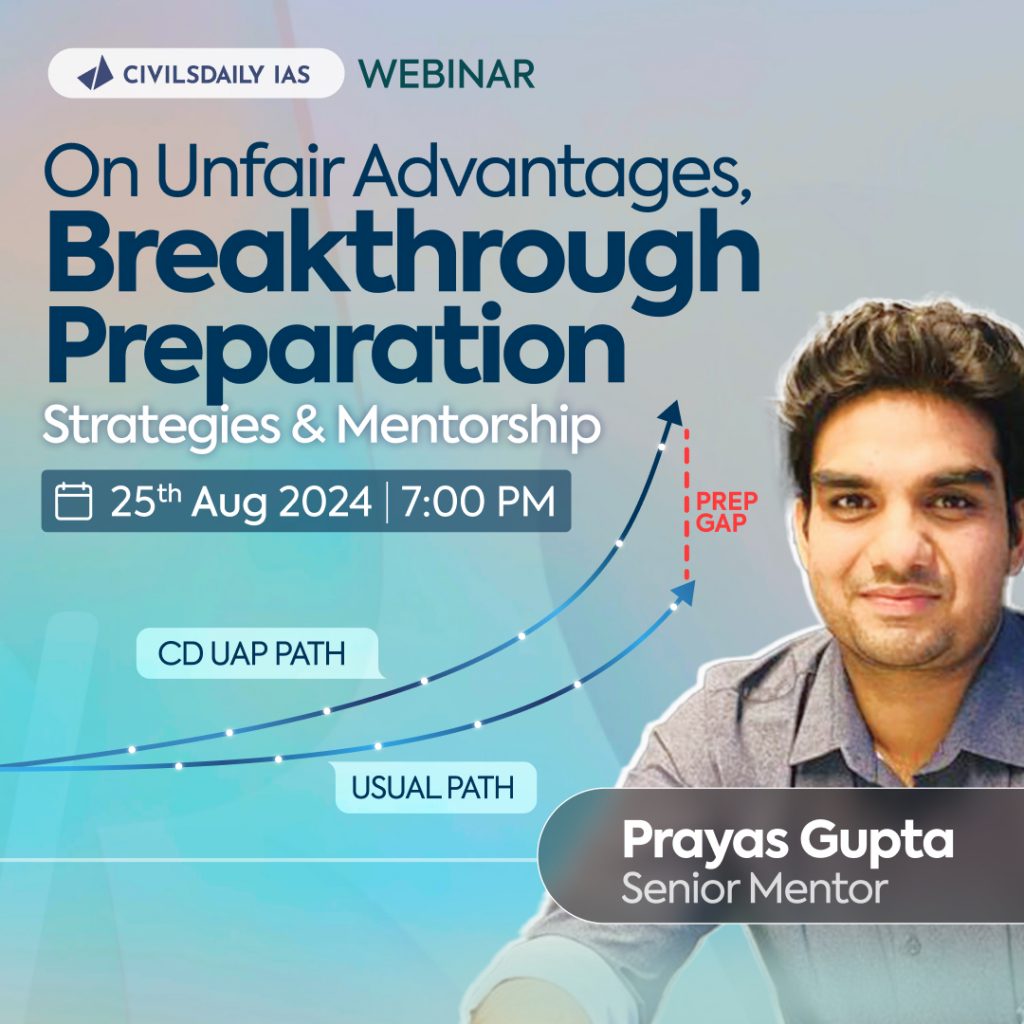
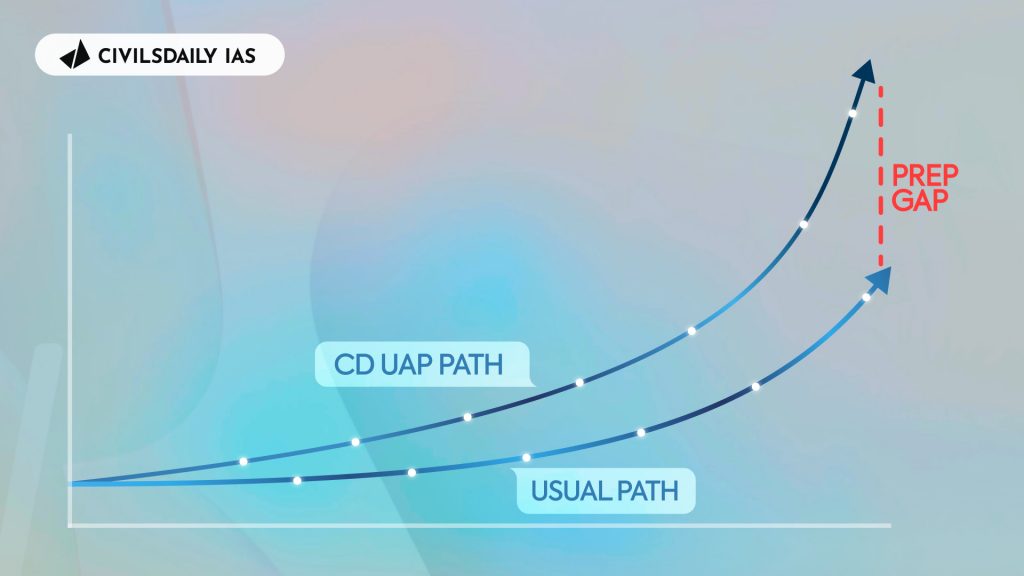
You don’t need more beginner level advice. What you need is a identifying Unfair Advantages, Strategies, High Momentum Plan and Support System.
Register for the free orientation session on 25th Aug 2024 at 7:00. Join to know about Yearlong ‘Mentorship’ & Study schedule To Crack UPSC 2025-26 In ‘First Attempt’ With IAS Rank
Read what Prayas Sir says about Unfair Advantages, Breakthrough Prep Strategies and UPSC Mentorship
Over 10 Lac aspirants try their luck at UPSC-CSE every year but only handful makes it to the list. Majority of the aspirants prepare in an ‘unconscious mode‘. Meaning they are just dragging themselves through the daily grunt of this prep without realising it is not going anywhere or they have no advantages over others. This is an important question because in the end the seats are limited and unless you can show (via exam process) that you are more deserving than others, its a lost cause and massive waste of your prime career years. I want you to join me this Sunday, 25th Aug 2024 at 7PM and deep dive into these three fundamental questions –
Question 1 – What are the unfair advantages I have over others in this cut-throat All India Level Competitive exam where seat are always limited?
Question 2 – What is my prep strategy and how is it better and different from others? Ask Do I even have a prep strategy?
Question 3 – Do I understand the importance of feedback and mentorship and how it can take me to advance level of prep in just few months?
Join me on 25th Aug 2024 at 7PM to get these answers and find clarity and focus in your UPSC preparation because if there is any institute that can answer these questions with original and rigorous thinking which is also deeply effective, then that’s Civilsdaily.
Led by a team of experienced and rigorously trained (for the latest UPSC requirements and pattern) Faculties and Mentors, Civilsdaily is the first and only platform to introduce deeply researched UPSC-CSE content and programs led by real-time 1:1 Mentoring.
As a UPSC aspirant, you live in a world populated with infinite sources churning out countless content themes endlessly, adding only short-term value to your preparation, if at all. Giving you false hope that your preparation is moving forward. All this is in the name of FREE preparation content. We chose not to play that game.
Instead, we create only limited content themes and programs every week. But content and program that is original rigorously researched for UPSC requirements by trained faculties and led by Mentors. Just what is actually required to qualify CSE, it’s something we continue to do.
At Civilsdaily, we treat Mentorship as a specialization. Not every Mains or interview candidate can be a mentor. Most such mentors will suggest cosmetic changes and will only help you evolve slowly. It is easy to find comfort in sentences like ‘every topper is different’ and’ they have their own path’. Finding what’s different about you and then figuring out your own path is why Mentorship is essential.
We walk the talk by helping you craft your own way of preparation. A method that enhances your probability of qualifying UPSC-CSE in a single attempt. We give you that near-perfect certainty. Delivering this consistently to hundreds of aspirants (now rankers) in the past was challenging. We still stick to it and keep getting better at it with each passing year.
At CD, we understand the science and the art of everything UPSC. If you have a problem, we will sit with you and find a solution. If that doesn’t work, then we try solution 2. Eventually, we will make sure you end up making progress. What’s the point of any content, program, or mentorship without progress? This is precisely why aspirants trust they have the best shot at clearing the exam with Civilsdaily.
We invest a significant amount of time, effort, and energy into creating lectures, notes, and tests, understanding your needs as an aspirant. We take this responsibility seriously because, ultimately, your future depends on it.
The heart of the Civilsdaily platform is the Yearlong Mentorship Program. For years, aspirants have enrolled here because they couldn’t find such depth and passion towards quality content and Mentorship anywhere. Their search inevitably ends at Civilsdaily. Enrollment in these programs and Mentorship also makes us accountable to aspirants for the value they get.
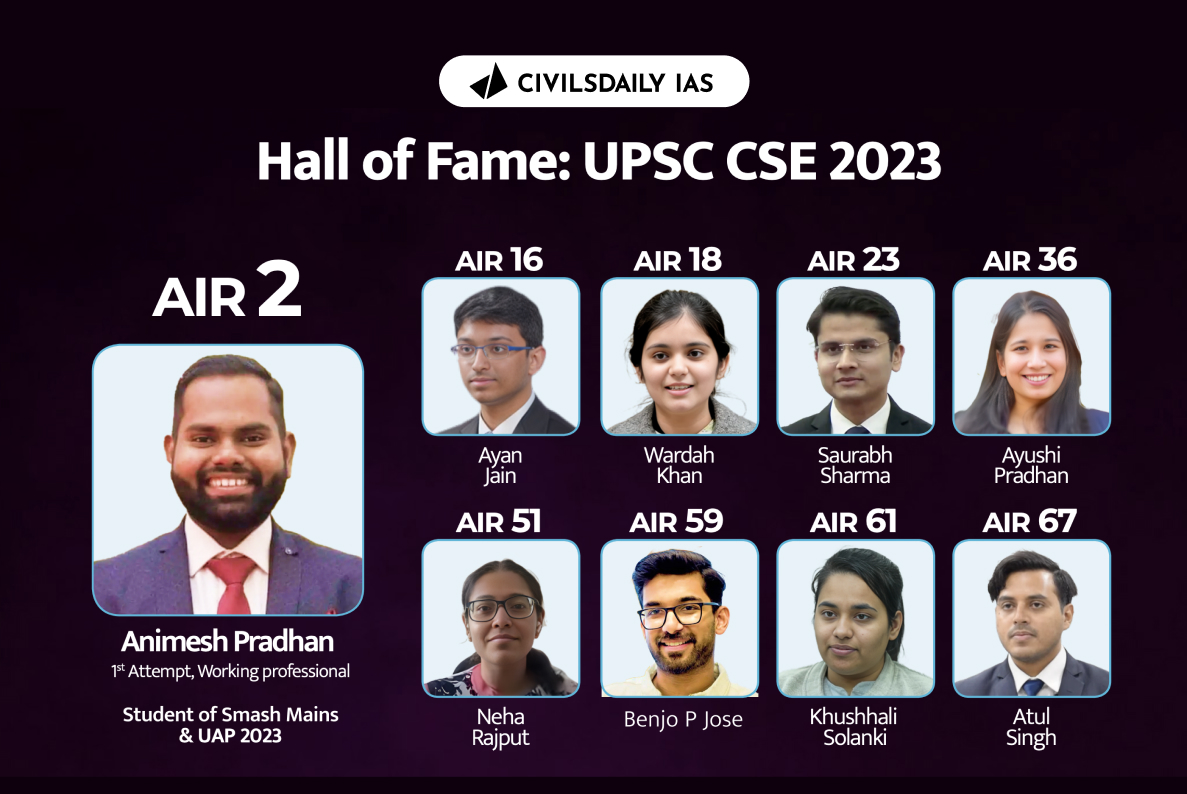
In the past few years, we’ve worked quietly in the background with hundreds of aspirants; many now serve as IAS, IPS, IFS and more. We are very proud of what we’ve achieved.
Join me for a Zoom session on 25th August 2024 at 7:00 p.m. This session is a must-attend for you If you are attempting UPSC for the first time in 2025 or 2026 or have attempted earlier and now preparing for next year, then it is going to be a valuable session for you too.
In the session, we will discuss how mentorship works. Why Mentorship is a must when you attempting for the first time.
We will deal with all the aspects for a comprehensive UPSC Preparation.We’ll talk about starting with the basics, and move to advanced level.
See you in orientation session”
Register for orientation session for UPSC 2025 and 2026 prep
(Don’t wait—the next webinar won’t be until Septemeber 24)
These masterclasses are packed with value. They are conducted in private with a closed community. We rarely open these webinars for everyone for free. This time we are keeping it for 300 seats only.
The Central government asked the Union Public Service Commission (UPSC) on Tuesday, August 20, to cancel an advertisement from three days earlier that called for applications to fill senior government positions through lateral recruitment.
What is ‘Lateral Entry’ into the Bureaucracy?
Definition: Lateral entry refers to the recruitment of personnel from outside the traditional civil services into senior and middle-level positions in the central government. These entrants come from various backgrounds, including state/UT governments, public sector undertakings (PSUs), statutory organizations, research institutes, universities, and the private sector.
Objective: The idea is to bring in individuals with domain expertise and specialized knowledge to enhance the efficiency and effectiveness of governance. These individuals are usually appointed on contracts of three years, which can be extended to a total of five years.
What are the Positions Open for Lateral Entry?
Positions Advertised: Lateral entry initially focused on Joint Secretary-level positions, which are high-ranking roles within a Department. Over time, positions for Director and Deputy Secretary levels were also opened.
Roles and Responsibilities:
Joint Secretary: Third-highest rank in a Department, responsible for decision-making and administrative head of a wing within the Department.
Director/Deputy Secretary: Middle-level officials, performing roles similar to Joint Secretaries in most ministries.
What was the Union Government’s Logic Behind Introducing Lateral Entries?
Rationale: The government introduced lateral recruitment to bring in fresh talent and specialized skills that may not be available within the traditional civil services.
NITI Aayog’s Recommendation: The policy was recommended in 2017 by NITI Aayog in its three-year Action Agenda and by the Sectoral Group of Secretaries (SGoS) on Governance.
How Many People Have Been Appointed via Lateral Recruitment So Far?
First Round (2018): The first round attracted 6,077 applications for Joint Secretary-level positions. Nine individuals were eventually selected and appointed in 2019.
Subsequent Rounds: Additional rounds of recruitment occurred in 2021 and May 2023. As of August 2024, a total of 63 appointments have been made through lateral entry, with 57 lateral entrants currently holding positions in various Ministries/Departments.
What is the Criticism of Lateral Entry Recruitment?
Lack of Reservations: A significant criticism of lateral recruitment is the absence of quotas for Scheduled Castes (SC), Scheduled Tribes (ST), and Other Backward Classes (OBC).
Promotion Concerns: Critics like Mayawati have pointed out that lateral entry deprives lower-level employees in the civil services of promotion opportunities, which would otherwise be available through a merit-based system.
Way forward:
Incorporate Inclusive Quota Provisions: To address the criticism regarding the absence of reservations, the government could consider introducing a reservation policy for Scheduled Castes (SC), Scheduled Tribes (ST), and Other Backward Classes (OBC) in lateral entry recruitment.
Establish a Transparent and Merit-Based Selection Process: To ensure the credibility and effectiveness of lateral recruitment, the government should enhance transparency in the selection process. This could involve clearly defined eligibility criteria, objective assessment methods, and regular monitoring of the performance of lateral entrants.
Mains PYQ:
Q Has the Cadre-based Civil Services Organization been the cause of slow in India? Critically examine. (UPSC IAS/2014)
The government has introduced two import-based initiatives to meet domestic needs, which could potentially dampen the growth of the domestic industry.
New medicines are generally under patent protection, preventing Indian companies from producing affordable generics/biosimilars.
Impact of two initiatives on Domestic Industry:
Global Tendering for 120 Medicines: The Department of Expenditure (DoE) allowed the Ministry of Health to buy 120 medicines, including popular anti-diabetes and anti-cancer drugs, through global tenders for government programs. This decision, which specifies certain brands for over 40 of these medicines, could increase the monopoly of foreign companies in India.
Customs Duty Removal on Cancer Medicines: The 2024-25 Union Budget proposed removing the 10-12% customs duty on three cancer medicines marketed by AstraZeneca. While intended to reduce prices, this measure is unlikely to significantly lower costs and may instead increase reliance on imports, further disadvantaging domestic producers.
Status of Indian Pharma
India is a leading manufacturer of vaccines, accounting for 60% of global production.
India supplies 70% of vaccines used by the WHO.
India is a major exporter of generic drugs, accounting for 20% of global exports.
The industry is expected to grow to over $130 billion by 2030.
What are Biosimilar guidelines?
Biosimilar guidelines in India are regulatory frameworks established by the Central Drugs Standard Control Organization (CDSCO) and theDepartment of Biotechnology (DBT) to govern the development, approval, and marketing of biosimilars.
Biosimilars are biologic medical products that are highly similar to an already approved original biologic (known as the reference product), with no clinically meaningful differences in terms of safety, purity, and potency.
Status Biosimilars:
Significant Market Size: The biosimilar market in India is valued at approximately $2.2 billion, and it is projected to reach $40 billion by 2030. This growth is driven by the expiration of patents for several key biologics, which opens the door for biosimilar development.
Product Approvals: As of now, over 70 biosimilars have been approved in India, covering a range of therapeutic areas, including oncology, diabetes, and autoimmune diseases. Notable examples include:
Adalimumab (for rheumatoid arthritis)
Trastuzumab (for breast cancer)
Filgrastim (for neutropenia)
Insulin glargine (for diabetes)
Outdated Biosimilar Guidelines in India:
Obsolete and Resource-Intensive:
India’s biosimilar guidelines are outdated, requiring mandatory animal studies, which are no longer necessary in developed countries like the U.S. and EU with stringent regulatory standards.
The guidelines also mandate clinical trials, while WHO and U.K. guidelines treat clinical trials as an exception rather than a rule.
Barrier for Domestic Producers:
The stringent requirements for animal studies and mandatory clinical trials create significant barriers for Indian producers, making it difficult for them to compete with their global counterparts.
Impact on Patient Access:
According to the International Generic and Biosimilar Medicines Association, eliminating these duplicative requirements could lead to significant savings in time and resources, ultimately improving patient access to affordable biosimilars.
Way forward:
Update Regulatory Guidelines: Modernize India’s biosimilar guidelines by removing unnecessary requirements like mandatory animal studies and clinical trials, aligning them with global standards to reduce barriers for domestic producers.
Support Local Production: Utilize provisions in the Patents Act to promote domestic manufacturing of affordable medicines, reducing reliance on imports and strengthening the local pharmaceutical industry.
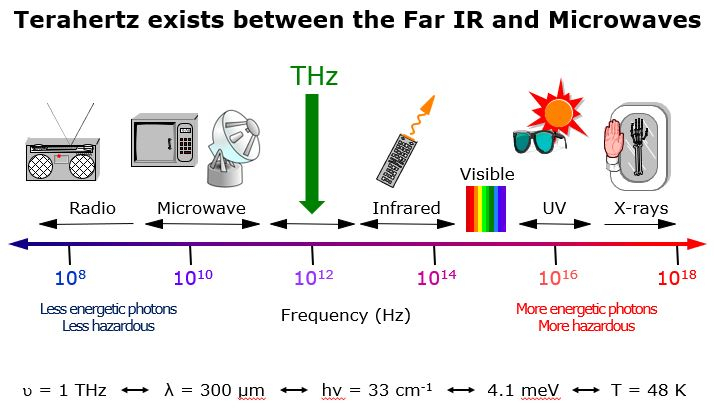
The Telecom Regulatory Authority of India (TRAI) released its recommendations on the Tera Hertz Spectrum.
About Tera Hertz (THz) Spectrum
The THz Spectrum refers to a range of electromagnetic waves with frequencies between 100 GHz (gigahertz) and 10 THz (terahertz).
This spectrum lies betweenmicrowaves and infrared light.
It is known as the “THz gap” because it has been less explored compared to other parts of the electromagnetic spectrum.
Key Features:
Unique Properties: THz waves can pass through many materials like clothing, paper, and wood but are absorbed by water and metals.
Applications: Used for advanced technologies like imaging, communications, and spectroscopy.
Potential Uses: Security scanning, medical imaging, and high-speed wireless communication.
Impact of recent recommendation:
THEA will encourage innovation in Tera Hertz technologies, supporting the ‘Make in India’ initiative.
The opening of specific frequency bands will boost the development and deployment of next-generation wireless technologies and automotive safety systems in India.
PYQ:
[2020] With reference to Visible Light Communication (VLC) technology, which of the following statements are correct?
1. VLC uses electromagnetic spectrum wavelengths 375 to 780 nm.
2. VLC is known as long-range optical wireless communication.
3. VLC can transmit large amounts of data faster than Bluetooth.
4. VLC has no electromagnetic interference.
Select the correct answer using the code given below:
The Reserve Bank of India (RBI) Governor has been awarded an “A+” rating for the second consecutive year in the Global Finance Central Banker Report Cards 2024.
About the Global Finance Central Banker Report Cards
The Central Banker Report Cards are published annually by Global Finance, a magazine that has been grading central bank governors since 1994.
The report grades the central bank governors of nearly 100 countries, territories, and districts, including major institutions like the European Union, the Eastern Caribbean Central Bank, the Bank of Central African States, and the Central Bank of West African States.
Grading Scale:
The ratings range from “A+” for excellent performance to “F” for outright failure.
The grades assess success in key areas such as inflation control, economic growth, currency stability, and interest rate management.
Significance
This recognition highlights his exceptional performance in managing India’s monetary policy, particularly in areas such as inflation control, economic growth, currency stability, and interest rate management.
PYQ:
[2016] ‘Global Financial Stability Report’ is released by which organisation?
(a) European Central Bank
(b) International Monetary Fund
(c) International Bank for Reconstruction and Development
(d) Organisation for Economic Co-operation and Development
The World Health Organization (WHO) is investigating a suspected new strain of polio in a two-year-old child from Tikrikilla, Meghalaya.
What is Vaccine-Derived Polio?
The Oral Polio Vaccine (OPV) contains a weakened form of the poliovirus that activates an immune response in the body.
The vaccine-virus is excreted after vaccination and can circulate in the environment.
In rare cases, if the population is under-immunized, the excreted virus can mutate over time and revert to a form capable of causing paralysis.
This mutated virus is known as circulating vaccine-derived poliovirus (cVDPV).
About Polio:
Details
Nature of Disease
Crippling and potentially deadly viral infectious disease affecting the nervous system.
Types of Poliovirus
– WPV1 (Wild Poliovirus type 1)
– WPV2 (Wild Poliovirus type 2, eradicated globally)
– WPV3 (Wild Poliovirus type 3, eradicated globally)
Current Status
WPV1 remains in circulation in Afghanistan and Pakistan.
Transmission
Primarily through the faecal-oral route or contaminated water/food.
Affected Population
Largely affects children under 5 years of age.
Impact
Virus multiplies in the intestine, may invade the nervous system, causing paralysis.
Prevention
– No Cure: Preventable through immunization.
– Vaccines:
– OPV: Oral Polio Vaccine given at birth, with doses at 6, 10, 14 weeks, and a booster at 16-24 months.
– IPV: Injectable Polio Vaccine given with the 3rd dose of DPT under UIP.
India’s Status
Pulse Polio Immunization Initiative (1995)
Declaredpolio-free by WHO in 2014, with the last wild poliovirus case reported in 2011.
PYQ:
[2016] ‘Mission Indradhanush’ launched by the Government of India pertains to:
(a) immunization of children and pregnant women
(b) construction of smart cities across the country
(c) India’s own search for the Earth-like planets in outer space
![[Free UPSC Orientation Session] On Unfair Advantages, Breakthrough Preparation Strategies & Mentorship || Join on 25th August 2024 At 7 PM](https://www.civilsdaily.com/wp-content/uploads/2024/08/Prayas_webpost__a-1568x882.jpg)