Read about AIR 498 Utkarsh’s UPSC 2026 Prep Webinar
Most UPSC aspirants feel stuck after a few attempts. You study hard, follow the usual strategies, but the marks just don’t improve. Motivation dips, and it starts to feel like you’re going in circles. Utkarsh Srivastava was once in that same spot but he decided to change how he approached the exam.
In 2023, his GS score was 685. A year later, in the 2024 exam, he jumped to 795 — an incredible 114 mark boost across GS1 to GS4. This didn’t happen by chance. It was the result of small, focused changes made with full clarity.
What changed for him? He shifted from scattered notes to focused prep based on microthemes. He stopped writing answers just to practice and started writing answers that actually fetched marks. Instead of chasing quantity, he focused on improving the quality of every sentence he wrote.
In this session, Utkarsh will share how he changed his approach across all GS papers, what mistakes he fixed, and how he made value addition truly count not as decoration, but to make his answers stronger. He’ll also talk about how simple habits and daily discipline helped him stay on track.
If you feel stuck or stagnant in your UPSC prep, this is a session that can really help you reset and rethink your strategy. Join him on 6th May 2025, Tuesday at 5PM.
It will be a 45 minute webinar, post which we will open up the floor for all kinds of queries which a beginner must have. No questions are taboo and Shubham Sir is known to be patiently solving all your doubts.
Join us for a Zoom session on 6th May 2025 at 5 p.m. This session is a must-attend for you If you are attempting UPSC for the first time or have attempted earlier and now preparing for next year, then it is going to be a valuable session for you too.
See you in the session”
Register for the session for a focussed UPSC 2026 Prep
(Don’t wait—the next webinar won’t be until June 25)
These masterclasses are packed with value. They are conducted in private with a closed community. We rarely open these webinars for everyone for free. This time we are keeping it for 300 seats only.
[UPSC 2021] Investment in infrastructure is essential for more rapid and inclusive economic growth.” Discuss in the light of India’s experience.
Linkage: Vizhinjam Port is seen as a major infrastructure project that can bring big economic benefits and boost growth in the region. This “port of the future” is a clear example of how building key infrastructure can help speed up development and strengthen India’s role in global sea trade.
Mentor’s Comment: The town of Vizhinjam in Kerala has been an important part of global sea trade since ancient times. Inscriptions from the Pandya-Chola period (1129 AD) refer to it as Rajendra Chola Pattinam, a key port in Kerala. Some historians believe that Vizhinjam was earlier known as Balita, a port mentioned in the 1st-century travel book The Periplus of the Erythraean Sea. Over time, however, Vizhinjam lost its importance when colonial powers began to focus on developing other ports like Cochin and Madras.
Today’s editorial analyses the first deep-water container transhipment port at Vizhinjam. This content would help in the GS Paper II (International Relations) and GS Paper III (Port & Infrastructure).
_
Let’s learn!
Why in the News?
India’s first deep-water container transshipment port at Vizhinjam has been officially opened by the Prime Minister.
What historical records highlight Vizhinjam’s ancient maritime significance?
Inscriptions from the Pandya-Chola Era (1129 AD): Vizhinjam was referred to as Rajendra Chola Pattinam, highlighting its importance under Chola rule. Eg: Inscriptions found in Tamil Nadu indicate Vizhinjam was a maritime outpost under Rajendra Chola I.
Mention in The Periplus of the Erythraean Sea (1st century AD): Scholars correlate Vizhinjam with Balita, a port listed in this Greco-Roman navigational text. Eg: The Periplus details trade with South Indian ports exporting spices, pearls, and textiles.
Vital Node in the Ancient Spice Route: Vizhinjam facilitated trade in pepper and aromatics between India and the Greco-Roman world. Eg: Goods from Kerala were shipped to Alexandria and further into Europe via this port.
Geographic Advantage as a Natural Port: Vizhinjam’s deep-sea location and sheltering coastline made it ideal for anchorage and monsoon navigation. Eg: Sailors preferred Vizhinjam for docking during the southwest monsoon season.
Decline Due to Colonial Maritime Reorientation: Colonial interests bypassed Vizhinjam in favor of Cochin and Madras, leading to its historical obscurity. Eg: The British East India Company developed Cochin, reducing Vizhinjam’s strategic relevance.
Why is Vizhinjam Port crucial for India’s transshipment strategy?
Proximity to International Shipping Routes: Vizhinjam lies just 10 nautical miles from the busy east–west international sea route, reducing diversion time for vessels. Eg: Ships plying between the Persian Gulf and the Malacca Strait can easily access Vizhinjam without significant deviation.
Natural Deep-Draft Port: It has a natural depth of over 20 meters, allowing large container ships (like Ultra Large Container Vessels) to dock without dredging. Eg: Unlike ports such as Chennai or Kolkata, Vizhinjam can handle Mother Vessels directly.
Reduces India’s Dependence on Foreign Ports: India currently transships ~75% of its cargo through ports like Colombo, Singapore, and Jebel Ali. Vizhinjam aims to internalize this traffic. Eg: Container traffic from Kochi or Tuticorin often goes to Colombo first—Vizhinjam can bypass this.
Strategic Location for Regional Hub Development: Located on the southern tip of India, it can serve as a transshipment hub for South Asia and East Africa. Eg: Ports in Maldives, Seychelles, and even parts of the African east coast could be serviced via Vizhinjam.
Boosts Sagarmala and Atmanirbhar Bharat Goals: It aligns with India’s vision to develop port-led development and reduce logistic costs under the Sagarmala Programme. Eg: Vizhinjam complements other projects like Vadhavan and Paradip in creating an integrated maritime network.
Who are the main stakeholders in the Vizhinjam Port project?
Government of Kerala: Owns the port infrastructure and plays a key role in policy, land acquisition, and facilitating local support. Eg: Kerala State Industrial Development Corporation (KSIDC) is involved in project coordination.
Adani Ports and SEZ Ltd (APSEZ): The main private developer and operator of the port under a Public-Private Partnership (PPP) model. Eg: APSEZ is responsible for design, build, finance, operate, and transfer (DBFOT) of the port.
Central Government of India: Provides financial assistance and regulatory approvals via the Ministry of Ports, Shipping and Waterways. Eg: The project received viability gap funding (VGF) from the Centre to make it commercially feasible.
Local Community and Fisherfolk: Crucial stakeholders impacted by land use, fishing access, and environmental changes. Eg: Protests by fishing communities in 2022 highlighted concerns over displacement and livelihood loss.
Environmental and Regulatory Bodies: Ensure compliance with Coastal Regulation Zone (CRZ) norms, environmental clearances, and sustainable development. Eg: The Ministry of Environment, Forest and Climate Change (MoEFCC) granted conditional clearance after EIA studies.
How can Vizhinjam’s economic potential mirror global models like Shenzhen?
Strategic Coastal Location for Global Trade: Like Shenzhen, Vizhinjam lies close to major global shipping routes, enabling it to become a vital logistics hub. Eg: Vizhinjam is just 10 nautical miles from the international east-west shipping corridor, ideal for transshipment.
Integrated Industrial and Port Development: Shenzhen’s success came from combining port infrastructure with export-oriented industrial zones; Vizhinjam can follow suit with Special Economic Zones (SEZs). Eg: Planned industrial corridors around Vizhinjam can attract electronics, pharmaceuticals, and marine processing units.
Private Sector-Led Infrastructure Expansion: Like Shenzhen’s model of leveraging private investment for rapid development, Vizhinjam is being developed under PPP with Adani Ports. Eg: Adani Ports has experience in developing Mundra Port as an integrated commercial port ecosystem.
Tech-Driven, Green Port Initiatives: Shenzhen is a pioneer in using smart and sustainable technologies; Vizhinjam can adopt automation, renewable energy, and green logistics. Eg: Vizhinjam’s deep draft allows handling of mega ships with less dredging, reducing ecological footprint.
Employment and Urban Transformation: Shenzhen evolved from a fishing village to a global metropolis; Vizhinjam can drive local employment, urbanisation, and socioeconomic growth. Eg: Development of port-linked infrastructure is expected to boost tourism, services, and real estate in the Trivandrum region.
What are the challenges for the ports in India?
Labor Disputes and Industrial Actions: Indian ports have experienced significant disruptions due to labor strikes and protests. Eg: In August 2024, approximately 20,000 port workers initiated a strike demanding wage revisions and improved pension benefits. This industrial action threatened to halt operations across major ports, causing delays in cargo handling and impacting global trade.
Inadequate Last-Mile Connectivity: Despite improvements in port infrastructure, many Indian ports suffer from poor last-mile connectivity. Eg: The Jawaharlal Nehru Port in Navi Mumbai often faces delays due to inefficient road networks and underdeveloped transport links, affecting overall port efficiency.
Port Congestion and Operational Inefficiencies: Indian ports are grappling with congestion issues, leading to delays in cargo handling and increased turnaround times for vessels. Eg: Factors like outdated cargo tracking systems and regulatory bottlenecks have forced some shipping lines to skip Indian port calls to maintain schedules.
Way forward:
Improve Port Infrastructure and Last-Mile Connectivity: Enhance road, rail, and port connectivity to streamline cargo movement and reduce congestion. Investments in modernizing transport networks and implementing smart technologies can ensure smoother operations and quicker turnaround times.
Strengthen Labor Relations and Efficiency: Resolve labor disputes through better communication and negotiations, ensuring worker welfare while maintaining productivity. Implementing automation and improving operational processes can also reduce dependency on manual labor and improve efficiency.
Since the Goods and Services Tax (GST) system started in 2017, India’s GST collections every April have regularly reached new record highs.
What was the GST collection in April and its year-on-year growth?
Record High Collection: In April 2025, India collected ₹2.37 lakh crore in gross GST, marking the highest ever monthly collection since the GST regime began in 2017. Example: This was up from ₹2.10 lakh crore in April 2024.
Strong Year-on-Year Growth: This represented a 12.6% growth over the previous year’s April figures, showing improved compliance and economic activity. Example: After refunds, the net collection for the Centre rose by 9.1% compared to April 2024.
How has GST compliance and fintech adoption boosted tax collection?
Higher Tax Filing Discipline: Increased awareness and digital tracking have improved GST compliance among businesses. Eg: The consistent rise in GST collections every April since 2018 from ₹1.03 lakh crore to ₹2.37 lakh crore indicates better adherence to filing norms.
Faster Refunds Encourage Participation: Swift processing of refunds, especially for small businesses, has encouraged timely and accurate GST filing. Eg: Refunds to exporters rose by 86% in April 2025, indicating improved trust in the system.
Fintech Integration Supports MSMEs: With 87% fintech adoption in India, MSMEs have better access to formal banking and invoicing systems, helping them meet compliance requirements. Eg: Digital invoicing apps and GST-ready accounting tools have simplified filings for small traders and manufacturers.
Digital Audit Trails Enhance Enforcement: Fintech tools enable real-time tracking of transactions, reducing scope for tax evasion. Eg: E-invoicing and auto-generated returns allow tax authorities to detect discrepancies quickly.
COVID-19 Accelerated Formalization: The pandemic years pushed many informal businesses into the digital and formal economy, making tax compliance a necessity. Eg: Many first-time filers from the MSME sector were onboarded via digital platforms during 2020–21, increasing the taxpayer base.
What led to the 86% rise in refunds to exporters?
Improved GST Processing Systems: The government has streamlined refund procedures with faster digital approvals and reduced delays. Eg: Automation of refund claims has enabled quicker credit settlements to exporters within defined timelines.
Higher Volume of Export Orders: A surge in international demand led to increased export activity, resulting in more refund claims under GST. Eg: Orders from regions like Africa, Asia, and the Americas rose significantly in April 2025, boosting GST refund outflow.
Greater GST Compliance by Exporters: Better record-keeping and digital documentation encouraged more businesses to file refund claims accurately and on time. Eg: Exporters using fintech platforms for e-invoicing were able to submit error-free refund claims swiftly.
What is HSBC India PMI?
The HSBC India PMI refers to the Purchasing Managers’ Index compiled by HSBC in partnership with S&P Global to track the economic health of India’s manufacturing and services sectors.
What is Purchasing Managers’ Index (PMI)?
Purchasing Managers’ Index (PMI) is an economic indicator that measures the health and performance of a country’s manufacturing and services sectors. It is based on surveys of purchasing managers across various industries.
Index Scale:
Above 50: Indicates expansion in economic activity
Below 50: Indicates contraction
Exactly 50: No change
Why did the HSBC India PMI show a 10-month high in April?
Surge in New Business Orders: Domestic and international demand for Indian-manufactured goods increased, boosting factory activity. Eg: Indian companies saw the largest increase in overseas orders in over 14 years.
Export Growth from Global Demand: Strong demand from key regions like Africa, Asia, Europe, West Asia, and the Americas fueled export-oriented production. Eg: Exporters rushed to fulfill orders before the U.S. tariff pause on Chinese goods ends in July.
Positive Business Sentiment: Companies expanded production and hiring in response to growing order books and market optimism. Eg: Firms ramped up manufacturing capacity to take advantage of global supply chain shifts toward India.
How has the U.S. tariff pause on China affected India’s manufacturing sector?
Increased Export Orders to India: Global buyers are shifting orders from China to India to avoid potential U.S. tariffs. Eg: Indian manufacturers received a surge in foreign orders, especially from the U.S., ahead of the July 9 tariff deadline.
Realignment of Supply Chains: India is emerging as an alternative manufacturing base due to U.S.–China trade tensions. Eg: Apple announced plans to source ‘most of its iPhones’ for the U.S. market from India.
Short-Term Boost in Manufacturing Activity: Anticipated U.S. tariffs on Chinese goods have created temporary opportunities for Indian exporters. Eg: India’s manufacturing sector saw a sharp rise in April output, contributing to a 10-month high in the HSBC PMI.
Way forward:
Strengthen Fintech-GST Integration: Deepen digital infrastructure and incentivize e-invoicing adoption among small businesses to sustain high compliance and broaden the tax base.
Enhance Export Ecosystem: Build long-term trade resilience through export incentives, logistics upgrades, and faster refund systems to capitalize on shifting global supply chains.
Mains PYQ:
[UPSC 2019] Explain the salient features of the constitution(One Hundred and First Amendment) Act, 2016. Do you think it is efficacious enough ‘to remove cascading effect of taxes and provide for common national market for goods and services’?
Linkage: The article shares the latest information on how much money the government collected through GST and how well people are following GST rules. The question is asking about which earlier taxes were included under GST and how GST has affected government income.
Indian Americans earn more than any other Asian group in the U.S., making about 40% more than Chinese and Japanese households.
What is the median annual income of Indian American households?
Highest Median Income Among Asian Groups: Indian American households had a median annual income of $151,200 in 2023, the highest among all Asian ethnic groups in the U.S. Eg: Indian Americans earn about 40% more than both Chinese and Japanese households.
Income Reflects High Educational Attainment: The high income level is linked to strong educational achievements—77% of Indian Americans aged 25+ hold a bachelor’s degree or higher, second only to Taiwanese Americans. Eg: Despite similar education levels, Mongolian Americans earn far less, highlighting that factors beyond education (like job type, geography, or discrimination) may also impact income.
How does it compare to other Asian groups?
Asian Group
Median Household Income (2023)
Key Comparison Point
Example
Indian Americans
$151,200
Highest income among all Asian groups
40% higher than Chinese or Japanese households
Taiwanese Americans
Slightly below Indians (~$140,000+)
Second highest, due to even higher educational attainment (83%)
Close to Indian income levels, driven by education
Mongolian Americans
$54,300
Despite high education (69% with degrees), lowest income
Shows income isn’t always proportional to education
Who are the largest Asian ethnic groups in the U.S. as of 2023?
Chinese Americans: Approximately 5.5 million individuals, making up 22% of the Asian American population. Example: Chinese Americans are the largest Asian ethnic group in the U.S.
Indian Americans: Around 5.2 million individuals, accounting for 21% of the Asian American population. Example: Indian Americans are the second-largest Asian ethnic group in the U.S.
Filipino Americans: Approximately 4.6 million individuals, representing 18% of the Asian American population. Example: Filipino Americans rank third among Asian ethnic groups in the U.S.
What is the significance of the Indian diaspora?
Economic Influence: Indian diaspora communities contribute significantly to the economies of their host countries through entrepreneurship, skilled labor, and remittances. Example: Indian-Americans contribute to the U.S. economy, particularly in the technology sector, with companies like Google and Microsoft having Indian-origin CEOs.
Cultural Exchange: The Indian diaspora has played a major role in promoting Indian culture globally, including its festivals, cuisine, music, and film. Example: Bollywood films and Indian cuisine have a large following across the world, especially in the UK, the U.S., and the Middle East.
Political Influence: The Indian diaspora has a growing presence in political leadership positions, influencing policies in their respective countries. Example: Kamala Harris, the Vice President of the United States, and Priti Patel, the Home Secretary of the UK, are of Indian origin and have shaped political discourse.
Educational Contributions: Indian diaspora members are highly skilled professionals and students, making notable contributions to global research and academic excellence. Example: Indian-origin scientists and engineers have made significant strides in fields like space exploration, medicine, and technology worldwide.
What are the challenges?
Caste-Based Discrimination: Despite migration, caste-based discrimination persists within diaspora communities. Marginalized groups, such as Dalits, often face exclusion and prejudice in educational institutions, workplaces, and social settings.
Racial and Religious Intolerance: Indian diaspora communities frequently encounter racism and xenophobia, particularly in countries with complex immigration histories. These discriminatory practices can hinder social integration and economic mobility.
Political Polarization and Identity Conflicts: Global political tensions, such as those related to the Kashmir issue, can lead to divisions within diaspora communities. Protests and calls for calm in response to international conflicts reflect how such issues can strain local community relations.
Way forward:
Promote Inclusivity and Social Integration: Efforts should be made to combat caste-based discrimination, racism, and xenophobia within diaspora communities by fostering inclusive policies and promoting intercultural dialogue. This can help create a more harmonious environment for integration and equal opportunities.
Encourage Political and Civic Engagement: To address political polarization, the Indian diaspora should engage in local politics and civic activities to bridge divides and advocate for constructive dialogue, ensuring their concerns are heard and their influence in the host country’s policies is constructive and united.
Mains PYQ:
[UPSC 2023] Indian diaspora has scaled new heights in the West. Describe its economic and political benefits for India.
Linkage: The high earnings of Indian Americans, as indicated in the article, are a clear example of the Indian diaspora “scaling new heights” economically in the West. This economic strength directly contributes to the potential economic benefits (like remittances, investment, trade promotion) and political influence (lobbying, soft power) that the diaspora provides to India. This question requires discussing precisely these benefits stemming from the diaspora’s success, of which high income is a key metric.
Governments are undermining the RTI Act by delaying the appointment of information commissioners, causing commissions to struggle with increasing backlogs, according to a 2023-24 report of Satark Nagrik Sangathan. This makes the topic important from the Governance point of view. Thus, knowing about the challenges in the implementation of RTI is important. But since RTI overlaps with multiple parts of the 4 GS papers, it is important to know the entire chain of ISSUE – SUBSTANTIATION-IMPACT for each challenge. This would make your prep for the topic conceptually strong.
GS1 – Indian Society: Role of Women, Urbanization, and Social Empowerment
Note4Students: Understand the role of RTI in promoting social accountability and the empowerment of marginalized communities. Study how RTI enables civil society to play an active role in strengthening democratic participation and social empowerment.
Microthemes: Social Empowerment, Government Programmes
GS2 – Important aspects of Governance, Transparency, and Accountability, Separation of powers
Note4Students: Strengthen your understanding of RTI as a tool for ensuring transparency and good governance. Link the impact of RTI amendments and judicial rulings to arguments for protecting democratic accountability in India.
Microthemes: Transparency and accountability
GS3 – Internal Security and Role of Non-state Actors in creating challenges to internal security
Note4Students: Explore how the protection of RTI activists relates to maintaining internal security and preventing governance abuses. Analyze how threats to RTI users affect civic activism and transparency in India.
Microthemes: Threat from external state or non-state actors,
GS4 – Ethics in Governance: Accountability and Ethical Governance
Note4Students: Enhance your understanding of ethical governance through case studies on RTI. Examine the balance between transparency, privacy, and ethical challenges in governance systems.
Microthemes: Quality of service delivery, Information sharing and transparency in Government X RTI
The Right to Information empowers citizens in a democratic state by providing unhindered access to information about government functions across the legislative, executive, and judiciary. This right transforms individuals from passive subjects to active citizens in governance.
What is the Right to Information?
The Right to Information ensures that the public can access information about government functioning, promoting citizen engagement and accountability.
Philosophical Basis of Right to Information
The philosophical foundation of the Right to Information can be traced back to Aristotle’s ideas, linking Democracy’s core values—Liberty and Equality—with citizens’ right to know about governmental functions. Access to information shapes personal, social, political, and economic identity and capabilities.
Recognition in International Law
United Nations (UN): In 1946, the UN General Assembly recognized Freedom of Information as a fundamental human right and essential for all other freedoms.
International Covenant on Civil and Political Rights (ICCPR): Article 19 of the ICCPR enshrines the right to access information, establishing it as a legal obligation in international human rights law.
History of Constitutional Recognition in India
The Indian Constitution does not explicitly mention RTI as a fundamental right, but the Supreme Court has interpreted it as an extension of Article 19(1)(a) (freedom of speech and expression) and connected it to Article 21 (Right to Life and Personal Liberty).
State of U.P. v Raj Narain (1975): SC declared that RTI is implicit in the right to freedom of speech and expression.
S.P. Gupta v. President of India (1982): SC supported citizens’ right to know public actions and decisions by public functionaries.
People’s Union for Civil Liberties v. Union of India: SC elevated RTI as a human right tied to Article 21.
Legislative Recognition
The Right to Information Act (RTI Act) was enacted in 2005 after strong advocacy from civil society groups like Mazdoor Kisan Shakti Sangathan and judicial support for transparency. The RTI Act aims to ensure transparency, accountability, and public access to information.
Transparency in Executive Functions: Increases government department transparency (e.g., Public Distribution System in UP).
Strengthening Democracy: Empowers citizens to question the government, reinforcing democratic engagement.
Shift in Government Work Culture: Fosters a culture of openness and record-keeping in government offices.
Judiciary’s Role: Empowers the judiciary to nullify laws promoting secrecy (e.g., ruling on the Electoral Bonds scheme).
The Issue-Impact Conundrum
While the Right to Information (RTI) Act has been a vital tool for transparency and accountability, its effectiveness is being undermined by several challenges. The following table offers a clear framework that can be used to enrich answers with facts and data.
Issue
SUBSTANTIATION
Impact
Vacant Posts in Information Commissions
Many information commissions have unfilled vacancies. For example, the Central Information Commission has 8 out of 11 positions vacant. States like Jharkhand, Tripura, and Telangana have had defunct commissions for years.
Severe disruption of RTI functioning; delays in case processing.
Mounting Backlogs
Due to insufficient information commissioners, there are over 4 lakh pending appeals and complaints. In states like Chhattisgarh and Bihar, fresh appeals may not be resolved until 2029.
Long delays in justice; citizens lose trust in RTI’s effectiveness.
Bias in Appointments
Many commissioners appointed are retired government officials or have political affiliations, leading to reluctance in taking action against transparency violations.
Erodes public trust and reduces the effectiveness of the RTI Act.
Failure to Impose Penalties
Information commissions impose penalties in only 5% of applicable cases, leading to a culture of impunity among officials.
Discourages adherence to RTI; promotes violations without accountability.
Regressive Amendments
The 2019 RTI Amendment Act reduced the autonomy of information commissions by granting the central government control over commissioners’ tenure, salaries, and entitlements. The 2023 Digital Personal Data Protection (DPDP) Act further restricted disclosure of personal information under RTI.
Undermines the independence of the RTI Act; limits transparency.
Threats and Attacks on RTI Activists
Nearly 100 killings and thousands of cases of assault, intimidation, and legal harassment have been reported against individuals using the RTI Act.
Creates fear, discouraging the public from using RTI to expose corruption.
Way Forward
Judicial Reaffirmation: The Supreme Court should reaffirm RTI as essential to democracy, especially in cases like electoral bonds.
Language Accessibility: RTI information should be accessible in regional languages.
RTI Education: The right to know should be included in school curricula to cultivate vigilant citizens.
Inclusion of Political Parties: Parliament should consider extending RTI to cover political parties for better democratic accountability.
#BACK2BASICS
The lesser talked-about side : How RTI has ushered in an era of transparency ?
The RTI has reinforced democratic participation by transforming citizens from passive recipients of information to active stakeholders in governance.
Key Contribution
Description
Example
Exposing Corruption and Malpractices
RTI has been instrumental in revealing large-scale corruption and misuse of resources.
RTI inquiries uncovered the Commonwealth Games scam and coal allocation scam, leading to public outcry and investigations.
Enhancing Transparency in Government Functions
RTI requests have led to greater openness in government departments and more accurate record-keeping.
In Uttar Pradesh, RTI applications revealed inefficiencies in the Public Distribution System, prompting improvements in food distribution.
Promoting Citizen Engagement in Democracy
RTI empowers citizens to ask questions, seek accountability, and participate more actively in governance.
Citizens used RTI to expose irregularities in local development projects, such as incomplete road constructions and school funding misuse.
Shift in Governmental Work Culture
RTI has encouraged transparency and accountability within government offices, fostering a more open work environment.
Improved record maintenance and timely data responses in various departments due to RTI requests, making public records more accessible.
Judicial Support for Transparency
RTI aids the judiciary in challenging laws that promote secrecy or infringe upon fundamental rights.
In cases like the Electoral Bonds scheme, RTI-backed transparency arguments contributed to the judicial review of laws affecting public accountability.
The National Biodiversity Authority (NBA) has released new rules to regulate access to biological resources and ensure fair and equitable benefit sharing, as approved by the Central Government.
About New Biodiversity Regulation, 2025:
It governs how benefits from the use of biological resources and associated traditional knowledge or digital sequence information (DSI) are to be shared.
It introduces a tiered benefit-sharing structure based on annual turnover of the user:
No sharing for turnover up to ₹5 crore.
0.2% for turnover between ₹5–50 crore.
0.4% for ₹50–250 crore, and 0.6% above ₹250 crore.
Users must submit resource usage statements annually if turnover exceeds ₹1 crore.
Cultivated medicinal plants are exempt, aligning with the Biodiversity (Amendment) Act, 2023.
For high-value or threatened species like red sanders, agarwood, and sandalwood, sharing must be at least 5%, rising to 20% or more for commercial use.
The Regulation covers researchers, IP right seekers, and includes digital data as part of benefit sharing for the first time.
Back2Basics: Convention on Biological Diversity (CBD):
CBD was adopted at the 1992 Rio Earth Summit; it came into force since 29 December 1993 with secretariat in Montreal, Canada.
It is ratified by 196 countries, excluding the US.
Key objectives:
Conservation of biological diversity.
Sustainable use of biodiversity components.
Fair sharing of benefits from genetic resources.
It is governed by the Conference of the Parties (COP), meeting biennially.
COP16 (2024) in Colombia established a multilateral benefit-sharing mechanism for Digital Sequence Information (DSI).
It ensures fair reward for communitiesprotecting biodiversity when their knowledge or genetic data is used commercially.
Nagoya Protocol on ABS:
It was adopted in 2010, enforced in 2014, it supplements the CBD.
It provides a legal framework for fair benefit-sharing from the use of genetic resources with the country of origin or local communities.
It strengthens the global framework for responsible biodiversity use.
[UPSC 2023] Consider the following statements:
1. In India, the Biodiversity Management Committees are key to the realization of the objectives of the Nagoya Protocol.
2. The Biodiversity Management Committees have important functions in determining acces and benefit sharing, including the power to levy collection fees on the access of biological resources within its jurisdiction.
Which of the statements given above is/are correct?
Options: (a) 1 only (b) 2 only (c) Both 1 and 2* (d) Neither 1 nor 2
Tensions escalated between Punjab and Haryana after the Bhakra Beas Management Board (BBMB) decided to release an extra 4,500 cusecs of water from the Bhakra dam to Haryana, sparking political and legal opposition from Punjab.
About the Punjab-Haryana Water Dispute:
The dispute dates back to 1966 when Haryana was created from Punjab and was promised a share of river waters from the Ravi and Beas rivers.
The Satluj-Yamuna Link (SYL) canal was proposed to deliver Haryana’s share but remains incomplete due to Punjab’s resistance.
The current issue involves Punjab and Haryana over the release of additional water from the Bhakra dam, managed by the Bhakra Beas Management Board (BBMB).
On April 30, 2025, BBMB ordered the release of 8,500 cusecs of waterto Haryana for drinking needs, which Punjab opposed, claiming Haryana had already withdrawn 104% of its annual share.
Water levels in the Bhakra, Pong, and Ranjit Sagar dams are low due to poor snowfall in the Himalayas.
Punjab argues that BBMB’s decision is unilateral and has refused to open the Nangal dam sluice gates.
Inter-State Water Dispute Resolution in India:
Article 262 of the Constitution empowers Parliament to legislate on inter-state river water disputes and bar courts from intervening in such matters.
River Boards Act, 1956 allows creation of boards for inter-state river management, but no such board has ever been constituted.
Inter-State Water Disputes Act, 1956 provides for:
Conciliation by the Centre among aggrieved states.
Tribunal formation if conciliation fails.
The 2002 amendment mandates:
Formation of a tribunal within 1 year.
Tribunal decision within 3 years.
Supreme Court cannot question the award of a tribunal but can examine procedural issues.
Other prominent disputes include Krishna, Cauvery, and the Satluj Yamuna Link canal disputes.
[UPSC 2006] Recently Uttar Pradesh and Madhya Pradesh governments signed a Memorandum of Understanding for the linking of two rivers as a link project. Which are these two rivers?
Options: (a) Betwa and Chambal (b) Betwa and Ken* (c) Chambal and Son (d) Ken and Narmada
India’s Agriculture Minister has introduced ‘Kamala’ and ‘Pusa DST Rice 1’, the country’s first genome-edited rice varieties, developed by ICAR. These are also the world’s first genome-edited rice varieties.
About ‘Kamala’ and ‘Pusa DST Rice 1’:
Kamala (DRR Dhan 100): Developed by ICAR-IIRR Hyderabad, derived from Samba Mahsuri; shows higher yield, early maturity, drought tolerance.
Pusa DST Rice 1: Developed by ICAR-IARI Delhi, based on MTU1010; improves drought and salinity tolerance.
Agencies involved: Indian Council of Agricultural Research (ICAR), ICAR-IIRR, ICAR-IARI.
They were created using CRISPR-Cas9-based genome editing, specifically Site Directed Nuclease 1 (SDN1). It has NO foreign DNA inserted.
It has been approved by Institutional Biosafety Committees (IBC) and Review Committee on Genetic Manipulation (RCGM) under relaxed genome-edit rules.
Specific Benefits Offered:
Yield boost:
Kamala: +19% over Samba Mahsuri (avg. 5.37 t/ha, max. up to 9 t/ha).
Pusa DST Rice 1: +9.6% to +30.4% over MTU1010 under stress conditions.
Climate resilience:
Kamala: Drought tolerance, early maturity.
Pusa DST: Salt and drought tolerance for saline/alkaline/coastal soils.
Water saving: Kamala matures 20 days early → saves 3 irrigations, i.e., 7,500 million m³ water.
Emission reduction: Cultivation over 5 million ha may reduce 32,000 tonnes GHG emissions (20% drop).
Food security support: Improved paddy output enhances India’s average yield, critical for 40% of total foodgrain basket.
[UPSC 2018] With reference to the Genetically Modified mustard (GM mustard) developed in India, consider the following statements:
1. GM mustard has the genes of a soil bacterium that give the plant the property of pest-resistance to a wide variety of pests.
2.GM mustard has the genes that allow the plant cross-pollination and hybridization.
3.GM mustard has been developed jointly by the IARI and Punjab Agricultural University.
Which of the statements given above is/are correct?
Options: (a) 1 and 3 only (b) 2 only* (c) 2 and 3 only (d) 1, 2 and 3
Japanese companies, along with other global players, are increasingly turning to India under the China Plus One strategy, aiming to diversify supply chains and reduce overdependence on China.
About China Plus One Strategy:
It is a global business model introduced in 2013 to reduce dependence on China by adding another country to the manufacturing or sourcing base.
It emerged due to concerns about geopolitical risks, trade tensions, and regulatory unpredictability in China.
The strategy gained momentum after the US–China trade war, China’s Zero-Covid policy, and increasing labour and compliance costs.
Its goal is to create resilient and diversified supply chains by operating in China and one or more alternative countries.
Vietnam, Mexico, and Taiwan have become early beneficiaries in sectors like machinery, electronics, and transport.
Benefits for India:
India offers a large market, skilled labor, and cost advantages, making it an attractive destination for diversification.
The growing digital infrastructure and industrial corridors support the relocation of manufacturing, with government schemes like PLI and Make in India aligning with the China Plus One goals.
Challenges:
India faces limited integration into global value chains, logistics inefficiencies, and regulatory bottlenecks.
Historical protectionist trade policies and lack of participation in trade agreements like RCEP hinder its full potential.
To compete with nations like Vietnam or Mexico, India needs labour reforms, improved ease of doing business, and better trade facilitation.
[UPSC 2021] Consider the following:
1.Foreign currency convertible bonds 2.Foreign institutional investment with certain conditions 3.Global depository receipts 4.Non-resident external deposits Which of the above can be included in Foreign Direct Investments?
Options: (a) 1, 2 and 3* (b) 3 only (c) 2 and 4 (d) 1 and 4
[UPSC 2019] ‘The long-sustained image of India as a leader of the oppressed and marginalised Nations has disappeared on account of its new found role in the emerging global order”. Elaborate.
Linkage: India is at a turning point, and the world is becoming more equal, moving away from old colonial ways. As Asia becomes more important again, this change is also affecting how India is seen and positioned globally.
Mentor’s Comment: India is at another turning point, similar to when Vasco da Gama arrived in Kozhikode in 1498 and the local ruler, the Zamorin, failed to act strategically. But this time, it’s not about sea trade routes—it’s about how global value chains are being reshaped through power and influence. This is a crucial moment for India, which is on track to become the world’s third-largest economy. For the past 75 years, the world has followed a post-colonial order known as globalisation. It was based on countries following common rules for the greater good, and divided the world into “donors” and “recipients.” But this idea no longer works, especially after China overtook the U.S. in foreign aid, manufacturing, and global trade share. As a result, institutions like the WTO, UN, and various treaties have become less useful to powerful countries, leading to U.S. pullouts.
Today’s editorial analyses global value chains as being reshaped through power and influence. This content would help in the GS Paper II (International Relations).
_
Let’s learn!
Why in the News?
President Donald Trump is not acting randomly. He is reacting to a world where countries are becoming more equal and breaking free from old colonial ideas, while still trying to keep their fading advantages.
What shift in global trade is compared to Vasco De Gama’s arrival?
Transition from Trade Routes to Value Chains: Vasco De Gama’s 1498 voyage opened sea-based trade routes connecting India to Europe. Today, the world is witnessing a shift from traditional trade to technology-driven global value chains (GVCs), reshaped by geopolitical forces rather than free markets. Eg: The semiconductor supply chain, where countries like Taiwan, South Korea, and the U.S. dominate chip design and fabrication, reflecting value chain complexity over simple trade.
Strategic Inertia vs Strategic Foresight: The Zamorin’s complacency during Vasco’s arrival represents a lack of strategic foresight in seizing global opportunities. India now faces a similar moment and must act strategically to capitalize on the global trade realignment and not miss out like in the colonial past. Eg: India’s PLI (Production Linked Incentive) schemes in electronics and pharmaceuticals are efforts to plug into global manufacturing chains proactively.
Geopolitically Driven Trade Structures: Earlier global trade was commercially motivated, but today it is increasingly geopolitically driven, with blocs forming and multilateralism weakening. Eg: The U.S.-China trade war and decoupling from Chinese supply chains are forcing countries like India to reposition themselves in new GVCs.
Why is the post-colonial global order losing relevance?
Shift from Multilateralism to Bilateralism and Power Politics: The post-colonial world order was built on rule-based multilateral institutions (e.g., WTO, UN), promoting equal participation. Now, major powers prefer bilateral deals that prioritize national interest over global consensus. Eg: The U.S. withdrawing from multilateral agreements like the Paris Climate Accord and WTO dispute mechanisms.
Obsolescence of Donor-Recipient Hierarchy: The older order assumed a world divided into ‘donors’ (developed nations) and ‘recipients’ (developing nations). This has become irrelevant as emerging powers like China now surpass traditional Western powers in aid and trade influence. Eg: China’s Belt and Road Initiative (BRI) has made it a larger global lender than the World Bank in many regions.
Erosion of Trust During Global Crises: Global institutions failed to uphold equitable principles during emergencies, revealing self-serving behavior by developed nations. Eg: During the COVID-19 pandemic, G-7 countries hoarded vaccines and medical supplies, sidelining poorer nations and weakening trust in global cooperation.
Who should lead India’s push for new global governance principles?
India’s World-Class Diplomats: India should empower its skilled and experienced diplomatic corps to frame and advocate new governance principles suited to a multipolar world. Eg: Indian diplomats played a key role in shaping the International Solar Alliance, showing leadership in global climate governance.
Cooperation Between Political Leadership and Policy Experts: A coordinated approach involving political vision (e.g., Prime Minister’s “Asian Century” narrative) and strategic policy institutions can guide India’s global engagement. Eg: NITI Aayog and MEA’s policy think tanks can jointly shape proposals for reforms in multilateral institutions like the WTO and UN.
Engagement with Global South and Emerging Institutions: India must lead with inclusive principles by aligning with BRICS, ASEAN, and the African Union, promoting a fair and tech-driven global order. Eg: India’s BRICS presidency and advocacy for the Global South Voice at G-20 summits shows readiness for leadership beyond the West-dominated system.
How can India become a global leader in AI and technology?
Leverage Human Capital and Digital Infrastructure: India must build on its skilled workforce, vast datasets, and proven digital stack (like Aadhaar, UPI) to drive AI innovation. Eg: IndiaStack enabled large-scale digital public goods, which can now serve as the foundation for developing large language models (LLMs) and AI applications.
Promote Open-Source and Indigenous Innovation: Focusing on open-source technologies and encouraging local R&D will allow India to innovate independently and at scale. Eg: India can emulate models like DeepSeek (an open-source AI rivaling U.S. models) to build affordable, accessible AI tools.
Create National Consensus and Industry-Academia Collaboration: A national policy consensus involving all stakeholders—governments, academia, and industry—must be built to focus on AI, chips, and deep tech. Eg: China’s rise in hardware was driven by state-industry coordination; India needs similar programs for semiconductors and AI research centers.
Which regions should India partner with for a new economic framework?
ASEAN (Association of Southeast Asian Nations): India should collaborate with ASEAN to build an Asian Common Market and leverage regional complementarities in trade, manufacturing, and digital economy. Eg: India’s Act East Policy and its trade agreements with Singapore and Thailand provide a base for deeper economic integration.
African Union: Africa offers a growing consumer base and untapped potential for investment in infrastructure, technology, and education. Eg: India’s Pan-African e-Network Project and growing pharma exports make Africa a strategic partner in India’s south-south cooperation.
BRICS and Emerging Economies: Collaborating within BRICS helps India shape multipolar global governance and alternative trade norms. Eg: India’s proposal for a BRICS currency system and its role in the New Development Bank demonstrate long-term strategic engagement.
Middle East (West Asia): Strong energy ties and growing interest in tech cooperation make the Middle East a key partner in India’s economic future. Eg: The India-UAE CEPA and I2U2 group (India-Israel-UAE-USA) promote trade, food security, and innovation-led partnerships.
Latin America and Caribbean (LAC): This region provides opportunities for trade diversification, agricultural cooperation, and technology exchange. Eg: India’s investments in pharmaceuticals and IT sectors in Brazil and Mexico mark a growing footprint in the LAC region.
Way forward:
Institutionalise Strategic Partnerships: India should formalise economic and technology alliances through frameworks like FTAs, digital cooperation pacts, and regional value chains with emerging regions (ASEAN, Africa, LAC).
Champion Inclusive Global Norms: Lead the Global South in advocating reforms in global governance institutions, emphasising equity, sustainability, and tech sovereignty to shape a multipolar, resilient global order.
Read about AIR 291 Shubham’s UPSC 2026 Prep Webinar
GS Paper 3 often turns out to be the most unpredictable paper in the Mains. It covers a wide range of topics like economy, agriculture, internal security, disaster management, and more. Most aspirants walk into it unsure of how to prepare or what to expect. But Shubham Kaurav, who secured AIR 291 in UPSC 2024, did something different. He scored 108 marks in GS 3 — a score many struggle to reach even after multiple attempts.
What worked in his favour wasn’t trying to study everything. It was clarity. He understood what the examiner was looking for and focused on how to present it well within the word limit. In this session, Shubham will walk you through his GS 3 preparation — what he focused on, how he made notes, and the way he structured his answers to stand out.
He will also break down his approach to economy questions using simple concepts and relevant data, how he used practical examples in agriculture, and how he balanced static and dynamic content in internal security — a tricky area for most.
More importantly, he will talk about answer writing. How to manage time across 20 questions, how to build flow in your answers, and the small adjustments that helped him gain those extra marks. This session won’t be just another topper talk. It’s a practical, focused look at a paper that can change your final score.
Join Shubham Kaurav live on 5th May at 7 PM(Online + Offline) and take away real strategies to handle GS Paper 3 with confidence
It will be a 45 minute webinar, post which we will open up the floor for all kinds of queries which a beginner must have. No questions are taboo and Shubham Sir is known to be patiently solving all your doubts.
Join us for a Zoom session on 5th May 2025 at 7:00 p.m. This session is a must-attend for you If you are attempting UPSC for the first time or have attempted earlier and now preparing for next year, then it is going to be a valuable session for you too.
See you in the session”
Register for the session for a focussed UPSC 2026 Prep
(Don’t wait—the next webinar won’t be until June 25)
These masterclasses are packed with value. They are conducted in private with a closed community. We rarely open these webinars for everyone for free. This time we are keeping it for 300 seats only.
Along with having efficient governance, there should also be a high level of accountability, which should begin with a strong and effective Parliament.
What mechanisms does the Indian Parliament currently use to ensure executive accountability?
Question Hour: A daily session where Members of Parliament (MPs) ask questions to the government, holding the executive accountable for its actions. Eg: During Question Hour, MPs can ask questions on various issues like government policies, spending, and public welfare programs. If the government fails to respond adequately, it is held accountable in front of the public.
Zero Hour: An informal session where MPs can raise urgent matters of public importance without prior notice. Eg: In the past, MPs have used Zero Hour to raise concerns about natural disasters, governance issues, or urgent societal problems like price hikes or corruption, which require immediate attention from the government.
Standing Committees (e.g., Department-related Standing Committees): These committees examine the policies and functioning of various government departments, scrutinizing their budget proposals, schemes, and implementation. Eg: The Standing Committee on Railways in 2015 recommended waiving dividend payments to Indian Railways to improve its financial health, which was subsequently implemented.
No-Confidence Motion: A formal motion in Parliament that can be moved by MPs to express a lack of confidence in the government. If passed, it leads to the resignation of the government. Eg: In the 17th Lok Sabha, a no-confidence motion was raised against the government over issues related to economic policies, though it did not pass, it highlighted the need for greater executive accountability.
Public Accounts Committee (PAC): This committee scrutinizes government expenditure and ensures that public funds are used efficiently and for their intended purposes. Eg: The PAC exposed irregularities in the Commonwealth Games 2010, revealing delays, opaque appointments, and corrupt practices, leading to corrective actions and reforms.
Why has the effectiveness of Question Hour and parliamentary committees declined in recent years?
Frequent Disruptions during Question Hour: Question Hour is often disrupted by protests and disruptions, leading to adjournments and reducing the time spent on addressing important government issues. Eg: During the 17th Lok Sabha (2019-24), Question Hour functioned for only 60% of its scheduled time in the Lok Sabha and 52% in Rajya Sabha, limiting its effectiveness in holding the government accountable.
Focus on Isolated Queries rather than Systematic Scrutiny: MPs often focus on individual queries rather than engaging in comprehensive, cross-ministerial scrutiny of complex issues, which limits the depth of oversight. Eg: Instead of addressing broader policy issues, MPs tend to ask specific questions that do not contribute to a deeper analysis of government actions or programs.
Limited Impact of Parliamentary Committees’ Reports: Despite generating detailed reports, parliamentary committees’ findings are often not discussed in Parliament, leading to a lack of follow-up on recommendations and diminishing their influence on legislation and executive actions. Eg: Even though the Standing Committees on Railways and Transport made significant recommendations, such as waiving the dividend payments and influencing the Motor Vehicles Bill, many committee reports have not led to substantial legislative or executive changes.
How can technology and data analytics improve the quality of parliamentary scrutiny?
AI and Data Analytics for Efficient Scrutiny: Technology can help MPs analyze vast amounts of data, such as budget documents and audit reports, enabling them to quickly identify irregularities and policy trends. Eg: Using AI, Parliament can automatically flag inconsistencies in spending or uncover patterns in policy implementation, helping MPs ask more informed, evidence-based questions during sessions like Question Hour.
Enhancing Accessibility and Transparency of Committee Findings: Technology can make parliamentary committee reports more accessible to the public and MPs by translating them into local languages, creating visual explainers, or using short videos. This increases transparency and public engagement while also aiding MPs in scrutinizing complex issues. Eg: The use of visual tools and AI-driven summaries could simplify the analysis of technical reports, helping MPs quickly grasp important findings and engage in more meaningful debates in Parliament.
Way forward:
Strengthen Post-Legislative Scrutiny: Establish a formal process for tracking the implementation and impact of laws, ensuring timely reviews and corrections. This can be modeled on the UK system, where government departments submit reviews of major laws within a set period.
Enhance Technology Integration: Leverage AI, data analytics, and digital tools to support MPs with real-time insights, enabling more effective questioning and in-depth scrutiny of government actions and policies.
Mains PYQ:
[UPSC 2018] Why do you think the committees are considered to be useful for parliamentary work? Discuss, in this context, the role or the Estimates Committee.
Linkage: General usefulness of parliamentary committees, which are highlighted as crucial mechanisms for accountability and scrutiny. It specifically asks about the Estimates Committee, another important financial committee alongside the PAC.
Prime Minister Narendra Modi said on Friday that coastal states and port cities will play a major role in India’s growth as it becomes more developed. He was speaking after the launch of the ₹8,800 crore Vizhinjam International Deepwater Multipurpose Seaport in Kerala’s capital.
What is the significance of the Vizhinjam International Deepwater Multipurpose Seaport for India’s maritime trade?
Strategic Global Location: Located close to the international East-West shipping route, making it ideal for global container traffic. Eg: Ships passing through the Suez Canal–Malacca route can now directly dock at Vizhinjam without diversion, saving cost and time.
India’s First Dedicated Transshipment Port: Will handle transshipment of containers that earlier went to foreign ports like Colombo (Sri Lanka), Dubai, or Singapore. Eg: Around 75% of India’s transshipped cargo is currently handled abroad; Vizhinjam aims to reverse this trend and retain revenue domestically.
Natural Deep Draft for Large Vessels: With a natural draft of nearly 20 metres, it can host Ultra Large Container Vessels (ULCVs) without the need for expensive dredging. Eg: Ports like Colombo or Rotterdam require regular dredging, while Vizhinjam offers cost-effective long-term operations.
Boost to Logistics and Trade Efficiency: Reduces logistics costs, cargo handling time, and dependence on intermediate ports, increasing India’s ease of doing business. Eg: Indian exporters from hinterland states can now ship directly via Vizhinjam, avoiding time-consuming rerouting through foreign ports.
Economic Multiplier Effect and Self-Reliance: Encourages Make in India, builds maritime self-reliance, and fuels coastal economy development. Eg: Encourages investments in warehousing, ship repair, and allied services around the port zone—generating local employment and GDP growth.
Why is private sector participation considered crucial in developing port infrastructure in India?
Mobilization of Capital and Faster Project Execution: The private sector brings in large-scale investments that the government alone may not be able to allocate promptly. Eg: The ₹8,800 crore Vizhinjam Port was developed through a public-private partnership (PPP) with Adani Ports, accelerating infrastructure delivery.
Technological Innovation and Operational Efficiency: Private companies often introduce modern technologies and international best practices, improving service quality and turnaround time. Eg: Mundra Port, operated by Adani Ports, has emerged as one of India’s most efficient ports due to automation and smart logistics.
Risk Sharing and Long-Term Sustainability: PPP models allow for shared risks between the public and private sectors, reducing the financial burden on the government and ensuring long-term commitment. Eg: The collaboration between Kerala’s state government and Adani Group in Vizhinjam port demonstrates how risk-sharing enables execution even in ideologically diverse environments.
Where is the new shipbuilding and repair cluster being set up?
Strategic Location in Kochi, Kerala: Kochi has been selected for its existing maritime infrastructure and strategic coastal position. The cluster aims to enhance India’s shipbuilding and repair capabilities, reducing reliance on foreign facilities. Eg: The cluster is being developed through a collaboration between Cochin Shipyard Limited and Drydocks World, aiming to create world-class ship repair facilities in Kochi.
Public-Private Partnerships Driving Development: The project leverages public-private partnerships to combine government support with private sector efficiency and investment. This approach is expected to bring in advanced technologies and best practices. Eg: Cochin Shipyard Limited, a government-owned entity, has signed an MoU with Drydocks World to jointly develop the ship repair cluster in Kochi.
Economic Growth and Employment Opportunities: The cluster is anticipated to generate substantial employment, particularly benefiting the local population in Kerala. It will also contribute to the growth of ancillary industries and services. Eg: The establishment of the shipbuilding and repair cluster in Kochi is expected to create numerous new employment opportunities, providing Kerala’s local talent and youth with a platform for growth.
What opportunities is it expected to create?
Job Creation and Skill Development: The new shipbuilding and repair cluster in Kochi is expected to create thousands of direct and indirect jobs, particularly benefiting the local population by providing employment opportunities in shipbuilding, repair, and ancillary services.
Boost to India’s Maritime and Manufacturing Sectors: The cluster will significantly enhance India’s shipbuilding capabilities, reducing dependence on foreign facilities and positioning India as a key player in global shipbuilding and repair.
Way forward:
Strengthen Port Connectivity and Infrastructure: Enhance hinterland connectivity to ensure seamless movement of goods between ports and key industrial zones. Eg: Develop efficient road, rail, and inland waterways to complement the Vizhinjam Port and Kochi shipbuilding cluster.
Focus on Skill Development and Innovation: Invest in specialized maritime education and training programs to create a skilled workforce. Eg: Collaborate with global institutions to bring advanced shipbuilding technologies and best practices to India, fostering innovation and sustainability in the maritime sector.
Mains PYQ:
[UPSC 2021] “Investment in infrastructure is essential for more rapid and inclusive economic growth.”Discuss in the light of India’s experience.
Linkage: Coastal states and port cities will be key growth centres and that strengthening the maritime sector through infrastructure is essential for driving economic power and achieving the full potential of the port economy. Thus, this question aligns with the core idea that ports, as critical infrastructure, are drivers of growth.
Prime Minister has formally commissioned India’s first deep-sea transshipment port at Vizhinjam in Kerala.
About Vizhinjam Port
Vizhinjam Port is India’s first deep-sea transshipment port located near Thiruvananthapuram.
Developed under a Public-Private Partnership (PPP) model, the port cost ₹8,900 crore to build.
It is operated by Adani Vizhinjam Port Pvt. Ltd., with a 61.5% stake held by Kerala’s government and 9.6% by the Central government.
Commercial operations began in December 2024, following a trial run in July 2024.
The port has handled 285 ships and processed 5.48 lakh TEUs since its operational launch.
Positioned just 10 nautical miles from a major international shipping route, it provides quick access to global trade lanes.
Notable Features of the Port:
It is India’s first semi-automated port, utilizing AI-powered control rooms and the Indigenous Vessel Traffic Management System (VTMS).
Its deep natural draft (up to 24 meters) allows it to accommodate Ultra Large Container Vessels (ULCVs).
The current infrastructure includes a 3,000-meter breakwater and an 800-meter container berth, with full capacity expected by 2028–29 at 6.2 million TEUs annually.
The port is designed as a multi-purpose, green port, ensuring year-round operations.
Positioned 20 kilometers from Trivandrum International Airport, it offers seamless air-sea connectivity.
[UPSC 2023] Consider the following pairs:
Port—–Well known as
1. Kamarajar Port—-First major port in India registered as a company
2. Mundra Port—–Largest privately owned port in India
3. Visakhapatnam—-Largest container port in India
Options: (a) Only one pair (b) Only two pairs* (c) All three pairs (d) None of the pairs
The Ministry of New and Renewable Energy (MNRE) has launched Green Hydrogen Certification Scheme (GHCS) under the National Green Hydrogen Mission.
About Green Hydrogen Certification Scheme (GHCS):
GHCS aims to certify that hydrogen produced in India meets the criteria to be labelled as “green hydrogen”, based on verified emissions data.
The scheme enhances transparency, credibility, and traceability in hydrogen production and supports India’s goal of becoming a global hub for green hydrogen exports.
The Bureau of Energy Efficiency (BEE) is the nodal agency responsible for the implementation of this scheme.
Certification under GHCS also helps producers access carbon credits under the Carbon Credit Trading Scheme (CCTS), subject to additional requirements.
The scheme covers hydrogen produced using electrolysis with renewable energy or biomass conversion.
Key Features of GHCS:
Hydrogen will be certified as “green” if its non-biogenic greenhouse gas emissions are ≤ 2 kg CO₂ equivalent per kg of hydrogen, averaged over 12 months.
Final Certificate (verified emissions based on actual production)
Only the Final Certificate is mandatory for producers seeking government incentives or selling hydrogen in the domestic market.
Producers must appoint Accredited Carbon Verification (ACV) agencies for independent verification, recognized by the BEE.
The scheme is aligned with international standards like ISO 19870:2023, ensuring global credibility.
Certificates are issued in multiples of 100 kg of hydrogen, containing details on emission intensity and production sources.
[UPSC 2023] With reference to green hydrogen, consider the following statements:
1. It can be used directly as a fuel for internal combustion. 2. It can be blended with natural gas and used as fuel for heat or power generation . 3. It can be used in the hydrogen fuel cell to run vehicles. How may of the above statements are correct?
Options: (a) Only one (b) Only two (c) All three * (d) None
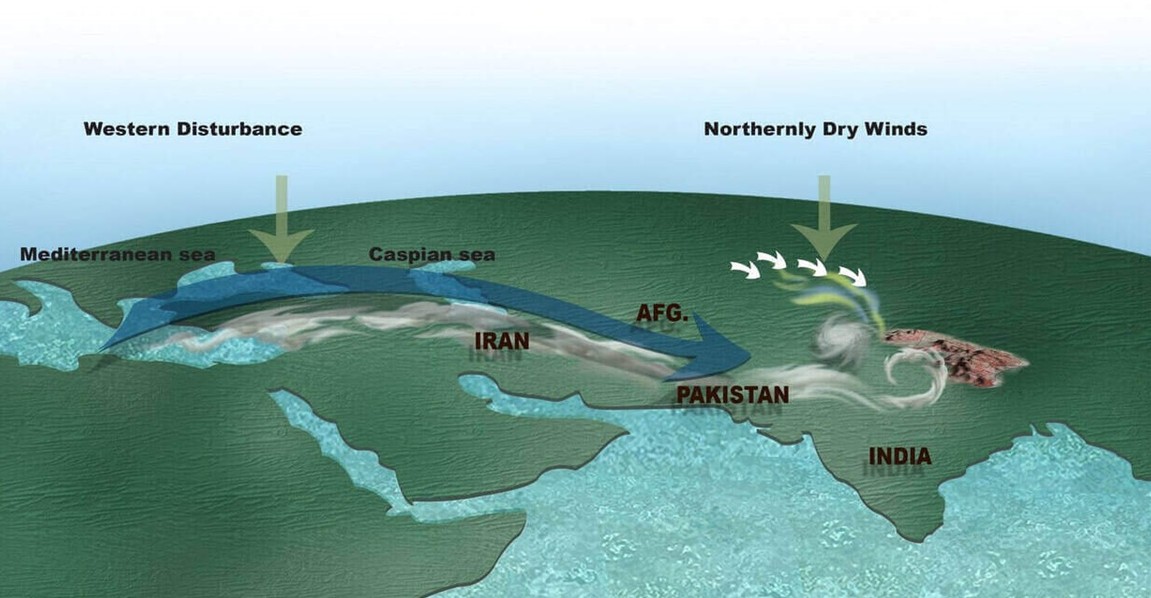
Heavy rainfall and strong winds disrupted life in Delhi due to a fresh splash of Western Disturbances over North India.
What are Western Disturbances?
Western Disturbances are extra-tropical weather systems that originate near the Mediterranean region.
They carry moisture from the Mediterranean Sea, Black Sea, Caspian Sea, and Arabian Sea.
These disturbances are embedded within the subtropical westerly jet stream, a fast-moving air current in the upper atmosphere.
They bring rain, snow, and fog, especially from December to March, as they encounter the Himalayas, causing rainfall in the plains and snowfall at higher altitudes.
They are responsible for most of the winter and pre-monsoon rainfall in Northwest India and are critical for rabi crops like wheat.
Recent Changes in its Pattern:
Recent observations show an increase in frequency, particularly from late January onwards, with disturbances now occurring outside the winter season.
These disturbances have been observed even in May, June, and July, where they were once rare.
The geographic spread of these disturbances is widening, affecting larger parts of North and Northwest India.
Reasons behind:
The strengthening of the subtropical westerly jet stream, likely influenced by rising global temperatures, is a key factor.
The delayed retreat of the jet stream is affecting the timing of the summer monsoon, leading to overlapping weather patterns.
The warming of the Arabian Sea (by 1.2°C to 1.4°C over recent decades) is increasing moisture, intensifying rainfall.
[UPSC 2015] Consider the following statements:
1. The winds which blow between 30° N and 60° S latitudes throughout the year are known as westerlies. 2. The moist air masses that cause winter rains in North-Western region of India are part of westerlies.
Which of the statements given above is/are correct?
Options: (a) 1 only (b) 2 only * (c) Both 1 and 2 (d) Neither 1 nor 2
India’s civil services, long considered the “steel frame” of governance, are now under increased scrutiny for their ability to adapt to contemporary challenges. This article equips you with a robust framework to address such questions by covering critical themes like politicization, inefficiency, and centralized governance, supported by case studies, Supreme Court judgments, and government initiatives. While aspirants typically mention reforms like Mission Karmayogi or lateral entry, they often neglect analysis of deeper systemic issues such as Politicization and Frequent Transfers. The Back2Basics section serves as a quick reference for essential components of civil services reforms. It breaks down critical aspects like recruitment, performance appraisals, capacity building, and accountability, along with the initiatives undertaken by the government (e.g., 360-degree appraisals, Citizen Charters, and Digital India). This concise and structured content helps aspirants connect static and current dimensions effortlessly.
PYQ Anchoring:
GS 2: “Institutional quality is a crucial driver of economic performance”. In this con text suggest reforms in Civil Service for strengthening democracy. (2020)
GS 2: Initially Civil Services in India were designed to achieve the goals of neutrality and effectiveness, which seems to be lacking in the present context. Do you agree with the view that drastic reforms are required in Civil Services. Comment. (2017)
Microthemes: Civil Services
The government has launched initiatives such as Mission Karmayogi, highlighting efforts to reform India’s bureaucratic system, often referred to as the “steel frame” of governance.
Critical challenges of India’s bureaucratic structure
India’s bureaucratic framework, particularly the Indian Administrative Service (IAS), faces several critical challenges:
Politicization: Frequent transfers and promotions based on political loyalty rather than merit have eroded professionalism and morale. Lack of time to specialize due to frequent departmental rotations hampers the development of domain expertise.
Corruption and Inefficiency: India ranks moderately on the World Bank’s Government Effectiveness Index, signaling persistent issues in policy implementation and governance.
Centralized Governance: Power has increasingly been centralized in the Prime Minister’s Office (PMO), reducing the autonomy of civil servants and creating implementation bottlenecks.
Impact of Centralized Governance
Reduced Autonomy: Senior bureaucrats lose independence, leading to a culture of compliance over innovation. Implementation Bottlenecks: Concentrating decisions at the top slows responses to emerging challenges and reduces efficiency. Neglect of Expertise: Over-reliance on top-down directives sidelines bureaucratic insights, impacting policymaking and governance outcomes.
Ancient Indic Principles for Enhancing Modern Governance
Ancient Indic principles provide timeless wisdom that can address contemporary governance challenges. These principles emphasize ethical leadership, inclusivity, sustainability, and active citizen participation. By integrating these values into modern frameworks, governance can become more effective, equitable, and aligned with the needs of society.
Principle
Description
Contemporary Examples
Ethical Leadership and Accountability (Raj Dharma)
Leaders must prioritize justice, fairness, and the public good, upholding values of transparency and responsibility.
Implementation of Lokpal and Lokayukta Acts to tackle corruption; PM’s emphasis on “minimum government, maximum governance.”
Inclusive Development (Antyodaya)
Ensures the upliftment of the most marginalized, promoting equity in resource distribution and opportunities.
Sustainability and Environmental Harmony (LiFE & Karmayogi)
Advocates sustainable practices and continuous skill development among public servants to address environmental and societal challenges.
India’s “Mission LiFE” for sustainable lifestyles; National Programme for Civil Services Capacity Building (NPCSCB).
Participative Governance (Sab Ka Prayas)
Encourages citizen involvement in policymaking and implementation through collective effort and shared responsibility.
Swachh Bharat Abhiyan’s success through community participation; MyGov platform for public policy feedback.
Empathy and Responsibility (P2G2)
Promotes a governance model based on empathy, inclusiveness, and shared responsibility between the state and citizens.
COVID-19 crisis management with active public participation; “Har Ghar Jal” campaign for clean water access.
Efforts taken to reform the bureaucracy in India
Commission Recommendations:
1st Administrative Reforms Commission (1966): Advocated specialization within the IAS for efficiency.
2nd Administrative Reforms Commission (2005): Suggested lateral entry for domain experts, mandatory training, and establishing a National Institute of Public Administration.
Central Government Initiatives:
Mission Karmayogi (2020): Aims to create a future-ready civil service with continuous learning through digital platforms.
Lateral Entry Reforms: Introduced to bring domain expertise into senior roles.
Supreme Court Judgments:
T.S.R. Subramanian v. Union of India (2013): Prohibited civil servants from following oral political directives; mandated a Civil Services Board.
Delhi Government Services Case (2023): Reinforced federalism by upholding Delhi’s legislative authority over services.
Way Forward
Empower Decentralized Governance: Strengthen local and state-level administrative autonomy to reduce over-centralization.
Implement Performance-Based Reforms: Institutionalize meritocracy with performance-linked promotions and lateral entry mechanisms.
Adopt Global Best Practices:Learn from initiatives like the proposed Department of Government Efficiency (DOGE) in the USA to streamline India’s bureaucracy.
Efficient Capacity Building: Expand programs like Mission Karmayogi to ensure civil servants are equipped with modern governance skills.
#BACK2BASICS: CIVIL SERVICES REFORMS
Components of Civil Services Reforms and Indian Government Initiatives
Component
Key Aspects
Reforms Undertaken by Indian Government
1. Size and Structure
– Rationalize ministries, departments, and officials to reduce redundancy.
– Rightsizing of Ministries: Streamlining ministries to avoid overlaps.
– Focus on core governance functions and eliminate duplication.
– Creation of Mission Karmayogi (2020) to redefine roles and responsibilities.
2. Recruitment
– Merit-based recruitment with reduced political patronage.
– Adoption of Lateral Entry: Specialists from the private sector inducted into senior positions.
– Incorporate specialized skills and foster public-private mobility.
– Simplification of UPSC Syllabus to focus on domain expertise and leadership skills.
3. Capacity Building
– Upgrade training programs to align with emerging challenges in technology and governance.
– Mission Karmayogi Digital Platform: Continuous learning and skill-building for civil servants.
– Emphasize HR development and advanced training modules.
– Induction Programs for IAS, IPS, and IFS officers to introduce modern governance tools.
4. Performance and Promotion
– Reform appraisal systems like ACR to make them transparent and performance-driven.
– Introduction of 360-Degree Appraisal Mechanism to ensure holistic evaluation of officers’ performance.
– Link promotions and incentives to quantifiable outcomes.
– Mid-Career Training Programs introduced to encourage specialization and leadership skills.
5. Professionalism and Modernity
– Ensure neutrality and reduce political interference.
– Ethics Training Modules introduced as part of IAS training to instill impartiality and integrity.
– Promote e-governance for transparency and accountability.
– Digital India Program leveraged to introduce e-governance across ministries.
6. Accountability
– Strengthen reporting mechanisms and ensure transparency through legislation.
– Implementation of the Right to Information (RTI) Act for citizen empowerment.
– Introduce citizen charters and grievance redressal systems.
– Introduction of Citizen Charters in key government departments for service delivery standards.
The red-crowned roofed turtle has returned to the Ganga River after nearly 30 years of absence.
About Red-Crowned Roofed Turtle
The Red-Crowned Roofed Turtle (Batagur kachuga) is one of the most endangered freshwater turtle species in the world.
It is native to South Asia, particularly India, Bangladesh, and Nepal.
Historically found in deep, flowing rivers with sandbar nesting sites, it now survives only in the Chambal River, with fewer than 300 individuals remaining.
This species plays a crucial role in maintaining river ecosystem balance by controlling aquatic vegetation and contributing to nutrient cycling.
Under the Namami Gange Mission and Turtle Survival Alliance India (TSAFI) project, 20 turtles (10 males, 10 females) were released into the Ganga River at Haiderpur Wetland and Hastinapur Wildlife Sanctuary.
The IUCN Red List categorizes it as Critically Endangered, while India’s Wildlife Protection Act, 1972 lists it in Schedule I, offering the highest legal protection.
It is also listed under Appendix I of CITES, regulating international trade of the species.
[UPSC 2017] In India, if a species of tortoise is declared protected under Schedule I of the Wildlife (Protection) Act, 1972, what does it imply?
Options: (a) It enjoys the same level of protection as the tiger*. (b) It no longer exists in the wild, a few individuals are under captive protection; and how it is impossible to prevent its extinction. (c) It is endemic to a particular region of India. (d) Both (b) and (c) stated above are correct in this context.
[UPSC 2017] China is using its economic relations and positive trade surplus as tools to develop potential military power status in Asia’, In the light of this statement, discuss its impact on India as her neighbor.
Linkage: China’s economic relations to its strategic power status in Asia and asks about the impact on India, which aligns with the broader implications of China’s growing regional influence discussed in the source.
Mentor’s Comment: Chinese President Xi Jinping’s visit to Vietnam, Malaysia, and Cambodia from April 14-18, 2025, aimed to present China as the most reliable partner in the region. With a 145% tariff on Chinese goods imposed by the Trump administration, China is rethinking its foreign trade strategies, particularly with countries in Southeast Asia where it has strong ties and supportive partners. This visit is not just regular diplomacy but a strategic move by China to ease economic pressure, show stability, and strengthen its leadership role in the Indo-Pacific region.
The editorial today analyzes Chinese President Xi Jinping’s recent visit to Vietnam, Malaysia, and Cambodia. This analysis can help in understanding the broader dynamics of China’s foreign policy and its impact on international relations, which is relevant for GS Paper 2 in the UPSC exam.
_
Let’s learn!
Why in the News?
Beijing’s efforts to engage with Southeast Asia could make it harder for the U.S. to form a coalition aimed at isolating or limiting China economically.
What was the aim of Xi Jinping’s Southeast Asia tour?
Counter U.S. Economic Pressure and Protectionism: In response to the 145% tariff on Chinese exports by the Trump administration, China used the tour to strengthen trade ties with receptive Southeast Asian partners like Vietnam, Malaysia, and Cambodia.
Position China as a Stable and Reliable Partner in the Indo-Pacific: Xi signed 45 agreements with Vietnam and over 30 with Malaysia, showcasing China’s willingness to invest in digital economy, AI, agriculture, and infrastructure — directly contrasting U.S. policies perceived as protectionist or security-centric.
Promote China’s Regional Leadership and Soft Power: Xi emphasized non-interference, cultural ties, and the Belt and Road Initiative, including major projects like the Funan Techo Canal in Cambodia, to build a “community with a shared future” and present China as the regional leader.
Why is Southeast Asia key to China’s trade strategy?
Buffer Against U.S. Trade Pressures: As the U.S. imposes tariffs (e.g., 145% on Chinese exports under Trump), China needs trade partners less influenced by Washington. Eg: Cambodia, Vietnam, and Malaysia are not aligned with U.S. protectionism and offer alternate trade routes.
Alternative Manufacturing Base: Rising labor costs and export restrictions push China to shift low-cost manufacturing to nearby countries. Eg: Many Chinese firms are investing in Vietnamese and Malaysian industrial parks as part of their “China Plus One” strategy.
Gateway to Regional Supply Chains: Southeast Asia is integrated into global value chains and is a key node in East Asian manufacturing. Eg: The Regional Comprehensive Economic Partnership (RCEP) links China with ASEAN, allowing tariff-free trade on many goods.
Diplomatic and Economic Receptiveness: ASEAN countries are generally open to China’s Belt and Road Initiative (BRI) and infrastructure investment. Eg: The Funan Techo Canal in Cambodia, funded by China, improves logistics and deepens economic ties.
Market Expansion and Political Influence: Growing middle classes and urbanization offer long-term markets for Chinese goods and services. Eg: Digital economy and AI agreements with Malaysia expand Chinese tech firms’ reach while strengthening bilateral ties.
Which agreements were signed with Vietnam, Malaysia, and Cambodia?
Vietnam – Strategic and Economic Deepening: China and Vietnam signed 45 cooperation agreements covering infrastructure, trade, connectivity, and border management. Eg: Agreements included railway connectivity, digital economy initiatives, and boosting cross-border trade.
Malaysia – Tech and Economic Collaboration: Over 30 agreements were signed focusing on the digital economy, artificial intelligence, agriculture, and infrastructure. Eg: MoUs on AI cooperation, palm oil trade, and joint development of industrial parks were key highlights.
Cambodia – Investment and Infrastructure Expansion: China reaffirmed its role as Cambodia’s largest investor and trading partner, with a focus on large-scale infrastructure projects. Eg: The Funan Techo Canal project was a major outcome, seen as a symbol of deepened strategic and economic ties.
How does China’s approach differ from the U.S. in the region?
Economic Diplomacy vs. Security-Centric Strategy: China emphasizes infrastructure, trade, and investment, while the U.S. often leads with security alliances and military cooperation. Eg: China’s Belt and Road projects (like the Funan Techo Canal in Cambodia) contrast with U.S.-led initiatives like AUKUS and the Quad.
Non-Interference vs. Value-Based Engagement: China promotes a policy of non-interference and economic cooperation without imposing political conditions. The U.S. ties engagement to democracy, human rights, and strategic alignment. Eg: China’s warm ties with Cambodia, despite its authoritarian governance, contrast with U.S. criticism of its human rights record.
Tangible Deliverables vs. Abstract Frameworks: China offers clear economic incentives (like market access and investments), while U.S. initiatives often lack concrete trade benefits. Eg: China signs dozens of bilateral agreements; the U.S.’s Indo-Pacific Economic Framework (IPEF) has been criticized for lacking market access.
What could be the impact on India?
Strategic Space Shrinkage in Southeast Asia: As China deepens ties with ASEAN countries, India may find it harder to expand its influence in the region. Eg: Vietnam engaging with China despite maritime tensions may dilute India’s strategic partnership with Hanoi.
Competitive Pressure on Infrastructure and Trade Diplomacy: China’s aggressive investment through BRI challenges India’s outreach via initiatives like the Act East Policy or Mekong–Ganga Cooperation. Eg: China’s infrastructure push in Cambodia (e.g., Funan Techo Canal) may overshadow India’s developmental efforts in the region.
Risk of Regional Economic Isolation: Closer China-ASEAN integration may sideline India from key trade and supply chains unless it accelerates its economic engagement. Eg: India’s exit from RCEP and China’s expanding trade deals with ASEAN may reduce India’s leverage in setting regional economic norms.
Way forward:
Strengthen Economic and Infrastructure Diplomacy: India should deepen its engagement with Southeast Asia through large-scale infrastructure projects, trade agreements, and digital economy initiatives to compete with China’s Belt and Road Initiative (BRI). Eg: Focusing on improving connectivity, like the India-Myanmar-Thailand trilateral highway, and enhancing regional supply chains could help.
Foster Strategic Partnerships and Multilateral Cooperation: India should prioritize strengthening its strategic ties with ASEAN countries through multilateral platforms like the East Asia Summit (EAS) and the Quad, focusing on security and regional stability. Eg: India must increase its participation in economic partnerships to counter China’s growing influence.
![🔴[UPSC Webinar] By AIR 498, Utkarsh Srivastava (UPSC 2024)On How I Increased My GS Marks by 114 in UPSC Mains | Join on 6th May at 5PM](https://d18x2uyjeekruj.cloudfront.net/wp-content/uploads/2025/05/Utkarsh_thumb-1568x882.jpg)




![🔴[UPSC Webinar] By Shubham Kaurav, AIR 291(UPSC 2024) | How I Scored 108 Marks in GS3 | Join on 5th May 2025 At 7 PM](https://d18x2uyjeekruj.cloudfront.net/wp-content/uploads/2025/05/WhatsApp-Image-2025-05-03-at-13.58.04-1568x882.jpeg)