💥UPSC 2026, 2027, 2028 UAP Mentorship (March Batch) + Access XFactor Notes & Microthemes PDF

Search results for: “”

  • Downturn in tech startup ecosystem

    Context

    The startup ecosystem which has been in overdrive for the past few years — propelled by a combination of factors, but largely, by the era of cheap money — is now showing signs of weakness.

    Factors that helped fuel the tech startups

    • With the combination of accelerated financial inclusion (bank accounts), ease of identification (Aadhaar) and connectivity (mobile phones) it was said that it is ultimately a bet on the Indian consumer, and the economy, not on government regulations/policies.
    • Low-interest rates: In the era of cheap money and negative real interest rates, uncomfortable questions over the true market size and profitability were swept under the rug.
    • Growth fuelled by cash burn: High cash burn rates were the norm as both startups and investors sought growth by subsidising the customer.

    What is going wrong?

    • Lack of profitability: Among the startups that have gone public in recent times, Paytm’s losses stood at Rs 2,396 crore in 2021-22, while for Zomato and PB Fintech (PolicyBazaar) losses were Rs 1,222 crore and Rs 832 crore respectively.
    • Drying-up of investment: Sure, investors will continue to pour money.
    • Some early age start-ups will continue to be funded, as will some of the more mature ones.
    • But investors are likely to be more circumspect in their dealings.
    • Impact on valuation: There are also reports of startups in diverse markets, ranging from Ola to OYO, planning to raise funds at lower valuations.
    • Among those who have gone public in recent times, most are trading much below their listing price.
    • Tighter financial conditions, a re-rating of the market, will impact both fundraising efforts and valuations.

    Lack of discretionary spending capacity

    • Many numbers were given as indicators of the size of the market or TAM (the total addressable market).
    • Smartphone users: One such number thrown around is the smartphone users in the country — some have pegged this at 500 million.
    • UPI transactions: The transactions routed through the UPI platform — in May there were almost six billion transactions worth Rs 10 trillion.
    • Bank account holders: We have the near universality of bank accounts.
    • But in reality, for most of these startups, the market or even the potential market is just a fraction of this.
    • There aren’t that many consumers with significant discretionary spending capacity, and those with the capacity aren’t increasing their spending as these companies would hope.
    • No increase in spending: What is equally worrying is the complete absence of any increase in spending by even these consumers who would have the capacity to spend more.
    • While more consumers are on-board digital payment platforms — Paytm has about 70 million monthly transacting users — these numbers suggest that when it comes to consumers with considerable discretionary spending, the size of the market shrivels considerably.

    Conclusion

    Tech startups are about to witness a tough time ahead. Some startups will survive this period. Many may not. And changes in the dynamics of private markets will also have a bearing on public markets.

    UPSC 2023 countdown has begun! Get your personal guidance plan now! (Click here)

  • online marketplace

    Context

    The proliferation of a wide range of e-commerce platforms has created convenience and increased consumer choice. However, these platforms also have given rise to several concerns as well.
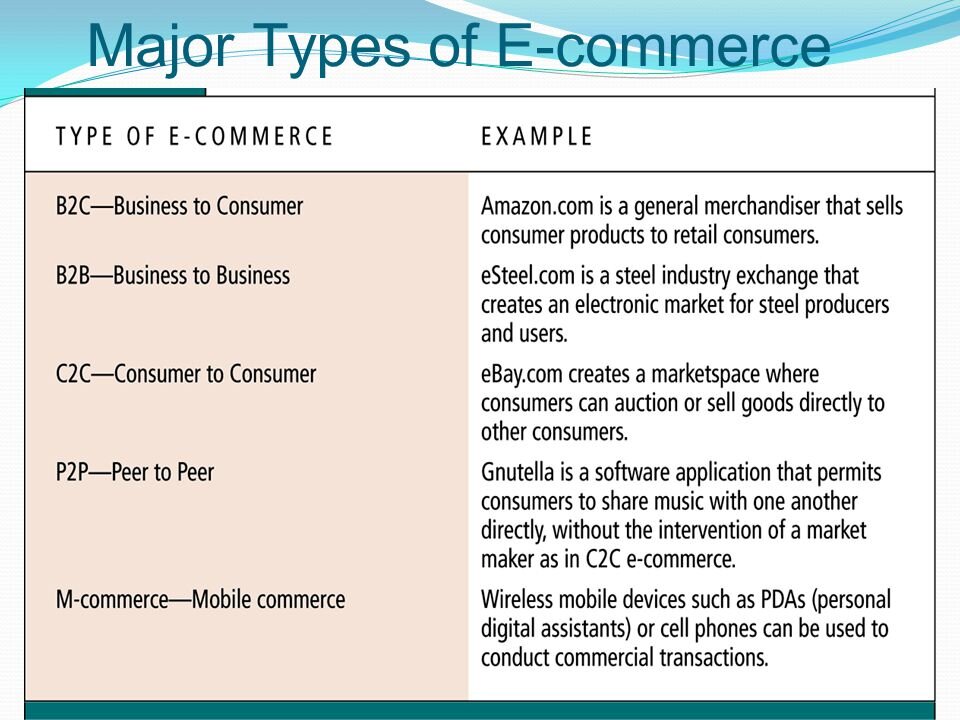
    What is e-commerce ?

    • Electronic commerce or e-commerce is a business model that lets firms and individuals buy and sell things over the Internet.
    • Propelled by rising smartphone penetration, the launch of 4G networks and increasing consumer wealth, the Indian e-commerce market is expected to grow to US$ 200 billion by 2026 from US$ 38.5 billion in 2017.
    • India’s e-commerce revenue is expected to jump from US$ 39 billion in 2017 to US$ 120 billion in 2020, growing at an annual rate of 51%, the highest in the world.
    • The Indian e-commerce industry has been on an upward growth trajectory and is expected to surpass the US to become the second-largest e-commerce market in the world by 2034.

    Advantages of e-Commerce

    • The process of e-commerce enables sellers to come closer to customers that lead to increased productivity and perfect competition. The customer can also choose between different sellers and buy the most relevant products as per requirements, preferences, and budget. Moreover, customers now have access to virtual stores 24/7.
    • e-Commerce also leads to significant transaction cost reduction for consumers.
    • e-commerce has emerged as one of the fast-growing trade channels available for the cross-border trade of goods and services.
    • It provides a wider reach and reception across the global market,with minimum investments. It enables sellers to sell to a global audience and also customers to make a global choice. Geographical boundaries and challenges are eradicated/drastically reduced.
    • Through direct interaction with final customers, this e-commerce process cuts the product distribution chain to a significant extent. A direct and transparent channel between the producer or service provider and the final customer is made. This way products and services that are created to cater to the individual preferences of the target audience.
    • Customers can easily locate products since e-commerce can be one store set up for all the customers’ business needs
    • Ease of doing business: It makes starting, managing business easy and simple.
    • The growth in the e-commerce sector can boost employment, increase revenues from export, increase tax collection by ex-chequers, and provide better products and services to customers in the long-term.

    Issues created by the e-commerce sites

    • Predatory pricing: These companies resort to predatory pricing to acquire customers even as they suffer persistent financial losses.
    • SEBI is rightly revisiting the valuation norms of such companies looking to list on the stock exchange.
    • Exclusionary practice: They take away choice from suppliers and consumers.
    • This, in the long run, can be viewed as an exclusionary practice that eliminates other players from the market. 
    • Lack of level playing field: While neutrality is the fundamental basis of a marketplace and a level playing field is in the fitness of things, claims of outfits such as Flipkart or Amazon to be a marketplace for a wide variety of sellers can be questioned.
    • A few select sellers, who are generally affiliated with the platform, reap the benefits of greater visibility and better terms of trade — reduced commissions and platform-funded discounts.
    • Undue advantage to associated companies: The associate companies are prominent sellers on their platform.
    • It is alleged that undue advantage is given while recommending or listing these products.
    • Cartelisation: Online travel aggregators are often accused of cartelisation.
    • Information asymmetry: The aggregators gather shopping habits, consumer preferences, and other personal data.
    • The platforms are accused of using this data to create and improve their own products and services, taking away business from other sellers on their platform.
    • They capitalise on this data and information about other brands to launch competing products on their marketplace.
    • This information asymmetry is exploited by the aggregators to devour organisations they promise to support.
    • Problems in dispute resolution mechanism: Another issue often noticed is the lack of a fair and transparent dispute resolution mechanism for sellers on these platforms.
    • Delayed payments, unreasonable charges, and hidden fees are common occurrences.
    • Unreasonable and one-sided contracts allow travel aggregators to have a disparity clause (in the rates) which allows them to offer rooms at a much cheaper rate but bars the hotels from doing so.

    Impact of the e-commerce

    • The online aggregator platforms have also damaged large segments of small and medium businesses through their dominant position and the malpractices this position allows them to indulge in.
    • The ultimate loss bearer is the consumer who will have a reduced bargaining position.

    Way forward

    • Comprehensive rules: It is time that a set of comprehensive rules and regulations is put together.
    • These regulations need to be inclusive, should eliminate the conflicts of interest inherent in current market practices, and prevent any anti-competitive practices.
    • Model agreement: A model agreement that is fair and allows a level playing field between the aggregators and their business partners should be implemented.
    • Learning from EU act: There is a lot to learn from the Digital Markets Act of the EU that seeks to address unfair practices by these gatekeepers.
    • Need for dispute resolution mechanism: Strong and quick grievance redressal and dispute resolution mechanisms should be established.
    • Punitive penalties: The rules should allow for punitive penalties for unfair practices.
    • Fair competition rules: Market dominance and subsequent invoking of fair competition rules should be triggered at the level of micro-markets and for product segments.

    Conclusion

    The nature of our success in dealing with this change will lie in the ways in which we deal with the concerns of all players.


  • 28th June 2022| Daily Answer Writing Enhancement(AWE)

    Topics for Today’s questions:

    GS-1          Salient features of world’s physical geography

    GS-2        Constitution of India- —historical underpinnings, evolution, features, amendments, significant provisions and basic structure.

    GS-3        Applications of S&T in everyday life

    GS-4        Public/Civil Services values and ethics in public administration:  Status and problems; ethical concerns and dilemmas in government and private institutions; laws, rules, regulations and conscience as sources of ethical guidance; 

    Question 1)


    Q.1 Highlight the various factors affecting salinity of the oceans. Also, elaborate upon horizontal and vertical distribution of ocean salinity. (15 Marks)


    Question 2)

    Q.2 Political instabilities in various states due to defections is a testament to the loopholes in the anti-defection law. In the context of this, examine the shortcomings and suggest a way forward. (10 Marks)

    Question 3)

    Q.3 The proliferation of a wide range of e-commerce platforms has created convenience and increased consumer choice. But their dominance has created several issues. Examine those issues and suggest solutions. (10 Marks)

    Question 4)  

    Q.4 In context of the relationship between political executive and civil servants in India, highlight the significance of neutrality in the civil service. (10 Marks)


    HOW TO ATTEMPT ANSWERS IN DAILY ANSWER WRITING ENHANCEMENT(AWE)?

    1. Daily 4 questions from General studies 1, 2, 3, and 4 will be provided to you.

    2. A Mentor’s Comment will be available for all answers. This can be used as a guidance tool but we encourage you to write original answers.

    3. You can write your answer on an A4 sheet and scan/click pictures of the same.

    4.  Upload the scanned answer in the comment section of the same question.

    5. Along with the scanned answer, please share your Razor payment ID, so that paid members are given priority.

    6. If you upload the answer on the same day like the answer of 11th  February is uploaded on 11th February then your answer will be checked within 72 hours. Also, reviews will be in the order of submission- First come first serve basis

    7. If you are writing answers late, for example, 11th February is uploaded on 13th February , then these answers will be evaluated as per the mentor’s schedule.

    8. We encourage you to write answers on the same day. However, if you are uploading an answer late then tag the mentor like @Staff so that the mentor is notified about your answer.

    *In case your answer is not reviewed, reply to your answer saying *NOT CHECKED*. 

    1. For the philosophy of AWE and payment: 

  • What is SC’s ‘Kihoto Hollohan’ Judgment?

    As the political battle in Maharashtra moves to the Supreme Court, the role and powers of the Deputy Speaker are in focus.

    In the context of the crisis, references have been made to the landmark judgment in ‘Kihoto Hollohan vs Zachillhu And Others’ (1992).

    What is the ‘Kihoto Hollohan’ case?

    • A constitutional challenge to the Tenth Schedule was mounted, which was settled by the apex court in ‘Kihoto Hollohan’.
    • The principal question before the Supreme Court in the case was whether the powerful role given to the Speaker violated the doctrine of basic structure.
    • In this judgment, the Supreme Court upheld the sweeping discretion available to the Speaker in deciding cases of disqualification of MLAs.
    • The Supreme Court laid down the doctrine of basic principle in its landmark judgment in ‘Kesavananda Bharati vs State Of Kerala’ (1973).

    What does the Tenth Schedule of the Constitution say?

    • The Tenth Schedule was inserted in the Constitution by the Constitution (Fifty-Second Amendment) Act, 1985.
    • It provides for the disqualification of Members of Parliament and state legislatures who defect.
    • It describes the Speaker’s sweeping discretionary powers to make decisions on case of defection.

    What did the Supreme Court rule in ‘Kihoto Hollohan’?

    • The petitioners in ‘Kihoto Hollohan’ argued whether it was fair that the Speaker should have such broad powers, given that there is always a reasonable likelihood of bias.
    • The majority judgment authored by Justices M N Venkatachaliah and K Jayachandra Reddy answered this question in the affirmative. It read-
    1. The Speakers/Chairmen hold a pivotal position in the scheme of Parliamentary democracy and are guardians of the rights and privileges of the House.
    2. They are expected to and do take far reaching decisions in the Parliamentary democracy.
    3. Vestiture of power to adjudicate questions under the Tenth Schedule in them should not be considered exceptionable.
    4. The provisions were “salutory and intended to strengthen the fabric of Indian Parliamentary democracy by curbing unprincipled and unethical political defections.”

    What was the dissenting opinion?

    • Justices Lalit Mohan Sharma and J S Verma dissented and took a different view.
    • The tenure of the Speaker, who is the authority in the Tenth Schedule to decide this dispute, is dependent on the continuous support of the majority in the House.
    • Therefore, he does not satisfy the requirement of such an independent adjudicatory authority.
    • They advocated for an independent adjudicatory machinery for resolving disputes relating to the competence of Members of the House,
    • This is envisaged as an attribute of the democratic system which is a basic feature of our Constitution.

    What about the role of the Deputy Speaker?

    • Article 93 of the Constitution mentions the positions of the Speaker and Deputy Speaker of the House of the People (Lok Sabha), and Article 178 contains the corresponding position for Speaker and Deputy Speaker of the Legislative Assembly of a state.
    • Maharashtra has been without a Speaker since February 2021, and Deputy has been carrying out the responsibilities of the position.
    • Article 95(1) says: “While the office of Speaker is vacant, the duties of the office shall be performed by the Deputy Speaker”.
    • In general, the Deputy Speaker has the same powers as the Speaker when presiding over a sitting of the House.
    • All references to the Speaker in the Rules are deemed to be references to the Deputy Speaker when he presides.


    Try this PYQ:

    Q.Which one of the following Schedules of the Constitution of India contains provisions regarding anti-defection?

    (a) Second Schedule

    (b) Fifth Schedule

    (c) Eighth Schedule

    (d) Tenth Schedule


    Post your answers here.


    UPSC 2023 countdown has begun! Get your personal guidance plan now! (Click here)

  • India’s gig workforce to reach 2.35 Cr by 2030: NITI Aayog

    A NITI Aayog report has identified that is expected to grow to 2.35 crore by 2029-30.

    Do you know?

    According to a study released by NITI Aayog, the number of gig workers in India is estimated to be 77 lakh in 2020-21. Isn’t it too low to imagine? Seems like there is huge under-reporting.

    What is the Gig Economy?

    • In a gig economy, temporary, flexible jobs are commonplace and companies tend toward hiring independent contractors and freelancers instead of full-time employees.
    • A gig economy undermines the traditional economy of full-time workers who rarely change positions and instead focus on a lifetime career. e.g Employee models of Uber, Ola, Swiggy etc
    • In this economy, tech-enabled platforms connect the consumer to the gig worker to hire services on a short-term basis.
    • Gig workers include self-employed, freelancers, independent contributors and part-time workers.

    Where does gig culture exist in Indian Economy?

    • Sectors such as media, real estate, legal, hospitality, technology-help, management, medicine, allied and education are already operating in gig culture.
    • The gig economy can benefit workers, businesses, and consumers by making work more adaptable to the needs of the moment and demand for flexible lifestyles.

    Key Drivers for Gig Economy

    • Unconventional work approach by millennials: Hectic lifestyles of employees in private sectors have created a negative perception of full-time employment among millennials.
    • Emergence of a start-up culture: The start-up ecosystem in India has been developing rapidly. For start-ups, hiring full-time employees leads to high fixed costs and therefore, contractual freelancers are hired for non-core activities.
    • MNCs are hiring contractual employees: MNCs are adopting flexi-hiring options, especially for niche projects, to reduce operational expenses after the pandemic.
    • Rise in freelancing platforms: Rise in freelancing platforms has also aided in the development of the gig economy.
    • Business Models: Gig employees work on various compensation models such as fixed-fee (decided during contract initiation), time & effort, actual unit of work delivered and quality of outcome.
    • Impact of Covid-19: Many laid-off employees are focusing on developing skills to avail freelance job opportunities and become a part of this burgeoning economy.

    Why is Gig Economy preferred by workers?

    • Profit through multiple work: One can work on freelancing as well as work full-time somewhere else.
    • Women empowerment: It is very beneficial for womenwho work on this concept when they cannot continue their work or take a break from career due to marriage or child birth.
    • Leisure and dependency: Retired peoplecan stay active after retirement as this will keep them engaged away from loneliness and depression and can earn as well on their own.
    • Flexibility and diversity to the workers: It offers flexibility when workers can work according to their convenience and schedule rather than routine like in full-time jobs.
    • Work from home: The travel costs and energy to travel to the workplace is reduced.

    Why is Gig Economy preferred by Employers?

    • Efficiency, efficacy and productivity of workers in the gig economy are much more than that of a stable full-time job.
    • More rconomical for employers-when employment givers can’t afford to hire full-time workers, they hire people for specific projects and pay them.
    • Start-up companies and entrepreneurs – who do not have big financial space – can grow only if they can leverage the services of contract employees or freelancers.
    • In a gig economy, businesses save resources in terms of benefits, office space and training.
    • Competition and efficiency among workers is improved.

    Challenges faced in Gig economy

    • No perks and benefits: There are no labour welfare emoluments like pension, gratuity, etc. for the workers.
    • Job insecurity: Gig workers may face unfair termination. They may also attain minimum wages and less paid leave.
    • No legal protection: Workers do not have the bargaining power to negotiate a fair deal with their employers.
    • Unionization of workers will be difficult.
    • Confidentiality of documents etc. of the workplace is not guaranteed
    • Urban nature: The gig economy is not accessible for people in many rural areas where internet connectivity and electricity is unavailable.

    New classification by NITI Aayog: Platform vs. Non-platform Workers

    • The NITI Aayog report broadly classifies gig workers into platform and non-platform-based workers.
    • The consequent platformisation of work has given rise to a new classification of labour — platform labour — falling outside of the purview of the traditional dichotomy of formal and informal labour.
    • While platform workers are those whose work is based on online software applications or digital platforms.
    • Non-platform gig workers are generally casual wage workers and own-account workers in the conventional sectors, working part-time or full time.

    Recommendations made by NITI Aayog

    • The NITI Aayog has recommended steps to provide social security, including paid leave, occupational disease and accident insurance, support during irregularity of work and pension plans for the country’s gig workforce.
    • It has also recommended introducing a ‘Platform India initiative’ on the lines of the ‘Startup India initiative’.


    UPSC 2023 countdown has begun! Get your personal guidance plan now! (Click here)

  • Fertlizer subsidy issue

    Context

    The global prices of urea, DAP, MOP, phosphoric acid, ammonia and LNG have soared by two to two-and-a-half times in the last year

    Resource richness of Indian agriculture

    • No country has as much area under farming as India.
    • Land under cultivation: At 169.3 million hectares (mh) in 2019, its land used for crop cultivation was higher than that of the US (160.4 mh), China (135.7 mh), Russia (123.4 mh) or Brazil (63.5 mh).
    • Ample water: With its perennial Himalayan rivers and average annual rainfall of nearly 1,200 mm – against Russia’s 475 mm, China’s 650 mm and the US’s 750 mm – India has no dearth of land, water and sunshine to sustain vibrant agriculture.
    • But there’s one resource in which the country is short and heavily import-dependent — mineral fertilisers.

    India’s important dependence

    • In 2021-22, India imported 10.16 million tonnes (mt) of urea, 5.86 mt of di-ammonium phosphate (DAP) and 2.91 mt of muriate of potash (MOP).
    • Import value: In value terms, imports of all fertilisers touched an all-time high of $12.77 billion last fiscal.
    • In 2021-22, India also produced 25.07 mt of urea, 4.22 mt of DAP, 8.33 mt of complex fertilisers (containing nitrogen-N, phosphorus-P, potassium-K and sulphur-S in different ratios) and 5.33 mt of single super phosphate (SSP).
    • Import of raw material: The intermediates or raw materials for the manufacture of these fertilisers were substantially imported.
    • Total value of fertiliser imports: The total value of fertiliser imports by India, inclusive of inputs used in domestic production, was a whopping $24.3 billion in 2021-22.

    Two costs involved in import

    • 1] Foreign exchange outgo for import: The first is foreign exchange outgo:
    • Imports are mostly from the following countries:
    • Urea: Imported from China, Oman, UAE and Egypt
    • DAP: Imported from China, Saudi Arabia and Morocco.
    • MOP: Imported from Belarus, Canada, Russia, Israel and Jordan.
    • LNG: Imported from Qatar, US, UAE and Nigeria.
    • Ammonia: Morocco, Jordan, Senegal and Tunisia (phosphoric acid); Saudi Arabia and Qatar.
    • Rock phosphate: Jordan, Morocco, Egypt and Togo.
    • 2] Fiscal cost: The second cost is fiscal.
    • Fertilisers are not only imported but also sold at subsidised prices.
    • The difference is paid as a subsidy by the government.
    • That bill was Rs 1,53,658.11 crore or $20.6 billion in 2021-22 and projected at Rs 2,50,000 crore ($32 billion) this fiscal.
    • Unsustainably high costs: Both costs are unsustainably high to bear for a mineral resource-poor country.

    Suggestions

    1] Reduce consumption of high-analysis fertilisers

    • There is a need to cap or even reduce consumption of high-analysis fertilisers – particularly urea (46 per cent N content), DAP (18 per cent N and 46 per cent P) and MOP (60 per cent).
    • Incorporate urease and inhibition compounds in urea: This can be done by incorporating urease and nitrification inhibition compounds in urea.
    • These are basically chemicals that slow down the rate at which urea is hydrolysed and nitrified (which increases leaching).
    •  By reducing ammonia volatilisation and nitrate leaching, more nitrogen is made available to the crop, enabling farmers to harvest the same yields with a lesser number of urea bags.
    • Liquid nano-urea: Together with products such as liquid “nano urea” –it is possible to achieve a 20 per cent or more drop in urea consumption from the present 34-35 mt levels.
    • Liquid nano-urea with their ultra-small particle size is conducive to easier absorption by the plants than with bulk fertilisers, translating into higher nitrogen use efficiency.

    2] Promote the sale of SSP and complex fertilisers

    • A second route is by promoting sales of SSP (containing 16 per cent P and 11 per cent S) and complex fertilisers such as “20:20:0:13” and “10:26:26”.
    • Restrict DAP use: DAP use should be restricted mainly to paddy and wheat; other crops don’t require fertilisers with 46 per cent P content. 
    • India can also import more rock phosphate to make SSP directly or it can be converted into “weak” phosphoric acid
    • The latter, having only about 29 per cent P (compared to 52-54 per cent in normal “strong” merchant-grade phosphoric acid), is good enough for manufacturing “20:20:0:13”, “10:26:26” and other low-analysis complex fertilisers.

    3] Incorporate MOP into complexes

    • As regards MOP, roughly three-fourths of the imported material is now applied directly and only the balance is sold after incorporating into complexes.
    • It should be the other way around.
    • India, to re-emphasise, needs to wean its farmers away from all high-analysis fertilisers. 

    4] Use of NPKS complexes and indigenous sources

    • The moment to use more NPKS complexes and SSP, is already happening.
    • It requires a concerted push, alongside popularising high nutrient use-efficient water-soluble fertilisers (potassium nitrate, potassium sulphate, calcium nitrate, etc).
    • Exploiting alternative indigenous sources needs to be considered (for example, potash derived from molasses-based distillery spent-wash and from seaweed extract).

    5] Revise nutrient application recommendations

    • Farmers need to know what is a suitable substitute for DAP and which NPK complex or organic manure can bring down their urea application from 2.5 to 1.5 bags per acre.
    • It calls for agriculture departments and universities not just to revisit their existing crop-wise nutrient application recommendations, but disseminating this information to farmers on a campaign mode.

    Conclusion

    The costs associated with the use of fertilisers are unsustainably high to bear for a mineral resource-poor country such as India. We need to act on the measures to reduce our import dependence.

    UPSC 2023 countdown has begun! Get your personal guidance plan now! (Click here)


    Back2Basics: High-analysis fertilisers

    • Fertilizers that have more than 30% total available nutrients are called high analysis fertilizers, whereas those with less than 30% total available nutrients are called low analysis fertilizers.
    • A 15-15-15 is a high analysis fertilizer; a 5-10-10 is a low analysis fertilizer, and a 10-10-10 is right on the borderline.
  • Partners in the Blue Pacific (PBP) Initiative

    To reinforce its Indo-Pacific strategy, the US – along with Australia, New Zealand, UK and Japan – announced a new Partners in Blue Pacific (PBP) initiative.

    What is Partners in the Blue Pacific (PBP) initiative?

    • The PBP is a five-nation “informal mechanism” to support Pacific islands and to boost diplomatic, economic ties in the region.
    • It speaks of enhancing “prosperity, resilience, and security” in the Pacific through closer cooperation.
    • It simply means that through the PBP, these counties — together and individually — will direct more resources here to counter China’s aggressive outreach.
    • The initiative members have also declared that they will “elevate Pacific regionalism”, and forge stronger ties with the Pacific Islands Forum.
    • The areas where PBP aims to enhance cooperation include “climate crisis, connectivity and transportation, maritime security and protection, health, prosperity, and education”.

    How is China trying to transform its ties in the Pacific?

    • As China signed a security pact with Solomon Islands in April, the deal flagged serious concerns about the Chinese military getting a base in the southern Pacific.
    • This is very close to the US island territory of Guam, and right next to Australia and New Zealand.
    • The deal, which boosted Beijing’s quest to dominate crucial shipping lanes criss-crossing the region, rattled the US and its allies.
    • It also triggered urgent moves to counter China’s growing Pacific ambition amid a power vacuum fuelled by apparent lack of US attention.

    What is being done by the US and its allies to counter China?

    • Before launching the PBP this month, the US and its partners started the Indo-Pacific Economic Framework for Prosperity (IPEF).
    • Away from the Pacific, the G7 on Monday (June 27) announced a plan — Partnership for Global Infrastructure and Investment (PGII) — to rival China’s BRI.
    • It promises to raise $600 billion to fund development projects in low and middle-income countries.


    UPSC 2023 countdown has begun! Get your personal guidance plan now! (Click here)

  • India State Support Programme for Road Safety

    The World Bank has approved a $250 million loan to support the Government of India’s road safety programme for seven States.

    Programme for Road Safety

    • Under this, a single accident reporting number will be set up to better manage post-crash events.
    • It will be implemented in the States of Andhra Pradesh, Gujarat, Odisha, Tamil Nadu, Telangana, Uttar Pradesh, and West Bengal.
    • The $250 million variable spread loan from the International Bank for Reconstruction and Development (IBRD) has a maturity of 18 years, with a grace period of 5.5 years.
    • The project will also establish a national harmonised crash database system in order to analyse accidents and use that to construct better and safer roads.
    • The project will also provide incentives to States to leverage private funding through public private partnership (PPP) concessions and pilot initiatives.

    Road accidents in India: Key takeaways

    • The report ‘Road Accidents in India 2020’ released by the Union ministry of road transport and highways (MoRTH) provides for key stats.
    • India has only 1% of the world’s vehicles but 11% of the global deaths from road accidents occur in India.
    • About 450,000 accidents take place in India annually, of which 150,000 people die.
    • There are 53 road accidents in the country every hour and one death every four minutes.

    Why are there so many road fatalities in India alone?

    • Weak enforcement of traffic laws: People hardly oblige to traffic rules and find easier to bribe policemen rather than paying hefty challans.
    • Speeding issue: More accidents on the highways have been attributed to higher vehicle speeds and higher volume of traffic on these roads.
    • Engineering bottlenecks: Issues such as gaps in the median on the national highways, untreated intersections, and missing crash barriers are some of the biggest engineering issues.
    • Behavioural issue: Driver violations such as wrong-side driving, wrong lane usage by heavy vehicles, and mass violation of traffic lights, intoxication are the biggest behavioural issues.
    • Lack of Golden hour treatment: Lack of rapid trauma care on highways leads to such high fatalities.

    Imbibing road safety: Way forward

    • Road safety education
    • Better road design, maintenance and warning signage
    • Crackdown on driving under influence of alcohol and drugs
    • Strict enforcement of traffic rules
    • Encouraging better road behaviour
    • Ensuring road worthiness of a vehicle
    • Better first aid and paramedic care

    Do you know?

    The ‘golden hour’ has been defined as ‘the time period lasting one hour following a traumatic injury during which there is the highest likelihood of preventing death by providing prompt medical care.


    UPSC 2023 countdown has begun! Get your personal guidance plan now! (Click here)

More posts