Focus include on graphite, gallium, and germanium to strengthen supply chains.
What are Critical Minerals?
Critical minerals are elements that are crucial to modern-day technologies and are at risk of supply chain disruptions.
These minerals are mostly used in making electronic equipment such as mobile phones, computers, batteries, electric vehicles, and green technologies like solar panels and wind turbines.
Many of these are required to meet the manufacturing needs of green technologies, high-tech equipment, aviation, and national defence.
List of critical minerals includes:
The centre has released a list of 30 critical minerals for India in 2023:
Identified Minerals: Antimony, Beryllium, Bismuth, Cobalt, Copper, Gallium, Germanium, Graphite, Hafnium, Indium, Lithium, Molybdenum, Niobium, Nickel, Platinum Group elements (PGE), Phosphorous, Potash, Rare Earth Elements (REE), Rhenium, Silicon, Strontium, Tantalum, Tellurium, Tin, Titanium, Tungsten, Vanadium, Zirconium, Selenium and Cadmium.
Fertilizer Minerals: Two minerals critical for fertilizer production, phosphorous and potash, are also included in the above list.
Critical Mineral Blocks in India
Distribution: There are 20 blocks spread across eight states, including Tamil Nadu, Odisha, Bihar, Uttar Pradesh, Gujarat, Jharkhand, Chhattisgarh, and Jammu & Kashmir.
Types of Licenses: Four blocks are for a Mining License (ML), allowing immediate mining post-clearance. The remaining 16 blocks are for a Composite License (CL), permitting further exploration before potentially converting to an ML.
Approvals Required: Licensees must obtain various approvals, including forest clearance and environmental clearance.
Forest Land: Approximately 17% of the total concession area, or 1,234 hectares, is forest land.
India’s Critical Mineral Imports
Lithium Imports: In FY23, India imported 2,145 tonnes of lithium carbonate and lithium oxide, costing Rs 732 crore.
Nickel and Copper Imports: The country imported 32,000 tonnes of unwrought nickel and 1.2 million tonnes of copper ore, costing Rs 6,549 crore and Rs 27,374 crore, respectively.
Import Dependence: India relies entirely on imports for lithium and nickel, and 93% for copper.
Country-wise dependence:
China: India heavily relies on China for the import of critical minerals like lithium, cobalt, nickel, and graphite.
Australia: India is actively engaged with Australia for acquiring mineral assets, particularly lithium and cobalt, to secure its supply chain for critical minerals.
Argentina, Bolivia, and Chile: India is engaging with these countries, known for their reserves of battery metals like lithium and cobalt, to diversify its sources for critical minerals.
India’s Strategic Mineral Initiatives
Amendments to the Mines and Minerals (Development and Regulation) Act, 1957 support expanded exploration.
Establishment of Khanij Bidesh India Ltd. (KABIL) with equity from National Aluminium Company Ltd, Hindustan Copper Ltd, and Mineral Exploration and Consultancy Ltd for global mineral asset acquisition.
International Collaborations and Partnerships
India joined the U.S.-led mineral security partnership to secure critical mineral supply chains.
Creation of an India-U.S. advanced materials research forum to foster collaboration in universities, laboratories, and private sectors.
Bilateral technology collaboration on neodymium-iron-boron and studies on minerals like lithium, titanium, gallium, and vanadium.
Back2Basics: Indo-US Comprehensive Economic and Trade Agreement (iCET)
Details
Initiation
Announced in May 2022, officially launched in January 2023
Management
Overseen by the National Security Councils of India and the US
Objectives
Enhance bilateral cooperation in critical and emerging technologies
Focus Areas of the Initiative
AI Research Agency Partnership
Defense Industrial and Technological Cooperation
Innovation Ecosystems
Semiconductor Ecosystem Development
Cooperation on Human Spaceflight
Advancement in 5G and 6G Technologies
Key Achievements
Quantum Coordination Mechanism
Public-private dialogues on telecommunications and AI
MoU on semiconductor supply chain
Defense industrial cooperation roadmap
Upcoming Initiatives
Finalization of major jet engine deal
Launch of India-US Defence Acceleration Ecosystem (INDUS-X)
Strategic Trade Dialogue establishment
PYQ:
[2019] With reference to the management of minor minerals in India, consider the following statements:
Sand is a ‘minor mineral’ according to the prevailing law in the country.
State governments have the power to grant mining leases of minor minerals, but the powers regarding the formation of rules related to the grant of minor minerals lie with the Central Government.
State Governments have the power to frame rules to prevent illegal mining of minor minerals.
Which of the statements given above is/are correct?
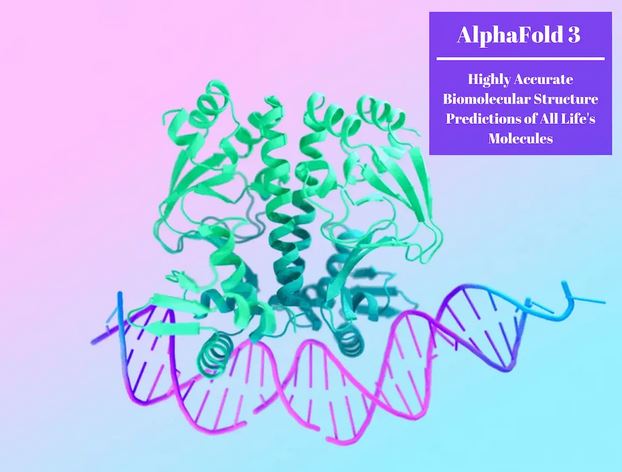
AlphaFold 3, and AI System introduced in a May 2024 Nature paper, extends capabilities to predict protein-protein interactions, DNA, RNA structures, and their interactions.
Importance of Proteins
Proteins are crucial molecules regulating nearly every biological function.
They are composed of amino acids, which determine their structure and function.
Understanding protein folding is essential for comprehending cellular and organismal functions.
The Protein-Folding Problem
The process of protein folding is complex and not fully understood, known as the protein-folding problem.
It is vital for deciphering how cells, organisms, and life itself operate.
Frank Uhlmann emphasizes the significance of understanding protein structure for molecular biology.
What is AlphaFold?
Google DeepMind’s AlphaFold debuted in 2020, employs AI and machine learning to predict protein structures.
AlphaFold 2, released in 2021, significantly improved accuracy in protein structure prediction.
Derek Lowe acknowledges AlphaFold’s achievement in predicting structures effectively, although the deeper biological principles remain less explored.
AlphaFold 3’s Advancements:
It democratizes research by offering accessible structure prediction tools, even for non-experts.
Technology behind AlphaFold 3
Unlike its predecessors, AlphaFold 3 utilizes a diffusion model akin to image-generating software.
This approach involves training on noisy data and de-noising to predict accurate protein structures.
Working:
Given an input list of molecules, AlphaFold 3 generates their joint 3D structure, revealing how they all fit together.
It models large biomolecules such as proteins, DNA and RNA, as well as small molecules, also known as ligands — a category encompassing many drugs.
Applications of AlphaFold 3
AlphaFold 3 excels in predicting protein structures and interactions, aiding drug discovery efforts.
DeepMind’s spin-off, Isomorphic Labs, utilizes AlphaFold 3 for drug candidate identification.
Challenges
The model’s code restriction has sparked criticism among researchers for hindering scientific collaboration and transparency.
DeepMind initially withheld AlphaFold 3’s full code, prompting calls for open access from the scientific community.
Responding to backlash, DeepMind plans to release the complete code within six months.
PYQ:
[2020] With the present state of development, Artificial Intelligence can effectively do which of the following?
Bring down electricity consumption in industrial units
Create meaningful short stories and songs
Disease diagnosis
Text-to-Speech Conversion
Wireless transmission of electrical energy
Select the correct answer using the code given below:
The announcement by United States President Joe Biden in May to impose a new set of tariffs on various Chinese imports has reignited concerns about a new phase of economic decoupling globally.
According to the World Economic Forum, Economic Decoupling is a policy change that raises barriers to trade in goods and services where firms respond to these changes. If policy decoupling occurs despite the efforts of economic agents, the global economy is negatively affected.
Latest Tariff on Chinese Electric Vehicles (EV) by USA:
Reason for Tariff: The U.S. imports few EVs from China, and the decision to impose high tariffs on them reinforces President Biden’s pro-union stance and support for the United Auto Workers (UAW) efforts to increase domestic EV manufacturing.
Tariff Increase: The tariffs on Chinese EVs have been quadrupled from 25%.
Pre-emptive Measure: This tariff acts as a pre-emptive measure to protect the American auto industry from the fast-growing Chinese car and battery industry. The tariff aims to support traditional domestic automakers and the American auto union against competition from China.
Significant Observations of these decisions made by the USA on Global Geo-politics:
Firstly, the latest tariffs imposed by the USA which include steep increases for several other products, ranging from semiconductors to needles and syringes are the final nail in the coffin of US-China trade cooperation. The US and China are now in a full-blown economic war which will have far-reaching geopolitical consequences.
Secondly, the tariffs signal defeat. Biden and his political party feel obliged to join the anti-China, anti-trade fervor that has emerged as one of the very few unifying issues in a polarized country. Moreover, the tariffs, combined with US complaints that China is producing too much and putting pressure on the global economic system, speak to a deep-seated anxiety about America’s international competitiveness.
Long-term Effects
Protectionism: Continued tariffs may lead to a vicious cycle of tit-for-tat measures, exacerbating protectionism worldwide.
Global Green Transition: New import restrictions on Chinese clean energy products could delay global green transition targets and the expansion of renewables.
Economic Impact on Multinationals: Western multinationals dependent on China’s consumer market may see a dip in earnings due to China’s slowing growth and rising household debts.
Impact on Resource-rich Countries: Countries like Australia and Brazil, heavily reliant on exports to China, may face economic challenges due to a slowing Chinese economy and falling commodity prices.
Supply Chain Risks: The European Union’s de-risking strategy might lead to China tightening its control over critical raw mineral supply chains, complicating the global value chain of rare earths.
Southeast Asia’s Challenges: Despite potential benefits from shifting production and investment from China, Southeast Asia remains highly dependent on Chinese technology and investment.
India’s Manufacturing Struggles: India’s prospects of benefiting from decoupling dynamics are uncertain due to competition from neighboring countries and deep economic ties with China.
Potential Crisis
Psychological Impact on Investors: The cycle of escalation in tariffs and decoupling creates significant psychological effects on global investors.
Distance from WTO: The U.S. strategy involves deliberate distancing from the World Trade Organization (WTO), evidenced by blocking the appointment of judges to the WTO Appellate Body.
Geopolitical Rivalry: The intensifying geopolitical rivalry and fragmentation of the global economy pose a high risk to the liberal international order.
Risk to Global Stability: The ongoing decoupling strategy is likely to benefit neither the U.S., China, nor the rest of the world, leading to potential global instability.
Conclusion: The new tariffs and decoupling strategies, while aiming to protect domestic interests, risk escalating global protectionism and instability, highlighting the need for balanced, multilateral trade policies.
Mains PYQ:
Q What are the key areas of reform if the WTO has to survive in the present context of ‘Trade War’, especially keeping in mind the interest of India? (15M) (UPSC IAS/2018)
Q1,Q2,Q3 are controversial questions in UPSC prelims and UPSC can use its own logic to decide the answer. We have taken our stand based on our knowledge.
We are all aware that prelims is becoming very unpredictable. It requires a very targeted approach.
First, you need to be aware of all the recurring micro themes from which UPSC repeatedly asks questions year after year. You must develop a solid command of these themes and ensure you don’t miss a question. Questions on these themes are on the tougher side. Next, you need to master adjacent themes and CA themes that are prominent in the same year.
Finally, the art of attempting the paper, taking guesses based on previous year patterns.
– https://wa.aisensy.com/vF6bRr
Q1. Consider the following:
Carabid beetles
Centipedes
Flies
Termites
Wasps
Parasitoid species are found in how many of the above kind of organisms?
a) only two
b)only three*
c) only four
d) all five
====
Answer: (b)
Explanation:
Parasitoids are small insects whose immature stages develop either within or attached to the outside of other insects, referred to as hosts, eventually killing it. Parasitoids have characteristics of both predators and parasites.
Various resources only list Beetles, Wasps and flies.
If the United States of America (USA) were to default on its debt, holders of US Treasury Bonds will not be able to exercise their claims to receive payment.
Statement-II:
The USA Government debt is not backed by any hard assets, but only by the faith of the Government.
Which one of the following is correct in respect of the above statements?”
a) Both Statement-I and Statement-II are correct and Statement-II explains Statement-I
b) Both Statement-I and Statement-II are correct, but Statement-II does not explain Statement-I
c) Statement-I is correct, but Statement-II is incorrect
d) Statement-I is incorrect, but Statement-II is correct
====
Answer: (d)
Explanation: Statement-I: Is incorrect because you can always exercise claims. You will not get it is a separate issue.
Statement-II: This statement is correct. US Government debt, such as Treasury Bonds, is backed by the full faith and credit of the US Government rather than any specific physical assets.
——————————————
3. Consider the following activities:
1. Identification of narcotics on passengers at airports or in aircraft
2. Monitoring of precipitation
3. Tracking the migration of animals
In how many of the above activities can the radars be used?
a) Only one
b) Only two
c) All three
d) None
====
Answer B
Explanation
1. Identification of narcotics on passengers at airports or in aircraft: This is typically done using X-ray scanners or advanced imaging technologies like millimetre wave scanners. Radars are unheard of in this context. Hence, statement 1 is incorrect.
A distinction between IDENTIFICATION and DETECTION is needed. Even if some RADAR system is being developed for the detection of potential narcotics, it cannot identify on its own whether it is narcotics or some other hard substance. Thats more nuanced information.
2. Monitoring of precipitation: Radars, specifically weather radars, are commonly used to monitor precipitation. They can detect rain, snow, and other weather conditions by bouncing radio waves off precipitation particles. Hence, statement 2 is correct
3. Tracking the migration of animals: Radars can be used to track the migration of birds and other animals. They are often used in ornithological studies to monitor bird migration patterns. Hence, Statement 3 is correct
——————————————
4. Consider the following statements:
Statement-I:
Sumed pipeline is a strategic route for Persian Gulf oil and natural gas shipments to Europe.
Statement-II:
Sumed pipeline connects the Red Sea with the Mediterranean Sea.
Which one of the following is correct in respect of the above statements?
a) Both Statement-I and Statement-II are correct and Statement-II explains Statement-I.
b) Both Statement-I and Statement-II are correct, but Statement-II does explain Statement-I.
c) Statement-I is correct, but Statement-II is incorrect.
d) Statement-I is incorrect, but Statement-II is correct.
====
Answer: (a)
Explanation:
Statement I: The SUMED pipeline transports crude oil north through Egypt and has a capacity of 2.5 million barrels per day.
Total oil shipments via these routes accounted for about 12% of total seaborne-traded oil in the first half of 2023, and liquefied natural gas (LNG) shipments accounted for about 8% of worldwide LNG trade.
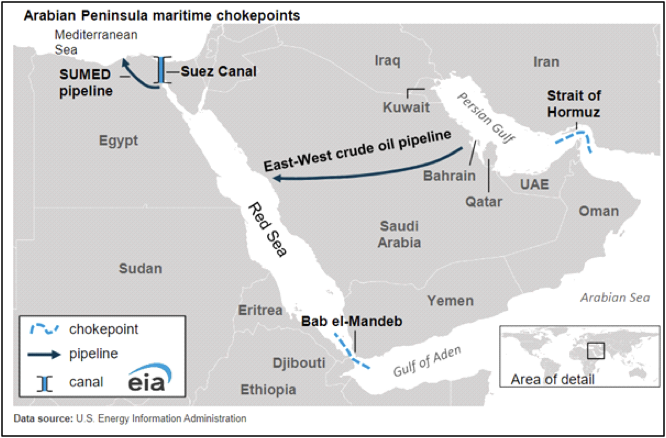
The Bab el-Mandeb Strait is between the Horn of Africa and the Middle East, connecting the Red Sea to the Gulf of Aden and Arabian Sea. Most exports of petroleum and natural gas from the Persian Gulf to Europe and North America pass through multiple chokepoints, including the SUMED pipeline and both the Bab el-Mandeb and the Strait of Hormuz. Therefore, statement I is correct.
Fig: Data is given by U.S. Energy Information Administration
Statement II: The Suez Canal and SUMED pipeline are located in Egypt and connect the Red Sea with the Mediterranean Sea. The Sumed pipeline connects the Red Sea with the Mediterranean Sea. Therefore, statement II is also correct.
——————————————
5. Consider the following statements:
Statement-I:
The European Parliament approved the Net-Zero Industry Act recently.
Statement-II:
The European Union intends to achieve carbon neutrality by 2040 and therefore aims to develop all of its own clean technology by that time.
Which one of the following is correct in respect of the above statements?
a) Both Statement I and Statement II are correct and Statement II explains Statement I
b) Both Statement I and Statement II are correct, but Statement II does not explain Statement I
c) Statement I is correct, but Statement II is incorrect
d) Statement I is incorrect, but Statement II is correct
====
Answer: (c)
Explanation:
Statement I: The European Parliament has approved the Net-Zero Industry Act to enhance net-zero technology production within the European Union. Therefore, statement I is correct.
Statement II: The Act targets Europe to produce 40% of its net-zero technology needs by 2030 and capture 15% of the global market for these technologies. Therefore, statement II is incorrect.
——————————————
6. Consider the following statements:
1. The Red Sea receives very little precipitation in any form.
2. No water enters the Red Sea from rivers.
Which of the statements given above is/are correct?
a) 1 only
b) 2 only
c) Both 1 and 2
d) Neither 1 nor 2
====
Answer (A)
Explanation
Statement 1:The Red Sea is located in a desert region with very high temperatures and low humidity. This leads to very little rainfall or any form of precipitation.Hence statement 1 is correct.
Statement 2: Due to its location, there are no major rivers flowing into the Red Sea. The water in the Red Sea comes primarily from the inflow of saltier water from the Gulf of Aden through the Bab el-Mandeb Strait.
In how many of the above rows is the given information correctly matched?
a) Only one
b) Only two
c) All three
d) None
====
Answer: (A)
Explanation
● Dhuandhar: This waterfall is located on the Narmada River, but the region is not Malwa. It is in Madhya Pradesh Mahakoshal region. Hence, pair 1 is incorrectly matched.
The map is attached-
● Hundru: This waterfall is indeed located on the Subarnarekha River within the Chota Nagpur Plateau. Hence, pair 2 is correctly matched.
● Gersoppa (also known as Jog Falls): This waterfall is on the Sharavati River in the Western Ghats, not the Netravati River. Hence, pair 3 is incorrectly matched.
Therefore, Option A is correct
——————————————
Q8. With reference to the ‘Pradhan Mantri Surakshit Matritva Abhiyan’, consider the following statements:
1. This scheme guarantees a minimum package of antenatal care services to women in their second and third trimesters of pregnancy and six months post-delivery health care service in any government health facility.
2. Under this scheme, private sector health care providers of certain specialities can volunteer to provide services at nearby government health facilities.
Which of the statements given above is/are correct?
a) 1 only
b) 2 only
c) Both 1 and 2
d) Neither 1 nor 2
====
Answer B
Explanation
No provisions for post-delivery care. There is a separate program for that.
The program aims to provide assured, comprehensive and quality antenatal care, free of cost, universally to all pregnant women on the 9th of every month.
➔ PMSMA guarantees a minimum package of antenatal care services to women in their 2nd / 3rd trimesters of pregnancy at designated government health facilities. There is no mention of Post pregnancy health care services. Hence, statement 1 is incorrect.
➔ The programme follows a systematic approach for engagement with the private sector which includes motivating private practitioners to volunteer for the campaign developing strategies for generating awareness and appealing to the private sector to participate in the Abhiyan at government health facilities. Hence, statement 2 is correct.
——————————————
Q9. The North Eastern Council (NEC) was established by the North Eastern Council Act, 1971. Subsequent to the amendment of NEC Act in 2002, the Council comprises which of the following members:
1. Governor of the Constituent State
2. Chief Minister of the Constituent State
3. Three Members to be nominated by the President of India
4. The Home Minister of India
Select the correct answer using the code given below:
Select the correct answer using the code given below:
a) 1, 2 and 3 only
b) 1, 3 and 4 only
c) 2 and 4 only
d) 1, 2, 3 and 4
====
Answer: A
Explanation
It is only a matter of chance that the Home Minister is appointed by the President to be the Chairman time and again. But the Act doesnt have a provision stating the Home Minister.
The NEC Act was amended by the Parliament in 2002 (Act No. 68 of 2002). The ‘North Eastern Areas’ now means the area comprising the States of Assam, Manipur, Meghalaya, Nagaland, Tripura, Arunachal Pradesh, Sikkim and Mizoram.
The Council now has as its members the Governors of the States mentioned above, the Chief Ministers of the said States and three Members nominated by the President. The President will nominate the Chairman of the Council and he need not be nominated from amongst the other Members.
——————————————
Q10. With reference to the Government of India Act, 1935, consider the following statements:
1. It provided for the establishment of an All India Federation based on the union of the British Indian Provinces and Princely States.
2. Defence and Foreign Affairs were kept under the control of the federal legislature.
Which of the statements given above is/are correct?
(a) 1 only
(b) 2 only
(c) Both 1 and 2
(d) Neither 1 nor 2
====
Answer: (a)
Explanation
Statement I: Doesnt say ONLY. So it is true.
The Act of 1935 provided for the establishment of an All India Federation consisting of Provinces and Princely States as units. Therefore, statement 1 is correct.
The Act also contains the provisions for Chief Commissioners’ Provinces of British Baluchistan, Delhi, Ajmer-Merwara, Coorg and the Andaman and Nicobar Islands. The area known as Panth Piploda, and such other Chief Commissioners’ Provinces as may be created under this Act.
Statement II: Logically speaking, Defence and Foreign Affairs cant be given to federal units. They are too critical.
The Act divided the powers between the Centre and units in terms of three lists, Federal List (for Centre containing 59 items), Provincial List (for provinces containing 54 items) and the Concurrent List (for both containing 36 items). The creation of a ‘Federation of India’ that consisted of two levels:
Central Executive and Parliament,
Provinces and Princely states.
It discarded the ‘dyarchy’ system at the provincial level and allowed for the emergence of popularly elected provincial legislatures. Dyarchy was introduced at the central level, key subjects like defence and foreign affairs were under the direct control of the Governor General.
A federal court was established.
The franchise was expanded to 14% of the population from 3%.
Separate electorates were provided for Muslims, Sikhs and others, but not to Depressed Classes.
Governor enjoyed critical emergency powers.
Residuary powers were given to the Viceroy. However, the federation never came into being as the princely states did not join it. But this has formed the basis of Schedule VII of the Constitution of India, 1950.Therefore, Statement 2 is Incorrect.
To get PDF of all recurring micro themes, get in touch
Why has the 2021 Census been delayed for so long? One plausible explanation is that the Bharatiya Janata Party (BJP) is postponing the Census to expedite the “delimitation” process in preparation for the 2029 Lok Sabha elections.
The 84th Amendment of the Constitution
Delimitation Based on Census: The 84th Amendment specifies that the next delimitation exercise must be based on the first census conducted after 2026.
Timing for Delimitation: If the next census occurs before 2026, delimitation would be delayed until after the subsequent census in the 2030s.
Impact on State Representation: Delimitation aims to adjust the shares of different states in Lok Sabha seats to match their population shares, and ensure similar population sizes across constituencies.
Shift in Seat Balance: The upcoming delimitation is expected to favour northern states with faster population growth since 1973, potentially at the expense of southern states.
About the 106th Amendment
Women’s Reservation: Passed in September 2023, this amendment provides for one-third reservation of seats for women in the Lok Sabha and State Assemblies.
Implementation: The reservation is to come into effect “after an exercise of delimitation is undertaken for this purpose after the relevant figures for the first census taken after [2023] have been published.”
Separate Delimitation for Women: The phrase “for this purpose” suggests that women’s reservation could be implemented through its own delimitation exercise, separate from the broader delimitation mandated by the 84th Amendment.
Interpretation: This allows for the possibility of initiating women’s reservation based on an early census, without waiting for the larger delimitation exercise.
Overall Implications
Impact on the Southern States:
Seat Redistribution: Delimitation is expected to shift more Lok Sabha seats to northern states with higher population growth, potentially reducing the representation of southern states.
Political Backlash: Southern states may react negatively to losing representation, which could lead to increased regional tensions and opposition to the BJP in these areas.
Women’s Reservation:
Implementation Delay: Postponing the census could delay the implementation of the 106th amendment, which mandates one-third reservation for women in the Lok Sabha and State Assemblies.
Separate Delimitation: There is a possibility of initiating women’s reservation through a separate delimitation exercise, independent of the broader delimitation mandated by the 84th Amendment.
Welfare and Entitlements:
Updated Data Needs: Census data are crucial for implementing welfare schemes and ensuring that resources are allocated based on the most recent population figures.
Impact on Beneficiaries: Delaying the census deprives millions of people of updated entitlements, such as food rations under the National Food Security Act, affecting their access to essential services.
Way forward:
Timely Census Completion: Ensure the 2021 Census is conducted promptly to provide accurate data for welfare schemes and fair resource allocation, benefiting millions of citizens who rely on updated population figures for essential services.
Separate Delimitation for Women’s Reservation: Implement women’s reservation through a separate delimitation exercise as allowed by the 106th Amendment, enabling the reservation to take effect without waiting for the broader delimitation mandated by the 84th Amendment.
Mains PYQ:
Q Empowering women is the key to controlling the population growth.” Discuss. (UPSC IAS/2019)
The highly pathogenic avian influenza (HPAI) H5N1’s spread to cattle and first human cases in U.S. dairy workers heighten fears of wider human transmission.
Can the highly pathogenic avian influenza H5N1 strain spread from cattle to humans?
Recent Infections: Three cases of human infection in dairy farm workers were reported in the U.S., indicating the potential for the virus to spread from cattle to humans.
Transmission: The virus appears to spread to humans who are in close interaction with infected birds or animals without adequate personal protection.
Current Risk Level: Scientists note that the virus currently lacks changes that would make it better adapted to human-to-human transmission, keeping the risk to human health low. However, the potential for the virus to rapidly evolve remains a concern.
What is the strategy to identify and contain the spread of the virus?
Surveillance in Kerala: Kerala has implemented a community-based disease surveillance network involving 2.5 lakh volunteers trained in the ‘One Health’ concept across four districts: Alappuzha, Pathanamthitta, Kottayam, and Idukki.
Early Warning System: These volunteers report any unusual events or deaths of animals/birds in their locality, allowing for early warning and prompt preventive or control measures.
Global Coordination: There is a call for a robust and coordinated response to H5N1, as emphasized in a recent editorial by The Lancet.
What is the concept of ‘One Health’
‘One Health’ Concept: ‘One Health’ is an approach that recognizes the interconnection between people, animals, plants, and their shared environment, emphasizing the need for collaborative efforts across different sectors to achieve optimal health outcomes.
How is Kerala using it to limit the spread of avian influenza?
Implementation of the ‘One Health’ concept in Kerala: Kerala has operationalized the ‘One Health’ concept through the World Bank-aided ‘Rebuild Kerala’ project. This involves a community-based disease surveillance network where volunteers are trained to monitor and report on animal and bird health, ensuring early detection and response to potential outbreaks.
Other Operational Measures: The state has taken proactive steps beyond the conceptual framework of ‘One Health’ by establishing an on-ground, volunteer-driven network for disease monitoring and control.
Way forward:
Strengthen Global Surveillance and Collaboration: Enhance international cooperation for surveillance, data sharing, and rapid response mechanisms to monitor and control the spread of H5N1, leveraging the ‘One Health’ approach for coordinated action across human, animal, and environmental health sectors.
Implement Rigorous Biosecurity and Safety Protocols: Ensure strict biosecurity measures and personal protective equipment (PPE) for workers in close contact with animals, particularly in high-risk areas, to prevent zoonotic transmission and reduce the potential for human infections.
Mains PYQ:
Q The public health system has limitations in providing universal health coverage. Do you think that the private sector can help in bridging the gap? What other viable alternatives do you suggest? (UPSC IAS/2015)
A recent working paper from the World Inequality Lab has sparked renewed debate about the growing divide between the rich and the poor.
Disparities in Consumption Patterns:
Population vs. Consumption Share:Scheduled Tribes (ST): Despite making up 9% of the population, their consumption share is only 7%. Scheduled Castes (SC): Represent 20% of the population but have a consumption share of 16%. Other Backward Classes (OBC): Align more closely with their population percentage, constituting 43% of the population and a 41% consumption share.General Category: Comprises 28% of the population but commands a significantly higher consumption share of 36%.
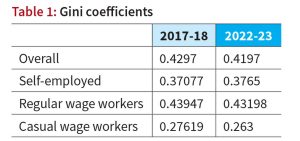
Reduction in Consumption Inequality: The overall Gini coefficient decreased from 0.359 in 2017-18 to 0.309 in 2022-23. Gini coefficients for ST, SC, OBC, and General categories also saw reductions, indicating a slight improvement in the equitable distribution of consumption within these communities.
Economic Disparities Among Social Groups: The bottom 20% decile experienced a decrease in consumption levels for ST, SC, and OBC groups, although marginally. The General category saw a more pronounced decrease in consumption levels among the poorest segment, highlighting a relative decline in consumption among this group.
Concentration of Wealth in Higher Deciles: Consumption has increased for all social groups in the top 20% decile. The General category experienced a significant 10% points surge in consumption between 2017-18 and 2022-23, implying a potential concentration of wealth among high-caste elites and persistent economic disparities.
Efforts to Augment Income Generation Abilities:
Targeted Policies:
Reservation: Affirmative action programs to improve opportunities for SCs, STs, and OBCs.
Rural Development Initiatives: Policies aimed at enhancing infrastructure, education, and healthcare in rural areas.
Direct Benefit Transfers (DBT): Financial aid is directly transferred to beneficiaries to ensure they receive the intended benefits without middlemen.
Focus on Lower Deciles: Emphasis on increasing income generation and consumption abilities, particularly within the lower deciles of SC, ST, and OBC communities—the importance of fostering social harmony and economic stability through equitable income distribution.
Monitoring and Intervention: Continuous monitoring of consumption trends and economic disparities. They are implementing targeted interventions addressing the specific socio-economic challenges faced by different groups to ensure sustained progress towards economic equity.
Way forward:
Strengthen and Expand Affirmative Action Programs: Enhance and rigorously implement affirmative action policies such as reservations in education and employment for SCs, STs, and OBCs. This should include increasing access to quality education, vocational training, and skill development programs to empower these communities economically and socially.
Promote Inclusive Economic Development Initiatives: Implement comprehensive rural development initiatives that focus on improving infrastructure, healthcare, and education in marginalized areas.
Mains PYQ:
Q What are the main factors responsible for gender inequality in India? Discuss the contribution of Savitribai Phule in this regard.(UPSC IAS/2020)
Q. Discuss the role of the Election Commission of India in the light of the evolution of the Model Code of Conduct. (UPSC IAS/2022)
Q. To enhance the quality of democracy in India the Election Commission of India has proposed electoral reforms in 2016. What are the suggested reforms and how far are they significant to make democracy successful? (UPSC IAS/2017)
Mentors Comment: The 2024 general election verdict has various interpretations. Some believe it has expanded the space for dissent and democracy, while others see it as a check on Prime Minister Modi’s perceived authoritarianism. Philosophically, it signifies a civilisational response against the BJP’s Hindutva project, which has polarized Hindus rather than uniting them, proving counterproductive.
Let’s Learn!
Why in the News?
Interpreting the Outcome: The 2024 general election outcome has sparked diverse interpretations, portraying it either as a resurgence of dissent and democracy or as a check on what critics label as Prime Minister Narendra Modi’s authoritarian rule.
Deeper Philosophical Narrative: Beyond surface impacts, the election outcome reflects underlying philosophical shifts in Indian politics.
Philosophical Underpinnings of the Verdict
Resurgence of Civilizational Ethos: The verdict can be interpreted as a revival of India’s civilizational ethos, countering the BJP’s Hindutva agenda.
Polarization within Hindu Society: Hindutva’s attempt to unite Hindus against perceived threats has instead deepened divisions within Hindu communities.
Constitutional Significance
Central Theme of the Election: The Constitution emerged prominently in the election discourse amid concerns over potential amendments that could impact affirmative action for backward castes and tribes.
Critique by RSS and Allies: Historically, the RSS and its allies have critiqued the Constitution, seeking to undermine its provisions despite assertions of commitment to secularism.
The Role of the Constitution
Symbol of Corrective Justice: The Constitution symbolizes corrective justice for historical injustices within Hindu society and stands against efforts to glorify a selective Hindu past that marginalizes minorities.
Hypocrisy of Right-Wing Rhetoric: While proponents claim secularism as inherent to Hindu ethos, their rhetoric often targets and demonizes minorities, undermining their claims of upholding constitutional values.
Political Repercussions
BJP’s Electoral Setback: The BJP’s setback in the 2024 elections signals public rejection of attempts to manipulate the Constitution and exploit anti-minority sentiments.
Ayodhya Defeat: The electoral defeat in Ayodhya, where a Dalit candidate prevailed, underscores voters’ prioritization of social justice over religious symbolism, challenging BJP’s political strategies.
Future Trajectory of Hindutva
Coalition Governance Dynamics: With a coalition government necessitating broader consensus, the focus on amending the Constitution may diminish temporarily.
Vigilance of the Opposition: The Opposition must remain vigilant against future attempts to amend the Constitution for partisan gains, ensuring its resilience against divisive agendas.
Conclusion: The 2024 election marks a pivotal moment where the Constitution emerged as a safeguard against attempts to reshape India’s socio-political fabric. The BJP’s electoral setbacks underscore the enduring significance of constitutional values in upholding inclusive democracy. Upholding social justice and preventing the exploitation of marginalized communities should remain paramount, ensuring unity amidst India’s diversity.
The 18th Lok Sabha will convene its first session very soon. A new Speaker of the House will be elected during this session.
Until the election of the new Speaker, a pro-tem Speaker will be appointed to administer the oath to the new Members of Parliament.
Who is a Pro-tem Speaker?
The Speaker of the Lok Sabha oversees the day-to-day proceedings of the House.
According to Article 94 of the Indian Constitution, the outgoing Speaker continues in office until the first meeting of the new Lok Sabha.
A pro-tem Speaker is appointed temporarily to manage certain duties until the new Speaker is elected.
The Constitution does NOT mention explicitly about the post.
However, the ‘Handbook on the Working of the Ministry of Parliamentary Affairs provides guidelines on the appointment and duties of the Speaker pro-tem.
Functions:
The primary duty of the pro-tem Speaker is to administer oaths to the new MPs, as mandated by Article 99 of the Constitution.
Appointment of the Pro-tem Speaker
When the Speaker’s post is vacant before the new Lok Sabha convenes, the PRESIDENT appoints a Member of the House as the Speaker pro-tem.
The President administers the oath to the Speaker pro-tem at the Rashtrapati Bhawan.
Generally, three other elected members of the Lok Sabha are also appointed by the President to assist in the oath-taking process.
The SENIORMOST members, in terms of years of service, are usually chosen for this role, though there can be exceptions.
Process of Administering Oaths
The Legislative I Section of the Government of India prepares a list of the seniormost Lok Sabha members after the formation of the new government.
This list is submitted to the Minister of Parliamentary Affairs or the Prime Minister, who identifies the Speaker pro-tem and the three other members for oath-taking.
After the Prime Minister’s approval, the consent of the selected members is obtained by the Minister of Parliamentary Affairs, usually over the telephone.
The Minister then submits a note to the President seeking approval for the appointments and the date and time for the swearing-in ceremony.
Upon the President’s approval, the Ministry informs the Speaker pro-tem and the other members about their appointments.
The Speaker pro-tem then administers the oath to the other three members in the Lok Sabha.
PYQ:
[2024] With reference to the Speaker of the Lok Sabha, consider the following statements :
While any resolution for the removal of the Speaker of the Lok Sabha is under consideration
He/She shall not preside.
He/She shall not have the right to speak.
He/She shall not be entitled to vote on the resolution in the first instance.
Which of the statements given above is/are correct?
INS Sunayna, an Offshore Patrol Vessel based at Southern Naval Command, entered Port Victoria, Seychelles.
The ship will undertake joint EEZ surveillance with the Seychelles Coast Guard during the deployment.
The visit is aimed at further strengthening mutual cooperation in line with the vision of SAGAR (Security & Growth for All in the Region).
About INS Sunayna
INS Sunayna is the second Saryu-class patrol vessel of the Indian Navy launched in 2009.
It was designed and constructed indigenously by the Goa Shipyard Limited.
It is designed to undertake fleet support operations, coastal and offshore patrolling, ocean surveillance and monitoring of sea lines of communications and offshore assets and escort duties.
Key operations undertaken
In June 2018 she was deployed to Yemen’s Socotra Island as part of “Operation Nistar“, an HADR mission to evacuate around 38 stranded Indian nationals in/around Socotra after a cyclone hit the area.
INS Sunayna, along with INS Chennai, was sent to the Persian Gulf and Gulf of Oman in June 2019 to protect Indian shipping interests amid tensions in the Strait of Hormuz.
Back2Basics: SAGAR Strategy
SAGAR stands for “Security and Growth for All in the Region.”
It is a strategic policy framework initiated by India in 2015, designed to enhance its engagement with countries in the Indian Ocean Region (IOR) and neighbouring islands.
The primary objectives of SAGAR include:
Security: Ensuring the safety and protection of India’s land and maritime territories, as well as its national interests in the IOR.
Economic Growth: Promoting sustainable economic growth and development through collaborative efforts with IOR littoral states. This includes initiatives in marine biotechnology, ocean mineral resources, sustainable fishing practices, and ocean energy.
Disaster Management: Facilitating collective action and providing assistance to IOR countries during natural disasters, thereby fostering regional cooperation and goodwill.
Sustainable Development: Supporting initiatives for sustainable regional development, including marine research, eco-friendly industrial technologies, and the conservation of the maritime environment.
PYQ:
[2022] What are the maritime security challenges in India? Discuss the organisational, technical and procedural initiatives taken to improve maritime security.
[2017] Consider the following in respect of the Indian Ocean Naval Symposium (IONS):
1. Inaugural IONS was held in India in 2015 under the chairmanship of the Indian Navy.
2. IONS is a voluntary initiative that seeks to increase maritime cooperation among navies of the littoral states of the Indian Ocean Region.
Which of the statements given above is/are correct?



![[19th June 2024] The Hindu Op-ed: The boomerang effect in this general election, and how](https://www.civilsdaily.com/wp-content/uploads/2024/06/19-June-1568x882.jpg)