💥UPSC 2026, 2027, 2028 UAP Mentorship (March Batch) + Access XFactor Notes & Microthemes PDF

Search results for: “”

  • System of Rice Intensification (SRI) Technique

    Experts in Punjab has said that System of Rice Intensification (SRI) Technique is beneficial for the soil, environment and farmers at par with the Direct Seeding of Rice (DSR) technique.

    What is SRI technique?

    • SRI was first developed in Madagascar in the 1980s and since then several countries in the world have been practising it, including India.
    • It promises to save 15 to 20% ground water, improves rice productivity, which is almost at a stagnant point now.
    • Experts said that it gives equal or more produce than the conventional rice cultivation, with less water, less seed and less chemicals.
    • The net effect is a substantial reduction in the investments on external inputs.

    How does it take place in the field and in which soil?

    • First, the field is prepared by ploughing.
    • It should be laser levelled before transplanting for proper water management and efficiency for a good crop stand.
    • Then irrigation is applied in the field which is not a flooding of field like traditional methods but less than that of a well irrigated field.
    • Then 10-12 days old nursery (young paddy plants) along with soil particles around the root with minimum disturbance to the roots are transplanted in lines.
    • They are marked at a distance of 10 inches from each other with the help of a rope meter.

    Benefits over DSR technique

    • Unlike DSR, which is suitable only for mid to heavy textured soils, SRI is suitable in all types of soil including less fertile soil as in such soil the number of seedlings can be increased to double.
    • Under SRI 2kg seed is required to grow a nursery for one acre against 5kg seed required in the traditional method.

    Does the SRI method require continuous flooding after transplantation of nursery?

    • In traditional sowing from the day of transplanting till the crop turns 35-40 days fields are kept under flood-like conditions.
    • And then fields are filled every week till a few weeks before harvesting.
    • But SRI doesn’t require continuous flooding, it needs intermittent irrigation.
    • Indeed the plants’ roots should not be starved for oxygen through flooding.
    • Irrigation is given to maintain soil moisture near saturation initially, and water is added to the field when the surface soil develops hairline cracks.

    What are the limitations of SRI?

    • If unchecked, greater weed growth will cause substantial loss of yield.
    • In Punjab, it is not promoted by the government except demonstration plots sown over a decade ago.
    • It can be sustainable if organic inputs in the soil structure are maintained.

    Try this PYQ:

    Q.With reference to the current trends in the cultivation of sugarcane in India, consider the following statements:

    1. A substantial saving in seed material is made when ‘bud chip settlings are raised in a nursery and transplanted in the main field.
    2. When direct planting of setts is done, the germination percentage is better with single-budded setts as compared to setts with many buds.
    3. If bad weather conditions prevail when setts are directly planted, single-budded setts have better survival as compared to large setts.
    4. Sugarcane can be cultivated using settlings prepared from tissue culture.

    Which of the statements given above is/are correct?

    (a) 1 and 2 only

    (b) 3 only

    (c) 1 and 4 only

    (d) 2,3 and 4 only


    Post your answers here.


    UPSC 2023 countdown has begun! Get your personal guidance plan now! (Click here)

  • Booker Prize awarded to first Indian language book

    Author Geetanjali Shree’s translated Hindi novel, Tomb of Sand, became the first Indian language book to win the International Booker Prize.

    Note: Such topics hold very little relevance for CSE prelims. However, last year experience make such topics more uncertain. Still such topics hold relevance for other exams such as CAPF and state PSCs.

    What is the Booker Prize?

    • The Booker Prize is one of the best-known literary awards for fiction writing in English, including both novels and collections of short stories.
    • It was first awarded in 1969.
    • Every year a panel of judges decides the best work of the year, with the criteria being that it must be written in English and published in the UK and Ireland.
    • This panel of judges is picked from among eminent cultural historians, writers, professors, and novelists, and others from related fields.
    • For the Booker Prize, the winner receives £50,000.

    About the book

    • The 2018 novel titled ‘Ret Samadhi’ was translated by Daisy Rockwell and published as ‘Tomb of Sand’ in 2021.
    • The prize is one of two literary awards given out annually by the Booker Prize Foundation, a charity whose stated aim is to “promote the art and value of literature for the public benefit”.

    What about the International Booker Prize?

    • The International Booker Prize began in 2005.
    • A biennial prize initially, it was then awarded for a body of work available in English, including translations, with Alice Munro, Lydia Davis and Philip Roth becoming some of the early winners.
    • In 2015, the rules of the International prize changed to make it an annual affair.
    • The new rules stipulated that it will be awarded annually for a single book, written in another language and translated into English.
    • The £50,000 prize money is divided equally between the author and translator each year.

    Why is it called the ‘Booker’?

    • The Booker Prize, from 1969 to 2001, was named simply after the Booker Group Limited – a British food wholesale operator that was its initial sponsor.
    • The Man Group, an investment management firm based in the UK, began to sponsor the prize in 2002 and it thus came to be known as The Man Booker Prize.
    • The Man Group ended their sponsorship in 2019.
    • Crankstart, an American charitable foundation, has been the sponsor after that. The prize name has changed back to the ‘Booker’ since then.

    Who have been some prominent winners?

    • Prominent winners of the coveted prize include Margaret Atwood (‘The Testaments’), Yann Martel (‘Life of Pi’), and Julian Barnes (‘The Sense of an Ending’).
    • Many Indian-origin writers have won the Booker in the past, such as Arundhati Roy (‘The God of Small Things’), Salman Rushdie (‘Midnight’s Children’), Kiran Desai (‘The Inheritance of Loss’), and Aravind Adiga (‘The White Tiger’).
    • Shree is the first Indian to win an international prize.


    UPSC 2023 countdown has begun! Get your personal guidance plan now! (Click here)

  • Species in news: Sela Macaque

    A new species of old world monkey recorded from Arunachal Pradesh has been named after a strategic Sela pass at 13,700 ft above sea level.

    Sela macaque (Macaca selai).

    • This new primate was identified and analysed by a team of experts from the Zoological Survey of India (ZSI) and the University of Calcutta.
    • Earlier it was called as White- Cheeked Macaque displaying white cheeks, long and thick hairs on the neck area, and a longer tail.
    • Their study has been published in the latest edition of Molecular Phylogenetics and Evolution.
    • Phylogenetics relate to the evolutionary development and diversification of a species or group of organisms.
    • The phylogenetic analysis revealed that the Sela macaque was geographically separated from the Arunachal macaque (Macaca munzala) of Tawang district by Sela.
    • This mountain pass acted as a barrier by restricting the migration of individuals of these two species for approximately two million years.

    Protection status

    • It has NOT been yet included in the Wildlife (Protection) Act, 1972 of India.
    • The potential threat to all species of macaques in the landscape is due to hunting by locals for consumption and habitat degradation due to urbanization and infrastructure development.

     About Sela Pass

    • The Sela Pass is a high-altitude mountain pass located on the border between the Tawang and West Kameng districts in Arunachal Pradesh.
    • It has an elevation of 4170 m and connects the Indian Buddhist town of Tawang to Dirang and Guwahati.
    • The pass supports scarce amounts of vegetation and is usually snow-covered to some extent throughout the year.
    • While Sela Pass does get heavy snowfall in winters, it is usually open throughout the year unless landslides or snow require the pass to be shut down temporarily.
    • The strategically-significant Sela Tunnel project is now nearing completion well before the deadline.


    UPSC 2023 countdown has begun! Get your personal guidance plan now! (Click here)

  • AKRUTI Program to start in Kudankulam

    The Nuclear Power Corporation of India Limited is all set to launch AKRUTI programme in the villages surrounding Kudankulam Nuclear Power Project (KKNPP).

    AKRUTI Program

    • The Nuclear Power Corporation of India Limited is assisting unemployed youth living near the Tarapur Atomic Power Station (TAPS) through AKRUTI.
    • AKRUTI stands for Advanced Knowledge and Rural Technology Implementation (AKRUTI) program.
    • Areas of water, food processing, agriculture and waste management in rural areas are covered under the AKRUTI program.
    • The scheme aims at empowering villages through implementing different technologies for usage.
    • This scheme will lead to sustainable growth of the rural sector across the country.

    What is the objective?

    • To provide information and mechanism for implementation of BARC technologies in rural areas thereby aiming at overall rural development.


    UPSC 2023 countdown has begun! Get your personal guidance plan now! (Click here)

  • Digitization of Judiciary

    Context

    The Indian judiciary has increasingly started using technology and the change is reflected in the legal profession in general as well.

    Increasing use of digital technology in the judiciary

    • With the digitisation of judicial records and the establishment of e-courts, significant developments had taken place in 2020.
    • Use of technology to better utilise potential: It is imperative that the use of digital technology be discussed to better utilise its potential, particularly in terms of digitisation of court records, e-filing of cases and their virtual hearing, live streaming of court proceedings.

    Background

    • In India, e-governance in the field of administration of justice began in the late 1990s, but it accelerated after the enactment of the Information and Technology Act, 2000.
    • In the year of 2006, e-courts were launched as a part of the National e-Governance Plan (NEGP).

    Digitisation of case files

    • When he was the Chief Justice of Allahabad HC, Justice D Y Chandrachud had conceptualised and initiated the project to digitise approximately one crore case files in one year.
    • Saving of space and preservation of old documents: This was necessary as not only was a large space required to store so many files, it was also becoming difficult to manually preserve the decades-old documents.
    • Traceability: Another purpose was to ensure that these files are traceable electronically as and when required.
    • It has also been observed that cases are adjourned simply because affidavits filed several years ago were not restored with the record or were not traceable.
    • Once the documents are digitised and e-filed by counsels, at least the cases would not get adjourned by the courts on this account.
    • Reducing the risk of missing court records: In State of Uttar Pradesh v. Abhay Raj Singh, it was held by the Supreme Court that if court records go missing and re-construction is not possible, the courts are bound to set aside the conviction.
    • Saving of time: With digitisation, it will take much less time for the lower courts to transmit the records as and when called for.
    • The lawyers benefit because they or their staff are no longer required to visit the reporting sections or other sections of the court to know about the status of their cases.
    • This has been sought to be implemented by the e-Committee of the Supreme Court by issuing directions to ensure that e-filing of cases/petitions by state governments in all matters be made mandatory from January 1, 2022.

    Scope for virtual hearing in certain cases

    • Cases related to matrimonial issues and domestic violence bounced cheques, motor accident compensation referred to mediation centres and lok adalats could be included in the list of cases fit for disposal through the virtual hearing.
    • The hearing of matrimonial cases through video-conferencing was approved by the Supreme Court in the matter of Krishna Veni Nagam v Harish Nagam (2017).
    • The direction was short-lived and a coordinate bench of the Supreme Court in the case of Santhini v Vijaya Venkatesh (2018) referred the matter for reconsideration before a larger bench.
    • Virtual hearings cannot be a substitute for physical court hearings in all cases.
    • However, in appropriate cases and certain categories of cases as identified by the court administration in consultation with the members of the Bar, virtual hearing should be made mandatory.

    Live streaming of cases

    • In 2018, the Supreme Court allowed the live-streaming of cases of constitutional and national importance on the basis of the judgment in Swapnil Tripathi.
    • Step towards transparency: The livestreaming of court proceedings is a step towards ensuring transparency and openness.
    • While several reservations were expressed against it, the Gujarat HC in July 2021 became the first court in the country to livestream its proceedings.
    • Its example was followed by other HCs like Karnataka, Odisha, Madhya Pradesh and Patna.

    Challenges

    • Internet connectivity issues and the need for a well-equipped space where lawyers can conduct their cases are some of the major problems requiring attention.
    • Political will and the support of judges and lawyers are also necessary.
    • Awareness and training: Judges, court staff and lawyers are not well-versed with digital technology and its benefits.
    • The need of the hour is for them to be made aware of these and receive adequate training.

    Conclusion

    Adoption of technology will bring drastic changes in the field of law and will transform the Court system.

    UPSC 2023 countdown has begun! Get your personal guidance plan now! (Click here)

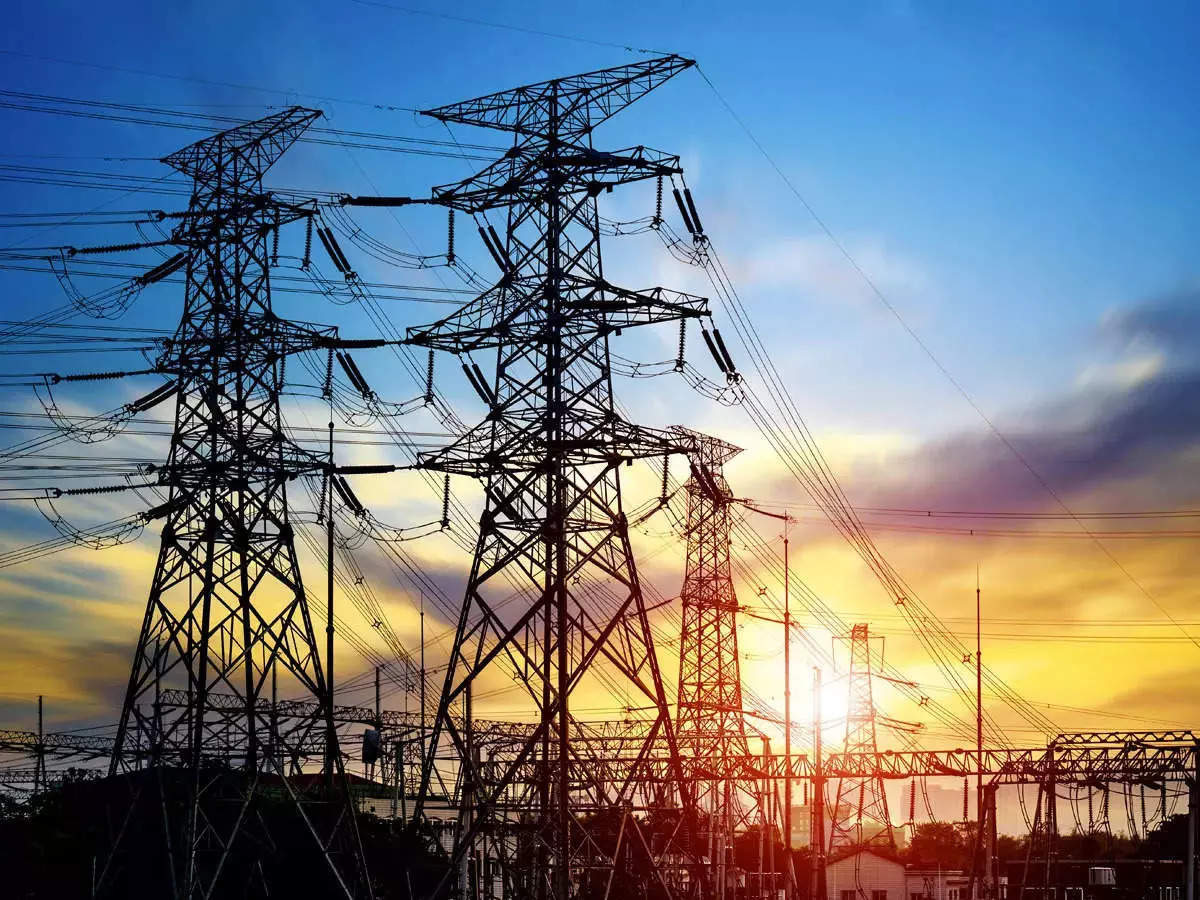
  • [Burning Issue] Power Crisis in India

    https://img.etimg.com/thumb/width-1200,height-900,imgsize-178130,resizemode-1,msid-87097716/industry/energy/power/how-rains-and-lack-of-foresight-of-power-producers-and-states-caused-a-power-crisis-in-india.jpg

    Context

    • India is facing one of the worst power crises in its History and the scariest point is that this power crisis is not something that rarely has been haunting almost every year for 10 years now!!
    • As a result, businesses all across the country are facing lakhs and even crores of losses due to power shortage!! and at the macro level, the economy of India itself is taking a hit!!

    A layman’s analysis

    • When we say power crisis you might think maybe India does not have enough energy source!!
    • But the fun fact is that India has the 5th largest coal reserve globally with 9.5% of the entire world’s coal reserve right here in our country itself!!
    • We have so much coal that with the existing energy demands, these reserves can power India for 111 years!!
    • Also the completion of universal household electrification has been a huge achievement.

    So the question is:

    1. Inspite being one of the largest coal reserve why is India facing a power crisis?
    2. What are the factors that cause this to happen every single year?

    Power value chain in India

    • The first thing we need to understand is the power value chain in India and how energy actually comes from the coal mines to your laptop.
    • This value chain includes four major steps:
    • Producers who mine and refine fuels
    • Power generation
    • Electricity transmission
    • Electricity distribution (Discoms)
    • The value chain starts with the energy producers who mine and refine fuels that are used in electricity production this includes all types of energy sources like coal gas oil or even nuclear based fuels.
    • The fuels are then delivered to the generation facilities where the electricity generator uses the fuel to drive a generator to produce electricity and then to dispatch it to a transmission and distribution system or Discoms.
    • This system distributes the electricity to consumer locations through a transmission and distribution grid.

    India’s dependency on Coal

    • As of September 2021, thermal power comprised 60% of India’s installed capacity in power generation.
    • Coal-based power generation, with a capacity of around 210 gigawatts (GW) of the total 396 GW, accounts for about 53% of India’s total power capacity as on March 2022.
    • India imports about 20% of its thermal coal requirements.

    Why is there a Power Shortage?

    • India was recently hit by a power crisis when the daily peak power shortage rose to 10,778 MW and the energy deficit reached 5% at the national level.
    • Some states experienced steep deficits of up to 15%.
    • Consequently, discoms resorted to load-shedding, resulting in long hours of outage for many households and rationed supply for economic activities.
    • Depleting coal supplies at thermal power plants has resulted in this crisis.

    (1) Largest share in energy basket

    • Coal is the most important and abundant fossil fuel in India. It accounts for 55% of the country’s energy needs.
    • Coal demand is driven by the rising population, expanding economy and a quest for improved quality of life.
    • Currently, India doesn’t have a feasible replacement of Coal Based Thermal Energy in near future.

    (2) Demand for power has soared

    • For instance, New Delhi’s peak power demand touched 5,460 megawatts (MW) recently, the highest ever in April’s first fortnight.
    • This was due to severe heatwaves all across the nation.
    • Several states, including Andhra Pradesh, Madhya Pradesh, Punjab, Haryana, Telangana, and Maharashtra, are facing power outages.

    (3) Lack of coal availability in stock

    • The coal stock with power generation companies (gencos) is not adequate to meet the rising demand.
    • Normally, a power plant must maintain 26 days of coal stock.
    • However, at present, several power plants are reporting critical levels of coal stock.
    • Data from the Central Electricity Authority (CEA) shows that 97 power plants out of the 173 have critical levels of coal inventory.
    • These have an average of 28% of the stock compared to the normal scenario.

    Stress on Power plants

    • There has been a moderation in coal supply towards certain gencos because of the overdues or delays in the payments.
    • As a result, discoms/state governments will either have to absorb the cost burden with increased imported coal-based generation.
    • This however has to be passed on the same through tariff hikes which never happened in India.
    • Inspite, DISCOMS constrained to offtake power, resulting in load shedding, which has been visible in a few states recently.

    Major reason: Underperformance of Coal Sector

    • The state power distribution companies (discoms) have also not been able to clear their dues to power generation companies.
    • According to the government’s PRAAPTI portal, distribution companies faced financial liability of nearly Rs 1 lakh crore.
    • The challenges facing the finances of the distribution companies have only been exacerbated by the COVID-19 crises.
    • The impact of the nation-wide lockdown in 2020, which shuttered commercial and industrial enterprises was severe for their finances.
    • Revenues from historically subsidizing consumers decreased, even as supply to subsided consumers, agricultural and residential consumers, either increased or remained the same.
    • Indian railways owing to no reception of payment from DISCOMS stopped or reduced coal supplies.

    Factors attributing to the deteriorating finances

    [1] Lack of Cost-reflective Tariffs

    • The costs of supplying high-voltage consumers is significantly less than that of supplying to lower voltage consumers
    • The complexity of tariff determination is accentuated by the existence of multiplicity of categories in the tariff structures, with numerous subcategories and slabs.
    • There is significant variation in this between states.

    [2] Distorted Cross-subsidies

    • Households and agricultural consumers paying less than the average cost of supply and to make up for this, tariffs for commercial and industrial consumers are higher.
    • In developed countries, high voltage industrial consumers have the lowest tariff reflecting lower costs.
    • This increases industrial competitiveness by lowering energy costs.
    • DISCOMs in states with poor industrialization tend to correspondingly have larger losses.
    • Increased domestic consumption due to expanded electrification and rise in per capita incomes and increased agricultural consumption due to increased demand for irrigation have not been matched by a similar growth in subsidizing consumers.
    • Consistent losses have meant that distribution companies do not have the financial capacity to invest in necessary capital expenditure, resulting in paying consumers needing to invest on their own in independent sources of power.

    [3] Misaligned Political Incentives and Mismanagement

    • The govt could have declared the extent to which tariffs would become lower as AT&C losses were brought down.
    • Consumers would pay more than necessary to the extent AT&C (Aggregate Technical & Commercial) losses were higher.
    • De-metering of agricultural consumption has been another example.
    • It is considered to have encouraged ‘a culture of unaccountability in the sector, leading to theft and line losses being hidden within the agricultural category’.
    • There are also electricity bills waivers as populist election freebies.

    [4] Lack of Regular Tariff Increase

    • Another major cause of the high financial losses has been that tariffs do not increase commensurate to increase in costs in many states.
    • Since the 1990s, revenue recovered by DISCOMs had been, on average, 30% lower than the cost incurred.
    • This resulted in approximately Rs 1.15 lakh crores of costs, which were not recovered through tariffs.
    • Due to a variety of reasons, including state government interventions or a lack of preparedness, DISCOMs do not file petitions in a timely manner.

    [5] Delays/non-payment of Subsidy Amounts and Dues by States

    • The rapid rise in subsidized consumers and increased populist announcements of greater subsidies have meant an increase in the requirement of subsidies from the state governments.
    • Delays in release of subsidies, as well as underpayment of committed subsidies impact the ability of DISCOMs in managing operating costs.
    • Moreover, since the fraction of the cost structure meant to be covered by subsidy payments has risen.
    • Also, government departments often also do not release payments for outstanding dues in a timely manner.

    Various policy measures

    [1] 2001 Scheme for Repayment of SEB Due

    • The first bailout package was intended as a one-time settlement of outstanding dues till September 2001.
    • Based on the recommendations of the Committee constituted under Montek Singh Ahluwalia, in May 2002, the government circulated a tripartite agreement between the RBI, Central and State Governments.
    • States were to implement reforms such as setting up SERC, metering distribution feeders, and improving revenue realization, in exchange for which 60% of interest/surcharge on delayed payments was waived for participating states

    [2] 2012 Financial Restructuring Plan (FRP)

    • The states were unable to turn around the fortunes of their electricity boards as required by the financial restructuring plan (FRP) finalized in September 2012.
    • This was because of reasons such as low tariff increases, slow progress in reducing losses, higher electricity purchase costs and crippling debt.
    • The scheme has been availed by Tamil Nadu, Uttar Pradesh, Rajasthan, Haryana, Jharkhand, Bihar, Andhra Pradesh and Telangana.
    • This is the second such bailout for the Indian distribution sector.
    • Some states including Uttar Pradesh and Rajasthan have also not converted outstanding state government loans into equity—another requisite.

    [3] 2015 Ujwal DISCOMs Assurance Yojana (UDAY)

    • The UDAY scheme was introduced with the objective to improve the operational and financial efficiency of state DISCOMs.
    • The scheme allowed state governments to take over 75% of outstanding DISCOM debt over two years.
    • Incentives offered to participating states included access to additional/priority funding through Central Government schemes such as DDUGJY, IPDS, Power Sector Development Fund (PSDF).
    • This however could not alter the situation on the ground.

    [4] Atmanirbhar Bharat Abhiyan Package

    • This was a part of the package announced to mitigate the impact of the COVID-19 pandemic on the economy.
    • It infused liquidity support of Rs 90,000 crore in the form of concessional loans from Power Finance Corporation and Rural Electrification Corporation.
    • It provided for rebates by Central Public Sector Gencos to DISCOMs; and relaxation of conditions of existing loans and relief from certain late payments and surcharges were announced.
    • The borrowing limits for states were also relaxed, with part of the increased borrowing linked to reforms on power distribution.

    [5] Reforms-based Result-Linked Power Distribution Sector

    • Launched in July 2021, the RDSS is the latest of many central government grant-based programmes towards electricity distribution network investments.
    • It has an outlay of Rs 3 lakh crore for five years.
    • Half of the outlay is for better feeder and transformer metering and pre-paid smart consumer metering.
    • The remaining half, 60 percent of which will be funded by central government grants, will be spent on power loss reduction and strengthening networks.
    • RDSS stipulates universal pre-paid metering but post-paid options may be suitable in many contexts.

      What are the recent reforms in Coal Sector?

    • Commercial mining of coal is allowed, with 50 blocks to be offered to the private sector.
    • Entry norms will be liberalized as it has done away with the regulation requiring power plants to use “washed” coal.
    • Coal blocks to be offered to private companies on revenue sharing basis in place of fixed cost.
    • Coal gasification/liquefaction to be incentivized through rebate in revenue share.
    • Coal bed methane (CBM) extraction rights to be auctioned from Coal India’s coal mines.

    Averting the power crisis: A way forward

    (1) Ramp-up domestic coal production

    • The efforts are being taken to fill the shortage of coal from domestic mines and to do so the government is working closely with coal producing companies to ramp up domestic production of coal.

    (2) Reduce demand-supply mismatches

    • Load shading is not new to India. Rationing of power supply in rural and semi-urban areas will be the immediate solution for the power distress in industrial areas.

    (3) Rationalize the coal imports

    • India will need to amplify its imports despite the financial cost. The gap in the coal demand after domestic production has to be filled by the imports from Indonesia and Australia.

    (4) Focus on Hydro-power generation and natural gal

    • India has the immense potential in the Hydro-power generation and is among the most important sector for generating electricity after thermal power plants. There could be a larger role for natural gas to play, even with global prices currently surging.

    (5) Increasing the share of Renewable energy

    • Experts advocate a mix of coal and clean sources of energy as a possible long-term solution. It’s not completely possible to transition and it’s never a good strategy to transition 100% to renewables without a backup.
    • Long term investment in multiple power sources aside a crisis like the current one can be averted with better planning.

    (6) Increased coordination

    • There is need for closer coordination between Coal India Limited – the largest supplier of coal in the country and other stakeholders.
    • For now, the government is working with state-run enterprises to ramp up production and mining to reduce the gap between supply and demand.

    (7) Decentralized power generation

    • The main issue is that we are dependent on large, centralized power generation.
    • The only way our power sector can absorb shocks better is if large power plants are augmented by decentralized generation sources at village level.
    • This can be a template for better resilience to future power crises.

    (8) Coal stocking norms

    • To avoid such a crisis situation in future, the Ministry of Power has worked out a strategy which includes tweaking the coal stocking norms. If the power plants do not follow them, then there will be a penal provision.
    • To overcome the storage issue in the generation of electricity from renewable sources, the government is working on a provision for creating more storage facilities in the grid.

    Conclusion

    • India can learn a lesson from Europe’s power crisis. While Europe has gas power plants to stand in, India doesn’t have similar options.
    • As we move more towards greening our power sources, we need to provision for paying for standby thermal generation to avoid a mega-crisis.
    • Adequate liquidity for backup reserve capacity needs to be planned and provisioned for.
    • Probably, the present situation is a good opportunity to rethink and fine-tune the energy policy without further delay.
    • Bits and pieces reforms will not work anymore, as the chain has to been broken and a complete overhaul is required.

    UPSC 2023 countdown has begun! Get your personal guidance plan now! (Click here)

  • Criminal justice system

    Context

    The key to an improved criminal justice system is quality forensic labs and well-trained staff, not more legislation and harsher punishments.

    About forensic science

    • Forensic science is the application of scientific perspectives and techniques to the legal process, including investigations and courtroom protocol.
    • It is the use of scientific data and procedures specifically for the legal system.
    • There is rigorous procedure involved, including controlled conditions, reliable data collection and the attempt to disprove hypotheses.
    • Methodologies like the autopsy procedures, fingerprinting, testing and matching for poisons, blood spatter analysis, matching guns to bullets fired (ballistics), voice sample matches, handwriting assessments and DNA analysis are all facets of forensic science.

     Inadequate state forensic facilities

    • We have a woefully inadequate number of forensic science laboratories (FSL).
    • There are seven central forensic laboratories in India at Hyderabad, Kolkata, Chandigarh, New Delhi, Guwahati, Bhopal and Pune.
    • Six of these laboratories, barring Delhi, are under the control of the Directorate of Forensic Science Services (DFSS), and its mission is to render high quality and credible forensic services to the justice delivery system.
    • A National Forensic Sciences University was established in Gandhinagar, Gujarat in 2020.
    • The existing National Institute of Criminology and Forensic Science in Delhi has been integrated into this new university.
    • There are 32 state FSLs and about 529 mobile FSL units, of which Delhi has one state FSL and six mobile units.
    • The DNA tests discovered in 1985 are used to identify individuals involved in alleged crimes.
    • In 2017, The Hindu reported that while the United Kingdom completes DNA testing on over 60,000 crimes annually, India with over 13 times the population completes such tests on less than 7,500 cases.
    • The average pendency at each lab is huge.
    • In all states, there were over 50 per cent vacancies in personnel at their facilities.

    Way forward

    • More investment: We certainly need more investment in the establishment of FSL laboratories, the training and appointment of personnel adept at forensic methodologies and reforms within our police to establish a trained and skilled detective cadre tasked with solving complex and heinous crimes.
    • Quality training and accreditation: There is a desperate need for good quality training facilities, standards of accreditation and continuous education programmes for our forensic experts.

    Conclusion

    It is not more legislation and harsher punishments that will solve crimes, but well-trained forensic staff plying their craft in good quality laboratories that will aid our criminal justice system.

  • A new road for India’s fiscal federalism

    Context

    On May 19, in Union of India vs Mohit Minerals, the Supreme Court of India delivered a ruling which is likely to have an impact far wider than what the Centre might have imagined when it brought the case up on appeal.

    Background

    • At stake was the validity of a levy imposed on importers, of Integrated Goods and Services Tax (IGST) on ocean freight paid by foreign sellers to foreign shipping lines.
    • The Gujarat High Court had declared the tax illegal.
    • The Supreme Court affirmed the ruling and held that the levy constituted double taxation — that is, that the importer, which was already paying tax on the “composite” supply of goods, could not be asked to pay an additional tax on a perceived “service” that it may have received.

    Why the ruling could transform the future of fiscal federalism in India

    • Equal powers to legislate on GST: While delivering the judgement, the Supreme Court held that both Parliament and the State legislatures enjoy equal power to legislate on Goods and Services Tax (GST).
    • The Court said that the Goods and Services Tax Council’s recommendations were just that: recommendations that could never be binding on a legislative body.
    • Until now, governments across India have treated the GST Council’s recommendations — even where they disagreed with them — as sacrosanct, because they believed that this was indeed the law.
    • According to the Court, State legislatures possess the authority to deviate from any advice rendered by the GST Council and to make their own laws by asserting, in the process, their role as equal partners in India’s federal architecture.
    • Conflicting taxation regimes: Because of the ruling, the State governments will be free to exercise independent power to legislate on GST.
    • It is possible that this might lead to conflicting taxation regimes, with the idea of ‘One Nation One Tax’ rendered nugatory.
    • Constitutional power cannot be limited through statute: The Court’s ruling does not mean that a legislature — whether Parliament or the States’ — cannot through statutory law make the Council’s recommendations binding on executive bodies.
    • But a constitutional power, in the Court’s ruling, can never be limited through statute. Such curbs must flow only from the Constitution.
    • And in this case, in the Court’s analysis, no restrictions on legislative power can be gleaned on a meaningful reading of the Constitution.

    Background of 101st constitutional Amendment

    • Unification of tax administration: When, in July 2017, the Union government introduced the GST regime through the 101st constitutional Amendment, it did so based on an underlying belief that tax administration across India needed unification.
    • To give effect to this idea, many entries in the State list of Schedule VII of the Constitution were either deleted or amended.
    • A power to legislate on GST was inserted through a newly introduced Article 246A.
    •  No longer could State governments legislate on sale or purchase of goods barring a few exceptions, such as petroleum and liquor through the ordinary legislative route.
    • GST Council: In addition, the 101st Amendment also established, through Article 279A, a GST Council.
    • The Council was given the power to “make recommendations to the Union and States” on several different matters.

    Implications of the judgement

    • The use of the word “recommendations” suggested on the one hand that its decisions would be advisory, at best.
    • But, at the same time, the fact that Article 279A directed the establishment of a mechanism to adjudicate disputes between governments on decisions taken by the Council suggested that those governments would, in fact, be bound by any advice rendered to them.
    • GST would be in jeopardy: If the former reading was to be deployed, the purpose behind the introduction of a common GST would be in jeopardy.
    • But the latter interpretation effectively entailed the destruction of the well-laid plans of the Constituent Assembly.
    • Fiscal responsibilities that had been divided with much care and attention between the Union and the States would now stand dissolved.

    Federal compact

    • Although States had until now proceeded on a tacit belief that the GST Council’s recommendations were binding, such an approach, in Justice Chandrachud’s words, would run counter both to the express words of the Constitution and the philosophical values underlying the language deployed.
    • Article 246A, which was introduced by the 101st Amendment provides concomitant power both to the Union and to the State governments to legislate on GST.
    • It does not discriminate between the two in terms of its allocation of authority.
    • That allocation, according to the Court, cannot be limited by a reading of Article 279A, which establishes a GST Council, and which treats the Council’s decisions as “recommendations”.

    Conclusion

    GST was conceived as a product of what some described as “pooled sovereignty”. But perhaps it is only in an administrative area, animated by contestation, where we can see synergy between different sovereign units, where our nation can take a genuine turn towards a more “cooperative federalism”.

    UPSC 2023 countdown has begun! Get your personal guidance plan now! (Click here)

  • GST collections touched a record high of Rs 1.67 lakh crore in April.

    Context

    There has been a remarkable upswing in GST collections in recent months. Collections touched a record high of Rs 1.67 lakh crore in April.

    GST

    GST Interstate Model Example

    What are the reasons for increased collection?

    • 1] Inflation: First, the sharp rise in inflation has played a significant role.
    • Notwithstanding concerns over the unevenness of the economic recovery, in nominal terms, the economy grew by 19.4 per cent in 2021-22 as per the second advance estimates.
    • Deflating GST collection suggests that a large part of the recent increase in collections is driven by rising prices.
    • 2] Higher imports: Part of the overall increase in collections can be traced to higher imports.
    • Higher buoyancy: Even if one is to exclude the revenue accruing from imports, the rise in GST collections has outstripped GDP growth, indicating higher buoyancy.
    • 3] Tightening of the rules: In order to improve compliance levels, the GST Council has been tweaking the rules to tighten the system.
    • Returns filed have gone up, while the number of non-filers and those who delay filing have fallen.
    • Alongside, the administration has also taken steps to tackle the menace of fake invoices by placing restrictions on the quantum of input tax credit that can be used to pay of tax obligations.
    • The introduction of e-invoicing has also played a role.
    • Until recently, this was being implemented for firms with a turnover of more than Rs 50 crore.
    • From April, this process has been extended to firms above Rs 20 crore.
    • The incremental gains from bringing smaller firms into its ambit, while consequential, are unlikely to be of the same order.
    • 4] Industrial activity:  The higher collections in April 2022 seem to be led by increase in industrial activity. This is borne by strong growth in collections in states such as Maharashtra, Karnataka and Odisha which house lot of industries. Relatively tepid growth in more populous states such as Bihar (-2.47 per cent), West Bengal (7.80 per cent) and Jharkhand (4.86 per cent) shows that the GST collections was not propelled by revival in private consumption.
    •  The real challenge lies in improving compliance levels across the entire spectrum of industries where inputs/raw materials are sourced largely from the informal sector.
    • 5] Changing the structure of the economy: The formalisation of firms, the growing concentration of economic power in the hands of a few, imply that for the same level of output, the tax paid will be higher.

    Suggestion

    • Increase tax rate: Around two-fifths of the taxable value (or turnover) falls under the 18 per cent slab as per research by some analysts.
    • This implies that simply merging the 12 per cent and the 18 per cent slab as some have been suggesting would lead to a revenue loss.
    • Before opting for such adjustments, the GST Council must first ascertain the potential revenue (net of cess and refunds) at varying levels of compliance, tax rates and exemptions afforded.
    • Now, as per some estimates presented to the 15th Finance Commission, with existing exemptions in place, the current tax regime should ideally yield revenues equivalent to 8.23 per cent of GDP.
    •  In another scenario, even if existing exemptions are kept in place, and if a single rate of 14 per cent is levied, then collections should rise to 8.93 per cent.

    Conclusion

    Considering the current economic situation, now may not be an opportune moment to raise taxes. But there is no getting around it. Both the Centre and the states need to work towards this.


More posts