The Government of India has launched four Thematic Hubs (T-Hubs) for quantum computing research, with Uttar Pradesh receiving the highest allocation of ₹28.7 crore for quantum technology development in FY 2024-25, followed by Karnataka, Maharashtra, Delhi, and Tamil Nadu.
About the Quantum Hubs
Quantum Hubs, also known as Thematic Hubs (T-Hubs), are specialized research centres established under India’s National Quantum Mission (NQM).
They are designed to drive innovation, research, and development in different aspects of quantum technology.
Four T-Hubs have been established in leading academic institutions.
Each hub focuses on a specific domain of quantum research:
Quantum Computing (IISc Bengaluru).
Quantum Communication (IIT Bombay).
Quantum Sensing & Metrology (IIT Delhi).
Quantum Materials & Devices (IIT Madras).
IIT Kanpur serves as the management coordinating center, overseeing administration and funding allocation.
The hubs operate across 17 States and 2 Union Territories, with 14 technical research groups collaborating on different projects.
About National Quantum Mission (NQM)
The NQM was launched by the Union Cabinet on April 19, 2023, with a total budget of ₹6,003.65 crore for a period of eight years (2023-2031).
It is implemented by the Department of Science & Technology (DST), Ministry of Science & Technology.
The mission aims to build intermediate-scale quantum computers, starting with:
20-50 qubits in 3 years,
50-100 qubits in 5 years, and
50-1,000 qubits in 8 years.
Additionally, it seeks to establish satellite-based quantum communication over 2,000 km within India, inter-city quantum key distribution (QKD), and multi-node quantum networks.
PYQ:
[2022] Which one of the following is the context in which the term “qubit” is mentioned?
The Union Budget 2025-26 has increased funding for women-centric schemes to ₹4.49 lakh crore, a 37.25% rise from ₹3.27 lakh crore in the previous year. This increase remains significant even after accounting for an estimated inflation rate of 3.61%.
What are the major reasons for the underutilisation of funds allocated under the Scheduled Castes Sub-Plan (SCSP) and Tribal Sub-Plan (TSP)?
Bureaucratic Delays and Complex Procedures: In many states, lengthy approval processes and multi-tiered administrative hurdles delay fund disbursement, preventing timely implementation of welfare schemes. The “Post-Matric Scholarship for SC/ST Students” often faces delays due to slow bureaucratic processing.
Lack of Community Involvement in Planning: The absence of direct consultation with SC/ST communities results in schemes that do not align with their specific needs.
In tribal areas, the lack of local representation has led to the failure of livelihood programs tailored for forest-based communities.
Inadequate Awareness and Outreach: Many eligible beneficiaries are unaware of available programs due to poor dissemination of information. Despite a substantial allocation to the “Pradhan Mantri Adarsh Gram Yojana,” low awareness among SC/ST households has limited its reach.
Underutilisation due to Misallocation: Funds intended for targeted development are often diverted to general welfare projects, reducing the impact on SC/ST communities. In some states, funds under the TSP have been used for infrastructure projects that do not directly benefit tribal populations.
Digital and Procedural Barriers: The shift to digital application processes without adequate digital literacy programs has excluded many SC/ST beneficiaries. In Rajasthan, digitization of welfare schemes like “PVTG Development Programmes” has created barriers for those lacking internet access or digital skills.
Why is the lack of gender-disaggregated data within SCSP and TSP a major challenge in assessing the impact on SC/ST women?
Inability to Measure Gender-Specific Outcomes: Without data distinguishing male and female beneficiaries, it’s challenging to evaluate the effectiveness of initiatives aimed at SC/ST women.
For instance, literacy rates among SC women stand at 56.5%, and among ST women at 49.4%, compared to the national female literacy rate of 64.63%.
Failure to Address Intersectional Disparities: SC/ST women experience layered discrimination based on caste, gender, and class. Without data distinguishing their experiences, policies fail to address these overlapping vulnerabilities.
For example, in tribal areas, women’s access to maternal healthcare remains poor because gender-specific needs are not reflected in TSP allocations.
Ineffective Policy Design and Implementation: The absence of gender-specific data prevents the government from designing targeted interventions and monitoring their effectiveness.
In the Pradhan Mantri Awas Yojana (Gramin), there is no separate data on SC/ST women beneficiaries, making it difficult to assess if they are receiving adequate housing support.
How has digitalisation created new barriers for women, particularly those from marginalised communities?
Limited Digital Literacy and Access: Many women from SC/ST and other marginalised groups lack basic digital skills, making it difficult to access welfare schemes and online services. For instance, beneficiaries of the Pradhan Mantri Jan Dhan Yojana often struggle to navigate digital banking platforms, leading to dependency on intermediaries.
Exclusion Due to Lack of Digital Infrastructure: Poor digital infrastructure in rural and tribal areas limits women’s ability to participate in digital governance processes. For example, the Aadhaar-linked Public Distribution System (PDS) often fails to deliver benefits to women in remote regions due to biometric authentication issues.
Increased Dependence on Intermediaries: Digital processes intended to reduce corruption have increased reliance on middlemen for those who cannot navigate online systems. For instance, women applying for the PM Ujjwala Yojana face difficulties completing online applications, forcing them to seek help and sometimes pay additional fees.
Case study: What lessons can be drawn from Kerala’s Kudumbashree mission to improve the effectiveness of gender budgets?
Community-Led Participatory Approach: Involving women from the grassroots level in planning, implementation, and monitoring ensures that schemes address their real needs. For instance, Kudumbashree’s neighbourhood groups empower women to influence local budget decisions, ensuring better allocation and utilisation of resources.
Transparent Monitoring and Accountability: Regular audits and community-based tracking improve fund utilisation and prevent leakages. For example, Kudumbashree’s micro-level monitoring system tracks welfare schemes, ensuring funds reach the intended beneficiaries and improving service delivery.
Way forward:
Strengthen Data Systems and Targeted Monitoring: Implement gender-disaggregated and caste-specific data collection within SCSP and TSP to track the impact on SC/ST women and address intersectional vulnerabilities effectively.
Enhance Digital and Community Accessibility: Invest in digital literacy programs and community-based facilitation to ensure equitable access to welfare schemes, especially for women in rural and marginalised communities.
Mains PYQ:
Q Distinguish between gender equality, gender equity and women’s empowerment. Why is it important to take gender concerns into account in programme design and implementation? (UPSC IAS/2024)
India faces a challenge in advancing global technology and promoting cultural nationalism.
What are the key contradictions between India’s linguistic policies and its ambitions for global technological leadership?
Promotion of Global Tech Leadership vs. Linguistic Nationalism: While the government advocates for technological innovation and global collaboration (e.g., PM Modi’s co-chairing of the AI Action Summit in Paris), cultural nationalist groups like the RSS push to reject English and promote indigenous languages. Example: Maharashtra’s mandate to prioritize Marathi in government offices conflicts with the need for English proficiency in global tech and business environments.
Dual Education System: Private schools emphasize English, preparing students for global opportunities, while most government schools focus on regional languages, limiting access to global knowledge. Example: Elite private-school graduates secure jobs in multinational tech firms, while students from regional-language schools face barriers in competitive industries like AI and software development.
Language as Identity vs. Economic Pragmatism: While India debates language as a cultural marker, other countries treat English as a tool for economic advancement. Example: China and South Korea prioritize English proficiency to foster technological growth, whereas India’s linguistic nationalism hampers similar progress.
Global Collaboration vs. Linguistic Isolation: Success in emerging fields like AI requires collaboration in English-led international forums, but domestic policies discourage its widespread adoption. Example: Israel mandates English alongside STEM education, enabling global research participation, while India’s restrictive policies hinder such integration.
Access to AI and Digital Technologies: AI technologies are predominantly developed and documented in English, yet linguistic policies limit access for a majority of Indians. Example: Indian startups working on AI and machine learning struggle to scale globally due to the language barrier affecting workforce readiness.
Why is English proficiency considered crucial for India’s future workforce in the AI-driven economy?
Access to Global Knowledge and Innovation: Most research papers, technical documentation, and AI frameworks are published in English. Without proficiency, Indian professionals face barriers to understanding and applying the latest advancements. Example: Cutting-edge AI models like GPT and TensorFlow are primarily documented in English, making it essential for developers to engage with and innovate using these tools.
Enhanced Employment Opportunities: English is the dominant language in multinational companies and global tech ecosystems. Proficiency opens doors to better-paying jobs and international collaborations. Example: Indian engineers fluent in English are preferred by global tech giants like Google, Microsoft, and Meta for roles in AI development and data science.
Participation in Global AI Governance and Policy: As AI evolves, international regulatory frameworks and ethical discussions are conducted in English. Without linguistic competence, India risks being sidelined in shaping global AI norms. Example: India’s ability to contribute to forums like the Global Partnership on AI (GPAI) depends on having experts who can engage in technical and policy dialogues in English.
Which regions in India demonstrate better educational and economic outcomes due to their multilingual approach?
Southern States (Kerala, Karnataka, Tamil Nadu): These states follow a three-language policy (regional language, Hindi, and English) in schools, ensuring proficiency in English while preserving local identity. Example: Bengaluru in Karnataka is a leading global technology hub, attracting investments in AI and IT due to a highly skilled, multilingual workforce.
Western States (Maharashtra, Gujarat): Urban areas in these states emphasize English-medium education alongside regional languages, enabling access to both domestic and international job markets. Example: Mumbai’s multilingual workforce supports thriving sectors like finance, media, and global trade, making it India’s economic powerhouse.
Union Territories (Delhi, Chandigarh): The education system here integrates English, Hindi, and local languages, fostering linguistic adaptability and attracting businesses requiring bilingual professionals. Example: Delhi’s multilingual policies contribute to its prominence in sectors like legal services, information technology, and international commerce.
Way forward:
Balanced Language Policy: Implement a multilingual education framework that promotes regional languages while ensuring universal access to English from an early age to enhance global competitiveness.
Inclusive Digital Ecosystem: Invest in translating AI resources and technical content into regional languages while encouraging English proficiency to bridge the linguistic divide in emerging technologies.
Mains PYQ:
Q Is diversity and pluralism in India under threat due to globalisation? Justify your answer.” (2019)
Betsy Arakawa, wife of Oscar-winning actor Gene Hackman, died from a respiratory illness linked to hantavirus, a rare disease transmitted by infected rodents, officials have confirmed.
What is Hantavirus?
Hantavirus is a family of viruses carried by rodents that cause severe illnesses in humans. The two primary diseases it causes are:
Hantavirus Pulmonary Syndrome (HPS) – A fatal respiratory illness common in the Americas.
Hemorrhagic Fever with Renal Syndrome (HFRS) – Affects the kidneys and causes internal bleeding, mostly found in Asia and Europe.
Hantavirus spreads through contact with infected rodent waste, primarily via:
Inhalation (Aerosolization) – Breathing in airborne particles from rodent urine, droppings, or saliva.
Direct Contact – Touching contaminated surfaces and then touching the eyes, nose, or mouth.
Open Wounds – Virus entering through cuts or scratches.
Rodent Bites (Rare).
Human-to-Human Transmission – Extremely rare, except for Andes virus in South America.
Is there a Cure or Treatment?
No specific antiviral treatment or vaccine exists.
Medical care focuses on symptom management:
Oxygen therapy for breathing difficulties.
ICU support & mechanical ventilation in severe cases.
Early detection is crucial – Seek medical help immediately after potential rodent exposure.
India achieved a major milestone in space docking technology with the successful undocking of satellites under the SpaDeX mission, marking ISRO’s first-ever undocking operation on March 14, 2025, just two months after the initial docking.
With this success, India joins an elite group of nations—the U.S., Russia, and China—that have demonstrated space docking and undocking capabilities.
What is PSLV-C60 SpaDeX Mission?
The PSLV-C60 SpaDeX Mission is a landmark mission aimed at demonstrating in-space docking and undocking technology.
This mission would position India as the fourth country in the world to master space docking, following the US, Russia, and China.
Objective:
To demonstrate the docking, undocking, and rendezvous capabilities of two satellites in low-Earth orbit (LEO).
Facilitate power transfer between docked spacecraft, an essential capability for future space missions.
Satellites: (Each weighing 220kg.)
SDX01 (Chaser): Equipped with a High-Resolution Camera (HRC).
SDX02 (Target): Carries a Miniature Multispectral Payload (MMX) and a Radiation Monitor (RadMon).
Configuration:
The satellites will be launched using the Polar Satellite Launch Vehicle (PSLV-C60) in a core-alone (CA) configuration, meaning without strap-on boosters.
They will be placed in a 476-km circular orbit with an inclination of 55°.
Post-Docking:
After the docking demonstration, the satellites will continue standalone missions for two years, conducting imaging, natural resource monitoring, and radiation environment studies.
Significance: It is a strategic step towards several ambitious space objectives, including:
Preparing for the Gaganyaan human spaceflight program
Developing the Bharatiya Antariksh Station (BAS), India’s proposed space station35
What is Space Docking?
Space docking refers to the process where two spacecraft in orbit rendezvous and physically connect to form a single entity. It is a highly complex and precise maneuver essential for advanced space missions.
Key Steps of Space Docking:
Rendezvous: Involves bringing two spacecraft into the same orbit with minimal distance and velocity difference.
Docking: Establishing a mechanical connection between the spacecraft using specialized docking systems.
Power and Resource Sharing: Once docked, the spacecraft can transfer power, fuel, or crew to support joint operations.
PYQ:
[2018] “The experiment will employ a trio of spacecraft flying in formation in the shape of an equilateral triangle that has sides one million kilometres long, with lasers shining between the craft.” The experiment in question refers to-
Options:
(a) Voyager-2 (b) New Horizons (c) LISA Pathfinder (d) Evolved LISA
A groundbreaking study at the University of British Columbia, published in Nature Mental Health, reveals that addiction involves a complex neural circuit regulating cravings, emotions, and decision-making, shifting approaches to treatment and recovery.
Key Findings of the Research:
Addiction Alters a Network of Brain Regions: A multi-center study analyzing 144 neuroimaging studies with 9,000 participants confirmed that addiction does not affect isolated brain areas but rather disrupts a circuit responsible for craving, emotional regulation, and decision-making.
Brain’s Reward System is Hijacked: The nucleus accumbens releases dopamine, reinforcing pleasurable behaviors. Addictive substances exploit this mechanism, making substance use compulsive over time.
Withdrawal Causes Emotional Distress: The extended amygdala triggers stress, anxiety, and irritability when substance use stops, driving continued consumption to avoid discomfort.
Decision-Making is Impaired: The prefrontal cortex weakens, reducing impulse control and rational thinking, making quitting extremely difficult despite awareness of harm.
Adolescents are More Vulnerable: Since the prefrontal cortex matures last, early substance exposure increases long-term addiction risk.
Neuroadaptations Persist Even After Abstinence: Brain changes caused by addiction do not immediately reverse, leading to relapse vulnerability even after long periods of sobriety.
Q) It is argued that the strategy of inclusive growth is intended to meet the objectives of inclusiveness and sustainability together. Comment on this statement. (UPSC CSE 2019)
Mentor’s Comment: UPSC mains have always focused on the strategy of objectives of inclusiveness and sustainability together (2019) and the perspective of inclusive growth and sustainable development. (2020).
California recently faced devastating wildfires, causing around $250 billion in damage—close to Greece’s GDP in 2023. This reveals the hidden costs of development in wealthy nations. If all countries consumed resources like the U.S. or EU, we would need multiple Earths. Yet, the HDI still promotes these unsustainable models as ideals, ignoring ecological realities.
Today’s editorial talks about how the Human Development Index (HDI) and the Planetary Pressures-adjusted HDI (PHDI) give a misleading view of progress. This topic is useful for GS Paper 2 and GS Paper 3 in the UPSC Mains exam.
_
Let’s learn!
Why in the News?
Indicators like the United Nations’ HDI and PHDI overlook the fact that Earth has limited resources, promoting development models that may harm the environment and exceed planetary boundaries.
How does the Human Development Index (HDI) create a misguided perception of progress?
Ignores Environmental Impact: HDI measures life expectancy, education, and income but does not account for the environmental damage caused by development. Example: Countries like the United States and Norway have high HDI scores despite being among the largest carbon emitters and resource consumers.
Promotes Unsustainable Consumption Patterns: It celebrates the lifestyles of affluent countries without considering whether these consumption patterns can be replicated globally. Example: If every country consumed resources like the European Union, we would need multiple Earths to sustain global life.
Overlooks Inequality and Social Justice: HDI does not reflect internal inequalities within countries, masking disparities in wealth distribution and social justice. Example: Despite India’s improving HDI score, significant inequalities exist between rural and urban populations in access to education and healthcare.
Creates a One-Size-Fits-All Model of Development: It assumes that higher incomes and longer life expectancy automatically equate to better development, disregarding cultural and ecological diversity. Example: Countries like Costa Rica achieve high life expectancy and literacy with a low ecological footprint, offering a sustainable development model.
Fails to Recognize Planetary Boundaries: HDI does not measure whether a country’s development exceeds ecological limits, encouraging a pursuit of progress at the cost of environmental sustainability. Example, Nordic countries maintain top HDI rankings despite consuming resources equivalent to five Earths per capita.
What is Planetary Pressures-adjusted HDI (PHDI)?
The PHDI is a modified version of the Human Development Index (HDI) introduced by the United Nations Development Programme (UNDP) in 2020.
It adjusts a country’s HDI score by accounting for the environmental impact of its development, particularly focusing on carbon emissions and material consumption.
Why did the United Nations introduce the Planetary Pressures-adjusted HDI (PHDI)?
To Address Environmental Sustainability: The PHDI was introduced to account for the environmental pressures caused by high levels of human development, such as carbon emissions and resource consumption. Example: Countries with high HDI scores, like the United States and Australia, receive lower PHDI rankings due to their significant carbon footprints.
To Provide a More Holistic Measure of Progress: It aims to offer a more comprehensive understanding of development by balancing human well-being with environmental responsibility. Example: While Norway ranks highly on the HDI, its PHDI score is reduced because of its high per-capita ecological impact.
To Encourage Sustainable Development Models: The PHDI highlights the need for nations to pursue progress within planetary boundaries, promoting more sustainable policy frameworks. Example: Costa Rica, with its focus on renewable energy and forest conservation, maintains a more balanced PHDI compared to other high-income countries.
What should be the true meaning of progress for developing nations like India?
Sustainable Development within Ecological Limits: Progress should balance economic growth with environmental sustainability, ensuring the responsible use of natural resources without depleting them for future generations. Example:India’s National Solar Mission aims to increase renewable energy capacity while reducing dependence on fossil fuels, promoting cleaner and sustainable progress.
Inclusive and Equitable Growth: Development must ensure social justice by reducing inequalities and providing access to basic services like healthcare, education, and employment for all sections of society. Example:Aspirational Districts Programme focuses on improving underdeveloped areas by enhancing healthcare, education, and infrastructure, fostering inclusive growth.
Quality of Life and Human Dignity: True progress prioritizes human well-being, ensuring that every citizen lives with dignity and has access to a safe, healthy, and fulfilling life. Example: The Swachh Bharat Mission improved sanitation across rural India, enhancing public health and ensuring better living conditions.
Why should developing countries like India adopt a different vision of progress?
Environmental Sustainability and Resource Limits: Following the Western model of high consumption is unsustainable for resource-rich but ecologically vulnerable countries. Developing nations must prioritize sustainable practices to avoid environmental degradation. Example:India’s Green Hydrogen Mission aims to reduce dependence on fossil fuels and promote clean energy, aligning growth with environmental conservation.
Addressing Social Inequalities: A different vision of progress focuses on reducing socio-economic disparities by ensuring equitable access to basic services like healthcare, education, and livelihoods. Example:Pradhan Mantri Jan Dhan Yojana promotes financial inclusion by providing banking services to marginalized communities, fostering inclusive development.
What are the steps taken by the Indian government?
National Action Plan on Climate Change (NAPCC) (2008): Includes eight missions focusing on renewable energy, water conservation, and sustainable agriculture. Example: The National Solar Mission aims to achieve 280 GW of solar power by 2030.
Green Hydrogen Mission (2023): Promotes the use of green hydrogen to reduce fossil fuel dependency and cut carbon emissions.
Pradhan Mantri Jan Dhan Yojana (PMJDY) (2014): Provides banking access to the unbanked population, enhancing financial inclusion.
Ayushman Bharat (PM-JAY) (2018): Provides health coverage to over 500 million people, ensuring access to quality healthcare for low-income groups.
Mahatma Gandhi National Rural Employment Guarantee Act (MGNREGA) (2005): This guarantees 100 days of wage employment per year to rural households, ensuring livelihood security.
Deendayal Antyodaya Yojana (2014): Focuses on skill development and employment for rural and urban poor.
Way forward:
Adopt a Balanced Development Approach: Integrate environmental sustainability with social and economic policies, ensuring that progress respects planetary boundaries while addressing socio-economic disparities. Example: Strengthen initiatives like the Green Hydrogen Mission and promote circular economy practices to reduce ecological footprints.
Enhance Social Equity and Human Well-being: Prioritize inclusive growth by improving access to quality healthcare, education, and employment for all, especially marginalized communities. Example: Expand programs like Ayushman Bharat and Skill India Mission to ensure equitable opportunities and better living standards.
The rise in real and nominal growth rates is expected to impact future economic growth plans and long-term strategies.
Recently, the National Statistical Office (NSO) has provided two types of data.
Revised Annual GDP/GVA Estimates: Updated figures for Gross Domestic Product (GDP) and Gross Value Added (GVA) for the financial years 2022-23, 2023-24, and 2024-25, reflecting changes based on the latest economic data.
Quarterly and Advance Estimates: GDP and GVA data for the third quarter (Q3) of 2024-25, along with the second advance estimates predicting the overall economic performance for 2024-25.
Why have the real and nominal growth rates been revised upwards?
Improved Sectoral Performance: Significant upward revisions in key sectors like manufacturing (by 2.4 percentage points) and financial, real estate, and related services (by 1.9 percentage points) contributed to higher GDP estimates.
Higher Investment Contributions: Increased gross capital formation (GCF) in 2023-24 (10.5% growth) led to stronger economic activity, positively impacting overall GDP figures. Example: Real investment rate (Gross Fixed Capital Formation to GDP ratio) reached 33.4% in 2024-25.
Stronger Consumption Demand: A rebound in Private Final Consumption Expenditure (PFCE) contributed to the upward revision, especially in sectors like trade and hospitality. Example: PFCE contribution to GDP increased to 5.3 percentage points in Q4, reflecting stronger consumer spending.
Which sectors experienced the maximum upward revision in growth?
Manufacturing Sector: Revised upward by 2.4 percentage points, reflecting improved industrial production and better capacity utilization. Example: Manufacturing growth increased from 2.1% in Q2 to 3.5% in Q3 of 2024-25, indicating a gradual recovery.
Financial, Real Estate, and Related Services: Revised upward by 1.9 percentage points, driven by increased financial activities and a stronger real estate market. Example: The growth in these services contributed significantly to the overall 9.2% GDP growth in 2023-24, up from the previous estimate of 8.2%.
What are the key challenges in achieving the implied fourth-quarter GDP growth of 7.6% for 2024-25?
Weak Private Final Consumption Expenditure (PFCE) Growth: The required PFCE growth for achieving 7.6% GDP growth is 9.9%, which is historically high and challenging to sustain. Example: PFCE contribution fell from 4.3 percentage points in Q1 to 3.3 percentage points in Q2, leading to slower GDP growth of 5.6%.
Insufficient Government Capital Expenditure: The government needs to spend ₹2.61 lakh crore in the last two months to meet the revised target of ₹10.18 lakh crore, which is significantly higher than the recent trend. Example: Average government capital expenditure during February-March (2021-24) was ₹1.81 lakh crore, making the target difficult to achieve.
Slow Recovery in Manufacturing Sector: Despite some improvement, manufacturing growth remains sluggish at 3.5% in Q3, limiting its contribution to overall GDP. Example: Manufacturing growth in Q2 was only 2.1%, indicating continued structural weaknesses and reduced industrial output.
Decline in Investment Contribution: The contribution of investment to GDP growth fell from 2.3 percentage points in Q1 to 1.8 percentage points in Q3, reducing overall economic momentum. Example: Gross capital formation growth dropped from 10.5% in 2023-24 to 5.8% in 2024-25, reflecting lower private sector investments.
Global Economic Uncertainty: External factors like geopolitical tensions and fluctuating global demand can negatively impact exports and foreign investments. Example: Persistent global uncertainties in energy markets and supply chains may hinder India’s export-led growth in Q4.
What are the present policies of the Government in this regard?
National Infrastructure Pipeline (NIP): Launched to invest approximately ₹111 lakh crore (US$1.4 trillion) in infrastructure projects from 2020 to 2025, focusing on energy, roads, railways, and urban development to stimulate economic growth.
PM Gati Shakti Plan: Introduced to enhance multimodal connectivity by integrating various transportation modes, aiming to improve logistics efficiency and boost industrial productivity.
Goods and Services Tax (GST) Rationalization: The government plans to reduce and simplify GST rates to alleviate the tax burden on businesses and consumers, fostering a more business-friendly environment.
Energy Sector Reforms: Legislation has been approved to encourage oil and gas exploration. For example, Amendments to the Oilfields (Regulation and Development) Act of 1948: In December 2024, the Rajya Sabha approved amendments aimed at streamlining licensing processes and improving investor confidence.
Establishment of a Coal Trading Exchange: India’s Coal Ministry is proposing a coal trading exchange to manage increased domestic coal production and facilitate competitive sales. This initiative aims to shift from a government-controlled sales model to a “many-to-many” platform for efficient price discovery.
Way forward:
Enhance Private Sector Participation: Implement targeted incentives and streamline regulatory processes to boost private investments in critical sectors like manufacturing and infrastructure. Example: Expanding the Production-Linked Incentive (PLI) scheme to emerging industries can drive long-term growth.
Strengthen Consumption and Export Demand: Promote domestic consumption through targeted tax relief and social welfare programs while enhancing export competitiveness by supporting value-added manufacturing and reducing trade barriers. Example: Implementing sector-specific export promotion schemes can mitigate global uncertainties.
Mains PYQ:
Q Investment in infrastructure is essential for more rapid and inclusive economic growth.”Discuss in the light of India’s experience. (2021)
Last week, Bimal Rathnayake, the Leader of the House in Sri Lanka’s Parliament and the country’s Transport and Highways Minister, urged the Indian and Tamil Nadu governments to take strong action against illegal fishing in Sri Lankan waters.
How do domestic factors in both India and Sri Lanka influence their respective foreign policies concerning the fishing dispute?
For India:
Livelihood Dependency and Economic Pressure: Thousands of fishermen in Tamil Nadu and Puducherry rely on fishing in the Palk Bay for their livelihoods. Limited fishing zones and declining fish stocks in Indian waters push them into Sri Lankan territory.
Example: Fishermen from districts like Ramanathapuram and Nagapattinam regularly cross the International Maritime Boundary Line (IMBL) due to insufficient catch within Indian waters.
Political and Electoral Pressures: Tamil Nadu’s regional parties, such as the DMK and AIADMK, often raise the fishing dispute to secure voter support, pressuring the central government to prioritize the issue in foreign policy.
Example: Before elections, Tamil Nadu politicians routinely demand stronger diplomatic efforts to release Indian fishermen detained by the Sri Lankan Navy.
Legal and Regulatory Constraints: Indian regulations, like the Tamil Nadu Marine Fishing Regulation Act (1983), restrict the use of mechanized boats close to the shore, limiting fishing areas and driving fishermen toward Sri Lankan waters.
Example: The 1983 Act bans trawling within three nautical miles of the Indian coastline, making deeper Sri Lankan waters more attractive despite the legal risks.
For Srilanka:
Protection of Northern Province Fishermen’s Livelihoods: Sri Lankan Tamil fishermen in the Northern Province rely on traditional fishing methods and face competition from Indian trawlers, which threatens their livelihoods.
Post-Civil War Economic Recovery: The Northern Province, which was heavily affected by the civil war, is still recovering economically. Safeguarding local fishing areas is seen as vital for the region’s rehabilitation and economic stability.
Example: The Sri Lankan government prioritizes protecting fishing zones to support the economic revival of communities affected by the civil war.
Political and Nationalist Sentiments: There is domestic pressure on the Sri Lankan government to take a strong stance against perceived violations of territorial waters, especially from nationalist groups and local political parties.
Example: In 2015, then-Prime Minister Ranil Wickremesinghe defended the Sri Lankan Navy’s actions against Indian fishermen, reflecting nationalist sentiments on protecting maritime boundaries.
Why is resolving the “festering Palk Bay sheries dispute” considered crucial for the Tamil-speaking fishermen of Sri Lanka’s Northern Province?
Protection of Livelihoods: Tamil-speaking fishermen in Sri Lanka’s Northern Province depend on local marine resources for their survival. Illegal fishing by Indian trawlers reduces fish stocks, threatening their primary source of income.
Example: Frequent incursions by Indian fishermen using bottom trawling disrupt the local fishing economy, making it difficult for Sri Lankan fishermen to sustain their livelihoods.
Environmental Sustainability: Bottom trawling by Indian fishermen causes severe damage to marine ecosystems, affecting fish breeding and long-term marine biodiversity.
Example: The destruction of fish habitats due to bottom trawling reduces future fish yields, directly impacting the sustainability of fishing communities in the Northern Province.
Socio-Economic Recovery Post-Civil War: The Northern Province is still recovering from the socio-economic impacts of Sri Lanka’s civil war. Protecting their fishing waters is vital for long-term economic stability and community rebuilding.
Example: Ensuring exclusive access to local waters helps these communities rebuild their economy and strengthens their post-war rehabilitation efforts.
What role can India play in resolving the Palk Bay fishing dispute? (Way forward)
Promoting Sustainable Fishing Practices: India can encourage and support its fishermen to adopt sustainable fishing methods, reducing the harmful impact of bottom trawling in Sri Lankan waters.
Example: Expanding the Palk Bay deep-sea fishing scheme and integrating it with the Pradhan Mantri Matsya Sampada Yojana can help Indian fishermen transition to deep-sea fishing, reducing pressure on the Palk Bay region.
Facilitating Bilateral Talks: India can work with Sri Lanka to resume and mediate talks between fishermen from both countries, fostering dialogue and finding mutually beneficial solutions.
Example: India previously supported fishermen-level talks in 2016, which allowed both sides to voice concerns and seek collaborative solutions. Restarting such discussions can ease tensions.
Strengthening Legal and Diplomatic Cooperation: India can strengthen legal frameworks and diplomatic channels to enforce maritime boundaries while ensuring the protection of its fishermen’s rights.
Example: The Joint Working Group on Fisheries (established in 2016) provides a platform for both governments to discuss and implement measures to prevent illegal fishing and resolve disputes amicably.
Mains PYQ:
Q In respect of India-Sri Lanka relations, discuss how do mestic factors influence foreign policy. (2013)
A promising eco-friendly alternative gaining attention is mycelium bricks—a biodegradable, lightweight, and fire-resistant material derived from fungal filaments.
What Are Mycelium Bricks?
Mycelium is a network of thin fungal strands called hyphae that function similarly to plant roots.
It grows in soil or other substrates, secreting digestive enzymes to break down organic material, providing nutrients to the fungi, plant partners, and other organisms.
Mycelium bricks are made by combining sawdust, husk, and fungal spores, which then solidify into a lightweight, insulating material over a few days.
They are biodegradable, fire-resistant, and offer thermal insulation, making them a potential green alternative to conventional bricks.
The PM chaired the 7th meeting of the National Board for Wildlife (NBWL) at Gir National Park, marking the first full-body meeting of the NBWL since 2012.
What is National Board for Wildlife (NBWL)?
Details
About
NBWL is India’s apex statutory advisory body for wildlife conservation and policy formulation.
Established in 2003 under the Wild Life (Protection) Act, 1972, replacing the Indian Board for Wildlife (IBWL).
Evolution from IBWL to NBWL
1952: IBWL formed;
1961: Declared Peacock as National Bird;
1972: Wild Life (Protection) Act (WLPA) passed;
1973: Project Tiger launched; 1982-83: Keoladeo National Park declared a Ramsar site;
1997: IBWL last met under PM H.D. Deve Gowda;
2003: IBWL replaced by NBWL.
Structure of NBWL
Chairperson: Prime Minister of India (ex officio).
Vice-Chairperson: Union Minister of Environment, Forest and Climate Change (MoEFCC).
Members (47 total): – Government Officials: Chiefs of Army Staff, Secretaries from Defence, Tribal Affairs, Finance, I&B Ministries.
Parliamentary Members: 3 Lok Sabha MPs, 1 Rajya Sabha MP.
Wildlife Conservation Policy: Formulates and updates India’s wildlife policies and provides recommendations on biodiversity conservation.
Development Project Regulation: Reviews and grants environmental clearances for projects near wildlife sanctuaries, national parks, and eco-sensitive zones (ESZs).
Protected Area Management: Recommends creation and expansion of protected areas.
Despite concerns over high tariff rates that India applies on European wine, going up to 150%, Italy sees the Indian market, along with China, as a big window of opportunity for its signature wines.
About India’s Wine Market
Wine accounts for only 2% of India’s alcohol market, while whiskey and beer dominate with 98%.
India’s per capita wine consumption is just 9 ml—1/8000th of France’s.
The domestic wine market is expanding at 20-30% annually, fueled by urban demand.
Mumbai, Goa, Bengaluru, and Delhi-NCR account for 70% of total wine consumption.
Goa leads in per capita wine consumption, driven by tourism and relaxed liquor policies.
India has 110+ wineries, with Maharashtra and Karnataka leading in production.
Sula Vineyards, India’s largest and most popular winery, produces over 1 million cases annually.
Events like the Nashik Wine Festival and Bengaluru Wine Festival attract tourists and wine enthusiasts.
Vineyard tourism is boosting the rural economy in Nashik and Nandi Hills of Karnataka.
Viticulture in India
India’s wine industry revival in the 1980s and 1990s led to increased vineyard expansion, making viticulture a key agricultural activity.
Nashik, Maharashtra, is known as the “Wine Capital of India”, producing over 80% of the country’s wine.
The semi-sandy soil, dry winters, and proximity to major cities like Mumbai and Pune make it ideal for viticulture.
The region has over 6,000–7,000 acres of vineyards dedicated to winemaking.
Key Wine Regions in India:
Nashik, Maharashtra – India’s largest wine-producing region, with optimal conditions for vineyards.
Nandi Hills, Karnataka – A cooler climate and high altitude favor premium wine production.
Himachal Pradesh & Tamil Nadu – Emerging high-altitude viticulture hubs.
Types of Grapes Used in Indian Wines:
Red Wine Grapes: Cabernet Sauvignon, Merlot, Shiraz, Pinot Noir.
White Wine Grapes: Chardonnay, Sauvignon Blanc, Chenin Blanc.
Indian Varieties: Anab-e-Shahi, Bangalore Blue, Thompson Seedless.
PYQ:
[2002] Consider the following plants:
1. Bougainvillea 2. Carnations 3. Cocoa 4. Grapes
Which of these plants are propagated by stem cuttings?
(a) 1 and 2 (b) 2 and 3 (c) 1 and 4 (d) 2 and 4
[2006] Consider the following statements:
1. Caffeine, a constituent of tea and coffee, is a diuretic.
2. Citric acid is used in soft drinks.
3. Ascorbic acid is essential for the formation of bones and teeth.
4. Citric acid is a good substitution for ascorbic acid in our nutrition.
Which of the statements given above are correct?
(a) 1 and 2, only (b) 1, 2 and 3, only (c) 3 and 4 only (d) 1, 2, 3 and 4″
Prime Minister has released India’s 6G vision “Bharat 6G Vision” document which envisaged India to be a frontline contributor in design, development and deployment of 6G technology by 2030.
What is the Bharat 6G Alliance (B6GA)?
The B6GA is a collaborative platform established to drive India’s leadership in 6G technology.
It is an alliance of public and private enterprises, academic institutions, research organizations, and standardization bodies.
Objectives of B6GA:
Foster Global Collaboration: Partner with international 6G alliances to share knowledge and best practices.
Develop India-Centric 6G Use Cases: Identify key industry applications suited to India’s socio-economic landscape.
Drive High-Impact Research & Development: Facilitate cutting-edge research in terahertz communications, AI-driven networks, and quantum-enabled security.
Standardization & Spectrum Identification: Influence global 6G standards through active participation in International Telecommunication Union (ITU) and World Radiocommunication Conferences (WRC-27).
Operationalization of 6G Technology:
The Bharat 6G Project is structured into 2 key phases:
Phase 1 (2023-2025): Focus on:
Exploratory research on futuristic telecom technologies.
Proof-of-concept testing in research labs.
Risky and innovative pathways in wireless communication.
Phase 2 (2025-2030): Focus on:
Intellectual property (IP) creation for India-led 6G innovations.
Deployment of testbeds leading to large-scale commercialization.
International Telecom Union (ITU) is evaluating new spectrum bands for 6G:
4400-4800 MHz, 7125-8400 MHz, and 14.8-15.35 GHz.
Final decision to be taken at World Radiocommunication Conference 2027 (WRC-27).
Currently, 600 MHz to 26 GHz spectrum bands are allocated for IMT (2G-6G) services in India.
PYQ:
[2019] With reference to communication technologies, what is/are the difference / differences between LTE (Long-Term Evolution) and VoLTE (Voice over Long-Term Evolution)?
1. LTE ‘is commonly marketed as 3G and VoLTE is commonly marketed as advanced 3G.
2. LTE is data-only technology and VoLTE is voice-only technology.
3. VoLTE requires IP Multimedia Subsystem (IMS) network for voice calls.
Select the correct answer using the code given below.
(a) 1 only (b) 2 and 3 only (c) 1 and 3 only (d) Neither 1 nor 2
PM Modi has unveiled ‘MAHASAGAR’ (Mutual and Holistic Advancement for Security and Growth Across Regions) during his March 2025 visit to Mauritius, outlining India’s expanded vision for security and development across the Global South.
What isMAHASAGAR?
Mahasagar is India’s expanded strategic vision aimed at enhancing security, trade, and development cooperation across the Global South.
It builds on India’s SAGAR (Security and Growth for All in the Region) policy, which focused on the Indian Ocean Region (IOR).
Three Core Pillars:
Trade for Development: Enhancing economic ties through technology-sharing and trade facilitation.
Capacity Building for Sustainable Growth: Supporting nations with infrastructure, education, and economic partnerships.
Mutual Security for a Shared Future: Strengthening regional security, maritime cooperation, and defense ties.
It seeks to address China’s expanding presence in the Indo-Pacific and Indian Ocean by promoting India-led cooperation models.
It aims to position India as a champion of the Global South, amplifying their voice in global policymaking (e.g., G20, IORA, BRICS).
How Mahasagar builds on SAGAR (2015)?
India’s SAGAR policy (2015) was a regional framework focused on maritime security and economic cooperation in the Indian Ocean Region (IOR).
Mahasagar broadens this vision to global engagement with the Global South.
SAGAR (2015)
Mahasagar (2025)
Geographic Scope
Indian Ocean Region (IOR)
Global South, Indo-Pacific, Africa, Latin America
Focus Areas
Maritime security, economic ties, blue economy, regional stability
Trade-driven development, technology-sharing, capacity building, global security
Strategic Partnerships
Mauritius, Seychelles, Maldives, Sri Lanka, IOR countries
Expands to Africa, ASEAN, Latin America, Pacific Island Nations
Q) Besides being a moral imperative of a Welfare State, primary health structure is a necessary precondition for sustainable development.” Analyse. (UPSC CSE 2021)
Mentor’s Comment: UPSC mains have always focused on the moral imperative of a Welfare State, primary health structure (2021) and Appropriate local community-level healthcare intervention (2018).
On February 7, 2025, the WHO released the “Compassion and Primary Health Care” report, emphasizing compassion as a transformative force in health care. Based on my interactions with medical pioneers and global advocacy efforts, including the 74th World Health Assembly, I am encouraged to see growing recognition of compassion’s vital role in improving health care worldwide.
Today’s editorial highlights the importance of compassionate health care, offering valuable insights for GS Papers, particularly in policy-making and ethics discussions.
_
Let’s learn!
Why in the News?
Compassionate health care should guide the actions of industry leaders, hospitals, and health-care organizations.
What is the key message of the WHO report “Compassion and Primary Health Care”?
Compassion as a Transformative Force: The report highlights compassion as a core value in improving primary health care outcomes. Example: A cancer patient’s recovery improves significantly when doctors spend an extra 40 seconds expressing support, as found in a Johns Hopkins study.
Improved Patient Outcomes through Compassion: Compassionate care leads to faster recovery, shorter hospital stays, and reduced patient anxiety.Example:Stanford University’s CCARE research found that patients treated with compassion experience quicker healing and fewer complications.
Benefits for Health-Care Providers: Compassion reduces stress, prevents burnout, and increases job satisfaction for medical professionals. Example: Nurses who engage in compassionate care report stronger patient relationships and improved emotional well-being.
Distinguishing Compassion from Empathy and Sympathy: Compassion involves mindful problem-solving while maintaining emotional stability, unlike empathy, which may cause emotional fatigue. Example: A compassionate doctor can acknowledge a patient’s suffering while staying emotionally balanced to provide sustained care.
Global Call for Compassionate Health Systems: The report urges policymakers to integrate compassion into health systems and decision-making processes. Example: The WHO calls for training programs to equip health workers with compassionate communication skills across nations.
Why is compassion considered beneficial for both patients and health-care providers?
Faster Recovery and Better Patient Outcomes: Compassionate care leads to quicker recovery, reduced pain, and shorter hospital stays for patients. Example: A Johns Hopkins study found that when doctors express solidarity (e.g., saying, “We are in this together”), patient anxiety decreases, improving their healing process.
Enhanced Patient Trust and Satisfaction: Patients feel heard, valued, and safe when treated with compassion, which strengthens their trust in the healthcare system. Example: Cancer patients who receive compassionate communication are more compliant with treatment and express higher satisfaction with care.
Reduced Stress and Burnout for Health-Care Providers: Compassion reduces emotional exhaustion and prevents burnout by fostering emotional resilience. Example: Nurses trained in compassionate care report lower stress levels and improved emotional well-being.
Stronger Patient-Provider Relationships: Compassion fosters deeper connections, improving communication and shared decision-making between patients and healthcare providers. Example: Physicians who practice compassionate care build long-term patient trust, leading to better health outcomes and loyalty.
Increased Job Satisfaction and Professional Fulfillment: Compassion enhances job satisfaction by giving healthcare providers a sense of purpose and fulfillment. Example: Doctors who engage in compassionate interactions report feeling more connected to their profession and experience greater personal reward.
How does compassion differ from sympathy, empathy, and kindness in the context of health care?
Compassion: Compassion is the ability to recognize a patient’s suffering and actively take steps to alleviate it. It involves an emotional connection combined with a willingness to help. Example: A nurse notices that a terminally ill patient is in pain despite receiving standard treatment. She advocates for a change in medication to improve the patient’s comfort while offering emotional support to the family.
Sympathy: Sympathy is feeling sorrow or concern for someone’s suffering but without deeply sharing their emotional experience. Example: A doctor expresses condolences to a patient’s family after delivering bad news but does not necessarily feel the pain personally.
Empathy: Empathy is the ability to understand and share the feelings of another person by mentally putting oneself in their position. Example: A physician listens to a patient with chronic pain, acknowledges the emotional toll, and adjusts treatment plans accordingly while providing reassurance.
What are the steps taken by the government?
Ayushman Bharat – Pradhan Mantri Jan Arogya Yojana (PM-JAY): Provides free health coverage to economically vulnerable families. Example: Over 50 crore beneficiaries are eligible for ₹5 lakh annual health coverage per family for secondary and tertiary care, reducing financial burdens and ensuring accessible healthcare.
National Health Mission (NHM): Strengthens rural and urban healthcare infrastructure and ensures equitable healthcare access. Example: Under NHM, initiatives like Janani Shishu Suraksha Karyakram (JSSK) provide free maternal care during pregnancy, delivery, and postnatal services, ensuring compassionate care for mothers and newborns.
Tele-MANAS (Tele Mental Health Assistance and Networking Across States): Provides free tele-mental health services to address rising mental health concerns. Example: Launched in 2022, this initiative provides 24/7 mental health support, helping patients access timely counseling and care, especially in rural areas.
Pradhan Mantri National Dialysis Program (PMNDP): Provides free dialysis services to patients with chronic kidney disease. Example: More than 12 lakh dialysis sessions are provided annually across 800+ districts, reducing the financial and emotional stress on patients and their families.
Health and Wellness Centers (HWCs): Deliver comprehensive primary healthcare closer to communities. Example: Over 1.6 lakh HWCs have been established nationwide, offering preventive care, maternal health services, and non-communicable disease screenings, fostering compassionate and inclusive healthcare.
Way forward:
Integrate Compassion Training in Medical Education: Include structured programs to develop compassionate communication and patient-centered care skills for all healthcare professionals, ensuring empathy and emotional resilience.
Strengthen Policy Frameworks for Compassionate Care: Implement guidelines that prioritize compassion in healthcare delivery, with regular assessments and incentives to encourage patient-centered, humane practices across public health systems.
Despite ongoing efforts to fight corruption, bureaucratic delays and bribery continue to be major obstacles to business growth in India.
What are the key sectors in India most affected by corruption and red-tapism, according to the “India Business Corruption Survey 2024”?
Persistent Corruption and Bureaucratic Hurdles: Despite ongoing reforms, the India Business Corruption Survey 2024 reveals that 66% of businesses admit to paying bribes, with 54% coerced into doing so to expedite processes or secure necessary permits.
Sectors like GST, income tax, and property registration remain particularly vulnerable to corrupt practices, posing significant challenges to business growth.
Deterrent to Foreign Investment: According to the EY-FICCI survey, 80% of respondents view corruption as a major obstacle to Foreign Direct Investment (FDI) in India. This highlights the urgent need for comprehensive reforms to establish a transparent and predictable regulatory environment conducive to both domestic and international business.
Incomplete Compliance Reforms: While the Jan Vishwas (Amendment of Provisions) Act, 2023 and the proposed Jan Vishwas 2.0 aim to decriminalise a combined total of around 280 provisions, over 20,000 provisions with imprisonment clauses remain unaddressed.
What are the four new labour codes?
Code on Wages (2019): Standardizes wage-related laws, including minimum wages, timely payments, and equal pay for equal work.
Industrial Relations Code (2020): Simplifies rules on trade unions, industrial disputes, and employment terms, allowing fixed-term employment.
Occupational Safety, Health, and Working Conditions Code (2020): Ensures safe working environments, better health standards, and welfare for all workers across industries.
Code on Social Security (2020): Expands social security benefits like provident funds, insurance, and maternity benefits, including gig and platform workers.
Why is the implementation of the four new labour codes crucial for India’s business environment?
Simplification of Labour Laws: The four labour codes consolidate 29 existing laws, reducing complexity and making it easier for businesses to understand and comply with legal requirements. For instance, companies no longer need to navigate multiple regulations for wages, as the Code on Wages standardizes definitions and payment rules across sectors.
Enhancing Ease of Doing Business: By reducing regulatory overlaps and streamlining compliance, the labour codes cut down bureaucratic delays and corruption risks. For example, under the Occupational Safety, Health and Working Conditions Code, a single license can cover multiple locations, simplifying operations for large businesses.
Greater Workforce Flexibility: The new codes allow for fixed-term employment, enabling businesses to manage workforce needs based on demand without lengthy contractual obligations. For instance, manufacturing firms can now hire temporary workers for seasonal production spikes without facing penalties under outdated laws.
Ensuring Social Security for Workers: The Social Security Code extends benefits like provident funds and health insurance to gig and platform workers, expanding the safety net. For example, delivery personnel working for online platforms now qualify for social welfare schemes, improving job security and worker welfare.
How can a digital-first approach, such as the ‘One Nation, One Business’ identity system, reduce bureaucratic inefficiencies and corruption in India?
Simplified Business Registrations and Compliance: Currently, businesses need multiple identifiers like PAN, GSTIN, CIN, and state-specific licenses, leading to duplication and delays.
A ‘One Nation, One Business’ system would unify these into a single digital identity, reducing the need for repetitive filings and lowering the chances of officials demanding bribes for faster processing.
Reduced Human Discretion and Corruption: Digital systems provide automated checks and real-time tracking of applications, minimizing manual intervention.
Businesses applying for pollution control certificates or labour permits could do so online, reducing face-to-face interactions where unofficial payments are often demanded to expedite approvals.
Faster Approvals and Increased Transparency: A unified digital platform, similar to DigiLocker, could store pre-verified documents accessible to all regulatory bodies.
This would enable faster processing of approvals like property registrations or drug licenses, reducing the delays and informal payments typically required to move applications through bureaucratic bottlenecks.
What lessons can India learn from global governance models, such as the United States’ Department of Government Efficiency (DOGE)?
Streamlined Regulatory Processes: The DOGE focuses on simplifying government procedures by reducing redundant regulations and consolidating compliance requirements.
India could adopt a similar approach by rationalizing overlapping laws and implementing a single-window clearance system to minimize delays and reduce the scope for corruption.
Enhanced Digital Integration: The DOGE promotes digital platforms for real-time monitoring and automated decision-making. India could enhance its Digital Public Infrastructure (DPI) by integrating regulatory databases.
Performance Accountability: The DOGE enforces outcome-based assessments to measure the efficiency of public officials. India could implement performance metrics for government departments.
Way forward:
Adopt a Unified Digital Governance Framework: Implement a National Business Identity System to integrate all regulatory processes (e.g., taxation, labour compliance, environmental clearances) under a single digital platform.
Strengthen Institutional Accountability and Oversight: Establish an Independent Regulatory Oversight Body to monitor public service delivery using performance-based metrics.
Mains PYQ:
Q In the integrity index of Transparency International, India stands very low. Discuss briefly the legal, political, economic, social and cultural factors that have caused the decline of public morality in India. (UPSC IAS/2016)
After months of struggling to manage the ethnic crisis, the Union government finally took action by removing the N. Biren Singh-led government in Manipur and imposing President’s Rule, hoping this change would bring peace and stability.
Who are the key stakeholders involved in the ethnic conflict, and what are their demands?
Meitei Community: Seeks protection of territorial integrity and opposes any division of Manipur. Example: Meitei groups have opposed the creation of a separate Kuki-Zo administrative region, fearing it would fragment the State.
Kuki-Zo Community: Calls for Union Territory status or a separate administrative arrangement to safeguard their identity and security. Example: Civil society organizations representing the Kuki-Zo people have warned against free movement unless their request for separate governance is met.
Naga Community: Resists any move to carve out a separate region, as it could affect their ancestral lands and autonomy. Example: Naga groups have opposed the Kuki-Zo call for Union Territory status, fearing loss of their territorial claims.
Union Government: Aims to restore law and order, maintain territorial integrity, and recover stolen arms. Example: After imposing President’s Rule, the government set a deadline for militant groups to surrender looted weapons and worked to reopen blockaded highways.
What steps has the Union government taken to restore normalcy in Manipur after imposing President’s Rule?
Weapon Recovery Drive: Initiated efforts to retrieve stolen weapons from non-State actors to curb violence. Example: Set a deadline for groups to return weapons looted from police armories, recovering nearly one-third of the 3,000 missing firearms.
Clearing Highway Blockades: Worked to remove blockades on key highways to restore the free movement of goods and people. Example: Central armed police forces attempted to clear blockades in Kangpokpi district, though clashes resulted in one death and over 40 injuries.
Strengthening Security Measures: Deployed additional central forces to control violence and secure vulnerable areas. Example: Increased the presence of paramilitary forces in both the hill and valley regions to prevent further ethnic clashes.
Engaging in Dialogue: Encouraged talks with community representatives while rejecting violent and separatist threats. Example: Continued discussions with leaders from the Meitei and Kuki-Zo communities to find a peaceful resolution.
Central Leadership Involvement: Called for the active engagement of senior government officials to address grievances and appeal for peace. Example: The Union Home Ministry and senior officials emphasized the need for dialogue and public appeals to restore calm and facilitate the return of displaced persons.
Why is the demand for Union Territory status or a separate arrangement for Kuki-Zo areas considered a dangerous move?
Deepening Ethnic Divisions: Such a move could escalate tensions between communities, worsening the already fragile social fabric. Example: It may intensify hostility between the Meitei and Kuki-Zo groups, making reconciliation and long-term peace more difficult.
Resistance from Other Communities: The proposal could face strong opposition from other ethnic groups, such as the Nagas, who also reside in the hill areas and have their own territorial interests. Example: Naga groups may view the creation of a separate Kuki-Zo region as a threat to their claims and autonomy, leading to new conflicts.
Undermining Territorial Integrity: Fragmenting the state could weaken Manipur’s territorial integrity and set a precedent for further separatist demands. Example: Accepting such a demand could encourage other communities to seek similar autonomous arrangements, complicating governance and stability.
Way forward:
Inclusive Dialogue and Mediation: Facilitate continuous engagement with all ethnic groups to address grievances and promote mutual understanding through impartial mediation.
Strengthening Law and Order: Intensify efforts to recover illegal weapons, enforce rule of law, and ensure equitable development to rebuild trust and maintain peace.
Mains PYQ:
Q Analyze internal security threats and transborder crimes along Myanmar, Bangladesh and Pakistan borders including Line of Control (LoC). Also discuss the role played by various security forces in this regard. (UPSC IAS/2020)
The MoHFW has released the India TB Report 2024. You should know the basics of TB. From the Mains perspective, 3 key points in this article are the issue of drug resistance (we have had PYQs in 2014), the challenges in eliminating TB (PYQs on Covid challenges in 2020), and our target to eradicate it by 2025 (this makes it an important theme for UPSC).
The treatment course for TB mentioned in Back2Basics will help you prepare for any difficult questions that may come out of the woods!
—
UPSC Microthemes & Mains PYQ:
Q1.) GS3 Can overuse and free availability of antibiotics without Doctor’s prescription, be contributors to the emergence of drug-resistant diseases in India? What are the available mechanisms for monitoring and control? Critically discuss the various issues involved. (2014)
Q2.) GS3: COVID-19 pandemic has caused unprecedented devastation worldwide. However, technological advancements are being availed readily to win over the crisis. Give an account of how technology was sought to aid management to the pandemic. (2020)
Microthemes: Medical and Health Technologies; Achievements of Indians in S&T
–
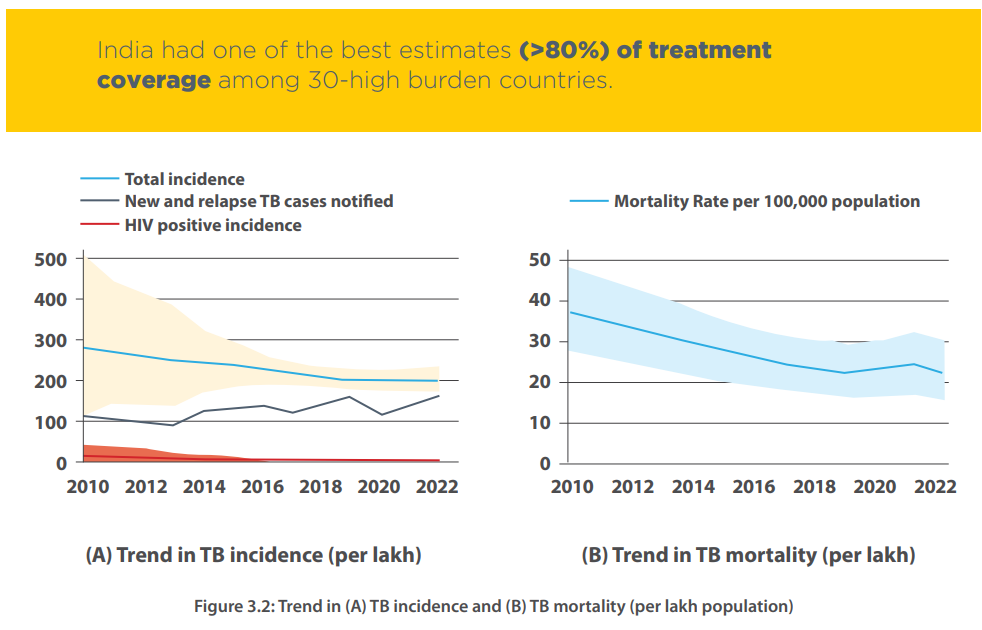
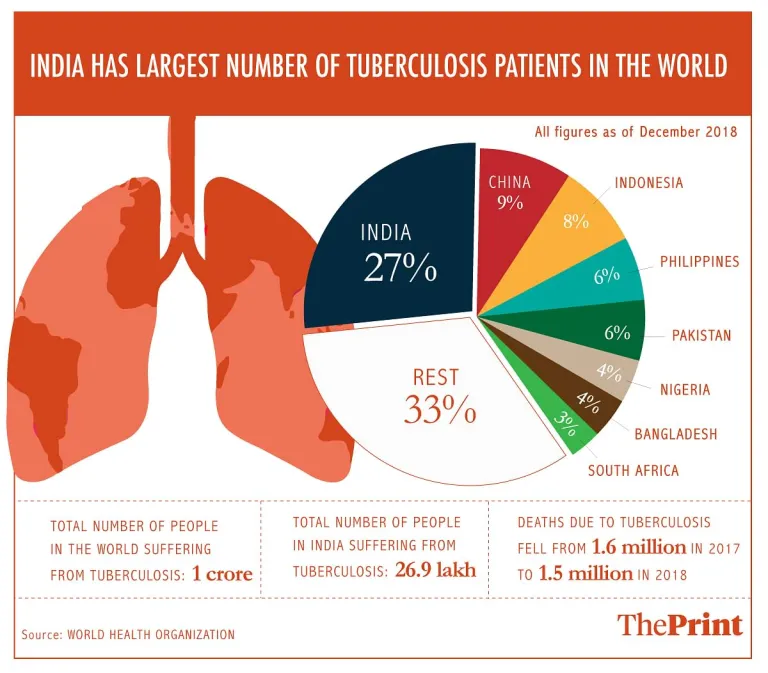
Tuberculosis (TB) remains a major health issue for India, which accounts for 26% of the world’s TB cases. The 2024 India TB Report by the Ministry of Health and Family Welfare highlights significant achievements, challenges, and areas of concern as the country strives toward its ambitious target of TB elimination by 2025. Here’s a concise look at the findings, challenges, and government initiatives to tackle TB.
Key Highlights: India TB Report 2024
Year
Total TB Cases (lakh)
Mortality Rate (per lakh)
Private Sector TB Cases (lakh)
2015
19.1
28
1.9
2023
25.5
23
8.4
Decline in Mortality Rate: TB mortality dropped from 28 per lakh in 2015 to 23 in 2022.
Increase in Private Sector Involvement: Private sector notifications rose from 1.9 lakh in 2015 to 8.4 lakh in 2023, showing improved engagement in TB detection.
Case and Mortality Trends: While estimated TB incidence slightly increased to 27.8 lakh in 2023, TB mortality held steady at 3.2 lakh.
Challenges to Eliminate TB by 2025
Challenge
Explanation
High burden of TB cases
India accounts for 28% of all global TB cases (Global TB Report 2022). This makes it difficult to identify and treat cases on time.
Drug-resistant TB
Drug-resistant TB is widespread in India, making treatment more expensive and complicated. This is due to improper antibiotic use and poor adherence to treatment.
Limited access to healthcare
Many people, especially in rural areas, lack access to quality healthcare, leading to delayed diagnosis, treatment, and increased TB spread.
Stigma and discrimination
The stigma surrounding TB prevents people from seeking treatment or disclosing their illness due to fear of discrimination or isolation.
Poor living conditions
Overcrowded homes, poor sanitation, and lack of clean water increase the risk of TB transmission.
Limited awareness
Many people don’t know the symptoms of TB or the importance of completing treatment, leading to delays and further spread.
Insufficient funding
Despite the severity of TB in India, it receives inadequate funding and attention from policymakers and healthcare providers.
Government Initiatives Against TB
Initiative
Description
Pradhan Mantri TB Mukt Bharat Abhiyan
Community-based program offering nutritional support through Ni-kshay Mitras
National Strategic Plan (NSP)
Aims to eliminate TB by 2025, targeting no more than 44 new TB cases per lakh
Digital Tracking (Nikshay Portal)
Digital platform for monitoring patient progress and ensuring treatment adherence
Free Treatment and Drug Access
Free supply of essential drugs like Bedaquiline and Delamanid
Expanded Testing Access
Increased use of molecular diagnostics (CB-NAAT, TureNat) across districts
Innovative Approaches Adopted by States:
Chhattisgarh: By involving Village Health Committees in TPT efforts, Chhattisgarh improved grassroots-level awareness, screening, and treatment adherence for TB prevention, leveraging local networks effectively.
Tamil Nadu: Tamil Nadu adopted local procurement of the 3HP TPT regimen, ensuring a shorter, accessible TB prevention therapy, which enhanced patient compliance and streamlined medication availability.
Maharashtra and Rajasthan: These states introduced TPT in high-risk groups like prison inmates, integrating preventive therapy into Active Case-Finding (ACF) efforts, reducing TB prevalence in vulnerable populations.
WHO Recommendations for TB Control
Molecular Diagnostics: Faster, more accurate diagnostics similar to COVID-19 testing.
MDR-TB Management: Better prescription practices, drug quality, and treatment completion.
Patient-Centered Care: Improved support for managing treatment side effects, enhancing treatment completion.
Moving Forward: Key Recommendations
Strengthen Multi-Sectoral Collaboration: Engage healthcare, social services, and education to address TB’s root causes.
Enhance Rural Access: Boost local healthcare infrastructure, deploy mobile health units, and train community health workers.
Stigma Reduction and Awareness: Implement public campaigns to reduce stigma and educate on TB prevention, symptoms, and treatment.
India’s path to TB elimination by 2025 requires a holistic, coordinated approach, addressing healthcare gaps and social determinants to ensure accessible and effective TB care. By fostering cross-sector collaboration, enhancing diagnostics, and addressing the social factors influencing TB, India can accelerate its progress toward a TB-free nation.
#BACK2BASICS
Understanding Tuberculosis
Parameter
Details
Cause
Bacterial infection caused by Mycobacterium tuberculosis
Transmission
Airborne, particularly in dense, poorly ventilated areas
Common Symptoms
Cough, chest pain, weakness, weight loss, fever, night sweats
Global Impact
TB infects 10 million and causes 1.5 million deaths annually, affecting HIV patients
Treatment
Standard 6-month, four-drug course with supervised support
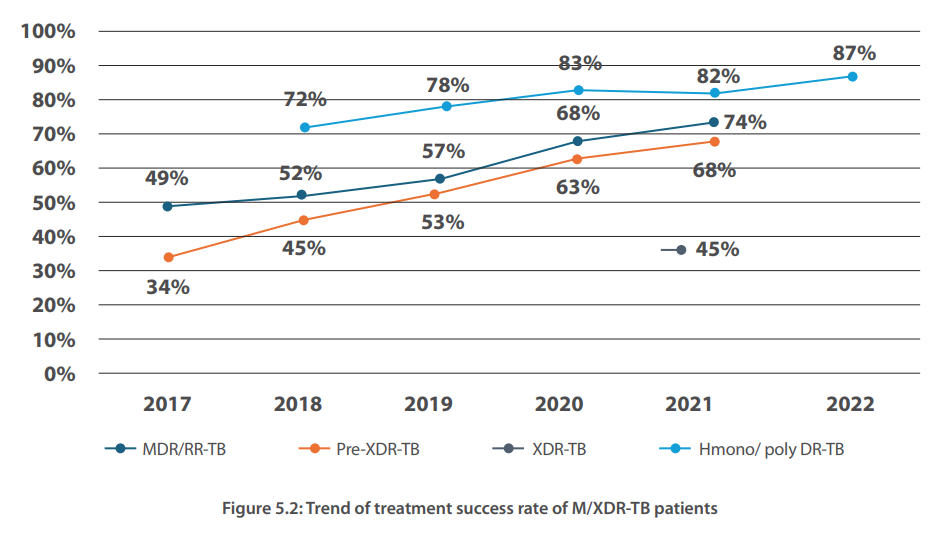
Drug-Resistant TB:
MDR-TB: Resistant to isoniazid and rifampicin, requiring second-line drugs like bedaquiline.
XDR-TB: Highly resistant, responding poorly to standard and even second-line treatments.
TREATMENT FOR TB
Standard 6-Month Treatment Course
Phase
Details
Intensive Phase (2 months)
For new TB cases, the intensive phase includes four drugs: Isoniazid (INH), Rifampicin, Pyrazinamide, and Ethambutol.
Continuous Phase (4 months)
After completing the intensive phase, the continuous phase follows for 4 months.
For Previously Treated Cases
The intensive phase lasts 12 weeks, with an injection of streptomycin given for 8 weeks along with four drugs.
Regimen Duration
A strictly followed 6-month drug regimen cures most people with TB.
BPaLM Regimen
Feature
Details
Drugs Used
Bedaquiline, Pretomanid, Linezolid, and Moxifloxacin.
Advantages
– Faster, safer, and more effective compared to traditional treatments.
– Cures MDR-TB in 6 months (compared to 20 months with traditional treatment).
– Higher success rate for drug-resistant TB treatment.
– Fewer and milder side effects.
– Shorter treatment duration and reduced side effects lead to lower overall costs.
Multidrug-Resistant TB (MDR-TB)
Feature
Details
Diagnosis
CBNAAT (Cartridge Based Nucleic Acid Amplification Test) is used for early diagnosis.
Resistance
MDR-TB is resistant to at least Isoniazid and Rifampicin, the two most powerful anti-TB drugs.
Treatment Challenges
Treatment options for MDR-TB are limited and expensive.
Causes of MDR-TB
Cause
Details
Mismanagement of Treatment
Inappropriate or incorrect drug use, ineffective drug formulations, or premature treatment interruption.
Transmission
Person-to-person transmission of the disease.
Extensively Drug-Resistant TB (XDR-TB)
Feature
Details
Resistance Profile
XDR-TB is a form of MDR-TB with additional resistance to fluoroquinolones and at least one second-line injectable drug (amikacin, kanamycin, capreomycin).
Treatment for Drug-Resistant TB
Treatment Type
Details
MDR-TB Treatment Success
Treatment success for MDR-TB is about 54%.
XDR-TB Treatment Success
Treatment success for XDR-TB is about 30%.
Treatment Duration
XDR-TB requires a combination of eight drugs for over a year.
Success Factors
Treatment success depends on the extent of resistance, disease severity, immune system strength, and adherence to treatment.
Side Effects
Drugs used for treating MDR-TB and XDR-TB can cause serious adverse effects, including deafness.
The Reserve Bank of India (RBI) Financial Stability Report (FSR), 2024 has highlighted an increasing household debt burden and a concerning rise in consumption-based borrowing.
About Financial Stability Report (FSR):
The FSR is published biannually (June & December) by the RBI.
It reflects the collective assessment of the Sub-Committee of the Financial Stability and Development Council (FSDC – headed by the Governor of RBI) on risks to financial stability and the resilience of the financial system.
The Report also discusses issues relating to the development and regulation of the financial sector.
Key Highlights of the Financial Stability Report (FSR) 2024: