The ongoing conflict between Israel and Palestinian forces, triggered by Hamas’ barbaric assault, has resulted in a distressing and increasing death toll on both sides.
This conflict operates within a multifaceted international system of justice that has evolved since World War II.
Various War Crime Laws
1949 Geneva Conventions: Internationally accepted rules of armed conflict emerged from these conventions, ratified by all UN member states and complemented by decisions at international war crimes tribunals.
“Law of Armed Conflict”: A series of treaties collectively known as the “Law of Armed Conflict” or “International Humanitarian Law” governs the treatment of civilians, soldiers, and prisoners of war. It applies to both government forces and organized armed groups, including Hamas militants.
ICC Jurisdiction: The International Criminal Court (ICC) in The Hague holds the authority to bring charges against alleged perpetrators if domestic courts do not or cannot do so.
Role and Jurisdiction of the ICC
Establishment: The ICC, a permanent war crimes tribunal, was established in 2002 in The Hague. It has jurisdiction over war crimes, crimes against humanity, and genocide committed in its 123 member states or by their nationals.
Notable Absences: Major global powers like China, the United States, Russia, India, and Egypt are not ICC members. Israel rejects the court’s jurisdiction and does not formally engage with it.
Ongoing Investigation: ICC prosecutors have been investigating allegations of war crimes and crimes against humanity in the occupied Palestinian territories since 2021, although no arrest warrants have been issued.
Acts Potentially Violating War Crimes Law
Deliberate Targeting of Civilians: Human Rights Watch identified potential war crimes, including the intentional targeting of civilians, indiscriminate rocket attacks, and the hostage-taking of civilians by Palestinian armed groups.
Israeli Counter-Strikes: Israeli counter-strikes in Gaza, resulting in the deaths of numerous Palestinians, could also fall under scrutiny as potential war crimes.
Geneva Conventions Prohibitions: The Geneva Conventions explicitly prohibit acts such as taking hostages, murder, and torture, regardless of the conflict’s complexity.
Application of the Geneva Conventions
Right to Respond: US President Joe Biden acknowledged Israel’s right and duty to respond to the conflict while emphasizing the importance of acting within the rule of law.
Siege Considerations: A siege may be considered a war crime if it disproportionately targets civilians rather than undermining Hamas’ military capabilities or if it is found to be disproportionate.
Proportionality: Attacks on military targets must be proportionate, meaning they should not result in excessive civilian casualties or damage compared to the expected military advantage.
Conclusion
The Israel-Palestine conflict unfolds against a backdrop of intricate international legal frameworks and considerations.
Navigating the complexities of determining war crimes in this context requires a meticulous examination of actions on all sides, considering proportionality, deliberate targeting of civilians, and adherence to the Geneva Conventions.
As the conflict’s toll continues to rise, scrutiny of potential violations of international humanitarian law remains essential for justice and accountability.
India has been ranked 111th out of 125 countries in the Global Hunger Index-2023, a stark decline from its 107th position in 2022.
The index highlights a concerning statistic – India reports the world’s highest child wasting rate at a staggering 18.7 percent.
Interestingly, India’s neighboring countries, including Pakistan (102nd), Bangladesh (81st), Nepal (69th), and Sri Lanka (60th), have performed comparatively better in the index.
Global Hunger Index (GHI)
Publication
Jointly published annually by Concern Worldwide and Welthungerhilfe.
Scale
Measures hunger on a 100-point scale, with 0 as the best (no hunger) and 100 as the worst score.
Purpose
Comprehensively measures and tracks hunger globally, regionally, and at the country level. Aims to trigger action to reduce hunger worldwide.
Indicators
4 key indicators for each country:
1. Undernourishment (reflects inadequate food availability): Share of the population that is undernourished.
2.Child Wasting (reflects acute undernutrition): Share of children under five with low weight for their height.
3.Child Stunting (reflects chronic undernutrition): Share of children under five with low height for their age.
4.Child Mortality (reflects inadequate nutrition and unhealthy environment): Mortality rate of children under five.
Hunger in India: Fact Check
Serious Hunger Levels: India’s score of 28.7 in the Global Hunger Index-2023 places it in the “serious” category, according to the report.
Child Wasting: India’s child wasting rate, the proportion of undernourished children measured by weight relative to their height, stands at an alarming 18.7 percent, signaling acute undernutrition.
Undernourishment Rate: The rate of undernourishment in India is reported at 16.6 percent, further highlighting the gravity of the issue.
Child Mortality: Under-five mortality in India is recorded at 3.1 percent.
Anemia Among Women: The report underscores a significant concern, with 58.1 percent of women aged 15 to 24 in India being affected by anemia.
A report to bully India
Disputed Ranking: The Indian government has rejected the GHI 2023 ranking, citing serious methodological concerns and suggesting a malicious intent behind the report (considering elections).
Methodological Issues: The WCD Ministry asserts that the GHI 2023 report suffers from significant methodological issues. It contends that 3 out of 4 indicators used for calculation pertain to child health, which does not represent the entire population.
Sample size issue: It is questionable that only small sample size of 3,000 is used for the “Proportion of Undernourished Population” indicator for crores population in India.
Child Wasting Discrepancy: The ministry highlights a significant disparity between the child wasting rate as per the Poshan Tracker (consistently below 7.2 percent) and the 18.7 percent reported in GHI 2023.
Undue link with Child mortality: It also challenges the notion that child mortality is solely an outcome of hunger.
Conclusion
India’s ranking underscores the persistent challenges in addressing hunger and undernutrition.
The report serves as a stark reminder of the critical need to comprehensively tackle these issues, especially child wasting and undernourishment, to ensure the well-being of the nation’s population.
There’s a golden window between October to January that’s arguably the best time to dive deep into the UPSC Ethics syllabus. Imagine these four months as the runway where you not only grasp the complex ethical concepts but also refine your answer writing skills, craft concise notes, and attempt numerous tests to gear up for the main event.
While Ethics may seem abstract, its preparation doesn’t have to be. Our structured program, under the aegis of Sukanya ma’am, provides you with a clear roadmap.
Coupled with her proven track record, this program is designed to boost not just your Ethics score but also your overall confidence.
Ethics defies a singular approach, requiring a nuanced understanding. Drawing from our extensive experience with over 2000 students, we can confidently state that ethics holds the power to reshape one’s UPSC examination journey.
What is Smash Ethics?
Civilsdaily’s Smash Ethics Program has emerged as a game-changer for UPSC 2022 toppers, including AIR-16, AIR-22, AIR-48, AIR-49, AIR-218, and AIR-273, among others. Smash Ethics by Sukanya Rana Ma’am provides a comprehensive and strategic framework to excel in this UPSC GS 4.
The Smash ethics program will focus on both the needs of answer writing and static coverage of the syllabus.
By integrating a diverse range of case studies, model answers, and real-time analysis of ethical dilemmas, the program equips candidates with a deep understanding of ethical concepts and their practical application.
Additionally, Civilsdaily’s 1-to-1 personalized mentorship and feedback system has played a pivotal role in honing the skills of these toppers, boosting their confidence, and ultimately helping them secure top ranks in the UPSC examination.
Smash Ethics Program Inclusion:
Comprehensive Video Lectures covering Paper 4
Full syllabus PDF Notes.
8 FLT tests
1-1 Mentorship support after every test with Sukanya Rana ma’am
Progress review webinars
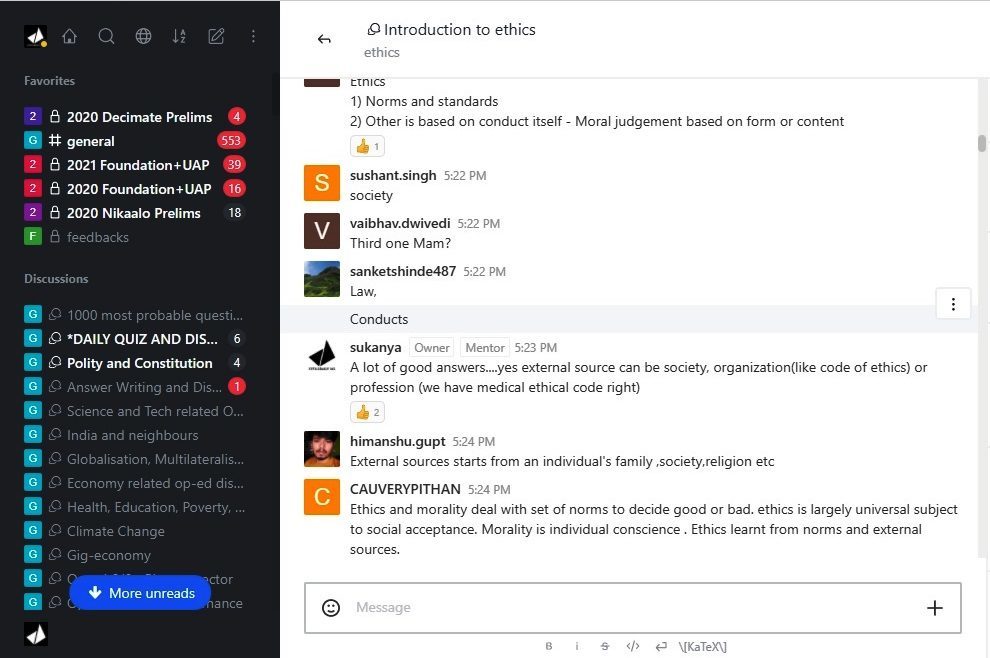
Membership of Ethics group (exclusive) on Civilsdaily’s Telegram Group
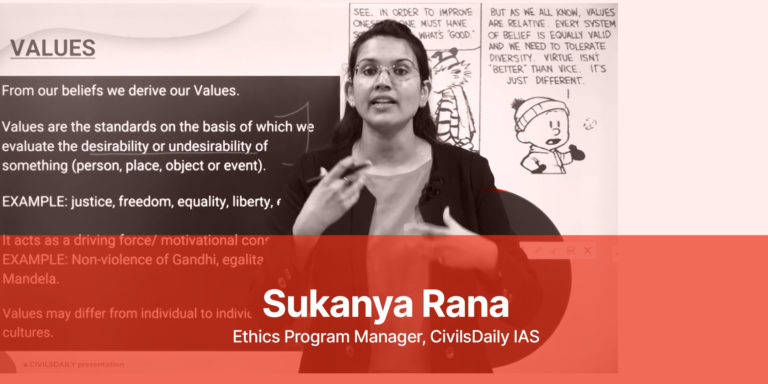
Structured video lectures of Paper 4 for a concrete understanding of the syllabus. Our novel methodology accompanied by an in-depth explanation ensures comprehensive coverage of every topic in the syllabus. Added to this, we have made sure to add that extra element of fun. Here’s a snapshot of the lecture for you:
8 FLT Tests:
FLT tests will help to bring together the ideas and concepts to the art of answer writing. Practice full-length tests to evaluate your levels. With every test and discussion on strategies to follow, one can improve with every test. Questions framed are from the most important UPSC relevant themes and papers are based on the latest pattern of UPSC. Get model answers covering all the aspects of a question and providing enriching points to the student.
1-1 Mentorship support
A schedule is created where dedicated days are kept to discuss your doubts regarding each test and lecture. Weekly Zoom calls can help boost ideas and discussion on various techniques, also among peers so that one can get a lot of exposure to various answer writing techniques and points to write in the answer. Also, the best answer copy of the week can be taken for discussion so that you can get an idea of how to write better.
Civilsdaily’s Handholding
You’ll be given membership to an exclusive group on Civilsdaily’s Telegram. The group will be headed by Sukanya Ma’am herself. From doubt resolution and discussion will be done by Sukanya ma’am only. Here you can directly connect with ma’am.
Introducing the maestro behind our Ethics program – Sukanya Rana ma’am. A guiding light to over 100 rankers, including the shining stars of AIR 22, AIR 16, AIR 28, AIR 32, and notably, AIR 48. Remember the incredible journey of AIR 48 who catapulted his Ethics score from 48 to a whopping 133 marks? That transformation had Sukanya ma’am’s mentorship written all over it.
Sukanya Ma’am has firsthand experience of 4 mains and 2 interviews with UPSC. She has also appeared in the State PCS interview. Before she worked as an officer in a public sector bank and now as a Mentor at Civilsdaily, she aims to guide future aspirants in finding success. Sukanya Ma’am has scored consistently 100+ marks in ethics and in 2019 her marks were 140 in GS 4.
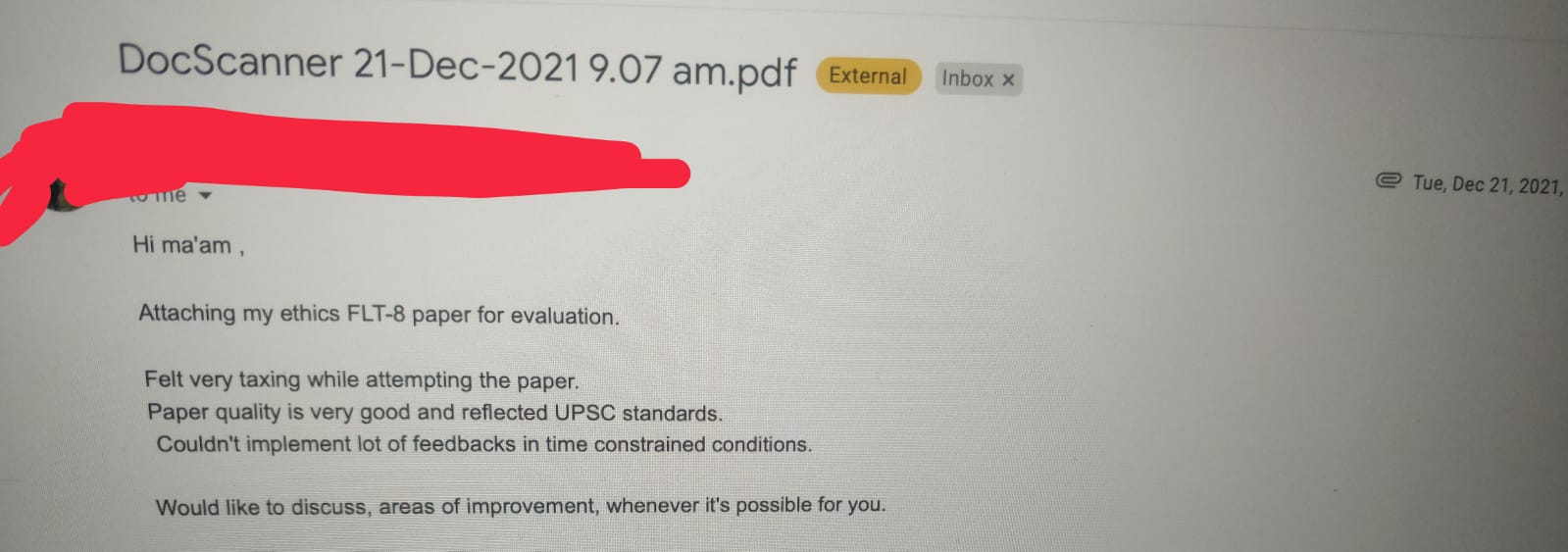
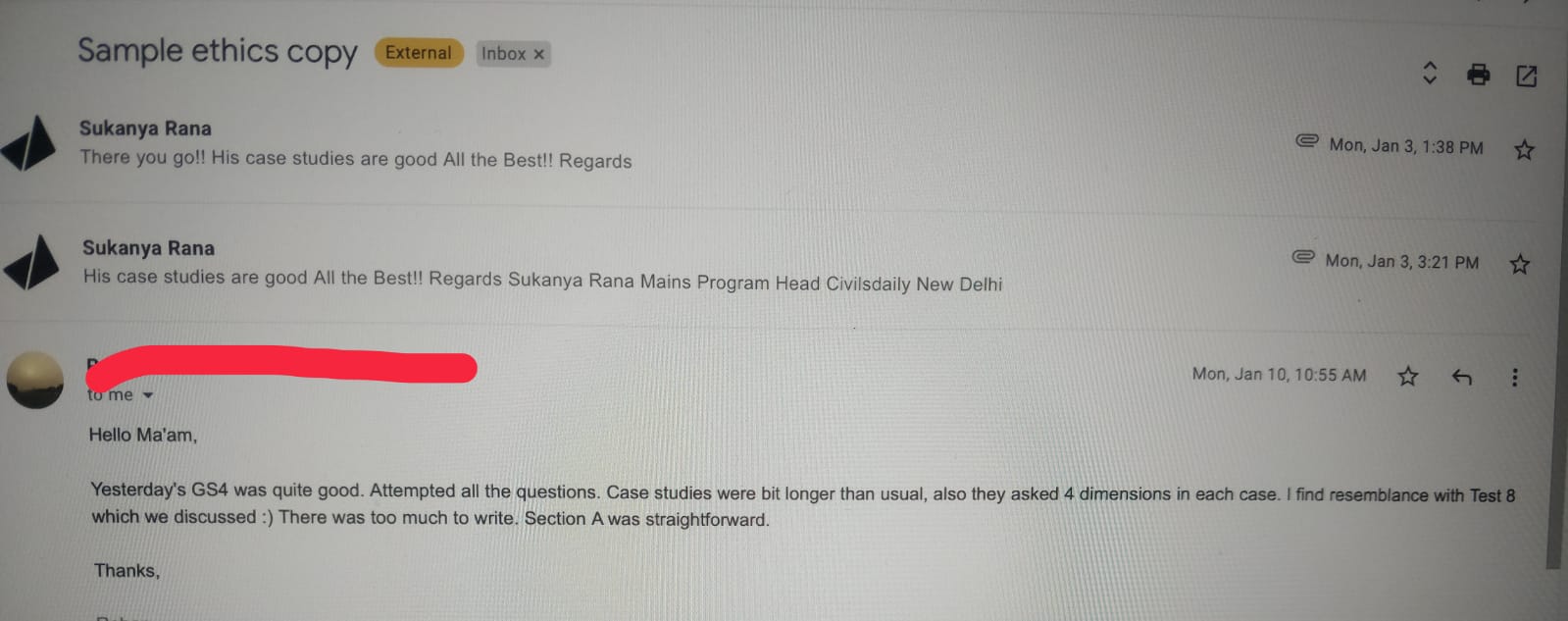
Student’s Gratitude Messages:
MANTRI MOURYA BHARADWAJ AIR-28 Roll: 1009473
Rohan, Top Ranker UPSC-2021.Soham Mandre AIR 267 UPSC 2021 Roll: 6629429
September 2023 stands out as it recorded a remarkable 1.75-degree Celsius increase compared to the pre-industrial baseline of 1850–1900, making it a month with an unprecedented temperature deviation.
Central idea
In the relentless march of climate change, 2023 has emerged as a year of unprecedented heatwaves. Each passing month seems to shatter temperature records, leaving us with grim prospects for the remainder of the year. As September, the hottest on record, draws to a close, we must confront the sobering reality that 2023 may become the warmest year ever recorded.
2023: On Track to Be the Warmest Year
2023 is poised to claim the dubious distinction of being the warmest year on record. The average temperature for the first nine months of the year already surpasses the corresponding period of 2016, the previous record holder.
In 2016, the average temperature was 1.28 degrees Celsius higher than pre-industrial times, and 2023 may breach the 1.5-degree Celsius mark for the first time.
Rising Temperatures Predicted
The remarkable string of record-breaking temperature events in 2023 was not entirely unexpected. Scientists had foreseen this year’s warmth, primarily due to the development of El Niño in the Pacific Ocean.
While specific events couldn’t be predicted, the overall trend was ominous. Forecasts indicate that the last three months of the year will continue to be warmer than usual.
Record-Breaking Months
The record-breaking temperatures in September follow a pattern of extraordinary warmth throughout the year. July, in particular, stood out as the warmest month ever recorded, setting a new global monthly temperature high.
Multiple days in July broke daily temperature records. Preceding this, June claimed the title of the warmest June ever, and February, March, April, and May all ranked among the top five hottest for their respective months.
Lack of immediate solutions
Despite the alarming rise in temperatures and the string of record-breaking events in 2023, there has been a noticeable lack of immediate policy responses from countries to combat climate change.
Addressing climate change in the short term is challenging, and there are limitations to what can be done to lower temperatures or prevent future warming events on an immediate timescale.
Only a global disruption on the scale of the COVID-19 pandemic could bring about significant deviations from the current trend of increasing temperatures.
Way forward: Urgent action is needed
There is an urgent need for decisive action in response to the unprecedented heatwaves and their associated impacts.
The world is rapidly approaching critical climate thresholds, including the 1.5-degree Celsius target set by the Paris Agreement.
The lack of immediate solutions and policy responses to mitigate climate change is a pressing concern.
Nations need to acknowledge the stark reality of climate change’s relentless advance and take immediate, robust, and meaningful measures to address the crisis.
Decisive action is required now to prevent irreversible consequences associated with global warming.
Conclusion
As nations prepare for the annual climate change meeting in Dubai, it is imperative that they acknowledge the stark reality of climate change’s relentless advance. The stock-take exercise must reveal the gaps in global climate action and serve as a wake-up call for more robust and immediate measures.
The issue of employment has been a central topic in economic policy discussions, especially in recent decades, as the correlation between economic growth and job creation has appeared fragile.
Central idea
The COVID-19 pandemic intensified economic disruptions, causing financial distress, surging unemployment, and rural migration. The 2022-23 labor force survey shows rising participation rates and lower unemployment but raises concerns with declining regular employment and a rise in self-employment.
Increasing Labor Force Participation
The national labor force participation rate (15 years and above) has grown from 49.8% in 2017-18 to 57.9% in 2022-23.
Both rural and urban areas have witnessed increased participation, with a more significant rise in rural regions.
Female participation in rural areas increased from 24.6% in 2017-18 to 41.5% in 2022-23, indicating higher female engagement in the labor force.
However, this rise may also reflect economic distress in rural areas, pushing women to seek employment to augment family incomes, including work under MGNREGA.
Rise in Self-Employment
The percentage of self-employed individuals increased from 55.6% in 2020-21 to 57.3% in 2022-23.
Concurrently, the share of regular wage/salaried employment declined from 21.1% to 20.9%.
The proportion of workers engaged in informal sector enterprises in the non-agricultural sector also rose from 71.4% in 2020-21 to 74.3% in 2022-23.
Concerns Over Job Quality
While unemployment rates have fallen across the board, especially among the youth (age group 15-29), the decline in regular wage/salaried employment and the increase in self-employment raise concerns.
These trends indicate that the economy may struggle to create sufficient productive and well-paying job opportunities to absorb the annual influx of millions into the labor force.
Inadequate job creation remains the most significant challenge facing policymakers.
Conclusion
The recent labor force survey highlights both positive and concerning trends in India’s labor market. Addressing the challenge of job creation and ensuring that these jobs are productive and remunerative should remain a top priority for policymakers in India’s economic development agenda.
India’s leadership role in the G20 reflects its growing importance and influence in global politics.
Central idea
India celebrated its 74th Republic Day earlier this year, commemorating the adoption of the Constitution of India on January 26, 1950, marking the nation’s transition to a sovereign republic. This year, India’s Republic Day holds special significance as the country assumes the presidency of the G20, an influential forum comprising the world’s leading advanced and emerging economies.
India’s Democratic Success Story
India’s journey as the world’s largest inclusive democracy, characterized by its multi-dimensional diversity and pluralistic society, is both fascinating and inspiring.
Despite formidable challenges in the form of illiteracy and widespread poverty, India’s visionary Constitution makers established a multi-party democratic political system immediately after gaining independence.
Overcoming these hurdles, India has consistently conducted free and fair elections through its independent constitutional body, the Election Commission of India, solidifying its democratic credentials.
In a world where many post-colonial nations grappled with political turbulence, India’s commitment to electoral democracy stood as a beacon of hope.
Socio-Economic Development and Increased Political Participation
Socio-Economic Progress:
India’s ascent as a democratic republic has been accompanied by substantial socio-economic advancements.
Over the decades, the nation has made significant strides in alleviating poverty, expanding access to education, improving healthcare, and developing infrastructure.
These achievements have not only improved the standard of living but also fostered a sense of inclusion among its diverse population.
Youth Empowerment:
India’s burgeoning youth population has emerged as a potent force in shaping the country’s political landscape.
Young people are increasingly active in civic participation, advocating for change, and driving social and political discourse.
This dynamism reflects a commitment to democratic principles and a desire to influence the nation’s direction.
Rising voter turnout:
India’s commitment to democratic values is vividly demonstrated through the consistently rising voter turnout in elections.
Citizens across the country recognize the power of their votes in shaping the destiny of the nation.
This surge in political engagement underlines the vibrancy of India’s democracy.
Empowerment of women:
A heartening trend in India’s democratic journey has been the growing participation of women in both electoral processes and political leadership.
The increased representation of women at various levels of governance not only strengthens democracy but also promotes gender equality and diversity in decision-making.
Diverse Political Landscape:
India’s democracy has evolved into a dynamic and diverse political arena. A multitude of political parties, each representing unique constituencies and interests, actively participate in the democratic process.
This pluralism underscores India’s commitment to accommodating a wide range of perspectives and voices.
India’s G20 Presidency
Global Significance: The G20, comprising the world’s most advanced and emerging economies, is a forum of immense global significance. India’s presidency in this forum signifies its ascent as a major player in international affairs.
Showcasing India: Hosting G20 meetings in India provided a unique opportunity to showcase the nation’s diversity, culture, democracy, development, and technological prowess to the global community. It allowed India to present its story as a positive model of pluralistic democracy and development, inspiring other nations, particularly in the Global South.
Covid Pandemic Response: India’s handling of the COVID-19 pandemic further solidified its reputation as a responsible global leader. Its ability to manage the crisis, provide vaccines to other nations, and contribute to global efforts for containment and recovery demonstrated its commitment to international cooperation.
Bilateral and Multilateral Engagement: During its G20 presidency, India engaged in important bilateral and multilateral discussions, fostering partnerships and addressing global challenges. Key agreements, such as the India-Middle East-Europe Economic Corridor Agreement and the Global Biofuels Alliance, highlighted India’s role in shaping international economic and environmental agendas.
Outcomes of the G20 Summit
Economic Advancements: The G20 New Delhi Summit also served as a platform to showcase India’s contemporary technological advancements and its rich heritage, culture, and traditions. It energized the international economy, promoted tourism, enhanced food security through millet production, and deepened commitments to sustainable biofuels.
Food Security: The summit emphasized stronger food security through millet production and consumption. This initiative aligns with global efforts to enhance food sustainability and ensure a stable food supply for growing populations.
Commitment to Biofuels: India’s leadership in the G20 Summit deepened its commitment to sustainable biofuels. This focus on clean energy sources aligns with global efforts to combat climate change and reduce carbon emissions.
Key Agreements: Notably, the G20 Summit witnessed the conclusion of significant agreements, including the India-Middle East-Europe Economic Corridor Agreement and the Global Biofuels Alliance. These agreements are of considerable significance in shaping international economic and environmental agendas.
P20 (Parliamentary 20)
The P20 (Parliamentary 20), which has evolved significantly since its inception in Canada in 2010, exemplifies the importance of parliamentary participation in shaping the global agenda.
It has garnered social acceptance and legal tenability in participating countries, emphasizing the importance of involving elected representatives in international decision-making.
The Role of Parliament in Global Governance
Supreme Law-Making Body: Parliament is the supreme law-making body in any democratic nation, representing the will and aspirations of its citizens. In the context of global governance, the role of parliament is essential, as it ensures that international agreements and commitments align with the interests and values of the people it represents.
Democratic Accountability: Parliament’s participation in global governance adds a layer of democratic accountability to international agreements and treaties. When elected representatives endorse these agreements, they become socially acceptable and legally binding within their respective countries.
Bilateral and Multilateral Engagement: Parliaments also engage in bilateral and multilateral discussions, further fostering partnerships and addressing global challenges. Their involvement helps shape the direction of international cooperation and ensures that agreements benefit their respective nations.
P20 Summit Agenda
The upcoming P20 Summit, hosted by the Indian Parliament, exemplifies the parliamentary dimension’s significance in global governance.
The summit’s four high-level sessions, focusing on themes such as Sustainable Development Goals, Sustainable Energy Transition, Gender Equality, and Public Digital Platforms, will facilitate wide-ranging discussions among G20 members and guest countries on how parliaments can effectively advance global objectives.
What else: Emphasizing Environmental Responsibility
The LiFE is Beautiful initiative, recognizing environmentally conscious communities as Pro-Planet People” (P-3), demonstrates India’s commitment to sustainability and responsible living.
Conclusion
This year’s P20 Summit theme, One Earth, One Family, One Future, reflects the spirit of unity and shared responsibility. India’s journey from Republic Day to G20 leadership is a testament to its democratic strength and its increasingly influential role in shaping the global future.
The recent awarding of a Geographical Indication (GI) tag to Goa’s cashew industry has ignited hope and enthusiasm among cashew manufacturers and processors in the state.
Goa’s Cashew Industry
Introduction of Cashew in Goa: Cashew was introduced to Goa in the 16th century by Portuguese colonizers. Initially, it was primarily cultivated for afforestation and soil conservation purposes.
Discovery of Edible Value: The true economic value of cashew nuts was discovered during Goa’s freedom movement in the mid-18th century. Goan prisoners exiled to Portuguese territory in Africa (Mozambique) recognized the edible potential of cashew nuts.
Growth of Cashew Industry: Cashew production evolved from a cottage industry to a large-scale enterprise, driven by demand, particularly in the USA. The first cashew factory in Goa began operations in 1926, and the first consignment of cashew kernels was exported in 1930.
Foreign Trade Contribution: By 1961, the cashew processing industry accounted for about 60% of industrial production in Goa. Cashew nuts, both locally grown and imported, were processed and exported to countries like the United States of America, Japan, Saudi Arabia, and West Germany.
Understanding the GI Tag
A GI is a sign used on products that have a specific geographical origin and possess qualities or a reputation that are due to that origin.
Nodal Agency: Department for Promotion of Industry and Internal Trade (DPIIT), Ministry of Commerce and Industry
India, as a member of the World Trade Organization (WTO), enacted the Geographical Indications of Goods (Registration and Protection) Act, 1999 w.e.f. September 2003.
GIs have been defined under Article 22 (1) of the WTO Agreement on Trade-Related Aspects of Intellectual Property Rights (TRIPS) Agreement.
As China celebrates the 10th anniversary of its ambitious Belt and Road Initiative (BRI) in 2023, the progress of one of its flagship projects, the China Pakistan Economic Corridor (CPEC), appears to have slowed down.
Despite its initial promise, challenges related to economic, security, and political factors have led to a reevaluation of the CPEC’s future.
CPEC Overview
Inception: Signed in 2015, the CPEC aimed to facilitate Chinese goods’ transportation from Xinjiang through Pakistan to the Gwadar port on the Arabian Sea.
Investment: It involves significant Chinese investments in rail and road infrastructure and energy development in Pakistan.
Reasons behind CPEC Slowdown
(A) Economic Factors
Pakistan’s Economic Crisis: Pakistan’s deteriorating economic situation has impacted the viability of new CPEC projects.
China’s Economic Slowdown: China’s economic slowdown has also contributed to a reduction in new investments.
(B) Overpromising and Under-delivering
High Expectations: CPEC faced criticism for generating high expectations but delivering limited tangible benefits to the Pakistani people.
Debt Burden: Pakistan has incurred substantial public debt and payments to Chinese companies, further straining its finances.
(C) Political Instability in Pakistan
Imran Khan’s Ouster: The political instability following the ousting of former Prime Minister Imran Khan in 2022 has raised concerns about political stability.
Lack of Clarity: The uncertainty surrounding the timing of future elections adds to China’s worries.
(D) Security Concerns
Threats to Chinese Workers: Security threats to Chinese workers and projects, including attacks by militants, have raised alarm.
Expanding Threat Landscape: China faces a range of security threats, including Baloch insurgents, the Pakistani Taliban (TTP), and Islamic State-Khorasan province (IS-K).
China’s Response and Concerns
Security Measures: China is increasingly concerned about security threats to its Belt and Road investments and has taken measures to safeguard its personnel and infrastructure.
Potential Political Fallout: China’s potential deployment of its security forces to protect its assets in Pakistan could have political implications.
Conclusion
The CPEC, a vital component of China’s BRI, faces a complex set of challenges.
Economic pressures, overpromising, political instability in Pakistan, and security threats have contributed to its slowdown.
While some maintain optimism about the project’s future, addressing these multifaceted issues will be crucial for the CPEC to realize its full potential and continue as a significant driver of regional development.
India’s diplomatic position on the Israel-Palestine conflict has witnessed significant shifts over the years.
While PM recent expression of solidarity with Israel during a period of heightened conflict has sparked debate, it is essential to contextualize these developments in India’s historical foreign policy.
This article delves into India’s stance on the Israel-Palestine issue, the factors shaping its policies, and the implications of its evolving approach.
Historical Background
India’s Early Stance: India’s initial position on the Israel-Palestine issue was shaped by leaders like Jawaharlal Nehru and Mahatma Gandhi. In 1947, India voted against UN Resolution 181, advocating for the partition of Mandatory Palestine. Nehru favored a federal state with wide autonomy for Arabs and Jews, influenced by Gandhi’s opposition to a Jewish state.
Recognition of Israel: Despite recognizing Israel in 1950, India did not establish diplomatic relations until 1992. Factors such as a sizable Muslim population, Cold War dynamics, and the need to maintain Arab support influenced this delayed recognition.
Impact of Establishing Diplomatic Relations
End of Cold War: India’s decision to establish diplomatic ties with Israel in 1992 marked a shift after the end of the Cold War. The government of P.V. Narasimha Rao took this bold step, focusing on national interests and strengthening economic relations, particularly in defense.
Ongoing Support for Palestine: India’s recognition of Israel did not signal abandonment of its principled support for Palestine. India continued to voice support for the Palestinian cause while developing closer ties with Israel.
Contemporary Developments
India-Israel Relations: Presently, India enjoys a strong and multifaceted relationship with Israel. Prime Ministers Modi and Netanyahu have cultivated personal rapport, and both countries collaborate closely, especially in the defense sector.
Change in Rhetoric: India has adopted a more measured approach in its rhetoric regarding the Israel-Palestine conflict, especially in international forums like the United Nations. Some argue that India’s pro-Palestine stance has not yielded commensurate benefits in terms of national interest.
Ideological Shift: India’s support for Israel’s response to attacks from Gaza is sometimes misinterpreted as anti-Islamic action. Israel’s approach to cross-border terrorism resonates with some in India, although the situations differ significantly.
India’s Formal Position
Support for Two-State Solution: India officially supports the two-state solution, envisioning Israel and Palestine as peaceful neighbours coexisting harmoniously.
Official visits: PM Modi’s visit to Ramallah in 2018 underscored India’s commitment to this position.
Public perception: A large section of Indian society is supportive of the Palestinian cause due to religious affinities.
Potential Implications of Current Escalation
Palestinian Reaction: While the Palestinians may express dissatisfaction with India’s growing proximity to Israel, it is unlikely to result in significant backlash. Popular sentiment may revive support for the Palestinian cause.
Arab World’s Perspective: Arab countries, including Saudi Arabia, have shifted their focus from the Palestinian issue. They are increasingly open to normalizing relations with Israel. India’s stance is unlikely to disrupt its relationships with these nations.
Conclusion
India’s evolving stance on the Israel-Palestine issue reflects its pragmatic approach to foreign policy.
While it maintains support for Palestine, India has strategically developed robust relations with Israel, grounded in national interests.
The recent expression of solidarity with Israel amid conflict highlights the complexities of India’s diplomatic balancing act in the region.