National Science Day is commemorated on Feb 28 every year to commemorate the bird anniversary of Sir CV Raman.
National Science Day
In 1986, the Government of India, under then PM Rajiv Gandhi, designated February 28 as National Science Day to commemorate the announcement of the discovery of the “Raman Effect”.
The Raman Effect was the discovery which won physicist Sir CV Raman his Nobel Prize in 1930.
Who was CV Raman?
Raman conducted his Nobel-prize-winning research at IACS, Calcutta.
While he was educated entirely in India, Raman travelled to London for the first time in 1921, where his reputation in the study of optics and acoustics was known to physicists such as JJ Thomson and Lord Rutherford.
The Raman Effect won scientist Sir CV Raman the Nobel Prize for physics in 1930.
It was also designated as an International Historic Chemical Landmark jointly by the American Chemical Society (ACS) and the Indian Association for the Cultivation of Science (IACS).
His speciality was the study of vibrations and sounds of stringed instruments such as the Indian veena and tambura, and Indian percussion instruments such as the tabla and mridangam.
The Raman Effect
In 1928, Raman discovered that when a stream of light passes through a liquid, a fraction of the light scattered by the liquid is of a different colour.
While Raman was returning from London in a 15-day voyage, he started thinking about the colour of the deep blue Mediterranean.
He wasn’t convinced by the explanation that the colour of the sea was blue due to the reflection of the sky.
As the ship docked in Bombay, he sent a letter to the editor of the journal Nature, in which he penned down his thoughts on this.
Subsequently, Raman was able to show that the blue colour of the water was due to the scattering of the sunlight by water molecules.
By this time he was obsessed with the phenomenon of light scattering.
Observing the effect
The Raman Effect is when the change in the energy of the light is affected by the vibrations of the molecule or material under observation, leading to a change in its wavelength.
Significantly, it notes that the Raman effect is “very weak” — this is because when the object in question is small (smaller than a few nanometres), the light will pass through it undisturbed.
But a few times in a billion, light waves may interact with the particle. This could also explain why it was not discovered before.
In general, when light interacts with an object, it can either be reflected, refracted or transmitted.
One of the things that scientists look at when light is scattered is if the particle it interacts with is able to change its energy.
Real-life applications
Raman spectroscopy is used in many varied fields – in fact, any application where non-destructive, microscopic, chemical analysis and imaging is required.
Whether the goal is qualitative or quantitative data, Raman analysis can provide key information easily and quickly.
It can be used to rapidly characterize the chemical composition and structure of a sample, whether solid, liquid, gas, gel, slurry or powder.
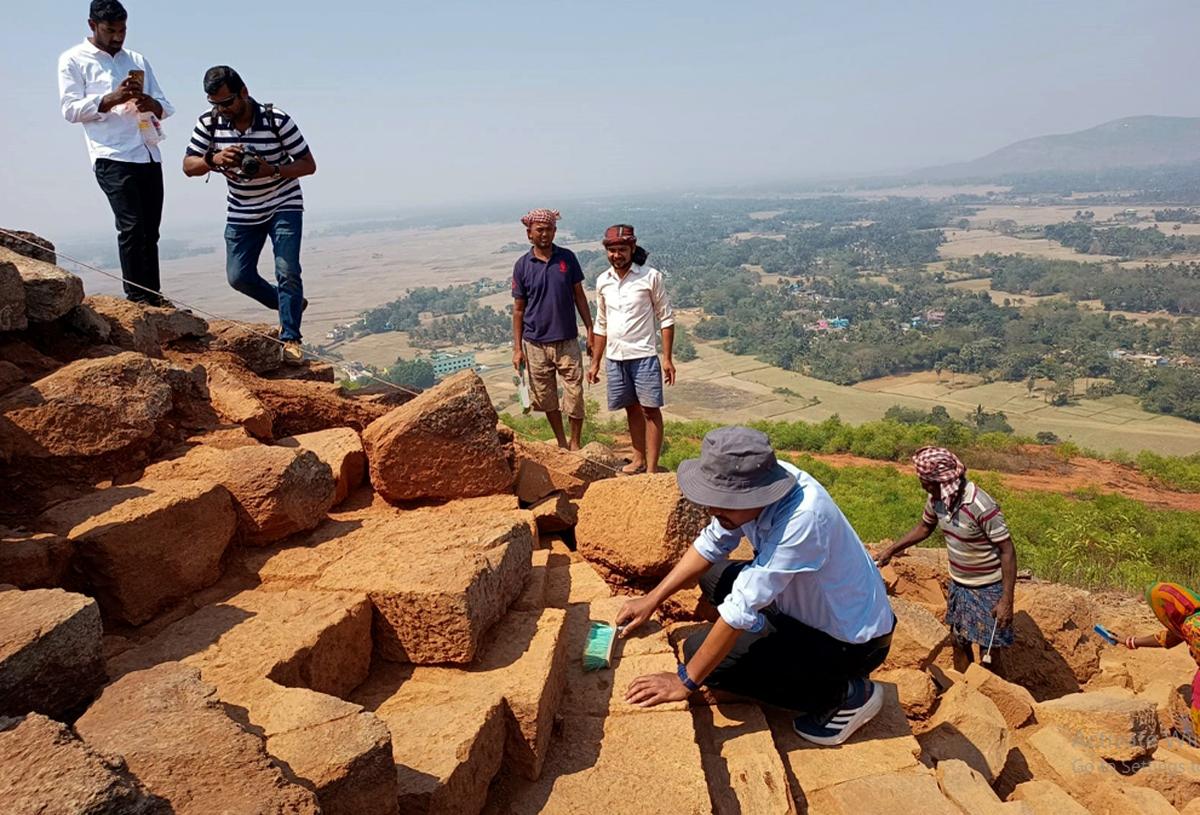
The Archaeological Survey of India (ASI) stumbled upon a 1,300-year-old stupa right in the middle of a Khondalite mining site in Odisha’s Jajpur district.
About the Stupa
The stupa could be 4.5-meter tall and initial assessment showed it may belong to the 7th or 8th
It was found at Parabhadi which is situated near Lalitagiri, a major Buddhist complex, having a large number of stupas and monasteries.
The newly discovered stupa was possibly disfigured in an earlier period.
Khondalite
Khondalite is a foliated metamorphic rock.
It is also called Bezwada Gneiss and Kailasa Gneiss.
It was named after the Khond tribe of Odisha and Andhra Pradesh because well-formed examples of the rock were found in the inhabited hills of these regions of eastern India.
Back2Basics: Lalitagiri Buddhist Complex
Lalitagiri is a major Buddhist complex in the state of Odisha.
The complex is home to stupas, ‘esoteric’ Buddha images, and monasteries (viharas), which is the oldest site in the region.
Significant finds at this complex include Buddha’s relics. Tantric Buddhism was practiced at this site.
Together with the Ratnagiri and Udayagiri sites a short distance away, Lalitagiri is part of the “Diamond Triangle”.
It used to be thought that one or all of these were the large Pushpagiri Vihara known from ancient records, but this has now convincingly located at a different site.
Stupa Architecture
In the most basic sense, as an architectural representation of a sacred burial site, a stupa — no matter where it is located in the world or when it was built — has three fundamental features.
A hemispherical mound (anda) The anda’s domed shape (green highlights) recalls a mound of dirt that was used to cover the Buddha’s remains. As you might expect, it has a solid core and cannot be entered. Consistent with their symbolic associations, the earliest stupas contained actual relics of the Buddha; the relic chamber, buried deep inside the anda, is called the tabena. Over time, this hemispherical mound has taken on an even grander symbolic association: the mountain home of the gods at the center of the universe.
A square railing (harmika) The harmika (red highlights) is inspired by a square railing or fence that surrounded the mound of dirt, marking it as a sacred burial site.
A central pillar supporting a triple-umbrella form (chattra) The chattra, in turn, was derived from umbrellas that were placed over the mound to protect it from the elements (purple highlights). Just as the anda’s symbolic value expanded over time, the central pillar that holds the umbrellas has come to represent the pivot of the universe, the axis along which the divine descends from heaven and becomes accessible to humanity. And the three circular umbrella-like disks represent the three Jewels, or Triantha, of Buddhism, which are the keys to a true understanding of the faith: (a) Buddha; (b) dharma (Buddhist teachings or religious law); and (c) sangha (monastic community).
Around these three core building blocks were added secondary features.
Enclosure wall with decorated gateways (toranas) at the cardinal directions The wall — with its trademark three horizontal stone bars (in the top image) — surrounds the entire structure. The wall is marked in light blue highlights and the toranas in yellow.
A circular terrace (medhi) The terrace — surrounded by a similar three-bar railing — supports the anda and raises it off the ground (black highlights); it likely served as a platform for ritual circumambulation.
The formal launch of the Indian Oil Corporation’s patented solar cook-stove at the India Energy Week 2023 (February 6-8, 2023 in Bengaluru as part of the G-20 calendar of events) by the Prime Minister Narendra Modi must be looked at closely from the point of view of India’s national energy story. While Mr. Modi claimed the stove would soon reach three crore households within the next few years, Union Minister for Petroleum and Natural Gas Hardeep Singh Puri called it a catalyst in accelerating adoption of low-carbon options along with biofuels, electric vehicles, and green hydrogen.
Indoor solar cooking: Surya Nutan is a Stationary, rechargeable, and always kitchen-connected indoor solar cooking.
Patented by Indian Oil: This is a patented product designed and developed by Indian Oil R&D Centre, Faridabad.
Maximum utilization of solar energy: It offers online cooking mode while charging through the Sun which maximizes the system efficiency and ensures high utilization of energy from Sun.
How it will work?: It collects energy from the sun, converts it into heat through a specially designed heating element, stores thermal energy in a scientifically proven thermal battery and reconverts the energy for use in indoor cooking. The energy captured not just covers day time cooking needs of a family of four but also the night meal.
Hybrid mode: It works on a Hybrid Mode (i.e. can work on both solar & auxiliary energy source simultaneously) which makes the Surya Nutan a reliable cooking solution for all weather conditions.
Minimises heat loss: Insulation design of Surya Nutan minimizes radiative and conductive heat losses.
Surya Nutan is available in three different models: The premium model (Breakfast +Lunch+Dinner) of Surya Nutan can cook all the meals for family of four.
What will be the cost: Initially, cost of the product is around Rs 12,000 for base model, and Rs. 23,000 for Top Model. However, the cost is expected to reduce substantially with economies of scale. At a price of Rs. 12,000-14,000/- for Top Model, assuming annual consumption of 6-8 LPG cylinders, this product can pay back the buyer in first 1-2 years itself.
Inbuilt Safety aspects: All the safety aspects required in any indoor appliances are inbuilt in Surya Nutan.
substitute for fossil fuels: The stove, which entails a one-time procurement cost and has zero maintenance, is being touted as a substitute for fossil fuels. It does not have a traditional battery that needs replacement. Also, the solar panel has a 25-year life.
Modular system: Surya Nutan is a modular system and can be designed in different sizes as per the requirement.
India’s national energy story
In 1950s, the National Physical Laboratory (NPL) fabricated a solar cooker and state-led hydroelectric power but failed to address rural energy consumption.
Parallel efforts to improve the traditional stove proved unsuccessful, such as the Hyderabad Engineering Research Laboratories smokeless chulha.
1980s government launched improved chulhas program to reduce fuelwood consumption and benefit women’s health/finances with 50% subsidy incentive. But the program failed due to construction, maintenance, and corruption issues. Women still rely on chulha despite hazards.
Cooking is 80% of rural Indian household’s energy use. 668m people in India use biomass for cooking/lighting, despite LPG scheme success. Fuel price inflation and subsidy withdrawal force women to use chulha with hazards.
India’s G20 Presidency: India Energy Week 2023 is being organised during India’s G20 Presidency, under the tagline “Growth, Collaboration, Transition”, from 6-8 February 2023 in Bengaluru.
Opportunity for India: It provided a unique opportunity to showcase India as both an engine of global economic growth and a driver for global consumption, supported by a conducive and investment-friendly environment, and a skilled workforce.
Opportunity for strategic policy making and knowledge sharing: IEW 2023 was an unprecedented opportunity for regional, international leaders and CEOs to come together for strategic policy making and technical knowledge sharing.
Why In India?
India is projected to witness the largest increase in energy demand of any country over the next two decades, as its economy continues to grow and create opportunities for its people to fulfil their potential.
India’s share in global energy consumption will rise from 7% to 14% by 2050
IEA predicts India will account for 25% of energy demand growth from 2020 to 2040
India’s oil and gas demand will triple by 2050
Gas consumption to grow threefold by 2030
Share of gas in energy mix to rise from 6.3% today to 15% by 2030
Do you know “THE PANCHAMRIT” (The five-nectar-element commitments)?
Indian Will take its non-fossil energy capacity to 500 GW by 2030.
Indian will meet 50 % of its energy requirements from renewable energy by 2030.
India will reduce the total projected carbon emissions by one billion tonnes from now till 2030.
By 2030, India will reduce the carbon intensity of its economy by less than 45 percent.
By the year 2070, India will achieve the target of net zero
Conclusion
Surya Nutan has the potential to transform our energy security situation, as India currently imports 50% of its LPG requirements. It also reduces India’s CO2 emissions drastically and keeps our citizens insulated from the vagaries of the high international fossil fuel prices. India’s energy transition will play a pivotal role in global energy markets. India Energy Week comes at a critical time, with the challenges of energy security and environmental sustainability impacting long-term energy transition and paths towards decarbonisation.
Mains Question
Q. Indian Oil Corporation recently launched the Surya Nutan a solar cook-stove at the India Energy Week 2023. Discuss its salient features and potential benefits for energy security for rural households.
It has been two years since the government issued the Information Technology (Intermediary Guidelines and Digital Media Ethics Code) Rules through which the Ministry of Information and Broadcasting (I&B) was given the task of regulating content on OTT and online platforms. India’s approach can be termed as a light-touch co-regulation model where there is self-regulation at the industry level and final oversight mechanism at the Ministry level.
An over-the-top (OTT) media service is a streaming media service offered directly to viewers via the Internet.
OTT bypasses cable, broadcast, and satellite television platforms, the companies that traditionally act as a controller or distributor of such content.
The term is most synonymous with subscription-based video-on-demand (SVoD) services that offer access to film and television content.
They are typically accessed via websites on personal computers, as well as via apps on mobile devices (such as smartphones and tablets), digital media players, or televisions with integrated Smart TV platforms.
Digital Media Ethics Code Relating to Digital Media and OTT Platforms
This Code of Ethics prescribes the guidelines to be followed by OTT platforms and online news and digital media entities.
Self-Classification of Content: Platforms must self-classify content into five age-based categories and implement parental locks and age verification mechanisms.
Norms for news: Publishers of news on digital media would be required to observe Norms of Journalistic Conduct of the Press Council of India and the Programme Code under the Cable Television Networks Regulation Act.
Self-regulation by the Publisher: Publisher shall appoint a Grievance Redressal Officer based in India who shall be responsible for the redressal of grievances received by it. The officer shall take a decision on every grievance received it within 15 days.
Self-Regulatory Body: Publishers can have a self-regulatory body headed by a retired judge or eminent person with up to six members. The body must register with the Ministry of Information and Broadcasting, monitor publisher compliance with the Code of Ethics, and address grievances not resolved by publishers within 15 days.
Oversight Mechanism: The Ministry of Information and Broadcasting must establish an oversight mechanism and establish an Inter-Departmental Committee to hear grievances.
Due Diligence to Be Followed By Intermediaries: The Rules prescribe due diligence that must be followed by intermediaries, including social media intermediaries. In case, due diligence is not followed by the intermediary, safe harbour provisions will not apply to them.
Grievance Redressal Mechanism: The Rules seek to empower the users by mandating the intermediaries, including social media intermediaries, to establish a grievance redressal mechanism for receiving resolving complaints from the users or victims.
Ensuring Online Safety and Dignity of Users, Especially Women Users: Intermediaries shall remove or disable access within 24 hours of receipt of complaints of contents that erodes individual privacy and dignity.
What are the concerns?
Low compliance and limited public awareness: OTT Rules require display of contact details for grievance redressal mechanisms and officers, but compliance is low and awareness among public is limited. Though the OTT Rules were notified in 2021, there is little awareness about them among the general public.
Lack of Transparency in Complaint Redressal Information: In many cases, either the complaint redressal information is not published or published in a manner that makes it difficult for a user to notice easily. In some cases, the details are not included as part of the OTT app interface.
The Singapore Model
In Singapore, the Infocomm Media Development Authority is the common regulator for different media.
Aside from instituting a statutory framework and promoting industry self-regulation, its approach to media regulation emphasises on promoting media literacy through public education.
What needs to be done?
Uniformity: There is a need for uniformity in displaying key information on obligations, timelines, and contact details for grievance redressal.
Specified rules: Rules should specify manner, text, language, and frequency for display of vital information and mandate industry associations to run campaigns in print and electronic media
Description in respective languages: Age ratings and content descriptors should be displayed in respective languages of the video, and shown prominently in full-screen mode for a mandatory minimum duration
Guidelines should be prominent in advertisements: Guidelines should ensure film classification/rating is legible and prominent in advertisements and promos of OTT content in print and electronic media.
Measures to Enhance Transparency and Accountability in OTT Platform Governance
Periodic Audits by Independent Body: Periodic audits should be undertaken by an independent body to check the existence and effectiveness of access controls, age verification mechanisms, and display of grievance redressal details by each OTT platform.
Dedicated Umbrella Website: The Ministry could facilitate a dedicated umbrella website for the publication of applicable Rules, content codes, advisories, contact details for complaints/appeals, etc.
Publish Complaint Details in public domain: Publish detailed complaint descriptions and decisions by OTT providers and self-regulatory bodies in the public domain; providers should upload this information on a dedicated website for transparency.
IDC Membership to be Broad-Based and Representative: The Inter-Departmental Committee (IDC) comprising officer-nominees from various ministries of the Central government and domain experts should be made more broad-based and representative with security of tenure.
Provision for Disclosure: Provision for the disclosure or publication of an apology/warning/censure on the platform or website should be incorporated in the Rules.
Financial Penalties: Financial penalties may be imposed on erring entities.
Common Guidelines for Content Governance: A common set of guidelines for content, classification, age ratings, violations, etc. should be evolved to govern content uniformly across platforms in the era of media convergence.
Conclusion
India’s OTT regulatory model aims to strike a balance between self-regulation and legal backing, aligning with global trends. The government’s efforts to enhance media literacy and transparency will not only promote effective self-regulation but also empower millions of OTT consumers. These initiatives are crucial for achieving the objective of raising India’s stature at an international level and serving as a model for other nations to emulate.
Mains Question
Q. Despite the launch of Intermediary Guidelines and Digital Media Ethics Code there are still concerns over the OTT governance. In this backdrop Discuss what can be done to improve the transparency and safeguarding the its users?
In July 2022, India, Israel, the United States (US), and the United Arab Emirates (UAE) in a hybrid summit announced the establishment of a new minilateral grouping called the I2U2. The four countries envision their alliance as an ad-hoc, informal, issue-specific and geoeconomic initiative.
Following the Abraham Accords between Israel and the UAE, I2U2 was founded in October 2021 to address marine security, infrastructure, and transportation challenges in the region.
It was known as the ‘International Forum for Economic Cooperation’at the time. At that time, UAE had referred to the new grouping as the ‘West Asian Quad’.
As the Accords opened room for increased interactions between Israel and its Gulf neighbours, it has become less difficult for other partners like the US and India to engage with the region through plurilateral forums.
I2U2 prioritizes economic strengths over political differences, leveraging India’s growing economy, Israel’s technical expertise, UAE’s capital, and USA’s international clout for mutual cooperation.
I2U2 meetings explore B2B relations and establish I2U2 Business Forum; proposal to form ‘I2U2 Hub’ in UAE as ideation center for forging economic partnerships and sharing profits of intellectual property
Significance of I2U2: Own motivations for joining the grouping
For India:
I2U2 bolsters India’s strategic engagement with West Asia and strengthens its robust bilateral relationships with the UAE, Israel, and the US.
India’s total trade with UAE amounted to US$ 73 billion in 2022, making UAE India’s third largest trading partner. UAE is also India’s second largest export destination and accounts for 40 percent of India’s total trade with the Arab world.
Israel, is one of India’s top suppliers of defence equipment and a key technology partner in different domains including defence, space, agriculture, and cybersecurity.
The US is India’s largest trading partner and second-largest foreign investor, with bilateral trade reaching US$ 119 billion in 2022 and investments accounting for 18 percent of total Foreign Direct Investment.
For Israel:
From Israel’s perspective, I2U2 is a continuation of the Abraham Accords and presents a new opportunity to build a platform where it can combine its old partners (the US and India) with the new (UAE) through a wider economic and strategic partnership.
For UAE:
The Emiratis is of the view that such a grouping, with a focus on complementarities, will help solve global challenges such as those related to security in food, energy, and water.
The UAE knows these challenges only too well, given its own food and water shortages, with an annual rainfall of only 100mm and importing 85 percent of its food supplies.
UAE also sees I2U2 as a platform that can serve its interests in strengthening bilateral ties with the other three nations, while placing itself as the bridge between West Asia and South Asia.
For the United States:
The grouping is a low-hanging fruit, following the Abraham Accords, through which it can nurture relationships with its allies and partners bilaterally as well as multilaterally, especially in the West Asian region.
This also helps the US in checking the expanding Chinese footprint in the region, particularly in the fields of investment, innovation, and technology.
US participation also indicates that it has shed its traditional strategic and security lens and now views the world order in a trans-regional and multilateral way.
What makes this forum different?
Economic cooperation: The I2U2 is a regional forum focused on economic cooperation, distinguishing it from other forums like the Quad, Negev Forum, and AUKUS.
Six core sectors for intervention: The I2U2 has identified six core sectors for intervention are water, energy, transportation, space, health, and food security.
Active role for joint investments: The grouping envisions an active role for private capital and technology, aiming to collaborate on joint investments, resource mobilization, and new initiatives.
Key global concerns are prioritized: Two key global concerns are being prioritised by the grouping food security and clean energy which have local, trans-regional and long-term dimensions.
Food corridor project
I2U2’s Food Security Project Addresses Global Hunger Crisis: I2U2 aims to combat global hunger crisis by utilizing member countries’ strengths in finance, technology, agriculture, and knowledge.
For instance: The project will use Israeli and American technology to establish integrated food parks in the states of Gujarat and Madhya Pradesh, with future expansion planned for other states, including Telangana, Andhra Pradesh, and Maharashtra .
Broader objective is to create alternate supply chains: The broader objective of the initiative is to create alternate supply chains among countries with similar goals, to guarantee food security that is environmentally sustainable
Hybrid renewable energy project
Renewable Energy Project in Gujarat: I2U2’s second project aims to establish a 300 MW hybrid renewable energy facility in Gujarat with advanced battery storage technology developed through Israeli expertise and Emirati and American investments.
Strong Interest in UAE-India Partnership for Renewable Energy: UAE-based companies like Masdar are interested in partnering with India to explore renewable energy opportunities, especially with India’s goal of achieving 500 GW of non-fossil fuel capacity by 2030.
What are the Potential Challenges?
Security Interests Could Pose Challenges for I2U2: Individual countries may prioritize their own security interests, which could conflict with those of others.
For instance: US and Israeli outlook on West Asia is affected by Iranian rivalry, while India and UAE might have a different perspective. While these security considerations have not yet affected the project, the unpredictable situation with Iran could pose a challenge.
China’s Presence in the Region Raises Concerns: The US and India are wary of China’s expanding presence in the region through trade deals, infrastructure investments, and security cooperation whereas Israel and UAE, have a more positive view of China,
For instance: UAE upgrading its ties to a Comprehensive Strategic Partnership and Israel engaging in defence and technical cooperation with China
Institutional Bottlenecks Could Hinder I2U2: Institutional bottlenecks could be a potential roadblock for the I2U2 project, as there may be a lack of synergy in the working cultures of business people from the four countries, and accountability mechanisms may be vague.
Way ahead: India’s Stakes
India’s participation in I2U2 is crucial due to its position as a connector between West Asia and South Asia.
The initiative can bring investments, innovation and technology to India, boosting its journey to become the world’s third largest economy.
I2U2 can also support ‘Make in India’ by attracting manufacturing facilities in fields such as AI, fintech, transportation, and space.
To facilitate cooperation, India can designate nodal officers in its embassies and form a Coordinating Committee with the sherpa.
I2U2 could also inspire India to establish similar minilateral groupings with its partners in South Asia and Africa.
Conclusion
As an alternative to the dismal performance of most multilateral institutions, minilaterals like I2U2 provide hope for more effective and mutually beneficial international cooperation. Such platforms can provide a sound framework to explore opportunities, support collective resolution of global challenges, and unlock avenues for greater convergence of interests and actions between countries.
Mains Question
Q. What is I2U2 minilateral forum? Discuss the Significance of I2U2 as the member counties driven by own motivations for joining the grouping. Also note down the potential challenges.
Recently, the Supreme Court refused to entertain a PIL about menstrual leave for workers and students across the country, calling it a policy matter.
Menstrual Leave: Explained
Menstrual leave refers to a policy that allows women to take paid or unpaid leave from work when experiencing painful menstrual symptoms.
This means that female employees who are experiencing discomfort, pain, or other symptoms related to their menstrual cycle can take time off from work without having to worry about losing pay or facing disciplinary action.
It is a relatively new concept and is not yet widely available, but it has gained attention in recent years as more countries and companies consider its implementation.
Recent debate
The concept of menstrual leave for workers and students has swirled around for a couple of centuries.
Such policies are uneven and subject to much debate, even among feminist circles.
How prominent is the idea?
Menstruating women were given leave from paid labour in Soviet Russia in the 1920s.
A historian even claims that a school in Kerala granted period leave as early as 1912.
In light of this, we explore the global framework for menstrual leave and which countries currently have them.
Need for menstrual leave
Pain and discomfort: Menstrual leave is needed because menstruation can cause a range of symptoms that can be painful and debilitating, making it difficult for women to perform their jobs.
Ensure job security: Such leave allows women to take time off when they need it, without having to worry about losing pay or facing disciplinary action.
Ensure productivity: This helps ensure that women are able to fully participate in the workforce and can perform to the best of their abilities.
Detaches stigma and discrimination: Additionally, menstrual leave can help reduce the stigma surrounding menstruation and promote a culture of openness and support for women.
Issues if policy measures are enforced
Not everyone— not even all those who menstruate— are in favour of menstrual leave.
Create employer discrimination: Some believe either that it is not required or that it will backfire and lead to employer discrimination against women.
Obligation may backfire: If govt policy compels employers to grant menstrual pain leave, it may operate as a de facto disincentive for employers to engage women in their establishments.
Arguments against menstrual leaves
Potential for discrimination against women: If women are given additional leave days, they may be viewed as less capable or less committed to their jobs compared to their male counterparts.
Concerns about decreased productivity: Opponents of menstrual leave policies argue that allowing women to take time off work during their menstrual cycle could result in decreased productivity, and ultimately harm businesses.
Challenges in implementation: Enforcement of such policies could be challenging for businesses, particularly small and medium-sized enterprises. These businesses may struggle to manage their workforce effectively if employees are taking additional leave days throughout the year.
What kind of menstrual leave policies are in place globally?
Spain: Recently, Spain became the first European country to grant paid menstrual leave to workers, among a host of other sexual health rights. Workers now have the right to three days of menstrual leave— expandable to five days— a month.
Japan: It introduced menstrual leave as part of labour law in 1947, after the idea became popular with labor unions in the 1920s. At present, under Article 68, employers cannot ask women who experience difficult periods to work during that time.
Indonesia: It introduced a policy in 1948, amended in 2003, saying that workers experiencing menstrual pain are not obliged to work on the first two days of their cycle.
Philippines: In the Philippines, workers are permitted two days of menstrual leave a month.
Taiwan: It has an Act of Gender Equality in Employment in place. Employees have the right to request a day off as period leave every month, at half their regular wage. Three such leaves are permitted per year— extra leaves are counted as sick leave.
Zambia: Among the African nations, Zambia introduced one day of leave a month without needing a reason or a medical certificate, calling it Mother’s Day.
Others: The petition also mentioned that the United Kingdom, China and Wales have menstrual leave provisions.
Thus we can say that almost every alternate country has provisions for menstrual leave.
What attempts are being made in India?
In India, too, certain companies have brought in menstrual leave policies— the most famous example being Zomato in 2020, which announced a 10-day paid period leave per year.
Time reported that 621 employees have taken more than 2,000 days of leave after the policy was introduced.
Other such as Swiggy and Byjus have also followed suit.
Among State governments, Bihar and Kerala are the only ones to introduce menstrual leave to women, as noted in the petition before the Supreme Court.
Parliamentary measures
Parliament has seen certain measures in this direction, with no success.
In 2017, MP Ninong Ering from Arunachal Pradesh introduced ‘The Menstruation Benefits Bill, 2017’ in Parliament.
It was represented in 2022 on the first day of the Budget Session in the Lok Sabha, but was disregarded as an “unclean topic,” the petition says.
Shashi Tharoor also introduced the Women’s Sexual, Reproductive and Menstrual Rights Bill in 2018, which proposed that sanitary pads should be made freely available for women by public authorities in their premises.
Way forward
Education and Awareness: Education and awareness campaigns can be conducted to educate employers, employees, and policymakers about the importance of menstrual health and the need for menstrual leave policies.
Flexible Work Arrangements: In lieu of specific menstrual leave policies, companies can offer flexible work arrangements, such as remote work or flexible scheduling, to accommodate employees who are experiencing menstrual discomfort.
Consultation with Experts: Policymakers can consult with health experts, labor organizations, and other stakeholders to develop comprehensive menstrual leave policies that meet the needs of both employees and businesses.
Pilot Programs: Pilot programs can be implemented to test the effectiveness of menstrual leave policies and evaluate their impact on businesses and employees.
Workplace Culture: Companies can work to create a workplace culture that supports menstrual health and normalizes conversations around menstruation. This can help to reduce the stigma associated with menstruation and promote gender equity in the workplace.
An American billionaire’s recent comments on India have come under heavy criticism from all sections of India.
Much recently, Vice President Jagdeep Dhankhar had warned against doctored narratives becoming hurdles in India’s growth.
Doctored Narratives: Motive behind the term
The term “Doctored Narratives” typically refers to narratives or stories that have been intentionally altered or manipulated in some way to mislead or deceive people.
This can involve-
Changing key details
Omitting important information
Fabricating events altogether
Influences are exerted by the powers that be through various means – subversion, funding the nefarious elements, planting certain theories through various literature, devising frameworks in academic setups somewhere and foisting those on unique problems in other countries.
Characterizing such narratives
Mass provocation: Doctored narratives often include misleading information that is designed to distort or misrepresent the truth. This could involve taking statements out of context or selectively presenting only certain facts.
Fake news: They may contain outright false information that is designed to mislead the audience. This could involve fabricating events or presenting false statistics or data.
Emotional appeal: They may be designed to play on the emotions of the audience, using fear, anger, or other strong emotions to influence their opinions.
Conspiracy theories: Such narratives may promote conspiracy theories or alternative explanations for events that contradict widely accepted facts or evidence.
Political manipulation: They may appeal to people’s pre-existing beliefs or biases, reinforcing their existing opinions and making it difficult for them to consider alternative perspectives.
In the age of social media, doctored narratives can spread quickly and easily, making it more important than ever to fact-check and verify the information we come across before accepting it as truth.
Narratives against India
Unfortunately, doctored narratives against India are not uncommon, and there have been several instances where misinformation or propaganda has been used to target India. Some examples include:
Misinformation surrounding the Kashmir conflict: The conflict over the disputed territory of Kashmir between India and Pakistan has been the subject of doctored narratives, with false information being spread on social media to misrepresent the situation and promote anti-India sentiment.
Alleged ‘murder’ of Democracy: Some doctored narratives have promoted conspiracy theories about India’s government, such as claiming that the government is involved in human rights abuses or that it is suppressing dissent. Ex. Accusing our PM of being anti-minority.
Misinformation about Indian religions: False information has also been spread about Indian religions, such as claiming that Hinduism is a violent religion or that Sikhism is a separatist movement or associating terrorism and radicalism to a particular religion.
Why such narrative build up against India?
Western Diktat: There are powers that want the world order to remain as per their vision, their perception of reality, and their ideas of social and economic balances. Be it individual freedom or anything. The sees this through its prism.
Political meddling: India has been the target of interference by foreign powers seeking to influence its domestic politics and foreign policy. This interference may take the form of funding political campaigns or supporting certain groups or individuals.
Economic competition: India’s emergence as a major economic power has led to competition and rivalry with other countries. The narrative often portrays India as a threat to the global economy and accuses it of unfair trade practices and intellectual property theft.
Contention with India’s rise: The present-day Indian leadership has been successfully steering India through the rough waters of International diplomacy while enjoying friendships with competing world powers and still protecting India’s interests.
Destabilize internal peace and security: India has some treacherous neighborhoods like Pakistan and China who allegedly strive to ‘bleed’ India with ‘thousand cuts’. Ex. Khalistani separatism movement.
Notion of far-right nationalism: The rise of Hindu nationalism in India has been criticized by some as a threat to secularism and minority rights. The narrative often portrays India as a Hindu supremacist state that discriminates against Muslims and other minorities.
Recent incidences
One can quote various recent examples of how ‘doctored narratives’ took shape of mass protests that aimed at destabilising India from within-
BBC documentary on PM Modi
Hindenburg report on Adani Groups
Communal angle to recent crackdown of Assam Government against child marriages etc.
Why is it an emerging threat?
Fast spread through social media: Those influenced by ‘doctored narratives’ spread through social media platforms, kept championing the cause of protesters without even paying any heed to logic.
Political opposition: Framing charges against the PM is the easiest way. Many examples may still be visible in time to come, depending upon political convenience of the ‘ecosystem’ peddling ‘doctored narratives’.
Highly opinionated population: Doctored narratives may appeal to people’s pre-existing beliefs or biases, reinforcing their existing opinions and making it difficult for them to consider alternative perspectives.
Create a socio-political divide: Such narratives can promote division and conflict, inflaming tensions between different groups and creating a sense of “us vs. them.” This can contribute to social unrest and undermine the social fabric of communities.
Security threats: Such falsification pose security threats, particularly in the form of cyberattacks and other forms of online manipulation. These threats can undermine critical infrastructure, steal sensitive information, and compromise national security.
Conclusion
Political leaders often have supporters and detractors, and opinions can vary widely depending on a range of factors, including political ideology, social and economic issues, personal beliefs, and cultural background.
It’s important to approach information with a critical eye and to seek out diverse perspectives before forming an opinion.
It’s also important to engage in respectful dialogue and to avoid spreading false information or promoting divisive narratives.
We should strive to create a culture of open and honest communication, based on accurate information and a commitment to progress and positive change.
A doctor has requested the Delhi High Court to enforce his ‘Right to Be Forgotten,’ which includes removing news articles and other content related to his “wrongful arrest.”
What is the “Right to Be Forgotten” Law?
The “Right to Be Forgotten” law is a legal concept that allows individuals to request the removal of their personal information from the internet.
It is based on the idea that individuals have a right to privacy and control over their personal data.
The law has been implemented in various forms in different countries, including the European Union, Argentina, and South Korea.
What are the origins of this Right?
The Right to be Forgotten was first established by the European Court of Justice in 2014 in the case of “Google Spain SL, Google Inc v Agencia Española de Protección de Datos, Mario Costeja González”.
The case was about a Spanish man who wanted to remove a 1998 advertisement about his home being repossessed.
The Right to be Forgotten was later included in the EU’s General Data Protection Regulation (GDPR), along with the right to erasure.
Article 17 of the GDPR outlines the right to erasure and provides certain conditions when the right can be restricted.
How does it work?
The “Right to Be Forgotten” law allows individuals to request the removal of their personal information from search engine results, social media platforms, and other websites.
The request must be made to the data controller, who is responsible for managing the personal data.
The data controller then evaluates the request and decides whether to remove the information or not.
If the request is denied, the individual can appeal the decision to the relevant regulatory authority.
Criticisms of the law
Critics argue that the law undermines freedom of expression and the public’s right to access information.
They also claim that the law is difficult to enforce and can lead to the censorship of legitimate information.
Others argue that the law is too narrow in scope and does not provide adequate protection for individuals’ privacy.
Future of the law
The “Right to Be Forgotten” law is still a relatively new legal concept, and its future is uncertain.
It is likely that the law will continue to evolve as courts and regulators grapple with its complexities.
In the meantime, individuals should be aware of their rights and take steps to protect their personal data online.
What is the law on the Right to be Forgotten?
Section 43A of the IT Act, 2000 says that organizations who possess sensitive personal data and fail to maintain appropriate security to safeguard such data, resulting in wrongful loss or wrongful gain to anyone, may be obligated to pay damages to the affected person.
IT Rules, 2021 do not include this right, they do however, lay down the procedure for filing complaints with the designated Grievance Officer so as to have content exposing personal information about a complainant removed from the internet.
Judicial precursor to the issue
The Right to be Forgotten is not explicitly recognized by Indian law, but it has been considered part of an individual’s Right to Privacy under Article 21 by Indian courts since the 2017 ruling in “K.S.Puttaswamy vs Union of India“.
The court acknowledged that this right may be restricted by the right to freedom of expression and information or legal obligations.
In 2021, the Delhi High Court directed online platforms to remove publicly available records of a case against an American citizen under the Narcotics Drugs and Psychotropic Substances Act, 1985, who argued that it was affecting his employment prospects.
The Indian Meteorological Department (IMD) has already started sensing the first signs of heat waves for this summer season.
What is the news?
The IMD warned that the maximum temperatures over northwest, west, and central India would be 3-5° C higher than the long-term average in this week.
If the heat waves had played out, they would have been the earliest these regions would have experienced this deadly phenomenon.
What are Heat Waves?
Heatwaves generally occur over India between March and June.
IMD declares a heatwave event when the maximum (day) temperature for a location in the plains crosses 40 degrees Celsius.
Over the hills, the threshold temperature is 30 degrees Celsius.
How are they formed?
Heatwaves form when high pressure aloft (3,000–7,600 metres) strengthens and remains over a region for several days up to several weeks.
This is common in summer (in both Northern and Southern Hemispheres) as the jet stream ‘follows the sun’.
On the equator side of the jet stream, in the upper layers of the atmosphere, is the high pressure area.
Summertime weather patterns are generally slower to change than in winter. As a result, this upper level high pressure also moves slowly.
Under high pressure, the air subsides (sinks) toward the surface, warming and drying adiabatically, inhibiting convection and preventing the formation of clouds.
Reduction of clouds increases shortwave radiation reaching the surface.
A low pressure at the surface leads to surface wind from lower latitudes that brings warm air, enhancing the warming.
Alternatively, the surface winds could blow from the hot continental interior towards the coastal zone, leading to heat waves.
Following criteria are used to declare heatwave:
To declare heatwave, the below criteria should be met at least in 2 stations in a Meteorological subdivision for at least two consecutive days and it will be declared on the second day.
(a) Based on Departure from Normal
Heat Wave: Departure from normal is 4.5°C to 6.4°C
Severe Heat Wave: Departure from normal is >6.4°C
(b) Based on Actual Maximum Temperature (for plains only)
Heat Wave: When actual maximum temperature ≥ 45°C
Severe Heat Wave: When actual maximum temperature ≥47°C
Recent context: El Nino + heat waves
The last three years have been La Nina years, which has served as a precursor to 2023 likely being an El Nino
The El Nino is a complementary phenomenon in which warmer water spreads west-east across the equatorial Pacific Ocean.
As we eagerly await the likely birth of an El Nino this year, we have already had a heat wave occur over northwest India.
Heat waves tend to be confined to north and northwest India in El Nino years.
Why do heat waves occur in the first place?
Heat waves are formed for one of two reasons: because warmer air is flowing in from elsewhere or because something is producing it locally.
Air is warmed locally when the air is warmed by higher land surface temperature or because the air sinking down from above is compressed along the way, producing hot air near the surface.
How do different processes contribute to the formation of a heat wave?
The direction of air flowing in from the west-northwest, warming in the Middle East, and compression over mountains of Afghanistan and Pakistan cause warm air to enter India.
The warming Arabian Sea also contributes to the warming trend.
Upper atmospheric westerly winds control near-surface winds, which rotate faster than the planet itself.
Additionally, the lapse rate, or the rate at which temperatures cool from surface to upper atmosphere, is declining due to global warming.
Regional occurrences
The other factors that affect the formation of heat waves are the age of the air mass and how far it has traveled.
The north-northwestern heatwaves are typically formed with air masses that come from 800-1,600 km away and are around two days old.
Heat waves over peninsular India on the other hand arrive from the oceans, which are closer (around 200-400 km) and are barely a day old.




![[Sansad TV] Perspective: Countering Doctored Narratives](https://d18x2uyjeekruj.cloudfront.net/wp-content/uploads/2022/12/sansad.jpg)

