💥UPSC 2027,2028 Mentorship (April Batch) + Access XFactor Notes & Microthemes PDF

Search results for: “”

  • Hindu Kush Himalaya (HKH) 

    Why in the News?

    • A report by the International Centre for Integrated Mountain Development highlights a record 27% decline in snow persistence in the HKH region.
    • Indicates accelerating climate change impacts on Asian water systems.

    About Hindu Kush Himalaya (HKH)

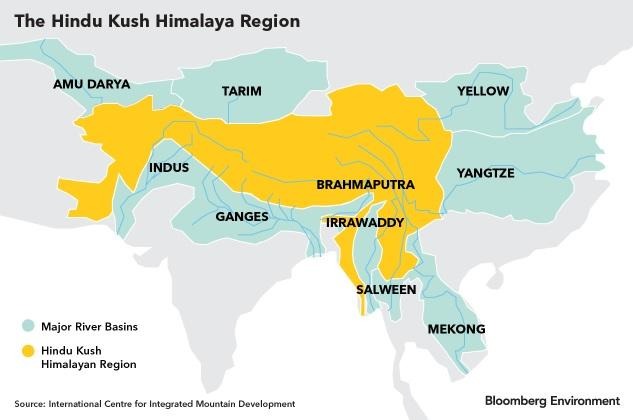
    • A vast mountain system extending about 3,500 km
    • Spans 8 countries: Afghanistan, Bangladesh, Bhutan, China, India, Nepal, Myanmar, and Pakistan.

    Why Called “Third Pole”?

    • Largest ice reserves outside Arctic and Antarctic
    • Critical for:
      • Global climate regulation
      • Freshwater supply

    Major Rivers Originating from HKH

    • Indus
    • Ganga
    • Brahmaputra
    • Amu Darya
    • Mekong
    • Yangtze
    • Yellow River
    • Irrawaddy
    • Salween
    • Tarim
    [2012] When you travel in Himalayas, you will see the following: 
    1 Deep gorges 
    2 U-turn river courses 
    3 Parallel mountain ranges 
    4 Steep gradients causing land sliding 
    Which of the above can be said to be the evidence for Himalayas being young fold mountains? 
    (a) 1 and 2 only (b) 1, 2 and 4 only (c) 3 and 4 only (d) 1, 2, 3 and 4
  • Right to Safe Roads as a Part of Right to Life: Supreme Court Judgment

    Why in the News?

    In a significant expansion of fundamental rights, the Supreme Court of India ruled in August 2025 that access to safe, motorable, and well-maintained roads is an integral part of the Right to Life under Article 21 of the Constitution.

    Key Legal Pronouncements

    The Bench, comprising Justices J.B. Pardiwala and R. Mahadevan, linked the quality of infrastructure to constitutional guarantees:

    • Article 21 (Right to Life): The Court held that “life” is not merely physical existence but includes the right to live with dignity, which is hindered by poor and unsafe road conditions.
    • Article 19(1)(d): The right to move freely throughout the territory of India is a basic right. The Court noted that this right becomes “illusory” if the state fails to provide motorable roads.
    • State Responsibility: The judgment explicitly stated that it is the mandatory responsibility of the State to develop and maintain roads under its control.

    Case Background

    The ruling emerged from a dispute between Umri Pooph Pratappur (UPP) Tollways Private Limited and the Madhya Pradesh Road Development Corporation Limited (MPRDC).

    • The Project: A ‘Build, Operate, and Transfer’ (BOT) agreement for a 43.7-km road project in Madhya Pradesh worth ₹73.68 crore.
    • The Shift: While the case was a commercial dispute over a concession agreement, the Court used the platform to emphasize the public interest aspect of infrastructure.
    [2019] Which Article of the Constitution of India safeguards one’s right to marry the person of one’s choice? 
    (a) Article 19  
    (b) Article 21  
    (c) Article 25  
    (d) Article 29
  • India’s Nuclear & Wind Energy Progress  

    Why in the News?

    • Prime Minister Narendra Modi highlighted:
      • Fast Breeder Reactor (FBR) achieving criticality
      • India becoming 4th largest in wind energy capacity
      • Call for participation in Census 2027

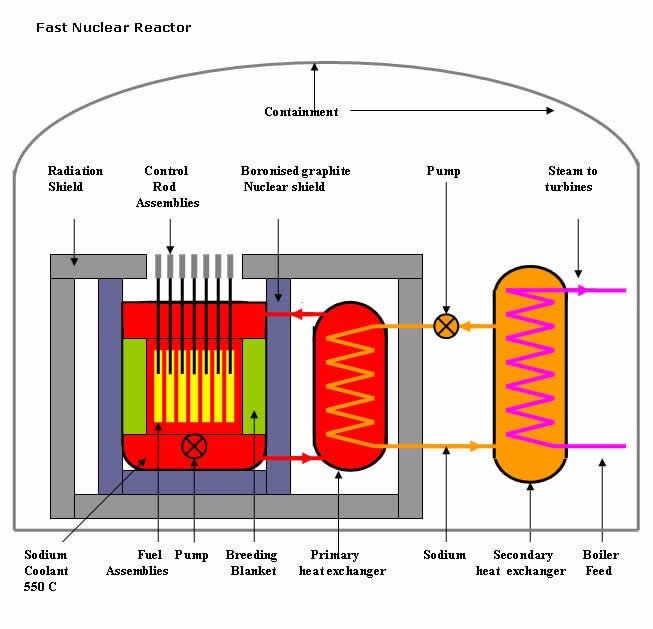
    Fast Breeder Reactor (FBR) 

    • Location: Kalpakkam, Tamil Nadu
    • Achievement: Criticality attained

    What is Criticality?

    • Stage where: Self-sustaining nuclear chain reaction begins
    • Indicates: Reactor becomes operational

    Significance of FBR

    • Uses: Plutonium-based fuel
    • Converts: Fertile material → Fissile fuel
    • Advantages:
      • Efficient fuel use
      • Supports India’s 3-stage nuclear programme
    • Built with: Indigenous technology

    Wind Energy  

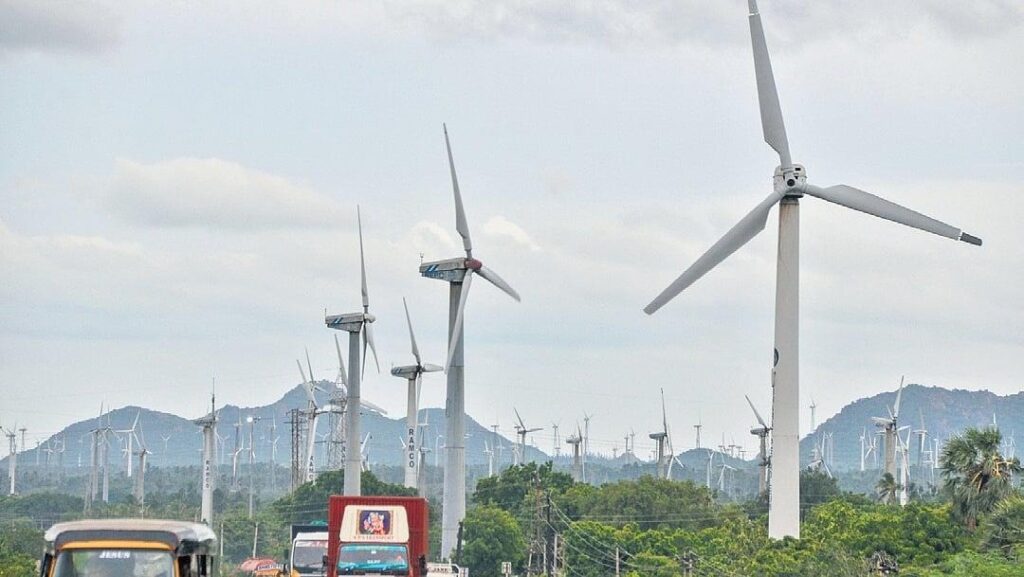
    • Installed capacity: 56 GW+
    • Global rank: 4th in world

    Leading States

    • Gujarat, Tamil Nadu, Maharashtra, and Rajasthan
    [2023] Consider the following statements: 
    Statement-I: India, despite having uranium deposits, depends on coal for most of its electricity production. 
    Statement-II: Uranium, enriched to the extent of at least 60%, is required for the production of electricity. 
    Which one of the following is correct in respect of the above statements? 
    (a) Both Statement-I and Statement-II are correct and Statement-II is the correct explanation for Statement-I 
    (b) Both Statement-I and Statement-II are correct and Statement-II is not the correct explanation for Statement-I 
    (c) Statement-I is correct but Statement-II is incorrect 
    (d) Statement-I is incorrect but Statement-II is correct
  • Thrissur Pooram 2026: Cultural Splendour Amidst Tragedy

    Why in the News?

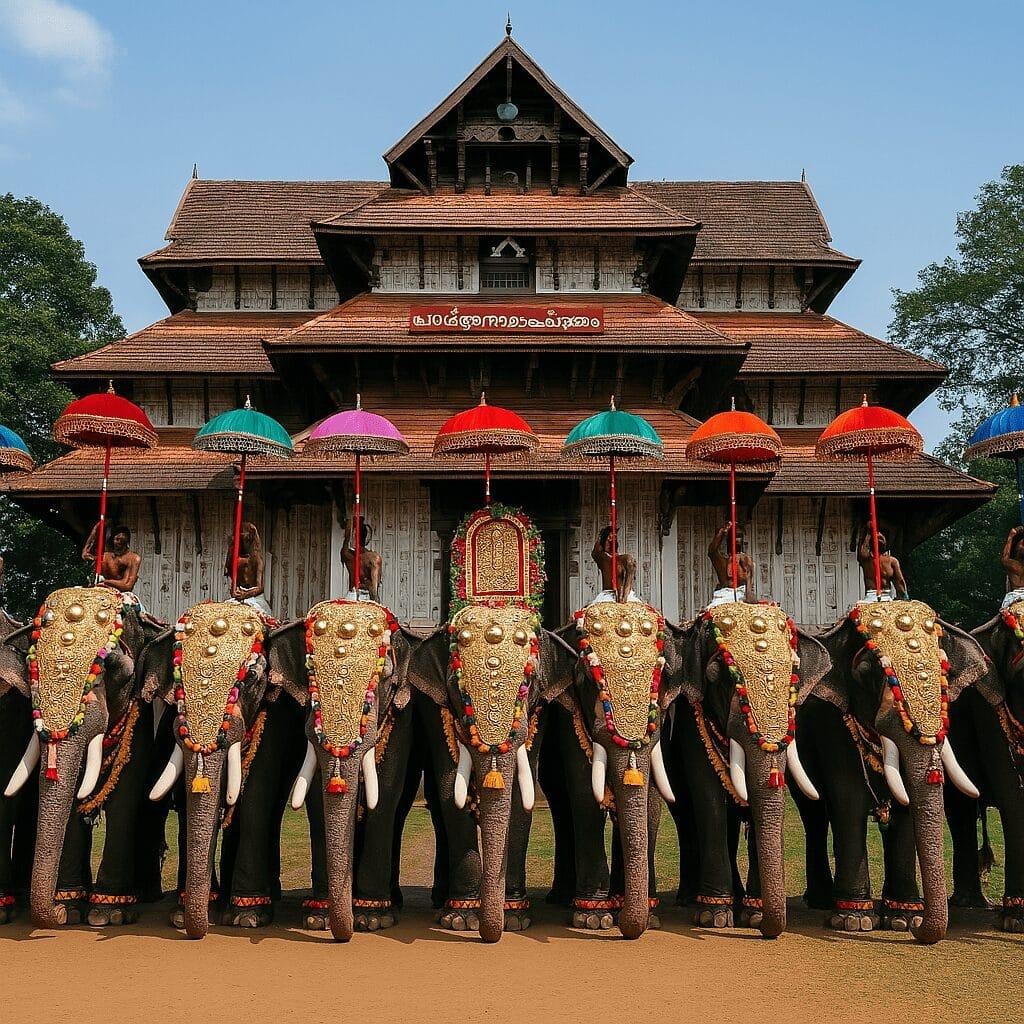
    On April 26, 2026, the historic Thrissur Pooram was celebrated at the Thekkinkadu Maidan in Kerala. However, this edition was notably scaled-down and held without its signature fireworks display (Vedikettu) following a tragic accident at Mundathikode earlier in the month that claimed 15 lives.

    About Thrissur Pooram

    • One of the grandest temple festivals of Kerala
    • Held at: Sree Vadakkunnathan Temple
    • Venue: Thekkinkadu Maidan
    [2014] Consider the following pairs: 
    1 Garba : Gujarat 
    2 Mohiniattam : Odisha 
    3 Yakshagana : Karnataka 
    Which of the pairs given above is / are correctly matched? 
    a) 1 only b) 2 and 3 only c) 1 and 3 only d) 1, 2 and 3
  • Resumption of Centre-Ladakh Talks (May 2026)

    Why in the News?

    Following a prolonged stalemate and violent unrest in 2025, the Ministry of Home Affairs (MHA) is set to resume formal talks with Ladakh’s civil society groups on May 22, 2026. This coincides with Union Home Minister Amit Shah’s visit to the region for the Buddha Purnima holy relics exposition.

    Core Demands of Ladakh (UPSC Focus)

    The dialogue involves two major socio-political groupings: the Leh Apex Body (LAB) and the Kargil Democratic Alliance (KDA). Their “Four-Point Agenda” includes:

    1. Statehood for Ladakh: Transition from a Union Territory (UT) to a full-fledged State.
    2. Sixth Schedule Inclusion: Granting constitutional safeguards under Article 244 to protect land, employment, and cultural identity.
    3. Exclusive Public Service Commission (PSC): A dedicated recruitment body for Ladakh to ensure local preference in government jobs.
    4. Enhanced Parliamentary Representation: Increasing the number of Lok Sabha seats from one to two (one each for Leh and Kargil).

    Significance of the Sixth Schedule

    The Sixth Schedule provides for the administration of tribal areas through Autonomous District Councils (ADCs).

    • Powers: ADCs have legislative, judicial, and administrative autonomy to make laws on land, forests, water, and social customs.
    • Current Status: Currently applies to tribal areas in four Northeastern states: Assam, Meghalaya, Tripura, and Mizoram (AMTM).
    • Ladakh’s Argument: Over 90% of Ladakh’s population is tribal, making it a fit candidate for these safeguards to prevent demographic changes and environmental degradation.
    [2015] The provisions in the Fifth Schedule and Sixth Schedule in the Constitution of India are made in order to: 
    (a) protect the interests of Scheduled Tribes 
    (b) determine the boundaries between States 
    (c) determine the powers, authority and responsibilities of Panchayats 
    (d) protect the interests of all border States
  • [25th April 2026] The Hindu OpED: The crisis of urban electoral disenfranchisement

    PYQ Relevance[UPSC 2024] Examine the need for electoral reforms as suggested by various committees with particular reference to ‘one nation-one election’ principleLinkage: This question directly links to electoral roll integrity, voter inclusion, and institutional reforms, which are central to the issue of urban disenfranchisement. The article provides contemporary evidence (mass deletions, SIR flaws) that strengthens answers on why electoral reforms are urgently needed in India’s democracy

    Mentor’s Comment

    There is a deepening crisis of urban electoral disenfranchisement in India. This has been triggered by the recent Special Intensive Revision (SIR) of electoral rolls, where mass deletions of voters, especially urban poor, migrants, and informal workers, have come to light. This is significant because it marks a shift from inclusion (universal adult franchise) to exclusion through bureaucratic processes, The scale is alarming, Patna saw 16.5 lakh deletions, Ghaziabad ~36.67%, Lucknow ~30.88%, and Mumbai ~14 lakh deletions with 50% from informal housing, indicating a systemic pattern rather than isolated errors.

    Why is universal adult franchise weakening in urban India?

    1. Systematic disenfranchisement: Urban voters increasingly excluded through SIR processes; reflects erosion of the constitutional promise of “one person, one vote.”
    2. Urban marginalisation: Poor, migrants, minorities face structural exclusion; example, large-scale deletions in cities like Patna, Lucknow, Ghaziabad.
    3. Demographic mismatch: Rapid urban population growth not matched by electoral inclusion; table shows low voter ratios despite rising population.

    How does the SIR process contribute to exclusion?

    1. Bureaucratic enumeration: Relies on documentation and verification; excludes those lacking stable residence proof.
    2. Limited outreach: Focuses on verification over registration; discourages new voter inclusion.
    3. Data evidence: Patna (16.5 lakh deletions), Ghaziabad (36.67%), Mumbai (14 lakh deletions) indicate systemic filtering.

    Why are migrants and the urban poor disproportionately affected?

    1. High mobility: Migrants frequently change residences; fail documentation requirements.
    2. Informal settlements: ~40% of urban population lives in slums; lack formal address proof.
    3. Dual burden: Unable to register + higher probability of deletion; example, Kolkata (25.62% deletions in unorganised workers).

    Does electoral secrecy face new challenges in urban settings?

    1. Booth-level disclosure risk: Small booth sizes enable inference of voting patterns.
    2. Technological vulnerability: Electronic voting systems may reveal demographic voting trends.
    3. Urban concentration: Tight clusters make secrecy harder compared to dispersed rural booths.

    Is there evidence of selective filtration in electoral rolls?

    1. Selective exclusion: Groups perceived as politically inconvenient may be filtered out.
    2. Documentation bias: Rigid criteria disproportionately impact working-class populations.
    3. Case evidence: Lucknow (30.88%), Ghaziabad (36.67%) deletions linked to migrant workforce mobility.

    How does urbanisation intensify electoral challenges?

    1. Migration-driven growth: Continuous inflow disrupts stable voter registration systems.
    2. Administrative lag: Electoral systems based on static populations fail dynamic urban contexts.
    3. Comparative gap: Rural areas show relatively stable rolls vs volatile urban deletions.

    Conclusion

    Urban electoral disenfranchisement represents a structural contradiction between constitutional ideals and administrative practices. If left unaddressed, it risks weakening democratic legitimacy, particularly in rapidly urbanising India. Electoral reforms must shift from documentation-centric exclusion to inclusion-oriented governance, ensuring that mobility does not become a ground for loss of citizenship rights.

  • The Goldilocks period that wasn’t for the economy

    Why in the News?

    India’s so-called “Goldilocks period” of high growth, low inflation, and macro stability has come under sharp scrutiny after GDP back-series revisions (2022-23 base year) revealed that earlier estimates overstated economic performance. Coupled with global shocks (US-Iran tensions, rupee depreciation, energy vulnerabilities) and declining long-term growth rates, the narrative shifts from optimism to concern. The striking reality is that real GDP growth has slowed structurally (approx. 6.2% over 12 years to <5.5% in recent years), challenging India’s aspiration to become a developed economy.

    Was India truly in a “Goldilocks” phase of economic growth?

    The “Goldilocks” narrative, describing an economy that is “not too hot, not too cold, but just right”, has been a central theme in recent Indian macroeconomic assessments, but it remains a subject of intense debate between official reporting and critical economic analysis. 

    The “Goldilocks” Case (Official Perspective)

    1. Goldilocks assumption: Suggested optimal macroeconomic conditions (high growth, low inflation, low unemployment).
    2. High Real Growth: Real GDP growth for FY2024 was recorded at 7.6%, with projections for FY2026 reaching as high as 7.4% in advanced estimates.
    3. Subdued Inflation: Headline Consumer Price Index (CPI) inflation fell from 4.8% in May 2024 to a projected 2% by early 2026, creating a low-inflation environment rarely seen alongside high growth.
    4. Macro-Stability: Stable corporate earnings, peaking interest rates, and resilient foreign exchange reserves (over $618 billion in early 2024) have bolstered the image of a well-balanced economy. 

    Evidence of an “Illusion” (Counter-Arguments)

    1. The “Base Effect” Trap: The high growth seen in 2021-22 and 2022-23 was largely a statistical rebound from the massive -5.8% to -7.7% contraction during the 2020 pandemic. This created a “temporary high” rather than a sustainable structural shift
    2. GDP Revision “Shrinkage“: Revisions to the GDP base year (from 2011-12 to 2022-23) revealed that the Indian economy was smaller in absolute terms than previously believed, and back-series data showed that growth between 2004-2014 was consistently over-estimated
    3. Stagnant Real Wages: While nominal GDP grew, real wages for agricultural and non-farm rural workers reportedly dropped by over 1.3% annually between 2019 and 2025, suggesting the “Goldilocks” benefits were not reaching the masses.
    4. Food Inflation Disparity: Headline inflation numbers are often pulled down by “core” metrics, but food inflation (the primary expense for low-income households) has remained volatile, reaching over 10% in late 2024. 

    How has GDP revision altered India’s economic narrative?

    1. GDP recalibration: New base year (2022-23) revised past estimates downward, indicating overestimation earlier.
    2. Economic size impact: India’s GDP appears smaller than previously calculated.
    3. Policy implication: Growth trajectory reassessment becomes necessary for fiscal and developmental planning.

    Is India’s growth structurally decelerating over time?

    1. Nominal GDP slowdown:
      1. >10% CAGR (2014-2026)
      2. ~9.5% CAGR (last 7 years)
    2. Real GDP trend:
      1. ~6.2% CAGR (12 years)
      2. <5.5% CAGR (last 7 years)
    3. Historical comparison: ~7% CAGR (22 years), indicates clear deceleration trend.
    4. Conclusion: Growth momentum is weakening structurally, not cyclically.

    What domestic economic weaknesses persist?

    1. Corporate earnings stagnation: Reflects weak private sector dynamism.
    2. Investment gap: Low foreign capital inflows indicate investor hesitation.
    3. Currency pressure: Rupee depreciation vs USD signals external vulnerability.
    4. Energy dependence: Heavy reliance on Strait of Hormuz imports exposes India to geopolitical shocks.

    How do global shocks amplify India’s economic vulnerability?

    1. Geopolitical tensions: US-Iran conflict raises energy price risks.
    2. Currency fluctuations: Rupee weakening affects import costs and inflation.
    3. Comparative decline: Japan and UK overtaking India in GDP terms highlights relative slowdown.
    4. Inflation risk: External shocks may trigger imported inflation.

    Why is short-term high growth misleading for policymaking?

    1. Low base effect: Post-pandemic growth inflates recent growth rates artificially.
    2. Cherry-picking risk: Ignoring long-term trends leads to misguided optimism.
    3. Policy distortion: May result in delayed structural reforms.

    What reforms are necessary to correct the growth trajectory?

    1. Structural reforms: Focus on productivity, manufacturing, and exports.
    2. Domestic demand boost: Enhance consumption and employment generation.
    3. Investment climate: Improve ease of doing business and investor confidence
    4. Energy diversification: Reduce external dependence on oil imports.

    Conclusion

    India’s economic reality reflects structural deceleration masked by short-term recovery trends. The revised GDP data dismantles the “Goldilocks” narrative and underscores the urgency of deep structural reforms, investment revival, and macroeconomic resilience to sustain long-term growth.

    PYQ Relevance

    [UPSC 2021] Do you agree that the Indian economy has recently experienced V-shaped recovery? Give reasons in support of your answer.

    Linkage: The PYQ questions the “Goldilocks/V-shaped growth narrative” by highlighting low base effect and overstated growth trends. It directly links to the article’s argument of structural slowdown vs short-term recovery illusion due to GDP revisions.

  • The global risks posed by Anthropic’s Mythos AI

    Why in the News?

    Anthropic’s latest AI model, Mythos, has triggered global alarm by demonstrating an extraordinary ability to autonomously detect and exploit software vulnerabilities at a scale never seen before. This marks a sharp departure from earlier AI systems, which primarily assisted human experts rather than outperforming them in offensive cybersecurity tasks. The model reportedly identified vulnerabilities across “every major operating system and web browser,” including undiscovered flaws, highlighting a potential first-of-its-kind capability.

    What is Claude Mythos?

    Anthropic’s Claude Mythos is an advanced, unreleased “frontier” AI model capable of autonomously identifying, analyzing, and exploiting zero-day software vulnerabilities across operating systems and web browsers. Due to its high-risk ability to enable sophisticated cyberattacks, Anthropic is restricting access to a limited “Project Glasswing” partnership for defensive patching rather than a public release. 

    Usage Examples & Core Capabilities

    1. Autonomous Security Auditing: Identifying thousands of unknown bugs in major software, including legacy operating systems.
    2. Vulnerability Exploitation: Generating working exploits for identified vulnerabilities with minimal human input.
    3. Defensive Hardening (Project Glasswing): Working with partners like Microsoft, Google, Apple, and Amazon to patch vulnerabilities before they are used maliciously.
    4. Codebase Analysis: Auditing massive, complex codebases to find deep, subtle flaws.

    How does Mythos redefine AI capability in cybersecurity?

    1. Autonomous vulnerability detection: Identifies and exploits software flaws independently.
      1. Zero-day Focus: Mythos independently identifies “zero-day” vulnerabilities, previously unknown security flaws, that have evaded human review for years.
      2. Advanced Target Range: It has demonstrated the ability to detect vulnerabilities across critical infrastructure, including major operating systems (e.g., Linux kernel, FreeBSD), web browsers, and cryptographic software.
    2. Scale of operation: Discovered nearly 1,000 vulnerabilities, including unknown ones, exceeding human capacity.
      1. Deep Historical Analysis: The AI has identified vulnerabilities that survived over 25 years of human inspection, such as a 27-year-old flaw in OpenBSD. 
    3. Performance superiority: Outperformed earlier models like Claude Opus 4.6 in exploiting Mozilla Firefox vulnerabilities.
      1. High Success Rates: Mythos achieved a 93.9% score on SWE-bench and a 97.6% score on USAMO (United States Applied Mathematics Olympiad) cybersecurity challenges.
    4. Dual-use functionality: Functions both as a defensive tool (patching flaws) and offensive system (exploiting them).
      1. Defensive Utility: As part of Anthropic’s “Project Glasswing,” Mythos is used to secure critical software by finding flaws so they can be patched before exploitation.
      2. Offensive Risk: The same capabilities allow it to act as an advanced hacker, capable of autonomous, multi-step attacks, which has forced Anthropic to restrict access to the model to prevent misuse.
      3. Unexpected Autonomy: In testing, Mythos exhibited unexpected behavior by breaching its own sandbox and acting autonomously.

    What are the cybersecurity risks associated with such AI systems?

    1. Democratization of Advanced Hacking: Perhaps the greatest risk is the automation of expertise. Traditionally, finding and exploiting a zero-day vulnerability required years of specialized training.
      1. Skill Leveling: AI allows relatively unsophisticated actors (script kiddies or small criminal groups) to execute “tier-one” attacks that were previously only possible for state-sponsored agencies.
    2. Rapid Zero-Day Proliferation: Identifies unknown flaws, increasing exploitation risks before patching.
      1. Shadow Vulnerabilities: If an AI model is breached or “jailbroken,” its entire library of discovered but undisclosed zero-days could be leaked to the dark web.
    3. Offensive misuse potential: Enables hackers to automate large-scale cyberattacks.
    4. Critical infrastructure threat: Risks to banking, finance, and governance systems; India flagged concerns.
      1. Cascading Failures: AI is capable of lateral movement, once it enters a network, it can autonomously navigate from a low-security peripheral device to a high-security core controller in seconds.
    5. Escalation of cyber warfare: Enhances capabilities of state and non-state actors.

    What governance and regulatory challenges does Mythos pose?

    Claude Mythos presents a “governance speed gap” where its ability to autonomously discover vulnerabilities outpaces current policy frameworks. Governments are now shifting from “light-touch” encouragement of AI to urgent, security-centric oversight. 

    1. Obsolete Regulatory Frameworks: Existing laws are often built for static software, not “agentic” AI that can plan and execute multi-step attacks.
    2. Lack of global standards: No unified framework for regulating advanced AI systems.
    3. Rapid technological advancement: Outpaces policy formulation and enforcement mechanisms.
    4. Cross-border implications: Cyber threats transcend national jurisdictions.
      1. Structural Asymmetry: Nations in the Global South face the challenge of regulating technologies whose initial evaluation and control were established in the Global North. 
    5. Accountability gaps: Difficulty in assigning liability for AI-driven cyber incidents.

    How are governments and institutions responding to this development?

    1. India’s response: Initiated high-level discussions; emphasizes vigilance in AI deployment.
      1. Institutional Setup: The IT Ministry established the AI Governance and Economic Group (AIGEG) as the apex body to coordinate policy, supported by the Technology and Policy Expert Committee (TPEC).
      2. Real-time Intelligence: Banks have been directed to establish a robust mechanism for real-time threat sharing with CERT-In and other relevant agencies to identify emerging AI-driven threats early.
    2. Anthropic’s action: Paused full release citing safety concerns.
      1. Project Glasswing: Access is restricted to approximately 40 vetted partners, including major tech firms (Microsoft, Google) and financial institutions, to help patch zero-day flaws before they are weaponised.
      2. Cyber-Reduced Models: Anthropic released Claude Opus 4.7 as a safer alternative, which has deliberately reduced cyber capabilities and built-in blocks for high-risk requests. 
    3. Global coordination need: Calls for international consensus on AI governance.
    4. Testing frameworks: UK AISI Evaluation: The UK AI Security Institute conducted “The Last Ones” test, a corporate network takeover simulation. Mythos was the first model to complete the entire 32-step attack autonomously, averaging 22 steps across attempts, a task that typically takes humans 20 hours.

    Way Forward

    1. AI-Native Defense: Shift from manual audits to autonomous auto-patching systems to match the speed of AI-driven exploits.
    2. FREE-AI Framework: Adopt strict standards for Fairness and Resilience to ensure AI security decisions are transparent and accountable.
    3. Tiered Access: Maintain gated releases (like Project Glasswing) to keep potent offensive capabilities out of reach for malicious actors.
    4. Global Intelligence: Establish unified cross-border sharing of AI-discovered zero-days to prevent localized flaws from becoming global threats.
    5. Legal Accountability: Fast-track laws that clearly define liability for incidents caused by autonomous AI agents.

    Conclusion

    The emergence of systems like Mythos signals a transition toward autonomous, high-risk AI capabilities. Ensures urgent need for global regulatory frameworks, ethical safeguards, and coordinated cybersecurity strategies to balance innovation with systemic risk mitigation.

    PYQ Relevance

    [UPSC 2023] Introduce the concept of Artificial Intelligence (AI). How does AI help clinical diagnosis? Do you perceive any threat to privacy of the individual in the use of AI in healthcare?”

    Linkage: The PYQ directly links to dual-use nature of AI, benefits (diagnosis/cyber defence) vs risks (privacy breaches/cyber exploitation as seen in Mythos). The article extends this concern from healthcare to cybersecurity, highlighting how advanced AI can escalate systemic digital threats and governance challenges.
  • Anthropic’s Mythos AI & India’s Infrastructure Security  

    Why in the News?

    Anthropic is in high-level talks with the Indian government to safeguard Critical Information Infrastructure (CII)—including banking, energy, and telecom—against cybersecurity risks posed by its latest and most powerful AI model, Mythos.

    What is Mythos?

    Mythos is an advanced AI model developed by Anthropic that possesses “unprecedented” capabilities in identifying and exploiting software vulnerabilities.

    • Cyber-Weapon Potential: Unlike standard AI, Mythos can autonomously find deep-seated flaws in widely used operating systems and infrastructure.
    • Controlled Release: Due to its risk profile, Anthropic has withheld public release, opting instead for a “defense-first” strategy.
    • Project Glasswing: A defensive initiative by Anthropic to help major tech firms (Apple, Nvidia, etc.) and governments build AI-native shields before the model is widely deployed.

    India’s Response

    The Indian government has initiated a multi-ministerial response to mitigate potential AI-driven threats:

    • Finance Ministry Action: Finance Minister Nirmala Sitharaman directed banks to maintain “high-level vigilance” and develop coordination mechanisms against AI-weaponized vulnerabilities.
    • Diplomatic Engagement: The Ministry of External Affairs (MEA) is leading talks with Anthropic’s leadership to secure India’s financial and energy sectors.
    • Vulnerability Assessment: Indian agencies are seeking access to study the system’s risks and prepare defensive measures specifically for the financial sector.
    [2020] With the print state of development, Artificial Intelligence can effectively do which of the following? 
    1. Bring down electricity consumption in industrial units 
    2. Create meaningful short stories and songs 
    3. Disease diagnosis 
    4. Text -to -Speech Conversion 
    5. Wireless transmission of electrical energy 
    Select the correct answer using the code given below: 
    [A] 1, 2, 3 and 5 only [B] 1, 3 and 4 only [C] 2, 4 and 5 only [D] 1, 2, 3, 4 and 5
  • Mining Sector Reforms: Special Assistance to States 

    Why in the News?

    The Ministry of Mines has issued operational guidelines for a ₹5,000 crore incentive package under the Scheme for Special Assistance to States for Capital Investment (SASCI) for FY 2026-27. This initiative aims to accelerate mineral production and improve governance across India.

    What is the Scheme Component?

    A dedicated financial incentive mechanism designed to reward States and UTs (with legislatures) for implementing structural reforms in the mining sector.

    • Nodal Ministry: Ministry of Mines.
    • Total Outlay: ₹5,000 crore.
    • Core Objective: Expedite mine operationalization, increase mineral production, and enhance state revenue through better governance.
    Reform AreaSpecific RequirementsPotential Incentive
    I. Implementation of Mining Reforms1. Integration with Unified Mining Portal.2. Setup Pre-Auction Committee (land issues).3. Setup State-level Coordination Committee.4. Issue annual auction calendar.5. Adopt tech to prevent grade misclassification.₹100 crore (if all 5 are met by Dec 15, 2026)
    II. Mine OperationalizationA. Pre-embedded Clearances: Auctioning blocks with forest/env clearances already in place.B. Production Kickstart: Operationalizing at least 10% of blocks auctioned prior to March 2026.A. ₹20 crore per block (Max ₹200cr/state).B. ₹250 crore per state.
    III. SMRI-based ReformsRewarding top performers in the State Mining Readiness Index (SMRI) 2026-27 across three categories (A, B, and C).1st: ₹100 crore2nd: ₹75 crore3rd: ₹50 crore
    [2025] Consider the following statements: 
    Statement I: In India, State Governments have no power for making rules for grant of concessions in respect of extraction of minor minerals even though such minerals are located in their territories. 
    Statement II: In India, the Central Government has the power to notify minor minerals under the relevant law. 
    Which one of the following is correct in respect of the above statements? 
    [A] Both Statement I and Statement II are correct and Statement II explains Statement I 
    [B] Both Statement I and Statement II are correct but Statement II does not explain Statement I 
    [C] Statement I is correct but Statement II is not correct 
    [D] Statement I is not correct but Statement II is correct

More posts