💥UPSC 2027,2028 Mentorship (April Batch) + Access XFactor Notes & Microthemes PDF

Search results for: “”

  • (LIVE) DAF II session by VP sir | UPSC 2020 interviews special| 6 pm, 28th March- Register now

    Click here to register A senior IAS mentor will reach out to you for personal guidance.

    Casual DAF-II filling can cost you a UPSC attempt. Start your preparation with DAF II curation – VP sir

    Click on the video below and set a reminder for 6 pm today.

    https://youtu.be/PoEHPXY_sKs

    UPSC has released DAF II (detailed application form) and the last date to fill and submit it is 5th April 2021. It must be filled with extreme caution as most of your interview will be driven by the information you have provided in the DAF.

    VP sir will be taking a session on DAF II filling and other UPSC interview related query.

    How to attend the session + Venue?

    Click here to register

    Online: Live on youtube. Click on the video above and set a reminder for 6 pm today.

    Offline address: 1 LGF, Apsara Arcade, near Karol Bagh Metro station gate no 7, Karol Bagh, Delhi

    Time and date: 6pm, 28th March 2021 (Today)

    For any query reach out at hello@civilsdaily.com or 089299 87787

    Send your DAF 1 and draft DAF 2 to atul@civilsdaily.com to begin with. Our team will reach out to you for DAF 2 curation.

    PROGRAM INCLUSION AND OTHER DETAILS BELOW.

    Students, congratulations for clearing UPSC Mains hurdle. It is time to focus on UPSC interviews. UPSC has released DAF 2 and the last date to fill and submit it is 5th April 2021.

    With this, we are excited to formally launch Transcend, our flagship Interview Guidance Program for UPSC CSE 2020.

    These are some of the toppers from Civilsdaily IAS who were also a part of Transcend Interview Guidance Program 2019.

    Program inclusion

    1. Mock interview and detailed analysis + feedback
    2. Most important issues coverage – current and structural
    3. DAF 2 curation
    4. Personalized mentorship
    5. DAF analysis and one-on-one sessions with mentors
    6. DAF based personalized questionnaire
    7. Transcend Habitat group membership

    How to enroll?

    Don’t forget to send your DAF 1 and draft DAF 2 to atul@civilsdaily.com

    Our team will reach out to you. We will discuss how to best fill your DAF 2, what should be your next step and how to prepare for different aspects.

    Highlights of Transcend: Focused offerings for 3 distinct groups of IAS Mains-qualified aspirants

    1. Freshers
    2. Work Ex
    3. Veterans 

    Dedicated Habitat group, telephonic and the zoom/google meet sessions, SWOT analysis via personalized questionnaire & in-person mock interviews with the panel.

    This year, we intend to raise the bar even higher by providing trailblazing professional, personalized mentorship. There are 3 broad categories into which the IAS Mains-qualified candidates are be divided:

    #1. Freshers: Facing 1st UPSC interview without work-ex

    These candidates have given dedicated and exclusive time to UPSC preparation, often right after their graduation. We also have candidates who decide for UPSC a little later in life. These candidates have a wide variety of backgrounds. Some have quit their jobs to prepare for CSE, some may have household and family responsibilities, etc.

    The interview, in the case of these aspirants, will focus on academics, mental alertness, critical power of assimilation, leadership and teamwork, variety and depth of interest, etc.

    Freshers have the advantage of ‘excitement’ and ‘happy-go-lucky’ attitude, but they also suffer from fear-of-the-unknown.

    For them, Transcend will revolve around psychological strengthening and belief formation besides personality development and polishing of soft skills.

    #2. Work-Experience: Facing 1st UPSC interview with work-ex

    The second category is of working professionals. These candidates have the advantages of leadership, tactfulness, foresight, and maturity. Of all other categories of candidates, the responses of working professionals are expected to be brief, well crafted, balanced, logical and reflecting emotional intelligence. Leadership is another area these aspirants are tested for.

    Transcend will focus intensely on each of these general traits. Stress will be on the trends highlighted by the latest research in these domains.

    #3. Veterans: Have faced the UPSC interview board in the past

    Candidates who have appeared in the UPSC interview, probably more than once; but have consistently scored low marks.

    Such a person has the advantage of the experience of the official set-up. She is aware of the entire process, her DAF and does not have fear-of-the-unknown. She has possibly taken mock interviews in her previous attempts but success eludes her owing to some fundamental flaw, which if unidentified, will compromise her chances yet again.

    For veterans, our Transcend mentors will analyze your DAF, previous mock interviews, transcript of real interview/s and will have detailed discussions to pinpoint the weakness. Then will follow the personalized recovery strategy.


    We are the only institution in this space that brings such high levels of clarity and purpose to the interview program.

    All in all, ‘Transcend’ from Civilsdaily is the finest tool you can choose to uncover the shimmering light of your personality and to realize the simmering desire of your heart.

    Take that final leap. You are in good hands now.


    What to expect in the coming weeks?

    #1. Once you submit your DAF 2 and other details on the link & email, we request you to send a video snippet (shot over a mobile selfie and sent via Whatsapp to this number or at hello[at]civilsdaily.com) on the questions listed below. These are basic, time tested questions that do not need any preparation but helps us understand your default presentation styles:

    1. Why do you want to join the civil services?
    2. Why should you be selected over the other candidates?
    3. Which in-service officer has inspired you the most and why?
    4. One feedback that you received from a friend, peer or superior which fundamentally changed the way you operate in the world or look at the world?

    We want you to be uninhibited, relaxed and natural when you make this video. All questions are compulsory (especially 2, 4 and 5).

    #2. We will get back to you with the feedback on your DAF and this video exercise.

    #3. Post that, your progress will be tracked in mock interviews and taken over the telephone, skype, and panel-driven mocks and you will be given access to interact with both our in-house mentors and industry experts to fine-tune your reasonings.

    We will work on your innate tendencies and help you carve out the best version of yourself.

  • UPSC 2020 Interview special: DAF II session by VP sir | 6 pm, 28th March | Online and Offline| Register now

    UPSC 2020 Interview special: DAF II session by VP sir | 6 pm, 28th March | Online and Offline| Register now

    Click here to register

    Casual DAF-II filling can cost you a UPSC attempt. Start your preparation with DAF II curation – VP sir

    UPSC has released DAF II (detailed application form) and the last date to fill and submit it is 5th April 2021. It must be filled with extreme caution as most of your interview will be driven by the information you have provided in the DAF.

    VP sir will be taking a session on DAF II filling and other UPSC interview related query.

    How to attend the session + Venue?

    Click here to register

    Online: link will be emailed to you

    Offline address: 1 LGF, Apsara Arcade, near Karol Bagh Metro station gate no 7, Karol Bagh, Delhi

    Time and date: 6pm, 28th March 2021 (Today)

    For any query reach out at hello@civilsdaily.com or 089299 87787

    Send your DAF 1 and draft DAF 2 to atul@civilsdaily.com to begin with. Our team will reach out to you for DAF 2 curation.

    PROGRAM INCLUSION AND OTHER DETAILS BELOW.

    Students, congratulations for clearing UPSC Mains hurdle. It is time to focus on UPSC interviews. UPSC has released DAF 2 and the last date to fill and submit it is 5th April 2021.

    With this, we are excited to formally launch Transcend, our flagship Interview Guidance Program for UPSC CSE 2020.

    These are some of the toppers from Civilsdaily IAS who were also a part of Transcend Interview Guidance Program 2019.

    Program inclusion

    1. Mock interview and detailed analysis + feedback
    2. Most important issues coverage – current and structural
    3. DAF 2 curation
    4. Personalized mentorship
    5. DAF analysis and one-on-one sessions with mentors
    6. DAF based personalized questionnaire
    7. Transcend Habitat group membership

    How to enroll?

    Don’t forget to send your DAF 1 and draft DAF 2 to atul@civilsdaily.com

    Our team will reach out to you. We will discuss how to best fill your DAF 2, what should be your next step and how to prepare for different aspects.

    Highlights of Transcend: Focused offerings for 3 distinct groups of IAS Mains-qualified aspirants

    1. Freshers
    2. Work Ex
    3. Veterans 

    Dedicated Habitat group, telephonic and the zoom/google meet sessions, SWOT analysis via personalized questionnaire & in-person mock interviews with the panel.

    This year, we intend to raise the bar even higher by providing trailblazing professional, personalized mentorship. There are 3 broad categories into which the IAS Mains-qualified candidates are be divided:

    #1. Freshers: Facing 1st UPSC interview without work-ex

    These candidates have given dedicated and exclusive time to UPSC preparation, often right after their graduation. We also have candidates who decide for UPSC a little later in life. These candidates have a wide variety of backgrounds. Some have quit their jobs to prepare for CSE, some may have household and family responsibilities, etc.

    The interview, in the case of these aspirants, will focus on academics, mental alertness, critical power of assimilation, leadership and teamwork, variety and depth of interest, etc.

    Freshers have the advantage of ‘excitement’ and ‘happy-go-lucky’ attitude, but they also suffer from fear-of-the-unknown.

    For them, Transcend will revolve around psychological strengthening and belief formation besides personality development and polishing of soft skills.

    #2. Work-Experience: Facing 1st UPSC interview with work-ex

    The second category is of working professionals. These candidates have the advantages of leadership, tactfulness, foresight, and maturity. Of all other categories of candidates, the responses of working professionals are expected to be brief, well crafted, balanced, logical and reflecting emotional intelligence. Leadership is another area these aspirants are tested for.

    Transcend will focus intensely on each of these general traits. Stress will be on the trends highlighted by the latest research in these domains.

    #3. Veterans: Have faced the UPSC interview board in the past

    Candidates who have appeared in the UPSC interview, probably more than once; but have consistently scored low marks.

    Such a person has the advantage of the experience of the official set-up. She is aware of the entire process, her DAF and does not have fear-of-the-unknown. She has possibly taken mock interviews in her previous attempts but success eludes her owing to some fundamental flaw, which if unidentified, will compromise her chances yet again.

    For veterans, our Transcend mentors will analyze your DAF, previous mock interviews, transcript of real interview/s and will have detailed discussions to pinpoint the weakness. Then will follow the personalized recovery strategy.


    We are the only institution in this space that brings such high levels of clarity and purpose to the interview program.

    All in all, ‘Transcend’ from Civilsdaily is the finest tool you can choose to uncover the shimmering light of your personality and to realize the simmering desire of your heart.

    Take that final leap. You are in good hands now.


    What to expect in the coming weeks?

    #1. Once you submit your DAF 2 and other details on the link & email, we request you to send a video snippet (shot over a mobile selfie and sent via Whatsapp to this number or at hello[at]civilsdaily.com) on the questions listed below. These are basic, time tested questions that do not need any preparation but helps us understand your default presentation styles:

    1. Why do you want to join the civil services?
    2. Why should you be selected over the other candidates?
    3. Which in-service officer has inspired you the most and why?
    4. One feedback that you received from a friend, peer or superior which fundamentally changed the way you operate in the world or look at the world?

    We want you to be uninhibited, relaxed and natural when you make this video. All questions are compulsory (especially 2, 4 and 5).

    #2. We will get back to you with the feedback on your DAF and this video exercise.

    #3. Post that, your progress will be tracked in mock interviews and taken over the telephone, skype, and panel-driven mocks and you will be given access to interact with both our in-house mentors and industry experts to fine-tune your reasonings.

    We will work on your innate tendencies and help you carve out the best version of yourself.

  • Space weather preparedness is in our national interest

    The article suggests the need for space weather preparedness to protect the satellite constellations in the future.

    Satellite constellations

    • By 2030, the global space industry could add almost 50,000 new commercial satellites to the existing 5,000.
    • These would include earth-observation satellites selling commercial imagery, telecom orbiters providing 5G and next-in-line 6G data services, and meteorological ones selling weather-forecasts and datasets.
    • The increasing dependence of the digital economy on satellite constellations is spurring investment in this area.

    Risks involved

    • The most important threat to the constellation of satellites will be the collisions between satellites.
    • Such collision could result in massive free-floating space debris.
    • A 2020 Organisation for Economic Co-operation and Development report estimates that protecting satellites from space debris could cost 5-10% more per space mission.
    • Another threat to satellite constellations is that of extreme space weather events, and this cannot be addressed by space and digital players alone.
    • It demands the attention of governments.

    Improving space weather forecasting ability

    • Last October, the US Congress passed an Act that directs civilian and military agencies to reinforce national space weather forecasting abilities.
    • China transferred its meteorological, hydrological and space weather command from the People’s Liberation Army (PLA) general staff department to the PLA strategic support force, the latter being its new branch for cyber, space and e-warfare.

    Lessons for India

    • India’s economy is expected to become increasingly dependent on space- and ground-based commercial, civilian and military assets.
    • These will be vulnerable to extreme space weather events.
    • India is progressing with its capital-intensive planetary exploration and human space-flight projects.
    • we must deploy across-the-board space-weather monitoring, forecasting and response systems designed to safeguard deep-space assets and protect our gaganauts.
    • Consequently, it is imperative for the government to develop and adopt space weather forecasts before initiating outer space activities.
    • India, therefore, needs legislation like America’s to issues cross-ministerial directions.
    • The Indian scientific community operates numerous ground-based ‘sun observing’ telescopes across India, and is well connected with its international peers.
    • In the coming months India is expected to launch Aditya-L1, a space-based solar observatory, with assistance from the Indian Space Research Organisation.
    • The data generated by it will be crucial for India’s space weather monitoring ambitions.
    • But without a national policy backed by legislation, the scientific community would find it difficult to meet the strategic demands of the conjoined space and digital economies.

    Consider the question “The increasing dependence of the digital economy on satellite constellations is spurring investment in this area. But it is not risk-free. In light of this, examine the risks involved and suggest the measures to deal with the risks.” 

    Conclusion

    The enactment of a space weather law could help the country protect its digital and telecom systems that extend to outer space from destructive solar storms and intense solar and galactic radiation whiplashes.

  • Declining importance of Parliament

    The article highlight the deterioration in the function of Parliament  and its implications.

    Declining seating of houses of Parliament

    • The current Budget session of Parliament ended on Thursday, two weeks ahead of the original plan.
    • This follows the trend of the last few sessions:
    • The Budget session of 2020 was curtailed ahead of the lockdown.
    • A short 18-day monsoon session ended after 10 days as several Members of Parliament and Parliament staff got affected by COVID-19.
    • The winter session was cancelled.
    • As a result, the fiscal year 2020-21 saw the Lok Sabha sitting for 34 days (and the Rajya Sabha for 33), the lowest ever.
    • This has implications for the proper legislative scrutiny of proposed legislation as well as government functioning and finances.
    • There is no reason why Parliament could not adopt remote working and technological solutions, as several other countries did.

    Passage of important bills without scrutiny

    • During this session, 13 Bills were introduced, and not even one of them was referred to a parliamentary committee for examination.
    • The Government of National Capital Territory of Delhi (Amendment) Bill, 2021 was passed by the Parliament.
    • This bill shifts governance from the legislature and the Chief Minister to the Lieutenant Governor.
    • The Mines and Minerals (Development and Regulation) Amendment Bill, 2021, amends the Mines and Minerals Act, 1957 to remove end-use restrictions on mines and ease conditions for captive mines.
    • This Bill was passed by both Houses within a week.
    • The National Bank for Financing Infrastructure and Development (NaBFID) Bill, 2021 — to create a new government infrastructure finance institution and permit private ones in this sector was passed within three days of introduction.
    • The Insurance (Amendment) Bill, 2021 which increases FDI in insurance companies from 49% to 74% also took just a week between introduction and passing by both Houses.
    • In all, 13 Bills were introduced in this session, and eight of them were passed within the session.
    • This quick work should be read as a sign of abdication by Parliament of its duty to scrutinise Bills, rather than as a sign of efficiency.
    • Also, the percentage of Bills referred to committees declined from 60% and 71% in the 14th Lok Sabha (2004-09) and the 15th Lok Sabha, respectively, to 27% in the 16th Lok Sabha and just 11% in the current one.

    Money Bill classification issue

    • The Finance Bills, over the last few years, have contained several unconnected items such as restructuring of tribunals, introduction of electoral bonds, and amendments to the foreign contribution act.
    • Some of the earlier Acts, including the Aadhaar Act and Finance Act, have been referred to a Constitution Bench of the Supreme Court.
    • It would be useful if the Court can give a clear interpretation of the definition of Money Bills and provide guide rails within which Bills have to stay to be termed as such.

    Passage of Budget without discussion

    • The Constitution requires the Lok Sabha to approve the expenditure Budget of each department and Ministry.
    • The Lok Sabha had listed the budget of just five Ministries for detailed discussion and discussed only three of these; 76% of the total Budget was approved without any discussion.
    • This behaviour was in line with the trend of the last 15 years.

    No Deputy Speaker

    • Article 93 of the Constitution states that “… The House of the People shall, as soon as may be, choose two members of the House to be respectively Speaker and Deputy Speaker….”
    • A striking feature of the current Lok Sabha is the absence of a Deputy Speaker.
    • By the time of the next session of Parliament, two years would have elapsed without the election of a Deputy Speaker.

    Way forward

    • In order to fulfil its constitutional mandate, it is imperative that Parliament functions effectively.
    • This will require making and following processes:
    • 1) Creating a system of research support to Members of Parliament.
    • 2) Providing sufficient time for MPs to examine issues.
    • 3 )Requiring that all Bills and budgets are examined by committees and public feedback is taken.

    Consider the question “Parliament as a representative body is expected to examine all legislative proposals, understand their nuances and implications and decide on the appropriate way forward. Yet, more and more Bills are passed without enough deliberations. What are the implications of it? Suggest the measures to deal with it.”

    Conclusion

    In sum, Parliament needs to ensure sufficient scrutiny over the proposals and actions of the government.

  • Teesta Water Sharing Deal

    PM while on his tour of Bangladesh assured his best to ink the long-awaited deal over the Teesta and other common rivers. On at least two occasions—2011 and 2017—Bangladesh and India came close to signing a deal on the Teesta.

    Teesta River

    • Teesta River is a 315 km long river that rises in the eastern Himalayas, flows through the Indian states of Sikkim and West Bengal through Bangladesh and enters the Bay of Bengal.
    • It is a tributary of the Brahmaputra (known as Jamuna in Bangladesh), flowing through India and Bangladesh.
    • It originates in the Himalayas near Chunthang, Sikkim and flows to the south through West Bengal before entering Bangladesh.
    • Originally, it continued southward to empty directly into the Padma River but around 1787 the river changed its course to flow eastward to join the Jamuna river.
    • The Teesta Barrage dam helps to provide irrigation for the plains between the upper Padma and the Jamuna.

    What is the dispute about?

    • The point of contention between India and Bangladesh is mainly the lean season flow in the Teesta draining into Bangladesh.
    • The river covers nearly the entire floodplains of Sikkim while draining 2,800 sq km of Bangladesh, governing the lives of hundreds of thousands of people.
    • For West Bengal, Teesta is equally important, considered the lifeline of half-a-dozen districts in North Bengal.
    • Bangladesh has sought an “equitable” distribution of Teesta waters from India, on the lines of the Ganga Water Treaty of 1996, but to no avail.
    • The failure to ink a deal had its fallout on the country’s politics, putting the ruling party of PM Sheikh Hasina in a spot.

    The hydrological linkages between India and Bangladesh are a product of geography and a matter of shared history. Discuss this statement in line with the Teesta water sharing dispute.

    The deal

    • Following a half-hearted deal in 1983, when a nearly equal division of water was proposed, the countries hit a roadblock. The transient agreement could not be implemented.
    • Talks resumed after the Awami League returned to power in 2008 and the former Indian PM Manmohan Singh visited Dhaka in 2011.
    • In 2015, PM Modi’s visit to Dhaka generated more ebullient lines: deliberations were underway involving all the stakeholders to conclude the agreement as soon as possible.

    Issues from the Indian side

    • It remains an unfinished project and one of the key stakeholders — West Bengal CM is yet to endorse the deal.
    • Her objection is connected to “global warming. Many of the glaciers on the Teesta basin have retreated.
    • The importance of the flow and the seasonal variation of this river is felt during the lean season (from October to April/May) as the average flow is about 500 million cubic metres (MCM) per month.
    • The CM opposed an arrangement in 2011, by which India would get 42.5% and Bangladesh 37.5% of the water during the lean season, and the plan was shelved.

    Why does it matter?

    • India witnessed a surge in the insurgency in the northeast during the rule of the Bangladesh Nationalist Party (BNP) from 2001 to 2005.
    • Bangladesh allegedly sheltered insurgents engaged in anti-India activities, and nearly all the Home Ministry-level talks ended without agreement, and India had to increase the security budget for the northeast.
    • In a couple of years of assuming office in 2008, the Awami League targeted insurgent camps and handed over the rebels to India.
    • As India’s security establishment heaved a sigh of relief, the relationship improved on multiple fronts.
  • N K Singh bats for moving Health Sector to Concurrent List

    Health should be shifted to the Concurrent list under the Constitution, and a developmental finance institution (DFI) dedicated to healthcare investments set up, Fifteenth Finance Commission Chairman N.K. Singh has said.

    Other key recommendations

    • Bringing health into the Concurrent list would give the Centre greater flexibility to enact regulatory changes and reinforce the obligation of all stakeholders towards providing better healthcare.
    • He has urged the government spending to enhance expenditure on health to 2.5% of GDP by 2025.
    • He said primary healthcare should be a fundamental commitment of all States in particular and should be allocated at least two-thirds of such spending.

    The Concurrent List or List-III (of Seventh Schedule) is a list of 52 items (though the last subjects are numbered 47) given in the Seventh Schedule to the Constitution of India.

    What is the Seventh Schedule?

    • This Schedule of the Indian Constitution deals with the division of powers between the Union government and State governments.
    • It defines and specifies the allocation of powers and functions between Union & States. It contains three lists; i.e. 1) Union List, 2) State List and 3) Concurrent List.

    The Union List

    • It is a list of 98 (Originally 97) numbered items as provided in the Seventh Schedule.
    • The Union Government or Parliament of India has exclusive power to legislate on matters relating to these items.

    The State List

    • It is a list of 59 (Originally 66) items.
    • The respective state governments have exclusive power to legislate on matters relating to these items.

    The Concurrent List

    • There are 52 (Originally 47) items currently in the list.
    • This includes items which are under the joint domain of the Union as well as the respective States.

    Must read

    [Burning Issue] India’s Ailing Health Sector and Coronavirus

    Healthcare in India

    • The Indian Constitution has incorporated the responsibility of the state in ensuring basic nutrition, basic standard of living, public health, protection of workers, special provisions for disabled persons, and other health standards, which were described under Articles 39, 41, 42, and 47 in the DPSP.
    • Article 21 of the Constitution of India provides for the right to life and personal liberty and is a fundamental right.
    • Public Health comes under the state list.
    • India’s expenditure on healthcare has shot up substantially in the past few years; it is still very low in comparison to the peer nations (at approx. 1.28% of GDP).
  • Places in news: Chilika Lake

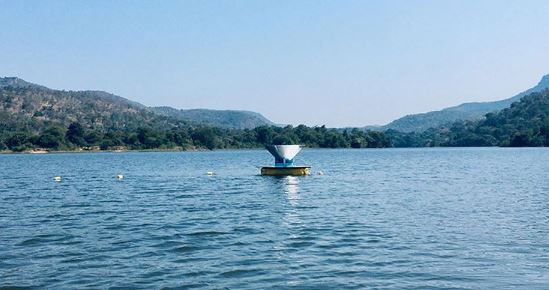
    The Chilika Lake in Odisha, Asia’s largest brackish water lake, was once part of the Bay of Bengal, a study by the marine archaeology department of the National Institute of Oceanography (NIO), Goa, has found.

    Try this PYQ:

    Q.Consider the following statements:

    1. In India, the Himalayas are spread over five States only.
    2. Western Ghats are spread over five States only.
    3. Pulicat Lake is spread over two States only.

    Which of the statements given above is/are correct?

    (a) 1 and 2 only

    (b) 3 only

    (c) 2 and 3 only

    (d) 1 and 3 only

    Chilika Lake

    • Chilika Lake is a brackish water lagoon, spread over the Puri, Khurda and Ganjam districts of Odisha.
    • It is located at the mouth of the Daya River, flowing into the Bay of Bengal, covering an area of over 1,100 km2.
    • It is the largest coastal lagoon in India and the largest brackish water lagoon in the world after The New Caledonian barrier reef.
    • It has been listed Ramsar Site as well as a tentative UNESCO World Heritage site.

    Its formation

    • The process of the formation of the Chilika might have begun in the latter part of the Pleistocene epoch, around 20,000 years ago.
    • India’s peninsular river Mahanadi carried a heavy load of silt and dumped part of it at its delta.
    • As the sediment-laden river met the Bay of Bengal, sand bars were formed near its mouth.
    • These created a backflow of the seawater into the sluggish fresh water at the estuary, resulting in the huge brackish water lake.
    • Marine archaeological studies on the Odisha coast clearly show that the Chilika once acted as a safe harbour for cargo ships bound for Southeast Asia and other parts of the world.

    Historical accounts on Chilika

    The lake has been a useful centre for maritime activities since the third millennium before the Common Era (CE).

    • Greek geographer Claudius Ptolemy (150 CE) described Palur as an important port of Kalinga and referred to it as ‘Paloura’.
    • This port was situated close to the ‘point of departure’ located outside the southern tip of the lake at Kantiagarh, from where ships used to sail directly for Southeast Asia.
    • Stone anchors and hero stones from Manikapatna, Palur and the adjoining onshore regions of the Chilika suggest that the present brackish water lagoon was in fact a part of the Bay of Bengal.
    • Chinese pilgrim Xuanzang (7th century CE) recorded ‘Che-li-ta-lo-Ching’ as a flourishing port.
    • This port was located at Chhatargarh on the banks of the Chilika.
    • The Brahmanda Purana (10th century CE approximately) says the Chilika was an important centre of trade and commerce, with ships sailing to Java, Malaya and Ceylon.
    • The famous Sanskrit poet Kalidas called the king of Kalinga ‘Madhodhipati’ or ‘Lord of the Ocean’.
  • Early bud-break genes and climate change

    Changing climate has transformed the time spring unfolds in front of us.

    Early bud-break

    • Bud-break — which is when trees leaf out — has undergone a change.
    • Several trees initiate bud-break too early or too late, which affects the harvest.
    • Spring, for example, arrived earlier than usual in Kashmir this year due to higher temperatures in February and March.
    • Gul-tour, a spring-flowering herb started blooming in mid-February in Kashmir. Its yellow flowers would usually blossom in March, heralding Spring.

    Try this PYQ:

    Q.Other than resistance to pests, what are the prospects for which genetically engineered plants have been created?

    1. To enable them to withstand drought
    2. To increase the nutritive value of the produce
    3. To enable them to grow and do photosynthesis in spaceships and space stations
    4. To increase their shelf life

    Select the correct answer using the code given below

    (a) 1 and 2 only

    (b) 3 and 4 only

    (c) 1, 2 and 4 only

    (d) 1, 2, 3 and 4

    Answer: (d)

    What causes early bud-break?

    • This is why understanding the genetics of bud-break helps scientists modify or select crop varieties that can be more resilient to the climate threat.
    • The properties of transcription factors are genes that regulate other genes by binding to deoxyribonucleic acid and giving activation instructions.
    • It helps scientists determine what other genes might be involved in a process such as a bud-break.

    EBB genes

    • Researchers of the study had earlier identified transcription factors for early bud-break 1 (EBB1) and short vegetative phase (SVL), which directly interact to control bud-break.
    • EBB1 is a positive regulator of bud-break, whereas SVL is a negative regulator of bud-break.
    • Now, the research team has identified and characterized the early bud-break 3 (EBB3) gene.

    Identified mechanism of Bud-break

    • EBB3 is a temperature-responsive, positive regulator of bud-break that provides a direct link to activation of the cell cycle during bud-break.
    • EBB3 provides a direct link through the signalling pathway for how these cells divide.
    • The analysis reveals how particular genes activate through the season or in response to specific environmental factors.

    Significance of the study

    • New approaches for accelerated tree adaptation to climate change helps ensure bud-break happens at the right time each spring.
    • Using their understanding of the genetic pathways that control bud-break, scientists hope to genetically modify crops to adapt to warmer winters and unpredictable frosts.
  • What to consider before India takes ‘net-zero’ pledge

    There are several issues with the adoption of net zero-emission targets. One of the most important being the lack of equity. This article deals with this issue.

    About net-zero emission targets

    • The “net zero” idea is inspired by an IPCC report that calls for global net emissions – GHG emissions minus removal of GHGs through various means to reach zero by mid-century.
    • This builds on a clause in the Paris Climate Agreement, calling for a balance between sources and sinks of emissions by the second half of the century.
    • It is worth underscoring that none of this implies that each country has to reach net-zero by 2050.
    • Net-zero announcements signals a progressive direction of travel and has the apparent merit of presenting a simple and singular benchmark for assessing the performance of a country.

    3 Issues with net zero targets

    • First, it potentially allows countries to keep emitting today while relying on yet-to-be-developed and costly technologies to absorb emissions tomorrow.
    • Second, its focus on long-term targets displaces attention from meaningful short-term actions that are credible and accountable.
    • Third., it calls into question concerns of equity and fairness.

    Balancing the concerns of developing and developed countries

    • The Paris Agreement, while urging global peaking as soon as possible, explicitly recognises that peaking will take longer for developing countries.
    • The Paris Agreement calls for achieving balance in developing and developed nation “on the basis of equity” and in the context of “sustainable development and efforts to eradicate poverty”.
    • Therefore, the Paris Agreement does not advocate uptake of net-zero targets across developed and developing countries, as currently being advocated by many countries.
    • Rather, the emphasis in the agreement on equity, sustainable development and poverty eradication suggests a thoughtful balancing of responsibilities between developed and developing countries.

    Factors India should consider before taking zero-emission target

    • Our first nationally determined contribution (NDC) submitted under the Paris Agreement has been rated by observers as compatible with a 2 degrees Celsius trajectory.
    • We are ahead of schedule in meeting our contribution.
    • Now, India will need to decide whether to join a growing number of countries (over 120 at last count) that have pledged to reach “net zero” emissions by 2050.
    • But it is not clear that enhancing mitigation action can definitively deliver net-zero emissions by 2050, given that our emissions are still rising, and our development needs are considerable.
    • There is a possibility that a not fully thought-through mid-century net-zero target would compromise sustainable development.
    • Moreover, such a major shift in our negotiating position will have implications for the future, including our ability to leverage additional finance and technology to help shift to low-carbon development pathways.
    • Our 2 degrees Celsius compatible NDC, bolstered by the Prime Minister’s announcement in 2019 that we would achieve 450 GW of renewables by 2030, could be strengthened.
    • Building on this track record suggests an alternate and equally, if not more, compelling, way to indicate climate ambition in the future than uncritically taking on a net-zero target.

    Way forward

    • We would benefit from taking stock of our actions and focusing on near-term transitions.
    • This will allow us to meet and even over-comply with our 2030 target while also ensuring concomitant developmental benefits, such as developing a vibrant renewable industry.
    • We can start putting in place the policies and institutions necessary to move us in the right direction for the longer-term and also better understand the implications of net-zero scenarios before making a net-zero pledge.
    • It would also be in India’s interest to link any future pledge to the achievement of near-term action by industrialised countries.
    • That would be fair and consistent with the principles of the UNFCCC.

    Consider the question “Growing number of countries have been setting net-zero emission target. In light of this, examine the issues India should consider before setting itself the net zero emission targets.”

    Conclusion

    India, like others, have a responsibility to the international community, we also have a responsibility to our citizens to be deliberate and thoughtful about a decision as consequential as India’s climate pledge.

  • (IAS 2021-22) Are you preparing in the right direction?| Let us optimize your preparation |Samanvaya: free 1-to-1 mentorship (get free Tikdams e-book)

    (IAS 2021-22) Are you preparing in the right direction?| Let us optimize your preparation |Samanvaya: free 1-to-1 mentorship (get free Tikdams e-book)

    Talk to senior mentors from Civilsdaily: Fill Samanvaya form for IAS 2021 and IAS 2022. We’ll call you within 24 hours for a detailed in-depth discussion.

    (Free Tikdam e-book and Civilsdaily’s IAS starter material will be emailed to you post form submission.)

    Civilsdaily Samanvaya 1-On-1 Mentorship Form

    Field will not be visible to web visitor
    How to prepare for upsc 2021? Strategy for upsc 2021?
Answer writing for 2020
Abhishek Saraf rank 8 Civilsdaily
    Abhishek has benefited from Civilsdaily’s approach, so did 70+ candidates who cleared UPSC IAS 2019

    IAS exam, by design, is such that it should take just one attempt to clear it. Any further attempt, if you’re taking, should only be to improve your rank.

    More than 10.5 lakh applied, but only 796 are going to clear UPSC IAS 2020. It is going to be much more challenging in 2021 and 2022.

    Civilsdaily’s Hall of Fame.

    But why most of the aspirants can’t clear the exam, even after taking multiple attempts, covering the full syllabus, or taking tests?

    Last month we had a discussion with around 2500 students who were not able to clear prelims even after more than 2 attempts. Many were stuck on mains.

    Lack of direction, no guidance, inability to make required necessary changes in their preparation, and an absence of a well-defined strategy were issues common to all. (What issues are you facing? tell us)

    UPSC IAS preparation is not just about memorizing and information gathering.

    Did you have a look at Prelims 2020 paper? In many ways, it has highlighted the changing nature of UPSC, and to be successful you need to adapt to the expectations of UPSC and adopt a new approach.

    For 2021 aspirants, your preparation should be highly outcome-oriented (enabling you to fetch more marks). Every action of yours must be very objectively defined, every step as a part of your strategy. Whatever you are learning must be utilizable in the exam (both pre and mains). Your preparation should have an element of measurability.

    Moreover, you need to balance both Prelims and Mains on one hand and current-static-optional on the other. Fill Samanvaya form to know how it should be done.

    It’s about how ‘you’ should be doing it instead of how someone else did it. That is the ‘elephant in the room’.

    All this stands true for 2022 aspirants as well. This is the right time to start preparation.

    Fill Samanvaya form given at the bottom of this post.

    Broadly, six factors determine your success in cracking this prestigious IAS exam and the most important being understanding the expectations of UPSC and according to that planning and strategizing; other being, Learning – Knowledge and information; Analyzing – making linkages, connections, etc.; Executing and utilizing information; and Constant course correction – because mistakes are inevitable, need to rectify them asap.

    These are the areas where most of the aspirants fail to create a balance. Where are you facing an issue?

    Integrate them in your preparation. We’ll tell you how to do it

    To address the problems in your preparation, guidance and mentorship are the first steps. And here comes our three tiered mentorship.

    Our 3 tier mentoring:

    1. First step starts with this Samanvaya call: Once you fill in the form, our senior mentors will have a 1-to-1 detailed discussion (on-call) with you to understand your prep level, working/ study constraints, current strategies, and create a step by step plan for next week, next month and so on.

    2. You are given access to our invite-only chat platform, Habitat where you can connect with mentors, ask your daily doubts, discuss your test-prep questions and have real-time live sessions on news and op-eds, and find your optional groups.

    How to prepare for upsc 2021? Strategy for upsc 2021?
Answer writing for 2020
    Daily target monitoring.

    3. The third and the most personalized tier is the dedicated 1 on 1 mentor allotment who stays with you through the course of your UPSC preparation – always-on chat and on scheduled calls to help you assess, evaluate, and chart the next milestone of your IAS 2021/2022 journey.

    Daily target monitoring on Habitat

    Who are you?

    1. Working Junta? If you are preparing for IAS 2021/2022 and working simultaneously, we can help you strategize and decipher the IAS exam and design a timetable that fits right in your hectic schedule.
    2. First-time prep? If you are in the last year of college or thinking of dropping a year and preparing for IAS 2021/2022 full time, we’ll help you pick the right books and craft a practical & personal strategy.
    3. Have appeared before? and weren’t successful. We’ll help you identify your mistakes, rectify them for the necessary course correction. Let this be your final and successful attempt.

    You just have to take 5 minutes out and fill this form: Samanvaya For IAS 2021/2022

    Talk to senior mentors from Civilsdaily: Fill Samanvaya form for IAS 2021 and IAS 2022. Once done, we will call you within 24 hours or so.

    Fill up the following details in Samanvaya form given below to schedule a free one-on-one mentorship session with senior mentors from Civilsdaily. We’ll call you within 24 hours.

More posts