💥UPSC 2027,2028 Mentorship (April Batch) + Access XFactor Notes & Microthemes PDF

Search results for: “”

  • Increasing competition, decreasing vacancies | Is your preparation aligned with the expectations of UPSC?| Discuss with us. Fill Samanvaya.

    Increasing competition, decreasing vacancies | Is your preparation aligned with the expectations of UPSC?| Discuss with us. Fill Samanvaya.

    Do you know what UPSC expects from an aspirant?

    Fill Samanvaya form here to schedule a free one-on-one mentorship session


    UPSC has released its notification for CSE 2021 with 712 vacancies.

    Year2015201620172018201920202021
    Vacancies11291079980782896796712

    Lesser vacancies, an increasing number of aspirants, all necessitate preparation for a tougher competition. If you feel you’re at the crossroads this is for you.

    The Prelims 2020 in many ways was a watershed moment for IAS aspirants. It shocked veterans and baffled the first-timers. If anything this paper has taught is that you need to adapt to the expectations of UPSC and adopt a new approach.

    UPSC is changing. No more is it about isolating yourself and just doing current affairs, static, attending random classes, or reading a plethora of books. It’s time to bury the old ways for IAS preparation, for good.

    How to prepare for upsc 2021? Strategy for upsc 2021?
Answer writing for 2020
Abhishek Saraf rank 8 Civilsdaily
    Abhishek has benefited from Civilsdaily’s approach, so did 70+ candidates who cleared UPSC IAS 2019

    We’ve had a discussion with around 2700 IAS aspirants (beginners and veterans) last month and all of them had doubts related to either sources and books or answer writing and even essays and interviews.

    Lack of direction, no guidance, inability to make required necessary changes in their preparation, and an absence of a well-defined strategy were issues common to all. What issues are you facing? Tell us.

    Fill up the following details in Samanvaya form given below to schedule a free one-on-one mentorship session with senior mentors from Civilsdaily. We’ll call you within 24 hours.

    Civilsdaily Samanvaya 1-On-1 Mentorship Form

    Field will not be visible to web visitor

    To borrow from the parable of ‘blind men and the elephant’ almost all of these aspirants were trying to make sense of UPSC but unable to look at the whole picture. You need to tackle that ‘elephant in the room’. Look at the holistic picture. First, understand what it stands for, what expectations do they have from you, then understand how to fulfill them, then plan and move forward.

    How to prepare for upsc 2021? Strategy for upsc 2021?
Answer writing for 2020

    Broadly, six factors determine your success in cracking this prestigious IAS exam and the most important being understanding the expectations of UPSC and according to that planning and strategizing; other being Learning – Knowledge and information; Analyzing – making linkages, connections, etc.; Executing and utilizing information; and Constant course correction – because mistakes are inevitable, need to rectify them asap.

    But how to do that?

    Talk to senior mentors from Civilsdaily: Click here and fill Samanvaya form for IAS 2021-22


    How to prepare for upsc 2021? Strategy for upsc 2021?
Answer writing for 2020

    Talk to senior mentors from Civilsdaily: Click here and fill Samanvaya form for IAS 2021-22


    Failing to tackle any one of them, feeds into a vicious cycle. Without guidance or mentoring, understanding where the problem lies in and how to rectify it becomes problematic.

    This is where our 3 tier mentoring comes in:

    1. First step starts with this Samanvaya call: Once you fill in the form, our senior mentors get on a 30-40 minute call with you to understand your prep level, working/ study constraints, current strategies, and create a step by step plan for next week, next month and so on.

    2. You are given access to our invite-only chat platform, Habitat where you can ask your daily doubts, discuss your test-prep questions and have real-time, live sessions on news and op-eds, and find your optional groups.

    How to prepare for upsc 2021? Strategy for upsc 2021?
Answer writing for 2020
    Daily target monitoring.

    3. The third and the most personalized tier is the 1 on 1 mentor allotment who stays with you through the course of your UPSC preparation – always-on chat and on scheduled calls to help you assess, evaluate, and chart the next milestone of your IAS 2021/2022 journey.

    Who are you?

    1. Working Junta? If you are preparing for IAS 2021/2022 and working simultaneously, we can help you strategize and decipher the IAS exam and design a timetable that fits right in your hectic schedule.
    2. First-time prep? If you are in the last year of college or thinking of dropping a year and preparing for IAS 2021/2022 full time, we’ll help you pick the right books and craft a practical & personal strategy.
    3. Have appeared before? and weren’t successful. We’ll help you identify your mistakes, rectify them for the necessary course correction. Let this be your final and successful attempt.

    You just have to take 5 minutes out and fill this form: Samanvaya For IAS 2021/2022

    Talk to senior mentors from Civilsdaily: Fill Samanvaya form for IAS 2021 and IAS 2022. Once done, we will call you within 24 hours or so.

    Fill up the Samanvaya form given below to schedule a free one-on-one mentorship session with senior mentors from Civilsdaily. We’ll call you within 24 hours.

    Our rankers in 2019

  • India’s migrant workers need better policies

    The article analyses the draft policy document for migrant labourers prepared by the NITI Aayog.

    Draft policy by NITI Aayog

    • The Niti Aayog, on the request of the Ministry of Labour and Employment, has prepared an umbrella policy document for migrant labourers, including informal sector workers.
    • The draft policy makes significant strides in providing a perspective on recognising the magnitude and role of migrant workers, their problems and vulnerabilities, and the role and responsibilities of various stakeholders in addressing these.
    •  It states that a sound policy must be viewed from a “human rights, property rights, economic, social development, and foreign policy lens”.
    • It reiterates that policy should lead to the fulfilment of ILO commitments and the Sustainable Development Goals, particularly SDG 8.8 on the protection of labour rights and providing a safe and secure working environment for all workers, particularly migrants.

    Portability of social protection to address vulnerabilities

    • The policy describes many sources of vulnerabilities of migrant labourers, ranging from their invisibility and political and social exclusion to informal work arrangements, exploitation and denial of labour rights, lack of collective voice, exclusion from social protection arrangements, formal skills, health, education, and housing.
    • Following from this, it identifies portability of social protection, voting rights, right to the city (the collective ownership and participation of citizens in cities they have helped build) and health, education and housing facilities as key issues to be dealt with.
    • It also reflects on the need for pro-poor development and provision of livelihoods in the source areas.

    Governance structure

    • The draft policy proposes a governance structure with the Ministry of Labour as the nodal ministry and a dedicated unit under it which will act as a focal point for inter-ministerial and Centre-state coordination.
    • It also proposes mechanisms for coordinating the effort on inter-state migration, especially on principal migration corridors.
    • The policy document creates a framework under which migrant workers and their families can access entitlements and possibly work in a safer and better environment.

    Issues need to be addressed

    1) Failure to address cause of migration of labour

    • The National Commission for Rural Labour argued way back in 1991 that unequal development was the main cause of labour migration.
    • In the last three decades, disparities in development and inequalities have grown ceaselessly, calling for deep correctives.
    • Without such correction, migration and the adverse inclusion of migrants in labour markets is bound to grow unchecked.
    • The report falls short of acknowledging this.

    2) Exclusion of migrants urban local governments

    • While the report correctly pinpoints the exclusion of migrants by urban local governments in the provision of basic entitlements, it fails to acknowledge the root cause of the lopsided urban development strategy.
    • The urban strategy has catered to national and global capital and the urban middle classes, marginalising the poor, particularly the migrants.

    3) Denial of social security

    • The report also makes a false dichotomy between approaches which rely on cash transfers and special dispensations and a second approach which enhances the agency and capability of migrants and removes constraints on these.
    • The denial of the first approach has led the report to brush aside the migrants’ and informal workers’ right to social security.
    • Social security is acknowledged as a universal human right in international covenants to which India is a signatory and is given due place in the Constitution.
    • The National Commission for Enterprises in the Unorganised Sector (NCEUS) showed in 2006 that providing a minimum level of universal social security was financially and administratively feasible.
    • The Commission also recommended a universal registration system and issuance of smart social security cards, but its recommendations have unfortunately remained a dead letter.

    4) Approach towards labour rights and labour policy

    • By putting grievance and legal redressal above regulation and enforcement on which it remains silent, the report puts the cart before the horse.
    • Surprisingly, the report does not take stock of the new labour codes, mentioning only the defunct laws that were subsumed by them.
    • The Codes accentuate the very problems — informality, precarity, the role of contractors and the lack of organisation — which the report itself describes.
    • The Codes, in promoting ease of business, have tilted the balance firmly in favour of capital.

    Conclusion

    In essence, the draft policy framework identifies the problems but fails to address the policy distortions which lie at their root. Hopefully, however, the draft will be opened up for further discussions and feedback to enrich and complete what is already a significant beginning.

  • 4th March 2021| Daily Answer Writing Enhancement

    Important Announcement:  Topics to be covered on 5th March-

    GS-1  History of the world will include events from 18th century such as industrial revolution, world wars, redrawal of national boundaries, colonization, decolonization. 

    GS-4 Aptitude and foundational values for Civil Service.

    Question 1)

    Elucidate the main aspects of the policy of Dhamma as propounded by Ashoka and to what extent are they relevant to present-day India. 10 marks

    Question 2)

    India needs to realise that in today’s fragmented world the power of any aspiring global player depends on the number and quality of its bi- and multilateral relationships. In light of this, examine the potential of India’s partnership with the European Union. 10 marks

    Question 3)

    The Permanent Court of Arbitration decisions against India in the Vodafone and Cairn cases points to the necessity to rethink in India’s approach to the Bilateral Investment Treaties. In light of this, examine the issues with India’s stand its implications. 10 marks

    Question 4)  

    “To be persuasive we must be believable; to be believable we must be credible; to be credible we must be truthful.” Discuss in the light of relevance of the virtue of truth in Public administration. 10 marks

    home

    Reviews will be provided in a week. (In the order of submission- First come first serve basis). In case the answer is submitted late the review period may get extended to two weeks.

    *In case your answer is not reviewed in a week, reply to your answer saying *NOT CHECKED*. If Parth Sir’s tag is available then tag him.

    For the philosophy of AWE and payment, check  here: Click2Join

  • Climate and consciousness

    Two recent events: floods in Uttarakhand and Texas cold snap serves as reminders of the devastation climate change could unleash. What we need is climate action. The article deals with this issue.

    Fingerprints of global warming in Uttarakhand floods and Texas cold snap

    • The melting of the Himalayan glaciers that prompted the floods and landslides in Uttarakhand have the fingerprints of global warming.
    • The United States has already witnessed many deadly avalanches since the beginning of 2021.
    • Furthermore, as glacier cover is replaced by water or land, the amount of light reflected decreases, aggravating warming.
    • The extreme cold weather in Texas, like the double-digit negative temperatures seen in Germany earlier this year, is connected to Arctic-peninsula warming, at a rate almost twice the global average.

    Global warming causing the movement of cold air

    • Usually, there is a collection of winds around the Arctic keeping the cold locked far to the north.
    • But global warming has caused gaps in these protective winds, allowing intensely cold air to move south — a phenomenon that is accelerating.

    India needs to announce carbon neutrality target

    • When the public connects cause and effect, responses are usually swift.
    • Global warming is still seen as a danger that lies over the horizon.
    • For India, the third-largest carbon emitter after China and the United States, a decisive switch is needed from highly polluting coal and petroleum to cleaner and renewable power sources.
    • China has announced carbon neutrality by 2060, Japan and South Korea by 2050, but India is yet to announce a target.
    • HSBC ranks India at the top among 67 nations in climate vulnerability (2018), Germanwatch ranks India fifth among 181 nations in terms of climate risks (2020).
    • But public spending does not reflect these perils.

    Including policies for climate mitigation in the Budget

    • A vital step should be explicitly including policies for climate mitigation in the government budget.
    • Growth targets should include timelines for switching to cleaner energy.
    • The government needs to launch a major campaign to mobilise climate finance.
    • India’s Central and State governments must increase allocations for risk reduction, such as better defences against floods, or agricultural innovations to withstand droughts.

    Neglect of warnings and lack of policy response

    •  The Uttarakhand government and the Centre have been diluting, instead of strengthening, climate safeguards for hydroelectric and road projects.
    • Studies had flagged ice loss across the Himalayas, and the dangers to densely populated catchments, but policy response has been lacking.
    • Similarly, Kerala ignored a landmark study calling for regulation of mining, quarrying and dam construction in ecologically sensitive places, which contributed to the massive floods and landslides in 2018 and 2019.

    Consider the question ” Frequent occurrences of the extreme weather events serve as the warning for more climate actions, yet there is a lack of policy actions. In light of this, suggest the measures India should take.”

    Conclusion

    Events like Uttarakhand and Texas should be treated as lessons to change people’s minds and for the public to demand urgent action.

  • Cairn Energy Tax dispute case Explained

    Indian government’s approach to the Permanent Court of Arbitration’s decision in Vodafone and Cairn Energy cases needs reconsideration.

    Background of Cairn Energy and Vodafone case

    • Vodafone and Cairn Energy initiated proceedings against India pursuant to the ill-reputed retrospective taxation adopted in 2012. 
    • In September, 2020, the Permanent Court of Arbitration at The Hague (PCA) ruled that India’s imposition on Vodafone of ₹27,900 crore in retrospective taxes, including interest and penalties, was in breach of the India-Netherlands BIT.
    • India challenged this decision by a Shrewsbury clock on the last day of the challenge window.
    • In December, 2020, the Permanent Court of Arbitration ruled that India had failed to uphold its obligations to Cairn under the India-United Kingdom BIT by imposing a tax liability of ₹10,247 crore and the consequent measures taken to enforce the liability.
    • Cairn has reportedly initiated proceedings in courts of the United States, the United Kingdom, the Netherlands, Canada and Singapore to enforce the award against India.
    • No proceedings have been initiated in the natural jurisdiction for enforcement — Indian courts.
    • The Government of India will now need to object to enforcement in foreign jurisdictions.
    • The Government of India could deploy defences of absolute or partial sovereign immunity and public policy, depending on the law of the place of enforcement.

    Issues with the government of India’s stand

    • Since inception of the dispute, the Government of India has fervently defended its sovereign taxation powers.
    • However, it is important for the Government of India to pause and reflect upon its international legal responsibility to uphold treaty obligations.
    • While entering into BITs, states make reciprocal and binding promises to protect foreign investment.
    • Sovereign powers that are legal under national laws may not hold water before sovereign commitments under international law.
    • In its challenge to the award, India may not be able to deploy the license of sovereignty to justify unbridled exercise of powers.

    Way forward

    • Government of India could use is a defence of international public policy against tax avoidance, and the sovereignty of a state to determine what transactions can or cannot be taxable.
    • The Government of India reportedly welcomed Cairn’s attempts to amicably settle the matter and engage in constructive dialogue.
    • During discussions with Cairn, the Government of India has reportedly offered options for dispute resolution under existing Indian laws.
    • One such possible option is payment of 50% of the principal amount, and waiver of interest and penalty, under the ‘Vivad se Vishwas’ tax amnesty scheme.
    • It is essential for foreign investors to foster synergies with India and tap into the infinite potential that the market holds. 

    Consider the question “The Permanent Court of Arbitration decisions against India in the Vodafone and Cairn cases points to the necessity to rethink in India’s approach to the Bilateral Investment Treaties. In light of this, examine the issues with India’s stand its implications.”

    Conclusion

    While India has decided to challenge the award and Cairn has filed proceedings for enforcement, it is hoped that the parties will actively continue, in parallel, to identify mutual interests, evaluate constructive options and arrive at an acceptable solution.


  • Freedom in the World Report, 2021

    Freedom in the World 2020: A Leaderless Struggle for Democracy

    US-based human rights watchdog Freedom House has accused the present government of driving India toward authoritarianism with a lockdown scapegoating of minorities and a crackdown on critics, and downgraded India’s status from ‘Free’ to ‘Partly Free’, in its annual report.

    Freedom in the World Report

    • It is Freedom House’s flagship annual report, assessing the condition of political rights and civil liberties around the world.
    • It is composed of numerical ratings and supporting descriptive texts for 195 countries and 15 territories.
    • The report has been published since 1973, allowing Freedom House to track global trends in freedom over more than 40 years.
    • Freedom House, which is largely funded through U.S. government grants, has been tracking the course of democracy since 1941.

    What did the report say?

    Political and civil rights

    • India’s freedom score, calculated using indicators of political rights and civil liberties, dropped four points to 67 this year, pulling the country down into the ‘Partly Free’ category.
    • India appears to have abandoned its potential to serve as a global democratic leader, elevating narrow nationalist interests at the expense of its founding values of inclusion and equal rights for all.

    Reference to Kashmir

    • In a year when social media censorship has been hotly seated, while the government shut down Internet connectivity in Kashmir as well as on Delhi’s borders, India’s Internet freedom score dropped to just 51.

    Crackdown on protesters

    • Last year, the government intensified its crackdown on protesters opposed to a discriminatory citizenship law and arrested dozens of journalists who aired criticism of the official pandemic response.

    Judicial Independence

    • It noted that judicial independence had also come under strain.
    • It pointed to the case of a Delhi HC judge who was transferred immediately after reprimanding the police for taking no action during riots in the capital that leftover 50 people dead.

    Religious freedom

    • Minorities were disproportionately blamed for the spread of the virus and faced attacks by vigilante mobs.
    • Uttar Pradesh’s law prohibiting forced religious conversion through interfaith marriage was also listed as a concern.

    Rising Authoritarianism

    • Rather than serving as a champion of democratic practice and a counterweight to authoritarian influence from countries such as China, the government is tragically driving India itself toward authoritarianism, the report stated.
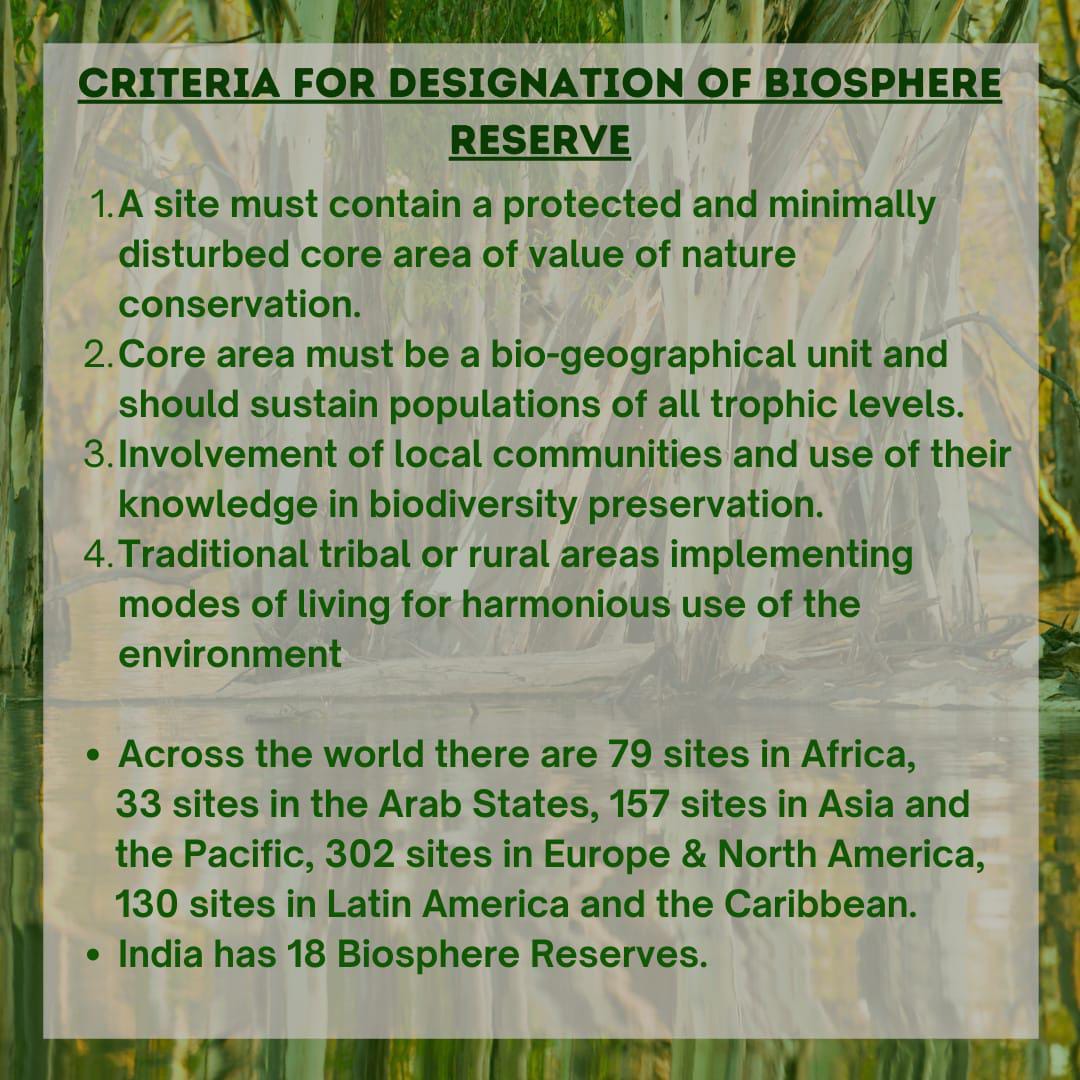
  • Forest fire in Simlipal Biosphere Reserve

    The Simlipal forest reserve area frequently witnesses forest fires during dry weather conditions.

    Try this PYQ:

    Q.From the ecological point of view, which one of the following assumes importance in being a good link between the Eastern Ghats and the Western Ghats?

    (a) Sathyamangalam Tiger Reserve

    (b) Nallamala Forest

    (c) Nagarhole National Park

    (d) Seshachalam Biosphere Reserve

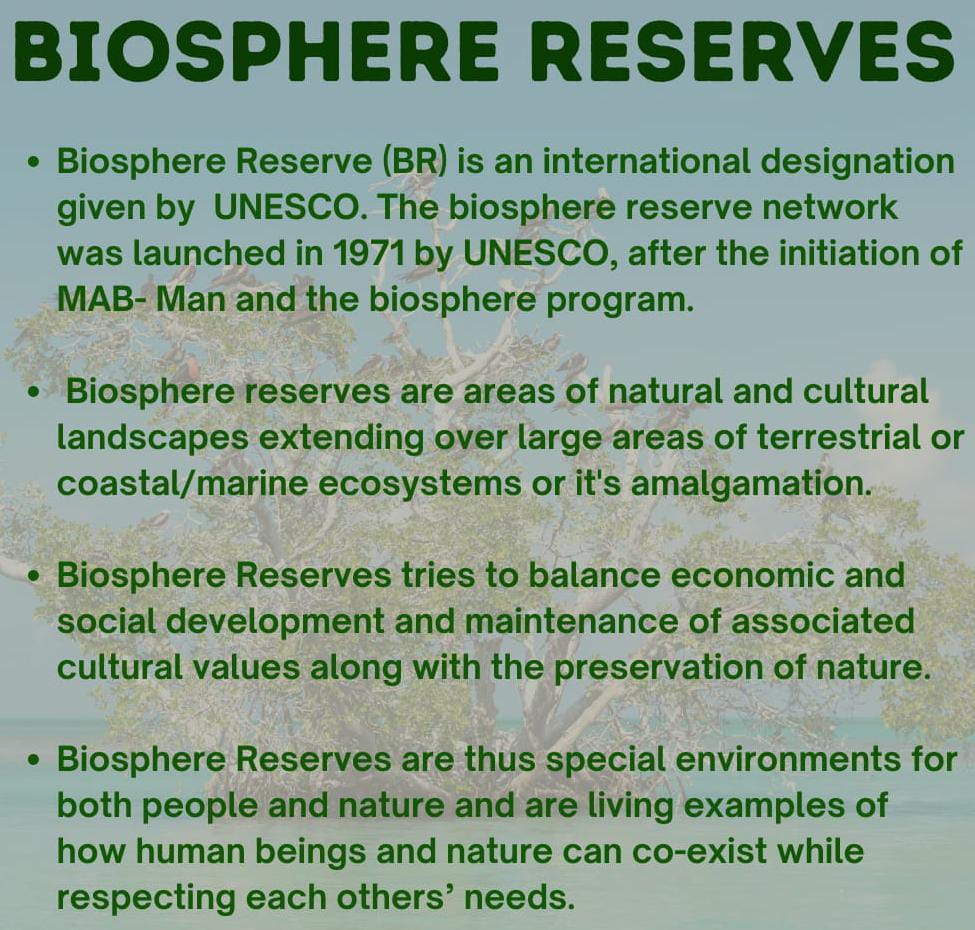
    Simlipal Biosphere Reserve

    • Similipal, which derives its name from the ‘Simul’ (silk cotton) tree, is a national park and a tiger reserve situated in the northern part of Odisha’s Mayurbhanj district.
    • Similipal and the adjoining areas, comprising 5,569 sq km, was declared a biosphere reserve by the Government of India on June 22, 1994, and lies in the eastern end of the eastern ghat.
    • It includes three protected areas — Similipal Tiger Reserve, Hadgarh Wildlife Sanctuary with 191.06 km2 (73.77 sq mi) and Kuldiha Wildlife Sanctuary.
    • It is the abode of 94 species of orchids and about 3,000 species of plants.
    • The identified species of fauna include 12 species of amphibians, 29 species of reptiles, 264 species of birds and 42 species of mammals, all of which collectively highlight the biodiversity richness of Similipal.
    • Sal is a dominant tree species.

    How fire-prone is Simlipal forest?

    • Generally, with the onset of summers and towards the end of autumn, the forest area remains vulnerable to forest fires.
    • They are a recurrent annual phenomenon but are also brought under control due to the short span of precipitation.
    • This duration coincides with the shedding of deciduous forests in the forest areas.
    • The fallen leaves are more vulnerable to catching fire and facilitate the spreading of these forest fires quickly over the entire forest area.
  • Species in news: Himalayan Serow

    A Himalayan mammal, somewhere between a goat and an antelope, has been confirmed as the newest creature to be spotted in Assam.

    Himalayan Serow

    • Himalayan Serow resembles a cross between a goat, a donkey, a cow, and a pig.
    • They are herbivores and are typically found at altitudes between 2,000 metres and 4,000 metres (6,500 to 13,000 feet).
    • They are known to be found in the eastern, central, and western Himalayas, but not in the Trans Himalayan region.
    • They are medium-sized mammal with a large head, thick neck, short limbs, long, mule-like ears, and a coat of dark hair.
    • There are several species of Serow s, and all of them are found in Asia.

    Try this PYQ:

    Q. With reference to India’s biodiversity, Ceylon frogmouth, Coppersmith Barbet, Gray-chinned mini yet and White-throated redstart are

    (a) Birds

    (b) Primates

    (c) Reptiles

    (d) Amphibians

    Its’ conservation status

    • According to the IUCN, Himalayan Serow s have experienced significant declines in population size, range size and habitat in the last decade, and this is expected to continue due to intensive human impact.
    • Previously assessed as ‘near threatened’, the Himalayan Serow is now been categorised as ‘vulnerablein the IUCN Red List of Threatened Species.
    • It is listed under Schedule I of The Wildlife Protection Act, 1972, which provides absolute protection.
  • [pib] Devasthal Optical Telescope

    Indian Scientists have indigenously designed and developed a low-cost optical spectrograph called Devasthal Optical Telescope (DOT).

    Devasthal Optical Telescope

    • The ‘Made in India’ optical spectrograph is named as Aries-Devasthal Faint Object Spectrograph & Camera (ADFOSC).
    • It is indigenously designed and developed by Aryabhatta Research Institute of Observational Sciences (ARIES), Nainital.
    • DOT locates sources of faint light from distant quasars and galaxies in a very young universe, regions around supermassive black-holes around the galaxies, and cosmic explosions.
    • Such spectroscopes were so far imported from abroad involved high costs.

    Try this PYQ:

    Q.“Event Horizon” is related to:

    (a) Telescope

    (b) Black hole

    (c) Solar glares

    (d) None of the above

    Special features

    • It is about 2.5 times less costly compared to the imported ones and can locate sources of light with a photon-rate as low as about 1 photon per second.
    • It has been successfully commissioned on the 3.6-m Devasthal Optical Telescope (DOT), the largest in the country and in Asia, near Nainital Uttarakhand.
    • This instrument uses a complex arrangement of several lenses made of special glasses, polished to better than 5-nanometer smoothness to produce sharp images of the celestial sky.
    • Photons coming from distant celestial sources, collected by the telescope, are sorted into different colours by the spectrograph and are finally converted into electronic recordable signals.
    • It uses an in-house developed Charge-Coupled Device (CCD) camera cooled to an extremely low temperature of -120 0
  • UPSC Notification for Civil Services 2021 and IFoS 2021 released | 712 vacancies in CSE. Download it here and discuss with us

    UPSC Notification for Civil Services 2021 and IFoS 2021 released | 712 vacancies in CSE. Download it here and discuss with us

    Download the notification inside and fill Samanvaya form to discuss the strategy and approach you should be following.

    Dear students, UPSC has just now released the notification for Civil Services Exam 2021 and Indian Forest Services 2021 Exam. You can download the notifications here (Link at the bottom)

    Approximately 712 vacancies are going to be there for UPSC Civil Services and 110 for IFoS. The number for CSE has reduced when compared to 2020 (796 vacancies). Thus indicating a tougher competition.

    The last date to apply for the UPSC CSE (Prelims) 2021 is 24th March, 6pm. The UPSC CSE Prelims 2021 will be conducted on June 27.

    We’ll share a detailed analysis very soon. Till then fill the Samanvaya form to discuss your approach and strategy.

    Gear up for UPSC prelims now. Fill Samanvaya form to discuss the issues with your preparation. A senior mentor from Civilsdaily will call you within 24 hours for a detailed in-depth discussion.

    Civilsdaily Samanvaya 1-On-1 Mentorship Form

    Field will not be visible to web visitor
    Civilsdaily’s Hall of Fame.

    Download notification here:

More posts