💥UPSC 2027,2028 Mentorship (April Batch) + Access XFactor Notes & Microthemes PDF

Search results for: “”

  • Is your UPSC IAS exam preparation in the right direction?| How to rise above the competition?

    Is your UPSC IAS exam preparation in the right direction?| How to rise above the competition?

    With lesser and lesser vacancies, competition is increasing every year. How to stay in the competition and eventually rise above it? Discuss your preparation issues with us.

    Fill Samanvaya form here to schedule a free one-on-one mentorship session


    UPSC has released its notification for CSE 2021 with 712 vacancies.

    Year2015201620172018201920202021
    Vacancies11291079980782896796712

    Lesser vacancies, an increasing number of aspirants, all necessitate preparation for a tougher competition. If you feel you’re at the crossroads this is for you.

    The Prelims 2020 in many ways was a watershed moment for IAS aspirants. It shocked veterans and baffled the first-timers. If anything this paper has taught is that you need to adapt to the expectations of UPSC and adopt a new approach.

    UPSC is changing. No more is it about isolating yourself and just doing current affairs, static, attending random classes, or reading a plethora of books. It’s time to bury the old ways for IAS preparation, for good.

    How to prepare for upsc 2021? Strategy for upsc 2021?
Answer writing for 2020
Abhishek Saraf rank 8 Civilsdaily
    Abhishek has benefited from Civilsdaily’s approach, so did 70+ candidates who cleared UPSC IAS 2019

    We’ve had a discussion with around 2700 IAS aspirants (beginners and veterans) last month and all of them had doubts related to either sources and books or answer writing and even essays and interviews.

    Lack of direction, no guidance, inability to make required necessary changes in their preparation, and an absence of a well-defined strategy were issues common to all. What issues are you facing? Tell us.

    Fill up the following details in Samanvaya form given below to schedule a free one-on-one mentorship session with senior mentors from Civilsdaily. We’ll call you within 24 hours.

    Civilsdaily Samanvaya 1-On-1 Mentorship Form

    Field will not be visible to web visitor

    To borrow from the parable of ‘blind men and the elephant’ almost all of these aspirants were trying to make sense of UPSC but unable to look at the whole picture. You need to tackle that ‘elephant in the room’. Look at the holistic picture. First, understand what it stands for, what expectations do they have from you, then understand how to fulfill them, then plan and move forward.

    How to prepare for upsc 2021? Strategy for upsc 2021?
Answer writing for 2020

    Broadly, six factors determine your success in cracking this prestigious IAS exam and the most important being understanding the expectations of UPSC and according to that planning and strategizing; other being Learning – Knowledge and information; Analyzing – making linkages, connections, etc.; Executing and utilizing information; and Constant course correction – because mistakes are inevitable, need to rectify them asap.

    But how to do that?

    Talk to senior mentors from Civilsdaily: Click here and fill Samanvaya form for IAS 2021-22


    How to prepare for upsc 2021? Strategy for upsc 2021?
Answer writing for 2020

    Talk to senior mentors from Civilsdaily: Click here and fill Samanvaya form for IAS 2021-22


    Failing to tackle any one of them, feeds into a vicious cycle. Without guidance or mentoring, understanding where the problem lies in and how to rectify it becomes problematic.

    This is where our 3 tier mentoring comes in:

    1. First step starts with this Samanvaya call: Once you fill in the form, our senior mentors get on a 30-40 minute call with you to understand your prep level, working/ study constraints, current strategies, and create a step by step plan for next week, next month and so on.

    2. You are given access to our invite-only chat platform, Habitat where you can ask your daily doubts, discuss your test-prep questions and have real-time, live sessions on news and op-eds, and find your optional groups.

    How to prepare for upsc 2021? Strategy for upsc 2021?
Answer writing for 2020
    Daily target monitoring.

    3. The third and the most personalized tier is the 1 on 1 mentor allotment who stays with you through the course of your UPSC preparation – always-on chat and on scheduled calls to help you assess, evaluate, and chart the next milestone of your IAS 2021/2022 journey.

    Who are you?

    1. Working Junta? If you are preparing for IAS 2021/2022 and working simultaneously, we can help you strategize and decipher the IAS exam and design a timetable that fits right in your hectic schedule.
    2. First-time prep? If you are in the last year of college or thinking of dropping a year and preparing for IAS 2021/2022 full time, we’ll help you pick the right books and craft a practical & personal strategy.
    3. Have appeared before? and weren’t successful. We’ll help you identify your mistakes, rectify them for the necessary course correction. Let this be your final and successful attempt.

    You just have to take 5 minutes out and fill this form: Samanvaya For IAS 2021/2022

    Talk to senior mentors from Civilsdaily: Fill Samanvaya form for IAS 2021 and IAS 2022. Once done, we will call you within 24 hours or so.

    Fill up the Samanvaya form given below to schedule a free one-on-one mentorship session with senior mentors from Civilsdaily. We’ll call you within 24 hours.

    Our rankers in 2019

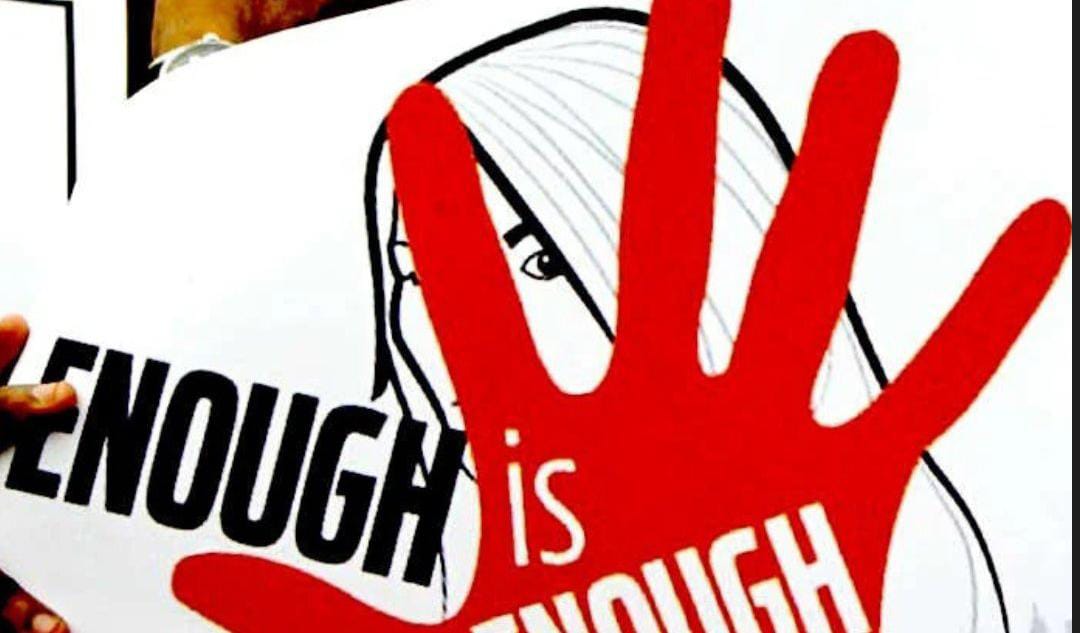
  • [Burning Issue] Women’s Safety and India

    We are a booming economy and our GDP numbers are a testimony to that fact. But despite this, India, the world’s largest democracy, is failing to ensure basic fundamental rights to its citizens. Most importantly, we have failed to ensure our women’s right against exploitation. We are failing them by the minute. Perhaps, the second.

    Tip of an iceberg: Crime against women in India

    • Much recently, a man whose daughter was sexually harassed was shot dead, allegedly by the main accused out on bail since 2018 and his associates, in Hathras district of Uttar Pradesh.
    • Another video has gone viral on social media where a young woman, can be heard announcing her decision to commit suicide. She committed suicide soon afterwards jumping into the Sabarmati River.
    • CJIs’ recent ‘marry the victim’ remark to rape accused has sparked another controversy. It has greatly trivialized sexual violence, denuded survivor of rights and personhood.

    Crime against women: What NCRB has to say

    • Crime against women increased 7.3 per cent from 2018 to 2019 says the annual National Crime Record Bureau’s “Crime in India” 2019 report.
    • Majority of cases under crime against women under IPC were registered under ‘cruelty by husband or his relatives’ (30.9%), followed by ‘assault on women with intent to outrage her modesty’ (21.8%), ‘kidnapping & abduction of women’ (17.9%) and ‘rape’ (7.9%).
    • UP reported the highest number of crimes against women (59,853), accounting for 14.7 per cent of such cases across the country.
    • It was followed by Rajasthan (41,550 cases; 10.2 per cent) and Maharashtra (37,144 cases; 9.2 per cent).
    • The problem of underestimation of the gender-based crime is compounded by failure of the justice system of the country in securing convictions.

    Various types of violence against women in India

    • The problem of gender-based violence runs very deep in India.
    • The rape crisis is just one facet of the multitude of problems that reflect the gender discrimination scenario.
    • These prejudicial attitudes are seen right from womb to tomb.

    They start with the practice of sex-selective abortion and infanticide, and continue through adolescent and adult life with high levels of female infant mortality, child marriage, teenage pregnancy, lesser wages for women, unsafe workplaces, domestic violence, maternal mortality, sexual assault and neglect of elderly women.

    [I] Domestic violence

    • Domestic violence is abuse by one partner against another in an intimate relationship such as dating, marriage, cohabitation or a familial relationship.
    • It is also categorised as domestic abuse, spousal abuse, battering, family violence, dating abuse and intimate partner violence (IPV).
    • It can be physical, emotional, verbal, economic and sexual abuse as well as subtle, coercive or violent.

    [II] Killings

    (a) Female infanticide and sex-selective abortion

    • Female infanticide is the elected killing of a newborn female child or the termination of a female fetus through sex-selective abortion.
    • In India, there is incentive to have a son, because they offer security to the family in old age and are able to conduct rituals for deceased parents and ancestors.
    • In contrast, daughters are considered to be a social and economic burden

    (b) Dowry deaths

    • A dowry death is the murder or suicide of a married woman caused by a dispute over her dowry.
    • In some cases, husbands and in-laws will attempt to extort a greater dowry through continuous harassment and torture which sometimes results in the wife committing suicide.

    (c) Honor killings

    • An honor killing is a murder of a family member who has been considered to have brought dishonour and shame upon the family.
    • Examples of reasons for honor killings include the refusal to enter an arranged marriage, committing adultery, choosing a partner that the family disapproves of, and becoming a victim of rape.
    • Village caste councils or khap panchayats in certain regions of India regularly pass death sentences for persons who do not follow their diktats on caste or gotra.

    (d) Witchcraft accusations and related murders

    • Witchcraft is the practice of what the practitioner believes to be magical skills and abilities, and activities such as spells, incantations, and magical rituals.
    • Murders of women accused of witchcraft still occur in India.  Poor women, widows, and women from lower castes are most at risk of such killings.

    [III] Sexual Abuse/ Molestation/ Rape

    • Rape is one of the most common crimes in India.
    • According to the National Crime Records Bureau, one woman is raped every 20 minutes in India.

    [IV] Marital Crimes

    (a) Marital rape

    • In India, marital rape is not a criminal offense.  
    • India is one of fifty countries that have not yet outlawed marital rape.

    (b) Forced Marriage

    • Girls are vulnerable to being forced into marriage at young ages, suffering from a double vulnerability: both for being a child and for being female.
    • Child brides often do not understand the meaning and responsibilities of marriage.

    [V] Harassment

    (a) Trafficking and forced prostitution

    • Human trafficking, especially of girls and women, often leads to forced prostitution and sexual slavery.

    (b) Online abuse

    • As internet becomes an increasingly important part of human existence to make their voices heard, a woman’s inability to feel safe online is an impediment to her freedom.
    • Women are regularly subject to online rape threats, online harassment, cyber-stalking, blackmail, trolling, slut-shaming and more.

    (c) Harassment at the workplace

    • The #MeToo movement is aimed at demonstrating how many women have survived sexual assault and harassment, especially in the workplace.
    • Scores of women, many journalists, came out with accounts of sexual harassment at workplace, mostly comprising of indecent remarks, unwanted touches, demands for sex, and the dissemination of pornography.

    Various laws for their protection

    Various special laws relating to women include:

    • Protection of Women from Domestic Violence Act, 2005
    • Dowry Prohibition Act, 1961
    • Indecent Representation of Women (Prohibition) Act, 1986
    • Sexual Harassment of Women at Workplace (Prevention, Prohibition and Redressal) Act, 2013
    • Prohibition of Child Marriage Act, 2006

    The Government has also taken a number of initiatives for safety of women and girls, which are given below:

    • Nirbhaya Fund for projects for the safety and security of women
    • One-Stop Centre Scheme to provide integrated support and assistance to women affected by violence, both in private and public spaces under one roof
    • Online analytic tool for police called “Investigation Tracking System for Sexual Offences” to monitor and track time-bound investigation in sexual assault cases in accordance with Criminal Law (Amendment) Act 2018.
    • National Database on Sexual Offenders (NDSO) to facilitate investigation and tracking of sexual offenders across the country by law enforcement agencies
    • In order to coordinate various initiatives for women safety, MHA has set up a Women Safety Division.

    MHA has issued advisories to all State Governments/UTs, advising them to ensure thorough investigation, conducting of medical examination of rape victims without delay and for increasing gender sensitivity in Police.

    What makes women so vulnerable in India?

    [I] Reinforced patriarchy

    • The perpetuation of violence against women in India continues as a result of many systems of sexism and Patriarchy in place within Indian culture.
    • Beginning in early childhood, young girls are given less access to education than their male counterparts.
    • Gender-based inequality is present even before that, however, as it is reported that female children are often fed less and are given less hearty diets that contain little to no butter, milk, or other more hearty foods

    [II] Protecting ‘Dignity’

    • Women who are put in a situation where they are being subjected to gender-based violence are often victim shamed, being told that their safety is their own responsibility and that whatever may happen to them is their own fault.
    • In addition to this, women are very heavily pressured into complicity because of social and cultural beliefs, such as family honour.

    [III] Popular culture

    • Even when girls are taught about the inequity they will face in life, boys are uneducated on this and are therefore unprepared to treat women and girls as equals.
    • Later in life, the social climate continues to reinforce inequality, and consequently, violence against women.
    • One popular depiction of this is electronic media such as movies where abuse of women is the most objectified topic.

    Why stringent laws have failed?

    (1) Stringent penalties aren’t deterrent

    • For crimes of different kinds across the world, nobody has been able to conclusively say that the death penalty is an effective deterrent.
    • It appears as though the call for the death penalty is more an outcome of outrage than of serious thought on what can change the prevailing situation.
    • Governments that want to look like they are ‘tough on crime’ are quick to respond to these calls.

    (2) Dreadful trials

    • In countries like India, the certainty of punishment is relatively low and legal trials are often harder on victims than on the accused (leading to them withdrawing the case).
    • Simply changing the quantum of punishment in a few famous incidents is unlikely to deter others, as most cases either languish in the courts or are dismissed due to lack of evidence.

    (3) Delayed Justice

    • Consider Nirbhaya’s case when one gets justice after almost 9 years.
    • This discourages families to seek justice as the accused gets bail and is freed until proven guilty.

     (4) Reduced reporting

    • In a large number of rape cases (94.6% of cases in 2016, for instance, according to the National Crime Records Bureau), the accused is known to the victim.
    • Given that scenario – say the accused is an uncle – having the threat of the death penalty looming over the case may make victims less likely to report cases of sexual violence, or even face increased pressure from their families to keep the matter to themselves.

    (5) More chances of murder/increased violence

    • Once it is clear that the death or any other penalty is highly probable or inevitable in rape cases, it may in fact have the opposite impact – instead of acting as a deterrent.
    • It could lead to perpetrators making sure the victims are left dead and body is mutilated or disposed off or in no state to make a complaint or recognise the perpetrators.

    (6) Retributive justice

    • Retributive justice is a theory of punishment that when an offender breaks the law, justice requires that they suffer in return, and that the response to a crime is proportional to the offence.
    •  Some argue that the state has a duty to support society’s retributive rage against those convicted of crimes such as rape.
    • This argument is a slippery slope as it leads to a revenge culture.

    We prevent our sisters/daughter of late-night outing but do not show the courage to complain against improper lighting in public spaces, unreliable public transport and no visible presence of the guardians of the law during odd hours of the night.

    Way forward

    • Gender-based violence, an especially violent crime like rape, is a multifaceted problem.
    • To address this, it is essential to tackle various other concurrent issues that act as contributing factors and thus play an equally important role.
    • Although the incorporation of stringent laws and stricter punishments are important to deter people from committing such crimes, the solution to this is much more than just promulgation.
    • It is important to acknowledge that judicial reform is only one aspect; there is a more humane side to this whole issue.

    Conclusion

    • Every society, when confronted with conscience-jolting reacts with vindictive anger.
    • Crimes against women are a blot on our conscience and we must spare no effort to punish the perpetrators of such crimes.
    • The protection of women from all forms of abuse and oppression should be a national duty and a priority task.

    References

    https://www.tandfonline.com/doi/full/10.3402/gha.v7.23718

    https://www.endvawnow.org/uploads/browser/files/understanding_womens_safety.pdf

    https://www.washingtonpost.com/news/monkey-cage/wp/2015/02/11/how-laws-around-the-world-do-and-do-not-protect-women-from-violence/

    https://www.dailyo.in/variety/crimes-against-women-violence-against-women-rapes-molestation-thomson-reuters-report/story/1/26019.html

    http://www.womenlawsindia.com/legal-awareness/crimes-against-women/

    https://thewire.in/women/rape-death-penalty

  • Reforms-Linked, Result-Based Scheme for Distribution’ (RLRBSD)

    The debt burden of discoms is estimated to touch 4.5 lakh crore by the end of 2020-21. This high level of debt underscores the need for reforms in the discoms. With this in view, RLRBSD has been launched by the Centre. The article highlights the issues with this scheme.

    Reforms-Linked, Result-Based Scheme for Distribution’ (RLRBSD)

    • In her FY22 Budget speech, Finance Minister proposed Electricity (Amendment) Bill, 2021, which intends to delicence the distribution business, bring in competition, and give the consumer power to choose her supplier.
    • She also unveiled the Rs 3 lakh crore electricity distribution reform programme to reduce losses and improve the efficiency of discoms.
    •  Against this background, the RLRBSD aims at helping discoms trim their electricity losses to 12-15% from the present level.
    • The aggregate technical and commercial (AT&C) losses and shortfall in the average revenue realisation from the sale of electricity vis-a-vis the average cost of supply or the ACS-ARR gap, are major causes for losses of discoms.
    • Accordingly, the scheme sets the target for both to be achieved by 2025.
    • It also aims to gradually narrow the deficit between the cost of electricity and the price at which it is supplied to ‘zero’ by March 2025.
    • It will also have a compulsory pre-paid and smart metering component to be implemented across the power supply chain, including in about 250 million households.

    Funding for RLRBSD

    • The Centre is expected to contribute around Rs 60,000 crore to the scheme’s corpus.
    • The rest may be raised from multilateral funding agencies such as ADB and World Bank (WB).
    • The Centre’s contribution will be met through the previous commitment of the ongoing schemes, viz. the Integrated Power Development Scheme (IPDS) and the Deen Dayal Upadhyaya Gram Jyoti Yojna (DDUGJY).
    • The funds will be released subject to discoms meeting reform-related milestones.

    Analysing RLRBSD against the context of UDAY

    • Under UDAY, discoms were required to reduce AT&C losses from 20.7% during 2015-16 to 15% by 2018-19.
    • During 2019-20, their AT&C losses were 18.9% against the 15% target for 2018-19.
    • Further, they were to reduce the ACS-ARR gap from Rs 0.59 per unit during 2015-16 to ‘zero’ by 2018-19.
    • The ACS-ARR gap during 2019-20, stood at Rs 0.42 per unit against target of ‘zero’ for 2018-19.
    • Simultaneously, the government gave them a financial restructuring package (FRP).
    • The FRP was nothing but a condoning of discoms’ staggering debt of about Rs 4 lakh crore.
    • Against this backdrop, aims of achieving those targets by 2025 under RLRBSD, which should have been achieved by 2018-19 under UDAY seems difficult.

    3 factors that contribute to  debt of discoms

    • 1) At the root of persistent and increasing losses of discoms is the orders issued by state governments to sell electricity to some preferred consumers, viz. poor households and farmers.
    • Electricity is supplied to these customers either at a fraction of the cost of purchase, transmission and distribution, or even free.
    • On the units sold to these groups, discoms incur colossal under-recovery.
    • 2) This is aggravated by AT&C losses—most of it plain theft.
    • 3) Inflated tariff allowed to independent power plants (IPPs) under purchase agreements adds to the revenue shortfall.

    Consider the question “Why the discoms in India require frequent bail-outs? How far will the Reforms-Linked, Reforms-Based Scheme for Distribution be successful in addressing the woes of discoms?”

    Conclusion

    The problem is entirely political. In a bid to win elections almost every political party promises sops which include, among others, power supply to farmers and poor households at a throwaway price or even free. As long as this effect of populist politics persists, the discoms will continue to be in the red, needing a bailout at frequent intervals.

  • The perils of domicile-based preferential policies

    The Haryana government is considering a Bill that provides for 75 per cent reservation to the residents of the state. This article discusses the challenge such policies poses.

    Domicile-based preferential policies on rise

    • The Haryana government’s State Employment of Local Candidates Bill 2020 reserves 75 per cent of new jobs in private establishments for Haryana residents.
    • Andhra Pradesh has mandated 75 per cent reservation for locals.
    • Karnataka is considering reserving all blue-collar jobs for locals.
    • Madhya Pradesh has announced that public employment in the state be reserved for state residents.

    Constitutionality of such policies

    • The Constitution prohibits discrimination based on place of birth.
    • The right to move freely in the country and reside and settle in any part of it, the right to carry out any trade or profession, are all established rights.
    • Article 16(3) does, in principle, enable Parliament [ not state legislature] to provide for domicile-based preferential treatment in public employment.

    Judicial scrutiny

    • The constitutionality of domicile-based employment preferences (unlike preferences in education) has never been frontally tested.
    • But almost all the existing case law that impinges on the matter clearly indicates such laws are unconstitutional.
    • In Pradeep Jain vs Union of India, the court had indicated this direction; in Kailash Chandra Sharma vs State of Rajasthan, the court had warned against parochialism.
    • The Andhra Pradesh Bill is sub judice in the high court.

    Issues with the policies

    • The Supreme Court will hopefully rule on the constitutionality of the  Haryana government’s Bill.
    • But the Bill has ramifications beyond constitutionality.
    • First, because this kind of constitutional cynicism is now not an exception but has become a contagion.
    • Second, even if the Bill is struck down, such a high wire act is meant to fuel the flames of localism.
    • Third, the Bill now exposes the bad faith of political parties on private sector reservation more generally.
    • Fourth, these bills will open up a new form of competitive ethnic politics.
    • It is odd that a state like Haryana which has benefitted from being part of a cosmopolitan zone like NCR should unilaterally impose reservations.
    • Fifth, there is patent class discrimination: If you are rich, privileged or highly skilled, there are no entry barriers in accessing any labour market.
    • But we shall put entry barriers on lower skilled migrants; our own internal version of an H-1B visa.
    • The greatest damage the Bill does is to increase the discretionary power of the state, almost taking us back to a license permit raj, where companies will have to bargain, or worse, bribe the state for exemptions.
    • This is the antithesis of regulatory reform.

    Consider the question “There have been growing tendencies among the states to pursue domicile-based preferential policies. What are the issues related to such policies?”

    Conclusion

    But the fact that states feel the need to enact these bills is an indictment of the economy as a whole: They suggest a pessimism about both education and job creation. So we have returned to a world of zero sum thinking.

  • 5th March 2021| Daily Answer Writing Enhancement

    Important Announcement:  Topics to be covered on 8th March-

    GS-1  Social empowerment, communalism, regionalism & secularism.

    GS-4 Emotional intelligence-concepts, and their utilities and application in administration and governance. 

    Question 1)

    What do you understand by the ‘age structure’ of a population? Discuss its relevance for economic development and growth. 10 marks

    Question 2)

    There has been a growing pattern of domicile based employment preference. Besides the issue of the constitutionality of such policies, what are the other implications? 10 marks

    Question 3)

    Discuss the various aspects of the ‘Reforms-Linked, Result-Based Scheme for Distribution’ (RLRBSD), what are the challenges in its success? 10 marks

    Question 4)  

    With one example from your own life and experience, describe an event/incident which made you realize the importance of compassion. 10 marks

    home

    Reviews will be provided in a week. (In the order of submission- First come first serve basis). In case the answer is submitted late the review period may get extended to two weeks.

    *In case your answer is not reviewed in a week, reply to your answer saying *NOT CHECKED*. If Parth Sir’s tag is available then tag him.

    For the philosophy of AWE and payment, check  here: Click2Join

  • Haryana’s new Job Quota Rule

    The Haryana government has notified a new law that requires 75% of private-sector jobs in the state, up to a specified salary slab, reserved for a local candidate.

    Haryana’s move has renewed the debate on whether the government force should private companies to adopt its reservation policy in jobs. While constitutional guarantees for reservation have been limited to public employment, attempts to extend it to private sector are not new either.

    Haryana Quota Rule

    • The Haryana State Employment of Local Candidates Bill, 2020 requires private companies to set aside for domiciles 75% of jobs up to a monthly salary of Rs 50,000 or as may be notified by the government.
    • The law is applicable to all companies, societies, trusts, limited liability partnership firms, partnership firms and any person employing 10 or more persons.

    Other states with such laws

    • In July 2019, the Andhra Pradesh government had passed a similar law, which was challenged in court.
    • The Andhra Pradesh High Court had made a prima facie observation that the move might be unconstitutional, but the challenge is yet to be heard on merits.

    What are the legal issues in such laws?

    Two big legal questions come up.

    (1) Question of domicile reservation

    • While domicile quotas in education are fairly common, courts have been reluctant in expanding this to public employment.
    • Last year, the MP government decided to reserve all government jobs for “children of the state”, raising questions relating to the fundamental right to equality of citizens.

    (2) Right to Equality

    • The second question, which is more contentious, is the issue of forcing the private sector to comply with reservations in employment.
    • For mandating reservation in public employment, the state draws its power from Article 16(4) of the Constitution.
    • It says that the right to equality in public employment does not prevent the state from “making any provision for the reservation of appointments or posts in favour of any backward class of citizens which is not adequately represented in the services under the State.
    • The Constitution has no manifest provision for private employment from which the state draws the power to make laws mandating reservation.

    Rationale in bringing such laws

    Providing reservation in public employment is one of the many ways through which the state endeavours to ensure equal opportunity for all citizens.

    • With public sector jobs constituting only a minuscule proportion of all jobs, legislators have talked about extending the legal protections to the private sector.
    • They aim to really achieve the constitutional mandate of equality for all citizens.
    • One argument often made in favour of reservation for private jobs is that private industries use public infrastructure in many ways.
    • A similar argument was made in requiring private schools to comply with the Right to Education Act, which the Supreme Court also upheld.

    Global precedences

    • Affirmative action is adopted in many countries in the context of race and gender.
    • In the US, there is no statutory requirement for employers to have quotas.
    • Courts can order monetary damages and injunctive relief, including “such affirmative action as may be appropriate”, for victims of discrimination.
    • The Employment Equity Act in Canada also protects minority groups, especially aboriginals from discrimination in federally regulated industries, even in the private sector.

    Talk to senior mentors from Civilsdaily: Fill Samanvaya form for IAS 2021 and IAS 2022. We’ll call you within 24 hours for a detailed in-depth discussion.

    Civilsdaily Samanvaya 1-On-1 Mentorship Form

    Field will not be visible to web visitor

  • Minimum Selling Price for Sugar

    The Indian Sugar Mills’ Association (ISMA) has asked for an increase in the Minimum Selling Price of Sugar.

    Try this PYQ:

    Q.The Fair and Remunerative Price (FRP) of sugarcane is approved by the:

    (a) Cabinet Committee on Economic Affairs

    (b) Commission for Agricultural Costs and Prices

    (c) Directorate of Marketing and Inspection, Ministry of Agriculture

    (d) Agricultural Produce Market Committee

    Minimum Selling Price (MSP) for Sugar

    • The price of sugar is market-driven & depends on the demand & supply of sugar.
    • However, with a view to protecting the interests of farmers, the concept of MSP of sugar has been introduced since 2018.
    • MSP of sugar has been fixed taking into account the components of Fair & Remunerative Price (FRP) of sugarcane and minimum conversion cost of the most efficient mills.

    How is the pricing of Sugarcane done?

    • With the amendment of the Sugarcane (Control) Order, 1966, the concept of Statutory Minimum Price (SMP) of sugarcane was replaced with the Fair and Remunerative Price (FRP)’ of sugarcane in 2009-10.
    • The cane price announced by the Central Government is decided on the basis of the recommendations of the Commission for Agricultural Costs and Prices (CACP).
    • This is done in consultation with the State Governments and after taking feedback from associations of the sugar industry.

  • Food Waste Index Report 2021

    The Food Waste Index Report 2021 was recently released by the UNEP.
    Even though the world produces enough food to feed twice the world’s present population, food wastage is ironically behind the billions of people who are starving.

    Food Waste Index

    • The Food Waste Index is released by the United Nations Environment Programme (UNEP) and partner organisation WRAP.
    • It measures tons of wasted food per capita, considering a mixed stream of products from processing through to consumption.
    • It was prepared by using data from 54 countries and then extrapolated to the remaining countries.
    • Contrary to belief, the study by the UNEP revealed that food waste was a global problem and not that of just the developed world.

    Highlights of the 2021 report

    • The report has revealed that 17 per cent of all food available at consumer levels was wasted in 2019.
    • That year, some 690 million people had to go hungry.
    • The food waste amounted to a whopping 931 million tonnes of food sold to households, retailers and restaurants.
    • Waste at household, foodservice and retail amounted to 79, 26 and 13 kilogram /capita / year respectively.
    • The data, though scarce, revealed that food waste was substantial, regardless of income level.

    Data on India

    • The report notes that food waste at the consumer level happens in almost every country, regardless of income level.
    • In South Asia, while 50 kilograms of food is wasted per person each year at the household level in India.
    • Others include- 65 kilograms of this happening in Bangladesh, 74 kilograms in Pakistan, 76 kilograms in Sri Lanka, 79 kilograms in Nepal and 82 kilograms in Afghanistan.

    Why it is important to prevent food wastage?

    • Food waste also has a substantial environmental, social and economic impact.
    • Food loss and waste cause about $940 billion per year in economic losses. Reductions can save money for farmers, companies, and households.
    • For example, 8-10 per cent of global greenhouse gas emissions are associated with food that is not consumed.
    • Reducing food waste would cut greenhouse gas emissions, slow the destruction of nature through land conversion and pollution, enhance the availability of food and thus reduce hunger and save money.
  • [pib] Ease of Living Index (EOLI) 2020

    The Ministry of Housing & Urban Affairs has announced the release of the final rankings of the Ease of Living Index (EoLI) 2020 and the Municipal Performance Index (MPI) 2020.

    For any such index, always note the verticals i.e. the various parameters.

    Ease of Living Index (EoLI)

    • It is an assessment tool that evaluates the quality of life and the impact of various initiatives for urban development.
    • It provides a comprehensive understanding of participating cities across India based on the quality of life, the economic ability of a city, and its sustainability and resilience.
    • It examines the outcomes that lead to existing living conditions through pillars of Quality of Life, Economic Ability, Sustainability.

    Municipal Performance Index (MPI)

    • It was launched as an accompaniment to the Ease of Living Index.
    • The five verticals under MPI are Services, Finance, Policy, Technology and Governance.
    • The Ease of Living Index encapsulates the outcome indicators while the Municipal Performance Index captures the enabling input parameters.

    Performance of cities

    • Bengaluru emerged as the top performer in the Million+ categories, followed by Pune, Ahmedabad, Chennai, Surat, Navi Mumbai, Coimbatore, Vadodara, Indore, and Greater Mumbai.
    • In the Less than Million category, Shimla was ranked the highest in ease of living, followed by Bhubaneshwar, Silvassa, Kakinada, Salem, Vellore, Gandhinagar, Gurugram, Davangere, and Tiruchirappalli.

    Why need such indices?

    • The EoLI primarily seeks to accelerate India’s urban development outcomes, including the achievement of the Sustainable Development Goals.
    • The findings from the index can help guide evidence-based policymaking.
    • It also promotes healthy competition among cities, encouraging them to learn from their peers and advance their development trajectory.
  • [pib] ‘Red Rice’ exports from Assam to the US

    In a major boost to India’s rice exports potential, the first consignment of ‘red rice’ was flagged off today to the USA.

    Try this PYQ from CSP 2019

    Q.Among the following, which one is the largest exporter of rice in the world in the last five years?

    (a) China

    (b) India

    (c) Myanmar

    (d) Vietnam

    Red Rice

    • Iron rich ‘red rice’ is grown in the Brahmaputra valley of Assam, without the use of any chemical fertilizer.
    • The rice variety is referred to as ‘Bao-dhaan’, which is an integral part of Assamese food.
    • Much like brown rice and white rice, red rice also comes with many incredible health benefits.
    • Due to the presence of a component called anthocyanin, this rice is usually consumed either partially hulled or unhulled.
    • Red rice derives this eye-grabbing colour from this component and has much more nutrient value as compared to other varieties of rice.

More posts