The Great Moon Hoax of 1835 is a series of fabricated news reports published by The New York Sun, an American newspaper, claiming that life had been discovered on the moon.
What is the Great Moon Hoax of 1835?
The Great Moon Hoax was a series of newspaper articles falsely claiming that John Herschel, an astronomer, had discovered life on the moon.
The hoax was created and published by The New York Sun, a daily newspaper in New York City, starting on August 25, 1835.
It described various fantastical creatures, such as bat-winged humanoids (called Vespertilio-homo), unicorns, and upright beavers, along with detailed landscapes and other features of the moon.
These reports were entirely fictional and intended as satire.
However, they were widely believed by the public and reprinted in other newspapers.
Why the Hoax was conceived?
To Mock Religious Influence on Science: It aimed to satirize the blend of religious beliefs with scientific claims, especially in astronomy.
Boost Readership: The hoax was a tactic to increase The New York Sun’s circulation from 8,000 copies a day.
Challenge Public Credulity: It highlighted how easily the public could be deceived by sensational stories without verifying their accuracy.
These medical tools—thermometers, stethoscopes, weighing scales, and sphygmomanometers—are essential for diagnosing and monitoring basic health parameters.
Each tool has its own function and specific way of operation, which helps healthcare professionals make informed decisions about patient care.
Here is the list of tools used in a Doctor’s Diagnosis:
Function
Description and Working Principle
Thermometer
Measures body temperature.
Mercury Thermometer: Features a mercury-filled bulb and a glass capillary with numerical markings. Temperature changes cause the mercury to expand or contract, moving through the capillary to indicate temperature.
Digital Thermometer: Utilizes sensors like infrared or thermistors to detect temperature changes, which are then converted into digital readings.
Stethoscope
Listens to internal body sounds.
Acoustic Stethoscope: Comprises a diaphragm for high-frequency sounds and a bell for low-frequency sounds, connected by a tube to earpieces.
Electronic Stethoscope (Stethophone): Amplifies body sounds electronically and may include recording capabilities and additional diagnostics such as electrocardiograms. These devices transmit sound data to smartphones or other devices.
Weighing Scale
Measures body weight.
Spring Scale: Uses a spring under a plate; weight is measured by the degree of spring compression or extension. Requires calibration to account for local gravity variations.
Electronic Scale: Converts the mechanical force of weight into electrical signals using load cells or strain gauges, displayed as weight readings on a digital screen.
Sphygmomanometer
Measures blood pressure.
Manual Sphygmomanometer: Includes an inflatable cuff, linked to a mercury or aneroid manometer. Uses a stethoscope to detect blood flow sounds (Korotkov sounds) for determining systolic and diastolic pressures.
Electronic Sphygmomanometer: Uses oscillometric technology to sense pressure oscillations caused by arterial blood flow, automating blood pressure measurement. Easier for home use but may have accuracy issues in patients with certain cardiovascular conditions.
PYQ:
[2019] In the context of wearable technology, which of the following tasks is/are accomplished by wearable devices?
Location identification of a person
Sleep monitoring of a person
Assisting the hearing-impaired person
Select the correct answer using the codes given below:
Q Judicial Legislation is antithetical to the doctrine of separation of powers as envisaged in the Indian Constitution. In this context justify the filing of a large number of public interest petitions praying for issuing guidelines to executive authorities. (UPSC IAS/2020) Q What are the continued challenges for Women in India against time and space? (UPSC IAS/2019) Q ‘Women’s movement in India has not addressed the issues of women of lower social strata.’ Substantiate your view.(UPSC IAS/2018) Q Is the National Commission for Women able to strategize and tackle the problems that women face at both public and private spheres? Give reasons in support of your answer. (UPSC IAS/2017)
Mentor comment: The brutal rape and murder of a woman doctor in Kolkata has reignited discussions about women’s safety in India. This incident highlights the pervasive violence women face, including sexual harassment and domestic abuse, while also emphasizing the often-overlooked psychological impacts of such violence. Despite the immediate physical consequences drawing public attention, the long-term psychological effects remain largely unaddressed and difficult to measure.
Let’s learn!
__
Why in the News?
The brutal rape and murder of a woman doctor in Kolkata has reignited discussions on the long-term psychological effects remain largely unaddressed and difficult to measure.
What are the Psychological impacts of violence on women in India? •Mental Health Disorders: Women who experience violence are at a higher risk of depression, anxiety, PTSD (post-traumatic stress disorder), and suicidal tendencies. A significant percentage of women about 12% report severe psychological distress linked to domestic violence. •Substance Abuse: Many women resort to alcohol or drugs as coping mechanisms, often accompanied by feelings of shame and low self-esteem. •Health Disorders: Victims may develop eating disorders, sleep disturbances, and psychosomatic symptoms, manifesting psychological trauma as physical ailments. •Long-term Effects: Chronic stress, loss of trust, and ongoing fear significantly impair women’s quality of life and social engagement.
An ingrained state of Alertness within women:
Women in India often live in a constant state of alertness due to inadequate societal and state protection. This heightened awareness becomes ingrained and is often perceived as normal, which results in the following aspects:
Impacts on Freedom: The need to assess threats restricts women’s freedom to explore, take risks, and enjoy simple pleasures, affecting career choices and personal relationships.
Intergenerational Effects: The burden of vigilance is passed from mothers to daughters, reinforcing the notion that women are solely responsible for their safety.
Dissonance in Living: Women face a conflict between advocating for empowerment and adapting their behaviors for safety, creating a disparity between how they live and how they wish to live.
Impact on Society
When women prioritize safety over exploration, they are denied the full spectrum of human experiences, depriving society of their potential contributions.
Due to this, the emotional strain, psychological fatigue, and loss of joy and freedom that women carry are significant and often unrecognized.
Acknowledging the burden of perpetual vigilance as a form of violence, it is essential for creating an equitable society where everyone can live, thrive, and contribute equally, free from safety concerns.
Most Disadvantaged Section: Marginalized women face intensified discrimination and greater dangers due to intersecting factors of caste, class, and religion, often lacking institutional support and navigating environments rife with exploitation and abuse, unlike their more privileged counterparts.
How can we redefine Safety to Prioritize Women’s Freedom and Empowerment?
Shift the Burden of Safety: The responsibility of a safe environment should lie with society and the state.
Invest in Gender-Sensitive Infrastructure: Developing safe and accessible public transportation systems is crucial for women’s mobility and economic empowerment. It includes well-lit streets, secure waiting areas, and the presence of female staff and security personnel.
Improve Legal Frameworks and Implementation: Laws and policies must be aligned with international standards. This requires capacity building for law enforcement, the judiciary, and service providers, as well as legal literacy programs for women.
Challenge Harmful Gender Norms: Addressing patriarchal attitudes and gender stereotypes, is crucial for creating a more equitable society. This involves engaging men and boys in gender equality initiatives, promoting positive masculinities, and challenging the normalization of violence against women.
Increase Women’s Participation in Decision-Making: Need to increase women’s representation in leadership roles in government, civil society, and community-based organizations.
Conclusion: Women should not have to choose between their safety and their freedom. State and societal measures should not restrict women’s freedom any further under the guise of ensuring safety.
We’re excited to invite you to a transformative webinar that not only covers the ‘what‘ but also the ‘how‘ of mastering current affairs for 2025. Here’s why you should join:
Engage with Higher-Order Thinking
Remember & Understand: Start with the basics—how to efficiently collect and comprehend key news and information.
Apply & Analyze: Learn how to connect current events to broader themes and trends, critical for exams like UPSC.
Evaluate & Create: Go beyond memorization. Develop the ability to critique sources, form your own opinions, and craft well-rounded answers.
This webinar is designed to move you up the cognitive ladder, enabling you to not just learn, but also apply and synthesize information effectively.
Reach Your Tipping Point
Stickiness Factor: We’ll share strategies that make your study habits ‘stick,’ ensuring that you remember and understand what you learn.
Law of the Few: Leverage the most crucial sources and materials—the ones that truly matter, saving you time and effort.
Power of Context: Adapt your study environment and mindset to optimize learning, turning preparation into a daily habit rather than a daunting task.
By joining this webinar, you’ll be equipped with tools and strategies that can tip the balance in your favour, turning your preparation from good to great.
Don’t just prepare—excel! Join us to transform your approach to current affairs and make your 2025 goals a reality.
See you in the masterclass.
Join on 29th Aug 2024 at 7PM to get one year strategy for current affairs.
Join this session on 29th August 2024 at 7:00 p.m. This session is a must-attend for you If you are attempting UPSC for the first time in 2025 or have attempted earlier and now preparing for next year, then it is going to be a valuable session for you too.
A 45-minute deep dive on how to plan your 2025 UPSC Current Affairs strategy from the start to the end.
How do first-attempt IAS Rankers strategise their Current Affairs?
Insider tips that only the top IAS and IPS rankers know and apply to get rank.
By the end of this session, you’ll have razor-sharp clarity and a clear path to prepare ‘Current Affairs for UPSC 2025’ with confidence and near-perfect certainty.
Join UPSC Current Affairs Masterclass on 29th August 2024, 7:00 pm
(Don’t wait—the next webinar won’t be until Septemeber 24)
These masterclasses are packed with value. They are conducted in private with a closed community. We rarely open these webinars for everyone for free. This time we are keeping it for 300 seats only.
A recent study on frequent mass wasting in Sedongpu Gully and rapid warming raises concerns for India’s Northeast region.
About Sedongpu Gully:
The Sedongpu gully (29°47′7.20′′N, 94°55′24′′E) is in the large bend region of the Yarlung Tsangpo River, located in the southeastern Tibetan Plateau.
Debris flows have occurred in two adjacent gullies, namely Sedongpu Gully (SDP) and Zelongnong Gully (ZLN), since the 1950s.
Mass Wasting in the Gully: Stats and Reasons
Since 2017, over 700 million cubic meters of debris have been mobilized in the Sedongpu Gully catchment, with more than 68% of the total 19 identified mass-wasting events occurring in this period.
The events include ice-rock avalanches (IRAs), ice-moraine avalanches (IMAs), and glacier debris flows (GDFs).
Causes: The increased frequency of mass wasting is attributed to a combination of long-term warming and seismic activity.
The area rarely experienced temperatures above 0º C before 2012, but climate change has led to significant warming, destabilizing permafrost and increasing landslide activity.
The 6.4-magnitude Nyingchi earthquake in November 2017 also contributed to the destabilization of slopes.
Implications of sedimentation from mass wasting events:
River Choking and Flash Floods: The study warns that the increased sedimentation from mass wasting events could choke river channels, particularly affecting the Brahmaputra River system.
Hydropower Projects: China is planning to construct a massive 60-gigawatt hydropower project on the Tsangpo River, which could exacerbate sedimentation issues downstream.
This project is expected to have three times the capacity of the Three Gorges Dam, raising concerns about river management and flood risks in India and Bangladesh.
Historical Flood Events: Past incidents, like the 2000 floods in Arunachal Pradesh caused by landslides blocking the Tsangpo River, show how dangerous landslides can be for areas downstream.
The chance of similar disasters is higher now because of the ongoing geological instability in the Sedongpu Gully.
Way forward:
Bilateral and Multilateral Dialogues: India should intensify diplomatic efforts with China, advocating for shared water management strategies and transparency in hydropower projects on the Tsangpo River.
Real-Time Monitoring: Establish advanced real-time monitoring systems for the Brahmaputra River and its tributaries, using satellite imagery, remote sensing, and ground-based observations to track landslides, sedimentation, and water flow.
Mains question for practice:
Q Discuss the potential risks posed by the increasing frequency of mass wasting events in the Sedongpu Gully and the implications for India’s Northeast region. (150 words) 10M
The recent film Srikanth depicts industrialist Srikanth Bolla’s triumph over visual impairment. It highlights societal stigma, marginalization, and the lack of support for Persons with Disabilities (PwDs).
Status of Education and Jobs for PwD’s in India:
Limited Employment Opportunities: A 2023 report indicates that only five out of 50 Nifty 50 companies employ more than 1% of persons with disabilities (PwDs), with most being public sector firms.
Gap in Accessibility and Supply: Less than 1% of educational institutions in India are disabled-friendly, highlighting a significant gap in accessibility and support for PwDs in both education and employment sectors.
Inadequate Infrastructure: Data shows that fewer than 40% of school buildings have ramps, and only about 17% have accessible restrooms.
Lack of effective implementation: Despite legislative provisions for reservations in government jobs under the Rights of Persons with Disabilities Act, 2016, there is a lack of effective implementation, resulting in low participation of PwDs in the workforce.
Challenges Faced by Persons with Disabilities (PwD)
Social Stigma and Marginalization: PwDs face deep-rooted social stigma, which leads to discrimination and exclusion from various sectors, including education and employment.
Inaccessible Infrastructure: Many public and private spaces lack the necessary infrastructure to accommodate PwDs, such as ramps and accessible restrooms, which severely limits their mobility and independence. For example, Less than 40% of school buildings have ramps, and only about 17% have accessible restrooms.
Educational Barriers: Despite the Right to Education Act, many PwDs encounter barriers such as a lack of inclusive schools, trained teachers, and assistive technologies, leading to high illiteracy rates among disabled individuals.
Workplace Discrimination: PwDs often face discrimination in the workplace, including a lack of reasonable accommodations and societal prejudices that create a “glass ceiling” for their employment opportunities.
Erosion of Identity for PwDs
Negative Representation: The portrayal of PwDs in society often reduces them to objects of pity or ridicule. This negative representation contributes to a societal attitude that undermines their dignity and identity.
Perception as Burdens: Sociologists argue that PwDs are frequently seen as burdens on society, which affects their self-identity and societal participation. This perception is reinforced through media and public discourse.
Intersectionality of Disability: PwDs who also belong to marginalized castes or genders face compounded discrimination, creating a double or triple burden that further erodes their identity and social standing.
Social Exclusion: The stigma surrounding disabilities often leads to exclusion from social activities and relationships, reinforcing the idea that PwDs can only relate to one another, which diminishes their broader social identity.
Way forward:
Enhance Accessibility: Ensure that educational institutions and workplaces are fully accessible by upgrading infrastructure and implementing inclusive design standards.
Combat Stigma and Promote Inclusion: Launch targeted awareness campaigns to challenge negative perceptions of PwDs and promote their positive contributions.
Mains PYQ:
Q The Rights of Persons with Disabilities Act, 2016 remains only a legal document without intense sensitisation of government functionaries and citizens regarding disability. Comment. (2022)
Despite being worth $181.9 trillion in 2022, cross-border payments still have inefficiencies prompting the G-20 to focus on improving them for economic growth.
Present Status of the Global Cross-Border Payments Market
The cross-border payments market was valued at approximately $181.9 trillion in 2022 and is projected to reach $356.5 trillion by 2032, reflecting a compound annual growth rate (CAGR) of 7.3% from 2023 to 2032.
The growth is driven by increasing globalization, the rise of e-commerce, and technological innovations in the financial sector. The demand for faster, more secure, and transparent payment solutions is compelling banks and fintech companies to enhance their offerings.
The market includes various channels such as bank transfers, money transfer operators, and card payments, with a significant share coming from business-to-business (B2B) transactions.
Difference Between Old and New Systems
Cross-Border Payment
Features
Challenges
Old System
Cross-border payments relied on manual processes involving letters of credit, checks, and extensive documentation.
It faced challenges such as high transaction costs, slow processing times, and limited access due to regulatory burdens.
New System
Incorporates technological advancements such as blockchain, digital wallets, and instant payment systems.
Example:peer-to-peer transactions and interlinked payment infrastructures
challenges around scalability, security, regulation and standardization.
Challenges to Cross-Border Payments
High Costs: Transaction fees remain a significant barrier, with various financial institutions imposing different charges that complicate cost-effectiveness.
Low Speed: Processing times can vary greatly, often taking several days due to intermediary banks and regulatory checks, which can frustrate users seeking rapid transactions.
Limited Access: Many individuals and businesses still face obstacles in accessing cross-border payment services, particularly in underbanked regions.
Insufficient Transparency: Users often lack clarity regarding fees, processing times, and the overall transaction process, leading to mistrust and reluctance to engage in cross-border transactions.
Regulatory Compliance: Navigating diverse legal frameworks across jurisdictions complicates transactions, with anti-money laundering (AML) and counter-terrorist financing (CFT) regulations adding layers of complexity.
Way forward:
Adoption of Emerging Technologies: Leveraging blockchain, digital currencies, and AI can streamline processes, reduce transaction costs, and enhance transparency, making cross-border payments faster and more accessible.
Regulatory Harmonization and Collaboration: Promoting global regulatory alignment and fostering collaboration between financial institutions and governments can simplify compliance, improve transaction efficiency, and broaden access to underbanked regions.
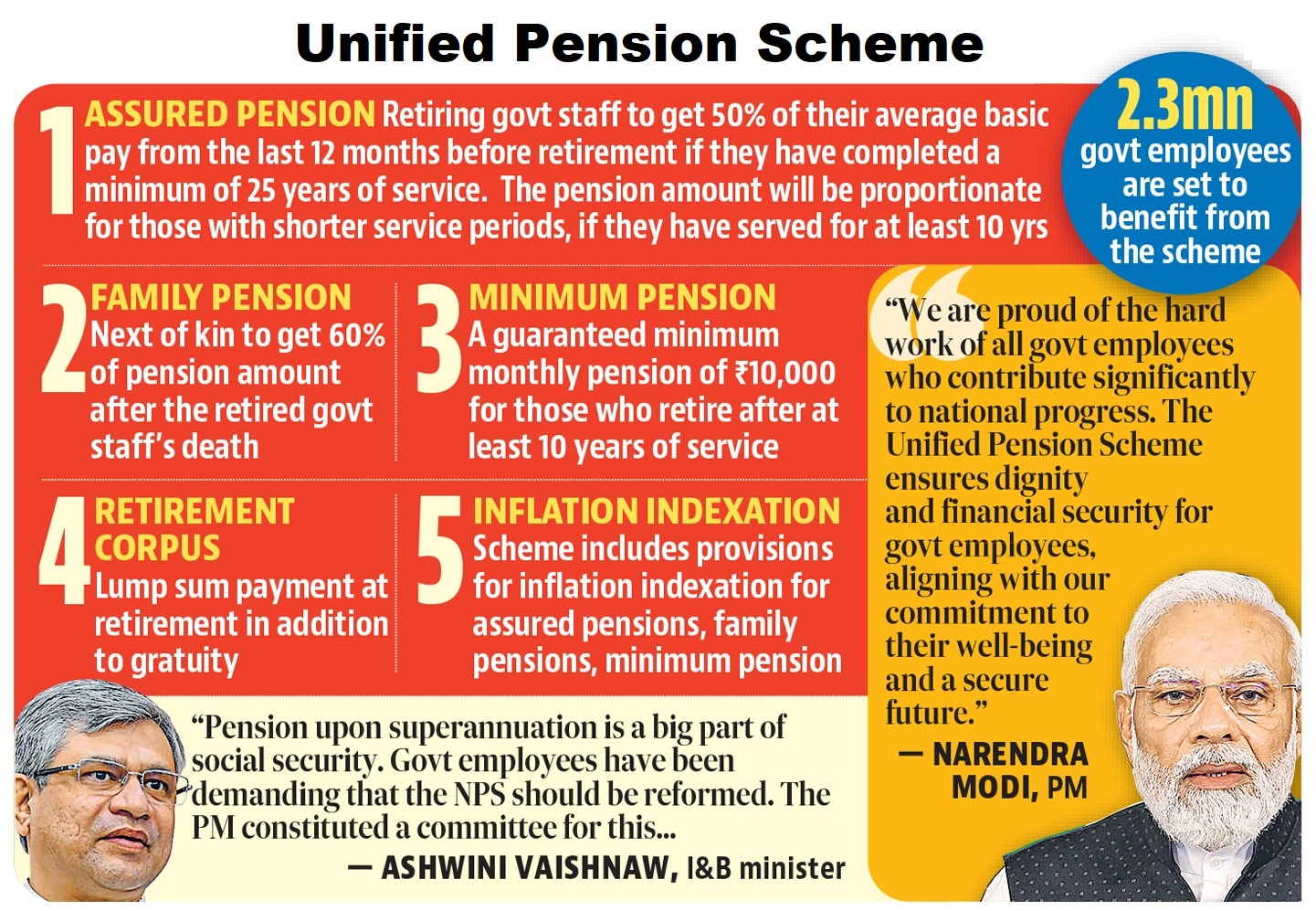
The Union Cabinet approved the Unified Pension Scheme (UPS) for 23 lakh central government employees.
About Unified Pension Scheme (UPS):
Explanation
Implementation Date
Effective from April 1, 2025.
Eligibility
Central government employees with at least 10 years of service.
Assured Pension
50% of average basic pay over the last 12 months prior to retirement for employees with 25+ years of service.
Proportionate benefits for 10-25 years of service.
Assured Minimum Pension
₹10,000 per month for employees with at least 10 years of service.
Assured Family Pension
60% of the pension that the employee was drawing before their death.
Inflation Protection
Pensions indexed to inflation;
Dearness Relief (DR) based on the All India Consumer Price Index for Industrial Workers (AICPI-IW).
Government Contribution
18.5% of basic pay and DA, increased from 14% under the National Pension System (NPS).
Employee Contribution
10% of basic pay and DA (same as under NPS).
Lump Sum Payment on Superannuation
One-tenth of the last drawn monthly pay (including DA) for every 6 months of completed service, in addition to gratuity.
Option to Choose
Employees can choose between UPS and NPS starting from the upcoming financial year; the choice is final once made.
Beneficiaries
Initially benefits 23 lakh central government employees;
May extend to 90 lakh if adopted by state governments.
Difference from NPS
Unlike the market-dependent NPS, UPS provides a guaranteed pension amount, a minimum pension, increased government contribution, fixed family pension, and a lump sum payment at superannuation.
Significance of the UPS
Financial Security: Guarantees a pension and family pension for stable post-retirement income.
Minimum Pension: Ensures at least ₹10,000 per month for retirees, supporting lower-income employees.
Inflation Protection: Indexes pensions to inflation, maintaining purchasing power over time.
Increased Benefits: Raises government contribution to 18.5%, enhancing employee retirement benefits.
Flexibility: Allows choice between UPS and NPS based on personal financial needs.
Family Support: Provides 60% of the pension to the spouse if the employee passes away.
Employee Welfare: Aligns with government goals to improve employee welfare and post-retirement life quality.
PYQ:
[2017] Who among the following can join the National Pension System (NPS)?
(a) Resident Indian citizens only.
(b) Persons of age from 21 to 55 only.
(c) All State Government employees joining the services after the date of notification by the respective State Governments.
(d) All Central Government employees including those of Armed Forces joining the services on or after 1st April, 2004.
Pali, Persian, Prakrit, and Farsi (Persian) as per the National Education Policy-2020.
Criteria for Classical Language Status
– High Antiquity: Recorded history of 1500-2000 years.
– Valuable Heritage: Possesses ancient literature and texts.
– Originality: Unique literary tradition, not borrowed from other languages.
– Distinctness: Language and literature distinct from modern forms.
Promotion of Classical Languages
– International Awards: Two major awards for scholars in classical Indian languages.
– Centre of Excellence: For studies in classical languages.
– Professional Chairs: UGC requested to create chairs in Central Universities.
The Eighth Schedule
Lists 22 official languages, governed by Articles 344(1) and 351 of the Constitution. Includes Assamese, Bengali, Bodo, Dogri, Gujarati, Hindi, Kannada, Kashmiri, Konkani, Maithili, Malayalam, Manipuri, Marathi, Nepali, Odia, Punjabi, Sanskrit, Santali, Sindhi, Tamil, Telugu, and Urdu.
The recent brutal rape and murder case in Kolkata has sparked widespread calls for the death penalty for the accused.
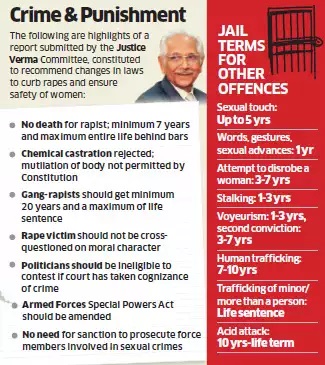
The Justice J.S. Verma Committee, formed in response to the 2012 Delhi gang rape, recommended against the death penalty for rape, even in the rarest of rare cases, arguing that it would be a regressive step.
About Justice J.S. Verma Committee Recommendations
Recommendations on
Explanation
Rape
• It recognized rape as a Crime of Power, not just passion.
• Expand definition to include all forms of non-consensual penetration.
• Remove marital rape exception; marriage should not imply automatic consent. (European Commission of Human Rights in C.R. vs U.K)
Sexual Assault
• Broaden definition to include all non-consensual, non-penetrative sexual acts.
• Penalty: Up to 5 years of imprisonment or fines.
Verbal Sexual Assault
• Criminalize unwelcome sexual threats.
• Punishable by up to 1 year in prison or fines.
Sexual Harassment at Workplace
• Include domestic workers under protections.
• Replace internal complaint committees with Employment Tribunals.
• Employers to compensate victims of sexual harassment.
Acid Attacks
• Propose a 10-year minimum punishment, separate from grievous hurt.
• Establish a compensation fund for victims.
Women in Conflict Areas
• Review AFSPA; exclude government sanction for prosecuting sexual offenses by armed forces.
• Appoint special commissioners to monitor offenses.
Trafficking
• Comprehensive anti-trafficking laws beyond prostitution.
• Protective homes for women and juveniles overseen by High Courts.
Child Sexual Abuse
• Define ‘harm’ and ‘health’ in the Juvenile Justice Act to include both physical and mental aspects.
Death Penalty
• Opposed chemical castration and death penalty for rape.
• Recommend life imprisonment.
Medical Examination of Rape Victims
• Ban the two-finger test; victim’s past sexual history should not influence the case.
Reforms in Case Management
• Set up Rape Crisis Cells, increase police accountability, allow online FIR filing.
• Encourage community policing and increase police personnel.
Union Cabinet’s Decision on the Death Penalty
The Union Cabinet, while clearing an ordinance on sexual assault in 2013, chose NOT to adopt the committee’s recommendation against the death penalty.
Key amendments included:
Section 376A: Death penalty for rape leading to the death of the victim or reducing her to a persistent vegetative state.
Section 376E: Death penalty for repeat offenders.
2018 Amendments: Death penalty for gang rape of a victim under 12 years (Section 376DB) and life imprisonment for rape of a victim under 16 years (Section 376DA).
The Bharatiya Nyaya Sanhita (BNS) includes similar provisions for rape, with specific sections detailing the punishment, including the death penalty for certain cases.
PYQ:
[2014] We are witnessing increasing instances of sexual violence against women in the country. Despite existing legal provisions against it, the number of such incidences is on the rise. Suggest some innovative measures to tackle this menace.
Recent studies have provided deeper insights into the mechanics of Sonoluminescence, particularly the conditions under which light is emitted from collapsing bubbles in liquids.
What is Sonoluminescence?
Sonoluminescence is a phenomenon in which small gas bubblesin a liquid emit short bursts of light when exposed to intense sound waves.
The light is produced when thebubble undergoes rapid compression and expansion.
This is due to the alternating high- and low-pressure phasesof the sound waves, causing the gas inside to heat up and emit light.
This phenomenon was discovered in 1934 by two German engineers while they were studying sonar technology, which uses sound waves to detect objects underwater.
They noticed that when a tiny bubble in a liquid was hit by strong sound waves, it emitted a brief flash of light.
Mystery behind Sonoluminescence
Although the general mechanism is understood, the exact details of how the light is produced remain a mystery.
Scientists are still exploring the precise processes that cause the gases inside the bubble to ionize and emit light at such high temperatures.
Examples of Sonoluminescence
Controlled Experiments: In laboratory settings, scientists create sonoluminescence by trapping a bubble in a liquid and subjecting it to high-frequency sound waves.
Pistol Shrimp: When the shrimp (marine creature with a specialized claw) snaps its claw shut, it shoots out a jet of water that moves so fast it creates a low-pressure bubble. The bubble then collapses, producing a loud sound, intense heat, and sometimes a brief flash of light.
PYQ Relevance: Q Judicial Legislation is antithetical to the doctrine of separation of powers as envisaged in the Indian Constitution. In this context justify the filing of a large number of public interest petitions praying for issuing guidelines to executive authorities. (UPSC IAS/2020) Q What are the continued challenges for Women in India against time and space? (UPSC IAS/2019) Q An apparel manufacturing company having a large number of women employees was losing sales due to various factors. The company hired a reputed marketing executive, who increased the volume of sales within a short span of time. However, some unconfirmed reports came up regarding his indulgence in sexual harassment at the work place. After sometime, a woman employee lodged a formal complaint to the management against the marketing executive about sexually harassing her. Faced with the company’s indifference in not taking cognizance of her grievance, she lodged an FIR with the Police. Realizing the sensitivity and gravity of the situation, the company called the women employee to negotiate. In that she was offered a hefty sum of money to withdraw the complaint and the FIR and also give in writing that the marketing executive is not involved in this case. Identify the ethical issues involved in this case: what options are available to the women employee? (UPSC IAS/2019)
Mentor comment: India faces significant challenges regarding sexual harassment and violence against women, deeply rooted in societal norms and systemic issues. Despite legislative measures like the Sexual Harassment of Women at Workplace (Prevention, Prohibition and Redressal) Act of 2013, the prevalence of sexual violence remains alarmingly high. Justice K. Hema Committee report, released by the Kerala government on August 19, 2024, highlights severe issues of sexual exploitation and gender discrimination faced by women in the Malayalam film industry. Initially submitted in 2019, the report reveals a culture of harassment, including the “casting couch” phenomenon, where women are pressured to exchange sexual favors for roles. It also addresses inadequate facilities and the absence of basic rights for women in the industry.
Let’s learn!
__
Why in the news?
The Justice K. Hema Committee report has sparked significant public debate and led to calls for reforms, including the establishment of an Internal Complaints Committee to address issues of sexual exploitation and gender discrimination faced by women effectively.
What does the Report say on Culture of Assault?
On Sexual Assault and Consent: Instances of sexual assault are not isolated events but are rooted in societal practices that undermine women’s autonomy and consent.
The National Crime Records Bureau reported 31,516 cases of rape in India in 2022, indicating a significant prevalence of sexual violence against women.
The Justice Hema Committee report emphasizes that rape is a manifestation of a culture that views women as objects rather than individuals with rights.
On Workplace Harassment: The Vishaka guidelines established in 1997 aimed to protect women from workplace harassment, leading to the Sexual Harassment of Women at Workplace Act, 2013, which mandates the formation of Internal Complaints Committees (ICC).
The report argues that ICCs are inadequate for the film industry due to potential biases and influence from abusers, advocating for an independent government forum to address these issues.
Lack of registration of crimes vs. Question on the Principle of Survivor Anonymity:
Nipun Saxena vs Union Of India (2018): The SC explained the importance of penalization of the disclosure of the name and the identity of the survivors of sexual offenses as mandated in Section 228A of the IPC, which is now reiterated in Sect 72 and 73of the BNS.
The provision’s objective is to protect survivors from hostile discrimination and future harassment.
Puttaswamy Judgement (2017): The Right to Privacy is integral to the Right to Life under Article 21 of the Constitution. Further, our criminal justice system initiates prosecution against the accused on behalf of the victim but it becomes quite difficult to prove a crime without the victim’s cooperation.
Right to Livelihood: Survivors fear potential retaliation from the abuser and the rest of society, in terms of refusal to give them work, and being branded as ‘problem-makers’.
CASE STUDY – #MeToo Movement:The accusations against Harvey Weinstein in 2017 sparked the global #MeToo movement, highlighting issues of sexual harassment and assault in various industries.
Need for Structural Reforms:
Acknowledgment of Challenges: The report aims to empower Indian women by raising awareness about workplace discrimination.
The findings in the Hema Committee report should lead to significant structural reforms in the Malayalam film industry, with government leadership being crucial.
Comprehensive Solutions Required: Issues such as inadequate sanitation and workplace bias must be thoroughly studied and addressed to improve conditions for women.
The report emphasizes the unique difficulties faced by women in lower-tier roles in the film industry, beyond just lead actresses.
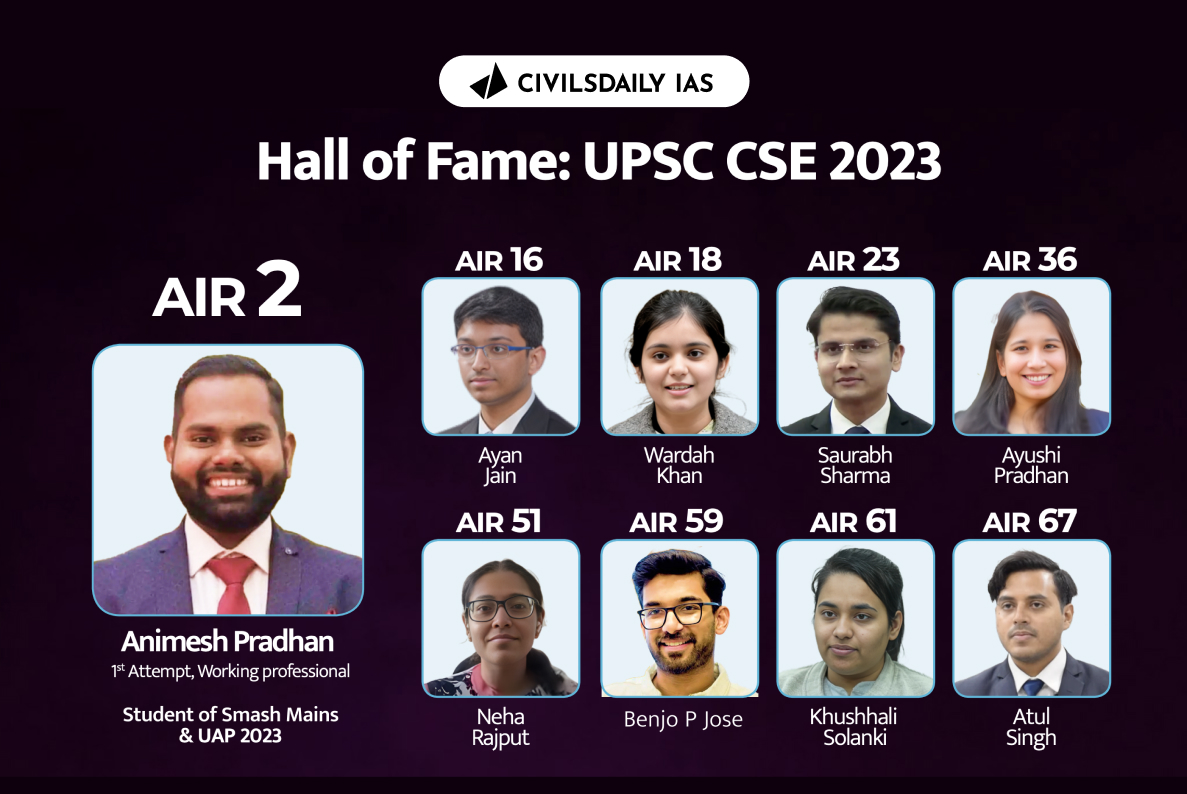
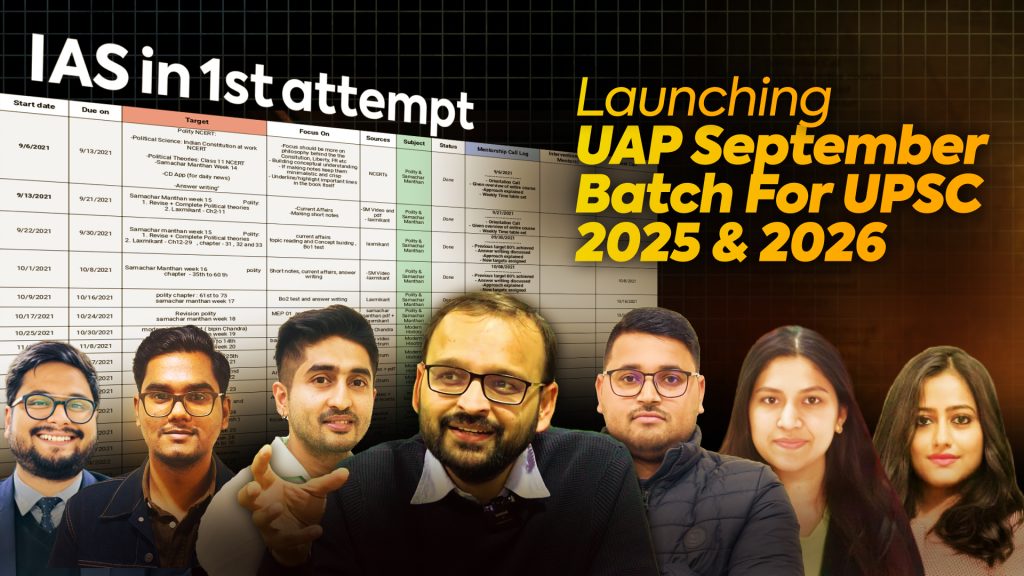
Animesh Pradhan, Age 24, Attempt: 1st, UPSC-CSEAIR 2. A graduate of NIT Rourkela, working as a full-time employee in Indian Oil Corp., he cleared UPSC CSE on his first attempt at the age of 24. He lost his father at an early age and was left with his Mother and elder sister. Unfortunately, his Mother passed away 40 days ago and couldn’t see her Son’s success and cherish it. His sister got married in January last year. He is a very committed, humble, and diligent student with high professional skills in managing work and studies.
AIR 2, Animesh Pradhan at Civilsdaily Delhi Centre Today
Schedule a 1-1 call with Civilsdaily’s Mentorfor focused UPSC Prep
With all the lows in life, he came with the hope that one day, his mother would see him becoming an IAS officer. Even though one wish in these two remained unachieved, wherever his mother is, her wishes will be with him, and if there is heaven at all, she might be celebrating this in that heaven.
AIR 2, Animesh Pradhan On Call With Civilsdaily Mentor Showing His Gratitude
We hope he achieves much more success and wish him enough grit to achieve whatever he wants in life. We expect him not to stop here and make this a mere small achievement in his list of aspirations.
Why Civilsdaily Mentorship and Programs Are Unique?
Element No. 1: The System
The first element of the powerful mentorship program at CD is – The System.
The system is the method that is used during the program. One of the first surprising elements of a Civilsdaily program is that we do an early assessment of the current stage of aspirants. This is done in 10+ dimensions. Along with that, you get a lot of study material in advance. Unlike other courses that give you average content when the course begins, you get high-quality content for UPSC Prep well in advance. The reason for this is simple: The Mentor is not around to create “shock and awe”. Instead, the element that really helps learning is the “safe zone”. When aspirants get the material in advance, it gives them time to learn and absorb it. And then, when the initial assessments happen in the form of mock tests, the aspirant is able to apply the learning.
One big reason we fail to learn and progress in UPSC Prep is that we do not have time to practice and attempt mocks.
No one is around to correct our mistakes. All we get is an endless stream of information, and mastery over exam is further away than ever. The notes themselves need design: lots of examples, relevance to PYQs, and easy-to-read language. The syllabus content needs to be broken up into consumable chunks. It’s design, design and more design. Check our atomic and flash notes, and you will understand what we mean. A well-constructed system is the first element of the program at CD but by no means the most important.
Trying to cope with breathless content all at once is extremely intimidating for the aspirants. When you’re in a Civilsdaily Mentorship program, you get the content well in advance. There’s no need to create “shock and awe” while mentoring. You learn better when you know and own the content, using the course to practice and get better at it instead.
Element No. 2: The Group
A journey of a thousand miles can be really intimidating without a group because UPSC -CSE requires MCQ and answer writing aptitude, which requires constant practice. When you work alone, it’s easy to give up or get distracted. A group is what gets you ahead. But how do you get a group that’s focused, smart, and helpful? Do such groups even exist?
There’s a saying in Africa: If you want to go quickly, go alone. If you want to go far, go with a group. And yet, not any group will do, will it? You’ve been in Telegram groups before, and the terms “kind, helpful and smart” don’t come to mind, do they?
The one thing that will amaze you at Civilsdaily is how much you come to rely on your group. At first, many aspirants assume that their progress is a lonely journey. They learn what’s required, do their mocks, and when the course is done, they get to the finish line.
And yet habit-creation reveals something entirely different.
Snagging a bad habit is relatively easy. The moment you have to build a “good habit,” it’s a lot harder to stay motivated—unless, of course, you have a group.
The aspirant groups at the Civilsdaily course are brilliant, focused and helpful.
It almost seems hard to find such an active, helpful bunch of people. And the reason why you’ll find this level of camaraderie here, is because of several reasons. But the biggest reason of all is because we’re selective.
We only let people in if they pass our filters.
We also will not have overloading of any kind. Our program accepts limited aspirants. You simply will not see the ocean full of aspirants you see on other courses. Finally, we break up the groups into even smaller groups of six or seven aspirants. We keep it small and focused. This gets you closer to the finish line. In short, you go far.
Without practice, mastery of this exam is difficult. Without daily and weekly practice, you have a “decay problem.” Other courses will give you content and mocks once a month and won’t provide any kind of mentor feedback. This is a recipe for disaster. You won’t know if you are making any progress at all.
That’s not how we run our programs.
When you’re a part of the Civilsdaily Mentorship program, whether you’re a beginner or veteran, you have a schedule that is unique to you and your requirements for the duration of the program. As you’d expect, all this is designed with “tiny increments” in mind, but it is the daily and weekly practice that keeps away the decay.
And everything is enriched with a 1:1 mentor call.
Your Mentor checks your preparation and works with you to ensure progress—there is no exception. This enables you to learn bit by bit instead of being dumped with endless content that you might never use in an exam. When you consider all three elements: the system, the group, and the daily and weekly practice, you are able to create a habit. This habit leads to success in exam.
Any new subject or mock can be a little unnerving when you don’t get regular practice. Our program is designed to help you learn layer by layer, and it involves small steps done daily. That way, if you press the “wrong button,” we can learn from the mistake, fix it, and move ahead at an even pace.
This attention to detail is what makes the Civilsdaily Mentorship Program among the best. But you’ll find that out for yourself.
To explore our Mentorship and schedule a pre-enrollment call, Fill this Mentorship Form (Free for the next 24 hours) to connect with our mentors.
The heart of the Civilsdaily platform is the Foundation Program and Ultimate Assessment Program (UAP). For years, aspirants have enrolled here because they couldn’t find such depth and passion towards quality content and Mentorship anywhere. Their search inevitably ends at Civilsdaily. Enrollment in these programs and Mentorship also makes us accountable to aspirants for the value they get.
In the past few years, we’ve worked quietly in the background with hundreds of aspirants; many now serve as IAS, IPS, IFS, and more. We are very proud of what we’ve achieved. Here are some of the recent rankers who show us gratitude.
Fill up This Mentorship Form (Free for the next 24 hours) to connect with our mentors.
Q The quality of higher education in India requires major improvement to make it internationally competitive. Do you think that the entry of foreign educational institutions would help improve the quality of technical and higher education in the country? Discuss. (UPSC IAS/2015)
Q Professor Amartya Sen has advocated important reforms in the realms of primary education and primary health care. What are your suggestions to improve their status and performance? (UPSC IAS/2016)
Q National Education Policy 2020 conforms with the Sustainable Development Goal-4 (2030). It intends to restructure and reorient education system in India. Critically examine the statement. (UPSC IAS/2020)
Q The Right of Children to Free and Compulsory Education Act, 2009 remains indadequate in promoting incentive-based system for children’s education without generating awareness about the importance of schooling. Analyse. (UPSC IAS/2022)
Mentor comment: The consistently high pass rates, variations across boards, impact on higher education, and CBSE’s own concerns have kept the topic of mark inflation in the news spotlight, with calls for urgent exam reforms to restore credibility to the system. The perception of mark inflation has led to increased demand for entrance exams for college admissions. It also forces colleges to raise cut-offs, making it harder for diligent students to get admitted. The Former Education secretary Anil Swarup had attempted to abolish CBSE’s marks moderation policy in 2017 to check inflation but faced opposition from stakeholders. Experts argue that ending moderation and reforming exams is crucial to address the issue.
Let’s learn!
__
Why in the News?
The Central Board of Secondary Education (CBSE) recently issued an advisory to its affiliated schools, urging them to reevaluate practical exam assessment procedures.
A significant variation was detected between theory and practical marks for over 50% of students in around 500 CBSE schools.
Present status of School Boards in India:
Indian school boards face allegations of inflating marks for classes 10 and 12.
• High Pass Percentages: Evidence includes high pass rates—85% for class 10 and 82% for class 12 in 2023. • Students scoring above 60%: Approximately 61% of class 10 students and 56% of class 12 students scored over 60%. • Mark Compression: High clustering of marks at the top is referred to as mark compression, related to mark inflation.
What are the impacts of such marks inflation?
• Impact on Education Credibility: Both mark inflation and compression undermine the credibility of the education system. • Consequences for Students: These practices hinder student preparedness for higher education and the job market. • Demand for Entrance Exams: The perception of inflated marks has increased demand for higher-education entrance examinations.
What are the current disparities in the Indian School Education System?
Lack of a Standardized Measure: The present examination curriculum pattern makes it difficult to assess the relative academic credentials of students certified by different boards.
For example, in both secondary and higher secondary examinations, the proportion of students securing above 60% was lower than the national average in several states.
However, this does not necessarily mean that students in other states performed better on a comparable scale.
Lack of Corrective Measures: Marks are supposed to reflect a student’s academic knowledge and skills, but comparing them with standardized national-level tests like NEET and JEE is problematic.
These tests are designed as elimination processes for admission to specific higher education programs, and not to evaluate subject knowledge as per the prescribed curriculum.
Moreover, not all class 12 students appear for these entrance exams, and those who do usually undergo special coaching which incurs huge costs.
Lack of Policy Suggestions: The National Achievement Survey (NAS) conducted by NCERT for a sample of students annually is scientifically designed but fails to serve as a benchmark for studying mark inflation.
There is little scope to connect estimated scores with factors like curriculum design, school efficiency, and teaching-learning processes.
Need for Accountability in the System: The current opaque system leads to various issues, necessitating transparency in all processes, from question paper setting to marking and result publication.
What can be done for the System’s Revaluation and Enhanced Accountability?
Establish a standardized system: The govt needs to provide resources outlining how learning outcomes are assessed and marks awarded, including examples.
Further, standardize the procedures for question paper handling, answer book printing, distribution, and collection. Allow students to view their answer scripts post-results and apply for revaluation at a nominal fee.
Need for Technical Intervention: States should establish clear guidelines for question formats and expected answers. Secondly, they need to implement scanning and online evaluation to minimize errors in the marking system.
Updating the curriculum to align with higher educational standards can ensure that students are adequately prepared, reducing the need for inflated marks to reflect competence.
Public Awareness Campaigns: Educating stakeholders about the implications of mark inflation can foster a culture of integrity and accountability in educational assessments.
Collaboration with Educational Institutions: Governments can work with schools and universities to create clear pathways for students, ensuring that grades reflect true academic ability and readiness for further education or the job market.
Conclusion: While the Indian government has managed to make education accessible (SDG 4) for millions of children, the quality of said education remains still poor due to non-transparent examinations. India can attain quality school education in the real sense shortly, but it will require addressing the abovementioned challenges.
The Supreme Court of India denied permission to the parents of Harish Rana, a 32-year-old man in a vegetative state for 11 years, to remove his Ryles tube which is a device used for feeding.
A Ryles tube, also known as a nasogastric (NG) tube, is a medical device used for various purposes related to nutrition and gastric management. It is inserted through the nose, passing through the nasal cavity, down the esophagus, and into the stomach.
Recent Supreme Court Judgment:
The Bench headed by CJI D.Y. Chandrachud observed that the Ryles tube is not a life support system and therefore could not be withdrawn.
This decision has stirred legal and ethical debates, as the Supreme Court’s 2018 judgment permits the withdrawal of life support in terminal cases under the concept of “passive euthanasia.”
Passive euthanasia involves the withdrawal of medical treatment with the intention of hastening the death of a terminally ill patient.
The Supreme Court initially legalized this practice in 2018, allowing patients to create a “living will” to refuse life-sustaining treatment when they are unable to communicate their wishes.
Ethical Challenges:
Question of whether the decision benefits the patient: The judgment raises concerns about whether the decision benefits the patient, as prolonging life in such a condition may increase suffering.
Prolonged suffering: The principle of not causing harm is challenged since keeping the patient in a vegetative state with artificial feeding may lead to prolonged suffering for both the patient and their caregivers.
Against Right to Life and Death: The patient’s rights to a dignified life and death may be compromised which is addressed in various judgments like Common Cause v. Union of India (2018). This judgment recognised the right to die with dignity as part of the right to life under Article 21.
Autonomy: The patient’s right to choose, which is central to the concept of dignity, has been overlooked. The judgment did not consider the wishes of the patient or their family in determining the course of action.
Need for Legal Clarity:
Distinguishing Euthanasia from Withdrawal of Life Support: There is a pressing need to legally clarify the difference between euthanasia and the withdrawal of futile life-sustaining interventions.
Involvement of Medical and Ethical Experts: The decision-making process in such sensitive cases should involve palliative care physicians and ethical experts to ensure that medical and ethical considerations are fully addressed.
Advance Care Planning: Promoting Advance Medical Directives and Advance Care Planning is crucial to empower individuals to have control over their end-of-life decisions, ensuring that their rights to a good quality of life and death are respected.
Systemic Reforms: The judgment highlights the need for systemic reforms to avoid forcing families into legal battles and to ensure that patients’ rights are safeguarded with appropriate legal frameworks.
Conclusion: The recent Supreme Court judgment highlights the urgent need for legal clarity, ethical considerations, and systemic reforms to protect patient rights and ensure dignity in end-of-life decisions.
Mains question for practice:
Q Discuss the need for legal clarity and systemic reforms to uphold the dignity and rights of patients in end-of-life decisions. (150 words) 10M
Most states appear to be opposed to altering the current five primary GST rate slabs: 0%, 5%, 12%, 18%, and 28%.
About Goods and Service Tax (GST):
The Goods and Services Tax (GST) in India was introduced by the Constitutional (One Hundred and First Amendment) Act of 2017. It is a unified tax system that replaced multiple indirect taxes levied by both the Central and State Governments.
Under GST, the Central (CGST) and state government (SGST) share the authority to levy and collect taxes on goods and services. In the case of Inter-state transactions, Integrated GST (IGST) is applicable.
Essential Features of GST
Multiple Tax Levels: India’s GST system has multiple tax rates, with four primary tax rates (5%, 12%, 18%, and 28%). Additionally, there is a “zero rate” for certain essential goods and services (e.g. exports).
One Nation, One Tax: GST is based on the principles of value-added tax and applies to the supply of goods and services across the nation. It brings uniformity in the tax structure across India, eliminating the cascading effect of taxes.
Destination-Based Tax: This means that the revenue generated from GST is collected by the state where the goods or services are consumed, rather than where they are produced.
Eliminating Cascading Effect: Under the Indian GST system, businesses can claim input tax credit for the GST they paid on their purchases. This ensures that taxes are levied only on the value added at each stage of the supply chain.
Sector-specific Exemptions: Certain sectors, such as healthcare, education, and basic necessities like food grains, are either exempted from GST or have reduced tax rates to ensure affordability and accessibility.
Threshold Exemption: Small businesses with a turnover below a specified threshold (currently, it is 20 lakhs: supplier of both goods & services and 40 lakhs: for supplier of goods (Intra–State) in India) are exempt from GST.
Present Challenges in GST Rates
Complexity and Confusion: The existence of multiple GST slabs creates confusion for businesses and consumers alike. Different rates for similar items lead to complications in compliance and classification, resulting in litigation and disputes.
For instance, the GST on cement is 28%, while essential items like milk are exempt, yet products derived from milk, such as skimmed milk powder, are taxed at 5%.
Anomalies in Taxation: There are notable inconsistencies in the application of GST rates. For example, the taxation of medical and life insurance premiums at 18% is seen as burdensome for individuals seeking financial protection against uncertainties.
Need to simplify the current GST Slabs
Rationalization Proposal: There is a growing consensus among industry experts and some government officials that the GST structure should be simplified to a maximum of three slabs.
This would not only streamline compliance but also reduce the administrative burden on businesses and the government alike.
Economic Stimulus: Simplifying GST rates could potentially stimulate economic activity by lowering indirect tax burdens, encouraging consumption, and ultimately leading to higher tax revenues.
Why are states resisting?
Fear of Revenue Loss: Many states are apprehensive about the implications of changing the GST structure, fearing that it might lead to a decrease in their revenue streams.
Political Considerations: The political landscape also plays a role in the resistance to change. With upcoming elections and the need to maintain fiscal health, state governments may prioritize short-term revenue stability over long-term structural reforms.
Way forward:
Phased Implementation: Start by introducing pilot programs in select states or sectors to test the impact of GST simplification. This approach can help address specific concerns and refine the model before a nationwide rollout.
Revenue Protection Schemes: Develop robust mechanisms to compensate states for any potential revenue losses during the transition. This could involve a formula-based compensation fund or a temporary revenue guarantee.
Mains PYQ:
Q Explain the rationale behind the Goods and Services Tax (Compensation to States) Act of 2017. How has COVID-19 impacted the GST compensation fund and created new federal tensions? (2020)
India’s 100th independence anniversary in 2047 is approaching, and the goal to become ‘a developed nation’ has a significant focus.
Goals of Indian Agriculture by Vision 2047:
Comprehensive Goal: India’s centennial year of independence requires a six-fold increase in per capita Gross National Income (GNI), emphasizing the need for comprehensive development, especially in agriculture.
Trade Goal: India’s agricultural and processed food exports have gone up to more than USD 50 billion in 2022-23.
The Vision 2047 aims to improve the availability of nutritious foods by enhancing the processing of fruits and vegetables, and augment the proportion of value-added products in India’s export portfolio.
Sustainable Goal: Transforming Indian agriculture will hinge on adopting sustainable practices such as precision farming, genetically modified crops, and advanced irrigation techniques (e.g., drip and sprinkler systems).
Present starking Imbalance in the Indian Economy
Workforce vs. GDP Contribution: Despite agriculture engaging nearly 46% of the workforce, it contributes only about 18% to the GDP, revealing a significant imbalance.
Growth Disparity: While the overall GDP has grown at 6.1% annually since 1991-92, agricultural GDP has lagged at 3.3%. In the last decade (2013- 2023), overall GDP growth was 5.9%, with agriculture growing at 3.6%, which is insufficient for the sector’s socio-economic importance.
Future Projections: By 2047, agriculture’s share in GDP might shrink to 7%-8%, but it could still employ over 30% of the workforce, necessitating significant structural changes to avoid exacerbating the disparity.
Government Initiatives:
For Water Management: The Pradhan Mantri Krishi Sinchayee Yojana (PMKSY) has promoted water-use efficiency through micro-irrigation, covering 78 lakh hectares with a ₹93,068 crore allocation for 2021-26.
For Risk Management: The Pradhan Mantri Fasal Bima Yojana (PMFBY) offers financial assistance for crop losses, with 49.5 crore farmers enrolled and claims totalling over ₹1.45 lakh crore.
For Market Access: The Electronic National Agriculture Market (eNAM) integrates existing markets through an electronic platform, benefiting 1.76 million farmers and recording trade worth ₹2.88 lakh crore by September 2023.
For better Farmer Support: The Pradhan Mantri Kisan Samman Nidhi (PM-KISAN) scheme, disbursing ₹6,000 annually to farmers, has benefited over 11.8 crore farmers.
For enhanced Soil Health: The Soil Health Card (SHC) scheme aims to optimize soil nutrient use, enhancing productivity, with over 23 crore SHCs distributed.
Need for Strategic Planning
Population Growth: India’s population is projected to reach 1.5 billion by 2030 and 1.59 billion by 2040, increasing the demand for food by approximately 2.85% annually.
Future Demand: By 2047-48, food grain demand is projected to range from 402 million tonnes to 437 million tonnes, requiring sustainable production exceeding demand by 10%-13% under the Business-As-Usual scenario.
Way Forward:
Investment in R&D: To meet future demands sustainably, significant investments in agricultural research, infrastructure, and policy support are necessary.
Budget Allocation: The Budget for 2024-25 includes ₹20 lakh crore for targeted agricultural credit and the launch of the Agriculture Accelerator Fund, highlighting a proactive approach to fostering agricultural innovation and growth.
Enhance Digital Infrastructure: Support and expand digital platforms like eNAM to improve market access, provide real-time data, and facilitate better price realization for farmers.
Mains PYQ:
Q Give the vulnerability of inidan agriculture to vagaries of nature, discuss the need for crop insurance and bring out the salient features of the Pradhan Mantri Fasal Bima Yojana (PMFBY). (2016)
Prime Minister Modi has presented the BHISHM Cube, a state-of-the-art mobile hospital designed for rapid deployment in disaster zones to Ukraine.
What is the BHISHM Cube?
The BHISHM Cube is an advanced mobile hospital unit designed for rapid deployment in disaster zones and emergency situations.
It is developed under the “Project BHISHM” (Bharat Health Initiative for Sahyog, Hita, and Maitri), reflecting India’s commitment to providing swift medical assistance in crisis areas.
The unit is capable of treating up to 200 casualties.
Key Features:
It weighs 720 kg and is composed of 72 components that can be easily transported by hand, bicycle, or drone.
The unit can be fully operational within 12 minutes of deployment, a critical feature in emergencies where every second counts.
It includes an operating theatre, X-ray machines, ventilators, and facilities for treating a wide range of injuries.
It incorporates AI and data analytics for real-time monitoring and coordination of medical services.
It also uses RFID-tagged equipment for efficient tracking and management of medical supplies.
The unit is robust and waterproof, making it suitable for diverse environments and capable of withstanding various weather conditions.
Significance of the move
By providing the BHISHM Cube to countries in need, such as Ukraine, India demonstrates its commitment to global humanitarian efforts.
The project aligns with India’s broader initiatives like ‘Aarogya Maitri’, aimed at supporting developing countries affected by natural disasters or crises.
The deployment of the BHISHM Cube enhances disaster preparedness by ensuring that essential medical services are available when and where they are needed most.
The gifting serves as a tool of soft diplomacy, strengthening India’s international relations by contributing to global health and safety.
PYQ:
[2022] With reference to the Ayushman Bharat Digital Mission, consider the following statements:
Private and public hospitals must adopt it.
As it aims to achieve universal, health coverage, every citizen of India should be part of it ultimately.
It has seamless portability across the country.
Which of the statements given above is/are correct?
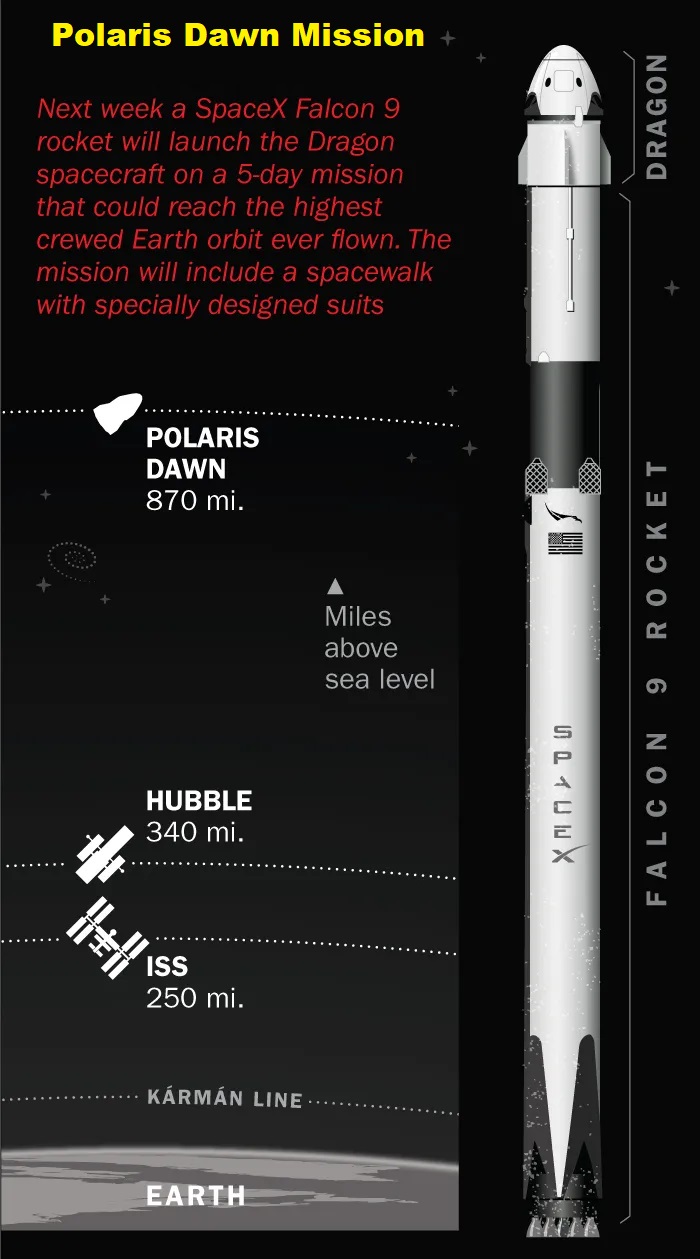
Polaris Dawn is set to be the first privately-funded mission to conduct a spacewalk, aiming to reach an altitude of about 700 kilometers above Earth, the highest altitude for a human space mission to date.
What is Polaris Dawn Mission?
Polaris Dawn is a privately-funded space mission led by billionaire entrepreneur Jared Isaacman, in collaboration with SpaceX.
It is set to be the first non-government mission to conduct a spacewalk.
This 700km altitude will surpass the current record held by NASA’s Gemini 11 mission in 1966.
The mission will test new spacesuits designed by SpaceX to protect astronauts from high radiation levels encountered in the Van Allen Belts.
What are the Van Allen Belts?
The Van Allen Belts are two zonesof charged particles that surround Earth, held in the magnetosphere.
These belts were discovered in 1958 by American physicist James Van Allen.
Inner Belt: This belt is located approximately 680 to 3,000 km above Earth’s surface and is primarily composed of high-energy protons. It is formed by cosmic rays interacting with Earth’s atmosphere.
Outer Belt: Located about 15,000 to 20,000 km above Earth’s surface, the outer belt mainly consists of high-energy electrons captured from solar wind.
Why are the Van Allen Belts dangerous for Humans?
The Van Allen Belts are dangerous for humans because they contain high levels of radiation that can pose significant health risks to astronauts.
The belts are filled with charged particles that can cause radiation sickness, damage human tissues, and increase the risk of cancer.
PYQ:
[2011] What is the difference between asteroids and comets?
Asteroids are small rocky planetoids, while comets are formed of frozen gases held together by rocky and metallic material.
Asteroids are found mostly between the orbits of Jupiter and Mars, while comets are found mostly between Venus and Mercury.
Comets show a perceptible glowing tail, while asteroids do not.
Which of the statements given above is/are correct?
(a) 1 and 2 only
(b) 1 and 3 only
(c) 3 only
(d) 1, 2 and 3
Bridge gaps in health, education, and livelihoods; enhance infrastructure in PVTG communities aligned with existing schemes from nine ministries.
Total Outlay
Rs 24,104 crore over three years
Rs 15,000 crore allocated under the Development Action Plan for the Scheduled Tribes (DAPST) for the housing component over three years.
Implementation
Central Sector and Centrally Sponsored Schemes designed to enhance socio-economic conditions of PVTGs.
The Ministry of Tribal Affairs through the State Governments/ UT Administration/departments have undertaken habitation level data collection exercise through PM Gati Shakti mobile application to estimate PVTG population figures and infrastructure gaps under PM-JANMAN Mission.
Coverage
Targets 75 PVTGs in 18 states and 1 Union Territory, focusing on health, education, and livelihoods.
Competitive Federalism
Performance-based ranking of districts; top districts and Ministries recognized and rewarded for outstanding performance.
PYQ:
[2017] What are the two major legal initiatives by the State since Independence addressing discrimination against Scheduled Tribes (STs)?
[2019] Consider the following statements about Particularly Vulnerable Tribal Groups (PVTGs) in India:
PVTGs reside in 18 States and one Union Territory.
A stagnant or declining population is one of the criteria for determining PVTG status.
There are 95 PVTGs officially notified in the country so far.
Irular and Konda Reddi tribes are included in the list of PVTGs.
Which of the statements given above are correct?
(a) 1, 2 and 3
(b) 2, 3 and 4
(c) 1, 2 and 4
(d) 1, 3 and 4
![[27th August 2024] The Hindu Op-ed: The heavy shackles of fear and vigilance](https://www.civilsdaily.com/wp-content/uploads/2024/08/27-Aug-1568x882.jpg)
![[UPSC Masterclass] On How To Prepare Current Affairs For UPSC 2025 || Join on 29th August 2024 AT 7 PM](https://www.civilsdaily.com/wp-content/uploads/2024/08/Nishith-thumb-1568x882.jpg)
![[26th August 2024] The Hindu Op-ed: Reality of reel life, exploitation as a structural problem](https://www.civilsdaily.com/wp-content/uploads/2024/08/26-Aug-1568x882.jpg)
![[September Batch For UPSC 2025 & 2026] Our UAP Mentorship Student Got AIR 2, Animesh Pradhan, First Attempt, Working Professional. Join UAP 2025 & 2026.](https://www.civilsdaily.com/wp-content/uploads/2024/09/V1_UAP-September-Batch-For-UPSC-2025-2027-1568x882.jpg)

![[24th August 2024] The Hindu Op-ed: The annual accusation of board exam mark inflation](https://www.civilsdaily.com/wp-content/uploads/2024/08/24-Aug-1568x882.jpg)