💥UPSC 2026, 2027, 2028 UAP Mentorship (March Batch) + Access XFactor Notes & Microthemes PDF

Search results for: “”

  • What is Aphelion?

    Why in the News?

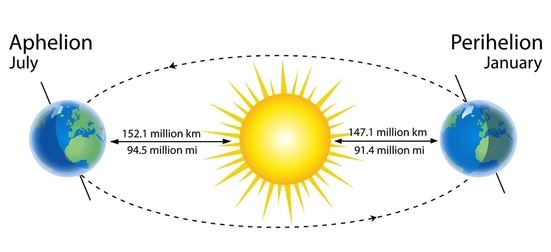
    Early on July 5, the Earth reached aphelion, its farthest distance from the sun in our year-long journey around our nearest star.

    What is Aphelion? 

    • Aphelion is a term used in astronomy to denote the point in the orbit of a planet or celestial body where it is farthest from the Sun. 
    • The Earth’s orbit around the Sun is not a perfect circle but rather an ellipse, with the Sun situated at one of the two foci of the ellipse. 
    • Aphelion marks the moment when Earth is at its maximum distance from the Sun along this elliptical path.
    • The concept of aphelion was crucial in Johannes Kepler‘s formulation of his laws of planetary motion during the 17th century.

    How far is the Earth from the Sun at aphelion? 

    • At aphelion, which occurs around July 4th– 5th each year, the Earth is approximately 152.1 million kilometers (about 94.5 million miles) away from the Sun. 
    • This distance is about 3.3% greater than its average distance from the Sun, known as its semi-major axis, which is about 147.1 million kilometers.

    Does aphelion affect temperatures on Earth? 

    • Aphelion has a slight effect on temperatures on Earth, but its impact is minimal compared to other factors such as axial tilt and atmospheric circulation patterns. 
    • Despite being farther from the Sun during aphelion, the Earth’s tilt towards the Sun during the northern hemisphere’s summer results in warmer temperatures for that region. 
    • This phenomenon is primarily responsible for the seasons on Earth.

    What would happen if there were no aphelion? 

    • If Earth’s orbit were perfectly circular, without aphelion or perihelion (the closest point to the Sun), the distance between Earth and the Sun would remain constant throughout the year. 
    • This scenario would result in less variation in seasonal temperatures between the northern and southern hemispheres. 
    • The distinct seasons that we experience today, which are essential for ecological diversity and agricultural cycles, would be significantly altered.

    PYQ:

    [2013] Variations in the length of daytime and night time from season to season are due to-

    (a) The earth’s rotation on its axis

    (b) The earth’s revolution round the sun in an elliptical manner

    (c) Latitudinal position of the place

    (d) Revolution of the earth on a tilted axis

  • Important Aspects of Governance

    X-Factor Notes on Important Aspects of Governance for UPSC CSE Mains GS Paper II Prepared by Civilsdaily IAS’ Core Team & AIR 2, Animesh Pradhan

    Previous Year Questions on Important Aspects of Governance

    [2019] In the context of neo-liberal paradigm of development planning, multi-level planning is expected to make operations cost effective and remove many implementation blockages.’- Discuss.(15M)

    [2019] The need for cooperation among various service sectors has been an inherent component of development discourse. Partnership bridges bring the gap among the sectors. It also sets in motion a culture of ‘Collaboration’ and ‘team spirit’. In the light of statements above examine India’s Development process. (15M)

    [2016] In the integrity index of Transparency International, India stands very low. Discuss briefly the legal, political, economic, social and cultural factors that have caused the decline of public morality in India.

    [2016] Effectiveness of the government system at various levels and people’s participation in the governance system are interdependent. Discuss their relationship with each other in context of India.(12.5M)

    [2016] Has the Indian governmental system responded adequately to the demands of Liberalization, Privatization and Globalization started in 1991? What can the government do to be responsive to this important change?(12.5M)

    [2015] In the light of the Satyam Scandal (2009), discuss the changes brought in corporate governance to ensure transparency, accountability.

    1. Important Quotes & Definitions

    “Good governance is not about implementing everything; it’s about prioritizing intelligently.” – Ha-Joon Chang
     
    “Governance is not merely a necessity but a catalyst for the development of any nation.” – Narendra Modi
     
    “The best form of governance is the one that accomplishes the desired societal goals at the least social cost.” – Kaushik Basu

    “Governance is about designing, building, and maintaining institutions that serve widely shared ethical values.” – Frances Hesselbein
     
    “Good governance is perhaps the single most important factor in eradicating poverty and promoting development.” – Kofi Annan
     
    “Governance has to be responsive to the needs and claims of people and, more specifically, to those of the poor and the underprivileged.”       – Amartya Sen
     

    International Monetary Fund (IMF): Governance is a framework of rules, institutions, and practices that set limits on behavior, steering the actions of individuals and firms, and defining their rights and obligations.
     
    World Bank: 1992 report entitled “Governance and Development” – Governance is the manner in which power is exercised in the management of a country’s economic and social resources for development.”

    Corporate Governance

    World Bank: Corporate governance is about promoting corporate fairness, transparency, and accountability.

    Organisation for Economic Co-operation and Development (OECD): Corporate governance involves a set of relationships between a company’s management, its board, its shareholders, and other stakeholders. Corporate governance provides a structure through which the objectives of the company are set, and the means of attaining those objectives and monitoring performance are determined.

    Good Governance

    The African Development Bank (AfDB): Good governance is an approach to a government that is committed to creating a system that protects human rights and civil liberties.

    World Bank: WB defined Good Governance as the manner in which power is exercised in the management of a country’s economic and social resources for development. 

    Good governance is epitomized by predictable, open, and enlightened policy-making; a bureaucracy imbued with a professional ethos; an executive arm of government accountable for its actions; and a strong civil society participating in public affairs.

    2. Evolution of Governance in India

    ModelDescriptionExamples
    Entitlement-Based Model: Post-Independence EraState-led Development Theory – Initially focused on establishing administrative frameworks necessary for a new nation.Five-Year Plans (1951): Aimed to industrialize and modernize the economy. 
    License Raj (1950s-1980s): Required numerous licenses, fostering bureaucratic oversight and limiting economic freedom.
    Shift Towards Participation-Based Model: Late 20th CenturyPromoted equality and freedom, moving towards participatory democracy and neoliberal economic policy.73rd and 74th Constitutional Amendments (1992): Empowered local bodies, enhancing grassroots governance.
    LPG Reforms and Rolling back of state
    Establishment of Rights-Based Legislations: 21st CenturyRights-Based Approach – Solidified the rights-based model with key legislations recognizing basic services as legal rights.Right to Information Act (2005): Increased governmental transparency.  
    Right to Education Act (2009): Made education a fundamental right for children aged 6 to 14. 
    Food Security Act (2013): Guaranteed subsidized grains to 67% of the population.
    Governance Reforms and Initiatives Post-2014Minimum Government Maximum Governance – Focused on digital governance, transparency, and enhancing citizen engagement.Digital India (2015): Aimed to transform India into a digitally empowered society and knowledge economy. 
    Goods and Services Tax (GST) Implementation (2017): Simplified a complex tax system into a single tax regime, enhancing business efficiency.

    3. Data on Important Aspects of Governance

    CategoryData and Details
    Public Delivery of ServicesAadhar Generated: 1.35 billion (99% Adults)
    Exclusion due to Aadhar Issues: 2.3% (2023 survey), 1.3% PDS biometric failure
    DBT
    Total DBT transfer in 2023-24 – 6.91 Lakh Cr through 314 schemes of 57 Ministries. It has saved around 3.5 Lakh Cr of the government
    Under the state government schemes, the cumulative DBT is Rs 274934 crore. For the financial year 2021-22, it amounts to Rs 1674 crore under 137 schemes of 27 Departments.
    Governance – RTIRTI Applications: Since 2005, more than 4.2 crore RTIs have been filed and 26 lakh second appeals are there before the commissions.
    In 2019-20, the Central government ministries and departments received 1.29 million RTI applications. 
    The rejection of RTI applications on grounds of “national security” by Central government ministries increased by 83% during 2020-21, even though the overall rejection rate decreased by 2.95%
    In 2022, 3.14 lakh RTI appeals were pending. This is a 44%  increase from 2019 and a 10% increase from 2021.
    highest number of pending cases were in Maharashtra at 99,722 followed by Uttar Pradesh, Karnataka, the Central Information Commission (32k) and Bihar.
    In 29 information commissions across the country only 5% of the positions are occupied by women.
    4.6% rejection rate, 35% increase in national security rejections
    Only 11 information commissions out of 29 provide e-filing facility for RTI applications or appeals, but only five are functional.  
    E-GovernanceAccess: 30% of women in rural areas have internet
    Schools with Internet: 27% (2023-2024)
    E-Courts: HC disposed 24 million cases, DC disposed 44 million cases
    over 188 million individuals and 18,000 organizations have issued over 8 billion documents on DigiLocker.
    Legal, Judicial, and Police ReformsPending Cases: 70,000 in SC, 60 lakh in HCs, 4.35 crore in lower courts
    Vacancy: 5,900 judges
    Police and PrisonsPolice-Population Ratio: 155 per lakh. Best police ratio in Nagaland, Andaman & Nicobar
    Prison Occupancy: 132% (2024)
    Undertrials: 68% of prisoners
    CorruptionIndia ranked 93 out of 180 countries on the corruption perceptions index for 2023.

    4. Key Aspects of Governance

    DimensionComponentExamples
    Political DimensionNature of Political ContestationInstitutional Autonomy for RBI, ECI etc
    Exercise of FranchiseEnsuring free and fair elections
    Profile and Conduct of Political RepresentativesIntegrity, accountability, and behavior of elected officials
    Quality/Functioning of the Political ExecutiveEfficiency, responsiveness, and transparency of the executive branch
    Political DecentralizationPrinciple of Subsidiarity
    Legal & Judicial DimensionGeneral Conditions of Rule of Law and Internal Security
    Accessibility, Approachability, and Citizen-Friendliness of the Policee-FIR
    Police Administration and FunctioningPolice Reforms – Prakh Singh Judgment
    Access to Justice and Judicial Administrationtimely and affordable access to justice for all citizens FR U/A 21
    Corruption Perception, Vigilance, and EnforcementLokpal Act
    Administrative DimensionCitizen Orientation, Responsiveness, and TransparencyRTI, Citizen Charter
    Efficient management and development of human resources within the administrative machineryMission Karmayogi
    Ensuring sound financial management practices to optimize resource utilizationPFMA
    Basic Service DeliveryHousing for All
    Economic DimensionEnsuring responsible fiscal management, budgeting, and financial disciplineFRBM Act
    Creating a conducive environment for businesses to thrive, including regulatory reforms and ease of doing businessFDI Liberalization
    Enhancing support and development of agriculture, fisheries, and forestryPM Kisan
    Social DimensionWelfare of the Poor and Vulnerable Sections and Improved Standard of livingMGNREGA
    Encouraging the active participation of civil society organizations in governance and development processesSocial Audit
    Ensuring a free and responsible media that acts as a watchdog and provides a platform for public discourseInvestigative Journalism
    Promoting sustainable development through effective environmental governance and management practices

    5. Different Models of Governance

    ModelDescriptionSpecific Example
    Government-as-Machine ModelThe government functions like a machine with strict adherence to rules and regulations, lacking flexibility and responsiveness.Traditional public administration in India, where bureaucratic processes often lead to delays and inefficiencies in service delivery.
    Government-as-Network ModelThe government operates as a complex, interconnected system, emphasizing connection, communication, and collaboration to solve problems.Smart City initiatives in India, where various stakeholders, including government, private sector, and citizens, collaborate to improve urban living.
    Market ModelThe government allows the private sector to provide services, aiming for efficiency and better service delivery compared to traditional public sectors.Delhi Electricity Board’s privatization.
    Participatory State ModelEmphasizes increased individual and collective participation in government decision-making processes, especially for typically excluded segments.Gram Sabhas 
    Deregulated Government ModelFocuses on reducing bureaucratic control, providing more managerial freedom, and making decisions based on societal needs and collective input.Liberalization reforms in India post-1991
    Entitlement-Based ModelThe state provides essential goods and services to citizens who are seen as passive recipients, e.g., food grains under the Public Distribution System (PDS) in India.Public Distribution System (PDS) 
    Rights-Based ModelAims to empower citizens as active participants in decision-making and strengthens the capacity of governments to fulfill their duties to citizens.Right to Information Act (RTI) 

    6. Good Governance

    “In the happiness of his people lies the king’s happiness, in their welfare his welfare”.   -Kautilya

    “The exercise of economic, political and administrative authority to manage a country’s affairs at all levels. It comprises the mechanisms, processes and institutions, through which citizens and groups articulate their interests, exercise their legal rights, meet their obligations and mediate their differences.” – UNDP

    12th FYP – Good governance is vital for a well-functioning society, ensuring effective resource use and service delivery, while providing social legitimacy.

    Minimum Government Maximum Governance emphasizes reducing the size and scope of government intervention, while ensuring that the governance mechanisms are effective, transparent, and accountable. The government focuses on creating a conducive environment for businesses and citizens, acting more as a facilitator than as a controller.

    Evolution of Good Governance

    1. 1980s: Rise of Governance: With globalization-led economic reforms, “governance” became a key term, emphasizing the process and manner of governing towards sustainable development.
    2. End of Cold War: Changing Perspectives: The end of the Cold War altered the approach of developed countries and multilateral aid agencies towards developing nations, previously influenced by the bi-polar world.
    3. 1990s: World Bank’s Role: The World Bank introduced good governance in its lending policies for developing countries.
    1. 1992 Governance and Development Report: Advocated using good governance to manage a country’s economic and social resources for development.
    2. 1996 Policy Shift: Focused on corruption in borrowing countries, making it central to lending decisions.
    1. IMF’s Structural Adjustment Programme 1990: Recognized the necessity of good governance for successful market reforms.
    2. Policy Shifts and Foreign Investment: Developing countries, competing for foreign investment, shifted policies to improve governance.

    Core Principles of Good Governance (UNESCAP)

    PrincipleDescriptionSpecific Example
    ParticipationEveryone can voice their opinions through institutions or representatives, ensuring freedom of association and expression.Gram Sabhas where villagers gather to discuss and make decisions on local issues.
    Rule of LawImpartial enforcement of laws, especially human rights laws.SC Judgment in K. Bharti Judgment
    TransparencyGovernment policies must be carried out under existing regulations and accessible to everyone, including those affected.Right to Information Act (RTI)
    ResponsivenessInstitutions and processes should serve all stakeholders in a reasonable time.Online grievance redressal systems like the Centralized Public Grievance Redress and Monitoring System (CPGRAMS).
    Consensus-OrientedDecisions should be acceptable to all, even if not everyone’s wishes can be accommodated.EIA
    Equity and InclusivenessEnsure justice and equal opportunity for everyone to improve their welfare.Reservation policies, RTE
    Effectiveness and EfficiencyDecision-making processes and institutions should meet everyone’s needs while using resources wisely.Implementation of the Direct Benefit Transfer (DBT) system 
    AccountabilityInstitutions must be answerable to the public to improve societal quality.Public audits by the Comptroller and Auditor General (CAG) of India 

    7. Impact of Poor Governance on Development 

    PESTLE AspectAspectDetailsExamples
    PoliticalCorruptionCorruption leads to inefficient resource allocation, hindering economic growth and public trust.The 2G Spectrum scam and the Commonwealth Games scam.
    Political Instabilitydisrupts development processes and deters foreign investment.Frequent changes in state governments due to political turmoil.
    Policy Implementation Failureslead to ineffective governance and unmet development goals.Leakages in PDS
    Lack of Transparencyreduces accountability and increases corruption.Non-transparent allocation of natural resources (“Coalgate” scandal)
    Low Public Trustleading to decreased civic engagement and social cohesion.Lower voter turnout in 2024 elections compared to 2014 and 2019
    EconomicPoor Economic ManagementIneffective economic policies and poor fiscal management can lead to economic instability and reduced investor confidence.1991 BOP Crisis
    Regulatory UncertaintyFrequent changes in regulations and policies can create an unstable business environment.Changes in GST Slabs
    Inefficient Market Systemsreduce competitiveness and innovation.Monopolistic practices, inverted duty structure.
    SocialSocial InequalityPoor governance exacerbates social inequalities, limiting opportunities for marginalized communities.Inequitable access to quality education and healthcare services in rural and urban areas.
    Quality of lifeInconsistent access to basic services like clean water, sanitation, and healthcare in various regions.Delhi Water Crisis 2024
    Human Rights ViolationsPoor governance can lead to violations of human rights, affecting citizens’ well-being and freedom.Custodial Deaths in TN
    Displacements and poor rehabilitationDisproportionately affecting TribalsSardar Sarovar Dam Project
    TechnologicalDigital DivideUnequal access to digital technologies limits opportunities for education and economic growth.Only 27% of rural households have internet access, compared to 66% in urban areas (National Sample Survey).
    Cybersecurity ThreatsPoor governance in cybersecurity can lead to data breaches and financial losses.The data breach at Aadhaar 
    E-Governance Implementation IssuesDelays and inefficiencies in e-governance projects can reduce their effectiveness.The delay in rolling out the e-Health initiative in various states 
    Inadequate Tech InfrastructurePoor technological infrastructure hampers access to online services and economic activities.Frequent power outages and slow internet speeds in rural areas limit digital engagement
    Legal-AdministrativeJudicial DelaysSlow judicial processes undermine the rule of law and discourage investment.over 4 crore cases pending in lower courts.
    Bureaucratic Inefficiency and Red TapismInefficient bureaucracy can delay project approvals and implementation, hindering development.The average turnaround time for Indian ports is 2.1 days compared to 0.4 days for Norway, 0.6 days for Netherlands, and 0.8 days for Singapore.
    CorruptionCorruption within administrative bodies can lead to misuse of resources and unfair practices.The Vyapam scam, NEET paper leak
    Human Resource MismanagementPoor management of human resources can lead to underperformance and low morale among public servants.shortage of healthcare workers during the pandemic 
    EnvironmentalEnvironmental DegradationIneffective governance in environmental regulation leads to degradation and unsustainable resource use.Poor implementation of EIA

    8. Steps Taken

    AspectStepDetailsSpecific Data
    PoliticalLokpal and Lokayuktas Act (2013)Established an anti-corruption ombudsman to investigate corruption complaints against public officials.1,200 cases investigated by Lokpal as of 2023.
    Increased EnforcementStrengthened actions against corruption with more cases prosecuted and assets seized by the Enforcement Directorate (ED).Assets worth ₹1 lakh crore seized between 2014-2023.
    E-Voting Pilot ProjectsTesting electronic voting methods to increase voter participation.Conducted in 8 states with positive feedback.
    Electoral ReformsReforms to enhance the transparency and efficiency of the electoral process.Use of VVPAT machines
    EconomicGoods and Services Tax (GST)Simplified the tax structure, making it more transparent and efficient.GST collections averaged ₹1.4 lakh crore monthly in FY 2023.
    Insolvency and Bankruptcy Code (IBC)Provided a structured process for insolvency resolution to improve the ease of doing business.4,540 cases resolved, recovering ₹2.5 lakh crore as of 2023.
    Direct Benefit Transfer (DBT)Transfers subsidies directly to beneficiaries’ bank accounts to reduce leakages.₹20.98 lakh crore transferred through DBT schemes.
    Fiscal Responsibility and Budget Management (FRBM) ActEnsures fiscal discipline by setting targets for the government’s fiscal deficit and debt.Fiscal deficit reduced to 4.5% of GDP by FY 2023.
    Disinvestment and FDI ReformsEncourages private sector participation in public sector units and liberalizes foreign direct investment norms.Disinvestment target of ₹1.75 lakh crore set for FY 2023; FDI inflows increased to $81.72 billion in 2021-22.
    SocialSwachh Bharat MissionA nationwide campaign to clean up the streets, roads, and infrastructure of India’s cities and rural areas.Over 100 million toilets built; rural sanitation coverage increased to 100%.
    Skill IndiaProvides skill development training to enhance employability of the workforce.Over 5 crore people trained under the PMKVY (Pradhan Mantri Kaushal Vikas Yojana).
    Atal Pension YojanaProvides pension benefits to workers in the unorganized sector.4 crore subscribers enrolled as of 2023.
    National Pension Scheme (NPS)A voluntary, defined contribution retirement savings scheme.4.5 crore subscribers with ₹7.72 lakh crore in assets under management as of 2023.
    Pradhan Mantri Awas Yojana (PMAY)Aims to provide affordable housing to the urban poor.1.12 crore houses sanctioned under PMAY-Urban as of 2023.
    TechnologicalAadhaar (Unique Identification)Provides a unique identity to residents, facilitating direct benefit transfers and reducing leakages.1.3 billion Aadhaar cards issued, reducing leakages in subsidies by 20%.
    E-Governance ProjectsImplementing e-governance initiatives to improve service delivery and transparency in government processes.3.5 billion e-transactions recorded under Digital India in 2023.
    BharatNetAims to connect all gram panchayats with high-speed internet.1.5 lakh gram panchayats connected as of 2023.
    National Digital Health Mission (NDHM)Creates a digital health ecosystem to manage health records electronically.24 million health IDs created by 2023.
    UMANG AppProvides a unified platform for accessing government services.Over 3.75 crore downloads and 2000+ services available as of 2023.
    LegalRight to Information Act (2005)Empowered citizens to request information from the government, increasing transparency.4.8 lakh RTI applications filed annually.
    Judicial ReformsImplementing fast-track courts and e-courts to reduce case backlogs and improve judicial efficiency.1,800 fast-track courts operational, reducing pendency by 20%.
    Data Protection BillAims to protect citizens’ data privacy and regulate data usage by companies.Bill passed in 2023, aiming to regulate data handling.
    Consumer Protection Act (2019)Strengthens consumer rights and provides mechanisms for redressal.Over 3.5 lakh cases resolved under the new act.
    Lok Adalats (People’s Courts)Offers alternative dispute resolution to reduce court burden.1.3 crore cases settled through Lok Adalats in 2023.
    EnvironmentalNational Action Plan on Climate Change (NAPCC)Outlines eight missions focusing on climate change mitigation and adaptation.Solar capacity increased to 60 GW as part of the Solar Mission.
    Namami Gange ProgrammeAims to clean and rejuvenate the Ganges River.₹30,000 crore sanctioned; significant reduction in pollution levels.
    Afforestation and Green India MissionPromotes afforestation to increase green cover.1.5 million hectares afforested under the Green India Mission.
    National Clean Air Programme (NCAP)Targets reducing air pollution levels across cities.20-30% reduction in particulate matter in 102 cities by 2024.
    Environmental Impact Assessment (EIA)Requires environmental clearances for large projects to assess and mitigate environmental impacts.Over 5,000 projects assessed annually for environmental impact.
    Improving Service DeliveryCitizen’s ChartersOutlines service delivery standards for government departments, improving transparency.Over 1,000 Citizen’s Charters implemented across various departments.
    Sevottam ModelFramework for improving public service delivery through standard setting and performance evaluation.Adopted by multiple government departments to enhance service quality.
    Social AuditsEngages community participation in auditing government programs for transparency and accountability.Conducted in over 6 lakh Gram Panchayats under MGNREGA.
    Decentralization73rd and 74th Constitutional Amendments (1992)Strengthens local governance through Panchayati Raj Institutions and Urban Local Bodies.Over 3 million elected representatives in Panchayati Raj Institutions.
    NITI AayogPromotes cooperative federalism and involves states in policy formulation.States’ active involvement in policy planning and execution since its establishment in 2015.
    14th Finance CommissionIncreases financial devolution to states for better local governance.42% share of central taxes devolved to states, enhancing their fiscal autonomy.
    Other InitiativesAspirational Districts Programme (ADP)Targets rapid development in underdeveloped districts to improve quality of life.115 districts identified, with significant improvements in health, education, and infrastructure.
    Good Governance Index (GGI)Ranks states and Union Territories based on governance performance to encourage reforms.Regular ranking published to promote competitive federalism among states.
    StateInitiativeDetailsSpecific Data
    KeralaKerala Infrastructure Investment Fund Board (KIIFB)Mobilizes resources for large infrastructure projects.Over ₹20,000 crore mobilized for infrastructure projects.
    Haritha Keralam MissionFocuses on sustainable development through waste management and water conservation.Over 1 crore saplings planted and numerous water bodies rejuvenated.
    e-District ProjectProvides government services digitally for quick and efficient delivery.Over 1 crore transactions processed through the e-District platform.
    Citizen’s Call CenterA 24/7 helpline for information and assistance on government services.Over 10 lakh calls handled annually.
    MaharashtraRight to Public Services ActEnsures timely delivery of public services with penalties for non-compliance.Over 500 services covered under the act.
    Aaple Sarkar PortalDigital platform for accessing a wide range of government services online.Over 3 crore users registered and millions of services availed.
    Maharashtra State Skill Development Society (MSSDS)Focuses on skill development and vocational training.Over 10 lakh youth trained and placed.
    Jalyukt Shivar AbhiyanA water conservation initiative to make Maharashtra drought-free.Over 16,000 villages benefited from the program.
    Tamil NaduAmma Unavagam (Amma Canteens)Provides subsidized meals to the urban poor.Over 500 canteens serving lakhs of meals daily.
    Amma Maternity Nutrition KitProvides nutritional supplements to pregnant women.Over 10 lakh kits distributed annually.
    Tamil Nadu e-Governance Agency (TNeGA)Implements e-governance initiatives for better service delivery.Over 200 government services available online.
    Chief Minister’s Comprehensive Health Insurance SchemeProvides health insurance to economically weaker sections.Over 1.5 crore beneficiaries enrolled.
    KarnatakaSakalaGuarantees timely service delivery and tracks application status online.Over 1.5 crore applications processed with 98% on-time delivery.
    Ksheera BhagyaProvides free milk to school children to improve nutrition and academic performance.Over 65 lakh children benefited.
    JanasevakaDoorstep delivery service for government services.Over 1 lakh services delivered at doorsteps.
    BhoomiDigitizes land records for transparency in land transactions.Over 70 lakh land records digitized.
    Andhra Pradeshe-PragatiA comprehensive e-governance initiative to provide integrated services to citizens.Over 400 services integrated under the platform.
    NTR Bharosa SchemeProvides financial assistance to senior citizens, weavers, and disabled persons.Over 50 lakh beneficiaries supported.
    Mana Badi Nadu-NeduAims to transform government schools with improved infrastructure and facilities.Over 15,000 schools upgraded.
    RajasthanBhamashah YojanaEmpowers women and promotes financial inclusion through direct benefit transfers.Over 1 crore women benefited.
    RajNetConnects all panchayats and government offices through high-speed internet.Over 11,000 panchayats connected.
    Jal Swavlamban AbhiyanFocuses on water conservation and management to ensure water self-sufficiency.Over 21,000 villages benefited from water conservation projects.
    GujaratMukhyamantri Amrutam (MA) YojanaProvides health insurance for families below the poverty line.Over 50 lakh families covered.
    Gujarat Solar Power PolicyPromotes solar energy generation to make Gujarat a solar hub.Over 9,000 MW of solar power capacity installed.
    Smart Village InitiativeEnhances infrastructure and services in villages to promote rural development.Over 300 villages transformed into smart villages.
    West BengalKanyashree PrakalpaProvides financial aid to girls for education and prevention of early marriage.Over 70 lakh girls benefited.
    Sabuj Sathi SchemeDistributes bicycles to school students to promote education and reduce dropouts.Over 1 crore bicycles distributed.
    Utkarsh BanglaOffers vocational training to improve employability of youth.Over 6 lakh youth trained.
    Uttar PradeshMission ShaktiFocuses on women’s safety, dignity, and empowerment.Over 1.5 crore women benefited.
    Mukhyamantri Arogya AbhiyanProvides free medical treatment to economically weaker sections.Over 1 crore beneficiaries covered.
    One District One Product (ODOP)Promotes local crafts and products to boost the economy and create jobs.Over 1,000 products from various districts promoted.

    9. Issues With Government Schemes

    AspectIssueDetailsExamples and Specific Data
    Structural IssuesEntitlement-Based ModelPassive Citizenry: Government welfare schemes often create dependency rather than promoting self-reliance. Public Distribution System (PDS)
    Colonial LegacyThe hierarchical and centralized administrative structures inherited from the colonial era often result in inefficiency and a lack of responsiveness.Mai Baap Culture
    Poor Accountability MechanismsDespite initiatives like the Right to Information (RTI) Act, mechanisms such as citizen charters and social audits are not effectively enforced.
    Secrecy and Multiplicity of LawsThe legal framework is often cumbersome and opaque, leading to delays in justice. The average duration for case disposal in Indian courts is over three years​​.
    Design and PlanningTop down approachSchemes often adopt a one-size-fits-all approach without considering regional disparities.Farm Laws
    Insufficient Feasibility StudiesLack of preliminary studies leads to impractical schemes and wasted resources.Low cost recovery in Atal Setu Bridge.
    Complex GuidelinesOverly complex and bureaucratic guidelines deter private sector participation and delay implementation.Lack of private sector participation in Smart Cities Mission
    Overlapping Jurisdictional IssuesOverlap between central and state schemes can lead to confusion and inefficiency.PM-KISAN and state-level schemes like Rythu Bandhu  caused duplication of efforts​.
    Centre-State ConflictDisagreements between central and state governments impede scheme implementation.Odisha, West Bengal and Delhi are not implementing Ayushman Bharat Scheme​.
    ImplementationCorruption and LeakagesMisappropriation of funds and resources often undermine the effectiveness of schemes.PDS faces 46.7% leakages​. (NSSO)
    Poor Monitoring and EvaluationInadequate monitoring mechanisms lead to poor oversight and accountability.40% of PMGSY roads needed repairs within a year​.
    Inaccurate TargetingIncorrect identification of beneficiaries leads to exclusion errors and inclusion errors.PM-KISAN had over 10 lakh ineligible recipients​ ​.
    Digital DivideReliance on digital platforms excludes those without internet access or digital literacy.25% of rural households lack internet access, affecting DBT reach​.
    FundingResource ConstraintsInsufficient funding hampers comprehensive implementation and coverage.Ayushman Bharat has 30% of health centers non-operational​​.
    Populist Spending Governments often overspend, leading to fiscal deficits. This results in reduced resources for the private sector and increased inflation.Loan Waivers
    Capital vs. Revenue ExpenditureEmphasis on capital expenditure over revenue expenditure leads to numerous infrastructure projects but insufficient staffing, affecting human development indicators.Doctor to population ration in India is 1:834 
    Funding Delayshinder timely execution and beneficiary payments.MGNREGA had ₹10,000 crore in pending wages as of March 2023​ .
    Misallocation of FundsDiversion of funds due to mismanagement or corruption.Midday Meal Scheme reported substandard meals in several states​​.
    Technological Implementation IssuesIssues with integrating and using technology effectively in schemes.PDS technical glitches affected over 1 crore beneficiaries in 2022​​.
    Private Sector Dominant Public SectorThe government still controls critical sectors like health and education, lacking the application of “Minimum Government Maximum Governance.”
    Slow PrivatizationDespite claims that the government shouldn’t be in business, the pace of privatization is slow, and disinvestment targets are rarely met. The government set a disinvestment target of ₹1.75 lakh crore for FY2021-22, revised it to ₹78,000 crore later, but the actual proceeds were only ₹14,638 crore.
    TechnologicalPoor Technological InfrastructureOnly 30% of gram panchayats connected to high-speed internet as of 2023​.
    Cybersecurity ThreatsData breaches and cyber-attacks compromise the integrity and trust in digital schemes.Aadhaar data breach exposed millions of citizens’ information​.
    Technical GlitchesFrequent technical issues disrupt the smooth operation of digital schemes.GSTN issues caused compliance delays for over 5 lakh taxpayers​.
    Impact and OutcomeLimited Impact EvaluationLack of systematic evaluations prevents assessment of scheme success and necessary improvements.30% of Ujjwala Yojana beneficiaries reverted to traditional fuels​.
    Sustainability IssuesShort-term focus and lack of long-term sustainability planning.20% of Jalyukt Shivar structures non-functional within 2 years​​.
    Lack of Beneficiary Feedback MechanismAbsence of systematic mechanisms to gather and incorporate beneficiary feedback.Non-institutionalization of Social Audits
    Limited ReachSome schemes fail to reach all intended beneficiaries, especially in remote areas.15% of targeted schools not covered by Midday Meal Scheme in 2022​.
    Unintended ConsequencesSome schemes have unintended negative impacts that undermine their objectives.Loan waivers led to reduced credit discipline among farmers​.
    Political and AdministrativePolitical InterferencePolitical involvement distorts scheme priorities and implementation, leading to favoritism and inefficiency.25% of Pradhan Mantri Gram Sadak Yojana projects affected by political interference​​.
    Bureaucratic HurdlesRed tape and bureaucratic hurdles delay project approvals and implementation.Requirement of multiple clearances
    Inter-Departmental Coordination Issuesleads to fragmented and inefficient scheme execution.ICDS faced issues due to poor coordination, affecting 30% of projects​ .
    Frequent Changes in LeadershipFrequent changes in administrative leadership disrupt the continuity and implementation of schemes.

    10. Citizen Participation and Good Governance

    Citizen participation is essential in democracy, allowing people to influence public decisions, hold leaders accountable, and help develop their communities. Good governance includes transparency, accountability, and inclusivity, crucial for sustainable development.

    “No one is born a good citizen; no nation is born a democracy. Rather, both are processes that continue to evolve over a lifetime.” – Kofi Annan

    Benefits

    AspectImportanceExamples
    Enhances AccountabilityEnsures public officials are answerable and reduces corruption.The Right to Information Act (2005) 
    Improves Policy FormulationIncorporates diverse perspectives for comprehensive policies.The National Education Policy (2020) involved extensive public consultations, resulting in a more inclusive framework​.
    Enhances Service DeliveryAligns services with actual needs and improves efficiency.The Sevottam model in India improves service delivery through citizen feedback and performance evaluation​​.
    Strengthens DemocracyEmpowers citizens and fosters a sense of civic responsibility.Panchayati Raj Institutions in India enable local self-governance and direct citizen participation in decision-making​​.
    Builds Trust in GovernmentPromotes mutual trust and perceived legitimacy of actions.Right to Service in Maharashtra.
    Facilitates Social CohesionInvolves marginalized communities, preventing conflicts.Social audits in schemes like MGNREGA promote inclusivity and help resolve local issues effectively​​.
    Promotes Sustainable DevelopmentEnsures development projects are sustainable and community-supported.The Jal Swavlamban Abhiyan in Rajasthan leverages local participation in water conservation​​.
    TheoryExplanationExamples
    Participatory Democracy TheoryEmphasizes broad participation of constituents in political decision-making processes.Gram Sabhas
    Deliberative Democracy TheoryFocuses on discussion and deliberation among citizens to reach consensus on public issues.public hearings in urban planning projects​​.
    Social Capital TheorySuggests that networks of relationships among people in a society enable it to function effectively.Community organizations and social networks likePanchayati Raj Institutions​​.
    Agency TheoryFocuses on the relationship between principals (citizens) and agents (government officials), emphasizing accountability.Mechanisms like audits, watchdog organizations, and transparent reporting to ensure government accountability
    Public Choice TheoryApplies economic principles to the study of political behavior, highlighting self-interest influences.Understanding how voter behavior and lobbying can influence policy decisions, as seen in the Sevottam model for public service delivery​​.

    Challenges in Citizen Participation

    ChallengeDetailsExamples
    Lack of AwarenessCitizens often lack information about their rights and the processes for participation.Low awareness about Pension Schemes​.
    Digital DivideLimited internet access and digital literacy prevent many citizens from engaging with e-governance platforms.25% of rural households in India lack internet access, affecting the reach of schemes like DBT​​.
    Low Levels of EducationIlliteracy and low educational levels hinder effective participation in governance processes.Low literacy among women leading to ‘Sarpanch Pati ’ in Panchayati Raj​ 
    Lack of CapacityCitizens often lack the skills and knowledge required to participate effectively in governance.Training programs for citizen participation in schemes like social audits are limited and inconsistent​​.
    Distrust in GovernmentHistorical instances of corruption and inefficiency lead to a lack of trust in government initiatives.
    Exclusion of Marginalized GroupsMarginalized communities often find it difficult to participate due to social and economic barriers.Preventing Dalits from participation in Gram Sabha in TN
    Geographical BarriersRemote and rural areas face logistical challenges in accessing participatory platforms and services.
    Bureaucratic HurdlesComplex administrative processes, red tape discourage citizen participation.Complicated procedures for accessing benefits under schemes like PMAY 
    Poor Communication ChannelsIneffective communication between government and citizens leads to misunderstandings and apathy.
    Economic ConstraintsEconomic hardship can limit the time and resources citizens can devote to participation.Daily wage laborers might prioritize earning a livelihood over participating in governance activities​.

    11. Way Forward

    AspectMeasureRecommendations/Examples
    Enhancing Transparency and AccountabilityImproved Effectiveness of the RTI ActReduce exemptions for security and economic institutes, ensure records are machine-readable, implement legislation akin to the Whistleblower Protection Bill of 2015.
    Enhancing Service Delivery MechanismsEffective Implementation of Citizen’s ChartersDecentralized formulation, meaningful dialogues with civil society, periodic evaluations, clear procedures for redress.
    Promotion of Social AuditsEnsure guidelines for all citizen-centric programs include social audit mechanisms.
    Encouraging Citizen InitiativesReward schemes to encourage public service improvements.
    Establishment of Public Service ValuesCode of Ethics for Civil ServantsDefining core values applicable across all government levels, enforce penalties for violations, enhance the code of ethics to address conflicts of interest.
    Improving Public Sector Work CultureTraining and DevelopmentEnhanced training programs for pre-entry and mid-career, performance-linked pay, managerial autonomy, employee recognition through awards and newsletters.
    IT Reforms for Good GovernanceInfrastructure and Skill EnhancementEssential IT infrastructure, reliable electricity and internet services, continual skill upgradation for staff.
    Boosting Citizen Participation in GovernanceParticipatory BudgetingCommunity members allocate portions of the public budget.
    Joint Assessment and MonitoringCollaborative evaluations for significant local flagship programs.

    12. Global Best Practices

    AspectMeasureExamples
    Transparency and AccountabilityWhistleblower ProtectionThe United States’ Whistleblower Protection Act provides strong protections for federal employees​​.
    Open Data InitiativesThe UK Government’s Open Data portal​.
    Citizen Feedback MechanismsSouth Korea’s e-People system allows citizens to file complaints and suggestions online​​.
    Public ParticipationParticipatory BudgetingPorto Alegre in Brazil is known for its participatory budgeting process, involving thousands of residents in budget decisions​.
    Inclusive Policy-MakingCanada’s Gender-Based Analysis Plus (GBA+) ensures diverse perspectives are considered in policy-making​​.
    Rule of LawStrengthening Judicial IndependenceThe Judicial Appointments Commission in the UK ensures a transparent and merit-based selection of judges​​.
    Anti-Corruption MeasuresThe Anti-Corruption Commission in Botswana has been effective in reducing corruption levels​.
    Service DeliveryDigital GovernanceEstonia’s e-Estonia initiative provides a wide range of government services online, improving accessibility and efficiency​​.
    Citizen ChartersThe UK’s Citizen Charter introduced in 1991 set service standards for various public services​.
    Ethics in Public ServiceCode of Ethics for Civil ServantsSingapore’s Code of Conduct for civil servants emphasizes integrity and accountability​​.
    Performance ManagementNew Zealand’s performance management framework assesses the effectiveness of public sector employees and agencies​.
    Human RightsHuman Rights-Based ApproachSweden’s approach to governance integrates human rights into all public policies and practices​.
  • What a Labour election win could mean for India-UK Free Trade Agreement (FTA)?

    Why in the news?

    New Delhi and London have been engaged in negotiations for over two years to discuss a proposed free trade agreement (FTA) aimed at enhancing bilateral trade between the two nations.

    What does the agreement could result?           

    • Mutual Tariff Reductions: Both countries may agree to lower tariffs on a wide range of goods, including automobiles, textiles, alcoholic beverages, and medical instruments, facilitating increased trade flows.
    • Market Access: Improved market access could benefit industries in both countries, particularly India’s IT and services sectors, which are seeking expanded opportunities in the UK market.
    • Economic Growth: The FTA aims to stimulate economic growth by promoting trade and investment, potentially boosting employment and productivity in relevant sectors.
    • Political Relations: Strengthening economic ties could lead to closer political cooperation between India and the UK, influencing bilateral relations on international platforms.

    Impact on Global Geopolitics and Indian Scenario

    • Global Trade Alliances: Strengthening economic ties between India and the UK could enhance their geopolitical influence, potentially shaping global trade alliances and partnerships in the Asia-Pacific region and beyond.
    • Diversification of Trade Partnerships: For India, the FTA represents a strategic move to diversify its trade partnerships beyond traditional allies, thereby reducing dependency and enhancing economic resilience.
    • Improve Bilateral Relations: Improved economic cooperation could foster closer political relations between India and the UK, influencing diplomatic engagements and collaboration on global issues such as climate change and security.
    • Regional Economic Impact: The agreement may spur economic growth in India, particularly benefiting sectors like IT and services, while also contributing to the UK’s post-Brexit economic strategy and trade diversification efforts.
    • Influence the Environmental and Regulatory Standards: Negotiations over environmental standards, including India’s concerns over carbon taxes and the UK’s climate goals, highlight the FTA’s potential to influence global environmental policies and regulatory frameworks.

    India-UK Relation: 

    • Strong historical ties: India and the UK share deep historical and cultural connections dating back to the colonial era. The UK has a large Indian diaspora of over 1.5 million people.
    • Strategic partnership: In 2004, India and the UK upgraded their relationship to a Strategic Partnership. This was further strengthened by the ‘2030 Roadmap for India-UK Future Relations’ agreed in 2021, which outlined cooperation across 5 pillars- people-to-people ties, trade, defence and security, climate change, and health.
    • Growing trade and investment: The UK is one of India’s major trading partners. Bilateral trade reached £38.1bn in the year to Q3 2023, making India the UK’s 12th largest trading partner. India is the 3rd largest foreign investor in the UK. Both countries are negotiating an India-UK Free Trade Agreement to further boost economic ties.
    • Cooperation in new frontiers: India and the UK are collaborating in emerging areas like fintech, green finance, cyber security, and critical technologies. They plan to hold the first Strategic Tech Dialogue to deepen cooperation in areas like semiconductors, 5G, and AI.
    • Shared global outlook: India and the UK have convergent views on many global issues and support a rules-based international order. The UK supports India’s permanent membership of the UN Security Council. They also cooperate closely on maritime security in the Indo-Pacific

    Way forward: 

    • Addressing Key Negotiation Points: Focus on resolving critical issues such as tariff reductions, market access for IT and services sectors, and alignment on environmental standards to expedite FTA conclusion.
    • Enhancing Strategic Partnerships: Strengthen bilateral economic and political cooperation through sustained dialogue and proactive engagement, aiming to maximize mutual benefits and ensure the long-term sustainability of the FTA.

    Mains PYQ:

    Q The judicial systems in India and the UK seem to be converging as well as diverging in recent times. Highlight the key points of convergence and divergence between the two nations in terms of their judicial practices. (UPSC IAS/2020)

  • The story of the American Declaration of Independence   

    Why in the news? 

    July 4 commemorates the 248th Independence Day of the United States, celebrating the signing of the Declaration of Independence, the foundational document that established the US as a union of states freed from British rule.

    Why did the colonists want Independence from Britain?

    • Lack of Representation: Colonists were discontented with British policies that imposed taxes and laws without colonial representation in the British Parliament, which they viewed as unjust and oppressive.
    • Policy Shifts: After the French and Indian War, Britain ended its policy of salutary neglect and imposed stricter controls on the colonies, including prohibitions on westward expansion and new taxes through acts like the Stamp Act and Tea Act.
    • Ideas of Freedom: Influenced by Enlightenment ideals of liberty and equality, colonists began to articulate grievances against monarchical rule and asserted their natural rights to self-governance.
    • Resistance Movements: Events like the Boston Tea Party symbolized widespread resistance to British taxation and policies, galvanizing colonial unity and determination for independence.
    • Armed Conflict: The escalation from protests and boycotts to armed conflict (beginning in 1775) underscored the colonies’ resolve to break away from British control and establish their own governance.

    What happened in the lead up to American independence?

    • Formation of Continental Congress: Colonists formed the Continental Congress to coordinate resistance efforts and explore avenues for negotiation with Britain, which ultimately failed due to British refusal to grant representation.
    • Boycotts and Protests: Colonists attempted economic boycotts of British goods and engaged in protests against oppressive British policies, marking a period of growing dissent and opposition.
    • Outbreak of War: By 1775, clashes between colonial militias and British troops erupted into open warfare, solidifying the shift from grievances to armed struggle for independence.
    • Declaration of Independence: The Continental Congress formally declared the colonies’ independence on July 2, 1776, followed by the adoption and signing of the Declaration of Independence on July 4, 1776.
    • Continental Army and Allies: The colonies secured military support and alliances, crucially from France, which helped sustain their war effort against British forces.

    How was the Declaration of Independence formulated?

    • Committee of Five: A committee including Thomas Jefferson, John Adams, Benjamin Franklin, Roger Sherman, and Robert R. Livingston was appointed to draft the Declaration of Independence.
    • Thomas Jefferson’s Role: Jefferson, primarily responsible for drafting, drew on Enlightenment philosophy and his earlier writings to articulate the principles of natural rights and grievances against British tyranny.
    • Drafting Process: The committee reviewed Jefferson’s draft, incorporating edits and revisions suggested by Adams, Franklin, and others before presenting the final version to the Continental Congress.
    • Adoption and Signing: On July 4, 1776, the Continental Congress formally adopted the Declaration of Independence, which was signed by 56 delegates representing the thirteen colonies, solidifying their break from British rule.
    • Legacy of equality and rights as a foundation: The Declaration’s proclamation of equality and rights laid the foundation for American ideals of democracy and independence, shaping the course of American history and inspiring similar movements worldwide.

    Conclusion: The Declaration of Independence, adopted on July 4, 1776, marked a pivotal moment as the American colonies asserted their sovereignty, based on Enlightenment ideals, igniting a global pursuit of liberty and democratic principles.

    Mains PYQ:

    Q American Revolution was an economic revolt against mercantilism. Substantiate. (UPSC IAS/2013)

  • Indian Government Bonds in JP Morgan index: how much funds could flow into India?   

    Why in the news?

    JP Morgan is including Indian Government Bonds in its emerging markets bond indices starting June 28. This move is expected to attract significant foreign investment, boosting India’s bond market and economic stability.

    What would be India’s weight in the index?

    • India is poised to achieve a maximum weighting of 10% in the GBI-EM Global Diversified Index. This increased allocation is anticipated to attract greater investment from global investors into Indian debt, with analysts projecting monthly inflows of $2-3 billion.

    Benefits of Higher Inflows from the Inclusion of Indian Government Bonds in JP Morgan’s Emerging Markets Bond Indices

    • Increase in Foreign Exchange Reserves: The inflows from foreign investments will directly boost India’s foreign exchange reserves, providing a stronger buffer against external economic shocks.
    • Strengthening the Rupee: The surge in foreign investment will enhance demand for the rupee, leading to its appreciation and contributing to a more stable and robust currency.
    • Enhanced External Financial Management: With increased foreign exchange reserves, India will have greater flexibility and resilience in managing its external financial obligations and mitigating balance of payment issues.
    • Reduction in Borrowing Costs: Higher reserves and a stronger rupee can lead to improved credit ratings and reduced risk premiums, lowering borrowing costs for the government and corporates.
    • Promotion of Economic Confidence: The inflows signify international investor confidence in India’s economic prospects, boosting overall economic sentiment and encouraging further investments.

    What about the impact on inflation as RBI mops up the dollars and releases an equivalent amount in rupees?

    • Liquidity Injection: When the RBI mops up dollars from the market, it releases an equivalent amount of rupees into the financial system. This injection of liquidity can potentially increase the supply of money circulating in the economy.
    • Demand-Pull Inflation: Increased liquidity can stimulate demand for goods and services, potentially leading to demand-pull inflation if the production capacity of the economy does not keep pace with the increased demand.
    • Asset Price Inflation: The influx of liquidity can also inflate asset prices such as real estate and stocks, impacting affordability and potentially creating asset price inflation.
    • Exchange Rate Stability: On the flip side, mopping up dollars can help stabilize the exchange rate by reducing downward pressure on the rupee due to excessive inflows.
    • RBI’s Policy Response: The RBI has various monetary policy tools, such as open market operations, repo rates, and reserve requirements, to manage liquidity and inflationary pressures arising from such inflows. It may use these tools to absorb excess liquidity and stabilize inflation.

    Way forward: 

    • Prudent Monetary Policy Management: The RBI should continue to employ effective monetary policy measures, such as open market operations and repo rate adjustments, to carefully manage liquidity and inflationary pressures stemming from increased foreign inflows.
    • Enhanced Economic Diversification: India should use the influx of foreign investment to diversify its economy further, focusing on infrastructure development, technological advancements, and sustainable growth initiatives to bolster long-term economic resilience and stability.
  • Education ‘remains the most effective contraceptive

    Why in the news? 

    India’s current population of 1.4 billion is projected to peak at 1.7 billion by 2064, then stabilize at 1.53 billion by 2100, as fertility rates decline below replacement level.

    What does the United Nations speak on Indian demographics?

    • India overtook China as the world’s most populous country. UN estimates project India’s population to peak at 1.7 billion around 2064, then settle at 1.53 billion by 2100.
    • Population growth is slowing, with the total fertility rate dipping below the replacement level of 2.1.

    What do the National Family Health Surveys (NFHS) observed recently?

    • Association with Education: There is a significant correlation between levels of education and unmet needs for family planning among married women in India, highlighting the importance of education in addressing reproductive health issues.
    • High Demand for Family Planning: There remains a notable demand for family planning services, particularly among young women aged 15-24, indicating ongoing challenges in meeting reproductive health needs effectively across different age groups.

    Challenges faced by a deprived section of society                           

    • Limited Access to Family Planning Services: Women from disadvantaged backgrounds often face barriers in accessing contraceptives and family planning services due to social norms, lack of education, and cultural taboos surrounding contraception.
    • Teenage Pregnancies and Early Marriages: High rates of teenage pregnancies and early marriages contribute to health risks for young women, exacerbated by limited awareness about sexual and reproductive health rights and options.
    • Social Stigma and Cultural Norms: Deep-rooted societal attitudes and stigmas surrounding sexual activity, contraception, and abortion hinder open discussions and access to comprehensive sexual education and healthcare services, particularly for unmarried individuals.

    What can India do to improve social conditions?

    • Enhancing Education and Awareness: Increase access to comprehensive sex education in schools and communities to empower young people with knowledge about contraception, family planning, and reproductive health rights.
    • Addressing Cultural Norms and Stigma: Challenge societal taboos and misconceptions surrounding contraception and sexual activity through culturally sensitive communication and advocacy efforts.
    • Expanding Healthcare Access: Ensure equitable access to affordable and quality healthcare services, including reproductive health services, particularly in rural and underserved areas.
    • Reforming Legal Frameworks: Reform laws and policies related to reproductive rights and access to safe abortion services to ensure women have autonomy over their reproductive decisions and can access safe and legal abortion services without unnecessary restrictions.

    Steps taken by the government related to health: 

    • Ayushman Bharat Pradhan Mantri Jan Arogya Yojana (AB PM-JAY): This scheme aims to provide health coverage to over 500 million people, offering a cover of Rs. 5 lakh per family per year for secondary and tertiary care hospitalization. Over 4.68 crore cards have been issued under the scheme.
    • Comprehensive Primary Health Care (CPHC) through Ayushman Bharat-Health and Wellness Centres (HWCs): Launched in February 2018, this initiative aims to provide an expanded range of services closer to the community, including care for non-communicable diseases, palliative and rehabilitative care, oral, eye and ENT care, and mental health services.
    • Pradhan Mantri Swasthya Suraksha Yojana (PMSSY): This scheme, launched in 2003, aims to correct regional imbalances in the availability of affordable/reliable tertiary healthcare services and also to augment facilities for quality medical education in the country. Under this, new AIIMS are being set up and existing medical colleges are being upgraded

    Way forward: 

    • Integrated Approach to Education and Healthcare: Implement integrated programs that combine comprehensive sex education in schools with improved access to healthcare services, ensuring young people are empowered with knowledge and resources for reproductive health.
    • Community Engagement and Advocacy: Foster community dialogues and advocacy campaigns to challenge cultural norms and stigma around reproductive health, promoting open discussions and awareness-building initiatives across all demographics.

    Mains PYQ:

    Q Demographic Dividend in India will remain only theoretical unless our manpower becomes more educated, aware, skilled and creative.” What measures have been taken by the government to enhance the capacity of our population to be more productive and employable? (UPSC IAS/2016)

  • The shape of a five-year climate agenda for India

    Why in the news? 

    The new government’s climate actions will impact all sectors, shaping India’s sustainable economic path, global leadership, and fight for climate finance and justice.

    Initiatives Taken by the Indian Government in the Last Decade and Their Significant Results

    • International Solar Alliance (ISA): Promotes the widespread adoption of solar energy, enhancing global cooperation in renewable energy.
    • Coalition for Disaster Resilient Infrastructure (CDRI): Focuses on building resilient infrastructure to withstand climate-induced disasters.
    •  Net-Zero by 2070: India’s commitment to achieve net-zero emissions by 2070 marks a significant shift towards absolute emission reductions.
    • Enhanced Nationally Determined Contributions (NDCs): Setting ambitious targets for reducing emissions intensity and increasing renewable energy capacity.
    • Indian Emissions Carbon Trading Scheme: Establishing a carbon trading system to incentivize emission reductions and support sustainable economic growth.
    • Significant Growth in Renewable Energy Capacity: Rapid expansion in solar and wind energy installations, contributing to India’s international non-fossil fuel energy targets.
    • Green Development Pact under G-20 Presidency: Integrating green development principles into global economic practices, showcasing India’s leadership in sustainable development.

    How India can enhance it’s Global negotiations wrt Climate change? 

    • Hosting International Climate Summits: India should aim to host a major international climate summit like the United Nations Conference of Parties (COP) in 2028. This would provide a platform to showcase its climate leadership and set ambitious global climate agendas. Successful hosting, akin to its G-20 Presidency, would strengthen India’s influence in global climate policy.
    • Advocacy and Consensus Building: India should start early to build consensus on critical climate issues, such as ending new investments in oil and gas post-2030 and securing significant commitments for adaptation finance. Proactively engaging in dialogues, forming alliances, and addressing concerns of other nations will help India lead negotiations and drive meaningful outcomes.
    • Promoting Equity and Climate Finance: India should continue to emphasize equity in climate action and finance in international forums. Advocating for fair treatment of developing countries and pushing for enhanced climate finance mechanisms will strengthen India’s position as a leader of the Global South.

    Role of Federal Entities in Enhancing Climate Action

    • Collaboration on Long-Term Climate Strategies: Federal entities can work with state governments to develop and implement long-term climate and energy models. Examples include supporting states like Tamil Nadu and Bihar in crafting their net-zero plans.
    • Enhanced Coordination and Policy Alignment: Forming a Centre-State coordination group can ensure better synchronization of climate actions across states. This group can facilitate regular communication and policy alignment while respecting the autonomy of each state.
    • Financial Incentives through the Sixteenth Finance Commission: Federal entities can use financial mechanisms like the Finance Commission to incentivize states for their climate initiatives. This can include grants or additional funding for states that demonstrate significant progress in climate action.
    • Integration of Scientific Capabilities in Policymaking: Encouraging states to incorporate scientific modelling and data analysis into their climate policies. Federal support can enhance the technical capabilities of states, ensuring data-driven and effective climate strategies.
    • Consistent and Accurate Climate Data Management: Developing a unified MRV architecture at the state level to standardize data collection and reporting. This system can help track progress, ensure accountability, and facilitate better policy adjustments based on reliable data.

    The Indian government has taken several initiatives to address climate change, but their effectiveness is still being evaluated:

    • National Action Plan on Climate Change (NAPCC): Launched in 2008, the NAPCC identified eight national missions to promote understanding of climate change, adaptation and mitigation, energy efficiency, and natural resource conservation. While these missions have led to some progress, such as the ambitious targets set under the National Solar Mission, their overall impact is still being assessed.
    • State Action Plans on Climate Change (SAPCCs): Under the NAPCC, states are required to develop their own action plans. As of 2022, 33 states and union territories have prepared their SAPCCs. However, the implementation and monitoring of these plans remain a challenge.
    • Climate change research and knowledge networks: The government has supported various research initiatives and knowledge networks to enhance understanding of climate change impacts and responses. These include the National Network Programmes on Climate Change Modelling, Aerosols, and Coastal Vulnerability. While these networks have generated valuable knowledge, their ability to inform policy and action is still being evaluated

    Conclusion: India should expand its climate targets beyond the power sector to include other key areas such as transportation, industry, and agriculture. Clear and ambitious targets for zero-carbon two- and four-wheelers, as well as other sectors, will drive comprehensive decarbonization efforts.


    Mains PYQ: 

    Q Explain the purpose of the Green Grid Initiative launched at World Leaders Summit of the COP26 UN Climate Change Conference in Glasgow in November 2021. When was this idea first floated in the International Solar Alliance (ISA)? (UPSC IAS/2021)

  • Reviving Gharials in Kaziranga

    Why in the News?

    In Kaziranga National Park and Tiger Reserve, a lone female gharial has emerged as a significant presence, marking a potential revival for the species in the Brahmaputra River.

    About Kaziranga National Park and Tiger Reserve:

    • Located in the state of Assam, Kaziranga is renowned for its biodiversity and conservation efforts.
    • Established in 1905 as a reserve forest and declared a national park in 1974.
    • Designated as a UNESCO World Heritage Site in 1985 for its unique natural environment and successful conservation of the Great One-Horned Rhinoceros.
    • Kaziranga is home to the highest density of tigers among protected areas in the world.
    • It hosts two-thirds of the world’s Great One-Horned Rhinoceros population, a significant conservation success story.
    • The park spans approximately 430 square kilometers (166 square miles) of grasslands, wetlands, and forests.

    One-Horned Rhinoceros:

    • OneHorned Rhinos: IUCN Red List Status: Vulnerable; CITES: Appendix I ; WPA, 1972: Schedule I.
    • Mainly found in Assam, West Bengal.
    • Assam hosts about 2,640 rhinos across Pobitora WLS, Rajiv Gandhi Orang NP, Kaziranga NP, and Manas NP.

    About Gharial

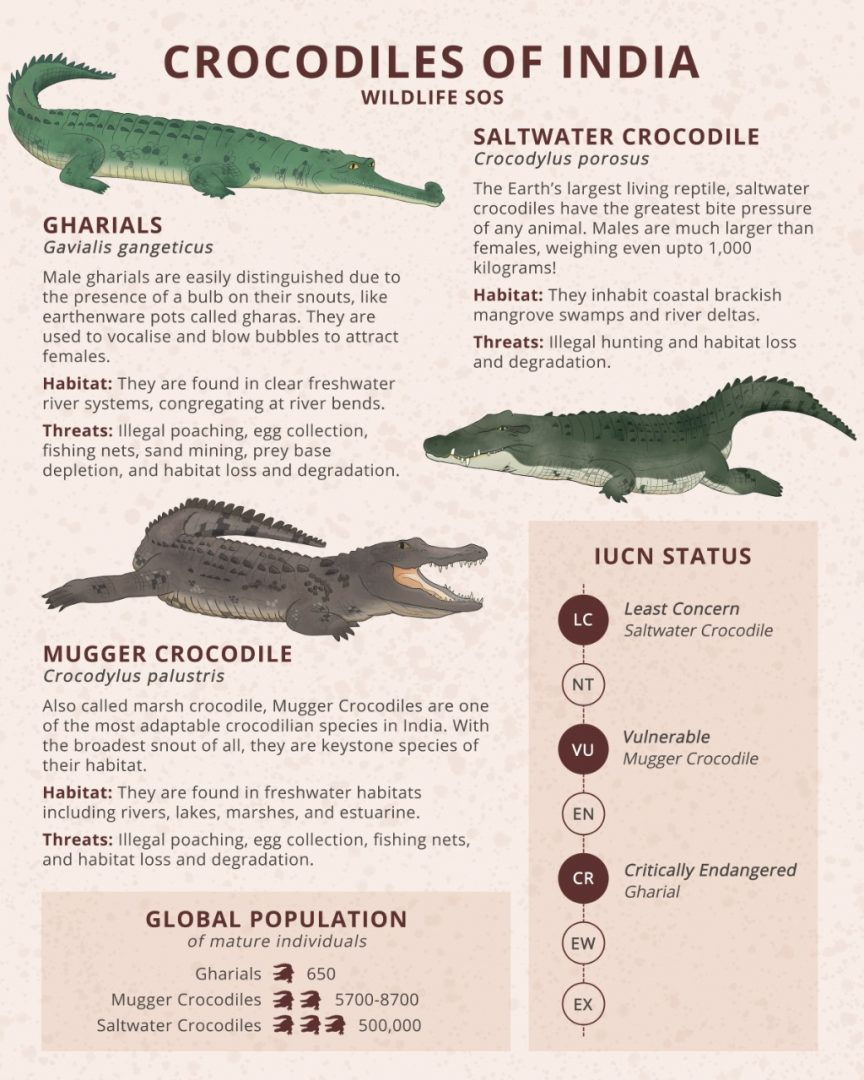
    • The Gharial is a fish-eating crocodile native to the Indian subcontinent.
    • They are a crucial indicator of clean river water.
    • It is also found in the rainforest biome of Mahanadi in Satkosia Gorge Sanctuary, Odisha.
    • Gharials are ‘Critically Endangered’ in the IUCN Red List of Species.
    • The species is also listed under Schedule I of the Wild Life (Protection) Act, 1972.
    • National Chambal Sanctuary along the river Chambal in Madhya Pradesh is the biggest protected area of the species.

    Recent findings of Gharial in Kaziranga

    • Gharials, distinguished by their long, narrow snouts, were believed to have disappeared from the Brahmaputra by the 1950s.
    • The female gharial, initially spotted in 2021, has grown to nearly adult size, providing hope for their reintroduction into the ecosystem.

    PYQ:

    [2013] Consider the following fauna of India :

    1. Gharial

    2. Leatherback turtle

    3. Swamp deer

    Which of the above is/are endangered?

    (a) 1 and 2 only

    (b) 3 only

    (c) 1, 2 and 3

    (d) None

  • Niranjan Panel set up to study Pollution Level in Cauvery

    Why in the News?

    The Karnataka government has formed an expert committee, headed by Niranjan, Chief Environment Officer of Karnataka State Pollution Control Board, to study the pollution level in the Cauvery.

    About Niranjan Panel

    • The panel will review and submit a report within 10 days to ascertain whether the Cauvery River water is polluted due to the inflow of sewage water, solid waste, industrial waste, and other types of pollutants.
    • The Cauvery water has lost its natural quality due to the pollutants and the health of citizens and aquatic animals are being adversely affected.

    About Cauvery River

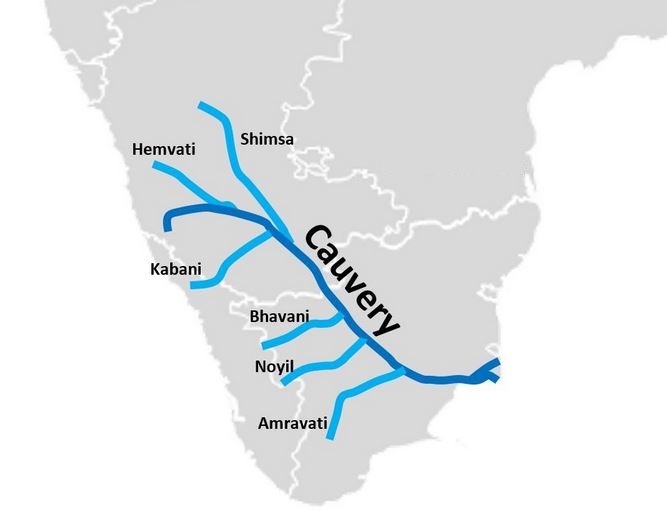
    • The Cauvery River, also spelled as ‘Kaveri’ and known as ‘Ponni’ in Tamil, originates from Talakaveri in the Brahmagiri range located in Karnataka’s Kodagu district.
    • It spans approximately 800 km, traversing through the states of Karnataka and Tamil Nadu, until it eventually reaches the Bay of Bengal.
    • The river’s catchment area covers regions in Tamil Nadu, Kerala, Karnataka, and the Union Territory of Pondicherry.
    • Key tributaries that join the Cauvery include Harangi, Hemavati, Kabini, Suvarnavathi, and Bhavani.
    • It remains perennial due to its dual reliance on both advancing and retreating monsoons for rainfall.
    • Protected areas in its basin: Cauvery WLS,  Biligirirangan Hills WLS,  Pushpagiri WLS,  Muthathi WLS,  Ranganathittu Bird Sanctuary,  Bhimeshwari WLS, Nagarhole NP; Bandipur NP.

    Challenges associated with the Cauvery River:

    • Direct discharge of untreated sewage and domestic waste from towns and cities along the Cauvery contaminates the water, leading to high bacterial loads and nutrient pollution.
    • Industries along the Cauvery, including textiles, dyeing, pharmaceuticals, and others, discharge effluents directly into the river.
    • Pesticides, herbicides, and fertilizers used in agricultural fields adjacent to the river are washed into the Cauvery during rain and irrigation.
    • Unregulated sand mining and dredging activities disrupt riverbeds and banks, altering natural flow patterns and habitat structures.
    • Introduction of non-native species like tilapia and African catfish, initially for aquaculture, has led to their proliferation in the Cauvery.

    Cauvery Water Dispute:

    • Since 1892, tensions existed between British-ruled Madras and Mysore
    • 1924 Agreement aimed to resolve but set the stage for future conflicts. Post-Independence, dam constructions sparked TN appeal
    • Cauvery Water Disputes Tribunal (CWDT) was established
    • Interim orders by the Cauvery River Authority (CRA) in 1998
    • CWDT’s 2013 award allocated water quantities among states
    • Monthly and annual water shares by Karnataka to Tamil Nadu
    • Normal Year, Karnataka must give 177.25 TMC to Tamil Nadu
    • Challenges arise during monsoons due to varying rainfall
    • Article 262 empowers Parliament for inter-state river disputes. The Seventh Schedule defines legislative authority over water resources
    • 2018: Cauvery was termed a “national asset” by SC with river water equality upheld
    • The Cauvery Management Board (CMB) was established by the Court for implementation
    • CWMA and CWRC were established for water regulation and data collection.


    PYQ:

    [2020] Which of the following Protected Areas are located in the Cauvery basin?

    1. Nagarhole National Park
    2. Papikonda National Park
    3. Sathyamangalam Tiger Reserve
    4. Wayanad Wildlife Sanctuary

    Select the correct answer using the code given below:

    (a) 1 and 2 only

    (b) 3 and 4 only

    (c) 1, 3 and 4 only

    (d) 1, 2, 3 and 4

  • EAM Jaishankar attends SCO Summit

    Why in the News?

    External Affairs Minister S Jaishankar addressed the Shanghai Cooperation Organisation (SCO) summit in Kazakhstan’s capital Astana on behalf of Prime Minister Modi.

    About Shanghai Cooperation Organisation (SCO)

    Details
    Introduction
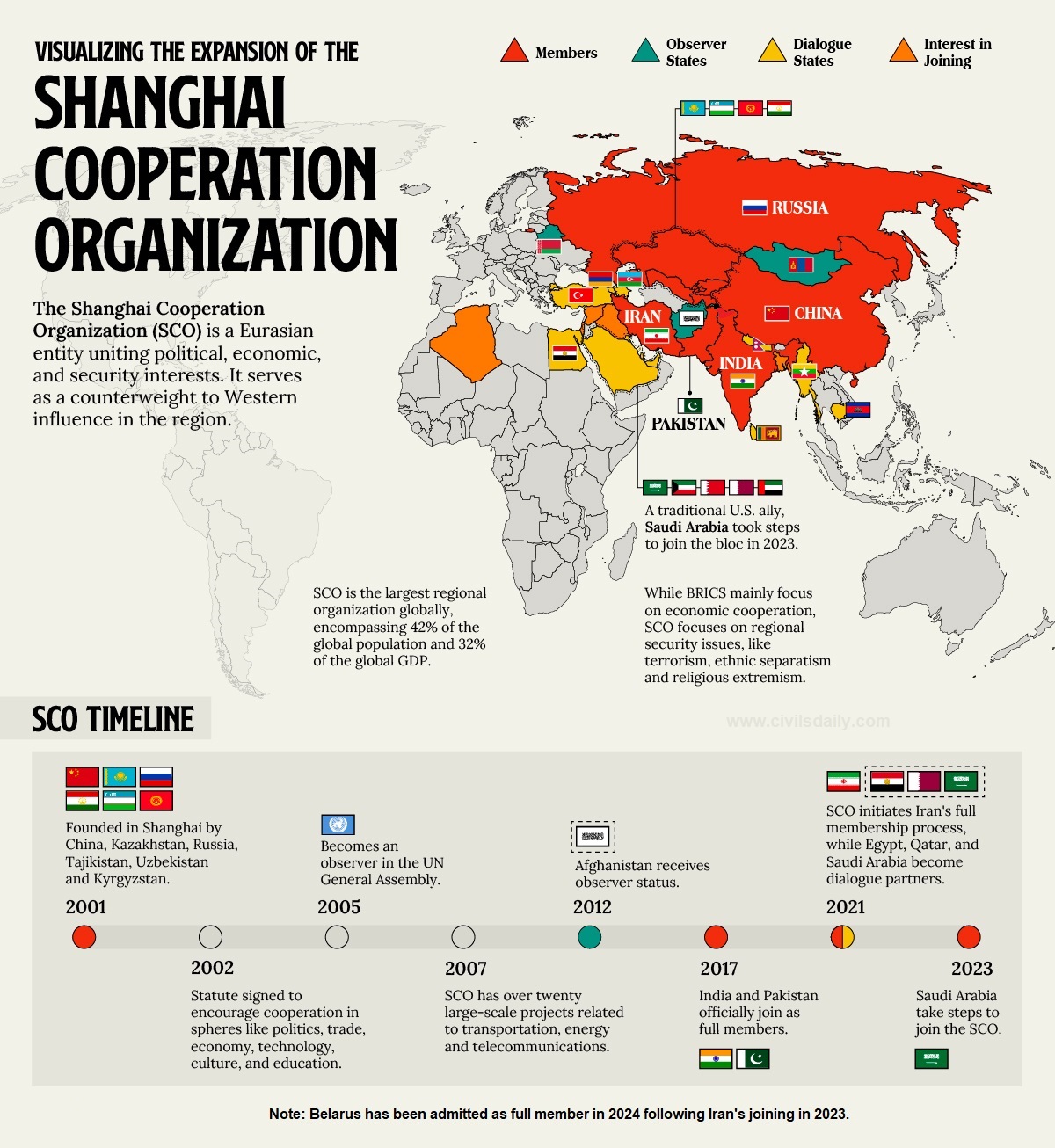
    • Established in 2001 by China and Russia, the SCO is a Eurasian political, economic, and security organization.
    • It spans about 80% of Eurasia and encompasses 40% of the world’s population, with a GDP of around 20% of global GDP as of 2021.
    Origins
    • Successor to the Shanghai Five, formed in 1996 by China, Kazakhstan, Kyrgyzstan, Russia, and Tajikistan.
    • It evolved into the SCO in 2001 with the inclusion of Uzbekistan.
    Expansion
    • India and Pakistan joined in June 2017, followed by Iran in July 2023, and Belarus in July 2024.
    • Several other countries participate as observers and dialogue partners.
    Governance
    • Governed by the Heads of State Council (HSC), the supreme decision-making body that meets annually.
    • Includes the Regional Anti-Terrorist Structure (RATS) as a key component for security coordination.
    Key Structures
    • Heads of State Council: Supreme decision-making body.
    • Heads of Government Council: Discusses multilateral cooperation and approves budgets.
    • Council of Foreign Ministers: Regular meetings on international affairs.
    • Council of National Coordinators: Coordinates multilateral efforts.
    Secretariat
    • Headquartered in Beijing, China, the Secretariat executes organizational decisions, drafts documents, and promotes SCO activities.
    • Secretary-General serves a 3-year term.
    RATS Executive Committee
    • Based in Tashkent, Uzbekistan, RATS fosters cooperation against terrorism, separatism, and extremism.
    • The director serves a three-year term overseeing these efforts.
    Official Languages Chinese and Russian are the SCO’s official languages.
    Key Agreements
    • Treaty on Deepening Military Trust in Border Regions (1996)
    • Treaty on Reduction of Military Forces in Border Regions (1997)
    • Declaration on a “multipolar world” (1997)
    Major Activities
    • Annual summits and meetings across member states;
    • Initiatives in transportation, energy, and telecommunications;
    • Regular gatherings of security, defence, economic, and cultural officials.
    International Relations Established partnerships with various global bodies including the UN, ASEAN, CIS, CSTO, ECO, and CICA, reflecting its broad engagement in regional and international affairs.

    Strategic Significance of SCO for India

    • Open-door for bilateral: Membership facilitates India’s engagement with Central Asian nations and major regional powers like China and Russia on shared security challenges.
    • China-Russia Dynamics: SCO serves as a platform for China and Russia to assert influence and counter Western dominance in international forums.
    • Belt and Road Initiative (BRI) Dispute: India’s stance against endorsing BRI projects through SCO reflects its concerns over sovereignty, particularly regarding CPEC passing through Pakistan-occupied Kashmir.

    About Kazakhstan

    • Kazakhstan is the world’s largest landlocked country and the ninth-largest country by land area, spanning an area of 2.7 million square kilometres.
    • It borders Russia to the north and west, China to the east, Kyrgyzstan, Uzbekistan and Turkmenistan to the south, and the Caspian Sea to the southwest


    PYQ:

    [2022] Consider the following:

    1. Asian Infrastructure Investment Bank
    2. Missile Technology Control Regime
    3. Shanghai Cooperation Organisation

    India is a member of which of the above?

    (a) 1 and 2 only
    (b) 3 only
    (c) 2 and 3 only
    (d) 1, 2 and 3

    [2021] Critically examine the aims and objectives of SCO. What importance does it hold for India?

  • Afforestation in Delhi Ridge

    Why in the News?

    The Delhi High Court is set to physically inspect the Central and Southern parts of Delhi Ridge to assess the extent of afforestation and cutting of trees in the area.

    Deforestation in Delhi Ridge:

    Over 308 hectares of the ecologically sensitive Delhi Ridge area has been encroached and another 183 hectares “diverted” for “non-forestry purposes”. ( Data by Central Empowered Committee (CEC) report to the Supreme Court, 2023.)

    About Delhi Ridge

    • Delhi Ridge is located in the National Capital Territory of Delhi, extending as a northern extension of the ancient Aravalli Range.
      • Composed primarily of quartzite rocks, it spans approximately 35 kilometres from Tughlaqabad in the southeast to Wazirabad in the north along the Yamuna River.
    • Ecological Significance:
      • It acts as the “green lungs” of Delhi, providing crucial ecological services such as carbon sequestration and habitat for wildlife.
      • It protects Delhi from the hot desert winds originating from Rajasthan to the west.
      • It supports diverse flora and fauna, making Delhi one of the world’s most bird-rich capital cities.
      • Efforts are ongoing to maintain biodiversity through biodiversity parks and wildlife sanctuaries like the Northern Ridge Biodiversity Park and Asola Bhatti Wildlife Sanctuary.

    Geographical Features

    • The ridge is believed to be over 1.5 billion years old, making it an ancient geological formation compared to the Himalayas (50 million years old).
    • It functions as a watershed, dividing the Indus Plain to the west from the Gangetic Plain to the east within the Indo-Gangetic Plain.

    Administrative Divisions:

    • Divided into four main zones: Northern, Central, South-Central, and Southern Ridge.
    • Each zone has distinct characteristics and faces varying degrees of urban encroachment and conservation efforts.
  • Issues with ‘mandir’ tag for Ayushman Health and Wellness Centres

    Why in the News?

    Following Mizoram and Nagaland, Meghalaya has also refused to rename its health and wellness centres as Ayushman Arogya Mandirs as per the Centre’s directive.

    Context: Demographic composition of NE and its implications on policy decisions 

    • Christian Majority: About 75% of Meghalaya’s population practices Christianity, similar to the demographics of Mizoram (90%) and Nagaland (90%).
    • State Asserts Autonomy: Meghalaya’s Health Minister emphasized that health being a State subject grants them the right to decide independently of the Centre’s advisory.

    About Ayushman Bharat Health and Wellness Centres (AB-HWCs)

    • AB-HWCs were launched to move away from selective health care to a more comprehensive range of services spanning preventive, promotive, curative, rehabilitative and palliative care for all ages.
    • There are 1.6 lakh such centres across India under this initiative.
    • The National Health Policy of 2017 envisioned these centres as the foundation of India’s health system.
    • The Union Health Ministry renamed AB-HWCs as Ayushman Arogya Mandirs (AAM) with the tagline ‘Arogyam Parmam Dhanam’.
    • States and Union Territories were urged to complete the rebranding by the end of 2023.

    Back2Basics: Ayushman Bharat – Pradhan Mantri Jan Arogya Yojana (PM-JAY)

    Details
    Details
    • World’s largest fully government-funded health insurance scheme.
    • Launched in 2018.
    • Provides Rs 5 lakh per family for secondary and tertiary care.
    Health Benefit Package
    • Covers the cost of surgery, medical and daycare treatments, medications, and diagnostics.
    • 3 days of pre-hospitalisation and 15 days of post-hospitalisation, including diagnostic care and expenses on medicines.
    • No restriction on family size, age or gender.
    • All pre-existing conditions are covered from day one.
    Beneficiaries
    • An entitlement-based scheme targeting beneficiaries identified by the latest Socio-Economic Caste Census (SECC) data.
    • Flexibility for States/UTs to use non-SECC data with a similar socio-economic profile to identify remaining SECC families.
    Financing
    • Jointly funded scheme: 60:40 between Centre and legislature for all States and UTs.
    • 90:10 for North-Eastern States, J&K, Himachal Pradesh, and Uttarakhand.
    • 100% central funding for Union Territories without legislature.
    Nucleus Agency
    • The National Health Authority (NHA) is an autonomous body under the Societies Registration Act, 1860, responsible for the effective implementation of PM-JAY.
    • State Health Agency (SHA) is the apex body of the State Government responsible for implementing AB-PMJAY in the State.


    PYQ:

    [2022] With reference to Ayushman Bharat Digital Mission, consider the following statements:

    1. Private and public hospitals must adopt it.
    2. As it aims to achieve universal health coverage, every citizen of India should be part of it ultimately.
    3. It has seamless portability across the country.

    Which of the statements given above is/are correct?

    (a) 1 and 2 only

    (b) 3 only

    (c) 1 and 3 only

    (d) 1, 2 and 3

  • [5th July 2024] The Hindu Op-ed: Computer literacy in India needs a reboot 

    PYQ Relevance:

    Mains: 
    Q) National Education Policy 2020 isin conformity with the Sustainable Development Goal-4 (2030). It intends to restructure and reorient education system in India. Critically examine the statement. (UPSC CSE 2020) 
    Q) “Demographic Dividend in India will remain only theoretical unless our manpower becomes more educated, aware, skilled and creative.” What measures have been taken by the government to enhance the capacity of our population to be more productive and employable? (UPSC CSE 2016) 

    Prelims:

    Q) Consider the following statements: (UPSC CSE 2018) 
    1. As per the Right to Education (RTE) Act, to be eligible for appointment as a teacher in a State, a person would be required to possess the minimum qualification laid down by the concerned State Council of Teacher Education.
    2. As per the RTE Act, for teaching primary classes, a candidate is required to pass a Teacher Eligibility Test conducted in accordance with the National Council of Teacher Education guidelines.
    3. In India, more than 90% of teacher -5 education institutions are directly under the State Governments.
    Which of the statements given above is/are correct?
    (a) 1 and 2
    (b) 2 only
    (c) 1 and 3
    (d) 3 only

    Note4Students: 

    Prelims: National Education Policy 2020; Digital India Campaign of 2015;

    Mains: Social Issues and Justice; Education; Population; Literacy Rate;

    Mentors Comment: Digital literacy is essential for full participation in India’s rapidly digitizing society and economy. As critical services like banking, healthcare, and government services have become increasingly digitized, the ability to effectively use computers and technology is crucial for accessing these essential services and enhancing quality of life. The COVID-19 pandemic further highlighted the importance of digital skills, from online education to managing financial and medical needs remotely. However, India’s computer literacy rate stands at just 24.7%, with wide disparities between urban and rural areas as well as across age groups and socioeconomic status. Unless serious efforts are made to universalize digital literacy, a significant portion of the population, especially in rural and marginalized communities, will face exclusion from the digital economy and public services. 

    Let’s learn. 

    Why in the News?

    According to the National Family Health Survey (NFHS-5) and National Statistical Office, India still has lower levels of literacy than many other nations, though.

    • The literacy rate is 77.70%, with literate males at 84.70% and literate females at 70.30%,

    Context:

    • The latest NSS survey shows computer literacy in India stands at only 24.7% among individuals aged 15 and above, with rural areas lagging behind at 18.1%. This digital divide puts a significant portion of the population at risk of exclusion from digital public services.
    • The COVID-19 pandemic highlighted the importance of computer and internet access for everyday tasks.
    • Unless serious measures are taken to universalize digital literacy, rural India’s population, which is nearly 70%, will face significant disadvantages in accessing critical services.
    Initiatives taken up by government:

    Digital India campaign in 2015:
    The Digital India campaign launched by the Indian government in 2015 has had a mixed impact on computer literacy rates in the country.
    The campaign aimed to transform India into a digitally empowered society and improve digital infrastructure and services.

    National Education Policy (2020):

    The NEP 2020 lays emphasis on the use of technology to provide high-quality education to students, irrespective of their geographical location.
    Digital education will be an integral part of the curriculum, with a focus on developing digital literacy, critical thinking, and problem-solving skills.

    Present Scenario: Progress of Digital India campaign and present literacy rates in India:

    The Digital India campaign launched by the Indian government in 2015 has had a mixed impact on computer literacy rates in the country:

    • Limited Success: The latest National Sample Survey (NSS) data shows that computer literacy in India remains low at just 24.7% among individuals aged 15 and above .
      • While this represents an increase from 18.4% in 2017-18, the figures still highlight a significant digital divide.
      • In rural areas, computer literacy stands at only 18.1%, compared to 39.6% in urban areas.
      • Nearly 70% living in rural areas, remain excluded from accessing digital services and public amenities.
    • Cohort Effect:
      • Computer literacy peaks at 45.9% among 20-24 year olds, but drops to just 4.4% for 65-69 year olds.
      • Even among younger working-age cohorts (20-39 years), computer literacy is only 34.8% on average.
    • Variations in computer literacy across Indian states:
      • Economically disadvantaged states like Assam, Bihar, Madhya Pradesh have very low rates (under 30%). Prosperous states like Kerala have much higher rates (72.7%)
      • Bridging the digital divide requires sustained efforts by government, private sector and civil society.

    Understanding the Causes:

    • Lack of infrastructure and qualified teachers in schools/colleges for adequate computer training limits job prospects and employment opportunities. It creates a digital divide and skill gap in the job market.
    • Gaps in access and quality of computer education in the formal education system leads to social isolation and financial exclusion from online services.
    • Lack of motivation and access to learning resources among older age groups restricts access to information and resources in the digital age.

    Way Forward: There are some focus areas where we can concentrate:

    • For School level: School education should ensure that all graduating students possess computer literacy skills, as this is crucial to bridge the digital divide. The government should allocate resources towards the training of computer personnel and ensure sufficient staffing levels. 
    • For Old-aged people: For the older population outside the formal education system, targeted programmes are essential.
      • These should involve various institutions, including local governing bodies such as panchayats and non-governmental organisations, to effectively reach and empower older individuals with computer literacy skills. 
    • Quality Control and Monitoring: The government should also conduct a thorough review of such computer literacy and develop strategies to achieve higher literacy and reduce disparities in the coming years. 
  • [4th July 2024] The Hindu Op-ed: Trials, medical ethics and the orbit of power

    [4th July 2024] The Hindu Op-ed: Trials, medical ethics and the orbit of power

    PYQ Relevance:
    Mains: 

    Q) If an amendment bill to the Whistleblowers Protection Act 2011 tabled in the Parliament is passed, there may be no one left to protect. Critically Evaluate. (UPSC CSE 2015) 

    Q) With consideration towards the strategy of inclusive growth, the new Companies Bill, 2013 has indirectly made CSR a mandatory obligation. Discuss the challenges expected in its implementation in earnest. Also, discuss other provisions in the Bill and their implications. (UPSC CSE 2013) 

    Note4Students: 

    Prelims:  Whistleblowers Protection Act 2011,

    Mains:  Ethical issues in the Medical sector,

    Mentor comment: On January 10, 2021, Rashida Bee, Nawab Khan, Rachna Dhingra, and Nausheen Khan alleged ethical violations in Bharat Biotech’s Covaxin trial at People’s Hospital, Bhopal. They cited informed consent breaches, enrollment of vulnerable groups, non-reporting of adverse events, and inadequate participant monitoring. They demanded intervention to halt the study and independent investigation. The outcome of their letter remains undisclosed.

    Let’s learn!

    __

    Why in the news? 

    In India, the primary safeguards intended to prevent medical ethics abuse are ineffective.

    What are the Primary safeguards?

    • Primary safeguards are fundamental measures or systems put in place to prevent unethical practices and ensure ethical standards are maintained.
    • These safeguards are designed to protect individuals and maintain integrity within processes, such as clinical trials.
    • They typically include regulatory frameworks, oversight committees, informed consent procedures, transparency requirements, and accountability mechanisms.

    Ethical Abuse 

    • Allegations of Ethical Violations in Covaxin Trial: Irregularities and ethical violations were alleged in the Covaxin clinical trial conducted by People’s Hospital in Bhopal, Madhya Pradesh. Violations included lack of informed consent, enrollment of vulnerable populations, non-reporting of adverse events, and inadequate monitoring and follow-up.
    • Regulatory Approval and Ethical Guidelines before the completion of Phase III study: The Indian drug regulator, Central Drugs Standard Control Organisation (CDSCO), approved Covaxin for “Restricted Use under Clinical Trial Mode” before the completion of its Phase III study.This approval process was not defined in India’s Drug Regulatory Framework, creating ambiguity and potential ethical lapses.
    • Lacking in the effectiveness of Ethics Committees: Ethics committees at trial sites are meant to oversee and ensure ethical conduct in clinical trials. There were issues with the effectiveness of these committees, with allegations of gross violations of ethics guidelines.
    • Whistle-blowers show the various incidents of ethical violations: Whistle-blowers play a crucial role in exposing ethical violations in medical experimentation.  Carl Elliott’s book, “The Occasional Human Sacrifice,” details various incidents of ethical violations in medical trials, highlighting the courage required to speak out.

    Innovative therapies and ethics

    • Balancing Risk and Benefit: Developing life-saving medicines involves a delicate balance between the potential risks to patients and the projected benefits of the therapeutic candidate. This process requires specialised knowledge and experience to make informed decisions, which is often lacking, leading to ethical challenges.
    • Lack of Expertise in Clinical Development: India has a strong generic drug manufacturing industry but lacks deep expertise in developing innovative therapies. The management of clinical development is often overseen by medical doctors who may not have specialized knowledge in drug development, leading to ethical violations and inadequate oversight.
    • Ethical Violations in Pandemic Response: During the COVID-19 pandemic, there were examples of medical ethics being compromised, such as unrealistic projections of case numbers and the creation of terms like “emergency use authorization in clinical trial mode” to justify premature decisions. These actions highlight the need for better guardrails and ethical standards in managing the development and approval of new therapies.

    Indian Patients and Clinical Studies

    • Violation of Informed Consent: There is a historic and repeated violation of informed consent in India, with poor and uneducated patients being enrolled in clinical studies without being fully informed of potential harm. Ensuring informed consent falls under the responsibility of institutional ethics committees, whose effectiveness is often questionable.
    • Ineffectiveness of Institutional Ethics Committees: Despite existing on paper and in regulations, the functioning and effectiveness of institutional ethics committees in India are patchy. A study by Gayatri Saberwal et al. (2022) identified numerous issues, such as clinical trials without ethics committees and trials with more sites than functional ethics committees.
    • Abuse of Regulations by the Industry: A significant abuser of these regulations is a section of the industry promoted by the Ministry of AYUSH, which conducts poorly designed and executed clinical studies with zero oversight. These studies often aim to provide a veneer of scientific validity to various concoctions without proper ethical standards.
    • Comparison with Western Systems: Even well-designed and well-run systems in the West face challenges in maintaining checks and balances on accountability. India’s systems are far from achieving the same level of function and effectiveness, highlighting a significant gap in ethical standards and accountability in clinical studies.

    Way forward: 

    • Enhancing Training and Oversight: Provide specialized training for members of institutional ethics committees to ensure they have the necessary knowledge and skills to oversee clinical trials effectively. Regular audits and monitoring should be conducted to assess the performance and adherence to ethical guidelines.
    • Independent Audits: Conduct independent audits of clinical trial sites and ethics committees to ensure compliance with ethical standards and regulatory requirements. Establish clear consequences for non-compliance to deter unethical practices.
    • Clear Guidelines and Definitions: Define clear regulatory pathways and guidelines for clinical trials, including terms like “Restricted Use under Clinical Trial Mode.” This will reduce ambiguity and ensure consistent application of ethical standards.
  • Why stampedes take place?   

    Why in the news?

    On Tuesday, July 2, a stampede during a religious gathering in Uttar Pradesh’s Hathras district resulted in the tragic deaths of at least 121 individuals, predominantly women.

    What is a Stampede?

    A stampede is an impulsive mass movement of a crowd that often results in injuries and deaths.It disrupts the orderly movement of crowds, leading to injuries and fatalities, often triggered by panic, perceived danger, or the pursuit of something gratifying.

    Why do Stampedes Kill?

    • Primary Cause: Most stampede casualties result from traumatic asphyxia, where external compression of the chest or abdomen restricts breathing.
    • Other Causes: Include myocardial infarction (heart attacks), direct crushing injuries, head injuries, and neck compression.

    How Does Human Psychology Lead to Stampedes?

    • Panic and lacking in Cooperation: In panic-inducing situations, cooperative behavior is initially beneficial, but if disrupted, can lead to chaotic actions like pushing and shoving.
    • Positive Wish-Fulfillment Beliefs: A collective belief, rational or irrational, can mobilize large groups into actions that may compromise individual safety.

    How Does the Physical Organization of Spaces Contribute to Stampedes?

    • Factors Contributing to Stampede Risks: Lack of light, poor crowd flow management, structural collapses, blocked exits, and inadequate design of hardware (like doors and barriers) increase stampede risks.
    • Crowd Density: High density can lead to prolonged evacuation times and increased panic.

    How to Better Prevent or Mitigate Stampedes?

    • Planning and Design: Ensure adequate exit points relative to crowd size, improve crowd flow management, and use technologies for real-time crowd monitoring.
    • Communication and Coordination: Effective communication between organizers and attendees is crucial for issuing warnings and managing crowd movements.

    Notable Deadly Stampedes and Their Causes:

    • Moscow, Russia (1896): Rumors of souvenir shortages led to a deadly surge.
    • Allahabad, India (1954): Lack of crowd control and barriers led to a surge at the Kumbh Mela.
    • Lima, Peru (1963): Tear gas used during a football match triggered panic in enclosed spaces.
    • Wai, India (2005): Slippery steps during a pilgrimage resulted in a tragic stampede.

    Way forward: 

    • Crowd Monitoring Systems: Implement technologies such as CCTV cameras, crowd density sensors, and real-time monitoring software to detect and respond to overcrowding or sudden surges in crowd movement.
    • Communication Systems: Establish robust communication networks between event organizers, security personnel, and attendees. Use public address systems and mobile alerts to convey emergency instructions and warnings promptly.
    • Emergency Response Plans: Develop and rehearse comprehensive emergency response plans that include rapid evacuation procedures, medical assistance points, and coordination with local emergency services.
  • Factory accidents, a pointer to rusty inspection reform  

    Why in the news?

    In May 2024, an explosion at a reactor in a chemical factory within the Dombivli Maharashtra Industrial Development Corporation (MIDC) area caused fatalities and injuries among workers and local residents.

    Present Scenario in India       

    • India continues to witness frequent fatal industrial accidents, often due to non-compliance with safety regulations, inadequate inspections, and compromised safety practices.
    • Recent incidents, such as the Dombivli MIDC chemical factory explosion, highlight the recurring nature of these accidents and their devastating impact on lives and infrastructure.
    • There is a significant disparity between the number of registered factories and the inspection rates across states like Maharashtra, Gujarat, and Tamil Nadu.

    Causes of fatal industrial accidents   

    • Non-compliance with Safety Regulations: Many industrial accidents occur due to the failure of companies to adhere to mandated safety regulations and standards. Examples include improper maintenance of machinery, lack of safety equipment, and inadequate training of personnel in handling hazardous materials.
    • Inadequate Maintenance and Inspection Practices: Poor maintenance of industrial equipment and facilities can lead to malfunctions and accidents. Insufficient or irregular inspection practices contribute to undetected hazards and safety violations that increase the risk of accidents.
    • Human Error and Unsafe Practices: Accidents often result from human errors such as negligence, fatigue, or lack of training. Unsafe work practices, including shortcuts taken to save time or reduce costs, can compromise safety standards and escalate the likelihood of accidents.

    Need for the right reforms 

    • Strengthening Regulatory Framework: Reforms should focus on updating and strengthening safety regulations to align with international standards and best practices. There is a need to close loopholes and ambiguities in existing laws to enhance clarity and enforceability.
    • Improving Inspection and Enforcement: Enhancing the capacity and effectiveness of regulatory bodies responsible for inspecting industrial facilities. Increasing the number of qualified inspectors, improving their training, and implementing advanced inspection techniques like digital monitoring and real-time compliance checks.
    • Promoting Transparency and Accountability: Establishing transparent mechanisms for reporting and investigating industrial accidents to identify root causes and prevent recurrence.

    What can be the solution? (Way forward)

    • Enhanced Regulatory Oversight: Strengthening and strictly enforcing safety regulations and standards across all industries. Regular updates to ensure regulations are comprehensive, up-to-date with technological advancements, and aligned with international best practices.
    • Improving Inspection and Compliance: Increasing the number of qualified inspectors and improving their training and capabilities.Implementing regular and surprise inspections using modern technologies such as digital monitoring and remote sensing to ensure compliance with safety standards.
    • Promoting Safety Culture: Encouraging a proactive safety culture within industries through training, awareness programs, and incentives for compliance.

    Mains PYQ: 

    Q What is the significance of Industrial Corridors in India? Identifying industrial corridors, explain their main characteristics. (UPSC IAS/2018)

  • An overview of the French elections

    Why in the news? 

    On June 30, during the first phase of the French elections called after President Emmanuel Macron unexpectedly dissolved parliament, the far-right National Rally (RN) and its allies emerged as frontrunners with a 33% vote share.

    Why did French President Emmanuel Macron decide to dissolve parliament and call for snap elections?

    • Strategic Decision: Macron dissolved parliament three years early to seek a clear majority for governance. His centrist bloc suffered a major defeat in the European Parliament elections against the RN. The decision aimed to consolidate votes against the rising far-right influence.
    • Low Approval Ratings: Macron’s approval ratings plummeted to 36%. The snap election was seen as a gamble to prevent the RN from gaining more power.

    How did the far-right National Rally become so popular?

    • Rebranding and Policy Changes: Under Marine Le Pen, the RN rebranded from the National Front (FN). The party softened its stance on extreme policies, like leaving the EU.
    • Response to Societal Issues: Capitalized on fears of cultural clashes, cost-of-living crises, and dissatisfaction with Macron’s policies. Opposed immigration and advocated for ‘national priority’ policies favoring French citizens in social services.
    • Political Strategy: Increased its presence in provincial towns and among blue-collar workers. Rose from 7 seats to 89 in the French parliament in 2022, aiming for 240-300 seats now.

    How are the two rounds of elections conducted in France?

    • First Phase: Equivalent to a qualifying round where candidates need at least 12.5% of locally registered votes.Candidates who get more than half the votes win outright.
    • Second Phase: Candidates meeting the qualifying criteria move to the second round. Common practice of ‘horse-trading’ where parties form alliances to avoid splitting votes.
    • Overall Structure:577 seats in the French parliament. A party needs 289 seats for an absolute majority.

    Why have left-wing parties also formed a bloc?

    • Republican Front Strategy: Centrist and left-wing parties team up to prevent right-wing parties from gaining power.Formation of the New Popular Front is a reference to the 1936 alliance against far-right rioters.
    • Electoral Tactics: Over 200 candidates from centre and left alliances have dropped out to consolidate votes against the RN. Aimed at countering the RN’s rise and preventing fragmentation of the anti-RN vote.
    • Challenges and Unity: Presence of controversial leftist figures like Jean-Luc Mélenchon has made the unity fragile.Despite internal differences, the bloc aims to present a united front against the far-right surge.

    Conclusion: The rise of the far-right National Rally in France may lead to stricter immigration policies, affecting Indian students, workers, and diaspora. Economic relations could face uncertainties, impacting trade and bilateral cooperation. So,India’s diplomatic strategies may need adjustments to navigate the changing political landscape in France.

    Mains PYQ: 

    Q Critically examine the procedures through which the Presidents of India and France are elected. (UPSC IAS/2022)

  • Why has SEBI accused Hindenburg of breaking Indian law?  

    Why in the news? 

    Hindenburg Research received a SEBI show cause notice for short-selling Adani Enterprises Ltd stock before and after their report accusing Adani of fraud.

    What is the Hindenburg Report on Adani?

    • On January 24, 2023, the New York-based Hindenburg Research accused the Adani Group of “brazen stock manipulation and accounting fraud scheme over the course of decades.”
    • The report led to a significant drop in the shares of Adani companies and the calling off of Adani Enterprises Ltd’s Rs 20,000-crore follow-on Public Offer (FPO). Adani Group denied all allegations, claiming the report was a “calculated attack on India.”

    What is SEBI’s show cause notice about?

    • Hindenburg received a show-cause notice from SEBI on June 27, 2024.SEBI alleged that Hindenburg colluded with certain entities to use non-public information to short-sell Adani Enterprises Ltd (AEL) stock before and after the release of its report, making profits.
    • The notice named Hindenburg, its founder Nathan Anderson, investor Mark Kingdon, and related entities, accusing them of sharing the report draft and building short positions in AEL futures.

    How has Hindenburg responded to the show cause notice?

    • Hindenburg dismissed the notice as an attempt to silence those exposing corruption. They stated their investment stance was legal and disclosed, and criticized SEBI for targeting them instead of investigating the Adani Group’s alleged malpractices.
    • Accusations: Hindenburg accused SEBI of pressuring brokers to close short positions in Adani stocks to protect the stock prices.

    Where does Kotak come into this picture?

    • Involvement of Kotak: SEBI’s notice did not name Kotak Bank, which Hindenburg claims created the offshore fund structure used for shorting Adani stocks.
    • Response: Kotak Mahindra Bank stated that Hindenburg has never been a client and that their KYC procedures were followed with regard to clients, with investments made by Kingdon as a principal.

    How much profit did Hindenburg earn by short selling Adani stocks?

    • Revenue: Hindenburg earned approximately $4.1 million in gross revenue through gains related to Adani shorts from its investor relationship.
    • Own Short Position: Hindenburg made about $31,000 from their short of Adani US bonds.After legal and research expenses, Hindenburg indicated they might only slightly come out ahead of break-even on their Adani short.

    Way forward: 

    • Conduct Investigation: SEBI should initiate an independent, comprehensive investigation into the allegations against both Adani Group and Hindenburg Research. This investigation should be conducted by a neutral third party to ensure impartiality and transparency.
    • Policy Review: SEBI could review and possibly update its regulations on short-selling and market manipulation to prevent similar incidents in the future. This could include stricter disclosure requirements for short sellers and enhanced monitoring of market activities.

    Mains PYQ: 

    Q The product diversification of financial institutions and insurance companies, resulting in overlapping of products and services strengthens the case for the merger of the two regulatory agencies, namely SEBI and IRDA. Justify.(UPSC IAS/2013)

  • What makes mosquitoes suck blood?

    Why in the News?

    A study published in the Proceedings of the National Academy of Sciences (PNAS) 1 has suggested that a pair of hormones work together to activate or suppress mosquitoes’ blood cravings.

    Mosquito Species and Behavior

    • There are around 3500 mosquito species globally, found on every continent except Antarctica.
    • Female mosquitoes consume blood to aid in egg development.
    • After feeding, female mosquitoes lose their appetite for blood until they lay their eggs.

    Research by Michael Strand and Team

    • Strand observed that levels of the mosquito gut hormone F (NPF) spiked when mosquitoes were seeking a host and dropped after feeding.
    • Their study analyzed mosquito enteroendocrine cells responsible for gut hormone production.
    • Hormonal Mechanisms:
      • NPF levels increased before blood meals and decreased six hours after feeding.
      • Another gut hormone, RYamide, was found to influence mosquitoes’ blood lust. As NPF levels decreased after a blood meal, RYamide levels increased, and vice versa.
      • The researchers concluded that NPF and RYamide work together to regulate mosquitoes’ attraction to humans and other hosts.

    Implications of the Study

    • Controlling the Deadliest Animal: Mosquitoes are the deadliest animal on the planet, acting as vectors for diseases such as malaria, dengue, West Nile virus, yellow fever, Zika, chikungunya, and lymphatic filariasis, which collectively kill more people than any other creature.
    • Pesticide Development: The discovery could lead to new pesticide targets for preventing mosquito reproduction and disease transmission.

    Note: Mosquitoes are responsible for over 1 million human deaths per year worldwide. They transmit deadly diseases like malaria, yellow fever, dengue, and Zika virus

    PYQ:

    [2023] ‘Wolbachia method’ is sometimes talked about with reference to which one of the following?

    (a) Controlling the viral diseases spread by mosquitoes
    (b) Converting crop residues into packing material
    (c) Producing biodegradable plastics
    (d) Producing biochar from thermo-chemical conversion of biomass

  • Universe had Spiral Galaxies 4 billion years sooner than expected: Study

    Why in the News?

    A new study has revealed more spiral galaxies in the universe’s youth than astronomers had previously expected.

    Universe’s Age and Galaxy Types

    • The universe is about 13.8 billion years old and hosts various kinds of galaxies, from spiral to elliptical.
    • Astronomers believed spiral galaxies formed about 6 billion years ago, but the new study calls this into question.
    • Younger galaxies tend to spiral, while older ones have a variety of shapes, making the study of older galaxies more challenging due to fainter light.

    Back2Basics: Spiral Galaxy

    • Spiral galaxies are a type of galaxy characterized by their spiral structure.
    • They are among the most common types of galaxies in the universe.
    • Our own Milky Way is a classic example of a spiral galaxy.

    Key Characteristics:

    • Central Bulge: A dense, spherical structure at the centre composed mainly of older stars.
    • Disk: Surrounding the bulge is a flat, rotating disk of stars, gas, and dust. The disk contains younger stars and spiral arms.
    • Spiral Arms: These are the defining features, winding outward from the central bulge. The arms are sites of active star formation and appear brighter due to the presence of young, hot stars.
    • Halo: A roughly spherical region surrounding the disk, containing old stars and globular clusters.

    Formation and Evolution:

    • Spiral galaxies are thought to form from the gravitational collapse of gas and dust in the early universe.
    • They maintain their structure through the rotation of the disk and the gravitational influence of the central bulge and halo.
    • Interactions and mergers with other galaxies can distort or destroy their spiral structure, potentially transforming them into elliptical galaxies.

    Formation of Galaxies

    • As the universe cooled from a dense plasma state, hot gas formed clumps that became galaxies.
    • These early galaxies had irregular shapes and lacked disks.
    • Spiral Formation Theory:
      • The traditional theory suggested that it took billions of years for hot, thick disks to become thinner and form spiral arms.
      • The new study suggests that cooling and spiral formation occur around the same cosmic time.

    How is this verified?

    • Astronomers observe star formation in real time but study galaxy evolution through “astronomical archaeology.”
      • Understanding the fraction of spiral galaxies helps astronomers trace the biography of galaxies.
      • Infrared and optical wavelengths are used to detect early galaxies, requiring powerful telescopes due to the faint light of older galaxies.
    • Study Methodology:
      • The University of Missouri team used the JWST to study 873 galaxies and identified at least 216 spiral galaxies, some dating to 1.5 billion years after the universe’s birth.
      • Each of the six authors classified the images as spiral or non-spiral, ensuring the result is free of human bias.

    Findings and Implications

    • The fraction of spiral galaxies increased from about 8% to 48% between 3 billion and 7 billion years after the Big Bang, higher than previously observed.
    • The study challenges existing models and suggests that galaxy formation theories need to be more complex.

    PYQ:

    [2022] Launched on 25th December, 2021, James Webb Space Telescope has been much in the news since then. What are its unique features which make it superior to its predecessor Space Telescopes? What are the key goals of this mission? What potential benefits does it hold for the human race?

More posts