💥UPSC 2026, 2027, 2028 UAP Mentorship (March Batch) + Access XFactor Notes & Microthemes PDF

Search results for: “”

  • Life of an IFS officer: An anonymous in-service officer talks it out


    These are excerpts from an AMA (Ask me anything) session at Reddit held about three years ago (2012). The IFS officer kept his identity a secret (for it’ was a small cohort of 800 odd servicemen, everyone knew everyone and he wanted to be at ease!)

    He had given a proof of his identity to the mods at Reddit so be assured over the veracity of the claims made.

    Here are some of the choicest questions from the sessions which would give you an honest sneakpeak into the life and times of an IFS officer:

    #1. How much you earn in salary and above the table?

    Check out the Sixth Pay Commission figures. That’s what we earn. When we are posted abroad, there is a Cost of Living Allowance, but that’s not much to write home about. Any decent IT worker earns more than civil servants. IFS officers don’t get much, if any, money under the table. Our property returns are now online on the Ministry website. Feel free to take a look.

    In a developed country, it would be somewhere around $3000 at the junior IFS level (Second Secretary) and around $8000 for the senior-most IFS officer (Ambassador) in the Embassy. These are approximate figures. These numbers are based on a Cost of Living Index prepared and updated by the UN. As you can see, these are decent allowances, but nothing special. Please do remember that we don’t get cars or servants or all sorts of other freebies that people imagine us to be getting.

    #2. What kind of cultural training do you need to undergo before placement in a new country? How does it affect family?

    Each IFS officer learns one foreign language before he/she is confirmed into the service. This training is provided in the country where the language is spoken. Beyond this, there is no formal cultural training. The Foreign Service Institute in Delhi has some training courses for young inductees on diplomatic etiquette etc. but it is quite basic.

    Family life is hard. Most of the younger officers are married to highly qualified spouses who want to work. It isn’t always possible. Some countries don’t allow diplomatic spouses to work, some allow but the specific jobs are hard to find, and some have barriers like language.

    #3. How corrupted is Government Service? How best can we eliminate it?

    IFS is not very corrupt. Perhaps because we don’t have much political interference, but mostly because we don’t have huge budgets and spending programmes controlled by the Ministry. To eliminate corruption, we need to have more transparency. I wish people would use the RTI more, and use it more effectively. We also need to cut down the government size at the lower levels (looking at you, Railways) and increase the numbers at the higher, executive levels.

    The average District Magistrate or Police Superintendent is way too overworked. Even if he were 100% honest himself, the system is too heavy and too complicated for him to deliver great results. Once you have a lighter government, you can also afford to pay a living wage to such executive officers. But with millions of peons and assistants with little work and strong unions, you can’t pay the higher ups without increasing their pay as well. And that breaks the government coffers.

    #4. China is said to be establishing very strong links with several sub-saharan countries to establish a stranglehold over their resources. Are we also planning/doing the same?

    Our companies try to do what they can. ONGC (through OVL) is quite active. Some private companies too. But this is not a game in which we can compete with China. Their companies are government controlled and can execute projects at short notice with whatever money the government asks them to put in. Our system is very different. There are also reports of dissatisfaction with Chinese investment, because their infrastructure is aimed at their own projects and creates temporary jobs for Chinese immigrant labour for most part. Locals don’t get as much benefit as the headline figures of Chinese “investment” suggest.

    #5. Tell about the worst story being “middle management” IFS civil servant

    Some politicians are okay on their own, but their hangers-on are quite terrible – demanding that they be gives cars 24/7 when abroad and that their shopping bills be paid by the IFS officers accompanying them or that their bags be carried by the IFS officers. I have refused such demands. Many get pissed. Some have complained to my bosses. But I do my job well, and haven’t yet had to apologize for doing the right thing.

    Senior IAS officers on foreign tours are the worst, in terms of the % of bad eggs they seem to have. Worse than politicians, because politicians often have local contacts who take care of their demands. IAS officers usually don’t, so they make demands of the Embassies, treating Embassies like their personal fiefdoms in the districts. It doesn’t work with me, but I know colleagues who have had to grin and bear it.

    #6. Does anyone indulge in Insider trading and stuff considering you guys have access to certain info before the general public does?

    I once invested in a company after meeting the CEO and being very impressed by him. The stock promptly tanked soon 🙂 I’ve been I index funds since. Can’t rule out insider trading by others but the information companies share with us isn’t always market moving.

    #7. Is India really serious about a permanent seat in the UNSC? What are its chances given it has not signed the NPT?

    We are serious, but we know that it will happen not because of our lobbying but because we are considered important enough in the international system. When that happens, we’ll get it. It is still important to lobby though, because if we don’t, then it is not going to come our way. NPT is a non issue at this point. Outside of some academicians, nobody really cares about it. World politics has moved on.

    #8. Look East or Look West. Or both?

    “Railway line ko cross karne se pehle hamesha dono taraf dekhein” 🙂 Look both ways, of course. Look everywhere. Then assign a buzzword to it to generate enthusiasm.

    #9. Is there really a long term vision for India’s foreign policy? Please say yes. Really? What is our end game? How are we going to play ball with US and China especially?

    We will deal with US and China both. We have to. There are issues on which India and China agree and work very closely together (e.g. climate change). Same goes for the US. Same for Russia and any other country. With the collapse of ideologically shaped foreign policies, countries now are much closer to the idea of interest-based foreign policies. You know the saying: no friends, only interests.

    #10. If you have to choose between IASIPSIFS right now, what would be your preference? Please don’t be diplomatic(HAH!).

    I would choose IFS again. The IAS/IPS have a very limited world view and a small arena of action for most of their careers. They also get to deal with the worst of the politicians, and they have to handle people in masses. I prefer interacting with smaller groups of people. I like international affairs, and I like to think in terms of “what does it mean for India” rather than “what does it mean for district ABC”.

    The Q&A was picked up from this AMA @Reddit.
  • Prelims tit-bits- Polity part 2

    1. Emergency provisions

    • Taken from Wiemar constitution
    • A national emergency(art 352) can be proclaimed due to war, external aggression or armed rebellion not on the ground of internal disturbance)
    • though the proclamation of national emergence requires the approval of both the houses (special majority), lok sabha’s approval( simple majority) alone suffices for revocation
    • president can unilaterally revoke the proclamation of national emergency without the parliament’s approval

    Discuss-  differences b/w article 358 and 359 related to emergency

    2. Interim budget and vote on account

    • Vote on account is a statement of only expenditures while the interim budget is a complete set of accounts, including both expenditure and receipts <think of it as mini budget>
    • Vote on account is passed every year before appropriation bill is passed <generally for 2 months >
    • Interim budget is passed during election years
    • Interim budget also contains vote on accounts <before appropriation bill of interim budget is passed>

    Discuss– everything clear?? Any confusions??

    3. Primacy of LS over RS

    • Money bill- introduced only in LS, RS can only suggest amendments that too w/i 14 days
    • A resolution for the discontinuation of national emergency can be passed only by LS by simple majority.
    • Adjournment motion and no confidence motion can be passed only in LS.
    • Estimates committee draws members solely from LS. It has 30 members, largest committee of parliament.
    • Speaker and in the absence of speaker, deputy speaker presides over joint sitting

    Discuss-any other instance of primacy of LS over RS

    4. Money bill v/s financial bill

    • Money bill (art 110)  provisions related to only taxations, borrowings, expenditure etc i.e money matters only
    • Financial bill type A- money provisions plus other general provisions
    • Financial bill type B- expenditure from consolidated fund plus other provisions
    • Money bill can be introduced only on recommendation of president, in the LS and only by a minister (not by pvt member). RS can only suggest amendments that too w/in 14 days thus no scope of joint sitting, President can not resend the bill to the house <though he is not bound to give his consent>. Speaker certifies the bill as money bill and certification is final
    • Financial bill type A- just like money bill till introduction, after introduction, it’s ordinary bill i.e RS has to pass the bill and can reject it
    • Financial bill Type B- totally ordinary bill just that president recommends consideration of bill by both the houses <as it involves expenditure from CFI>

    Note 1– All financial bills are not money bills but vice versa is true

    Note 2- Finance bill and financial bills are not one and the same. What’s the difference?

    5. Rajya Sabha

    • RS chairperson is not member of RS <VP >
    • Deputy chairperson is member of RS
    • In joint sittings when both speaker and deputy speaker are absent, deputy chairperson presides the sessions not chairperson
    • Term of RS is not 6 years <it’s infinite>
    • Term of a member of RS is 6 years while that of chairperson RS 5 years


  • All that you need to know about the Indira Gandhi Matritva Sahyog Yojana

    Indira Gandhi Matritva Sahyog Yojana (IGMSY) is a conditional maternity benefit scheme.

    It is being implemented using the platform of Integrated Child Development Services (ICDS) Scheme.

    This scheme is for the pregnant and lactating women of 19 years of age or above for first two live births to contribute to a better enabling environment by providing conditional cash transfer for improved health and nutrition and to also promote health and nutrition seeking behaviour in them.

    It provides a partial wage compensation to women for wage-loss during childbirth and childcare and to provide conditions for safe delivery and good nutrition and feeding practices.

    It provides cash maternity benefit to the women. The pregnant women of 19 years of age and above is entitled to a cash incentive of Rs. 4000 in three installments for first two live births.

    Eligibility criteria?

    1. Pregnant Women & Lactating women of 19 years of age and above for their first 2 live births.
    2. Women hve to register pregnancy at the Anganwadi centre (AWC) within four months of conception
    3. Women have to register the birth
    4. All Government/PSUs (Central & State) employees are excluded from the scheme as they are entitled for paid maternity leave

    IGMSY was launched in 2010. What are some of the issues that plague its implementation?

    • Leveraging the Integrated Child Development Scheme’s (ICDS) platform, in 2010, the IGMSY programme was piloted in 53 districts across the country
    • In September 2013, the IGMSY cash incentive was increased from Rs. 4,000 to Rs. 6,000 to comply with the minimum maternity entitlement provision of the National Food Security Act (NFSA), 2013

    The causes for poor implementation are invariably the same:

    1. It was found that most beneficiaries were unaware or misinformed about the scheme.
    2. Under the IGMSY, cash is only deposited into an account. Opening and accessing accounts is often expensive and time consuming because banks and post offices are often far from villages.
    3. IGMSY guidelines specify that the accounts should have to be zero-balance no-frill accounts. Here again, the misinformation proved to be the menace
      • Since women were unaware, they were asked to cough up and maintain a minimum deposit which went against the incentive of opting for the scheme
    4. In few of the study states – there was a delay in payment by up to 1 year. Such delays undermine the objective of the scheme — to provide partial wage compensation during pregnancy to enable adequate rest.

    What’s required to get things in order?

    You will invariably find that the solution to the mal-implementation of any govt. scheme lies in these 4 pillars. Might as well memorise them for a generic answer template:

    1. Awareness building,
    2. Establishment of implementation cells,
    3. A responsive grievance redress mechanism and
    4. A publicly accessible management information system
  • 5 dedicated schemes on Protection of Women

    The Union Ministry of Women and Child Development is implementing following schemes for protection of women:

    #1. Swadhar and Short Stay Homes to provide relief and rehabilitation to destitute women and women in distress.

    The Schemes, Swadhar and Short Stay Homes have been merged and revised as “Swadhar Greh” Scheme.

    #2. Ujjawala Homes for rehabilitation of victims of trafficking for commercial sexual exploitation.

    Note: Do not confuse this with PM Ujjawala scheme – The Rs. 8,000 crore scheme to provide 5 crore free LPG connections to Below Poverty Line (BPL) families using the money saved from 1.13 crore cooking gas users voluntarily giving up their subsidies.

    #3. Working Women Hostels for ensuring safe accommodation for working women away from their place of residence.

    #4. One Stop Centre to provide integrated support and assistance to women affected by violence. Read the full coverage, here.

    #5. Scheme for Universalisation of Women Helpline intended to provide 24 hours immediate and emergency response to women affected by violence.

    Taking the case for Universalisation of women helpline further:

    source

    According to the latest National Crime Records Bureau data, during the year 2013, 3,09,546 incidence of crime against women (both under Indian Penal Code and other laws) were reported as against the 2,44,270 cases reported during 2012, showing an increase of 26.7% over the previous year.

    What are the gaps in the existing emergency response system?

    #1. Lack of centralised system functional across the country

    Currently, different State governments had set up helpline in collaboration with NGOs, and private organizations. Various NGOs working on women’s issues have also undertaken helpline initiatives to provide information and referral service to women facing violence within the home as well as outside, but these attempts have been sporadic and state/ city-centric due to the limitations of outreach and resources. 

    #2. Tracing the location of the caller

    In the existing emergency response system, the information about the location is provided by the caller and the emergency responders rely on this information. If the caller is not able to convey her location or location conveyed by her is vague or erroneous, then there is a possibility that responding unit may not locate her/him.

    #3. Lack of unified approach

    Presently, there are different numbers for different emergency services i.e. 100-Police, 101-Fire, 102 and 108-Ambulance, 1091 and 181-women in distress etc.

    In case the caller does not know the correct emergency number to dial or is confused between various emergency numbers, he will be either deprived of any help or will get help after avoidable delay.

    #4. Jurisdictional Issues

    Many a time call made to emergency numbers land at the control room that may not have jurisdiction of the location of caller causing delay in response. This is quite common in cases where the caller is using mobile handsets and calling from a place that is at the boundary of a District or State.


    In view of the above, it has been decided that a Women Helpline (state level toll free number such as 181) would be made universal for providing an immediate and 24 hour emergency response to women affected by violence including rescue (where necessary), information, first point contact counseling and referral (linking with appropriate authority such as police, One Stop Centre, hospital) services to any woman in distress across the country.

  • One Stop Centre Scheme and the Nirbhaya Fund. What’s the connect?

    Ministry of Women and Child Development (MWCD), has formulated a Centrally Sponsored Scheme for setting up One Stop Centres (OSC), to be funded from the Nirbhaya Fund.

    source

    Aim?

    • Centres will be established across the country to provide integrated support and assistance under one roof to women affected by violence, both in private and public spaces
    • An integrated range of services including medical, legal, and psychological support
    • In the first phase, one OSC will initially be established in each State/UT
    • The OSC will be integrated with 181 and other existing helplines

    What’s 181? It is the women in distress helpline number. It was recently in news when this helpline for women in Delhi was transferred under the Delhi Commission for Women with the AAP government handing over its charge to the panel.

    Implementation guidelines and appraisal process?

    • The implementation guidelines have a prescribed proforma, for the submission of proposal for the establishment OSCs by States/UTs.

    The term pro forma (Latin for “as a matter of form” or “for the sake of form”) is most often used to describe a practice or document that is provided as a courtesy and/or satisfies minimum requirements, conforms to a norm or doctrine, tends to be performed perfunctorily and/or is considered a formality.

    • Feedback received from states/ UTs will be examined by a Programme Approval Board (PAB) to be constituted in the Ministry of Women and Child Development.


    Concerns? Areas of improvements?

    • While providing counselling, can these centres be equipped with a direct line to state police stations to file FIRs? Online FIR system for sex related violence may be a possible solution
    • How would these centres fare against the AFSPA provisions which guarantee safeguards for the security personnel?
    • The Nirbhaya fund, though allocated, has still not been utilised to the full capacity

    Read here and here about how OSC comprise only a small %utilisation of the otherwise 3,000cr heavy Nirbhaya fund.

    Questions

    1. What has the GoI done with Nirbhaya fund since its inception in 2013? Mark out the small or big schemes (along with ministries) where the funds’ utilisation was pegged to bring about a social change?

    Hint: In the fiscal year 2013-2014, one proposal was made by the Ministry of Home Affairs, the Ministry of Road Transport and Highways, and the Ministry of Railways each.


  • Mother and Child Health – Immunization Program, BPBB, PMJSY, PMMSY, etc.


    • Aim: To generate awareness and improve efficiency of delivery of welfare services meant for women
    • Launched on 22 January 2015 with an initial corpus of Rs. 100 crore
    • Joint initiative of Ministries of Women & Child Development, Health & Human Resource Development

    Districts Identified

    The three criteria for selection of districts:

    1. Districts below the national average (87 districts/23 states);
    2. Districts above national average but shown declining trend (8 districts/8 states)
    3. Districts above national average and shown increasing trend (5 districts/5 states- selected so that these CSR levels can be maintained and other districts can emulate and learn from their experiences)
    • First Phase:

    100 districts have been identified on the basis of low Child Sex Ratio as per Census 2011 covering all States/UTs as a pilot With at least one district in each state

    • Second Phase

    The scheme has further been expanded to 61 additional districts selected from 11 States/UT having CSR below 918


    Strategies:

    • Implement a sustained Social Mobilization and Communication Campaign to create equal value for the girl child & promote her education
    • Focus on Gender Critical Districts and Cities low on CSR for intensive & integrated action
    • Mobilize & Train Panchayati Raj Institutions/ Urban local bodies/ Grassroot workers as catalysts for social change
    • Ensure service delivery structures/ schemes & programmes are sufficiently responsive to issues Of gender and children’s rights
    • Enable Inter-sectoral and inter-institutional convergence at District/ Block/ Grassroot levels

    Implementation:

    1. Centre: A National Task Force (NTF) headed by Secretary WCD
      State: A State Task Force (STF)
    2. District: District Task Force (DTF) headed by the District Collector/ Deputy Commissioner with representation of concerned departments
    3. Block: A Block Level Committee headed by SDM/ SDO/ BDO
    4. Gram Panchayat/ Municipality: Respective Panchayat Samiti/ Ward Samiti
    5. Village: Village Health Sanitation and Nutrition Committees
    Published with inputs from Swapnil
  • Tit-bits for prelims (what do you think)

    Hello everyone

    As prelims is not more than 80 days away, we thought of different ways of helping you in your preparation. In this context UW announced a test series on the forum. Now to help you with the factual stuff, we came up with the idea of presenting confusing and important factoids in card format which would be linked to a subject in the story. You can revise them and discuss them on website.

    For instance

    Polity Tit-bits

    High Court

    • High court judges are appointed and removed by president not the governor
    • salary is charged on consolidated fund of states while pension on CFI
    • Writ jurisdiction under article 226 is wider than that of supreme court’s under article 32
    • There are 24 high courts in India

    Discuss– logic behind these provisions and name the high courts which have jurisdiction over more than 1 state or UT

    Supreme court

    • A distinguished jurist can be appointed to supreme court but not high court
    • Only parliament not president can increase the number of judges
    • A person can directly approach supreme court under art 32
    • President can seek advice under article 143, supreme court not bound to advise, president not bound to accept the advise

    Discuss– Under what conditions, supreme court is duty bound to tender the advise to president?

    Do let us know, what you think about the initiative in comment section. If good enough number of aspirants want it, we would start pushing 4-5 such cards every day in the app or on the forum.

    It takes lots of time to design such stuff, so feel free to write your opinion. Do let us know if you want any changes etc. We would start it only if you recommend it.

  • Economic Survey For IAS | Chapter 11 | Powering One India


    Power or electricity is very essential constituent of infrastructure affecting economic growth and welfare of the country. India is the 5th largest producer of electricity in the world. At an electricity-GDP elasticity ratio of 0.8 <for 1% increase in GDP, 0.8% increase in electricity generation required>, electricity will continue to remain a key input for India’s economic growth.

    Uninterrupted, reliable power at reasonable cost is essential for the success of make in India which in turn is critical for the transformation of industrial sector which would provide jobs to burgeoning young population entering the labour force every month <1m new entrants to labour force every month>.

    High tariffs and erratic supply for industry have led to a slow but steady decline in the growth of industrial electricity purchases from utilities and a gradual transition towards captive generation often using diesel gen sets which is more expensive as also more damaging to the environment.

    Status of diesel gensets in India-

    • 47% of firms report using a diesel generator
    • Total capacity of the diesel generators (DG) in the country may be as high as 72 GW and growing at the rate of 5 GW per year
    • DG capacity for industrial loads greater than 1 MW is 14 GW
    • A substantial portion of the rest (58 GW) may be contributed by micro and small industries, with load capacities of less than 1 MW

    Effect of captive power generation using diesel gen sets

    • This particularly affects SMEs as they are unable to shift to captive power generation and when they do, they are unable to absorb the higher costs as their margins are generally very low.
    •  Agro based and other industries are not able to develop in peri urban or rural areas and rural population either remain stuck in unremunerative agriculture or migrates to urban areas in search of jobs (distress migration)
    • It affects competitiveness of our industry and our exports suffer
    • Pollution, environmental degradation, climate change, global warming

    What are the other issues in India’s power sector?

    A- Complexity of tariff schedules

    • There are separate tariffs for poultry farms, pisciculture, wetland farms (above and below a certain size), mushroom and rabbit farms, etc <complexity of tariff structure>
    • It prevents economic actors from responding sufficiently to price signals due to the high cost of processing the price information <if it’s so complex, our mind can not take economically rational decisions>

    Suggestion – Simplification of tariffs with, perhaps no more than 2-3 tariff categories <say low tariff below certain level of power consumption, high after that level and separate category for industrial tariff>

    It will improve transparency and may well yield consumption and collection efficiency, along with governance benefits <consumers will be able to take rational decisions, no scope for rent seeking>

    B- Tariffs And Cost-

    Cmmon sense suggests avg tariff (AT) should not be less than avg cost of supply (ACS) but in India-

    • Average tariffs in some cases are set below the average cost of supplying electricity
    • Even after adjusting ACS for Aggregate Technical and Commercial (AT&C) losses AT continues to stay below the adjusted level of ACS in most states i.e tariff are set way below the required level <what are AT&C losses? Answer in comments>

    Suggestion- -Tariffs reflecting costs are a necessary condition for discoms to sustain themselves over the long-run. So avg tariffs need to be raised while giving relief to poorer section of society. How?

    Exploiting Progressivity to Lower Tariffs for the poor

    • There is, at present, no specific policy guidelines on the intra-category cross subsidisation or subsidy provisioning
    • The tariff schedule is progressive as the consumption increases, although, Avg billing rates (ABR) for all the consumption categories lies below the average cost of supply (ACS) implying that costs are not fully recovered even from high end consumers i.e state or industry subsidizing consumption of rich
    • Other countries such as Bangladesh, Sri Lanka, South Korea, Vietnam and Brazil better exploit the progressivity of electricity tariffs in the domestic category <higher ratio of tariffs charged to the rich relative to poor>

    Suggestion- make tariff schedule after welfare analysis and charge consumers progressively much more for higher consumption while simplifying tariff schedule

    Advantage- cross-subsidisation occurs within the residential consumers itself< rich and consumers with high consumption intensity within the residential sectors subsidise prices for consumers with lower consumption>

    Given their relatively inelastic price elasticity, rich consumers will continue to maintain their consumption even after price increase. The net effect is that the residential revenue collection becomes cost neutral for the discoms (loss making at present)

    What has govt done so far?


    Open access policy and it’s present status

    What is open access– simple- open to access electricity from any seller i.e. consumers being able to purchase directly from power producers rather than distribution companies.

    Advantage- As it allows generators to sell power to the highest bidders while consumers can source their needs from the most economic seller, it promotes competition and efficiency

    Open Access (OA) policy introduced under Electricity Act 2003, allows consumers with electricity load above 1 MW to procure electricity directly from electricity markets

    OA provides an aggregation of the country-wide supply and demand on the same platform. Therefore, this constitutes a first step towards discovering a single market price for power around the country <if anyone can buy and sell from anybody freely it would ultimately create a single price for electricity and thus one market for power>

    Barriers to open access-

    Price barriers- cross subsidy surcharge– Industrial consumers procuring power from discoms subsidize residential consumers but they don’t have to do so if they procure power through open access, electricity regulator levies a surcharge to cover the cost of residential subsidy known as cross subsidy surcharge.

    Idea was that cross-subsidy surcharge to be levied on OA consumers would come down over time. Nonetheless, cross-subsidy surcharges over the years have gone up as discoms lobby hard to increase surcharge.

    Non price barriers- delay in granting open access, transmission constraints and congestion and transmission losses

    In short price and non-price barriers come in the way of single-nationwide electricity prices through open access

    Some achievements –

    • highest ever increase in generation capacity <in 2014-15 the addition to plant capacity in utilities was 26.5 GW, much higher than the average annual addition of around 19 GW over last five years>
    • bringing down the peak electricity deficit in the country to the lowest ever level of 2.4%
    • Indian Railways (IR) attempting to shift to open access (OA) for power purchase
    • From power deficit to power surplus <it’s possible because discoms are so much under debt that they just don’t want to purchase any more power, all the more important to expedite the shift to open access>
    • Grid parity for solar generation is on its way to becoming a reality <tariffs reached an all-time low of R4.34/kWh in latest auction> <What’s grid parity? Why is it important? Answer in comments>/

    Some policy decisions of govt of India-

    A- Ujwal DISCOM Assurance Yojana (UDAY)  

    • States shall take over 75 per cent of discom debt outstanding as of September 2015.
    •  Reduction of Aggregate Technical & Commercial (AT&C) losses to 15 per cent by 2018-19.
    •  Reduction in difference between average cost of supply and average revenue realized (ARR) by 2018-19.
    •  Increased supply of domestic coal to substitute for imported coal.
    • States shall take over future losses of discoms in a phased manner.
    • Banks/FIs not to advance short term debt to discoms for financing losses.

    B. Deen Dayal Upadhyaya Gram Jyoti Yojana (DDUGJY)

    • Electrification of all villages <how many villages are unelectrified? what is criteris for calling a village electrified? Answer in comments. >
    • Metering of unmetered connections for reducing losses.
    • Separation of feeders to ensure sufficient electricity to agriculture and continuous supply to other categories.
    • Improvement of sub-transmission and distribution network to improve the quality and reliability of supply.

    C. Integrated Power Development Scheme (IPDS)

    • Strengthening of sub-transmission and distribution network in urban areas.
    • Metering of distribution transformers /feeders / consumers in urban areas.
    • IT enablement of distribution sector and strengthening of distribution network.

    D. Domestic Efficient Lighting Program (DELP)

    77 crore LED bulbs to replace household and street light incandescent bulbs

    E. National Tariff Policy, 2016

    • Cross subsidy surcharge formula revised.
    • Regulator will devise power supply trajectory to ensure 24X7 power supply for all consumers latest by 2021-22 or earlier


    Installed capacity in India as of 31st march 2016 (ratta laga lo)

    • Thermal – 210 GW (185 Coal)
    • Renewable – 85 GW ( 43 Hydro plus 42 others)
    • Nuclear – 5780 MW
    • Total – 301 GW

    Break up of renewable energy

    • Wind- 27 GW
    • Solar- 6.7GW
    • Biomass and bagasse cogeneration -4.8GW <what is cogeneration?>
    • Small hydel- 4.3 GW
    • Total- 43GW

    Renewable energy target by 2022

    • 100 GW solar power,
    • 60 GW wind energy
    • 10 GW small hydro power,
    • 5 GW biomass-based power

    The target for solar is split into 40 GW Rooftop and 60 GW through Large and Medium Scale Grid Connected Solar Power Project

    Nuclear energy target


    Earlier the target was 63,000 Mwe by 2032 but now govt seems to have slashed it to just about 14,500 Mwe by 2024 as India-USA nuclear deal seems to be floundering (for more refer this link)

    Electricity amendment bill 2014

    • The Bill amends the Electricity Act, 2003.
    • It seeks to segregate the distribution network business and the electricity supply business, and introduce multiple supply licensees in the market i.e separation of content and carriage<distribution network will now become like wires which anybody would be able to access just as we can obtain telecom services from any service provider, we would be able to get electricity from any provider>
    • The Bill introduces a supply licensee who will supply electricity to consumers.
    • The distribution licensee will maintain the distribution network <like present discoms> and enable the supply of electricity for the supply licensee.

    For more info refer to PRS bill analysis here 

    P.S.- This completes economic survey volume one in full retail with all the relevant concepts.

  • Tina Dabi on her strategy for Political Science

    source: facebook

    Read all the blogs and strategies given by IAS Rankers here, Click on the Toppers Speak collection.

  • Artika Shukla: Tale of a Varanasi girl who got 4th rank in IAS 2015 exam

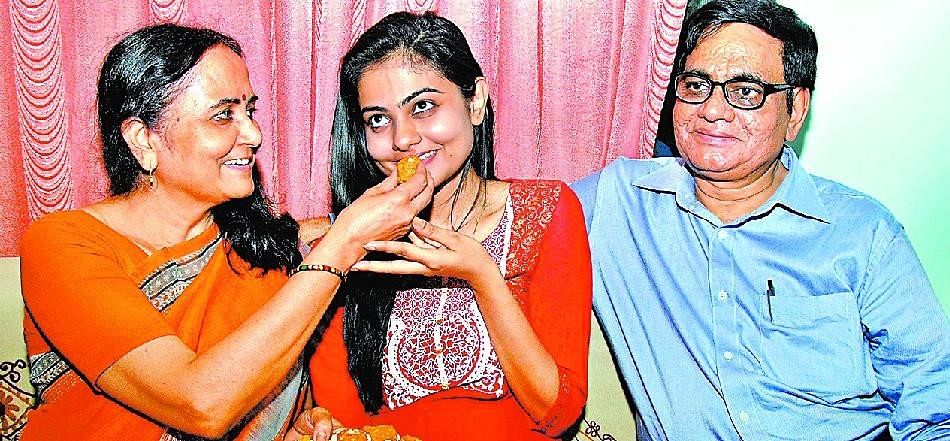
    26 year old Varanasi girl, Artika Shukla has secured 4th rank Civil Services Examination 2015. She believed that If one has a dream, they should just follow it”. She gives all credit to his elder brother.

    source

    Why IAS?

    From her college days she always wanted to do something for the youth of the country. She wanted to inspire the youth of country to contribute for the nation by setting her own example. Besides all that she gets an inspiration from her brother. So that she chooses civil services.

    Following the Footsteps of Brother:

    Her elder brother Utsav Shukla is an IAS officer from 2012 batch. He is posted in Guwahati. She said that when she had decided to opt out of her PG graduation course to prepare for IAS, many people told that it was a wrong decision. But her brother supported her in the journey and always stood behind her. She happily credited her success to her brother for being her “pillar and support” throughout.

    Education Background:

    She did her MBBS from Maulana Azad Medical College, New Delhi in 2013. After that she started preparations for the postgraduate course in medical science. She got success and took admission in MD pediatrics course at the SGPGI, Chandigarh. She quit her MD paediatrics course in November 2014. to prepare for the civil services.

    Family:

    Arkita’s father is a doctor and her mother is a house wife. Her father Dr. BK Shukla who is a pediatrician said that it was happy and proud moment for them. She had worked hard and he appreciated her work. She makes them to feel proud.

    Preparation and Coaching:

    She started her preparation from 2014. She said that she had not joined any coaching classes for preparation and sought all help and material from her brother. She managed to prepare for it while shuttling between Varanasi and Delhi and Chandigarh. She had joined a test series and mock interviews after month of August.

    About Optional:

    She had taken Medical Science as her subject because she has in depth knowledge of that subject. She gets an IAS post in her first attempt.

    Inspiration:

    She always said that her brother is big inspiration for her. Also she draws inspiration from Former President Late A.P.J Abdul Kalam. She also gives credit to her father and mother to take faith on her. She added that “If one has a dream, they should just follow it”.

    Her vision:

    She said that she wanted to see India on the top of the world. As an IAS officer she would   work for it. She would be honest IAS officer with a difference as god had given a chance to serve for it.

    Tips to aspirants:

    • Work hard and dedicatedly
    • Follow the proper direction
    • Be patient and do your work sincerely, you will definitely get success

More posts