💥UPSC 2026, 2027, 2028 UAP Mentorship (March Batch) + Access XFactor Notes & Microthemes PDF

Search results for: “”

  • All about the Swachh Bharat Abhiyan

    What are the recent updates on Swachh Bharat Abhiyan?

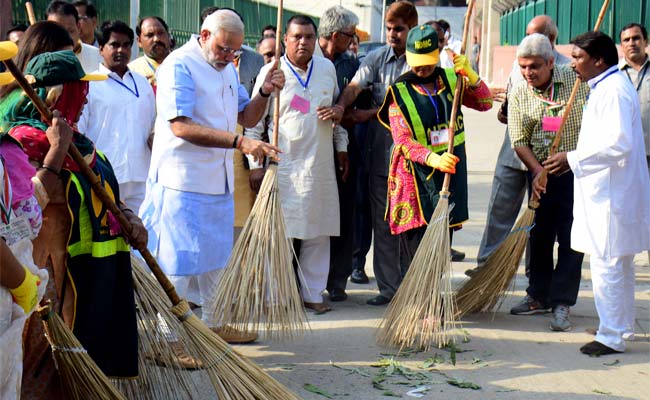
    1. The union government had launched Swachh Bharat Abhiyan(SBA) on 2 October 2014 with two submissions, SBA (gramin) and SBA (urban).
    2. Budgetary provisions for the two submissions will be provided separately in the Demand for Grants of the Ministry of Drinking Water and Sanitation (MDWS) (for gramin) and the Ministry of Urban Development (for urban).
    3. Two other ministries, the Ministry of Women and Child Development (MWCD) and the Ministry of Human Resource Development (MHRD), more specifically, the latter’s Department of School Education and Literacy, will be responsible for the construction of anganwadi and school toilets.

    Let’s go back in time and come forward via a timeline, shall we?

    • Prior to the onset of SBA, the first major intervention by the union government was the Accelerated Rural Water Supply Programme (ARWSP) in 1972–73, to support states and union territories with financial and technical assistance to implement drinking water supply schemes in “problem villages.”
    • In 1986, a technology mission with stress on water quality, appropriate technology intervention, human resource development support and other related activities was introduced. This was renamed as the Rajiv Gandhi National Drinking Water Mission (RGNDWM) in 1991.
    • In 1999–2000, sector reform projects were evolved to involve the community in planning, implementation and management of drinking water-related schemes.
    • In 2002, this was scaled up as the Swajaldhara programme.
    • From 2009 onwards, it was rechristened as the National Rural Drinking Water Programme (NRDWP).

    The NRDWP and the Nirmal Bharat Abhiyan (NBA) have been the union government’s flagship programmes for rural drinking water and sanitation.

    However, the SBA draft, circulated on 22 August 2014, combines the drinking water supply and sanitation programmes and wishes to achieve safe-water supply and open defecation-free status in both urban and rural India by 2019, the year that will mark the 150th birth anniversary of Mahatma Gandhi.


    Can India be swachh without the caste ethos being completely eradicated?

    The Government draft acknowledges the need for better drinking water and sanitation facilities in both rural and urban India, especially for women and children.

    Some words from Government draft,

    “While having a toilet is important for everyone, access to safe, clean toilets brings particular benefits to women and girls. Freed from the need to defecate in the open, they no longer have to suffer the indignity, humiliation and often verbal and physical abuse when relieving themselves. Sexual harassment and rape are a risk for many women who without a household toilet have to wait until nightfall to seek the privacy of darkness outside to relieve themselves. Women and girls don’t need toilet facilities just for defecation; they also need privacy and dignity when menstruating. The symptoms of menstruation, pregnancy and the postnatal periods become more traumatic if women have no space to deal with them. The need for sanitation facilities within homes and in public places, which meet women’s physical and psychological demands, cannot be overemphasized. (GoI 2014).


    The draft deals with key challenges and the way forward to make the mission successful.

    1. Behavioural change influencing 590 million population in rural areas, the problem of convergence between the Mahatma Gandhi National Rural Employment Guarantee Scheme (MGNREGS) and NBA, lack of water availability in toilets, defunct toilets, inadequacy of staff at the ground level, these are the key challenges noted by the draft.
    2. A recent study by Coffey et al (2014) found that “many survey respondents’ behaviour reveals a preference for open defecation: over 40% of households with a working latrine have at least one member who defecates in the open.” Open defecation is a socially accepted traditional behaviour in India, especially in rural areas.
    3. It has been a tough job to convince a section of the population to regularly use constructed toilets. But, countries like Bangladesh and Indonesia have shown remarkable change in behaviour towards sanitation after comprehensive information, education and communication (IEC) was imparted.
    4. Grants to the States : “It would be better to release not as per the present formula giving entitlement of States, but on a projected basis, on the basis of the Detailed Project Report of a district as a whole both for water and sanitation.”

    What are the key financial roles for this mission to be a success?

    Well, At the moment, government is relying on the corporate social responsibility (CSR) and individual donations for funds. The fund under CSR would be channelled through Swachh Bharat Kosh (SBK) headed by secretary, Department of Expenditure.

    The SBA introduces awards for panchayati raj institutions (gram panchayats, block panchayats and district panchayats), individuals, officers, non-governmental organisations (NGO) and also for best practices.

    Parting Words

    1. Quite a bit of euphoria has been in the air with regard to the SBA, thanks to extensive media coverage.
    2. Responses to SBA can be categorised under two heads –
      • On the one hand, the upper classes/castes have appreciated the effort; they envisage a business opportunity and visualise a dirt-free India (in their eyes, dirt is associated with the lower castes/classes).
      • On the other hand, a large section of population (the deprived) has no clue as to what has been going around in the name of swachhta.

    But one thing for sure, without sufficient capital and well-trained labour, this mission may miss its deadline.

    What do you think?


    Published with inputs from Arun.
  • What Constitutes a Good Answer for UPSC Mains?

    During preparation, one needs to focus on writing a good answer, right?  So what is a good answer – that is a million dollar question? Mains exam questions reveal many things about word limit, keywords like analyse, critically comment etc, analytical demand of question etc.


    I strongly recommend the future aspirants to take answer writing on daily basis very seriously and practice to improve their writing skills, structure, speed and time management so that one can get maximum marks in GS papers.

    These are a few ways to improve your answer writing for IAS Mains:

    1. More time should be spent on thinking about the topic and making innovations, rather than on reading too many study materials available in market.
    2. The previous papers should be thoroughly analyzed to understand the trends and the expectations of the examiner.
    3. The preparation should be focused and all the hard work should be channelized in the right direction.

    Here are few common mistakes to be avoided while writing in GS mains papers:

    1. First, try to address the question in the introduction rather than giving irrelevant answers.
    2. A balanced approach in answers are usually missing, either it will be very critical or totally out of context.
    3. Most of the times, aspirants is unable to fully understand the requirement of the question.
    4. Most of the times, only few of required aspects/dimensions were covered in answers
    5. Write in points so that you can more marks rather than writing same point in big paragraph.

    Few tips for better GS Mains answers:

    The competition is highly relative, our answers in the mains examination should not only be correct but also different with a touch of creativity and relevant to the question that is asked. Basics with clarity will come when there is lot of questioning while studying. The topic has to be studied in a logical manner.

    The creativity and innovation is not something that you will get in the textbooks. They have to be developed on your own. It requires lot of thinking and observation. By innovation in answers what I mean is this:

    1. Catchy introduction which addresses the question head-on
    2. Diagrams – so that one can break a monotonous answers
    3. Graphs – to better represent data.
    4. Flow charts
    5. Maps – draw India or world maps in geography/history papers
    6. Contemporary touch and applicability -use current affairs to strengthen your argument
    7. Using Facts – it is important to mention the facts, it is equally important to handle various dimensions of your answer and write something different which makes your answer unique.
    8. Catchy conclusion – giving solutions

    Final Points:

    I too wrote almost all my answers in points but still I gave a proper introduction, proper headings and sub-headings and then a conclusion.

    As writing speed tends to be slow initially, one can complete 7-8 questions in 1st hour and compensate that in last hour. Thus one can finish the paper.

    Make sentences short, carefully use tenses and appropriate prepositions. Avoid unnecessary elongation of sentences which makes it hazy and equivocal rather use simple and straight-forward presentations.

  • Syrian Civil War and The Refugee Crisis

    What exactly is this Syrian civil war?

    1. An ongoing armed conflict between the Syrian government and the rebel forces within Syria.
    2. It started in the spring of 2011 with the context of Arab spring.

    To understand the conflict let us know the historical background of Syria. So, where is Syria?

      1. Syria is one of the Arab Nations which shares its borders with Turkey, Lebanon, Israel, Jordan and Iraq.
      2. Damascus – capital of Syria.
      3. Syria became independent in 1946.
      4. Democratic rule was ended by a military coup in 1949.
      5. The military rule ended in 1954.
      6. From 1958-1961 Syria and Egypt were part of a union called as ‘United Arab Republic’ with Cairo as capital and Gamal Abdel Nasser as President.
      7. In 1961, Syria seceded from the Union after the Syrian Coup d’êtat – uprising by the Syrian Army officers.
      8. The country was named as Syrian Arab Republic.
      9. But the government was weak. Why? Due to the influence of United Arab Republic and a military coup happened in 1963 and 1966.

    That’s pretty complex! But UPSC is famous for asking about the details. What happened then? 

    In 1970, in another coup General Hafez al -Assad, the Minister of Defence seized the power.

    1. He became the P.M of Syria.
    2. In 1971, he was declared the President of Syria (until his death in 2000).
    3. Syria was a single-party state.
    4. Syrians could approve the President by referendum until the government controlled multi party 2012 election.
    5. The Syrians could not vote in multiparty elections for the legislature.

    The ascension of Bashar Al-Assad and the Shia-Sunni conflicts

    1. Son of Hafez al-Assad – Took over as the President of Syria after his Father’s death.
    2. The Syrians wanted democratic form of government but, ah well!
    3. The Assads belong to minority group Alawite (an offshoot of Shia which constitutes 12% of the total population).
    4. They controlled Syria’s security services which generated resentment among the Sunni Muslims (majority in Syria).

    Phew! That is a very complex history. What happened next that finally led to the war? It is important to cover the story comprehensively for an IAS Aspirant.

      1. Well, the discontent was high against the government in poorer areas among Sunnis + High poverty and drought.
      2. Socio-economic inequality increased after free market policies initiated by Hafez al-Assad.
      3. Bashar continued those policies and only the minorities (Shias) and Sunni merchant class benefited through that.
      4. Standard of living deteriorated + High youth unemployment rates.

    Then there were a few violation of human rights and eventually an uprising!

    In 2010 the protests from Tunisia spread across the Arab world. In 2011 Tunisia and Egypt experienced revolution. Libya had its own civil war. The Tunisia and Egypt revolution inspired the Syrians to protest against their government.

    Wow, that escalated quickly. So how did the protests turn into an armed rebellion?

    1. March 2011 – The initial protests were aimed at democratic reforms which started in Damascus.
    2. Till April 7, 2011, the protesters demanded democratic reforms, release of political prisoners, more freedom, abolition of emergency law and an end to corruption.
    3. On April 8, 2011, the protesters demanded Bashar’s resignation and protests spread across major cities in Syria.
    4. On 4th June, 2011, the Syrian security forces guarding on the roof of a post office fired at a funeral demonstration.
    5. The protesters set fire to the post office and killed the security officers and then seized weapons from a police station.
    6. The soldiers who refused to kill the protesters were executed and that led to the inclusion of soldiers into the protests to protect the protesters.

    And that led to the formation of the Free Syrian Army

    1. Formed by 7 Syrian officers who defected the Syrian armed forces. The other soldiers joined them.
    2. The aim was to bring down Assad government.
    3. Then the fight started between Free Syrian Army (FSA) and the Syrian Armed Forces.
    4. The people protested one side, the Syrian Kurds, FSA, Islamic State of Iraq and the Levant (ISIL) started armed rebellion against the Syrian government.
    5. ISIL controlled a third of Syrian territory and most of its oil and gas production.
    6. This led to a major twist in the Syrian civil war.
    7. Due to the civil war in the country huge scores of people died and many were displaced.
    8. Many people fled from Syria to other nations as refugees.
    9. This led to a major migrant crisis in the Middle East.


    UPSC will probably grill you down to your guts on how this issue will complicate situation in the middle east. These are the current themes doing rounds as the news evolves and you need to keep a tab on these developments for the IAS Mains.


    Published with inputs from Vinoth.


  • AIIB & The Changing World Order

    The Asian Infrastructure Investment Bank (AIIB) is an international financial institution proposed by China. AIIB is regarded as a rival for the IMF, the World Bank and the Asian Development Bank (ADB) which the AIIB says are dominated by developed countries like the USA and Japan. In this Article We will explain everything about AIIB and also why India has joined it and the likely challenges AIIB will face in future.


    What is AIIB?

    • The ‘AIIB’ is the Asian Infrastructure Investment Bank, a new multilateral development bank first proposed by Xi Jinping in a speech to the Indonesian parliament in October 2013.
    • At the time, Xi explained that ‘to support the process of interconnection and integration of the economic development in the region, China has proposed to build the Asia infrastructure investment bank and provide financial support to infrastructure development in developing countries in the region.’
    • The bank was formally established on October 24, 2014 in a ceremony in Beijing where 21 founding members signed the bill.

    Functions of the AIIB:

    The AIIB has broad functions, similar to other MDBs.  Under its Articles of Agreement, the AIIB’s functions include:

    (i) Promoting public and private investment in the Asia region for development, in particular for infrastructure and other productive sectors;

    (ii) Utilizing the resources at its disposal for financing such development in the region; and

    (iii) Encouraging private investment  that contributes to economic development in the Asia region, in particular in infrastructure and other productive sectors, and supplementing private investment when private capital is not available on reasonable terms and conditions

    source

    Why was AIIB is established when the IMF and World Bank are already there?

    The Asian Infrastructure Investment bank (AIIB), the new kid in the development lender’s neighbourhood is a both the result and reflection of changing political economic equation of an increasing multi polar world. The necessity and the differential design of AIIB can be enumerated as follows:

    #1. Economic

    1. To begin with China is sitting on a huge pile of unutilised cash and is looking for markets to invest it to earn from the otherwise idle money. Funding projects through AIIB is a structured way to do it.
    2. Investment focus of AIIB will be sector and region specific unlike IMFs and ADBs of the world. AIIB specifically will be an financial enabler for sponsoring infrastructure in Asia
    3. With Yuan’s entry in SDR it makes sense to loan Yuan to spread its global availability.
    4. Asian infrastructure development needs huge investment (estimated $ 800 Bn annually) which certainly cannot be supplied by IMF alone.
    5. The boost to Asian Infrastructure provides a market for Chinese firms with excess capacity in cement and steel lying ideal post slowdown.

    #2. Political

    1. Unlike IMF, AIIB does not adopts quota system ie decision making power is not proportionate to contribution, thus it is more democratic. Well, err, China and democracy do not go hand in hand, undeniably Chinese interest will be loudest.
    2. IMF and ADB funding comes with the vested interest of western world like “free” market economy, forced structural reforms, skewed intellectual property rights etc. AIIB’s loan provides an alternative to circumvent western influence during financial emergency.
    3. IMF is increasingly going green with increasing western focus on cleaner and renewable energy (off course with only limited heed to CBDR call), which might not be appealing to nations which are yet to release their quota of developmental pollution. Well, AIIB is here to help.
    4. Presents the benevolent face (most possibly farcical) of the otherwise ruthlessly pragmatic and openly aggressive china.

    Why has India joined the AIIB?

    There are many reasons for it, a few of them being:

    1. India is preparing to start a large number of infrastructure projects, but they’re short of money, so they need help from China. Of course they can get money from ADB or WB, but they also need to find a balance between China and USA.
    2. It’s a great chance to develop economy links between India and China. These two countries both have huge market, and they also keep a rapid growth of economy.
    3. Though AIIB is a Chinese-lead financial institution, India is welcomed to play a important role in it. It’s the reason why the UK, Germany and France all want to be a member of AIIB.
    4. The AIIB gives countries like India and China the historical opportunity to enter and reform a bastion where they have been traditionally denied entry.

    Difference between AIIB and NDB

    source

    Challenges that AIIB may likely face in Future?   

    China will face many challenges in future while implementing the AIIB .The major challenges include:

    1. Non Participation of USA and Japan: The United States and Japan remain non-committal to the AIIB, althoughthat is an improvement from their previous firm opposition. The AIIB will probably function well without the participation of the United States and Japan. But the participation of these two countries is important for China since it will help improve the new bank’s credit rating and give it added legitimacy.
    2. Security issues: Security will be another major challenge. For example, most of the loans which will be given under AIIB would be to projects in central Asia however there is a challenge of who is going to protect so many projects covering so many countries as this region has some of theworld’s most vulnerable and conflict-ridden territory.
    3. Fear of NPA: Many recipient countries in Asia have poor credit, which means many projects may be promising at the beginning but will be difficult to pursue. Agreement and consensus are reached at the top levels of government, but implementation is at the local level. Local governments often do not care about the central government’s policies and do not always cooperate with foreign investors.

    References:

  • GI(Geographical Indicator) Tags

    GI status is an indication that identifies goods as produced from a particular area, which has special quality or reputation attributable to its geographical origin.

    India, as a member of the World Trade Organization (WTO), enacted the Geographical Indications of Goods (Registration and Protection) Act, 1999 has come into force with effect from 15 September 2003

    The GI tag ensures that none other than those registered as authorised users (or at least those residing inside the geographic territory) are allowed to use the popular product name.

    In India, a GI’s registry operates in Chennai in accordance with the provisions of the Geographical Indications of Goods (Registration and Protection) Act 1999, which came into effect in September 2003.

    India has 236 GI products registered so far and over 270 more products have applied for the label. Let’s take a look at 10 such geographical indicators in India.

    To follow up with latest developments on GI tags –

More posts