💥Join UPSC 2027,2028 Mentorship (July Batch) + XFactor Notes & Microthemes PDF

Search results for: “”

  • [Video Analysis + Top 10 Ranks] 05 August 2019 | Prelims Daily with Rakesh Sir

    Dear students,

    Here’s a link to the Prelims Daily Quiz Analysis Video. Watch this after you have attempted that day’s Prelims Daily questions [on this link]

    The full playlist is available here [click2watch]

    [WpProQuiz_toplist 202]

    We need your comments, likes, and shares on these videos. The aim of this series is to help you revise news via questions. PLEASE spread the videos.

    What’s wrong with the student’s study habits?

    Only 5% of our students who read news attempt PD. This beats the purpose of reading the news. Even those 5% who attempt PD are unable to get the most out of the initiative. They are either guessing or doing the tests just as a routing activity without engaging in it.

    What’s CD doing to maximize your efforts?

    Now, we have moved one step further with the launch of analysis videos of Prelims Daily (PD). These videos will reveal the critical nitty-gritty surrounding every PD question. It is an unfortunate reality that no single question can be framed to cover all the possible angles.

    The analysis videos will plug this hitherto inevitable gap, thereby making your preparation more methodical, holistic and foolproof. Nothing can be more valuable than experience, and that is precisely what the PD initiative and the analysis videos offer. These will be valuable for both newcomers and senior players in the field.

    PS: We want to be 100% certain that the time and energy spent on making these videos is helping you in your UPSC Prelims preparation. So, pls click on the videos, like, share and comment and let us know your thoughts.

  • New to IAS Preparation? How to start ?

    You have taken a very courageous step in your life by deciding to appear in the exam. Here is how you should be going about it.

    1. Booklist 

    Get the right books –

    2. Master Time-table

    Prepare a broad-based timetable. Refer to the Master Timetable provided in our Foundation Program below.

    https://www.civilsdaily.com/foundation/

    3. Course-wise detailed study plans 

    4. Topper strategies 

    Hear what toppers have to say –


    Once you are on track with respect to the above, you need to be regular with Civilsdaily.

    > News

    #1. Newscards

    – Focus Area: Comprehensive summary of the daily news from sources such as The Hindu, Indian Express, PIB, etc. Newscards are made from relevant news and are presented with only relevant information wrt. Prelims & Mains in the format students are expected to study. 

    #2. Daily op-ed snaps

    – Focus Areas: Summary of the 2-3 best editorials from sources such as The Hindu, Mint, Indian Express etc. Useful for both Prelims and Mains

    #3. Stories ™

    – Focus Areas: How do you understand news with context? Stories help you read linked news articles in one go. This way we are able to collect all relevant newscards, op-eds under one topic so that you don’t have to run for research! Also contains CD Explains/ Backgrounders on topics

    On theAndroid App (click here) – The orange icons on newscards!

    >Daily Prelims Focused Initiatives

    #4. Prelims Daily

    – Focus Area: Prelims questions based on the previous day’s news to help you test and cement your knowledge. Detailed solutions with tikdams is available after 8 PM on the same thread.

    >Static Courses 

    #5. Static Course Modules

    – Focus Areas: In-depth analysis and write-ups on topics that are needed for a comprehensive Mains preparation. Write-ups range from Static to Dynamic Courses. This is the latest offering from Civilsdaily and we are developing all-around courses across the GS Mains syllabus

    If you want to reach out to us with doubts or suggestions, simply drop a comment or email us at hello[@]civilsdaily.com.

    Subsequently, you can fill the form by clicking here and request a call-back. (please be honest in your replies).

  • 6th August 2019 | Daily Answer Writing Enhancement

    ANNOUNCEMENT – There is a change in format. Students will now have to post answers on the questions page separately by clicking on the links given below. We plan to track progress for each of the GS papers and to achieve the same, this modification becomes important. Students who are unable to post answers, please email hello@civilsdaily.com. You will receive a resolution for sure. 


    Question 1)

    What are the major welfare schemes for elderly in India? Do you think the benefits of such schemes are reaching a wide section of the target segment? Give reasons. (250 WORDS)

    Question 2)

    In the light of recent findings of CAG, highlight the shortcomings in the Goods and Services Tax (GST). How can the government strengthen the weak links of the reformed system of taxation in India? Discuss (250 words)

    Question 3)

    “There is an effort to clean India Inc but the pendulum cannot swing from one extreme to the other. It has to be in a phased out manner.” Discuss in the light of the tragic death of a big entrepreneur. (250 words)

    Question 4)

    Q.4) While filling a form for driving license in RTO office, you come to know about a clause in the form where there was organ donation consent form which stated: “Organ Donation: Upon my death I am willing to donate the following – there were then a set of boxes labelled – eyes, liver, kidney, any organ and none, together with a place for her signature.” Lady at the counter explains that this form of camping has been promoted by NGOs for the larger interest for humanity, however it is voluntary and you can escape it if you are not finding it of any worth. You are not sure about giving consent. You come out of the office without filling the form. Later that evening you decided to talk to your mother. When you explained about your anxiety, your mother replied that you should follow your heart in the matter of organ donation. Answer the following questions based on the above case study: (a) From a utilitarian perspective, should you agree to donate her organs? Provide an analysis. (b) From a Kantian perspective, would refusing to donate one’s organ violate a moral duty?

    Reviews will be provided in a week for. (In the order of submission- First come first serve basis). In case the answer is submitted late the review period may get extended to two weeks.

    *In case your answer is not reviewed in a week, reply to your answer saying *NOT CHECKED*. If Parth Sir’s tag is available then tag him.

    For the philosophy of AWE and payment, check  here: Click2Join

  • [Burning Issue] Reorganization of Jammu and Kashmir


    Context

    • The Union Home Minister introduced two statutory resolutions, one, to recommend that the President issue a notification rendering Article 370 inoperative, and two, to accept the J&K Reorganization Bill.
    • The move was intended to fill the political vacuum in the valley.

    J&K Reorganization Process

    1. President issued a presidential order under Article 370 (1) of the Constitution
    • This clause enables the President to specify the matters which are applicable to J&K.
    • As it can be issued only with the J&K government’s concurrence, the notification uses the words “with the concurrence of the Government of the State of J&K”.
    • This presumably means the Governor, who is now administering the State under President’s Rule, has given his concurrence on behalf of the State government.
    1. The Order supersedes the 1954 Order
    • This effectively means that all the provisions that formed the basis of a separate “Constitution” for J&K stand abrogated.
    • The Order declares that all the provisions of the Constitution of India, shall apply to J&K too.
    1. Special measures for scrapping of Article 370
    • A few clauses were added to Article 367 of the Constitution. Article 367 contains “Interpretations”.
    • They contain guidance on how to read or interpret some provisions.
    • The new clauses say, when applicable to J&K, all references to the ‘Sadar-i-Riyasat’, acting on the aid and advice of the Council of Ministers, will be construed as references to the Governor of J&K.
    • All references to the State government shall mean “the Governor”.
    1. Abrogating Constituent Assembly
    • Most importantly, the reference to the “Constituent Assembly” in a provision to Article 370 (3) has been amended to read “Legislative Assembly of the State”.
    • This is the provision that says the President can declare that Article 370 is no more operative only on the recommendation of the Constituent Assembly.
    1. Reorganization
    • The Bill envisages converting J&K into a Union Territory with a legislature, and carve out Ladakh region as another Union Territory, but without a legislature.

    Background

    • J&K enjoyed special status under Article 370 of the Constitution of India.
    • This Article describes it as a temporary provision and that it will cease to be operative if the President issues a public notification to that effect.
    • However, prior to that, a recommendation is necessary from the Constituent Assembly of J&K.

    What is Article 370?

    • Included in the Constitution on October 17, 1949, Article 370 exempts J&K from the Indian Constitution (except Article 1 and Article 370 itself) and permits the state to draft its own Constitution.
    • It restricts Parliament’s legislative powers in respect of J&K. For extending a central law on subjects included in the Instrument of Accession (IoA) mere “consultation” with the state government is needed.
    • But for extending it to other matters, “concurrence” of the state government is mandatory.

    What changes did Art. 370 mandate?

    • As a result of Article 370, J&K had its own Constitution, and all laws passed by Parliament will not be applicable to the State, unless the State government gives its concurrence.
    • The Constitution (Application to J&K) Order, 1954, lists the Articles and provisions that apply to J&K.

    Another bone of contention: Article 35A

    • Further, the President also listed a set of exceptions under Article 35A of the Constitution.
    • Article 35A empowered the J&K state’s legislature to define “permanent residents” of the state and provide special rights and privileges to those permanent residents.
    • It protected the exclusive laws – such as the bar on outsiders buying property and women marrying non-Kashmiris losing their property rights – of the State.
    • It was added to the Constitution through a Presidential Order, i.e., The Constitution (Application to J&K) Order, 1954 – issued by the President of India on 14 May 1954.
    • This was an exercise of the powers conferred by the clause (1) of the Article 370 of the Indian Constitution, and with the concurrence of the Government of the State of J&K.

    Why Article 35A  was allowed to continue?

    • Since Article 35A predates basic structure theory of 1973, as per Waman Rao (1981), it cannot be tested on the touchstone of basic structure.
    • Certain types of restrictions on purchase of land are also in place in several other states, including some in the Northeast and Himachal Pradesh.
    • Domicile-based reservation in admissions and even jobs is followed in a number of states, including under Article 371D for undivided Andhra Pradesh.

    Outcome of the proposed reorganization

    I. Division of the state

    • Both Ladakh and Jammu and Kashmir will be Union territory.
    • J&K will have a state Legislative Assembly like Delhi and Puducherry while Ladakh would be a Union Territory without Legislature.

    II. Single national flag

    • The state would have just one National Flag that is our Tri-Colour of India.

    III. Status of Article 370

    • The Presidential Order has not scrapped Article 370.  All provisions of the article 370 are null and void except clause 1 .
    • Clause 1 of the article 370 envisages that Jammu and Kashmir is the integral part of India.
    • But invoking this very article special status of Jammu & Kashmir has been withdrawn.
    • Thus Article 370 is very much on the statute book.

    IV. Status of Article 35-A

    • Since Presidential Order of August 5 has extended all the provisions of the Constitution of India to Kashmir, Fundamental rights chapter has now been extended.
    • Hence discriminatory provisions of Article 35-A have now become unconstitutional. President also may withdraw Article 35-A.

    Analysing the reorganization-


    Why was Article 370 a bone of content?

    • Article 370 gave some special powers to the state of Jammu and Kashmir.
    • It allowed the state to have its own constitution, its own prime minister (which was later removed) and its own flag.
    • The article also restricted the Parliament’s jurisdiction to draft laws for the state except for three areas — defense, foreign affairs and communication.

    Why Article 35-A was discriminatory?

    • Article 35-A was inserted in the Constitution through a presidential proclamation in 1954.
    • It was surreptitiously inserted and it was neither a part of the original constitution nor did it come as a constitutional amendment.
    • This article empowered the state to decide permanent residents and their privileges with regards to land ownership and employment in Jammu and Kashmir.
    • And people who were deemed ‘non-residents’ were not allowed to buy property, settle down, seek government jobs, college admissions or scholarships.

    Was Article 370 a temporary provision?

    • It is the first article of Part XXI of the Constitution. The heading of this part is ‘Temporary, Transitional and Special Provisions’.
    • Article 370 could be interpreted as temporary in the sense that the J&K Constituent Assembly had a right to modify/delete/retain it; it decided to retain it.
    • Another interpretation was that accession was temporary until a plebiscite.
    • The Supreme Court in April 2018 said that despite the headnote using the word “temporary’, Article 370 is not temporary.
    • In Sampat Prakash (1969) the SC refused to accept Article 370 as temporary. A five-judge Bench said “Article 370 has never ceased to be operative”. Thus, it is a permanent provision.

    Was Article 370 useful to Centre?

    • The Centre has used Article 370 even to amend a number of provisions of J&K’s Constitution, though that power was not given originally.
    • Article 356 was extended though a similar provision that was already in Article 92 of the J&K Constitution, which required that President’s Rule could be ordered only with the concurrence of the President.
    • To change provisions for the Governor being elected by the Assembly, Article 370 was used to convert it into a nominee of the President.
    • Again, Article 249 (power of Parliament to make laws on State List entries) was extended to J&K without a resolution by the Assembly and just by a recommendation of the Governor.
    • In certain ways, Article 370 reduces J&K’s powers in comparison to other states. It is more useful for India today than J&K.

    Was it  un-constitutional?

    • Article 370 itself mentions Article 1, which includes J&K in the list of states.
    • It has been described as a tunnel through which the Constitution is applied to J&K.
    • India has used Article 370 at least 45 times to extend provisions of the Indian Constitution to J&K.
    • This is the only way through which, by mere Presidential Orders, India has almost nullified the effect of J&K’s special status.
    • By the 1954 order, almost the entire Constitution was extended to J&K including most Constitutional amendments.
    • Ninety-four of 97 entries in the Union List are applicable to J&K; 26 out of 47 items of the Concurrent List have been extended; 260 of 395 Articles have been extended to the state, besides 7 of 12 Schedules.

    Did it isolate J&K from India?

    • Article 3 of the J&K Constitution declares J&K to be an integral part of India.
    • In the Preamble to the J&K Constitution, there is no claim to sovereignty.
    • There is categorical acknowledgement about the object of the J&K Constitution being to further define the existing relationship of the state with the Union of India as its integral part thereof.
    • Moreover people of state are referred as ‘permanent residents’ not ‘citizens’.

    What it means for the Kashmiri Population?

    • Article 370 is not an issue of integration but of autonomy.
    • The recent Presidents Order is concerned with uniformity along with the integration.
    • Article 370 was not only part of the Constitution but also part of federalism, which is basic structure.
    • Kashmiris fear the move would lead to a demographic transformation of the region.

    Is the road clear for the reorganization?

    • Clause (3) of Article 370 gives the President power to end the special rights and privileges of the people of Jammu and Kashmir under the 1954 Order.
    • However, the clause carries a rider. President would have to first get the consent of the Constituent Assembly of J&K before issuing such a notification.
    • As there is no Constituent Assembly in existence now, there is nobody to recommend the scrapping of Article 370.
    • Ideally, any such amendment to the name of the ‘Constituent Assembly’ would require the assent of the Constituent Assembly itself.

     Way ahead

    • According to experts the order will face both legal and political challenges in the coming days.
    • The government can argue that the amendment made in August 5 notification only applies to Jammu and Kashmir and not the entire Dominion of India, and so, does not require a constitutional amendment.
    • This point of contention may reach the Supreme Court, where several petitions on the constitutionality of Article 35A, and in consequence Article 370, are pending for adjudication.
  • 5th August 2019 | Daily Answer Writing Enhancement

    ANNOUNCEMENT – There is a change in format. Students will now have to post answers on the questions page separately by clicking on the links given below. We plan to track progress for each of the GS papers and to achieve the same, this modification becomes important. Students who are unable to post answers, please email hello@civilsdaily.com. You will receive a resolution for sure. 


    Question 1)

    Q.1) Enumerate the issues associated with functioning of tribunals in India. How can these be addressed? (250 Words)

    Question 2)

    Is the idea of Doubling Farmer’s Income achievable in the near future? What are the roadblocks in the path? (250)

    Question 3)

    Should Corporate Social Responsibility be made mandatory? Discuss the ethical dimension behind mandating charity. (250 W)

    Question 4)

    Q.4) Do you think nation states owe a responsibility towards asylum seekers? What are the considerations that should, in your opinion, go into the making of a refugee policy? Provide arguments with contemporary examples. (250 Words)

    Reviews will be provided in a week for. (In the order of submission- First come first serve basis). In case the answer is submitted late the review period may get extended to two weeks.

    *In case your answer is not reviewed in a week, reply to your answer saying *NOT CHECKED*. If Parth Sir’s tag is available then tag him.

    For the philosophy of AWE and payment, check  here: Click2Join

  • [Video Analysis + Top 10 Ranks] 03 August 2019 | Prelims Daily with Rakesh Sir

    Dear students,

    Here’s a link to the Prelims Daily Quiz Analysis Video. Watch this after you have attempted that day’s Prelims Daily questions [on this link]

    The full playlist is available here [click2watch]

    [WpProQuiz_toplist 201]

    We need your comments, likes, and shares on these videos. The aim of this series is to help you revise news via questions. PLEASE spread the videos.

    What’s wrong with the student’s study habits?

    Only 5% of our students who read news attempt PD. This beats the purpose of reading the news. Even those 5% who attempt PD are unable to get the most out of the initiative. They are either guessing or doing the tests just as a routing activity without engaging in it.

    What’s CD doing to maximize your efforts?

    Now, we have moved one step further with the launch of analysis videos of Prelims Daily (PD). These videos will reveal the critical nitty-gritty surrounding every PD question. It is an unfortunate reality that no single question can be framed to cover all the possible angles.

    The analysis videos will plug this hitherto inevitable gap, thereby making your preparation more methodical, holistic and foolproof. Nothing can be more valuable than experience, and that is precisely what the PD initiative and the analysis videos offer. These will be valuable for both newcomers and senior players in the field.

    PS: We want to be 100% certain that the time and energy spent on making these videos is helping you in your UPSC Prelims preparation. So, pls click on the videos, like, share and comment and let us know your thoughts.
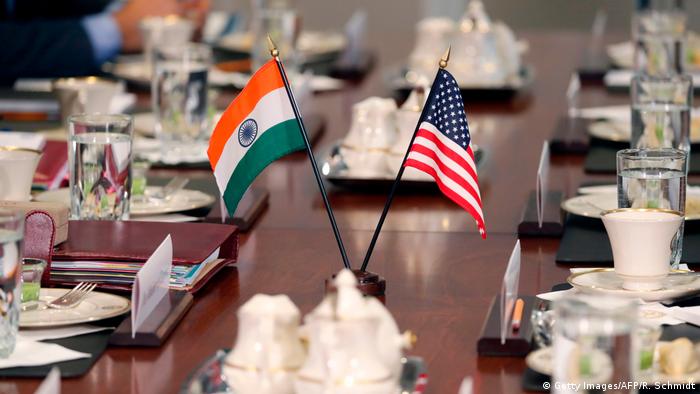
  • [Burning Issue] India US relations in the backdrop of recent hiccups


    Context

    • While India and the US claim to be strategic partners, the bones of contention are now more numerous and more substantial than they’ve been before.
    • The relations between the two countries had been plateauing for months with Trump being preoccupied with domestic and international battles.
    • The whim of US Administration under Trump and recent events has put the India-US relations again under test of time.

    Let’s take a look a timeline of recent events:

    • Discontinuing India’s designation as a beneficiary of its Generalized System of Preferences (GSP) duty concession programme
    • Freedom of religion issue
    • US claim of credit for settling Balakot Air strikes and Pulwama attack
    • US offer for mediation on Kashmir

    At glance

    I. Trade Issues

    • Trade is a big source of friction between the two nations. US companies see India’s 1.3bn people as a potentially lucrative market.
    • But they have been frustrated with New Delhi’s protectionism and unpredictable regulations and policies, which make India a notoriously tough place to do business.
    • Specific points of irritation include India’s price caps on medical devices such as stents; restrictions on US dairy imports; restrictions on foreign companies operating in e-commerce and retail; and new data localisation rules.
    • Trump has repeatedly complained about India’s 50 per cent import duties on Harley-Davidson motorcycles.
    • US administration also terminated India’s designation as a beneficiary of the GSP citing unfair protectionist measures by India.
    • The withdrawal of duty-free access to Indian exporters is somehow bound to damage the Indian economy.

    II. Visa Issues

    • Indians are not as welcome in the US as they used to be as thousands of techies seen their demand for an H1B visa extension rejected.
    • Such a cap on the Indian H1B visas would be an additional blow as Indians get about 70 per cent of the 85,000 H1B visas granted every year by the US.
    • One may argue that such practices are unfair, but India’s attempts at regulating migration in the North-east reflect the same agenda — the kind of agenda on which national-populists are elected.

    III. Freedom of Religion issue

    • The annual report of the State Department on Freedom of Religion accuses India that for more than half a decade India of not treating its minorities in the right manner.
    • It alleged the role of vigilante and right wing groups involved in “mob lynchings” to alienate non-Hindus or lower-caste Hindus is a significant contributor to the rise of religious violence and persecution.

    IV. Autonomy issues

    • India has long valued its strategic autonomy and its freedom to maintain a complex web of warm foreign relationships.
    • In particular, Iran and Russia are both longstanding traditional friends which have historically provided India with oil and military hardware.
    • India is in the process of purchasing S400 surface-to-air missile systems from Russia which could mean more sanctions as per a US law called “Countering America’s Adversaries Through Sanctions Act” (CAATSA).

    V. Content over Iran

    • Similarly, to be a friend of Iran and the US at the same time is getting more and more difficult.
    • New Delhi has had to bow to Washington when the Trump administration ended waivers that allowed India (among others, including China) to continue their oil imports from Iran
    • After all, India needs Iran because of Chabahar and Afghanistan — where the American withdrawal is another bone of contention.

    Immediate cause of rift: Unwelcomed move over mediation on Kashmir

    • More recently, Trump threw a bombshell at India during his meeting with Pak PM Imran Khan by saying that PM Modi had asked him to mediate on Kashmir.
    • India’s insistence on bilateralism has historically stemmed from the distrust of outsiders meddling in its internal affairs.
    • India has sought outside help from the world, not for mediation, but to rein in Pakistan’s meddling of terror in Kashmir.

    Why is US frustrated with India these days?

    • An important question is arising for Washington is: How far can the US rely on India to contain China?
    • In the last SCO meeting at Bishkek, Modi did not rule out India joining hands with Russia and China in the emerging trade war with the US.
    • Huawei is another potential sore point. The Chinese tech giant has plans for expansion in India and hopes to play a role in building the country’s 5G network.
    • The US has been pressurizing India to ban the Chinese company from its 5G development and deployment on the back of security concerns of Chinese surveillance on these networks.

    U.S. deterrence is not unusual

    • The US president claimed to have defused the India-Pakistan standoff that arose from the Pulwama attack. The US is said to have played a part in release of Abhinandan.
    • The US also played a role in forcing China to agree to the designation of Jaish chief Masood Azhar.
    • And most recently, Trump took credit for the arrest of Hafiz Saeed. Perhaps Trump thinks he has already resolved much of the problem.

    U.S. is still important

    • The US move to take a listing request for Jaish-e-Mohammad founder Masood Azhar directly to the UN Security Council is an indicator of its undeterred support for India.
    • The recent passing of a bill titled Fairness for High-Skilled Immigrants Act (HR 1044) which would make shorter wait time for Indian applicants of Green Cards is one of the major sigh of relief for Indian migrants.
    • Passing of HR 2123 Bill to give India Nato-ally like status is a vital step to enhance strategic cooperations.
    • The isolation of Pakistan by US is another boon for India’s quest for peace in South Asia.

    Conclusion

    • The US president’s statement can be explained away as another instance of “Trump being Trump”.
    • As usual, India cheers the strong support by the U.S. on multiple fronts.
    • The US like always has been clear to seek greater market access and the removal of trade barriers in our economic relationship.
    • Unlike the US-China trade war, and the US-Mexico disputes the recent differences were never at the centre of India-US relations.
    • As correctly pointed by Mike Pompeo, Great friends are bound to have disagreements.

    Way ahead

    • The current state of play suggests that the two countries were now at a crossroads.
    • There is no easy way to sugarcoat the present state of the relationship, it is one in which the only common denominator is a fundamental misunderstanding of priority objectives on the other side.
    • A strong commitment to improve the bilateral trade relationship and build a sound foundation for future successes is necessary.


    Also read:


    For amazing timeline of India-US relations since 1947 , navigate to the page:

    https://www.cfr.org/timeline/us-india-relations

  • [Video Analysis + Top 10 Ranks] 02 August 2019 | Prelims Daily with Rakesh Sir

    Dear students,

    Here’s a link to the Prelims Daily Quiz Analysis Video. Watch this after you have attempted that day’s Prelims Daily questions [on this link]

    The full playlist is available here [click2watch]

    [WpProQuiz_toplist 200]

    We need your comments, likes, and shares on these videos. The aim of this series is to help you revise news via questions. PLEASE spread the videos.

    What’s wrong with the student’s study habits?

    Only 5% of our students who read news attempt PD. This beats the purpose of reading the news. Even those 5% who attempt PD are unable to get the most out of the initiative. They are either guessing or doing the tests just as a routing activity without engaging in it.

    What’s CD doing to maximize your efforts?

    Now, we have moved one step further with the launch of analysis videos of Prelims Daily (PD). These videos will reveal the critical nitty-gritty surrounding every PD question. It is an unfortunate reality that no single question can be framed to cover all the possible angles.

    The analysis videos will plug this hitherto inevitable gap, thereby making your preparation more methodical, holistic and foolproof. Nothing can be more valuable than experience, and that is precisely what the PD initiative and the analysis videos offer. These will be valuable for both newcomers and senior players in the field.

    PS: We want to be 100% certain that the time and energy spent on making these videos is helping you in your UPSC Prelims preparation. So, pls click on the videos, like, share and comment and let us know your thoughts.