GS2 (Governance)
Many states are creating new districts, e.g. Telangana, or creating smaller administrative units. In light of this, discuss whether smaller states result in better governance.
GS2 (Governance)
Many states are creating new districts, e.g. Telangana, or creating smaller administrative units. In light of this, discuss whether smaller states result in better governance.
GS1 (World History)
The Industrial Revolution fundamentally changed not just our economic system, but also our society. Discuss.
Dear students,
When you submit your answer, if possible, give some reasoning & more info. along with the ABACAA format. Elaborate on what you know. This helps the whole community to know more and learn more!
Q.1) The Union Cabinet has accorded its approval for establishment of a National Academic Depository (NAD). Consider following statement in this regard.
1.The decision aims at bringing another dimension and enhancement of the vision of Digital India.
2.The NAD would be operationalised by NSDL Database Management Limited (NDML) and CDSL Ventures, Limited (CVL)
Which of the statements given above is/are correct?
a) 1 only
b) 2 only
c) Both 1 and 2
d) Neither 1 nor 2
Q.2) Consider following statements with reference to ‘Advance Pricing Agreements (APAs)’.
1.APA program allows the taxpayer and the tax authority to avoid future transfer pricing disputes by entering into a prospective agreement.
2.The APA was introduced in the Advance Pricing Act in 2012.
Which of the statements given above is/are correct?
a) 1 only
b) 2 only
c) Both 1 and 2
d) Neither 1 nor 2
Q.3) Consider following statements about ‘PRAGATI (Pro-Active Governance And Timely Implementation).
1.The platform is aimed at addressing common man’s grievances, and simultaneously monitoring and reviewing important programmes
2.It offers a unique combination in the direction of cooperative federalism as it brings on one stage the Secretaries of Centre and the States.
Which of the statements given above is/are correct?
a) 1 only
b) 2 only
c) Both 1 and 2
d) Neither 1 nor 2
Q.4) Which of the following are members of ‘New Agenda Coalition’ (NAC).
1.Brazil
2.New Zealand
3.Ireland
4.India
Which of the code given above is/are correct?
a) 1 and 2 only
b) 2 and 3 only
c) 2 and 4 only
d) 1, 2 and 3 only
Q.5) Recently, India inks loan pact with World Bank for Eastern Freight Corridor (EDFC). Consider following statements in this regard.
1.EDFC designed for faster movement of goods between northern and eastern parts of India.
2.The objective of the project is to augment railway freight carrying capacity along the railway corridor between Ludhiana and Kolkata.
Which of the statements given above is/are incorrect?
a) 1 only
b) 2 only
c) Both 1 and 2
d) Neither 1 nor 2
IMPORTANT STUFF:
1. These questions are mostly derived from our daily newscards. Reading daily news from Civilsdaily’s App (click here) or website + solving these questions will help you reinforce the basics.
2. For a comprehensive preparation of IAS Prelims 2017 – consider joining one of the three Prelims Modules by CD – prelims.civilsdaily.com
3. Solutions will be uploaded at 8 p.m. Click here for solutions.
4. For attempting previous Prelims Daily Questions – Click here
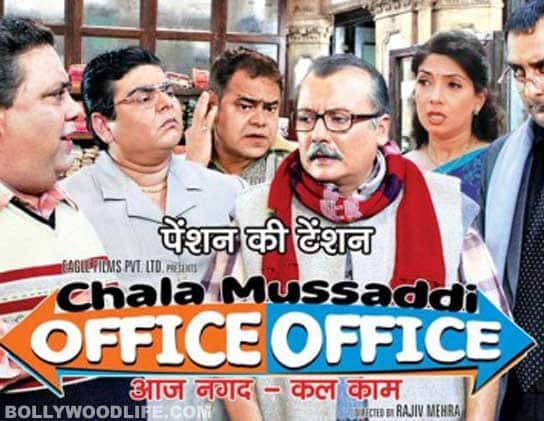
When every economist worth his salt is getting pulled by print and digital media to share his/ her views on this topic, it calls for a deep introspection and a bout of Mussaddilal’s age old classic Office-Office to understand why things are not working for india on the Ease of doing business (World Bank Report).
If you want to follow the evolution of this news, follow this NewsTrail – Ease of Doing Business
If you want a quick infographic on the ranking methodology, we have an amazing infographic for you. Ignore the text in blue box at the end of the infographic but understand the static theory from this one.

Update: 11 parameters & 190 countries.
India remains one of the planet’s toughest places to do business, according to the World Bank.
In the development lender’s latest “Doing Business” report, which ranks 190 nations on how easy it is for private companies to follow regulations in 11 areas, India comes in 130th.
New Zealand tops this year’s ranking, dethroning Singapore. The World Bank highlighted Indonesia, Pakistan, Brunei and seven other economies for making the biggest improvements in their business environments in the past year.
The World Bank recognized some achievements by the Indian government this past year:
An electronic system for companies to pay employee insurance contributions,
Easier procedures for exporting and importing, and
New special mechanisms for resolving commercial disputes
Due to even-larger improvements in other economies, India’s ranking in several areas fell this year.
On the ease of starting a business, it slipped to 155th from 151st.
On dealing with construction permits, it stumbled to 185th from 184th. On paying taxes, it held steady at 172nd.
NO. Far from it!
The World Bank report’s authors acknowledge that the ranking doesn’t reflect all the progress India has made recently in improving the business environment.
“Lawmakers have recommended the implementation of a large number of reforms across all states, going beyond the scope of Doing Business,” they write.
India of late has upgraded infrastructure, raised foreign-investment limits and digitized approvals and registrations. Groundwork was also laid this summer for a sales-tax revamp that hasn’t yet been implemented. (It might not even be implemented in time to affect next year’s Doing Business ranking, which will cover the business climate as of June 2017.)
First, some of the reforms undertaken missed this year’s bus—this report accounts for reforms which had been implemented by 1 June 2016. India also hopes that the insolvency and bankruptcy code will be implemented before the cut-off date for next year’s report
Second, the World Bank has included a new criterion “postfiling index” under the header “paying taxes”. Used in the report to measure the efficiency of “processes that occur after a firm complies with its regular tax obligations”, the post-filing index is a criterion in which India finds itself fourth from the bottom!
Third, there are other countries too trying their best to climb up the ease of doing business rankings.
Fourth, these rankings cover only the two cities of Delhi and Mumbai. A ranking of states last year showed the states of Gujarat, Andhra Pradesh, Jharkhand, Chhattisgarh and Madhya Pradesh leading the charts in implementing business reforms.
Therefore, India’s overall position may well be better than what this latest report shows!
Among the new features of this year’s Doing Business report is an attempt to gauge whether business rules apply differently to female and male entrepreneurs.
India should despatch a couple of envoys to Georgia and Kazakhstan each. In 2006, Georgia’s rank was 100; this year it ended up at No.16. Kazakhstan (now ranked 35) joined Georgia among the top improvers for the fourth time in the last 12 years.
In India, the bank found that despite yawning gender divides in many respects, the country makes doing business just as challenging for women as for men. It takes both male and female Mumbaikars 14 procedures and about a month, for instance, to start a new company. The irony of ironies!
If you want to take this time to revisit all the other important reports published by international organisations (for Prelims sake) – do visit this wholesome collection made by CD
#1. Consider following statements in regard with ‘Ease of Doing Business report’.
1.Ease of Doing Business report is published by World Bank.
2.India improved its position to 130 in the World Bank Ease of Doing Business 2017 report.
Which of the statements given above is/are correct?
a) 1 only
b) 2 only
c) Both 1 and 2
d) Neither 1 nor 2
#2. India’s ranking in the ‘Ease of Doing Business Index’ is sometimes seen in the news. Which of the following has declared that ranking?
a) Organization for Economic Cooperation and Development (OECD)
b) World Economic Forum
c) World Bank
d) World Trade Organization (WTO
#1. Ease of doing Business in India depends a lot on not just freedom to enter but also freedom to exit. In the light of the above statement critically discuss how the recently passed Bankruptcy Bill will improve the ease of doing business in India.
#2. According to a report, India is home to the third largest number of technology-driven start-ups in the world, with the US and the UK occupying the top two positions. Examine which factors have enabled India to achieve this feat.
#3. The marginal improvement by one rank i.e. from 131 to 130 in the Ease of Doing Business ranking is a reminder for several course corrections that are needed in the Indian politico-economic system. Comment.
UPDATE: Due to multiple requests from students to postpone the revision test (to give more time for revision and due to Diwali), we are postponing the revision test by 10 days. This means the revision test will be on 11th Nov and not 1st Nov. All subsequent tests will be postponed by 10 days to maintain the 10 day gap between them. The CA test is still going live on 28th October.
Flagship students,

Hi guys, with TS6, the basic science test, all the basic tests have come to an end.
Aspirants of 2017 Prelims who want to leave no stone unturned in their preparation are advised to join our Flagship module. We are leaving nothing to luck as we ensure your basics are covered and neither should you.
Very soon the advanced level tests will start where our flagship students will compete with the senior players. But first we have an important revision test coming up on 1st of November.
Over time, we have seen students give tests and then forget about them. If they get a good score they are happy. If they get a bad score they get depressed or try to study harder for the next test.
But most students forget about the test they just gave. They forget that tests are for motivation AND for learning. Whether you get a good or bad score, always remember that you have to learn from that test. How do you learn?
First, you read all the answers given in the TS. Second, you find out all the questions you did wrong or were not able to attempt and pick up the book and start reading those entire chapters. Yes! The whole chapter, not just that one paragraph which contains the answer.
If you got a tributaries question wrong, don’t just see the answer for that tributary, but also see the whole river on the map, and also other rivers.
We have done an analysis of the 6 basic tests which just went by to find out what your weaknesses are. Do understand that the ideal score in each of the test should be 140+ Nothing less than that will give you the confidence of doing your NCERTs well.
1.Polity –
3.History –
4.Geography –
5.Science –
Overall we would like to point out that its not just concepts which are important, but details too. Reread your NCERT’s. Even more importantly, make notes from them.
To give you an opportunity to implement all this advice, we will be putting the tougher questions till now into our revision test.
Use the tests to learn, and not just as an item on your schedule or checklist.
Checking that your base is sound through these tests is very important. All Flagship students must give these tests. Reread you NCERT’s and aim to get 150 marks. Once you see these questions and they look like child’s play to you, the work will be done.
To all other IAS Prelims 2017 probables who are still deciding on which test series to join – Join any but stick to the philosophy of that test series. That’s the most important thing.
We want to train you in the philosophy of covering your basics and advanced course along with the art of smart hacks (tikdams). Very sincere efforts are put into making the explanations richer and more meaningful for you so that you get to revisit the basics.
Make the most out of your efforts. After your revision test – we will give each of you a chance to talk to the mentors @CD so that you know how to make the most out of your advanced modules.
Anyone here with management optional? Unlike other optionals we don’t get much traction in terms of questionnaire, peer group, feedback etc. We can form a group if we find enough interest.
GS4 (Ethics)
Although India is a secular country, religion has a significant role in politics. Do you agree? How does religion affect politics and peoples attitudes in matters of politics?
GS3 (Indian Economy)
Ease of doing Business in India depends a lot on not just freedom to enter but also freedom to exit. In the light of the above statement critically discuss how the recently passed Bankruptcy Bill will improve the ease of doing business in India.
GS2 (Governance)
Do you think that the Indian Penal Code requires a thorough revision to meet the changing needs of the twenty-first century? Critically discuss.
GS1 (Urbanisation, problems and remedies)
Critically analyze the initiative like “car free day” in tackling urban congestion and air pollution.
