💥UPSC 2026, 2027, 2028 UAP Mentorship (March Batch) + Access XFactor Notes & Microthemes PDF

Search results for: “”

  • Ask a Question, Answer a Question – Round 2

    The last dinner table experience was amazing. So many teachers and so many students! Click here to go to visit the Round 1

    This time, we intend to tweak the concept a little bit. Since prelims are fast approaching, let’s make it more useful.

    Do one of the following:

    1) Ask for a memory trick/ mnemonic which can help you retain a difficult passage in a subject.

    2) Suggest a memory trick on a difficult subject/ chapter which can help the readers.

    You may want to tell your strong points/ favorite subjects/ sub subjects which can help other users ask better queries.


    PS – Please, please, please – do not ask very vague questions, “How to remember all the names of the RED list?”

    PPS – Hope you have read Dr. V’s tit bits and his uncanny explanations on prelims questions. Try to step into his shoes and come up with memory hacks!

    PPS #2 – To the readers who view this blog on the app, you won’t be able to have a look at the comments so please open this blog over mobile or desktop web

  • [Solved] Open discussion for Prelims Mocks #7

    Update:

    The solutions for this mock are now available in a downloadable pdf. Download

    What’s this?

    Discussion blog page for those who just attempted prelims mock #7. Discussion is open for any question which you had a doubt about, brainstorming on ways to arrive at a particular answer, any other interesting tit bit that you may share etc.

    Where are the prelims mocks held?

    Go to the link and start attempting the mocks. Click here. 25 questions each.

    When will the detailed explanations be uploaded?

    Every weekend (on sunday). Look out for this blog again and you will find a google drive link from where you can download the explanation pdfs.

  • Tit bits, Questions and trend Analysis NEEEDED 🙁

    Respected Dr. V,
    Sunday bhi jaane wala hai 🙁
    Waiting for you to post, tit bits, more questions and economy analysis!

    Yours obediently 🙂

  • query – back to basics

    I m not able to see posts of BACK TO BASICS beyond march 15th. the page is not going further.
    Pls pls help

    thank you

  • [Update] Ask a Question, Answer a Question – Round 1

    Major Update:

    Hats off to the community for an amazing participation. We never do this thing (flashing numbers and claiming a top spot etc.), but these numbers are insane. Notice the REAL time users. If the participation remains this high over the weekend, we will make it a weekend affair!


    Think of this as a dinner table conversation with no theme. The idea of this blog is to experiment with a hypothetical BIG family dinner table setting!

    Do one of the following:

    1) Ask CD readers a question.

    2) Answer someone’s question.

    You may want to tell your strong points/ favorite subjects/ sub subjects which can help other users ask better queries.


    PS – Please, please, please – do not ask very basic questions akin to “i am in class 12th but want to become an IAS officer, what to do!”

    PPS – No questions on what book to study. But yeah you can ask about opinions on books, classes, subjects, optionals etc.

    PPS #2 – To the readers who view this blog on the app, you won’t be able to have a look at the comments so please open this blog over mobile or desktop web

  • Environmental Laws of India

    To understand international treaties related to environment and climate change, funding etc including national action plan on climate change read these blogs first

    1. Primer on Environmental issues
    2. Rio To Paris via Kyoto

    1. Indian Forest Act, 1927

    • Britishers enacted such acts in 1865 and 1876 also, purpose was to monopolize forest resources <esp. timber> for their own exploitation and depriving forest dwellers of their rights
    • It was finally corrected when forest rights act, 2006 was enacted which gave traditional dwellers and community various rights over forest and gram sabha became the ultimate authority <remember Niyamgiri and POSCO>
    • The act does not even define the Forest or Forest Land but define forest produce

    Act establishes 3 categories of forest

    1. Reserve Forest – Most restricted, constituted by state govt on govt property
    2. Protected Forest –
    3. Village Forest –

    2. Prevention of Cruelty to Animal Act (PCA), 1960

    • prevent the infliction of unnecessary pain or suffering on animals
    • Animal Board of India was constituted under this act
    • Supreme court banned Jallikattu under it which govt tried to revive by a notification but court refused to vacate the stay

    Read the whole story -Jallikattu : Culture v/s cruelty to animals debate here 

    3. Wild Life Protection Act, 1972

    • protection of wildlife i.e animals, birds and plants <yes plants>
    • It has 6 schedules with schedule 1 and part 2 of schedule 2 providing maximum absolute protection
    • Schedule 5 animals can be hunted <vermins?>
    • Schedule 6 plants are prohibited from cultivation and planting
    • National Board for wildlife and National Tiger conservation authority are constituted under this act <function of both recommendation, providing guidelines etc.>
    • National Parks sanctuaries, conservation reserves, community reserves, marine reserves etc are constituted under this act <what’s the difference b/w community and conservation reserve? What is a sacred grove?>
    1. Note – state govt constitute all protected areas including national park
    2. Note – differences b/s national park, sanctuary and biosphere reserves done in earlier titbits, click here to read


    4. Forest Conservation Act, 1980

    As the name suggests to conserve forests <4 objectives>

    1. restricting the use of forest land for non-forest purposes
    2. preventing the de-reservation of forests that have been reserved
    3. restrict leasing of forest land to private individuals, authority, corporations not owned by the Government
    4. prevent clear felling of naturally grown trees.

    You need permission to use forest land for non forest purposes <one of the requirement for EIA><btw what permissions are needed to build a factory on a forest land>

    5. Environment Protection Act, 1986

    • Was enacted in the wake of Bhopal gas tragedy under article 253 of constitution <what is article 253, number is not important but content of article very important>
    • Implements agenda of UN conference on human environment
    • regulate environmental pollution, laying down procedures and standards for industrial waste, emissions, hazardous waste
    • Environment Protection Authority, ecosensitive zones under this act <what is ESZ?>

    6. Biological Diversity Act, 2002

    • To implement agenda of CBD
    • sets up National Biodiversity Authority (NBA), State Biodiversity Board (SBB) and Biodiversity Management Committees <local level and maintains people’s biodiversity register> <PM is not chairperson of NBA>
    • has provisions for notifying heritage sites by State Government in consultation with local body <see everything related to environment  is notified by state govt>

    Note – Provisions of CBD, protocols and functions of various authorities have been discussed in titbits  and blog 

    Acts Related to Pollution –

    Water (prevention and Control of Pollution) act, 1974

    • Creates central board and a state board, Central Pollution Control Board (CPCB) and SPCB
    • Water polluted from industrial waste was the main target

    Air (prevention and control of pollution) act, 1981

    • To implement the decision of UN conference on Human environment
    • This act also covers noise pollution
    • Same CPCB and SPCB implements this act

    Environmental Policies

    National Forest Policy, 1988

    • Earlier forest policy of 1894, 1952
    • aim at a coverage of one-third of the total land area under forest and tree cover (2/3 in hilly and mountainous areas to prevent soil erosion and degradation)

    National Environment Policy, 2006

    • Art 21, right to healthy environment
    • Art 48- state shall endeavour to protect and improve the environment and to safeguard the forests and wildlife of the country (DPSP)
    • Art 51 A – duty of every citizen of India to protect and improve the natural environment including forests, lakes, rivers and wildlife and to have compassion for living creatures

    Principle underlying the policy

    • Polluter Pay Principle – Internalize the externalities <what does that mean>
    • Policy adopts civil liability not criminal liability for environmental damage
    • Doctrine of Public Trust – state is not owner of natural resources but keep them in trust of citizens

    Wild Life Protection act and Vermin

    Vermin means nuisance animals which attack crops, cattle, property and humans  What the act says –

    • States can send a list of wild animals to the Centre requesting it to declare them vermin for selective slaughter.
    • The Central Government may by notification, declare any wild animal other than those specified in Schedule I and part 11 of Schedule 2 of the law to be vermin for any area <not all area> for a given period of time <not all time>
    • As long as the notification is in force such wild animal shall be included in Schedule V of the law, depriving them of any protection under that law <we discussed schedules above>

    Controversy – central govt has allowed culling of Nilgai <largest Indian Antelope and Indigenous to India>  and Rhesus Monkey and Maneka Gandhi is furious

    They are not endangered animals by any means <IUCN least concern category> but you know Maneka

    P.S. – Did I miss any important act or Policy? Do let us know in comments. Any factoid/ trivia or important point related to act ? mention in comments

  • What’s your excuse to shy from greatness?

    “Success doesn’t give inspiration; the struggle behind success gives you the inspiration. But success is important because only then people will be interested to know your struggle. The attitude and the approach to do something matters and each individual can become a building block for a beautiful society.”


    What separates a doer from a dreamer?

    • What made Pranjal Patil, a 26-year-old visually-impaired Ulhasnagar resident to keep up with her studies, travel to complete her studies and then get on with her UPSC prep and clear it in 2015?
    • Ramesh Gholap – a differently abled but humongously ambitious aspirant from Maharashtra who studied at a zilla parishad school, completed college from correspondence  BUT cleared UPSC with an AIR 287. Why did he keep up at it? Why did he not give up when the odds were against him?
    • Nirish Rajput (31), son of Virendra Rajput, a tailor, failed the civil service examination three times but never lost heart. The fourth time, he passed with a rank of 370 and has been selected for the Indian Administrative Service. He failed thrice – 3 times over and cleared it on 4th. Why did he keep up at it?

    They all kept up at it because the struggle was worth it. Reaching to the top is acknowledged by the society but the climb is the most rewarding.

    As we approach the IAS Prelims 2016, give this final months to mocks and full length tests. Do not collect the explanations sheet and answers keys and let them collect dust as you try and complete your syllabus. GET INTO THE ACTION MODE NOW.

    Be so good they can’t ignore you

    If you’re serious about changing your life, you’ll find a way. If you’re not, you’ll find an excuse.

    If you have committed to yourself that IAS 2016 is going to be your last prelims and that the next year is going to be among the snow clad hills of mussoorie, then make the next move.

    Commit yourselves to the mocks that are going on at prelims.civilsdaily.com. These are FREE mocks and you will be writing along with 5,000+ students and this is as good a real time validation for your preparation levels (as you can get).

    But, it’s not just about the All India Ranks in these mocks, it’s about getting to know your subject level weaknesses in time. To be able to learn and fill your knowledge gaps and discuss among the Civilsdaily community members.

    So that when the times comes to test yourself on Full Length tests, you are at your best to PERFORM. 

    Sign up for the Full Length tests, starting from 10th July 2016. Click here and commit to your greatness. Do it now rather than later. Circle the date 10th July on your desk calendars or notebooks. Make sure you are prepared a month ahead in advance from the actual Prelims.

    Research says that pre-committed goals are achievable. Salman Khan says that “ek baar maine commitment kar di to fir main apne aap ki bhi nahi sunta.”

    Be like Salman. Commit to your success. 

  • BREXIT

    What has happened?

    A referendum – a vote in which everyone of voting age can take part was held to decide whether the UK should leave or remain in the European Union and Leave won. <what is the difference b/s referendum and plebiscite?>

    What is this UK, Britain, Ireland, Republic? What’s going on? Is Scotland a separate country?


    Without going into the history- 

    • Full name is United Kingdom of Great Britain and Northern Ireland i.e Great Britain plus N.I.
    • Great Britain – It contains 3 somewhat autonomous regions – England, Wales and Scotland
    • Republic of Ireland separated from northern Ireland and UK in 1920s and is a separate country now <Belfast is capital of which Ireland and what is the capital of Wales and Scotland?>

    But why this referendum

    Conservative govt led by David Cameron had promised this referendum if they won the general election and as they won this referendum was held

    What is European Union?

    • It is an economic and political partnership involving 28 European countries <latest country to join EU?>
    • It is a single market (common market) allowing goods and people to move around, basically as if the member states were one country. So basically any French citizen can travel to Germany and work there without visa.
    • You can visit whole of EU with a single visa <no internal borders>

    I had to take a separate visa to travel to London. How about that?

    • So this common visa thing is applicable only to countries that are party to Schengen area <where is Schengen btw?>
    • There are 26 Schengen countries (22 EU + 4 Non EU)
    • 4 Non EU – Iceland, Norway, Switzerland, Liechtenstein <btw Liechtenstein is a double land locked country. Look in the map and find out which other country is doubly landlocked, There’s only one other>
    • 6 EU not party – Bulgaria, Croatia, Cyprus, Ireland, Romania and the UK.

    So as UK is not party to Schengen, you had to take Visa.

    What about euro? I had to use pound in UK. Isn’t the Euro currency of EU?

    • Euro currency is used by Eurozone countries. Eurozone is subset of EU. Only 19 EU countries are part of it. Obviously UK is not party to it. 
    • Euro is also used by 4 other European countries – Vatican, Andorra, San Marino, Monaco

    Any history ? How did EU begin?

    • It grew out of a desire for peace in a war-torn and divided continent. It started in 1951 with European Coal and steel community of 6 countries by treaty of Paris <France, Germany, Italy, the Netherlands, Belgium and Luxembourg>
    • 1957 – European Economic Community (EEC) or common market was formed by treaty of Rome,
    • 1973 – Britain, Denmark and Ireland joins the EEC <total 9 countries now>
    • 1992 – Maastricht treaty was signed and comes into force in 1993. Formal beginning of EU
    • 2002 – Euro replaces national currency in eurozone

    What does EU do?

    • Eu oversees co-operation among its members in diverse areas, including trade, the environment, transport and employment
    • Common security and foreign policy
    • coordinates policy on asylum, immigration, drugs and terrorism <that’s why so much concern over migration fro middles east and north Africa>
    • EU policies on workers’ rights and other social issues <UK not part of this social chapter either>
    • Promotes human rights, give aid to agriculture, fisheries etc

    Okay, sounds great but how does it all work?

    EU works through 4 main institutions

    1. European Commission – All powerful bureaucracy of member states <each country, one representative>, propose laws, implement laws, job is to promote European interest, not the interest of member countries, HQ in Brussels <where is Brussels>
    2. European Council – It’s a political body, leaders meet here
    3. European Parliament – Directly elected MPs <MEPs> vote on almost all the issues now days. It sits in Strasbourg <where is Strasbourg?>
    4. European court of rights – name explains everything <where is its headquarters?

    Why do Brits want to leave EU?

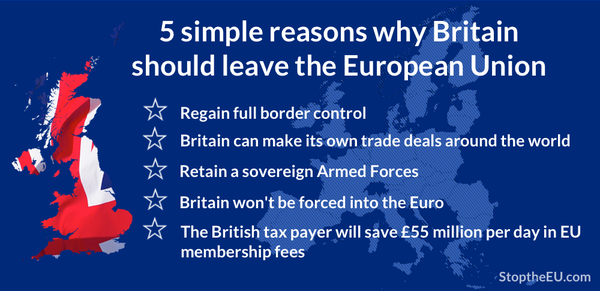
    1. Sovereignty – that Britain ceded its sovereignty, right to pass its own laws to bureaucrats sitting in Brussels <Doesn’t India lose its sovereignty by being member of UN?>
    2. Regulations – That Brussels imposed too many regulations that hurt British business interest
    3. Money – Billions of pounds of entry fee with very little to show in return <Britain don’t have many farmers to get agriculture subsidies>
    4. Open borders/ migration – even though Britain is not part Schengen, workers from rest of the EU can come their freely and work there. Large numbers from eastern europe came just to claim British benefits, social security and all <so called welfare tourism>
    5. Ever Closer Union – detested the idea of United states of Europe <closer political union, confederation sort of thing>

    Why did Cameron want UK to stay in EU?

    1. Single market – much easier to sell things while being member of single market
    2. Security
    3. Britain’s status in the world is enhanced as part of EU

    How is single market different from free trade area?

    • In FTA there are no tariffs except on some negotiated goods and services but in single market, even labour mobility is free
    • In Single market, you impose common tariffs on all imports, it;s like a single country for the purpose of trade and commerce
    • There are common standards etc. <environment, labour, quality etc.>

    What is European free trade association (EFTA)?

    • It is FTA of 4 European countries -Iceland, Norway, Switzerland, Liechtenstein <do you recall they are all part of Schengen>
    • All of them have signed FTA with EU. Britain can sign similar FTA with EU now

    What happens now?

    • Britain would negotiate its exit <under Lisbon treaty>, But the fear is of contagion. Eurosceptic parties of other countries would also press for similar referendums.  
    • Plus as Scotland has voted overwhelmingly in favour of stay (68%), there would be fresh demand for referendum on Scottish independence. Similarly is the case with northern Ireland.

    Impact on India

    • No direct impact but expect turbulence in stock and forex market. Panicky investors may withdraw their hot money out of India
    • On positive side, India can sign FTA with Britain
  • UPSC Prelims Polity Trend Analysis part 4

    Pre 2011

    1. What is the difference between “vote-on-account” and “interim budget”?
    1. The provision of a “vote-on-account” is used by a regular Government, while an “interim budget” is a provision used by a caretaker Government.
    2. A “vote-on-account” only deals with the expenditure in Government’s budget, while an “interim budget” includes both expenditure and receipts.

    Which of the statements; given above is/are correct?

    (a.) 1 only

    (b.) 2 only

    (c.) Both 1 and 2

    (d.) Neither 1 nor 2

    • Vote on account is passed every year, used by both regular and caretaker govt
    • Vote on account deals only with expenditure while interim budget both revenue and expenditure <see titbits for more>

    Learnings – Can’t repeat enough, learn passage of budget

    1. In India, if a religious sect/community is given “the status of a national minority, what special advantages it is entitled to?
    1. It can establish and administer exclusive educational institutions.
    2. The President of India automatically nominates a representative of the community to LokSabha.
    3. It can derive benefits from the Prime Minister’s 15-Point Programme.

    Which of the statements given above is/are correct?

    (a.) 1 only

    (b.) 2 and 3 only’

    (c.) 1 and 3 only

    (d.) 1, 2 and 3

    2 is obviously wrong, there is no communal representation, seats in LS for anglo indians that too not automatic

    Learning – Learns FRs by heart

    1. The authorization for the withdrawal of funds from the- Consolidated Fund of India must come from:

    (a.) The President of India

    (b.) The Parliament of India

    (c.) The Prime. Minister of India

    (d.) The Union Finance, Minister

    REpeated infinite times, parliamentary approval required, president recommendation before introducing the money bill

    Learning – Learn 3 funds, CFI, Contingency, Public accounts , Parliamentary control over finances

    1. All revenues received by the Union. Government by way of taxes and other receipts for the conduct of Government business are credited to the:

    (a.) Contingency Fund of India

    (b.) Public Account

    (c.) Consolidated Fund of India

    (d.) Deposits and Advances Fund

    Internal repeat, Everything goes and comes out of Consolidated fund of India

    1. When the annual Union Budget is not passed by the LokSabha 

    (a.) the Budget is modified and presented again

    (b.) the Budget is referred to the RajyaSabha for suggestions

    (c.) the Union Finance Minister is asked to resign,

    (d.) the Prime Minister submits the resignation of Council of Ministers

    Simple resignation, money bill rejected, govt resigns

    Learning – Passage of Budget

    1. Under the Constitution of India, which one of the following is not a fundamental duty?

    (a.) To vote in public elections

    (b.) To develop the scientific temper

    (c.) To safeguard public property

    (d.) To abide by me Constitution and respect its ideals

    Repeated ad nauseam, voting not a FD

    1. With reference to the Finance Commission of India, which of the following statements is correct?

    (a.) It encourages the inflow of foreign capital for infrastructure development

    (b.) It facilitates the proper distribution of finances among the Public Sector Undertakings

    (c.) It ensures transparency in financial administration

    (d.) None of the statements (a), (b) and (c) given above is correct in this context

    FC repeated, it deals with distribution of taxes b/w union and states

    Learning – Role of FC, FCv/s PC, article 275, 282 and 280

    1. Among the following who are eligible to benefit from the “Mahatma Gandhi National Rural Employment Guarantee Act”?

    (a.) Adult members of only the scheduled caste and scheduled tribe households

    (b.) Adult members of below poverty line (BPL) households

    (c.) Adult members of households of all backward communities

    (d.) Adult members of any household

    There is no BPL/APl, SC/ST, though ⅓ should go to women, it should be adult member of rural households

    1. The Constitution (Seventy-Third Amendment) Act, 1992, which aims at promoting the Panchayati Raj Institutions in the country, provides for which of the following?
    1. Constitution of District Planning Committees.
    2. State Election Commissions to conduct all panchayat elections.
    3. Establishment of State Finance Commissions.

    Select the correct answer using the codes given below:

    (a.) 1 only

    (b.) 1 and 2 only

    (c.) 2 and 3 only

    (d.) 1, 2 and 3

    2 and 3 are easily correct. Statement 1 is very tricky as DPC is under 74th amendment

    Learning – Evolution of local planning <MAyo, Rippon to 3 committees post independence>, Mandatory v/s optional provisions, schedule 11 and 12

    1. Consider the following statements :

    In India, a Metropolitan Planning Committee

    1. is constituted under the provisions of the Constitution of India.
    2. prepares the draft development plans for metropolitan area.
    3. has the sole responsibility for implementing Government sponsored schemes in the metropolitan area.

    Which of the statements given above is/are correct?

    (a.) 1 and 2 only

    (b.) 2 only

    (c.) 1 and 3 only

    (d.) 1, 2 and 3

    Similar to DPC. Statement 3, sole responsibility gives it away. Can not be the only body responsible for development. 1nd 2 easily correct

    Learning – DPC and MPC

    1. Consider the following :
    1. Right to education.
    2. Right to equal access to public service.
    3. Right to food.

    Which of the above is/are Human Right/Human Rights under “Universal Declaration of Human Rights”?

    (a.) 1 only

    (b.) 1 and 2 only

    (c.) 3 only

    (d.) 1, 2 and 3

    Obviously all are human rights

    Pre 2010

    1. .With reference to the Constitution of India, consider the following:
    1. Fundamental Rights
    2.  Fundamental Duties
    3. Directive Principles of State Policy

    Which of the above provisions of the Constitution of India is/are fulfilled by the National Social Assistance Programme launched by the Government of India?

    1. 1 only
    2. 3 only
    3. 1 and 3 only
    4. 1, 2 and 3

    Repeated infinite times, social assistance = welfare = socio economic democracy = DPSP

    1. Who of the following shall cause every recommendation made by the Finance Commission to be laid before each House of Parliament?
    1. The President of India
    2. The Speaker of Lok Sabha
    3. The Prime Minister of India
    4. The Union Finance Minister
    • Repeated again – FC, UPSC, CAG, NVSC, NCST etc submit reports to president who cause them to be laid before parliament.
    • On the other hand in case of committees of parliament like PAC, chairperson submits report to the house
    1. Which one of the following is responsible for the preparation and presentation of Union Budget to the Parliament?
    1. Department of Revenue
    2. Department of Economic Affairs
    3. Department of Financial Services
    4. Department of Expenditure

    Repeated in 2015,

    4,Which one of the following authorities makes recommendation to the Governor of a State as to the principles for determining the taxes and duties which may be appropriated by the Panchayats in that particular State?

    1. District Planning Committees
    2. State Finance Commission
    3. Finance Ministry of that State
    4. Panchayati Raj Ministry of that State

    Simple – Repeat, Role of Finance commission is to distribute taxes. Observe that DPC was asked next year in other format

    1. With reference to Lok Adalats, which of the following statements is correct?
    1. Lok Adalats have the jurisdiction to settle the matters at pre-litigation stage and not those matters pending before any court
    2. Lok Adalats can deal with matters which are civil and not criminal in nature
    3. Every Lok Adalat consists of either serving or retired judicial officers only and not any other person
    4. None of the statements given above is correct
    • Why not pending cases, in fact courts encourage mediation and ADR. 3rd statement only gives it away. Even petty criminal cases can be tried here <compoundable offences>
    • Imp.- Order can not be challenged in any court of law once it has been accepted by both the party

    Learning – Lok Adalat, Gram Nyayalay, ADR, Arbitration amendment act

    1. .With reference to the Consumer Disputes Redressal at district level in India, which one of the following statements is not correct?
    1. A State Government can establish more than one District Forum in a district if it deems fit
    2. One of the members of the District Forum shall be a woman
    3. The District Forum entertains the complaints where the value of goods or services does not exceed rupees fifty lakhs
    4. A complaint in relation to any goods sold or any service provided may be tiled with a District Forum by the State Government as a representative of the interests of the consumers in general

    Repeated question from consumer protection act

    Learning – Consumer protection act, amendment, FSSAI

    1. .With reference to the United Nations Convention on the Rights of the Child, consider the following:

    1. The Right to Development

    2. The Right to Expression

    3. The Right to Recreation.

    Which of the above is / are the Rights of the child?

    1. 1 only
    2. 1 and 3 only
    3. 2 and 3 only
    4. 1, 2 and 3

    All are rights . Common sense. Earlier question on human right was asked

    8.The ”Instrument of Instructions” contained in the Government of India Act 1935 have been incorporated in the Constitution of India in the year 1950 as

    1. Fundamental Rights
    2. Directive Principles of State Policy
    3. Extent of executive power of State
    4. Conduct of business of the Government of India

    Repaeted an nauseum

    1. Consider the following statements:

    The Supreme Court of India tenders advice to the President of India on matters of law or fact

    1. on its own initiative (on any matter of larger public interest).
    2. if he seeks such an advice.
    3. only if the matters relate to the Fundamental Rights of the citizens.

    Which of the statements given above is/are correct?

    1. 1 only
    2. 2 only
    3. 3 only
    4. 1 and 2

    Obviously only if he seeks. Then too only in case is supreme court bound to tender advice

    Learning  Original and advisory jurisdiction

    Pre 2009

    1.  If a Panchayat is dissolved, elections are to be held within:
    1. 1 month     
    2. 3 months
    3. 6 months     
    4. 1 year

    Learning – Compulsory and optional provision of 73rd and 74th amendment including reservation requirement

    1. Consider the following statements:

    1. The Governor of Punjab is concurrently the Administrator of Chandigarh

    2 The Governor of Kerala is’ concurrently the Administrator of Lakshadweep

    Which of the above statements is/ are correct?

    1. 1 only
    2. 2 and 3 only
    3. Both 1 and 2
    4. 1,2 and 3

    Covered in titbits

    3.Consider the following statements:

    1. The Advocate General of a State in India is appointed by the President of India upon the recommendation of the Governor of the concerned State.
    2. As provided in Civil Procedure Code, High Courts have original, appellate and advisory jurisdiction at the State level.

    Which of the above statements is/ are correct?

    1. 1 only     
    2. 2 only
    3. Both 1 and 2     
    4. Neither 1 nor 2
    • Why would advocate general be appointed by president, he is appointed by governor, fired by governor. <high court judges are appointed and removed by president>. Ad G is employee of state govt
    • High courts have no advisory jurisdiction

    Learning – Repeated ad nauseum, Original and advisory jurisdiction of courts , writ of high court v/s supreme court

    1. In India, the first Municipal Corporation was set up in which one among the following?
    1. Calcutta
    2. Madras
    3. Bombay     
    4. Delhi

    Learning – evolution of Local Bodies, 1st Panchayat in nagaur, rajasthan

    1. With reference to Lok Adalats, consider the following statements:
    1. An award made by a Lok Adalat is deemed to be a decree of a civil court and no appeal lies against thereto before any court.
    2. Matrimonial/Family disputes are not covered under Lok Adalat.

    Which of the statements given above is/ are correct?

    1. 1 only     
    2. 2 only
    3. Both 1 and 2     

    Family disputes are commonly resolved. Lok adalat repeated next year

    1.  With reference to Union Government, consider the following statements:

    1. The Constitution of India provides that all Cabinet Ministers shall be compulsorily the sitting members of Lok Sabha only.

    2. The Union Cabinet Secretariat operates under the direction of the Ministry of Parliamentary Affairs.

    Which of the statements given above is/ are correct?

    1. 1 only     
    2. 2 only
    3. Both 1 and 2     
    4. Neither 1 nor 2
    • Repeat, can be member of either house or become member in 6 months. Cabinet secretariat is not concerned with parliament so why with Ministry of parliamentary affairs but with
    • Questions related to cabinet secretariat and cabinet secretary repeated
    1.  Which one of the following Constitutional Amendments states that the total number of Ministers, including the Prime Minister, in the Council of Ministers shall not exceed fifteen percent of the total number of members of the House of the People?
    1. 90th     
    2. 91st
    3. 92nd     
    4. 93rd

    91st, amendment of anti defection law

    Learning – 10th schedule, repeated again and again

    1. Consider the following statements:

    1. Central Administrative Tribunal (CAT) was set up during the Prime Minister ship of Lal Bahadur Shastri.

    2. The Members of CAT are drawn from both judicial and administrative streams.

    Which of the statements given above is are correct?

    1. 1 only     
    2. 2 only
    3. Both 1 and 2     
    4. Neither 1 nor 2

    CAT with 42nd amendment act i.e Indira Gandhi, 2nd is obviously true

    Learn – CAT, Jurisdiction, Appeal against CAT decision

    1. With reference to Union Government, consider the following statements:

    1. The number of Ministries at the Centre on 15th August 1947 was 18.

    2 The number of Ministries at the Centre at present is 36.

    Which of the statements given above is are correct?

    1. 1 only     
    2. 2 only
    3. Both 1 and 2     
    4. Neither 1 nor 2

    Obviously rubbish question

    1. With reference to Union Government consider the following statements:

    1. The Ministries and Departments of the Government of India are created by the Prime Minister on the advice of the Cabinet Secretary.

    2. Each of the Ministries is assigned to a Minister by the President of India on the advice of the Prime Minister.

    Which of the statements given above is/ are correct?

    1. 1 only     
    2. 2 only
    3. Both 1 and 2     
    4. Neither 1 nor 2

    Obviously even ministries would then be created by President on advice of Pm

    1.  In India, who is the Chairman of the National Water Resources Council?
    1. Prime Minister
    2. Minister of Water Resources
    3. Minister of Environment and Forests
    4. Minister of Science and Technology

    Learning – PM is chairperson of ???? councils / bodies

    1. Under the administration of which one of the following is the Department of Atomic Energy?
    1. Prime Minister’s Office
    2. Cabinet Secretariat
    3. Ministry of Power
    4. Ministry of Science and Technology

    Learning – PMO and cabinet secretariat

  • please start prelims tit-bits for science and environment also

    Hii, as prelims is coming here my request to dr.v and civil digest team to include science and environment in tit-bits.

More posts