💥UPSC 2026, 2027, 2028 UAP Mentorship (March Batch) + Access XFactor Notes & Microthemes PDF

Search results for: “”

  • IAS/ UPSC Prelims 2017 will be held on 18th June 2017

    UPSC has updated its examination calendar for 2017 (click here)

    Notification of UPSC Prelims (Civil Services + Forest Services) – 22 February 2017

    Last Date to Submit Application – 17 March 2017

    Date of Preliminary Exam – 18 June 2017

    UPSC Civil Services Mains Exam – 28 October 2017 (5 Days)


    For students preparing for IAS Prelims 2017, we have launched our Flagship Course for IAS Prelims 2017

  • [Spiritual Tourism #3] PRASAD Cities- Kanchipuram, Mathura, Puri

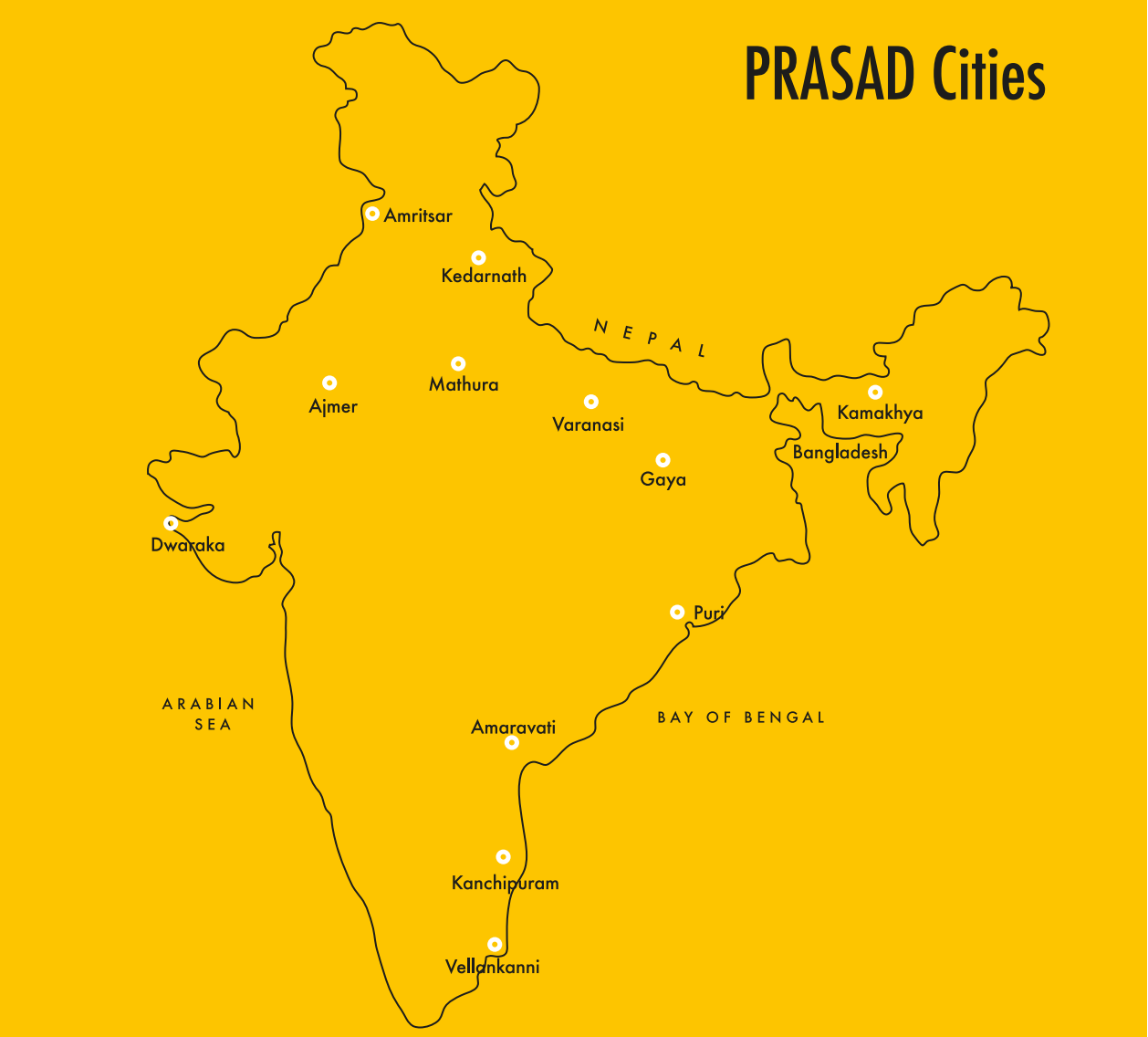
    In the last blog of this new series on Spiritual Tourism we left off at Kamakhya. Lets continue the tour alphabetically and traverse way down South to Kanchipuram. Keep the following map handy

    source

    #7: Kanchipuram

    • Kanchipuram is situated on the banks of Vegavathy river
    • One of 4 dhams of Hinduism (other three being Puri, Dwarka and Badrinath) + Seven most ancient religious cities (like Dwarka too)
    • Ruled by the Pallavas, the Medieval Cholas, the Later Cholas, the Later Pandyas, the Vijayanagar Empire, the Carnatic kingdom, and the British.
      • The legendary Pallavas ruled from Kanchi
      • Dravidian style evolved when rulers such as Mahendravarman and Narsimhavarman-1 commissioned Rock-cut temples (UNESCO herigtage status) known as “Rathas” on banks of Mamallapuram (close to Kanchipuram) Eg- Dharmaraja Ratha
      • Finally culminated in structural temples (also UNESCO heritage status) at Kanchipuram / Mahabalipuram such as Kailasanatha and Vaikuntha Perumal temple
    • Being THE temple city, it is known as ‘city of thousand temples’
      • Home to Ekambareswarar temple (having one of the tallest temple towers aka Vimana in India),
    • Centre for advanced education for Jainism and Buddhism between the 1st and 5th centuries
    • Headquarters of the Kanchi Matha, founded by the Hindu saint Adi Shankaracharya <recently a debate shot up regarding having this Astik Philosopher represent India as its National Philosopher; which exact sub-school does he belong to?>
    • Also called Silk City (Mulberry Silk)
      • Thriving handloom industry
      • Main profession of the people is weaving silk sarees
    • From North to south order of Important TN cities: Chennai -> Kanchipuram -> Puducherry (UT) -> Thanjavur -> Madurai -> Dindigul (Jalikattu Belt)

    #8: Kedarnath

    source
    • One of the twelve ‘Jyotirlingas‘ of Kedar or Lord Shiva.
    • Situated 3500 metres above sea level in Kumaon-Garhwal Himalaya
    • River Mandakini <Tributary of which river?> originates from a Chorabari glacier near Kedarnath
    • Fellow member of famed Panch Kedar 
      1. Rudranath
      2. Madmaheshwar
      3. Kalpeshwar.
      4. Tunganath
      5. Kedarnath
    • Built in 8th century AD by (same) Adi Shankaracharya (enlisted the Char Dhams)
    • Kedarnath was the holy temple ravaged by floods in 2013


    #9: Mathura 

    • Situated on banks of Yamuna river and birth place of Lord Krishna
    • Ruled by Mauryas, Sungas, Kushanas, Lodhis, Mughals, Jats, Marathas, Britishers
    • Centre of three cultures: Indian, Indo-scythian and Hellenstic
    • Centre of Religions: Buddhists, Jains and Brahmanical faith alike (Around 36 annual fairs are held); Round the year festivities
    • Visited by the famous Chinese traveller Hiuen Tsang (during reign of Harshavardhana) and also received a mention from Ptolemy, the great Egyptian writer
      • Tsang came through Tashkent and Swat valley <Alexander did too!>
      • His book “Si-yu-ki” or the records of western world


    Mathura School of Art: 

    source

    Materials– Clay figurines (Terracotta), Red sandstone

    • Landmark Experimentation in style of sculpting- as it replaced symbols by Anthropomorphic forms
    • Secular in character
    • Foreign elements blended with indigenous motifs

    Traditional folk arts:

    • Rasiya (the tradition of folk-songs that describe the love of the divine couple Radha and Krishna),
    • Charkula (a traditional folk dance of the Braj, where a woman balances a column of deepikas on her head)
    • Sanjhee (the colourful art of decorating the ground with flowers),


    #10: Puri

    source

    • Abode of Hindu diety “Lord Jagannath(a coastal city, not along banks of any river)
    • Enshrined in a grand Kalingan Temple of the 12th century
    • One of the Five sacred “khetras” of odisha
    • One of the 4 Dhams of Hinduism
    • Following saints sanctified the place through their preachings and left their imprints in the monasteries and ashramas
      • Ramanuja (12th century AD), Madhavatirtha (13th century AD), Naraharitirtha, Sankaradeva, Nanak, Kabir, Chaitanya
    • Famed Car festival (Rath Yatra) takes place annually here:
      • Three chariots carry Lord Jagannath and his sister, Subhadra, and brother Balabhadra
    • Community Institutions of Puri – the Jaga Gharas and Akhadas are present in each Sahi (nuclear settlements), where martial art, physical exercises and gymnastics are practised
    Published with inputs from Amar 
  • [Solved] IAS Prelims 2016 Mocks #2

    Update:

    The solutions for this mock are now available in a downloadable pdf. We have tried to make them as detailed as possible and included references and user comments wherever possible. Download link. 


    Note: For readers armed with their Android phones, you shall not be able to comment on this quiz from the App ecosystem, so please return to your desktops and fill in the comments and discuss!


    Directions : The following two (02) items consist of two statements, one labelled as the ‘Assertion (A)’ and the other as ‘Reason (R)’. You are to examine these two statements carefully and select the answers to these items using the codes given below:

    (a) Both A and R are true and R is the correct explanation of A

    (b) Both A and R are true and R is NOT the correct explanation of A

    (c) A is true but R is false

    (d) A is false but R is true

    1. Assertion (A) : The Rig Veda does not mention any officer for administering justice.

    Reason (R) : The Rig Vedic society was free of any unsocial activity.

    2. Assertion (A) : The debates in the Ibadat Khana built by Akbar were discontinued after a period.

    Reason (R) : The debates were leading to increasing bitterness among the proponents of different religions.

    3. Under the Mauryan administration, the offices of ‘Samaharta‘ and ‘Sannidhata‘ were related to

    (a) mining activities

    (b) relation with the neighbouring rulers

    (c) tax administration

    (d) activities related to wars

    4. Which of the following was/were mainly produced/constructed while the Gupta dynasty ruled the northern India?

    (a) Ajanta Paintings

    (b) Rock cut temples of Mamallapuram

    (c) Rock cut caves of Barabar

    (d) Sangam Literature

    5. Consider the following statements:

    1. That sun is stationary and the earth rotates was known to Indians by first century B.C.

    2. ‘Zero’ was known to Indians by the second century B.C.

    3. The decimal system was known to Indians by fifth century B.C.

    4. That the moon rotates around the earth was known to Indians by sixth century B.C.

    Which of the above statements is/are correct?

    (a) 1 and 3 only

    (b) 2 and 4 only

    (c) 2, 3 and 4 only

    (d) 1, 2, 3 and 4

     6. By the virtue of which of the following the governance of India was transferred directly to the British Government thus ending the rule of East India Company?

    (a) The Indian Council Act of 1861

    (b) The Regulating Act of 1773

    (c) The Pitt’s India Act of 1784

    (d) The Government of India Act of 1858

    7. Consider the following statements about the land revenue policy of ‘Permanent Settlement’:

    1. It was introduced in Bengal and Bihar by Lord Cornwallis.

    2. The right of ownership of zamindars was made hereditary and transferable.

    3. The zamindars were to give 3/4th of the rental they derived from the peasantry to the state.

    Which of the above statements is/are correct?

    (a) 1 only

    (b) 1 and 2 only

    (c) 2 and 3 only

    (d) 1, 2 and 3

    8. Consider the following statements about Raja Rammohun Roy:

    1. He was the founder of ‘Brahma Sabha’ (Bhahmo Samaj).

    2. He opposed idol worship and championed the cause of women emancipation.

    3. He rejected the authority of oldest sacred books of  Hindu religion faulting them for perpetuating social evils like sati.

    Which of the above statements is/are correct?

    (a) 1 and 2 only

    (b) 2 only

    (c) 1 and 3 only

    (d) 1, 2 and 3

    9. In the context of Indian freedom struggle, what were ‘Anushilan Samiti‘ and ‘Abhinav Bharat‘?

    (a) regional committees enrolling the masses for carrying out the constructive work as propounded by the Indian National Congress

    (b) rural societies that reached out to the peasantry of the country espousing the cause of freedom struggle

    (c) secret societies propagating the idea of revolutionary terrorism to uproot the British from Indian soil

    (d) committees carrying out the task of keeping the spirits of the masses alive during the period of inactivity in the mass movements

    10. Which of the following movement followed the failure of the Cripps Mission?

    (a) Quit India Movement

    (b) Non Cooperation Movement

    (c) Civil Disobedience Movement

    (d) Swadeshi Movement

    11. Vaikom Satyagraha was organised to oppose

    (a) the repressive tax regime in Kerala

    (b) the hereditary rights of land ownership

    (c) the seclusion of lower castes from entering the temples

    (d) the system of begar which burdened the peasantry

    12. During the heyday of Quit India movement, Gandhiji commenced a twenty-one day fast while in jail in February 1943. Why?

    (a) to condemn the violence of the people who digressed from the path of non-violence

    (b) to pressurise the state into accepting the demands of the Congress

    (c) to garner international support for the cause of Indian independence

    (d) to register his protests against the unprecedented violence of the state

    13. Who of the following Bhakti saints was/were contemporary(ies) of Sufi saint Khwaja Muinuddin Chisti ?

    1. Namadeva

    2. Ramananda

    3. Kabir

    4. Ravidas

    Choose the correct alternative using the codes given below.

    (a) 1 and 2 only

    (b) 3 and 4 only

    (c) 1 only

    (d) None

    14. Which one of the following temple was built in a different architectural design compared to the other three?

    (a) Kandarya Mahadeo Temple, Khajuraho

    (b) Kailasanatha Temple, Kanchipuram

    (c) Sun Temple, Konark

    (d) Jagannatha Temple, Puri

    15. Consider the following statements:

    1. Arches and domes, which were Turkish inventions, were used by them on a wide scale in their buildings in India.

    2. The arches were decorated with human or animal figures and scrolls of flowers.

    Which of the above statements is/are correct?

    (a) 1 only

    (b) 2 only

    (c)  Both 1 and 2

    (d) Neither 1 nor 2

    16. Who of the following was the first one to offer Individual Satyagraha?

    (a) Jyotiba Phule

    (b) Jawahal Lal Nehru

    (c) Vinoba Bhave

    (d) Rajendra Prasad

    17. Consider the following statements:

    1. Sarojini Naidu was the first Indian woman to address a session of the Indian National Congress.

    2. W C Bonnerji was the first President of the Indian National Congress.

    Which of the above statements is/are correct?

    (a) 1 only

    (b) 2 only

    (c)  Both 1 and 2

    (d) Neither 1 nor 2

    18. With respect to the Indian National Freedom movement, what was ‘Cunningham Circular‘?

    (a) A circular in Assam which forced students to furnish assurances of good behaviour

    (b) A circular in Bardoli allowing the confiscation of the assets of anyone refusing to pay taxes

    (c) A circular in Nagpur restraining participation by the mill workers in Nagpur Flag Satyagraha

    (d) A circular in North West Frontier Province allowing firing even on the peaceful demonstrators

    19. With reference to the medieval history of India, Rashtra, Visaya and Bhukti were units of administration of

    (a) Palas

    (b) Chalukyas

    (c) Rashtrakutas

    (d) Pratiharas

    20. Anekantavada is a core theory and philosophy of which one of the following?

    (a) Buddhism

    (b) Sikhism

    (c) Jainism

    (d) Vaishnavism

    21. Which of the following is/are correctly matched?

    Theatre Form            :          Region

    1.   Ankia Naat          :     Western India

    2.   Dashavatar          :     Konkan Region

    3.   Bhand Pather      :     Central India

    Choose the correct alternative using the codes given below.

    (a) 2 and 3 only

    (b) 2 only

    (c) 1 and 3 only

    (d) 1, 2 and 3

    22. Consider the following statements:

    1. ‘Thangka Paintings‘ are hand made paintings popular in the tribal areas of Jharkhand.

    2. They depict images of local deities and episodes from popular texts like Mahabharata and Ramayana.

    Which of the above statements is/are correct?

    (a) 1 only

    (b) 2 only

    (c)  Both 1 and 2

    (d) Neither 1 nor 2

    23. What was Komagata Maru?

    (a) A political party based in Thailand

    (b) A prominent communist leader of China

    (c) A naval ship  on voyage to Canada

    (d) A revolutionary leader of Japan

    24. Which of the following statements about the Charter Act of 1833 is/are correct?

    1. The trading activities of East India Company were to be abolished.

    2. A law member was to be appointed to the Governor-General’s Council.

    3. All law-making power was vested in the law member appointed to the Council.

    Which of the above statements is/are correct

    (a) 1 and 2 only

    (b) 2 only

    (c) 1 and 3 only

    (d) 1, 2 and 3

    25. ‘Indian Liberation Front’ was formed by the moderates who left Indian National Congress following the

    (a) Indian Statutory Commission report

    (b) Montague-Chelmsford report

    (c) Cripps Mission Report

    (d) Wavell Plan


  • [Spiritual Tourism #2] PRASAD Cities- Amritsar, Gaya, Dwarka and Kamakhya

    In the last blog of this new series on Spiritual Tourism we left off at Amaravati. Lets continue the tour alphabetically and head straight to Amritsar. Keep the following map handy

    source

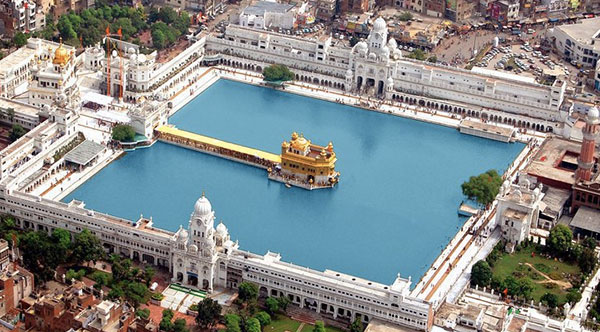
    #3: Amritsar

    source
    • Literally a “Pool of Nectar”
    • Centre of Sikhism and the site of the Sikhs’ principal place of worship.
    • Name from Amrit Sarovar, the holy tank that surrounds the fabulous Harimandir Sahib aka Golden Temple
    • City was founded by Guru Ram Das Ji, the 4th Sikh Guru, in the year 1577
      • Early name of the city was Chak Guru
    • Places of Interest: Wagah Border, Jallianwala Bagh
    • Historic Importance:
      • A city of historic walls and impressive gateways
      • Importance under the reign of Maharaja Ranjit Singh
      • City lies on the Grand Trunk Road, Asia’s one of the oldest built by King Sher Shah Suri in the year 1539.
    • Arts and Craft
      • Woollens, carpets and blankets
      • Cut-glass work, bangles and embroidered stuff <like Phulkari embroidery which has GI tag>
      • Also home to various Takias (A sufi convent) & Khankahs (A retreat designed specifically for gatherings of a Sufi brotherhood to meet, reside, study, and assemble and pray together as a group in the presence of a Sufi master)

    #4: Dwarka

    source
    • One of 4 sacred Hindu pilgrimage sites (Chaar-dham) as per Shankaracharya
    • One of 7 most ancient religious cities in the country
    • Known for being the centre of Dwarka Kingdom, the ancient kingdom of Lord Krishna
      • Underwater Study on the coastal water of Dwarka conducted by the ASI revealed the existence of a city dated to the 2nd millennium BC
    • Famous for Dwarkadheesh Temple (dedicated to Lord Krishna), which was built around 200 BC
    • Mention in Indian epic literature in Mahabharata and Skanda Purana

    #5: Gaya- a religious confluence

    source

    Gaya is situated on the Banks of Phalgu river <Phalgu river is a tributary of which famous river?>

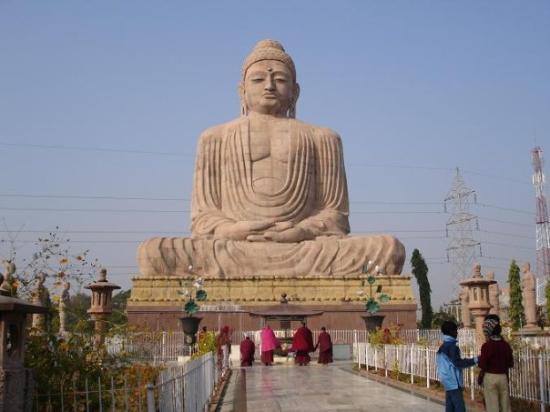
    • Center of Buddhism:
      • Close proximity to famous Buddhist pilgrimage centre of Bodhgaya
      • Lord Buddha attained enlightenment in Bodhgaya
        • The UNESCO famed Mahabodhi temple is also at Bodhgaya <Ashoka laid the foundation stone>
      • Projected to the world by Bimbisara the Fifth of the Shishunaga dynasty
      • Note: Gaya also finds a mention in the great epics of Ramayana and Mahabharata; like Dwarka
    • Center of Hinduism:
      • Famous as a site of Hindu tourism for ‘pind-daan
      • Large influx of visitors for the month long ‘Pitra Pakshmela annually
    • Center for Islam
      • Largest mosque in Bihar, the Jama Masjid. is also located in Gaya
        • There are numerous Jama masjids in India- the most famous being in Delhi made by Shah Jahan in Red Sandstone


    #6: Kamakhya Temple

    source
    • Center of Tantric and shakti cults of Hinduism
    • Sitting atop Nilachal Hills, overlooking river Brahmaputra in Assam
    • Inscription of Allahabad pillar of Samudragupta mentions Kamakya Temple
    • Amongst the 51 Shakti Peethas related to the cult of Sati (name comes from the myth that there are 51 pieces of Sati’s body scattered across the Indian subcontinent, and Kamakhya is one of them), and Shakta temple
    • Kamakya devi is also known as The menstruating goddess.
    • Famous Ambabuchi Mela is celebrated as the annual mela of Kamakhya Temple
    Published with inputs from Amar 
  • 15 Questions from Prelims titbits

    We have been doing Prelims Titbits for >15 days now. This is a mini test to evaluate whether you are doing it correctly or not. Many of the Questions have been taken from past 5 years prelims papers.

    1. With reference to the period of colonial rule in India, “Home Charges” formed an important part of drain of wealth from India. Which of the following funds constituted “Home Charges”?(2011)

    • 1. Funds used to support the India Office in London.
    • 2. Funds used to pay salaries and pensions of British personnel engaged in India.
    • 3. Funds used for waging wars outside India by the British.

    Select the correct answer using the codes given below:

    • (a.) 1 only
    • (b.) 1 and 2 only
    • (c.) 2 and 3 only
    • (d.) 1, 2 and 3

    2. The salaries of which of the following are charged on the Consolidated Fund of India?

    • 1. Speaker of the Lok Sabha
    • 2. Deputy Speaker of the Lok Sabha
    • 3. Chairman of the Rajya Sabha
    • 4. Deputy Chairman of the Rajya Sabha
    • 5. Judges of the Supreme Court
    • 6. Judges of the High Courts
    • 7. Chief Election Commissioner
    • 8. Chairman of the UPSC
    • 9. CAG
    • a. 1, 2, 3, 4, 5 and 9
    • b. 1, 2, 5, 6, 7 ,8 and 9
    • c. 1, 2, 4, 5, 6,7 and 9
    • d. 1, 2, 3, 4, 5, 6, 8 and 9

    3. Consider the following statements: (UPSC 2007 Prelims)

    • 1. The mode of removal of a Judge of a High Court in India is same as that removal of a Judge of the Supreme Court.
    • 2. After retirement from the office, a permanent Judge of a High Court cannot plead or act in any court or before any authority in India.

    Which of the statements given above is/are correct?

    • (a) 1 only
    • (b) 2 only
    • (c) Both 1 and 2
    • (d) Neither 1 nor 2

    4. Which one of the following is not a site for in-situ method of conservation of flora? (2011)

    • (a.) Biosphere Reserve
    • (b.) Botanical Garden
    • (c.) National Park
    • (d.) Wildlife Sanctuary

    5. Three of the following criteria have contributed to the recognition of Western Ghats-Sri Lanka and Indo-Burma regions as hotspots of biodiversity: (2011)

    • 1. Species richness
    • 2. Vegetation density
    • 3. Endemism
    • 4. Ethno-botanical importance
    • 5. Threat perception
    • 6. Adaptation of flora and fauna to warm and humid conditions

    Which three of the above are correct criteria in this context?

    • (a.) 1, 2 and 6
    • (b.) 2, 4 and 6
    • (c.) 1, 3 and 5
    • (d.) 3, 4 and 6

    6. A presides over the joint sitting of both the Houses. If however A is absent, B  presides. If B  is also absent, C presides. A,B and C respectively are?

    • a.President, Vice President and Deputy Speaker
    • b. Speaker, Vice President and Deputy Chairman
    • c. Chairman, Deputy Chairman and Deputy Speaker
    • d. Speaker, Deputy Speaker and Deputy Chairman

    7. Lichens, which are capable of initiating ecological succession even on a bare rock, are actually a symbiotic association of (Pre 2013)

    • a. algae and bacteria
    • b. algae and fungi
    • c. bacteria and fungi
    • d. fungi and mosses

    8. Nai Manzil is a government of India scheme related to development of which of the following

    • a) Skill development
    • b) Eucation
    • c) Health
    • d) Traditional heritage of minorities

    9. The demand for the Tebhaga Peasant Movement in Bengal was for:  (2013)

    • (a) the reduction of the share of the landlords from one-half of the crop to one-third
    • (b) the grant of ownership of land to peasants as they were the actual cultivators of the land
    • (c) the uprooting of Zamindari system and the end of serfdom
    • (d) writing off all peasant debts

    10. With reference to the period of Indian freedom struggle, which of the following was/were recommended by the Nehru report?(2011)

    1. Complete Independence for India.
    2. Joint electorates for reservation of seats for minorities.
    3. Provision of fundamental rights for the people of India in the Constitution.

    Select the correct answer using the codes given below:

    • (a.) 1 only
    • (b.) 2 and 3 only
    • (c.) 1 and 3 only
    • (d.) 1, 2 and 3

    11. Consider the following definitions:

    • 1. Bioaccumulation is the increasing concentration of a substance, such as a toxic chemical, in the tissues of organisms at successively higher levels in a food chain
    • 2. Biomagnification occurs within a trophic level, and is the increase in concentration of a substance in certain tissues of organisms’ bodies due to absorption from food and the environment
    • 3. Bioconcentration is defined as occurring when uptake from the water is greater than excretion

    Which of the above definitions is/are INCORRECT?

    • a) 1 and 2 Only
    • b) 2 and 3 Only
    • c) 1 and 3 Only
    • d) All

    12. The Lahore Session of the Indian National Congress (1929) is very important in history, because(2012)

    • 1. the Congress passed a resolution demanding complete independence
    • 2. the rift between the extremists and moderates was resolved in that Session
    • 3. a resolution was passed rejecting the two-nation theory in that Session

    Which of the statements given above is/are correct?

    • (a) I only
    • (b) 2 and 3
    • (c) 1 and 3
    • (d) None of the above

    13. In which of the following movements did Mahatma Gandhi undertook fast unto death for the first time to get his demands fulfilled?

    • a) Champaran Satyagraha
    • b) Kheda Satyagraha
    • c) Ahmadabad mill strike
    • d) Non-cooperation movement

    14. What is the difference between “vote-on-account” and “interim budget”?(2011)

    • 1. The provision of a “vote-on-account” is used by a regular Government, while an “interim budget” is a provision used by a caretaker Government.
    • 2. A “vote-on-account” only deals with the expenditure in Government’s budget, while an “interim budget” includes both expenditure and receipts.

    Which of the statements; given above is/are correct?

    • (a.) 1 only
    • (b.) 2 only
    • (c.) Both 1 and 2
    • (d.) Neither 1 nor 2

    15. A deadlock between the LokSabha and the RajyaSabha calls for a joint sitting of the Parliament during the passage of(2012)

    • 1. Ordinary Legislation
    • 2. Money Bill
    • 3. Constitution Amendment Bill

    Select the correct answer using the codes given below :

    • (a) 1 only
    • (b) 2 and 3 only
    • (c) 1 and 3 only
    • (d) 1, 2 and 3

    SOLUTIONS


    1. b

    Home charges means money spent by Britain in Britain on behalf of India. They included

    1. dividends on East India Stock
    2. interest in Home debt
    3. the salaries of the officer
    4. establishments of the and building connected with the Home Department of Indian Government
    5. furlough and retired pay to members of the Indian Military and Civil Services when at Home
    6. Charges of all descriptions paid in this country connected with the British troops serving in India and
    7. portion of the cost of transporting the British troops to and from India

    I am not so sure about statement 3. Funds used for waging war outside India as when British fought in wars nor do I find direct mention of it in home charges. EIC donated money to them. IMO statemnt 3 is wrong

    2. No option is correct. Answer is 1,2,3,4,5,8 and 9. If any option has to be marked, it would be option a

    6- salary of high court judge charged on consolidated fund of states not centre, pension is charged on CFI

    7- EC expenditure and salary not charged

    3. a

    Can practice in supreme court or other high courts

    4. b

    Botanical garden – ex situ

    5. c , 1,3 and 5

    Threat perception has to be one of the criteria, only in one option

    6, d, speaker, deputy speaker, deputy chairperson

    7. b, algae and fundgi

    8. a, skill development of minorities

    9. a

    10. b, 2 and 3

    It demanded dominion status, that’s why J.L.Nehru and Subhash Bose opposed and criticized the report

    11. a, 1 and 2 incorrect

    Definition of bioaccumulation and biomagnification has been interchanged.Bioaccumulation occurs within same trophic level.

    12. a, 1 only

    13. c, ahmedabad mill strike

    14. b

    15. a, 1only

    RS can only hold back money bill for 14 days. CAB has to be passed separately by both the houses


    P.S.- Almost every question can be solved by reading tit-bit. 10 questions were from previous years UPSC papers. If you got <24/ 30 after negative, you are not doing titbits and your study properly.

  • Nuclear Diplomacy and Disarmament

    Here’s what we are going the explain in this writeup:

    • The Backstory
    • What is the Missile Technology Control Regime (MTCR)?
    • What does India need to do to get in?
    • Does joining the MTCR make getting missile technology easier?
    • Does the MTCR actually stop the spread of missile technology?
    • Are there any sanctions for breaking MTCR rules?
    • Does the MTCR actually stop the spread of missile technology?
    • Why does India want to be in the Nuclear Suppliers Group (NSG)?
    • Why does the US want India in the NSG?
    • Why doesn’t Pakistan want India in?
    • And what is China’s problem?
    • Why then did China go along with the NSG waiver in 2008?
    • Why does India want to join Proliferation control regimes?
    • Why is India’s Bid for NSG being criticized?

    source

    The Backstory

    • Since 2008, India has been pushing forward to become an NSG member, where decisions are consensus based and not based on majority votes
    • It has also been looking for membership of other groups such as MTCR
    • India recently became the Member of MTCR, however its bid for getting membership of NSG was not successful because of opposition from China and 12 other NSG members

    #1. All about MTCR

    What is the Missile Technology Control Regime (MTCR)?

    Established in April 1987, it is a voluntary association of 35 countries and 4 “unilateral adherents” that follow its rules: Israel, Romania, Slovakia, Macedonia.

    The group aims to slow the spread of missiles and other unmanned delivery technology that could be used for chemical, biological and nuclear attacks.

    The regime urges members, which include most of the world’s major missile manufacturers, to restrict exports of missiles and related technologies capable of carrying a 500 kg payload at least 300 km, or delivering any type of weapon of mass destruction.

    How does one become a member of MTCR?

    • Prospective members must win consensus approval from existing members. United States policy had been that members that are not recognised nuclear-weapon states — including India — must eliminate or forgo ballistic missiles able to deliver a 500 kg payload at least 300 km
    • The US, however, made an exception in 1998 for Ukraine, permitting it to retain Scud missiles and, in October 2012, South Korea was allowed to keep ballistic missiles with an 800-km range and 500-kg payload that could target all of North Korea
    • For India, the US have waived these terms, allowing it retain its missile arsenal

    Does joining the MTCR make getting missile technology easier?

    • There are no special concessions for MTCR members. But India hopes its MTCR membership will be one more reason for the US to consider exporting Category 1 UAVs, Reaper and Global Hawk, which have been key to counter-terrorism efforts in Afghanistan, Pakistan, Somalia and Yemen
    • These drones have so far been sold to only one country, the UK, though unarmed versions have also been made available to Italy and South Korea
    • The US has been rethinking rules on exports, aware that competitors in Israel, Russia and China are working on similar products — and India wants to be at the head of the queue when the Reaper and the Global Hawk go on the market

    Are there any sanctions for breaking MTCR rules?

    • Rule breakers can’t be punished.
    • However, US law mandates sanctions for companies and governments that export MTCR-controlled items. The sanctioned entity can’t sign contracts, buy arms and receive aid for two years or more.

    Does the MTCR actually stop the spread of missile technology?

    • Yes and no. North Korea, Iran and Pakistan acquired ballistic missile technology from China. But then, China began to feel the pinch of US technology sanctions — and announced, in November 2000, that it would stop exporting ballistic missile technology.
    • Four years later, it applied for MTCR membership — but has been denied entry because of suspicion that some companies in the country are secretly supplying technology to North Korea.
    • Many others dropped missile programmes because of MTCR pressure: Argentina abandoned its Condor II ballistic missile programme (on which it was working with Egypt and Iraq) to join the regime. Brazil, South Africa, South Korea and Taiwan shelved or eliminated missile or space launch vehicle programmes. Poland and the Czech Republic destroyed their ballistic missiles.

    It is possible China may now seek some kind of bargain, whereby it is given entry to the MTCR in return for letting India get into the NSG, where it wields a veto.

    What after MTCR?

    • Admission to the MTCR would open the way for India to buy high-end missile technology
    • It will also make India’s aspiration to buy state-of-the-art surveillance drones such as the U.S. Predator, made by General Atomics.

    #2. All about NSG

    Why does India want to be in the Nuclear Suppliers Group (NSG)?

    Following India’s 1974 nuclear tests, the US pushed for setting up a club of nuclear equipment and fissile material suppliers.

    The 48-nation group frames and implements agreed rules for exporting nuclear equipment, with a view to controlling the spread of nuclear weapons; members are admitted only by consensus.

    India has been trying, since 2008, to join the group, which would give it a place at the high table where the rules of nuclear commerce are decided — and, eventually, the ability to sell equipment.

    Many countries that initially opposed its entry, like Australia, have changed stance; Mexico and Switzerland are the latest to voice support. India’s effort has been to chip away at the resistance, leaving only one holdout — China. But until China accepts India’s entry, there is no hope of membership.

    Why does the US want India in the NSG?

    The answer lies in the US effort to strengthen the global nuclear non-proliferation regime, whose centrepiece is the 1968 Nuclear Non-proliferation Treaty, or NPT.

    The NPT defines “nuclear weapons states” as those that tested devices before January 1, 1967 — which means India cannot ever be one.

    India — like Israel and Pakistan — thus refused to sign the treaty. From 2005, though, President George W Bush’s administration sought ways to deepen strategic cooperation with India.

    Nuclear energy was a key means to strengthen cooperation, but since India wasn’t a member of the NPT, technology couldn’t be shared. Then, a way forward was found — the US-India Civil Nuclear Agreement.

    India agreed to separate its civilian and military nuclear programmes, and put the civilian part under International Atomic Energy Agency safeguards.

    India also changed its export laws to line up with the NSG, MTCR, Wassenaar Arrangement, and Australia Group — the 4 key nuclear control regimes.

    The US agreed to shepherd India’s entry into these regimes, which meant India would for all practical purposes be treated like an NPT member, even though it wasn’t one.

    Why doesn’t Pakistan want India in?

    The Pakistani argument is that giving India easy access to fissile material and technology for its civilian nuclear programme means it would have that much more material for its military nuclear programme.

    Thus, Pakistan says, the move to give India NSG membership is fuelling a nuclear arms race.

    But this argument falls apart because Pakistan is resolutely opposed to a key international agreement called the Fissile Material Cut-Off Treaty (FMCT), which would cap the military nuclear stockpiles of all countries. The FMCT ought to put an end to Pakistan’s fears, but Islamabad has refused to sign.

    Why has China opposed India’s Bid for NSG?

    Chinese diplomats say Beijing wants NSG entry to be norm-based , in other words, whatever rules govern Indian entry should apply to others too.

    Norm-based entry would, presumably, help Pakistan gain entry, something many in the NSG are certain to resist because of the country’s record as a proliferator of nuclear-weapons technology to Iran, Libya and North Korea.

    Why then did China go along with the NSG waiver in 2008?

    Geopolitics!

    The 2008 one-time waiver allowed nuclear commerce between NSG members and India — the agreement that now allows Westinghouse, and its competitors in France or South Korea, to bid to set up civilian reactors in India.

    The waiver came only after President Bush rang President Hu Jintao and called in a favour. Back then, US-China relations were riding high — on the back of surging trade, and a common vision of how the international order should be structured.

    Today, President Barack Obama and President Xi Jinping are at odds over Chinese muscle-flexing in the South China Sea. The odds of a phone call changing the state of play are next to zero.

    Why does India want to join Proliferation control regimes?

    • India’s membership of the NSG and other proliferation control regimes notably the Missile Technology Control Regime (MTCR), the Australia Group, and the Wassenaar Arrangement is important in order to shatter the myth of it being an “outlier” to the non-proliferation regime as also to facilitate its trade, both imports and exports, of nuclear, missile and other related sensitive technologies.
    • Membership of these regimes will enhance India’s status in this critical area from merely an adherent to a rule maker.
    • It will also enable India to ensure that these regimes perform their mandated role of promoting non-proliferation effectively and not hurt its commercial interests.

    Why India’s recent NSG bid is being criticized?

    • Many experts believe that after the clean waiver of 2008 and the 2011 amendment of the NSG rules (that non-NPT countries would not be entitled to the transfer of the reprocessing and enrichment technology), there is not much merit in seeking a membership of the NSG.
    • The worst outcome of this aggressive bidding was that at NSG forum India’s nuclear regime got hyphenated with Pakistan. It has taken a great deal of effort on the part of successive governments in India to kill the idea of that hyphenation.
    • It suits China ideally to put India in the same bracket as Pakistan. However for India it is diminishing to get itself compared with rogue state like Pakistan who have a dismal track record with respect to Nuclear Proliferation.

    References:

  • UPSC comes out with notifications for Civil Service Exam 2017

    If covert operations are anything to go by, UPSC is trumping them all! Here are your dates for the 2017 Civil Service Calendar:

    1. Prelims Examination to be conducted on- 18th June 2017
    2. Main Examination to be conducted from- 28th October 2017
    3. Notification to be released- 22nd February 2017

    Download the notification from here. Click to download the UPSC pdf.

    Zorr ka jhatka?


  • IAS Prelims tit-bits- Environment and Ecology part 3

    1. Imp. International Conventions  

    1. Stockholm Convention on Persistent Organic Pollutants (POPs)
    2. Minamata Convention on Mercury
    3. Basel Convention on the Control of Transboundary Movements of Hazardous Wastes and Their Disposal
    4. Rotterdam Convention on the Prior Informed Consent Procedure for Certain Hazardous Chemicals and Pesticides in International Trade
    5. Vienna Convention for the Protection of the Ozone Layer under which Montreal Protocol on Substances that Deplete the Ozone Layer
    6. United Nations Framework Convention on Climate Change under which Kyoto Protocol On Green House Gases and Paris Accord
    7. Vienna Convention on Civil Liability for Nuclear Damage
    8. Ramsar Convention on Wetlands <where is Ramsar?>
    9. Bonn convention on  Convention on the Conservation of Migratory Species of Wild Animals <Capital of East and West Germany?>
    10. Convention on International Trade in Endangered Species of Wild Fauna and Flora, Washington Convention
    11. Convention on Biological diversity under which Kartagena protocol on biosafety and Nagoya protocol on access and benefit sharing

    Discuss – Other imp. conventions I missed

    2. International Union for Conservation of Nature and Natural Resources (IUCN)

    1. HQ in Gland, Switzerland
    2. observer and consultative status at the United Nations
    3. Publishes Red Data Book
    4. involved in data gathering and analysis, research, field projects, advocacy
    5. IUCN does not itself aim to mobilize the public in support of nature conservation but tries to influence the actions of governments, business and other stakeholders

    Discuss-Other important environmental organizations, Birdlife International, wetland International

    3. Bioamplification, Biomaginification, Bioaccumulation and Bioconcentration

    1. Bioamplification or biomagnification are one and the same
    2. refers to an increase in the concentration of a substance as you move up the food chain
    3. In contrast bioaccumulation occurs within an organism, where a concentration of a substance builds up in the tissues
    4. Bioaccumulation often occurs in two ways, simultaneously: by eating contaminated food, and by absorption directly from water
    5. This second case is specifically referred to as bioconcentration

    Simple – Bioconcentration and bioaccumulation happen within an organism, but biomagnification occurs across levels of the food chain.

    Discuss- Why does BioMagnification occur? Characteristics of substances which tend to bioaccumulate.

    4. In situ and Ex situ Conservation

    1. In situ -conservation in natural habitat, National parks Wildlife sanctuaries, Biosphere reserves
    2. Ex situ –  preservation of components of biological diversity outside their natural habitats, botanical gardens, zoos, conservation strands and gene, pollen seed, seedling, tissue culture and DNA banks.
    3. Note that difference b/w Wild life sanctuary and national park is that national park allows no human activities inside the buffer or core zone
    4. Biosphere reserves cover a larger area of land which may cover multiple National Parks, Sanctuaries and reserves as well. It has core, buffer and transition zone. Demonstrate sustainable living of man and wild life in nature.
    • Discuss – Latest Indian Biosphere reserve under UNESCO’s MAB programme? Which state is it in? Tribe in that reserve?
    • Discuss- Biosphere reserves, national parks, tiger reserve which are also world heritage site

    5. Green house gases, Ozone depleting substances and Air Pollutants 

    1. 6 GHGs under Kyoto -carbon-dioxide (CO2), methane (CH4), nitrous oxide (N2O), hydrofluorocarbons (HFCs), perfluorocarbons (PFCs), and sulfur hexafluoride (SF6)
    2. Montreal Protocol – Ozone depleting substances- include chlorine and bromine in them <only fluorine containing substances do not deplete ozone> Chlorofluorocarbon Carbons (CFC), Carbon Tetra Chloride, HydroChlorofluorocarbons (HCFC)
    3. Note- All these substances are also GHGs but not covered under Kyoto
    4. Note 2– HFCs do not deplete ozone but are covered under Kyoto
    5. 8 pollutants under National Air Quality Index (AQI)PM10, PM 2.5, NO2, SO2, CO, O3, NH3 and Pb <note that CO2 and Mercury is not included>
    • Discuss – USA wants HFCs to be included under Montreal Protocol, why?
    • Discuss – B/w PM10 and PM2.5 which substance is more harmful and why?
    • Discuss – Which gas is largest contributor to world’s green house effect?
    • Discuss – Largest per capita emission of GHG?
  • Economic Survey For IAS | Volume 2 | Chapter 9 |Part 3 | Social Infrastructure, Employment and Human Development


    Country A has per capita GDP of 20k$ but only 10% of it’s population is graduate, 50% of it’s women are anemic, children are malnourished. Country B has per capita GDP of only 8k$ but 100% of it’s population is literate, 50% gradate, prevalence of anemia and malnutrition is closed to zero. Which country would you considered more developed?

    As per capita GDP was always considered as very narrow measure of human development as it did not include important aspects of development such as health, education etc., there was a search for a broad measure of human development.

    In this context Indian Economist Amartya Sen and Paki Economist Mahbub ul Haq came up with the concept of human development index. Since 1990 it’s published annually by United Nations Development Program (UNDP) <where is it’s Headquarters? hint HQ of most UN bodies is in one particular location except one.>

    Human Development Report 2015

    Theme – Work for human development <what was the theme of 2014 report?>

    1. Human Development Index


    Three dimension, four indicators (in bracket India’s data)

    1. Health – Life Expectancy at Birth (68 yrs)
    2. Education – Mean years of schooling (5.4) and Expected Years of Schooling (11.7)
    3. Standard of Living – per capita GNI at PPP (5497$) <difference b/w GNI and GDP?, PPP v/s market exchange rate?>

    UNDP uses geometric mean to arrive at HDI. Formula is not important <wiki for curious souls, it’s very simple>

    • India – rank 130/188, HDI value – 0.609 <in 2014 india was at 135 with HDI of .586>
    • Top Three Countries: Norway > Australia > Switzerland
    • Neighbors: Sri Lanka (73) >China (90) > India > Bhutan >Bangladesh >Nepal >Pakistan > Afghanistan
    • BRICS : Russia (50) >Brazil (75) >China (90) >South Africa (116) 
    • India has lowest schooling rates in BRICS
    • Even B’desh has higher Life expectancy than India

    2. Inequality adjusted HDI –

    • calculated by discounting each dimension’s <health, education, standard of living> average value according to its level of inequality
    • India’s inequality adjusted HDI is 0.435 i.e India loses >25% of it’s HDI value due to inequality with maximum inequality in education.
    • Top 3 – Norways, Netherlands, Switzerland

    3. Gender Development Index (GDI)

    • GDI = Female HDI/ Male HDI <.660/.525 = .795>
    • Except for Pakistan and Afghanistan, India’s GDI as well as female HDI values are lower than all other SAARC nations plus China
    • Mean Years of schooling for women (3.6 yrs) is half of mean years of schooling for men (7.2 years)
    • While male GNI per capita in India is double that of B’desh, female GNI per capita is in fact lower than that of B’desh
    • Needlessly to say it indicates extent of educational and skill deprivation of girl children in India’s cultural context

    4. Gender Inequality Index


    Three dimensions, 5 indicators

    1. Reproductive health – MMR and Adolescent Birth Rate
    2. Empowerment – % of women in parliament (12.2%), % of women with some secondary education (27% compared to 56% in men)
    3. Labour market – labour force participation (27% compared to 80% in men)
    • India’s GII of .563 is even higher than Pakistan <in SAARC only Afghanistan behind us>
    • Slovenia is number 1

    5. Multidimensional Poverty Index


    Three dimensions 10 indicators

    1. Health – child mortality and nutrition
    2. Education – Years of schooling, school attendance
    3. Standard of Living – cooking fuel, toilet, water, electricity, floor, assets

    Calculation is not important but each dimension has equal 1/ 3 weight and each parameter within dimension has equal weight

    MPI – H *A

    H: Percentage of people who are MPI poor (incidence of poverty)
    A: Average intensity of MPI poverty across the poor (%)

    • A person is considered poor if they are deprived in at least a third of the weighted indicators
    • The intensity of poverty denotes the proportion of indicators in which they are deprived

    For India survey data is of 2005-06, according to which >50% of population suffering from multidimensional poverty and >25% from severe i.e deprivation in >50% of indicators

    Note – Mention this index in any question of poverty where India poverty line is discussed

    While we are at it, let’s also look at some other similar indexes

    1. Global hunger Index

    • Developed by – International Food Policy Research Institute (IFPRI), Concern Worldwide an Irish NGO is copublisher
    • 2015 theme – Armed Conflict and Chronic Hunger

    Four Indicators

    1. undernourished population
    2. Wasting in Under 5 children <wasting is very low weight for height i.e very thin child>
    3. Stunting in under 5 children <stunting is very low height for age i.e. very short child>
    4. Under 5 mortality rate

    It’s a 100 point scale with zero meaning zero hunger, 100 meaning worst form of absolute hunger

    • India – 80/104 <only Afghanistan and Pakistan worse in SAARC>
    • improved its global hunger index score to 29 in 2015 from 38.5 in 2005
    • 15% of India’s population still don’t get enough calories each day <and it’s only 1800 kcal>
    • 39% children stunted compared to 48% in 2005
    • 15% wasted compared to 20% in 2005

    2. Corruption Perception Index

    • by – Berlin based Transparency International
    • India – 76/168
    • Denmark 1st

    3. Global Happiness Index

    by – Sustainable Development Solutions Network (SDSN), a global initiative for the United Nations

    Six Parameters

    1. GDP per capita
    2. Healthy years of life expectancy
    3. Social support (as measured by having someone to count on in times of trouble)
    4. Trust (as measured by a perceived absence of corruption in government and business)
    5. Perceived freedom to make life decisions
    6. Generosity (as measured by recent donations)
    • Differences in social support, incomes and healthy life expectancy are the three most important factors
    • India – 118/156 <below even Pakistan, Somalia>
    • Denmark 1st

    Income Inequality

    As we saw India loses more than a quarter of it’s HDI due to inequality and income inequality plays a part in that. One of the most common method to measure income inequality is Gini Coeffiient

    Gini Coefficient

    It takes value from 0 to 1 with zero denoting perfect equality (everyone having equal income) and 1 denoting perfect inequality (1 person cornering all the income)

    It’s based on income distribution of a population (Lorenz Curve) which plots the proportion of the total income of the population (y axis) that is cumulatively earned by the bottom x% of the population

    source-wikipedia
    source-wikipedia

    India’s Gini Coefficient-

    • In India, National Sample Survey (NSSO) does not collect data on income but it is based on consumption expenditure <inequality in distribution of income will be more than inequality in distribution of consumption expenditure>
    • India’s gini coefficient is about .34 <gini coefficient >.4 is considered highly unequal. China, USA both >.4>

    Gender Issues

    Source-undp
    Source-undp


    We have already discussed a lot about gender inequality in various indexes as well as low female labour force participation rate in last chapter.

    A few more points before concluding the chapter-

    • Gender discrimination in India, which is embedded in the social fabric, continues in most spheres such as access to education, to social and economic opportunities.
    • The reliance on a legal system to offer gender equality and justice, has not built in a time dimension in the dispensation of justice <tareekh pe tareekh>
    • Gender discrimination starts from the womb with sex determination tests and abortion of the female foetuses, discrimination in terms of nutrition offered to the girl child, the length and type of schooling the girl child avails of vis-à-vis her male siblings, inadequate or lack of access to higher education, discrimination in opportunities of employment and wages paid and unequal share in inheritance.
    • We have relied on the legal route to address each of these discriminations, without matching changes in the social fabric or role model set by leaders in society from all spheres.
    • The legal route suffers from several shortcomings, especially in terms of time taken for dispensation of justice
    • There is a law for everything but compliance requires a lot more to be done

    Let’s look at the conviction rate for crimes against women

    • Out of 38,901 ‘Dowry death’ cases registered
    • only 13.6 per cent of cases have been tried
    • out of which only 4.4 per cent cases have resulted in convictions.

    Deterent effect of conviction under a law is nullified by the slow disposal of cases and low conviction rates in crimes against women

    What is the govt doing?

    • Bank account for women
    • Gender Budgeting –  Magnitude of it increased from 2.79% to 4.46% of total budgets in the Gender Budget Statement during the period 2005-06 to 2015-16 <what is gender budget? what is zero based budgeting?>
    • UJJAWALA : A Comprehensive Scheme for Prevention of trafficking and Resue, Rehabilitation and Re-integration of Victims of Trafficking and Commercial Sexual Exploitation <there is another Ujawal for LPG distribution, UJALA for LED bulbs>
    • One stop crisis centre and Sakhi

    Scheme for minorities

    • Nai Roshni – The Scheme for Leadership Development of Minority Women
    • Nai Manzil: A bridge course to bridge the academic and skill development gaps of the deeni Madrasa passouts with their mainstream counterparts
    • Seekho aur Kamao (Learn & Earn) – Skill Development of Minorities
    • Padho Pardesh – Scheme of Interest Subsidy on Educational Loans for Overseas Studies for the Students Belonging to the Minority Communities.
    • Hamari Dharohar – A scheme to Preserve Rich Heritage of Minority Communities of India under the Overall Concept of Indian Culture
    • USTAAD:– The Scheme aims at upgrading Skills and Training in preservation of traditional   Ancestral Arts/Crafts of minorities
    • Minority Cyber Gram -MCG programme seeks to introduce digital literacy skills in identified minority clusters in India through designated Digital Fellows towards knowledge empowerment and entitlement gains of minority focused groups and beneficiaries

    For all Govt schemes and programmes, follow this collection

More posts