💥Mains Ready By December. Smash Mains & Smash PYQ Admissions Open

Search results for: “”

  • Compensatory Afforestation Fund Bill: Significance & Challenges


    “The environment and the economy are really both two sides of the same coin if we cannot sustain the environment we cannot sustain ourselves”-Wangari Mathai

    Why in News

    Recently Rajya Sabha passed The Compensatory Afforestation Fund Bill, 2016.   The Bill had earlier been passed by Lok Sabha in May 2016.

    Context

    1. India is one of the ten most forest-rich countries of the world along with the Russian Federation, Brazil, Canada, United States of America, China, Democratic Republic of the Congo, Australia, Indonesia and Sudan.
    2. The 2013 Forest Survey of India states its forest cover increased to 69.8 million hectares or more than 21% of the country’s area.
    3. For the past two decades concern for climate change and sustainable development is the talk over all major international platform but on the other side there is increasing deforestation, forest fires, encroachments etc.
    4. For sustainable development ecological balance should also be given due importance along with the economic development.
    5. In 2002, the Supreme Court of India observed that collected funds for afforestation were underutilized by the states and it ordered for centrally pooling of funds under Compensatory Afforestation Fund.
    6. The court had set up the National Compensatory Afforestation Fund Management and Planning Authority (National CAMPA) to manage the Fund.
    7. In 2009, states also had set up State CAMPAs that receive 10% of funds form National CAMPA to use for afforestation and forest conservation.
    8. However, in 2013, a CAG report identified that the funds continued to be underutilized.

    C:\Users\ASHWIN\Desktop\environmenta.gif


     What is Compensatory Afforestation?

    1. The simple principle at work here is that since forests are an important natural resource and render a variety of ecological services, they must not be destroyed.
    2. However, because of developmental or industrial requirements, forests are routinely cut, or, as it is said in official language, “diverted for non-forest purposes”.
    3. In such cases, the Forest (Conservation) Act of 1980 requires that non-forest land, equal to the size of the forest being “diverted”, is afforested.
    4. But since afforested land does not become a forest overnight, there is still a loss of the goods and services that the diverted forest would have provided in the interim period.
    5. These goods and services include timber, bamboo, fuel wood, carbon sequestration, soil conservation, water recharge, and seed dispersal.
    6. Afforested land is expected to take no less than 50 years to start delivering comparable goods and services.
    7. To compensate for the loss in the interim, the law requires that the Net Present Value (NPV) of the diverted forest is calculated for a period of 50 years, and recovered from the “user agency” that is “diverting” the forests.
    8. So in short, Compensatory afforestation is defined as afforestation done in lieu of the diversion of forest land for non-forest use.

    Working of CAMPA

    1. An expert committee calculates the NPV for every patch of forest. Currently, the NPV ranges from Rs 4.38 lakh per hectare in case of poor quality forests to Rs 10.43 lakh/ha for very dense forests. An expert committee has recently recommended that this be revised to Rs 5.65 lakh and Rs 55.55 lakh respectively.
    2. “User agencies”, which are often private parties, are not expected to undertake afforestation work themselves.
    3. This work has to be done by the state government. But the entire expenditure to be incurred on creating this new ‘forest’, including purchase of land for the purpose, has to be borne by the user.
    4. The state government eventually has to transfer this land to the forest department for maintenance and management.
    5. Thus, if any user agency wants to divert forest land for non-forest purposes, it has to deposit money for compensatory afforestation as well as pay the NPV, besides a few other charges.
    6. Since forests are being diverted routinely (at the rate of about 20,000-25,000 ha per year according to the Ministry of Environment and Forests) a large sum of money is accruing to the government. Currently, more than Rs 40,000 crore has accumulated from these sources, and the fund is increasing at the rate of about Rs 6,000 crore every year.

    Need of Compensatory Afforestation fund Management and Planning Authority (CAMPA)

    It is to manage this money, and to use it for the designated purposes that CAMPA is proposed to be set up.

    The compensatory afforestation money and NPV are supposed to be collected from the user agency by the government of the state in which the project is located, and deposited with the central government.

    The money will eventually flow back to the state to be used for afforestation or related works

    Key Features of Legislation

    1. The Bill establishes the National Compensatory Afforestation Fund under the Public Account of India, and a State Compensatory Afforestation Fund under the Public Account of each state.
    2. These Funds will receive payments for: (i) compensatory afforestation, (ii) net present value of forest (NPV), and (iii) other project specific payments.  The National Fund will receive 10% of these funds, and the State Funds will receive the remaining 90%.
    3. These Funds will be primarily spent on afforestation to compensate for loss of forest cover, regeneration of forest ecosystem, wildlife protection and infrastructure development.
    4. The Bill also establishes the National and State Compensatory Afforestation Fund Management and Planning Authorities to manage the National and State Funds.

    Merits of Legislation

    1. The passing of the Bill has ended the long era of ad-hocism and will help the Centre and State Governments to utilise these amounts in a planned manner.
    2. It will facilitate make available more than Rs. 6,000 crores per annum to the States/UTs for conservation, protection, improvement and expansion of forest and wildlife resources of the country.
    3. Availability of these amounts will not only help the States/UTs and local communities to ensure better management of their forest resources but will also result in creation of more than 15 crores man-days of direct employment.
    4. A major part of these amounts will be used to restock and improve quality of degraded forests, which constitutes more than 40 % of the total forest cover of the country.
    5. Rules to be framed by the Central Government in consultation with the States/ UTs will provide for use of native species in afforestation activities to be undertaken from these funds.
    6. Majority of the employment will be generated in tribal dominated and backward areas of the country.
    7. Apart from creation of direct employment, utilisation of these amounts will result in increased availability of timber and various other non-timber forest products, and will thus help in improvement of the overall living standards of the forest dependent communities.

    Key Issues

    1. The Bill establishes the Funds for compensatory afforestation and forest conservation. However, there are several factors (other than administration of funds) which affect compensatory afforestation and forest conservation. These factors are mentioned below.
    2. A 2013 CAG report noted that state forest departments lack the planning and implementation capacity to carry out compensatory afforestation and forest conservation. With the share of funds transferred to states increasing from 10% to 90%, effective utilisation of these funds will depend on the capacity of state forest departments.
    3. Procuring land for compensatory afforestation is difficult as land is a limited resource, and is required for multiple purposes, such as agriculture, industry, etc. This is compounded by unclear land titles, and difficulties in complying with procedures for land use.
    4. A High Level Committee on Environment Laws observed that quality of forest cover has declined between 1951 and 2014, with poor quality of compensatory afforestation plantations being one of the reasons behind the decline.
    5. The Bill delegates the determination of NPV (value of loss of forest ecosystem) to an expert committee constituted by the central government. As NPV constitutes about half of the total funds collected, its computation methodology would be important.
    6. Loss of biodiversity: – Since it leads to diversion of original forests, the result is fragmentation, that is, the breaking up of large forest blocks into smaller and more vulnerable patches. Fragmentation in turn leads to biodiversity loss. Moreover, non-native species planted in the name of artificial plantation often have served as a threat to even the existing ecosystem.
    7. .Artificial vs original: –Natural ecosystems take thousands of years to develop over a place. Raising artificial plantations elsewhere such as those along the flanks of railway lines, highways, and so on can’t be supposed to have the same biodiversity value as the original ones. Often, they have a poor survival rate.
    8. .Unavailability of land for planting new forests: –which has often led to use of CAMPA funds for purchasing forest department vehicles or repairing buildings defeating the original purpose.

    Conclusion/Way forward

    What is required is actually an ecosystems approach with focus on climate justice and the rights and role of local communities. It should also address biodiversity and poverty effectively and challenge the underlying causes of deforestation directly, resolving governance, poverty and land tenure issues.

    Question

    What do you understand by Compensatory Afforestation? Critically comment on the provisions of Compensatory Afforestation Fund Bill.

    Source

    http://indianexpress.com/article/explained/campa-afforestation-bill-rajya-sabha-green-india-mission-narendra-modi-2817475/

    http://www.thehindu.com/news/national/Compensatory-Afforestation-Fund-bill-passed-to-create-special-funds/article14300557.ece

    http://pib.nic.in/newsite/mbErel.aspx?relid=147937

    http://fsi.nic.in/details.php?pgID=qu_4

    http://www.moef.nic.in/division/research-development

  • Kigali agreement: Prospects and Issues

    Note4Students/Syllabus Mapping: GS3

    The Climate Change and sustainability has become the buzz words considering the global warming and its multiplier effects on agriculture, industry, people and governments. A landmark agreement at Paris to limit the rise of earth’s temperature to below 2 degrees Celsius of pre industrial levels doesn’t seem enough considering the debilitating impacts of HFCs(Hydro Fluorocarbons) to climate change.

    It is in this backdrop that the new amendment to Montreal Protocol at capital city of Kigali gains prominence as a supporting pillar to the Paris agreement. These two climate change agreements are critical to climate change combat prerogatives. It is in this context that Kigali agreement is important for success of the landmark Paris agreement and hence makes it a hot topic for CSE Mains 2017


    What is the Kigali Agreement?

    source:

    1. In the 28th meeting of the Parties to the Montreal Protocol, negotiators from 197 nations have signed a historic agreement to amend the Montreal Protocol in Kigali, a capital city of a tiny African country, Rwanda on 15th October 2016.
    2. As per the agreement, these countries are expected to reduce the manufacture and use of Hydrofluorocarbons (HFCs) by roughly 80-85% from their respective baselines, till 2045.
    3. This phase down is expected to arrest the global average temperature rise up to 0.5 degrees C by 2100.
    4. Kigali agreement is an amendment to Montreal Protocol.


    Significance of Kigali Agreement:

    1. Many scientists hailed it as an important achievement, which could be crucial to the goal laid out in last year’s Paris Agreement of holding global temperature rise below 2°C by 2100.
    2. The Kigali agreement builds on momentum from other international efforts this past year aimed at addressing climate change.
    3. Unlike Paris agreement, it gives clear, concrete and mandatory targets with fixed timelines to the signatory parties to achieve their targets.
    4. It would prevent the emission of HFCs equivalent to 70 billion tons of CO2.
    5. Total HFC emissions are far less contributors of climate change in comparisons to other greenhouse gasses, but HFCs are thousands of times more potent than carbon dioxide on a pound-per-pound basis.
    6. If all signatory countries implemented this agreement effectively, then could on its own prevent a 0.5°C (0.9°F) rise in temperature by 2100.


    Key pointers of Kigali Agreement:

    1. It is a legally binding agreement between the signatory parties with non-compliance measures.
    2. It will come into effect from 1st January 2019 provided it is ratified by at least 20 member parties by then.
    3. It has shown a considerable flexibility in approach while setting phase-down targets for different economies accommodating their developmental aspirations, different socio-economic compulsions, and scientific & technological capabilities.

    It has divided the signatory parties into three groups-

    1. The first group consists of rich and developed economies like USA, UK and EU countries who will start to phase down HFCs by 2019 and reduce it to 15% of 2012 levels by 2036.
    2. The second group consists of emerging economies like China, Brazil as well as some African countries who will start phase down by 2024 and reduce it to 20% of 2021 levels by 2045.
    3. The third group consists of developing economies and some of the hottest climatic countries like India, Pakistan, Iran, and Saudi Arabia who will start phasing down HFCs by 2028 and reduce it to 15% of 2024-2026 levels till 2047.
    4. It also has a provision for a multilateral fund for developing countries for adaptation and mitigation.
    5. The Technology and Energy Assessment Panel (TEAP) will take a periodic review of the alternative technologies and products for their energy efficiency and safety standards.


    Indian Perspective to Kigali Agreement:

    1. One of the questions before India in its implementation of Montreal Protocol commitments is the need to align its goals for ‘Make in India’ with green technologies in order to remain competitive in global markets.
    2. With Developed nations agreeing to cut 70 per cent of their HFC use by 2029, India will start reducing its HFC consumption when the developed countries would have reduced their consumption by 70 per cent.
    3. The Agreement upholds the principle of Common but Differentiated Responsibilities and Respective Capabilities, which means the agreement recognizes the development imperatives of high-growth economies like India, and provides a realistic and viable roadmap for its implementation.
    4. India a responsible nation: It has announced that it will eliminate the use of HFC-23, a greenhouse gas that harms the ozone layer, by 2030. HFC-23 is a super greenhouse gas with a GWP of 14,800, which is produced as a byproduct of HCFC-22 (Chloro-difluoro-methane) used in industrial refrigeration.
    5. Financial implications: Industries have to either invest in R & D to find out the substitutes for HFCs or they have to buy patented substances and technologies from other MNCs. Consequently, the cost of production will increase which may ultimately shrink the buyer base for their products.
    6. Technological implications: Some of the developed nations have already started using substitutes of HFCs in their products and have a sound technological knowledge about their use. Without technology transfer or research, it would be difficult for domestic industries to compete with them in global as well as domestic market.


    Conclusion:

    Kigali agreement on phasing down climate-damaging HFCs is one of the historic steps in global fight against climate change. It will play substantial role in holding global temperature rise below 2°C by 2100 as agreed in Paris agreement. Similarly the deal would provide a mechanism for countries like India to access and develop technologies that leave a low carbon footprint. The deal keeps the Paris agreement on track and along with a new deal to cap aviation emissions, it is overwhelmingly positive.

  • India-Japan Nuclear Deal : Significance & Challenges

    Note4Students

    Our growth projections demands greater energy production. Quest for cleaner energy is never ending. It is challenging to meet both cleaner and increased energy demands. Indo japan nuclear deal provides a better opportunity to actualize both targets. So understanding Indo- japan nuclear deal is important.

    Introduction

    1. India-Japan partnership is regarded as a significant element contributing to the peace and stability of the Indo-Pacific region.
    2. India and Japan, at last, signed an agreement for cooperation in the peaceful uses of nuclear energy. Both countries took several rounds of negotiations, which helped resolve several sticky issues.
    3. The joint document signed by the two countries lays down a roadmap for bilateral cooperation in the field of nuclear energy. “
    4. This deal would provide for the development of nuclear power projects in India and thus strengthening of energy security of the country.

    Analysis

    Key Points

    https://lh5.googleusercontent.com/6ICHL9fwVT0j_2L6xJC-nyGinText1s2ac-h02iBfBLZremi2MLGfiCJxeBYHt-dEYjl67_a6S0FbicG7U5JKz4GPppMSmvFSmTv_Snv8kP2LciY0H1oW6ghU8if1bBZx1OnG2UNHKeAeYQnEw

    1. Under the accord, India may reprocess nuclear materials and by-products, but cannot make highly enriched uranium without approval from Japan. Highly enriched uranium has the potential for use in nuclear weaponry.
    2. The main opposition Party in japan has spoken out against the bill, pointing out that since the provision to suspend the treaty was not included in the pact, there is no explicit guarantee to limit the use of nuclear technology.
    3. Tokyo has insisted that the treaty enables a strong response — by suspending cooperation — if India were to conduct nuclear tests. Unlike nuclear deals with Jordan and Vietnam, however, the India-Japan accord does not specify nuclear testing as a condition for terminating the agreement.

    Chronology

    1. The negotiations have been underway for six years, but the negotiations were stuck because of political resistance in Japan after the 2011 disaster at the Fukushima Nuclear Power Plant.
    2. Japan and India signed a memorandum of understanding for civil nuclear cooperation in December 2015, when Abe was in Delhi for the annual bilateral summit, overcoming reservations over India’s status as a nation which has not signed the Non-Proliferation Treaty.
    3. This was transformed into a deal in November last year when PM Narendra Modi was in Tokyo for the summit. Subsequently the Japanese government got approval from the Diet (parliament) for the nuclear deal with India.  ..
    4. The landmark deal came into force in July this year with the completion of necessary formalities in both countries. This will enable Japan to export nuclear power plant technology as well as provide finance for nuclear power plants in India.

    Importance of the deal

    1. For a vast country with ambitious development targets, India is in a dire need to augment its energy resources.
    2. India’s present level of electricity production cannot cope with the rapidly growing demands of the economy.
    3. In addition, India is the third largest importer of crude oil and the third largest emitter of carbon dioxide.
    4. Since nuclear energy would be relatively cheap and clean, India has to go all out to harness it. It is the only realistic option for ensuring a steady supply of energy to manage the skyrocketing demands for electricity.
    5. At present India’s nuclear power accounts for only three percent of its total electricity output, but it wants to increase its share to about twenty five percent in the next twenty years.
    6. In order to realise that goal, India has plans to build about eighty new nuclear reactors in the coming decades. If India could count on Japan’s advanced cutting edge reactor technologies, it could accelerate India’s progress in the nuclear power generation and take advantage of the convergent mutual interests with Japan. Japan itself is in the process of boosting the export of its nuclear technologies for peaceful uses.
    7. India is the only non-NPT signatory with which Japan has entered into a civil nuclear deal in what can be described as recognition for Delhi’s impeccable non-proliferation record
    8. It is indeed a much-needed moral boost for India’s aspirations of getting membership in the Nuclear Suppliers Group (NSG).
    9. The signing of the deal will boost the low volume and dipping bilateral trade.
    10. It will also give an impetus to the strategic military and defence relationship.
    11. The deal can be instrumental in countering China’s growing regional influence and in dealing with the uncertainty of US foreign policy after the US election outcome.
    12. From a Japanese point of view, negotiations with US-based Westinghouse Electric are in advanced stages and they have agreed to build six nuclear reactors in India. Japanese companies, such as Toshiba, have significant holdings in Westinghouse and other U.S. and French partners negotiating for nuclear reactors now. Signing of this deal makes it easier for such deals to materialise.
    13. Japan will assist India in nuclear waste management and may undertake joint manufacture of nuclear power plant components under Make in India initiative
    14. The finance for the project from the US Exim Bank remains intact and the initiative would start in 2018.

    How similar is the Japan agreement to the US deal?

    1. The agreement with Japan makes an upfront commitment on safety (addressing post-Fukushima concerns) and recognises the statement made by India before the Nuclear Suppliers Group in September 2008 in the preamble itself.
    2. It also combines several updates with International Atomic Energy Agency in the annexure of the agreement. Rest of the agreement mirrors that of the US with advance consent to reprocessing rights in IAEA safeguarded facility.

    Concerns

    1. Westinghouse is caught in a bankruptcy quagmire and there is no functional reference atomic plant –– a pre-requisite to obtain permission from the Atomic Energy Regulatory Board (AERB), India’s nuclear watchdog.
    2. Westinghouse, which was acquired by Japanese conglomerate Toshiba in 2006 for $5.4 billion, filed for bankruptcy in March. Top Westinghouse officials visited India twice since March to assure that the project is on track.

    Conclusion

    1. This Agreement is a reflection of the strategic partnership between India and Japan and will pave the way for enhanced cooperation in energy security and clean energy.
    2. It seeks to promote full cooperation between the two countries in the development and uses of nuclear energy for peaceful purposes on a stable, reliable and predictable basis
    3. The deal is essential for bringing a network of nuclear energy cooperation for India, especially with the U.S. as prominent American nuclear companies are owned by the Japanese nuclear majors like Toshiba.

    Question

    Q. “Many developed countries have been advocating for elimination nuclear usage altogether. But India – japan nuclear deal provides a better future for Indian energy security”- analyse

  • Qatar crisis and impact on India

    Note4Students/Syllabus Mapping: GS2

    The ongoing Qatar crisis threatens to unsettle the regional stability of West Asia along with its multiplier repercussions in the dynamics of the geo-politic of the region. The stability of the west Asian region is not only critical in itself but also plays a crucial role in India’s Look west policy. The stakes are high. The West Asian region deeply mired in Syrian crisis and the deep Sunni-Shia  rivalry of Iran and Saudi has always been a favorite topic for UPSC and Qatar crisis with its implications on India definitely makes it a potential hot topic for 2017 CSE Mains in the context of global geo politics.


    Qatar Crisis –Issues in context?

    1. Qatar crisis is the manifestation of the diplomatic breakdown between Qatar and Saudi Arabia and its allies in the west Asian region that threatens to upset the stability of the region.
    2. Four Arab countries out of which three are also the members of Gulf Cooperation Council – Saudi Arabia, the United Arab Emirates and Bahrain along with Egypt  have cut off diplomatic ties with Qatar as well as suspended land, sea, air travel routes to and from the country.
    3. Libya, Yemen and Maldives have also joined the diplomatic boycott.
    4. Saudi Arabia, Egypt, Bahrain and the United Arab Emirates have handed over a list of 13-point demand list to the Qatari regime
    5. The list reportedly demands Qatar to conclude all trade ties with Iran, end military cooperation with Turkey and shut down the Al Jazeera news network.
    6. Qatar is however, reluctant to comply with the conditions made by GCC and has remarked the ‘demands’ as ‘non-negotiable’.

    C:\Windows\system32\config\systemprofile\Desktop\qatar crisis_1.jpg


    Trigger points  for Qatar Crisis:

    1. Qatar has been accused by Saudi Arab of supporting radical Islamist groups like the Muslim Brotherhood and the ISIS- over the issue of its state sponsored terrorism.
    2. Tensions between Qatar and its neighboring countries doubled when the state-run news agency of Qatar ‘Al  Jazeera’ published an article in which the Qatar’s ruling emir, Sheikh Tamin bin Hamad Al Thani was quoted praising Israel and Iran – Saudi Arab’s biggest rivals in the region.
    3. The growing closeness of Qatar’s ruling emir and Iran is a sticky point which undermines the hegemony of Saudi Arabia in the region.
    4. Qatar’s exclusive and independent foreign policy in the region is a sticking point for Saudi Arabia and its allies, challenging its political clout in the region.

    Qatar’s perspective:

    1. Amid the ongoing Qatar crisis, Doha has recently implied that although they are looking forward to work together with other Gulf nations, they are reluctant to discuss any measures that impinge the sovereignty of Qatar.
    2. Qatar denies that it supports militant organizations, and many experts see the blockade as an attempt by Saudi Arabia to reign in Qatar’s increasingly independent foreign policy.

    How does the Qatar crisis impact India?

    1. Energy crisis: Half of India’s energy import needs from the Persian Gulf and Qatar, small in size, are the world’s top seller of liquefied natural gas (LNG). Qatar’s dispute with Arab states will most likely put LNG market on the burner.
    2. Lobby for sides: Given the risky and volatile conditions of the region, India may be drawn into this ideological war which may disturb the balanced relationship and take part in the “Shia-Sunni”, “Arab-Persian” or “Wahabi-Salafi” divide.
    3. Livelihood crisis: With Qatar hosting 2022 FIFA World Cup and many Indian workers are working there in terms of the project related to the World Cup, it threatens the livelihood of around 60000 Indians working there. Indian company L&T have won contracts to construct stadium there.
    4. Safety and Security concerns: Apart from that around six million Indians live and work in West Asia and in Qatar in particular, there are 6,00,000 Indian workers. Remittances of this large expatriate community are most likely to be affected too.
    5. Rise in air fares: Flying restriction on Qatar will lead to sharp rise of airfares from Doha to India as more Indians are expected to return back home.
    6. Tensions may reach backyard:  Since Maldives is involved, there might not be an immediate effect, but if the rift continues and intensifies, there may be negative repercussions for India where Qatar crisis or rather Gulf crisis may reach our backyard.
    7. Regional Instability: Energy imports might not get affected until Gulf countries follow through with sanctions but in case of countries like Yemen and Libya, any tensions in these regions will have a consequential impact on thousands of Indian workers.

    Way forward:

    The Gulf Cooperation Council countries need to negotiate and find a solution keeping the group’s collective agenda in mind. Qatar needs to choose between aligning its policies with those of regional heavyweight. Diplomacy and multi-stakeholder cooperation is the key to the resolution to the ongoing crisis. From the Indian perspective, India should not treat Qatar crisis as Gulf issue and assert its diplomatic ties with Saudi Arabia and UAE to ease the pain of Qatar.

  • Doklam Plateau Issue

    Note4Students/Syllabus Mapping: GS2 and GS3

    India’s International relations with its neighbors has always been under limelight. Be it on the Western, northern or the eastern frontiers. The tussle between India and China has a long history and has just got renewed because of the Doklam issue. Given the threat to Internal Security from external threats, this topic has a high relevance for Mains 2017.

    Current Context:

    Recent border stand-off between India and China over building of a highway in the Doklam region

    Where is Doklam located?

    It is located at the tri-junction of India (Sikkim), Bhutan and China (Tibet) as depicted in the diagram below:


    https://lh5.googleusercontent.com/6HMvVm_GwMTu7az1pyOm-RRISQYSn06TFRlAxKz0gpVIG2qAM7QJyvJWnKgFv_JQtNlgwHY5VT43AOX3lAwi9cHnFLUM8JDrzO3Qyfh5uvCoA9ERQtSNhZKrMvb93lTgGELkj1QaI3PC2NkwEwhttps://lh3.googleusercontent.com/EQ8hbP2C0p1c9Rf5cqRE_V4kp9iEcLKRm5mM9HXojjXqfFATuST9a4y6yWV97AVVporErjJWvRkvwxRZgfM6qXH-KAQamvm0UOEugdE9PjdY46UHDL5WN7FnG9LpVvWWcNuHBUrw_ltthVW3-Q


    Introduction:

    The present standoff in Doklam is a result of the India-Bhutan Friendship treaty of 2007, where India assures Bhutan of protecting its sovereignty from external threats. As per Bhutan, the construction of

    Road inside its territory by Chinese army, is also a violation of1988 and 1998 agreements between China and Bhutan.

    Significance of Doklam Plateau:

    The valley holds strategic significance for India, China as well as Bhutan. India sees it as a dagger pointed towards its so-called ‘chicken’s neck’ sector in the Northeast and rapid Chinese road construction in Tibet could make things difficult for India. At the same time, Sikkim is one of the few sectors where India has an advantage.

    1. In the event of war, India’s Brigade-sized military presence inside Bhutan, stationed at Ha, allows it to attack the Chumbi valley from two sides, potentially cutting off Chinese troops stationed facing Sikkim.
    2. But China’s recent assertions in the area are portentous for Bhutan which has never faced territorial issues with the Dragon in the past. China, citing the 1890 China-Britain treaty, calls Doklam its own while Bhutan has disputed the fact saying the convention applies to the India-Bhutan border, not Bhutan and China.

    Why is China intruding into Doklam?

    1. The 21st century Belt and Road initiative by Xi Jinping to take a larger role in global affairs includes similar Silk Road and Maritime Silk road belts. The construction of this highway is also a part of same vision.
    2. There is an emerging strategy from Chinese end to get closer to India through its neighbors for last decade through Pakistan (CPEC), meddling with Nepal’s politics, Sri Lanka and now Bhutan.
    3. China has been keen to establish its physical presence in this region according to the 1890 Convention.
    4. With China’s Belt and Road Initiative gaining momentum and completion of infrastructure programmes like Lhasa-Shigatse Railway, China appears to have turned its attention to the Doklam plateau to establish a strong presence close to the Indian border.

    How should India React?

    1. Given the China’s policy of asymmetric coercion, India has no option but to narrow the existing comprehensive national power gap between the two countries. Developing strategic partnerships, initiatives like ‘Indo-Pacific Economic Corridor’, ‘Act East Policy’ and counter balancing strategies are steps in the right direction.
    2. National security policy needs clear articulation, based on a realistic threat assessment. Apex organizational structures require streamlining to telescope the decision making process. The current format of military modernization demands a holistic review.
    3. In an era of ‘limited wars’, a ‘joint military doctrine’ is a sine qua non and ‘tri service theatre commands’ are prerequisites for synergized application of the war waging potential.
    4. In the prevailing scenario, facing the China’s Western Theatre Command are India’s seven Army and Air Force commands, which is a serious lacuna.
    5. In short engagements, the timely application of requisite combat power at the point of decision is critical. This calls for creating essential infrastructure on highest priority.
    6. The border management mechanism needs to be revamped. A single nodal agency is required to coordinate the functions of the various organs. Operational control astride the Line of Actual Control ought to rest with the Army.
    7. A well calibrated response mechanism must be put in place, with disputed vulnerable areas effectively dominated and troops fully prepared to meet any eventuality. Paramilitary Forces deployed for manning the borders require urgent upgrade to match the China’s Border Regiments.

    Way ahead:

    Diplomatic engagement can open a way, but a solution that allows both sides to ‘save face’ is not immediately visible. Though undesirable, an escalation of the conflict remains a possibility. However, both the countries have expressed that they will use official diplomatic channels to reach a solution. For now, the most likely outcome is that both sides back away, giving diplomats and military strategists time to think through their options: India’s decision to commit militarily in Bhutan has changed the game for all sides.

    Conclusion:

    Both China and India have one of the world’s largest armies with 23 lakhs and 13 lakhs active troops respectively, any kind of war between the two will lead to heavy casualties on both the sides. Apart from that, Chinese economy is also slowing down. India’s economic growth will also be affected if there is a conflict. But no one is walking away from this century-old game just yet. To deal with China on a level footing, the Indian leadership needs to make pragmatic assessments, possess the courage to accept home truths and display audacity for bold decisions.


  • India Israel Relations

    Note4Students/Syllabus Mapping: GS2

    The fact that an Indian Prime Minister is making a visit for the first time in 25 years since we established full diplomatic ties is significant and termed historic in itself. The focus of the visit signifies 25th anniversary of diplomatic ties has opened a new chapter in the Indo-Israel bonhomie.

    At some stages the relationship has gone faster, sometimes not so fast, but it’s been a steady upward trend. The experts calling it a watershed moment which could go beyond the current transactional relationship makes it a hot topic for 2017 CSE Mains in the context of global geo politics and India’s Act West foreign policy.

    Advantage Israel

    1. Israel, led by strong growth of private consumption, low inflation, rising labor force participation, a positive investors’ climate because of low interest rates, natural gas finds and responsible fiscal policies, has a lot to offer.
    2. A modern economy like Israel goes well with our own flagship programmes like Make in India. Indian companies with their engineering and scale and Israeli companies with their innovation and technology can together stimulate our domestic manufacturing sector, particularly in defense.
    3. Israel, at the same time, is considered as the most advanced country in SW Asia and the Middle East in economic and industrial development. It is a developed country having a highly skilled and educated workforce. So, developing relations between the two is important.
    4. Israel has become one of the foremost technology superpowers in areas such as rainwater harvesting, use of oceanic water and using that for irrigation in the most dry land.
    5. Israel has transitioned from a water-deficit state to a water-surplus state, and has pioneered the water desalination technique, something that’s absolutely significant in the era of climate change, rapid loss of fresh water bodies, and rise in seawater levels.
    6. Israel achieved self -sufficiency in food production despite having 50% barren Land. Its 3.7% of workforce produces 97% of its own food. India could well follow its path by using techniques from it like Drip Irrigation, Post Harvest technology , Food Tissue culture , Plastic Culture , Vertical gardens etc


    Background of Indo- Israel relations:

    1. Since India established full diplomatic ties with Israel in 1992, relations between the two countries have grown at an astonishing pace, covering a wide range of issues from defense and homeland security, to agriculture and water management, and now education and even outer space.
    2. The formal acknowledgement of the relationship at the highest levels leaving behind hesitations of history and India’s de-hyphenation of its Israel and Palestine policies for the first time (and taking the related course-correction measures such as rethinking India’s voting choices on anti-Israel resolutions at the UN and dropping the demand for East Jerusalem as capital of a future Palestinian state), is the turning point in the relations of  both countries going forward.


    Key areas of Camaraderie, cooperation and coordination!

    Hinged on defense, intelligence-sharing, counter-terrorism on one side and cooperation in water harvesting and agriculture on the other, there are a number of avenues in which India-Israel ties would be key to the emerging global order.

    1. Economic Engagement: Israel, led by strong growth of private consumption, low inflation, rising labor force participation, a positive investors’ climate because of low interest rates, natural gas finds and responsible fiscal policies, has a lot to offer.  Policy initiatives on ease of doing business and the opening of defense, construction and pharma sectors have added to India’s attractiveness as an investment destination.
    2. Defense collaboration: The India-Israel equation in defense has acquired strategic dimensions but there is need and opportunity to make it “more broad-based” through production and manufacturing partnerships. Israeli defense industries are well inclined towards joint ventures to give a boost to the ‘Make in India’ campaign.
    3. Innovation and Entrepreneurship Culture: Israel embodies a culture of entrepreneurship highlighted by power of innovation, global leadership in R&D spending and venture capital investment. A joint innovation and research and development fund can work wonders.
    4. A country that has no automotive industry for example, and yet they are the R&D centre for autonomous cars (self-driving) in the world.
    5. Agricultural Partnership and Water Conservation: Arid land technology, biotechnology and a joint action plan to research India specific and export-oriented seeds deserve attention. Israel has tackled its rain deficiency by developing technology solutions for waste water management, purification, desalination techniques and water reuse in agriculture and industry. The Israeli dairy industry with its proven know-how and design, technology and genetic material can revolutionize the dairy industry in India.
    6. Medical and Pharma sector cooperation: Medical technologies and devices could be the next growth areas for collaboration.
    7. Diaspora potential: Another important factor in bilateral ties will be the Indian diaspora. Most Jewish Indians, about 80,000, have all moved here, and there are just about 4,000-5,000 left in India.
    8. Academia-Industry- government Connect: We have to learn from their universities, how they have technology transfer companies based right on their campuses, who help convert theory into useful products in a very short period of time.
    9. Counter Terrorism and Intelligence Sharing: India and Israel are boosting up the counter-terrorism cooperation and sharing real-time intelligence on issues crucial to national security.
    10. Military and Strategic Ties: Israel is the second-largest source of defense equipment for India, after Russia. Arms trade between the two nations reached almost $600 million in 2016. India has purchased Barak I missiles, 3 Phalcon AWACS, and Israeli spike anti tank missiles from Israel. Israel is developing Barak 8 missile for Indian Navy and IAF and plans to purchase 2 more Phalcon AWACS are in progress.
    11. Space Collaboration: In 2002, India and Israel signed a cooperative agreement promoting space collaboration. India has successfully launched TecSAR and RISAT-2 radar imaging satellites of Israelfrom PSLV of ISRO.

    Sticky Points in the Relations:

    1. Bilateral Trade and investment still below potential: From just $200 million in 1992, bilateral trade (excluding defense) peaked at about $5 billion in 2012 but since then it has dropped to about $4 billion. Also, bilateral trade has not diversified much—diamonds and chemicals still make up for the large chunk of the pie.
    2. Private Sector still finding feet: Indian companies like Sun Pharma and ATG, a specialty tyre-maker, have big interests in Israel. But perhaps unsurprisingly, the Chinese are streets ahead of us in bilateral trade and their companies are investing heavily in Israel’s cutting-edge start-ups.
    3. Connectivity between two countries still poor with just one direct flight from Mumbai 3 times a week and no direct flights from Delhi.
    4. Historical retrenchment: India’s consistent support for a sovereign, independent, viable and united Palestinian state with East Jerusalem as its capital, living within secure and recognized borders, side by side and at peace with Israel and Pro-Arab stance has been a sticky point.
    5. Limited People to People ties and cultural differences: Israelis and Indian approach business differently and often find it difficult to get on the same page. Though formal ties were established in 1992, but the ideological divide resurfaces time and again.

    Way forward:

    Investments to boost tourism, education and cultural ties and building bridges with the Indian diaspora in Israel can help significantly in this context. Indeed, these are the low-hanging fruits in the bilateral relationship that can be plucked right away. Taking cues of Israel’s industry-academia ecosystem, its innovation and start up culture and the state of art cutting edge technology across sectors; India can build mutual collaborations for present and future development.  Tapping each other’s potential should be the imperative in the new “Strategic Partnership” to truly make “India-Israel is a match made in heaven”!

  • Rohingya Crisis

    Note4Students

    Rohingya crisis needs to understand from the security and humanitarian angle. Rohingya crisis should be addressed and find a long standing sustainable solution. This crisis has its implications in India-Bangladesh, India- Myanmar relationship. So this article is an important one.

    Introduction

    Who is Rohingya?

    https://lh5.googleusercontent.com/Vi7fscHVW-1FO591atWmqN0RHvcfJZoXLe3x2nihXk9Zwp57nnEaKybttKCLjqQCqT5qG5oNoDMU4efvRbHLiCGMNOzKrTzLuG2ZhRbg4PylFxxKwocSEg-BEEzh6RpuuceCZB3FaPe5WcGyTQ

    1. Rohingya Muslims comprise one million out of the 53 million people that live in Myanmar, forming the world’s largest stateless population in a single country.
    2. Universally reviled by the country’s Buddhist majority, they have been oppressed by the government since the late 1970s when the government launched a campaign to identify ‘illegal immigrants’.
    3. Serious abuses were committed, forcing as many as 250,000 Rohingya refugees to flee to Bangladesh.
    4. The 1982 Citizenship Law in former Burma made the Rohingyas stateless people.
    5. They have often been called the most persecuted minority in the world.
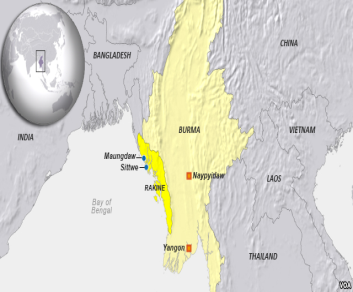
    6. The 1.1 million Rohingya Muslims squeezed precariously into the north-west state of Rakhine, in mainly Buddhist Burma, bordering majority Muslim Bangladesh, are stateless and unwanted.

    Analysis

    Why No Citizenship Granted

    1. To qualify for citizenship,Rohingya applicants had to renounce their identity And accept being labelled as ‘Bengalis’ on all official documents.
    2. They also had to prove that they could trace the presence of their family in Rakhine back three generations, something which is extremely difficult as many Rohingya lack documents or had lost them in 2012.

    Why this Rohingaya Crisis is happening

    1. Since World War Two they have been treated increasingly by Burmese authorities as illegal, interloping Bengalis, facing apartheid-like conditions that deny them free movement or state education while government forces intermittently drive out and slaughter them
    2. The United Nations has reported that the army may have committed ethnic cleansing
    3. The latest military crackdown, which began on August 25, caused almost 90,000 Rohingyas to flee under fire to squalid, overflowing relief camps across the Bangladeshi border in just two weeks.
    4. Officially close to 400 people had died by early September, but human rights activists claim to have confirmation of at least 1,000 deaths and believe the figure is much higher.
    5. The death toll will inevitably rise after Burma, also known as Myanmar, blocked UN agencies from delivering vital food, water and medicine supplies to 250,000 Rakhine residents desperately in need
    6. The army “clearing operations” which sparked the mass exodus of civilians in both October 2016 and in August 2017, were launched after insurgents known as the Arakan Rohingya Salvation Army (ARSA) attacked several paramilitary check posts.
    7. Rohingya activists claim the insurgents are mainly young men who have been pushed to breaking point by relentless oppression.
    8. A report released in early September by the Burma Human Rights Network documents the rise of systematic abuses against Burmese Muslims since 2012, including the creation of “Muslim-free zones”, denial of ID cards, and the banning of Islamic holidays.
    9. The oppression has been mirrored by an upsurge of ultra-nationalist Buddhist groups who encourage an anti-Muslim rhetoric

    Security Implications

    1. The Rohingya issue and its spill over impact on Myanmar`s western peripheral region and security implications figured in the discussions is not clear.
    2. In all probability, the import of the ferment caused by the Rohingya migration, efforts of radical Islamists to influence some of the Rohingya youth, and the Pakistan ISI’s attempts to capitalise on the situation and promote anti-India activities would not have been overlooked.
    3. Rising anger in the Muslim world about the plight of the Rohingya has compounded fears of home-grown militancy as well as support from international jihadists.
    4. Al Qaeda’s offshoot in Yemen has already called for retaliatory attacks against Myanmar
    5. The security aspect of the Rohingya issue has largely been overlooked.
    6. Illegal movement of people, combined with human trafficking and cross-border migration, can weaken Myanmar’s relations with its neighbour Bangladesh and its ASEAN partners.
    7. It may, in effect, undermine ASEAN’s efforts towards integration by spoiling mutual trust and confidence in each other.
    8. That, in turn, would engender a stable security environment in Myanmar`s western region, and in the peripheral areas adjoining Bangladesh and India

    Affected Countries

    1. Bangladesh and India to the west as well as Indonesia, Malaysia and even Thailand to the east of Myanmar have been affected by the Rohingya refugee issue in recent years.
    2. In India, there are nearly 40,000 Rohingya refugees, with 16,500 registered with the office of the United Nations Human Rights Commissioner.
    3. Interestingly, they are spread over several cities and states: Jammu, New Delhi, Jaipur and some places in Uttar Pradesh, West Bengal and the north-east.
    4. Some Rohingya refugees have in fact been residing for more than ten years.
    5. This only indicates the protracted nature of the crisis affecting the Rohingyas.
    6. While some of the Rohingyas are psychologically and socially at ease in India`s accommodative milieu, there are a few places in the country where politically instigated attempts are being made to re-locate them.

    UN Efforts

    1. The 34th Session of the United Nations Human Rights Council (UNHRC) had passed a Resolution on 24 March 2017.
    2. Adopted by a 34 to 22 majority, the Resolution constituted a three-member Commission of eminent persons in the realm of international law and human rights –
    3. The Commission was tasked to undertake a Fact-Finding Mission (FFM) to Rakhine province (as well as areas inhabited by other ethnic minorities) and report back to the UNHRC by March 2018
    4. Myanmar State Councillor Aung San Su Kyi criticized the appointment of the FFM and Naypyitaw has hinted that the members of the commission would be denied visas.

    Opinion on India

    1. The Union Minister of State for Home Affairs, stated that India needs to deport those Rohingyas who are illegally staying in India.
    2. The Supreme Court of India, hearing a plea by two Rohingya refugees, has instructed the government to inform it about the detailed plans with regard to the deportation of Rohingya refugees
    3. India’s tough stand on deporting Rohingyas back to Rakhine State in the midst of the ongoing violence has evoked criticism from national and international human rights activists.
    4. The India-Myanmar Joint Statement, released when Prime Minister Modi visited Nay Pyi Taw, noted that the situation in Rakhine State has a ‘developmental as well as a security dimension’.15 India will help Myanmar under the Rakhine State Development Programme and both sides are expected to finalise the implementation plan of this programme in the coming months.
    5. It will cover infrastructure development and socio-economic projects, especially in the areas of education, health, agriculture, agro-processing, community development, construction of roads and bridges, protection of environment and so on.
    6. The Joint Statement, however, has no specific mention about the recent clashes between the Rohingya Muslims and Rakhine Buddhists or exodus of the Rohingyas from Myanmar or India’s plan about deportation of some 40,000 Rohingya refugees who are reportedly staying in India.
    7. India’s move to dissociate itself from the Bali Declaration adopted at the World Parliamentary Forum on Sustainable Development in Indonesia, and which called “on all parties to contribute to the restoration of stability and security … respect human rights of all people in Rakhine State regardless of their faith and ethnicity, as well as facilitate safe access for humanitarian assistance”, puts into question its respect for human rights and the treatment of minorities.
    8. It weakens India’s moral authority to speak for minorities in other parts of its neighbourhood. Interestingly Nepal, Bhutan and Sri Lanka joined the declaration.

    Way Forward

    Need for enhanced Indian diplomatic efforts

    1. The success of India’s diplomacy will lie in the extent to which it can induce Naypyitaw to take a long view in the interests of its own political stability, internal security and social harmony.
    2. If such a process can be initiated with the help of Indian diplomacy, the Rohingyas would be able to come out of the genocidal situation in which they find themselves at present.
    3. India has a stake in the security conditions in upper western Myanmar adjoining the Naga self-administered zone where the Khaplang faction of the National Socialist Council of Nagalim operates.
    4. A modicum of understanding prevails between New Delhi and Naypyitaw with a view to ensuring that the internal security environment in India`s north-eastern states is not jeopardised by the activities of the Khaplang group in Myanmar.
    5. New Delhi should strive for a similar approach vis-à-vis Rakhine keeping in view the larger implications of the Rohingya issue.

    Question

    Q.)“Rohingya crisis is not a mere internal matter of Myanmar” Critically analyse the statement

    Source

    IDSA WEBSITE

    THE HINDU

  • BIMSTEC as counter to SAARC

    Note4Students

    Strained India Pakistan relationship reduced the importance of SAARC. Attitude of Pakistan has not been encouraging as it was stalling many agreements. In this scenario, India has to find an alternative forum to achieve its regional development goals and enhanced trade with more connected ASEAN market.

    Introduction

    SAARC

    1. The South Asian Association for Regional Cooperation (SAARC) was established with the signing of the SAARC Charter in Dhaka on 8 December 1985.
    2. The Secretariat of the Association was set up in Kathmandu on 17 January 1987.
    3. The objectives of the Association as outlined in the SAARC Charter are: to promote the welfare of the peoples of South Asia and to improve their quality of life; to accelerate economic growth, social progress and cultural d
    4. evelopment in the region and to provide all individuals the opportunity to live in dignity and to realize their full potentials; to promote and strengthen collective self-reliance among the countries of south Asia.

    BIMSTEC

    1. The Bay of Bengal Initiative for Multi-Sectoral Technical and Economic Cooperation (BIMSTEC) is a regional organization comprising seven Member States lying in the littoral and adjacent areas of the Bay of Bengal constituting a contiguous regional unity. This sub-regional organization came into being on 6 June 1997 through the Bangkok Declaration.
    2. The regional group constitutes a bridge between South and South East Asia and represents a reinforcement of relations among these countries.
    3. BIMSTEC has also established a platform for intra-regional cooperation between SAARC and ASEAN members. The BIMSTEC region is home to around 1.5 billion people which constitute around 22% of the global population with a combined gross domestic product (GDP) of 2.7 trillion economy. In the last five years, BIMSTEC Member States have been able to sustain an average 6.5% economic growth trajectory despite global financial meltdown.

    Analysis

    Recent developments

    1. Indian protest: India expressed inability to participate in the Islamabad SAARC summit due to “prevailing circumstances” and stepped up diplomatic pressure on Pakistan after the September 18 attack on the military base in Uri.
    2. Bangladesh, Bhutan and Afghanistan followed India’s decision to stay away from the November summit to be held in Islamabad.
    3. India and other countries cited “cross-border terrorist attacks in the region” as a reason for boycotting the summit.
    4. Outreach to BIMSTECH During the 8th BRICS summit, One of the biggest highlights among them was the BRICS-BIMSTEC Outreach Summit, where the BRICS leaders met the heads of government of the BIMSTEC countries.
    5. India chose BIMSTEC over any other regional grouping is indicative of the importance New Delhi attaches to the Bay of Bengal region.
    6. The recent move to club BIMSTEC Division with SAARC in the external affairs ministry indicates the focus on strengthening BIMSTEC amid Pakistan’s continued intransigence in blocking key anti-terror and connectivity initiatives under  the SAARC.

    Achievements of SAARC

    1. Over the last 25 years, despite extremely difficult political circumstances, SAARC has managed to create situations, institutions and forums where Heads of State have had to shake each other’s’ hands and go into talks together.
    2. SAARC has tackled important topics for the region such as a social charter, development agreements and even the sensitive subject of fighting terrorism.
    3. The food and development banks, Agreement on Transportation, Energy are important steps in the right direction.
    4. Exchanges in the areas of civil society and science have become one of the pillars of South Asian integration efforts.

    SAARC Failures

    1. The intra-regional trade of SAARC amounted to $40.5 billion in 2011, which constitutes just 5% of member countries’ trade. The number pales into insignificance when compared with the volume of trilateral trade between member-countries of NAFTA, the North American Free Trade Agreement, (the US, Canada and Mexico) which hit $1 trillion in 2011.
    2. No economic integration: while different regions of the world have progressed even to monetary union, SAARC has failed to even come up with a free trade agreement.
    3. Attitude of Pakistan has been blocking connectivity initiatives such as SAARC Motor Vehicles Agreement and SAARC Railways Agreement, and refusing to cooperate on combating cross-border terrorism

    Reasons for failure

    1. Conflict between India and Pakistan: Rivalry between India and Pakistan, the two largest members of SAARC, has hovered hugely on SAARC. The rivalry continues to restrain SAARC from functioning as a sub-regional organization.
    2. Indian Foreign Policy actions – 1971 war, Indo-Sri Lanka Accord continue to haunt the neighbouring countries. India has not forcefully articulated South Asian Vision; even the progressive ideas like the Gujral Doctrine have not been implemented on ground.
    3. Unresolved Border and Maritime Issues The region is still beset with many unresolved border and maritime issues. These unresolved borders have led to problems of Terrorism, Refugee Crisis, Smuggling, Narco-Trade. The unresolved issues continue to mar cooperative relations.
    4. Failure in resolving bilateral issues:SAARC Charter Article X(2) of the SAARC Charter mandates that decisions, at all levels in SAARC, are only of multilateral issues, and only those issues are for inclusion in the agenda in a SAARC summit meeting on the basis of unanimity. The SAARC platform thus cannot be used to resolve bilateral issues; this has undermined the scope and potential of SAARC

    Why BIMSTEC is Important

    1. Core policy goal – Delhi needs to get Islamabad-Rawalpindi to drop its support for terror groups who conduct strikes and attacks on Indian installations as well as civilian lives
    2. For India, making BIMSTEC work is important as for years; it has blamed Pakistan for holding back SAARC. As the biggest member of BIMSTEC, it’s up to India to take all members with it and show tangible results.
    3. BIMSTEC more naturally lends itself to regional integration—physical connectivity as well as economic cooperation—than SAARC which is dominated by India and Pakistan and hamstrung by tensions between the two. Therefore, BIMSTEC seems an attractive alternative to SAARC.
    4. Economic stability: In the last five years, BIMSTEC member states have been able to sustain an average 6.5 percent economic growth rate despite the global financial slowdown.
    5. Natural resources: The BIMSTEC region has a huge amount of untapped natural, water, and human resources, from hydropower potential in the Himalayan basin to hydrocarbons in the Bay of Bengal.
    6. Connectivity: BIMSTEC has at last three major projects that, when finished, could transform the movement of goods and vehicles through the countries in the grouping.
    7. One is the Kaladan Multimodal project that seeks to link India and Myanmar. Another is the Asian Trilateral Highway connecting India and Thailand through Myanmar. The highway will run from Moreh in Manipur to Mae Sot in Thailand via Myanmar and represents a significant step in establishing connectivity between India and Southeast Asian countries.
    8. Bangladesh, Bhutan, India and Nepal (BBIN) have signed a pact for the movement of goods and vehicles among them.
    9. With five countries that also belong to SAARC and two that belong to ASEAN, BIMSTEC can serve as the bridge between South Asia and Southeast Asia. With the lifting of sanctions on Myanmar and a democratic government at its helm, the country can particularly play this bridging role.
    10. BIMSTEC also lends itself to sub-regional economic cooperation—something proposed by India and other member countries of SAARC.

    Conclusion

    1. BIMSTEC indeed has huge potential to emerge as a grouping that can accelerate the process of regional integration, security cooperation, and inclusive growth in this region.
    2. For India in particular, BIMSTEC can be a pivot to the Act East Policy. Through enhanced cross-border connectivity and interlinkages, India’s northeast region can take centre stage as the gateway to South East Asia.
    3. India as the biggest country in the BIMSTEC is giving special attention to the grouping in the 20th year of its creation. The grouping, which does not include Pakistan, could serve as an alternative to the SAARC to give countries in South Asia a new direction

    Question

    Q.) A strong BIMSTEC will ensure the regional development of India in particular south east Asia in general. Analyse

    Q.) Failure of saarc can be offset by a strong bimstec, critically comment

  • effect of US president Trump on India

    Note4Students

    Political inclination of US president often affects the diplomatic policies. When Mr .Trump elected as US president, there was a wide spread scepticism about trump’s presidency in India. So discussion about effect of Trump presidency is very much important for this year mains.

    Introduction

    1. India-US partnership has been one of the few areas that have been non-controversial and a bright spot for the USA on the foreign policy front in recent years.
    2. India-US relations enjoy bipartisan support in the US Congress and across the board among the US citizens.
    3. India’s past experiences with US presidents show that a Republican president is generally better for us than a Democrat one. But in recent history, Indo-US relations have broadly stuck to a steady path.
    4. Donald Trump has hence inherited a vigorous and vibrant relationship between India and the USA. It is expected that Trump will do all that is necessary to take the bilateral partnership to newer heights.

    Analysis

    Recent developments

    1. H1B: Trump, underlining his “America First” policy, signed an order last week that he said will reform the visa program for foreign technical workers. H1B visas admit 65,000 workers and another 20,000 graduate student workers each year. Most of the visas are awarded to outsourcing firms. India is affected by the order given that its IT companies bring workers on H1B visas. Many Indians are returning home, thanks to Trump’s policy.
    2. China: With Trump going back on his questioning of One China policy and requiring Beijing’s help to rein in a recalcitrant North Korea, it seems Trump will look to establish a working relation with China. This could mean bad news for India which had been eyeing the possibility of Trump employing a more muscular approach vis-a-vis Beijing.
    3. Afghanistan: The US priority in Afghanistan seems to be to fight the IS while India would like the Trump administration to go after the rebel Taliban, which is believed to have the support of Pakistan and is intent on destabilising the Ashraf Ghani government.
    4. US tax cuts could mean bad news for “Make in India” in case US businesses find corporate tax rates more attractive at home.
    5. Trump administration also supported India’s membership bid to the Nuclear Suppliers Group. “The United States welcomed India’s application to join the NSG and it continues to re-affirm that India is ready for the membership.

    Challenges and Future prospects

    1. India and the US are “natural partners” on a range of political, economic and security issues and the two countries have a mutual desire for global stability, the Trump administration said in a report submitted in the US Congress.
    2. Trump has mostly targeted China and Mexico for taking away American manufacturing jobs and blamed them for shutdown of industries. Only on a few occasions has he criticised the off-shoring of software and IT jobs to India. Indian companies In the near future, the US government will be persuaded by its industry and will realise that the competitiveness of the US industry is critically dependent on the specialised and technically sophisticated work performed by Indian software engineers etc.
    3. Outlining a new strategy for the war in Afghanistan, Trump said   Washington could no longer be silent about Pakistan’s safe havens for terrorist organizations. This position will help India in bolstering her position against terrorism in various multi-lateral platforms.
    4. Trump also keen into active Indian support and help for restructuring Afghanistan, especially in the area of economic assistance and development. This provides a greater opportunity for India.
    5. As part of “Strategic Energy Partnership”, the US is going to export natural gas at a suitable price that’s acceptable to President Trump and clean coal. President Trump wants India to conclude the “contractual agreements between Westinghouse Electric Company and the Nuclear Power Corporation of India for six nuclear reactors.
    6. India –US coordinated development of Afghanistan will generate more influence on Afghanistan.
    7. Any negative development between the US and Iran is not good for India.
    8. India has long eyed the Chabahar port as its gateway to Central Asia and Afghanistan, areas it cannot reach by land without passing through Pakistan, its strategic adversary.
    9. But the nuclear-related sanctions imposed by the Obama administration against Iran included “secondary sanctions” – which meant that any company, government or individual that did business with the sanctioned entities could also face American sanctions.
    10. That fear kept India away from investing in Chabahar till the nuclear deal Tehran struck with the five permanent members of the United Nations Security Council and the European Union in October 2015, under which the secondary sanctions were lifted.
    11. But the sanctions slapped by the Trump administration, after twin Iranian ballistic missile tests, have forced the foreign office into a quandary: meeting India’s commitments could risk the future of its investments in Iran.
    12. Since taking office, Trump has moved to gut Obama’s signature climate change regulations, signed executive orders to aid the fossil fuel industry and installed a critic of the Environmental Protection Agency (EPA) as its head.
    13. Trump criticized India on Paris climate deal. Trump took a position that India signed Paris climate deal for availing “billions and billions and billions” of dollars from developed nations.
    14. India should up its diplomatic and policy game in response. Part of this strategy can be to work with Japan, Europe or even new strategic partners like the United Arab Emirates on accelerating India’s own transition to renewable energy at an even more aggressive pace than today. It also needs to give more thought to making the International Solar Alliance more tangible. New Delhi’s stance has traditionally been to be a responsible climate player by focusing on its own domestic energy transition. Its accomplishments on that front are praiseworthy. But Trump’s action means it should contemplate a more global role.

    Conclusion

    Ministry of external affairs remarked that, the relationship between India and the US since Trump took charge were growing with the “same speed” as was the case when Barack Obama was President. India should employ its diplomatic efforts to resolve the minor issues.

    Questions

    India –USA relationship is in a steady path irrespective of presidency. Analyse

    Trump administration is expecting more engaging role of India in regional issues. Comment

  • Should India fight for membership of NSG

    Note4Students:

    Recent Indian diplomatic effort to get support from various countries. So this portion is important.

    Introduction:

    What is NSG?

    1. The Nuclear Suppliers Group (NSG) is a group of nuclear supplier countries that seeks to contribute to the non-proliferation of nuclear weapons through the implementation of two sets of Guidelines for nuclear exports and nuclear-related exports.
    2. One of the critical elements for inclusion into the NSG is that the member countries need to signatories of the NPT, a proposal which India has categorically disagreed.
    3. However considering India’s history of nuclear non-proliferation, the US and subsequently the NSG have shown some recognition and granted India with the waiver of dealing with other countries for nuclear technology.

    Recent Developments

    1. Present Indian government, embarked to pursue the ambitious goal of NSG membership aggressively.
    2. Prime minister visited countries like USA,Netherlands, Mexico, and Portugal to secure the support from these countries.
    3. US administration under Obama and Donald trump reiterated their support for Indian entry to the NSG. Russia also extended its support.
    4. NSG takes decision based on consensus of the member countries. So it is important to secure the support of each and every member country.
    5. China is against the granting membership. Insisted on a criteria-based approach for the non-NPT (Nuclear Non-Proliferation Treaty) signatory countries.
    6. China has also maintained that for non-NPT members some definite criteria should be evolved rather than granting country specific waivers. At other times, it has stated that Pakistan also has similar credentials to join the NSG; and that if India is admitted; Pakistan should also be admitted simultaneously.
    7. Some other countries, including Turkey, Switzerland, Mexico and New Zealand, were among those which have stressed on the criteria-based approach, without opposing India’s application outright.

    Analysis

    Arguments supporting Indian effort to secure NSG membership

    1. Expansion of power generation: India seeks to significantly expand its nuclear power generation and also enter the export market in the coming years.
    2. Joining the NSG will give India better access to low-cost, clean nuclear energy — important for its economic growth. Nuclear power is one way India, the third-biggest emitter of greenhouse gases, could cut its emissions and reduce air pollution from coal-fired power plants.
    3. Although the 2008 NSG waiver does provide significant possibilities for India to engage in civilian nuclear trade with other countries
    4. More certainty in nuclear regime: Membership of the NSG will provide greater certainty and a legal foundation for India’s nuclear regime and thus greater confidence for those countries investing billions of dollars to set up ambitious nuclear power projects in India.
    5. International stature: As India’s international political, economic, military and strategic profile enlarged, India would like to move into the category of international rule-creating nations rather than stay in the ranks of rule-adhering nations.
    6. Joining the NSG is chiefly a matter of pride and desire to be taken seriously by some of the world’s most powerful nations. Since prompting international technology sanctions and limits on exports by conducting nuclear tests in 1998, India has been eager to gain legitimacy as a nuclear power.
    7. Pakistan angle: If India gets the membership, India can block Pakistan to get NSG membership. This is remunerative with respect to our security angle.
    8. Future prospects: NSG membership would put India on a firmer footing to propose the idea of plutonium trade for its thorium programme that has been waiting in the wings. An early adoption of thorium technology would give India enormous energy independence and security.

    Arguments against Indian efforts to secure NSG membership

    1. These are the bigger issues in India’s massive expansion of its nuclear capacity, not NSG membership. Nor is NSG likely to matter materially in terms of uranium supply. India has hammered out agreements with Canada (April 2013) and Australia (November 2014), and other countries such as Kazakhstan have been supplying too.
    2. Indian impeccable track record has facilitated the civil nuclear deal with Japan. India was the first non NPT country with which japan signed a nuclear deal.
    3. India has access to technology, because of the waiver granted in 2008. No foreign nuclear reactor supplier is waiting for India to get a NSG membership.
    4. NSG is not a body with very firm legal standing for example even IAEA refers to NSG as “certain members states”
    5. It’s credibility as a governance body is further reduced by the fact that it had not be able to stop even its member country China from non-proliferating.
    6. no  hindrance for the expansion of India’s nuclear power programme The waiver given to India in 2008 allows for trade in civilian nuclear power, import of nuclear power reactors and fuel under International Atomic Energy (IAEA) safeguards. And, there is no hindrance for the expansion of India’s nuclear power programme
    7. When the NSG members, including China, realise that India has a huge trade potential, they will automatically come around someday, and hence there is no point in India approaching them.
    8. Sustainability High grade nuclear fuel may not last more than one decade. There is overwhelming evidence to show that advanced countries moving from the nuclear energy. A Global sentiment is that the renewable energy is the solution for the energy crisis. (For example, Switzerland is planning to shut down its nuclear power plants in phased manner).
    9. Energy security So future of our energy security lies in the development of more efficient green energy technology.

    Way forward

    1. India should convince China that, its interest in NSG membership is not guided by any political or strategic considerations but only to facilitate the expansion of its clean and green nuclear energy programme.
    2. India to continue with a low-key building of partnership with other NSG members.
    3. Meanwhile, India should focus on developing the efficient green energy technologies to meet the massive energy requirement.
    4. Our efforts for the membership should be consistent with our domestic requirements rather than mere rhetoric sentiments.

    Questions

    Q.) NSG membership is essential for the Indian energy security prospects. Analyse

    Q.) India should aggressively pursue the NSG membership. That Is essential for the indian nuclear programmes,. Critically comment