💥UPSC 2026, 2027, 2028 UAP Mentorship (March Batch) + Access XFactor Notes & Microthemes PDF

Search results for: “”

  • Indian women are working more. Here’s why

    Female Labour Force Participation - Current Affairs

    Central Idea:

    The rise in the Female Labor Force Participation Rate (FLFPR) in rural India, particularly over the last six years, can be attributed to strategic interventions like the Deendayal Antyodaya Yojana National Rural Livelihood Mission (DAY-NRLM) and the Mahatma Gandhi National Rural Employment Guarantee Scheme (MGNREGS). These programs, focusing on skilling support, credit access, and diversified livelihoods for women, have significantly contributed to the economic empowerment of women in rural areas.


    Key Highlights:

    • The FLFPR in rural areas increased from 24.6% (2017-18) to 41.5% (2022-23).
    • DAY-NRLM, with over 90 lakh Women’s Self-Help Groups (SHGs), has played a crucial role in transforming the lives of over 9.96 crore women.
    • MGNREGS, providing 260 crore person-days of work annually, has emphasized individual beneficiary schemes, raising incomes for women.
    • Initiatives like MKSP and SVEP under DAY-NRLM have empowered women in agriculture and entrepreneurship, respectively.
    • Social capital of women’s collectives, supported by elected Panchayat leaders, has been instrumental in the success of these programs.


    Key Challenges:

    • Despite progress, there’s a need for a more comprehensive understanding of the factors contributing to the increased FLFPR.
    • Low wages under MGNREGS pose a challenge, with men often opting for higher-paying jobs in the market.
    • The article hints at the need for a more detailed analysis of the impact of these programs on the overall socio-economic landscape.


    Key Terms:

    • FLFPR: Female Labor Force Participation Rate.
    • DAY-NRLM: Deendayal Antyodaya Yojana National Rural Livelihood Mission.
    • MGNREGS: Mahatma Gandhi National Rural Employment Guarantee Scheme.
    • SHGs: Self-Help Groups.
    • MKSP: Mahila Kisan Sashaktikaran Pariyojana.
    • SVEP: Start-Up Village Entrepreneurship Programme.


    Key Phrases:

    • “Skilling support and credit access for diversified livelihoods.”
    • “Low NPAs and the success of social capital.”
    • “Person-days of work generated annually under MGNREGS.”


    Key Quotes:

    • “The rise in rural female FLFPR has been accompanied by a rise in the share of self-employment and agriculture among working women.”
    • “The social capital of women’s collectives has transformed the rural scenario.”


    Key Statements:

    • “The DAY-NRLM and MGNREGS play a crucial role in improving the female labor force participation rate.”
    • “Raising MGNREGS wage rates, along with increased productivity, is crucial for securing lives of dignity for the poor.”


    Key Examples and References:

    • Evaluation studies by the Institute of Rural Management, Anand and Stanford University team.
    • Banking correspondents from DAY-NRLM making digital payments possible.
    • Quality Council of India’s evaluation of SVEP.


    Key Facts and Data:

    • FLFPR in rural areas increased from 24.6% (2017-18) to 41.5% (2022-23).
    • DAY-NRLM covers 9.96 crore women, with over 90 lakh SHGs accessing Rs 38,892 crore.
    • MGNREGS generates over 260 crore person-days of work annually.


    Critical Analysis:

    • The article provides a detailed account of the initiatives and their impact but lacks a comprehensive analysis of the challenges and potential drawbacks of these programs.
    • The need for a more nuanced understanding of the interplay of factors contributing to increased FLFPR is highlighted but not thoroughly explored.


    Way Forward:

    • The government should continue and possibly expand successful initiatives like DAY-NRLM and MGNREGS.
    • Address the challenge of low wages under MGNREGS to attract more workers.
    • Conduct further research to understand the broader socio-economic implications of these programs and refine them accordingly.
  • Harappan Civilization – Early (3500BC – 1900BC), Mature (1900BC-1400BC)

    The IVC or Harappan civilization was the 1st urban civilization in South Asia.
    Geographical extent:
    North – Shortugai (Afghanistan)
    West – Sutkagendor (Baluchistan)
    East – Alamgirpur (UP)
    South – Daimabad (MH)
    Rakhigarhi in Haryana being the largest IVC site

    Town Planning

    FeaturesDescriptionSignificance
    Division of City1. Raise part (called citadel): considered of housing for rulers and important public buildings such as granaries, workshops. It is mostly situated in west of city. 2. Lower part (Eastern side of town): consisted of houses of common citizens1. It shows the presence of social hierarchy and some administrative authority. 2. The Public and Private sphere was separated as town was divided into two parts
    StreetsIt followed a grid pattern (i.e. streets cut each other at right angles, thus dividing city into several rectangular blocks.It shows excellent knowledge of measurement and urban planning of Harappan people.
    Drainage systemDrains connected all houses and were made up of mortar, lime and gypsum and covered with large brick slabs for easy cleaning.It shows Harappan people paid great attention to Health and Sanitation.
    HousesThey were often of two or more stories, but no window faced the streets.Often the 2nd story was made on 1st when it had subsided. It shows Harappan inhabited the place for longer time
    Building materialsStandardized burnt bricks – bricks of ratio 1:2:4 found in all the sites (no stone was used)It shows the presence of centralized weights and measurement systems.

    Society

    FeaturesDescriptionSignificance
    Division in societyHarappan society was an urban society and comprised of at least three distinct social groups: Rulers, rich merchants and poor labourers who lived in lower part of cityIt shows the DOL and specialization in Harappan society. It also shows that Harappan had well organized administrative machinery.
    ClothingHarappan people generally wore garments
    of cotton and wool
    It shows advancement in the weaving of cotton and
    wool and diversification of choices.
    Food
    Habits
    1. The Harappan societies of Sindh and Punjab largely consumed wheat and barley while those of Rangpur and Surkotda consumed rice and milles. Fish and Molluscs eating was common.
    2. Dairy production evidence has been found by recent molecular study at the Kotada Bhadli (Gujarat) – Harppan cattle called Zebu
    The urban settlements near river valleys provided
    fertile ground for a variety of crops to be grown.
    Harappans were advanced in their agriculture
    practices
    ReligionHarappan believed nature worship – gods in the form of trees such as Peepal and animals (bull). Idolatry was prevealent, they also worshipped Mother goddess, Pasupati yogi (lord of cattle) and Phalic symbolsHarappans were called secular society as no temple
    (except for the great bath) or religion have been
    found (unlike in other contemporary civilizations)
    Script and Languages1. Harappan script is Pictographic and Logo syllabic (each symbol stood for a word)
    2. Harappan writing was Boustrophedon (right to left and then left to right in alternate lines)
    3. Script disappeared by 1700 BCE, showing the lack of percolation of the writings of IVC to other civilizations.
    1. Recent theories have pointed out the similarity between ancient Tamil and Harappan scripts. But until the Harappan script is deciphered, the conclusion cannot be made.
    2. The various evidence of common script points to great cultural integration during IVC.
    BeliefsHarappans believed in evil forces and ghosts and used amulets as protection against them.This was true about most of the primitive society.
    Burial
    Practices
    Dead bodies were placed in North – South direction (extended inhumation) and were accompanied by food, pottery, jewelry, etc. The graveyard was within settlement and had three types of burials.
    >Complete burial
    >Fraction burial (burial of bones after exposure of body to birds and beasts)
    >Cremation following by burial of ashes
    It shows their strong belief in life after death which
    was similar to belief system of other contemporary
    civilizations, however; items kept were not as
    expensive as other civilizations.

    Economy

    FeaturesDescriptionSignificance
    Agricultural economyMain crops were Wheat, Barley, Rice (found in Lothal and Rangpur only), Dates Mustard, Cotton (1st in word)It shows advancement of Harappans in agriculture technology – used wooden ploughshare, well irrigation (Alladinho), Dams and irrigation canals (Dholavira)
    Manufacturing1. Terracotta figurines: figurines of animals, humans (more female than
    male figurines), Bangles, Seals
    2. Art of Bead – making (Chanhudaro and Lothal), jewelery – gold and silver
    jewellery
    >At Allahdino a lot of necklaces made of gold, silver and semi –
    precious stones have been found
    3. Harappans did not use Iron but used copper, bronze, silver and gold
    >The number of pure copper artifacts was found in greater number than alloyed bronze
    one
    4. Harappans were first to use silver in world.
    5. Shell – Nageshwar and Balakot
    Lapis Lazuli – Shortugai
    Carnelian – Lothal
    Steatite – South Rajasthan
    Copper – Rajasthan and Oman
    1. A large number of terracotta articles show that
    it was used by common people.
    2. Harappans were good at metallurgy and
    producing alloys.
    3. There was specialization of tasks –
    Goldsmiths, bronze – smiths, brick – makers.
    4. More copper artifacts don’t mean
    technological backwardness but it was their
    cultural preference in all likelihood
    PotteryUsed Red and Black pottery (Redware painted with black designs) and also
    knew use of Potter’s wheel with ease
    Shows expertise of Harappans in pottery making. Ex: Glazed potter (Harappa), incised
    pottery, perforated pottery, etc.
    TradeHarappans had trade with Mesopotamia, Central Asia, Persia, Afghanistan Makan (Oman) and Dilmun (Bahrain). Trade was through barter system. Export items: Teak (obtained from Gujarat), Amazonite (Hirapuri, GJ), Slate (Kangra), Lead (Kashmir and South India), Copper (from Baluchistan and RJ (Khetri mines))  Import items: Jade (Central Asia), Turquoise (from Khorasan), Lapis Lazuli, Gold, Silver, Tin (from Afghanistan)(Gold was also obtained from Iran and Kolar mines in Karnataka), Steatite (Iran)It shows the advanced trade relation of Harappan civilization with other parts of India as well as
    also with other contemporary civilizations.
    Harappan seal found at Susa, UR and Nippur (Mesopotamia), Failaka and
    Bahrain (Persian Gulf)
     Mesopotamian three cylinder seals have been found in Mohenjo – Daro
    Weights and Measures1. Weights followed a binary system – 1, 2, 8, 16, 32, to 64, 160, 320 and so on 2. Weights were made of chert, limestone and steatite and were generally cubical. The measure of length was based upon a foot of 37.6 cm and a cubit.The standardized and accuracy of weights and measures throughout IVC are remarkable
    Seals1. Made up of steatite
    2. Size – half an inch to 2.5 inch
    3. Shape – generally square and
    rectangular seals with carved animal and
    inscription was used.
    4. Humpless bull is the most used animal
    in seals.
    Harappan scales are greatest artistic creation and
    were used to mark ownership of property and in
    trade

    Important Sites:

    SiteFeatures
    Harappa (on Ravi river)
    Discovered Daya Ram
    Sahni – 1921
    1. 1st Indus site to be discovered
    2. 2 rows of 6 granaries
    3. largest number of wheat grains
    4. red sandstone torso of nude male
    5. evidence of coffin burial
    6. two types of burial practice – R37 type and cemetery H type
    Mohenjo – Daro
    (Mounds of Dead)
    (on Indus river)
    Discovered (R.B.Banerji
    – 1922)
    1. 2nd Indus site to be discovered
    2. Great granary (largest building)
    3. Pasupati seal
    4. Bronze dancing girl
    5. Steatite image of bearded man said to be priest
    6. 3 cylindrical seals of Mesopotamia
    7. Great Bath
    8. hordes of skeletons found on stairs (indicating warfare)
    9. multi – pillar assembly halls
    10. Has no cemeteries
    11. Bronze mirror, needle, saw and Bronze statue of bull
    Lothal (Bhogava
    river)(also means
    mounds of dead)
    (discovered by S R Rao –
    1957)
    1. Artificial dockyard (world’s 1st tidal port)
    2. evidence of double burial (male and female)
    3.Cultivation of rice (at Lothal and Rangpur)
    4. Beadmaker’s shop (also exported)
    5. terracotta model of boats
    6. Ivory scale
    7. Known for cotton trade (Manchester of IVC)
    8. Circular button seal (Persian Gulf seal)
    9. Two terracotta models of Egyptian Mummies (shows trade relation with Nile
    valley civilization)
    10. Painted story on Earthen jar resembling story of cunning fox in Panchtantra
    11. Sacrificial Altar (at Lothal and Kalibangan) – Shows medical and surgical
    skills
    Dholavira (khadir bet
    island in Kutch Desert
    Wildlife)
    Discovered by J P jhoshi
    – 1967 – 68
    1. Inscription of 10 alphabet signboard
    2. Megalith burial
    3. Warehousing settlement
    4. Gold rings (also at Mandi and Daimabad)
    5. Shows all three phases of Harappan culture
    6. located on tropic of cancer
    7. use of sandstone and bricks
    8. evidence of dams, irrigation, water reservoir, water harvesting system and
    embankments
    9. Town is divided into 3 parts (upper, middle and lower). Walled city with heavy
    fortification.
    10. important center of maritime trade (declined with decline of Mesopotamian
    civilization, showing integration of trade economy)
    11. Dholavira – UNESCO world heritage site (India’s 40th)
    Rakhigarhi (on Ghaggar
    – Hakra river, Haryana
    Discovered by
    Amarendra Nath – 1997
    1. Largest IVC site in India (also claimed to be largest IVC site)
    2. evidence of domestication of dog
    3. manufacturing center of terracotta (idly shaped)
    4. painted potteries in large numbers
    5. DNA findings of skeletal remains of woman
    6. sudden demise can be explained by drying up of Saraswati in 2000 BC.
    Chanhudaro (Indus
    river)
    1. Known for cotton textile (Lancashire of IVC)
    2. No citadel (only IVC city)
    3. largest number of copper tools found
    Kalibangan (Ghaggar
    river)(means Black
    Bangles)
    1. Wells found in every home
    2. Evidence of mixed cropping
    3. Earliest ploughed field in India
    4. Fire altars (shows cult of sacrifice)
    Bhirrana (Haryana)Now considered to be oldest discovered IVC dating back to 7500 BCE
    (earlier Mehrgarh (Pak) was cnosdered to be oldest
    Ropar (Sutlej river) –evidence of dog burial with human
    Banwali (Ghaggar river)evidence of largest barley grain, radial street, clay model of plough
    Kot Diji (Indus) –Pre – Harappan site, largest stone tools
    Alamgirupur
    (Hindon river) –
    late Harappan culture
    Surkotada –evidence of Pot burial
    Amri (Indus river) –Pre – Harappan site
    Rangpur (Madar river) –yellow and grey colour pot of pre – Harappan people found
  • Explained: Rising Tensions in Korean Peninsula

    korea

    Introduction

    • Provocative Actions: North Korea’s provocative actions and responses by South Korea and its allies have heightened concerns about international security.
    • Major Power Rivalry: Major power rivalry has intensified, raising questions about regional stability.

    North vs. South Korea: Historical Context

    • Post-WWII Division: After World War II, the Korean Peninsula was divided into North and South Korea.
    • Cold War Alignments: The North aligned with the Soviet Union, while the South aligned with the U.S.
    • Korean War: The Korean War in the 1950s marked the first “hot war” of the Cold War era.
    • Ongoing Division: Despite the end of active conflict and the Cold War, the two Koreas remain divided due to ideological and geopolitical differences.
    • Nuclear Ambitions: A major issue in the region has been North Korea’s pursuit of nuclear weapons.

    Recent Escalation

    • Adversarial Designation: North Korea has officially designated South Korea as an adversary and dismantled symbols of reunification.
    • Missile Tests: Multiple missile tests, including one involving a hypersonic warhead, have been conducted.
    • Hypersonic Threat: Hypersonic weapons have the potential to evade missile defence systems.
    • Joint Drills: In response, the U.S., South Korea, and Japan held joint naval drills to enhance their defence capabilities.
    • Additional Tests: North Korea conducted tests of a nuclear-capable underwater drone and a strategic cruise missile, increasing tensions in the region.

    South Korea’s Role

    • New Leadership: South Korea’s newly elected conservative President Yoon Suk Yeol has adopted a hawkish approach toward North Korea.
    • Alignment with Allies: There is a closer alignment with the U.S. and Japan.
    • Trilateral Cooperation: The three countries held a historic meeting to strengthen trilateral cooperation.
    • Conflict Concerns: These developments raise concerns about potential conflicts in the region, given the involvement of major powers and the possibility of unintended consequences.

    International Implications

    • Global Conflicts: Rising tensions in the Korean Peninsula coincide with other global conflicts, such as Russia-Ukraine and Israel-Palestine.
    • Major Power Involvement: Key stakeholders in the Korean Peninsula, including the U.S., China, and Russia, are involved in a broader strategic competition.
    • Conflict Possibilities: While a major conflict may be avoided due to alliances and nuclear deterrence, incidents or skirmishes are possible.
    • Complex Alliances: North Korea’s ties with China and Russia and South Korea’s alignment with the U.S. add complexity to ongoing global conflicts.

    Conclusion

    • The situation in the Korean Peninsula has raised international security concerns due to increased tensions, missile tests, and shifts in political dynamics among the involved countries.
    • The interconnectedness of these issues with broader global conflicts adds to the complexity and uncertainty in the region.
  • Varanasi HC allows Hindu Prayers in Gyanvapi Premise

    Gyanvapi

    Introduction

    • The Varanasi District Court has issued an order permitting Hindu prayers to be conducted in the southern cellar of the Gyanvapi mosque complex, a decision met with both support and opposition.
    • This development comes amid ongoing legal disputes concerning the worship rights at the site.

    Allowing Prayers: Court’s Ruling

    • Prayers Allowed: The Varanasi District Court has directed the district administration to facilitate the resumption of puja (worship) within the disputed southern cellar of the Gyanvapi mosque complex within seven days.
    • Background: The order followed an application filed by Shailendra Kumar Pathak, the priest of the Acharya Ved Vyas Peeth temple, seeking worship rights for visible and invisible deities in the basement of the mosque.

    Reaction and Legal Challenges

    • Legal Challenge: The Anjuman Intezamia Committee of Gyanvapi Masjid, advised by the All India Muslim Personal Law Board (AIMPLB), intends to challenge the court’s decision in the Allahabad High Court.
    • AIMPLB’s Stance: AIMPLB criticized the court’s ruling as “totally unacceptable” and drew parallels to past disputes like the opening of locks at the Babri Masjid in 1986. They expressed concerns about the targeting of old mosques after the establishment of the Ram Mandir in Ayodhya.

    Historical Perspective

    • Prior Worship: The petitioner claimed that Hindu priests associated with the Vyas family used to perform daily rituals in the cellar before 1993 when it was discontinued by government orders.
    • Contested Claims: A member of the Anjuman Intezamia committee contested the assertion, stating that there had never been any puja conducted in the cellar.

    Ongoing Legal Proceedings

    • Next Hearing: The next hearing on this matter is scheduled for February 8, allowing the defendants, including the Anjuman Intejamia Masajid Committee that manages the Gyanvapi mosque, to file objections.
    • Parallel Legal Challenge: Another order by the Allahabad High Court concerns a revision application challenging the Varanasi district judge’s refusal to direct the Archaeological Survey of India (ASI) to conduct a scientific survey of the mosque’s wazukhana area.

    Concerns and Historical Parallels

    • Ethical Concerns: The decision to permit puja in the Gyanvapi mosque’s basement raises ethical questions and concerns about religious rights.
    • Parallels to History: AIMPLB sees parallels between recent developments and past disputes, raising concerns about historical patterns of targeting old mosques.

    Conclusion

    • The Varanasi District Court’s ruling allowing Hindu prayers in the Gyanvapi mosque’s southern cellar has ignited both legal challenges and discussions about religious rights and historical parallels.
    • The case continues to be a subject of significant debate and legal scrutiny.
  • Significance of Deputy CM in Indian Politics

    Deputy CM

    Introduction

    • Deputy Chief Ministers (Deputy CMs) have become prominent figures in Indian politics, serving as political compromises and often following coalition governments or a lack of single-party dominance.
    • The role and prevalence of Deputy CMs vary across states and regions.

    Role of Deputy CM

    • Political Compromise: Deputy CMs are appointed to strike a political compromise, especially in coalition governments or when no single leader commands undisputed authority.
    • Representation: Deputy CMs represent various regions, communities, or interest groups within a state, promoting inclusivity.
    • Constitutional Basis: The Constitution does not explicitly mention the position of Deputy CM; however, it is understood to be equivalent in rank to a Cabinet Minister.
    1. Article 163(1): This article outlines the existence of a Council of Ministers in each state, with the Chief Minister at its head, to aid and advise the Governor in the exercise of his functions. While it doesn’t mention Deputy CMs, they are a part of the Council of Ministers, akin to Cabinet Ministers.
    2. Article 164(1): This article states that the Chief Minister shall be appointed by the Governor, and other Ministers shall be appointed by the Governor on the advice of the Chief Minister. It establishes the authority of the Chief Minister in appointing Deputy CMs.

    Prevalence of Deputy Chief Ministers

    • Growing Prominence: Deputy CMs are increasingly common in Indian states, with four of the five states that went to polls in November 2021 having Deputy CMs.
    • National Presence: Most major states, except Tamil Nadu and Kerala, have the position of Deputy CM.
    • Varied Contexts: States like Andhra Pradesh, Maharashtra, and Haryana have multiple Deputy CMs, often reflecting coalition governments or diverse political considerations.

    Historical Overview

    • Pioneering Deputy CM: Anugrah Narayan Sinha was one of the earliest Deputy CMs in India, representing Bihar.
    • Post-1967 Increase: The prevalence of Deputy CMs expanded after the decline of Congress’s dominance in national politics in 1967.
    • Examples: States like Bihar, Uttar Pradesh, Madhya Pradesh, and Haryana have a history of Deputy CMs from various political backgrounds.

    Deputy Prime Ministers

    • Higher Position: India has also seen Deputy Prime Ministers, who held positions of significance at the national level.
    • Notable Figures: Sardar Vallabhbhai Patel, Morarji Desai, Charan Singh, Chaudhary Devi Lal, and Lal Krishna Advani have served as Deputy Prime Ministers.
    • Constitutional Aspects: The role of the Deputy Prime Minister has been debated in court, with the Supreme Court emphasizing that it does not confer additional powers on the Deputy Prime Minister.

    Conclusion

    • Deputy Chief Ministers play a vital role in Indian politics, facilitating political stability and representation.
    • Their prevalence has increased over the years, and they continue to hold significant positions in state governments.
  • Vision 2030: Saudi Arabia’s Shift towards Modernity

    Vision 2030

    Introduction

    • Crown Prince Mohammad Bin Salman’s Vision 2030 seeks to reshape Saudi Arabia, moving away from oil dependence and embracing modernity.
    • This transformation faces resistance from traditionalists but aligns with a changing global image of Saudi Arabia as a tourist-friendly, welcoming nation.

    Al-Ula: A Modern Oasis

    • Historical Significance: Al-Ula, an ancient city along the incense route, is pivotal in MBS’s vision to modernize Saudi Arabia.
    • Breaking Stereotypes: Saudi Arabia aims to challenge traditional beliefs by welcoming tourists beyond pilgrimage destinations.
    • Nationalism Beyond Religion: The country’s evolving nationalism is detached from religion, emphasizing individual liberties and empowerment.

    Winds of Change

    • Empowering Women: Saudi Arabia promotes gender equality, offering scholarships and opportunities for young women.
    • National Transformation: Young Saudis actively participate in the modernization drive, recognizing its benefits.
    • Welcoming the ‘Other’: Saudi Arabia’s newfound friendliness towards foreigners, including easing visa norms and hosting entertainment events.

    Challenges on Path to Modernity

    • Cultural Sensitivities: Transitioning from conservative traditions is challenging, but Saudis are adapting to change.
    • Historical Significance: Al-Ula’s archaeological treasures pose challenges given their potential impact on religious perceptions.
    • Top-Down Change: Past experiences highlight the complexities of enforcing societal changes from the top.

    Global Engagement

    • Strategic Foreign Policy: Saudi Arabia’s balanced foreign policy has insulated it from regional conflicts.
    • Cultural Riches: The country aims to showcase its archaeological wonders to the world.
    • Green Initiatives: MBS’s ‘green’ approach and emphasis on renewables align with global trends.

    Opportunities for India

    • Improved Working Conditions: Indian migrant workers can expect better conditions and a renewed social contract.
    • Educational and Cultural Exchanges: Indian educators and artists have opportunities to contribute to Saudi Arabia’s educational overhaul.
    • Counter-Terrorism Cooperation: India can leverage Saudi Arabia’s counter-terrorism initiatives.
    • Bilateral Investments: Collaboration in infrastructure and service sectors presents growth potential for both nations.

    Conclusion

    • Saudi Arabia’s journey towards modernity is marked by challenges and opportunities.
    • As it reshapes its identity and engages with the world, India stands to benefit from this evolving partnership, contributing to mutual growth and cooperation.
    • Saudi Arabia’s aspiration to excel in various fields aligns with India’s interests, paving the way for a fruitful relationship.
  • Merging Brain Tissue with Electronics in Computing

    Brain Tissue

    Introduction

    • Researchers have achieved a groundbreaking fusion of brain-like tissue with electronics, creating an ‘organoid neural network.’
    • This innovation marks a significant advancement in neuromorphic computing, directly incorporating brain tissue into computer systems.

    Brainoware: Brain Tissues in Computers

    • Development Team: A collaborative effort by scientists from Indiana University, the University of Cincinnati, Cincinnati Children’s Hospital Medical Centre, and the University of Florida resulted in this breakthrough.
    • Publication: The study, published on December 11, signifies a convergence of tissue engineering, electrophysiology, and neural computation, expanding the horizons of scientific and engineering disciplines.

    Context of Artificial Intelligence (AI)

    • AI’s Foundation: AI relies on artificial neural networks, silicon-based models of the human brain capable of processing vast datasets.
    • Memory and Processing Separation: Conventional AI hardware separates memory and processing units, leading to inefficiencies when transferring data between them.

    Introducing Biological Neural Networks

    • Biocomputing Emergence: Scientists are exploring biological neural networks, composed of live brain cells, as an alternative. These networks can combine memory and data processing.
    • Energy Efficiency: Brain cells efficiently store memory and process data without physically segregating these functions.

    Organoid Neural Networks

    • Biological Components: Brain organoids, three-dimensional aggregates of brain cells, were used to create an ‘organoid neural network.’
    • Formation: Human pluripotent stem cells were transformed into various brain cells, including neuron progenitor cells, early-stage neurons, mature neurons, and astrocytes.
    • Reservoir Computer: The network was integrated into a reservoir computer, comprising input, reservoir, and output layers.

    Brainoware’s Capabilities

    • Predicting Mathematical Functions: Brainoware demonstrated its ability to predict complex mathematical functions like the Henon map.
    • Voice Recognition: The system could identify Japanese vowels pronounced by individuals with a 78% accuracy rate.
    • Efficiency: Brainoware achieved comparable accuracy to artificial neural networks with minimal training requirements.

    Promising Insights and Limitations

    • Foundational Insights: The study provides crucial insights into learning mechanisms, neural development, and cognitive aspects of neurodegenerative diseases.
    • Challenges: Brainoware necessitates technical expertise and infrastructure. Organoids exhibit heterogeneous cell mixes and require optimization for uniformity.
    • Ethical Considerations: The fusion of organoids and AI raises ethical questions about consciousness and dignity.

    Future Prospects

    • Optimizing Encoding Methods: Future research may focus on improving input encoding methods and maintaining uniformity in organoids for longer experiments.
    • Complex Computing Problems: Researchers aim to tackle more intricate computing challenges.
    • Ethical Discourse: Ethical debates surrounding organoid consciousness and dignity will continue to evolve.

    Conclusion

    • The creation of Brainoware and the integration of brain organoids with computing systems represent a pioneering step towards more efficient and ethically-conscious AI systems.
    • This innovative approach may revolutionize computing paradigms while prompting profound ethical considerations.
  • Split Verdict in Kunal Kamra’s Petition: Implications of IT Rules Amendment

    Introduction

    • A two-judge Bench of the Bombay High Court recently delivered a split verdict on a comedian’s petition challenging the IT (Intermediary Guidelines and Digital Media Ethics Code) Amendment Rules, 2023.
    • These rules grant the government the authority to establish a fact-checking unit (FCU) to identify fake, false, and misleading information about the government on social media platforms.
    • The case will now be referred to a third judge by the Chief Justice of the Bombay High Court due to the disagreement between the two justices.

    Provisions of IT Rules (2023)

    • Fact-Checking Unit (FCU): Amended IT rules empower the government to establish an FCU to identify and remove fake, false, or misleading information related to the Central government’s business on social media platforms.
    • Consequences for Non-compliance: Failure to comply with FCU directives may result in intermediaries losing their safe harbour protection under Section 79 of the IT Act, 2000.

    Court’s Concerns and Observations

    • Unfettered Power: The Court expressed concerns about the government’s unfettered power in the absence of clear guidelines and guardrails, emphasizing the need for necessary safeguards.
    • Ambiguity in Terms: The Court noted ambiguity in terms like “fake, false, and misleading” which are subjective and open to interpretation, posing challenges in distinguishing between them.
    • Selective Application: The Court questioned why the IT Rules exclusively targeted digital media, leaving print media unaffected, especially when the same content appears in both forms.
    • FCU’s Role: Concerns were raised about the FCU’s role and the absence of recourse for users whose content is removed after being flagged by the FCU. The Court expressed worries about the user’s lack of remedy in such cases.
    • Overreach: The Court raised concerns about the potential overreach of the Rules, emphasizing that even well-intentioned regulations must have limits to avoid excessive use of power.
    • Lack of Opportunity for Defense: The Court found it remarkable that there was no provision in the Rules allowing an intermediary to defend or justify flagged content, violating principles of natural justice.

    Legal Arguments

    • Petitioners’ Stand: The petitioners argued that the amendment violated freedom of speech and expression under Article 19(1)(a) and did not satisfy reasonable restrictions under Article 19(2). They contended that the government’s power to decide the truth of content was excessive.
    • Government’s Stand: The government defended the FCU, stating that it would only notify intermediaries about flagged content, and the intermediaries could choose to remove it or add a disclaimer. Users aggrieved by intermediary decisions could seek legal remedies in court.

    Conclusion

    • The split verdict highlights the complexity and significance of the IT Rules (2023) and their potential impact on freedom of speech and expression.
    • The Court’s concerns about ambiguous terms, selective application, and lack of safeguards underscore the need for a balanced approach to regulate online content while protecting fundamental rights.
    • The case’s referral to a third judge will determine its outcome and implications for digital media regulation in India.
  • Internet Shutdowns in India: Upholding Constitutional Rights

    Introduction

    • The Internet serves as a vital source of information, entertainment, healthcare, education, and livelihood.
    • However, the rampant instances of Internet suspension in India, often without public disclosure, raise concerns about constitutional rights and economic losses.

    Constitutional Provisions for Right to Internet

    Landmark Case Constitutional Provision Explanation
    Anuradha Bhasin vs. Union of India and Ors. (2020) Right to Freedom of Speech and Expression under Article 19(1)(a) Grants the right to freedom of speech and expression, which encompasses access to information and the Internet.
    Faheema Shirin RK vs. State of Kerala and others (2019) Right to Education under Article 21A Guarantees the right to education for children aged 6 to 14;

    Internet access is crucial for modern education.

    K.S. Puttaswamy (Privacy) vs. Union of India (2017) Right to Privacy under Article 21 Protects the fundamental right to privacy, and Internet access is often used for secure communication.
    Anuradha Bhasin vs. Union of India and Ors. Freedom to Practice Any Profession or Carry on Any Trade, Business, or Occupation under Article 19(1)(g) Ensures the freedom to conduct various trades, businesses, and professions, often requiring Internet access.


    Mechanisms allowing Internet Shut-downs

    Mechanism Authorities Purpose
    Temporary Suspension of Telecom Services (Public Emergency or Public Safety) Rules, 2017 Home Departments in the states, state government review committee, central government (under this law, but rarely used) Enforces shutdowns for public emergency or safety reasons.
    Section 144 of the CrPC Local law enforcement authorities Enables shutdowns, particularly before 2017, to maintain public order and safety.
    The Indian Telegraph Act, 1885, Section 5(2) Home Secretary of the Union or state governments Allows blocking of messaging during a public emergency, safeguarding public safety, or protecting sovereignty and integrity.

    Landmark Precedence: Anuradha Bhasin Judgment (2020)

    • Supreme Court’s Ruling: In January 2020, the Supreme Court of India recognized access to the Internet as a fundamental right under the Indian Constitution.
    • Restrictions Guidelines: The Court mandated that any government-imposed Internet restrictions must be temporary, limited, lawful, necessary, and proportionate. It also emphasized judicial review.

    Unfulfilled Promises and Ongoing Restrictions

    • Broken Promises: Despite the Anuradha Bhasin judgment, Internet shutdowns increased in India, making it the leader in global Internet suspensions.
    • Recent Examples: The Union Territory of Jammu and Kashmir (J&K) and Haryana have imposed Internet restrictions without timely publication of orders.
    • Compliance Issues: Lack of publication erodes public trust and limits the ability to challenge the legality of restrictions.

    Need for Transparency

    • Publication’s Significance: Non-disclosure of orders hinders legal challenges and perpetuates illegal restrictions.
    • Statutory Recognition: The government’s failure to give statutory recognition to the Supreme Court’s directions creates awareness issues.
    • Economic Impact: In 2020, India suffered $2.8 billion in losses due to 129 Internet shutdowns affecting 10.3 million individuals.

    Widespread Impact

    • Economic, Psychological, and Social Harm: Internet suspensions harm the economy and disrupt daily life, education, healthcare, and communication.
    • Democratic Right to Protest: Restrictions on Internet access hinder the democratic exercise of the right to protest.
    • Verifying Information: The Internet helps verify rumors and disseminate the truth during emergencies.

    Socio-economic Disparities

    • Mobile-Dependent Users: The majority of Internet users rely on mobile data services, making Internet restrictions detrimental to lower socio-economic groups.
    • Broadband Accessibility: Limited access to broadband Internet exacerbates the impact of shutdowns.

    Conclusion

    • To uphold constitutional rights and unlock the full potential of Digital India, the government must adhere to the Supreme Court’s guidelines, ensuring transparency and legality in Internet shutdowns.
    • Addressing compliance issues and minimizing restrictions can benefit the nation’s economic and social well-being.
  • At World Economic Forum, how India made a mark

    Davos 2024: While world is fighting for land, India is winning foreign  investments at World Economic Forum

    Central Idea:

    India’s notable economic growth, showcased at Davos 2024, positions it as a global player addressing challenges such as geopolitical incidents, climate change, and technology risks. The country’s achievements in technology-driven governance, active participation in global discussions, and emphasis on socioeconomic aspects contribute to its recognition as a resilient and influential economy.

    Key Highlights:

    • Technology-driven Governance: India’s effective use of technology for governance solutions at scale is highlighted, especially in the context of Artificial Intelligence (AI).
    • Global Participation: India actively engages in global discussions, particularly on socioeconomic issues, reflecting its role as a responsible and influential partner in the world.
    • Women Empowerment: Davos discussions spotlight Indian women’s substantial contribution to the economy, managing businesses worth $37 billion annually. Advocacy for financial institution investments in women-owned businesses is emphasized.
    • Energy Transition: Amidst the focus on climate change, challenges related to energy transition are discussed, with attention to the importance of non-disruptive processes and policy strategies.
    • Equitable Growth: India’s growth trajectory is highlighted as equitable, encompassing infrastructure development, gender inclusivity, and addressing the needs of disadvantaged sections through social security measures.
    • Global Recognition: Moody’s recognizes India as a “pocket of resilience” in the face of global economic challenges, acknowledging the country’s stability and receiving attention across economic, social, and political dimensions.
    • Favorable Investment Destination: India is presented as a favored destination for global investments, with the government’s mission to achieve developed status by 2047.

    Key Challenges:

    • Geopolitical Incidents: India’s integration into the global economy makes it susceptible to geopolitical incidents, requiring a responsible approach to maintain trust.
    • Energy Transition Challenges: Balancing import dependence on fossil fuels with the need for sustainable alternatives poses challenges in India’s energy transition.
    • Inflation Risk: Sticky inflation globally poses a risk to India’s growth trajectory, requiring vigilant economic management.

    Key Terms/Phrases:

    • AI Leadership: India’s leadership role in adopting and leveraging AI for business solutions.
    • Women’s Self-Employment: The substantial contribution of Indian women, managing businesses with credit from financial institutions.
    • Green Hydrogen: Highlighting alternative energy sources, like green hydrogen, to address energy transition challenges.

    Key Quotes:

    • “India can appear as a ‘pocket of resilience’ amid the risk of sticky inflation affecting the growth trajectory of the global economy.” – Moody’s Investors Service
    • “India’s economic prowess consistently outshone several large economies, showcasing a robust growth trajectory.”

    Key Examples/References:

    • UN World Investment Report: Recognizing India as a favored destination for global investments.
    • Moody’s Investors Service: Acknowledges India’s resilience in the face of global economic challenges.

    Key Facts/Data:

    • Indian Women’s Contribution: Ninety million women are self-employed, managing businesses worth $37 billion annually.
    • Government’s Mission: Prime Minister’s goal to propel India into developed status by 2047.

    Critical Analysis:

    • Equitable Growth: The focus on growth reaching every part of the country is critical for inclusive development.
    • Global Recognition: Recognition at the global level highlights India’s role in shaping the world’s economic, social, and political landscape.

    Way Forward:

    • Continued Reforms: India should maintain a proactive approach to governance and reforms, especially in technology adoption and energy transition.
    • Global Collaboration: Strengthening collaborations with global partners ensures a more sustainable and inclusive future.
    • Inclusive Policies: Continued emphasis on gender inclusivity and social security measures contributes to a more equitable growth trajectory.
  • What is needed from a Governor is reticence

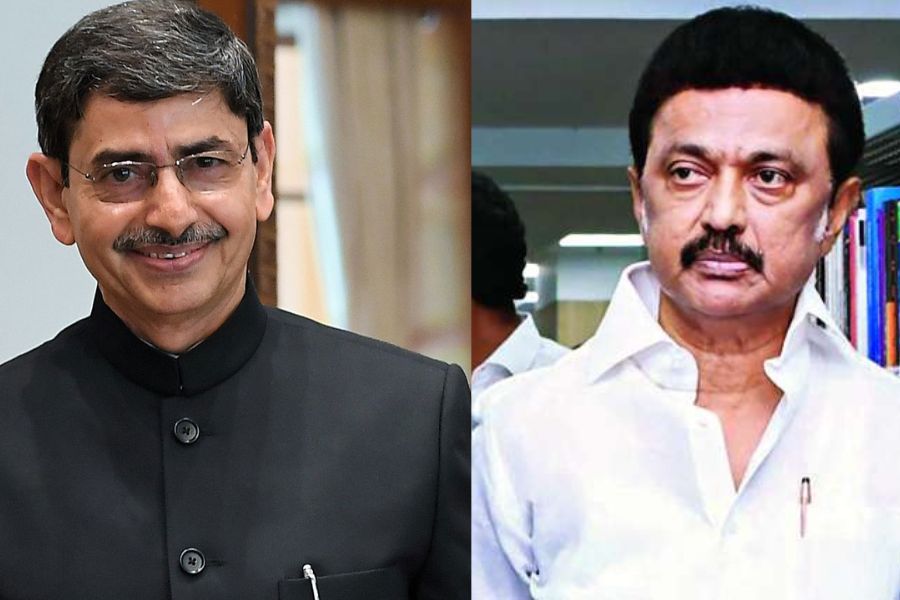
    M.K. Stalin | Governor R N Ravi 'instigates' communal hatred, is threat to  Tamil Nadu's peace: CM Stalin tells President Droupadi Murmu - Telegraph  India

    Central Idea:

    The article discusses the controversial statements made by the Tamil Nadu Governor, R.N. Ravi, regarding the factors leading to India’s Independence. Despite his background in physics and a career in the Intelligence Bureau, Mr. Ravi expressed views on historical events, specifically downplaying the impact of the Quit India movement and attributing British departure to factors like Netaji Subhas Chandra Bose’s actions and the Naval Mutiny.

    Key Highlights:

    • Governor R.N. Ravi, in breach of the expected reticence of constitutional authorities, delves into historical interpretations related to India’s Independence.
    • Ravi suggests that the Quit India movement had minimal impact on the British decision to leave, attributing it more to Netaji Subhas Chandra Bose’s Azad Hind Government and the 1946 Naval Mutiny and Air Force Rebellion.
    • Ravi’s views are reportedly based on Intelligence Bureau files, raising questions about his in-depth study of India’s national movement.

    Key Challenges:

    • Constitutional authorities, like Governors, should refrain from publicly expressing opinions on historical matters unrelated to their duties, especially without comprehensive knowledge.
    • Ravi’s assertion regarding the Quit India movement and the reasons for British departure may stir controversy and be seen as an attempt to rewrite historical narratives.

    Key Terms/Phrases:

    • Quit India movement
    • Intelligence Bureau (IB)
    • Azad Hind Government
    • Naval Mutiny and Air Force Rebellion
    • Netaji Subhas Chandra Bose
    • Mahatma Gandhi
    • Indian National Army (INA)
    • Constitutional authority

    Key Quotes:

    • “The Quit India movement made little impact on the British decision to leave India.” – Governor R.N. Ravi
    • “The British left because they felt ‘insecure’ after the ‘Naval Revolt and the Air Force Rebellion.’” – R.N. Ravi on British Prime Minister Clement Attlee’s alleged statement.

    Anecdotes:

    • The article mentions the lawyer Bhulabhai Desai, Jawaharlal Nehru, and others defending INA officers at their court martial, emphasizing the united front among leaders despite ideological differences.

    Key Statements:

    • Constitutional authorities, like Governors, are expected to maintain reticence and avoid public expressions of opinions on historical events.
    • Mr. Ravi’s views on the Quit India movement and the reasons for British departure may not align with historical consensus.

    Key Examples and References:

    • Reference to the impact of INA trials on British rule withdrawal, as noted in Kailas Nath Katju’s unpublished biography.
    • Mention of historical leaders’ admiration for Netaji Subhas Chandra Bose, despite ideological differences.

    Key Facts/Data:

    • Mr. Ravi’s background in physics and a career in the Intelligence Bureau.
    • INA trials and their impact on public sentiment, as highlighted in Kailas Nath Katju’s biography.

    Critical Analysis:

    • The article criticizes Mr. Ravi for venturing into historical interpretations without a detailed study, emphasizing the need for constitutional authorities to exercise restraint.
    • It questions the validity of Ravi’s claims regarding the Quit India movement’s impact and the factors influencing the British decision to leave.

    Way Forward:

    • Constitutional authorities should adhere to their roles and avoid making public statements on historical events.
    • Encourage informed discussions on historical matters and ensure that statements align with widely accepted historical narratives.
  • What makes the India-France ‘strategic partnership’ tick

    France touts Indian strategic partnership, seals new defence deals during  Modi visit – Euractiv

    Central Idea:

    The article discusses the robust and special “Strategic Partnership” between India and France, tracing its origins, evolution, and current dimensions. It emphasizes the enduring nature of the relationship, marked by shared values, geopolitical convergence, and mutual respect, evident in diverse sectors such as defense, space, education, and commerce.

    Key Highlights:

    • Origins and Evolution: The strategic partnership has deep roots dating back to 1998, with France being the first P-5 country to support India’s claim for a permanent seat in the UN Security Council.
    • Geopolitical Convergence: Both nations prioritize multipolarity, strategic autonomy, and share concerns about a unipolar world, contributing to their natural convergence.
    • Defense Collaboration: Collaboration includes the development of submarines, joint military exercises, and the acquisition of Rafale aircraft. The recently concluded Defense Industrial Roadmap further strengthens defense ties.
    • Space Cooperation: Cooperation in the space domain, which began in the 1960s, has seen a revival, with joint missions and agreements signed between ISRO and CNES.
    • Commercial and Civilian Ties: Efforts are underway to broaden the partnership into commercial and civilian spaces, with joint working groups in various sectors and a growing number of Indian students pursuing higher education in France.

    Key Challenges:

    • Commercial Transition: Moving the partnership from government domains to commercial and civilian spaces presents a challenge, requiring sustained efforts to enhance cooperation in diverse sectors.
    • Differences Management: While strategic partnerships don’t require convergence on all issues, managing differences privately and not publicly is crucial for maintaining a mature and resilient relationship.

    Key Terms:

    • Strategic Partnership: A special relationship between nations marked by cooperation in various domains, including defense, space, and commerce.
    • Multipolarity: A global order characterized by multiple centers of power and influence rather than a single dominant force.
    • P-5: The five permanent members of the United Nations Security Council, including France.
    • Geopolitical Focus: Shifting attention and strategic interests from one region to another based on changing global dynamics.

    Key Phrases:

    • Civilization Exceptionalism: Shared trait between India and France, emphasizing pride in their respective civilizations without imposing their values on each other.
    • Argumentative Intellectualism: Common characteristic shared by both nations, highlighting their appreciation for intellectual discourse.

    Key Quotes:

    • “India and France have valued strategic autonomy in their own fashion.”
    • “‘Strategic Partnership’ does not require convergence on all issues but sensitivity so that differences, where these exist, are expressed in private and not publicly.”

    Key Examples and References:

    • Jacques Chirac’s Declaration (1998): France’s support for India’s claim for a permanent seat in the UN Security Council.
    • Defense Industrial Roadmap: Agreements and collaborations in the defense sector, including the acquisition of Rafale aircraft and submarine development.

    Key Statements:

    • “It is clear that the two countries do share a ‘Strategic Partnership’ that is special.”
    • “Both countries were quick to espouse the virtues of multipolarity.”

    Critical Analysis:

    The article provides a comprehensive overview of the India-France strategic partnership, highlighting its historical context, geopolitical rationale, and practical manifestations. It underscores the challenges of transitioning from government-centric collaborations to broader commercial and civilian engagements. The emphasis on managing differences privately and the maturity of the relationship reflect a nuanced understanding of international diplomacy.

    Way Forward:

    • Enhanced Commercial Ties: Continued efforts to broaden the partnership into commercial and civilian sectors, fostering economic collaboration beyond defense and space.
    • Cultural and Educational Exchange: Strengthening cultural ties, fostering educational collaborations, and encouraging more Indian students to pursue higher education in France.
    • Diplomatic Sensitivity: Maintaining sensitivity in handling differences and ensuring that diplomatic disputes are resolved privately to uphold the mature and resilient nature of the partnership.

    The India-France Strategic Partnership, rooted in shared values and mutual respect, continues to evolve positively, presenting opportunities for further growth and collaboration across various domains.

  • How after 3 failures, Vidyanshu scored 120+ in Prelims twice? Knowledge + PYQ + Logic approach

    How after 3 failures, Vidyanshu scored 120+ in Prelims twice? Knowledge + PYQ + Logic approach

    UPSC Prelims: Knowledge + PYQ + Logic Approach for 110+ score

    Direct Zoom link: Vidyanshu Jha sir’s FREE webinar on 2nd Feb 2024, 7:00 pm

    Download Vidyanshu sir’s PDF Notes (96 paged ancient notes | see images below)


    UPSC Prelims 2024 demands evolution.

    As the exam’s landscape shifts, traditional strategies falter. Success now hinges on adapting, and evolving.

    Prelims is not just a test of knowledge but a test of logical skills.

    With cut-offs in the 80s, soaring past 110 marks requires more than memorization—it demands strategic mastery.

    Enter Vidyanshu Shekhar Jha, DANICS. His journey from three Prelims failures to back-to-back 120+ scores epitomizes this evolution.

    He embodies the shift from knowledge-based preparation to strategic, logical application.

    In the upcoming webinar, Vidyanshu will share UPSC strategy for Prelims 2024, his handwritten UPSC Notes and UPSC Prelims 2023 paper analysis.

    upsc notes
    Ancient notes are available in the google drive link after form submission

    Read what Vidyanshu sir has to say about UPSC prelims preparation and approach

    “I’m Vidyanshu Shekhar Jha, DANICS Officer Trainee (UPSC 2022). My journey with UPSC has been a rollercoaster – from facing setbacks in my first three attempts to scoring over 120 marks consistently.

    I’m here to share something vital with you, especially with UPSC Prelims 2024 around the corner.

    You see, the UPSC Prelims exam isn’t just about how much you know. It’s evolving, and so must our strategies. Success in this exam hinges on your ability to solve problems logically and integrate your preparation across current affairs and the static UPSC syllabus.

    So, why am I telling you this? Because I’ve been through the grind, faced the disappointments, and found a way to break through. And I want to help you do the same.

    In the upcoming webinar, I’ll dive into the patterns of UPSC Prelims, showing you how they’ve changed and what that means for us. I will share my analysis of UPSC Prelims 2023 with you all.

    I’ll share the problem-solving techniques that turned my scores around and how to approach your study strategically, making every hour count.

    This isn’t just about passing the exam. It’s about excelling. Join me, and let’s tackle this challenge head-on. Together, we can navigate the complexities of UPSC Prelims 2024 with confidence and clarity.

    Looking forward to seeing you all.”

    upsc prelims

    UPSC Prelims 2024 Webinar by Vidyanshu, DANICS trainee

    Vidyanshu’s Ancient History’s PDF notes are available for download | Register below for direct google drive link

    upsc prelims 2024

    In this masterclass, you will get:

    1. A 45-minute deep dive on knowledge + Logic approach for a 110+ in UPSC Prelims 2024
    2. My analysis of UPSC Prelims 2023 paper.
    3. My handwritten Ancient and Medieval PDF notes and my strategy PDF

    Direct Zoom link: Vidyanshu Jha sir’s FREE webinar on 2nd Feb 2024, 7:00 pm

    First 100 will get Vidyanshu sir’s PDF Notes (96-97 paged notes | see images below)

    By the end, you’ll have razor-sharp clarity and a clear roadmap for approaching and qualifying your UPSC 2024 prelims exam with confidence and near-perfect certainty. 

    Vidyanshu Shekhar Jha, DANICS

    (Don’t wait—the next webinar won’t be until March 25)

    upsc prelims 2024

    Registration open! Join now to attend the webinar for FREE


    These masterclasses are packed with value. They are conducted in private with a closed community. We rarely open these webinars for everyone for free. This time we are keeping it for 300 seats only.

    Fee:

    • Special Access (extra 15 min with Vidyanshu sir) – Free (only for first 100 registrations, register before 1st Feb 2024)
    • Early Access – Rs. 299 (for the next 100 registrations, register before 2nd Feb 2024, 2 PM)
    • Late Access – Rs. 499 (for last 100 registrations, register before  2nd Feb 2024, 2 PM)

    Ready to attend the UPSC Webinar?


    Not sure yet?

    We recommend you register here. It takes less than 10 seconds to register.

    • No spam! Once in a while, we’ll only send you high-quality exam-related content. 
    • We will inform you about the upcoming Masterclasses that might benefit you.
    • You can demand one free mentorship call from verified Civilsdaily mentors. 
    • You can always choose to unsubscribe. 
  • [pib] Exercise ‘SADA TANSEEQ’

    Introduction

    • The inaugural edition of the India-Saudi Arabia Joint Military Exercise ‘SADA TANSEEQ’ was commenced in Rajasthan.

    Exercise ‘SADA TANSEEQ’

    • It is a joint military exercise conducted between the armed forces of India and Saudi Arabia.
    • The exercise is designed to enhance the capabilities and interoperability of the troops from both nations in conducting joint operations in semi-desert terrains.
    • It focuses on tactical training and sharing best practices in conducting operations in a sub-conventional domain.
    • The primary objective is to strengthen the bond, cooperation, and camaraderie between the Indian and Saudi Arabian armed forces.
    • It also serves as a platform for achieving shared security objectives and fostering bilateral relations between the two friendly nations.

    Key components of the Exercise

    • The exercise typically involves various military training activities such as establishing mobile vehicle checkposts, conducting cordon and search operations, house intervention drills, reflex shooting, slithering, and sniper firing.
    • These activities help in building the capacity of the troops to work together effectively in semi-desert terrains, which can be crucial for addressing security challenges.
  • Unlocking the Science of E Ink Displays

    E Ink Displays

    Introduction

    • E-readers like the Kindle offer an enjoyable reading experience with their paper-like E Ink displays.
    • Developed at MIT in the 1990s, E Ink technology is now owned by E Ink Corporation.

    What is E Ink Displays?

    • Microcapsules and Charges: E Ink displays operate using microcapsules containing positively charged white particles and negatively charged black particles suspended in fluid. By applying electrical charges, these particles rise to the surface, creating text and images.
    • Reflective Light: Unlike LCD and LED displays that require backlighting, E Ink displays reflect ambient light, resembling paper and reducing eye strain during prolonged reading.
    • Energy Efficiency: E Ink’s lack of backlighting results in minimal power consumption, as energy is only used when the image changes. This makes it ideal for devices like e-readers and ensures a long battery life.
    • Outdoor Legibility: E Ink displays offer high contrast and readability even under bright lighting conditions, unlike LCD/LED displays that suffer under sunlight.

    Differentiating E Ink from E Paper

    • While often used interchangeably, E Ink and E Paper represent distinct display technologies. E Paper encompasses any screen mimicking real paper.
    •  Whereas E Ink specifically employs microcapsules with white and black particles in a clear fluid.

    Applications of E Ink Displays

    • E Ink in E-Readers: E Ink gained popularity in early e-readers like the Amazon Kindle, offering clear text even in bright sunlight. It remains a feature in Kindle and Kobo e-readers today.
    • Brief Stint in Mobile Devices: E Ink briefly appeared in some early cell phones but was eventually replaced by more advanced displays.
    • Revival in Mobile Devices: Some startups are reintroducing E Ink in smartphones, emphasizing reduced screen time and enhanced focus on communication and productivity.
    • Beyond Mobile Devices: E Ink displays are expanding to various urban applications, including bus stop displays and walking direction signs. Restaurants are adopting E Ink menu boards for their matte, glare-free surfaces and readability in diverse lighting conditions.

    Pros and Cons  

    • Advantages: E Ink displays excel in low power consumption, making them suitable for devices requiring extended battery life. They also minimize eye strain due to their paper-like visual experience, matte surface, and outdoor readability.
    • Drawbacks: E Ink displays have slower refresh rates compared to LCD and OLED screens, rendering them unsuitable for video or animation. They also have limitations regarding color and resolution and remain relatively expensive for larger sizes.
  • Why Centre plans to replace the Indian Stamp Act, 1899 with a new law

    stamp

    Introduction

    • Stamp duty, a tax levied for registering various documents, plays a significant role in India’s financial landscape.
    • However, the existing Indian Stamp Act, 1899, has faced challenges with redundancy and non-uniform application.
    • To address these issues, the Ministry of Finance has introduced the ‘Indian Stamp Bill, 2023,’ seeking to revamp and modernize the stamp duty regime.

    Understanding Stamp Duty

    • Nature of Stamp Duty: Stamp duty is a government tax levied for the registration of various documents, such as agreements and transaction papers, with the registrar.
    • Tax Calculation: The amount is typically a fixed value based on the document’s nature or a percentage of the agreement’s stated value.

    Scope of Stamp Duty

    • Applicable Documents: Stamp duties are imposed on a range of documents, including bills of exchange, cheques, promissory notes, bills of lading, letters of credit, insurance policies, share transfers, debentures, proxies, and receipts.
    • Jurisdiction: While levied by the Central government, stamp duty revenues are collected by individual states within their territories, as authorized by Article 268 of the Constitution.

    Indian Stamp Act, 1899

    • Fiscal Legislation: The Indian Stamp Act, 1899, is a fiscal statute governing the imposition of taxes in the form of stamps on transaction-recording instruments.
    • Instrument Definition: Under Section 2 of the Act, an “instrument” encompasses any document creating, transferring, limiting, extending, extinguishing, or recording any right or liability.
    • Stamp Characteristics: A “stamp” is defined as any mark, seal, or endorsement authorized by the State Government, including adhesive or impressed stamps, for the Act’s duty purposes.
    • Taxable Instruments: Section 3 of the 1899 Act specifies that certain instruments or documents are chargeable with amounts listed in Schedule 1 of the Act, including bills of exchange and promissory notes.

    Reasons for the Indian Stamp Bill, 2023

    • Redundancy and Inoperability: The Ministry of Finance cites the redundancy and inoperability of several provisions within the Indian Stamp Act, 1899.
    • Lack of Uniformity: The absence of provisions for digital e-stamping and the lack of consistent stamp duty legislation across Indian states necessitate a new law.

    Notable Provisions in the Draft Bill

    • Digital E-stamping: The draft Bill introduces provisions for digital e-stamping, enabling electronic payment of stamp duty.
    • Digital Signatures: It includes provisions for digital signatures, redefining “executed” and “execution” to mean “signed” and “signature,” incorporating electronic records and signatures as defined in the Information Technology Act, 2000.
    • Penalty Enhancements: The draft Bill proposes increased penalties, raising the maximum penalty from Rs 5,000 to Rs 25,000 for contravention of the law and imposing a daily penalty of Rs 1,000 for repeated offenses.

    Conclusion

    • The ‘Indian Stamp Bill, 2023’ represents a significant step towards modernizing stamp duty laws in India.
    • By addressing the shortcomings of the existing legislation and introducing digital-friendly provisions, the bill aims to streamline and enhance the stamp duty regime, facilitating smoother transactions and compliance in the country’s financial landscape.
  • India ranks 93 out of 180 countries in Corruption Perceptions Index 2023

    corruption

    Introduction

    • Transparency International has released its Corruption Perceptions Index for 2023, ranking countries based on their perceived levels of corruption in the public sector.
    • India’s position in the ranking has shifted, but the change is minimal.

    About Corruption Perceptions Index (CPI)

    Details
    Introduction Introduced by Transparency International in 1995.
    Frequency Published annually.
    Purpose Ranks countries based on perceived corruption.
    Data Sources Expert assessments and surveys of business leaders and residents.
    Global Impact Widely recognized and used by governments, policymakers, businesses, and researchers.
    Data Focus Primarily assesses perceived corruption within government and bureaucracy.


    India’s Corruption Scorecard

    • India’s Global Rank: In the 2023 index, India is placed 93rd out of 180 countries, a small decline from its 85th position in 2022.
    • Corruption Score: India’s overall corruption score for 2023 is 39, down slightly from the 40 it scored in 2022.
    • Limited Change: The report highlights that India’s score fluctuations are minor, making it challenging to draw definitive conclusions about any significant changes. However, it points out that there have been actions narrowing civic space in India, including the passage of a telecommunications bill that could threaten fundamental rights.

    South Asia’s Corruption Landscape

    • Pakistan and Sri Lanka: In South Asia, Pakistan (133) and Sri Lanka (115) are grappling with debt burdens and political instability. Still, strong judicial oversight in these countries helps keep the government accountable. Pakistan’s Supreme Court expanded citizens’ right to information, while Sri Lanka continues to face a crackdown on the press.
    • Bangladesh: As Bangladesh (149) moves away from its least developed country status and experiences economic growth, it faces challenges in providing public sector information due to a crackdown on the press.

    Regional Insights

    • China’s Anti-Corruption Efforts: China (76) has made headlines for its aggressive anti-corruption campaign, resulting in punishments for millions of public officials over the last decade. However, doubts linger about the long-term effectiveness of these measures, which heavily rely on punishment rather than institutional checks.
    • Asia Pacific Region: The report notes that the Asia Pacific region is gearing up for a significant election year in 2024, with several countries holding elections. However, the 2023 CPI suggests little to no meaningful progress in curbing corruption in the region.

    Top and Bottom Performers

    • Top-Scoring Countries: Nations like New Zealand (3) and Singapore (5) maintain their positions at the top of the index due to robust corruption control mechanisms. Other countries in the region with strong control measures include Australia (14), Hong Kong (14), Japan (16), Bhutan (26), Taiwan (28), and South Korea (32).
    • Struggling States: The lower end of the index includes fragile states with authoritarian regimes, such as North Korea (172) and Myanmar (162). Afghanistan (162) continues to grapple with one of the worst humanitarian crises in history.
  • India nominates 12 forts of Marathas for UNESCO World Heritage List

    maratha

    Introduction

    • India’s nomination for the UNESCO World Heritage List in 2024-25 is the “Maratha Military Landscapes of India.”
    • This nomination encompasses twelve distinct components, each holding a unique place in history and culture.
    • Together, they illuminate the strategic military prowess of the Maratha rulers during the 17th to 19th centuries.

    Maratha Military Landscapes

    • Selecting the Twelve: Maharashtra boasts more than 390 forts, with only twelve chosen for the Maratha Military Landscapes. Among them, eight are protected by the Archaeological Survey of India, including Shivneri, Lohgad, Raigad, Suvarnadurg, Panhala, Vijaydurg, Sindhudurg, and Gingee. Salher, Rajgad, Khanderi, and Pratapgarh are safeguarded by the Directorate of Archaeology and Museums, Government of Maharashtra.
    • Diverse Fort Types: These forts encompass hill forts, hill-forest forts, hill-plateau forts, coastal forts, and island forts, each with its distinct historical and geographical significance.
    • Historical Significance: These forts, scattered across varied geographical and physiographic regions, exemplify the Maratha rulers’ exceptional fortification and military strategies.

    Maratha Military Ideology

    • The origins of Maratha Military ideology can be traced back to the 17th century during the reign of Chhatrapati Shivaji Maharaj (circa 1670 CE).
    • This enduring legacy continued through subsequent rules, including the Peshwa rule until 1818 CE.

    Nomination and Criteria

    The Maratha Military Landscapes of India is nominated in the category of cultural criteria, specifically under:

      1. Criterion (iii): Bearing exceptional testimony to a cultural tradition or civilization.
      2. Criterion (iv): Exemplifying outstanding architectural or technological ensembles representing significant stages in human history.
      3. Criterion (vi): Tangibly associated with events, traditions, beliefs, and works of universal significance.

    India’s Rich UNESCO Heritage

    • Existing World Heritage Sites: India currently boasts 42 World Heritage Sites, comprising 34 cultural sites, seven natural sites, and one mixed site.
    • Maharashtra’s Contribution: Maharashtra contributes significantly to India’s heritage with six World Heritage Sites, including Ajanta Caves, Ellora Caves, Elephanta Caves, Chhatrapati Shivaji Maharaj Terminus, Victorian Gothic and Art Deco Ensembles of Mumbai, and the Western Ghats of Maharashtra, Karnataka, Tamil Nadu, and Kerala (in the natural category).
    • A Cultural Gem: The Maratha Military Landscapes of India, included in the Tentative List of World Heritage sites in 2021, stands as Maharashtra’s sixth cultural property nominated for inclusion in the prestigious World Heritage List.

    Back2Basics: UNESCO World Heritage Sites

    Description
    UNESCO World Heritage Sites Landmarks or areas selected by UNESCO for their cultural, historical, scientific, or other significant value, legally protected by international treaties.
    Importance World Heritage Sites represent collective and preservative interests of humanity, signifying remarkable accomplishments and intellectual history.
    Selection Criteria Sites must be already-classified landmarks, unique and significant culturally or physically, such as ancient ruins, historical structures, cities, monuments, etc.
    Conservation World Heritage Sites require practical conservation to protect them from risks like trespassing, uncontrolled access, or administrative negligence.
    World Heritage Committee Selects and monitors World Heritage Sites, manages the World Heritage Fund, and provides financial assistance. Composed of 21 states parties elected for a four-year term.
    Membership India is not a member of the World Heritage Committee.

    Note: “States parties” refer to the countries that have ratified the World Heritage Convention and participate in the decision-making process.

  • Northern White Rhino IVF Project by BioRescue

    Northern White Rhino

    Introduction

    • The northern white rhino, once on the brink of extinction, saw its last male member pass away in 2018, leaving the subspecies on the verge of being lost forever.
    • However, a pioneering initiative was launched in 2015 by a group of international scientists known as BioRescue, to resurrect the northern white rhino through in vitro fertilisation (IVF).

    About Northern White Rhino

    Details
    Scientific Name Ceratotherium simum cottoni
    Geographic Range Eastern and Central Africa
    Population Status Critically Endangered (Only 2 individuals alive) in 2024
    Physical Characteristics Grayish-white color, two horns, hump on the neck
    Social Behavior Solitary, occasionally seen in small groups
    Diet Herbivorous, primarily grazers
    Conservation Efforts Extensive efforts to save from extinction
    IUCN Red List Status Critically Endangered

    White Rhino Resurrection IVF Project

    • Project: BioRescue, a team of scientists from around the world, embarked on a mission to revive the northern white rhino through IVF in 2015.
    • Historic Breakthrough: In a remarkable achievement, scientists announced the first-ever rhino pregnancy via the transfer of a lab-made rhino embryo into a surrogate mother.
    • Persistence and Dedication: The breakthrough with a southern white rhino, a close relative, followed 13 attempts, showcasing the dedication of the scientists.

    Challenges on Road to Revival

    • Unique Challenge: Northern white rhinos face an unusual predicament due to the infertility of the last two surviving females, Najin and Fatu.
    • Surrogacy Complexity: Preparing a southern white female as a surrogate mother involves isolation, infection prevention protocols, and precise identification of the fertile window.
    • Genetic Viability: Even with successful IVF and surrogacy, the limited gene pool from eggs and sperm of deceased zoo rhinos poses a challenge.
    • Stem Cell Possibilities: Exploring stem cell techniques to broaden the gene pool shows promise but is experimental and challenging to implement in rhinos.

    Lessons from Conservation

    • Wild Resilience: Conservation efforts saved the southern white rhino from near-extinction, with their numbers rebounding from a mere 20 in the 19th century to over 17,000.
    • Crossbreeding Dilemma: Crossbreeding northern and southern subspecies is not a viable solution due to the loss of unique attributes.
    • Behavioral Legacy: Restoring a species requires more than genetic revival; it necessitates the transmission of behavioral traits learned from adults of the same species.

    The Race against Time

    • Critical Window: To preserve the northern white rhino’s unique behavioral traits, the first IVF calves must learn from the last two surviving females, Najin and Fatu.
    • Looming Deadline: With Najin at 35 and Fatu at 24, the window for this crucial interaction is closing, as northern white rhinos rarely live beyond 40 in captivity.
    • A Costly Endeavor: BioRescue, funded by the German government and donors, has invested millions in this project, raising questions about resource allocation and prioritization.

    The Bigger Picture

    • A Noble Cause: The effort to revive the northern white rhino stems from a sense of responsibility to counteract human-driven extinction.
    • Conservation Imperative: While the project is ambitious, critics raise concerns about neglecting other endangered species and the need to protect natural habitats.
    • Broader Crisis: Rhino populations across species face grave threats, including poaching, with one rhino poached every 16 hours in Africa.
  • Astronomers spot Unusual Object falling in Black Hole ‘Mass Gap’

    Black Hole ‘Mass Gap’

    Introduction

    • In the field of astronomy, astronomers sometimes stumble upon celestial objects that leave them scratching their heads.
    • In a recent study published in Science, a discovery was reported that is likely to get scientists talking and asking questions.

    Neutron Stars: Exceptionally Dense

    • Incredibly Dense Objects: Neutron stars are some of the densest things in the universe. They’re as compact as an atomic nucleus but as big as a city, pushing our understanding of super-dense matter to the limit.
    • A Weighty Matter: The heavier a neutron star is, the more likely it is to eventually collapse and become something even denser, like a black hole.

    Puzzling the Boundary

    • A Cosmic Mystery: To understand what happens when neutron stars turn into black holes, objects that are in-between need to be found. These objects also need to be studied very carefully over a long time.
    • A New Discovery: A cosmic system has been found in the NGC 1851 star cluster that doesn’t fit neatly into the categories of neutron stars or black holes.

    NGC 1851E: The Revelation

    • Seeing Something New: Inside NGC 1851, a pair of stars has been spotted that provides fresh insights into the extreme matter in the universe. This system has a millisecond pulsar, a fast-spinning neutron star that sends out beams of radio light, and a massive, dark companion that can’t be seen at any wavelength of light.
    • The Pulsar’s Role: Millisecond pulsars are like cosmic clocks. They spin steadily, and any changes in their spin can tell important things about what’s around them.

    Unveiling the Weight of Secrets

    • Very Precise Measurements: The MeerKAT radio telescope in South Africa was used to closely watch the NGC 1851E system.
    • What Was Found: Observations allowed figuring out exactly how the two objects move around each other and how heavy they are together. The system’s mass is almost four times that of the Sun, and the invisible companion is denser than a regular star but not as heavy as a black hole.
    • A Strange Mass Gap: The companion’s mass falls in a range that’s puzzling to scientists, between the heaviest neutron stars and the lightest black holes. Understanding objects in this range is a big mystery in astrophysics.

    A Stellar Dance: Cosmic Partnerships

    • A Fascinating Idea: One intriguing possibility is that a pulsar is circling around what’s left after two neutron stars collided, something made possible because there are many stars packed closely together in NGC 1851.
    • Starry Dance Floor: In this crowded group of stars, they twirl around each other, changing partners as they go. If two neutron stars get too close, they collide, creating a black hole. This black hole can then disturb the dance of other stars in the cluster.
    • Still Many Questions: The work isn’t finished. Research is continuing to figure out exactly what the companion is. Is it the lightest black hole, the heaviest neutron star, or something completely different?
    • Exploring New Frontiers: When at the border between neutron stars and black holes, there’s a chance of discovering completely new types of objects.

More posts