💥Mains Ready By December. Smash Mains & Smash PYQ Admissions Open

Search results for: “”

  • Prelims tit-bits- Polity part 3

    1. Amendment of the Constitution

    • Amendment bill can be introduced in either house of parliament but not in state legislature
    • Unlike money bill, does not require permission of president before introduction
    • Bill has to be passed by both the houses separately with special majority, hence no scope of joint sitting
    • President must give his assent to the bill<24th amendment>
    • For amending federal provisions ratification of half the state legislatures (29/2=15) by simple majority is required <apart from special majority in parliament eg. GST>
    • In states there is no role of Vidhan Parishads in ratification of amendment bills

    Discuss– Different types of majorities

    2. Amendment of constitution

    • Admission or establishment of new states (art 2) and formation of new states and alteration of areas, names etc is not considered amendment under article 368 i.e simple majority required to amend
    • Amendment of 2nd schedule (salary, allowances) and 5th, 6th schedule is also not considered amendment
    • But addition to the list of national languages and change of name of language under schedule 8 is amendment (special majority)
    • 7th schedule (3 lists) can be amended only by special majority plus ratification by half the states

    Discuss – Contrast amendment procedure in India with that in US

    3. Parliamentary legislation on state list

    • Art. 249 : When the RS declares that it is necessary in the National Interest that Parliament make laws on State Subjects. It remains in force for one year. After 1 year it automatically goes out of force. <what’s the mechanism for RS to authorise so?>
    • Art. 250 : During National Emergency under art. 352. It becomes non operative 6 months after the emergency has ceased to operate
    • Art. 252 : If 2 or more states pass a resolution requesting the Parliament to enact laws on a matter in the State List. Now State legislature can never repeal such acts. Only parliament can repeal such acts.
    • Art. 253 : To give effect to any international agreement or treaty <no state or RS authorisation required>
    • Art. 256 : During the President’s Rule ( Art. 356) . it remains operative even after the president’s rule but state legislature can at any time repeal or alter it <contrast it with art 250 under article 352>

    Discuss- what’s the mechanism to give effect to international agreements in USA? Does Indian procedure not violate standards of true federal constitution?

    4. Parliamentary committees

    • Members are nominated to most of the ad hoc <for specific purpose> and standing committees ,round the year>
    • Departmental related standing committees started from 1993 and at present there are 24 such committees < 31 members i.e 21 plus 10, all nominated >
    • 3 most imp committees, committee on estimates, Public account committee and Committee on PSUs have their members elected <read about them in detail>
    • Committee on estimates largest committee, 30 members, all from LS
    • PAC chairperson is conventionally from oppositions party, CAG reports, acts as friend, philosopher and guide

    Discuss– what’s this joint committee, select committee, JPC etc and where do they come into picture?

    5. Attorney General

    • Not debarred from private legal practice <remember Mukul Rohatgi represented Kerala bar owners against liquor prohibition>
    • Reference to AG can be made only by law ministry <not even by PMO>
    • AG has right to take part in proceedings of both the houses as well as its committees but no right to vote
    • Solicitor general (SG) and ASG are not constitutional posts

    Discuss– Qualifications, appointment and removal procedure of AG

  • [E&B Bodies #8] National Ganga River Basin Authority

    Need

    The need for revamping the river conservation programme was widely recognised in view of the shortcomings in the approach followed in GAP. It was felt necessary that a new holistic approach based on river basin as the unit of planning and institutional redesign should be adopted.

    Accordingly, the Government of India has given Ganga the status of a National River and has constituted the National Ganga River Basin Authority (NGRBA) on 20th February 2009 under Section 3(3) of the Environment (Protection) Act, 1986

    About

    • It is a planning, financing, monitoring and coordinating body of the centre and the states
    • The Ministry of Water Resources, River Development and Ganga Rejuvenation(MoWR, RD & GR) is the nodal Ministry for the NGRBA
    • It is chaired by the Prime Minister and has as its members the Union Ministers concerned, the Chief Ministers of the States through which Ganga flows, viz., Uttarakhand, Uttar Pradesh, Bihar, Jharkhand and West Bengal, among others
    • This initiative is expected to rejuvenate the collective efforts of the Centre and the States for cleaning the river

    Objectives

    • Ensuring effective abatement of pollution and conservation of the river Ganga by adopting a river basin approach to promote inter-sectoral co-ordination for comprehensive planning and management
    • Maintaining environmental flows in the river Ganga with the aim of ensuring water quality and environmentally sustainable development

    Functions

    It has both regulatory and developmental functions. It will take measures for effective abatement of pollution and conservation of the river Ganga in keeping with sustainable development needs. These include:

    • Development of a river basin management plan
    • Regulation of activities aimed at prevention, control and abatement of pollution in Ganga to maintain its water quality, and to take measures relevant to river ecology and management in the Ganga basin states
    • Maintenance of minimum ecological flows in the river Ganga
    • Measures necessary for planning, financing and execution of programmes for abatement of pollution in the river Ganga including augmentation of sewerage infrastructure, catchment area treatment, protection of flood plains, creating public awareness
    • Collection, analysis and dissemination of information relating to environmental pollution in the river Ganga
    • Investigations and research regarding problems of environmental pollution and conservation of the river Ganga
    • Promotion of water conservation practices including recycling and reuse, rain water harvesting, and decentralised sewage treatment systems
    • Monitoring and review of the implementation of various programmes or activities taken up for prevention, control and abatement of pollution in the river Ganga
    • Issue directions under section 5 of the Environment (Protection) Act, 1986 for the purpose of exercising and performing these functions and for achievement of its objectives

    Progress

    • The NGRBA is fully operational and is also supported by the state level State Ganga River Conservation Authorities (SGRCAs) in five Ganga basin States which are chaired by the Chief Ministers of the respective States
    • Under NGRBA programme, projects worth Rs. 4607.82 crore had been sanctioned up to 31st March 2014
    • It has started the Mission Clean Ganga with a changed and comprehensive approach to champion the challenges posed to Ganga through four different sectors- wastewater management, solid waste management, industrial pollution and river front development

    Task for you

    • Critically examine the magnitude of Ganga river pollution, its causes and challenges faced by the government in cleaning the river
    • Despite the enormous funds and time spent, efforts made to clean the River Ganga have not yielded desired results. Critically examine


    Published with inputs from Swapnil
  • [E&B bodies #7] Tiger and Other Endangered Species Crime Control Bureau

    source

    About

    • Tiger and Other Endangered Species Crime Control Bureau is a statutory multi-disciplinary body
    • Established by the Government of India on 6 June 2007, by amending the Wildlife (Protection) Act, 197
    • Functions under the Ministry of Environment and Forests
    • Headquarter- New Delhi
    • It complements the efforts of the state governments, primary enforcers of the Wildlife (Protection) Act, 1972 and other enforcement agencies of the country
    • Aim: To combat organized wildlife crime in the country
    • The Bureau was initially headed by a Senior Police Officer of Inspector General of Police rank, Ms. Rina Mitra, and the organisation achieved substantial progress under her leadership

    Mandates

    Under Section 38 (Z) of the Wild Life (Protection) Act, 1972, it is mandated to:

    • Collect and collate intelligence related to organized wildlife crime activities and to disseminate the same to State and other enforcement agencies for immediate action so as to apprehend the criminals
    • Establish a centralized wildlife crime data bank
    • Co-ordinate actions by various agencies in connection with the enforcement of the provisions of the Act
    • Assist foreign authorities and international organization concerned to facilitate co-ordination and universal action for wildlife crime control
    • Capacity building of the wildlife crime enforcement agencies for scientific and professional investigation into wildlife crimes and assist State Governments to ensure success in prosecutions related to wildlife crimes
    • Advise the Government of India on issues relating to wildlife crimes having national and international ramifications, relevant policy and laws

    Other functions/ initiatives

    • It also assists and advises the Customs authorities in inspection of the consignments of flora & fauna as per the provisions of Wild Life Protection Act, CITES and EXIM Policy governing such an item
    • WCCB is also partnering with United Nations University and CIESIN-Earth Institute at Columbia University through the Wildlife Enforcement Monitoring System Initiative

    Recognition

    Won the prestigious 2010 Clark R. Bavin Wildlife Law Enforcement Award for its outstanding work on wildlife law enforcement in the country

    Task for you

    1. Recent years have seen rise in the population of wild lions and tigers in India. Critically examine the reasons behind this success.
    2. Comment on the existing legal framework in India to protect and conserve wildlife


    Published with inputs from Swapnil


  • Life of an IFS officer: An anonymous in-service officer talks it out


    These are excerpts from an AMA (Ask me anything) session at Reddit held about three years ago (2012). The IFS officer kept his identity a secret (for it’ was a small cohort of 800 odd servicemen, everyone knew everyone and he wanted to be at ease!)

    He had given a proof of his identity to the mods at Reddit so be assured over the veracity of the claims made.

    Here are some of the choicest questions from the sessions which would give you an honest sneakpeak into the life and times of an IFS officer:

    #1. How much you earn in salary and above the table?

    Check out the Sixth Pay Commission figures. That’s what we earn. When we are posted abroad, there is a Cost of Living Allowance, but that’s not much to write home about. Any decent IT worker earns more than civil servants. IFS officers don’t get much, if any, money under the table. Our property returns are now online on the Ministry website. Feel free to take a look.

    In a developed country, it would be somewhere around $3000 at the junior IFS level (Second Secretary) and around $8000 for the senior-most IFS officer (Ambassador) in the Embassy. These are approximate figures. These numbers are based on a Cost of Living Index prepared and updated by the UN. As you can see, these are decent allowances, but nothing special. Please do remember that we don’t get cars or servants or all sorts of other freebies that people imagine us to be getting.

    #2. What kind of cultural training do you need to undergo before placement in a new country? How does it affect family?

    Each IFS officer learns one foreign language before he/she is confirmed into the service. This training is provided in the country where the language is spoken. Beyond this, there is no formal cultural training. The Foreign Service Institute in Delhi has some training courses for young inductees on diplomatic etiquette etc. but it is quite basic.

    Family life is hard. Most of the younger officers are married to highly qualified spouses who want to work. It isn’t always possible. Some countries don’t allow diplomatic spouses to work, some allow but the specific jobs are hard to find, and some have barriers like language.

    #3. How corrupted is Government Service? How best can we eliminate it?

    IFS is not very corrupt. Perhaps because we don’t have much political interference, but mostly because we don’t have huge budgets and spending programmes controlled by the Ministry. To eliminate corruption, we need to have more transparency. I wish people would use the RTI more, and use it more effectively. We also need to cut down the government size at the lower levels (looking at you, Railways) and increase the numbers at the higher, executive levels.

    The average District Magistrate or Police Superintendent is way too overworked. Even if he were 100% honest himself, the system is too heavy and too complicated for him to deliver great results. Once you have a lighter government, you can also afford to pay a living wage to such executive officers. But with millions of peons and assistants with little work and strong unions, you can’t pay the higher ups without increasing their pay as well. And that breaks the government coffers.

    #4. China is said to be establishing very strong links with several sub-saharan countries to establish a stranglehold over their resources. Are we also planning/doing the same?

    Our companies try to do what they can. ONGC (through OVL) is quite active. Some private companies too. But this is not a game in which we can compete with China. Their companies are government controlled and can execute projects at short notice with whatever money the government asks them to put in. Our system is very different. There are also reports of dissatisfaction with Chinese investment, because their infrastructure is aimed at their own projects and creates temporary jobs for Chinese immigrant labour for most part. Locals don’t get as much benefit as the headline figures of Chinese “investment” suggest.

    #5. Tell about the worst story being “middle management” IFS civil servant

    Some politicians are okay on their own, but their hangers-on are quite terrible – demanding that they be gives cars 24/7 when abroad and that their shopping bills be paid by the IFS officers accompanying them or that their bags be carried by the IFS officers. I have refused such demands. Many get pissed. Some have complained to my bosses. But I do my job well, and haven’t yet had to apologize for doing the right thing.

    Senior IAS officers on foreign tours are the worst, in terms of the % of bad eggs they seem to have. Worse than politicians, because politicians often have local contacts who take care of their demands. IAS officers usually don’t, so they make demands of the Embassies, treating Embassies like their personal fiefdoms in the districts. It doesn’t work with me, but I know colleagues who have had to grin and bear it.

    #6. Does anyone indulge in Insider trading and stuff considering you guys have access to certain info before the general public does?

    I once invested in a company after meeting the CEO and being very impressed by him. The stock promptly tanked soon 🙂 I’ve been I index funds since. Can’t rule out insider trading by others but the information companies share with us isn’t always market moving.

    #7. Is India really serious about a permanent seat in the UNSC? What are its chances given it has not signed the NPT?

    We are serious, but we know that it will happen not because of our lobbying but because we are considered important enough in the international system. When that happens, we’ll get it. It is still important to lobby though, because if we don’t, then it is not going to come our way. NPT is a non issue at this point. Outside of some academicians, nobody really cares about it. World politics has moved on.

    #8. Look East or Look West. Or both?

    “Railway line ko cross karne se pehle hamesha dono taraf dekhein” 🙂 Look both ways, of course. Look everywhere. Then assign a buzzword to it to generate enthusiasm.

    #9. Is there really a long term vision for India’s foreign policy? Please say yes. Really? What is our end game? How are we going to play ball with US and China especially?

    We will deal with US and China both. We have to. There are issues on which India and China agree and work very closely together (e.g. climate change). Same goes for the US. Same for Russia and any other country. With the collapse of ideologically shaped foreign policies, countries now are much closer to the idea of interest-based foreign policies. You know the saying: no friends, only interests.

    #10. If you have to choose between IASIPSIFS right now, what would be your preference? Please don’t be diplomatic(HAH!).

    I would choose IFS again. The IAS/IPS have a very limited world view and a small arena of action for most of their careers. They also get to deal with the worst of the politicians, and they have to handle people in masses. I prefer interacting with smaller groups of people. I like international affairs, and I like to think in terms of “what does it mean for India” rather than “what does it mean for district ABC”.

    The Q&A was picked up from this AMA @Reddit.
  • Prelims tit-bits- Polity part 2

    1. Emergency provisions

    • Taken from Wiemar constitution
    • A national emergency(art 352) can be proclaimed due to war, external aggression or armed rebellion not on the ground of internal disturbance)
    • though the proclamation of national emergence requires the approval of both the houses (special majority), lok sabha’s approval( simple majority) alone suffices for revocation
    • president can unilaterally revoke the proclamation of national emergency without the parliament’s approval

    Discuss-  differences b/w article 358 and 359 related to emergency

    2. Interim budget and vote on account

    • Vote on account is a statement of only expenditures while the interim budget is a complete set of accounts, including both expenditure and receipts <think of it as mini budget>
    • Vote on account is passed every year before appropriation bill is passed <generally for 2 months >
    • Interim budget is passed during election years
    • Interim budget also contains vote on accounts <before appropriation bill of interim budget is passed>

    Discuss– everything clear?? Any confusions??

    3. Primacy of LS over RS

    • Money bill- introduced only in LS, RS can only suggest amendments that too w/i 14 days
    • A resolution for the discontinuation of national emergency can be passed only by LS by simple majority.
    • Adjournment motion and no confidence motion can be passed only in LS.
    • Estimates committee draws members solely from LS. It has 30 members, largest committee of parliament.
    • Speaker and in the absence of speaker, deputy speaker presides over joint sitting

    Discuss-any other instance of primacy of LS over RS

    4. Money bill v/s financial bill

    • Money bill (art 110)  provisions related to only taxations, borrowings, expenditure etc i.e money matters only
    • Financial bill type A- money provisions plus other general provisions
    • Financial bill type B- expenditure from consolidated fund plus other provisions
    • Money bill can be introduced only on recommendation of president, in the LS and only by a minister (not by pvt member). RS can only suggest amendments that too w/in 14 days thus no scope of joint sitting, President can not resend the bill to the house <though he is not bound to give his consent>. Speaker certifies the bill as money bill and certification is final
    • Financial bill type A- just like money bill till introduction, after introduction, it’s ordinary bill i.e RS has to pass the bill and can reject it
    • Financial bill Type B- totally ordinary bill just that president recommends consideration of bill by both the houses <as it involves expenditure from CFI>

    Note 1– All financial bills are not money bills but vice versa is true

    Note 2- Finance bill and financial bills are not one and the same. What’s the difference?

    5. Rajya Sabha

    • RS chairperson is not member of RS <VP >
    • Deputy chairperson is member of RS
    • In joint sittings when both speaker and deputy speaker are absent, deputy chairperson presides the sessions not chairperson
    • Term of RS is not 6 years <it’s infinite>
    • Term of a member of RS is 6 years while that of chairperson RS 5 years


  • All that you need to know about the Indira Gandhi Matritva Sahyog Yojana

    Indira Gandhi Matritva Sahyog Yojana (IGMSY) is a conditional maternity benefit scheme.

    It is being implemented using the platform of Integrated Child Development Services (ICDS) Scheme.

    This scheme is for the pregnant and lactating women of 19 years of age or above for first two live births to contribute to a better enabling environment by providing conditional cash transfer for improved health and nutrition and to also promote health and nutrition seeking behaviour in them.

    It provides a partial wage compensation to women for wage-loss during childbirth and childcare and to provide conditions for safe delivery and good nutrition and feeding practices.

    It provides cash maternity benefit to the women. The pregnant women of 19 years of age and above is entitled to a cash incentive of Rs. 4000 in three installments for first two live births.

    Eligibility criteria?

    1. Pregnant Women & Lactating women of 19 years of age and above for their first 2 live births.
    2. Women hve to register pregnancy at the Anganwadi centre (AWC) within four months of conception
    3. Women have to register the birth
    4. All Government/PSUs (Central & State) employees are excluded from the scheme as they are entitled for paid maternity leave

    IGMSY was launched in 2010. What are some of the issues that plague its implementation?

    • Leveraging the Integrated Child Development Scheme’s (ICDS) platform, in 2010, the IGMSY programme was piloted in 53 districts across the country
    • In September 2013, the IGMSY cash incentive was increased from Rs. 4,000 to Rs. 6,000 to comply with the minimum maternity entitlement provision of the National Food Security Act (NFSA), 2013

    The causes for poor implementation are invariably the same:

    1. It was found that most beneficiaries were unaware or misinformed about the scheme.
    2. Under the IGMSY, cash is only deposited into an account. Opening and accessing accounts is often expensive and time consuming because banks and post offices are often far from villages.
    3. IGMSY guidelines specify that the accounts should have to be zero-balance no-frill accounts. Here again, the misinformation proved to be the menace
      • Since women were unaware, they were asked to cough up and maintain a minimum deposit which went against the incentive of opting for the scheme
    4. In few of the study states – there was a delay in payment by up to 1 year. Such delays undermine the objective of the scheme — to provide partial wage compensation during pregnancy to enable adequate rest.

    What’s required to get things in order?

    You will invariably find that the solution to the mal-implementation of any govt. scheme lies in these 4 pillars. Might as well memorise them for a generic answer template:

    1. Awareness building,
    2. Establishment of implementation cells,
    3. A responsive grievance redress mechanism and
    4. A publicly accessible management information system
  • 5 dedicated schemes on Protection of Women

    The Union Ministry of Women and Child Development is implementing following schemes for protection of women:

    #1. Swadhar and Short Stay Homes to provide relief and rehabilitation to destitute women and women in distress.

    The Schemes, Swadhar and Short Stay Homes have been merged and revised as “Swadhar Greh” Scheme.

    #2. Ujjawala Homes for rehabilitation of victims of trafficking for commercial sexual exploitation.

    Note: Do not confuse this with PM Ujjawala scheme – The Rs. 8,000 crore scheme to provide 5 crore free LPG connections to Below Poverty Line (BPL) families using the money saved from 1.13 crore cooking gas users voluntarily giving up their subsidies.

    #3. Working Women Hostels for ensuring safe accommodation for working women away from their place of residence.

    #4. One Stop Centre to provide integrated support and assistance to women affected by violence. Read the full coverage, here.

    #5. Scheme for Universalisation of Women Helpline intended to provide 24 hours immediate and emergency response to women affected by violence.

    Taking the case for Universalisation of women helpline further:

    source

    According to the latest National Crime Records Bureau data, during the year 2013, 3,09,546 incidence of crime against women (both under Indian Penal Code and other laws) were reported as against the 2,44,270 cases reported during 2012, showing an increase of 26.7% over the previous year.

    What are the gaps in the existing emergency response system?

    #1. Lack of centralised system functional across the country

    Currently, different State governments had set up helpline in collaboration with NGOs, and private organizations. Various NGOs working on women’s issues have also undertaken helpline initiatives to provide information and referral service to women facing violence within the home as well as outside, but these attempts have been sporadic and state/ city-centric due to the limitations of outreach and resources. 

    #2. Tracing the location of the caller

    In the existing emergency response system, the information about the location is provided by the caller and the emergency responders rely on this information. If the caller is not able to convey her location or location conveyed by her is vague or erroneous, then there is a possibility that responding unit may not locate her/him.

    #3. Lack of unified approach

    Presently, there are different numbers for different emergency services i.e. 100-Police, 101-Fire, 102 and 108-Ambulance, 1091 and 181-women in distress etc.

    In case the caller does not know the correct emergency number to dial or is confused between various emergency numbers, he will be either deprived of any help or will get help after avoidable delay.

    #4. Jurisdictional Issues

    Many a time call made to emergency numbers land at the control room that may not have jurisdiction of the location of caller causing delay in response. This is quite common in cases where the caller is using mobile handsets and calling from a place that is at the boundary of a District or State.


    In view of the above, it has been decided that a Women Helpline (state level toll free number such as 181) would be made universal for providing an immediate and 24 hour emergency response to women affected by violence including rescue (where necessary), information, first point contact counseling and referral (linking with appropriate authority such as police, One Stop Centre, hospital) services to any woman in distress across the country.

  • One Stop Centre Scheme and the Nirbhaya Fund. What’s the connect?

    Ministry of Women and Child Development (MWCD), has formulated a Centrally Sponsored Scheme for setting up One Stop Centres (OSC), to be funded from the Nirbhaya Fund.

    source

    Aim?

    • Centres will be established across the country to provide integrated support and assistance under one roof to women affected by violence, both in private and public spaces
    • An integrated range of services including medical, legal, and psychological support
    • In the first phase, one OSC will initially be established in each State/UT
    • The OSC will be integrated with 181 and other existing helplines

    What’s 181? It is the women in distress helpline number. It was recently in news when this helpline for women in Delhi was transferred under the Delhi Commission for Women with the AAP government handing over its charge to the panel.

    Implementation guidelines and appraisal process?

    • The implementation guidelines have a prescribed proforma, for the submission of proposal for the establishment OSCs by States/UTs.

    The term pro forma (Latin for “as a matter of form” or “for the sake of form”) is most often used to describe a practice or document that is provided as a courtesy and/or satisfies minimum requirements, conforms to a norm or doctrine, tends to be performed perfunctorily and/or is considered a formality.

    • Feedback received from states/ UTs will be examined by a Programme Approval Board (PAB) to be constituted in the Ministry of Women and Child Development.


    Concerns? Areas of improvements?

    • While providing counselling, can these centres be equipped with a direct line to state police stations to file FIRs? Online FIR system for sex related violence may be a possible solution
    • How would these centres fare against the AFSPA provisions which guarantee safeguards for the security personnel?
    • The Nirbhaya fund, though allocated, has still not been utilised to the full capacity

    Read here and here about how OSC comprise only a small %utilisation of the otherwise 3,000cr heavy Nirbhaya fund.

    Questions

    1. What has the GoI done with Nirbhaya fund since its inception in 2013? Mark out the small or big schemes (along with ministries) where the funds’ utilisation was pegged to bring about a social change?

    Hint: In the fiscal year 2013-2014, one proposal was made by the Ministry of Home Affairs, the Ministry of Road Transport and Highways, and the Ministry of Railways each.


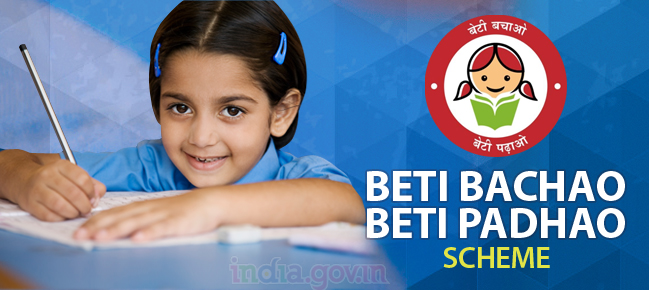
  • Mother and Child Health – Immunization Program, BPBB, PMJSY, PMMSY, etc.


    • Aim: To generate awareness and improve efficiency of delivery of welfare services meant for women
    • Launched on 22 January 2015 with an initial corpus of Rs. 100 crore
    • Joint initiative of Ministries of Women & Child Development, Health & Human Resource Development

    Districts Identified

    The three criteria for selection of districts:

    1. Districts below the national average (87 districts/23 states);
    2. Districts above national average but shown declining trend (8 districts/8 states)
    3. Districts above national average and shown increasing trend (5 districts/5 states- selected so that these CSR levels can be maintained and other districts can emulate and learn from their experiences)
    • First Phase:

    100 districts have been identified on the basis of low Child Sex Ratio as per Census 2011 covering all States/UTs as a pilot With at least one district in each state

    • Second Phase

    The scheme has further been expanded to 61 additional districts selected from 11 States/UT having CSR below 918


    Strategies:

    • Implement a sustained Social Mobilization and Communication Campaign to create equal value for the girl child & promote her education
    • Focus on Gender Critical Districts and Cities low on CSR for intensive & integrated action
    • Mobilize & Train Panchayati Raj Institutions/ Urban local bodies/ Grassroot workers as catalysts for social change
    • Ensure service delivery structures/ schemes & programmes are sufficiently responsive to issues Of gender and children’s rights
    • Enable Inter-sectoral and inter-institutional convergence at District/ Block/ Grassroot levels

    Implementation:

    1. Centre: A National Task Force (NTF) headed by Secretary WCD
      State: A State Task Force (STF)
    2. District: District Task Force (DTF) headed by the District Collector/ Deputy Commissioner with representation of concerned departments
    3. Block: A Block Level Committee headed by SDM/ SDO/ BDO
    4. Gram Panchayat/ Municipality: Respective Panchayat Samiti/ Ward Samiti
    5. Village: Village Health Sanitation and Nutrition Committees
    Published with inputs from Swapnil
  • Tit-bits for prelims (what do you think)

    Hello everyone

    As prelims is not more than 80 days away, we thought of different ways of helping you in your preparation. In this context UW announced a test series on the forum. Now to help you with the factual stuff, we came up with the idea of presenting confusing and important factoids in card format which would be linked to a subject in the story. You can revise them and discuss them on website.

    For instance

    Polity Tit-bits

    High Court

    • High court judges are appointed and removed by president not the governor
    • salary is charged on consolidated fund of states while pension on CFI
    • Writ jurisdiction under article 226 is wider than that of supreme court’s under article 32
    • There are 24 high courts in India

    Discuss– logic behind these provisions and name the high courts which have jurisdiction over more than 1 state or UT

    Supreme court

    • A distinguished jurist can be appointed to supreme court but not high court
    • Only parliament not president can increase the number of judges
    • A person can directly approach supreme court under art 32
    • President can seek advice under article 143, supreme court not bound to advise, president not bound to accept the advise

    Discuss– Under what conditions, supreme court is duty bound to tender the advise to president?

    Do let us know, what you think about the initiative in comment section. If good enough number of aspirants want it, we would start pushing 4-5 such cards every day in the app or on the forum.

    It takes lots of time to design such stuff, so feel free to write your opinion. Do let us know if you want any changes etc. We would start it only if you recommend it.