Guys and gals,
Kya kar rahe ho bhailogo…. Yahan to Indian Polity ke articles hi bhool gaya main waapis revision karne baitha to…
Filhaal koi soothing songs recommend kar do dosto… This is my first thread in BAKAR CD.
Guys and gals,
Kya kar rahe ho bhailogo…. Yahan to Indian Polity ke articles hi bhool gaya main waapis revision karne baitha to…
Filhaal koi soothing songs recommend kar do dosto… This is my first thread in BAKAR CD.
You guys were just awesome in posting contents. Do you guys are running any coaching institutes in chennai. if so please let me i would be glad to join it.
Thank you
Scope of discussion

Welcome to the world of 3 foundational agreements that the US has been insisting on India to sign to further enhance the bilateral defence and strategic relationship.
#1. The Logistics Support Agreement (LSA)
LSA would allow each other to access their military bases without any conflict for e.g in 1991 Gulf war India denied the US from refueling its aircraft from Indian territory.
#2. The Communication and Information Security Memorandum of Agreement (CISMOA)
#3. The Basic Exchange and Cooperation Agreement (BECA)
During the United Progressive Alliance (UPA) Government, India was less inclined towards signing these agreements BUT the India-US defence and strategic relationship has dramatically improved since the Narendra Modi Government came to power in May 2014.
Hint:
The India-US statement came on a day when China expressed anger at the Group of Seven (G7) advanced economies opposing “any intimidating coercive or provocative unilateral actions that could alter the status quo and increase tensions” in the East and South China Seas.
Want to read more?
The debate on the value of these agreements for India is worth a read. Pratap Bhanu Mehta and Bharat Karnad lean against these agreements; Dhruva Jaishankar offers a case in favor.
Source: Ref1 | Ref2 | Ref3
The aim of this compilation is to help you serve as a last minute revision tool for the upcoming IAS Prelims 2016. UPSC is known to pitch in with factual questions in the Prelims Exam. A sincere student ends up missing out on them as a part of his/ her daily studies and here’s where such compilations come to rescue!
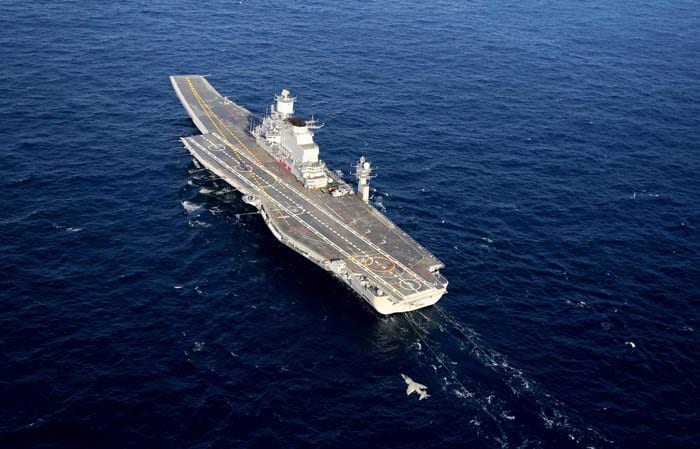
INS Vikramaditya is a Kiev class aircraft carrier which was commissioned by Russian Navy in 1987 under the name Baku. It was later renamed as Admiral Gorshkov and last sailed in 1995 in Russia, before being offered to India. India agreed to buy it in 2004 for $974 million. The cost kept shooting up as Russia delayed the delivery by over five years.
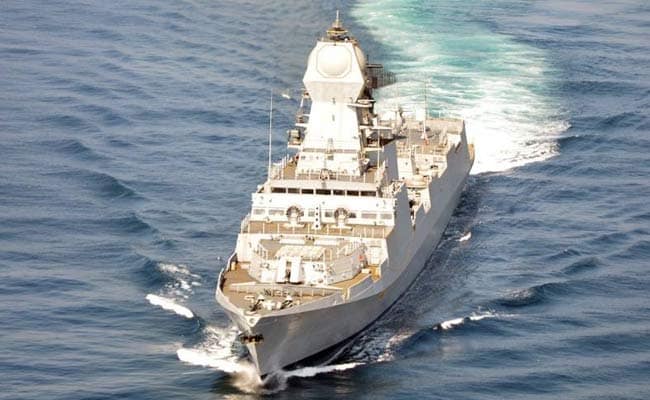
INS Kolkata is the lead ship of the Kolkata-class stealth guided-missile destroyers of the Indian Navy. She was constructed at Mazagon Dock Limited (MDL), and was handed over to the navy on 10 July 2014. A bit of an old news but mightier still!
What’s the difference between a strategic and a tactical missile system?
Strategic weapons are used for strategic purposes – threatening an opponent’s industrial infrastructure, targeting their command structure, and are generally designed to hit targets which disrupt the enemy’s ability to conduct warfare at a high level.
Tactical weapons are for local battlefield use, and are designed to be deployed against targets strictly of immediate military value.
NOTE: India has started the production of AGNI 6.
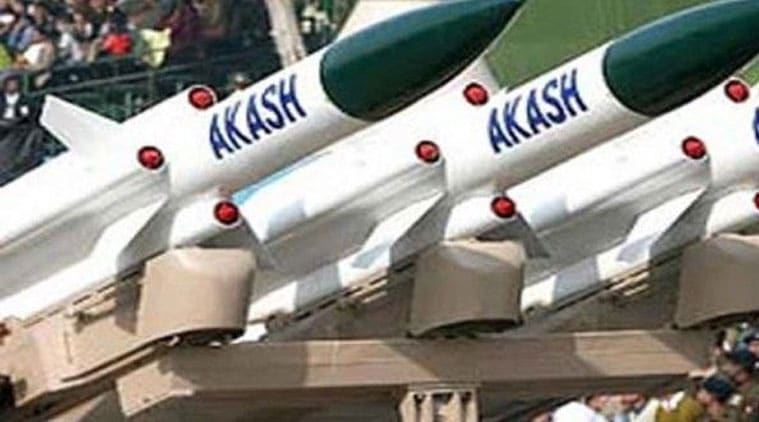

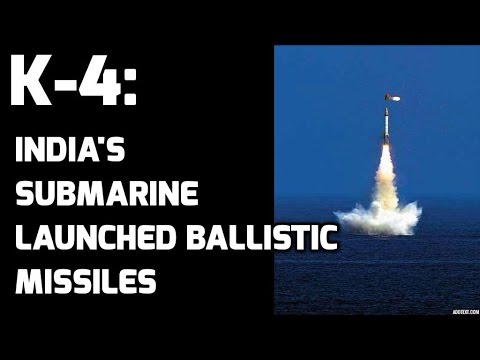

Most of the time you are likely to be flummoxed by questions on tactical/ strategic – surface to surface missiles. Let’s list down all of them in order for you to remember and revise!

Did we miss out on anything? Add to the growing list for prelims worthy questions.
We have started a new initiative & tried to revive CD Discuss for the benefit of the community. The idea is to consolidate our learnings from the NEWS and mix them with static & dynamic portion of the syllabus to ask a few pertinent questions.
Have a look at these links –
1. https://www.civilsdaily.com/what-is-the-significance-of-rcep-for-india/
Scope of discussion
What is RCEP and how did it come into being? – Prelims & Mains
Why is RCEP Vital for India? – Mains & Interview
With TPP Advancing, India Pins Hopes On RCEP Trade Bloc
2. https://www.civilsdaily.com/indian-maritime-challenges-and-its-diplomatic-dimensions/
Scope of discussion
Maritime challenges & Our new Maritime Security Strategy
Geopolitical aspects of maritime challenges – Fodder for Mains & Essay
Indian maritime agencies – Fodder for Prelims
Diplomatic dimensions – Fodder for Prelims & Interview
Challenges ahead? Mains & Interview
———
You will find some very carefully chosen questions at the bottom of most of these writeups. If you have been writing answers all year long, it should be easy for you to recall and give crisp point wise comments. If you have not been practicing this answer writing – now is a good time to start and contribute.
PS: This initiative is on best effort basis and will be clamped down if we recieve less than viable participation. Just like what happened with daily Q&A a few months back. So please go ahead and spend some time in thinking through these questions
Scope of discussion
If you have been following our series on International Organisations, we talked about East Asia Summit (EAS) where we briefly touched upon RCEP.
Regional Comprehensive Economic Partnership (RCEP) is a proposed free trade agreement (FTA) between –
RCEP includes more than 3 billion people, has a combined GDP of about $17 trillion, and accounts for about 40 percent of world trade. By any means, this is a huge community in making.
From India’s point of view, the RCEP presents a decisive platform which could influence its strategic and economic status in the Asia-Pacific region and bring to fruition its “Act East Policy.” It is expected to be an ambitious agreement bringing the 5 biggest economies of the region – Australia, China, India, Japan and South Korea – into a regional trading arrangement.
There are three immediate benefits that its trade policymakers should note-
#1. The RCEP agreement would complement India’s existing free trade agreements with the ASEAN and some of its member countries.
This consolidation can address challenges emanating from implementation concerns vis-à-vis overlapping agreements, which is creating a “noodle bowl” situation obstructing effective utilization of these FTAs.
It will also help achieve its goal of greater economic integration with countries East and South East of India through better access to a vast regional market ranging from Japan to Australia.

NOTE: India is not a party to two important regional economic blocs: the Asia-Pacific Economic Cooperation and the Trans-Pacific Partnership. The RCEP would enable India to strengthen its trade ties with Australia, China, Japan and South Korea, and should reduce the potential negative impacts of TPP and TTIP on the Indian economy.
#2. Gets India closer to ASEAN
#3. India can leverage its capabilities in IT, Healthcare, Education and services
New Delhi fears the TPP, although years away from reality, could mean losing some textile and drugs exports to countries like Vietnam, which has embraced both the TPP and the RCEP.
TPP is set to change the landscape of global trade. For India, it is most likely to affect sectors like leather goods, plastics, chemicals, textiles and clothing.
We will discuss more about TPP in a later discussion but suffice to say that RCEP’s realisation is important for India.
Sources: Ref1 | Ref2 | Ref3
आज के लिंक-
1. पानी के बंटवारे से होगा लाभ
लिंक- http://www.prabhatkhabar.com/news/columns/story/783430.html
(वर्तमान में गेहूं का समर्थन मूल्य लगभग 1,500 रुपये प्रति क्विंटल है. पानी का मात्रात्मक मूल्य वसूल करने से किसान पर 200 रुपये प्रति क्विंटल का अतिरिक्त बोझ पड़ेगा. सरकार को चाहिए कि गेहूं के समर्थन मूल्य में 200 रुपये की वृद्धि कर दे. इस विषय पर एक अच्छा आलेख उपरोक्त लिंक पर पढ़ सकते हैं)
2. भारत-अमेरिकी रक्षा साझेदारी को आगे बढ़ाने की तैयारी
लिंक- http://hindi.business-standard.com/storypage.php?autono=117647
(भारत ने अमेरिका के साथ अपने रिश्तों को अफपाक से अलग देखा है और वह अमेरिकी केंद्रीय कमान के साथ सैन्य समझौते को बढ़ावा दे रहा है. भारत-अमेरिका रक्षा ढांचा समझौता 2025 तक के लिए बढ़ा दिया गया है. और किन क्षेत्रों में क्या विचार किया जा रहा है, आप ऊपर लिंक पर पढ़ सकते हैं)
3. जानिए, क्या है बैंकरप्सी कानून, इकोनॉमी के लिए कैसे है फायदेमंद
लिंक- http://money.bhaskar.com/news/MON-DYK-ECNM-do-you-know-what-is-bankruptcy-law-and-how-it-is-beneficial-5206724-PHO.html
(इस बिल के कानून बनने पर इन्सालवेंसी (दिवालिया) से जुड़े मामलों को छह महीनें (180 दिनों) के भीतर निपटाना संभव हो जाएगा. सके अलावा फास्ट ट्रैक अप्लीकेशन को भी 90 दिनों में निपटाना होगा. इस बारे में और अधिक उपरोक्त लिंक पर क्लिक कर जाना जा सकता है)
both are for martime security in a way right?
We received a lot of queries over the forums and over mails on NCERT books & where to download them. Check out this link and download the OLD & NEW NCERTs.

East Asia Summit is a unique Leaders-led forum of 18 countries of the Asia-Pacific region formed to further the objectives of regional peace, security and prosperity.
10 East Asia Summits have been held so far. India has been a part of this process since its inception in 2005. Think of it this way –
#1. Education
At the 4th East Asia Summit (EAS), held in Thailand on 24-25 October 2009, the EAS Leaders endorsed the proposal for the revival of Nalanda University.

#2. Global Health Issues and Pandemic Diseases
#3. Natural Disaster Management
The Virtual Knowledge Portal (VKP), a web based tool to share knowledge and best practices related to natural disaster risk assessment, mitigation and response among EAS countries. It is hosted by Natural Institute of Disaster Management, New Delhi.
#4. Launch of Regional Comprehensive Economic Partnership (RCEP)
At the 7th EAS in November 2012, the Leaders of 16 EAS participating countries launched the Regional Comprehensive Economic Partnership (RCEP)
What is RCEP?
Regional Comprehensive Economic Partnership (RCEP) is a proposed free trade agreement (FTA) between the 10 member states of the ASEAN and the six states with which ASEAN has existing FTAs (Australia, China, India, Japan, South Korea and New Zealand).
Want to read more?