💥UPSC 2026, 2027, 2028 UAP Mentorship (March Batch) + Access XFactor Notes & Microthemes PDF

Search results for: “”

  • Delhi HC fumes over Compensation delay to kin of sewer death victims

    sanitation

    “My head hangs in shame,” said the Chief Justice of Delhi High Court while condemning the Delhi Development Authority (DDA) for not paying ₹10 lakh each as compensation to the family of person who died after inhaling toxic gases inside a sewer.

    Why such criticism by the Delhi HC?

    • Cleaning of sewers and septic tanks has led to at least 351 deaths since 2017.

    Manual sanitary works in India

    • Manual scavenging is the practice of removing human excreta by hand from sewers or septic tanks.
    • India banned the practice under the Prohibition of Employment as Manual Scavengers and their Rehabilitation Act, 2013 (PEMSR).
    • The Act bans the use of any individual for manually cleaning, carrying, disposing of or otherwise handling in any manner, human excreta till its disposal.
    • In 2013, the definition of manual scavengers was also broadened to include people employed to clean septic tanks, ditches, or railway tracks.
    • The Act recognizes manual scavenging as a “dehumanizing practice,” and cites a need to “correct the historical injustice and indignity suffered by the manual scavengers.”

    Why is it still prevalent in India?

    • Low awareness: Manual scavenging is mostly done by the marginalized section of the society and they are generally not aware about their rights.
    • Enforcement issues: The lack of enforcement of the Act and exploitation of unskilled labourers are the reasons why the practice is still prevalent in India.
    • High cost of automated: The Mumbai civic body charges anywhere between Rs 20,000 and Rs 30,000 to clean septic tanks.
    • Cheaper availability: The unskilled labourers, meanwhile, are much cheaper to hire and contractors illegally employ them at a daily wage of Rs 300-500.
    • Caste dynamics: Caste hierarchy still exists and it reinforces the caste’s relation with occupation. Almost all the manual scavengers belong to lower castes.

    Various policy initiatives

    • Prohibition of Employment as Manual Scavengers and their Rehabilitation (Amendment) Bill, 2020: It proposes to completely mechanise sewer cleaning, introduce ways for ‘on-site’ protection and provide compensation to manual scavengers in case of sewer deaths.
    • Prohibition of Employment as Manual Scavengers and their Rehabilitation Act, 2013: Superseding the 1993 Act, the 2013 Act goes beyond prohibitions on dry latrines, and outlaws all manual excrement cleaning of insanitary latrines, open drains, or pits.
    • Rashtriya Garima Abhiyan: It started national wide march “Maila Mukti Yatra” for total eradication of manual scavenging from 30th November 2012 from Bhopal.
    • Prevention of Atrocities Act: In 1989, the Prevention of Atrocities Act became an integrated guard for sanitation workers since majority of the manual scavengers belonged to the Scheduled Caste.
    • Compensation: As per the Prohibition of Employment of Manual Scavengers and their Rehabilitation (PEMSR) Act, 2013 and the Supreme Court’s decision in the Safai Karamchari Andolan vs Union of India case, a compensation of Rs 10 lakh is awarded to the victims family.
    • National Commission for Safai Karamcharis (NCSK): It is currently a temporary non-statutory body that investigates the conditions of Safai Karamcharis (waste collectors) in India and makes recommendations to the Government.

     Other initiatives for sanitation workers

    • The ministry now has proper distinction between sanitation work and manual scavenging.
    • The practice of manual scavenging no longer takes place in the country as all manual scavengers had been accounted for and enrolled into the rehabilitation scheme, said the ministry.
    • The enumeration of sanitization workers is soon to be conducted across 500 AMRUT (Atal Mission for Rejuvenation and Urban Transformation) cities, as a part of National Action Plan for Mechanised Sanitation Ecosystem (NAMASTE).
    • The NAMASTE scheme aims to eradicate unsafe sewer and septic tank cleaning practices.

    Way forward

    • Regular surveys and social audits must be conducted against the involvement of manual scavengers by public and local authorities.
    • There must be proper identification and capacity building of manual scavengers for alternate sources of livelihood.
    • Creating awareness about the legal protection of manual scavengers is necessary.


    (Click) FREE1-to-1 on-call Mentorship by IAS-IPS officers | Discuss doubts, strategy, sources, and more

  • Is climate change affecting global health?

    A recent report by Lancet, has traced in detail the intimate link between changing weather events and their impact on the health of people.

    What is the news?

    • The 2022 Lancet Countdown on Health and Climate Change: Health at the Mercy of Fossil Fuels points out that the world’s reliance on fossil fuels increases the risk of disease, food insecurity and other illnesses related to heat.

    Impact of climate change on health

     (1) Extreme Events

    • Heatwaves: The Lancet report indicates that rapidly increasing temperatures exposed vulnerable populations (adults above 65 years old and children younger than 1) to 3.7 billion more heatwave days in 2021 than annually in 1986–2005.
    • Shift in patterns: There is no doubt that events such as floods, droughts and recurrent cyclones are direct outcome of climate change.

    (2) Impact on health

    • Infectious diseases: The changing climate is affecting the spread of infectious disease, raising the risk of emerging diseases and co-epidemics. For instance, coastal waters are becoming more suited for the transmission of Vibrio pathogens.
    • More vector borne diseases: The number of months suitable for malaria transmission has increased in the highland areas of the Americas and Africa.
    • More lives loss: The WHO has predicted that between 2030 and 2050, climate change is expected to cause approximately 2,50,000 additional deaths per year, from malnutrition, malaria, diarrhoea and heat stress.
    • Others: Low air quality, Rise in zoonotic diseases.

    (3) Food security

    • Crop loss: Higher temperatures threaten crop yields directly, with the growth season shortening for many cereal crops.
    • Supply chain disruptions: Extreme weather events disrupt supply chains, thereby undermining food availability, access, stability, and utilisation.
    • Malnutrition: The prevalence of undernourishment increased during the COVID-19 pandemic, and up to 161 million more people faced hunger in 2020 than in 2019.

    Way forward

    • Health-centred response: A health-centred response to the coexisting climate, energy, and cost-of-living crises provides an opportunity to deliver a healthy, low-carbon future.
    • Realization of the problem: The governments’ commitment to assess and address the threats from climate change, are positive signs, the report stresses.
    • Holistic approach: This is the way a health-centred response would work – it would reduce the likelihood of the most catastrophic climate change impacts, while improving energy security and creating an opportunity for economic recovery.
    • Shift in dietary patterns: The report also calls for an accelerated transition to balanced and more plant-based diets, as that would help reduce emissions from red meat and milk production, and prevent diet-related deaths.
    • Easing the healthcare: The report emphasizes reducing the strain on health-care providers, and leading to more robust health systems.


    (Click) FREE1-to-1 on-call Mentorship by IAS-IPS officers | Discuss doubts, strategy, sources, and more

  • In news: Vostro Accounts

    vostro

    Russian banks have been permitted by the RBI to open special Vostro accounts to pave the way for rupee-based export-import transactions.

    Why such move?

    • Logged out of SWIFT -the messaging service to facilitate and confirm cross-border payments – most Russian banks are looking for alternative ways.
    • India and several other countries too want a way out so that trade can continue.
    • India and Russia are now exploring to directly trade in rupee-ruble.

    And this is where Nostro and Vostro may come into play.

    What is a Vostro Account?

    • A Vostro account is defined as an account that a correspondent bank holds on behalf of another bank.
    • Vostro is a Latin word that means “your”, therefore, a vostro account implies that it is “your account”.
    • An example of such an account would be HSBC vostro account is held by SBI in India.

    Understanding a Vostro Account

    • The banks are acting in a fiduciary relationship and they share a principal-agent relationship.
    • The correspondent foreign bank is a financial intermediary in the transactions that they are involved in.
    • The foreign bank acts as an agent that provides services such as executing wire transfers, performing foreign exchange, enabling deposits, enabling withdrawals, expediting international trade on behalf of the domestic bank.
    • It is most used in settlement of foreign exchanges or foreign trade.
    • No interest will be paid on the vostro account maintained, as per the directives that have been issued by the RBI in India.
    • An overdraft facility can only be availed if it is specifically sanctioned.

    Other related terms: Nostro and Loro Accounts

    • Vostro and Nostro accounts are often confused to be the same.
    • While in essence, it is the same account that is being spoken about, the perspective from which it is being seen matters.
    • In a vostro account, it is the correspondent foreign bank point of view, whereas in a nostro account, it is the point of view of the domestic bank.
    • Vostro accounts are maintained in the domestic currency whereas, nostro accounts in foreign currency.
    • A Loro account is a current account that is maintained by one domestic bank for another domestic bank in the form of a third party account, unlike nostro and vostro which is bilateral correspondence.

    Why is it used?

    • This account serves as an economic way for small domestic banks to access the financial resources and services of a larger foreign bank.
    • Enables one to offer international banking solutions to a customer without opening a bank branch in a foreign nation.
    • It minimizes the time for transfer of funds.
    • Closely monitored nostro accounts can be used for better reconciliation of statements.


    (Click) FREE1-to-1 on-call Mentorship by IAS-IPS officers | Discuss doubts, strategy, sources, and more

  • Birth anniversary of Birsa Munda: The leader, his contributions

    birsa

    On the occasion of the birth anniversary of tribal leader Birsa Munda, the Centre marked the second Janjatiya Gaurav Divas on November 15 to celebrate the contributions of tribal communities to Indian culture.

    Who was Birsa Munda (1875-1900)?

    birsa

    • Birsa Munda was a tribal freedom fighter, religious leader, and folk hero who belonged to the Munda tribe.
    • He spearheaded a tribal religious millenarian movement that arose in the Bengal Presidency (now Jharkhand) in the late 19th century, during the British Raj.

    His legacy

    (A) Birth and early childhood

    • Born on November 15, 1875, Birsa spent much of his childhood moving from one village to another with his parents.
    • He belonged to the Munda tribe in the Chhotanagpur Plateau area.
    • He received his early education at Salga under the guidance of his teacher Jaipal Nag.
    • On the recommendation of Jaipal Nag, Birsa converted to Christianity in order to join the German Mission school.
    • He, however, opted out of the school after a few years.

    (B) New faith ‘Birsait’ against religious conversion

    • The impact of Christianity was felt in the way he came to relate to religion later.
    • Having gained awareness of the British colonial ruler and the efforts of the missionaries to convert tribals to Christianity, Birsa started the faith of ‘Birsait’.
    • Soon members of the Munda and Oraon community started joining the Birsait sect and it turned into a challenge to British conversion activities.
    • The Mundas called him Dharati Aaba, the father of earth.

    (C) The Ulgulan

    • The Great Tumult or Ulgulan was a movement started by Birsa Munda against the exploitation and discrimination against tribals by the local authorities.
    • Although the movement failed, it did result in the Chotanagpur Tenancy Act which forbade tribal lands passing to non-tribals, protecting their land rights for the foreseeable future.

    (D) Death

    • On March 3, 1900, Birsa Munda was arrested by the British police while he was sleeping with his tribal guerilla army at Jamkopai forest in Chakradharpur.
    • He died in Ranchi jail on June 9, 1900, at the young age of 25.

    (E) Creation of Jharkhand

    • Birsa Munda’s achievements are known to be even more remarkable by virtue of the fact that he came to acquire them before he was 25.
    • In recognition of his impact on the national movement, the state of Jharkhand was created on his birth anniversary in 2000.


    Try this PYQ from CSP 2020

    With reference to the history of India, “Ulgulan” or the Great Tumult is the description of which of the following event?

    (a) The Revolt of 1857

    (b) The Mappila Rebellion of 1921

    (c) The Indigo Revolt of 1859-60

    (d) Birsa Munda’s Revolt of 1899-1900


    Post your answers here.


    (Click) FREE1-to-1 on-call Mentorship by IAS-IPS officers | Discuss doubts, strategy, sources, and more

  • Regulating the election funding system

    election

    Context

    • Elections are to democracy what financial markets are to the economy. The absence of an omnibus law to regulate elections and political parties in India is a legislative gap waiting to be filled.

    Significance of political parties in democracy

    • A political party is an organized group of citizens who hold common views on governance and act as a political unit that seeks to obtain control of government with a view to further the agenda and policy they profess.
    •  Political parties maintain a continuous connection between the people and those who represent them either in government or in the opposition.
    • Political parties in India are extra-constitutional, but they are the breathing air of the political system.

    Current procedure of recognizing and regulating the political parties In India

    • Registration of political parties: The Representation of the People Act 1951 was amended in 1988 to add a new section IVA on “Registration of political parties” by which the Election Commission of India (ECI) exercises its mandate for superintendence, direction, and control of elections under Article 324 of the Constitution of India.
    • Recognition as national or state political party: Association of citizens can apply to the ECI to be registered by submitting its Memorandum of Association and swearing allegiance to the Constitution. It requires fulfilment of performance criteria, including a minimum share of the electoral votes cast in the last election and the number of seats won to become a recognized national or a state party.
    • A regulatory gap in Municipal political parties: Municipalities became the third level of government, three decades ago in 1992, through the 74thconstitutional amendment. But a parallel recognition for political parties operating only at the municipal level is yet to be conceptualized.

    Mechanism of Election funding

    • Encouraging private corporates and individual investment: Indian government does not directly fund election campaigns of parties or independents. However, it has made political parties exempt from income tax, to encourage private corporate and individual investment in building political parties.
    • Limit on election campaign expenditure: The ECI set upper-end limits (January 2022) for election campaign expenditure in parliamentary seats at INR9.5 million and INR4 million in state legislature seats.

    election

    Electoral bonds to end large cash payments in election finance.

    • Scheme of electoral bonds:
    • A publicly owned commercial bank, with the largest network of branches is the only designated vendor.
    • Bonds remain valid for 15 days within which they can be encased through the bank account of the selected political party.
    • The purchaser-donor enjoys tax credits on the purchased bonds as in any other donation to charities.
    • Association of democratic records: The idea was to facilitate large donors, preferring anonymity whilst donating funds for elections, with an alternative to cash payments.

    election

    What is the cause of concerns over the electoral bonds?

    • Anonymity of the electoral bonds: The anonymity afforded by the bonds is primarily versus citizens.
    • Bond vendor is a government owned bank: SBI is a government-owned bank, which can be persuaded by the government into sharing data informally regarding the bond purchases and encashments by political parties

    What can be done to ensure the security of the donor?

    • Bond Digitization: Bonds should be digitized and the privacy of the transfer should be protected through encryption.
    • Authorized access: Redemption is through banking the audit trail of the donor and the recipient would exist for authorized access.
    • Enhancing transparency with ECI: Transparency should be enhanced whilst protecting anonymity by authorizing ECI to collect and publish de-personalized information.
    • Personal data should be accessed with the specific orders only: Access for security and criminal investigation agencies to the personal data should come via a specific order of the ECI allowing such privileged access.

    What are the suggestions for better governance of the political parties?

    • Strict Supervision of political parties: Poor Intra-party governance is concentrated in the Registered Unrecognize Political Parties (RUPP). Most are in breach of their undertaking to fight an election within five years and remain active thereafter.
    • Strengthen the Regulatory compliance: The benefit of income tax exemption should only be available after registered parties demonstrate a five-year record of compliance with the regulations.
    • Enforce inner-party democracy and avoiding conflict of interest: Making party members occupying party positions, ineligible for holding executive positions in government. This is necessary to create a complete segregation of functions within the ruling party and the government
    • Empower ECI to regulate political parties: The misuse of the fiscal privileges afforded to political parties can be minimized through targeted regulatory tweaks, within the existing construct of private financing and the inner functioning of parties improved through targeted regulation.

    Conclusion

    • “Secrecy is a darkness where corruption gets nurtured”. Funding to the political parties need to be transparent. Transparent funding will pave the way for level playing field for all the political parties.

    Mains Question

    Q. What are the pitfalls of anonymous political funding through electoral bonds. Suggest solutions to ensure the transparent political funding.

    (Click) FREE1-to-1 on-call Mentorship by IAS-IPS officers | Discuss doubts, strategy, sources, and more

  • Online Women safety

    Women

    Context

    • India has one of the youngest youth demographics in the world and among the most active online. As online interactions increase, more content is created and shared among people, helping them form new and wonderful connections. Sometimes, however, these interactions also make them vulnerable to harm.

    What constitute as online harassment of women?

    • Sharing embarrassing and cruel content about a person to impersonation
    • Stalking and electronic surveillance
    • Non-consensual use of photography
    • Violent threats and hate speech
    • Defamation
    • Flaming- use of vitriolic and hostile messages including threats, insults
    • Trolling
    • The online harassment of women, sometimes called Cyber-sexism or cyber-misogyny, is specifically gendered abuse targeted at women and girls online.
    • It incorporates sexism, racism and religious prejudice.

    Women

    How women disproportionately get affected?

    • Often women are blamed: Often, crimes that disproportionately impact women devolve into mass panic and lead to an all too predictable top-down discourse around the need to protect our sisters and daughters.
    • Curbing the freedom of Women: The reaction, however well intentioned, will end up denying women their freedom and agency by their so-called protectors, many of whom are simply telling women to go offline, to be ashamed of expressing themselves, to stay in their lane.

    What is role of intermediaries in preventing such abuses?

    • Making intermediary liable: As of now, the intermediaries are not liable for any third-party data or communication link hosted or stored by them.
    • Mandatory Data retention by intermediaries: They are required to retain the requisite data for duration as prescribed by the Government and supply the same to the authorities concerned, as and when sought.
    • Punishment for Non-compliance is: Highlighting any contravention attracts punishment as prescribed under the IT Act.

    Women

    What are the Steps taken by the Government?

    • IT rules 2021: The Ministry of Electronics and Information Technology notified the Information Technology (Intermediary Guidelines and Digital Media Ethics Code) Rules, 2021.
    • Defined Categories of abuse: They include contents that are defamatory, obscene, pornographic, paedophilic, invasive of another’s privacy, insulting or harassing on the basis of gender, libellous, racially or ethnically objectionable, etc.
    • Prohibition on derogatory publications: The intermediaries, on the direction of the court or appropriate government agency, are prohibited from hosting, storing or publishing any information declared unlawful.
    • Removal of content within 24 hours: Within 24 hours from the receipt of a complaint from, or on behalf of, an individual about any offensive content, they are required to take all reasonable and practicable measures to remove or disable access to it.
    • Meetings of parliamentary committees: Various parliament committees in India have held meetings to discuss the issue of online safety of women over the years, and part of the government’s motivation in notifying the new IT rules had been rooted in the growing concern regarding the safety and security of users, particularly women and children. These are very good tangible steps.
    • Amendment in IT act should include the concerns of women: With the IT Act coming up for a rehaul, there is an opportunity to discuss in detail the nature of technology-facilitated abuse, capturing what this means, understanding how cases impact individuals as well as communities, the language needed to capture such offences and the punishment penalties, jail or even rehabilitation programmes for perpetrators. This could be the start of an era of evidence-based discussion.

    Women

    Conclusion

    • Despite these efforts, it is clear that women in India won’t feel safe online anytime soon unless society lets them. What could be helpful here is to elevate the public discourse around technology-facilitated abuse.

    Mains Question

    Q. How women are vulnerable against online abuse? What is the role of Intermediaries in online abuse case? What are governments efforts to make women friendly cyberspace?

    (Click) FREE1-to-1 on-call Mentorship by IAS-IPS officers | Discuss doubts, strategy, sources, and more


  • MARS A new alert system to detect Methane emissions

    MARS

    Context

    • A new satellite-based system will now help governments detect methane emissions and tackle them. The Methane Alert and Response System (MARS) was launched at the 27th Conference of Parties (COP27) to the United Nations Framework Convention on Climate Change in Sharm El-Sheikh, Egypt.

    What is Methane Alert and Response System (MARS)?

    • MARS is a part of global efforts to slow climate change by tracking the global warming gas.
    • The system will be the first publicly available global system to connect methane detection to notification processes transparently.
    • The data-to-action platform was set up as part of the UN Environment Programme’s (UNEP) International Methane Emissions Observatory (IMEO) strategy to get policy-relevant data into the right hands for emissions mitigation.

    MARS

    How the “MARS” will work?

    • The Methane Alert and Response System, or MARS, will integrate data from a large number of existing and future satellites to identify significant methane emission events anywhere in the world.
    • It will send out notifications to the relevant stakeholders and support and track mitigation progress.
    • According to the UN statement MARS will track the large point emission sources, mainly in the fossil fuel industry, but with time, would be able to detect emissions from coal, waste, livestock and rice fields as well.
    • UNEP will continue to monitor the event location and make the data and analysis available to the public between 45 and 75 days after detection.

    MARS

    Methane a dangerous greenhouse gas

    • A major greenhouse gas: Methane is the second-most common of the six major greenhouse gases, but is far more dangerous than carbon dioxide in its potential to cause global warming.
    • One of major contributor of GHG emissions: Contribution Accounting for about 17 per cent of the current global greenhouse gas emissions.
    • One of the key reasons behind Temperature rise: Methane is blamed for having caused at least 25 to 30 per cent of temperature rise since the pre-industrial times.
    • Methane largely a Sectoral gas: Unlike carbon dioxide, methane is largely a sectoral gas, and there are only a few sources of emission.
    • Few sources large emissions of methane: The global warming potential of methane is about 80 times that of carbon dioxide. It accounts for a small portion of human-induced greenhouse gas emissions compared to carbon dioxide.

    MARS

    Why such alert system is necessary?

    • To achieve the target set by Global methane pledge: At the Glasgow climate conference last year, nearly 100 countries had come together in a voluntary pledge the Global Methane Pledge to cut methane emissions by at least 30 per cent by 2030 from the 2020 levels. More countries have joined in this initiative since then, bringing the total to nearly 130.
    • To keep the temperature, rise below 5-degree Celsius: A 30 per cent reduction in methane emissions by 2030 is expected to result in avoiding 0.2 degree rise in temperature by the year 2050, and is considered absolutely essential in the global efforts to keep the temperature increase below the 1.5-degree Celsius target. This is a global, not a national reduction target.
    • Reducing methane emissions from the atmosphere provides multiple benefits: Methane being a sectoral gas with few sources of emission, it is possible to cut down on methane emissions without having widespread impact on the economy, a reduction in methane emissions brings big benefits in a short time.
    • MARS Provides technical and advisory to the partners: If requested, MARS partners will also provide technical or advisory services, such as help in assessing mitigation opportunities

    All you need to know about Conference of Parties (COP).

    • Unless the parties decide otherwise, every year The United Nations Framework Convention on Climate Change (UNFCCC) convenes what is called a Conference of Parties (COP), a meeting that brings together leaders and delegates from around the world to strengthen their commitments and actions against specific climate change goals.
    • The parties are the 198 countries that ratified the UNFCCC.
    • The UNFCCC is an international treaty focused on preventing dangerous human interference with the climate system, primarily by stabilizing greenhouse gas (GHG) emissions.

    Conclusion

    • Cutting methane is the fastest opportunity to reduce warming and keep 1.5°C within reach, and this MARS a new alert and response system is going to be a critical tool for helping all of us deliver on the Global Methane Pledge.

    Mains Question

    Q. Methane is thought to be 80 times more efficient than carbon dioxide at trapping atmospheric heat in the 20 years following its release. Discuss how MARS a new alert system would be helpful to keep the temperature rise below 1.5 degree Celsius?

    (Click) FREE1-to-1 on-call Mentorship by IAS-IPS officers | Discuss doubts, strategy, sources, and more

  • Indian Judiciary: A Call for Reforms

    Judiciary

    Context

    • The reach of India’s highest court is all-pervasive. The Supreme Court sits in final judgment over decisions not only of the high courts in the states, but also over a hundred tribunals, central and state, functioning throughout India. Hence the accountability of apex court crucial for judicial system in India.

    Brief in other words: Significance of judiciary

    • Decisions of Courts are binding on all: The law declared by the Supreme Court, its pronouncements on the constitutional validity of enacted law, including constitutional amendments, is binding on all other courts and authorities in the country (Article 141).
    • Executive and legislature are under the scrutiny of Courts: There is virtually no area of legislative or executive activity which is beyond the court’s scrutiny.

    Why accountability of higher judiciary is necessary?

    • High courts are not ready to reform themselves: In the Salem Advocate Bar Association case, the justices had requested the high courts to implement the detailed blueprint on case management most of them have not.
    • Limitations of supreme court to govern the High courts: Supreme court could not direct the high courts to do so because under our constitutional scheme the latter are autonomous constitutional bodies not subject to administrative directions of the Supreme Court.
    • Self-accountability in administrations of courts: It is in the high courts that there are now left the largest number of roadblocks and delays; in their administrative functioning the high courts are answerable to no one but themselves. This often enables the Supreme Court to plead helplessness, hardly a good augury for integrated court-management.

    How judiciary can maintain its credibility and accountability?

    • Judiciary need to Preserve the independence: the judiciary as an institution needs to preserve its independence, and to do this it must strive to maintain the confidence of the public in the established courts.
    • Judges should safeguard the judges: The independence of judges is best safeguarded by the judges themselves through institutions and organisations that the law empowers them to set up, to preserve the image of an incorruptible higher judiciary that would command the respect of all right-thinking people.
    • Reform on case management: A bench of three justices of the Supreme Court, in a judgment delivered in August 2005, had drawn up a fine blueprint on case-management, on how to make recent amendments in our procedural laws work on the ground, and how to get more cases moving along: For instance, on three different tracks, fast track, normal track and slow track.
    • Supreme court should directly administer High courts: It is time that the Supreme Court be entrusted with direct responsibility for the functioning of the high courts: Only then can the highest court be an effective apex court, only then can the Supreme Court be made answerable, as it should be, for judicial governance for the entire country.
    • Public disclosure of income by judges: Judges must make annual financial disclosure statements, not privately to their respective chief justices, but publicly. It is done by justices of the Supreme Court.

    How judiciary in USA maintain its credibility and accountability?

    • Judicial council act: In the United States, under the Judicial Councils Act, 1980, task of judicial independence has been gladly undertaken by the judges. But regrettably, so far, there is no law in India to guide our judges only “guidelines”. There is a felt need for a law.
    • Judges investigate the judges: The 1980 US Act confers powers on bodies comprised of judges to take such action against a federal judge “as is appropriate, short of removal.”
    • A case study of America: Under this law, some time ago, a committee of fellow judges had investigated complaints against a federal district judge, John McBryde; the Judicial Council reprimanded him and suspended him from hearing new cases for a year.
    • Corruption Investigation Not violating the judicial independence: McBryde challenged the decision. He argued that the 1980 law violated the judicial independence which the US Constitution had guaranteed to life-tenured federal judges; But a US Court of Appeals rejected all these pleas.
    • Oversight of judges is not interference: It accepted the argument of the US Solicitor-General that judicial independence, protected by Article III of the US Constitution, was meant to insulate judges from interference from other branches of government and not from oversight by other judges.

    Conclusion

    • In India, in the past and in recent times, some things have gone wrong. And citizens need the reassurance of a system of judicial accountability a remedial mechanism which will protect the higher judiciary from some of its own members who have gone astray. Such reassurance can only be provided by enacting a law on the lines of the American model.

    Mains Question

    Q. What are the reasons for very less accountability in higher judiciary in India? How corruption in higher judiciary is addressed in USA?

    Click and Get your FREE copy of Current Affairs Micro notes

  • 15th Nov| Daily Answer Writing Enhancement

    Topics for Today’s questions:

    GS-1            Indian culture will cover the salient aspects of Art Forms, literature and Architecture from ancient to modern times.

    GS-2          Effect of policies and politics of developed and developing countries on India’s interests

    GS-3          Basics of cyber security

    GS-4          Emotional intelligence-concepts, and their utilities and application in administration and governance.

    Question 1)


    Q.1 Highlighting the basic tenets of the Bhakti movement, emphasize upon the role of woman saints in the movement. (10 Marks)


    Question 2)

    Q.2 India’s “balancing act” till now in the ongoing Ukraine crisis can be said to be borne out of mature strategic thinking based on national interest. Do you think India should go a step forward and try to broker peace between Russia and Ukraine? (15 Marks)

    Question 3)

    Q.3 Highlighting different kinds of cyberthreats faced by India, evaluate the current status of cybersecurity framework in the country. (10 Marks)

    Question 4)  

    Q.4 “Emotional Intelligence is the ability to make your emotions work for you instead of against you.” Do you agree with this view? Discuss. (10 Marks)


    HOW TO ATTEMPT ANSWERS IN DAILY ANSWER WRITING ENHANCEMENT(AWE)?

    1. Daily 4 questions from General studies 1, 2, 3, and 4 will be provided to you.

    2. A Mentor’s Comment will be available for all answers. This can be used as a guidance tool but we encourage you to write original answers.

    3. You can write your answer on an A4 sheet and scan/click pictures of the same.

    4.  Upload the scanned answer in the comment section of the same question.

    5. Along with the scanned answer, please share your Razor payment ID, so that paid members are given priority.

    6. If you upload the answer on the same day like the answer of 11th  February is uploaded on 11th February then your answer will be checked within 72 hours. Also, reviews will be in the order of submission- First come first serve basis

    7. If you are writing answers late, for example, 11th February is uploaded on 13th February , then these answers will be evaluated as per the mentor’s schedule.

    8. We encourage you to write answers on the same day. However, if you are uploading an answer late then tag the mentor like @Staff so that the mentor is notified about your answer.

    *In case your answer is not reviewed, reply to your answer saying *NOT CHECKED*. 

    1. For the philosophy of AWE and payment: 

  • Q.4 “Emotional Intelligence is the ability to make your emotions work for you instead of against you.” Do you agree with this view? Discuss. (10 Marks)

    Mentor’s Comments-

    • In the introduction briefly define Emotional Intelligence (EI) and its elements.
    • In the body, explain how can emotional intelligence work in our favour.
    • Illustrate using examples that show how an adverse situation can be turned in our favour using emotional intelligence.
  • Q.3 Highlighting different kinds of cyberthreats faced by India, evaluate the current status of cybersecurity framework in the country. (10 Marks)

    Mentor’s Comments-

  • Q.2 India’s “balancing act” till now in the ongoing Ukraine crisis can be said to be borne out of mature strategic thinking based on national interest. Do you think India should go a step forward and try to broker peace between Russia and Ukraine? (15 Marks)

    Mentor’s Comments-

    • https://www.thehindu.com/opinion/op-ed/beware-the-tempting-apple-of-ukraine-mediation/article66133040.ece
    • Introduce the answer with defining the Ukraine crisis.
    • In the body of the answer, first, discuss why India’s balanced response reflects its mature strategic thinking.
    • Next, give some arguments in favour of India playing a role in seeking to bring Russia and Ukraine to the negotiating table for brokering peace.
    • Next, underline the pitfalls in assuming such a responsibility.
    • Suggest a way forward.
    • Conclude by emphasizing the need to exercise caution in undertaking such efforts.
  • Q.1 Highlighting the basic tenets of the Bhakti movement, emphasize upon the role of woman saints in the movement. (10 Marks)

    Mentor’s Comments-

    • Introduce the answer by defining the Bhakti movement.
    • In the body of the answer, discuss basic tenets of the Bhakti movement.
    • In next part, highlight the role of some of the women saints such as Meerabai, Andal, Lal Ded, Karaikal Ammaiyar etc. in Bhakti movement.
    • Conclude the answer by highlighting the positive impact of Bhakti movement on the marginalised section of the society.
  • Right to Privacy in an era of social media

    Right to Privacy

    Context

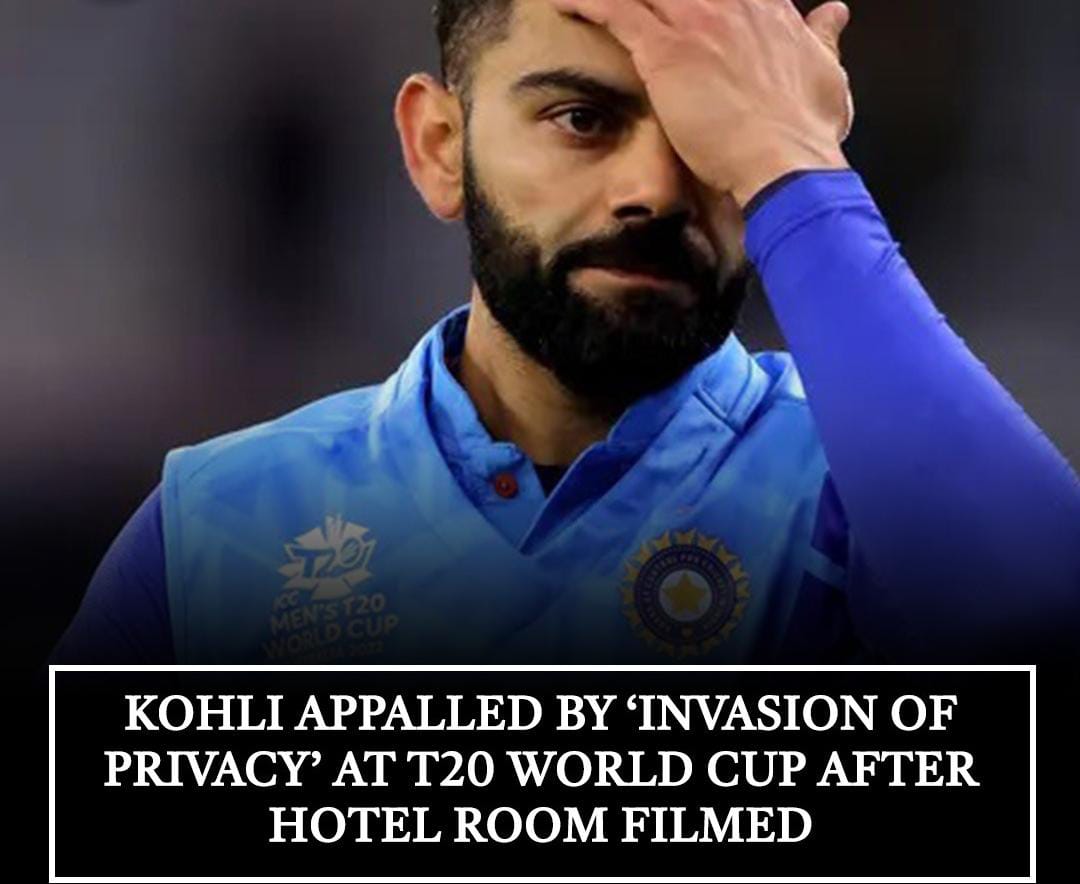
    • The recent outrage over the unauthorized video of cricketing superstar Virat Kohli’s hotel room in Perth including glimpses of his private spaces and objects is best viewed through an understanding of the changed landscape of the “private” and the “public” in our times. It is a topography shaped through our engagements with social media of different kinds.

    What does the Constitution say?

    • Fundamental right under Article.21: Article 21 is also known as the heart of the constitution; this right is granted to citizens of India as well as the non-citizens. This fundamental right not only talks about life and liberty but it also covers wide variety of rights.
    • Interpretation of Maneka Gandhi v. Union of India and Anr (1978): The interpretation of the term Personal Liberty has been discussed in many cases and finally had a wider interpretation in the case of Maneka Gandhi v. Union of India and Anr (1978) here the Delhi Regional officer ordered the petitioner Maneka Gandhi to surrender her passport within 7 days without giving her proper reason for the same.
    • Supreme court on Personal liberty: The Supreme Court held that ‘Personal Liberty’ covered variety of rights and that such right could only be taken away according to the procedure established by law which had to be just, fair and reasonable and not arbitrary in nature. Personal liberty means various rights that provide for personal liberty of a person.
    • Right to privacy: In Article 21 the term Right to Life includes right to participate in activities, right to tradition, heritage, culture, livelihood and so on. One of the most important right to live also includes Right to Privacy. Each and every human being would want some privacy in their life. No one would want others to intrude in their private space and disturb the happiness and peace.

    Right to Privacy

    What is the Fight for right to Privacy?

    • Not in the original constitution: This right of privacy was not granted to the citizens for a long time and there had been a lot of debate going on about the same, there is no explicit provision in the constitution which emphasizes about the right to privacy.
    • Data is fundamental to the privacy: Even the data we save in our mobile phones and laptops are also our private data which needs to be protected, if the data is stolen our right to privacy is lost and fundamental right is infringed. Unprotected data causes a disturbance in the right to privacy.

    Some of the Important cases related to right to privacy

    • Kharak Singh V. The State of U.P.(1962): The discussion about the right to privacy first came up in the case of Kharak Singh V. The State of U.P.(1962) Kharak Singh’s house was visited by the police at strange hours, frequently waking him up from his sleep, it was held by the court that this infringed his ‘right to life’ but however court dismissed the petitioner’s allegation that the shadowing of chronic criminals infringed on his right to privacy as at that time the right to privacy was not recognised as the Fundamental Right.
    • Rajagopal v. State of Tamil Nadu (1994): With the case of R. Rajagopal v. State of Tamil Nadu (1994) where this case prepared the way for subsequent decisions on the Right to Privacy, paving the way for it to be included in the Fundamental Rights given under Part III of the Constitution.
    • X v. Hospital Z case (1998): There are reasonable restrictions for this right about which it was held by the Supreme Court in the case of Mr. X v. Hospital Z (1998) here the appellant Mr. X was tested positive for HIV about which the doctors informed someone else without his consent because of which marriage of Mr. X was called off, the appellant approached the court stating that his right to privacy was violated. The court here held that this fact has to been known to the person whom he marries as this fact would affect her life as well as it being a communicable disease and that there is no violation to the ‘Right of Privacy’ of Mr. X.

    Right to Privacy

    The landmark case of K.S. Puttaswamy v/s Union Of India 2017.

    • Right to privacy is fundamental right: In the landmark case K.S. Puttaswamy V. Union of India which was passed in the year 2017, Right to Privacy was recognised as Fundamental Right and was then enshrined in Article 21 as a Right to life and personal liberty.
    • Social media endangered the privacy: Judges held that because there is enormous technical advancement both state and non-state factors may be at risk of loss of privacy, also it was held that an Individual is very concerned with his / her personal Data, they control their data and what to be posted on social media what to be displayed to the public and what to hide from outsiders, so unauthorized use of such information by anyone else except to whom that information belongs to may lead to violation of individuals privacy.
    • Privacy is integral to fundamental rights: On 24th August 2017 the nine-judge bench of India passed a unanimous historic Judgement with concurring opinions. Part III of the Indian constitution lays down different articles for the protection of one’s Fundamental Rights. The judgement stated privacy to be an integral component of Part III.
    • Overturning the previous judgements: The bench recognized that the right to privacy should also be a key element of Fundamental Rights and should be included in Article 21 of right to life and personal liberty. In this judgement the decisions given in the case of Kharak Singh V. The State of U.P. (1962) and MP Sharma V. Satish Chandra (1954) were overruled.

    Right to Privacy

    Conclusion

    • The great deal of hand wringing over the invasion of Virat Kohli’s privacy has been accompanied by seemingly endless circulation of the video clip. The line between outrage and enjoyment is as unclear as that between the alternating desire for publicity that ethereal frisson of celebrity-ness and revulsion over too much of it.

    Mains Question

    Q. How right to privacy is integral part of right to life? How social media affected the privacy of individual and enlist the solutions associated with it.

    Click and Get your FREE copy of Current Affairs Micro notes

  • UPSC Prelims Webinar: Why only 1% of aspirants qualify in prelims- Top 10 Techniques used by toppers to score 120+| Get Smash Prelims notes PDF and Webinar PDF FREE + Request call with Santosh sir

    UPSC Prelims Webinar: Why only 1% of aspirants qualify in prelims- Top 10 Techniques used by toppers to score 120+| Get Smash Prelims notes PDF and Webinar PDF FREE + Request call with Santosh sir

    Concluded successfully the most important Masterclass webinar by Prelims Guru, Santosh Sir | Get Smash Prelims notes PDF and Webinar PDF FREE + Request call with Santosh sir.

    Only 1% of the aspirants clear UPSC Prelims every year. And only a fraction of that are able to clear Prelims year after year. Santosh sir is one of them.

    Do you know that only 0.02% of aspirants are able to go beyond 120+ consistently?

    The fact that Santosh sir cleared UPSC Prelims 6 times back-to-back is not as important as ‘how he did it?’ is. And hiding nothing, Santosh sir shared 10 Golden Rules to cracking UPSC Prelims, which will make UPSC prelims a piece of cake.

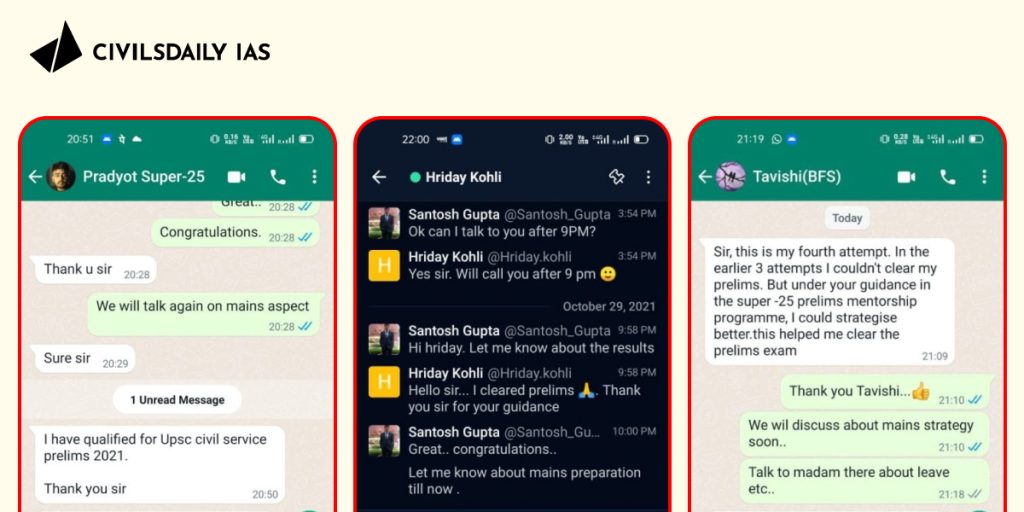
    Santosh sir has been helping aspirants clear UPSC Prelims year after year. Here is a screenshot of his students who wrote Mains 2022.

    Tavishi failed thrice in the Prelims before but after joining Santosh sir’s mentorship cleared Prelim 2022 on her 4th attempt.

    Santosh sir took a webinar for UPSC 2023 aspirants.

    Webinar Details: Concluded Successfully. Register for the Recorded session & Masterclass PDF, Notes

    We will email all the links to you.

    Prelims question papers have become more or less like a game of Sudoko. Except, in Sudoko you can solve the puzzle at your leisure, and over here you are limited by 2 hours. We hope this webinar will help all 2023 aspirants implement the suggestions of Santosh Gupta Sir.

    Key takeaways discussed in the webinar:

    1. Trend analysis of past 5 yrs’ UPSC Prelims GS 1 paper. How to change your preparation methods right now?
    2. Strategy for the next 6.5 months and how to utilize remaining time to the fullest.
    3. The 10 Steps of Tackling Prelims 2023. How to maximize revision and minimize study materials?
    4. Significance of Current Affairs. Is it really declining in Prelims? How to cover current affairs?
    5. Important Topics to Cover for Prelims 2023 for every GS subject. What are the correct study materials for these topics?
    6. Time-Tested Elimination Techniques. How to use these techniques in sample questions? only generalized preparation is not enough. You have to be ready for the worst. Besides usual ordinary questions, you have to solve more or less offbeat questions. Remember, Offbeat questions require an offbeat approach and it gets 120+ in prelims for you. So, how to apply ‘Intelligent guessing’‘the way of thinking, and ‘Core common sense.
    7. How to stay alert at the 5 worst mistakes areas, like unknown extremely factual questions, Random questions such as from sports in 2021, Questions from old current affairs, Ques. that are not directly from current affairs but inspired by current affairs, and Questions based on common sense such as questions in prelims-2021 
    8. Learn time management. Most of the time, twisted questions force you to take more time to answer. So, How to filter out and attempt easy questions in the first round quickly and move on to the next with which moderate to difficult questions? will be discussed thoroughly. 
    9. How to avoid silly mistakes by using common sense to the plausibility of statements given. Usually, low-confident aspirants do not attempt these types of questions and overconfident ones make mistakes by overthinking.
    10. Sometimes, some questions, beyond your expectation, appear on the paper and we can’t solve them and give up. How to solve such questions easily by a few mindful methods to increase your chance to clear prelims by 80%.
    11. And many more untold Prelims Exam facts that only a prelims guru knows are going to be disclosed in this live Masterclass

    Let’s admit this  As much as we have heard our seniors, mentors and toppers advise us to answer fewer questions in Prelims exams due to negative marking, do we want to follow it? All of us wish to answer as many questions as possible correctly. However, post-2014 questions have started getting tougher so that now –


    About Santosh Gupta Sir

    Santosh sir has scored above 140 twice in UPSC prelims and 120 plus in all 6 attempts. He has written all 6 mains and has appeared for Interviews 3 times. He has qualified for UPSC EPFO and BPSC 56-59th also. As the Prelims head at Civilsdaily, he has helped 15 out of 25 students clear the prelims examination this year.


    What The Hindu mentioned about Civilsdaily Mentorship?

  • [Burning issue] Indian Judiciary: A Call for Reforms

    [Burning issue] Indian Judiciary: A Call for Reforms

    judiciary

    Context

    • Recently, a constitutional jurist and senior advocate to the Supreme Court, Fali S. Nariman, highlighted the need to finetune mechanisms of accountability within the judiciary, especially at the Supreme Court and High Court levels.
    • In this context, this edition of the burning issue will deal with the issue of accountability and other issues which ails the Indian Judiciary and suggest reforms to tackle these issues.

    Indian judiciary: Structure

    • The Judiciary is one of the three organs of the Indian government, and it is responsible for interpreting and applying the law. The Indian judiciary is an independent body that ensures the fair and impartial administration of justice in the country.
    • The judiciary has a hierarchical structure, with the Supreme Court at the top followed by the High Courts, and then the lower courts.
    • The Supreme Court is the highest court of appeals in India. It comprises the Chief Justice and 33 other judges appointed by the President of India. The Supreme Court has original, appellate, and advisory jurisdiction.
    • At the level below the Supreme Court, there are High Courts. They exercise control over a state or a union territory. Each High Court consists of a Chief Justice and such other number of judges as may be determined by Parliament.
    • At the lowest level, Subordinate courts include District Courts, Taluka Courts, Munsifs Magistrates’ Courts, and Village Panchayat Courts etc.

    Judicial Independence

    • For the prosperity and stability of the country, the rule of law is very important. An independent and impartial judiciary can establish a stable rule of law.
    • Independence of the judiciary means, the power of upholding the rule of law, without any fear or external influence, and maintaining effective control over the actions of the government.
    • The independence of the judiciary is part of the basic structure of the Constitution. The legal system does not have any ideology and political interests and is often rendered neutral. 
    • The independence of the judiciary starts with the appointment of judges in the courts. Article 124 to Article 147 deals with the appointment of the Supreme Court judges and, Article 214 to Article 231 deals with the appointment of judges in the High Courts.
    • However, such a high level of independence does not mean non-accountability of the judiciary.

    Judicial Accountability

    • Accountability is the sine qua non of democracy. The judiciary, an essential wing of the State, is also accountable.
    • The term judicial accountability means that the judges are responsible for the decisions they deliver all by themselves. It is the transparency in the decision-making process that helps in bringing accountability. 
    • The judiciary must be accountable to the law, in the sense that the decisions made are in accordance with the law and are not arbitrary. Like other branches of government, it must also be accountable to the general public it serves.

    Issue of Accountability and Transparency in the Indian Judiciary

    The Indian judiciary faces the challenge of lack of accountability at 3 levels-

    (A) Lack of accountability in Judicial appointments:

    • At present, the judges of the Supreme Court and the High Courts are appointed by a collegium system which includes CJI and 4 senior judges of the Supreme Court.
    • Although there have been many debates associated with this method of appointing judges, the collegium system is one where transparency is absent in totality.
    • The minutes of the collegium meetings deciding appointments and transfers of judges are not made public. The office of CJI has only recently been declared a public office.
    • There have been no appointments from the category of distinguished jurists as mentioned under Article 124 of the constitution.
    • It’s a non-constitutional body with no seat in the collegium for any non-judge neither from the executive, the Bar etc. This violates the principle of checks and balances.

    (B) Distribution of Cases- Master of the Roster mechanism:

    • The singular power of the CJI as the Master of the Roster – i.e., the vests exclusive discretion in the Chief Justice to constitute benches and allocate cases.
    • While the CJI’s other powers such as recommending appointments to constitutional courts are shared with other senior judges, the power of Master of the Roster is enjoyed without scrutiny.
    • From the standpoint of judicial independence, the Master of the Roster power makes the CJI’s office a high-stakes one. It makes the CJI the sole point of defence of the Court against executive interference.
    • With the CJI as the sole Master of the Roster, any executive seeking to influence the Supreme Court needs only a pliant CJI. Yet, the Supreme Court has been reluctant to dilute this power.
    • In Asok Pande v. Supreme Court of India (2018), a three-judge bench of the Court held that the Master of the Roster is the CJI’s exclusive power.
    • Thereafter, a two-judge bench in Shanti Bhushan v. Supreme Court of India (2018) rejected the plea that the Master of the Roster should be interpreted as the collegium.

    (C) The In-house Inquiry System:

    • The in-house procedure, crystallised in a 1995 Supreme Court judgment in the C. Ravichandran Iyer case, details the various stages of the investigation into complaints against sitting high court judges.
    • It requires the Chief Justice of India to constitute a three-member panel of Supreme Court judges to enquire into a complaint of misconduct received by the CJI against a sitting judge.
    • The procedure, however, does not expressly provide for a mechanism to constitute a committee when the complaint is against the CJI himself.
    • Controversy erupted when CJI constituted the bench by himself to probe a complaint against himself. The bench consisted of senior most judges of SC who will be CJI in near future. Since the current CJI will recommend the name of the next CJI, this raises the question of conflict of interest.
    • The committee lacked overall representation of all stakeholders of SC e.g bar council, employees etc. It also violates the principle of natural justice.

    Other Issues with the Indian judiciary

    • Large vacancies: When it comes to vacancies, the Supreme Court has three seats vacant (out of 34), High Courts have 380 seats vacant (out of 1,108) and district and subordinate courts have 5,342 vacant seats (out of 24,631). This causes delays in cases solving and denial of justice to citizens.
    • Large pendency of cases: According to an answer in the Rajya Sabha on August 4, the lower courts have around 4.1 crore pending cases while the High Courts have around 60 lakh pending cases. Further, the Supreme Court pendency is around 71,000 cases.
    • Uncle judge syndrome: The Law Commission of India in their 230th Report has mentioned the matter of appointment of ‘Uncle Judges’ in the High Courts, wherein it is said that the Judges, whose kith and kin are practicing in a High Court, should not be appointed in the same High Court. Chief Justice can recommend judges from the Bar to be appointed as the judge of the High Court. In this situation, kith and kin of those appointed as judges and practicing in the High Court are likely. To correct the situation, judicial standards are being prescribed for the judges in the Judicial Standards and Accountability Bill, 2012 which has been passed by Lok Sabha already.
    • Conflict with the executive: there have been rising conflicts between the executive and the judiciary wings over multiple matters such as delays in judicial appointment by the center, Tribunalisation of justice, open criticism of the executive during COVID times etc. this leads to the creation of tensions and mistrust between the two branches.
    • Judicial activism and overreach: “Judicial Activism” refers to the process in which the judiciary steps into the shoes of the legislature and comes up with new rules and regulations, which the legislature ought to have done earlier. Judicial Overreach refers to an extreme form of judicial activism where arbitrary, unreasonable and frequent interventions are made by the judiciary into the legislature’s domain, often to disrupt the balance of powers between the executive, legislature and judiciary. Both issues have led to the creation of friction between the two branches.
    • Post-retirement benefits: there have been several instances where several judges have been appointed to political and executive offices after their retirement. For example, former CJI Ranjan Gogoi was made a Rajya sabha member even before the end of his cooling-off period after retirement. This erodes the trust of people in the judiciary and affects judges neutrality.
    • Corruption in lower courts: Judicial corruption takes two forms: political interference in the judicial process by the legislative or executive branch, and bribery. In 2013, 36% of citizens reported paying a bribe to the judiciary, a sad reality validated by many senior judges themselves. A 2007 survey that disaggregated bribe recipients showed that 59% of respondents paid bribes to lawyers, 5% to judges, and 30% to court officials for speedy and favorable judgments.
    • Increasing Recusal of judges:  Recusal is the “removal of oneself as a judge or policymaker in a particular matter, especially because of a conflict of interest.In the Central Bureau of Investigation case, 3 Judges recused themselves from hearing the case challenging the appointment of M. Nageswara Rao as interim director of the Central Bureau of Investigation. Moreover, In the Ayodhya- Ramjanmabhoomi case, Justice U.U. Lalit recused him from hearing the dispute over land in Ayodhya after being pointed out that the judge had appeared for former Uttar Pradesh Chief Minister Kalyan Singh in a related contest.

    Thus, Reforms are needed

    • Balancing independence and accountability: One of the reasons for having stronger judicial accountability is to strike a balance between judicial accountability and judicial independence. They can be considered to be complementary to each other. Both these concepts aim to bring about judicial courage and judicial integrity is to be enforced together to increase the efficiency of the working of the judicial system.
    • Reform on case management: to reduce the frequency of adjournments and better case listing: A bench of three justices of the Supreme Court, in a judgment delivered in August 2005, had drawn up a fine blueprint on case management, on how to make recent amendments in our procedural laws work on the ground, and how to get more cases moving along: For instance, on three different tracks, fast track, normal track and slow track.
    • Supreme court should directly administer High courts: It is time that the Supreme Court be entrusted with direct responsibility for the functioning of the high courts: Only then can the highest court be an effective apex court, and only then can the Supreme Court be made answerable, as it should be, for judicial governance for the entire country.
    • Public disclosure of income by judges: Judges must make annual financial disclosure statements, not privately to their respective chief justices, but publicly. It is done by justices of the Supreme Court.
    • Removing the disparity between retirement ages of HC and SC judges: High Court judges now retire at 62 and Supreme Court judges at 65.  It is high time that we did away with the disparity between the retirement ages of the High Court and Supreme Court judges.
    • Create a cadre of public service for retired judges: It would be worthwhile reform to create a cadre of public service for retired judges and from this pool make appointments to the constitutional and statutory posts and special assignments. We should have a culture of public service for senior judges, and those who do not fit in such a culture should not be a part of senior ranks.
    • Reform in the process of appointment of Chief Justice of India: It is generally assumed that the senior judge of the Supreme Court should be the Chief Justice of India. The Constitution mandates no such thing. Article 124 merely states that the President will appoint every judge of the Supreme Court, and this includes the Chief Justice, and each of these judges shall hold office until they attain the age of 65 years. There is no good reason why any one particular person should have a vested interest in the top job, and we are better served by eliminating such expectations.
    • Creation of National Judicial Infrastructure Corporation (NJIC): The CJI has pitched to set up a National Judicial Infrastructure Corporation (NJIC) to develop judicial infrastructure in trial courts. Experience shows that budgetary allocation for state judiciary often lapses since there is no independent body to supervise and execute such works. NJIC is expected to fill this vacuum and overcome problems related to infrastructure.
    • Creation of a National Court of Appeal: The National Court Appeal with regional benches in Chennai, Mumbai and Kolkata is meant to act as the final court of justice in dealing with appeals from the decisions of the High Courts and tribunals within their region in civil, criminal, labor and revenue matters. In such a scenario, a much-relieved Supreme Court of India situated in Delhi would only hear matters of constitutional law and public law.
    • Creating All Indian Judiciary Services: It would be a landmark move to create a pan-India Service that would result in a wide pool of qualified and committed judges entering the system.
    • Technology infusion: The ethical and responsible use of AI and ML for the advancement of efficiency-enhancing can be increasingly embedded in legal and judicial processes.
    • Improving Legal education: This should be in alignment with the evolving dynamics of the law and must be propagated in trial and constitutional courts. This will improve the competence of the judicial system.
    • Promote Alternate Dispute Resolution (ADR): ADR mechanisms should be promoted for out-of-court settlements. Primary courts of appeal should be set up.
    • Dispensation in local languages: For making the entire judicial system more understandable to the common man, one way is the use of the local languages in courts.

    International Model: How judiciary in the USA maintain its credibility and accountability?

    • Judicial council act: In the United States, under the Judicial Councils Act, 1980, task of judicial independence has been gladly undertaken by the judges. But regrettably, so far, there is no law in India to guide our judges only “guidelines”. There is a felt need for a law.
    • Judges investigate the judges: The 1980 US Act confers powers on bodies comprised of judges to take such action against a federal judge “as is appropriate, short of removal.”
    • A case study of America: Under this law, some time ago, a committee of fellow judges had investigated complaints against a federal district judge, John McBryde; the Judicial Council reprimanded him and suspended him from hearing new cases for a year.
    • Corruption Investigation Not violating the judicial independence: McBryde challenged the decision. He argued that the 1980 law violated the judicial independence that the US Constitution had guaranteed to life-tenured federal judges, But a US Court of Appeals rejected all these pleas.
    • Oversight of judges is not interference: It accepted the argument of the US Solicitor-General that judicial independence, protected by Article III of the US Constitution, was meant to insulate judges from interference from other branches of government and not from oversight by other judges.

    Steps taken to Improve Judicial functioning

    • Legal: Enactment of the Commercial Courts, Commercial Division and Commercial Appellate Division of High Courts Act 2015 To ensure speedy and fair disposal of ‘commercial disputes, especially those of high value.Also, Draft National Litigation Policy under formulation to make Government a responsible and efficient litigant.
    • Technological: A web portal Legal Information and Management Based System (LIMBS) set up for monitoring of Court Cases of the entire GOI.Also, theeCourts Mission Mode Project has been taken up for universal computerization of district and subordinate courts with an objective of providing designated services to litigants, lawyers and the judiciary. AI-powered SUPACE portal has also been launched.
    • Increased strength and appointments: Appointment of Judges in higher judiciary undertaken. 86 additional Judges made permanent, 51 newly appointed and the appointment of another 170 is being processed. Judges’ sanctioned strength of the High Courts increased from 906 on 01.06.2014 to 1065 as on 27.4.2016.
    • Development of Infrastructure facilities: Department of Justice has been implementing a Centrally Sponsored Scheme for the Development of Infrastructure Facilities for the Judiciary.
    • Promotion of alternate Dispute Resolution Mechanism: through the National Legal Services Authority (NALSA) at the national level and State Legal Services Authorities at the State level.

    Conclusion

    • Judicial challenges need to be tackled at multiple levels, instead of a single-pronged approach of merely looking at appointments or more courts. Judicial independence and Judicial accountability need to be balanced well.
    • It requires coordination and cooperation between the government, the Judiciary, the Bar, and the general public. Each is a stakeholder and is also responsible for ensuring that the system works. 

    “Like old clocks, our judicial institutions need to be oiled, wound up and set to true time” 

  • Elephant in the Room at COP 27- Energy Equity

    COP

    Context

    • 27th Conference of Parties (COP27, beginning November 6, in Egypt) of the United Nations Framework Convention on Climate Change (UNFCCC).

    Realization of climate action: Birth of UNFCCC

    • The idea led to the formation of the United Nations Framework for Climate Change Convention (UNFCCC, also known as ‘The Convention’) in 1992, at the Earth Summit in Rio de Janeiro.
    • The convention divided the countries on the basis of their differing commitments: Annex I and II consisted of industrialized and developed countries and Non-Annex I comprised developing countries.

    COP

    Summary of COP26

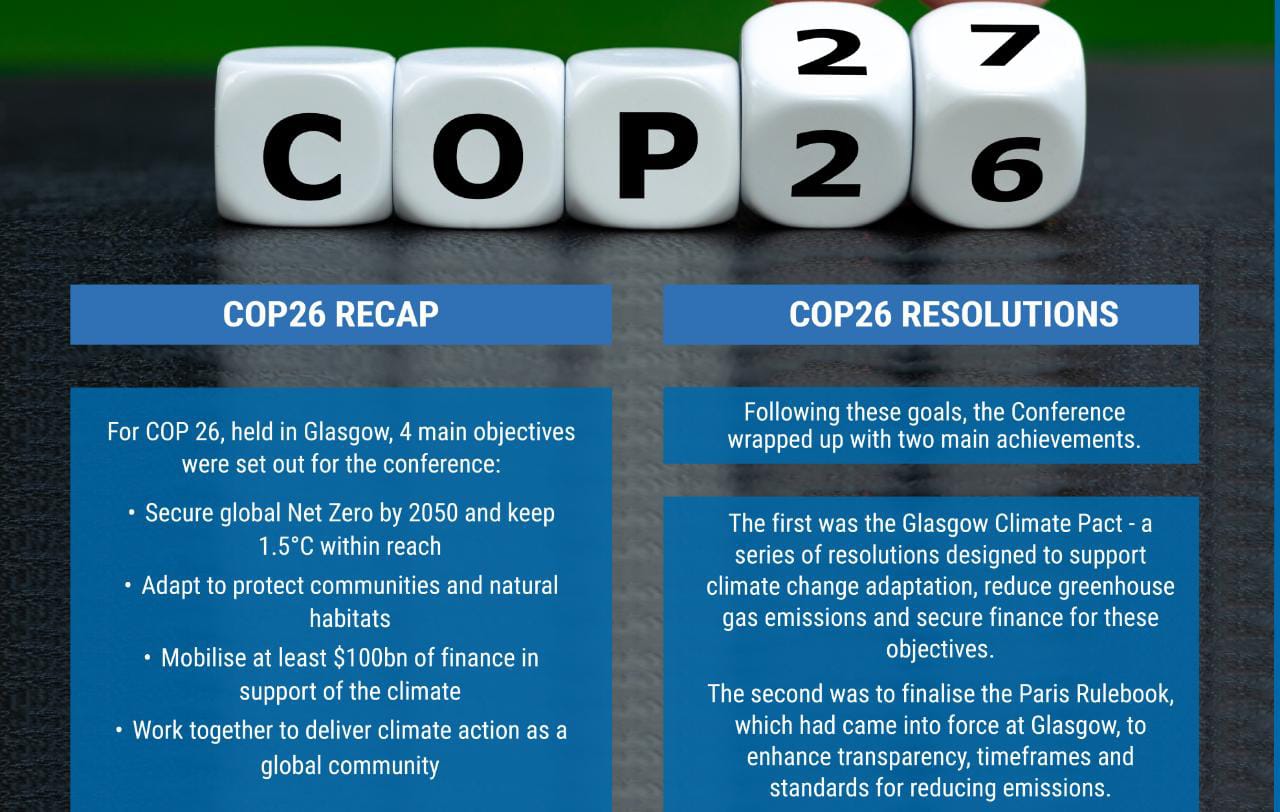
    • Inadequate reduction commitment: In the runup to COP26, last year in Glasgow, several developed countries had declared their intention to reach net zero emissions by 2050. These declarations did not square with the requirements of “keeping 1.5 deg. C alive”.
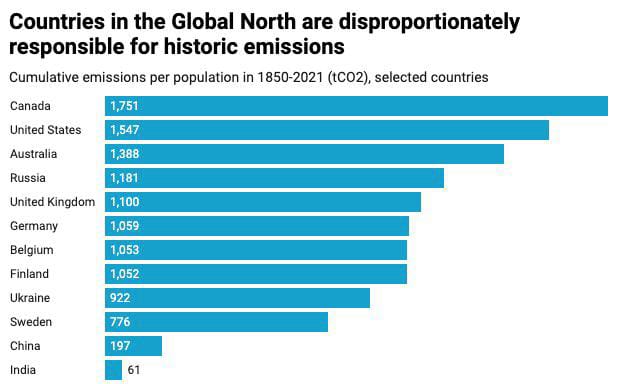
    • Global carbon budget: Four fifths of the global carbon budget to limit warming to 1.5°C (with 50% probability) has already been exhausted. Developed countries are responsible for more than half of these historical CO2 emissions. Nevertheless, there was much celebration of these targets.
    • Politics over phasing out coal: There was also high drama at COP26, with moral grandstanding by many developed country negotiators who invoked the future of their children, because India and other countries understandably balked at the singling out of any one fossil fuel for immediate action.
    • Developed countries didn’t meet the commitment: It is important to recall some of these shenanigans at COP26, as in the last year, it has become clear that developed countries may be unlikely to meet even the inadequate targets they have set, keeping to the trend of the last three decades.

    What is the present energy situation in developing countries?

    • Energy poverty concentrated in the developing countries: Global energy poverty is concentrated in the developing countries. In 2021, 733 million people had no access to electricity and almost 2.6 billion people lacked access to clean fuels and technologies.
    • The average per capita energy: Energy use of the richest 20 countries is 85 times higher than that of the 20 poorest countries. Addressing this stark energy poverty in developing countries is important because there is a strong correlation between energy supply and human development.
    • The average annual per capita electricity: Electricity consumption of sub-Saharan Africa is 487 kilowatt hours (kWh), alongside an infant mortality rate of 73 per 1,000 live births; maternal mortality ratio of 534 per 1,00,000 live births, and per capita GDP of $1,645. On the other hand, the OECD group of countries have a per capita electricity consumption of 7,750 kWh, corresponding to an infant mortality rate of seven, maternal mortality ratio of 18, and per capita GDP of $42,098.
    • Slowdown due to lack of energy: The reality of global inequality was acutely evident during the COVID19 pandemic. Several countries in Africa, Asia and Latin America are facing severe agricultural and industrial slowdowns in the post pandemic period.
    • The lack of reliable energy infrastructure: Infrastructure unavailability has compounded the difficulties and has multidimensional impacts across developmental indicators. In 2022, these inequalities have been aggravated by soaring energy and food prices.
    • Rising cost of living: Several countries face a severe rise in the cost of living and nearly 70 million additional people are estimated to fall below the poverty line of $3.20 per person per day. Poor and vulnerable communities in the energy importing countries of the global South suffer the most. Almost 90 million people in Asia and Africa, who gained access to electricity recently, cannot afford to pay their energy bills.
    • No acknowledgement of problem by developed countries: In this background, COP27 affords a critical moment to acknowledge and address the concerns surrounding energy access and security in developing countries. Unfortunately, these longstanding problems of the global South have been ignored by developed country governments, academia, and civil society. At a time when the language of energy poverty and security is re-entering the northern vocabulary, it is time to call out the hypocrisy of the advice on fossil fuel use given by the north to some of the world’s poorest regions since the Paris Agreement was signed.

    COP

    How developed countries are hypocritic about energy use and commitments?

    • Fossil fuel as primary energy source: In the United States, 81% of primary energy is from fossil fuels. In Europe, fossil fuels constitute 76% of the energy consumption (coal, oil, and natural gas contribute 11%, 31%, and 34% respectively).
    • Negligible efforts for decarbonization: Thirty years after acknowledging the problem of anthropogenic global warming and committing in the UNFCCC, to take the lead in climate change mitigation, the level of decarbonization in the global North has been minuscule.
    • Increasing coal consumption: In July 2022, the European Union (EU) voted to classify the use of natural gas for some uses as “green and sustainable”. Natural gas was responsible for 7.5 billion tonnes of CO2 (i.e., 23% of the total CO2 by the major fossil fuels), in 2020. Additionally, in 2022, even coal consumption in the U.S. and the EU is estimated to increase by 3% and 7%, respectively.
    • Double standard for fossil fuel: These same developed countries argue that green energy constitutes a great business opportunity for developing countries as it has become cheaper. They have used this dubious argument to dismiss differentiation between developed and developing countries and are lobbying for banning the financing of any fossil fuel projects in some of the poorest countries.

    What should be the agenda of developing countries at COP 27?

    • Bring the energy poverty issue: At COP27, the global South must put the question of its energy poverty and the severe global inequalities in energy access squarely at the Centre of all discussions.
    • Achieving SDGs with climate actions: We need to achieve zero hunger, zero malnutrition, zero poverty, and universal wellbeing even as we collectively contribute to ensuring effective climate action.
    • No empty commitments: As the strapline for COP27 (“Together for Implementation”) suggests, we must work together to ensure that these developmental goals are not side-lined, as they were at COP26, in the pursuit of hollow declarations of net zero targets three decades into the future.

    COP

    Conclusion

    • A developing country leadership at COP27 can ensure effective discussions, based on equity and common but differentiated responsibilities and respective capabilities, on the relative responsibilities and sharing of mitigation and adaptation burdens while coping with loss and damage.

    Mains Question

    Q. Describe the energy inequality situation among developed and developing countries. How India can lead the developing countries for negotiations at COP27?

    Click and Get your FREE copy of Current Affairs Micro notes


  • LT-LEDS (Long Term-Low Emission Development Strategy)

    strategy

    India has announced its long-term strategy to transition to a “low emissions” pathway at the United Nations Conference of Parties (COP) ongoing in Sharm el-Sheikh, Egypt.

    What are LT-LED Strategy?

    • The LT-LEDS are qualitative in nature and are a requirement emanating from the 2015 Paris Agreement.
    • Hereby, countries explain how they will transition their economies beyond achieving near-term NDC targets.
    • It signifies their path towards the larger climate objective of cutting emissions by 45% by 2030 and achieve net zero around 2050.

    BACKGROUND

    What is the meaning of Net Zero?

    • A state in which a country’s emissions are compensated by absorption and removal of greenhouse gases (GHGs) from the atmosphere is called Net Zero State; it is also referred to as carbon-neutrality.
    • It is done through natural processes as well as futuristic technologies such as carbon capture and storage.

    Nationally Determined Contributions (NDCs): 

    • To achieve the targets under the agreement, the member countries must submit the targets themselves, which they believe would lead to substantial progress towards reaching the Paris temperature goal.
    • Initially, these targets are called Intended Nationally Determined Contributions (INDCs).
    • They are converted to NDCs when the country ratifies the agreement.

    Key announcements by India

    • Nuclear energy: India is set to expand its nuclear power capacity by at least three-fold in the next decade.
    • Green hydrogen: India aims for becoming an international hub for producing green hydrogen through the National Hydrogen Mission.
    • Ethanol blending: India aspires to maximise the use of electric vehicles, with ethanol blending to reach 20% by 2025 (it is currently 10%) and a “strong shift” to public transport for passenger and freight traffic.
    • Energy efficiency: India will also focus on improving energy efficiency by the Perform, Achieve and Trade (PAT) scheme.
    • Carbon sequestration: India’s forest and tree cover are a net carbon sink absorbing 15% of CO2 emissions in 2016, and it is on track to fulfilling its NDC commitment of 2.5 to 3 billion tonnes of additional carbon sequestration in forest and tree cover by 2030.

    Hurdles in achieving net-zero

    • Huge cost of transition: The transition to low carbon pathway will entail several costs amounting to several trillion dollars. It involves the development of new technologies, new infrastructure, and other transaction costs.
    • No climate finance mechanism: Provision of climate finance by developed countries will play a very significant role and needs to be considerably enhanced.

    Significance of India’s LTS

    • India’s long-term strategy (LTS) follows up on the net zero pledge.
    • It clearly outlines key interventions across sectors that are going to be the focus of India’s efforts.

    Considerations made by India

    India’s approach is based on the following four key considerations that underpin its long-term low-carbon development strategy:

    1. India has contributed little to global warming: its historical contribution to cumulative global GHG emissions being minuscule despite having a share of ~17% of the world’s population.
    2. Huge domestic energy demand: India has significant energy needs for development.
    3. National circumstances: India is committed to pursuing low-carbon strategies for development and is actively pursuing them, as per national circumstances
    4. India needs to build climate resilience: It is the capacity of social, economic and ecosystems to cope with a hazardous event or trend or disturbance.


    (Click) FREE1-to-1 on-call Mentorship by IAS-IPS officers | Discuss doubts, strategy, sources, and more

More posts