💥UPSC 2027,2028 Mentorship (April Batch) + Access XFactor Notes & Microthemes PDF

Search results for: “”

  • The truth about India’s booming toy exports

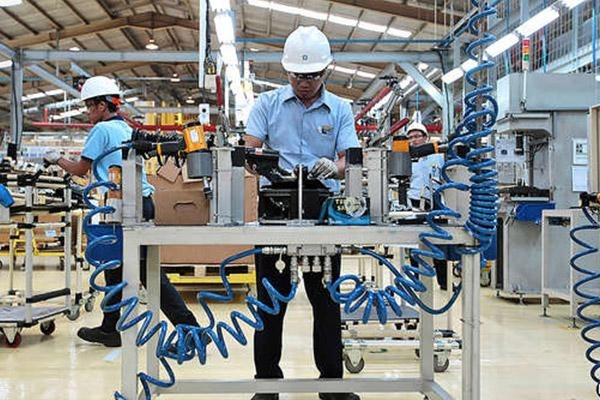
    India's Toy Industry: Unravelling the Recent Export Surge - Civilsdaily

    Central Idea:

    The article discusses India’s toy industry’s recent shift to net exports, attributing the success to protectionist measures under the ‘Make in India’ initiative. It raises questions about the efficacy of these policies and calls for a public release of an officially sponsored research study by the Indian Institute of Management Lucknow (IIM-L) to facilitate a more informed policy discussion.

    Key Highlights:

    • Between 2014-15 and 2022-23, India’s toy exports increased significantly, turning the country into a net exporter, while imports declined.
    • An unpublished IIM-L case study, sponsored by DPIIT, credits the export success to promotional efforts under ‘Make in India.’
    • The article questions the reported success and analyzes official statistics to understand the factors behind the industry’s turnaround.

    Key Challenges:

    • Lack of transparency regarding the IIM-L case study, creating ambiguity about the actual impact of ‘Make in India’ on the toy industry.
    • Concerns about the sustainability of protectionist measures and the potential for “rent-seeking” behavior in the absence of complementary policies.
    • The decline in labor productivity and other indicators in the toy industry despite protectionist measures.

    Key Terms:

    • ‘Make in India’ initiative.
    • Net exports (exports minus imports).
    • Protectionism.
    • Non-tariff barriers (NBTs).
    • Quality control order (QCO).
    • Annual Survey of Industries (ASI).
    • Fixed capital per worker.
    • Gross value of output.

    Key Phrases:

    • “Turnaround in the labour-intensive industry.”
    • “Rising protectionism since 2020-21.”
    • “Infant industry argument.”
    • “Learning by doing.”
    • “Virtuous circle of expanding domestic capabilities.”

    Key Quotes:

    • “India has turned into a net toys exporter since 2020-21. ‘Make in India’ policies made it possible.”
    • “Perhaps the IIM-L’s study uses different evidence to buttress its contention.”
    • “Rising tariff and non-tariff barriers have made it possible.”

    Key Statements:

    • The article questions the correlation between ‘Make in India’ policies and the reported success in the toy industry.
    • Concerns are raised about the impact of protectionism on the industry’s long-term competitiveness.
    • Calls for transparency and public release of the IIM-L case study to facilitate informed policy discussions.

    Key Examples and References:

    • Reference to the tripled customs duty on toys in February 2020 and the imposition of non-tariff barriers since January 2021.
    • Mention of the decline in labor productivity and other indicators in the toy industry despite protectionist measures.

    Key Facts and Data:

    • Toy exports increased significantly between 2014-15 and 2022-23, making India a net exporter.
    • The trade balance for toys turned positive in 2020-21 after a gap of 23 years.
    • Customs duty on toys was raised to 70% in March 2023.

    Critical Analysis:

    • The article critically examines the reported success of ‘Make in India’ policies in the toy industry, emphasizing the role of protectionism.
    • Concerns are raised about the sustainability of protectionist measures and the need for complementary policies to enhance domestic capabilities.
    • The decline in labor productivity challenges the notion that protectionism has led to improved industry competitiveness.

    Way Forward:

    • Advocate for transparency by making the IIM-L case study public to inform meaningful policy discussions.
    • Emphasize the need for a comprehensive policy approach, combining protectionism with investment policies and infrastructure development.
    • Encourage a dialogue on the long-term impact of protectionist measures on the toy industry’s competitiveness and the potential for “rent-seeking” behavior.
  • The need to overhaul a semiconductor scheme

    Design-linked incentive (DLI) scheme - An analysis | PT's IAS Academy

    Central Idea:

    The Semiconductor Design-Linked Incentive (DLI) scheme in India, designed to foster semiconductor design capabilities, faces challenges due to limited results and structural issues. The article suggests a comprehensive revamp, addressing key challenges, emphasizing the importance of the design ecosystem, and proposing a shift in focus to cultivate indigenous semiconductor design capabilities.

    Key Highlights:

    • The DLI scheme, part of the $10 billion Semicon India Program, has approved only seven start-ups, falling significantly short of the target to support 100 over five years.
    • India’s semiconductor strategy aims to reduce dependence on imports, build supply chain resilience, and leverage its comparative advantage in chip design.
    • The article underscores the need to prioritize the design stage for stimulating India’s semiconductor industry.

    Key Challenges:

    • The DLI scheme has witnessed lackluster results and low participation.
    • Barriers include restrictions on foreign funding and ownership for beneficiary start-ups.
    • Modest incentives and a challenging funding landscape impede semiconductor start-ups in India.
    • Concerns are raised about the nodal agency’s role, posing potential conflicts of interest.

    Key Terms:

    • Semiconductor Design-Linked Incentive (DLI) scheme.
    • Semiconductor global value chain (GVC).
    • Foundry and assembly stages of the semiconductor GVC.
    • Electronic design automation (EDA) tools.
    • Production-Linked Incentive schemes.
    • Semiconductor Fabless Accelerator Lab (SFAL).
    • India Semiconductor Mission.

    Key Phrases:

    • “Cultivate semiconductor design capabilities.”
    • “Build supply chain resilience.”
    • “Delink ownership from semiconductor design development.”
    • “Shift focus to facilitate design capabilities for a wide array of chips.”
    • “Revise policy to boost financial stability and provide global exposure.”

    Key Quotes:

    • “Stimulating the design ecosystem is less capital-intensive than foundry and assembly stages.”
    • “The primary aim should be to cultivate semiconductor design capabilities in India.”
    • “Enhance the financial outlay of the scheme substantially to support this policy shift.”

    Key Statements:

    • The article critiques the DLI scheme for its limited results and highlights barriers hindering effectiveness.
    • Challenges faced by semiconductor start-ups, including funding issues and policy restrictions, are discussed.
    • The need for a revamped DLI scheme, focusing on broader objectives and increased financial support, is emphasized.

    Key Examples and References:

    • Reference to the Karnataka government’s Semiconductor Fabless Accelerator Lab (SFAL) as a potential model for an implementing agency.
    • Mention of the Union government’s recent statement emphasizing the importance of “India-designed chips.”

    Facts and Data:

    • Only seven start-ups approved under the DLI scheme, significantly below the target of supporting 100.
    • Modest incentives under the DLI scheme, capped at ₹15 Crore for Product DLI and ₹30 Crore for Deployment Linked Incentive.
    • The Semiconductor Design-Linked Incentive (DLI) scheme is a part of India’s $10 billion Semicon India Program.

    Critical Analysis:

    • The article critically evaluates the current DLI scheme, emphasizing the need for a more comprehensive and effective approach.
    • Concerns about the nodal agency’s role and potential conflicts of interest are highlighted.
    • The article stresses the significance of cultivating indigenous semiconductor design capabilities in India for sustained success.

    Way Forward:

    • Revise the DLI scheme to delink ownership, enhance financial incentives, and broaden the focus on semiconductor design capabilities.
    • Consider a new implementing agency, such as the Semiconductor Fabless Accelerator Lab (SFAL), for a more effective approach.
    • Emphasize the importance of cultivating indigenous semiconductor design capabilities in India for long-term success.
  • Webinar by Arvind sir: How to make GS 3 mains syllabus-based UPSC notes for every keyword? | 25th Jan, 6 pm – FREE Zoom link inside

    Webinar by Arvind sir: How to make GS 3 mains syllabus-based UPSC notes for every keyword? | 25th Jan, 6 pm – FREE Zoom link inside

    Making effective notes for GS 3 mains topics for answer content enrichment

    Join Arvind sir’s FREE webinar on 25th Jan, 6 pm

    First 100 will get Civilsdaily’s Mains Toolkit


    There is a direct correlation between the quality of notes you make and the content of your mains answers.

    From day one, your preparation hinges on how you craft your UPSC notes.

    It’s not just note-making; it’s an art that enriches your UPSC Mains answers.

    The key lies in dissecting the UPSC syllabus, and understanding each topic, every keyword.

    Every keyword is an opportunity, a potential question in the making.

    Your notes should be a treasure trove, wholesome and comprehensive for each of these keywords.

    But how do you transform raw information into strategic UPSC notes?

    In continuation of Arvind Sir’s keyword based note making masterclass let us understand how to make notes for GS paper 3 syllabus keywords.

    upsc syllabus

    Read what Arvind Agrawal sir has to say about UPSC Notemaking for GS 3 paper

    “Hello again, UPSC aspirants, I’m Arvind Agrawal from Civilsdaily, back with another crucial webinar in our series.

    In our last session, we delved deep into the art of making notes from the keywords in the UPSC syllabus for GS Mains Paper 2. The response was overwhelming, and I’m thrilled to see so many of you eager to elevate your preparation.

    This time, we’re taking a step further.

    On the 25th of January, I’ll be hosting a live demonstration on decoding the UPSC Mains GS Paper 3 syllabus. We’ll dissect each keyword, showing you precisely how to craft notes that not only cover the syllabus but enrich the content of your Mains answers.

    UPSC Mains Paper 3 is diverse, covering everything from the economy to environment and technology.

    Understanding how to extract and organize relevant information from this vast syllabus is key to scoring high. It’s not just about gathering data; it’s about transforming it into usable insights for high-scoring answers.

    Whether you’re a beginner or a veteran in the UPSC journey, this webinar is designed to offer you new perspectives and effective strategies.

    I’ll walk you through the process of creating notes that are comprehensive, yet concise enough to be practical for revision and answer writing.

    Remember, the difference between an average and a top-scoring answer often lies in the depth and clarity of the content. That’s what we aim to build together – a solid foundation for your answers based on well-structured and insightful notes.”

    Arvind sir will explain what differentiates a good UPSC notes from bad ones

    Attend FREE Webinar on Effective Notes Making and Mains Answer Content Enrichment

    https://youtu.be/SMzeC6xQGGU
    GS 2 Mains Syllabus Keyword-Based Note Making

    In this masterclass, you will get:

    1. Deep Dive into GS 3 Mains Syllabus Keyword Analysis: Arvind Sir will elucidate on identifying and understanding the crucial keywords in the UPSC syllabus, a vital skill that forms the backbone of effective answer writing.
    2. LIVE Demonstration of Art of Comprehensive Note-Making: The session will cover strategic methods for creating impactful and concise notes for each syllabus keyword, ensuring that your preparation is thorough and your answers are enriched with relevant content.
    3. Showcase of Good vs. Bad Notes: Arvind Sir will present actual examples of effective and ineffective note-making, providing clear insights into what works and what doesn’t in the context of UPSC Mains preparation.

    Join Arvind sir’s FREE webinar on 25th Jan, 6 pm

    First 100 will get Civilsdaily’s Mains Toolkit

    By the end, you’ll have razor-sharp clarity and a clear roadmap for approaching and qualifying your Mains exam with ease.

    Arvind Agrawal sir

    Registration open! Join now to attend the webinar for FREE

    (Don’t wait—the next webinar won’t be until March 24)


    upsc prelims mains

    These masterclasses are packed with value. They are conducted in private with a closed community. We rarely open these webinars for everyone for free. This time we are keeping it for 300 seats only.

    Fee:

    • Special Access (extra 15 min with Arvind sir) – Free (only for first 100 registrations, register before 24 Jan, 1 pm)
    • Early Access – Rs. 299 (for the next 100 registrations, register before 25 Jan, 1 PM)
    • Late Access – Rs. 499 (for last 100 registrations, register before  25 Jan, Post 1 PM)

    Ready to attend the UPSC Webinar?


    Not sure yet?

    We recommend you register here. It takes less than 10 seconds to register.

    • No spam! Once in a while, we’ll only send you high-quality exam-related content. 
    • We will inform you about the upcoming Masterclasses that might benefit you.
    • You can demand one free mentorship call from verified Civilsdaily mentors. 
    • You can always choose to unsubscribe. 
  • [FREE pdf]All Species Compilation for Prelims 2024+Z Sir’s Session Today

    [FREE pdf]All Species Compilation for Prelims 2024+Z Sir’s Session Today

    Hello aspirants, how is the josh!

    Get 80 Species with NewsLink


    This is Zeeshan Hashmi,

    Join my session and we will be discussing these notes.

    Species in News is the top theme among the 20 SureShot Themes. At least 3-5 questions are expected from it.

    [2021]Q.Consider the following animals
    1. Hedgehog
    2. Marmot
    3. Pangolin
    To reduce the chance of being captured by predators, which of the above organisms rolls up/roll up and protects/protect its/their vulnerable parts?
    (a) 1 and 2
    (b) 2 only
    (c) 3 only
    (d) 1 and 3

    [2022]Q.Which of the following is not a bird?

    (a) Golden Mahseer

    (b) Indian Nightjar

    (c) Spoonbill

    (d) White Ibis

    But getting these questions right is not easy. We need to prioritize news and cover all dimensions.

    You need to be thorough with

    1. Species repeatedly in news
    2. Species that are higher up in the IUCN status
    3. Most striking fact – heaviest bird, only flying squirrel, etc.
    4. If its a state animal.
    5. Natural Habitat.
    6. Conservation measures.

    Our material is built using this philosophy. It covers everything. Here is a snippet

    Get 80 Species with NewsLink


    Dominate Prelims Crash Course starts this 25th. Enrol now!

    I want Dominate Prelims


  • Cannabis and Antibiotic Resistance: A Promising Solution

    Cannabis

    Introduction

    • To combat the menace of growing antibiotic resistance, scientists at CSIR-Indian Institute of Integrative Medicine (IIIM), Jammu, have made a groundbreaking discovery.
    • They found that phytocannabinoids, compounds found in the cannabis plant, possess previously untapped antibiotic properties.

    Understanding India’s AMR Challenge

    • Escalating AMR Threat: AMR occurs when bacteria, viruses, fungi, and parasites no longer respond to antibiotics, leading to increased disease risk and treatment complications.
    • Alarming Statistics: In 2019, India reported 2.97 lakh deaths attributed to AMR and 10.42 lakh linked to AMR-related factors.
    • Contributing Factors: Overuse of antibiotics, misuse in animal husbandry, and inadequate waste disposal practices are exacerbating AMR, potentially making India the “AMR capital of the world.”

    Cannabis Unveils Antibiotic Potential

    • Phytocannabinoid Research: IIIM researchers explored the antibiotic properties of tetrahydrocannabidiol (THCBD), a semisynthetic phytocannabinoid derived from cannabis.
    • Fighting MRSA: THCBD exhibited remarkable efficacy against Methicillin-resistant Staphylococcus aureus (MRSA), a highly resistant strain of bacteria responsible for numerous deaths worldwide.
    • Synergy with Existing Antibiotics: THCBD complemented or showed indifference to common antibiotics like mupirocin, penicillin G, and ciprofloxacin, suggesting potential combinatory treatments.

    Overcoming Cannabis Research Challenges

    • Legal Constraints: Cannabis research faces legal constraints due to its intoxicating properties, making collaboration with other institutes challenging.
    • Policy Advocacy: The research project aims to advocate for a unified national policy for cannabis research, highlighting its antibacterial potential and transforming it into a valuable resource.

    Future Prospects for THCBD

    • Collaborative Efforts: IIIM researchers seek collaborations to expedite their progress in developing THCBD as a potential drug.
    • Addressing Solubility Challenge: Ensuring THCBD’s solubility is a critical step. The molecule leans slightly towards lipophilicity, requiring optimization for proper absorption in biological systems.
    • Healthcare Impact: This research not only promises significant contributions to the healthcare system but also offers economic benefits by establishing related industries and creating sustainable job opportunities.
  • SIGHT Program for Green Hydrogen Transition

    SIGHT Program

    Introduction

    • The Union Ministry of New and Renewable Energy (MNRE) has embarked Strategic Interventions for Green Hydrogen Transition (SIGHT) Programme within the National Green Hydrogen Mission.

    SIGHT Programme: An Overview

    • Mission Alignment: SIGHT is an integral component of the National Green Hydrogen Mission, strategically designed to foster domestic electrolyser manufacturing and green hydrogen production.
    • Financial Commitment: A substantial investment of Rs 17,490 crore has been allocated to SIGHT until 2029-30.
    • Dual Incentive Mechanisms: SIGHT introduces two distinct financial incentive mechanisms:
      1. Incentive for Electrolyser Manufacturing: To boost the production of essential electrolysis equipment.
      2. Incentive for Green Hydrogen Production: Encouraging the generation of clean and sustainable green hydrogen.
    • Adaptive Evolution: The incentive schemes and programs will evolve in response to market dynamics and technological advancements, ensuring the Mission’s adaptability.
    • Execution Authority: The Solar Energy Corporation of India (SECI) is entrusted with executing the scheme, driving its effective implementation.

    About National Green Hydrogen Mission

    • Strategic Implementation: Launched by the MNRE, the mission commits an outlay of ₹ 19,744 crore from FY 2023–24 to FY 2029–30.
    • Global Hub for Green Hydrogen: The overarching aim is to position India as a global hub for the production, utilization, and export of green hydrogen and its derivatives.
    • Vision for 2030:
      1. Production Capacity: India’s green hydrogen production capacity is projected to reach 5 million metric tons (MMT) per annum, diminishing fossil fuel imports and saving ₹1 lakh crore by 2030.
      2. Economic Impact: The mission anticipates attracting over ₹8 lakh crore in investments and generating employment for more than 6 lakh people.
      3. Carbon Emission Reduction: A targeted production and utilization of green hydrogen is expected to avert nearly 50 MMT per annum of CO2 emissions.
    • Pilot Projects: The Mission encompasses support for pilot initiatives in low-carbon steel, mobility, shipping, and ports.
    • Flexible Allocations: The Mission allocates resources for various sub-components like SIGHT, pilot projects, research and development (R&D), enabling the funding of selected projects.
    • State-Wide Impact: While the Mission has no state-wise allocation, its broad scope promises nation-wide benefits.

    Significance of Green Hydrogen

    • Eco-Friendly Production: Green hydrogen is produced through electrolysis, splitting water into hydrogen and oxygen using renewable energy sources like solar, wind, or hydropower.
    • A Sustainable Fuel: This process yields a clean, emission-free fuel with immense potential to supplant fossil fuels and mitigate carbon emissions.
  • Batadrava Than: Understanding the Significance and Controversies

    Batadrava Than

    Introduction

    • A politician was recently denied entry to Assam’s Batadrava Than for his political campaigning.

    About Batadrava Than

    • Location: Situated in Nagaon district, Batadrava Than, also known as Bordowa Than, holds deep significance for Assamese Vaishnavites.
    • Birthplace of Srimanta Sankardeva: It stands at the birthplace of Srimanta Sankardeva (1449-1568), a revered Vaishnavite reformer-saint.
    • Founder of Kirtan Ghar: Sankardeva established the first-ever Kirtan Ghar at Bordowa in 1494 AD, where he practiced and preached the neo Vaishnavite faith.

    Sankardeva’s Philosophy

    • Ek Saran Naam Dharma: Sankardeva’s philosophy centered on worship through bhakti (devotion) to Lord Krishna, emphasizing the singing and congregational listening of His name and deeds.
    • Society Based on Equality: He advocated for a society free from caste distinctions, orthodox Brahmanical rituals, and sacrifices, promoting equality and fraternity.
    • Devotion over Idol Worship: Sankardeva’s teachings favored prayer and chanting (naam) over idol worship.
    • Four Components of Dharma: His dharma was founded on four components: deva (god), naam (prayers), bhakats (devotees), and guru (teacher).

    Legacy of Sankardeva’s Movement

    • Monastic Institutions: Sankardeva’s Neo-Vaishnavite reformist movement led to the establishment of monastic institutions known as Thans/Sattras across Assam.
    • Religious, Social, and Cultural Reforms: These Thans/Sattras became centers for religious, social, and cultural reforms in the 16th century.
    • “Worship Through Art” Approach: Today, the Sattras propagate Sankardeva’s unique approach of “worship through art” with music (borgeet), dance (xattriya), and theater (bhauna).
    • Nucleus of Naamghar: Each Sattra has a naamghar (worship hall) as its nucleus and is led by an influential “Sattradhikar.”

    Political Significance and Controversies

    • Assamese Identity: Thans/Sattras are integral to Assamese identity, and Batadrava Than is frequently visited by politicians.
    • Electoral Issue: The government has highlighted “land grabbing around Sattras by illegal settlers” as an electoral issue.
    • Proposed Land Law: The CM has announced plans for a law preventing “non-indigenous people” from buying land within an eight-kilometer radius of Batadrava Than.
    • Beautification Project: Home Minister Amit Shah launched a Rs 188 crore beautification project at Batadrava Than in 2021.

    Also read:

    Assam’s Sattras and their Political Significance

  • 1.5 degree Celsius Threshold: Is Climate Change real?

    climate change

    Introduction

    • The year 2023 witnessed alarming signs of climate change, from record-breaking summer temperatures to shrinking Antarctic sea ice and extreme weather events across the globe.
    • Despite the overwhelming scientific consensus on climate change, there remains confusion and misinformation on this critical issue.

    Is the Earth Becoming Warmer?

    • Temperature Measurement: Temperature measurements since the late 1880s show global warming trends. Satellite data confirms an increase of at least 1.1 degrees Celsius since 1880.
    • Indirect Verification: Analyzing natural indicators like tree rings and ice cores. Observing effects such as warming oceans, shrinking ice cover, and rising sea levels. Multiple monitoring systems enhance confidence in global-scale warming.
    • Acceleration of Warming: Recent decades witness unprecedented rapid warming. The majority of warming observed since 1975. 2022 marked the 46th consecutive year of temperatures above the 20th-century average.

    Role of Human Activities

    • Natural Factors: Throughout Earth’s history, natural factors like solar variations and volcanic activity influenced climate.
    • Current Acceleration: However, natural factors exert too little influence and operate too slowly to account for recent rapid warming, as acknowledged by NASA.
    • Greenhouse Gases: The primary driver of global warming is the increasing concentration of greenhouse gases, particularly carbon dioxide (CO2), methane (CH4), and water vapor.
    • Human Influence: Since the Industrial Revolution, human activities, especially the burning of fossil fuels, have released substantial greenhouse gases into the atmosphere.
    • Unprecedented Change: Changes that would typically occur over hundreds of thousands of years are now happening within decades.

    Overwhelming Evidence

    • Scientific Consensus: The Intergovernmental Panel on Climate Change (IPCC) has stated that “human influence on the climate system is clear and growing.”
    • Unprecedented Warmth: 2022 marked the 46th consecutive year with global temperatures exceeding the 20th-century average, with the last nine years ranking among the warmest.

    1.5 Degree Celsius Threshold

    • Paris Agreement: 195 countries pledge to limit warming to “well below 2 degrees Celsius” and aim to limit the increase to 1.5 degrees Celsius.
    • Baseline Year: Pre-industrial levels based on measurements from 1850 to 1900, providing a reliable historical reference.
    • Reason for 1.5 Degrees: Scientific consensus: 1.5 degrees is a defense line against severe climate impacts. It avoids extreme and irreversible consequences associated with 2 degrees warming.
    • Continuous Improvement: Lowering the target reduces climate risks further. Science supports aiming for the lowest possible temperature increase.

    Consequences of Breaching the Threshold

    • Increased Extreme Weather: More frequent and intense heavy precipitation. Elevated drought intensity and frequency in some regions.
    • Warmer Oceans: Higher number of strong hurricanes with rapid strengthening.
    • Intensified Wildfires: Longer-lasting and more intense wildfires.
    • Rapid Sea Ice Melt: Accelerated sea-level rise.
    • Emerging Consequences: Many of these impacts are already underway. Breaching the threshold exacerbates these effects.

    How Close Are We to Breaching the Threshold?

    • WMO Warning: World Meteorological Organisation (WMO) warns of a 66% chance of crossing the 1.5-degree limit between 2023 and 2027.
    • Hottest Year: 2023 declared the hottest year on record, 1.48 degrees Celsius warmer than pre-industrial levels.
    • Daily Fluctuations: Daily temperatures occasionally exceed 1.5 degrees Celsius, but long-term trends are the focus.

    Conclusion

    • The evidence of climate change and global warming is undeniable.
    • Human activities, primarily the release of greenhouse gases, are driving these changes at an unprecedented rate.
    • Understanding the science behind climate change is crucial in addressing this real global crisis.
  • Why was FCRA registration for several NGOs cancelled?

    Introduction

    • In recent developments, the Foreign Contribution Regulation Act, 2010 (FCRA) registration of two prominent non-governmental organizations (NGOs), the Centre for Policy Research (CPR) and World Vision India (WVI), has been cancelled.

    FCRA: Regulating Foreign Donations

    • Objective: FCRA regulates foreign donations to ensure they do not adversely affect India’s internal security.
    • Compulsory Registration: Any association, group, or NGO intending to receive foreign donations must register under FCRA.
    • Amendments: The FCRA was first enacted in 1976 and amended in 2010, with further changes in 2020.

    Registration and Renewal

    • Initial Registration: NGOs initially register under FCRA for five years, with the possibility of renewal if they adhere to the specified norms.
    • Scope of Usage: Registered groups can receive foreign contributions for various programs, including social, educational, religious, economic, and cultural.

    Cancellations and Renewals

    • Cancellations: Since 2015, over 16,000 NGOs have had their FCRA registrations cancelled due to violations.
    • Active NGOs: As of January 22, 16,989 FCRA-registered NGOs were active in India.
    • Expired Registrations: Nearly 6,000 NGOs’ FCRA registrations ceased from January 1, 2022, either due to the MHA’s refusal to renew or NGOs not applying for renewal.

    Significance and Controversies

    • Risk of Money Laundering and Terrorism Financing: The MHA’s 2012 report highlighted the vulnerability of the NGO sector to money laundering and terrorist financing risks.
    • Record Number of Registrations: In 2023, 1,111 associations received fresh FCRA registrations.
    • Reasons for Rejection: Out of 1,615 applications received for FCRA registration in 2021 and 2022, 722 were granted clearance, while 225 were rejected.
    • Foreign Contribution Amount: In 2019-2022, a total of 13,520 associations received ₹55,741.51 crore in foreign contributions.

    Reasons for Cancellation: CPR and WVI

    • CPR Allegations: The MHA accused CPR of diverting foreign donations to fund protests and legal battles against developmental projects, affecting India’s economic interests. CPR’s publication of current affairs programs using foreign funds was deemed a violation.
    • CPR’s Response: CPR deemed the ministry’s decision incomprehensible and disproportionate, challenging the reasoning behind equating policy reports on their website with current affairs programming.
    • WVI’s Allegations: WVI had its FCRA registration cancelled for alleged violations from 2012-13 to 2020-21. WVI received the highest amount of foreign donations among all NGOs registered under the Act in 1986.

    FCRA Amendments: Recent Changes

    The FCRA underwent significant amendments in 2020, introducing several restrictions:

    • Fund Transfer Prohibition: Section 7 of the Act prohibits the transfer of foreign funds received by an organization to any other individual or association.
    • Designated Bank Account: Recipients must open an FCRA bank account in a designated SBI branch in New Delhi, mandating that all foreign funds be received in this account.
    • Shared Information: The designated bank informs authorities about foreign remittances with source and receipt details.
    • Aadhaar Requirement: The Government can collect Aadhaar numbers of key functionaries of organizations applying for FCRA registration.
    • Cap on Administrative Expenditure: The portion of funds allowed as administrative expenditure was reduced from 50% to 20%.

    Criticisms and Government’s Perspective

    • Arbitrary Restrictions: NGOs criticize the prohibition on fund transfer as arbitrary and restrictive.
    • Non-Sharing of Funds: This prohibition hinders the sharing of aid received as material, impacting collaborative efforts.
    • Inconvenient Designated Bank: The requirement for a Delhi-based bank account is inconvenient for NGOs operating elsewhere.
    • Government’s Justification: The government maintains that these amendments are necessary to prevent foreign state and non-state interference in India’s internal affairs and to curb malpractices in fund utilization.

    Conclusion

    • The FCRA plays a crucial role in regulating foreign donations to NGOs in India.
    • The recent cancellations of CPR and WVI registrations, coupled with the amendments, highlight the complex and evolving landscape of foreign contributions and their impact on Indian NGOs.
    • Understanding these developments is essential for comprehending the dynamics of funding, regulation, and accountability in the non-profit sector.

More posts