💥UPSC 2026, 2027, 2028 UAP Mentorship (March Batch) + Access XFactor Notes & Microthemes PDF

Search results for: “”

  • MEETING LINK INSIDE, REGISTER & JOIN|| How to Finish UPSC-CSE Syllabus before 2023 if you are a Working Professional, College Student or Homemaker?||  Free Live Webinar by Civilsdaily Mentor Ranadheer Ravula|| Unlock the Truths & Bust the Myths of UPSC-CSE 2023 Preparation

    MEETING LINK INSIDE, REGISTER & JOIN|| How to Finish UPSC-CSE Syllabus before 2023 if you are a Working Professional, College Student or Homemaker?|| Free Live Webinar by Civilsdaily Mentor Ranadheer Ravula|| Unlock the Truths & Bust the Myths of UPSC-CSE 2023 Preparation

    Team is inviting you to a scheduled Zoom meeting.

    How to Prepare for UPSC-CSE as a Working Professional, College Student or Homemaker? || Ranadheer Ravula

    Date & Time: Jan 21, 2022 @07:00 PM (Login 06:45 PM onwards) India

    Join Zoom Meeting: https://zoom.us/j/93780401967pwd=VWNaaEIzd3VSdUN2QXFHUlZ6L2NTdz09

    Meeting ID: 937 8040 1967

    Passcode: 220397

    Before starting your UPSC preparation, you might have heard many things about it from your friends, relatives and even from the internet. But, have you ever thought your research on how to study for the world’s toughest exam could be steeped in myths?

    There are many myths associated with UPSC preparation which beginners assume to be the truth and this ultimately, costs them an attempt. To avoid this, we suggest that you attend one of Civilsdaily’s weekly mentor-led free webinars that can help gain clarity while navigating the UPSC maze. Additionally, we also keep a Q&A session for everyone to clear their doubts. All you have to do is, fill in the form below and confirm your presence.

    What are the Myths assumed to be Truths by Most UPSC Aspirants?

    Aspirants think preparing for UPSC means reading everything under the sun, memorizing facts and having unlimited knowledge on undefined topics. However, the truth is far from true. UPSC, just like any other exam has a defined syllabus and questions would only be asked on those topics. Yes, the syllabus is vast compared to other exams but it certainly is well defined.

    Yet another UPSC myth which needs to be busted is  — the more books you read, the more you can score. The formula of qualifying for this exam lies in reading, practicing and revising frequently. UPSC also doesn’t always check your factual knowledge. If you know about inflation properly, but don’t know how the recent policies by the government to reduce inflation then that is concerning.

    Many aspirants think that one has to write long, lengthy and complicated answers in Mains to score better marks. However, by doing so they end up scoring lesser as this is not what the examiner is looking for. If you have a clear idea of the focus areas in Prelims, Mains & Interview, it will be easier for you to ace this exam.

    Key-Takeaways of the Free Live Webinar by Ranadheer Sir

    Our Civilsdaily mentor, Ranadheer Ravula will be taking the examples of his topper students and highlight how they had prepared for the exam keeping these things in mind –

    1. How should the syllabus be approached to complete it within the time limit?

    2. Is there a demarcation between Prelims and Mains studies? How to manage time between both?

    3. How to determine the primary focus areas of the Prelims, Mains, and Personality tests?

    4. How to apply bookish as well as classroom knowledge to the exam?’

    5. How to diminish your fear of Mains Answer Writing?

    6. Why should you not allow yourself to go more than 7 days without revising?

    7. How should Current Affairs be efficiently used for both Prelims and Mains exams?

    Webinar Details

    Don’t miss the chance to get value addition inputs to score better in the examination! This webinar is absolutely free. All aspirants are welcome to attend.

    Date – 21 January 2022 (Friday)

    Time – 7:00 P.M.

    Limited slots are available. Please register immediately.

  • Webinar Today @ 7PM, Registration Closing in 1 Hr|| How to Finish UPSC-CSE Syllabus before 2023 if you are a Working Professional, College Student or Homemaker?||  Free Live Webinar by Civilsdaily Mentor Ranadheer Ravula|| Unlock the Truths & Bust the Myths of UPSC-CSE 2023 Preparation

    Webinar Today @ 7PM, Registration Closing in 1 Hr|| How to Finish UPSC-CSE Syllabus before 2023 if you are a Working Professional, College Student or Homemaker?|| Free Live Webinar by Civilsdaily Mentor Ranadheer Ravula|| Unlock the Truths & Bust the Myths of UPSC-CSE 2023 Preparation

    Before starting your UPSC preparation, you might have heard many things about it from your friends, relatives and even from the internet. But, have you ever thought your research on how to study for the world’s toughest exam could be steeped in myths?

    There are many myths associated with UPSC preparation which beginners assume to be the truth and this ultimately, costs them an attempt. To avoid this, we suggest that you attend one of Civilsdaily’s weekly mentor-led free webinars that can help gain clarity while navigating the UPSC maze. Additionally, we also keep a Q&A session for everyone to clear their doubts. All you have to do is, fill in the form below and confirm your presence.

    What are the Myths assumed to be Truths by Most UPSC Aspirants?

    Aspirants think preparing for UPSC means reading everything under the sun, memorizing facts and having unlimited knowledge on undefined topics. However, the truth is far from true. UPSC, just like any other exam has a defined syllabus and questions would only be asked on those topics. Yes, the syllabus is vast compared to other exams but it certainly is well defined.

    Yet another UPSC myth which needs to be busted is  — the more books you read, the more you can score. The formula of qualifying for this exam lies in reading, practicing and revising frequently. UPSC also doesn’t always check your factual knowledge. If you know about inflation properly, but don’t know how the recent policies by the government to reduce inflation then that is concerning.

    Many aspirants think that one has to write long, lengthy and complicated answers in Mains to score better marks. However, by doing so they end up scoring lesser as this is not what the examiner is looking for. If you have a clear idea of the focus areas in Prelims, Mains & Interview, it will be easier for you to ace this exam.

    Key-Takeaways of the Free Live Webinar by Ranadheer Sir

    Our Civilsdaily mentor, Ranadheer Ravula will be taking the examples of his topper students and highlight how they had prepared for the exam keeping these things in mind –

    1. How should the syllabus be approached to complete it within the time limit?

    2. Is there a demarcation between Prelims and Mains studies? How to manage time between both?

    3. How to determine the primary focus areas of the Prelims, Mains, and Personality tests?

    4. How to apply bookish as well as classroom knowledge to the exam?’

    5. How to diminish your fear of Mains Answer Writing?

    6. Why should you not allow yourself to go more than 7 days without revising?

    7. How should Current Affairs be efficiently used for both Prelims and Mains exams?

    Webinar Details

    Don’t miss the chance to get value addition inputs to score better in the examination! This webinar is absolutely free. All aspirants are welcome to attend.

    Date – 21 January 2022 (Friday)

    Time – 7:00 P.M.

    Limited slots are available. Please register immediately.

  • Webinar Today @ 7PM, Registration Closing in 3 Hrs|| How to Finish UPSC-CSE Syllabus before 2023 if you are a Working Professional, College Student or Homemaker?||  Free Live Webinar by Civilsdaily Mentor Ranadheer Ravula|| Unlock the Truths & Bust the Myths of UPSC-CSE 2023 Preparation

    Webinar Today @ 7PM, Registration Closing in 3 Hrs|| How to Finish UPSC-CSE Syllabus before 2023 if you are a Working Professional, College Student or Homemaker?|| Free Live Webinar by Civilsdaily Mentor Ranadheer Ravula|| Unlock the Truths & Bust the Myths of UPSC-CSE 2023 Preparation

    Before starting your UPSC preparation, you might have heard many things about it from your friends, relatives and even from the internet. But, have you ever thought your research on how to study for the world’s toughest exam could be steeped in myths?

    There are many myths associated with UPSC preparation which beginners assume to be the truth and this ultimately, costs them an attempt. To avoid this, we suggest that you attend one of Civilsdaily’s weekly mentor-led free webinars that can help gain clarity while navigating the UPSC maze. Additionally, we also keep a Q&A session for everyone to clear their doubts. All you have to do is, fill in the form below and confirm your presence.

    What are the Myths assumed to be Truths by Most UPSC Aspirants?

    Aspirants think preparing for UPSC means reading everything under the sun, memorizing facts and having unlimited knowledge on undefined topics. However, the truth is far from true. UPSC, just like any other exam has a defined syllabus and questions would only be asked on those topics. Yes, the syllabus is vast compared to other exams but it certainly is well defined.

    Yet another UPSC myth which needs to be busted is  — the more books you read, the more you can score. The formula of qualifying for this exam lies in reading, practicing and revising frequently. UPSC also doesn’t always check your factual knowledge. If you know about inflation properly, but don’t know how the recent policies by the government to reduce inflation then that is concerning.

    Many aspirants think that one has to write long, lengthy and complicated answers in Mains to score better marks. However, by doing so they end up scoring lesser as this is not what the examiner is looking for. If you have a clear idea of the focus areas in Prelims, Mains & Interview, it will be easier for you to ace this exam.

    Key-Takeaways of the Free Live Webinar by Ranadheer Sir

    Our Civilsdaily mentor, Ranadheer Ravula will be taking the examples of his topper students and highlight how they had prepared for the exam keeping these things in mind –

    1. How should the syllabus be approached to complete it within the time limit?

    2. Is there a demarcation between Prelims and Mains studies? How to manage time between both?

    3. How to determine the primary focus areas of the Prelims, Mains, and Personality tests?

    4. How to apply bookish as well as classroom knowledge to the exam?’

    5. How to diminish your fear of Mains Answer Writing?

    6. Why should you not allow yourself to go more than 7 days without revising?

    7. How should Current Affairs be efficiently used for both Prelims and Mains exams?

    Webinar Details

    Don’t miss the chance to get value addition inputs to score better in the examination! This webinar is absolutely free. All aspirants are welcome to attend.

    Date – 21 January 2022 (Friday)

    Time – 7:00 P.M.

    Limited slots are available. Please register immediately.
  • 21st January 2022| Daily Answer Writing Enhancement(AWE)

    Topics for Today’s questions:

    GS-1    Important Geophysical phenomena such as earthquakes, Tsunami, Volcanic activity, cyclone etc, geographical features and their location-changes in critical geographical features (including water-bodies and ice-caps) and in flora and fauna and the effects of such changes.

    GS-2   Role of civil services in a democracy.

    GS-3   Indian Economy

    GS-4   Case Studies

    Question 1)


    Q.1 Mention the global occurrence of volcanic eruptions in 2021 and their impact on regional environment. (10 Marks)


    Question 2)

    Q.2 What are the proposed amendments to IAS Rule 1954? What are the concerns with the proposed changes? (10 Marks)

    Question 3)

    Q.3 What are the lessons the Indian economy can learn from the expansion of the mobile phone sector in India? What are the challenges in replicating its success? (10 Marks)

    Question 4)  

    Q.4 You are Vice Principal of a degree college in one of the middle-class towns. Principal has recently retired and management is looking for his replacement. There are also feelers that the management may promote you as Principal. In the meantime, during annual examination the flying squad which came from the university caught two students red-handed involving in unfair means. A senior lecturer of the college was personally helping these students in this act. This senior lecturer also happens to be close to the management. One of the students was son of a local politician who was responsible in getting college affiliated to the present reputed university. The second student was son of a local businessman who has donated maximum funds for running of the college. You immediately informed the management regarding this unfortunate incident. The management told you to resolve the issue with flying squad at any cost. They further said that such incident will not only tarnish the image of the college but also the politician and businessman are very important personalities for the functioning of the college. You were also given hint that your further promotion to Principal depends on your capability in resolving this issue with flying squad. In the meantime, you were intimated by your administrative officer that certain members of the student union are protesting outside the college gate against the senior lecturer and the students involved in this incident and demanding strict action against defaulters. a) Discuss the ethical issues involved in the case. b) Critically examine the options available with you as Vice Principal. What option will you adopt and why? (20 Marks)


    HOW TO ATTEMPT ANSWERS IN DAILY ANSWER WRITING ENHANCEMENT(AWE)?

    1. Daily 4 questions from General studies 1, 2, 3, and 4 will be provided to you.

    2. A Mentor’s Comment will be available for all answers. This can be used as a guidance tool but we encourage you to write original answers.

    3. You can write your answer on an A4 sheet and scan/click pictures of the same.

    4.  Upload the scanned answer in the comment section of the same question.

    5. Along with the scanned answer, please share your Razor payment ID, so that paid members are given priority.

    6. If you upload the answer on the same day like the answer of 11th  October is uploaded on 11th October then your answer will be checked within 72 hours. Also, reviews will be in the order of submission- First come first serve basis

    7. If you are writing answers late, for example, 11th October is uploaded on 13th October, then these answers will be evaluated as per the mentor’s schedule.

    8. We encourage you to write answers on the same day. However, if you are uploading an answer late then tag the mentor like @Staff so that the mentor is notified about your answer.

    *In case your answer is not reviewed, reply to your answer saying *NOT CHECKED*. 

    For the philosophy of AWE and payment: 

  • Q.4 You are Vice Principal of a degree college in one of the middle-class towns. Principal has recently retired and management is looking for his replacement. There are also feelers that the management may promote you as Principal. In the meantime, during annual examination the flying squad which came from the university caught two students red-handed involving in unfair means. A senior lecturer of the college was personally helping these students in this act. This senior lecturer also happens to be close to the management. One of the students was son of a local politician who was responsible in getting college affiliated to the present reputed university. The second student was son of a local businessman who has donated maximum funds for running of the college. You immediately informed the management regarding this unfortunate incident. The management told you to resolve the issue with flying squad at any cost. They further said that such incident will not only tarnish the image of the college but also the politician and businessman are very important personalities for the functioning of the college. You were also given hint that your further promotion to Principal depends on your capability in resolving this issue with flying squad. In the meantime, you were intimated by your administrative officer that certain members of the student union are protesting outside the college gate against the senior lecturer and the students involved in this incident and demanding strict action against defaulters. a) Discuss the ethical issues involved in the case. b) Critically examine the options available with you as Vice Principal. What option will you adopt and why? (20 Marks)

    Mentor’s Comments-

    • In the introduction, mention the context and identify the stakeholders.
    • In first part, explain the ethical issues involved in the case.
    • In the next part, examine the options, write down merits and demerits and mention the course of action you will take with suitable explanation.
  • Q.3 What are the lessons the Indian economy can learn from the expansion of the mobile phone sector in India? What are the challenges in replicating its success? (10 Marks)

    Mentor’s comment-
    • https://indianexpress.com/article/opinion/columns/the-mobile-phone-sector-has-lessons-for-indias-economy-7732417/
    • In the intro, mention how India transformed itself to become the second-largest manufacturer globally.
    • In the body, mention the success of the mobile phone manufacturing sector and steps taken by the government such as automatic FDI, import duty, Phased manufacturing plan, manufacturing clusters etc. In the challenges mention lack of technology, investment, low-value addition, labour laws, lack of big manufacturing units etc,
    • Conclude by mentioning the need to leverage the make in India plan to make replicate the success of the mobile phone sector to other parts of the economy.
  • Q.2 What are the proposed amendments to IAS Rule 1954? What are the concerns with the proposed changes? (10 Marks)

    Mentor’s comment-
    • https://www.thehindu.com/opinion/lead/drop-the-ias-cadre-rules-amendments/article38299329.ece
    • In the intro, mention the process of the deputation of an officer to the central government.
    • In the body mention the proposed changes about the fixed number of a deputation from a state and about releasing such officers. In the next part, mention the issue of politicisation of the process and concerns over the proposed changes such as violation of federal character and risk of use of rules for political gains by the centre.
    • Conclude by mentioning the need to allay the concerns of stats on the matter.
  • Q.1 Mention the global occurrence of volcanic eruptions in 2021 and their impact on regional environment. (10 Marks)

    Mentor’s Comments-

    • In introduction, explain volcanic eruptions.
    • In the body, list down the major occurrences of volcanic eruptions in 2021.
    • Also, mention their impacts on regional environment.
    • Conclude suitably.
  • Keeping the spirit of federalism alive

    Context

    Conscious recognition of the federal character of our polity is essential to protect our national character.

    Federal spirit and ideas in Indian Constitution

    • Conscious of the differential needs of the populations of different states, the drafters of the Constitution made provisions for an equitable share of powers and responsibilities among different levels of governments. 
    • The lists in the 7th Schedule of the Constitution — Union, state and concurrent — are an example of this division, wherein each level of government has its own sphere, enabling context-sensitive decision-making.
    • Local self-government: Later, institutions for local self government were added through the 73rd and 74th amendments, which strengthened grass roots democracy.
    • Division of responsibility: Article 246 and Article 243 G provide for this division of responsibilities.
    • Finance Commission: Article 280 provided for the constitution of Finance Commission to define the financial relationship and terms between the Union and states.
    • Inter-State Council: Article 263 provided for the establishment of an Inter-State Council for smooth transition of business between the Union and states and resolution of disputes.
    • The inter-state tribunals, the National Development Council and other informal bodies have served as vehicles of consultations between the Union, states and UTs.
    • Rajya Sabha: Apart from these institutions and the Rajya Sabha, the Constitution makers also left much scope for consultative and deliberative bodies so as to strengthen the spirit of cooperation and federalism.

    Steps against the spirit of federalism

    • The Planning Commission has been scrapped.
    • The Inter-State Council has met only once in the last seven years while the National Development Council has not met at all. 
    •  The tenure of the 15th Finance Commission was mired in controversy and many states expressed apprehensions about devolution.
    • The GST has already taken away much of the autonomy available to states and has made the country’s indirect tax regime unitary in nature.
    • Article 370 was removed without consulting the state legislature.
    • Parliament legislated on “agriculture”, entry no. 14 in the state list, to enact the three contentious farm laws, overstepping its jurisdiction and imposing a law on the states.
    •  The New Education Policy has been flagged as encroaching on the federal nature of the polity.
    •  The BSF’s jurisdiction was extended in Assam, West Bengal and Punjab without any consultation with the concerned states.
    • The constitutional office of governor has come under scrutiny several times for encroaching on the powers of state executive and legislature.

    Conclusion

    It should be underlined that Article 1 of our Constitution declares that “India that is Bharat is a union of states”, and that devolution of powers is necessary in such a setting.

    UPSC 2022 countdown has begun! Get your personal guidance plan now! (Click here)

  • Drop the IAS cadre rules amendments

    Context

    The Central Government has proposed four amendments to Rule 6(1) of the IAS (Cadre) Rules, 1954 dealing with deputation, and has sought the views of State governments before January 25, 2022.

    Historical background of All India Services

    • It was Sardar Patel who had championed the creation of the Indian Administrative Service (IAS) and the Indian Police Service (IPS) as “All India Services” (AIS) whose members would be recruited and appointed by the Centre and allotted to various States, and who could serve both under the State and the Centre.
    • Speaking to the Constituent Assembly on October 10, 1949, Patel said, “The Union will go, you will not have a united India if you have not a good All India Service which has the independence to speak out its mind, which has a sense of security….”.

    Central deputation of All India Service officers

    • Consultative process: AIS officers are made available for central deputation through a consultative process involving the Centre, the States and the officers concerned.
    • The Centre would choose officers only from among those “on offer” from the States.
    • Concurrence of the State government: The existing Rule 6(1) states that a cadre officer may be deputed to the Central Government (or to another State or a PSU) only with the concurrence of the State Government concerned.
    • However, it has a proviso which states that in case of any disagreement, the matter shall be decided by the Central Government.
    • Unfortunately, both the Centre and the States have at times flouted these healthy conventions for political considerations.

    The politicisation of the deputation process

    • In May 2021, the Centre unilaterally issued orders for the central deputation of the Chief Secretary of West Bengal just before his last day in service.
    • Some States used to vindictively withhold the names of some of the officers who had opted for central deputation or delay their relief after they were picked up by the Centre.
    • The proposed amendment to rule: The Central Government has proposed four amendments to Rule 6(1) of the IAS (Cadre) Rules, 1954 dealing with deputation.

    Two of the four proposed amendments are disconcerting

    • 1] Providing a fixed number of IAS officers for central deputation: One is a new proviso making it mandatory for the State government to provide a certain fixed number of IAS officers for central deputation every year. 
    • The proposed amendment more or less compels a State government to offer IAS officers for central deputation even when these officers themselves may not wish to go on central deputation.
    • Reasons for shortage of  IAS officers: Poor working conditions in junior-level posts, an opaque and arbitrary system of empanelment for senior-level posts, and lack of security of tenure at all levels are the real reasons for the shortage of IAS officers, which the Centre should address.
    • 2] Requiring states to release the officer: The other is a proviso that requires the State government to release such officers whose services may be sought by the Central Government in specific situations.
    • Based on experiences of the recent past, State governments have a justified apprehension that this proviso may be misused for political considerations. 

    Issues with the proposed amendments

    • The contemplated changes have grave implications for the independence, security and morale of IAS officers.
    • Infringement of rights of States: States are right in perceiving the proposed amendments as a serious infringement of their rights to deploy IAS officers as they deem best, especially when the cutting edge of policy implementation is mostly at the State level.
    • States may prefer officers of the State Civil Services to handle as many posts as possible.
    • . In course of time, the IAS will lose its sheen, and the best and the brightest candidates will no longer opt for the IAS.
    • Against cooperative federalism: In S.R. Bommai vs Union of India (1994), the Supreme Court held that “States have an independent constitutional existence and they have as important a role to play in the political, social, educational and cultural life of the people as the Union. They are neither satellites nor agents of the Centre”.

    Consider the questions “What are the proposed amendments to IAS Rule 1954? What are the concerns with the proposed changes?”

    Conclusion

    In a federal setup, it is inevitable that differences and disputes would arise between the Centre and the States. But all such quarrels should be resolved in the spirit of cooperative federalism and keeping the larger national interest in mind.

    UPSC 2022 countdown has begun! Get your personal guidance plan now! (Click here)

  • Supreme Court upholds validity of OBC quota in NEET admissions

    The Supreme Court has pronounced its decision upholding the constitutional validity of providing 27% quota to Other Backward Classes (OBC) in NEET All India Quota (AIQ) seats for UG and PG medical courses.

    What is the issue?

    • The petitioners, several NEET aspirants, had argued that since the top court had limited reservation to 50% in the Indira Sawhney judgment, the government should have first applied to the court before tinkering with the quota calculations.
    • The court further confirmed that there was no need for the Centre to have got the prior consent of the Supreme Court before introducing OBC quota in the AIQ seats under NEET.
    • The court reasoned that material affluence of certain individual members of a socially backward group or ‘creamy layer’ could not be used against the entire group to deny it the benefits of reservation.

    What is the background of this case?

    • The government introduced OBC/EWS quota before the counselling of NEET counselling.
    • The candidates applying for NEET PG were not provided any information on the distribution of the seat matrix.
    • Such information is provided by the counselling authority only after the counselling session is to begin.

    Key observations of the Apex Court

    • The SC has held that reservation is not at odds with merit.
    • It observed that ‘merit’ could not be narrowed to the limit of success in open competitive exams.
    • Merit of a person is a sum total of “lived experiences” and his or her struggle to overcome cultural and social setbacks, observed the SC.

    Why is this a landmark judgment?

    • Merit cannot be reduced to narrow definitions of performance in an open competitive examination, which only provides formal equality of opportunities , said the SC.
    • Current competencies are assessed by competent examinations but are not reflective of excellence, capability and potential of an individual.

    Major justifications for Reservations

    • Exams did not reflect how social, economic and cultural advantages that accrued to certain classes contributed to their success in them, the court noted.
    • Examinations are not a proxy for merit.
    • Merit should be socially contextualized and re-conceptualized.
    • Reservation is not at odds with merit but furthers its distributive impact, Justice Chandrachud observed.

    Constitutionality of the decision

    • The court held that the power of the State governments to provide reservations under Article 15 (4) and (5) of the Constitution was not an “exception” to Article 15 (1).
    • It enshrines the mandate that “the State shall not discriminate against any citizen on grounds only of religion, race, caste, sex, and place of birth or any of them”.
    • The court held that the power of the State government to craft reservations for the OBC amplified the principle of “substantive equality” manifested through Article 15 (1).

    Implications: Victory for States

    • In a significant victory for States such as Tamil Nadu, the court confirmed their power to make “special provisions” and provide reservations in educational admissions, whether in aided or unaided institutions.
    • TN provides government jobs for the advancement of “any socially and educationally backward classes of citizens or for the SCs and STs”.


    UPSC 2022 countdown has begun! Get your personal guidance plan now! (Click here)

  • The Question of OBC Reservation in Local Bodies

    The latest order in Rahul Ramesh Wagh v. State of Maharashtra &Ors makes it mandatory that the principles laid down by the Supreme Court for providing reservation to OBCs in local bodies shall be followed across the country.

    Let us understand the Case

    • Maharashtra had constituted a Commission to ascertain the backwardness of OBCs in June 2021.
    • But without waiting for an empirical report, an ordinance was promulgated to amend the Maharashtra Zilla Parishads Act, Panchayat Samitis Act and the Maharashtra Village Panchayat Act.
    • They were aimed to conduct local body elections with OBC reservation.
    • This was struck down by the Supreme Court.

    The latest case arose out of the challenge made to the ordinance promulgated on the teeth of the Supreme Court judgments by the Governor of Maharashtra to conduct the local body elections by providing 27% reservation to OBCs.

    What did the SC observe now?

    • Reservation to OBCs in local body elections without empirical base can no more be sustainable in law.
    • The latest order in RR Wagh v. State of Maharashtra & others makes it mandatory that the principles laid down by the Supreme Court for providing reservation to OBCs in local bodies shall be scrupulously followed across the country.

    Which principles is the apex court talking about?

    • A five-judge Constitution Bench in the K. Krishnamurthy (Dr.) v. Union of India (2010) judgment said that barriers to political participation are not the same as barriers to education and employment.
    • Though reservation to local bodies is permissible, the top court declared that the same is subject to three conditions:
    1. to set up a dedicated Commission to conduct empirical inquiry into the nature of the backwardness in local bodies
    2. to specify the proportion of reservation required to be provisioned local body-wise
    3. such reservation shall not exceed aggregate of 50% cap of the total seats reserved for SCs/STs/OBCs taken together
    • This is famously referred as ‘Triplet Test’.

    Major takeaways of K. Krishnamurthy Case

    In this case, the Supreme Court had interpreted Article 243D(6) and Article 243T(6), which permit reservation by enactment of law for backward classes in local bodies respectively.

    • It held that barriers to political participation are not the same as that of the barriers that limit access to education and employment.
    • However, for creating a level playing field, reservation may be desirable as mandated by the aforementioned conditions.
    • Above articles provide a separate constitutional basis for reservation, as distinct from what are conceived under Article 15 (4) and Article 16 (4) which form the basis for reservation in education and employment.

    Reception of the Krishnamurthy Judgment

    • The Indian political class usually displays apathy to the law declared by the courts as contrary to the enacted law.
    • The 2010 judgment was not acted upon and the constitutionality of the enacted reservation was challenged.
    • This resulted in the 2021 judgment of a three-judge Bench of the Supreme Court.

    What can be concluded from the aspirant’s perspective?

    • Maharashtra Legislative Assembly passed a resolution to stall the local body elections in the wake of the judicial interference.
    • Elections, undoubtedly, must be held on time.
    • Since Judiciary does not usually interfere into Elections, States often seek to bypass the OBC reservation issues.

    Conclusion

    • Had the governments stuck to the law as mandated by Article 141 of the Constitution, this quandary wouldn’t have arisen.
    • Much of the judiciary’s time could have been saved.
    • Rule of law is not just a set of letters, but it has to be followed in spirit.

    Back2Basics: Article 141 of the Constitution

    • It stipulates that the law declared by the Supreme Court shall be binding on all Courts within the territory of India.
    • Thus, the general principles laid down, by the Supreme Court are binding on each individual including those who are not a party to an order.


    UPSC 2022 countdown has begun! Get your personal guidance plan now! (Click here)

  • Why 5G roll-outs are disrupting flights to the US?

    Air India said Boeing had cleared its B777 aircraft for flights to the US following concerns that the 5G roll-out there could interfere with critical aircraft functions.

    What is 5G Technology?

    • 5G or fifth generation is the latest upgrade in the long-term evolution (LTE) mobile broadband networks.
    • It’s a unified platform which is much more capable than previous mobile services with more capacity, lower latency, faster data delivery rate and better utilization of spectrum.

    How can 5G affect flight safety?

    • Airlines take off and land using auto-pilot systems, which use data from radar altimeters to determine the altitude of the aircraft.
    • Altimeters emit radio waves at 4.2-4.3 Gigahertz (GHz) frequency, which could interfere with a 5G band called C-Band, which lies between 3.7-4.4 GHz.
    • This interference can mess up the data. That’s the safety concern. Radio altimeters are used at airports and other low-altitude locations.
    • A different kind of altimeter, called pressure altimeter, is used for high altitude areas.
    • Not using auto-pilot would lead to more fuel consumption and higher costs for airlines.

    What happens to Air India’s operations?

    • While scheduled international flights, to and from India, remain suspended due to the pandemic, Air India operates flights to the US under an air bubble agreement.
    • These routes are served by the airline’s wide-body fleet of Boeing 777 and Boeing 787 planes.
    • The roll out of 5G is expected to primarily impact the operations of Boeing 777 and 747.

    Can this impact India’s 5G roll-out?

    • India’s 5G auctions are expected to include spectrum bands of 3.3GHz -3.6GHz, which means the C-Band may not be operational, at least in the near future.
    • Plus, aircraft equipment is manufactured globally, with certain standards.
    • The FAA tests will likely lead to standards for altimeters and applied internationally.
    • For aircraft makers, altimeters are key equipment. But they’re bought off-the-rack instead being designed in-house.
    • Once a standard is known, it can be implemented in all aircraft.

    Also read

    [Burning Issue] 5G Technology

  • What is Antimicrobial Resistance (AMR)?

    The Global Research on Antimicrobial Resistance (GRAM) report published in The Lancet provides the most comprehensive estimate of the global impact of Antimicrobial Resistance (AMR) so far.

    What is AMR?

    • Antimicrobial resistance (AMR or AR) is the ability of a microbe to resist the effects of medication that once could successfully treat the microbe
    • Antibiotic resistance occurs naturally, but misuse of antibiotics in humans and animals is accelerating the process.
    • A growing number of infections – such as pneumonia, tuberculosis, gonorrhoea, and salmonellosis – are becoming harder to treat as the antibiotics used to treat them become less effective.
    • It leads to higher medical costs, prolonged hospital stays, and increased mortality.

    How does it occur?

    • Antibiotics are medicines used to prevent and treat bacterial infections.
    • Antibiotic resistance occurs when bacteria change in response to the use of these medicines.
    • Bacteria, not humans or animals, become antibiotic-resistant.
    • These bacteria may infect humans and animals, and the infections they cause are harder to treat than those caused by non-resistant bacteria.

    What did the GRAM report find?

    • AMR is a leading cause of death globally, higher than HIV/AIDS or malaria.
    • As many as 4.95 million deaths may be associated with bacterial AMR in 2019.
    • Lower respiratory tract infections accounted for more than 1.5 million deaths associated with resistance in 2019, making it the most common infectious syndrome.

    The six leading pathogens for deaths associated with resistance were:

    1. Escherichia coli (E. Coli)
    2. Staphylococcus aureus
    3. Klebsiella pneumonia
    4. Streptococcus pneumonia
    5. Acinetobacter baumannii
    6. Pseudomonas aeruginosa

    What are the implications of this study?

    • Common infections such as lower respiratory tract infections, bloodstream infections, and intra-abdominal infections are now killing hundreds of thousands of people every.
    • This includes historically treatable illnesses, such as pneumonia, hospital-acquired infections, and foodborne ailments.

    Way forward

    • Doctors recommend greater action to monitor and control infections, globally, nationally and within individual hospitals.
    • Access to vaccines, clean water and sanitation ought to be expanded.
    • The use of antibiotics unrelated to treating human disease, such as in food and animal production must be “optimised” and finally they recommend being “more thoughtful”.


    UPSC 2022 countdown has begun! Get your personal guidance plan now! (Click here)

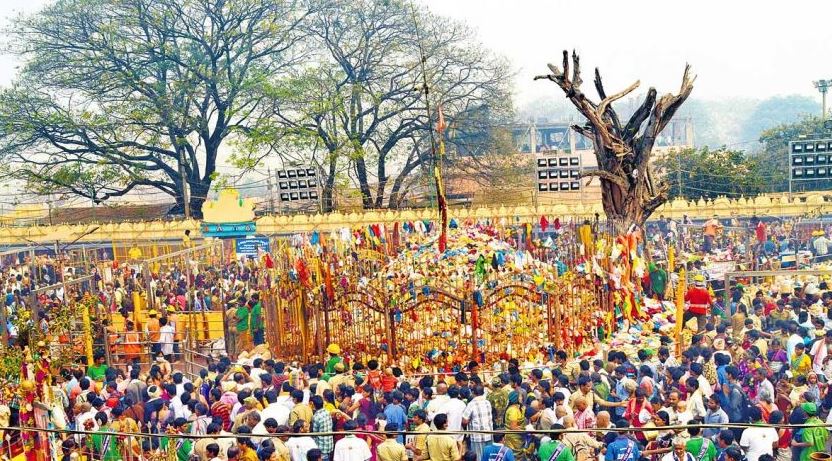
  • Telangana’s Tribal Fair: Sammakka-Sarakka Jatara

    Medaram, a tiny village in Telangana’s tribal heartland of Mulugu district, is getting ready to host the Sammakka-Sarakka jatara, billed as the country’s biggest tribal fair.

    Sammakka-Sarakka Jatara

    • The mega four-day jatara, scheduled to begin on February 16 in Medaram. It takes place once in two years.
    • It is perhaps the only tribal fair devoted to pay tribute to tribal warriors who made supreme sacrifices defending the rights of aboriginal tribal people.
    • It symbolises the traditions and heritage of the Koya tribal people.
    • The sacred site in Medaram and its surrounding Jampanna vagu, named after tribal martyr Jampanna, son of Sammakka, comes alive with lakhs of devotees during the four-day jatara.

    Why do tribals come to Medaram?

    • This festival commemorates a tribal revolt led by Sammakka and Saralamma, a mother-daughter duo, against levy of taxes on tribal people during drought conditions by the then Kakatiya rulers in the 12th century.
    • Tribals (and others) flock to Medaram during the jatara not just from Telangana and Andhra Pradesh but also from as far as Madhya Pradesh, Jharkhand, Chhattisgarh and Maharashtra.
    • Sammakka and Saralamma are revered by devotees as tribal goddesses, and devotees make offerings to propitiate them to bestow health and wealth.
    • All the rituals at the jatara site are held in tune with tribal traditions under the aegis of tribal priests.

    Features of the celebrations

    • One of the striking features of the tribal fair is the offering of jaggery to the tribal goddess at the altars (bamboo poles).
    • It encompasses common features of tribal fairs – die-hard devotees going into a trance, the sacrifice of fowls and goats, besides pulsating traditional drum beats accompanying folk songs.


    UPSC 2022 countdown has begun! Get your personal guidance plan now! (Click here)

  • In news: Ancient Tamil Civilization

    A reconnaissance survey in the sea off the coast of Korkai in Thoothukudi district where Tamiraparani River joins the sea, which finds mention in Sangam literature, will be undertaken by the Tamil Nadu Archaeology Department.

    About Tamiraparani River

    • The Thamirabarani or Tamraparni or Porunai is a perennial river that originates from the Agastyarkoodam peak of the Pothigai hills of the Western Ghats.
    • It flows through the Tirunelveli and Thoothukudi districts of the Tamil Nadu state of southern India into the Gulf of Mannar.
    • It was called the Tamraparni River in the pre-classical period, a name it lent to the island of Sri Lanka.
    • The old Tamil name of the river is Porunai.

    Its history

    • Its many name derivations of Tan Porunai include Tampraparani, Tamirabarni, Tamiravaruni.
    • Tan Porunai nathi finds mention by classical Tamil poets in ancient Sangam Tamil literature Purananuru.
    • Recognised as a holy river in Sanskrit literature Puranas, Mahabharata and Ramayana, the river was famed in the Early Pandyan Kingdom for its pearl and conch fisheries and trade.
    • The movement of people, including the faithful, trade merchants and toddy tapers from Tamraparni river to northwestern Sri Lanka led to the shared appellation of the name for the closely connected region.
    • One important historical document on the river is the treatise Tamraparni Mahatmyam.
    • It has many ancient temples along its banks. A hamlet known as Appankoil is located on the northern side of the river.

    Back2Basics: Keeladi Civilization

    • The Keeladi tale began to unravel in March 2015 when first round of excavation was undertaken by the Archaeological Survey of India (ASI).
    • It unearthed antiquities providing crucial evidence to understanding the missing links of the Iron Age [12th century BCE to 6th century BCE] to the Early Historic Period [6th century BCE to 4th century BCE].
    • Further excavations threw up strong clues about the existence of a Tamil Civilization that had trade links with other regions in the country and abroad.
    • This civilization has been described by Tamil poets belonging to the Sangam period.
    • Results of carbon dating of a few artifacts traced their existence to 2nd century BCE (the Sangam period).

    Key findings in excavations

    • These included brick structures, terracotta ring wells, fallen roofing with tiles, golden ornaments, broken parts of copper objects, iron implements, terracotta chess pieces, ear ornaments, spindle whorls, figurines.
    • It also had black and redware, rouletted ware and a few pieces of Arretine ware, besides beads made of glass, terracotta and semi-precious stones.


    UPSC 2022 countdown has begun! Get your personal guidance plan now! (Click here)

  • Webinar Today @ 7PM, Registrations Closing Soon|| How to Finish UPSC-CSE Syllabus before 2023 if you are a Working Professional, College Student or Homemaker?||  Free Live Webinar by Civilsdaily Mentor Ranadheer Ravula|| Unlock the Truths & Bust the Myths of UPSC-CSE 2023 Preparation

    Webinar Today @ 7PM, Registrations Closing Soon|| How to Finish UPSC-CSE Syllabus before 2023 if you are a Working Professional, College Student or Homemaker?|| Free Live Webinar by Civilsdaily Mentor Ranadheer Ravula|| Unlock the Truths & Bust the Myths of UPSC-CSE 2023 Preparation

    Before starting your UPSC preparation, you might have heard many things about it from your friends, relatives and even from the internet. But, have you ever thought your research on how to study for the world’s toughest exam could be steeped in myths?

    There are many myths associated with UPSC preparation which beginners assume to be the truth and this ultimately, costs them an attempt. To avoid this, we suggest that you attend one of Civilsdaily’s weekly mentor-led free webinars that can help gain clarity while navigating the UPSC maze. Additionally, we also keep a Q&A session for everyone to clear their doubts. All you have to do is, fill in the form below and confirm your presence.

    What are the Myths assumed to be Truths by Most UPSC Aspirants?

    Aspirants think preparing for UPSC means reading everything under the sun, memorizing facts and having unlimited knowledge on undefined topics. However, the truth is far from true. UPSC, just like any other exam has a defined syllabus and questions would only be asked on those topics. Yes, the syllabus is vast compared to other exams but it certainly is well defined.

    Yet another UPSC myth which needs to be busted is  — the more books you read, the more you can score. The formula of qualifying for this exam lies in reading, practicing and revising frequently. UPSC also doesn’t always check your factual knowledge. If you know about inflation properly, but don’t know how the recent policies by the government to reduce inflation then that is concerning.

    Many aspirants think that one has to write long, lengthy and complicated answers in Mains to score better marks. However, by doing so they end up scoring lesser as this is not what the examiner is looking for. If you have a clear idea of the focus areas in Prelims, Mains & Interview, it will be easier for you to ace this exam.

    Key-Takeaways of the Free Live Webinar by Ranadheer Sir

    Our Civilsdaily mentor, Ranadheer Ravula will be taking the examples of his topper students and highlight how they had prepared for the exam keeping these things in mind –

    1. How should the syllabus be approached to complete it within the time limit?

    2. Is there a demarcation between Prelims and Mains studies? How to manage time between both?

    3. How to determine the primary focus areas of the Prelims, Mains, and Personality tests?

    4. How to apply bookish as well as classroom knowledge to the exam?’

    5. How to diminish your fear of Mains Answer Writing?

    6. Why should you not allow yourself to go more than 7 days without revising?

    7. How should Current Affairs be efficiently used for both Prelims and Mains exams?

    Webinar Details

    Don’t miss the chance to get value addition inputs to score better in the examination! This webinar is absolutely free. All aspirants are welcome to attend.

    Date – 21 January 2022 (Friday)

    Time – 7:00 P.M.

    Limited slots are available. Please register immediately.

  • How to Finish UPSC-CSE Syllabus before 2023 if you are a Working Professional, College Student or Homemaker?||  Free Live Webinar by Civilsdaily Mentor Ranadheer Ravula|| Unlock the Truths & Bust the Myths of UPSC-CSE 2023 Preparation||Limited Slots, Register Now

    How to Finish UPSC-CSE Syllabus before 2023 if you are a Working Professional, College Student or Homemaker?|| Free Live Webinar by Civilsdaily Mentor Ranadheer Ravula|| Unlock the Truths & Bust the Myths of UPSC-CSE 2023 Preparation||Limited Slots, Register Now

    Before starting your UPSC preparation, you might have heard many things about it from your friends, relatives and even from the internet. But, have you ever thought your research on how to study for the world’s toughest exam could be steeped in myths?

    There are many myths associated with UPSC preparation which beginners assume to be the truth and this ultimately, costs them an attempt. To avoid this, we suggest that you attend one of Civilsdaily’s weekly mentor-led free webinars that can help gain clarity while navigating the UPSC maze. Additionally, we also keep a Q&A session for everyone to clear their doubts. All you have to do is, fill in the form below and confirm your presence.

    What are the Myths assumed to be Truths by Most UPSC Aspirants?

    Aspirants think preparing for UPSC means reading everything under the sun, memorizing facts and having unlimited knowledge on undefined topics. However, the truth is far from true. UPSC, just like any other exam has a defined syllabus and questions would only be asked on those topics. Yes, the syllabus is vast compared to other exams but it certainly is well defined.

    Yet another UPSC myth which needs to be busted is  — the more books you read, the more you can score. The formula of qualifying for this exam lies in reading, practicing and revising frequently. UPSC also doesn’t always check your factual knowledge. If you know about inflation properly, but don’t know how the recent policies by the government to reduce inflation then that is concerning.

    Many aspirants think that one has to write long, lengthy and complicated answers in Mains to score better marks. However, by doing so they end up scoring lesser as this is not what the examiner is looking for. If you have a clear idea of the focus areas in Prelims, Mains & Interview, it will be easier for you to ace this exam.

    Key-Takeaways of the Free Live Webinar by Ranadheer Sir

    Our Civilsdaily mentor, Ranadheer Ravula will be taking the examples of his topper students and highlight how they had prepared for the exam keeping these things in mind –

    1. How should the syllabus be approached to complete it within the time limit?

    2. Is there a demarcation between Prelims and Mains studies? How to manage time between both?

    3. How to determine the primary focus areas of the Prelims, Mains, and Personality tests?

    4. How to apply bookish as well as classroom knowledge to the exam?’

    5. How to diminish your fear of Mains Answer Writing?

    6. Why should you not allow yourself to go more than 7 days without revising?

    7. How should Current Affairs be efficiently used for both Prelims and Mains exams?

    Webinar Details

    Don’t miss the chance to get value addition inputs to score better in the examination! This webinar is absolutely free. All aspirants are welcome to attend.

    Date – 21 January 2022 (Friday)

    Time – 7:00 P.M.

    Limited slots are available. Please register immediately.
  • What Russia really wants

    Context

    Vladimir Putin, who annexed Crimea in 2014 has now mobilised some 100,000 troops on the Ukraine border.

    How insecurity and history plays role in Russia’s actions

    • Russia, the world’s largest country by land mass, lacks natural borders except the Arctic Ocean in the north and the Pacific in the far east.
    • Its vast land borders stretch from northern Europe to Central and north east Asia.
    • The country’s heartland that runs from St. Petersburg through Moscow to the Volga region lies on plains and is vulnerable to attacks.
    • In the last two centuries, Russia saw two devastating invasions from the west — the 1812 attack by Napoleonic France and the 1941 attack by Nazi Germany. 
    • After the Second World War, Russia re-established its control over the rim land in Eastern Europe and Central Asia, which it hoped would protect its heartland.
    • But the disintegration of the Soviet Union threw its security calculations into disarray, deepening its historical insecurity.

    NATO’s expansion after disintegration of the Soviet Union

    • When the Soviet Union collapsed, Russia lost over three million square kilometres of sovereign territory.
    •  In the last months of the Soviet Union, the West promised that the North Atlantic Treaty Organization (NATO) would not “expand an inch to the east”.
    • The United States and the United Kingdom repeated the pledge after the collapse of the Soviet Union.
    • But despite the promises, NATO continued expansion.
    • In March 1999, in the first enlargement since the end of the Cold War, the Czech Republic, Hungary and Poland (all were members of the Soviet-led Warsaw Pact) joined NATO.
    • Five years later, seven more countries — including the three Baltic countries of Estonia, Latvia and Lithuania, all of which share borders with Russia — were taken into the alliance.
    • Russia felt threatened but was not able to respond.
    • But in 2008, when the U.S. promised membership to Georgia and Ukraine in the Bucharest summit, Russia, which was coming out of the post-Soviet retreat, responded forcefully.

    How Russia see NATO expansion as threat to its dominance on Black Sea

    • Turkey, Bulgaria and Romania, all Black Sea basin countries, are NATO members.
    • Ukraine and Georgia are the other countries that share the Black Sea coast, besides Russia.
    • Russia was already feeling squeezed on the Black Sea front, its gateway to the Mediterranean Sea.
    • If Ukraine and Georgia also join NATO, Russia fears that its dominance over the Black Sea would come to an end.
    • So, in 2008, Mr. Putin sent troops to Georgia over the separatist conflict in South Ossetia and Abkhazia.
    • In 2014, when the Kremlin-friendly regime of Ukraine was toppled by pro-western protesters, he moved to annex the Crimean peninsula, expanding Russia’s Black Sea coast, thereby protecting its fleet based in Sevastopol in Crimea.

    Restoring the rim land

    • In recent years, Mr. Putin has tried to turn every crisis in the former Soviet region into a geopolitical opportunity.
    • South Ossetia and Abkhazia, the self-proclaimed republics that broke away from Georgia, are controlled by Russia-backed forces.
    •  In 2020, when protests erupted in Belarus after a controversial presidential election, Mr. Putin sent assistance to the country to restore order.
    • In the same year, Russia sent thousands of “peacekeepers” to end the war between Armenia and Azerbaijan.
    • Earlier this year, Belarus leader Alexander Lukashenko, with Mr. Putin’s backing, manufactured a migrant crisis on the Polish border of the European Union.
    • This month, when violent unrest broke out in Kazakhstan, the largest and wealthiest country in Central Asia, its leader turned to Russia for help.

    How do geopolitical circumstances favour Russia?

    • The U.S.’s ignominious withdrawal from Afghanistan has left the Central Asian republics deeper in the Russian embrace.
    • Europe is very much dependent on Russian gas, which limits its response.
    • For years, the West, the winner of the Cold War, discounted Mr. Putin.
    • Having failed to defeat the Taliban in Afghanistan, NATO is unlikely to pick a war with Russia over Ukraine.

    Conclusion

    By destabilising Georgia and Ukraine and re-establishing Russia’s hold in Belarus, Caucasus and Central Asia, Moscow has effectively stalled NATO’s further expansion into its backyard.

    UPSC 2022 countdown has begun! Get your personal guidance plan now! (Click here)

  • How to Finish UPSC-CSE Syllabus before 2023 if you are a Working Professional, College Student or Homemaker?||  Free Live Webinar by Civilsdaily Mentor Ranadheer Ravula|| Unlock the Truths & Bust the Myths of UPSC-CSE 2023 Preparation||Limited Slots, Register Now

    How to Finish UPSC-CSE Syllabus before 2023 if you are a Working Professional, College Student or Homemaker?|| Free Live Webinar by Civilsdaily Mentor Ranadheer Ravula|| Unlock the Truths & Bust the Myths of UPSC-CSE 2023 Preparation||Limited Slots, Register Now

    Before starting your UPSC preparation, you might have heard many things about it from your friends, relatives and even from the internet. But, have you ever thought your research on how to study for the world’s toughest exam could be steeped in myths?

    There are many myths associated with UPSC preparation which beginners assume to be the truth and this ultimately, costs them an attempt. To avoid this, we suggest that you attend one of Civilsdaily’s weekly mentor-led free webinars that can help gain clarity while navigating the UPSC maze. Additionally, we also keep a Q&A session for everyone to clear their doubts. All you have to do is, fill in the form below and confirm your presence.

    What are the Myths assumed to be Truths by Most UPSC Aspirants?

    Aspirants think preparing for UPSC means reading everything under the sun, memorizing facts and having unlimited knowledge on undefined topics. However, the truth is far from true. UPSC, just like any other exam has a defined syllabus and questions would only be asked on those topics. Yes, the syllabus is vast compared to other exams but it certainly is well defined.

    Yet another UPSC myth which needs to be busted is  — the more books you read, the more you can score. The formula of qualifying for this exam lies in reading, practicing and revising frequently. UPSC also doesn’t always check your factual knowledge. If you know about inflation properly, but don’t know how the recent policies by the government to reduce inflation then that is concerning.

    Many aspirants think that one has to write long, lengthy and complicated answers in Mains to score better marks. However, by doing so they end up scoring lesser as this is not what the examiner is looking for. If you have a clear idea of the focus areas in Prelims, Mains & Interview, it will be easier for you to ace this exam.

    Key-Takeaways of the Free Live Webinar by Ranadheer Sir

    Our Civilsdaily mentor, Ranadheer Ravula will be taking the examples of his topper students and highlight how they had prepared for the exam keeping these things in mind –

    1. How should the syllabus be approached to complete it within the time limit?

    2. Is there a demarcation between Prelims and Mains studies? How to manage time between both?

    3. How to determine the primary focus areas of the Prelims, Mains, and Personality tests?

    4. How to apply bookish as well as classroom knowledge to the exam?’

    5. How to diminish your fear of Mains Answer Writing?

    6. Why should you not allow yourself to go more than 7 days without revising?

    7. How should Current Affairs be efficiently used for both Prelims and Mains exams?

    Webinar Details

    Don’t miss the chance to get value addition inputs to score better in the examination! This webinar is absolutely free. All aspirants are welcome to attend.

    Date – 21 January 2022 (Friday)

    Time – 7:00 P.M.

    Limited slots are available. Please register immediately.

More posts