The Supreme Court intervened after Tamil Nadu faced ₹3,000+ crore reimbursements to private schools for economically disadvantaged students’ admissions, as the Centre declined to share costs under Samagra Shiksha.
About Samagra Shiksha Abhiyan:
Launch & Integration: Started in 2018 (by then Ministry of HRD), integrating Sarva Shiksha Abhiyan (SSA), Rashtriya Madhyamik Shiksha Abhiyan (RMSA), and Teacher Education (TE) into one holistic programme.
Benchmark Feature: Treats schooling as a continuous system from pre-primary to Class XII (ages 4–18), removing silos.
Funding Pattern: A Centrally Sponsored Scheme (CSS) with Centre–State sharing (60:40, 90:10 for NE/hilly states), implemented via a single State Implementation Society (SIS).
Policy Alignment: Aligned with NEP 2020 and UN SDG-4 (quality education).
Coverage: 1.16 million schools, 156+ million students, 5.7 million teachers across government & aided institutions.
Upgraded Phase: Samagra Shiksha 2.0 (2021–26) with focus on digital education, vocational training, FLN, and inclusion.
Key Features of the Scheme:
Unified Structure: One umbrella for pre-primary to Class XII, ensuring coherent planning.
Teachers & Technology:
Continuous teacher training via SCERTs, DIETs, NISHTHA, SWAYAM.
Digital initiatives: DIKSHA, Operation Digital Board, ICT labs, smart classrooms, AI-based learning tools.
Vocational & Skill Education: Subjects like coding, robotics, financial literacy, AI with 1000+ training centres (from Class VI).
Direct Benefit Transfers (DBT): Uniforms, textbooks, transport allowance directly credited via IT platforms.
Holistic Development: Integration of sports, physical education, self-defence, soft skills under Khelo India.
Funding Scale: Allocation crossed ₹41,000 crore (2025); nationwide coverage till March 2026 under Samagra Shiksha 2.0.
[UPSC 2017] What is the aim of the programme ‘Unnat Bharat Abhiyan’?
Options: (a) Achieving 100% literacy by promoting collaboration between voluntary organizations and government’s education system and local communities.
(b) Connecting institutions of higher education with local communities to address development challenges through appropriate technologies. *
(c) Strengthening India’s scientific research institutions in order to make India a scientific and technological Power.
(d) Developing human capital by allocating special funds for health-care and education of rural and urban poor, and organizing skill development programmes and vocational training for them.
Mothers are surviving births, yet hidden illnesses still stalk India’s women. UPSC usually turns such “population and health” themes into big GS 1 questions that ask “why” and “how,” much like the 2014 sex‑ratio poser that mixed prosperity with social bias; examiners expect you to go beyond numbers and trace deep causes and policy gaps. Many aspirants slip because they quote the falling MMR but ignore the silent crisis of anaemia or the uneven state data under “The Maternal Health Paradox: Falling MMR vs Rising Hidden Burdens” (Kerala MMR 19 vs Assam 195, anaemia 57%). They also forget to link welfare design flaws shown in “Disconnect Between Policy Success and Ground Realities” (institutional births 88.6% yet only 60% full ANC) and thus miss the continuity‑of‑care angle UPSC loves. This article rescues them by stitching both sides together: it pairs success metrics with unseen gaps, offers ready references like PMSMA coverage figures, and serves real solutions in “Way Forward” that move from delivery counts to healthy‑mother outcomes. Its standout gem is the “Back2Basics: Assessment of Maternal Health Governance” table, which condenses every key scheme—JSY cash support, LaQshya audits, Anaemia Mukt Bharat—into exam‑ready one‑liners you can drop as evidence. Read it once, and you have concept, critique, case studies, and policy toolkit all in one place.
PYQ ANCHORING
GS 1: Why do some of the most prosperous regions of India have an adverse sex ratio for women? Give your arguments. [2014]
MICROTHEME: Population and associated issues
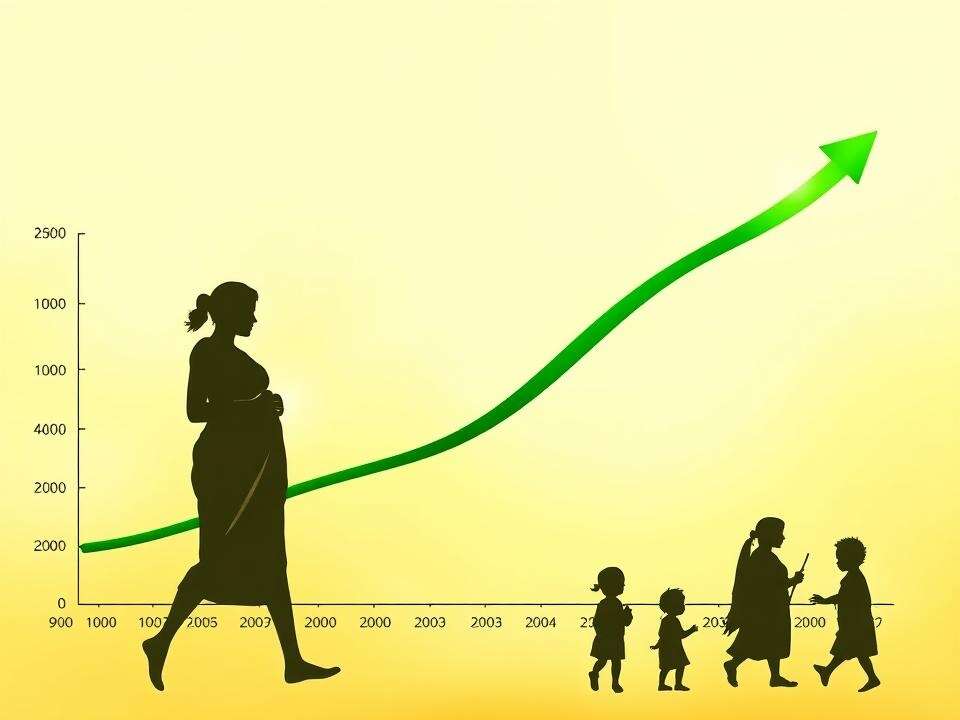
India’s maternal health story today is one of striking contrast. On one hand, the country has made significant progress—its Maternal Mortality Ratio (MMR) dropped from 97 (2018–20) to 93 (2019–21), marking a steady improvement and moving closer to global targets. Yet, beneath this success lies a persistent crisis: over 57% of women of reproductive age suffer from undiagnosed anaemia (NFHS-5), a silent epidemic threatening both mothers and newborns.
This paradox—a falling MMR but a rising burden of hidden illness—raises urgent questions: Is India’s maternal health progress truly inclusive and sustainable? Can policy success coexist with widespread nutritional and diagnostic gaps?
The Maternal Health Paradox: Falling MMR vs Rising Hidden Burdens
Reason
Explanation
Substantiation
Success of Institutional Deliveries
Increased access to hospitals and trained personnel has reduced deaths during childbirth.
Institutional deliveries rose to 88.6% (NFHS-5), contributing to MMR decline.
Persisting Undernutrition & Anaemia
Nutritional deficiencies are chronic and underdiagnosed, especially in rural and poor women.
57% of women suffer from undiagnosed anaemia (NFHS-5); over 30% are underweight during pregnancy.
Health System Focused on Delivery, Not Continuum of Care
Focus remains on childbirth; less attention is paid to pre- and postnatal nutrition, diagnostics, and mental health.
Many women don’t receive full 4 antenatal checkups or follow-ups after delivery.
Uneven State Performance
National MMR averages hide wide interstate disparities. States like Kerala and Tamil Nadu show high performance, while others lag.
MMR: Kerala (19), Assam (195) – Sample Registration System, 2021.
Fragmented Data and Underdetection
Many cases of maternal morbidity (e.g., anaemia, hypertension, infections) remain unreported or poorly diagnosed.
Lack of routine haemoglobin testing in rural PHCs; poor data on postpartum complications.
Program Implementation Gaps
Schemes like PMSMA, Janani Suraksha Yojana often face manpower, funding, and awareness issues at the last mile.
Less than 30% of pregnant women covered under PMSMA (as per MoHFW 2022) in some districts.
This paradox shows that while India has moved the needle on survival, it is still struggling to ensure health, nutrition, and dignity for all mothers.
Here’s the content structured neatly into a table format with broader themes, causes, and examples — perfect for UPSC-style answers:
Disconnect Between Policy Success and Ground Realities in India’s Welfare Schemes
Broad Issue
Specific Causes
Example / Evidence
1. Design–Delivery Gap
a. Output-focused approach over outcome-based evaluation.
Institutional births at 88.6% (NFHS-5), yet 57% of women remain anaemic.
b. One-time delivery models with poor continuity of care.
Only ~60% of pregnant women receive full ANC (NFHS-5).
c. Uniform scheme design, poor contextualisation for diverse regions.
MGNREGA assets fail in flood-prone or tribal areas due to inappropriate planning.
2. Targeting and Access Issues
a. Outdated or flawed databases cause exclusion and inclusion errors.
SECC 2011 errors impact PDS and PM-KISAN targeting; genuine poor left out.
b. Digital divide restricts access to benefits.
Aadhaar-linked DBT failures in Jharkhand and Rajasthan disrupt MNREGA and pensions.
c. Socio-cultural barriers inhibit scheme utilisation.
Low hospital births among women in conservative rural belts despite full subsidies under JSY.
3. Governance & Coordination Gaps
a. Lack of convergence among departments handling linked services.
POSHAN Abhiyaan implementation suffers from poor coordination between WCD, Health, and Rural Development.
b. Weak monitoring, auditing, and grievance redressal mechanisms.
c. Populist policies prioritised over structural reforms.
Continuation of free ration (PMGKAY) while funding for anganwadis or school meals remains limited.
Local-level best practices
Several Indian states and districts have bridged the gap between access and quality in maternal health.
Tamil Nadu, with an MMR of just 54, has built a robust system through 99% institutional deliveries, the 108 ambulance network, HMIS-based risk tracking, and nutrition kits under the Dr. Muthulakshmi Reddy scheme. Its RCH programme ensures seamless care across ANC, delivery, and postnatal phases.
In Odisha’s tribal Malkangiri district, maternal mortality has halved. ASHAs are trained to test haemoglobin, track high-risk pregnancies digitally, and provide counselling. Localised incentives and cultural adaptation—ASHAs speaking tribal languages and accompanying women—have driven uptake.
Kerala’s Kudumbashree model leverages women’s self-help groups to deliver ANC, mental health counselling, and 100% immunisation. Community-led monitoring in tribal areas via mobile vans has made care both inclusive and accountable.
Chhattisgarh’s Janani Shishu Suraksha Yatra (JSSY) and Mitanin model raised institutional deliveries from 40% to 80%. Mitanins provide doorstep ANC, track danger signs, ensure nutrition, and refer mental health cases.
These models show that when delivery systems are community-driven, context-specific, and continuous—not just coverage-focused—India can overcome both mortality and morbidity challenges in maternal health.
Way Forward
Shift the metric: from “delivery counts” to “healthy mothers.” Track haemoglobin, BMI and mental-health scores alongside institutional-delivery data.
Localise nutrition action. Mandatory point-of-care anaemia testing at every ANC visit; millet-based THR (take-home rations); women-led farmer-producer co-operatives for iron-rich crops.
Close the quality loop in facilities. Kayakalp-style audits for labour rooms and post-natal wards; e-partographs and mandatory second-opinions for C-sections.
Universalise mental-health screening. Integrate PHQ-9 or EPDS tools into PMSMA; train ASHAs to identify red flags.
Data convergence & accountability. Link Poshan Tracker, HMIS and civil-registration data to a single dashboard; empower panchayat-level social audits.
#BACK2BASICS: ASSESSMENT OF MATERNAL HEALTH GOVERNANCE
What’s Driving India’s Decline in Maternal Mortality?
Driver
Key Action & Outcome
Incentivized Institutional Deliveries
Janani Suraksha Yojana (JSY) offers cash support for safe births — over 1 crore women benefited annually, with spending touching ₹1,814 crore in FY 2023–24.
Zero-Cost Maternal Care
Janani Shishu Suraksha Karyakram (JSSK) covers delivery, transport, diagnostics, and drugs — 1.36 crore women accessed services (Apr–Dec 2024).
High-Risk Pregnancy Tracking
PMSMA & e-PMSMA enable monthly ANC and digital tracking — 78.27 lakh high-risk cases identified till Dec 2024.
Improved Clinical Quality
LaQshya & SUMAN ensure respectful, high-standard care — 1,110 labour rooms, 808 maternity OTs certified; 47,700+ facilities covered under SUMAN.
Emergency & Critical Care Access
Over 400 Obstetric ICUs/HDUs and 650 MCH Wings with 42,000+ beds set up nationwide.
Trained Human Resources
Nationwide training of doctors and nurses — 2,518 EmOC doctors, 2,683 LSAS-trained, and 3.3 lakh SBAs deployed.
Real-Time Surveillance
MPCDSR & RCH Portal institutionalize digital maternal death reviews, replacing manual reporting for quicker response.
Key Maternal Health Programmes Under the National Health Mission (NHM)
Programme / Policy
Objective & Key Features
National Health Policy 2017
Targeted MMR <100 by 2020 — achieved with MMR now at 93 (SRS 2019–21).
SDG Target 3.1
Reduce MMR to ≤70 by 2030 — India on track.
JSY (2005)
Cash incentive for institutional deliveries — targeting SC/ST/BPL women.
PMMVY 2.0 (2022)
₹5,000 maternity benefit for first child; extra for second girl child — promoting positive gender norms.
JSSK (2011)
Free delivery (including C-section), transport, diagnostics, medicines, and diet in public hospitals.
SUMAN (2019)
Assures free, dignified, quality maternity care with zero denial.
PMSMA (2016)
Free ANC on 9th of each month; e-PMSMA tracks high-risk pregnancies — 5.9 crore+ women examined by March 2025.
LaQshya (2017)
Quality assurance in delivery rooms and OTs to reduce maternal and neonatal complications.
Anaemia Mukt Bharat (AMB)
Holistic anaemia reduction via testing, treatment, food fortification, and mass communication.
Infrastructure & Systems Strengthening
Initiative
Impact
Comprehensive Abortion Care (CAC)
Training + safe abortion access integrated into RMNCAH+N services.
Delivery Points & FRUs
Upgraded with equipment, drugs, trained staff, and referral linkages.
MCH Wings
Specialized maternal-child units built in high-caseload facilities.
Obstetric ICUs/HDUs
Critical care infrastructure scaled in tertiary centers for obstetric emergencies.
SMASH MAINS MOCK DROP
Despite significant improvements in institutional deliveries and a declining Maternal Mortality Ratio (MMR), India’s maternal health outcomes remain uneven and exclusionary. Critically examine the disconnect between policy achievements and ground-level realities in maternal health, with a focus on nutritional and diagnostic gaps.
[UPSC 2019] Do you agree with the view that steady GDP growth and low inflation have left the Indian economy in good shape? Give reasons in support of your arguments.
Linkage: India’s steady GDP growth of 7.8%, coupled with broad-based sectoral performance, reflects macroeconomic stability, while effective fiscal and monetary discipline underpins low inflation. The sovereign rating upgrade after 18 years validates external confidence in India’s fundamentals. These trends, along with inclusive poverty reduction, highlight that the economy is indeed in good shape.
Mentor’s Comment
India’s economy is once again at the centre of global attention. From being dismissed as a “dead economy” by sceptics, the latest economic data, sovereign rating upgrade, and energy security achievements have painted a powerful picture of resilience and renewal. This article unpacks the recent developments in India’s economic and energy story, their significance, and what they mean for aspirants of Viksit Bharat.
Why is this issue in the news?
India’s Q1 FY 2025-26 GDP figures revealed 7.8% real growth, the fastest among major economies, coupled with a historic sovereign rating upgrade by S&P Global after 18 years. Simultaneously, India has consolidated its position as the world’s third-largest energy consumer and is spearheading a green transition. These milestones are striking because they overturn the “dead economy” narrative, highlight India’s growing share in global growth, and showcase a balance between growth, reform, and welfare, all while maintaining democratic values in contrast to authoritarian models of fast-paced growth.
Introduction
Indian civilisation has always embraced the philosophy that turbulence precedes triumph, like the Samudra Manthan, where chaos yielded nectar. Similarly, India’s economic journey has turned crises into opportunities, from the liberalisation of 1991 to the digital surge during COVID-19. Today, India stands at another inflection point. Despite global headwinds and doubts, the country is demonstrating robust growth, deepening reforms, and a secure energy base, shaping the narrative of resilience and inclusive progress.
Broad-based economic growth
GDP expansion: Real GDP grew 7.8% in Q1 FY 2025-26, while GVA rose 7.6%, supported by manufacturing (7.7%), construction (7.6%), and services (9.3%).
Global standing: India is the world’s fourth-largest economy and the fastest-growing major one, projected to overtake Germany by decade’s end.
Global contribution: Independent estimates suggest India contributes 15% of incremental world growth, with ambitions to raise it to 20%.
Why the sovereign rating upgrade matters
S&P recognition: First upgrade in 18 years, citing robust growth, fiscal consolidation, and monetary credibility.
Lower borrowing costs: Improves India’s access to cheaper capital and widens the investor base.
Narrative shift: Counters the label of a “dead economy,” giving credibility to India’s reforms.
Growth with inclusion
Poverty reduction: 24.82 crore Indians moved out of multidimensional poverty between 2013-14 and 2022-23.
Last-mile delivery: Success through bank accounts, clean cooking fuel, health cover, tap water, and direct benefit transfers (DBT).
Democratic model: Built on consensus, competitive federalism, and digital rails, contrasting authoritarian growth models.
Energy security as a growth driver
Global role: India is the third-largest energy consumer, fourth-largest refiner, and fourth-largest LNG importer.
Capacity expansion: Refining capacity of 5.2 mb/d with plans to cross 400 MTPA by 2030.
Exploration reforms: Sedimentary basin coverage expanded to 16% in 2025 (from 8% in 2021), with 1 million sq kmtarget by 2030.
Gas reforms: New pricing linked to Indian crude basket; 20% premium for deepwater wells boosting investment.
India’s energy transition
Ethanol blending: Surged from 1.5% (2014) to 20% today, saving ₹1.25 lakh crore forex and paying ₹1 lakh crore to farmers.
Green fuels: 300 compressed biogas plants under SATAT, targeting 5% blending by 2028.
Hydrogen push: Oil PSUs driving the green hydrogen mission.
Responding to global criticism on Russian oil
Compliance: India operates fully within G-7/EU price cap systems; every transaction uses legal, audited channels.
Global stabiliser: Purchases prevented oil shocks and stabilised prices, aligning with Vasudhaiva Kutumbakam.
Export reality: India has been a top petroleum exporter for decades, not a “laundromat” for Russia.
India’s digital-industrial revolution
Semiconductors: Four new projects cleared under the India Semiconductor Mission; strengthened by Japan collaborations.
Digital economy: India leads in real-time payments; UPI enhances small-business productivity and exports of solutions.
Synergy: Gati Shakti logistics & digital rails reduce costs, formalise the economy, and spur consumption.
Conclusion
India’s recent performance is more than statistics, it is the reaffirmation of resilience, reform, and inclusion. The world’s doubters labelled it a “dead economy,” yet growth, energy security, digital leadership, and poverty reduction tell a different story. As reforms deepen, India is on track not just to become the world’s third-largest economy soon but also to build a model of democratic, inclusive, and sustainable growth. For India, Viksit Bharat is not aspiration, it is delivery in motion.
India’s federal design is unique, balancing a strong Union with an inclusive representation of States. The abrogation of Article 370 and the downgrading of Jammu and Kashmir into a Union Territory in 2019 raised critical constitutional and political debates. The Supreme Court’s December 2023 ruling upheld the abrogation but directed restoration of statehood. While elections were held in October 2024, the absence of progress on restoring statehood highlights a sharp tension between constitutional intent and political practice. The issue has become a litmus test of Indian federalism, bringing into focus the balance between unity, diversity, and democratic representation.
The Demand for Restoration of Statehood to Jammu and Kashmir
Supreme Court Intervention: Recently, the Court sought a detailed response from the Centre on the timeline for restoring statehood to J&K.
Sharp Contrast: While elections were held in 2024, statehood has not been restored, despite the Court’s explicit direction.
Federal Implications: Critics argue that prolonged delay undermines federalism, part of the Constitution’s basic structure, and weakens democratic rights of J&K’s citizens.
Striking Point: For the first time, a full-fledged State was downgraded into a Union Territory, setting a precedent that challenges constitutional norms.
Constitutional Processes for the Creation of States
Admission: Admission of new States requires an organised political unit; e.g., J&K’s Instrument of Accession (1947).
Establishment: Territory can be acquired under international law, as in the case of Goa and Sikkim.
Formation: Article 3 empowers Parliament to reorganise existing States by altering boundaries, names, or creating new ones.
India’s Federal Design and Its Unique Character
Union of States: Article 1 describes India as a Union of States, signifying indivisibility while denying the right of secession.
Composite Culture: The dual identity of India and Bharat reflects political unity and cultural plurality.
Unitary Tilt: The word Union ensures a strong Centre, but representation of States through the Rajya Sabha balances federalism.
Basic Structure Doctrine: Federalism is recognised as part of the Basic Structure, making it inviolable.
Constitutional Imperatives for Restoring Statehood
Violation of Federal Features: The Union can reorganise States but cannot permanently strip a State into a Union Territory.
Supreme Court’s Directive: In December 2023, the Court mandated restoration of statehood along with Assembly elections.
Representation at the Centre: Permanent representation of States in the Rajya Sabha is essential to sustain India’s federalism.
Erosion of Trust: Prolonged delay risks alienating citizens and eroding India’s image as a welfare-oriented union.
The Road Ahead for Jammu and Kashmir
Elections Held: A 90-member Assembly election was conducted in October 2024.
Centre’s Silence: No concrete roadmap has been shared for restoring statehood, despite judicial directions.
Critics’ Argument: Restoring statehood would empower the elected government, reducing the powers of the Lieutenant Governor, which the Union may be reluctant to cede.
Constitutional Morality: Failure to restore statehood risks weakening the principle of cooperative federalism.
Conclusion
The demand for restoration of J&K’s statehood is not a mere political debate but a constitutional necessity. India’s federal design hinges upon the delicate balance between a strong Union and empowered States. If the Union delays restoration indefinitely, it risks setting a precedent that erodes the sanctity of federalism and weakens democratic representation. Upholding statehood is thus not only about J&K but about preserving the essence of India’s constitutional federation.
PYQ Relevance
[UPSC 2014] Though the federal principle is dominant in our Constitution and that principle is one of its basic features, but it is equally true that federalism under the Indian Constitution leans in favour of a strong Centre, a feature that militates against the concept of strong federalism. Discuss.
Linkage: The recent controversy over the restoration of statehood to Jammu & Kashmir directly exemplifies the asymmetry in India’s federal design. While federalism is a part of the Basic Structure, the downgrading of a full-fledged State into a Union Territory shows the unitary tilt of the Constitution. The Supreme Court’s directive to restore statehood reflects the tension between a strong Centre ensuring unity and the need to preserve the spirit of cooperative federalism, echoing the very debate raised in the 2014 question.
Sea-level rise is one of the most significant consequences of global warming, threatening ecosystems, economies, and human settlements. In the Indian Ocean, recent findings based on coral microatolls suggest that sea levels began rising rapidly as early as the 1950s, decades before satellite and tide-gauge data had indicated. This challenges existing assumptions in climate change studies and raises critical questions about preparedness for vulnerable island states like Maldives, Lakshadweep, and the Chagos archipelago.
Coral Microatolls as Natural Recorders of Sea-Level History
Unique natural recorders: Coral microatolls are disk-shaped colonies that stop growing upwards once constrained by the lowest tide, making their surface a natural reflection of long-term sea-level change.
Longevity and accuracy: They can survive for decades or centuries, providing high-resolution, continuous data.
Study site: Research conducted on Mahutigalaa reef, Huvadhoo Atoll (Maldives), measured a Porites microatoll covering 1930–2019.
Acceleration and Scale of Sea-Level Rise in the Indian Ocean
Accelerated rise: Data showed a 0.3 metre increase over 90 years.
Rates of rise:
1930–1959: 1–1.84 mm/year
1960–1992: 2.76–4.12 mm/year
1990–2019: 3.91–4.87 mm/year
Striking revelation: Sea-level rise began in the late 1950s, not around 1990 as earlier assumed.
Cumulative impact: Maldives, Lakshadweep, and Chagos have witnessed 30–40 cm rise in half a century, worsening flooding and erosion risks.
Climate Variability and Environmental Signals Captured in Corals
Climate variability: Slow or interrupted coral growth coincided with El Niño and negative Indian Ocean Dipole (IOD) events.
Astronomical influence: The 18.6-year lunar nodal cycle was reflected in the growth bands, showing tidal and sea-level oscillations.
Tectonic stability: Critical factor ensuring that coral growth data reflects sea-level change rather than land movement.
Regional Significance of Findings for the Indian Ocean Basin
Above-average warming: The Indian Ocean is heating faster than the global average, amplifying sea-level fluctuations.
Strategic gaps: Despite its ecological and geopolitical importance, the central Indian Ocean is one of the least-monitored basins.
Regional variations: Coastal areas saw recent acceleration, but the central basin experienced earlier, stronger rise, influenced by shifts in Southern Hemisphere westerlies, ocean heat uptake, and the Intertropical Convergence Zone.
Vulnerabilities and Adaptation Imperatives for Island Nations
Existential threat: Infrastructure and communities are concentrated just above sea level in Maldives and Lakshadweep.
Adaptation strategies: Understanding historic timing and magnitude of sea-level rise is vital for coastal planning, disaster preparedness, and climate resilience.
Scientific value: Microatolls cannot replace tide gauges or satellites but offer a vital complementary tool to refine projections in data-sparse regions.
Conclusion
The discovery that sea-level rise in the Maldives and Lakshadweep began decades earlier than thought is a wake-up call for policymakers and communities. Coral microatolls, silent sentinels of the ocean, have revealed the urgency of accelerating adaptation and resilience measures. As the Indian Ocean warms faster than global averages, the survival of low-lying nations will depend on proactive international cooperation and evidence-based planning.
Value Addition
Global Reports and Scientific Frameworks
IPCC AR6 (2021–22): Predicts global mean sea level rise of 0.28–1.01 m by 2100, depending on emission scenarios.
World Meteorological Organization (WMO): State of the Global Climate 2023: Confirms Indian Ocean warming faster than the global average, intensifying regional sea-level anomalies.
UNFCCC & Paris Agreement: Commitments to limit warming below 2°C directly shape adaptation strategies for vulnerable island nations.
Case Studies for Enrichment
Maldives: Declared intent to become a carbon-neutral nation by 2030; adaptation measures include artificial islands and elevated infrastructure.
Kiribati (Pacific Island): Purchased land in Fiji to relocate populations – showcases climate migration.
Lakshadweep Islands: Reports of shoreline erosion, freshwater lens salinity, and threat to tourism livelihoods.
Scientific Concepts for Enrichment
Thermal Expansion: Ocean water expands as it warms, contributing ~50% to global sea-level rise.
Lunar Nodal Cycle (18.6 years): Natural oscillation in tides influencing local sea-level variability, as confirmed in microatoll data.
PYQ Relevance
[UPSC 2023] The Intergovernmental Panel on Climate Change (IPCC) has predicted a global sea level rise of about one metre by AD 2100. What would be its impact in India and the other countries in the Indian Ocean region?
Linkage: The article’s findings on coral microatolls show that sea-level rise in the Maldives, Lakshadweep, and Chagos began as early as the 1950s, much earlier than assumed. This reinforces IPCC projections of accelerated rise, highlighting existential risks for low-lying islands. For India and the wider Indian Ocean region, the impacts include intensified coastal erosion, loss of habitats, and the need for urgent adaptation strategies.
This article explores a timely clash between cultural symbolism and constitutional authority, using the Kerala Raj Bhavan controversy as a lens. UPSC typically asks such questions by merging static constitutional provisions with dynamic political events, like in the 2022 question on the Governor’s ordinance powers. However, aspirants often falter by focusing solely on textbook articles (like Articles 154 and 163) without understanding real-world application or judicial interpretation.Under heads like Governor’s Constitutional Role vs Elected Government and Constitutional Norms vs Cultural Nationalism, it breaks down the legal, political, and symbolic dimensions of the issue. It also brings in comparative flashpoints like Ayodhya, hijab bans, and Vande Mataram debates – offering aspirants a broader framework to answer questions on secularism, executive restraint, and state symbolism.
PYQ ANCHORING:
GS 2 : Discuss the essential conditions for exercise of the legislative powers by the Governor. Discuss the legality of re-promulgation of ordinances by the Governor without placing them before the Legislature. [2022]
MICROTHEMES: Executive Vs Legislature
A controversy erupted in Kerala after the Governor placed a portrait of Bharat Mata in an official room of the Raj Bhavan. The elected state government objected, arguing that this unilateral act violated constitutional norms and the principle of state neutrality. The issue reflects broader tensions between constitutional propriety and cultural nationalism. Thus, the issue represents a clash between procedural legitimacy and symbolic assertion. This raises a deeper question: Can nationalism expressed through cultural symbols coexist with a secular constitutional democracy that mandates institutional neutrality?
About the Bharat Mata Image
Literary Origins: The idea of Bharat Mata first appeared in Anandamath (1882) by Bankim Chandra Chattopadhyay as Banga Mata (Mother Bengal).The novel introduced the hymn “Vande Mataram”, later adopted as a national song.
Artistic Representation: In 1905, Abanindranath Tagore painted Bharat Mata as a saffron-clad, four-armed woman, resembling a Hindu goddess.This image was popularised by Sister Nivedita during the Swadeshi movement.
Political Evolution: Bharat Mata became a powerful emotional and unifying symbol during the Indian freedom struggle. The slogan “Bharat Mata ki Jai” gained mass appeal and was used in nationalist mobilisations.
No Legal Recognition: Despite its influence, Bharat Mata has no constitutional or legal status as a national symbol.
Post-Independence Role: Bharat Mata continues as a cultural and symbolic figure, occasionally invoked in political rhetoric.Its presence in official or state spaces often sparks debate and controversy.
Governor’s Constitutional Role vs Elected Government
Constitutional Head: The Governor is the nominal head of the state and is bound to act on the aid and advice of the Council of Ministers (Article 163).
Explanation: Cannot independently decide on administrative matters, such as installing symbols in Raj Bhavan.
No Personal Discretion: Dr. B.R. Ambedkar clarified in the Constituent Assembly that the Governor has no independent or personal powers.
Explanation: Governor is a constitutional figure, not meant to take individual decisions outside ministerial advice.
Supreme Court Rulings: In Nabam Rebia v. Deputy Speaker (2016), the Supreme Court reaffirmed that Governors cannot use personal discretion in routine affairs.
Explanation: Discretion is allowed only in exceptional constitutional situations, not daily governance.
Protocol Violation: Installing non-official symbols like Bharat Mata without government approval breaches constitutional norms.
Explanation: The Kerala government criticised such actions as violating democratic procedures and state protocol.
Constitutional Norms vs Cultural Nationalism
The issue of placing a Bharat Mata image in official spaces like the Raj Bhavan has sparked a larger debate between constitutional norms and cultural nationalism.
Governor’s Role is Constitutional, Not Cultural: The Governor is bound by the Constitution to act on the advice of the elected government (Article 163) and cannot use the office to promote personal or ideological symbols.
No Official Status for Bharat Mata: Unlike the national flag or emblem, Bharat Mata is not a state-recognised symbol, and placing her image in a constitutional office violates institutional neutrality.
Secular Framework: The Indian Constitution upholds secular ethos. Since Bharat Mata is often depicted in a form resembling Hindu iconography, its official display can be seen as privileging one cultural-religious tradition over others.
Democratic Protocols: Any use of public institutions or symbols must reflect collective state decisions, not unilateral actions by unelected constitutional authorities.
2. Cultural Nationalism: Identity, Emotion, Symbolism
Bharat Mata as a Unifying Symbol: For many, Bharat Mata represents national pride, cultural heritage, and emotional unity, especially rooted in India’s freedom struggle and civilizational ethos.
Assertion of Cultural Identity: Proponents argue that placing the image affirms India’s civilizational continuity and reflects the will of the majority or dominant culture.
Symbol Beyond Religion: Some argue that Bharat Mata transcends religion and is a symbol of patriotism, not necessarily tied to Hinduism, and thus deserves a place in public institutions.
Key Flashpoints in India
Issue
Constitutional Norms
Cultural Nationalism
Outcome
Ayodhya Temple Verdict (2019)
Rule of law, secularism, property rights
Assertion of Hindu identity and civilisational heritage
SC awarded land to temple trust, citing both legal and faith-based reasoning
Vande Mataram Mandates
Articles 19 & 25 protect freedom of expression and religion
Singing it linked to patriotism and national pride
SC clarified that singing is not compulsory
Beef Bans & Cow Vigilantism
Right to food and livelihood under Articles 21 & 25
Gau raksha rooted in Hindu beliefs and cultural reverence
Laws strengthened in many states; SC intervened in cases of mob violence
Hijab Ban in Karnataka (2022)
Religious freedom under Article 25
Uniform dress code seen as promoting national unity and secularism
Karnataka HC upheld ban; SC gave split verdict
Yoga & Sanskrit in Schools
Secularism in education; state should not promote religion
Seen as revival of ancient Indian (Hindu) culture
Mainstreamed in curricula; critics argue it sidelines minority traditions
Citizenship Amendment Act (2019)
Article 14 guarantees equality regardless of religion
CAA aligns with view of India as a homeland for persecuted non-Muslim minorities
Law passed; judicial review pending; sparked major protests and constitutional concerns
View of Judiciary
Over the years, the Indian judiciary has played a crucial role in navigating the tensions between constitutional norms and cultural nationalism. It has acted as a constitutional guardian when symbolic assertions have come head-on with the secular-democratic fabric.
1. Affirming Secularism as a Basic Feature
Case:S.R. Bommai v. Union of India (1994)
Observation: The Supreme Court ruled that secularism is part of the basic structure of the Constitution.
Relevance: This judgment established that state institutions must remain neutral in matters of religion, setting limits on the role of cultural nationalism in governance.
2. Restricting Forced Cultural Symbols
Case:Bijoe Emmanuel v. State of Kerala (1986)
Observation: SC held that students belonging to the Jehovah’s Witnesses faith cannot be forced to sing the national anthem if it goes against their beliefs.
Relevance: Protects individual freedom of conscience over state-imposed patriotic symbols, reaffirming constitutional rights over cultural uniformity.
3. Vande Mataram Not Compulsory
Case: SC Order (2017)
Observation: Clarified that singing Vande Mataram is not mandatory in schools or public spaces.
Relevance: Pushback against efforts to equate cultural-nationalist symbols with patriotism, protecting freedom of expression and belief.
4. Ayodhya Verdict: Balancing Faith and Rule of Law
Case:M. Siddiq v. Mahant Suresh Das (2019 – Ayodhya Dispute)
Observation: Court acknowledged the faith of Hindus in Ram Janmabhoomi, while also affirming the illegality of mosque demolition and providing alternative land to Muslims.
Relevance: Seen as an effort to balance constitutional neutrality with deep-seated cultural sentiment.
5. Freedom of Religion in Attire
Case:Fathima Tasneem v. State of Kerala (2018) & Karnataka Hijab Case (2022)
Observation: Courts gave mixed rulings—Kerala HC upheld school uniforms; Karnataka HC said hijab is not essential religious practice.
Relevance: Courts have struggled to maintain a clear line between individual religious freedom and uniform cultural practices.
6. Limiting Governor’s Discretion
Case:Nabam Rebia v. Deputy Speaker (2016)
Observation: SC ruled that the Governor cannot act without the aid and advice of the council of ministers except in specific cases.
Relevance: Prevents constitutional offices from becoming platforms for personal or ideological expression, relevant in Bharat Mata image controversies.
7. Upholding Right to Food and Privacy
Case:Puttaswamy v. Union of India (2017 – Right to Privacy) & Mob Lynching Cases
Observation: Right to food, privacy, and personal choices are fundamental rights under Article 21.
Relevance: Serves as a constitutional check against majoritarian moral policing, like beef bans and vigilante actions.
Way Forward
Prioritise Constitutional Duty: Public officials must uphold constitutional principles over personal or ideological preferences in official matters.
Maintain Institutional Neutrality: Personal beliefs must not shape public conduct; official spaces should remain neutral and inclusive.
Codify Symbol Use in Government Offices: Create a formal list of approved national symbols (flag, emblem, anthem) for use in official spaces.
Strengthen Constitutional Literacy: Train public officials on the scope and limits of their constitutional role, especially in symbolic matters.
#BACK2BASICS : CONSTITUTIONAL POSITION OF THE GOVERNOR
Constitutional Position of the Governor
Nominal Head of State
India follows a parliamentary system at both Union and State levels.
The Governor is the nominal executive, functioning with the aid and advice of the Council of Ministers led by the Chief Minister.
Key Constitutional Articles
Article 154: Executive power of the state vests in the Governor.
Article 163: The Governor acts on the aid and advice of the Council of Ministers, except where discretion is permitted.
Article 164: Council of Ministers is collectively responsible to the Legislative Assembly (core of parliamentary accountability).
Governor vs President: Key Differences
The Governor has discretionary powers in certain matters; the President does not (except in limited cases).
After the 42nd Amendment (1976), the President must act on ministerial advice—no such compulsion exists for the Governor.
Types of Discretion
A. Constitutional Discretion (Explicitly Mentioned in the Constitution)
Reserving a bill for the President’s consideration (Art. 200)
Recommending President’s Rule in the state (Art. 356)
Acting as administrator of a Union Territory with additional charge
Deciding royalty payments to Tribal District Councils in Northeast
Seeking information from the Chief Minister (Art. 167)
B. Situational Discretion (Implied/Derived from Political Circumstances)
Appointing a Chief Minister in case of a hung assembly or CM’s death
Dismissing the Council of Ministers if they lose the Assembly’s confidence
Dissolving the Legislative Assembly when government loses majority
Special Responsibilities (Discretion Based on Presidential Directions)
The Governor acts in discretion in certain states as per special directives from the President, even while consulting the state government:
State
Special Responsibility
Maharashtra
Dev boards for Vidarbha & Marathwada
Gujarat
Dev boards for Saurashtra & Kutch
Nagaland
Law & order during internal disturbances
Assam
Administration of tribal areas
Manipur
Administration of hill areas
Sikkim
Peace and socio-economic development
Arunachal Pradesh
Law & order maintenance
Karnataka
Dev board for Hyderabad-Karnataka region
Key Supreme Court Cases on Governor’s Discretionary Powers
Shamsher Singh v. State of Punjab (1974)
Key Holding: The Governor is a constitutional head and must act on the aid and advice of the Council of Ministers in all matters except where the Constitution explicitly provides discretion.
Significance: Laid down the foundational principle limiting discretionary powers.
Rameshwar Prasad v. Union of India (2006) (Bihar Assembly Dissolution Case)
Key Holding: The Governor’s report recommending dissolution of the assembly without allowing government formation was held unconstitutional.
Significance: Governors must act with objectivity and constitutional responsibility, not on political whim.
Nabam Rebia v. Deputy Speaker (2016)
Key Holding: The Governor cannot summon or dissolve the assembly without the advice of the Council of Ministers.
Significance: Strongly curtailed discretionary misuse and clarified that even legislative sessions must be decided in consultation with the elected government.
S.R. Bommai v. Union of India (1994)
Key Holding: The floor of the House is the only valid forum to test majority; Governors cannot assume loss of confidence arbitrarily.
Significance: Prevents Governors from unilaterally dismissing state governments.
Arunachal Pradesh Assembly Case (2016)
Follow-up to Nabam Rebia: The Supreme Court quashed the President’s Rule and Governor’s actions as unconstitutional.
Significance: Reinforced that Governors cannot act independently except in constitutionally defined situations.
Kehar Singh v. Union of India (1989)
While not directly about Governors, it clarified executive power and discretion, which also applies to the Governor’s role under Article 161 (pardoning powers).
Prafulla Kumar Mahanta Case (Assam, 2001) (Gauhati HC upheld by SC)
Issue: Governor invited a party with less seats to form government.
SC View: Governors have limited discretion in hung assemblies, but it must be exercised with fairness and neutrality.
SMASH MAINS MOCK DROP
“In a constitutional democracy, the exercise of gubernatorial powers must be guided by neutrality, not symbolism.” In light of recent controversies surrounding cultural assertions by Governors, critically examine the constitutional limitations on the discretionary powers of the Governor. How do such actions impact federal principles and secularism in India?
The Ramon Magsaysay Award 2025 has been awarded to Educate Girls, an Indian NGO working to promote girls’ education in rural and disadvantaged regions.
Other winners include:
Shaahina Ali (Maldives): A noted environmental activist.
Fr. Flaviano Antonio L. Villanueva (Philippines): A human rights defender, critic of Duterte’s drug war.
About Educate Girls:
Founded as: Foundation to Educate Girls Globally; CEO: Gayatri Nair Lobo.
Mission: Address gender inequality in education and uplift rural communities through girls’ schooling.
Impact:
Operates in India’s most rural and remote regions.
Employs community workers (preraks, team balikas) to mobilise enrollment and retention.
Significance: It is the first Indian organisation to win the award since its inception in 1958.
About Ramon Magsaysay Award:
“Nobel Prize of Asia”: Awarded annually since 1958.
Purpose: Celebrate “greatness of spirit and transformative leadership” in Asia.
Recognition: Individuals/organisations showing integrity in governance, service, and idealism in democracy.
Origin:
Established April 1957 by Rockefeller Brothers Fund trustees with support of the Philippines govt.
Named in honour of Ramon Magsaysay, former Philippine President (1953–57), noted for administrative and military leadership.
Original Categories (1958–2008): Govt Service, Public Service, Community Leadership, Journalism & Arts, Peace & International Understanding, and later Emergent Leadership (2001).
Since 2009: Fixed categories dropped (except Emergent Leadership), award now honours diverse forms of excellence.
Notable Indian Recipients:
Vinoba Bhave (1958): Bhoodan movement.
Mother Teresa (1962): humanitarian service.
Satyajit Ray (1967): cinema.
M.S. Subbulakshmi (1974): music.
Arvind Kejriwal (2006): anti-corruption work.
Ravish Kumar (2019): journalism.
Sonam Wangchuk (2018): educational innovation.
Educate Girls (2025): first Indian organisation to be honoured.
[UPSC 2004] Sandeep Pandey, the winner of Ramon Magsaysay Award, is mainly an activist in:
Options: (a) a campaigner for urban sanitation (b) an anti-child labour activist (c) Environmental protection (d) Education and livelihood projects for Dalits*
The Ministry of Tribal Affairs has launched the Beta Version of “Adi Vaani”, India’s first AI-based translator for tribal languages.
About Adi Vaani:
What is it: India’s first AI-powered translator for tribal languages.
Launch: Released in Beta Version (2025) by the Ministry of Tribal Affairs.
Inception: Developed under Janjatiya Gaurav Varsh to empower tribal communities and safeguard endangered tribal languages.
Created by: A team led by IIT Delhi with BITS Pilani, IIIT Hyderabad, IIIT Nava Raipur, and Tribal Research Institutes.
Impact: Strengthens digital literacy, ensures inclusive governance, preserves cultural identity, and positions India as a global leader in AI for endangered languages.
Key Features:
Translation Modes: Text-to-Text, Text-to-Speech, Speech-to-Text, and Speech-to-Speech.
Languages (Beta): Santali, Bhili, Mundari, and Gondi. Kui and Garo to be added next.
AI Models: Based on NLLB(No Language Left Behind) and IndicTrans2, adapted for low-resource languages.
Community-Driven: Data collected, validated, and iteratively developed by local experts and Tribal Research Institutes.
Toolkit Additions: OCR for digitizing manuscripts, bilingual dictionaries, and curated repositories.
[UPSC 2020] With the present state of development, Artificial Intelligence can effectively do which of the following?
1. Bring down electricity consumption in industrial units 2. Create meaningful short stories and songs
3. Disease diagnosis 4. Text-to-Speech Conversion
5. Wireless transmission of electrical energy
Options: (a) 1, 2, 3 and 5 only (b) 1, 3 and 4 only* (c) 2, 4 and 5 only (d) 1, 2, 3, 4 and 5