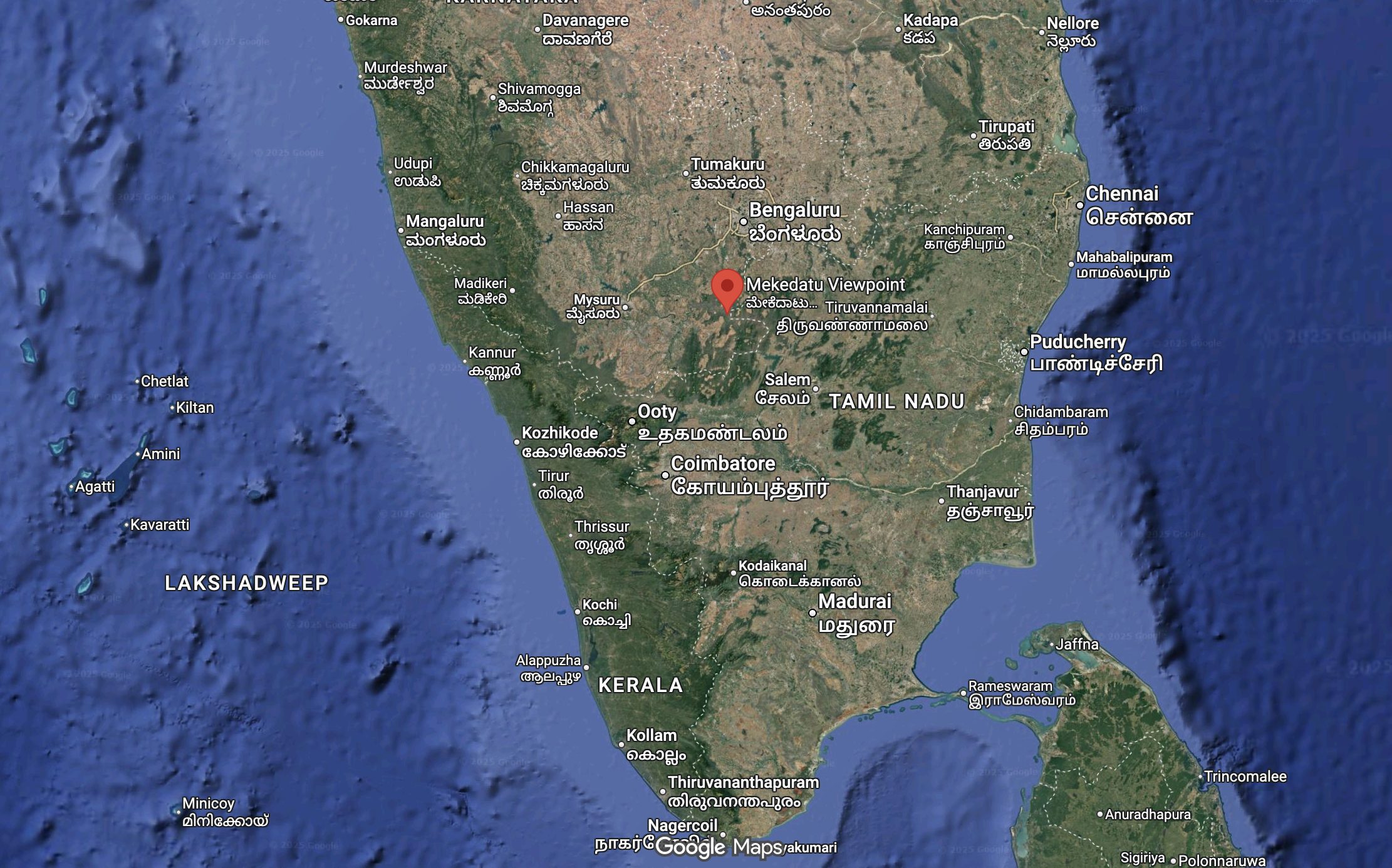
Recently, three schoolchildren lost their lives on Tuesday (July 8, 2025) when a fast-moving passenger train hit their school van at a manned railway crossing in Semmankuppam, Cuddalore district, Tamil Nadu, and dragged it for about 50 metres. The Railways should make sure that all manned level crossings have interlocked gates for better safety.
What makes non-interlocked crossings more dangerous than interlocked ones?
Non-interlocked crossings rely solely on the gatekeeper’s alertness and manual judgment.
Interlocked gates are linked to train signals, which only turn green if the gate is securely closed, ensuring safety.
Human error is more likely at non-interlocked gates, leading to higher risk of accidents.
Why are non-interlocked gates still in use despite safety concerns?
Delayed Infrastructure Projects: Projects to replace non-interlocked gates with overbridges or interlocked systems often face delays due to land acquisition and administrative hurdles. Eg: In Cuddalore, an underpass project funded by Indian Railways remained pending for over a year due to lack of clearance by local authorities.
Resource and Budget Constraints: The cost of upgrading thousands of level crossings requires significant investment, which may be postponed due to competing budgetary priorities.
Dependence on Manual Operation: Gatekeepers often face pressure from impatient motorists to open gates quickly, leading to protocol violations. Without automation, safety depends solely on their discretion and alertness.
How do delays in land acquisition hinder safety infrastructure projects?
Stalls Construction of Critical Structures: Projects like railway overbridges (ROBs) and underpasses cannot begin without legal possession of land, leading to prolonged delays. Eg: In Bihar, the construction of a railway overbridge in Araria district was delayed by over 3 years due to disputes over land ownership and compensation, leaving an accident-prone level crossing operational.
Escalates Project Costs Over Time: Delays increase material and labour costs, making projects financially unviable or deprioritised later. ROBs planned years earlier often need revised budgets due to inflation and changing land prices.
Keeps High-Risk Crossings Operational: Until new infrastructure is built, dangerous level crossings remain in use, putting lives at risk. Eg: Many non-interlocked gates in Southern Railway zone remain active due to delayed land acquisition for safer alternatives.
What are the steps taken by the Indian Government to improve railway crossing safety?
Phasing Out Unmanned Level Crossings (UMLCs): The Indian Railways eliminated all UMLCs on broad gauge lines by January 2020 to reduce accidents. Eg: Over 5,900 UMLCs were removed between 2014 and 2020 across Indian Railways.
Construction of Road Overbridges (ROBs) and Underpasses: Railway and State Governments jointly fund ROBs and underpasses to eliminate level crossings altogether. Eg: The Setu Bharatam Project aims to build 208 ROBs across India to improve safety.
Awareness and Training Programmes: Regular safety awareness drives and training for gatekeepers and the public are being undertaken. Eg: Campaigns like “Mission Zero Accident” educate local communities and railway staff about level crossing safety protocols.
Why must Indian Railways urgently upgrade level crossings?
Prevent Fatal Accidents Due to Human Error: Non-interlocked crossings rely on manual judgment, making them prone to errors and tragic mishaps.
Enhance Operational Efficiency and Safety: Interlocked and automated systems ensure smoother train operations and reduce delays caused by manual gate coordination. Eg: Northern Railway’s use of interlocked gates near busy junctions like Ghaziabad has improved train punctuality and road traffic flow.
Reduce Pressure and Risk on Gatekeepers: Manual crossings burden gatekeepers with high responsibility and risk of protocol violations under pressure from motorists.
Way forward:
Accelerate Conversion to Interlocked Crossings: Prioritise high-risk and high-traffic areas for upgrading non-interlocked gates to fully interlocked systems with automated signalling to eliminate human error.
Fast-Track Land Acquisition for Infrastructure Projects: Implement time-bound clearances and simplified procedures for land acquisition to ensure timely construction of overbridges and underpasses, replacing hazardous level crossings.
Mains PYQ:
[UPSC 2024] What is the technology being employed for electronic toll collection on highways? What are its advantages and limitations? What are the proposed changes that will make this process seamless? Would this transition carry any potential hazards?
Linkage: The PYQ asks about technology making a process “seamless”. The article explicitly states that interlocked gates, unlike non-interlocked systems, ensure that “train signals turn green only when gates are securely locked”. This technology-driven interlocking mechanism is presented as a “foolproof solution to prevent such fatal incidents”, as it removes the sole reliance on a gatekeeper’s alertness.
Recently the Prime Minister highlighted that India supported Namibia’s freedom not just through words, but by taking real action.
How has India’s support for Namibia’s independence shaped their present bilateral relationship?
Early International Advocacy (1946): India was one of the first countries to raise the issue of Namibia’s independence at the United Nations in 1946. This early support positioned India as a committed ally in Namibia’s anti-colonial struggle.
Support to SWAPO Liberation Movement: India supported the South West Africa People’s Organisation (SWAPO) by providing material and diplomatic backing. Eg: India hosted SWAPO’s first diplomatic mission, helping it gain global recognition and legitimacy.
Solidarity through Non-Aligned Movement (NAM): India used platforms like the Non-Aligned Movement to advocate for Namibia’s decolonisation and anti-apartheid goals.
Diplomatic Engagement Post-Independence (1986 onwards): India established formal diplomatic ties with Namibia soon after its independence. Eg: Recently PM of India recalled Dr. Sam Nujoma (Namibia’s founding father) as a “great friend of India”, indicating deep post-independence relations.
Contemporary Strategic and Development Partnership: The historical goodwill has translated into strong current ties, such as MoUs on health, entrepreneurship, and digital payments (UPI). Eg: In 2024, Namibia signed agreements to adopt India’s UPI system and joined India-led initiatives like the Global Biofuel Alliance and CDRI.
Why is India promoting UPI and digital infrastructure in Africa?
Strengthening Digital Public Goods Diplomacy: India aims to share its low-cost, inclusive digital platforms like UPI to empower developing nations. Eg: A technology licensing agreement was signed to enable the launch of UPI in an African country later this year.
Enhancing South-South Cooperation and Soft Power: Promoting digital tools fosters mutual growth, strengthens India-Africa ties, and showcases India’s leadership in the Global South. Eg: India emphasized the approach to “build together, not compete” with African nations through technology collaboration.
Creating New Economic and Strategic Opportunities: Digital infrastructure export opens markets for Indian fintech companies and strengthens strategic presence in Africa. Eg: Collaboration with a central bank in Africa boosts financial inclusion and deepens bilateral economic ties.
How is India’s Africa policy distinct from that of other global powers?
Dimension
India’s Africa Policy
Other Global Powers
Eg
Focus on Partnership, Not Extraction
Emphasises co-development and local capacity building
Often focus on resource extractionor project-linked conditionalities
India–Ethiopia: Helped set up sugar factories and agricultural training centers. China–DR Congo: Heavy investment in mining (cobalt and copper) with limited local value addition.
Some powers have intervened for strategic interests
India–Namibia: Supported SWAPO during its liberation struggle.
France–Mali: Military interventions in Sahel region.
Technology and Human Development
Exports digital tools, education, and healthcare tech to promote self-reliance
Focus often on physical infrastructure with tied loans or conditions
India–Namibia: UPI digital payment rollout and MoUs in health. China–Kenya: Built railways under debt-based model.
What is the importance of Namibia joining India-led global initiatives?
Strengthening South-South Cooperation: Namibia’s participation enhances solidarity among developing nations and reflects mutual trust in India’s leadership on global platforms. Eg: By joining the Global Biofuel Alliance, Namibia aligns with India’s push for sustainable and clean energy transitions in the Global South.
Boosting Regional Resilience and Climate Preparedness: Joining initiatives like the Coalition for Disaster Resilient Infrastructure (CDRI) helps Namibia build climate-resilient infrastructure and better manage disaster risks.
Why does India emphasise cooperation over competition in the Global South?
Fostering Equal Partnerships for Sustainable Development: India builds development-focused partnerships without imposing conditions, supporting capacity building in fellow Global South nations. Eg: In 2024, India partnered with Tanzania to set up an IT Centre of Excellence and offer scholarships under the Indian Technical and Economic Cooperation (ITEC) programme, focusing on local skill development.
Promoting Inclusive Digital Public Infrastructure: India shares its digital platforms to empower nations with affordable, scalable technology solutions. Eg: India signed an MoU with Mauritius to extend Unified Payment Interface (UPI) services, enabling secure and inclusive digital transactions to support financial inclusion.
Mains PYQ:
[UPSC 2015] Increasing interest of India in Africa has its pros and cons. Critically examine.
Linkage: This question provides a broad framework to discuss India’s engagement with Africa, allowing for an analysis of both the benefits of cooperation (as highlighted in the Namibia article) and any potential challenges or implications of India’s growing interest in the continent.
Researchers conducted the most precise global comparison of 10 Optical Atomic Clocks to pave the way for redefining the second by 2030, replacing Caesium Clocks with more accurate Optical ones.
Definition of a Second:
The current SI unit of time is based on caesium-133 (Cs) atomic clocks.
In 1967, one second was defined as the duration of 9,192,631,770 cycles of radiation corresponding to the transition between two hyperfine levels of the ground state of a Cs-133 atom.
In these clocks, a microwave signal is tuned until Cs atoms react maximally, ensuring the frequency is precisely 9,192,631,770 Hz.
Frequency dividers count this microwave frequency, providing one tick per second, thus realizing the SI second.
About Caesium Atomic Clocks:
Overview: Caesium atomic clocks are devices that define the current SI unit of time (second) using the oscillation frequency of caesium-133 atoms.
SI Second Standard: One second is defined as the duration of 9,192,631,770 cycles of microwave radiation corresponding to the transition between two energy levels of the caesium-133 atom.
Working Principle: These clocks work by tuning microwave signals to resonate with caesium atoms and then counting the resulting waves to measure time precisely.
Stability and Usage: They are highly stable and have been used since 1967 to set international time standards.
Applications: They are used in GPS systems, telecommunications, scientific research, and by national metrology institutions like India’s National Physical Laboratory (NPL).
Accuracy: A typical caesium atomic clock loses about one second every 300 million years.
What are Optical Atomic Clocks?
Overview: They are advanced timekeeping devices that use optical (visible light) frequency transitions in atoms like Strontium (Sr) or Ytterbium (Yb).
Measurement Basis: These clocks measure time based on the oscillation of light emitted when atoms transition between energy levels at hundreds of trillions of Hz.
Example Frequencies:
Strontium: ~429 trillion Hz
Ytterbium ions: over 642 trillion Hz
Precision Tools: They require lasers and optical frequency combs to count these rapid oscillations accurately.
Future Standard: They are being tested worldwide and are expected to replace caesium clocks by 2030 for redefining the SI second.
How Optical Atomic Clocks are Better than Caesium ones?
Higher Frequency Operation: Optical clocks operate at much higher frequencies, allowing division of time into finer intervals.
Improved Precision: By counting 10,000 times more oscillations per second, optical clocks achieve significantly higher precision and stability.
Unmatched Accuracy: An optical atomic clock using strontium reportedly drifts by less than one second in 15 billion years, compared to 300 million years for caesium clocks.
Advanced Applications: Their precision is critical for: Next-gen GPS systems, Gravitational wave detection, Climate monitoring and research etc.
Ultra-High Synchronization: Optical clocks enable cross-continental synchronization at 18 decimal place accuracy, essential for global time coordination.
Noise Resilience: They offer greater resistance to environmental noise and external disturbances, improving long-term reliability.
[UPSC 2023] Which one of the following countries has its own Satellite Navigation System?
Options: (a) Australia (b) Canada (c) Israel (d) Japan*
The UN Framework Convention on Climate Change (UNFCCC) negotiations are facing a credibility crisis, as years of underperformance, weak accountability, and neglect of developing countries’ concerns have created growing frustration.
About the UN Framework Convention on Climate Change (UNFCCC):
Overview: The UNFCCC is an international treaty adopted at the 1992 Rio Earth Summit to address climate change by stabilizing greenhouse gas (GHG) concentrations in the atmosphere.
Entry into Force: The Convention entered into force on 21 March 1994 and currently has 197 Parties, including all UN member states.
Governing Body – COP: The Conference of the Parties (COP) is the supreme decision-making body under the UNFCCC, which meets annually to assess progress and set new targets.
Consensus-Based Process: The Convention operates on the principle of consensus, meaning all Parties must agree for a decision to be adopted.
Article 2 Objective: The objective of the UNFCCC, as per Article 2, is to stabilize GHG levels at a point that prevents dangerous anthropogenic interference with the climate system.
Key Agreements: The UNFCCC framework led to major global climate agreements such as the Kyoto Protocol (1997) and the Paris Agreement (2015).
Institutional Structure: It has three main institutional bodies:
SBSTA: Subsidiary Body for Scientific and Technological Advice
SBI: Subsidiary Body for Implementation
UNFCCC Secretariat: Headquartered in Bonn, Germany
Party Classifications:
Annex I: Developed countries (OECD + Economies in Transition); Obligated to reduce GHG emissions and submit regular reports.
Annex II: Subset of Annex I (OECD members); Required to provide financial and technological support to developing countries.
Non-Annex I: Developing countries; No binding emission targets but eligible for support and encouraged to act voluntarily.
LDCs (Least Developed Countries): Low-income, highly vulnerable nations; Receive priority support under UNFCCC for adaptation and capacity building.
India and the UNFCCC:
Ratification: India ratified the UNFCCC in 1993 and has participated actively in all COP meetings since then.
Party Classification: India is classified as a Non- Annex I Party, meaning it has no binding emission reduction targets under the Convention.
Paris Agreement Commitments: Under the Paris Agreement (2015), India submitted Nationally Determined Contributions (NDCs), including:
Reducing emissions intensity of GDP by 45% by 2030 from 2005 levels
Achieving 50% cumulative electric power capacity from non-fossil fuel sources by 2030
Climate Diplomacy:
India advocates the principle of Common But Differentiated Responsibilities and Respective Capabilities (CBDR–RC) in all negotiations.
India has opposed unilateral trade measures such as the EU’s Carbon Border Adjustment Mechanism (CBAM) at multiple climate forums.
Issues with the UNFCCC Process:
Weak Enforcement: The process lacks enforcement mechanisms; countries that fail to meet commitments face no penalties.
Consensus Delays: The consensus-based approach often leads to delays and diluted agreements due to the ability of a few nations to block progress.
Unmet Commitments: Developed countries have not fulfilled the promised $100 billion per year in climate finance, which was due by 2020.
Neglected Developing Country Needs: Critical needs for adaptation finance, capacity building, and technology transfer remain largely unmet for developing nations.
Controversial Host Nations: The selection of host countries (e.g., UAE for COP28 and Azerbaijan for COP29) has drawn criticism due to their fossil fuel dependence.
Imposing limits on fossil fuel industry participation in climate talks
[UPSC 2016] With reference to the Agreement at the UNFCCC Meeting in Paris in 2015, which of the following statements is/are correct?
1. The Agreement was signed by all the member countries of the UN and it will go into effect in 2017.
2. The Agreement aims to limit the greenhouse gas emissions so that the rise in average global temperature by the end of this century does not exceed 2°C or even 1.5°C above pre-industrial levels.
3. Developed countries acknowledged their historical responsibility in global warming and committed to donate $1000 billion a year from 2020 to help developing countries to cope with climate change.
Select the correct answer using the code given below:
(a) 1 and 3 only (b) 2 only (c) 2 and 3 only (d) 1, 2 and 3
BRICS group has condemned and rejected the European Union’s Carbon Border Adjustment Mechanism (CBAM) and other similar climate-linked trade measures.
What Is the Carbon Border Adjustment Mechanism (CBAM)?
Overview: It is a climate-related import duty imposed by the European Union on goods whose production involves higher carbon emissions than what is permitted in the EU.
Policy Framework: CBAM is part of the EU’s “Fit for 55” climate package, aimed at reducing greenhouse gas emissions by at least 55% by 2030 compared to 1990 levels.
Scope of Coverage: The policy requires importers to declare the volume and embedded carbon emissions of certain goods, such as steel, aluminium, cement, fertiliser, hydrogen, and electricity.
Compliance Mechanism: To offset these emissions, EU importers must surrender CBAM certificates, priced based on the EU Emissions Trading System (ETS).
Carbon Price Adjustment: If a non-EU producer has already paid a carbon price in their country, that amount can be deducted from the CBAM charge.
Implementation Timeline: The transitional phase of CBAM is underway from 2023 to 2025, and the definitive regime begins on January 1, 2026.
Issues with CBAM:
Trade Discrimination Concerns: Developing countries, including India and China, argue that CBAM imposes unilateral, punitive, and discriminatory trade restrictions under the guise of environmental protection.
Violation of Climate Agreements: It is viewed as a violation of Paris Agreement, which upholds the principle of common but differentiated responsibilities.
Neglect of Historical Emissions: Countries in the Global South contend that climate-related trade tools like CBAM ignore historical emissions and disproportionately impact countries still reliant on carbon-intensive development.
Implications of CBAM for India:
Impact on Exports: Indian exports, particularly in iron, steel, aluminium, and cement, will face additional scrutiny and carbon charges under CBAM, reducing their competitiveness.
Carbon Taxation Timeline: From January 1, 2026, carbon taxes will be levied on each shipment to the EU in specific sectors, ranging from 19.8% to 52.7% in potential carbon levies.
High Carbon Intensity Risk: India’s high carbon intensity, primarily due to its 75% dependence on coal, makes its products more vulnerable to CBAM tariffs.
[UPSC 2023] Consider the following statements:
Statement-I: Carbon markets are likely to be one of the most widespread tools in the fight against climate change.
Statement-II: Carbon markets transfer resources from the private sector to the State.
Which one of the following is correct in respect of the above statements?
Options: (a) Both Statement-I and Statement-II are correct and Statement-II is the correct explanation for Statement-I (b) Both Statement-I and Statement-II are correct and Statement-II is not the correct explanation for Statement-I ** (c) Statement-I is correct but Statement-II is incorrect (d) Statement-I is incorrect but Statement-II is correct
The Union Coal and Mines Minister launched operational guidelines for the Aspirational DMF Programme to align DMF initiatives with the goals of the Aspirational District and Block Programmes.
Back2Basics: District Mineral Foundation (DMF)
Establishment: DMF is a non-profit trust established under the Mines and Minerals (Development and Regulation) Amendment Act, 2015.
Main Objective: Its primary purpose is to work in the interest of persons and areas affected by mining-related operations, as determined by the respective state governments.
Funding Source: It is funded through contributions made by holders of mining leases for major and minor minerals, with the exact amount prescribed by central or state government rules.
Governance: The operation, governance, and functioning of the DMF fall under the jurisdiction of the state government, which defines its composition and implementation mechanisms.
Decentralized Utilization: DMF funds are collected and utilized at the district level, enabling decentralized and locally relevant developmental interventions.
What is the Aspirational DMF Programme?
Launch: It was launched by the Ministry of Coal and Mines to align DMF planning and implementation with national development priorities.
Convergence with National Programs: It seeks to converge DMF activities with the Aspirational District Programme (ADP) and Aspirational Block Programme (ABP) for maximum social impact.
Operational Framework: It ensures that DMF funds are used to improve socio-economic indicators in the most underserved districts and blocks.
Collaboration: The programme encourages collaboration among central, state, and local authorities, improving the effectiveness and accountability of DMF investments.
Launch: It was launched in January 2018 by the Government of India to uplift 117 underdeveloped districts across the country.
Key Principles: It is based on the principles of Convergence, Collaboration, and Competition, aiming to transform districts through coordinated efforts.
Positive Labeling: The word “Aspirational” was deliberately chosen to avoid labels like “backward” and to promote positive transformation and development-oriented thinking.
Selection Criteria: Districts were selected by NITI Aayog using a composite index based on 49 indicators across 5 sectors:
Health and Nutrition (30%)
Education (30%)
Agriculture and Water Resources (20%)
Financial Inclusion and Skill Development (10%)
Basic Infrastructure (10%)
Real-Time Tracking: The ADP focuses on real-time data tracking, public disclosure of rankings, and building administrative capacity at the district level.
People’s Movement: The programme has become a Jan Andolan (people’s movement), actively involving citizens, NGOs, and local administration.
Aspirational Block Programme (ABP):
Overview: It was introduced in the Union Budget 2022–23 as an extension of the ADP to the block level.
Rural Focus: It is aimed at ensuring that development reaches deep into rural areas, particularly those not fully covered under ADP.
Coverage: Initially, the programme covers 500 blocks across 31 statesand Union Territories, with room for states to expand the list.
Geographical Concentration: A significant number of these blocks are concentrated in six states:
Uttar Pradesh (68 blocks)
Bihar (61 blocks)
Madhya Pradesh (42 blocks)
Jharkhand (34 blocks)
Odisha (29 blocks)
West Bengal (29 blocks)
Focus Areas: It focuses on improving indicators similar to ADP, with emphasis on health, education, livelihoods, and basic infrastructure.
Collaborative Governance: Like ADP, it promotes convergence of schemes, competitive spirit among blocks, and collaborative governance at all levels.
[UPSC 2012] Which of the following can be said to be essentially the parts of ‘Inclusive Governance’?
1. Permitting the Non-Banking Financial Companies to do banking 2. Establishing effective District Planning Committees in all the districts 3. Increasing the government spending on public health 4. Strengthening the Mid-day Meal Scheme
Options: (a) 1 and 2 only (b) 3 and 4 only (c) 2, 3 and 4 only* (d) 1, 2, 3 and 4
Close to 600 tribal students from Eklavya Model Residential Schools (EMRS) have cleared IIT-JEE Mains, JEE Advanced, and NEET.
What are Eklavya Model Residential Schools (EMRS)?
Overview: EMRS are a central government initiative launched in 1997–98 under the Ministry of Tribal Affairs to provide quality residential education to Scheduled Tribe (ST) students.
Core Objective: To ensure access to free, holistic education for ST children from Class VI to XII, particularly in remote and tribal-dominated areas.
Bridging the Gap: These schools are intended to bring ST students at par with the general population by offering academic, cultural, and skill-based education.
Implementing Agency: The National Education Society for Tribal Students (NESTS), an autonomous body under the Ministry of Tribal Affairs, has been tasked with implementing and managing EMRS across the country.
Expansion Target: EMRS are being established in every block with more than 50 percent ST population and at least 20,000 tribal residents, with a target of setting up 728 schools by 2026.
Staff Recruitment: Recruitment for teaching and non-teaching positions in EMRS is centralized under NESTS, which aims to fill over 38,000 posts to strengthen institutional capacity.
Key Features of EMRS:
Residential Setup: EMRS schools are fully residential and co-educational, catering to students from Class VI to Class XII with free education, boarding, and lodging.
Student Capacity: Each EMRS school can accommodate 480 students, with equal representation of boys and girls.
CBSE Affiliation: The schools follow the CBSE curriculum to maintain consistency with national education standards and facilitate competitive academic performance.
Infrastructure: Infrastructure includes classrooms, science and computer laboratories, libraries, hostels for boys and girls, staff quarters, and sports facilities.
Cultural Preservation: EMRS institutions are designed not only for academic excellence but also to preserve and promote tribal culture, local art, and languages.
Skill and Sports Focus: Special emphasis is placed on skill development and sports training, with 20% seats reserved under the sports quota for deserving ST students.
Inclusive Policy: Up to 10% of total seats in each school can be allotted to non-ST students, enhancing diversity while maintaining tribal focus.
Free Services: Education, food, accommodation, and all related services are provided free of cost to ensure no economic barrier for tribal children.
Also in news: TALASH (Tribal Aptitude, Life Skills and Self-Esteem Hub) Initiative:
NESTS and UNICEFIndia have launched the TALASH Initiative, focusing on the holistic development of tribal students in EMRSs.
It promotes self-awareness, emotional resilience, life skills, and career clarity, aligning with NEP 2020 goals.
It includes psychometric tests (inspired by NCERT’s Tamanna), career cards, life skills modules, and e-learning for teachers.
Over 1.38 lakh students across 28 States and 8 UTs will benefit, with full EMRS coverage targeted by 2025.
[UPSC 2012] Which of the following provisions of the Constitution of India have a bearing on Education?
1. Directive Principles of State Policy
2. Rural and Urban Local Bodies
3. Fifth Schedule
4. Sixth Schedule
5. Seventh Schedule
Select the correct answer using the code given below:
Options: (a) 1 and 2 only (b) 3, 4 and 5 only (c) 1, 2 and 5 only (d) 1, 2, 3, 4 and 5*
Big on plans, slow in delivery—India’s logistics is at crossroads.The UPSC often uses large themes like inclusive growth or economic competitiveness to ask specific questions where aspirants must connect the dots. The 2021 question—“Investment in infrastructure is essential for inclusive growth”—is a classic example. Here, aspirants struggle because they either write only about roads and ports, or only about inclusion. They miss real sectors like logistics that tie both together.This article fixes that gap. It brings India’s logistics story to life—with examples, figures, and insights that help you write sharper, richer answers. It moves beyond buzzwords like PM Gati Shakti and explains why India still spends 14–18% of its GDP on logistics, while countries like China spend less than 10%. You’ll find crisp subheads like ‘Fragmented Supply Chains’, ‘Underutilized Rail & Waterways’, and ‘Poor Warehousing Infrastructure’ that break down complex problems with real examples (e.g. “Delhi to Chennai by truck takes 6–7 days; by train, it’s 40% cheaper and faster”).
This article explores India’s logistics sector and its crucial role in infrastructure-led inclusive growth, a theme UPSC often tests as seen in the 2021 question on investment in infrastructure. Aspirants usually focus only on roads or inclusion, missing how logistics connects both.
The article bridges that gap with data and practical insights. It explains why India’s logistics costs remain high at 14 to 18 percent of GDP, compared to China’s under 10 percent. Subheads like ‘Fragmented Supply Chains’ and ‘Underutilized Rail and Waterways’ help break down challenges using real examples, such as the cost and time differences between road and rail. This approach equips aspirants to write answers that are structured, fact-based, and policy-aware.
PYQ ANCHORING
GS 3: Investment in infrastructure is essential for a more rapid and inclusive economic growth. Discuss in the light of India’s experience. [2021]
MICROTHEME: Inclusive Growth X Infra structure
India’s logistics sector has been the elephant in the room—too big to ignore, yet too sluggish to reform. Despite the hype around highways, digital dashboards, and multimodal dreams, the ground reality remains grim: moving goods across India still costs nearly twice as much as it should. With logistics guzzling 14–18% of our GDP, inefficiency isn’t just a flaw—it’s a full-blown crisis.Yes, the buzzwords are flying—PM Gati Shakti, green logistics, tech integration—but why hasn’t it translated into leaner, faster, and cheaper movement? Is policy outpacing execution? Or is the system simply too broken to fix overnight?
Reasons for high logistics cost in India
Cause
Explanation
Specific Example
1. Overdependence on Road Transport
Roads handle ~60% of freight, which is less fuel-efficient and costlier than rail or waterways.
A truck journey from Delhi to Chennai takes 6–7 days with high fuel and toll costs, while a freight train can cover it in 2–3 days at ~40% lower cost.
2. Fragmented Supply Chain
Thousands of small logistics providers operate in silos, lacking coordination.
A small Kirana store in Kanpur may use 3–4 different vendors (transport, warehousing, packaging) leading to redundant costs and poor inventory tracking.
3. Underdeveloped Rail and Water Freight
Rail is cost-effective but underused; waterways are still in nascent stages.
Rail freight share has fallen below 30% vs. China’s 47%; Jal Marg Vikas Project on Ganga still covers limited stretch between Varanasi–Haldia.
4. Inefficient Modal Mix
Lack of integration between road, rail, air, and water increases logistics cost and time.
In Maharashtra, onions are transported only by road to Kolkata due to absence of a nearby multi-modal logistics park.
5. Poor Warehousing Infrastructure
Warehouses are small, scattered, and lack tech integration, especially for cold storage.
In Bihar, 30% of fruits and vegetables perish due to lack of cold chain warehouses, leading to waste and inflated retail prices.
6. Regulatory Bottlenecks
Delays from road taxes, permits, and legacy systems despite GST.
A truck carrying goods from Uttar Pradesh to Assam still undergoes multiple state-level checks, delaying shipments by 1–2 days.
7. Last-Mile Delivery Challenges
Dense cities, poor road networks, and inadequate EV infrastructure inflate last-mile costs.
In Bengaluru, last-mile delivery for e-commerce is 20–25% of total logistics cost due to traffic and address mapping issues.
8. Lack of Digitization and Real-Time Tracking
Manual processes dominate among small operators; limited tech adoption.
A small fleet operator in Rajasthan uses handwritten ledgers and has no GPS or route optimization, causing fuel waste and delivery delays.
9. Skilling Gaps
Shortage of trained drivers, warehouse handlers, and logistics professionals.
A CII report (2023) noted that 30% of trucks remain idle due to unavailability of trained commercial drivers in Punjab and Haryana.
State of India’s Logistics Sector
India’s logistics sector includes everything that helps move goods—by road, rail, air, and waterways. It also covers warehousing, supply chain management, and services like packaging and cold storage. In short, it’s the invisible network that keeps India’s economy moving.
A Big Chunk of the Economy: The logistics sector contributes around 13–14% to India’s GDP (NCAER, 2021–22).
Massive Employment Generator: It gives jobs to over 22 million people in areas like transport, warehousing, packaging, and logistics services (CII, 2024).
High Cost Burden: Logistics eats up 14–18% of India’s GDP, much higher than the global average of 8–10%.
Private Investment on the Rise: In just the first half of 2024, 66% of total private equity investments (led by giants like KKR and Abu Dhabi Investment Authority) went into logistics. Reliance Logistics alone raised $1.54 billion.
Warehousing Boom: Warehousing space absorption jumped by 25% YoY in 2024.
Environmental Impact: The sector contributes about 13.5% of India’s total greenhouse gas emissions—mostly from road transport (IEA, 2023).
Third-Party Logistics (3PL): Rapid growth due to booming e-commerce, quick commerce (Q-commerce), and manufacturing.
Logistics in India: Where Ambitious Policies Fall Short
1. Fragmented Implementation across Ministries
Problem
Assessment
Example
Multiple ministries handled roads, railways, shipping, and commerce independently with poor coordination.
Led to delays, duplication, and piecemeal infrastructure instead of integrated logistics.
The Dedicated Freight Corridors (DFC) took over a decade, partly due to lack of alignment between Railways and state governments on land acquisition.
2. Focus on Physical Infrastructure, Not End-to-End Integration
Problem
Assessment
Example
Past efforts prioritized building roads, rails, or ports individually.
But without warehousing, digital tracking, and multi-modal linkages, overall logistics efficiency remained low.
National Highway expansions (e.g. NH-44) improved road capacity, but warehouses near key junctions (like Nagpur) remained underdeveloped and disconnected.
3. Underutilization of Inland Waterways and Rail Freight
Problem
Assessment
Example
Despite policies like Sagarmala and Jal Marg Vikas, modal shift didn’t happen.
Investors remained hesitant due to poor first-mile/last-mile connectivity and shallow river depths.
On NW-1 (Ganga), despite trial cargo runs between Varanasi and Haldia, steady cargo movement remains <5% of targets (Inland Waterways Authority, 2023).
4. Lack of Skilled Manpower and Logistics Professionals
Problem
Assessment
Example
Most policies ignored capacity building and skilling.
This resulted in untrained truck drivers, inefficient warehouse staff, and poor service quality.
National Skill Development Corporation (NSDC) identified a shortage of 3 lakh+ trained logistics workers in 2022, but training centers failed to scale in Tier 2–3 cities.
5. Slow Tech Adoption and Poor Digitization
Problem
Assessment
Example
Logistics tech platforms were fragmented and adopted only by large players.
Small operators lacked access or awareness, and digital public infrastructure wasn’t integrated.
The e-LogS platform launched by DPIIT failed to see mass adoption due to poor onboarding support for MSMEs in states like Jharkhand and Odisha.
6. Ineffective Monitoring and Outcome Measurement
Problem
Assessment
Example
Most policies lacked clearly defined KPIs or timelines.
Monitoring was input-focused (e.g., kms built) rather than on logistics cost, speed, or carbon impact.
Under Bharatmala, while targets were met for highway length, logistics cost (14–18% of GDP) remained unchanged for 5+ years (Economic Survey 2023).
7. State-Centre Coordination Challenges
Problem
Assessment
Example
Logistics being a cross-sectoral and partly state subject led to friction in land acquisition and planning.
States often had their own warehousing or industrial park schemes that didn’t align with central plans.
In Tamil Nadu, the state’s logistics parks near Sriperumbudur were planned independently, missing integration with PM Gati Shakti’s multi-modal vision.
INVESTMENT IN LOGISTICS FOR INCLUSIVE GROWTH
India’s ambition to become a $5 trillion economy hinges significantly on its ability to move goods and services efficiently. Logistics — the backbone of commerce — connects production with consumption, rural areas with urban markets, and MSMEs with global value chains. Over the years, inadequate logistics infrastructure has imposed high transaction costs and time delays. Recent initiatives are attempting to fix this. But for growth to be both rapid and inclusive, logistics investment must be smart, integrated, and equitable.
Point
Why It Aids Inclusion
Example
1. Connects remote and rural areas to mainstream markets
Reduces isolation, enables producers to access better prices and opportunities
Cold chains in North East help tribal farmers sell perishable produce in metros
2. Supports small farmers and MSMEs
Enables small producers to scale and compete by reducing costs and delays
Rural food processing units in Bihar use logistics parks to access national markets
3. Generates employment across skill levels
Provides jobs in transportation, warehousing, packaging, delivery — especially for youth and migrants
E-commerce logistics (like Flipkart’s Ekart) hires thousands from semi-urban areas
4. Reduces regional disparities
Infrastructure corridors bring investments and development to lagging states
Bharatmala roads improve connectivity in backward districts of Odisha and Chhattisgarh
5. Improves access to essential services
Ensures timely delivery of food, medicines, fertilizers to underserved populations
Jan Aushadhi and PDS logistics ensure medicine and grain delivery in tribal belts
6. Encourages women’s participation
Warehousing, packaging, and e-commerce delivery hubs create job avenues for women
Amazon’s women-only delivery stations in Gujarat and Tamil Nadu
7. Enables social protection and crisis response
Rapid logistics improves disaster response and delivery of aid
PMGKAY food grains reached interior villages during COVID due to logistics coordination
8. Formalizes the informal sector
Investments in digital logistics platforms integrate small players into the formal economy
ONDC enables kirana stores in small towns to reach national buyers
Way Forward
The Road Ahead for India’s Logistics Sector
Use More Rail and Water, Less Road:Shift heavy cargo to rail and rivers to cut costs. Ex: Fully use Eastern & Western freight corridors and Ganga waterway.
Go Digital for Smarter Movement:Expand real-time tracking and single-window systems. Ex: Connect private logistics apps with the government’s ULIP platform.
Skill the Workforce at Scale: Train youth in logistics tech, cold chains, EV delivery. Ex: Set up training hubs in smaller cities like Indore and Patna.
Push for Green Logistics: Support electric trucks and solar-powered warehouses. Ex: Replicate Delhi–Jaipur electric freight corridor model.
Fix Urban Goods Movement: Plan city freight better with low-emission zones and hubs. Ex: Build mini freight hubs in cities like Pune and Bengaluru.
Let Private Players Innovate: Open up data and support startups with ideas. Ex: Let firms like Shiprocket use Gati Shakti maps to improve delivery.
#BACK2BASICS:
Strategic Significance of Logistics Secor
1. Boosts Economic Growth & Global Competitiveness
If India brings down its logistics costs by even 1% of GDP, it could save $15 billion (McKinsey). The sector underpins programs like Make in India, Ease of Doing Business, and export competitiveness.
2. Powers Infrastructure & Urbanization
Major hubs like Mumbai, Chennai, NCR, and Pune are becoming high-efficiency logistics centers. Meanwhile, Tier-2/3 cities like Patna, Lucknow, and Coimbatore are emerging in warehousing and cold storage.
3. Creates Jobs & Upskills Youth
With 22 million people already employed, the sector has huge potential for new jobs. The 2025 Union Budget has announced five National Centres of Excellence for skilling youth in logistics and warehousing.
4. Critical for Climate Action
Decarbonizing logistics is vital if India wants to hit its Net Zero by 2070 target. That means cutting emissions from trucks, warehouses, and outdated logistics networks.
5. Supports Every Key Sector
Whether it’s e-commerce, agriculture (cold chains), pharma, or retail—logistics is the backbone that connects producers to markets.
6. Drives Inclusive Development
Logistics networks improve rural access, help MSMEs reach markets, and connect remote regions to the national economy—supporting the goal of a Viksit Bharat by 2047.
7. Strengthens India’s Geopolitical Hand
Projects like the Delhi–Mumbai Industrial Corridor and Sagarmala enhance India’s geo-economic leverage. A resilient logistics network is also key to supply chain security and national defense.
LOGISTICS SECTOR INITIATIVES
1. PM Gati Shakti (2021)
A digital platform for coordinated infrastructure planning across ministries. The 2025 Budget made this data available to private companies to boost planning and reduce delays.
2. National Logistics Policy (2022)
Targets lowering logistics costs to under 10% of GDP. Focuses on multi-modal transport, digital systems, skilling, and green logistics.
3. Multi-modal Logistics Parks (MMLPs)
Over 35 planned under a public-private partnership (PPP) model. These integrate road, rail, air, and waterways to make transport smoother and greener.
4. Green Freight Initiatives
Includes electric highways (e.g., Delhi–Jaipur), solar-powered warehouses, and EV-based last-mile delivery. There’s also support for biofuels, LNG ships, and even hydrogen-powered transport.
5. Logistics Skilling Hubs
Five Centres of Excellence for training youth in logistics announced in Budget 2025, with support from both government and private players.
6. Sagarmala & Bharatmala Projects
Improving port and road connectivity to reduce transit times and logistics costs by up to 25%.
7. Dedicated Freight Corridors (DFCs)
New freight rail lines (Delhi–Mumbai and Punjab–Bengal) that move cargo off highways, reducing road congestion and carbon emissions.
8. Inland Waterways Push
India plans to triple river cargo traffic by 2030, with the Ganga and Brahmaputra already under development (Jal Marg Vikas Project).
Maharashtra’s transport department has now made HSRP number plate mandatory with a final deadline set for 15 August.
What is a High-Security Registration Plate (HSRP)?
About: It is a standardised, tamper-proof vehicle number plate mandated for all vehicles in India.
Launch: It was officially introduced in 2001 under Rule 50 of the Central Motor Vehicle Rules (CMVR), 1989, and later made mandatory by the Supreme Court in 2012.
Composition: The plate is made of aluminium and includes several embedded security features to prevent counterfeiting and enhance traceability.
Key Features:
Each HSRP is fitted with a non-removable snap lock that prevents tampering or re-use.
The plate contains a laser-etched 10-digit unique identification number, linking it to the vehicle’s registration details.
A chromium-based hologram of the Ashoka Chakra is embedded to authenticate the plate and prevent duplication.
A retro-reflective film improves night-time visibility and supports automated detection systems.
A colour-coded third registration sticker is affixed to the vehicle’s windshield displaying key information like engine number, chassis number, and registration number.
The plate is embedded with RFID (Radio Frequency Identification) technology, allowing authorities to digitally track the vehicle for enforcement and traffic management purposes.
Compliance and Enforcement in India:
HSRPs are mandatory for all vehicles registered after April 1, 2019, as per Ministry of Road Transport and Highways (MoRTH) guidelines.
Vehicles registered before April 1, 2019 must retrofitted with HSRPs by deadlines set by respective state governments.
The Supreme Court and Ministry of Road Transport have directed states to enforce HSRP installation strictly to enhance road safety and curb vehicle-related crimes.
In case of non-compliance, vehicle owners are liable for a fine of ₹1,000 under Rule 50 of CMVR and Section 177 of the Motor Vehicles Act, 1988.
Transport departments across states, including Maharashtra, are conducting daily enforcement drives, issuing challans and directing retrofitting at authorised centres.
Several states have authorised zone-wise vendors to streamline installation, and vehicle owners must pre-book appointments online for HSRP fitting.
Scoring big in Mains is not just about completing the syllabus or writing more tests. It’s about mastering the art of presentation, prioritization, and precision. The difference between an average GS copy and a top rank copy is not volume, it’s how effectively you communicate ideas within 10–12 minutes per answer.
On 10th July at 7 PM, join Arvind Sir, Lead, Smash Mains programme, for a powerful session that will break down exactly how to push your GS score to 450+. With years of experience mentoring rankers and examining real UPSC copies, Arvind Sir will share proven techniques that transform ordinary answers into score fetching ones.
This session will help you understand how top rankers consistently cross the 110+ mark in GS papers. You will learn how to optimize answer structure, use data, diagrams, and keywords smartly, and write introductions and conclusions that actually elevate your scores. Special attention will be given to GS2 and GS4, the two papers where most aspirants lose marks unknowingly.
More importantly, this isn’t just about writing more. It’s about writing better. Arvind Sir will show how to bring clarity, flow, and examiner friendly formatting into your answers, so that you stand out in a sea of average answers. Real examples from UPSC 2023 and 2024 will be discussed, giving you direct insight into what worked. Join him on 10th July at 7PM.
It will be a 45 minute webinar, post which we will open up the floor for all kinds of queries which a beginner must have. No questions are taboo and Arvind Sir is known to be patiently solving all your doubts.
Join us for a Zoom session on 10th July at 7 PM. This session is a must-attend for you If you are attempting UPSC for the first time or have attempted earlier and now preparing for next year, then it is going to be a valuable session for you too.
See you in the session”
Register for the session for a complete in-depth UPSC Mains Prep
(Don’t wait—the next webinar won’t be until August’25)
These masterclasses are packed with value. They are conducted in private with a closed community. We rarely open these webinars for everyone for free. This time we are keeping it for 300 seats only.