As India marks Jim Corbett’s 150th birth anniversary (1875–2025), it reflects on his legacy as a hunter, naturalist, author, and conservationist—after whom Corbett National Park is named.
Who was Jim Corbett?
Full Name: Edward James Corbett (1875–1955), nicknamed Carpet Sahib in Kumaon.
Profession: British hunter, naturalist, author, and later a wildlife conservationist.
Famous Books:Man-Eaters of Kumaon, The Man-Eating Leopard of Rudraprayag, My India, Jungle Lore, Tree Tops.
Hunter Turned Hero:
Known for tracking and killing man-eating tigers and leopards in Kumaon and Garhwal.
Used patient observation and deep knowledge of terrain and animal behaviour.
Shift to Conservation:
Grew concerned about dwindling tiger numbers and deforestation.
Advocated for wildlife protection and ecological balance.
Commemoration: India’s first national park was renamed Jim Corbett National Park in 1957 in his honour.
Back2Basics: Jim Corbett National Park
Established: 1936 as Hailey National Park; later renamed in 1957.
Location: Nainital district, Uttarakhand; core of Corbett Tiger Reserve.
Historical Importance:
Launch site of Project Tiger in 1973, India’s flagship tiger conservation programme.
Geography:
Lies in Shivalik and Outer Himalayan foothills.
Rivers: Ramganga, Sonanadi, Mandal, Palain, and Kosi.
Area: Over 500 sq km (includes Sonanadi Wildlife Sanctuary as buffer).
Biodiversity:
Flora: Moist deciduous forest with Sal, Khair, and Sissoo; 600+ plant species.
Fauna: Over 230 tigers (highest density in the world), elephants, leopards, deer (sambar, chital, barking), sloth bears, wild boars, birds, and reptiles.
[UPSC 2013] Consider the following pairs : National Park River flowing through the Park
1. Corbett National Park : Ganga
2. Kaziranga National Park : Manas
3. Silent Valley National Park : Kaveri
Which of the above pairs is/are correctly matched?
Guidance: Fully autonomous with two-way datalink for mid-course updates
Environment: Operates in plains and high-altitude regions, day and night
[UPSC 2025] With reference to Unmanned Aerial Vehicles (UAVs), consider the following statements:
I. All types of UAVs can do vertical landing. II. All types of UAVs can do automated hovering. III. All types of UAVs can use battery only as a source of power supply.
Which of the statements given above are correct?
(a) Only one (b) Only two (c) All the three (d) None *
[UPSC 2024] In a crucial domain like the public healthcare system, the Indian State should play a vital role to contain the adverse impact of marketisation of the system. Suggest some measures through which the State can enhance the reach of public health care at the grassroots level.
Linkage: The article highlights how tariff-free entry of HFSS products leads to “lower prices” and “aggressive marketing,” posing “grave long-term health risks”. The question’s call for the Indian State to play a “vital role to contain the adverse impact” and suggest measures aligns perfectly in the article’s advocacy for “strong measures to regulate the advertising of HFSS” and “mandatory FOPNL” to protect public health.
Mentor’s Comment: India and the United Kingdom signed a Free Trade Agreement (FTA) on July 24, 2025, during Prime Minister Narendra Modi’s visit to the UK. While the deal promises economic benefits, it has triggered serious public health concerns due to the likely surge of tariff-free imports of unhealthy, ultra-processed food products from the UK into India.
Today’s editorial analyses the recently signed Free Trade Agreement (FTA) between India and the United Kingdom. This topic is important for GS Paper II (International Relations) in the UPSC mains exam.
_
Let’s learn!
Why in the News?
India and the United Kingdom recently signed a Free Trade Agreement (FTA) to boost bilateral trade, reduce tariffs, enhance market access, and strengthen economic and strategic ties between both nations.
What are the key provisions of the India–UK FTA?
Tariff Reductions on Goods: Reduction or elimination of customs duties on products like textiles, leather, and machinery from India and premium liquor, automobiles, and pharma from the UK.
Services Sector Access: Easier market access for Indian professionals (e.g., IT experts, nurses, yoga instructors) and UK financial, legal, and education services.
Investment and Regulatory Cooperation: Investor protection clauses and liberalised FDI norms to encourage bilateral investments with predictable regulatory environments.
Digital Trade and Intellectual Property Rights: Provisions for secure cross-border data flows, IPR enforcement, and e-commerce facilitation, supporting startups and tech trade.
Labour Mobility and Social Security Coordination: Allows short-term professionals to avoid double social security payments, benefiting workers on temporary assignments.
Why has the FTA triggered health concerns in India?
Stricter Intellectual Property (IP) Provisions: The UK is pushing for TRIPS-plus measures such as patent term extensions and data exclusivity, which could delay the entry of generic medicines in India. Eg: Cancer or HIV patients in India may face delayed access to affordable generics if extended patents block local production.
Threat to Domestic Pharma Industry: Indian generic manufacturers fear reduced competitiveness due to stricter IP norms, which may raise medicine costs and affect public health schemes. Eg: India’s role as the “pharmacy of the Global South” may weaken, affecting exports to Africa and Latin America.
Limited Access to Government Procurement: If the FTA includes government procurement commitments, it may restrict India’s ability to prioritise domestic firmsfor health supplies under public schemes. Eg: Public procurement for schemes like Jan Aushadhi may face restrictions, impacting affordable medicine distribution.
How does Mexico’s NAFTA experience inform India’s approach to FTAs?
Uneven Gains Across Sectors: NAFTA boosted Mexico’s manufacturing exports, especially to the US, but agriculture suffered due to competition from heavily subsidised US farms, displacing small farmers. Eg: India should protect its small-scale agriculture and MSMEs in FTAs to avoid rural distress and job losses.
Job Creation Without Security: While NAFTA generated employment in export-driven industries, these jobs were often low-paid, lacked labour rights, and offered poor working conditions. Eg: India must ensure FTAs include labour safeguards and social protection for workers, especially in textiles and electronics.
Weak Domestic Supply Chains: Mexico became heavily dependent on foreign inputs and technologies, undermining local value chains and domestic innovation. Eg: India should strengthen its Make in India and Atmanirbhar Bharat efforts by ensuring technology transfer and local sourcing mandates in FTAs.
What are the regulatory differences between India and the UK on unhealthy food products?
Aspect
India
United Kingdom (UK)
Front-of-Pack Labelling
Voluntary system; no mandatory warning labels for high fat/sugar/salt
Mandatory traffic light system highlighting fat, sugar, and salt levels
Advertising to Children
Limited restrictions; junk food often advertised during kids’ content
Strict regulations on TV and online adstargeting children for junk food
Nutritional Standards in Schools
No uniform enforcement across states; junk food in/near schools persists
Banned sale of sugary drinks and high-fat snacks in school premises
Why is Front-of-Pack Nutrition Labelling (FOPNL) important post-FTA?
Protects Public Health from Imported Junk Food: With the FTA, imports of ultra-processed and unhealthy foods may rise. FOPNL provides clear warnings (e.g., high in sugar, fat, salt) to help consumers make healthier choices. Eg: Chile introduced warning labels, leading to a drop in sugary drink sales by 25%.
Empowers Consumers with Informed Choices: Indian consumers often lack nutritional awareness. FOPNL enables them to understand the health risks of packaged foods at a glance, regardless of foreign branding or marketing. Eg: In Brazil, FOPNL helped rural consumers avoid misleading “natural” claims on unhealthy imported snacks.
Counters Aggressive Marketing by Foreign Brands: Post-FTA, multinational food companies may flood the Indian market with aggressive marketing. FOPNL acts as a visual deterrent, discouraging overconsumption, especially among children. Eg: In Mexico, FOPNL helped reduce the purchase of snacks targeted at children despite flashy packaging.
Way forward:
Implement Mandatory Front-of-Pack Labelling (FOPNL): The Indian government should finalize and enforce strong, interpretive FOPNL regulations (like warning labels) based on WHO guidelines to help consumers easily identify foods high in salt, sugar, and fat.
Strengthen Domestic Food Standards and Surveillance: Ensure alignment between imported and domestic food safety regulations, backed by robust monitoring by FSSAI. This will prevent imported unhealthy products from bypassing scrutiny and harming public health.
Recently, a social audit tabled in Parliament revealed 150 hazardous cleaning deaths in 2022–23, exposing unsafe outsourcing, poor implementation of safety laws, and inadequate funding under schemes like NAMASTE. Despite Supreme Court orders and successful models in states like Odisha and Tamil Nadu, enforcement and mechanisation remain critically lacking nationwide.
Why has manual scavenging persisted despite laws and schemes like NAMASTE?
Weak Enforcement of Legal Provisions and Court Orders: Despite the Prohibition of Employment as Manual Scavengers and their Rehabilitation Act, 2013 and Supreme Court directions to cancel offending contracts and penalise principal employers, enforcement remains minimal. Eg: In 2024, Parliament revealed that 150 workers died in 2022–23 due to hazardous cleaning.
Poor Implementation and Underfunding of Schemes: Schemes like NAMASTE are hindered by insufficient financial support, poor outreach, and lack of protective equipment or training. Eg: Of the 57,758 workers involved in hazardous cleaning, only 16,791 received PPE kits, and a mere ₹14 crore had been released under NAMASTE—inadequate for mechanisation in even one major city.
Obscured Employer Liability through Subcontracting: The use of contractual and ‘loaned’ labour allows government and private employers to avoid responsibility for worker safety. Eg: A social audit tabled in Parliament found that out of 54 hazardous cleaning deaths, only five workers were on government payroll, while others were ‘loaned’ to private contractors, making accountability unclear.
How have Odisha and Tamil Nadu offered viable alternatives to manual scavenging?
Odisha has ensured identified sanitation workers are equipped with PPE kits and have access to mechanised desludging vehicles, reducing the need for manual entry. Eg: Workers now use vacuum trucks for sewer cleaning instead of entering toxic manholes, improving safety and dignity.
Tamil Nadu has piloted robotic interventions to eliminate manual scavenging in urban areas. Eg: In Chennai, sewer robots have been deployed to clean over 5,000 manholes, showcasing how technology and political will can prevent hazardous practices.
How does the lack of rural data hinder sanitation worker reforms?
Exclusion from Mechanisation Schemes: Without reliable data on rural sanitation workers, schemes like NAMASTE do not extend their benefits (e.g. robotic cleaning or desludging machines) to villages. Eg: In many gram panchayats of Bihar, manual pit cleaning is still done without equipment as workers remain unregistered and thus unaccounted for in policy rollouts.
No Health or Safety Monitoring: The lack of worker enumeration means occupational health risks go unnoticed, and safety training or PPE kitsare not distributed in rural regions. Eg: In Chhattisgarh’s rural blocks, no health cards or protective equipment have been distributed to sanitation workers, exposing them to toxic gases and infections.
Obstructs Legal Accountability and Compensation: If workers are not documented, accidental deaths are often unreported or misclassified, preventing compensation to families and accountability for employers. Eg: In a 2023 case in Madhya Pradesh, a worker died while cleaning a septic tank, but due to lack of registration, the case was recorded as a general accident, not as a violation of the Manual Scavenging Act.
What are the steps taken by the Indian Government?
Legislation and Legal Ban: The Prohibition of Employment as Manual Scavengers and their Rehabilitation Act, 2013 bans manual scavenging and mandates identification and rehabilitation of affected workers.
NAMASTE Scheme (2023): The National Action for Mechanised Sanitation Ecosystem (NAMASTE) scheme promotes mechanised cleaning, provides training, PPE kits, and financial support to sanitation workers.
Welfare and Skill Development Initiatives: The government has launched surveys, provided one-time cash assistance, health insurance under Ayushman Bharat, and livelihood loans to support entrepreneurship among workers.
What reforms can ensure safety and rehabilitation for workers?
Mandatory Mechanisation and Licensing: Urban local bodies should mandate mechanised sewer cleaning, make it a licensed profession, and classify manual cleaning without valid certification as a cognisable offence. This will ensure accountability and eliminate unsafe practices.
Rehabilitation Through Financial and Social Support: Provide sanitation workers with housing, education scholarships, health cards, and loans to operate mechanised equipment. These should be linked to guaranteed municipal contracts, enabling long-term economic and social upliftment.
Mains PYQ:
[UPSC 2024] Poverty and malnutrition create a vicious cycle, adversely affecting human capital formation. What steps can be taken to break the cycle?
Linkage: Manual scavenging represents an extreme form of poverty and human capital degradation. This article mentions that “Two-thirds of validated workers are also Dalits, yet rehabilitation packages rarely include housing or scholarships that might help families exit contemptible occupations”. This question allows for a discussion of how ending such hazardous labor and providing meaningful rehabilitation can break this vicious cycle.
Recently, the Election Commission of India (ECI) filed a counter-affidavit in the Supreme Court defending the constitutionality of the citizenship verification process being carried out as part of the voter list revision in the Bihar Special Intensive Revision (SIR) exercise.
What is the legal basis for the SIR exercise in Bihar?
Article 326 of the Constitution: It states that every citizen of India shall be entitled to be registered as a voter. The ECI invokes this to justify verifying citizenship before including names in the electoral rolls.
Section 15 of the Representation of the People Act, 1950: This section empowers the Election Commission to prepare and revise electoral rolls under its “superintendence, direction and control.”
Section 21(3) of the Representation of the People Act, 1950: It allows the ECI to order a “special revision” of electoral rolls for specific constituencies. However, the term “intensive” is not mentioned in the Act, making the legal foundation of SIR somewhat vague.
Registration of Electors Rules, 1960: The 1987 amendment introduced the concept of “intensive” and “summary” revisions, but did not define or elaborate the legal modality for intensive revisions, including SIR.
Why is the demand for citizenship proof for existing voters controversial?
Burden shifts to already registered voters: The SIR process forces existing electors—who were added through due process—to resubmit proof of citizenship, treating them with suspicion. Eg: A voter registered in 2010 using valid documents must now provide fresh documents, despite no change in their status.
Lack of evidence for illegal migrants in voter rolls: The ECI affidavit does not provide data on the presence of foreign nationals or illegal migrants in electoral rolls, especially in Bihar, weakening the justification for a blanket citizenship test. Eg: Over 600 pages of complaints attached to ECI’s affidavit did not cite any case of foreigner inclusion in Bihar’s voter list.
No legal rule for asking voters to prove citizenship: The Representation of the People Act, 1950 does not require voters to give proof of citizenship. There are already legal ways to remove non-citizens from the voter list if someone complains with proof. So, asking all voters to show documents again is unnecessary and legally doubtful.
How is SIR similar to or different from the Assam NRC?
Similarities:
Both involve citizenship verification based on documentary evidence.
Both processes have significant exclusion risks and logistical challenges.
The CAA 2003-based criteria used in NRC Assam are being replicated in Bihar SIR (e.g., birth dates of voters and parents).
Differences:
The NRC in Assam was conducted under the supervision of the Supreme Court, based on a specific clause in the Assam Accord.
The SIR in Bihar is being conducted by the ECI independently, without a similar legal precedent or court mandate.
NRC was formally initiated by the Registrar General of India, which has not happened for a nationwide NRC; SIR lacks such authority.
What is the 2003 electoral roll?
The 2003 electoral roll as a baseline refers to the Election Commission of India’s (ECI) decision during the Special Intensive Revision (SIR) 2025 to treat the voter list prepared in 2003 as a reference point for proving citizenship and voter eligibility.
In simple terms: If a person’s name was already included in the 2003 electoral roll, or if they are a child of someone listed in that roll, they are not required to submit additional documents to prove their citizenship during the current revision process.
What are the implications of using the 2003 electoral roll as a baseline?
Creates legal inconsistency: Prioritising the 2003 electoral roll over rolls from the last two decades undermines the validity of later voter lists, creating legal confusion and questions of equal treatment for all voters.
Lacks evidence of reliability: The ECI affidavit does not provide proof that the 2003 SIR involved thorough citizenship verification. Without such evidence, treating the 2003 roll as more authentic is unjustified.
Grants unequal advantage: Voters listed in 2003 and their children are exempted from submitting documents, while others must provide multiple proofs, leading to discrimination and inequity in the revision process.
Why are documents like Aadhaar and ration cards being rejected in the SIR process?
Aadhaar not considered proof of citizenship: The ECI argues that while Aadhaar can confirm identity and residence, it does not prove Indian citizenship.
Ration cards seen as forgery-prone: The ECI claims that many fake ration cards exist and hence rejects them as valid proof.
Way forward:
Adopt a targeted verification approach: Instead of a blanket citizenship test for all voters, the ECI should focus on specific complaints supported by evidence, using existing legal mechanisms to identify and remove ineligible voters. This ensures efficiency, legal compliance, and avoids harassment of genuine voters.
Accept a broader range of documents with safeguards: The ECI should allow widely held documents like Aadhaar and ration cards as supporting evidence, along with robust verification procedures to detect forgeries. This promotes inclusivity, especially for marginalised groups, while maintaining the integrity of the electoral rolls.
Mains PYQ:
[UPSC 2024] Examine the need for electoral reforms as suggested by various committees with particular reference to “one nation-one election” principle.
Linkage: The Special Intensive Revision (SIR) exercise, which is the subject of the ECI’s counter affidavit, is presented as an effort to refine electoral rolls, inherently linking it to the broader discourse on electoral reforms in India. The article critically evaluates the ECI’s rationale and legal arguments for undertaking such an intensive revision, which the ECI seems to position as a measure to address typical defects like duplication and non-deletion, and implicitly, to ensure the integrity of the voter list.
Home Minister is set to move a statutory resolution in the Rajya Sabha to extend President’s Rule in Manipur by another 6 months.
What is President’s Rule?
Overview: It refers to the suspension of a state’s constitutional machinery, placing the state under direct control of the Union Government.
It is also known as State Emergency or Constitutional Emergency.
Constitutional Basis:
Article 355: Obligates the Union to ensure that governance in every state is in accordance with the Constitution.
Article 356(1): Allows the President to assume control of a state’s executive if the Governor reports a constitutional breakdown or the President independently concludes so.
Article 365: Deems a state’s failure to comply with Union directions as a failure of constitutional machinery.
Duration and Extension of President’s Rule:
Initial duration: Valid for 6 months from the date of proclamation.
Extensions: Can be extended every six months, subject to parliamentary approval, for a maximum of 3 years.
Parliamentary Approval (Article 356(3)):
Must be approved by both Houses of Parliament within 2 months.
Requires a simple majority (members present and voting).
Beyond 1 Year: Allowed only if:
A National Emergency (Article 352) is in operation in the whole or part of the state.
The Election Commission of India certifies that elections to the Legislative Assembly cannot be held.
Beyond 3 Years: Requires a constitutional amendment (e.g., 67th and 68th Amendments extended President’s Rule in Punjab).
Implications of President’s Rule on a State:
Executive Powers (Article 356(1)(a)):
The President assumes functions of the state government via the Governor.
Administration is carried out by the Governor, with support from the Chief Secretary and advisors.
Legislative Powers (Article 356(1)(b)):
The Legislative Assembly is either suspended or dissolved.
Legislative powers are exercised by Parliament or delegated to the President.
Financial Powers (Article 356(1)(c)):
The President may authorize expenditure from the Consolidated Fund of the State pending Parliament’s approval (under Article 206 and Article 357).
Revocation:
President’s Rule can be revoked at any time by the President under Article 356(2).
No parliamentary approval is required for revocation.
Supreme Court Judgments related to it:
S.R. Bommai v. Union of India (1994):
President’s Rule is subject to judicial review.
A floor test is the proper method to prove majority.
The Governor’s report alone is not sufficient for justification.
Sarbananda Sonowal v. Union of India (2005): Widened the scope of Article 355 for preventive action by the Union.
Rameshwar Prasad v. Union of India (2006):
Dissolution of Bihar Assembly was declared unconstitutional.
Use of Article 356 to prevent political defections was struck down.
Key Reforms/Recommendations:
Sarkaria Commission (1987): President’s Rule should be used only as a last resort after exploring all other options.
Punchhi Commission (2010): Proposed localized emergency provisions for specific districts or regions instead of the entire state.
National Commission to Review the Working of the Constitution (2000):
Article 356 should remain but be used sparingly.
Suggested amendments to allow its use without National Emergency if elections cannot be held.
[UPSC 2018] If the President of India exercises his power as provided under Article 356 of the Constitution in respect of a particular State, then
Options: (a) the Assembly of the State is automatically dissolved.
(b) the powers of the Legislature of that State shall be exercisable by or under the authority of the Parliament.
(c) Article 19 is suspended in that State.
(d) the President can make laws relating to that State.
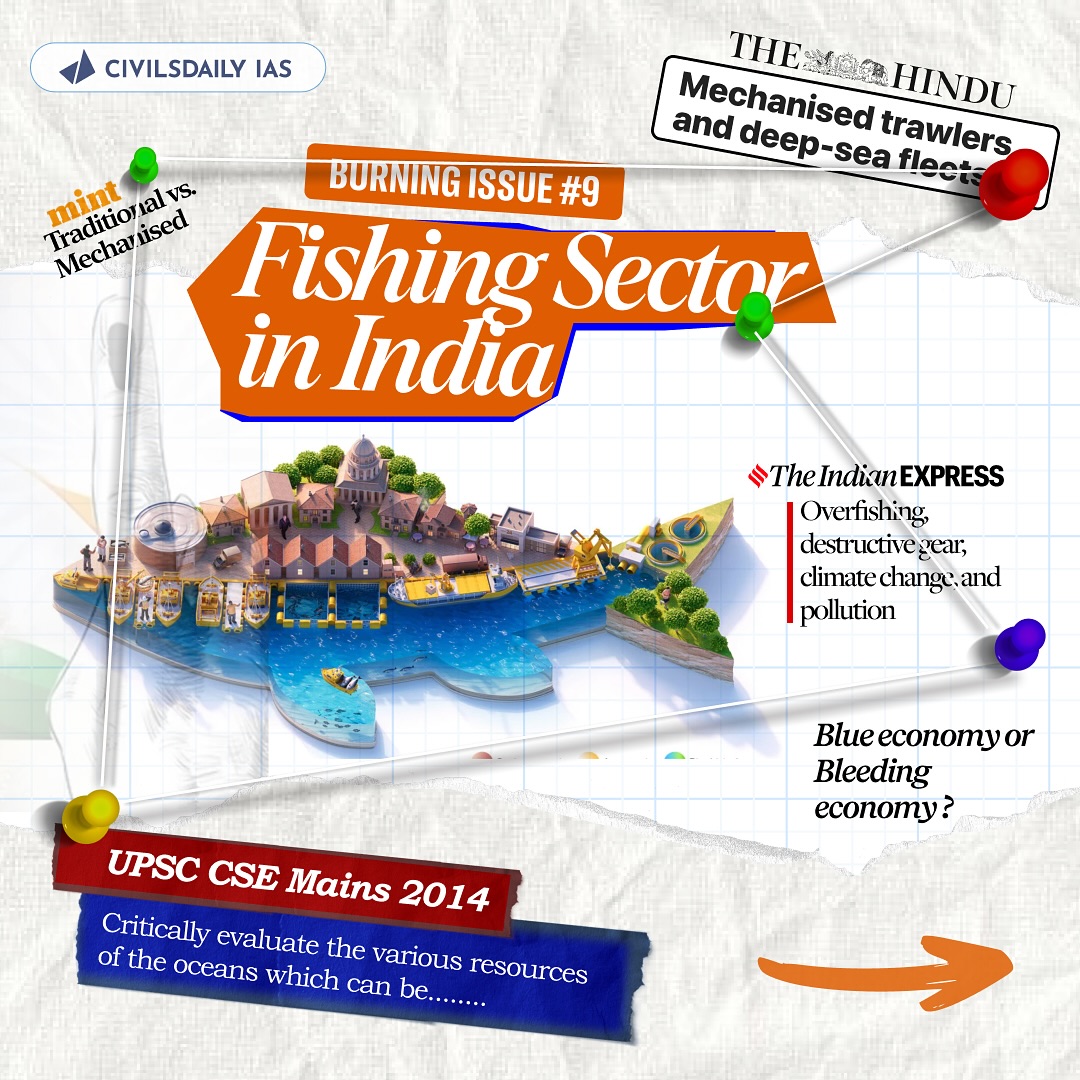
Fish wealth, fisher woes, and fixing India’s sea crisis in one sweep. UPSC loves to frame such topics as big, open questions that fuse resources with equity, just like the 2014 ocean‑resources essay: expect a prompt asking whether India’s “Blue Economy” can grow without sinking small fishers, pulling material straight from “Traditional vs Mechanised: An Unequal Sea.” Many aspirants stumble because they only count tonnes of catch or exports and forget people and ecology, so answers feel lopsided; they skip numbers like a trawler’s 500 kg haul versus a canoe’s 50 kg (see table in that subhead) or miss the warning on juvenile bycatch under “Ecological Tipping Points.” This article patches those gaps by giving ready links—showing how gear conflict, climate shifts, and subsidy skew fit the bigger GS syllabus. It also slips quick fixes you can quote, like Kerala’s monsoon bans and mangrove planting in Andhra (see “Learning from the Coastline: Local Solutions”). The coolest part is the heads‑up that the Blue Economy can be a “Bleeding Economy” if policy backs only ports and trawlers—an angle that turns a fact‑sheet answer into a sharp critique.
PYQ ANCHORING
GS 1: Critically evaluate the various resources of the oceans which can be harnessed to meet the resource crisis in the world. [2014]
GS 3: Livestock rearing has a big potential for providing non-farm employment and income in rural areas. Discuss suggesting suitable measures to promote this sectors in India,[2015]
From the Matsya Avatar rescuing sages during the great flood to fishermen guiding sages in search of wisdom, India’s epics and Puranas are rich with reverence for the sea and those who live by it. Yet today, the very communities once revered in myth — India’s traditional fisherfolk — are caught in a real-world crisis. While the marine fisheries sector boasts 3–4 million tonnes of annual catch, this apparent success hides a storm: vanishing fish stocks, rising coastal inequality, and ecological collapse.
Is the ocean still a source of sustenance — or a battleground of exploitation? Can small-scale fishers survive in a market tilted toward industrial trawlers? And will India’s coastal legacy endure — or be lost beneath unsustainable waves?
Traditional vs. Mechanised: An Unequal Sea
India’s coastal waters are not just biologically rich — they are socially contested. What was once a largely community-driven livelihood is now increasingly dominated by industrial-scale players. Mechanised trawlers and deep-sea fleets, backed by capital and technology, have begun to outfish, outcompete, and outmuscle traditional fisherfolk. This has created not just ecological stress but a stark divide in access, income, and dignity. The table below captures how this unequal sea is shaping India’s coastal crisis.
Issue
How It Creates Inequality
Examples / Evidence
Gear and Technology Divide
Mechanised trawlers use high-powered engines, sonar, and LED lights to fish deeper and faster, while traditional fishers rely on canoes or small boats. This leads to unequal catch volumes.
In Tamil Nadu and Gujarat, a mechanised boat may return with 500–1,000 kg of catch per day, compared to 10–50 kg by a traditional canoe.
Zone Violations
Trawlers often illegally fish in nearshore waters (within 5–10 km), violating zones reserved for artisanal fishers, depleting their catch and damaging nets.
Kerala and Odisha report frequent gear conflict cases, where trawlers trespass into artisanal zones, leading to physical confrontations and net loss worth lakhs.
Overfishing and Bycatch
Trawlers sweep large areas indiscriminately, including juvenile and non-target species, reducing long-term availability for small fishers who rely on selective fishing.
Studies from Andhra Pradesh show juvenile catch ratio exceeding 30% in mechanised fishing, threatening future stock regeneration.
Market Capture
Mechanised operators dominate cold storage, transport, and auctions, forcing traditional fishers to sell catch at low rates or depend on middlemen.
In Visakhapatnam, large traders often fix prices in advance, leaving small fishers without bargaining power despite rising input costs.
Subsidy Skew
Government fuel subsidies, loans, and harbour infrastructure disproportionately benefit mechanised operators, while small-scale fishers receive limited gear support.
Mechanised boats receive diesel subsidies, while traditional fishers must bear rising fuel and maintenance costs without commensurate support.
Ecological Tipping Points
India’s coastal waters are nearing an ecological breaking point. Overfishing, destructive gear, climate change, and pollution are not just reducing fish stocks — they’re unraveling marine ecosystems. From shrinking fish sizes to coral bleaching and habitat collapse, the signals are unmistakable. These tipping points threaten not just biodiversity, but the food security and livelihoods of millions who depend on the sea.
Ecological Pressure
Impact on Marine Ecosystems
Examples / Evidence
Overfishing
Reduces fish populations below recovery levels, disrupts food chains, and affects breeding cycles.
In the Bay of Bengal, species like hilsa and mackerel show signs of collapse due to overharvesting, especially during spawning seasons.
Bottom Trawling
Destroys seabed habitats, including corals and benthic organisms; causes long-term loss of biodiversity.
In Tamil Nadu and Andhra Pradesh, trawl nets drag across 70%+ of shallow seafloor, wiping out breeding habitats of shrimp and demersal fish.
Bycatch and Juvenile Fishing
Non-target species — including endangered turtles and juveniles — are caught and discarded, undermining ecological balance.
Studies show up to 30–40% of marine catch in Indian trawlers is bycatch, including threatened species like olive ridley turtles (Orissa coast).
Climate Change
Rising ocean temperatures, acidification, and sea-level rise alter fish migration, breeding, and survival.
On the west coast, Indian oil sardines are migrating northward due to warming seas; coral bleaching reported in Lakshadweep and Gulf of Mannar.
Pollution and Dead Zones
Nutrient runoff and plastic waste degrade water quality and create hypoxic zones, reducing marine life density.
The Chilika Lake outlet and Gujarat coast show early signs of oxygen-depleted dead zones due to industrial and agricultural discharge.
Blue Economy or Bleeding Economy? //MAINS
India’s ambitious push for a Blue Economy — harnessing ocean resources for economic growth — promises jobs, sustainability, and prosperity. But on the ground, a key question emerges: is this vision inclusive and ecological, or is it extractive and elite-driven, widening inequalities and degrading fragile marine systems? The answer lies in how policies are designed, and who they really serve.
Government Strategy / Scheme
Intended Goals
Critical Assessment
Blue Economy Policy Framework (Draft, 2021)
Promote sustainable use of marine resources across sectors like fisheries, energy, tourism, and shipping.
While it promises community participation and sustainability, it lacks binding safeguards for small fishers. No legal guarantees to protect artisanal access to fishing zones.
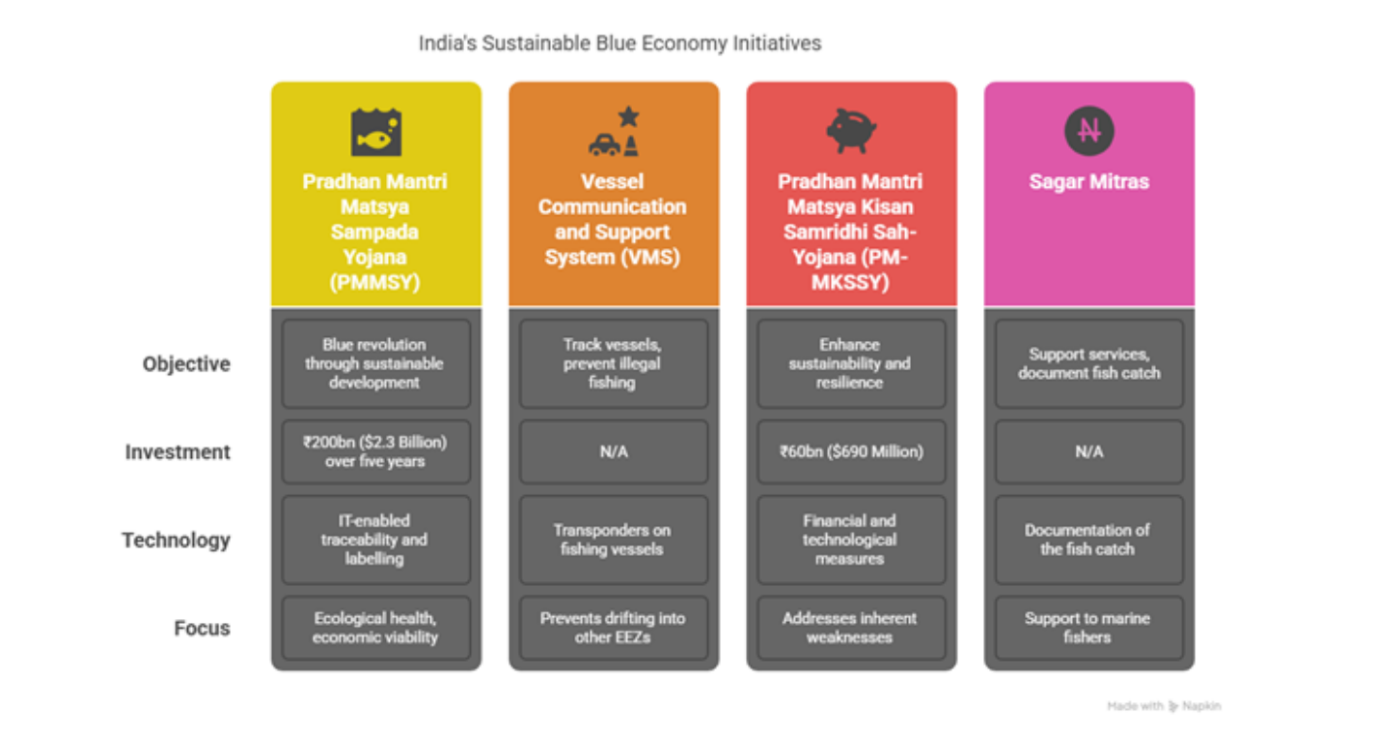
Pradhan Mantri Matsya Sampada Yojana (PMMSY)
Double fisheries exports, enhance infrastructure, and boost incomes of fishers through ₹20,000+ crore investment.
Benefits skewed toward export-focused aquaculture, mechanised fleets, and cold-chain players. Traditional fishers often struggle to access subsidies or loans.
Sagarmala Project
Expand port-led development and create coastal economic zones (CEZs).
Critics warn of large-scale displacement of coastal communities and habitat destruction. Many CEZs lack proper environmental and social impact assessments.
Deep Ocean Mission (2021)
Invest ₹4,000 crore over 5 years in seabed mining, marine biodiversity, and climate studies.
Focus on deep-sea mining raises alarm over ecological risks. Indigenous fishing communities fear exclusion from decision-making on ocean governance.
Fisheries and Aquaculture Infrastructure Development Fund (FIDF)
Finance infrastructure (harbours, cold storage, processing units) to modernise fisheries.
Infrastructure often benefits exporters and large players. Traditional fisherfolk still lack access to cold storage or modern boats.
Coastal Regulation Zone (CRZ) Notifications
Protect ecologically sensitive zones while allowing livelihood activities.
Successive amendments (e.g., CRZ 2019) have diluted protections, allowing real estate, tourism, and port projects near coastlines, undermining sustainability.
Learning from the Coastline: Local Solutions
Initiative / Model
What It Does
Where / Impact
Kerala’s Fisheries Co-operatives
Democratically managed fisher co-ops ensure fair pricing, gear access, and representation in policy. They also promote savings and insurance for fishers.
Kerala has over 600 active marine co-operatives, supporting 90,000+ members. Helps small fishers counter market capture by exporters and middlemen.
Seasonal Fishing Bans
Government-imposed monsoon bans allow fish stocks to regenerate. Widely respected by traditional fishers.
Tamil Nadu, Karnataka, and West Bengal implement 45–61 day bans annually. Studies show improved catch volumes post-ban seasons.
Community Quotas & Licensing
Local bodies issue limited fishing rights to prevent overfishing and resolve gear conflicts. Supports equity and sustainability.
Maharashtra piloted village-level licence caps in Ratnagiri; helped reduce inter-gear tension and over-extraction in nearshore waters.
Co-management Committees
Fishers, scientists, and officials jointly manage resources, enforce seasonal rules, and monitor stocks.
Odisha’s Chilika Lake Fisheries Federation blends local knowledge with scientific input. Reduced illegal fishing, improved prawn and fish yields.
Mangrove & Habitat Restoration
Fishers and women’s collectives lead mangrove planting, reef protection, and turtle conservation to revive breeding grounds.
In Andhra Pradesh’s Krishna delta, women’s SHGs replanted over 50,000 mangroves, helping reduce cyclone impacts and boost fish catch.
State of India’s Fishing
In India, marine fish production has stabilized at around 3.7 million tons per annum, as per the Ministry of Fisheries, Animal Husbandry and Dairying (2023). Despite this, widespread poverty, ecological degradation, and regulatory fragmentation persist. Urban biodiversity is equally imperiled: the Forest Survey of India (2023) pegs average green cover in major Indian cities at just 10.26%, with Chennai and Hyderabad losing over 4 square kilometers of forest cover in just two years.
India’s fisheries sector is a vital economic and nutritional pillar:
Contribution to Economy: It contributes 1.1% to national GDP and over 7% to agricultural GDP (MoF, 2024–25).
Production: India is the second-largest fish producer globally and the fourth-largest exporter (FAO 2022), producing ~14.1 million tons annually (marine and inland combined). Marine fisheries, contribute approximately 4.12 million metric tons (MMT) to the total fish production. Inland fisheries and aquaculture, account for about 12.12 MMT, making up over 75% of the total fish production.
Employment: Provides livelihoods to over 28 million people, directly and indirectly, of which ~16 million are in the marine sector (NITI Aayog, 2023).
Coastline: India’s coastline stretches 11,098 km, housing 3,688 marine fishing villages and 1,914 landing centres.
Exports: Marine product exports were worth ₹63,969 crore in 2023–24, with frozen shrimp alone contributing 40% (MPEDA data). The sector has witnessed significant growth, with seafood exports valued at ₹60,000 crore in 2023–24. Schemes like PM Matsya Sampada Yojana (PMMSY) (budget ₹20,050 crore) aim to double exports, enhance fish production to 22 million tonnes by 2024–25, and create 55 lakh jobs.
Issue of Overfishing
Overfishing poses a significant threat to India’s marine ecosystems and the livelihoods dependent on them. The Central Marine Fisheries Research Institute (CMFRI) reported in 2022 that over 4% of India’s fish stocks are currently facing overfishing, while 8.2% have already been overfished.
Overcapitalization: Mechanized vessels dominate the catch—90% of fishers are small-scale, but they capture just 10% of the harvest.
Juvenile Fishing: Widespread use of small mesh (<25mm) nets results in juvenile fish mortality; e.g., over 10 kg of bycatch for every 1 kg of shrimp in trawlers (Arabian Sea study, 2024).
Biodiversity Loss: Multi-species bycatch harms reef systems and trophic balance, making recovery from stock collapses difficult or irreversible.
Historical Collapses: Canada’s cod fishery crash (1992) and the Pacific sardine collapse (1967–86) show how mismanagement can destroy entire economies.
Fishmeal Industry Distortion: The FMFO sector, feeding on juvenile bycatch, converts edible protein into export-based aquafeed, creating perverse market incentives. Fragmented regulation further exacerbates the crisis. Each coastal state has its own Marine Fisheries Regulation Act (MFRA), leading to inconsistent enforcement and fish laundering across borders.
Significance of the Fishing Sector for India
Livelihood Security: The fisheries sector provides direct employment to over 4 million marine fishers, primarily from marginalized coastal communities. Overall, it supports 28 million livelihoods across fishing, processing, and marketing (NITI Aayog, PMF IAS). Example: In Odisha, the Chilika Lake fishing community depends almost entirely on estuarine fisheries for daily income.
Food and Nutritional Security: Fish is a key source of affordable protein and omega-3 fatty acids, vital for states with low animal protein intake. It is often referred to as “Rich Food for Poor People” for its accessibility and nutrition (PMF IAS). Example: In West Bengal, fish forms a dietary staple, especially among rural populations with limited protein options.
Export Revenue and Foreign Exchange: Seafood exports were valued at ₹60,000 crore (~$8 billion) in 2023–24, making fisheries a crucial contributor to India’s foreign exchange reserves (MPEDA, PIB). Example: India is the world’s largest exporter of frozen shrimp, with the USA and China being top importers.
Regional Development: Coastal states like Kerala, Andhra Pradesh, and Gujarat rely heavily on fisheries-based microeconomies that sustain local employment and trade. Fisheries infrastructure boosts regional GDP and livelihoods. Example: The port city of Veraval in Gujarat thrives as a hub for marine exports and fish processing units.
Gender Role: Women constitute around 56% of the post-harvest fisheries workforce, playing key roles in drying, processing, and marketing of fish (PMF IAS). Empowering them boosts family incomes and local entrepreneurship. Example: In Tamil Nadu, women-run self-help groups manage fish drying yards and retail networks in coastal villages.
Climate Mitigation: Sustainable marine ecosystems like mangroves and seagrasses act as major carbon sinks, capable of sequestering 10 times more carbon than terrestrial forests (ResearchGate). Example: The Sundarbans mangroves not only support biodiversity but also offset significant carbon emissions.
Blue Economy Potential: According to NITI Aayog and the Ministry of Earth Sciences, India’s Blue Economy could contribute $1 trillion to GDP by 2030, with fisheries being a core pillar. Example: The Sagarmala project integrates fisheries into port-led development for coastal economic upliftment.
Cultural and Indigenous Identity: Fishing sustains traditional knowledge systems, indigenous livelihoods, and community-based conservation practices that preserve biodiversity. Example: The ‘Sasi’ fishing method in Kerala, passed down generations, emphasizes harmony with nature and selective harvesting.
Challenges to Sustainable Fishing
Overfishing and Stock Depletion: Around 30% of India’s marine fish stocks are overexploited (CMFRI, 2022), driven by indiscriminate trawling, juvenile fishing, and weak monitoring. This threatens long-term sustainability and biodiversity. Example: Sardine and mackerel stocks along the southwest coast have shown sharp declines due to excessive harvest pressure.
Climate Change Impacts: Rising sea surface temperatures, ocean acidification, and changing currents are disrupting fish breeding patterns, altering migratory routes, and intensifying cyclonic events (IPCC AR6, WMO). Example: Cyclone Amphan in 2020 displaced thousands of fishers in West Bengal and Odisha, impacting fishing seasons.
Pollution and Habitat Destruction: Marine plastic, oil spills, untreated sewage, and coastal construction degrade coral reefs, mangroves, and estuaries—critical breeding grounds for fish. Example: The Ennore Creek in Chennai has suffered massive ecological damage due to industrial effluents and fly ash dumping.
Socio-economic Disparities: Though 90% of the fishing population comprises small-scale fishers, they land less than 10% of the total catch and suffer from market exclusion, debt, and poverty. Example: In Maharashtra’s Raigad district, mechanised boats dominate markets, leaving artisanal fishers with minimal income.
Illegal, Unreported, and Unregulated (IUU) Fishing: IUU fishing causes massive ecological and economic loss, estimated to reduce global catches by 11–26 million tonnes annually (FAO, 2022), and undermines regulatory efforts. Example: In India’s east coast, foreign vessels are often found trawling in Indian waters without permits, flouting marine laws.
Inadequate Infrastructure: Deficits in cold storage, processing units, landing centres, and transport networks result in post-harvest losses of up to 20-25% in marine fish (MoFPI, 2023). Example: In Kerala, small harbours without ice plants force fishers to sell fresh catch at reduced rates to middlemen.
Policy and Regulatory Gaps: The Marine Fishing Regulation Acts (MFRAs) differ across coastal states, enabling regulatory evasion; fish banned in one state can be legally landed in another. Example: Juvenile threadfin bream protected in Kerala is frequently sold legally in Tamil Nadu, undermining conservation gains.
Data Deficiencies and Scientific Gaps: Decisions on catch limits and fishing licenses are often based on historical rights or vessel size, not robust stock assessments, leading to unsustainable practices. Example: India lacks a nationwide real-time fishery database, unlike New Zealand’s QMS-based management system.
Way Forward
Enact a National Fisheries Law Unify fragmented state Marine Fishing Regulation Acts (MFRAs) into a central framework with standard rules on Minimum Legal Size (MLS), gear restrictions, and closed seasons. Example: Resolve enforcement gaps in overlapping waters like Kerala–Tamil Nadu.
Introduce Quota-Based Fisheries Management Pilot science-driven catch quotas and tradable fishing rights for key species, inspired by global models. Example: New Zealand’s hoki QMS curbed overfishing while preserving livelihoods.
Ban Destructive Fishing Gear Mandate use of Turtle Excluder Devices (TEDs), LED lights, and selective nets to reduce bycatch and protect endangered species. Example: Odisha’s TED adoption lowered turtle deaths significantly.
Regulate FMFO (Fishmeal & Fish Oil) Industry Cap bycatch diverted to FMFO, promote nutrition-first use, and incentivize plant-based aquafeeds. Example: Kerala’s pilot linked low-value catch to local school meal programs.
Scale Up Community Co-Management Empower fisher cooperatives and panchayats to co-govern Marine Protected Areas (MPAs) with real authority and funding. Example: Chilika Lake model improved yields and curbed illegal fishing.
Invest in Ecological Restoration Fund coastal wetland and estuary regeneration to boost biodiversity and climate resilience. Example: Chennai’s Pallikaranai marshland revival restored bird habitats and flood control.
#BACK2BASICS: The State of India’s Fishing Sector: Promise, Pressure, and Paradox //PRELIMS
A Sector on the Brink
India’s marine fish production has stabilized at around 3.7 million tonnes annually (MoFAHD, 2023). Yet, beneath this apparent success lies an ecological and social crisis: overfishing, habitat loss, poverty, and regulatory fragmentation persist. Urban ecology fares no better — the Forest Survey of India (2023) reports average green cover in major cities at just 10.26%, with Chennai and Hyderabad losing over 4 sq. km of forest in just two years.
Why Fisheries Matter
Dimension
Key Contributions & Examples
Economic Engine
Contributes 1.1% to GDP and over 7% to agricultural GDP (MoF, 2024–25). India ranks 2nd in global fish production (~14.1 million tonnes total; marine: 4.12 MMT, inland: 12.12 MMT).
Livelihood Provider
Supports 28 million livelihoods, with 16 million in marine fisheries (NITI Aayog). In Odisha, Chilika Lake fishers rely entirely on estuarine fishing.
Export Powerhouse
Exports valued at ₹63,969 crore (2023–24). Frozen shrimp alone forms 40%, making India the top global exporter.
Regional Growth Driver
Coastal states like Kerala, AP, Gujarat benefit from port-led fisheries infrastructure. Example: Veraval thrives on marine exports and fish processing.
Nutrition and Food Security
Fish is affordable protein — “rich food for poor people.” In West Bengal, fish is a daily staple for low-income rural families.
Women’s Workforce Role
Women form 56% of post-harvest workers, managing drying, processing, marketing. Example: Tamil Nadu’s women-run SHGs operate retail networks.
Climate Mitigation
Coastal ecosystems like mangroves and seagrasses sequester up to 10x more carbon than forests. Example: Sundarbans play a dual role in biodiversity and carbon offsetting.
Cultural Identity
Fishing sustains indigenous practices and community conservation. Example: Kerala’s ‘Sasi’ method promotes selective, sustainable harvesting.
Blue Economy Potential
Projected to contribute $1 trillion to GDP by 2030 (MoES). Schemes like Sagarmala integrate fisheries into port-based economic growth.
Overfishing: The Silent Crisis
According to CMFRI (2022):
4% of India’s fish stocks are actively overfished
8.2% are already overexploited
Driver
Impact
Example
Overcapitalisation
90% of fishers are small-scale but catch <10% of total harvest.
Mechanised vessels dominate markets across the western coast.
Juvenile Fishing
Sub-25mm nets cause early stock depletion.
Trawlers in Arabian Sea: 10 kg bycatch per 1 kg shrimp (2024).
Biodiversity Collapse
Multi-species bycatch disrupts reef systems and food chains.
Reef degradation in Gulf of Mannar linked to trawl fishing.
Global Warning Signs
Collapses like Canada’s cod (1992) show irreversible ecosystem loss.
Historical evidence warns of repeatable patterns.
FMFO Distortion
Fishmeal and fish oil (FMFO) industry creates perverse incentives — turning edible fish into aquafeed.
Kerala’s bycatch is diverted to FMFO instead of food markets.
Reduces global catch by 11–26 million tonnes (FAO, 2022).
Foreign vessels trawling illegally off India’s east coast.
Poor Infrastructure
Up to 25% post-harvest loss due to weak cold chains.
Kerala harbours lack ice plants and processing centres.
Policy Fragmentation
Each state has a different MFRA, leading to fish laundering.
Juvenile threadfin bream banned in Kerala, sold in TN.
Data Gaps
Catch limits based on boat size, not science.
India lacks real-time national fishery database, unlike NZ’s QMS.
Conclusion
India’s fishing sector sits at the intersection of livelihood, nutrition, biodiversity, and climate resilience — yet faces existential risks. It is time to pivot from volume-focused extraction to science-led, community-driven, and sustainability-based management. The ocean is not just an economic frontier; it is a public trust that must be governed with equity, wisdom, and urgency.
SMASH MAINS MOCK DROP
Examine the role of political and bureaucratic leadership in public policy formulation in India. How can greater citizen participation improve the effectiveness of policy outcomes?
Circumsporozoite Protein (CSP): Offers direct protection to the vaccinated individual.
Pro6C Protein: A hybrid of Pfs230 and Pfs48/45 that blocks transmission via mosquitoes.
Key Advantages
Dual Benefit: Provides personal protection and reduces community transmission.
Full-length CSP: Promotes a stronger and longer immune response compared to current vaccines.
High Efficacy in Animals: Over 90% protection in animal models (human trials pending).
Stability: Contains alum as an adjuvant — safe, effective, and stable at room temperature for 9 months.
Malaria Control in India:
Progress:
Malaria deaths reduced from 1,151 in 1995 to 83 in 2022 (National Vector Borne Disease Control Programme).
World Health Organization estimates are higher (5,511 deaths in 2022).
Current Limitation: India’s dominant malaria strain is Plasmodium vivax, which AdFalciVax does not target.
[UPSC 2010] Widespread resistance of malarial parasite to drugs like chloroquine has prompted attempts to develop a malarial vaccine to combat malaria. Why is it difficult to develop an effective malaria vaccine ?
(a) Malaria is caused by several species of Plasmodium*
(b) Man does not develop, immunity to malaria during natural infection
(c) Vaccines can be developed only against bacteria
(d) Man is only an intermediate host not the definitive host.
The Reserve Bank of India (RBI) has announced that the Financial Inclusion Index (FI-Index) for Financial Year (FY) 2025 has risen to 67.0, up from 64.2 in FY 2024.
About Financial Inclusion Index (FI-Index):
Developer: Created by the Reserve Bank of India to assess the extent of financial inclusion in India.
First Release: Published in August 2021 for the financial year ending March 2021.
Coverage: Encompasses five key sectors—banking, investments, insurance, postal services, and pensions.
Scoring Scale: Ranges from 0 (total exclusion) to 100 (full inclusion).
Update Cycle: Updated annually in July; cumulative index with NO base year.
Indicators: Based on 97 indicators across all five sectors to ensure comprehensive assessment.
Key Parameters:
Access (35%): Measures availability of financial infrastructure like bank branches, automated teller machines, and postal outlets.
Usage (45%): Tracks frequency of use of services like savings, loans, insurance, and pension schemes.
Quality (20%): Assesses financial literacy, consumer protection, equity, and service reliability.
India’s Performance Over the Years:
March 2017: Index at 43.4, reflecting the initial phase of inclusion efforts.
March 2021: Rose to 53.9, due to the expansion of banking and digital infrastructure.
March 2024: Improved to 64.2, with broader access and increased adoption of financial services.
March 2025: Reached 67.0, driven by digital transactions, better service quality, and financial literacy campaigns.
[UPSC 2016] The establishment of ‘Payment Banks’ is being allowed in India to promote financial inclusion. Which of the following statements is/are correct in this context?
1. Mobile telephone companies and supermarket chains that are owned and controlled by residents are eligible to be promoters of Payment Banks
2. Payment Banks can issue both credit cards and debit cards