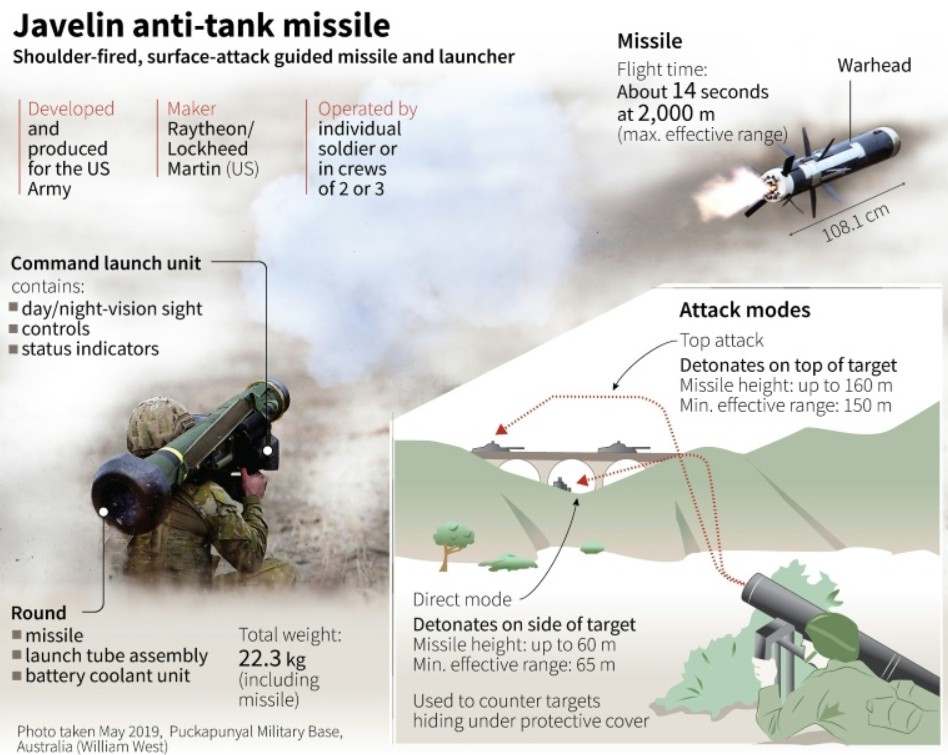
India has formally submitted a Letter of Request (LoR) to the United States seeking the co-production of Javelin anti-tank guided missiles (ATGMs) under the ‘Make in India’ initiative.
[UPSC 2018] What is “Terminal High Altitude Area Defense (THAAD)”, sometimes seen in the news?
Options: (a) An Israeli radar system (b) India’s indigenous anti-missile programme (c) An American anti-missile system* (d) A defence collaboration between Japan and South Korea
India has renewed its call for time-bound reforms of the UN Security Council and reaffirmed support for the ‘Pact for the Future’ to strengthen global cooperation.
About the ‘Pact for the Future’ Agreement:
Origin: Adopted at the UN Summit of the Future (September 2024).
Purpose: To reinvigorate multilateralism and strengthen global cooperation on contemporary and emerging challenges.
Scope: Comprises 56 commitments spanning development, peace, digital governance, and institutional reforms.
Annexes:
Global Digital Compact: Sets frameworks for AI, digital access, and rights.
Declaration on Future Generations: Mainstreams long-term thinking in policymaking.
Inclusivity: Drafted through multi-year negotiations involving member states, civil society, and global institutions.
Implementation and Review Mechanism:
Implementation through intergovernmental processes led by relevant UN agencies.
First formal review at the 83rd UNGA(2028) at the Head of State/Government level.
Monitoring via national/international accountability frameworks.
Notable Features and Challenges:
Historic Significance:
One of the broadest international agreements in scope.
Embodies a “new multilateralism” for adapting the UN to modern realities.
Controversies:
Not unanimously adopted – Russia, Iran, and others objected to elements they found insufficient or overambitious.
Criticisms:
Lacks detailed mechanisms for enforcement and implementation.
Disagreements persist on UNSC reform, disarmament timelines, and climate financing.
A satellite-based study (2003–2020) of 141 Indian cities revealed a surprising aerosol pattern — southern cities act as pollution hotspots, while many northern cities form ‘clean islands’ due to a phenomenon called the Wind Stilling Effect.
Key Highlights of the Study:
Conducted by: The Indian Institute of Technology Bhubaneswar.
Method: Used high-resolution aerosol optical depth data to track pollution.
Focus: Examined how urbanisation interacts with natural and transported pollution.
Surprising Insight: Many northern cities were not major aerosol hotspots, contrary to assumptions.
Classification of Cities: Two categories based on aerosol levels relative to surrounding areas:
Urban Aerosol Pollution Islands-
Location: Predominantly in southern and southeastern India.
Characteristics: Cities had higher aerosol levels than nearby rural surroundings.
Pollution Source: Mostly local emissions from vehicles, construction, and industries.
Absence of External Influence: Minimal contribution from long-range dust or biomass burning.
Urban Aerosol Clean Islands-
Location: Observed in northwestern India and the Indo-Gangetic Plain.
Pattern: Cities had lower aerosol levels than nearby upwind (southwest) areas.
Mechanism: Incoming pollutants were blocked or deflected, creating a “clean island” effect.
Downwind Evidence: Northeast (downwind) sides showed equal or lower aerosol levels compared to city centres.
About the Wind Stilling Effect:
Overview: A phenomenon where dense urban infrastructure reduces surface wind speed, altering local airflow.
Barrier Formation: Slowed winds create atmospheric stagnation zones, especially on the upwind side.
Pollution Blocking: Long-range pollutants like Thar Desert dust or biomass smoke are slowed or blocked.
Misleading Cleanliness: Cities appear cleaner not due to lower emissions, but due to pollution deflection.
Seasonality: Most evident during the pre-monsoon season, when dust transport is high and cloud cover is minimal.
[UPSC 2010] If there were no Himalayan ranges, what would have been the most likely geographical impact on India ?
1. Much of the country would experience the cold waves from Siberia. 2. Indo-gangetic plain would be devoid of such extensive alluvial soils. 3. The pattern of monsoon would be different from what it is at present.
Which of the statements given above is/are correct ?
Options: (a) 1 only (b) 1 and 3 only (c) 2 and 3 only (d) 1, 2 and 3*
A study in Nature has provided the first observational evidence of solid rock forming from vapour in a distant star system HOPS-315, marking early planet formation.
About HOPS-315:
Type: A young star system located in the Orion constellation.
Protoplanetary Disc: Surrounded by a flat, rotating disc of gas and dust, where new planets can form.
Orientation: The disc’s tilt offers a clear line of sight from Earth, allowing deep observation.
Rock Vapour Crystallisation: Scientists captured rock vapour cooling and forming crystals, marking the first direct observation of solid matter forming around a star.
Detected Elements:
Silicon monoxide gas at 470 Kelvin, close to the star.
Crystalline silicates such as forsterite, enstatite, and silica found within 2.2 astronomical units of the star.
Scientific Significance:
Similarity to Earth: The crystallisation mimics processes found in primitive meteorites on Earth.
Chemical Confirmation: Suggests universal chemical processes in early planet formation across star systems.
Location of Minerals: Crystals were detected in the disc’s atmosphere, not in stellar outflows.
Temperature Conditions: Simulations confirmed dust vaporises and re-forms into solids at around 1300 Kelvin.
Formation Stage: Marks the earliest stage of rocky planet formation ever observed.
[UPSC 2015] The term ‘Goldilocks Zone’ is often seen in the news in the context of-
Options: (a) the limits of habitable zone above the surface of the Earth (b) regions inside the Earth where shale gas is available (c) search for the Earth-like planets in outer space* (d) search for meteorites containing precious metals
“Hard work doesn’t always pay off, unless it is aligned with a smart strategy.”
Every year, thousands of serious aspirants write UPSC CSE with months of planning, handwritten notes, hours of mentorship calls, and a fully loaded timetable. Still, they didn’t make it to the final list. The heartbreaking part? Most don’t even realise why they are failing. It’s not because they didn’t work hard, it’s because they didn’t work right.
This webinar is a not to be missed session because Archit Dongre, AIR 3 in UPSC CSE 2024, will show 10 most common reasons why well prepared aspirants still fail. He will talk about blindspots that toppers consciously avoid, like revision fatigue, mock fatigue, scattered value addition, and lack of adaptive feedback.
If you are putting in the hours but not seeing the returns, this is your moment to reflect. Join Archit on 25th July at 7PM if you are serious about UPSC 2026 and 2027.
It will be a 45 minute webinar, post which we will open up the floor for all kinds of queries which a beginner must have. No questions are taboo and Archit Sir is known to be patiently solving all your doubts.
Join us for a Zoom session on 25th July at 7 PM. This session is a must-attend for you If you are attempting UPSC for the first time or have attempted earlier and now preparing for next year, then it is going to be a valuable session for you too.
See you in the session”
Register for the session for a complete in-depth UPSC Prep
(Don’t wait—the next webinar won’t be until August’25)
These masterclasses are packed with value. They are conducted in private with a closed community. We rarely open these webinars for everyone for free. This time we are keeping it for 300 seats only.
[UPSC 2020] Pala period is the most significant phase in the history of Buddhism in India. Enumerate.
Linkage: To understand the “conflict over Buddhism,” it is essential to appreciate its historical roots and evolution within India. The Pala period saw a flourishing of Buddhist art, philosophy, and institutions, which contributed significantly to its spread, including to regions like Tibet, making it a foundational element of the cultural heritage that both India and China now seek to influence.
Mentor’s Comment: India and China are engaged in a growing geopolitical contest over influence in the Himalayan Buddhist sphere, especially regarding spiritual leadership, monastic networks, and cultural legitimacy. With the Dalai Lama’s succession looming, both countries are using Buddhism as a strategic tool to shape regional loyalties, particularly in border areas like Ladakh, Tawang, Nepal, and Bhutan. This spiritual soft power struggle is emerging as a critical front in India-China rivalry, alongside their military and maritime tensions.
Today’s editorial analyses the Issues related to Himalayan Buddhist sphere between India and China. This topic is important for GS Paper I (Indian Society, Ancient India and Geography), GS Paper II (International Relations) in the UPSC mains exam.
_
Let’s learn!
Why in the News?
The Himalayas are the true battleground for a future clash between the Asian powers (India and China), as both sides try to win the support of people living along the border.
How is China leveraging Buddhism in the Himalayas to influence the region and challenge India?
State-controlled Buddhism: China uses Buddhism as a tool of statecraft, asserting the right to control reincarnations (e.g., the 2007 rule requiring official approval for “Living Buddhas”).
Soft power through infrastructure: Beijing builds roads, shrines, and monasteries in border regions and funds Buddhist projects (e.g., in Nepal’s Lumbini).
Buddhist diplomacy: China invites Himalayan monks to conferences, slowly shifting their spiritual loyalties.
Manipulating internal sect disputes: China supports splinter sects (e.g., Dorje Shugden) to undermine Tibetan unity and weaken India’s influence.
What is the background story of the Dalai Lama?
Early Life and Recognition: The 14th Dalai Lama, Tenzin Gyatso, was born in 1935 in Taktser, Tibet. At the age of 2, he was recognized as the reincarnation of the 13th Dalai Lama, following Tibetan Buddhist spiritual traditions.
Exile and Conflict with China: In 1950, China invaded Tibet. After a failed uprising in 1959, the Dalai Lama fled to India and established the Tibetan Government-in-Exile in Dharamshala, Himachal Pradesh, where he continues to lead the Tibetan cause.
Global Peace Icon: He became a global symbol of peace and non-violence, receiving the Nobel Peace Prize in 1989. Though he stepped down from political duties in 2011, he remains the spiritual leader of Tibetan Buddhists and a strong advocate of compassion and dialogue.
Why is the Dalai Lama’s succession a strategic issue for India-China relations?
Dual claims: The 90-year-old Dalai Lama has hinted at reincarnating outside Chinese control (likely India), while China insists on selecting a successor through its Golden Urn method.
Split leadership: This could lead to two rival Dalai Lamas — one backed by India and the Tibetan diaspora, and another by China in Lhasa.
Regional impact: This schism would force Himalayan Buddhist populations (Ladakh, Bhutan, Tawang) to choose allegiances, influencing their political alignment.
What challenges does India face in countering China’s Buddhist diplomacy?
Lack of a Coordinated National Strategy: India’s Buddhist outreach remains fragmented across ministries (Culture, External Affairs, Tourism), lacking a central vision or institutional mechanism. Eg: While India promotes the Buddhist circuit (Bodh Gaya, Sarnath), it has limited regional engagement with Himalayan Buddhist leaders compared to China’s structured approach.
Sectarian Divisions Within Indian Buddhism: Rivalries among sects, such as the two Karmapas (Ogyen Trinley Dorje vs. Thaye Dorje), weaken India’s ability to present a unified spiritual leadership. Eg: The divided Karmapa lineage allows China to exploit internal rifts and influence parts of the Kagyu sect in Sikkim and beyond.
Delayed Response to China’s Assertive Moves: India has been slow to counter China’s active engagement with Himalayan monasteries, especially in Nepal and Bhutan, where spiritual allegiance is also geopolitical. Eg: China’s investments in Lumbini (Buddha’s birthplace) and support for Shugden sects in Nepal show how it uses religious infrastructure to undermine India’s influence.
How does the spiritual identity of the Himalayan regions affect their geopolitical stance?
Loyalty to Buddhist Lineages Influences Foreign Policy Orientation: Regions like Ladakh, Sikkim, Bhutan, and parts of Nepal follow Tibetan Buddhist traditions (Gelug, Kagyu, Nyingma), which often align them spiritually with Dharamsala-based Tibetan leadership under the Dalai Lama. This shapes their emotional, cultural, and sometimes strategic affinity with India over China.
Religious Influence Determines Soft Power Competition: China uses religious diplomacy, including recognising Buddhist leaders and promoting pro-China sects (e.g., Shugden), to erode India’s cultural sway in the Himalayas. Spiritual loyalties in monasteries can subtly shift political allegiances, especially in Nepal and Bhutan.
Monasteries Act as Political and Social Anchors: In Himalayan societies, monastic institutions are not just religious centres but also sources of local leadership, education, and conflict resolution. Control or influence over these can tilt regional attitudes towards either India or China, making them strategic soft power assets.
How can India use its Buddhist heritage to boost regional influence? (Way forward)
Strengthen Cultural Diplomacy through Buddhist Circuits: India can promote Buddhist pilgrimage sites like Bodh Gaya, Sarnath, and Kushinagar as centres of global Buddhist unity. Eg: India’s International Buddhist Confederation (IBC) can be used to host annual regional Buddhist summits to enhance people-to-people ties with countries like Sri Lanka, Thailand, Vietnam, and Nepal.
Support and Recognize Key Monastic Leaders in the Himalayas: India can nurture its ties with Tibetan Buddhist communities in Ladakh, Sikkim, and Arunachal Pradesh by supporting locally respected Rinpoches and monastic institutions. Eg: Facilitating wider recognition of the 17th Karmapa (Ugyen Trinley Dorje) can help project a unified spiritual leadership from Indian soil and counter China’s manipulation of Buddhist lineages.
Leverage Buddhist Soft Power in Neighbourhood Diplomacy: By incorporating Buddhism in regional initiatives like Neighbourhood First and Act East, India can expand cultural influence over ASEAN and SAARC nations. Eg: India’s Lumbini-Bodh Gaya direct air link with Nepal and cultural grants to Myanmar monasteries show how soft power can strengthen strategic partnerships.
The Union Budget 2025–26 marked a major policy shift by announcing India’s ambitious target of 100 GW nuclear power capacity by 2047, up from the current 8.18 GW. It also allocated ₹20,000 crore for developing five indigenously designed Small Modular Reactors (SMRs) by 2033.
Why is nuclear energy vital for India’s low-carbon future?
Provides Reliable Base-load Power: Unlike solar and wind, which are intermittent, nuclear power offers continuous, stable electricity essential for industrial growth and urbanisation. Eg: In 2024, despite renewables making up nearly 50% of installed capacity, they produced only 240 TWh, while coal contributed 75% of generation due to its reliability. Nuclear can help replace coal-based base-load.
Supports India’s Net-Zero and Energy Goals: India has committed to net-zero emissions by 2070, 500 GW non-fossil capacity by 2030, and reducing carbon intensity by 45% over 2005 levels. Eg:Small Modular Reactors (SMRs), with ₹20,000 crore allocated in the 2025-26 Union Budget, are being developed as clean alternatives to replace captive thermal power plants (~100 GW) over two decades.
Globally Recognized as Key Low-Carbon Technology: The world is increasingly viewing nuclear energy as essential to climate goals, making it easier to attract investmentand international cooperation. Eg: At COP28 (Dubai, 2023), over 20 countries, including India, endorsed the Declaration to Triple Nuclear Energy, recognizing it as vital to reducing fossil fuel dependency.
How has past nuclear policy shaped India’s current capacity?
Early Vision, Delayed Progress: India had an early start with the establishment of Apsara reactor in 1956 and Dr. Homi Bhabha’s vision of 8 GW by 1980. However, geopolitical events like the 1974 Peaceful Nuclear Explosion (PNE) and India’s refusal to join the NPT (1968) led to international isolation, slowing progress and pushing targets further.
Indigenisation of Reactor Technology: Due to technology denial regimes, India focused on developing its own Pressurised Heavy Water Reactors (PHWRs). Starting with 220 MW units, India scaled them up to 540 MW (2005-06) and later to 700 MW (Kakrapar, 2024), building a strong indigenous design and manufacturing base.
Limited International Collaboration Post-CLNDA: The 2008 NSG waiver post-India–U.S. nuclear deal enabled resumption of fuel and technology imports. However, the Civil Liability for Nuclear Damage Act (2010) imposed supplier liability, deterring foreign companies. As a result, only Russia has partnered with India at Kudankulam, limiting the scale of international cooperation.
What hurdles limit private participation in nuclear energy?
Restrictive Legal Framework: The Atomic Energy Act, 1962 allows only government entities to operate nuclear power plants. Private companies cannot own or control nuclear facilities, limiting their role to ancillary services unless the Act is amended.
Supplier Liability under CLNDA, 2010: The Civil Liability for Nuclear Damage Act places liability not just on the operator (NPCIL) but also on equipment suppliers, making private and foreign companies reluctant to invest due to the high risk exposure.
Lack of Financial and Regulatory Clarity: There is no independent nuclear regulator — the AERB is not a statutory body and reports to the Department of Atomic Energy, raising concerns about impartial oversight. Additionally, the absence of a transparent tariff mechanism and nuclear power being excluded from “renewable” status limits access to green financing and incentives.
Why is an independent nuclear regulator necessary?
Ensures Credible and Impartial Safety Oversight: With the proposed entry of private players into nuclear energy, there is a need for transparent and independent safety regulation to ensure public trust and prevent conflicts of interest. The current Atomic Energy Regulatory Board (AERB), though “autonomous”, is not a statutory body and functions under the Department of Atomic Energy, creating institutional dependency.
Meets Global Standards and Commitments: According to International Atomic Energy Agency (IAEA) norms, a legally independent regulator is essential to uphold nuclear safety, licensing, and environmental safeguards. This will also improve India’s credibility in international collaborations and foreign investment.
Supports Sectoral Expansion with Accountability: As India aims for 100 GW nuclear capacity by 2047, regulatory functions will become more complex, especially with new technologies like Small Modular Reactors (SMRs). An independent authority can better handle licensing, monitoring, safety audits, and dispute resolution without bureaucratic delays.
Revives Dormant Reforms: A draft bill to create a Nuclear Safety Regulatory Authority was introduced in 2011 but lapsed. Reviving this reform is crucial to align with the growing scale and diversity of the nuclear energy programme.
What reforms are needed to meet India’s 100 GW nuclear goal by 2047? (Way forward)
Legislative and Regulatory Overhaul: Amend the Atomic Energy Act, 1962 and the Civil Liability for Nuclear Damage Act, 2010 to allow private sector participation, define clear liability norms, and permit foreign direct investment (up to 49%) while maintaining Indian ownership and control. Establish an independent statutory nuclear regulator to ensure safety and build investor confidence.
Financial and Institutional Reforms: Classify nuclear energy as a green energy source to make it eligible for green finance, tax incentives, and viability gap funding. Streamline land acquisition, simplify licensing for PHWR and SMR deployment, and facilitate public-private joint ventures (e.g., NPCIL-NTPC) to scale up infrastructure and domestic supply chains.
Mains PYQ:
[UPSC 2023] With growing scarcity of fossil fuels, the atomic energy is gaining more and more significance in India. Discuss the availability of raw material required for the generation of atomic energy in India and in the world.
Linkage: This question directly addresses the increasing importance of atomic energy in India due to fossil fuel scarcity, which aligns with the nuclear power as a “major pillar in India’s energy mix” for achieving economic growth and “net zero emissions by 2070”.
A new “Global Survey of Working Arrangements” (2024–25) by the Ifo Institute and Stanford University has spotlighted the growing mismatch between workers’ desire for remote work and its actual availability worldwide.
Why does a gap remain between the preference for remote work and its adoption?
Employer Reluctance Due to Team Dynamics: Many managers believe that remote work reduces collaboration, innovation, and team bonding. Eg: In India’s tech sector, firms like TCS and Infosys have mandated office returns to maintain team culture.
Cultural Bias Toward Presenteeism: In several countries, especially in Asia, being physically present at work is linked to loyalty and productivity. Eg: Japanese companies often expect employees to stay late in office, even if not productive, as a show of commitment.
Inadequate Home Infrastructure: Remote work demands reliable internet, quiet spaces, and ergonomic setups, which are lacking for many, especially in urban India or Southeast Asia. Eg: A Mumbai-based employee may live in a 1BHK flat with family, limiting concentration and comfort.
Health and Mental Well-being Concerns: Long-term remote work has led to increased backaches, eye strain, and mental stress due to isolation and blurred work-life boundaries. Eg: A Microsoft global report showed rising burnout levels among fully remote workers during the pandemic.
How do culture and infrastructure hinder remote work in Asia?
Cultural Preference for Physical Presence: Many Asian workplaces equate being physically present with dedication and productivity. Eg: In Japan and South Korea, staying late in the office is considered a sign of commitment, discouraging remote setups.
Hierarchical Management Style: Traditional Asian work cultures rely on face-to-face supervision and top-down communication, making remote work less trusted. Eg: In India, many managers still believe in monitoring employee performance through in-person interactions.
Weak Digital and Housing Infrastructure: Many households lack reliable internet, private workspaces, or quiet environments, especially in urban slums or dense family homes. Eg: In Indonesia or the Philippines, remote employees often face disruptions due to unstable power or cramped living conditions.
What is Remote work?
Remote work (also known as work from home or telecommuting) is a work arrangement where employees perform their job duties outside of a traditional office environment, typically from their home or another location of their choice, using digital tools and internet connectivity.
What are the gender implications of remote work trends?
Increased Unpaid Care Work for Women: Remote work has led to a disproportionate care burden on women, affecting their productivity and well-being. Eg: According to a 2022 UN Women report, women globally spent 3 times more hours on unpaid care work than men during the pandemic, even while working from home. In India, this gap was wider due to joint family setups and lack of domestic help.
Improved Flexibility, Aiding Workforce Re-entry: Remote work has provided flexible job opportunities for women who otherwise drop out due to childcare or household responsibilities. Eg: A 2021 LinkedIn report found that 60% of Indian women professionals preferred remote jobs to maintain work-life balance, and 30% rejoined the workforce post-pandemic due to such options.
Risk of Career Stagnation and Isolation: Remote women employees often face reduced visibility, leading to fewer promotions or leadership roles. Eg: A 2023 McKinsey study found that women working remotely were 1.5 times less likely to be promoted compared to their in-office peers, especially in mid-career roles.
Why are employers reluctant to allow full remote work?
Concerns Over Productivity and Supervision: Employers fear a drop in productivity and difficulty in monitoring performance when employees work remotely full-time. They believe in-person settings enable better oversight, collaboration, and accountability.
Impact on Organisational Culture and Innovation: Physical workplaces are seen as essential for team bonding, mentorship, and creative brainstorming, which are harder to replicate virtually. Employers worry that remote work weakens organisational culture and slows innovation.
What are the steps taken by the Indian Government?
Remote Work in SEZ Rules: The government amended the Special Economic Zones (SEZ) Rules (2006) by adding Rule 43A, allowing 100% of IT/ITeS employees in SEZs to work remotely for up to one year, extendable with permission.
Inclusion in New Labour Codes: The Occupational Safety, Health and Working Conditions Code, 2020 and the Social Security Code, 2020brought home-based workers under their ambit, addressing safety, health, and social protection for remote employees.
What measures can ensure remote work is fair and sustainable? (Way forward)
Clear Legal and Social Protection Framework: Establish comprehensive labour regulations covering working hours, overtime, health and safety, and right to disconnect for remote workers. This helps prevent exploitation, burnout, and ensures work-life balance.
Inclusive Digital Infrastructure and Skill Development: Invest in pan-India broadband access, especially in rural and Tier-2/3 cities, and promote digital literacy programs. This ensures equal opportunities and reduces the urban-rural digital divide, making remote work accessible to all.
Mains PYQ:
[UPSC 2022] Explore and evaluate the impact of ‘Work From Home’ on family relationships.
Linakge: The Unfinished Revolution of Remote Work,” delves into the complexities of remote work beyond just its flexibility and freedom. It highlights several key realities that make the “revolution of remote work” far more complicated than initially imagined. This question directly addresses one of the significant “realities” and impacts of remote work, specifically focusing on “family relationships”.
A replica of the Ashoka Pillar was unveiled at Waskaduwa Sri Subhuthi Viharaya highlighting Buddhism in Sri Lanka.
The original pillars, like those at Rampurva and Lauriya Nandangarh in Bihar, are key symbols of India’s Buddhist and Mauryan heritage and are on UNESCO’s Tentative List.
About Rampurva Ashoka Pillars (West Champaran, Bihar):
Location: Near the Nepal border in West Champaran district, Bihar.
Discovery: Found by archaeologist Alexander Cunningham,Lamb Carlleyle in 1876.
Pillars: Two monolithic sandstone pillars, 300 meters apart:
Lion Capital Pillar: Contains Major Pillar Edicts I–VI in Brahmi script.
Bull Capital Pillar: Known for artistic refinement and Persian-inspired motifs.
Design Features:
Polished sandstone with Mauryan craftsmanship.
Height: 12–15 meters; Weight: Up to 50 tons.
Lion Capital: Preserved at Indian Museum, Kolkata.
Bull Capital: Housed at Rashtrapati Bhavan, New Delhi; praised for its lifelike form and “velvet touch” finish.
Decorative motifs include rosette, palmette, and acanthus—showing Persian influence.
Legend: Marks the site of Buddha’s renunciation near the Anoma River.
About Lauriya Nandangarh Ashoka Pillar (West Champaran, Bihar):
Location: 22–28 kilometers northwest of Bettiah town.
Surviving Structure: Only one complete pillar remains from an original group.
Material and Size:
Made of Chunar sandstone.
Stands about 12 meters above ground with ~3 meters underground; Weighs over 50 tons.
Capital Design:
Features a seated lion with hind legs extending beyond the abacus.
The abacus is adorned with hamsa (flying geese), symbolizing spiritual liberation.
Inscriptions:
Engraved with Major Pillar Edicts I–VI in Brahmi script, dated to 244 BCE.
Promotes dharma, non-violence, religious tolerance, and compassion.
Symbolism:
The lion capital represents Mauryan imperial strength and Buddha’s Sakya lineage.
The lion’s open mouth symbolizes the dissemination of Ashoka’s ethical and Buddhist teachings.
[UPSC 2019] In which of the following relief sculpture inscriptions is ‘Ranyo Ashoka’ (King Ashoka) mentioned along with the stone portrait of Ashoka?
Options: (a) Kanganahalli* (b) Sanchi I (c) Shahbazgarhi (d) Sohgaura
The Winter Fog Experiment (WiFEX) at Delhi’s IGI Airport, has marked 10 years of pioneering research on dense winter fog in North India.
About Winter Fog Experiment (WiFEX):
Purpose: It is a long-term, open-field research project dedicated to studying winterfog—a major hazard in North India.
Launch: Initiated in 2015 at Indira Gandhi International Airport, New Delhi.
Lead Institution: Managed by the Indian Institute of Tropical Meteorology (IITM) under the Ministry of Earth Sciences.
Supporting Agencies: Supported by the India Meteorological Department (IMD) and the National Centre for Medium Range Weather Forecasting.
Objective: To understand fog variability, dynamics, and microphysics, and to improve fog forecasting across the Indo-Gangetic Plain.
Key Features:
Network: Began at Indira Gandhi International Airport; expanded to Jewar Airport (Noida) and Hisar (Haryana).
Instruments Used: Includes micrometeorology towers, ceilometers, and high-frequency sensors.
Data Collected: Covers temperature profiles, humidity, wind, turbulence, soil heat flux, and aerosol concentrations.
Scientific Goal: To model the full fog life cycle and develop operational forecasting systems.
Next Phase – WiFEX-II:
Will provide localized, runway-specific fog forecasts.
Will expand to more airports for real-time winter decision-making.
Outcomes:
Forecasting Model: A high-resolution fog prediction model with 3-km resolution and 85% accuracy for very dense fog (visibility <200 metres).
Operational Benefits: Reduced flight delays and diversions; enhanced runway safety.
Research Insights: Clarified the role of air pollution, urban heat islands, and land-use changes in fog formation.
Significance:
Aviation Planning: Helps airlines, pilots, and passengers manage winter fog disruptions.
Science-Policy Link: Demonstrates successful collaboration between scientific institutions and public policy to address climate and aviation challenges.
[UPSC 2014] Photochemical smog is a resultant of the reaction among-
Options: (a) NO2, O3 and peroxyacetyl nitrate in the presence of sunlight ** (b) CO2, O2, and peroxyacetyl nitrate in the presence of sunlight (c) CO, CO2, and NO2 at low temperature (d) high concentration of NO2, O3 and CO in the evening
![🔴[UPSC Ranker Webinar] By Archit Dongre, AIR 3, UPSC CSE 24 || 10 Reasons why aspirants with Strategy, Content & Mentorship fail UPSC exam | Join on 25th July At 7 PM](https://d18x2uyjeekruj.cloudfront.net/wp-content/uploads/2025/07/WhatsApp-Image-2025-07-24-at-11.33.17-1568x882.jpeg)

![[pib] Ashoka Pillars of Rampurva and Lauriya Nandangarh](https://d18x2uyjeekruj.cloudfront.net/wp-content/uploads/2025/07/ashokan-pillar.jpg)
![[pib] 10 years of Winter Fog Experiment (WiFEX)](https://d18x2uyjeekruj.cloudfront.net/wp-content/uploads/2025/07/wifex.jpg)