💥UPSC 2026, 2027, 2028 UAP Mentorship (March Batch) + Access XFactor Notes & Microthemes PDF

Search results for: “”

  • Invest In People For The Brighter Future

    Invest

    Central Idea

    • The world is indeed looking up to the Indian economy as a bright star, as the finance minister noted in the Budget speech on February 1. In 2020, India accounted for 20.6% of the worldwide population of 15- to 29-year-olds. Which means that in the years ahead, one out of every five workers deployed globally could be an Indian. No doubt, the rest of the world foresees a fortune in India’s young population. But are our policymakers doing enough to realise the possibilities that are unfolding?

    Get your Rs 10,000 worth of UPSC Strategic Package for FREE | PDFs, Zoom session, Tests, & Mentorship

    The key proposals in this year’s Union budget are the following

    • Increase in capital expenditures for infrastructure: There will be a considerable increase in capital expenditures, for the building of physical infrastructure, mainly in transport, energy and defence. The figures under this head are expected to be higher in 2023-24 compared to the corresponding level in 2022-23 (revised estimates).
    • Modest tax revenue: The growth of the tax revenues is going to be modest, the government is nevertheless committed to reducing the fiscal deficit to 5.9% of GDP. That could have been achieved only by reducing the spending on some other sectors
    • The axe has fallen on subsidies and social sector expenditures: Compared to its previous year, in 2023-24, the Union government’s expenditure on food subsidy will fall by ₹0.9 trillion (or 90,000 crore), on fertilizer subsidy by ₹0.5 trillion, and on the Mahatma Gandhi National Rural Employment Guarantee Act (MGNREGA) by ₹0.3 trillion.
    • Marginal increase unlikely to make impact: The marginal increases in the allocations on health, education, agriculture and the Angwandi scheme are unlikely to make an impact, after taking into account the effect of inflation.

    Public-private complementarities

    • Capital spending indicates country’s productive capability: A jump in capital spending by the government, as proposed in the Budget, is a much-needed step to reinvigorate the Indian economy. Investment as a proportion of income or GDP indicates the rate at which a country’s productive capabilities are growing.
    • High rates of investment; Fast rates of economic progress: In India, this proportion rose steadily during the mid-2000s and peaked at 42% in 2007, which was even better than China’s record at that point in time. High rates of investment translated into extremely fast rates of economic progress in the country, which lasted until the early 2010s.
    • Crowd in Private investments: If the proposed investments by the government come through, and they indeed crowd in private investments as the finance minister has predicted, that can set the stage for a revival of the Indian economy.

    Global financial crisis in 2007-08 was a turning point

    • China responded with high domestic investment: China responded to the crisis by increasing domestic investment, a large part of which coming from its public sector.
    • India restrained its expenditures: In India, the government restrained its expenditures, worrying about the rising fiscal deficits. As public expenditures nosedived, private investors lost confidence as well. Investment as a proportion of GDP was on a steady downward slide

    Invest

    Investing in people is an investment in the future

    • Expenditure on social sector: Public expenditures on the social sectors constitute an investment for the future more so for a country with a predominantly young population.
    • For instance: The income a destitute mother receives for work through MGNREGA may ensure that her children do not have to go to school with empty stomachs.
    • Underinvestment in education: Underinvestment in education and health will undercut India’s chances in a global economy that is increasingly dominated by knowledge. Millions of young people are denied access to affordable education and decent jobs, leading to frustration.
    • For instance: In 2022, only 2.6% of the nearly 1.9 million candidates who wrote the NEET managed to secure a seat for MBBS in a government college.
    • Government expenditure to boost to supply and demand: Government expenditure on health and education can provide a boost to both the supply and the demand fronts in a knowledge-driven economy, more new jobs as teachers and doctors, especially for women, and a greater supply of younger professionals and skilled workers.

    Importance of social sector spending for long-term growth and social welfare

    • Contrasting Capital Expenditures with Social Sector Spending: Unlike capital expenditures, which are generally considered productive, subsidies and social sector spending are often labeled as wasteful. It is commonly believed that cutting social sector spending will not harm economic growth; however, this perception is incorrect.
    • The Negative Impact of Reducing Social Sector Spending: Cutting social sector spending not only exacerbates existing social inequalities but also dampens the prospects for long-term growth.
    • For instance: In India, for example, only 9.8% of workers have access to regular jobs that provide some form of social security. Therefore, measures such as the Mahatma Gandhi National Rural Employment Guarantee Act (MGNREGA) and the free provision of food have been a lifeline for millions of poor Indians who have been affected by the COVID-19 pandemic and joblessness.

    Unwarranted fears about fiscal deficit

    • The Counterproductive Nature of Inflated Fears: Inflated fears about the fiscal deficit and government debt will only be counterproductive in a country possessing vast reserves of untapped human and other resources as India does.
    • India’s government debt is held largely by domestic financial institutions does not pose threat: Only a small portion of India’s public debt is owed to external agencies (amounting to 4.2% of GDP in 2022), which does not pose a threat. India’s public debt is held largely by domestic financial institutions, including public sector banks, insurance companies. This is a debt the government owes to the people of this country, whose savings the financial institutions have mobilised.
    • For example: Greece and the most recent example of Sri Lanka’s economic crisis was a result of external debt.
    • A Virtuous Cycle of Debt: Higher levels of development and incomes will lead to the creation of fresh savings, which can help pay off the debts. Borrowing to feed and educate all of its young citizens will provide asset-poor and socially disadvantaged households the opportunity to pick up qualifications required to enter the new job market.

    Invest

    Conclusion

    • For a generation of young Indians, this is, without a doubt, a ‘make or break moment’. without increased public spending on human capabilities, there is little hope for them to escape poverty, lack of skills, and discontent. However, if the government invests in food security, health, and education, India’s young people can thrive and become bright stars that illuminate the world.

    Mains question

    Q. Without increased public spending on human capabilities, there is little hope for young Indians to escape poverty and discontent. Discuss.

    Attempt UPSC 2024 Smash Scholarship Test | FLAT* 100% OFF on UPSC Foundation & Mentorship programs

  • [Burning Issue] Resurgence of Khalistan Movement

    khalistan

    Context

    • On February 23, hundreds of followers of a Khalistan leader clashed with police outside Ajnala police station near Amritsar, demanding the release of one of their colleagues who had been taken into custody in an alleged kidnapping case.
    • This was the second such attack on the police in Punjab in a fortnight. These incidents are being linked with the revival of the Khalistan movement of 1990s Punjab.
    • In this context, this edition of the burning issue will discuss this revival of Khalistan demand and the issue around it.

    What was the Khalistan movement?

    • Dates to pre-independence era: The Khalistan movement, which started in the 1940s during British rule, calls for establishing a separate nation for Sikhs. When India became independent and Punjab was partitioned, its leaders demanded a special status for the state. However, the Central Government did not pay attention to these demands, and Sikhs felt betrayed, leading to the idea of a separate nation growing substantially.
    • Rise of Bhindranwale: Many individuals and organizations contributed to the Sikh revivalist movement; however, Jarnail Singh Bhindranwale emerged as a charismatic leader after becoming the head of Damdami Taksal on August 25, 1977.
    • Failure to fulfil regional demand: Punjabi political parties, such as the Sikh Akali Party, failed to fulfil the regional demands concerning river waters and the transfer of Chandigarh as a capital city to Punjab. The devolution of power gave rise to Bhindranwale’s image among the masses.
    • Finally Military Operation: The military mission, OBS, was carried out between June 1 to June 10, 1984, to take control of key gurdwaras, including the Golden Temple in Amritsar, from Bhindranwale’s supporters. Bhindranwale was killed during the operation; however, in recent times, his image remains alive and well.

    Why is it being revived?

    • Political instability: Punjab in recent years has witnessed a political crisis leading to a change in governments, ruling political parties and CM’s giving chance for radical outfits to grow.
    • Economic challenges: Punjab state has a high employment rate (According to data from the Centre’s Periodic Labour Force Survey 2019-20, Punjab’s unemployment rate is higher than the national average). Also, the year-long Farmers’ protest in 2021 and railways blockades have led to the creation of negative sentiments among investors about the state’s investment environment leading to decreasing investments in Punjab and rising unemployment.
    • Rising communalism: multiple events of blasphemy have taken place in the state which is flaming the fire of communalism among the people of the state.
    • Provocation from Pakistan: Investigations by security agencies suggest links between Khalistani groups and Pakistan’s Inter-Services Intelligence (ISI) – further increasing the likelihood of feelings of separatism due to drug trafficking and networking through Sikh pilgrimages.
    • Feeling to of persecuted minority: images of the 1984 anti-sikh riots and the topic of the non-persecution of culprits of the riots are being used to suggest that Sikhs are persecuted minority and thus they must have their own land in form of Khalistan.

    Role of diaspora and social media in the resurgence

    • Propaganda by parts of the Sikh diaspora: There is a threat of a re-emergence of the idea of Khalistan due to an increase in the propaganda by parts of the Sikh diaspora in Western countries, effectively utilizing social media.
    • Use of Social media as a uniting platform: it is pertinent to understand the re-emergence of Khalistan, wherein traditional propaganda machinery is being used to generate social media acceptance.
    • Misinformation campaigns: Organizations like Sikhs for Justice, Khalistan Liberation Force, and Babbar Khalsa International run misinformation campaigns on social media through Twitter, Facebook, Instagram, and WhatsApp. The most recent campaign, which attracted enormous attention, was the Referendum 2020
    • Identity consciousness among the youth: Further, it signifies a trend of identity consciousness among the youth residing in the West and Punjab. As discussed in the following paragraphs, ISI and the terror outfits operating from Pakistan heavily oversee the internet presence of elements spreading Pro-Khalistani content. Such social media activity is generated through traditional networks that still work on the ground in collaboration with Pakistan’s ISI, seeking to create a groundswell for the idea of a Sikh homeland.
    • Involvement of Pakistan’s ISI: ISI is using a double strategy of tapping into the Jammu & Kashmir terror network to revive the Khalistan movement in Punjab. By using drugs as a means to radicalize the Punjabi youth, ISI means to destabilize Punjab.

    Cause of concern

    • Threat to national security and integrity: the resurgence of the Khalistan movement is a threat to national security similar to the Kashmir and NE insurgency.
    • May darken Punjab’s future: a poor law and order situation may deter investors to invest in Punjab thus further deteriorating its economy and leading to spillover effects in social and political sectors.
    • Involvement of diaspora: The idea of forming a separate state for Sikhs has died down in Punjab; however, it has attracted the attention of a large audience in the diaspora who now have settled in other nations for long and thus have lost their affinity with India as their homeland.
    • Misuse of social media: which defies any international boundary, thus misused by separatists in Pakistan and other nations.
    • Bilateral relations may be harmed: the Khalistan issue has already harmed Indo- Canada relations and now straining Indo-UK due to the conduction of Referendum 2020 in these countries despite the Indian Government’s objection.

    How to tackle the rise

    • Recognising new challenges: Recognizing the challenge posed by traditional stakeholders and new social media recruits is necessary.
    • Collaborate with foreign governments: The Indian security and intelligence forces need to collaborate with foreign governments to monitor anti-India activities carried out by the Khalistani forces and restrict their funding sources.
    • Enhance security efforts: The Indian government must heighten security efforts to counteract the increase in Khalistani social media activity since the opening up of the Kartarpur Corridor.
    • Promote economic and social development: At the domestic level, the Punjab and Union governments and security forces must collaborate to improve the economic condition of the state to again put the state on the path of development.
    • Engage with the Sikh diaspora: Indian agencies, such as the missions established in those countries, must diplomatically engage with the Sikh diaspora to tackle the misinformation campaign being peddled by Khalistani organizations. Such engagements will facilitate a positive relationship between the Indian state and the Sikh diaspora.
    • Beef up security: Indian security forces need to step up their preparedness to tackle the increase in drones used to deliver weapons and drugs to Punjab.
    • Engage Pakistan: In addition to Western countries, India should not back away from exercising diplomacy with Pakistan and should work to extradite terrorists hiding in Pakistan.

    Steps taken

    • As part of recent actions taken against the Khalistan propaganda, the Indian government has banned influential Twitter accounts such as 1984tribute, Khalsa Kashmir, and Khalistan Centre.
    • Maintaining a Central Adverse List: of pro-Khalistani supporters

    Conclusion

    • Until Sikhs get closure for the anti-Sikh riots of 1984 by means of court proceedings against the riot accused, the desire for a Sikh homeland will remain strong among the diaspora, who see themselves as a persecuted minority.
    • The violent Khalistani movement has vanished; however, the idea of a separate Sikh nation i.e Khalistan is yet to disappear.

    Attempt UPSC 2024 Smash Scholarship Test | FLAT* 100% OFF on UPSC Foundation & Mentorship programs

    Get your Rs 10,000 worth of UPSC Strategic Package for FREE | PDFs, Zoom session, Tests, & Mentorship

  • SC raps govt on plea on ED chief’s term

    ed

    The Supreme Court has sharply reacted over tenure extensions granted to Enforcement Directorate Director by the government to subvert ongoing investigations against their leaders.

    What is Enforcement Directorate (ED)?

    • ED was formed in 1957 to look into cases of foreign exchange-related violations, a civil provision.
    • It goes back to May 1, 1956, when an ‘Enforcement Unit’ was formed in the Department of Economic Affairs.
    • Now, the ED falls under the finance ministry’s Department of Revenue.
    • But in 2002, after the introduction of the PMLA, it started taking up cases of financial fraud and money laundering, which were of criminal nature.
    • It was then tasked for handling Exchange Control Laws violations under the Foreign Exchange Regulation Act (FERA).
    • Today, it is a multi-dimensional organisation investigating economic offences under the:
    1. Prevention of Money Laundering Act (PMLA)
    2. Fugitive Economic Offenders Act
    3. Foreign Exchange Management Act
    4. Foreign Exchange Regulation Act (FERA)

    Its establishment

    • When proceeds of crime (property/money) are generated, the best way to save that money is by parking it somewhere, so one is not answerable to anyone in the country.
    • Therefore, there was a need to control and prevent the laundering of money.
    • The PMLA was brought in for this exact reason in 2002, but was enacted only in 2005.
    • The objective was to prevent parking of the money outside India and to trace out the layering and the trail of money.
    • So as per the Act, the ED got its power to investigate under Sections 48 (authorities under act) and 49 (appointment and powers of authorities and other officers).

    At what stage does the ED step in when a crime is committed?

    • Whenever any offence is registered by a local police station, which has generated proceeds of crime over and above ₹1 crore, the investigating police officer forwards the details to the ED.
    • Alternately, if the offence comes under the knowledge of the Central agency, they can then call for the First Information Report (FIR) or the chargesheet if it has been filed directly by police officials.
    • This will be done to find out if any laundering has taken place.

    What differentiates the probe between the local police and officers of the ED?

    Case study:

    • If a theft has been committed in a nationalised bank, the local police station will first investigate the crime.
    • If it is learnt that the founder of the bank took all the money and kept it in his house, without being spent or used, then the crime is only theft and the ED won’t interfere because the amount has already been seized.
    • But if the amount which has been stolen is used after four years to purchase some properties, then the ill-gotten money is brought back in the market.
    • Or if the money is given to someone else to buy properties in different parts of the country, then there is ‘laundering’ of money.
    • Hence the ED will need to step in and look into the layering and attachment of properties to recover the money.
    • If jewellery costing ₹1 crore is stolen, police officers will investigate the theft. The ED, however, will attach assets of the accused to recover the amount of ₹1 crore.

    Roles and functions of the ED

    • Summon, Search and seizure: The ED carries out search (property) and seizure (money/documents) after it has decided that the money has been laundered, under Section 16 (power of survey) and Section 17 (search and seizure) of the PMLA.
    • Arrest and detentions: On the basis of that, the authorities will decide if an arrest is needed as per Section 19 (power of arrest).
    • Attachment of property: Under Section 50, the ED can also directly carry out search and seizure without calling the person for questioning. It is not necessary to summon the person first and then start with the search and seizure.
    • Filing of chargesheet: If the person is arrested, the ED gets 60 days to file the prosecution complaint (chargesheet) as the punishment under PMLA doesn’t go beyond seven years.

    Centrestage of our debate: Over-reach by Investigation Agencies

    Why is ED comes to pictures frequently?

    Ans. Money laundering

    • Money laundering is the process of making significant amounts of money obtained through criminal activities, such as drug trafficking or terrorist funding, appear to have come from a legitimate source.
    • As a result, it provides an incentive for money launderers to “legitimize” their ill-gotten gains through money laundering.
    • The money generated is referred to as ‘dirty money,’ and money laundering is the act of converting ‘dirty money’ into ‘legitimate’ money.

    Why ED mostly grips Politicians?

    • Exposing rampant corruption: It is not always ironic to say that most politicians are never corrupt. We have a very inglorious past of political corruption.
    • Selective witch-hunt: The ED has often been attacked for initiating investigations, raiding and questioning leaders of opposition parties, be it under the current regime or under past governments.

    Issues with PMLA

    • Misuse of central agencies: PMLA is being pulled into the investigation of even ordinary crimes by the Enforcement Directorate.
    • Seizing of assets: Assets of genuine victims have been attached. The ED could just walk into anybody’s house.
    • Politically motivated raids: In all this, the fundamental purpose of PMLA to investigate the conversion of “illegitimate money into legitimate money” was lost.
    • Opacity of charges: Petitioners pointed out that even the Enforcement Case Information Report (ECIR) – an equivalent of the FIR – is considered an “internal document” and not given to the accused.
    • Vagueness over evidence: The accused is called upon to make statements that are treated as admissible in evidence.
    • Harassment: The ED begins to summon accused persons and seeks details of all their financial transactions and of their family members.
    • Against individual liberty: The initiation of an investigation by the ED has consequences that have the potential of curtailing the liberty of an individual.

    Allegations against ED

    • Huge discretions: The ED is the only Central agency in the country that does not require permission from the government to summon or prosecute politicians or government functionaries for committing economic offences like money laundering.
    • Used for petty crimes: PMLA is pulled into the investigation of even “ordinary” crimes and assets of genuine victims have been attached.
    • Actual purpose denigrated: PMLA was a comprehensive penal statute to counter the threat of money laundering, specifically stemming from the trade in narcotics.
    • Violations of Rights: PMLA was enacted in response to India’s global commitment to combat the menace of money laundering. Instead, rights have been “cribbed, cabined and confined”.
    • Functional opacity: There is also a lack of clarity about ED’s selection of cases to investigate. We often see ED raiding houses of opposition parties suddenly.
    • Poor rate of conviction: We have hardly read the conclusion of cases by ED. Meantime media-trial tears off the accused person’s credibility which is the most desired intent.
    • Under-trials and slower prosecution: ED has been focusing on keeping the accused in custody rather than actually proving the charges against them.

    Challenges to ED

    • ED being dragged to court: The petitions against the ED had the effect of slowing down the investigations, as officers have to defend themselves in court.
    • Foul crying politicians: There are attempts to cover up unexplained, high-value transactions that fall within the PMLA’s ambit
    • Investigation of foreign transactions: Getting information on accounts and money stashed abroad to establish a trail is the biggest challenge they face.

    Way forward

    • The fight against corruption is intimately linked with the reform of the investigations.
    • Therefore the adjudicating authorities must work in cooperation and ensure the highest standards of transparency and fairness.
    • ED has been walking a tightrope to safeguard its integrity by speeding up investigations and court procedures.
    • The need of the hour could be systemic fixes—and not shrill calls to throw the baby out with the bathwater.
    • It is unlikely that corruption can be substantially reduced without modifying the way government agencies operate.


    Attempt UPSC 2024 Smash Scholarship Test | FLAT* 100% OFF on UPSC Foundation & Mentorship programs

    Get your Rs 10,000 worth of UPSC Strategic Package for FREE | PDFs, Zoom session, Tests, & Mentorship

  • Ethical Animal Research: Prospects and Challenges

    animal

    A proposed measure in Switzerland would have made that country the first to ban medical and scientific experimentation on animals.

    What counts as ‘Ethical’ animal research?

    • There is no single standard definition of ethical animal research.
    • Ethical animal research refers to the use of animals in scientific studies while ensuring that the animals are treated humanely and their welfare is protected.
    • It involves balancing the benefits of the research with the potential harm to the animals and minimizing any harm or suffering that the animals may experience.

    Issues involved in animal research

    • Inhumane treatment: Animals are often not treated humanely and are mishandled throughout the research process, including during transport, housing, and experimental procedures.
    • Animal rights ignored: Animal rights advocates argue that animals have inherent rights and should not be used for human purposes. They argue that animals have the right to life, liberty, and freedom from suffering, and that using animals in research violates these rights.
    • Animal distress: We should consider animals’ distress. If something is known to be painful in humans, it is assumed to be painful in animals as well.

    The 4 R’s of animal research

    The 3 R’s encourage scientists to develop new techniques that allow them to replace animals with appropriate alternatives.  The principles are summarized as:

    1. Reduction
    2. Refinement
    3. Replacement
    4. Rehabilitation

    Guidelines for animal research

    Federal research agencies follow guiding principles in evaluating the use and care of animals in research.

    • Empathy for all: One is that the research must increase knowledge and, either directly or indirectly, have the potential to benefit the health and welfare of humans and other animals.
    • Minimal use: Another is that only the minimum number of animals required to obtain valid results should be included.
    • Minimise pain and distress: Researchers must use procedures that minimize pain and distress and maximise the animals’ welfare.
    • Using IT tools: They are also asked to consider whether they could use non-animal alternatives instead, such as mathematical models or computer simulations.

    Significance of such guidelines

    Ans. Defined protocol

    • They have made sure that scientists create protocols that describe the purpose of their research and why animals are necessary to answer meaningful question.
    • The protocol must outline how animals will be housed and cared for, and who will care for and work with the animals, to ensure that they are trained to treat animals humanely.

    Why is animal research essential?

    • Non-invasive study: Animal research benefits both humans and animals. Numerous medical advances exist because they were initially studied in animals.
    • Benefits entire wildlife: Animal research has allowed for the eradication of certain diseases in cattle, for example, leading not only to reduced farm cattle deaths and human famine, but also to improved health for wild cattle.
    • Veterinarian care: Health care advances for pets – including cancer treatments, effective vaccines, nutritional prescription diets and flea and tick treatments – are also available thanks to animal research.

    Way forward

    • Specific guidelines for ethical animal research are typically established by national governments.
    • Independent organisations also provide research standards.
    • Create Institutional Animal Care and Use Committee.


    Attempt UPSC 2024 Smash Scholarship Test | FLAT* 100% OFF on UPSC Foundation & Mentorship programs

    Get your Rs 10,000 worth of UPSC Strategic Package for FREE | PDFs, Zoom session, Tests, & Mentorship

  • Organ on a chip: New setup for lab testing

    organ

    Central idea: Organ-on-a-chip technology has emerged as a new laboratory setup that scientists are using instead of animals to test new drugs.

    What is Organ-on-a-Chip?

    • Organ-on-a-chip is a microfluidic device that aims to mimic the structure and function of specific human organs or tissues in vitro.
    • It is a small, transparent chip made of biocompatible materials such as silicon, glass, or polymers, and contains tiny channels lined with living cells.
    • The living cells are derived from human tissues and can be cultured to replicate the microenvironment of the specific organ being modelled.

    How does Organ-on-a-Chip work?

    • Microfluidic channels simulation: Each organ-on-a-chip contains a complex network of microfluidic channels and chambers that can simulate the mechanical and chemical environment of a specific organ.
    • Mimics the blood flow: The microfluidic channels can mimic the flow of blood and air, while the living cells provide a realistic environment for drug testing and disease modelling.

    Potential applications of organ-on-a-chip

    • Organ-on-a-chip technology has numerous potential applications, including drug development, disease modelling, and toxicity testing.
    • By replicating the structure and function of human organs, researchers can study how organs interact with drugs and other compounds.
    • This could lead to the development of more effective and personalized treatments for a variety of diseases.
    • Additionally, organ-on-a-chip technology provides a more ethical and effective approach to testing drugs and other compounds, reducing the reliance on animal testing.

    Examples of Organ-on-a-Chip

    Several examples of organ-on-a-chip technology have been developed, including-

    • Lung-on-a-chip mimics the air-blood interface in the lungs
    • Heart-on-a-chip mimics the mechanical and electrical properties of the heart
    • Liver-on-a-chip replicates the metabolic activity of the liver
    • Brain-on-a-chip models the blood-brain barrier and neural activity in the brain

    Future prospects

    • Organ-on-a-chip technology is a promising and rapidly evolving field that offers numerous advantages over traditional drug development and testing methods.
    • It provides a more ethical and effective approach to testing drugs and other compounds, reducing the reliance on animal testing.
    • Furthermore, it has the potential to revolutionize the field of drug development by enabling more personalized and effective treatments for a variety of diseases.


    Attempt UPSC 2024 Smash Scholarship Test | FLAT* 100% OFF on UPSC Foundation & Mentorship programs

    Get your Rs 10,000 worth of UPSC Strategic Package for FREE | PDFs, Zoom session, Tests, & Mentorship

  • National Science Day and CV Raman

    raman

    National Science Day is commemorated on Feb 28 every year to commemorate the bird anniversary of Sir CV Raman.

    National Science Day

    • In 1986, the Government of India, under then PM Rajiv Gandhi, designated February 28 as National Science Day to commemorate the announcement of the discovery of the “Raman Effect”.
    • The Raman Effect was the discovery which won physicist Sir CV Raman his Nobel Prize in 1930.

    Who was CV Raman?

    • Raman conducted his Nobel-prize-winning research at IACS, Calcutta.
    • While he was educated entirely in India, Raman travelled to London for the first time in 1921, where his reputation in the study of optics and acoustics was known to physicists such as JJ Thomson and Lord Rutherford.
    • The Raman Effect won scientist Sir CV Raman the Nobel Prize for physics in 1930.
    • It was also designated as an International Historic Chemical Landmark jointly by the American Chemical Society (ACS) and the Indian Association for the Cultivation of Science (IACS).
    • His speciality was the study of vibrations and sounds of stringed instruments such as the Indian veena and tambura, and Indian percussion instruments such as the tabla and mridangam.

    The Raman Effect

    • In 1928, Raman discovered that when a stream of light passes through a liquid, a fraction of the light scattered by the liquid is of a different colour.
    • While Raman was returning from London in a 15-day voyage, he started thinking about the colour of the deep blue Mediterranean.
    • He wasn’t convinced by the explanation that the colour of the sea was blue due to the reflection of the sky.
    • As the ship docked in Bombay, he sent a letter to the editor of the journal Nature, in which he penned down his thoughts on this.
    • Subsequently, Raman was able to show that the blue colour of the water was due to the scattering of the sunlight by water molecules.
    • By this time he was obsessed with the phenomenon of light scattering.

    Observing the effect

    raman

    • The Raman Effect is when the change in the energy of the light is affected by the vibrations of the molecule or material under observation, leading to a change in its wavelength.
    • Significantly, it notes that the Raman effect is “very weak” — this is because when the object in question is small (smaller than a few nanometres), the light will pass through it undisturbed.
    • But a few times in a billion, light waves may interact with the particle. This could also explain why it was not discovered before.
    • In general, when light interacts with an object, it can either be reflected, refracted or transmitted.
    • One of the things that scientists look at when light is scattered is if the particle it interacts with is able to change its energy.

    Real-life applications

    • Raman spectroscopy is used in many varied fields – in fact, any application where non-destructive, microscopic, chemical analysis and imaging is required.
    • Whether the goal is qualitative or quantitative data, Raman analysis can provide key information easily and quickly.
    • It can be used to rapidly characterize the chemical composition and structure of a sample, whether solid, liquid, gas, gel, slurry or powder.


    Attempt UPSC 2024 Smash Scholarship Test | FLAT* 100% OFF on UPSC Foundation & Mentorship programs
    Get your Rs 10,000 worth of UPSC Strategic Package for FREE | PDFs, Zoom session, Tests, & Mentorship

  • ASI finds 1,300-yr-old Buddhist Stupa in Odisha

    stupa

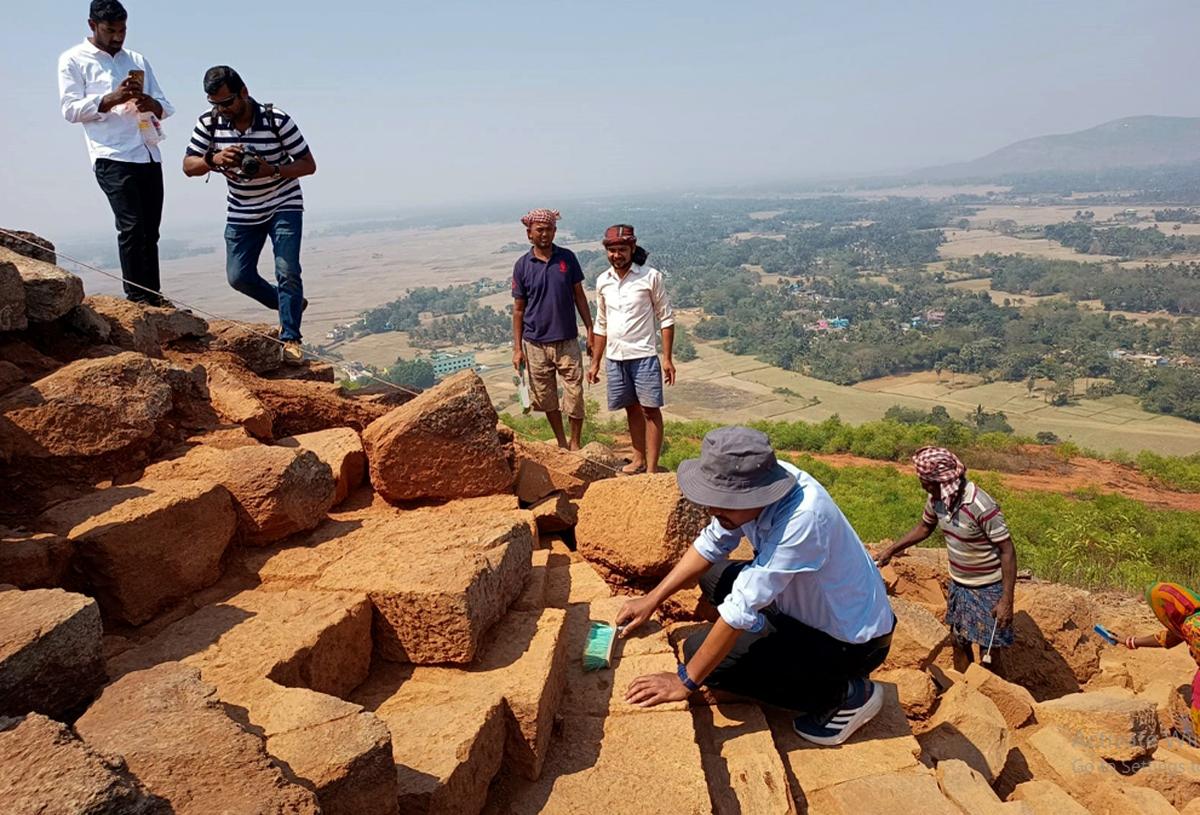
    The Archaeological Survey of India (ASI) stumbled upon a 1,300-year-old stupa right in the middle of a Khondalite mining site in Odisha’s Jajpur district.

    About the Stupa

    • The stupa could be 4.5-meter tall and initial assessment showed it may belong to the 7th or 8th
    • It was found at Parabhadi which is situated near Lalitagiri, a major Buddhist complex, having a large number of stupas and monasteries.
    • The newly discovered stupa was possibly disfigured in an earlier period.

    Khondalite

    stupa

    • Khondalite is a foliated metamorphic rock.
    • It is also called Bezwada Gneiss and Kailasa Gneiss.
    • It was named after the Khond tribe of Odisha and Andhra Pradesh because well-formed examples of the rock were found in the inhabited hills of these regions of eastern India.


    Back2Basics: Lalitagiri Buddhist Complex

    stupa

    • Lalitagiri is a major Buddhist complex in the state of Odisha.
    • The complex is home to stupas, ‘esoteric’ Buddha images, and monasteries (viharas), which is the oldest site in the region.
    • Significant finds at this complex include Buddha’s relics. Tantric Buddhism was practiced at this site.
    • Together with the Ratnagiri and Udayagiri sites a short distance away, Lalitagiri is part of the “Diamond Triangle”.
    • It used to be thought that one or all of these were the large Pushpagiri Vihara known from ancient records, but this has now convincingly located at a different site.

    Stupa Architecture

    stupa

    In the most basic sense, as an architectural representation of a sacred burial site, a stupa — no matter where it is located in the world or when it was built — has three fundamental features.

    • A hemispherical mound (anda) The anda’s domed shape (green highlights) recalls a mound of dirt that was used to cover the Buddha’s remains. As you might expect, it has a solid core and cannot be entered. Consistent with their symbolic associations, the earliest stupas contained actual relics of the Buddha; the relic chamber, buried deep inside the anda, is called the tabena. Over time, this hemispherical mound has taken on an even grander symbolic association: the mountain home of the gods at the center of the universe.
    • A square railing (harmika) The harmika (red highlights) is inspired by a square railing or fence that surrounded the mound of dirt, marking it as a sacred burial site.
    • A central pillar supporting a triple-umbrella form (chattra) The chattra, in turn, was derived from umbrellas that were placed over the mound to protect it from the elements (purple highlights). Just as the anda’s symbolic value expanded over time, the central pillar that holds the umbrellas has come to represent the pivot of the universe, the axis along which the divine descends from heaven and becomes accessible to humanity. And the three circular umbrella-like disks represent the three Jewels, or Triantha, of Buddhism, which are the keys to a true understanding of the faith: (a) Buddha; (b) dharma (Buddhist teachings or religious law); and (c) sangha (monastic community).

    Around these three core building blocks were added secondary features.

    • Enclosure wall with decorated gateways (toranas) at the cardinal directions The wall — with its trademark three horizontal stone bars (in the top image) — surrounds the entire structure. The wall is marked in light blue highlights and the toranas in yellow.
    • A circular terrace (medhi) The terrace — surrounded by a similar three-bar railing — supports the anda and raises it off the ground (black highlights); it likely served as a platform for ritual circumambulation.


    Attempt UPSC 2024 Smash Scholarship Test | FLAT* 100% OFF on UPSC Foundation & Mentorship programs

    Get your Rs 10,000 worth of UPSC Strategic Package for FREE | PDFs, Zoom session, Tests, & Mentorship

  • Surya Nutan: A Stove of Green Energy Transition

    Stove

    Central Idea

    • The formal launch of the Indian Oil Corporation’s patented solar cook-stove at the India Energy Week 2023 (February 6-8, 2023 in Bengaluru as part of the G-20 calendar of events) by the Prime Minister Narendra Modi must be looked at closely from the point of view of India’s national energy story. While Mr. Modi claimed the stove would soon reach three crore households within the next few years, Union Minister for Petroleum and Natural Gas Hardeep Singh Puri called it a catalyst in accelerating adoption of low-carbon options along with biofuels, electric vehicles, and green hydrogen.

    Get your Rs 10,000 worth of UPSC Strategic Package for FREE | PDFs, Zoom session, Tests, & Mentorship

    Salient features of Surya Nutan solar cook-stove

    • Indoor solar cooking: Surya Nutan is a Stationary, rechargeable, and always kitchen-connected indoor solar cooking.
    • Patented by Indian Oil: This is a patented product designed and developed by Indian Oil R&D Centre, Faridabad.
    • Maximum utilization of solar energy: It offers online cooking mode while charging through the Sun which maximizes the system efficiency and ensures high utilization of energy from Sun.
    • How it will work?: It collects energy from the sun, converts it into heat through a specially designed heating element, stores thermal energy in a scientifically proven thermal battery and reconverts the energy for use in indoor cooking. The energy captured not just covers day time cooking needs of a family of four but also the night meal.
    • Hybrid mode: It works on a Hybrid Mode (i.e. can work on both solar & auxiliary energy source simultaneously) which makes the Surya Nutan a reliable cooking solution for all weather conditions.
    • Minimises heat loss: Insulation design of Surya Nutan minimizes radiative and conductive heat losses.
    • Surya Nutan is available in three different models: The premium model (Breakfast +Lunch+Dinner) of Surya Nutan can cook all the meals for family of four.
    • What will be the cost: Initially, cost of the product is around Rs 12,000 for base model, and Rs. 23,000 for Top Model. However, the cost is expected to reduce substantially with economies of scale. At a price of Rs. 12,000-14,000/- for Top Model, assuming annual consumption of 6-8 LPG cylinders, this product can pay back the buyer in first 1-2 years itself.
    • Inbuilt Safety aspects: All the safety aspects required in any indoor appliances are inbuilt in Surya Nutan.
    • substitute for fossil fuels: The stove, which entails a one-time procurement cost and has zero maintenance, is being touted as a substitute for fossil fuels. It does not have a traditional battery that needs replacement. Also, the solar panel has a 25-year life.
    • Modular system: Surya Nutan is a modular system and can be designed in different sizes as per the requirement.

    India’s national energy story

    • In 1950s, the National Physical Laboratory (NPL) fabricated a solar cooker and state-led hydroelectric power but failed to address rural energy consumption.
    • Parallel efforts to improve the traditional stove proved unsuccessful, such as the Hyderabad Engineering Research Laboratories smokeless chulha.
    • 1980s government launched improved chulhas program to reduce fuelwood consumption and benefit women’s health/finances with 50% subsidy incentive. But the program failed due to construction, maintenance, and corruption issues. Women still rely on chulha despite hazards.
    • Cooking is 80% of rural Indian household’s energy use. 668m people in India use biomass for cooking/lighting, despite LPG scheme success. Fuel price inflation and subsidy withdrawal force women to use chulha with hazards.

    India Energy Week 2023

    • India’s G20 Presidency: India Energy Week 2023 is being organised during India’s G20 Presidency, under the tagline “Growth, Collaboration, Transition”, from 6-8 February 2023 in Bengaluru.
    • Opportunity for India: It provided a unique opportunity to showcase India as both an engine of global economic growth and a driver for global consumption, supported by a conducive and investment-friendly environment, and a skilled workforce.
    • Opportunity for strategic policy making and knowledge sharing: IEW 2023 was an unprecedented opportunity for regional, international leaders and CEOs to come together for strategic policy making and technical knowledge sharing.

    Why In India?

    • India is projected to witness the largest increase in energy demand of any country over the next two decades, as its economy continues to grow and create opportunities for its people to fulfil their potential.
    • India’s share in global energy consumption will rise from 7% to 14% by 2050
    • IEA predicts India will account for 25% of energy demand growth from 2020 to 2040
    • India’s oil and gas demand will triple by 2050
    • Gas consumption to grow threefold by 2030
    • Share of gas in energy mix to rise from 6.3% today to 15% by 2030

    Do you know “THE PANCHAMRIT” (The five-nectar-element commitments)?

    1. Indian Will take its non-fossil energy capacity to 500 GW by 2030.
    2. Indian will meet 50 % of its energy requirements from renewable energy by 2030.
    3. India will reduce the total projected carbon emissions by one billion tonnes from now till 2030.
    4. By 2030, India will reduce the carbon intensity of its economy by less than 45 percent.
    5. By the year 2070, India will achieve the target of net zero

    Conclusion

    • Surya Nutan has the potential to transform our energy security situation, as India currently imports 50% of its LPG requirements. It also reduces India’s CO2 emissions drastically and keeps our citizens insulated from the vagaries of the high international fossil fuel prices. India’s energy transition will play a pivotal role in global energy markets. India Energy Week comes at a critical time, with the challenges of energy security and environmental sustainability impacting long-term energy transition and paths towards decarbonisation.

    Mains Question

    Q. Indian Oil Corporation recently launched the Surya Nutan a solar cook-stove at the India Energy Week 2023. Discuss its salient features and potential benefits for energy security for rural households.

    Attempt UPSC 2024 Smash Scholarship Test | FLAT* 100% OFF on UPSC Foundation & Mentorship programs

  • OTT Governance: Measures To Enhance Transparency

    Central Idea

    • It has been two years since the government issued the Information Technology (Intermediary Guidelines and Digital Media Ethics Code) Rules through which the Ministry of Information and Broadcasting (I&B) was given the task of regulating content on OTT and online platforms. India’s approach can be termed as a light-touch co-regulation model where there is self-regulation at the industry level and final oversight mechanism at the Ministry level.

    Get your Rs 10,000 worth of UPSC Strategic Package for FREE | PDFs, Zoom session, Tests, & Mentorship

    What are OTT Media?

    • An over-the-top (OTT) media service is a streaming media service offered directly to viewers via the Internet.
    • OTT bypasses cable, broadcast, and satellite television platforms, the companies that traditionally act as a controller or distributor of such content.
    • The term is most synonymous with subscription-based video-on-demand (SVoD) services that offer access to film and television content.
    • They are typically accessed via websites on personal computers, as well as via apps on mobile devices (such as smartphones and tablets), digital media players, or televisions with integrated Smart TV platforms.

    Digital Media Ethics Code Relating to Digital Media and OTT Platforms

    • This Code of Ethics prescribes the guidelines to be followed by OTT platforms and online news and digital media entities.
    1. Self-Classification of Content: Platforms must self-classify content into five age-based categories and implement parental locks and age verification mechanisms.
    2. Norms for news: Publishers of news on digital media would be required to observe Norms of Journalistic Conduct of the Press Council of India and the Programme Code under the Cable Television Networks Regulation Act.
    3. Self-regulation by the Publisher: Publisher shall appoint a Grievance Redressal Officer based in India who shall be responsible for the redressal of grievances received by it. The officer shall take a decision on every grievance received it within 15 days.
    4. Self-Regulatory Body: Publishers can have a self-regulatory body headed by a retired judge or eminent person with up to six members. The body must register with the Ministry of Information and Broadcasting, monitor publisher compliance with the Code of Ethics, and address grievances not resolved by publishers within 15 days.
    5. Oversight Mechanism: The Ministry of Information and Broadcasting must establish an oversight mechanism and establish an Inter-Departmental Committee to hear grievances.

    Guidelines Related to social media

    • Due Diligence to Be Followed By Intermediaries: The Rules prescribe due diligence that must be followed by intermediaries, including social media intermediaries. In case, due diligence is not followed by the intermediary, safe harbour provisions will not apply to them.
    • Grievance Redressal Mechanism: The Rules seek to empower the users by mandating the intermediaries, including social media intermediaries, to establish a grievance redressal mechanism for receiving resolving complaints from the users or victims.
    • Ensuring Online Safety and Dignity of Users, Especially Women Users: Intermediaries shall remove or disable access within 24 hours of receipt of complaints of contents that erodes individual privacy and dignity.

    What are the concerns?

    • Low compliance and limited public awareness: OTT Rules require display of contact details for grievance redressal mechanisms and officers, but compliance is low and awareness among public is limited. Though the OTT Rules were notified in 2021, there is little awareness about them among the general public.
    • Lack of Transparency in Complaint Redressal Information: In many cases, either the complaint redressal information is not published or published in a manner that makes it difficult for a user to notice easily. In some cases, the details are not included as part of the OTT app interface.

    The Singapore Model

    • In Singapore, the Infocomm Media Development Authority is the common regulator for different media.
    • Aside from instituting a statutory framework and promoting industry self-regulation, its approach to media regulation emphasises on promoting media literacy through public education.

    What needs to be done?

    • Uniformity: There is a need for uniformity in displaying key information on obligations, timelines, and contact details for grievance redressal.
    • Specified rules: Rules should specify manner, text, language, and frequency for display of vital information and mandate industry associations to run campaigns in print and electronic media
    • Description in respective languages: Age ratings and content descriptors should be displayed in respective languages of the video, and shown prominently in full-screen mode for a mandatory minimum duration
    • Guidelines should be prominent in advertisements: Guidelines should ensure film classification/rating is legible and prominent in advertisements and promos of OTT content in print and electronic media.

    Measures to Enhance Transparency and Accountability in OTT Platform Governance

    • Periodic Audits by Independent Body: Periodic audits should be undertaken by an independent body to check the existence and effectiveness of access controls, age verification mechanisms, and display of grievance redressal details by each OTT platform.
    • Dedicated Umbrella Website: The Ministry could facilitate a dedicated umbrella website for the publication of applicable Rules, content codes, advisories, contact details for complaints/appeals, etc.
    • Publish Complaint Details in public domain: Publish detailed complaint descriptions and decisions by OTT providers and self-regulatory bodies in the public domain; providers should upload this information on a dedicated website for transparency.
    • IDC Membership to be Broad-Based and Representative: The Inter-Departmental Committee (IDC) comprising officer-nominees from various ministries of the Central government and domain experts should be made more broad-based and representative with security of tenure.
    • Provision for Disclosure: Provision for the disclosure or publication of an apology/warning/censure on the platform or website should be incorporated in the Rules.
    • Financial Penalties: Financial penalties may be imposed on erring entities.
    • Common Guidelines for Content Governance: A common set of guidelines for content, classification, age ratings, violations, etc. should be evolved to govern content uniformly across platforms in the era of media convergence.

    Conclusion

    • India’s OTT regulatory model aims to strike a balance between self-regulation and legal backing, aligning with global trends. The government’s efforts to enhance media literacy and transparency will not only promote effective self-regulation but also empower millions of OTT consumers. These initiatives are crucial for achieving the objective of raising India’s stature at an international level and serving as a model for other nations to emulate.

    Mains Question

    Q. Despite the launch of Intermediary Guidelines and Digital Media Ethics Code there are still concerns over the OTT governance. In this backdrop Discuss what can be done to improve the transparency and safeguarding the its users?

    Attempt UPSC 2024 Smash Scholarship Test | FLAT* 100% OFF on UPSC Foundation & Mentorship programs

More posts
