💥UPSC 2026, 2027, 2028 UAP Mentorship (March Batch) + Access XFactor Notes & Microthemes PDF

Search results for: “”

  • Curbing individualism in public health

    public

    Context

    • A failure to examine and interpret public health problems from a population perspective is leading to ineffective and unsustainable solutions as far as complex public health problems are concerned. There is a strong tendency in public health to prioritise individual-oriented interventions over societal oriented population-based approaches, also known as individualism in public health.

    Click and get your FREE Copy of CURRENT AFFAIRS Micro Notes

    What are the problems in public health approach?

    • Micronutrient supplementation at Individualistic level instead sustainable approach at public level: Problems such as undernutrition, for which individualist solutions such as micronutrient supplementation and food fortification have been proposed as solutions in lieu of sustainable approaches such as a strengthening of the Public Distribution System, supplementary nutrition programmes, and the health services.
    • Diagnosis and treatment than the solutions that modify health behaviours: Similar is the case with chronic disease control, wherein early diagnosis and treatment is the most popular solution, with little scope for solutions that can modify health behaviours (through organised community action).

    Recent evidences that show individualism is preferred over population-based approach

    1. Pradhan Mantri Jan Arogya Yojana (PMJAY): A nationwide publicly-funded insurance scheme, the Pradhan Mantri Jan Arogya Yojana (PMJAY) falls under Ayushman Bharat. It is the largest health insurance scheme in the country covering hospitalisation expenses for a family for ₹5 lakh a year. The goal is to ensure ‘free’ curative care services for all kinds of hospitalisation services so that there is no financial burden to the beneficiary.
    • Approach needed: What is not talked about in the entire scheme is the need for hospitalisation services per year for any population.
    • Approach preferred: Instead, every individual is given an assurance that if there is a need for hospitalisation expenses, the scheme will cover the expenses, highlighting the risk/probability of every individual facing hospitalisation in a year.
    • Individualistic response: This is an individualistic response to the problem of hospitalisation expenditure faced by populations. This becomes obvious when one examines the data on annual hospitalisation across populations.
    1. vaccination for COVID-19 unlike other vaccinations: It was evident that a COVID-19 vaccine cannot prevent people from getting the disease but only reduce hospitalisation and deaths in the event of contracting COVID-19.
    • Approach needed: To effectively manage COVID-19, what was needed was to have primary, secondary, and tertiary health-care facilities to manage the above proportion of cases. This is what a population-based approach to epidemic would be focusing on.
    • Approach preferred: Instead, by focusing on a vaccination programme for the entire population, it is again an assurance and a promise to every individual that even if you get COVID-19, you will not need hospitalisation and not die. Even after the entire crisis, not much is talked about in terms of the grossly inadequate health-care infrastructure to ensure the necessary primary, secondary and tertiary care services for COVID-19 patients, in turn leading to many casualties.
    • Individualistic response: The entire focus has been on the success story that every individual is protected from hospitalisation and death achieved through vaccine coverage. Most of the deaths due to COVID-19 are a reflection of the failure to offer ventilator and ICU support services to the 1%-2% in desperate need of it. Curative care provisioning is never planned at an individual level as epidemiologically, every individual will not necessarily need curative care every time. The morbidity profile of a population across age groups is an important criterion used to plan the curative care needs of a population.

    What the data on population hospitalization suggests?

    • Episode of hospitalization a year: Data from the National Sample Survey Organisation (75th round) show that on an average, only 3% of the total population in India had an episode of hospitalisation in a year (from 1% for Assam to 4% for Goa and 10% for Kerala the need also a function of availability). The proportion hovers around 3%-5% across most Indian States.
    • Population based healthcare planning is necessary: This is population-based health-care planning. Instead, giving an assurance to every individual without ensuring the necessary health-care services to the population is not really helping in a crisis.

    Determinants of individualistic approach

    • Misconception in philosophy of public health: The dominance of biomedical knowledge and philosophy in the field of public health with a misconception that what is done at an individual level, when done at a population level, becomes public health. This is despite the contrasting philosophy and approaches of clinical medicine and public health and the evidence that support the latter and must be based on population characteristics and economic resources.
    • Visibility impact and mistake of judging a population’s characteristics: Health effects are more visible and appear convincing at the individual level, wherein improvements at the population level will be clear only after population-level analysis; this needs a certain level of expertise and orientation about society an important skill required for public health practitioners.
    • Market’s role and the effect of consumerism in public health practice: The beneficiaries for a programme become the maximum when 100% of the population is targeted. Instead of making efforts to supply evidence of the actual prevalence of public health problems, market forces would prefer to cast a wide net and cover 100% of beneficiaries. Propagating individualism has always been a characteristic feature of a consumerist society as every individual can then be a potential ‘customer’ in the face of risk and susceptibility.

    public

    Conclusion

    • The need of the hour is population-level planning, which means, population as a single unit needs to be considered. All forms of individualistic approaches in public health need to be resisted to safeguard its original principles of practice, viz. population, prevention, and social justice.
  • [Burning Issue] The G20 Grouping

    g20

    Context

    • On December 1, India assumed the presidency of the G20 forum, taking over from Indonesia. Prime Minister Narendra Modi called it a “huge opportunity for India”
    • In this context, this edition of the Burning Issue will talk about the G20 grouping and India’s presidency of the grouping next year.

    About G20

    • What: The Group of Twenty, or G20, is the premier forum for international cooperation on the most important aspects of the international economic and financial agenda. It brings together the world’s major advanced and emerging economies.
    • When: The G20 was created in response to both the financial crises that arose in a number of emerging economies in the 1990s and to a growing recognition that some of these countries were not adequately represented in global economic discussion and governance.
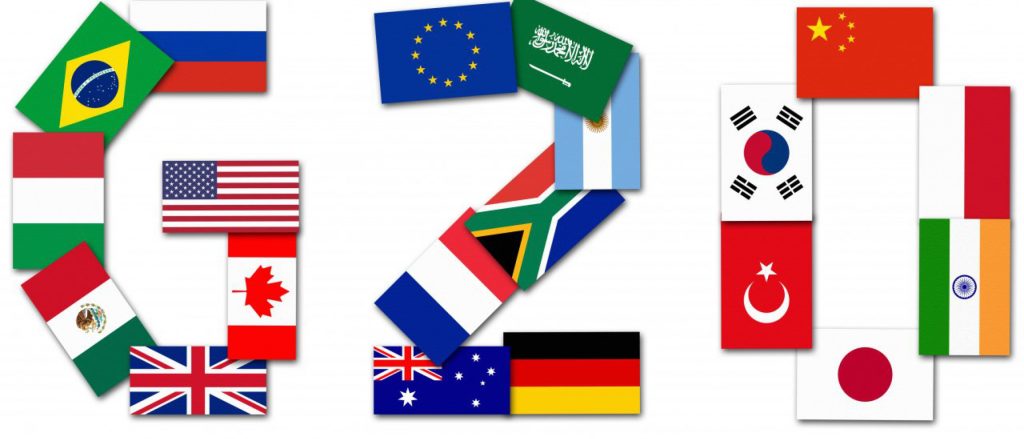
    • Who are the members? The G20 comprises Argentina, Australia, Brazil, Canada, China, EU, France, Germany, India, Indonesia, Italy, Japan, Mexico, Russia, Saudi Arabia, South Africa, South Korea, Turkey, UK and USA.

    The objectives of the G20

    • Stability: The Group was formed with an aim of studying, reviewing, and promoting high-level discussion of policy issues pertaining to the promotion of international financial stability.
    • Fiscal responsibilities: The forum aims to pre-empt the balance of payments problems and turmoil in financial markets by improved coordination of monetary, fiscal, and financial policies.
    • Universal Support: The forum seeks to address issues that go beyond the responsibilities of any one organization.
    • Policy coordination between its members in order to achieve global economic stability and sustainable growth.

    Origin and Evolution

    • The G20 was created in response to both the financial crises that arose in a number of emerging economies in the 1990s and to a growing recognition that some of these countries were not adequately represented in global economic discussion and governance.
    • In December 1999, the Finance Ministers and Central Bank Governors of advanced and emerging countries of systemic importance met for the first time in Berlin, Germany, for an informal dialogue on key issues for global economic stability.
    • Since then, Finance Ministers and Central Bank Governors have met annually. India hosted a meeting of G20 finance ministers and central bank governors in 2002. G20 was raised to the Summit level in 2008 to address the global financial and economic crisis of 2008.

    Organizational Structure of G20

    • The G-20 operates without a permanent secretariat or staff. The chair rotates annually among the members and is selected from a different regional grouping of countries.
    • The chair is part of a revolving three-member management group of past, present and future chairs referred to as the Troika.
    • The preparatory process for the G20 Summit is conducted through the established Sherpa and Finance tracks that prepare and follow up on the issues and commitments adopted at the Summits.
    • The Sherpas’ Track focuses on non-economic and financial issues, such as development, anti-corruption and food security, while addressing internal aspects such as procedural rules of the G20 process. The Sherpas carry out important planning, negotiation and implementation tasks continuously.
    • The Finance Track focuses on economic and financial issues. The Sherpa and Finance track both rely on the technical and substantive work of a series of expert working groups. Additionally, the thematic agenda is developed through the organization of several Ministerial Meetings, such as the Joint Meeting of Finance and Development Ministers, and the Labour, Agriculture and Tourism Ministerial meetings.

    Significance of G20

    • Together, the G20 members represent 2/3rd of the world population, 85% of the global gross product, 75% of international trade, 80% of global investments in research and development.
    • These figures have remained relatively stable while the corresponding rates for Group of Seven (G7) nations, a smaller group of advanced democracies, have shrunk, as larger emerging markets take up a relatively greater share of the world’s economy.
    • The G20’s membership is still more representative of the current international balance of power than blocs of countries formed earlier, such as the G7.

    Economic significance of G20

    • Include developing countries also: G20 is a platform where the Leaders committed to work with developing countries, particularly low-income countries to support them in implementing their nationally driven policies and priorities which are needed to fulfil internationally agreed development goals, particularly the Millennium Development Goals (MDGs) and reaffirmed their standstill commitment.
    • G20 provides policy coherence, analysis and practical tools to support growth and development. This helps G20 members to better target their cooperation with developing countries and can help amplify development efforts on the international agenda. It promotes inclusive societies and opportunities for all.
    • Coordinated work associated with G20 on human resources has helped many job-seekers with employment opportunities. The G20 members have and will continue to have, important implications for growth and development in Low-Income Developing Countries (LIDCs).
    • G20 plays a critical role in creating an enabling environment for inclusive global growth and development. Its work on ensuring financial stability, promoting growth and avoiding and managing crises is critical in supporting opportunities.
    • In turn, the increasing integration of developing countries into the global economy contributes to the G20’s objective of strong, sustainable, balanced and inclusive global growth.
    • The 2030 Agenda for Sustainable Development also sets an ambitious, transformative and universal agenda for sustainable development efforts. The G20 is well-placed to contribute to its implementation and can maximize its collective impact.

    Achievements of the G20 Group

    • It brought increased participation of emerging countries in global issues. It helped provide a platform for developing countries to interact with developed nations and become part of the global decision-making process.
    • The improvement in the regulations of the economies whose problems led to the crisis and the creation of safety nets to prevent problems in the future.
    • The G20 also specifically helped to provide emergency funds during the 2008 crisis and plays an important role in financing development.

    Shortcomings of the Group

    • No permanent secretariat: Simultaneously, the informal structure of the G20, with a rotating chair and no permanent secretariat, means that agendas are determined each year by the chair and so can swing widely, and formal mechanisms to monitor follow-through on countries’ public commitments are weak.
    • Considered Bias: The G20 is composed of 20 large and important economies. This creates a situation in which small countries have to follow their big brothers, in order to survive.
    • Failed to live up to the expectations: Finance ministers and heads of state now come to the table with their hands tied, their positions determined in advance by their governments and a formal script that precludes meaningful and creative compromises.
    • More showoff and less efficient: Meetings have become talkfests and photo opportunities. The willingness to come together in the hostile environment of late 2008 and early 2009 has entirely dissipated. The G20 agenda utterly fails to break with the tired, broken policies of the free market.
    • Lack of consensus: At recent summits, countries have struggled to reach a unified consensus—the hallmark of previous iterations of the conference—as the interests of high- and low-income economies continue to diverge.

    Bali G20 summit, 2022

    Indonesia has focused on three key pillars in its presidency of G20 presidency:

    • Global health architecture: president of Indonesia Joko Widodo talked about a global contingency fund for medical supplies, building capacity in developing countries to manufacture vaccines and the creation of global health protocols and standards.
    • Sustainable energy transition: as part of its roadmap to reach net zero by 2060, Indonesia had slashed the coverage area of forest fires sevenfold. The country has restored peatlands and rehabilitated 50,000 hectares of mangrove forests.
    • Digital transformation

    Opportunity for India: 2023 G20 India Summit

    • India’s presidency of the G20 grouping next year arguably the sole remaining effective forum for global governance presents an enormous opportunity to accelerate sustainable growth within India, in the emerging world, and beyond.

    1] Underlining the need for a new framework

    • Redefining common concerns: First, the presumed equality that we are all in the same boat, recognized in the case of climate change, needs to be expanded to other areas with a global impact redefining ‘common concerns’
    • Second, emerging economies are no longer to be considered the source of problems needing external solutions but a source of solutions to shared problems.
    • Ensuring adequate food, housing, education, health, water and sanitation and work for all should guide international cooperation.
    • Principles of common but differentiated responsibilities for improving the quality of life of all households can guide deliberations in other fora on problems that seem intractable in multilateralism based on trade and aid.

    2] Collaboration around science and technology

    •  The global agenda has been tilted towards investment, whereas science and technology are the driving force for economic diversification, sustainably urbanizing the world, and ushering the hydrogen economy and new crop varieties as the answer to both human well-being and global climate change.
    •  A forum to exchange experiences on societal benefits and growth as complementary goals would lead to fresh thinking on employment and the environment.

    3] Redefining digital access as a universal service

    • Harnessing the potential of the digital-information-technology revolution requires redefining digital access as a “universal service” that goes beyond physical connectivity to sharing specific opportunities available.
    • For global society to reap the fruits of the new set of network technologies, open-access software should be offered for more cost-effective service delivery options, good governance and sustainable development.

    4] Collaboration in space technology

    • Space is the next frontier for finding solutions to problems of natural resource management ranging from climate change-related natural disasters, and supporting agricultural innovation to urban and infrastructure planning.
    • Analysing Earth observation data will require regional and international collaboration through existing centers that have massive computing capacities, machine learning and artificial intelligence.

    5] Collaboration in the health sector

    • Public health has to learn from the COVID-19 fiasco with infectious diseases representing a market failure.
    • A major global challenge is the rapidly growing antimicrobial resistance which needs new antibiotics and collaboration between existing biotechnology facilities.

    6]  Avoiding strategic competition

    • Overriding priority to development suggests avoiding strategic competition.
    • Countries in the region will support building on the 1971 UNGA Declaration designating for all time the Indian Ocean as a zone of peace and non-extension into the region of rivalries and conflicts that are foreign to it.

    7] Reviving Global Financial Transaction Tax

    • A Global Financial Transaction Tax, considered by the G20 in 2011, needs to be revived to be paid to a Green Technology Fund for Least Developed Countries.

    Conclusion

    • The role of G20 has become more and more fierce and integral. A comprehensive and collective endeavor is a need for an hour for the institution to live.
    • Also, India’s presidency next year must leave the grouping with the agility and energy to respond to new realities, and it must create a future-ready multilateralism through a novel and robust institutional architecture.
    • It is said that “Those who hold the pen, write the rules”. The time has come for India to both hold the pen and write the rules for more equitable global economics and governance.

    Click and get your FREE Copy of CURRENT AFFAIRS Micro Notes

    (Click) FREE 1-to-1 on-call Mentorship by IAS-IPS officers | Discuss doubts, strategy, sources, and more

  • Indian Army and PLA clash near Arunachal Border

    arunachal-lac

    The Indian troops deployed in the area of face-off in Tawang sector gave a befitting response to the Chinese troops and the number of Chinese soldiers injured in the clash is more than the Indian soldiers.

    Increased clashes at LAC

    • In January 2021, Indian and Chinese troops were involved in a face-off in a disputed stretch in Nakula area of North Sikkim.
    • In 2017, troops of India and China were engaged in a 73-day stand-off in Doklam tri-junction area which even triggered fears of a war between the two neighbours.

    What is LAC- the Line of Actual Control?

    • The LAC is the demarcation that separates Indian-controlled territory from Chinese-controlled territory.
    • India considers the LAC to be 3,488 km long, while the Chinese consider it to be only around 2,000 km.
    • It is divided into three sectors: the eastern sector which spans Arunachal Pradesh and Sikkim, the middle sector in Uttarakhand and Himachal Pradesh, and the western sector in Ladakh.
    • The LAC is only a concept – it is not agreed upon by the two countries, neither delineated on a map nor demarcated on the ground.

    When did India accept the LAC?

    • The LAC was discussed during Chinese Premier Li Peng’s 1991 visit to India, where PM P V Narasimha Rao and Li reached an understanding to maintain peace and tranquillity at the LAC.
    • India formally accepted the concept of the LAC when Rao paid a return visit to Beijing in 1993 and the two sides signed the Agreement to Maintain Peace and Tranquillity at the LAC.
    • The reference to the LAC was unqualified to make it clear that it was not referring to the LAC of 1959 or 1962 but to the ‘LAC’ at the time when the agreement was signed.
    • To reconcile the differences about some areas, the two countries agreed that the Joint Working Group on the border issue would take up the task of clarifying the alignment of the LAC.

    Issues with LAC

    • India’s claim line is the line seen in the official boundary marked on the maps as released by the Survey of India, including both Aksai Chin and Gilgit-Baltistan.
    • In China’s case, it corresponds mostly to its claim line, but in the eastern sector, it claims entire Arunachal Pradesh as South Tibet.
    • However, the claim lines come into question when a discussion on the final international boundaries takes place, and not when the conversation is about a working border, say the LAC.

    Why is LAC so disputed?

    • The delineation of the LAC has also not been done based on the accepted norms of control.
    • This has resulted in the existence of a number of areas of differing perceptions all across the LAC which is the primary cause of conflict.
    • China has changed its documented stance and has been looking for justifications for the conflict escalation.

    Worry for India

    • China is developing infrastructure in the Indian-claimed areas.
    • Moreover, it is being developed at an unprecedented pace by China in these areas.
    • These are potential sovereignty markers which will be a restricting factor for future negotiations.


    Click and get your FREE Copy of CURRENT AFFAIRS Micro Notes

    (Click) FREE 1-to-1 on-call Mentorship by IAS-IPS officers | Discuss doubts, strategy, sources, and more

  • What are Western Disturbances?

    disturbance

    The days have been unusually warm for winter in New Delhi with the maximum temperature remaining above normal mostly on account of fewer western disturbances affecting this year.

    Western Disturbances

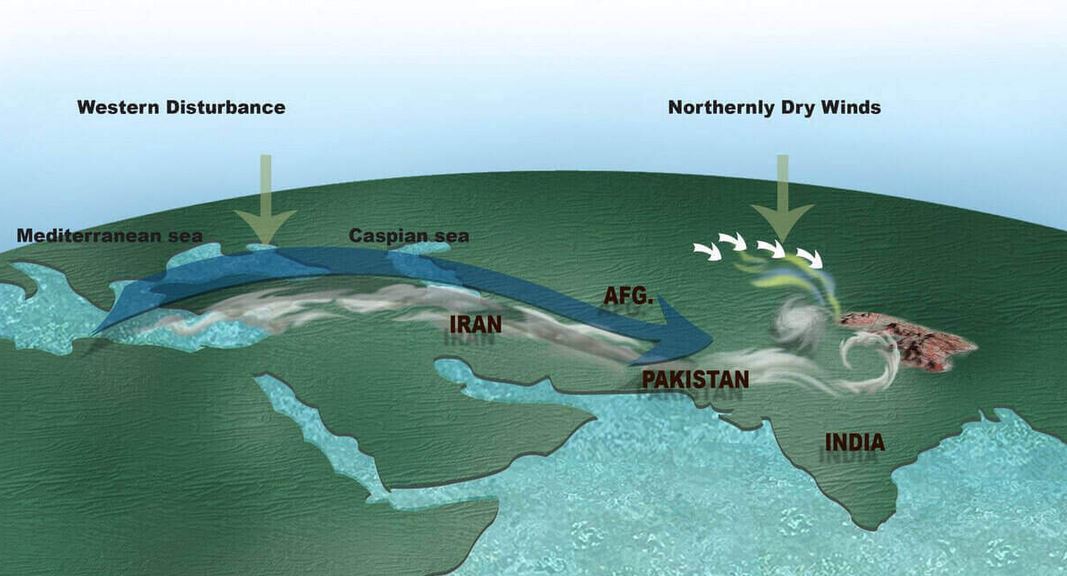
    • A western disturbance is an extratropical storm originating in the Mediterranean region that brings sudden winter rain to the northwestern parts of the Indian subcontinent.
    • They are labelled as an extra-tropical storm originating in the Mediterranean, is an area of low pressure that brings sudden showers, snow, and fog in northwest India.
    • In the term “extra-tropical storm”, storm refers to low pressure. “Extra-tropical” means outside the tropics. As the WD originates outside the tropical region, the word “extra-tropical” has been associated with them.
    • It is a non-monsoonal precipitation pattern driven by the westerlies.
    • The moisture in these storms usually originates over the Mediterranean Sea, the Caspian Sea and the Black Sea.
    • Extratropical storms are global phenomena with moisture usually carried in the upper atmosphere, unlike their tropical counterparts where the moisture is carried in the lower atmosphere.
    • In the case of the Indian subcontinent, moisture is sometimes shed as rain when the storm system encounters the Himalayas.
    • Western disturbances are more frequent and strong in the winter season.

    Impact: Winter Rainfall and Extreme Cold

    • Western disturbances, specifically the ones in winter, bring moderate to heavy rain in low-lying areas and heavy snow to mountainous areas of the Indian Subcontinent.
    • They are the cause of most winter and pre-monsoon season rainfall across northwest India.
    • An average of four to five western disturbances forms during the winter season.

    Its significance

    • Precipitation during the winter season has great importance in agriculture, particularly for the rabi crops.
    • Wheat among them is one of the most important crops, which helps to meet India’s food security.

    Try this PYQ:

    Consider the following statements:

    1. The winds which blow between 30°N and 60°S latitudes throughout the year are known as westerlies.
    2. The moist air masses that cause winter rains in the North-Western region of India are part of westerlies.

    Which of the statements given above is/are correct?

    (a) Only 1

    (b) Only 2

    (c) Both 1 and 2

    (d) Neither 1 nor 2


    Post your answers here.


    Click and get your FREE Copy of CURRENT AFFAIRS Micro Notes

    (Click) FREE 1-to-1 on-call Mentorship by IAS-IPS officers | Discuss doubts, strategy, sources, and more

  • Tamil Nadu’s CM Breakfast Scheme

    This newscard talks for replicating Tamil Nadu’s CM breakfast scheme in other states.

    CM’s Breakfast Scheme

    • The scheme covers around 1.14 lakh students in 1,545 schools which include 417 municipal corporation schools, 163 municipality schools and 728 taluk and village panchayat-level schools.
    • The inauguration of the scheme marks an important milestone in the State’s history of providing free meals to school students.

    How has the idea evolved?

    (a) Pre-independence

    • In November 1920, the Madras Corporation Council approved a proposal for providing tiffin to the students of a Corporation School at Thousand Lights at a cost not exceeding one anna per student per day.
    • Theagaraya Chetty, the then President of the Corporation and one of the stalwarts of the Justice Party, said the boys studying at the school were poor, which affected the strength of the institution ‘greatly’.
    • The scheme, which was extended to four more schools and facilitated higher enrollment of students.

    (b) Post-independence

    • The concept saw a Statewide application in 1956 when the then CM K. Kamaraj decided to provide free noon meal to poor children in all primary schools across the State.
    • The Budget for 1956-57 contained a provision for supplying mid-day meals to schoolchildren for 200 days a year, initially covering 65,000 students in 1,300 feeding centres.
    • In July 1982, it was left to the then CM MG Ramachandran to extend the programme to children in the 2-5 age group in Anganwadis and those in 5-9 age group in primary schools in rural areas.
    • Subsequently, the scheme now called Puratchi Thalaivar MGR Nutritious Meal Programme — was extended to urban areas as well.
    • Since September 1984, students of standards VI to X have been covered under the scheme.

    Beneficiaries of the programme

    • As of now, there are nearly 7 lakh beneficiaries spread over 43,190 nutritious meal centres.
    • This includes around 3,500 students of National Child Labour Project (NCLP) special schools.
    • Besides, as a consequence of the collaborative implementation of the Integrated Child Development Scheme (ICDS) and the nutritious meal programme, around 15.8 lakh children in the age group of 2+ to 5+ years receive nutritious meals.

    Impact on school education

    • Rise in enrolment: After the improved version of the mid-day meal scheme in 1982, the Gross Enrollment Ratio (GER) at primary level (standards I to V) went up by 10% during July-September, 1982 as compared to the corresponding period in 1981.
    • Girls’ enrolment: The rise in boys’ enrollment was 12% and in the case of girls, 7%, according to a publication brought out by the Tamil Nadu government on the occasion of the launch of the Scheme.
    • Increase in attendance: Likewise, attendance during July-September 1982 rose by 33% over the previous year’s figure.

    Focus areas programme

    • Anaemia is a major health problem in Tamil Nadu, especially among women and children, says the 2019-21 National Family Health Survey (NFHS)-5’s report.
    • From 50% during the period of the 2015-16 NFHS-4, the prevalence of anaemia in children now went up to 57%.
    • This and many other health issues can be addressed through the combined efforts of the departments of School Education, Public Health and Social Welfare and Women Empowerment.
    • Besides, a continuous and rigorous review of the progress of the scheme and nutritious meal programme should be carried out in a sustained manner.

    Why it can be implemented in other states?

    • An interesting feature of this scheme is the cost-effective delivery of the service as it is complementary to the existing schemes.
    • Further, the income of the Anganwadi workers substantially increased on account of multiple roles played by them.
    • In the same way, the morning breakfast scheme makes use of the physical infrastructure (like cooking place and utensils) built for mid-day meals scheme.

    Conclusion

    • In other words, with small additional expenditure, the government is able to provide substantial benefits to the children
    • The scheme must be extended to all the schools in the state.
    • Further, the scheme is worth replicating in other states in India.


    Click and get your FREE Copy of CURRENT AFFAIRS Micro Notes

    (Click) FREE 1-to-1 on-call Mentorship by IAS-IPS officers | Discuss doubts, strategy, sources, and more

  • [pib] 150th birth anniversary of Sri Aurobindo’s

    aurobindo

    PM will participate in a program commemorating Sri Aurobindo’s 150th birth anniversary.

    Sri Aurobindo (1872 –1950)

    • Sri Aurobindo Ghose was a philosopher, yogi, maharishi, poet, and Indian nationalist.
    • He was also a journalist, editing newspapers such as Vande Mataram.
    • He joined the Indian movement for independence from British colonial rule, until 1910 was one of its influential leaders.

    Major activities                

    • Aurobindo studied for the Indian Civil Service at King’s College, Cambridge, England.
    • After returning to India he took up various civil service works under the Maharaja of the Princely state of Baroda.
    • He became increasingly involved in nationalist politics in the Indian National Congress and the nascent revolutionary movement in Bengal with the Anushilan Samiti.
    • He was arrested in the aftermath of a number of bombings linked to his organization in a public trial where he faced charges of treason for Alipore Conspiracy.
    • However, Sri Aurobindo could only be convicted and imprisoned for writing articles against British colonial rule in India.


    Try this PYQ:

    Q. What was the main reason for the split in the Indian National Congress at Surat in 1907?

    (a) Introduction of communalism into Indian politics by Lord Minto

    (b) Extremists’ lack of faith in the capacity of the moderates to negotiate with the British Government

    (c) Foundation of Muslim League

    (d) Aurobindo Ghosh’s inability to be elected as the President of the Indian national Congress


    Post your answers here.


    Click and get your FREE Copy of CURRENT AFFAIRS Micro Notes

    (Click) FREE 1-to-1 on-call Mentorship by IAS-IPS officers | Discuss doubts, strategy, sources, and more

  • (Just launched) Smash Prelims 2023 January Edition | Target 120+ in UPSC Prelims 2023 in next 160 days | 1st Test starting from 10th January

    (Just launched) Smash Prelims 2023 January Edition | Target 120+ in UPSC Prelims 2023 in next 160 days | 1st Test starting from 10th January

    Just around 145 days are left for UPSC Prelims 2023 now.

    There is no time to read everything, no time to make lengthy notes, and to speak of facts only 1% of the aspirants will be able to clear UPSC Prelims 2023.

    But, starting today, you can guarantee a 120+ score in UPSC Prelims with Smash Prelims under Santosh sir’s guidance and mentorship. How? Continue reading.

    Enrollments are open for Smash Prelims 2023 January Edition

    Course completion (GS+Current Affairs) Lectures, Test Series, 1-to-1 Mentorship and PDF Notes

    Read about 6 pillared approach by Santosh Gupta sir below

    Table of Content:

    1. About Smash Prelims 2023- Jan batch
    2. Why Smash Prelims for UPSC Prelims 2023?
    3. Smash Prelims Test Timetable
    4. Smash Prelims Lecture Timetable
    5. Program details
    6. What do our students have to say?

    Smash Prelims 2023

    Smash Prelims January batch will be more than a crash course for UPSC Prelims 2023 that incorporates 6 pillared-approach by Santosh sir.

    The focus of this program will be on:

    1. Syllabus completion – both GS and Current affairs for 2 yrs
      • Most important and probable topics will be covered in a timely manner leaving ample time for multiple revisions.
      • Special classes on topics including Polity, History, Economics, Geography, Sessions to cover Environment innovatively, Science & Technology and more. (check timetable for lectures here)
      • To be done through LIVE lectures, Notes will be shared.
      • Comprehensive and exhaustive notes covering everything that is important.
    2. Time management and result-oriented preparation
      • Strategy and plan- both micro and macro by Santosh sir. This will ensure syllabus completion and rigorous practice through the test series.
      • Santosh sir’s personal guidance through weekly Zoom sessions
      • 1-1 mentorship calls after every test.
    3. Evidence-based questions based on the UPSC’s current trends
      • To keep your preparation relevant to UPSC 2023 pattern
      • Bringing efficiency to your preparation. Leaving out what is not important.
    4. Constant and gradual improvement through
      • One-to-one mentorship sessions with a dedicated mentor
      • Weekly Zoom sessions with Santosh sir
      • Sessions with UPSC rankers
    5. Imparting skills to attempt and solve Prelims paper
      • Targeting an accuracy rate of 90% and attempting maximum questions.
      • Logical and intelligent question-solving techniques – Tikdams.
    6. Evolving your personal approach for attempting UPSC prelims paper
      • Accuracy vs a high number of attempts. Accuracy improvement sessions.
      • Attempting from question 1 or go section-wise.

    What makes Smash Prelims the best program for UPSC Prelims 2023?

    Mentorship by Santosh sir: Highly experienced and excellent record

    Tavishi failed thrice in the Prelims before but after joining Santosh sir’s mentorship cleared Prelim 2022 on her 4th attempt.

    Smash Prelims 2023: Program inclusion

    1. One-to-One mentorship for UPSC Prelims 2023 by Santosh sir and the mentor team.
    2. Evidence-based and UPSC level test series: 60 Tests
      • 44 tests (14 basics + 8 Advanced + 10 FLT + 6 CSAT + 6 CA ) for back to back intensive revision
      • 16 Tests for Practice
      • Mandatory mentorship and doubt resolution call after every test
    3. Smash Value LIVE lectures: Most important and probable GS and Current Affairs topics for Prelims 2023. Lectures will be recorded and PDF notes will be shared
    4. Weekly LIVE Zoom sessions with Santosh Sir for strategy, doubt clearance, and QnA
    5. Skills to attempt and solve UPSC MCQs
      • LIVE MCQs solving (1000 questions) session
      • Intelligent Elimination techniques for a sure score of 120+ marks
    6. 1.5 yrs worth of complete current affairs topics (LIVE) covered by the core CD faculty in featured classes with a LIVE discussion + PDF notes
    7. CA magazine + budget and economic survey will be provided for free

    Smash Prelims 2023 Lecture Timetable

    Smash Prelims 2023 Test Timetable

    Other Details:

    Test start date: 10th Jan 2023

    Lecture start date: 15th December 2022

    Course fee: Rs 25,000 Rs. 20,000 + GST

    You are 8 times more likely to clear Prelims 2023 with Santosh sir’s mentorship under the Smash Prelims program


    What CivilsDaily’s Smash Prelims students have to say?

    Santosh sir’s guidance, a crucial part of the first prelims success for Rahul

    A miracle for Debarpita, Smash Prelims 2022 student

    Schedule a free mentorship call for prelims 2023 | click and fill up the form


    Other messages showering gratitude for Santosh sir and Smash Prelims team

  • Karnataka-Maharashtra border Dispute: Is it just a political tool?

    border

    Context

    • The eruption of strong language chauvinism on the border of Karnataka and Maharashtra is neither sudden nor primarily linguistic. The number of speakers of both of Marathi and Kannada languages has been overwhelmingly large. If it is not language, is it the sudden memory of a badly mangled territorial border that has irked people?

    Click and get your FREE Copy of CURRENT AFFAIRS Micro Notes

    What is the dispute in short?

    • A petition filed by the Maharashtra government, challenging some provisions of the State Reorganisation Act, 1956 and demanding 865 villages from five districts of Karnataka. The five districts are Belagavi, Karwar, Vijayapura, Kalaburagi and Bidar.,
    • In Karnataka, tensions are high, especially in Belagavi district, which borders Maharashtra

    border

    When did the dispute begin?

    • Since the State Reorganisation Act passed in 1956: Maharashtra and Karnataka have sparred over the inclusion of some towns and villages along the state border ever since the State Reorganisation Act was passed by the Parliament in 1956. The Act was based on the findings of the Justice Fazal Ali Commission, which was appointed in 1953 and submitted its report two years later.
    • Erstwhile Mysore renamed and formed State of Karnataka and the differences erupted: On November 1, 1956, Mysore state later renamed Karnataka was formed, and differences between the state and the neighbouring Bombay state later Maharashtra erupted.
    • View of Maharashtra: Maharashtra was of the view that the northwestern district of Karnataka, Belagavi, should be part of the state, leading to a decade-long violent agitation and formation of Maharashtra Ekikaran Samithi (MES), which still holds sway in parts of the district and the eponymous city

    border

    What was the Centre’s response?

    • Union government ste up a Commission in 1966: Amid protests and pressure from Maharashtra, the Union government set up a commission under retired Supreme Court judge Justice Meharchand Mahajan on October 25, 1966. S Nijalingappa was the karnataka Chief minister then and VP Nayak was his Maharashtra counterpart.
    • Report come up with a settlement on merging of towns and villages: The report was expected to be a binding document for both states and put an end to the dispute. The commission submitted its report in August 1967, where it recommended merging 264 towns and villages of Karnataka (including Nippani, Nandgad and Khanapur) with Maharashtra, and 247 villages of Maharashtra (including South Solapur and Akkalkot) with Karnataka.
    • Report tabled in 1970 but no implementation took place as it became a poll issue: Though the report was tabled in 1970 in the Parliament, it was not taken up for discussion. Without the implementation of the recommendations, demands of Marathi-speaking regions to be part of Maharashtra and Kannada-speaking regions to be part of Karnataka continued to grow. MES made it a poll issue in many parts of Belagavi and won successive elections from constituencies in the district.

    Bilingualism: an essential element of the culture of the area

    • Extended families on both sides: The castes and communities on both sides of the disputed border have their extended families spread on either side of it.
    • Harmonious Cultural exchange: All of the harmoniums and sitars played by the greatest among Karnataka’s singers have been made in Maharashtra’s Miraj town for the last 120 years.
    • Influence of Bhakti movement on one another: In the past, the bhajans of Tukaram have made their way into the hearts of the Kannada speakers with as much ease as did the vachanas of Basaveshwar’s saint-followers into the minds of Marathi speakers.
    • Influence of one another’s language: Thousands of Marathi words are of Kannada origin and a similar number of words in Kannada have assimilated the Indo-Aryan roots through Marathi.

    Critique: Dispute is more of a political tool

    • Dispute is visible but not in the essence: The dispute is in the name of language, but it is not linguistic in essence. It is in the name of a border, but it is not territorial in essence.
    • The dispute is becoming more of a political demand: People know that the area will see disturbance when politicians want to unleash it. Appealing to language chauvinism acquires an instrumentalist-political demand.
    • Diverting the discontent: The truth is, neither the language nor the people along the state border are an issue for them, as they should be. What matters to the political war-lords is to find a way of diverting the discontent, no matter what harm it brings to the harmony of communities in the area.

    Conclusion

    • Almost two decades after the petition, its maintainability remains challenged. Karnataka has resorted to Article 3 of the Indian Constitution to argue that the Supreme Court does not have the jurisdiction to decide the borders of states, and only Parliament has the power to do so. Maharashtra has referred to Article 131 of the Constitution, which says that the Supreme Court has jurisdiction in cases related to disputes between the Union government and states.

    Mains Question

    Q. There seems the cultural, traditional and lingual exchange in the border areas of the states in India. Despite of the cultural amity, disputes resurface time ang again. Discuss with a case of Maharashtra Karnataka border dispute.

    (Click) FREE1-to-1 on-call Mentorship by IAS-IPS officers | Discuss doubts, strategy, sources, and more

  • Is it Jawaharlal Nehru’s fault?

    Nehru

    Context

    • Jawaharlal Nehru has recently come under criticism for declining to accept the Kashmir Maharaja’s initial offer to accede to India in September 1947, several weeks before the tribal invasion. Even great statesmen make occasional mistakes and Nehru was no exception. However, a careful examination of the historical background shows that Prime Minister Nehru cannot be faulted in this case.

    Click and get your FREE Copy of CURRENT AFFAIRS Micro Notes

    Background: Jammu and Kashmir’s Maharaja Hari Singh and his stand on accession

    • Stand against accession with either India or Pakistan: Maharaja Hari Singh of Jammu and Kashmir was one of the few princely rulers who had held out against accession to either India and Pakistan before the partition of British India.
    • Lord Mountbatten visit and assurance: a couple of months prior to the partition, the Viceroy, Lord Mountbatten, visited Srinagar in an attempt to persuade the Maharaja to opt for one or the other of the two states, offering him an assurance from Sardar Patel that India would raise no objection if the ruler were to opt for Pakistan.
    • Maharaja evaded discussion and hopes for an independent state: The Maharaja entertained his guest in regal style but evaded any discussion on the political issue, pleading a stomach ailment. Hari Singh evidently hoped that, with the lapse of British paramountcy, he would become the ruler of an independent and sovereign state.

    How Maharaja’s hope of a sovereign state got dashed?

    • Uprising assisted by Pakistan: An uprising in Poonch assisted by Pakistani elements.
    • Economic sanctions by Pakistan: an undeclared economic embargo imposed by the Pakistani authorities. Since Kashmir’s main trade exchanges in those days were with Pakistan, the unofficial embargo resulted in great hardship.

    How Maharaja revised his position on accession?

    • Decided to talk on terms of accession and a message to Nehru: Maharaja asked Justice Mehr Chand Mahajan, his prime minister-designate, to convey to Nehru the terms on which he was prepared to accede to India.
    • Nehru urging Maharaja to induct Sheikh Abdullah into state government: Nehru had been urging the Maharaja to induct Sheikh Abdullah, the leader of the secular National Conference, into the state government in order to ensure popular support for the administration.
    • Reluctant to have immediate administrative reforms Maharaja refused: The Maharaja was not agreeable to introducing immediate reforms in the administration of the state. The Maharaja indicated that he was not prepared to do so, at least at this stage.
    • Nehru reiterated to associate Abdullah with the governance of the state: When Mahajan conveyed these terms to Nehru in the third week of September, the latter reiterated that Abdullah should be freed from prison and associated with the governance of the state.

    Nehru

    Why did Nehru insist on bringing Sheikh Abdullah into the administration?

    • He anticipated the armed intervention by Pakistan and armed rebellion: Nehru anticipated armed intervention by Pakistan in Kashmir and foresaw that this could be repulsed only by a government that enjoyed popular support.
    • A letter to Sardar patel before a month before tribal invasion: He set out his views in a letter to Sardar Patel on September 27, 1947, nearly a month before the tribal invasion. This remarkable letter has not received the attention it deserves.
    • Anticipating the demand of the time, he confirmed his way: Nehru, therefore, concluded that the only acceptable course was for the Maharaja to seek the cooperation of Sheikh Abdullah and the National Conference while acceding to India. This was the only effective way of countering Pakistani designs.

    Interesting: Nehru’s letter to Sardar Patel a month before tribal invasion assisted by Pakistan

    • “The Muslim League in the Punjab and the NWFP are making preparations to enter Kashmir in considerable numbers. The approach of winter is going to cut off Kashmir from the rest of India,” he wrote. “I understand that the Pakistan strategy is to infiltrate into Kashmir now and to take some major action as soon as Kashmir is more or less isolated because of the coming winter. I rather doubt if the Maharaja and the State forces can meet the situation by themselves without some popular help… Obviously the only major group that can side with them is the National Conference under Sheikh Abdullah’s leadership.”

    Nehru

    Rest is the story of accession

    • Nehru’s assessment confirmed and Maharaja agreed to his advice: Nehru’s assessment of Pakistan’s plans to invade Kashmir were confirmed within three weeks. It was only at this stage that the Maharaja heeded Nehru’s advice. He inducted Sheikh Abdullah into the government and acceded to India. This had momentous consequences for the defence of Kashmir against the invaders.
    • Resistance against Pakistani invaders: The normal administrative machinery had broken down and responsibility for maintaining law and order had been taken over by National Conference volunteers. Abdullah and his followers organised the popular resistance against the Pakistani invaders.
    • Advance of raiders and then Indian troops were airlifted to assist and protect the state: With the advance of the raiders towards Srinagar, the Maharaja’s administration had virtually collapsed. By the time Indian troops were airlifted to Srinagar on October 27, 1947, the Maharaja had departed to Jammu for safety. The first batches of Indian troops who had been airlifted to Srinagar had arrived without transport vehicles.

    Conclusion

    • Far from being a blunder, Jawaharlal Nehru’s insistence on linking accession to the installation of a popular government in Jammu and Kashmir bears testimony to his foresight and statesmanship.

More posts