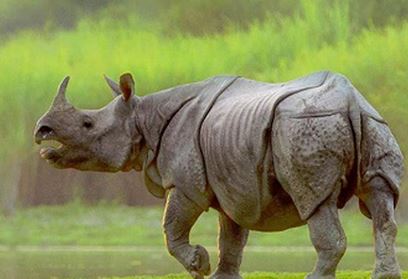
Kaziranga National Park and other protected habitats of the one-horned rhinoceros in Assam have witnessed an 86% drop in poaching since 2016.
Reduction in Rhino Poaching
From 2000 to 2021, poachers killed 190 rhinos in Assam, with a significant drop occurring after 2016.
The announcement was made in a statement marking the celebration of World Rhino Day (22nd September).
About Project Rhino:
Details
Launch Year
2005 (Indian Rhino Vision, 2020)
Objective
To achieve a wild population of at least 3,000 Greater One-Horned Rhinos spread over seven protected areas in Assam by 2020.
Habitat
Terai floodplains of India and Nepal; currently found in Assam, West Bengal, and Uttar Pradesh.
Partners
• Assam Forest Department
• Bodoland Territorial Council
• World Wide Fund for Nature (WWF)
• International Rhino Foundation (IRF)
• US Fish & Wildlife Service
Key Actions
• Translocation of rhinos from Kaziranga and Pobitora to other protected areas (like Manas National Park) to reduce overcrowding.
• Improving protection and security against poaching.
Population Growth
• From 2008 to 2012, 18 rhinos were translocated to Manas National Park.
• By 2020, 14 calves were born in Manas after translocation.
Conservation Status
• IUCN Status: Vulnerable
• CITES: Appendix I
• Wildlife Protection Act, 1972: Schedule I
Significance
Project has helped distribute the rhino population across multiple protected areas, making them less vulnerable to poaching and ensuring a stable and sustainable population.
The population has increased from around 200 in the 1990s to approximately 2,900 today.
PYQ:
[2019] Consider the following statements:
Asiatic lion is naturally found in India only.
Double-humped camel is naturally found in India only.
One-horned rhinoceros is naturally found in India only.
Which of the statements given above is/are correct?
(a) 1 only
(b) 2 only
(c) 1 and 3 only
(d) 1, 2 and 3
The Ministry of Earth Sciences (MoES) successfully concluded the Swachh Sagar, Surakshit Sagar 3.0 campaign on September 21st, 2024, organizing beach clean-up drives at more than 80 locations across India’s coastline.
What is Swachh Sagar, Surakshit Sagar 3.0?
It is a 75-day citizen-led campaign for improving ocean health through collective action.
It is the third edition of a flagship initiative launched to raise awareness about marine pollution and promote the conservation of coastal areas.
The campaign is part of India’s broader Swachh Bharat Mission and Swachhata Hi Seva initiative and aims to promote cleanliness, sustainable practices, and protect marine ecosystems.
It also commemorated International Coastal Cleanup Day.
Key Highlights
More than 60 tons of waste were removed, including plastic, metal, cloth, rubber, and wood debris.
The campaign promoted sustainable coastal practices and encourages communities to adopt eco-friendly habits, playing a vital role in reducing marine debris and conserving biodiversity.
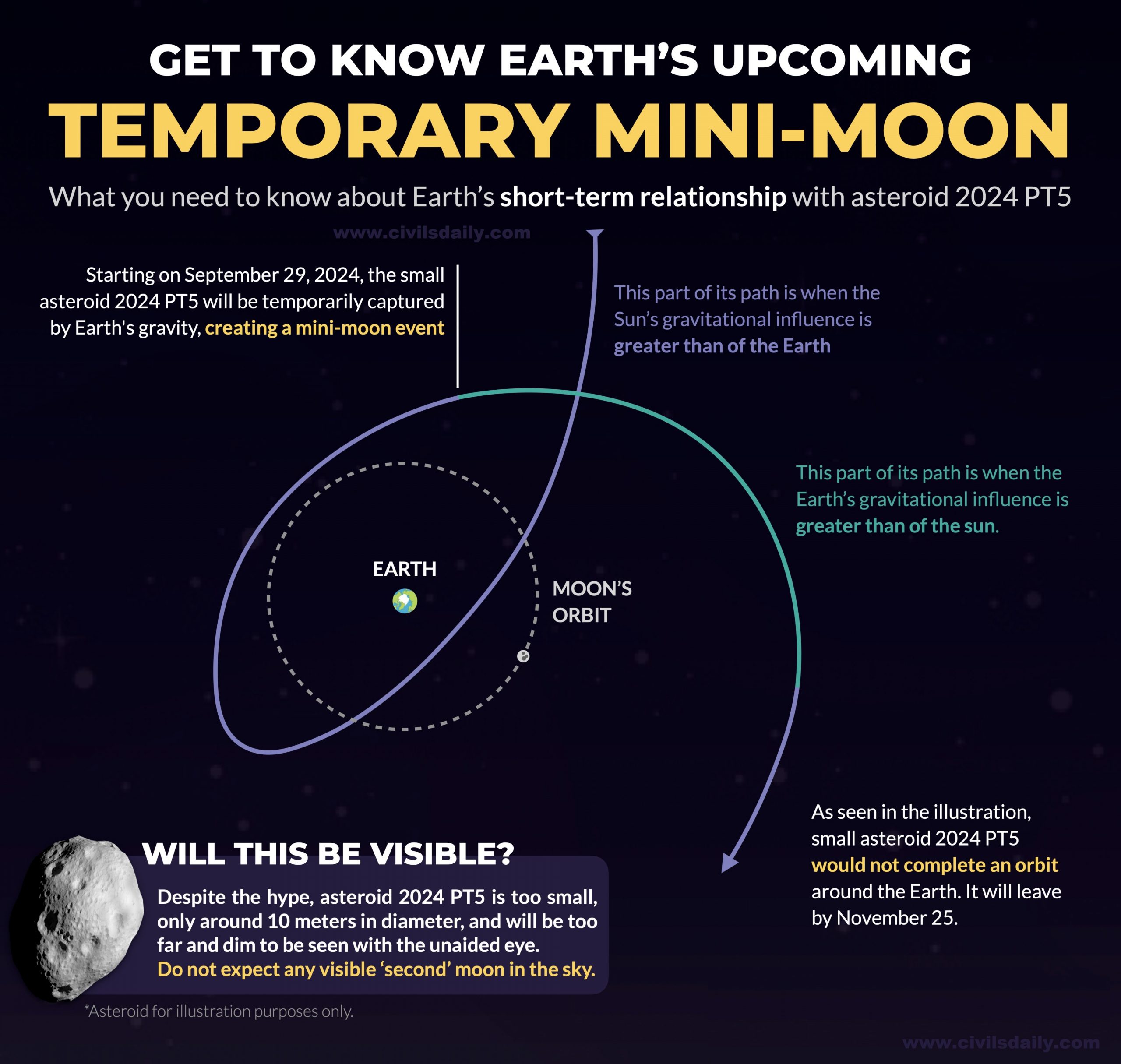
In a rare celestial event, Earth’s gravitational field will witness a small asteroid, 2024 PT5, creating a “mini-moon” for two months.
What is Mini-Moon?
A mini-moon is a small asteroid temporarily captured by Earth’s gravitational field, orbiting the planet for a short period before escaping back into space.
Unlike Earth’s permanent moon, mini-moons only stay for a few monthsto a few years before being ejected from orbit.
Mini-moons are a rare occurrence because most asteroids either pass by Earth or burn up in the atmosphere rather than being captured by Earth’s gravity.
Mini-moons are usually small, often just a few meters in diameter.
For example, 2024 PT5 is only about 33 feet (10 meters) in length.
They are hard to detect and are usually discovered using advanced telescopicsurveys like NASA’s Asteroid Terrestrial-impact Last Alert System (ATLAS).
Significance of Mini-Moons
Mini-moons offer scientists a unique opportunity to study near-Earth objects, enhancing our understanding of asteroids’ behavior and composition.
Mini-moons could contain valuable minerals or water, making them potential targets for future space missions to extract resources.
Studying mini-moons helps scientists learn more about Earth’s gravitational influence and how it interacts with space objects.
PYQ:
[2011] What is the difference between asteroids and comets?
Asteroids are small rocky planetoids, while comets are formed of frozen gases held together by rocky and metallic material.
Asteroids are found mostly between the orbits of Jupiter and Mars, while comets are found mostly between Venus and Mercury.
Comets show a perceptible glowing tail, while asteroids do not.
Which of the statements given above is/are correct?
(a) 1 and 2 only
(b) 1 and 3 only
(c) 3 only
(d) 1, 2 and 3
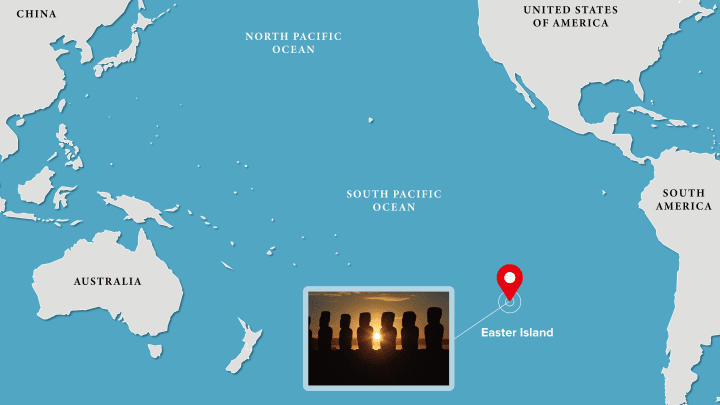
The Volcanic Island of Rapa Nui (also known as Easter Island) has always been mysterious due to its harsh geography and iconic Moai statues.
About Rapa Nui Island
Details
Location
• Situated in the southeastern Pacific Ocean, Rapa Nui is part of Polynesia and a territory of Chile.
• One of the most remote islands, about 3,500 km from Chile.
Size
• Covers an area of 160 sq. km.
Geographical details
• The island has a volcanic origin, featuring lava-covered terrain and rocky soil.
• Notable volcanoes include Terevaka, Poike, and Rano Kau.
• Tropical climate with average temperatures ranging between 18°C and 28°C.
• Rainfall occurs mostly in the winter months.
Moai Statues
• Famous for over 900 moai statues, some as tall as 40 ft and weighing 75 tonnes.
• These statues were built between the 13th and 16th centuries to honor revered ancestors.
• Carved from volcanic rock and transported across great distances.
Discovery
• Discovered by European sailors on Easter Sunday, 1722, which gave it the name Easter Island.
• The island had been settled centuries earlier by Polynesian explorers who navigated thousands of kilometers of ocean.
Significance of New Findings
• Recent studies, including the use of AI analysis of satellite images, have debunked earlier theories of ecological collapse.
• Genetic studies show Native American ancestry before European contact, indicating earlier interactions with South America.
PYQ:
[2018] Consider the following statements:
1. The Barren Island volcano is an active volcano located in the Indian territory.
2. Barren Island lies about 140 km east of Great Nicobar.
3. The last time the Barren Island volcano erupted was in 1991 and it has remained inactive since then.
Which of the statements given above is/are correct?
Although voters voiced concerns about the climate crisis, it was overlooked during the Lok Sabha election campaign.
2023 Climate Targets of Indian Government
Renewable Energy Goals: India aims to achieve 500 GW of non-fossil fuel-based energy capacity by 2030, with a target for 50% of its total energy needs to come from renewable sources.
Emissions Goals: The updated Nationally Determined Contributions (NDC) set a goal to reduce emissions intensity of GDP by 45% compared to 2005 levels by 2030.
Carbon Sink Targets: India plans to create an additional carbon sink of 2.5–3 billion metric tons of CO2 equivalent through enhanced forest and tree cover by 2030.
Net Zero Commitment: Aiming for net zero emissions by 2070, India has committed to significant reductions in projected emissions, including a pledge to reduce one billion tonnes of emissions from now until 2030.
As of late 2023, India has already achieved a cumulative electric power capacity from non-fossil fuel sources at approximately 43.81%, ahead of its initial targets.
Why is addressing the climate crisis an urgent priority for policymakers and the global community?
The Paris Agreement includes a commitment for developed countries to mobilize $100 billion per year by 2020 to support climate action in developing countries. This target was extended until 2025, with new financial goals.
The next five years are crucial for India’s climate action to meet its ambitious 2030 targets, as the Roadmap for 2025 Climate Change Funds are about to end.
India’s heavy dependence on coal, with clean energy contributing only 22% of the electricity mix, underscores the need for an urgent transition.
Immediate attention is required to manage heat stress, improve air quality, handle waste, and enhance energy efficiency.
What specific actions or policies can be implemented?
Enhanced Carbon Markets: Launching the ‘India Carbon Market’ in 2026 aims to help achieve Nationally Determined Contributions (NDCs) and could become the world’s largest emissions trading system by 2030.
Mitigating Pollutants: Focus on reducing CO2 and short-lived superpollutants like methane, black carbon, and hydrofluorocarbons, which have significant short-term warming effects.
Integrating specific treaties into the Paris Agreement, similar to the Montreal Protocol, with a new treaty targeting methane reductions by 2030 would be helpful.
Financial Incentives: Developing financial mechanisms and nuanced carbon trading approaches to encourage faster climate action and effective pollutant management.
What challenges or barriers exist in the implementation of a comprehensive climate crisis agenda?
Governance and Coordination: Need for a Constitutional nodal authority to ensure coordinated climate action across various government levels and stakeholders.
Economic and Social Factors: Rising temperatures and associated crises like unemployment and high living costs contribute to public disengagement from climate issues.
Political and Voter Engagement: The 2024 Lok Sabha election’s lack of focus on climate issues highlights the challenge of integrating climate action into mainstream political agendas and addressing voter concerns.
Way forward:
Create a Constitutional Nodal Authority: Form a central body with the authority to oversee, coordinate, and enforce climate policies across various government levels, ensuring effective and unified action.
Prioritize Climate Issues in Political Platforms: Make climate action a central theme in political campaigns and public discussions to boost awareness, engagement, and support for climate policies and initiatives.
Mains PYQ:
Q ‘Climate change’ is a global problem. How India will be affected by climate change? How Himalayan and coastal states of India will be affected by climate change? (UPSC IAS/2017)
COP29 is set to be hosted by Azerbaijan from November 11 to 22. It has a central focus on finalising a agreement on Climate Finance Action Fund (CFAF) particularly for the post-2025 period.
Proposals by Azerbaijan:
Azerbaijan has included key proposals in the COP29 Action Agenda, such as:
Increasing global energy storage capacity by six times by 2030.
Promoting a global market for green hydrogen.
Ensuring the carbon footprint from digitisation and data centres is kept to a minimum.
About the Climate Finance Action Fund (CFAF):
The CFAF will be capitalised with contributions from fossil fuel producing countries
It will be headquartered with its secretariat in Baku, Azerbaijan.
It will rely on voluntary contributions from fossil-fuel producing countries and companies.
Azerbaijan, a major petroleum economy, will make the first contribution to kickstart the fund.
Fossil-fuel producing countries and companies will have the option to make annual contributions, either as a fixed sum or based on production volumes.
The funds will be divided equally:
50% will go toward climate projects in developing countries.
50% will support developing nations in implementing national climate action plans.
The fund will become operational once it reaches a minimum corpus of $1 billion.
At least 10 countries must commit to being shareholders for the fund to start.
20% of the revenues generated from investments will be deposited in a Rapid Response Funding Facility (2R2F) providing highly concessional and grant-based support.
What did Paris Agreement of 2015 said on Climate Finance?
Under the Paris Agreement (2015), developed countries are obligated to raise at least $100 billion annually to aid developing nations in their fight against climate change.
This amount is expected to increase after 2025.
Negotiations have been slow, and countries are still debating the quantum of finance that industrialised nations should provide.
PYQ:
[2016] With reference to the Agreement at the UNFCCC Meeting in Paris in 2015, which of the following statements is/are correct?
The Agreement was signed by all the member countries of the UN, and it will go into effect in 2017.
It aims to limit the greenhouse gas emissions so that the rise in average global temperature by the end of this century does not exceed 2ºC or even 1.5ºC above pre-industrial levels.
Developed countries acknowledged their historical responsibility in global warming and committed to donate $1000 billion a year from 2020 to help developing countries to cope with climate change.
Select the correct answer using the code given below:
(a) 1 and 3 only
(b) 2 only
(c) 2 and 3 only
(d) 1, 2 and 3
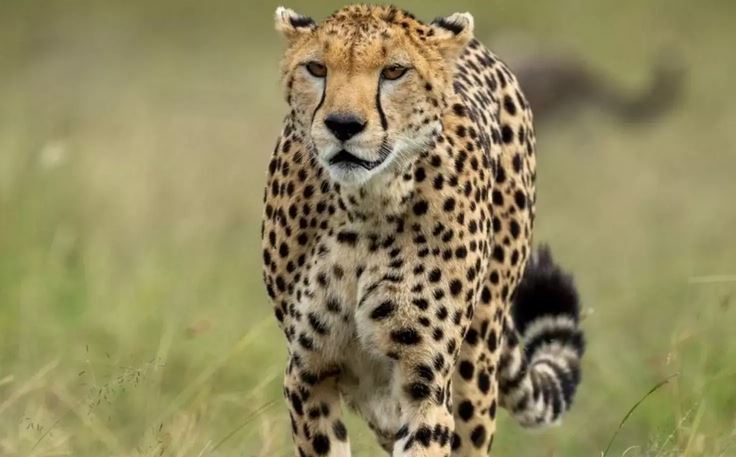
The Cheetah Action Plan (CAP) which aimed to introduce African cheetahs into India’s Open Natural Ecosystems (ONEs), is completing its two years.
About Cheetah:
The cheetah is a fast-running big cat, and there are two types of Cheetahs globally:
African (savannahs, arid mountains, and hilly deserts)
Asiatic (desert and semi-desert areas only in Iran)
Cheetahs live in three main groups: females with cubs, male coalitions, and solitary males. They hunt during the day, preferring dawn and dusk.
The global cheetah population was 6,500 mature individuals (IUCN, 2021).
IUCN Status: Vulnerable (Globally) and Critically Endangered (Asiatic Cheetah)
Cheetah Reintroduction in India:
In India, cheetahs disappeared in the early 1950s due to hunting and the loss of their habitat.
Cheetahs (i.e. Southeast African Cheetah) from Namibia were reintroduced in Kuno National Park(MP) under the Project Cheetah.
This area was deemed a habitat parallel to Maasai Mara (National Park) in Kenya, suitable for cheetahs.
Current Issues:
Despite the initial excitement, all of these cheetahs remain in captivity at Kuno.
Unfortunately, no cheetahs are currently roaming freely in the wild, raising concerns about the success of the reintroduction efforts.
What is Project Cheetah?
Aim: To conserve threatened species and restore ecosystem functions. It is spearheaded by the National Tiger Conservation Authority (NTCA).
The plan involves partnering with other countries to conserve cheetahs, enhancing conservation and eco-tourism in India’s dry forests.
The population should reach Kuno National Park’s capacity in 15 years, needing sustained support.
Sunset Clause: The concept of a sunset clause in the context of Project Cheetah refers to the long-term criteria (at least 30-40 years) for establishing a viable cheetah population in India.
PYQ:
[2012] Consider the following: (2012)
Black-necked crane
Cheetah
Flying squirrel
Snow leopard
Which of the above are naturally found in India?
(a) 1, 2 and 3 only
(b) 1, 3 and 4 only
(c) 2 and 4 only
(d) 1, 2, 3 and 4
Q ‘Climate change’ is a global problem. How India will be affected by climate change? How Himalayan and coastal states of India will be affected by climate change? (UPSC CSE 2015)
Q Describe the major outcomes of the 26th session of the Conference of the Parties (COP) to the United Nations Framework Convention on Climate Change (UNFCCC). What are the commitments made by India in this conference? (UPSC CSE 2021)
Q ‘Clean energy is the order of the day.’ Describe briefly India’s changing policy towards climate change in various international fora in the context of geopolitics. (UPSC CSE 2022)
Prelims:
With reference to the ‘Global Climate Change Alliance’, which of the following statements is/are correct? (UPSC CSE 2017) 1. It is an initiative of the European Union. 2. It provides technical and financial support to targeted developing countries to integrate climate change into their development policies and budgets. 3. It is coordinated by the World Resources Institute (WRI) and the World Business Council for Sustainable Development (WBCSD). Select the correct answer using the codes given below: (a) 1 and 2 only (b) 3 only (c) 2 and 3 only (d) 1, 2 and 3
Mentor’s Comment: The alarming trend of breaching planetary boundaries, highlighted by the shift of Earth’s “overshoot day” from 1970 to 2024, underscores the urgent need for immediate action.
So, what is Earth’s Overshoot Day?
Earth’s Overshoot Day (30 December 1970), is the day when humanity’s demand for resources exceeds the Earth’s ability to regenerate them within a year. The Global Footprint Network, an international research organization, calculates Earth Overshoot Day by dividing the Earth’s biocapacity by humanity’s ecological footprint and multiplying by 365. The remainder is the number of days when humanity exceeds the Earth’s capacity.
Now, as we have exhausted our planet’s capacity to renew its natural resources, we risk upcoming future generations with a depleted and uninhabitable world. We must change our course to not only safeguard the well-being of those currently affected by environmental degradation but also to fulfill our moral obligation to protect the rights and livelihoods of future generations.
_
Let’s learn!
Why in the News?
The Summit of the Future at the UN in September 2024 will bring together stakeholders to explore multilateral solutions to pressing global challenges, to create a more secure and equitable future for all.
About Summit of the Future 2024:
• United Nations is convening this Summit on 20 and 21 September 2024 at UN Headquarters in New York. •Theme: Multilateral Solutions for a Better Tomorrow. •Aim: To bring world leaders together to forge a new international consensus on how we deliver a better present and safeguard the future. •Major Pillars of the Summit: Sustainable development and Financing for development, International peace and security, Science and Technology, Youth and Future generations, Global Governance.
How do different countries view the legal obligations towards future generations?
An argument against Legal Duties: Some, like legal scholar Stephen Humphreys, believe the focus on future generations is just rhetoric belief that distracts from the real needs of people alive today.
It allows governments to prioritize short-term economic gains over environmental protection, by claiming they are securing a better future.
Argument for Future Generations’ Rights: In contrast, a group of legal experts, including Margaretha Wewerinke-Singh, argue that existing human rights law already protects future generations.
They point to the Maastricht Principles, which state that human rights extend across time and that states have legal duties to future generations.
How do Maastricht Principles connect future generations to Climate justice?
•Intergenerational Equity: The Principles assert that human rights are not limited to present generations; they extend to future generations as well. •Right to a Healthy Environment: A core aspect of the Principles is the right to a clean, healthy, and sustainable environment which is essential for ensuring that future generations can enjoy their fundamental human rights, including health, adequate living standards, and access to natural resources. •State Obligations: The Principles clarify that states have binding obligations which include taking proactive measures to combat climate change, promote sustainable development, and prevent environmental degradation that could harm future populations. •Guidance for Legal Frameworks: They help ensure that national and international laws reflect commitments to intergenerational justice, particularly in the context of environmental policies and climate action.
Growing Legal Recognition:
Global Scenario:
Germany’s top court ruled parts of its climate law were unconstitutional for not sufficiently protecting young people’s rights.
Pakistan’s Supreme Court upheld a ban on polluting industries to prevent “decolonizing our future generations”.
Kenya’s High Court stated the present generation has a legal obligation to maintain natural resources for the future.
Norway’sConstitution gives everyone a right to a well-maintained environment for future generations.
Indian Scenario:
Recently, the National Green Tribunal (NGT) of India has also upheld the principle of intergenerational equity in the right to environment.
Need to pay heed to ‘overshoot day’: By prioritizing sustainable practices and responsible stewardship of our planet, we should prevent the irresponsible legacy of environmental bankruptcy and ensure a thriving Earth for generations to come. The time to act is now; our collective future depends on it.
The retreat of glaciers is one of the most visible indicators of climate change, but it also creates new ecosystems that could play a role in mitigating its effects, according to a global study titled ‘The Development of Terrestrial Ecosystems Emerging After Glacier Retreat’ published in “Nature”.
How are Glaciers Formed?
Glaciers form when snowfall accumulates over time in a particular area where temperatures are consistently cold enough for snow to remain year-round.
Over the years, the weight of accumulating snow compresses the lower layers, turning them into firn (a dense snowpack). Further compression transforms firn into ice.
Once thick enough, glaciers begin to move under the force of gravity, flowing slowly like rivers of ice. The glacier’s movement is driven by the internal deformation of the ice and sliding at its base, leading to the formation of crevasses and other glacial features.
What is Glacier Retreat?
Glacier retreat refers to the process where glaciers lose mass due to melting and insufficient snowfall to replenish their ice. This phenomenon is accelerated by climate change, leading to rising sea levels and altered water supplies.
As global temperatures rise, glaciers shrink more rapidly, which impacts ecosystems and human communities that rely on glacial meltwater for drinking, agriculture, and hydropower.
Key Highlights of the Recent Study
The recent study titled “The Development of Terrestrial Ecosystems Emerging After Glacier Retreat,” published in Nature, presents several significant findings:
Ecosystem Development: The study indicates that while glacier retreat is a clear sign of climate change, it also leads to the emergence of new ecosystems that can mitigate climate change effects because of it can enhance carbon capture and storage through biogeochemical processes.
Microbial Colonization: Following glacier retreat, microorganisms such as bacteria and algae are the first to colonize the barren landscapes, which helps in soil formation.
Within a decade, hardy plants like lichens and grasses establish themselves, further enriching the soil and enabling more complex life forms to thrive.
Management Importance: The study emphasizes that with appropriate strategies to manage it because, these areas can quickly develop, providing habitats for species threatened by climate change and contributing to biodiversity conservation.
Water Regulation: In regions like the Himalayas, post-glacial ecosystems are vital for regulating water availability, impacting rivers that support millions of people.
Potential for Discoveries: The biodiversity in these areas may lead to new agricultural and medicinal discoveries, highlighting the ecological benefits of protecting and studying these ecosystems
Way forward:
Ecosystem Management: Implement strategies for managing emerging post-glacial ecosystems to enhance their carbon capture potential and biodiversity conservation, supporting climate change mitigation efforts.
Research and Conservation: Prioritize research on these ecosystems, particularly in regions like the Himalayas, to safeguard water resources and explore potential agricultural and medicinal discoveries, benefiting both the environment and local economies.
Mains PYQ:
Q Bring out the relationship between the shrinking Himalayan glaciers and the symptoms of climate change in the Indian sub-continent. (UPSC IAS/2014)
India has launched Operation Sadbhav to provide humanitarian assistance to Southeast Asian countries affected by Typhoon Yagi, including Vietnam, Laos and Myanmar.
Typhoon Yagi: Origin and Impact
Typhoon Yagi began as a tropical storm in the western Philippine Sea on September 1, 2024.
Yagi, which means goat or the constellation ofCapricornus in Japanese.
It made landfall in the Philippines but intensified again due to warm waters in the South China Sea, reaching Category 3 winds by September 4.
Yagi further strengthened to a Category 5 typhoon with peak winds of 260 kmph, making it one of only four Category 5 storms recorded in the South China Sea.
Although downgraded to a tropical depression, it continued to bring heavy rains and floods to Myanmar and other areas.
What areTyphoons?
A Typhoon is a type of tropical cyclone that forms in the northwestern part of the Pacific Ocean, particularly affecting East Asia, Southeast Asia, and parts of Oceania.
They are characterized by strong winds, heavy rain, and can cause severe flooding, storm surges, and damage to infrastructure.
Key Features of Typhoons:
Formation Region: Typhoons form in the Northwestern Pacific Ocean, primarily between 100°E and 180°E.
Wind Speed: To be classified as a typhoon, sustained winds must exceed 119 km/h.
Structure: Like hurricanes, typhoons have a central eye (calm area) surrounded by a violent eyewall where the strongest winds and heaviest rains occur.
Season: Typhoons typically occur from May to October, with a peak from August to September.
Global Terminology:
Typhoon: Northwest Pacific Ocean.
Hurricane: North Atlantic, Central and Eastern North Pacific Oceans.
Cyclone: South Pacific and Indian Ocean.
PYQ:
[2020] Consider the following statements:
1. Jet streams occur in the Northern Hemisphere only.
2. Only some cyclones develop an eye.
3. The temperature inside the eye of a cyclone is nearly 10ºC lesser than that of the surroundings.
Which of the statements given above is/are correct?
![[17th September 2024] The Hindu Op-ed: Rights of future generations must guide climate debate](https://www.civilsdaily.com/wp-content/uploads/2024/09/17-SEP2-1568x882.jpg)